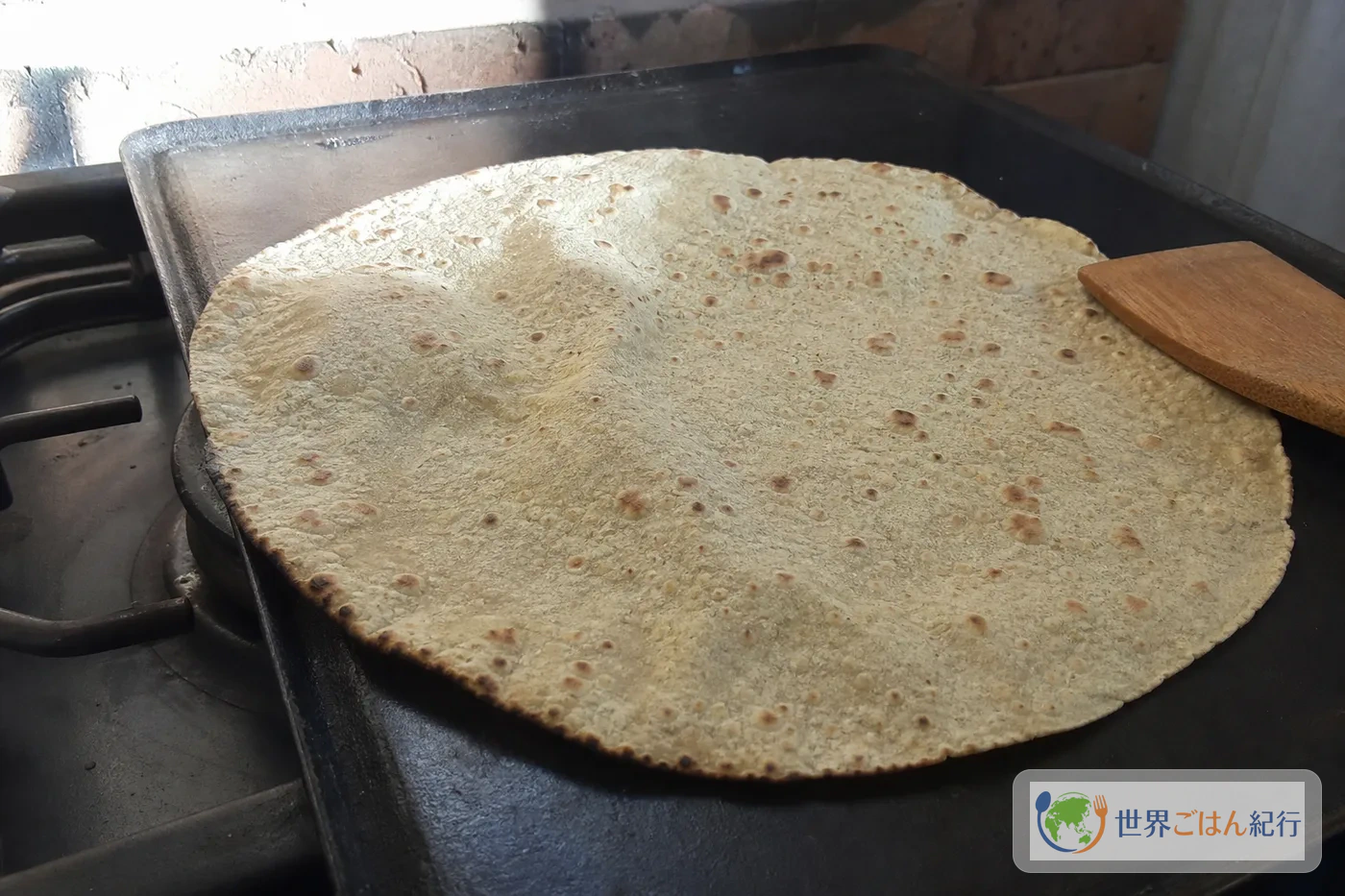
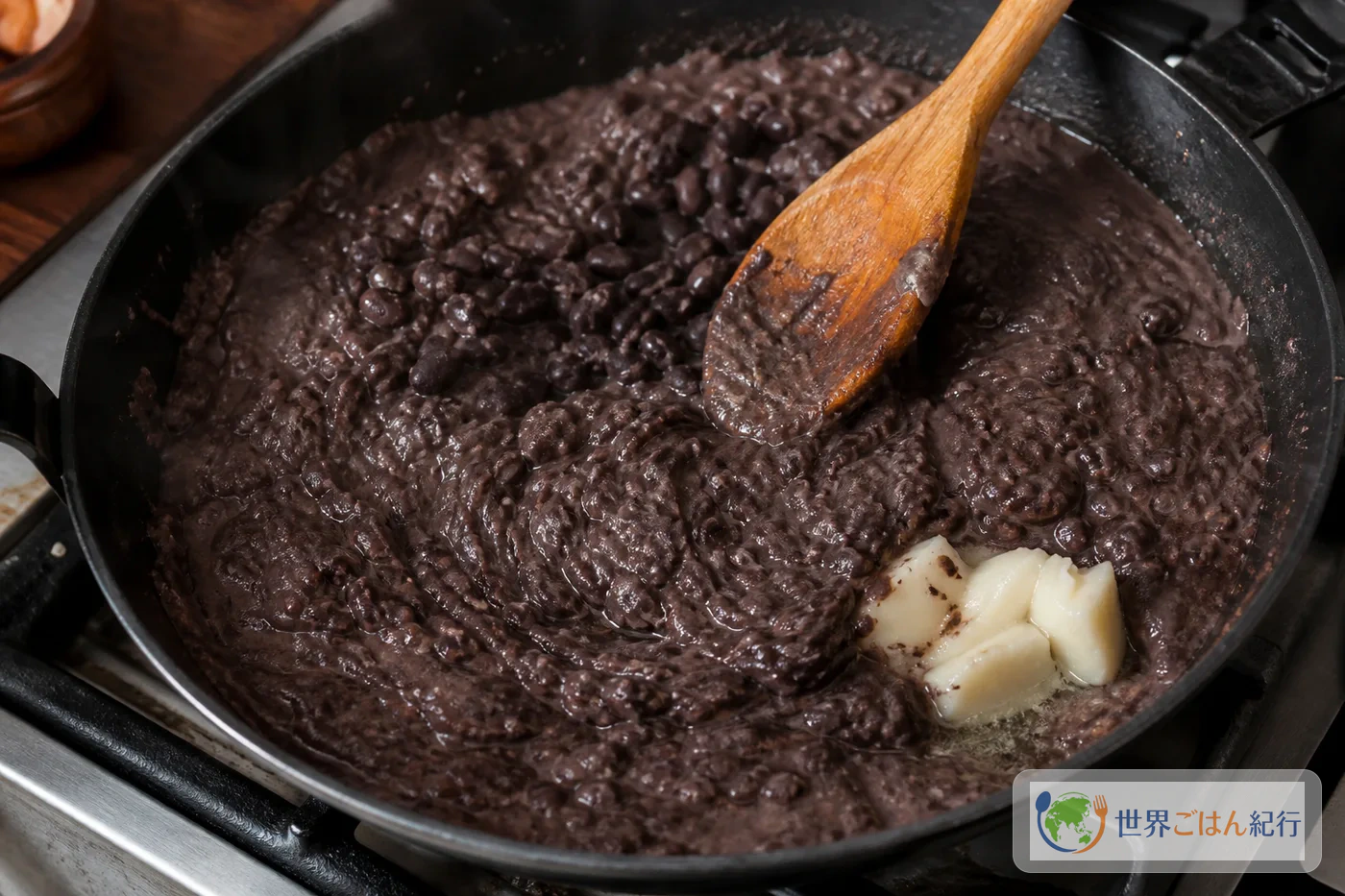
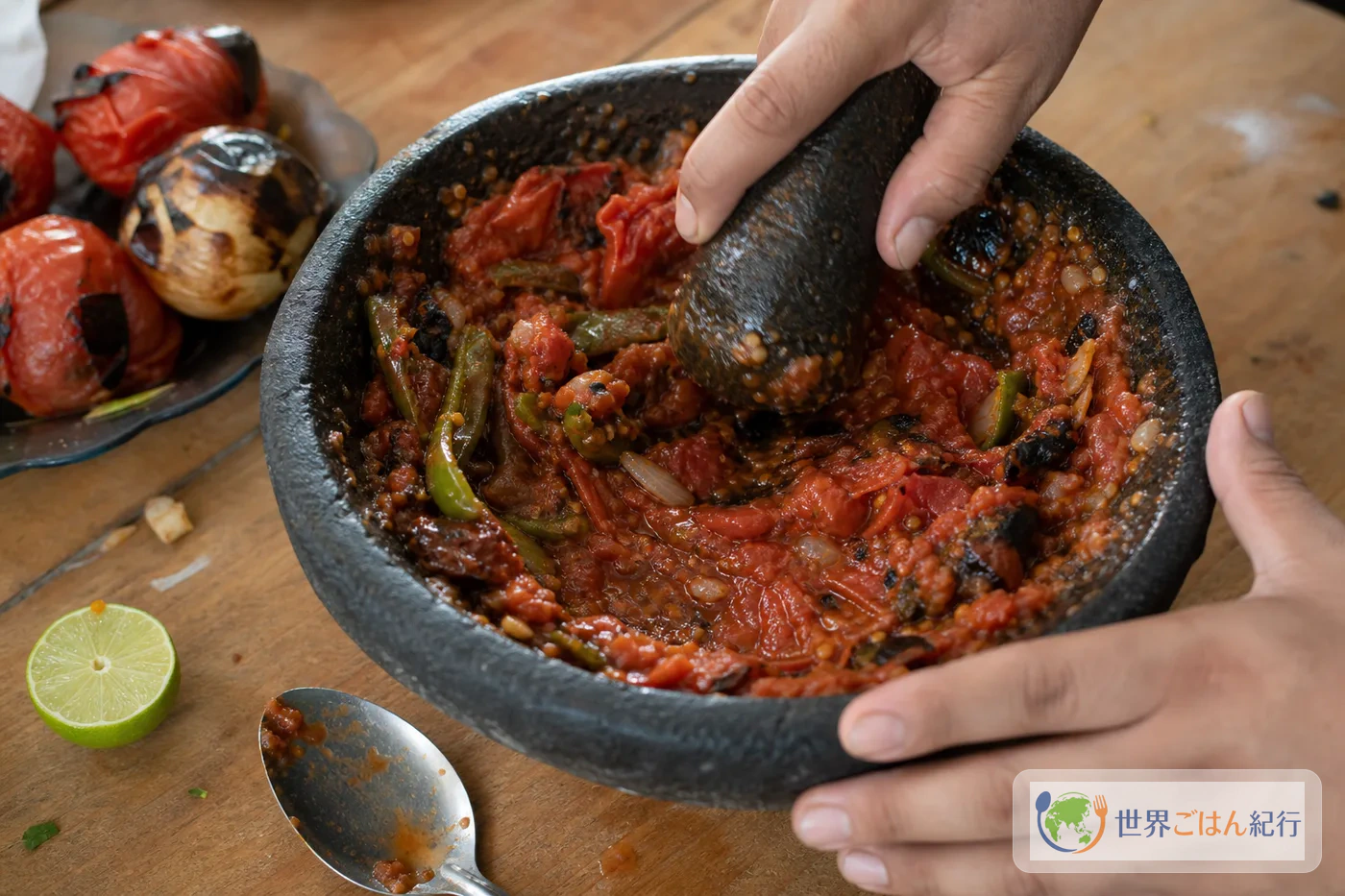
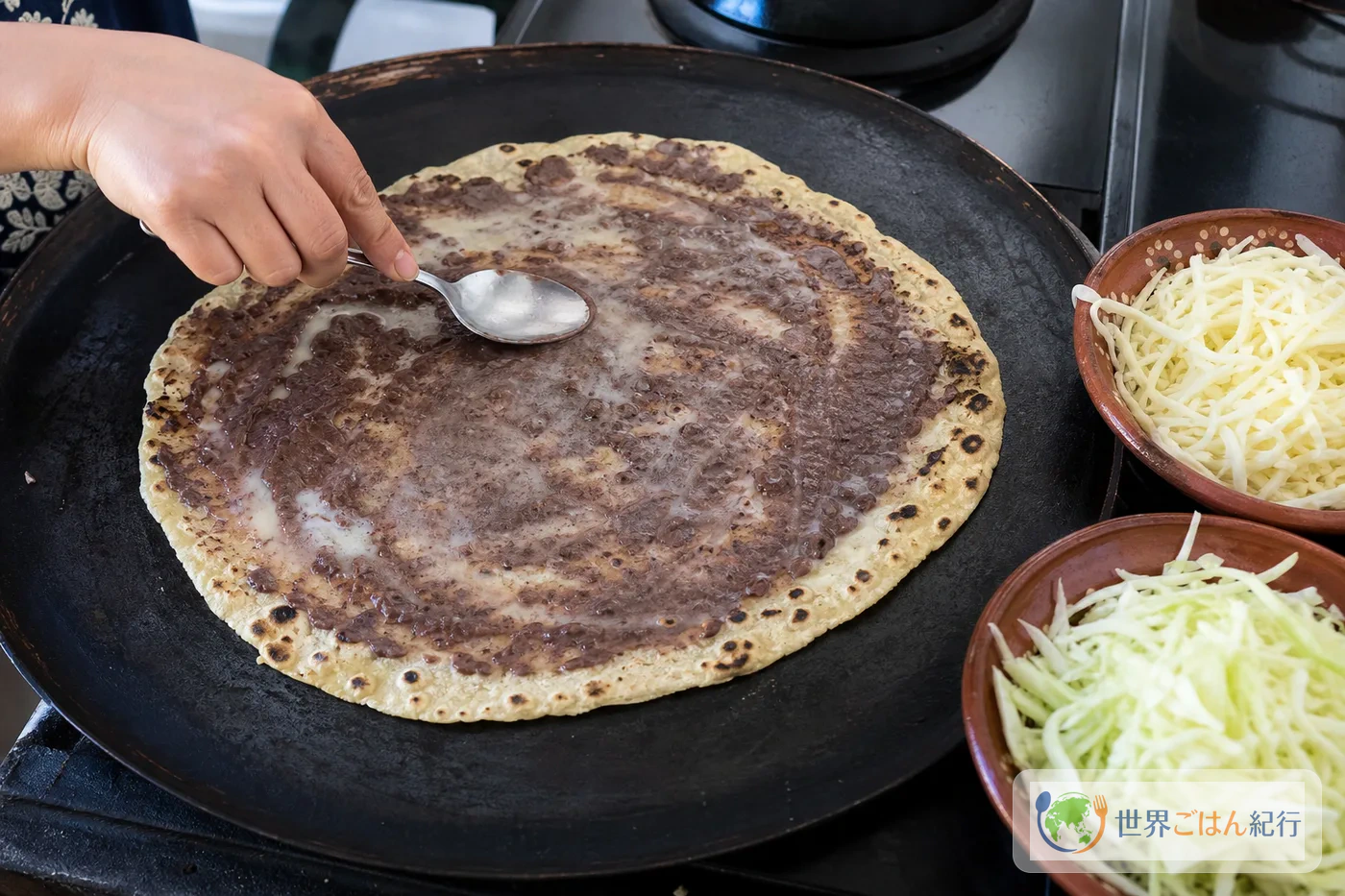
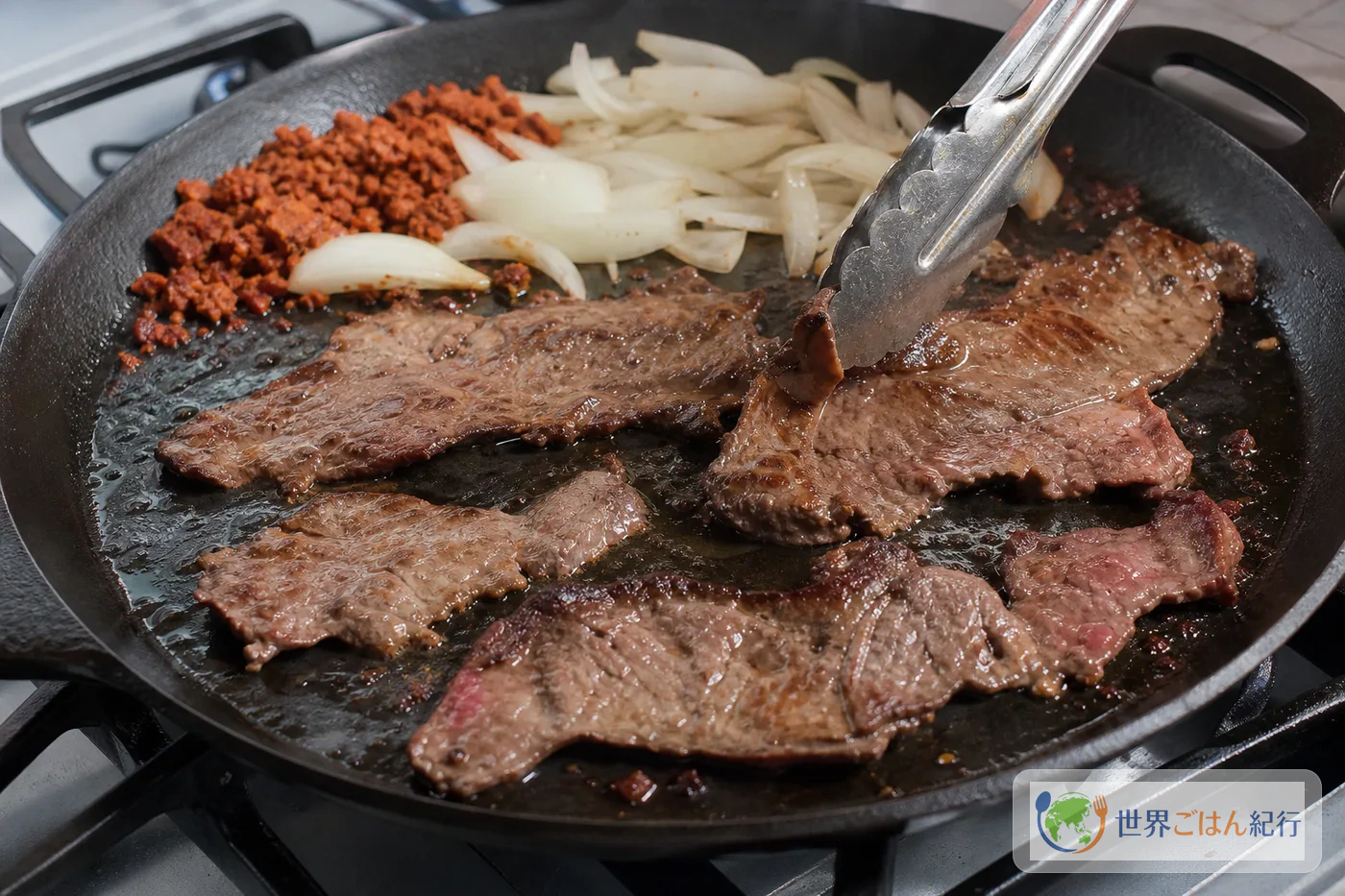
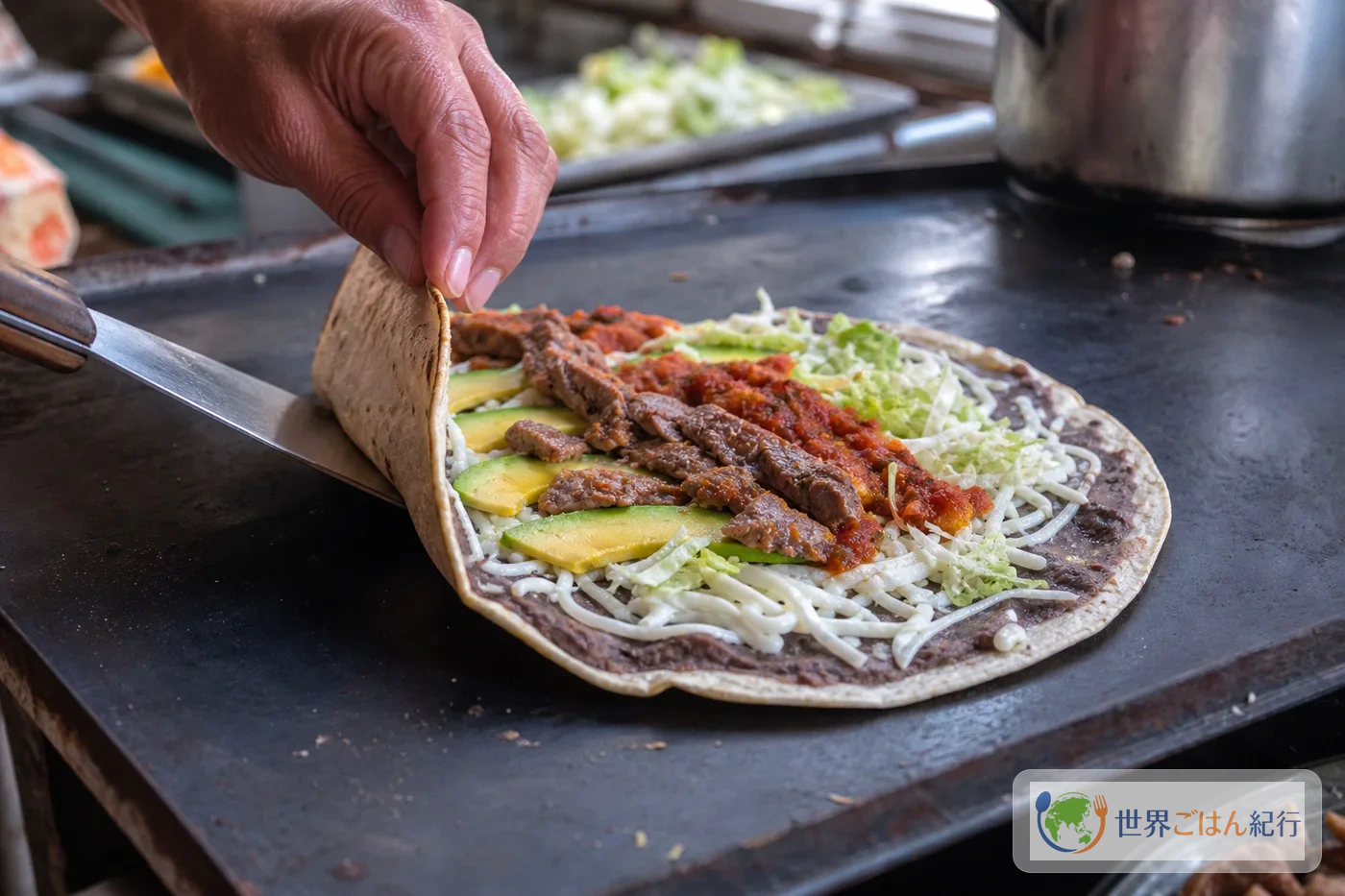
It starts with that moment the big tortilla curls on the griddle
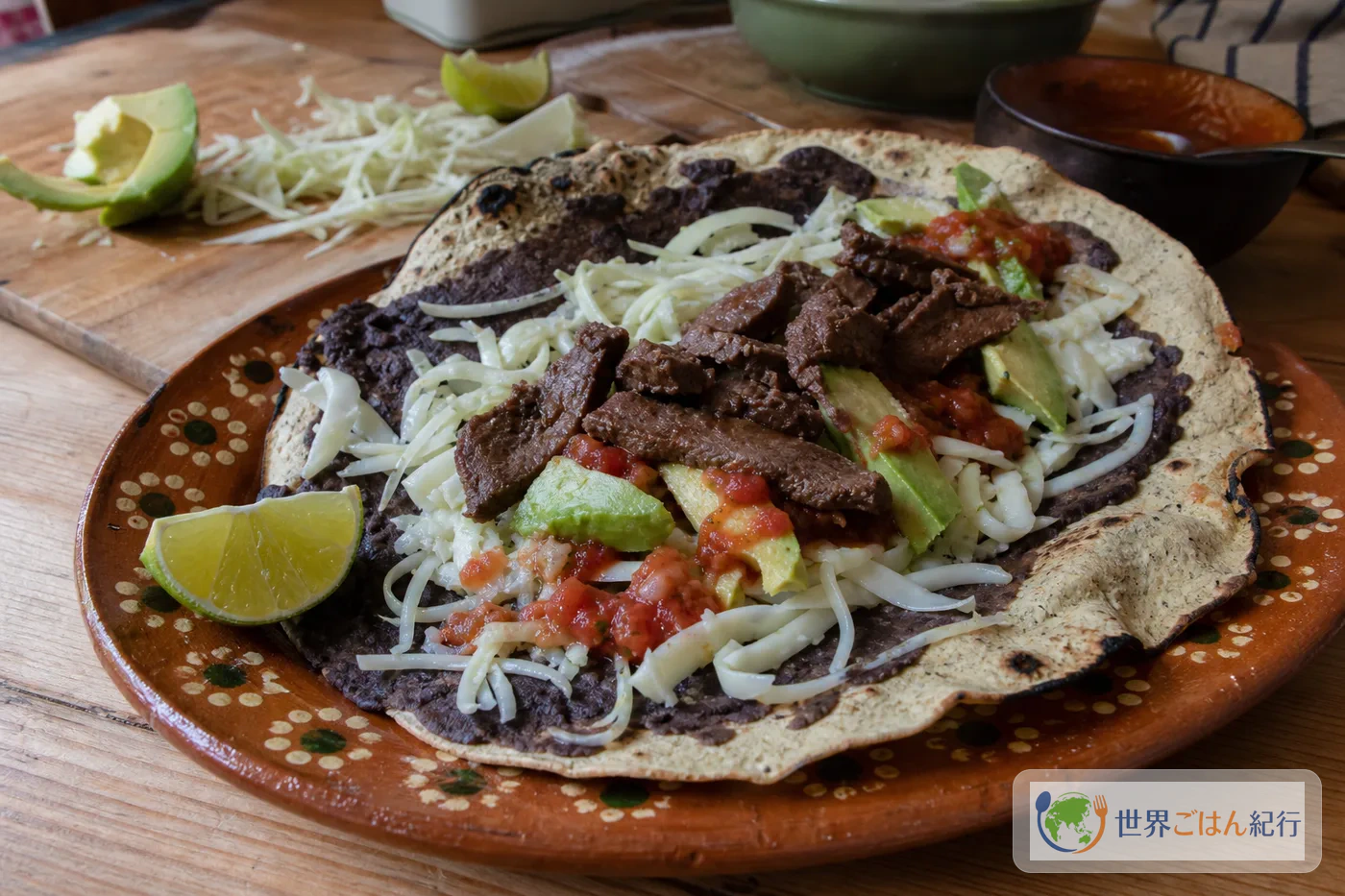
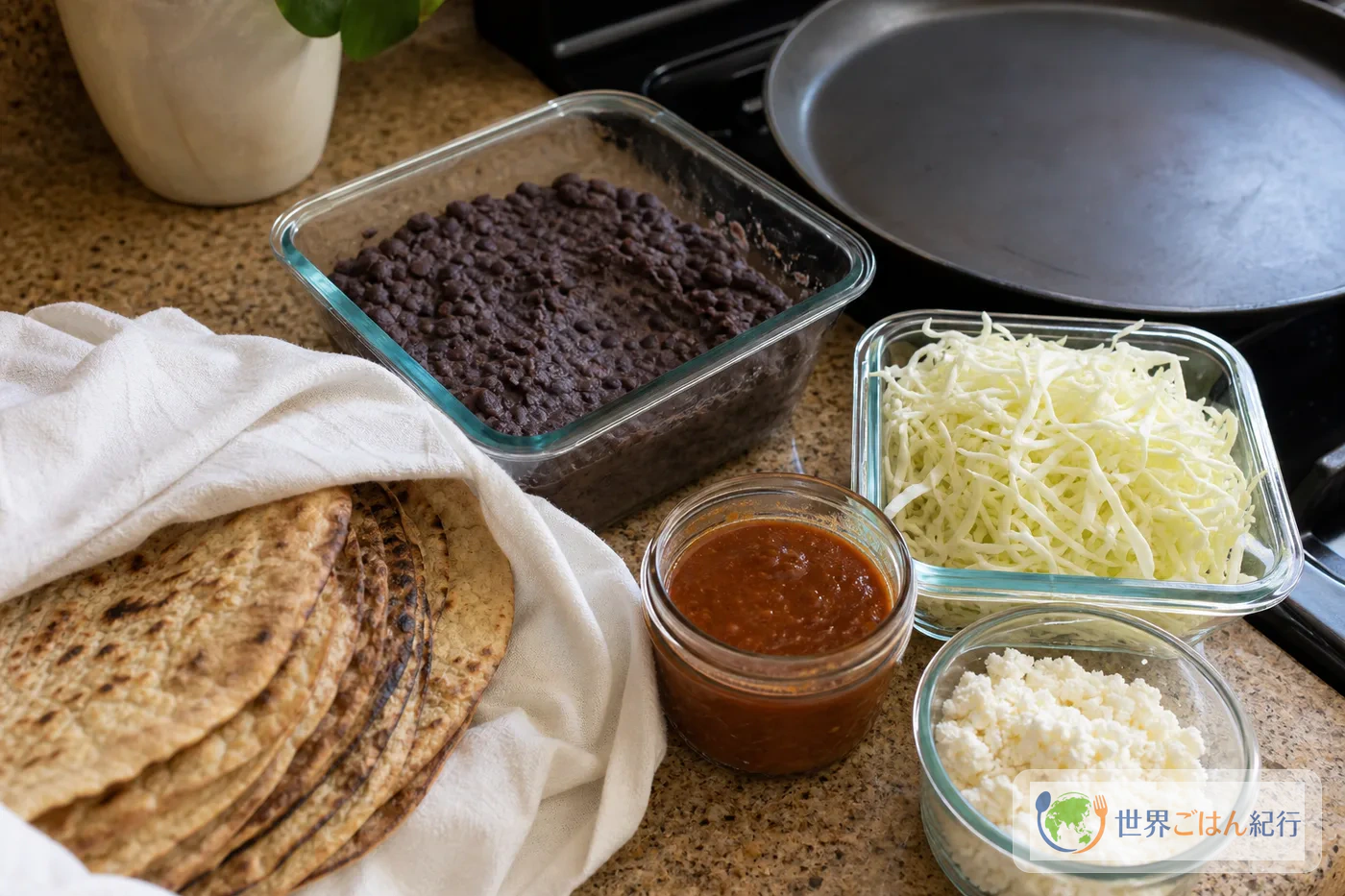
Put a large tortilla on a dry griddle and the edges curl a little and brown spots appear here and there. Spread a thin layer of black beans on it, tear white cheese over the top, and layer on cabbage and salsa. Tlayuda (tlayuda / clayuda) is a large plate seen at Oaxaca's night markets and eateries, with the aroma of corn as its star.
At a glance it looks like a giant taco, but the core is something else. It is not a dish to roll up small and eat like tacos al pastor; onto a large tortilla toasted somewhat dry go the savory pork fat called asiento, black beans, Oaxaca's stringy cheese called quesillo, vegetables and salsa. There it is served open or folded in half.
What is hard in a home kitchen is not making the ingredients lavish. If you use watery beans or store-bought tortillas as they are, the whole thing sinks and goes limp before you eat it. Rather than reproduce the large Oaxacan tortilla exactly, this article settles on a way of making it on a home griddle or frying pan that protects "dry toastiness, thick beans, stringy cheese and tangy salsa."
Even among Mexican dishes, it differs in how moisture is let out from tamales, which are steamed and made fluffy, chilaquiles, where fried tortillas are dipped in salsa, and red pozole, warmed in a red broth. Tlayuda is supported by griddle heat and dryness until the very end.
What tlayuda is: a dish that widened Oaxaca's corn culture
In an article introducing the state's corn culture, the Oaxaca state government lists tlayudas, tostadas, tamales, pozole and atole as dishes born from corn. Moreover, its announcement for "Del Comal para el Mundo. La Tlayuda 2025" treats tlayuda as a dish that symbolizes Oaxacan food culture. It is a dish in which a big griddle, corn and the evening table are joined as one.
The foundation of tlayuda is a large, thin, slightly dry tortilla. Larousse Cocina's tlayuda istmeña shows a form in which asiento, beans, cheese, vegetables and meat are layered over the tlayuda. Depending on region and shop, tasajo, cecina, chorizo, chapulines, avocado, radish and tomato vary.
There are four axes to keep outside Mexico.
| Element | The local axis | The axis to keep in a home kitchen |
|---|---|---|
| Tortilla | Large, slightly dry tlayuda tortilla | Re-crisp a large corn tortilla on a dry griddle |
| Fat | Asiento, fat carrying pork aroma | Use a little lard, spread thin and not too much |
| Beans | Frijoles refritos, a thick bean paste | Cook the black beans down to a thickness where the spatula leaves a trail, not watery |
| Cheese | Quesillo / queso Oaxaca | Combine a stringy cheese, mozzarella and string cheese |
| Finish | Salsa, cabbage, meat, avocado and so on | Do not overload the toppings; layer just before eating |
Deciding first what must not be substituted fails less than searching for exactly the same ingredients. Made with a wheat tortilla alone, it is too pliant and drifts toward a burrito. Using sweetened simmered black beans moves the bean aroma toward Japanese confectionery. The cheese should not only melt but keep a little of its stringy texture to come closer to Oaxaca.
Ingredients (makes 4)
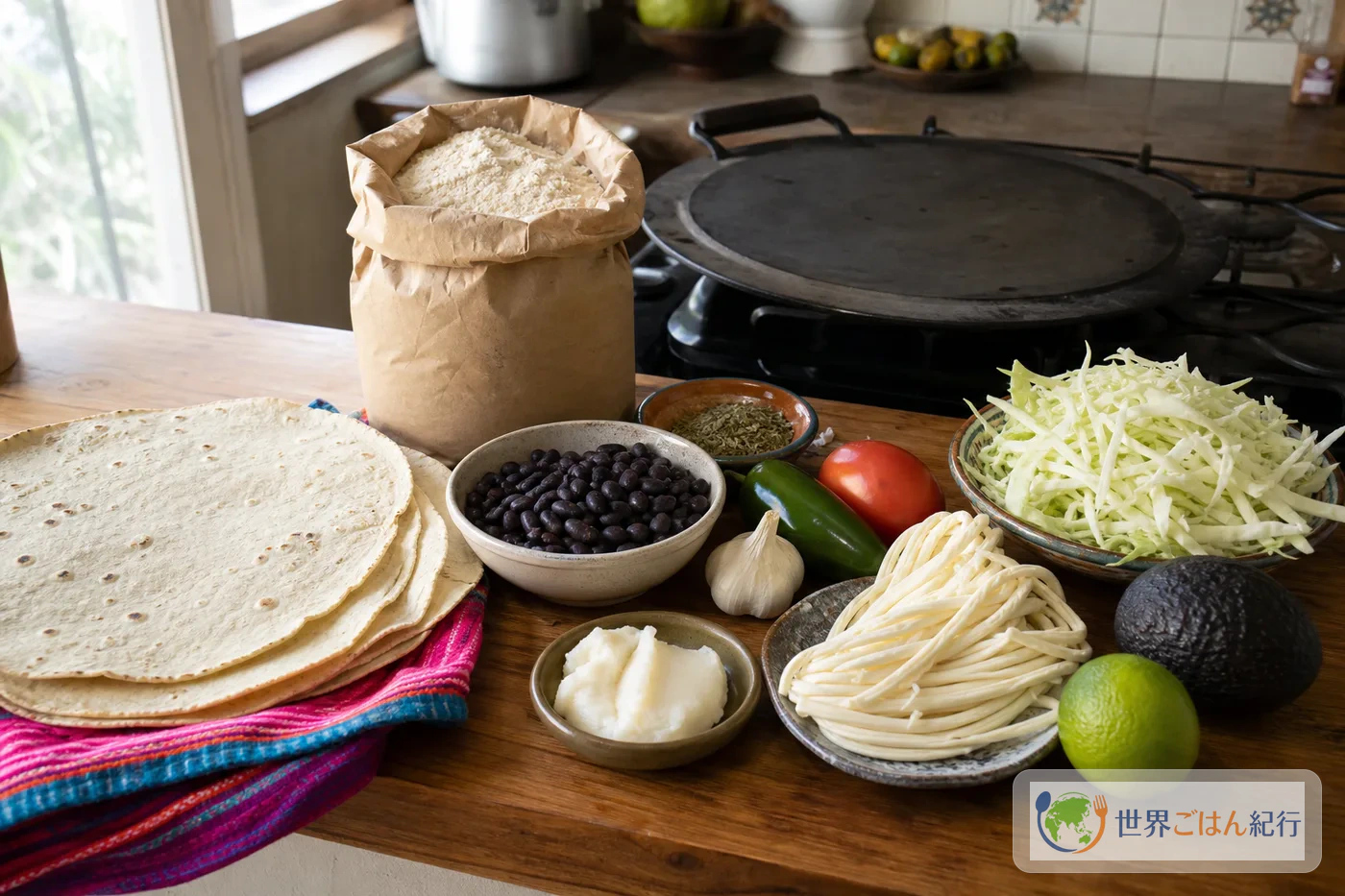
This amount makes four tlayudas about 20 to 25 cm across. If you cannot get large store-bought corn tortillas, it is easier to eat if you use ones about 20 cm and lighten the toppings, rather than stacking two small corn tortillas.
This recipe uses dairy and beef. FoodSafety.gov advises resting steaks and roasts of beef, pork and lamb for 3 minutes at an internal temperature of 63°C (145°F), and cooking ground meat and sausages to 71°C (160°F). Even with thin slices, cook more if red remains on the surface.
What to look for when shopping
What is worth seeking out online for tlayuda is not the beef or cabbage. Black beans, a griddle that makes it easy to apply dry heat, and a tool to crush salsa coarsely are the three things that tend to make the difference in the finish.
| What to look for | What to look for on the label | If you cannot find it |
|---|---|---|
| Large corn tortillas | corn tortilla, tlayuda, maize tortilla | Use corn tortillas about 20 cm and lighten the toppings |
| Black beans | black beans, black turtle beans | If you use kidney beans, add no sugar and lean toward savory |
| Lard | lard, pork fat | With vegetable oil the aroma is lighter, so cook the beans thicker |
| Cheese | Oaxaca cheese, quesillo | Combine string cheese and mozzarella |
| Griddle | comal, griddle, heavy frying pan | With nonstick, avoid heating it empty and cook briefly over medium heat |
For black beans, use savory ones for cooking, not sweet simmered black beans. With canned beans, drain once in a colander and keep back just 120 ml of the liquid to adjust the thickness, and the bean flavor is not diluted.
For tlayuda, the contact surface matters more than the heat source. If the edges lift in a small frying pan, only the center is damp and only the outside scorches. With a heavy griddle you can re-crisp the whole tortilla while drying it.
For the salsa, a coarseness in which bits of charred skin and seeds remain suits tlayuda better than blending it completely smooth. With a mortar you can keep the toasty grains without drawing out too much of the tomato's water.
Method
Make the beans and salsa thick first, and at the end re-crisp the tortillas and assemble. With tlayuda, the longer it sits after it is finished, the more moisture moves into the base. Finish one at a time just before bringing them to the table.
To get closer outside Mexico, look at moisture management before flour
Large tortillas for tlayuda are almost never found at ordinary supermarkets. If you find larger corn tortillas at an import grocery, that is the shortest route. If only smaller ones are available, you get more satisfaction from lightening the toppings and eating it as a "toasty bean tortilla" than from trying to make one look large.
White corn flour such as Harina P.A.N. suits arepas and pupusas, but it is not the same as the nixtamal masa for traditional tlayuda. If you make it from flour, look for something labeled masa harina, instant corn masa flour or tortilla. If you roll corn meal or cornstarch large, it cracks easily and the bite is something else.
The cheese suits better when not fully melted. Oaxaca's quesillo is characterized by its stringy texture, so tear string cheese thin and supplement the melt with mozzarella to come closer. With pizza cheese only, the saltiness and oil are strong and the aroma of the beans does not come forward.
Where it tends to go wrong
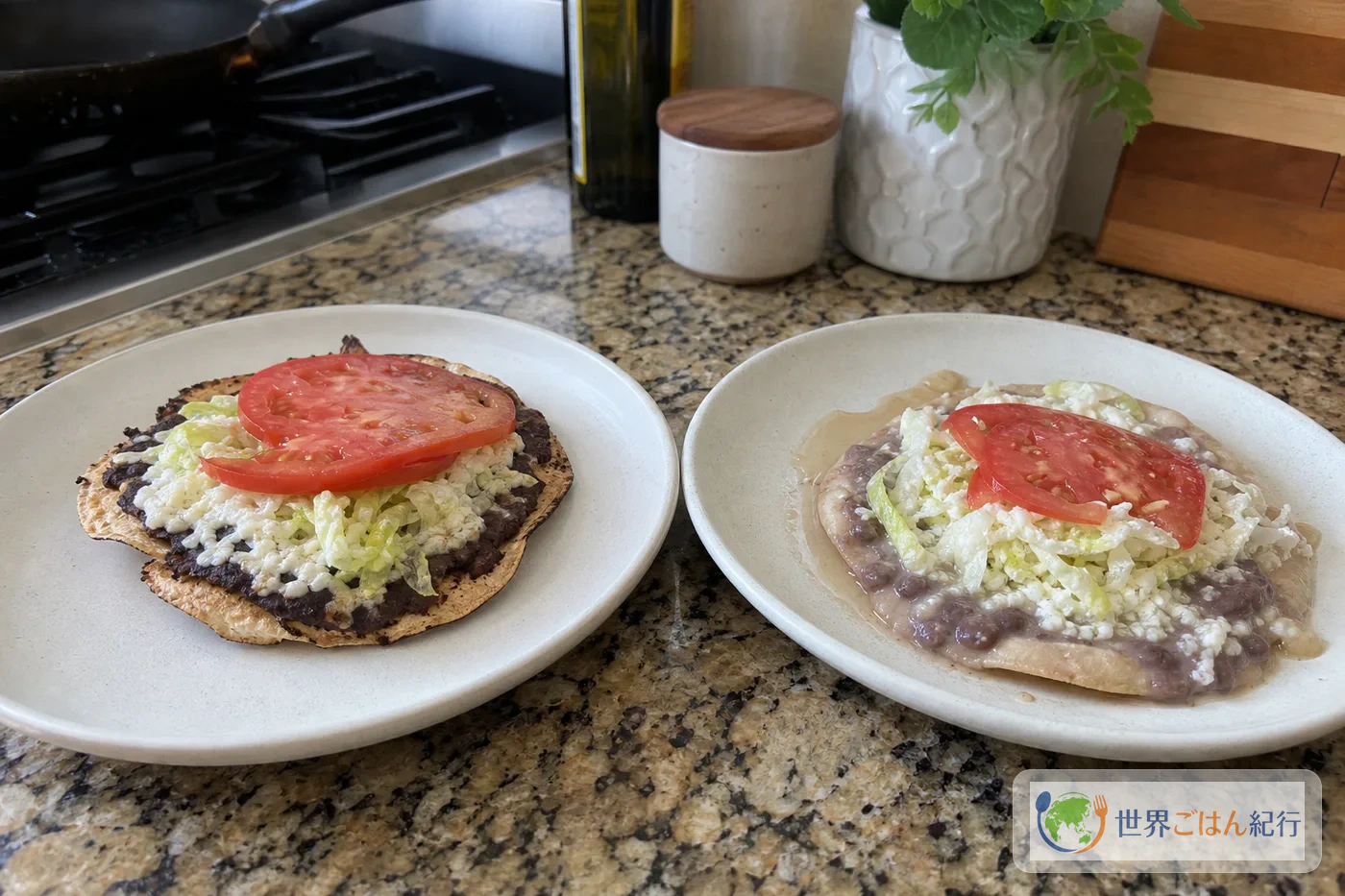
| Failure | Why it happens | How to fix |
|---|---|---|
| Base goes limp | Too much moisture in the beans or salsa | Cook the beans down until the spatula leaves a trail, and add the salsa last |
| Only the edges scorch | The griddle is small and only the center touches | Switch to a larger griddle. With a small frying pan, make half-size ones |
| Beans are crumbly | Drove off too much water | Return the bean liquid 1 tbsp at a time and rework over low heat |
| Cheese is heavy | Too much melting cheese | Increase the string cheese and use mozzarella as a supplement |
| Flavor is flat | Not enough acidity and toastiness | Add roasted salsa, lime and oregano at the end |
Keep the toppings modest on the first one. When it goes well, increase the meat and avocado on the second. With a large dish, the more lavish it is, the harder it is to eat. It is just right when the beans do not run and the edge folds a little when you lift it off the plate.
How to eat and what to serve with it
Tlayuda can be eaten with a knife and fork, or folded in half by hand and bitten into. At the table, squeeze on lime and add salsa a little at a time. While hot the edge is crisp, but as time passes it softens from the moisture of the beans and cheese. It is a dish that is best if you take a bite before taking a photo.
For a menu, keep the soup light. Rather than set it beside a heavy main like birria de res or mole poblano, bean soup, cabbage with plenty of lime and grilled vegetables suit it. To add the acidity of seafood, serve a little aguachile alongside and it cuts the heaviness of the meat and beans.
To leave out the meat, raise the beans to 120 g more and add 120 g grilled mushrooms. To move toward vegan, replace the lard with rice bran oil, leave out the cheese and use more avocado. However, the stretch of quesillo and the aroma of asiento are the heart of tlayuda, so on the first try, learning the axis of flavor with dairy and lard before substituting is less confusing.
Storage and reheating
An assembled tlayuda is not suited to storage. If you keep leftovers, separate the tortillas, beans, salsa, vegetables and meat. Let the black bean paste lose its heat and keep it 2 days refrigerated in a storage container. The salsa too is 2 days refrigerated as a guide. Finish the beef within 1 day in the refrigerator.
To reheat, warm the beans 1 minute at 600 W in a microwave, and if stiff, stir in 2 tsp water. Re-crisp the tortilla in a dry frying pan over medium heat, 40 seconds per side. If left long once the beans are spread, it will not come back, so assemble at the end even when reheating.
To freeze, only the beans are suitable. Flatten one portion at a time, freeze, and use within about 2 weeks. After thawing, moisture tends to separate, so put it in a small pot over medium-low heat and, when it bubbles, rework it for 1 minute before spreading.
FAQ
Q1. Can I make it with wheat tortillas?
You can, but the impression of the dish changes. Wheat tortillas are pliant, and once they hold beans and cheese they lean toward a burrito or quesadilla. For a tlayuda feel, look for corn tortillas first. On days you make it with wheat, drying it too much on the griddle makes it hard, so warm briefly over medium-low heat.
Q2. What do I use if I don't have Oaxaca cheese?
Combine string cheese and mozzarella. With string cheese alone the melt is weak, and with mozzarella alone moisture tends to come out. A ratio of 2 parts string cheese to 1 part mozzarella gives both the stringy texture and a light melt.
Q3. Can I leave out the lard?
You can make it with rice bran oil. But the pork aroma of asiento is weaker. When you change the oil, cook the beans thick and make sure the roasted salsa and lime come through, and the flavor is less likely to blur. When you use lard too, spread it thin, because too much makes the base heavy.
Q4. Is it OK to change the order of making things?
The beans and salsa can be made ahead, but re-crisping the tortilla and assembling come last. If you assemble first and let it sit, moisture moves however carefully you make it. Finishing one at a time at the table keeps the crisp edge.
Q5. Can I make it for a family that doesn't like spice?
Yes. Remove the seeds and white ribs of the green chili and halve the amount. Even with the heat taken out, roasting the tomato and onion over medium-high heat to char them keeps the toasty salsa flavor. Adding chili sauce on the plate for adults is less likely to upset the taste of the whole.
Sources
- Larousse Cocina, "Tlayuda istmeña"
- Gobierno del Estado de Oaxaca, "El maíz representa nuestra identidad y enaltece el sabor de la cocina oaxaqueña"
- Gobierno del Estado de Oaxaca, "Oaxaca celebra su grandeza gastronómica con la Expo Venta "Del Comal para el Mundo. La Tlayuda 2025""
- H. Congreso del Estado Libre y Soberano de Oaxaca, "Clayuda y/o tlayuda como bien gastronómico y cultural"
- FoodSafety.gov, "Cook to a Safe Minimum Internal Temperature"