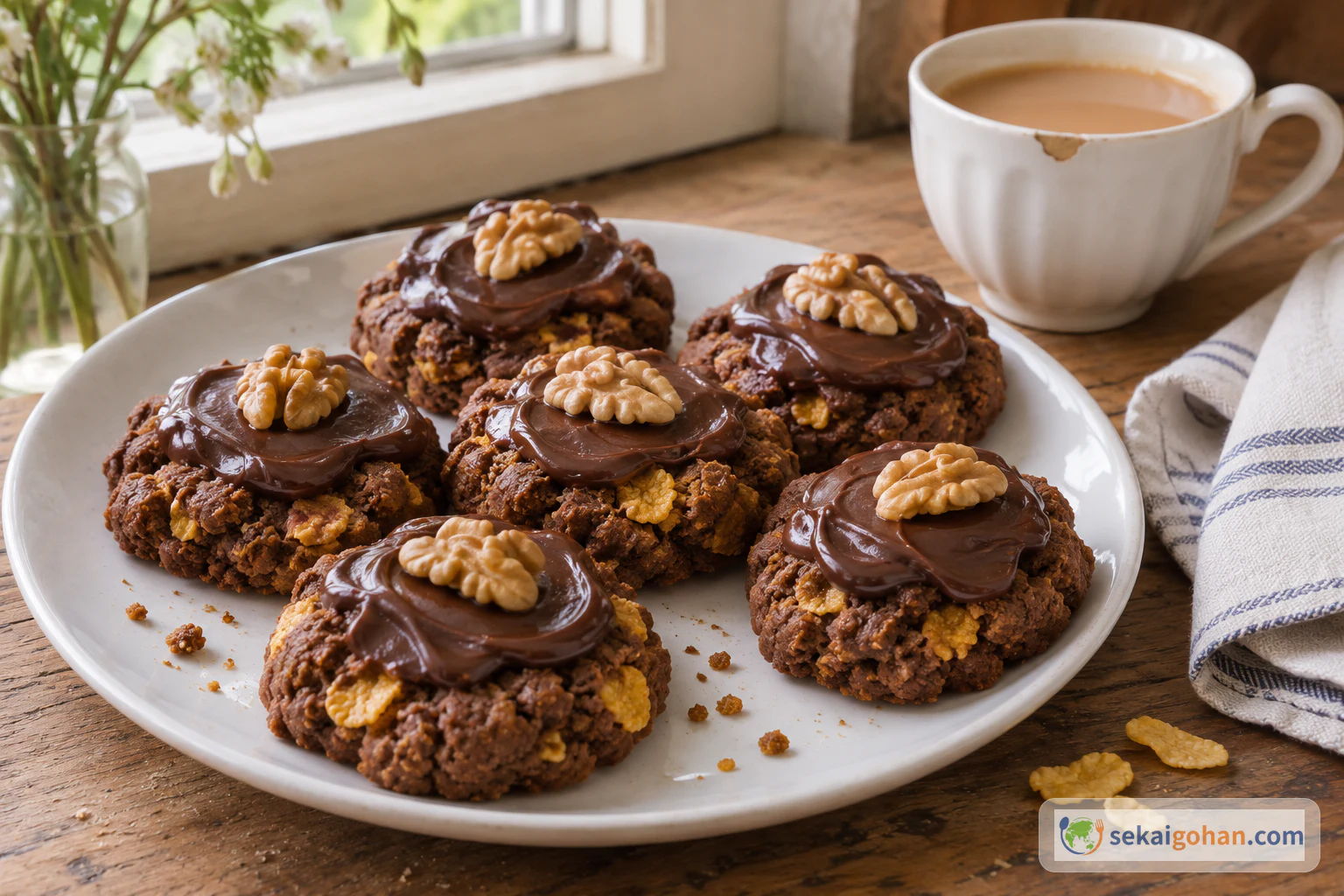
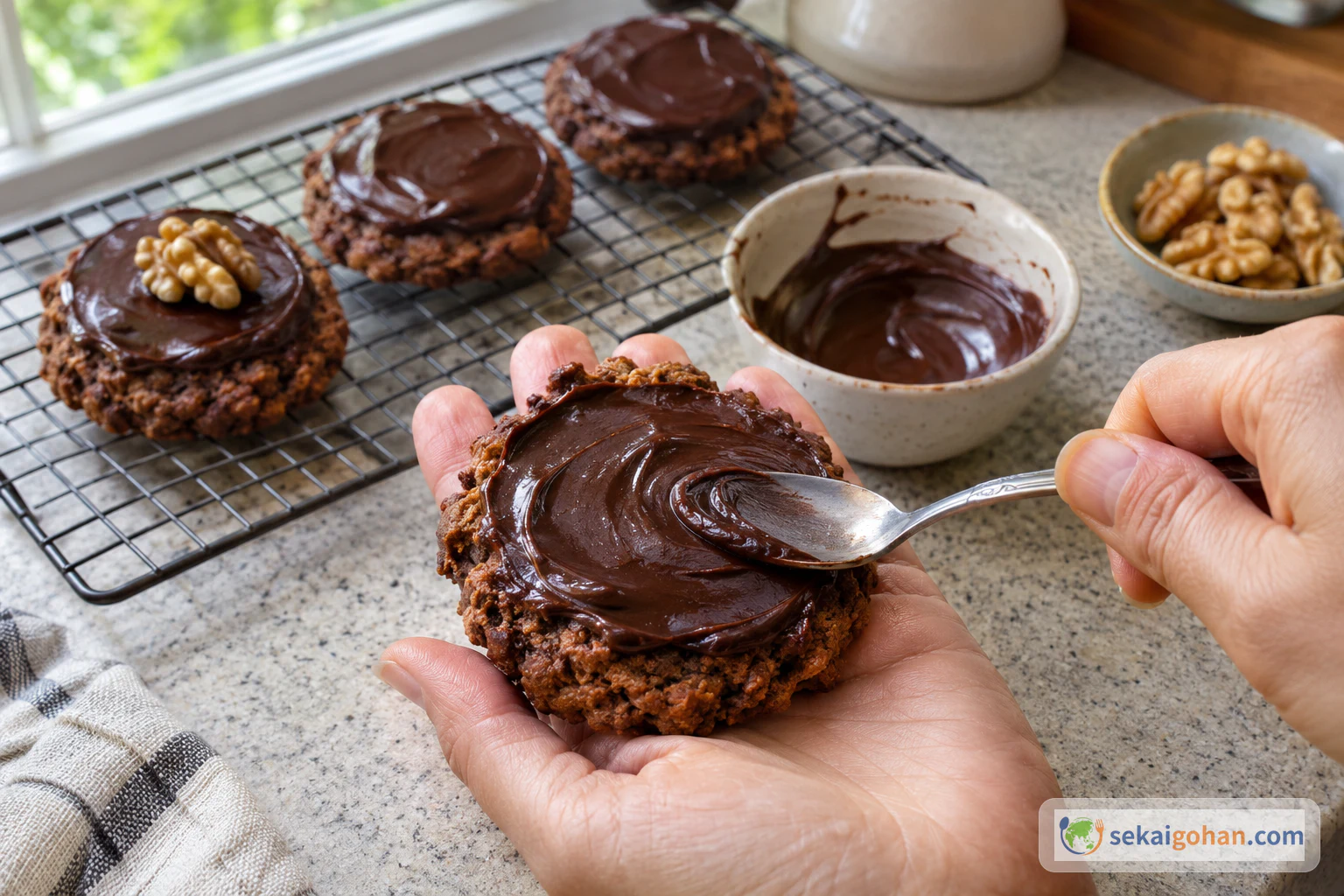
The icing goes on only once the biscuits are cold. Each dark, craggy round gets a thick swipe of glossy cocoa icing from the back of a spoon, then a walnut half pressed on top, and the whole batch goes into the biscuit tin to wait for the next cup of tea. An Afghan is a cocoa biscuit that gets its crunch from cornflakes baked right through the dough. It was born in New Zealand and is baked across both New Zealand and Australia. The dough is rich with butter and only lightly sweet, so the sweet icing on top and the slightly bitter walnut balance it, and every bite breaks into short chocolate crumb and crisp flakes.
A New Zealand Biscuit with a Borrowed Name
From a cornflake recipe to "Afghan biscuits"
The biscuit shows up in print before its name does. In 1933 the Timaru Herald carried a recipe for a "chocolate cornflake" biscuit, iced and finished with a walnut, and it is almost exactly the biscuit baked today. A year later, in 1934, the biscuit maker Aulsebrook & Co was advertising an "Afghan biscuit". By March 1935 the Hawke's Bay Tribune printed a full recipe under the name "Afghan biscuits", and Australian newspapers picked it up about a year after that. Both countries now treat it as their own everyday biscuit (see more of Australian cooking), and in New Zealand it became a nationwide staple of bakeries and school tuck shops.
Afghan brown and the other theories
Where the name comes from is not settled. The most intriguing lead is a colour. At a London trade exhibition in 1928, "Afghan brown" was presented as a fashionable shade, and one report of the time called it a quiet tribute to King Amanullah of Afghanistan, who visited Britain in March of that year. In 1929 a newspaper column went further and tied the colour to skin tone. The curl of karakul lambskin and the russet of Bokhara rugs fit both the colour name and the rough, dark surface of the biscuit, and this is the link the Spinoff writer draws.
Other explanations circulate too. Some see the craggy tops as Afghanistan's mountains, others read the walnut as a turban, and a third story links the name to the Afghan cameleers who worked in inland Australia from the 1860s to the 1930s. None of the theories leads to Afghan cooking. The biscuit belongs to New Zealand home baking from its first recipe on.
In the wave of reconsidering racially loaded names that began in 2020, Griffin's renamed its supermarket Afghans "Milk Chocolate Roughs", with the line "Same bikkie. New name." In 2021 the Foundation Cafe in Christchurch renamed its Afghan biscuit "1908". Edmonds still publishes its recipe under the name Afghans.
Butter, cocoa and cornflakes, nothing to make it rise
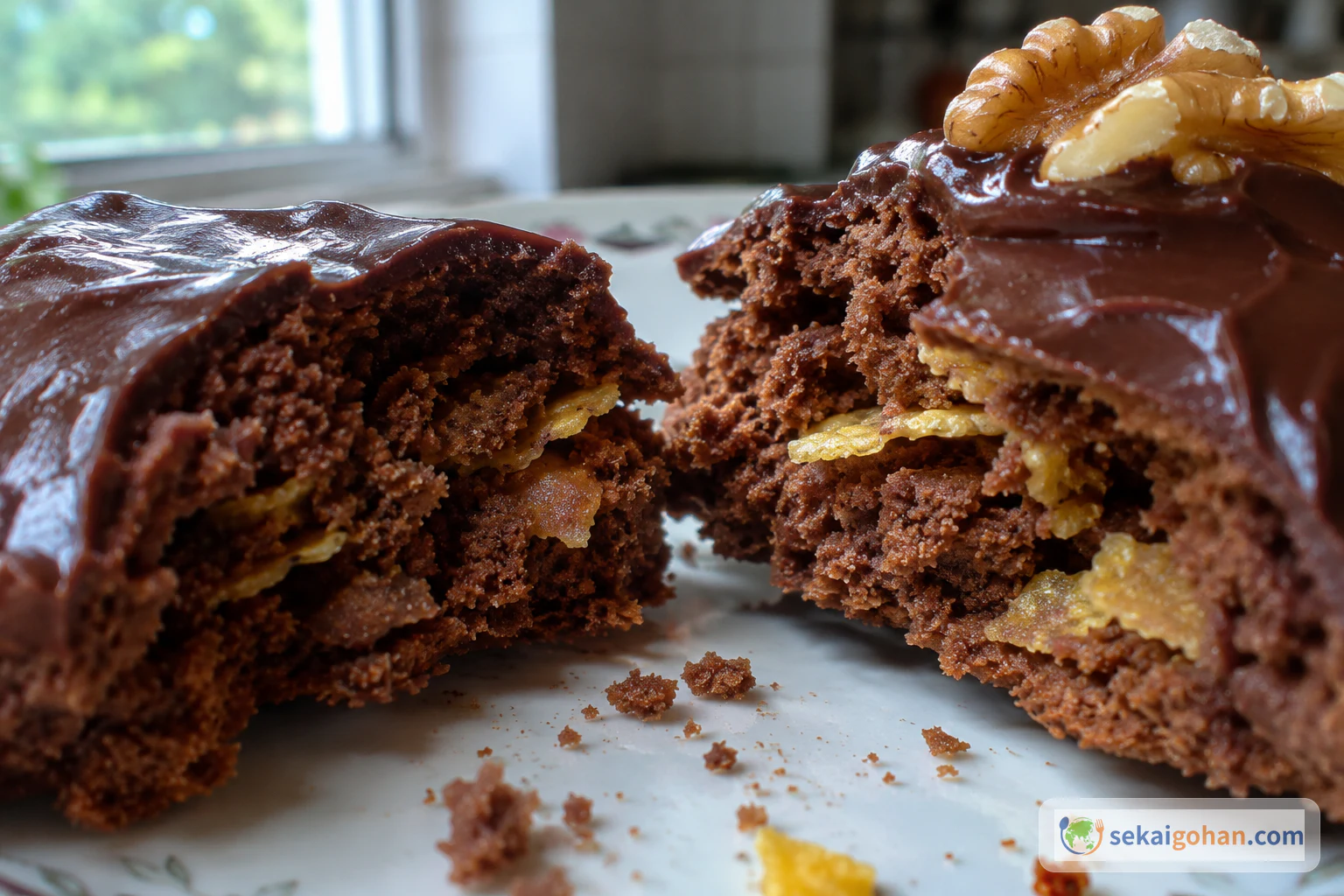
Look at the ingredient list and something is missing. There is no egg and no baking powder. The dough is butter, sugar, flour and cocoa, so the lift comes from the air you beat into the butter and sugar, and the lightness comes from the cornflakes. That is why the biscuit eats short and crumbly rather than cakey, and why the crunch sits in pockets where the flakes stayed whole.
More than one recipe under the same name
The biscuit follows a familiar shape everywhere it is baked, but the details shift. The recipe here creams the butter and sugar, stirs in the flour and cocoa, and only then folds in the cornflakes, dropping the dough in rough mounds. Another version uses less butter (150 g) with a quarter-teaspoon of salt, adds the flour, cocoa and cornflakes all at once, rolls the dough into balls and flattens them slightly. That version ices the biscuits with water, icing sugar and cocoa only, and scatters chopped toasted walnuts over the top instead of setting a half on each.
Ingredients
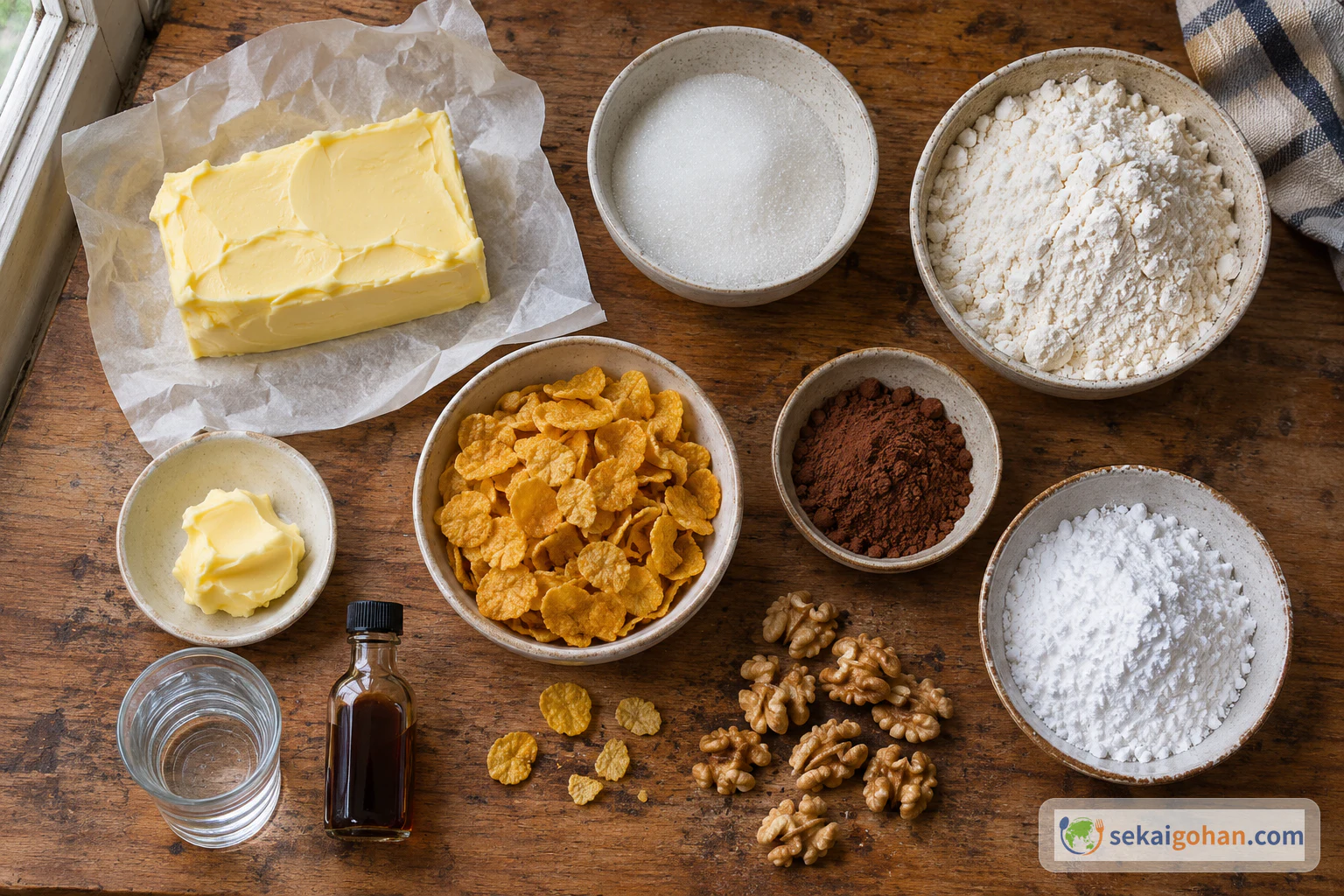
The butter and the cocoa each appear twice, once for the dough and once for the icing. Measure them separately rather than as one amount.
These biscuits contain wheat, dairy (butter) and walnuts. They contain no egg. Leave the walnuts off for a nut-free batch. Cornflake ingredients differ between brands, so read the label when you buy them.
Equipment
- Oven
- Baking tray (two if one will not fit all the mounds)
- Baking paper, or a little butter or oil for greasing
- Large mixing bowl and a small bowl for the icing
- Electric hand mixer or a whisk
- Rubber spatula or wooden spoon
- Fine sieve
- Wire cooling rack
- Tablespoon and teaspoon
- Flat palette knife or spatula for lifting the biscuits
Choosing and Substituting
The cocoa is the one ingredient you cannot swap. Drinking chocolate and sweetened cocoa mixes carry sugar and milk powder, which throws off the whole dough. Buy unsweetened cocoa powder for both the dough and the icing.
The cornflakes must be plain. Frosted or chocolate-flavoured flakes add sugar and change the texture, and the plain flake is what gives the biscuit its dry, clean crunch. For the flour, use plain (soft) flour; a stronger flour makes the biscuits harder. Ordinary white granulated sugar works; brown or raw sugar darkens the dough and adds a deeper caramel note.
Use either salted or unsalted butter. With salted butter, add nothing more; with unsalted butter, a pinch of salt in the dough is welcome if you like it. Margarine changes the flavour and is best avoided. Some icing sugar is sold as a mixture with starch, which makes the icing set a little differently, so adjust it with the hot water rather than changing the sugar. Vanilla extract or vanilla oil can stand in for the essence.
Measure the cornflakes loosely and add them as they come out of the box. Big pieces surviving into the oven are what make the crunch. Flakes crushed to dust before mixing give an even, sandy biscuit.
Method
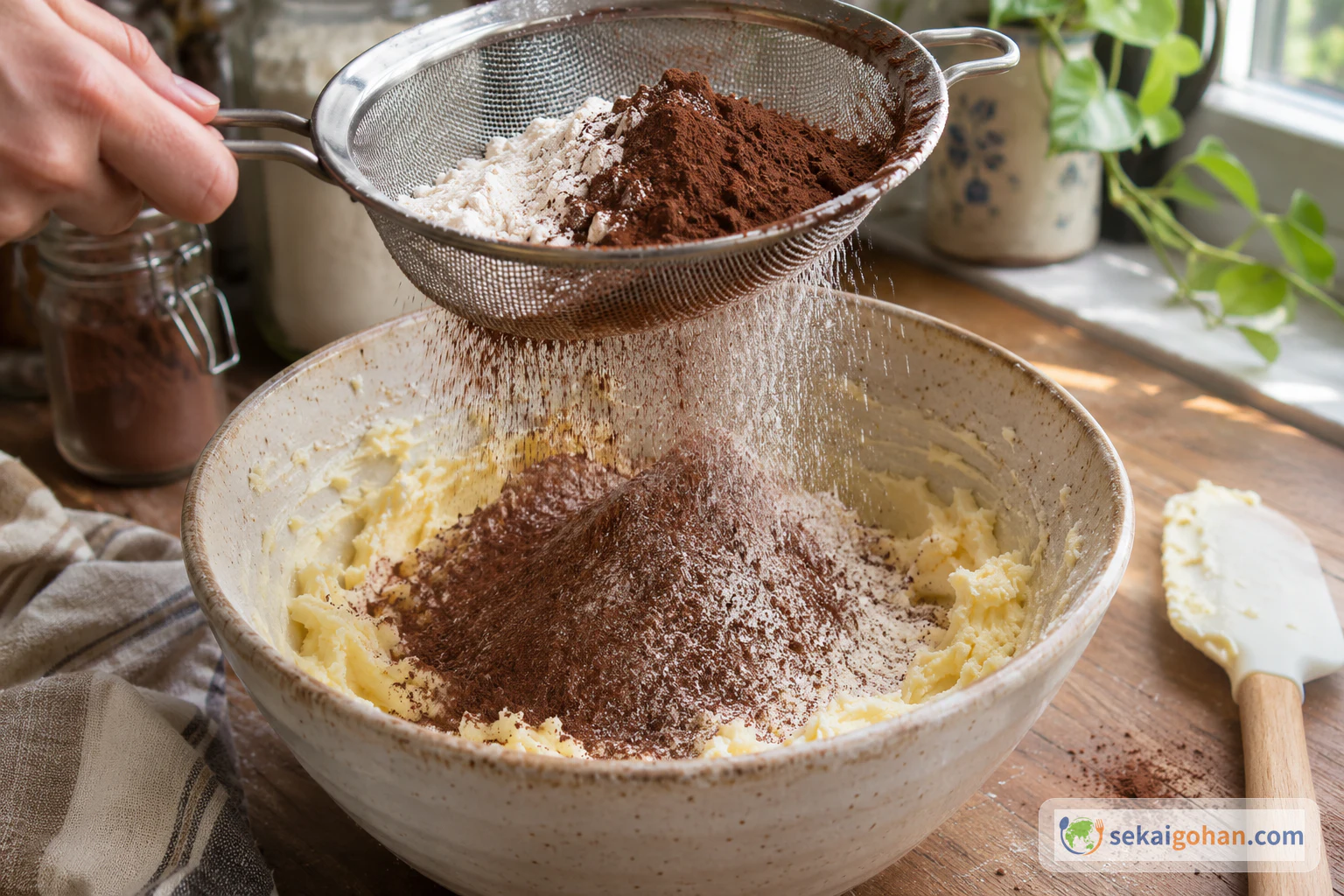
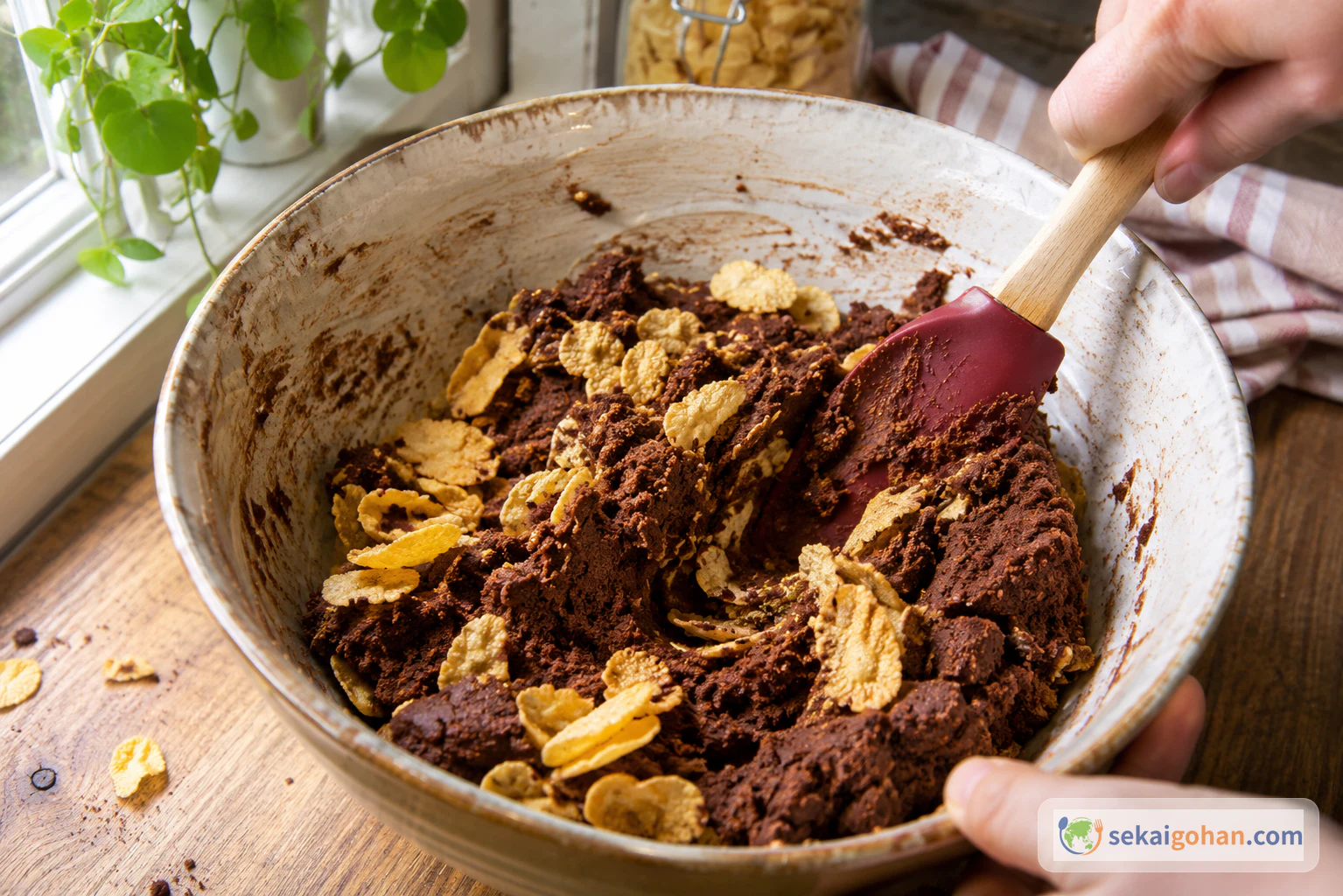
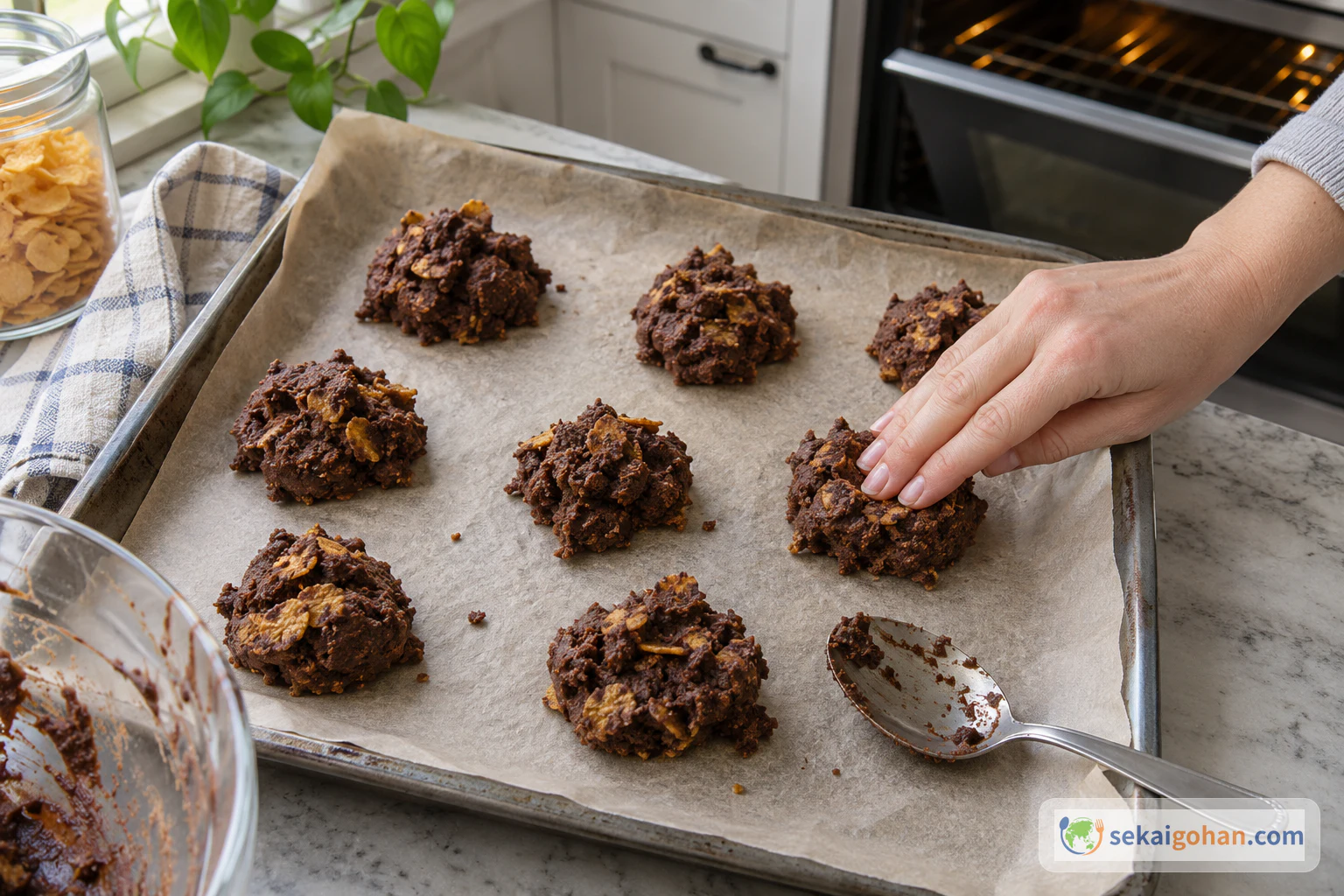
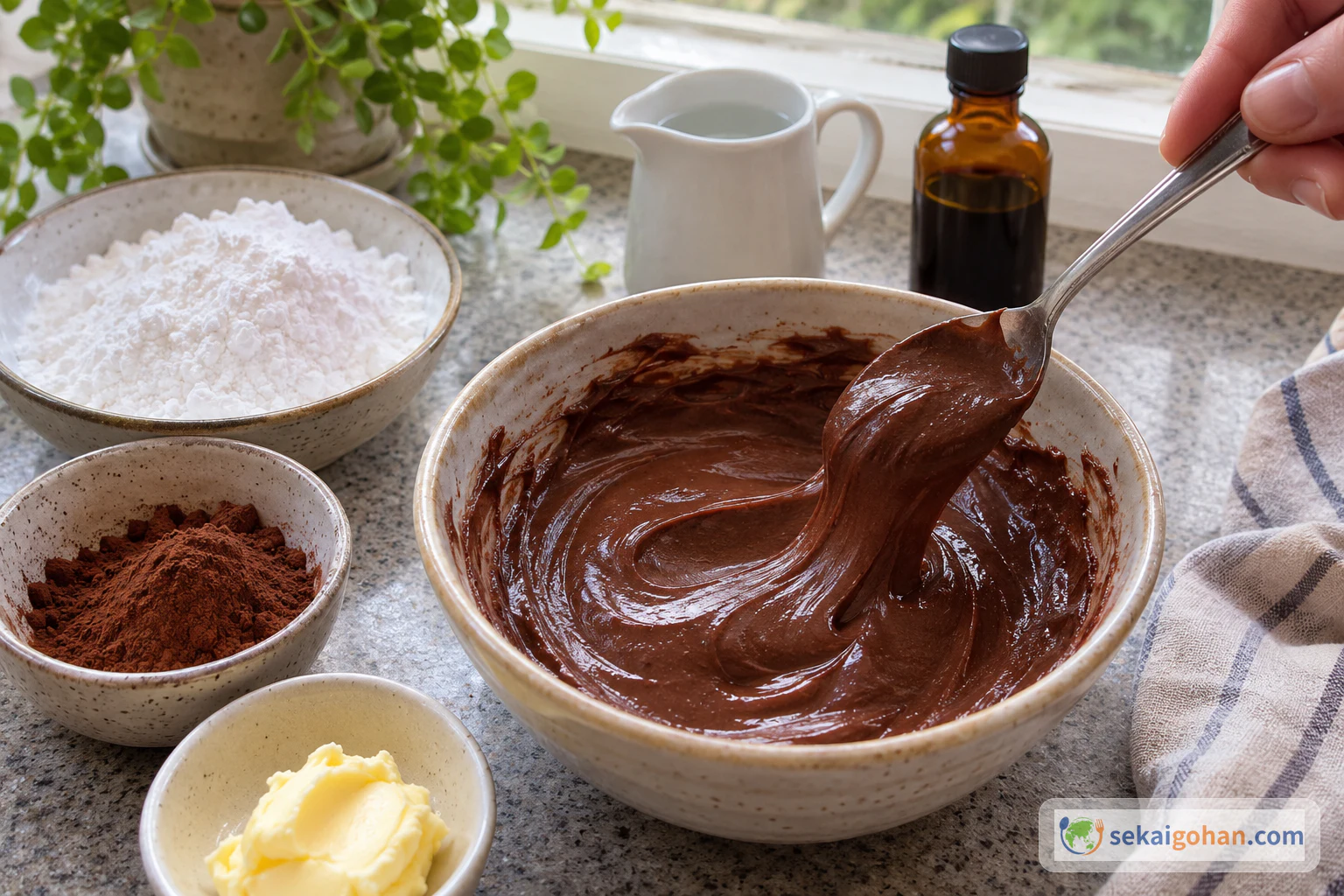
The dough comes together in one bowl in a few minutes, and the real work is the creaming at the start. Turn the oven on before you begin so it is hot by the time the mounds are on the tray. The only waiting is while the biscuits bake and then cool completely, and the icing is mixed in that gap.
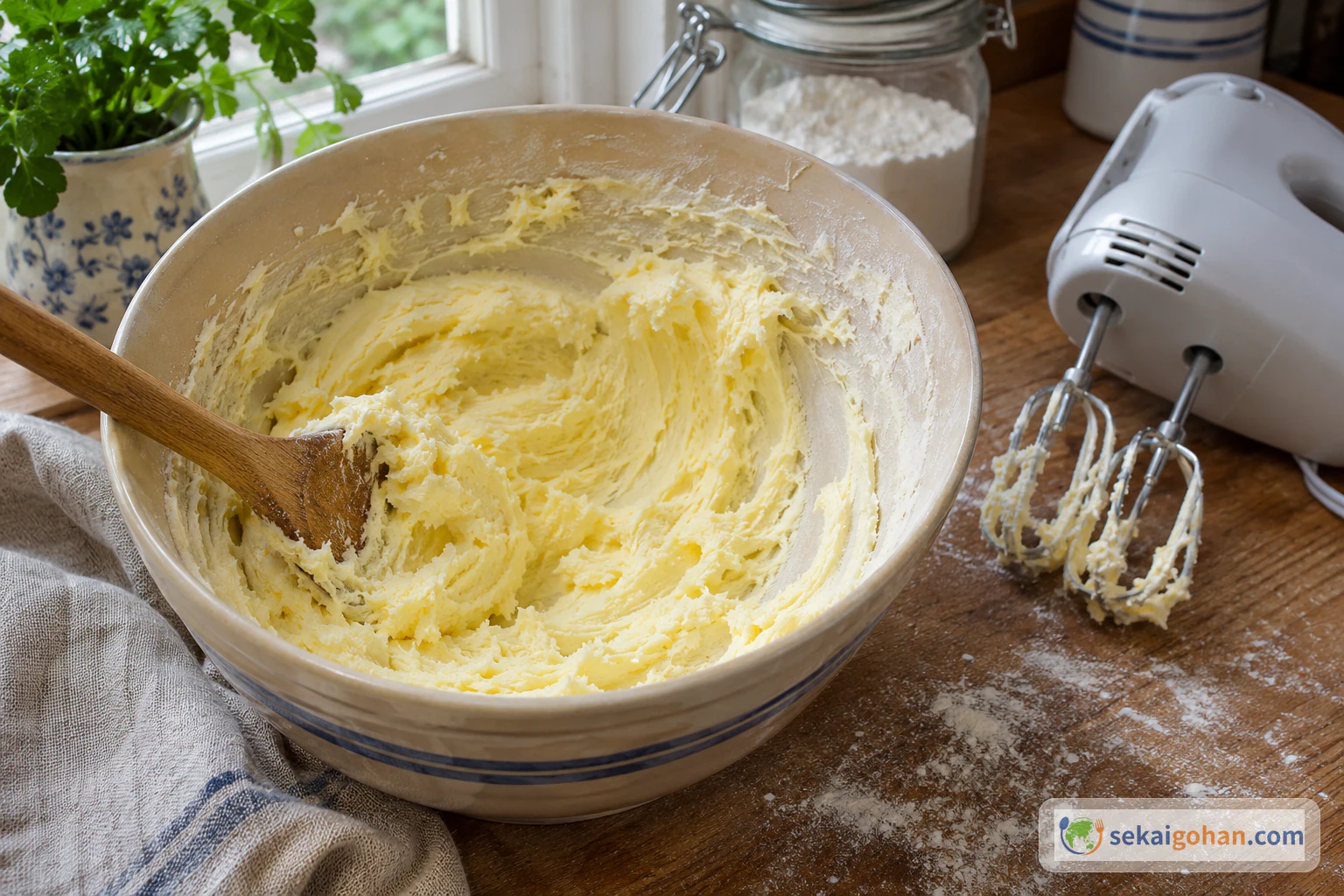
With no egg and no baking powder, the air you beat into the butter and sugar is all the lightness this dough gets. Keep going until the mixture is pale and fluffy, judging by colour and texture rather than the clock.
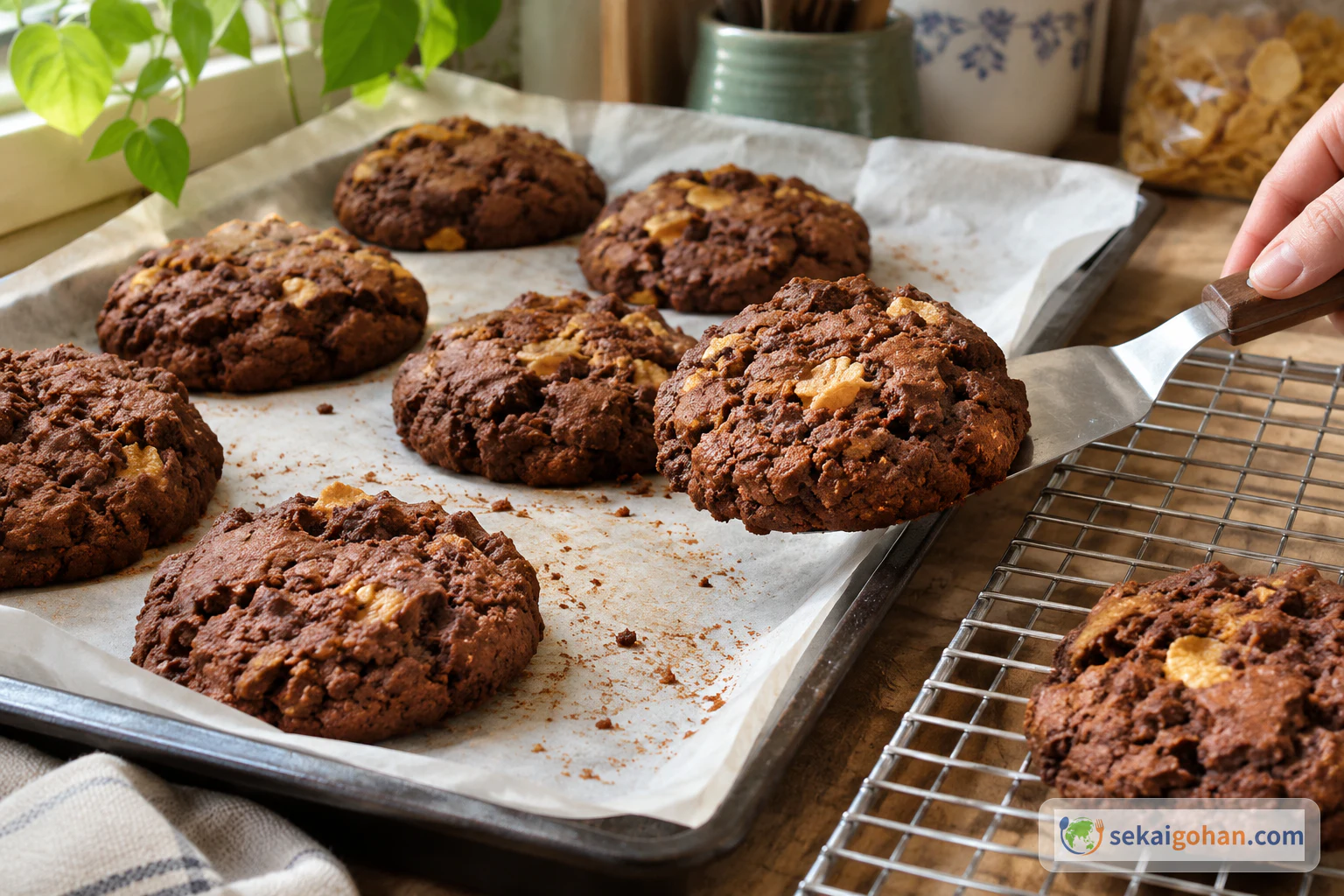
The tray comes out of the oven at 355°F (180°C). Use oven gloves, and set it down on a heatproof surface before lifting the biscuits off.
When It Goes Wrong
| What you see | Why | What to do |
|---|---|---|
| The dough is crumbly and will not hold a shape | The dough is meant to be stiff and short | Press each mound together firmly with your fingertips on the tray. Adding liquid changes the biscuit; keep it as the last resort |
| The cornflakes have turned to powder | Too much folding, or crushing them first | Next time fold with fewer, lighter strokes and add the flakes whole |
| Hard and dry, or soft and raw in the middle | Ovens differ | Judge by the firm edge and the springy centre, adjusting the bake by 2–3 minutes. Ignore the colour; cocoa hides browning |
| The icing is too runny or too stiff | Too much or too little water | Add hot water a teaspoon at a time to loosen it, or sift in a little more icing sugar to thicken it |
| The icing slides off the biscuits | The biscuits were still warm | Wait until they are completely cold before icing |
| The biscuits stick to the tray | No paper or grease, or moved too soon | Line or grease the tray, and let the biscuits rest on it briefly before lifting |
Serving, Variations and Storage
Serving
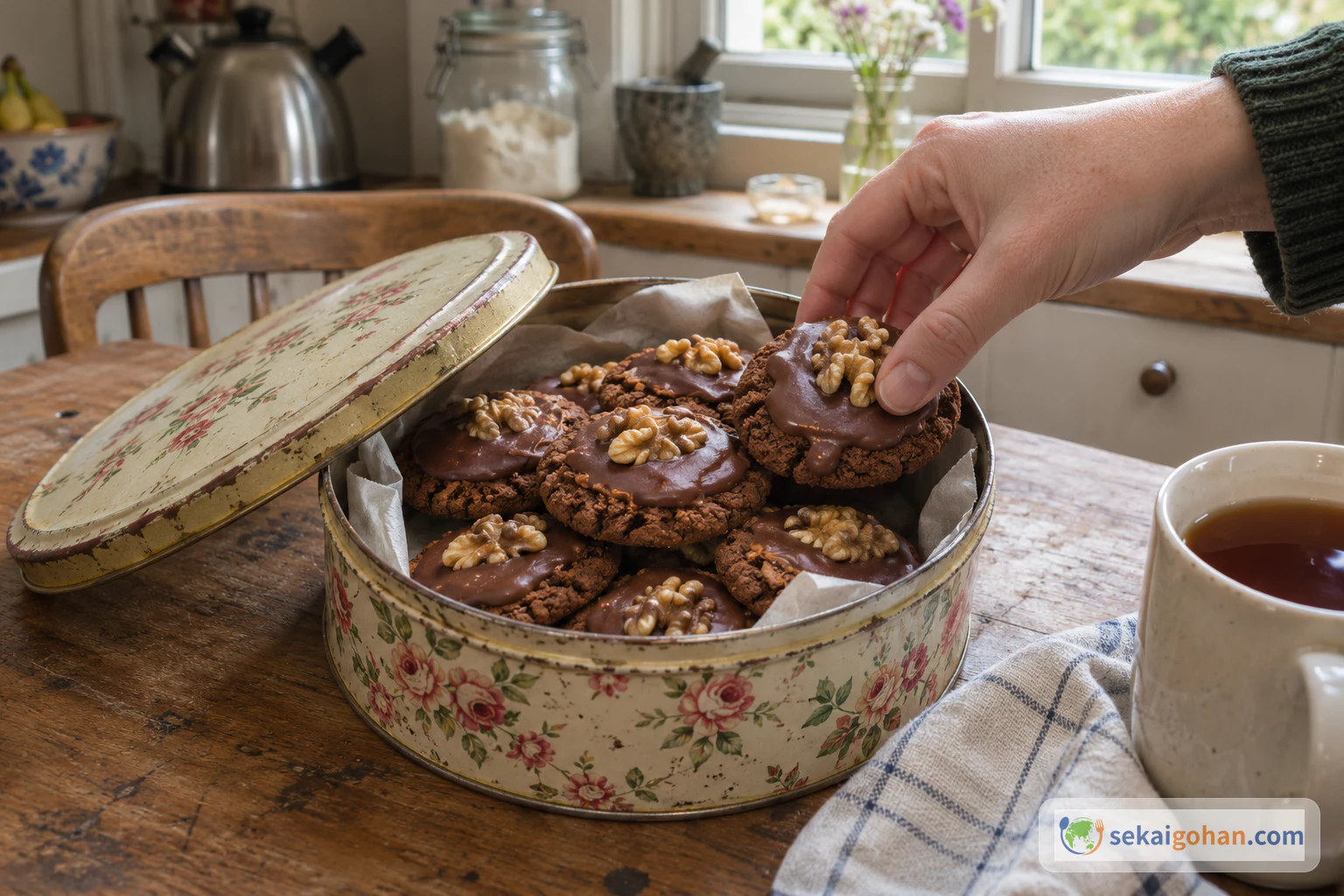
Afghans are a biscuit-tin biscuit. They are baked in a batch, packed into the tin and brought out over a cuppa with friends, or slipped into a lunchbox. Tea with milk suits them best, its softness meeting the bitter cocoa and walnut. In New Zealand you will also find them stacked in bakery cabinets and school tuck shops, so a plate of them reads as everyday home baking rather than a party piece.
Variations
- Water icing without butter. Mix the icing with icing sugar, cocoa and water only. It dries faster and firmer, which makes the biscuits easier to carry and stack, though it has less gloss and richness.
- Chopped toasted walnuts. Instead of a half on each biscuit, scatter chopped toasted walnuts over the wet icing. The nut flavour spreads across every bite and each biscuit looks lighter.
Storage
Let the biscuits cool completely, then store them in an airtight container. Damp air softens the cornflakes, so close the lid well.
Frequently Asked Questions
Can I leave the walnuts off?
Yes. The walnut is an optional topping and the biscuit is complete without it. Leaving it off also makes the batch nut-free, though check the cornflake label for any allergen statements.
Should I crush the cornflakes before adding them?
Add them whole and let the folding break them naturally. If you want a more even texture, crush them roughly by hand so larger pieces still remain. Crushing them fine gives a uniform biscuit without the pockets of crunch.
Can I make the biscuits smaller?
Yes. Use a smaller spoon to shape the mounds and you will get more biscuits from the same dough. Smaller mounds bake faster, so check them early and take them out when the edges are firm and the centres spring back.