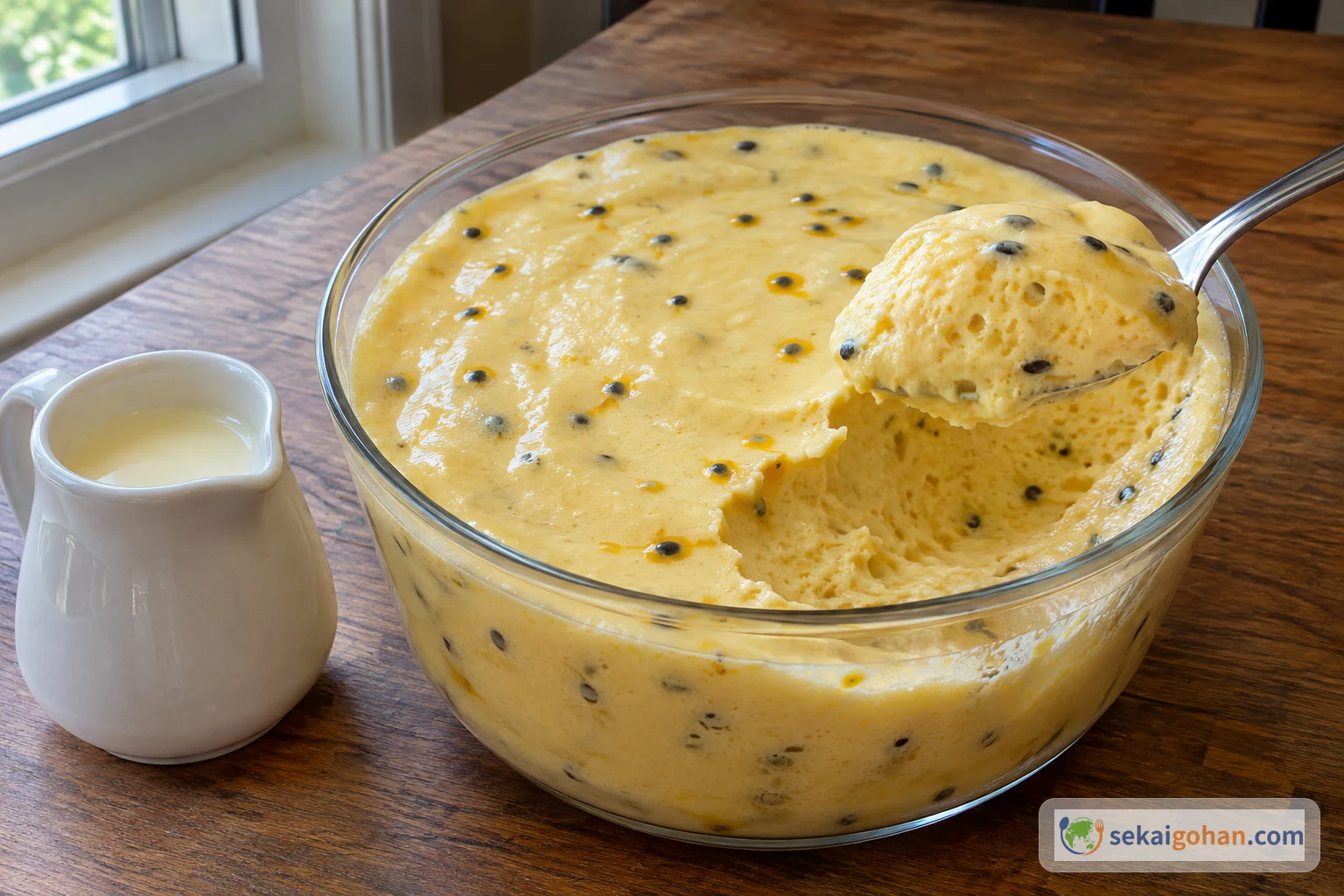
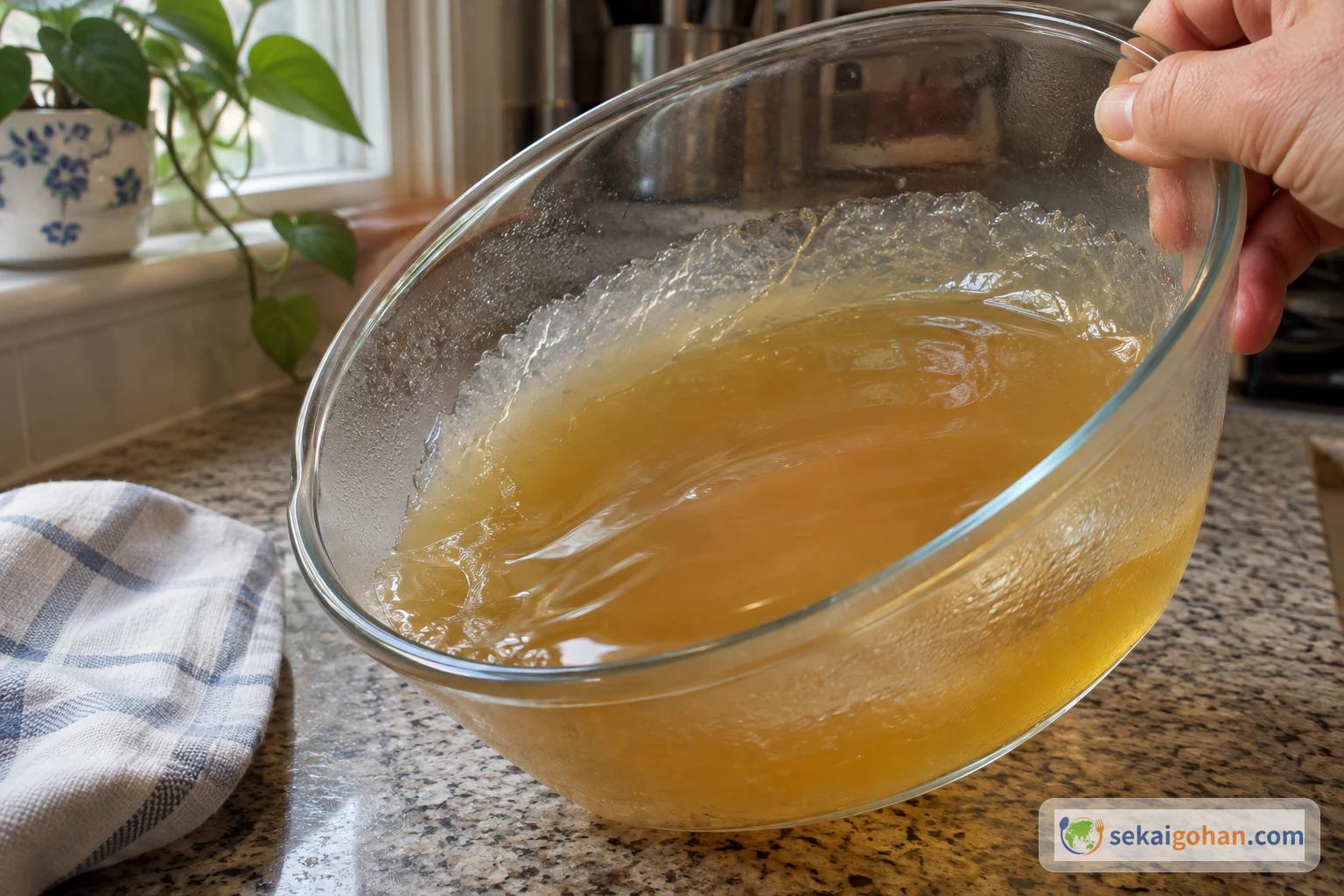
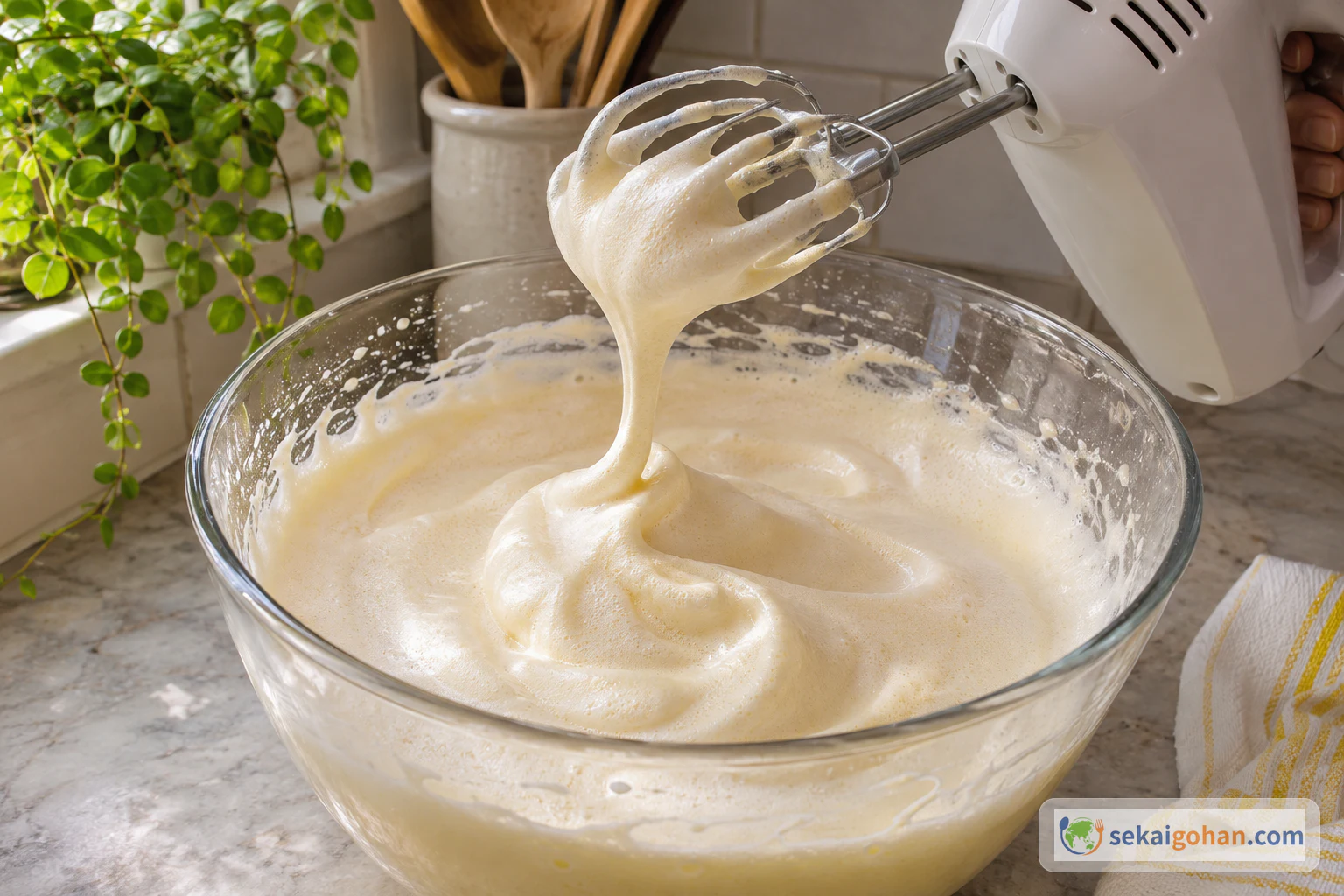
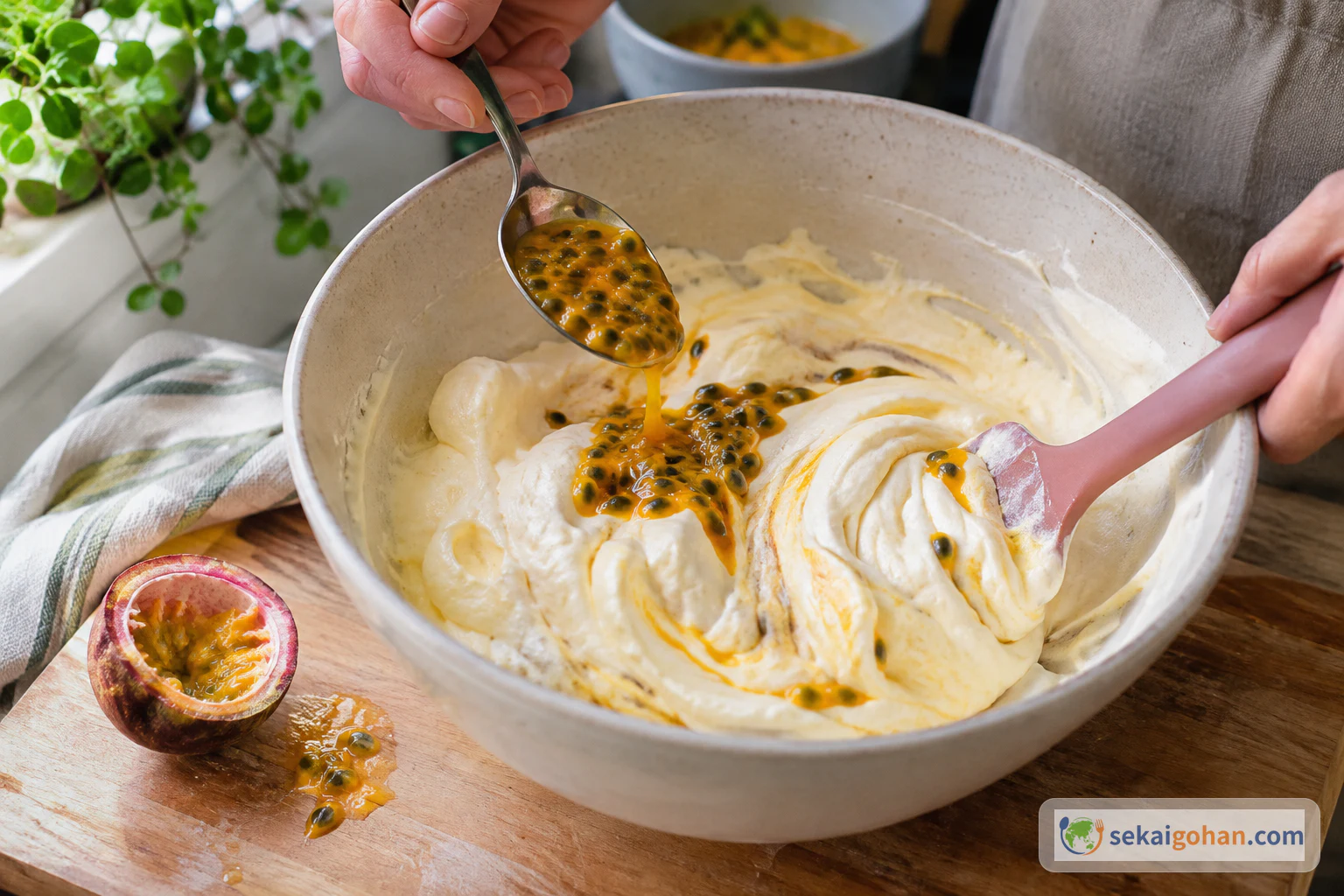
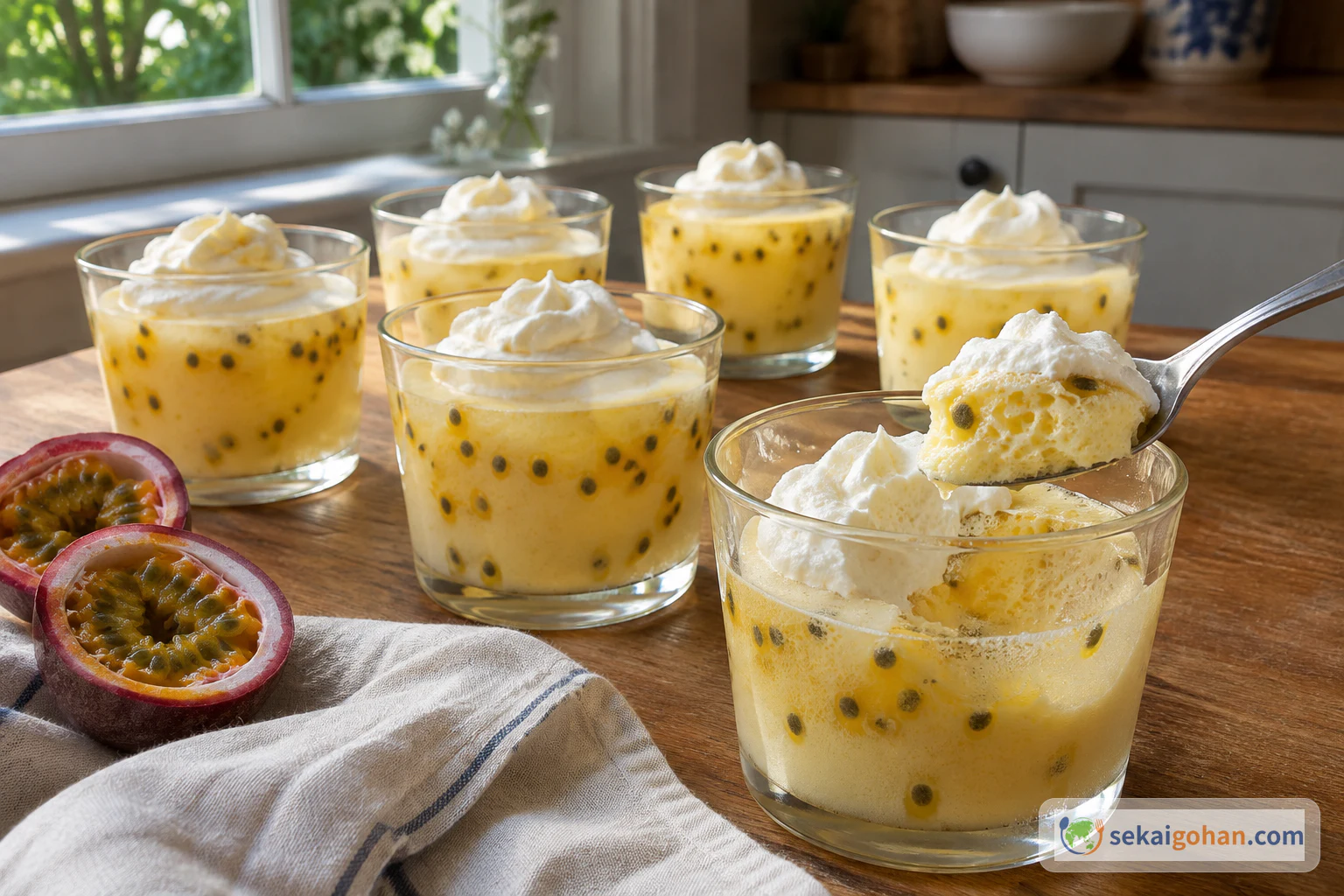
Flummery is made at the moment you put the beaters into a bowl of pale jelly that has just begun to set at the edges. The clear, citrus-sharp mixture clouds over, turns pale and thick, and swells with air until it falls from the beaters in a heavy ribbon. Then you stir in the pulp of six passionfruit, black seeds and all, and spoon it into glasses to set.
This is the Australian fruit flummery: orange or lemon juice and passionfruit, set with gelatine and whipped light. It is sweet and tangy, with the crunch of seeds, and it eats more like a set mousse than a jelly. Cream or custard goes alongside.
Four Dishes Called Flummery
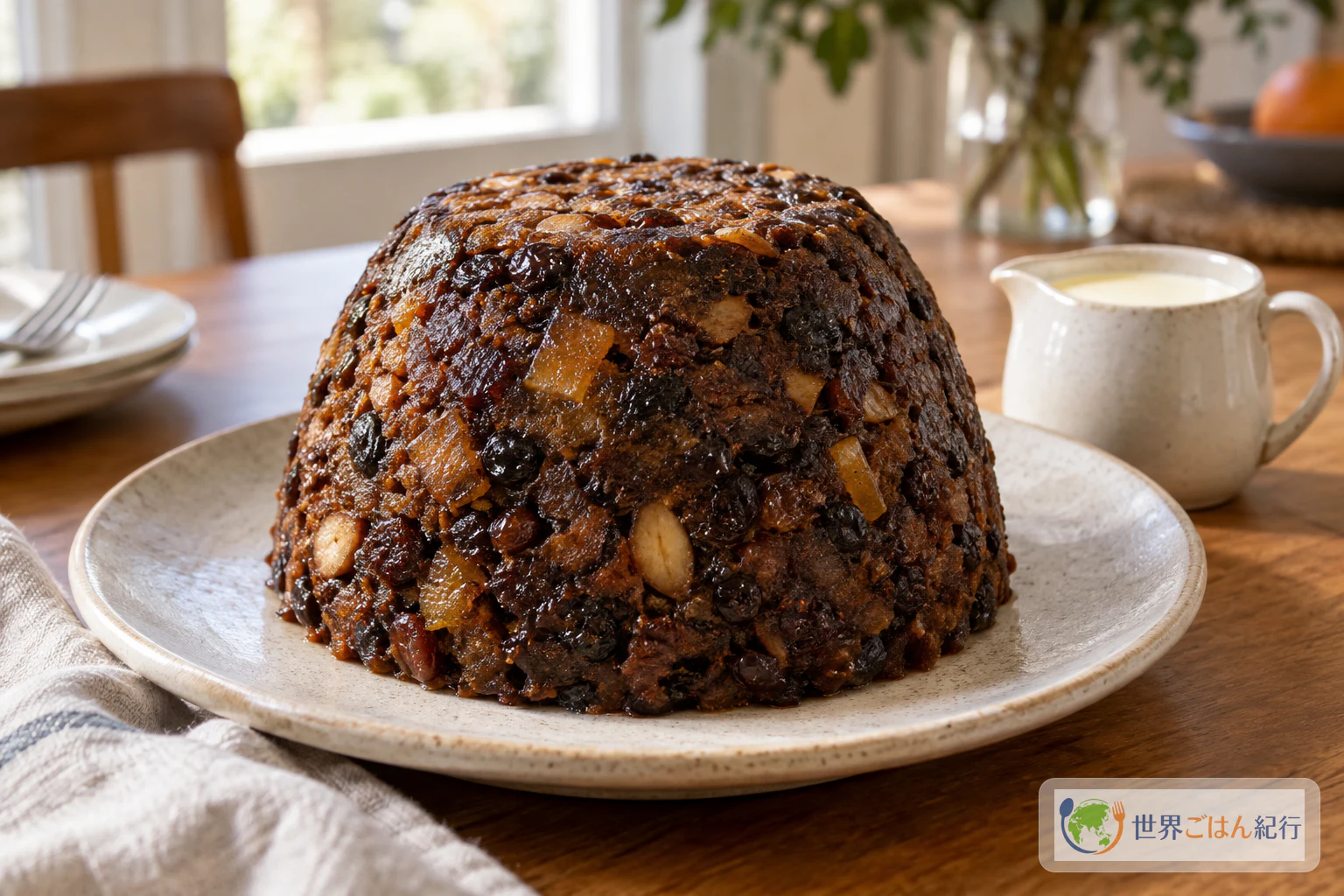
Ask four people for flummery and you may get four different things. The word has been attached to very different puddings over four centuries, and all of them still turn up under the name.
| What it is | Where it belongs | |
|---|---|---|
| 1 | Oat husks soaked in water, sometimes fermented, then cooked down to a sour, thick jelly eaten as porridge | Wales (llymru), Scotland (sowens), Cheshire and Lancashire (wash-brew) |
| 2 | A sweet jelly of cream or almonds, set with calves' feet, isinglass or hartshorn, a relative of blancmange | England, from the late 17th century |
| 3 | Fruit juice and pulp with gelatine and a little flour, cooked, cooled to half-set and whipped before setting | Australia, the recipe here |
| 4 | Jelly crystals whipped with ice-cold evaporated milk | Australia, a household staple by the 1970s |
The third and fourth share a name and a country, but the ingredients and the method are entirely different. The recipe below makes the third. The fourth has its own short recipe further down.
From oat porridge to sweet jelly
The name is usually traced to Welsh llymru. In 17th- to 19th-century Britain it was a thrifty food: oat husks that would otherwise be thrown away were soaked so the water drew out their starch, sometimes left to ferment, then heated until thick and eaten as porridge with milk. By 1623 it was being described in England as oats soaked and boiled into a thick jelly.
Towards the end of the 17th century the name drifted to something richer. Flummery came to mean a sweet set jelly of cream or ground almonds. In 1773 a jelly of isinglass, Seville orange, white wine and egg yolks carried all the marks of flummery under the name Jaune Mange, and by 1845 a similar jelly was also being called Dutch Flummery.
Flummery has always been a loose word. Fools and syllabubs have passed under it too, so a flummery recipe tells you little until you read its ingredients.
Sydney, 1855
The flummery that came to Australia arrived first as a trade skill. In 1855 a Sydney newspaper carried a job advertisement for a confectioner who could make Spanish flummery. Before it was a home dessert, it was something you paid a professional for.
Colonial kitchens soon took it up. In 1864 a Spanish flummery of cream and rice flour, with no gelatine at all, appeared in a cookery book for English and Australian households. An apple flummery of 1879 used apple, sugar, lemon peel and gelatine, with cream, and custard poured over. In 1886 a Yellow Flummery was set with isinglass and enriched with white wine, lemon and seven egg yolks; in 1893 a rice flummery was flavoured with milk and almond essence.
Isinglass, a collagen from the swim bladders of fish such as sturgeon, gave way to gelatine. In 1917 Davis Gelatine was founded at Botany in suburban Sydney, became Australia's only gelatine maker and a fixture in home pantries. Through that century the Australian line stayed recognisable: fruit juice and pulp, gelatine, sometimes milk or cream, and mostly no condensed milk. The passionfruit flummery of the 1940s, thickened with a spoonful of flour and whipped as it sets, belongs to that line.
The other flummery: jelly crystals and evaporated milk
In 1927 Bert Appleroth, a Sydney tram driver, began making jelly crystals in his bathtub and selling them along the tram routes. By 1930 the brand's jingle was playing on the radio, and in 1970 the crystals spread beyond New South Wales. Jelly crystals appear in an Australian recipe as early as February 1928.
Flummery soon met the crystals. In July 1940 a reader's Orange and Passionfruit Flummery was made with jelly crystals, milk and egg. A 1951 Flummery with Meringue Tops used sweetened condensed milk, gelatine and passionfruit. On 2 October 1957 a full-page magazine advertisement for Carnation Jelly Whip set out the two-ingredient form: jelly crystals and ice-cold evaporated milk. That is the flummery many Australians grew up with, a dessert that became a staple in the 1970s and is now often called jelly whip.
It is often said this version was born of wartime or post-war shortages, when dairy grew expensive and a half-set jelly whipped with evaporated milk stretched what was in the cupboard. Yet a look through sixty flummery recipes from 1950s Australian papers turns up not one that pairs jelly crystals with evaporated milk, and whether the idea started in Australia or the United States is not settled. One theory points to a manufacturer's test kitchen.
To make it, dissolve a pack of jelly crystals in 1 cup plus 2 tsp (250 ml) boiling water, then whip it together with 1 cup plus 2 tsp (250 ml) ice-cold evaporated milk. Keep it separate from the recipe below; none of its amounts carry across.
Ingredients (serves 6)
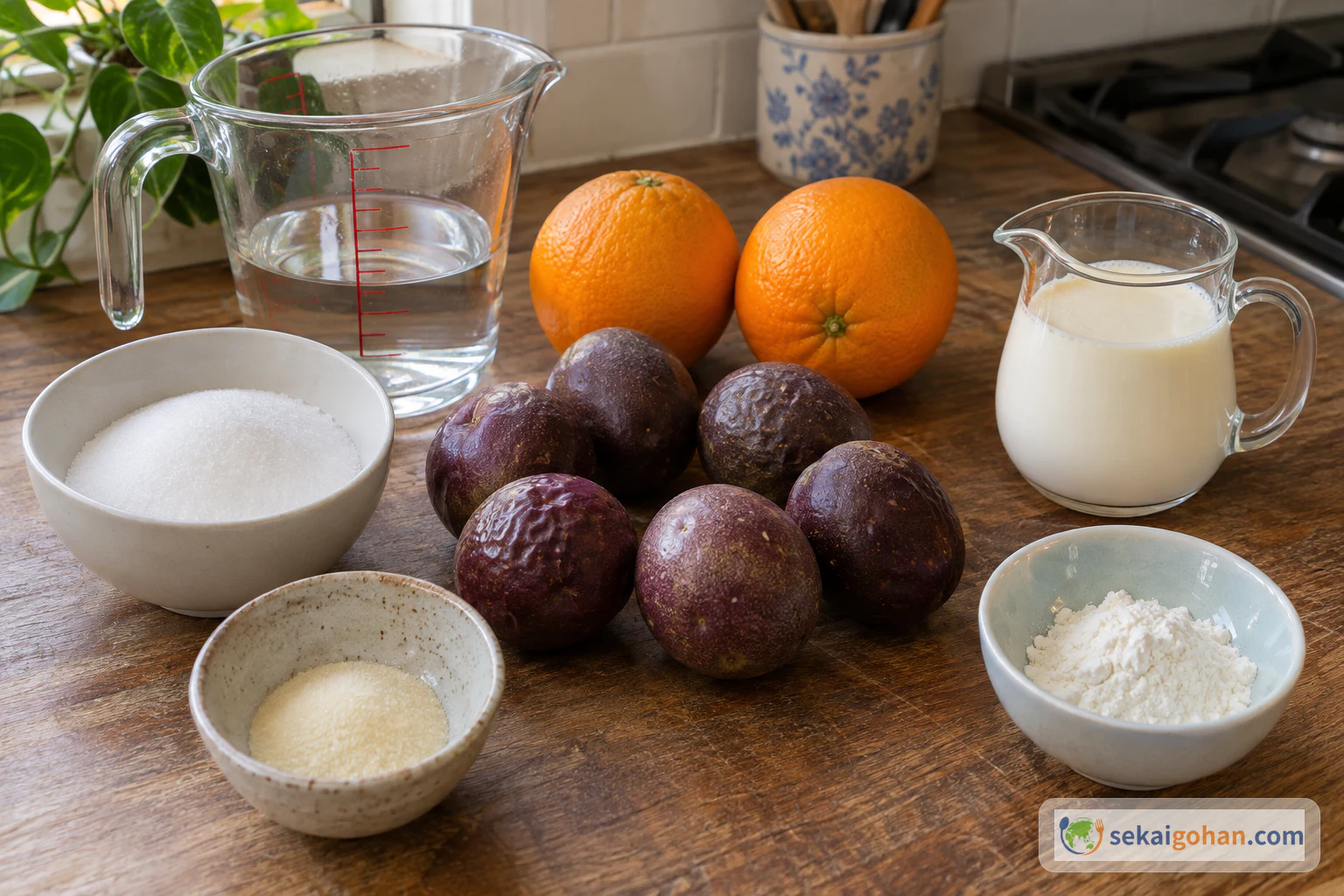
Measure by the millilitre figures with a jug marked in ml; ordinary US cups and spoons are smaller, so the cup and spoon amounts are only approximate. The gelatine is the lighter amount meant for setting in a refrigerator; more gelatine sets the mixture too firm to whip smoothly.
Contains wheat (plain flour). Cream and custard served alongside contain milk. Gelatine is an animal product, made mainly from pork or beef collagen, so the dessert is unsuitable for vegetarians and for anyone avoiding pork or beef. This recipe uses no raw egg and no alcohol.
Equipment
- Measuring jug marked in millilitres, and measuring spoons
- Two small bowls or cups (flour paste and gelatine)
- Heavy-based saucepan
- Wire whisk
- Hand mixer, or a whisk and a strong arm
- Deep mixing bowl
- Rubber spatula
- Knife and teaspoon for the passionfruit
- A glass serving bowl or six small glasses
Buying and Swapping
Passionfruit is the one ingredient worth a special trip. You need the pulp of six, and the seeds stay in: they give flummery its dark flecks and its small crunch against the soft foam. For the juice, freshly squeezed and 100% juice from a carton both work. Orange gives a rounder, sweeter dessert; lemon gives a sharper one.
Powdered gelatine varies in strength from brand to brand. Check the label for how much liquid a given amount sets and compare it with the tablespoon here. Sheet gelatine works too, but go by the strength on its pack rather than swapping spoon for spoon.
Plain flour is what you want for the paste; it thickens the syrup without any flavour of its own. For serving, pouring cream, softly whipped cream and ready-made custard all suit it. What has to stay is the whipping and the passionfruit. Choosing orange or lemon is entirely yours.
Method
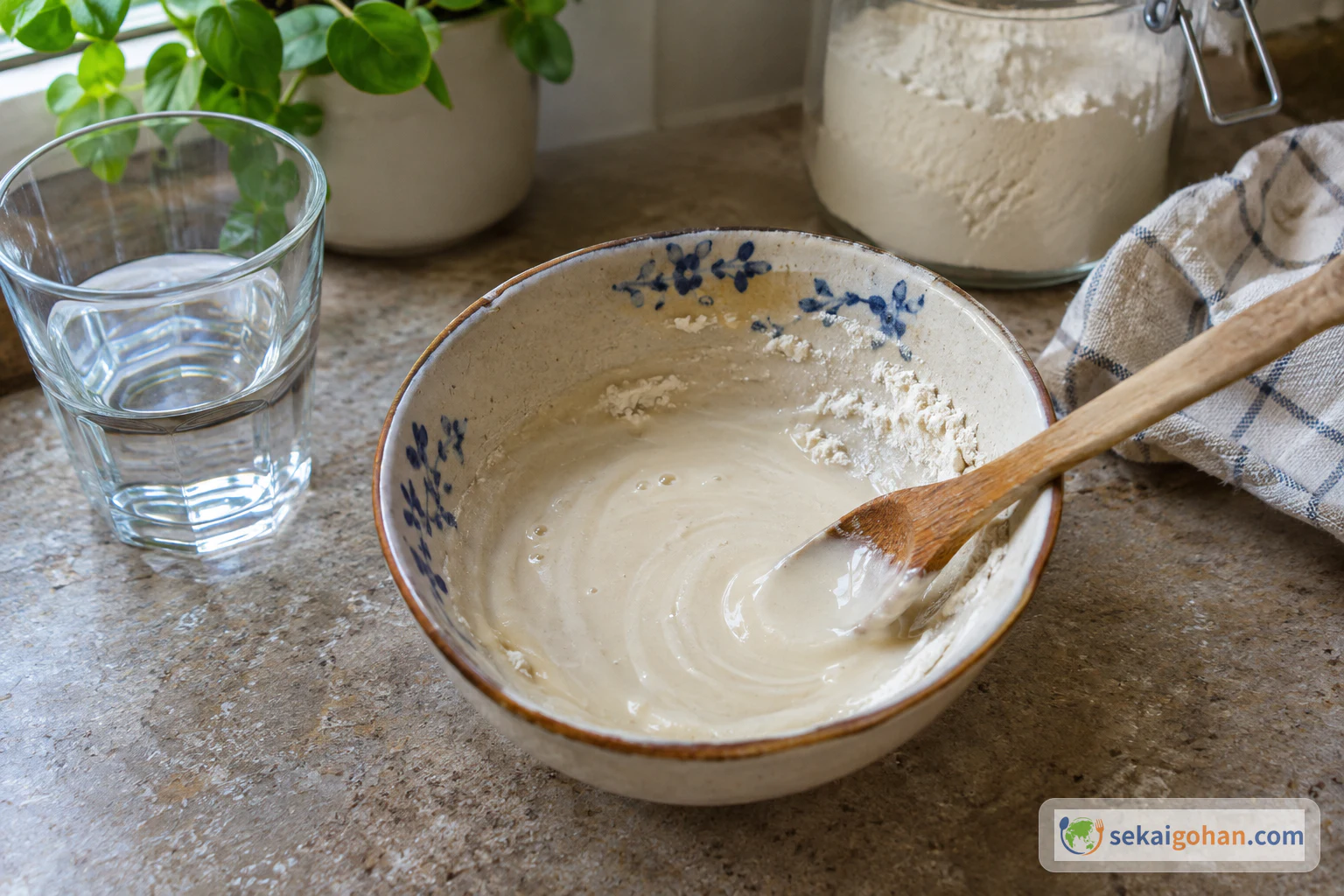
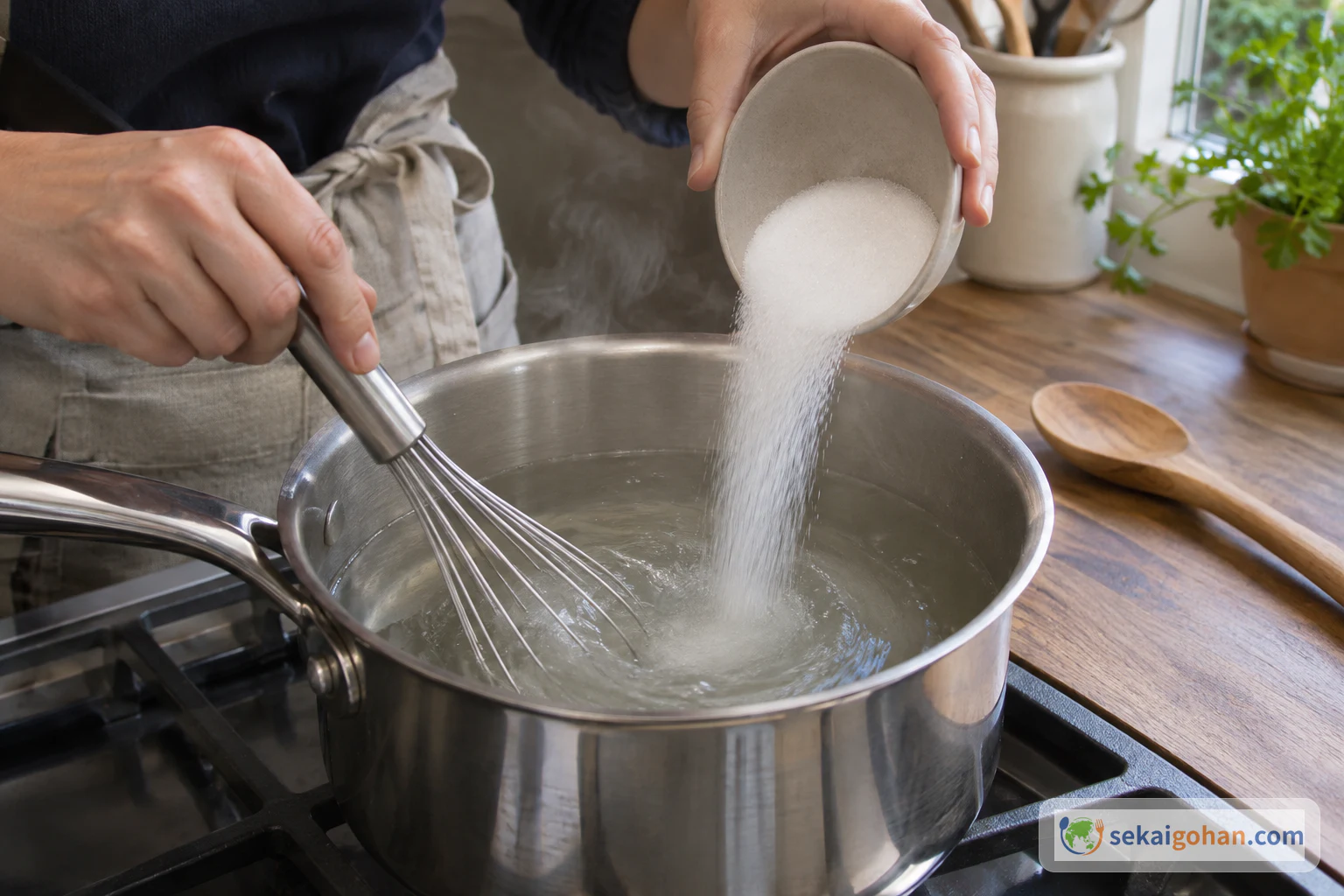
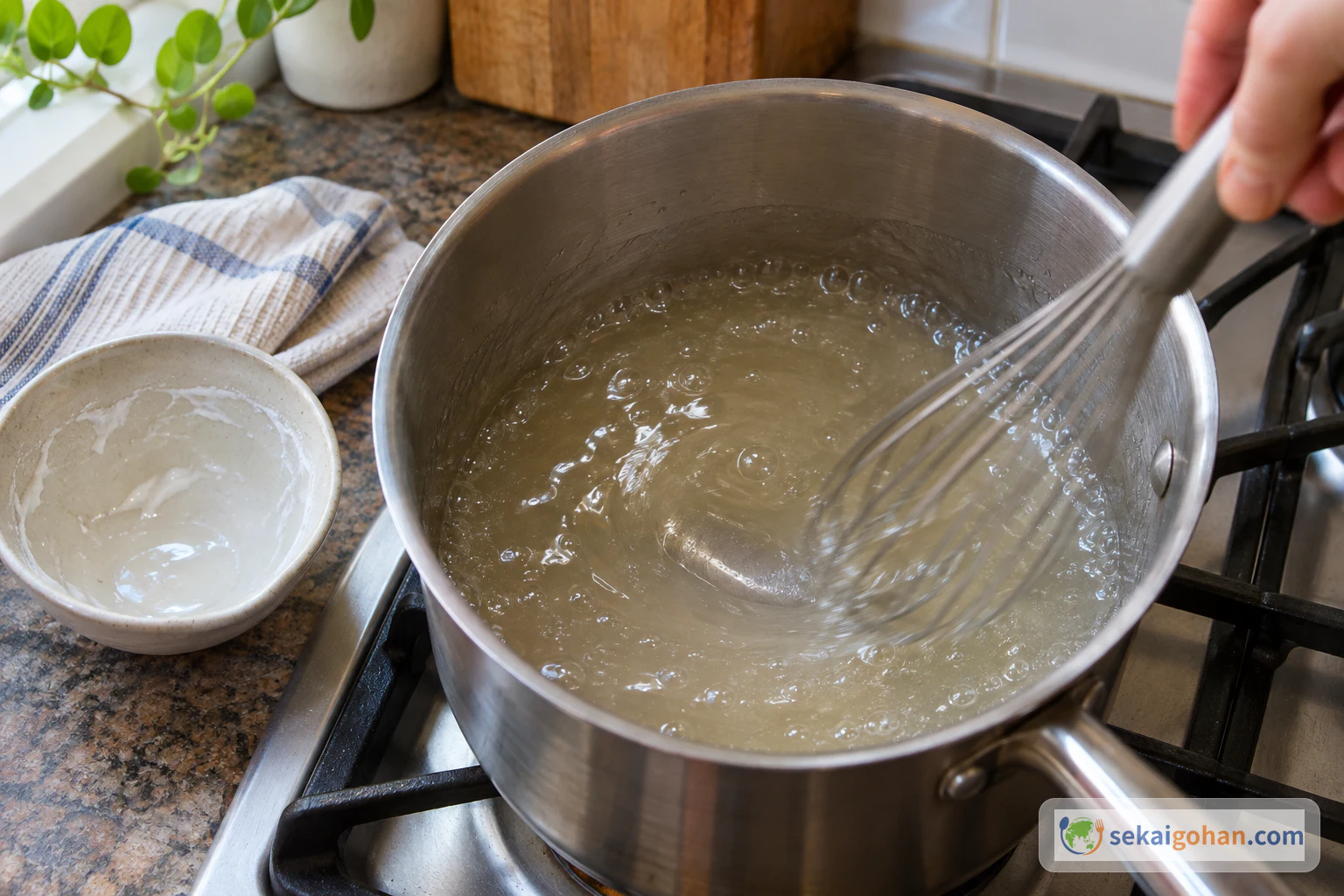
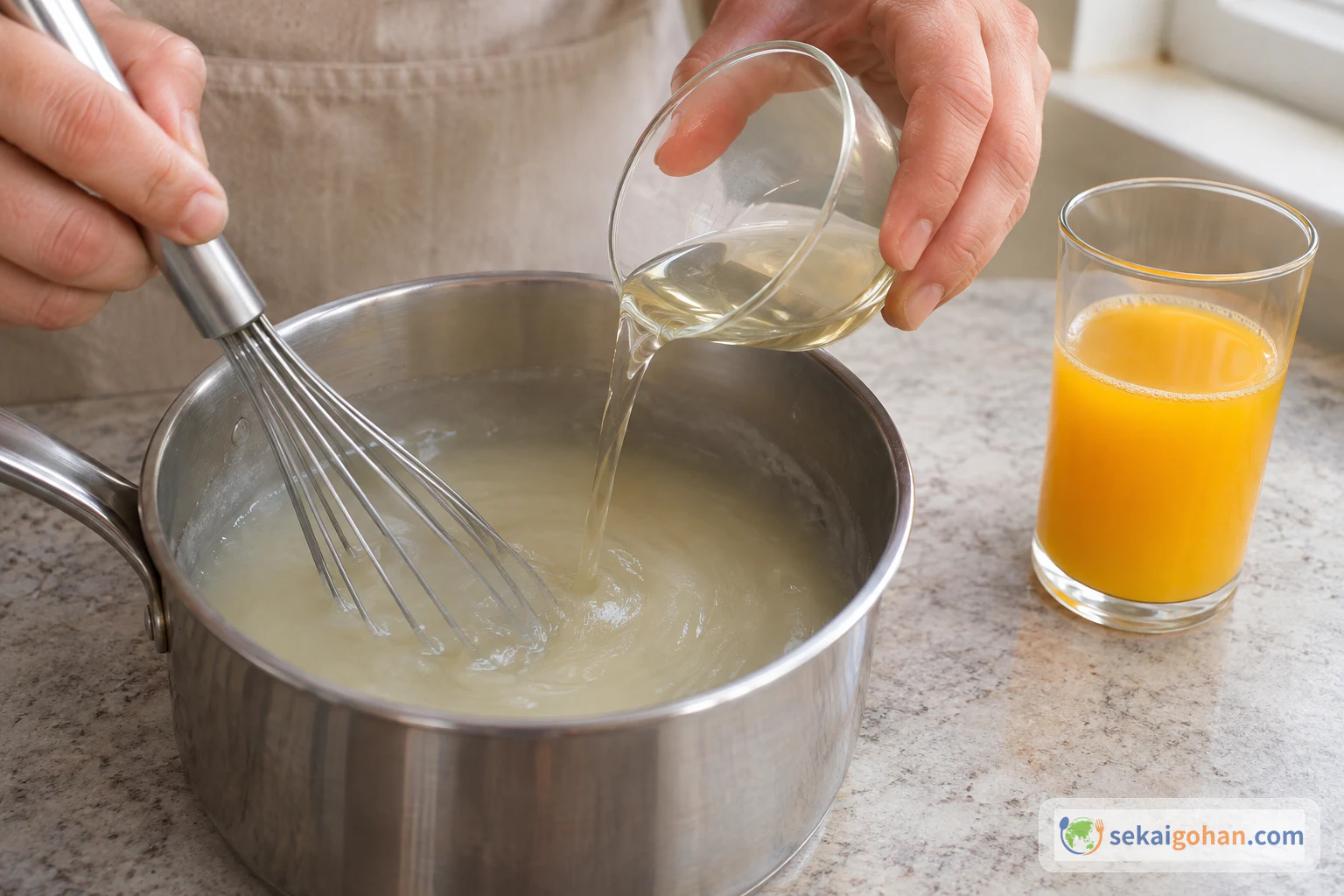
All the cooking happens in one saucepan: a flour paste first, then a sugar syrup, a short boil, and the gelatine and juice stirred in. The hands-off time comes next, while the mixture cools to half-set; check it often, because the half-set moment decides the texture. After that come a few minutes of whipping, the passionfruit, and a final rest in the refrigerator.
When It Goes Wrong
| What you see | Why | What to do |
|---|---|---|
| Grains of flour in the finished dessert | The flour went in dry or the paste had lumps | Next time stir the paste until no dry flour is left, and add it to the syrup a little at a time |
| A scorched taste or brown flecks | The heat was too high during the 5-minute boil, or the bottom was not scraped | Use a heavy pan, keep the heat low to medium and whisk the bottom without stopping |
| The mixture set solid before you whipped it | Too much gelatine, or it was left too long while cooling | Keep to the refrigerator amount of gelatine and check the edges often while it cools |
| Gritty specks of gelatine | The gelatine was not fully dissolved | Stir it in the hot water until clear before it goes into the pot |
| The whipped mixture separates | It was still too warm when you beat it | Let it cool fully to half-set before the mixer goes in |
Serving, Variations and Storage
At the table
Flummery is a dessert for the end of a family meal, set in a big glass bowl or in individual glasses so everyone can see the seeds through the sides. Spoon cream over the top or pass a jug of cream or custard.
Variations
- Lemon flummery: use lemon juice in place of orange, in the same amount. The dessert is sharper and paler.
- Half orange, half lemon: split the juice between the two, keeping the same total. You get the roundness of orange with a lemon edge.
- Less sweet: the dessert is quite sweet. Cut the sugar by a third, to ½ cup plus 1 tsp (125 ml), and the passionfruit comes forward.
- Apple and lemon flummery: a lighter, egg-based Australian version. Two cooking apples such as Granny Smith are simmered in ½ cup (125 ml) water and puréed, then heated with ⅔ cup (150 ml) dessert wine and the zest and juice of two lemons. A ⅓-oz (10 g) sachet of powdered gelatine is dissolved in, and the mixture is cooled. Four eggs are separated; the yolks are whisked with half of about 4 oz (110 g) caster sugar, the whites whipped with the other half, and both folded in with ⅔ cup (150 ml) cream whipped. It serves 6 and is chilled for 4 hours. Keep its amounts apart from the passionfruit flummery.
The apple and lemon flummery folds in egg whites that are never cooked and contains dessert wine. Do not serve it to young children, pregnant women or anyone with a weakened immune system. The passionfruit flummery above has no raw egg and no alcohol.
Storage
Keep flummery covered in the refrigerator. As a rough guide rather than a fixed limit, eat it the day it is made. Serve it straight from the cold. Never warm it, as the gelatine melts, and do not leave it out at room temperature, where it loses its shape.
Frequently asked questions
Why is there flour in a gelatine dessert?
The flour, boiled briefly in the syrup, gives the base body. Gelatine alone makes a clear, bouncy jelly; with the flour, the whipped foam has a smoother, softer feel on the tongue. Cook it the full 5 minutes so no raw flour taste remains.
Should I strain out the passionfruit seeds?
No. The seeds are part of the dessert: they give the dark speckles and a small crunch against the airy set. Stir them in with the pulp.
Can I whip it by hand?
Yes, a balloon whisk does the job. It takes more effort than a hand mixer, so start while the mixture is just half-set and keep a steady pace until it turns pale and thick. The doneness cue is the same: a heavy ribbon that holds its shape briefly on the surface.
Can I use agar or kanten instead of gelatine?
Agar and kanten set with a different bite, release water differently and melt differently in the mouth, so they make a different dessert. Treat an agar version as a separate recipe and work out its amounts from scratch. For flummery as it is made in Australia, use gelatine.