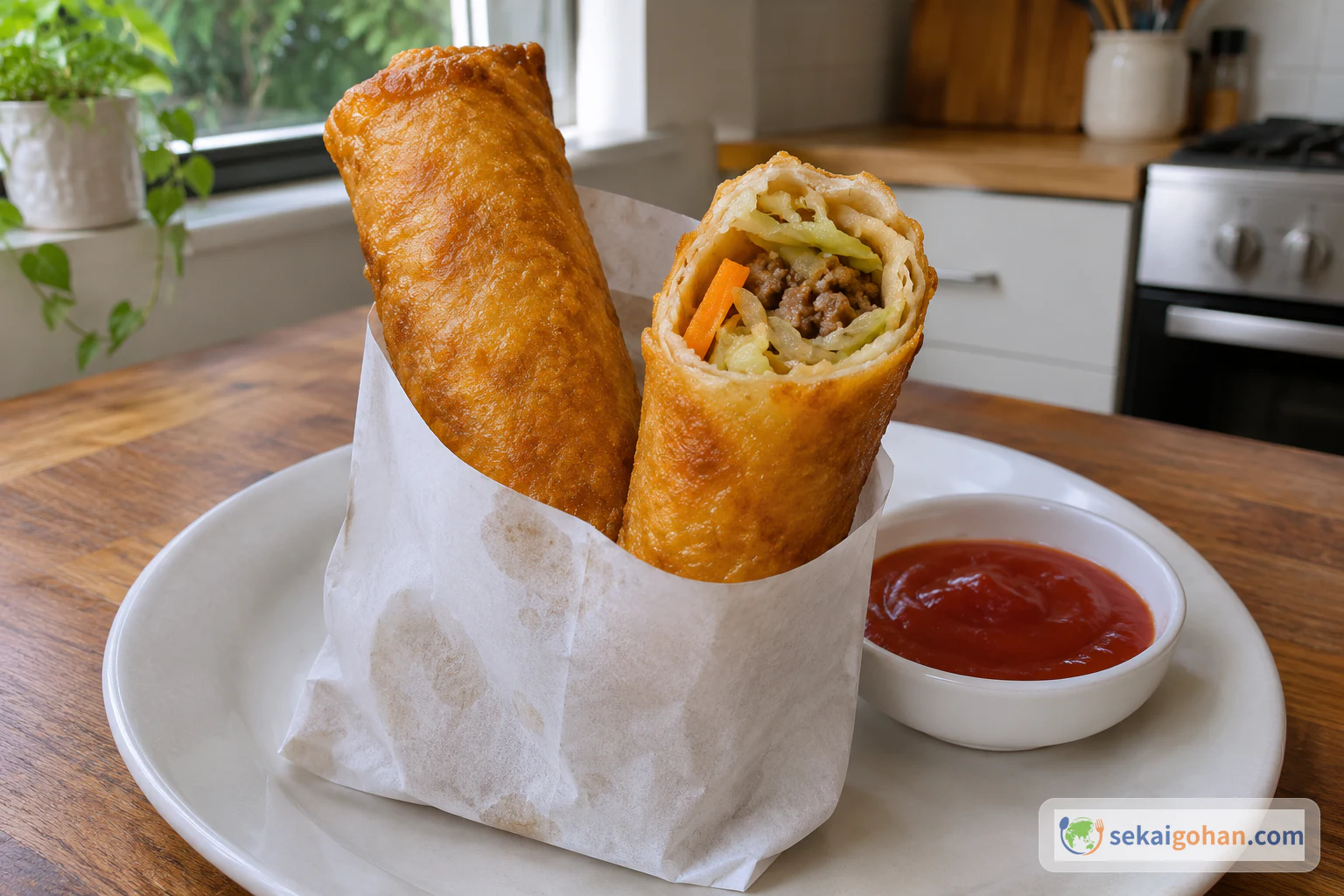
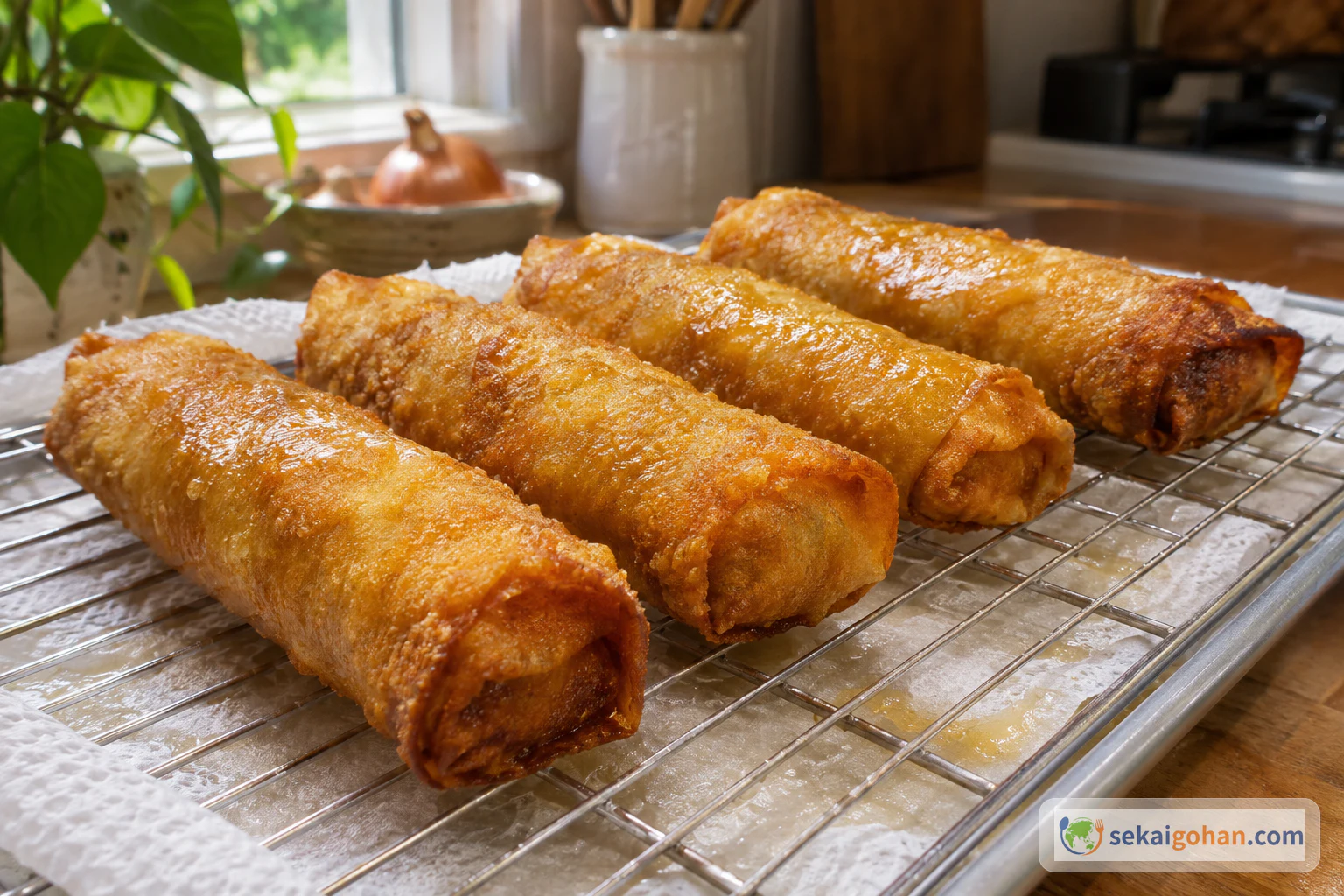
At a fish and chip shop counter, the roll comes out of the freezer, goes into the fryer, gets a squirt of sauce and is handed over in a paper bag. You eat it standing up, one hand free, at the beach kiosk or in the stands at the football. The crust is thick and blistered, closer to fried pasta than to a flaky spring roll. Inside is a soft, savory tangle of cabbage, carrot, onion and mince seasoned with soy sauce. At home, made from a fresh egg dough, the chewy, crackling pastry becomes the reason to make it.
A Chicken Roll with No Chicken in It
The Chiko Roll first went on sale in 1951 at the agricultural show in Wagga Wagga, New South Wales. Its inventor, Frank McEncroe, was a boilermaker from Bendigo in Victoria who catered football matches and other outdoor events. The idea came from the Chinese-Australian egg roll. His version wrapped the filling in a thick egg-and-flour pastry, a snack for outdoor events built to be gripped in one hand. The McEncroe family holds that three brothers, Leo, Gerry and Frank, all had a hand in it.
It was first sold as the "Chicken Roll", competing with the chicken rolls fashionable at the time, and it never contained chicken. Beef and mutton have both gone into it over the years. The name Chiko is usually traced to that first name, though exactly how the shorter name took hold is not settled.
From milk bars to a national argument
By 1956 nearly every milk bar and fish and chip shop in the country kept frozen Chiko Rolls on hand. That is still how most people meet one: fried to order, sauced and passed over in paper. It became tied to beach kiosks and surf culture, and people who grew up in the 1970s still remember the posters of a woman astride a motorbike, Chiko Roll in hand. At its 1970s peak the company says it sold some 40 million rolls a year across Australia, with more than a million shipped to Japan. Production later moved to Melbourne, Simplot Australia bought the brand in 1995, and the rolls are now made in Bathurst, New South Wales.
Three towns claim the roll. Bendigo points to the man who invented it, Wagga Wagga to where it was first sold, and Bathurst to where it is made today. In 2016 the question reached parliament, and it has never been settled.
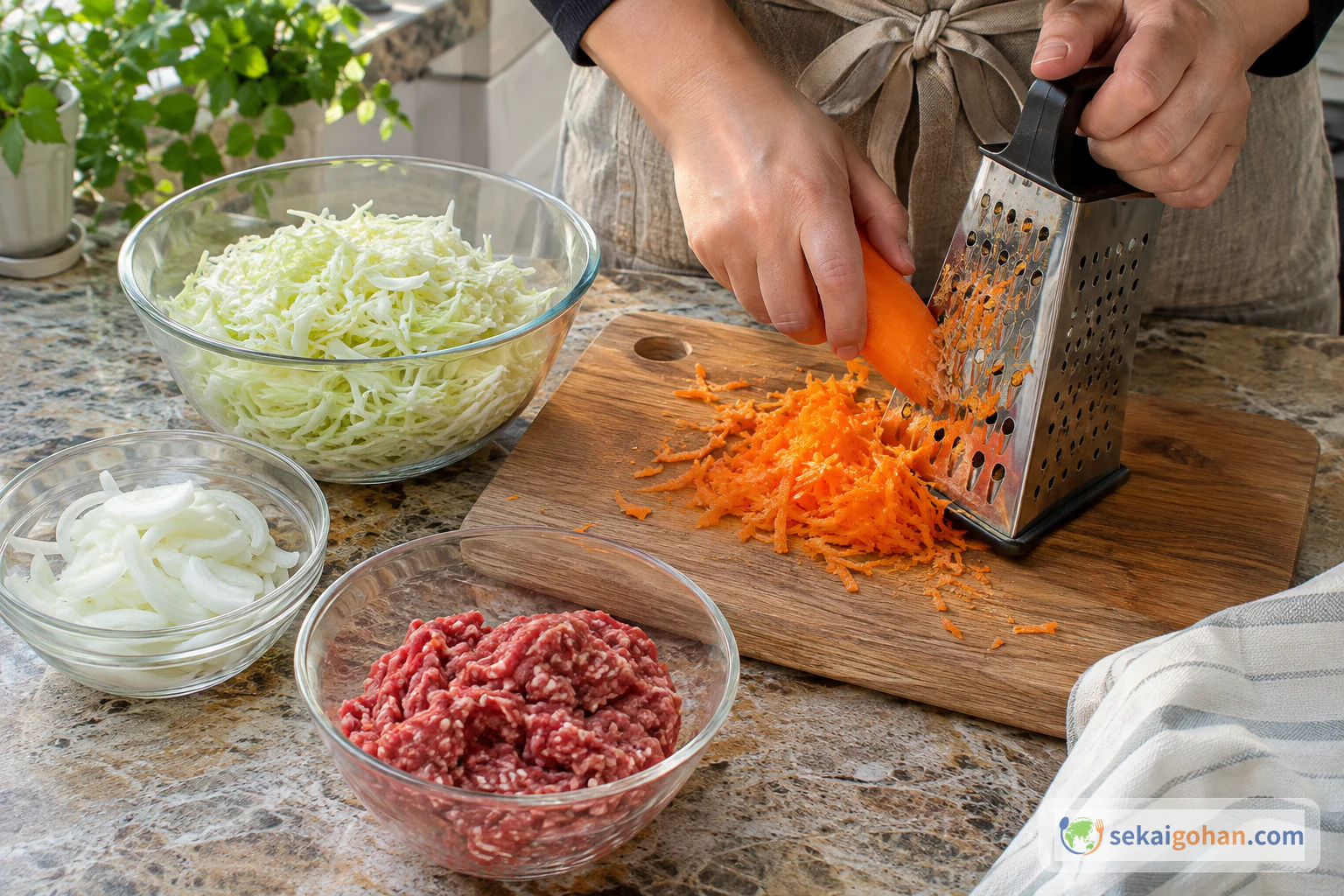
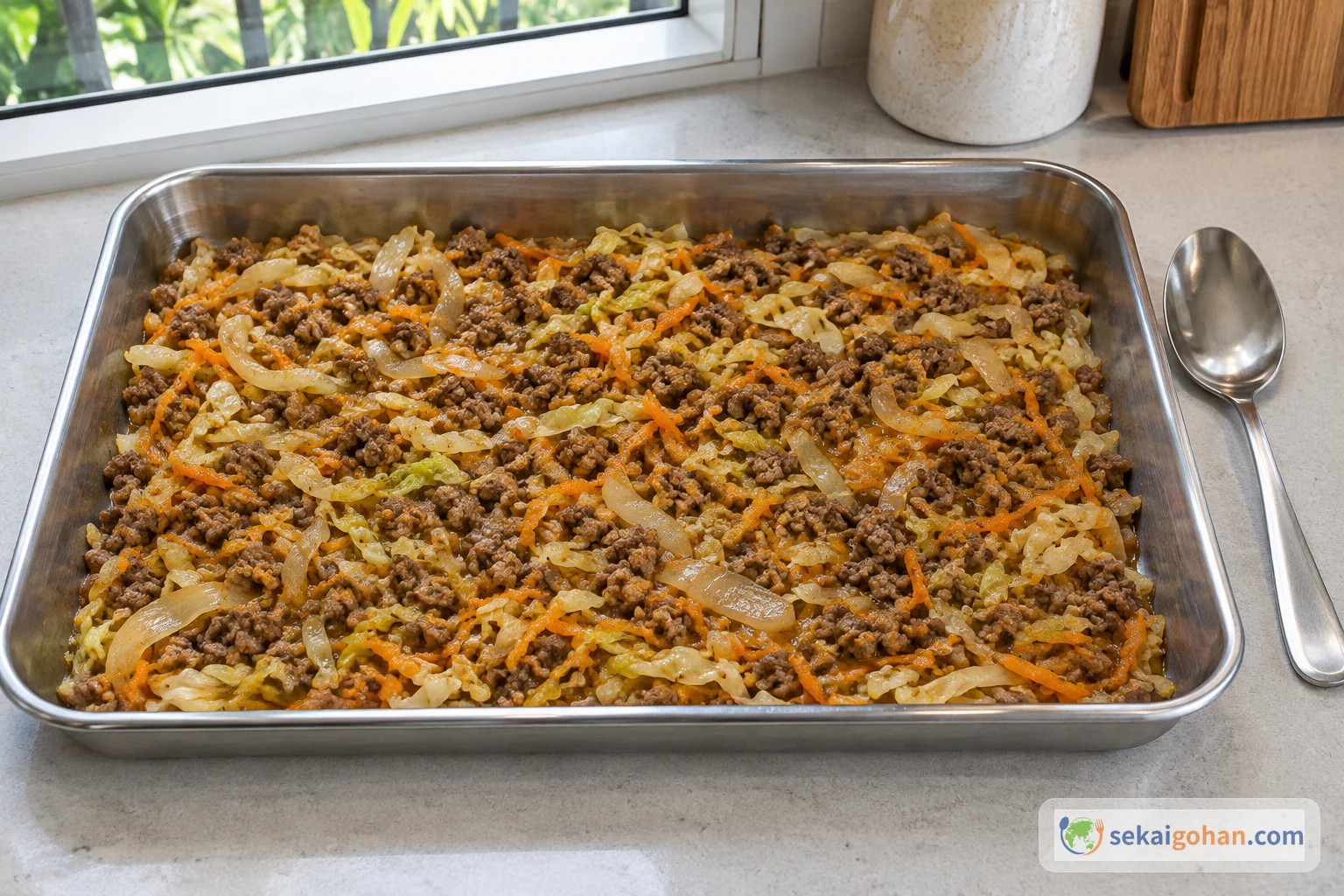
The factory filling is mostly vegetables (cabbage, carrot, celery, onion and green beans) bulked out with cooked barley, wheat cereal and soy protein, with beef at just 4%. The home version here is simpler and meatier: cabbage, carrot, onion, beef mince and soy sauce, with no barley or celery.
Home versions and close relatives
Cooks who make Chiko Rolls at home go in different directions. Some swap zucchini for the cabbage. A Bendigo restaurant once made its own with dry-aged beef and black pearl barley. The version below keeps to the shop-counter flavors and puts the effort into the pastry, rolled thin and fried until it shatters.
Set beside a Somali sambusa, with its thin crisp wrapper, the difference is all in the dough. The Chiko Roll belongs with the rest of Australia's late-night takeaway, alongside the halal snack pack. More dishes from the country are on the Australia page.
Ingredients (serves 8)
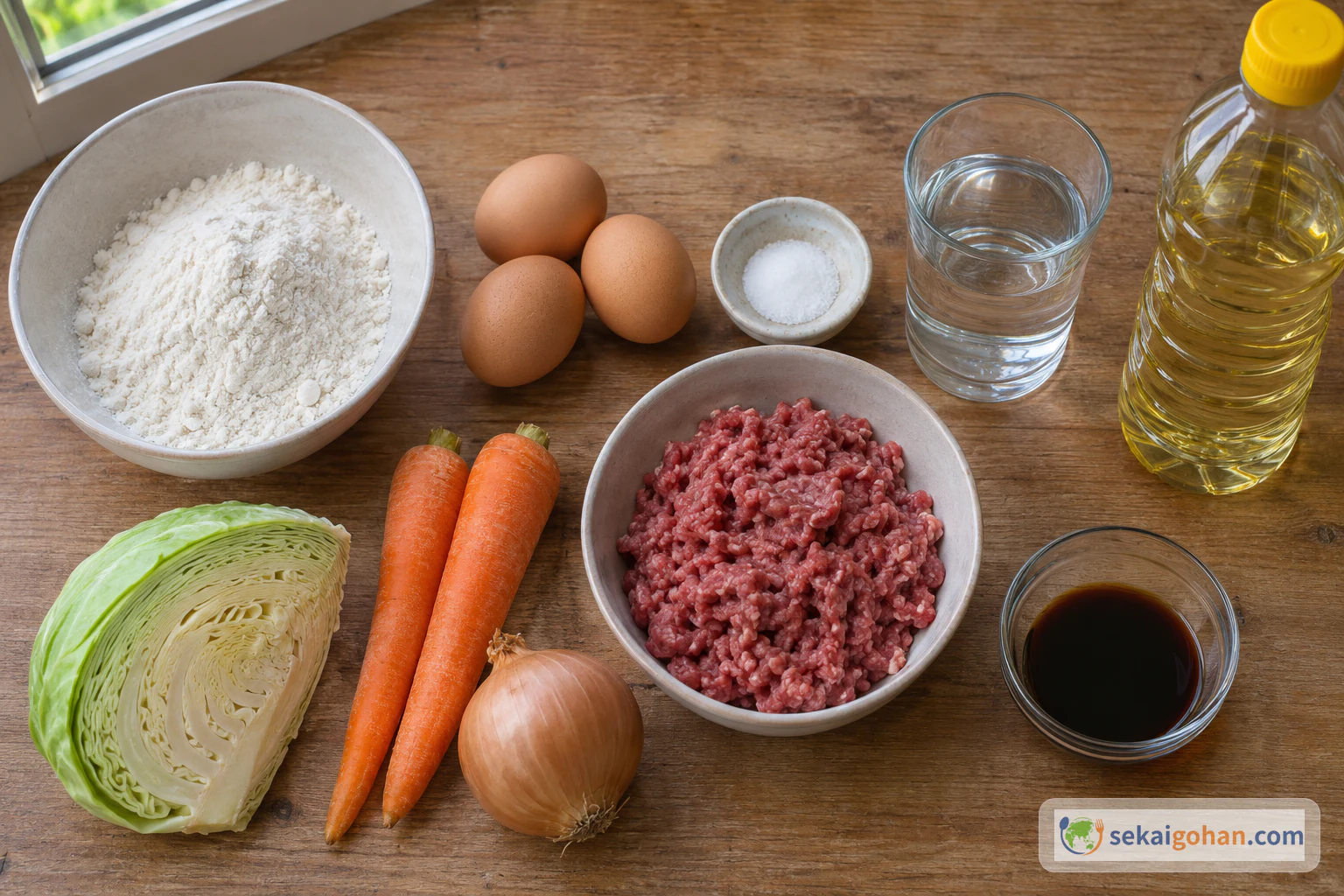
The pastry contains wheat and egg, and soy sauce contains soy and usually wheat. Check the labels on your soy sauce and oil if you cook for someone with allergies.
Equipment
- Large work surface and a ceramic bowl
- Fork
- Rolling pin and a sharp knife
- Wok or large frying pan, and a spatula
- Shallow tray for cooling the filling
- Heavy, deep saucepan, about 8 inches (20 cm) across
- Kitchen thermometer for the oil, and a probe thermometer for the filling
- Long chopsticks or tongs
- Wire rack or paper towels
- Measuring cups and spoons
Choosing and Substituting
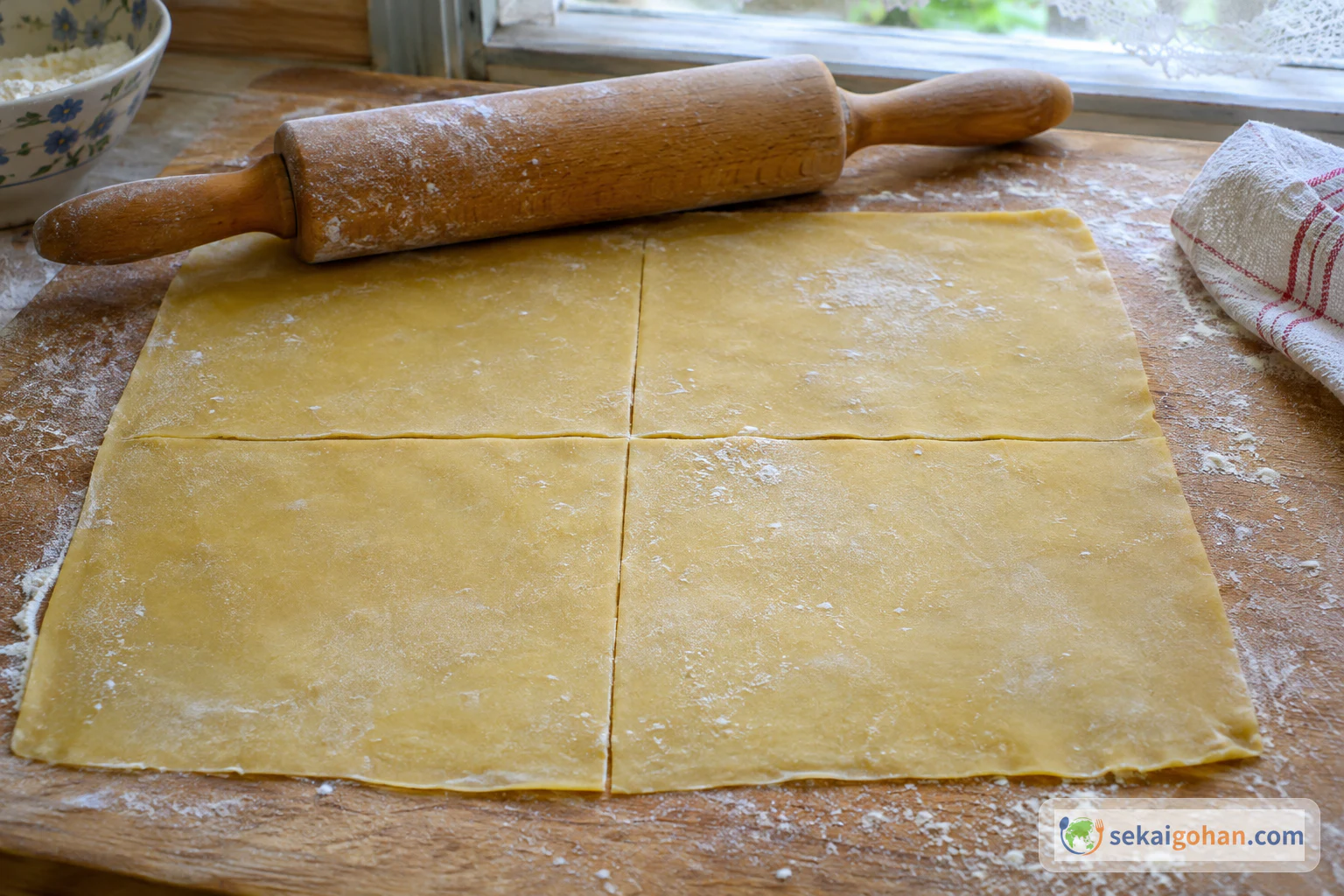
All-purpose flour is the right flour; it stretches to a thin sheet without tearing. Cake flour makes a softer dough that tears as you roll it thin. Medium eggs keep the dough at the right firmness. Any ordinary soy sauce works.
Beef mince gives the familiar shop flavor. Lamb mince makes a stronger, gamier filling, close to the mutton of older rolls. For the frying oil, a neutral oil such as canola is what the factory uses.
Thin, even shreds of cabbage cook down quickly and pack neatly into the roll. Thick ribs and coarse shreds hold water and poke through the pastry when you roll it.
Method
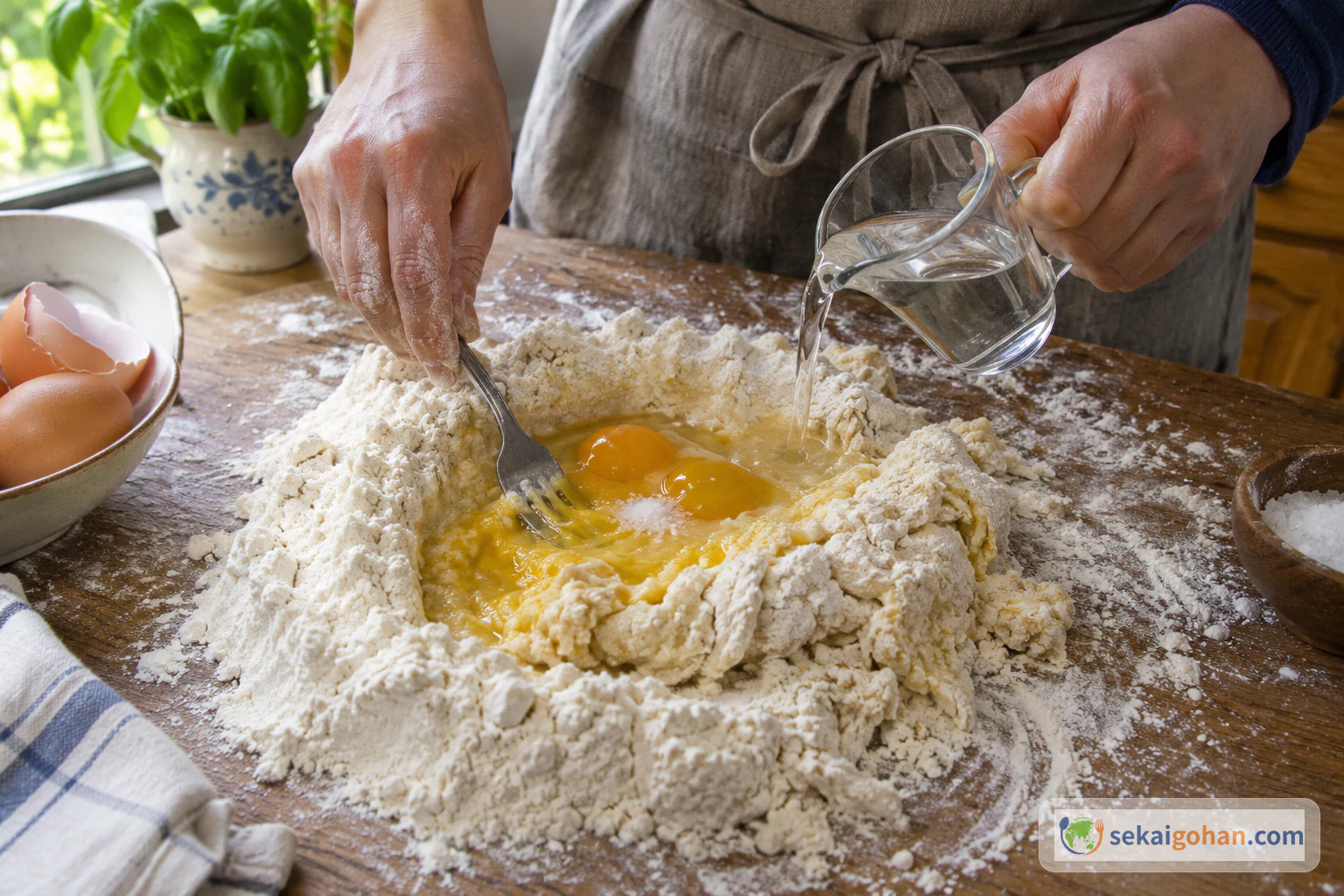
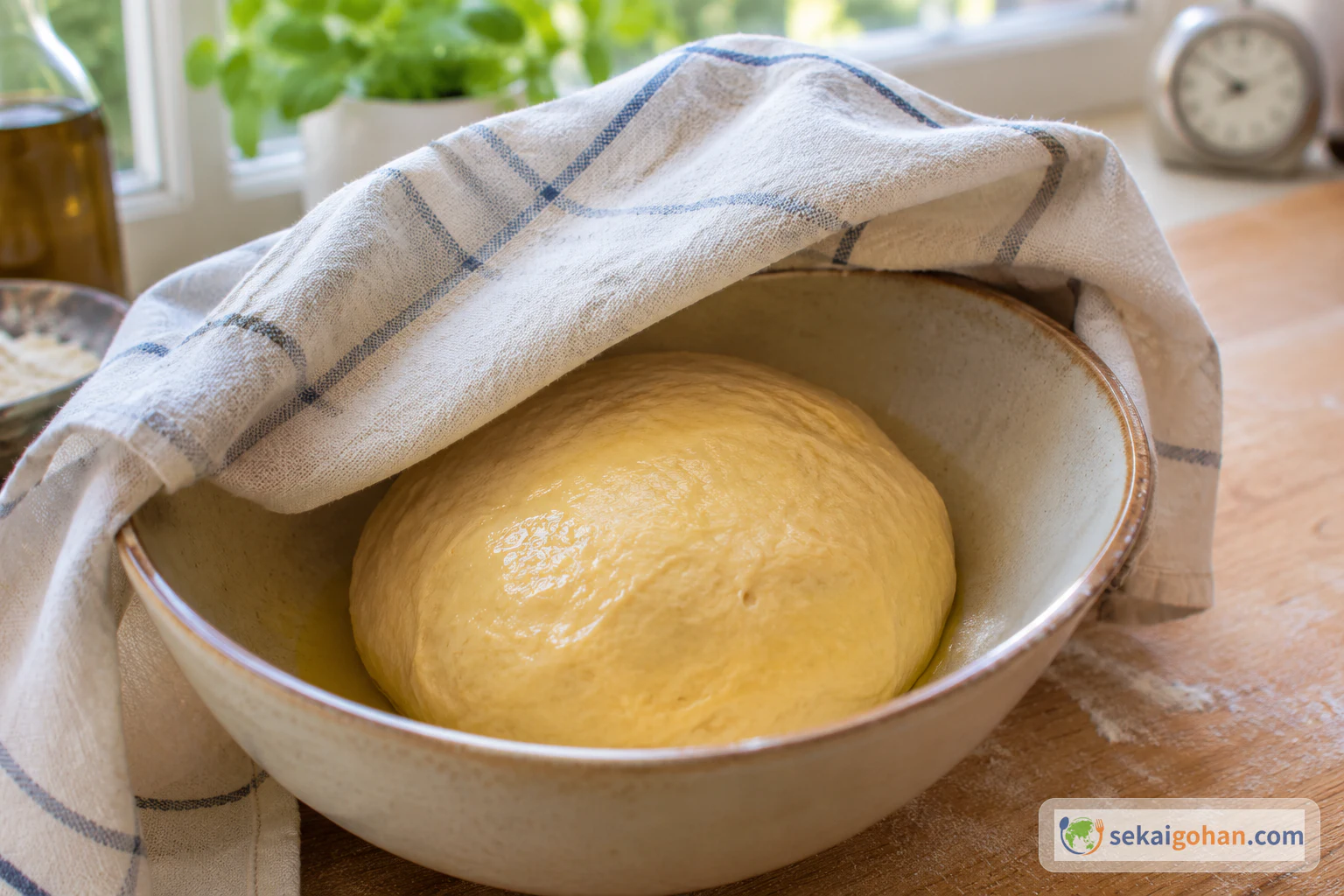
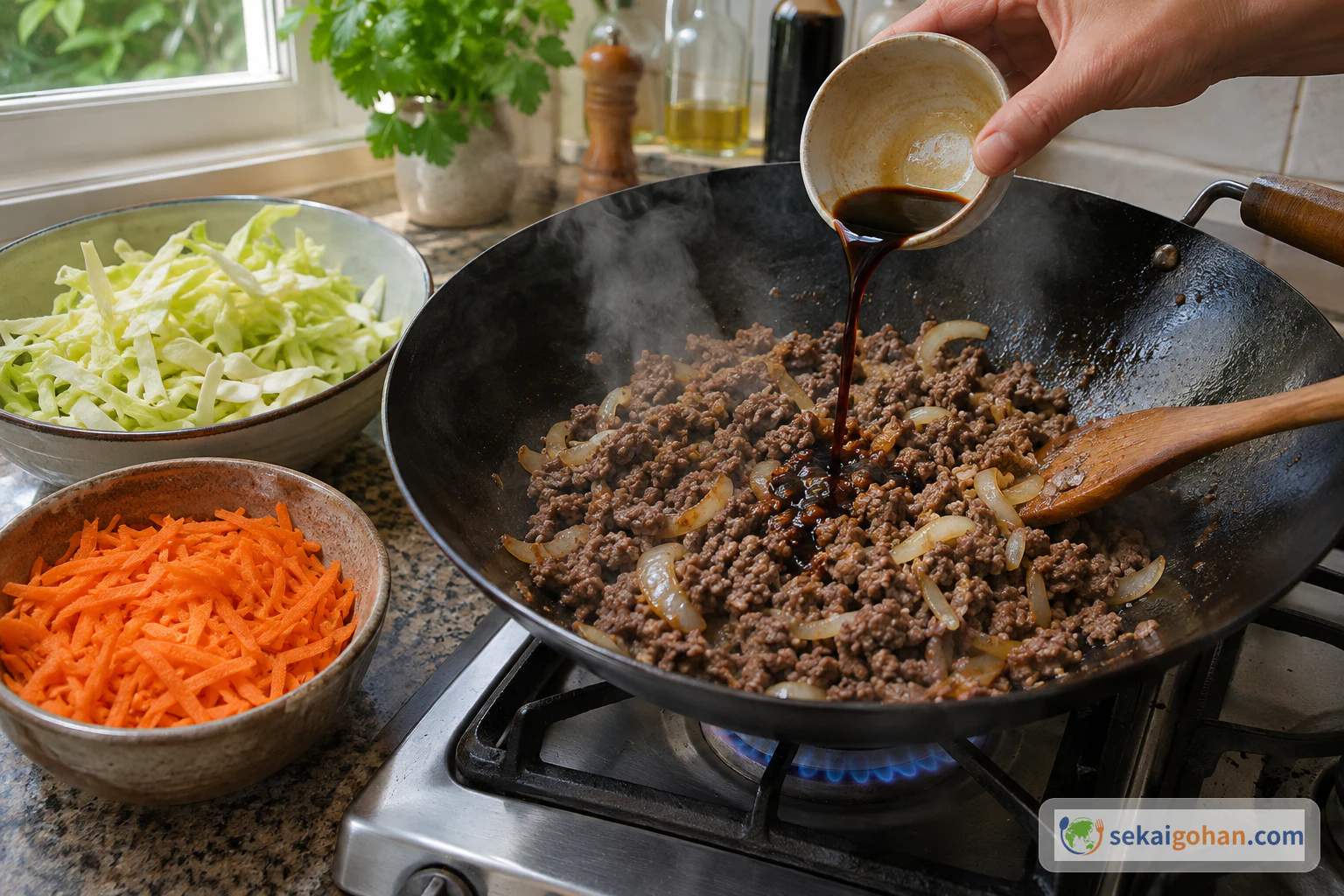
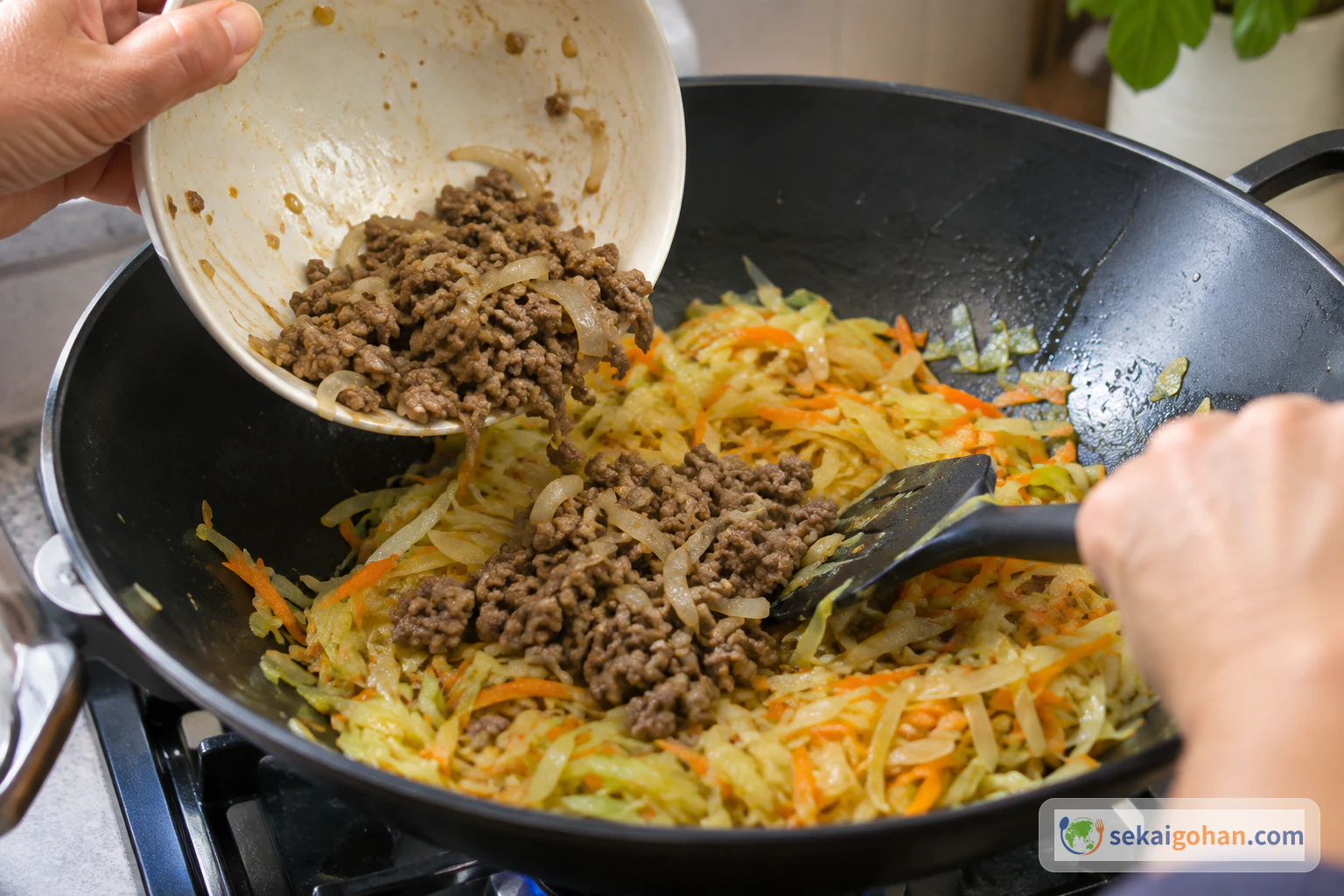
Prepare the vegetables first, then make the dough. While it rests for 30 minutes, cook and cool the filling, so both are ready together. The rolling and frying go quickly once you start, so have the tray, the oil and the rack in place before you roll the first sheet.
When It Goes Wrong
| What you see | Why | What to do |
|---|---|---|
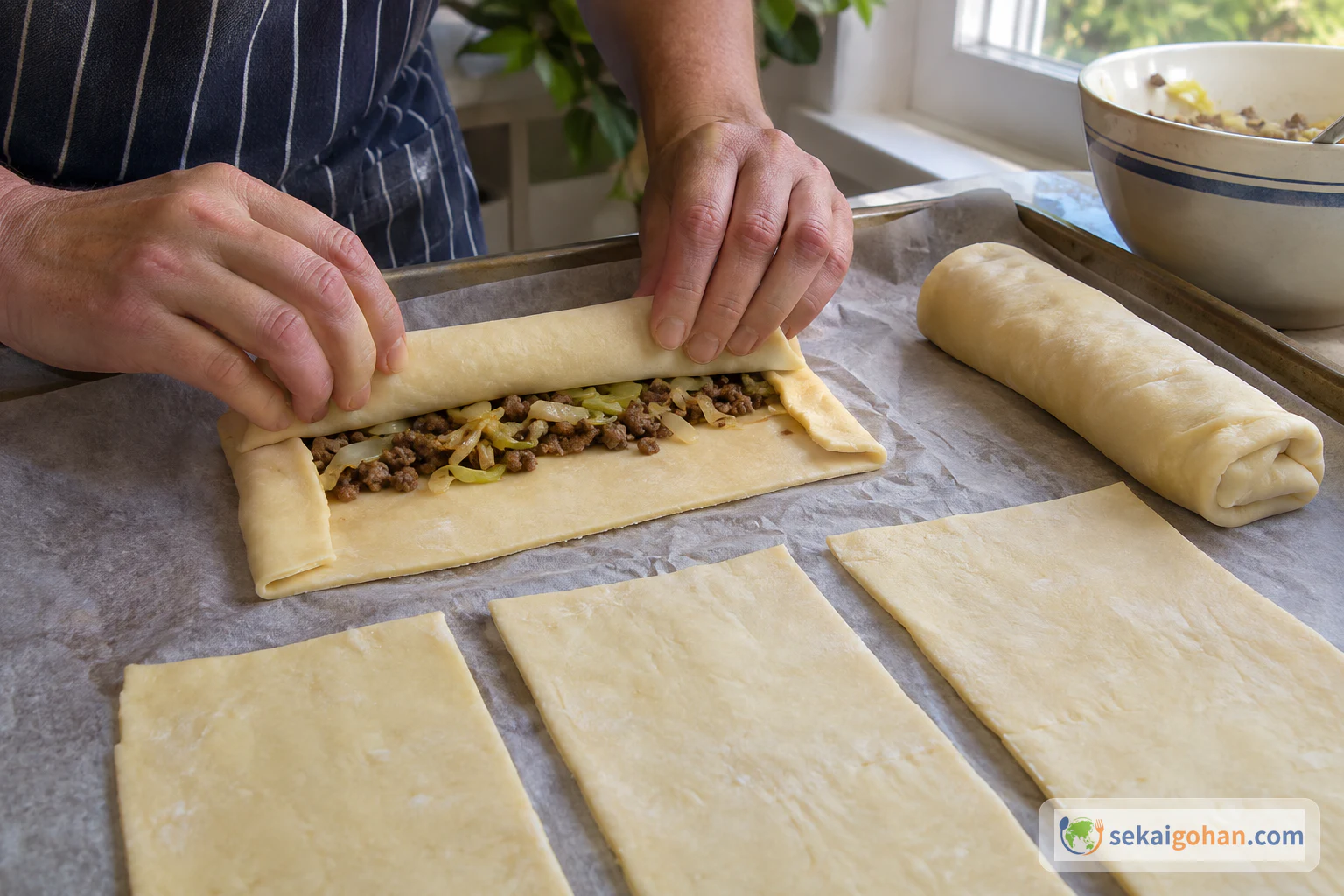
| The pastry tears and filling spills out | The sheet is uneven, or there is too much filling | Roll from the center out to an even 1/16 inch (2 mm), and keep to ⅓ cup (80 ml) of filling per roll |
| The seam opens in the oil | The edge was not pressed down firmly | Press the seam hard along its length and fry seam side down |
| The pastry is thick and heavy | The dough was rolled too thick, or the rest was cut short | Give the dough its full 30 minutes so it stays thin when rolled |
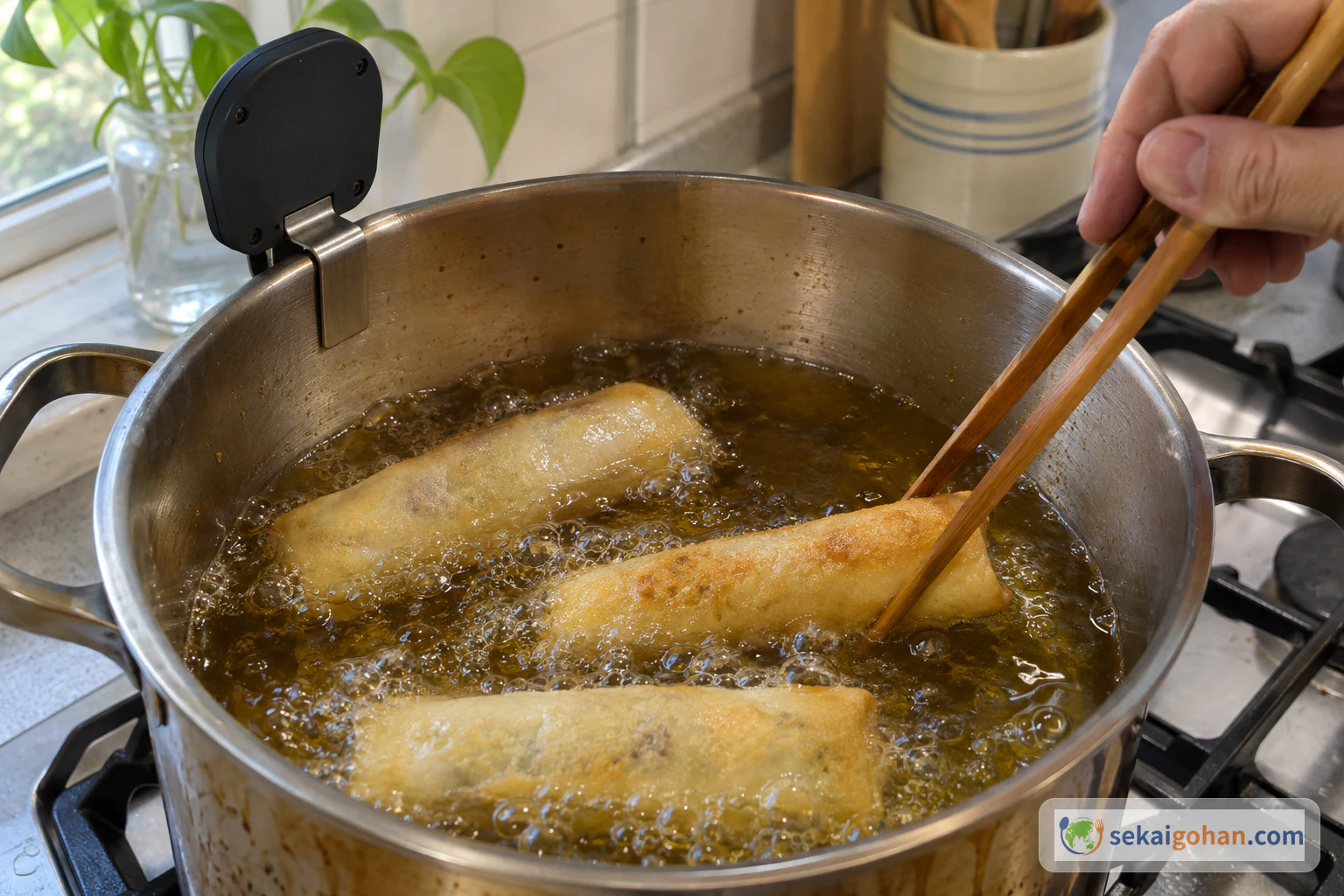
| The crust is pale and greasy | The oil was too cool, or too many rolls went in at once | Fry 2 or 3 at a time and let the oil come back to 355°F (180°C) between batches |
| The filling is watery | The vegetables were not cooked dry, or salt went in early | Fry the cabbage until no liquid pools in the pan, and salt only after combining |
| The oil spits hard | Wet filling or holes in the pastry | Cool and drain the filling well, and patch any holes before frying |
Serving and Storage
At the table
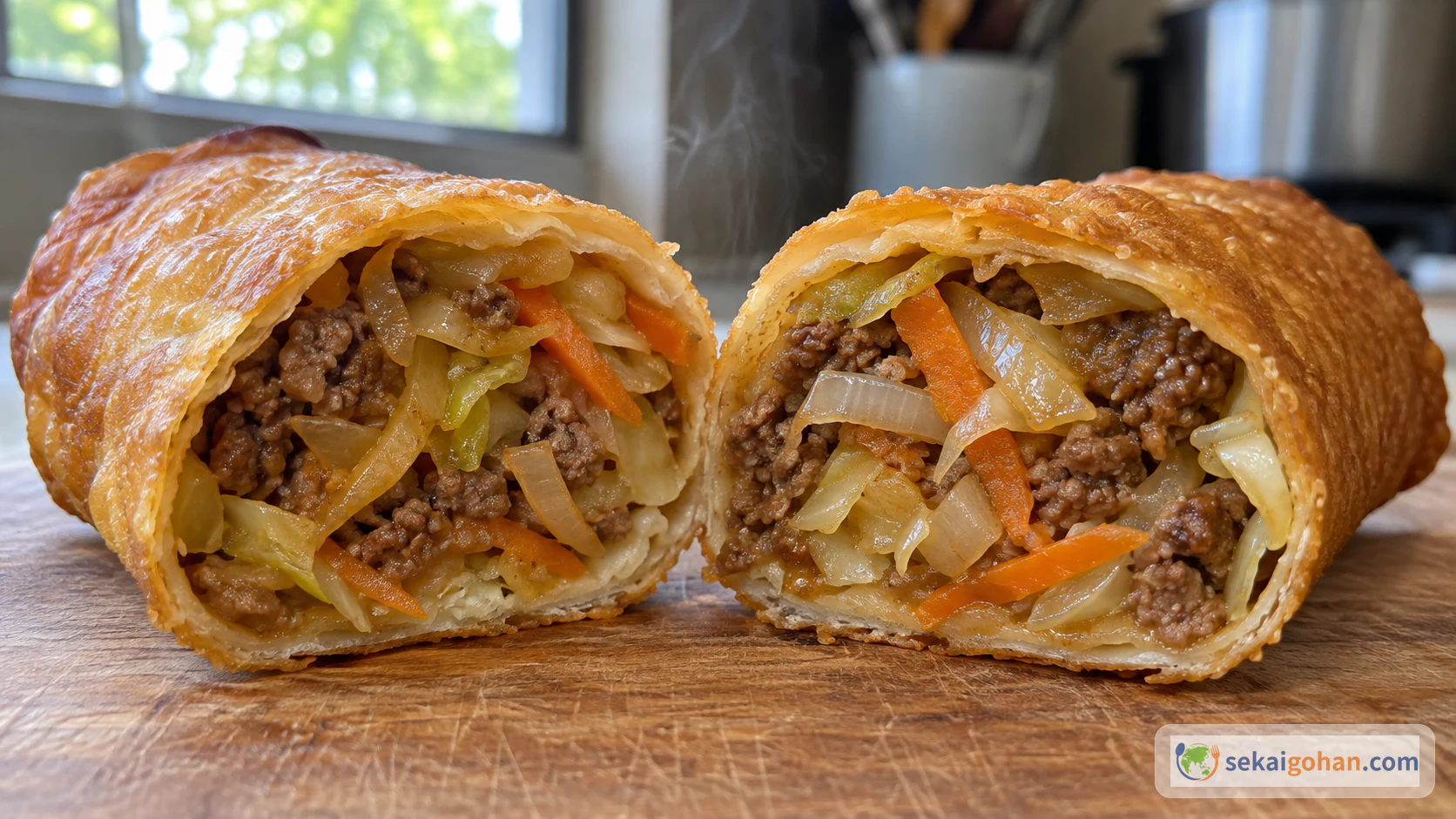
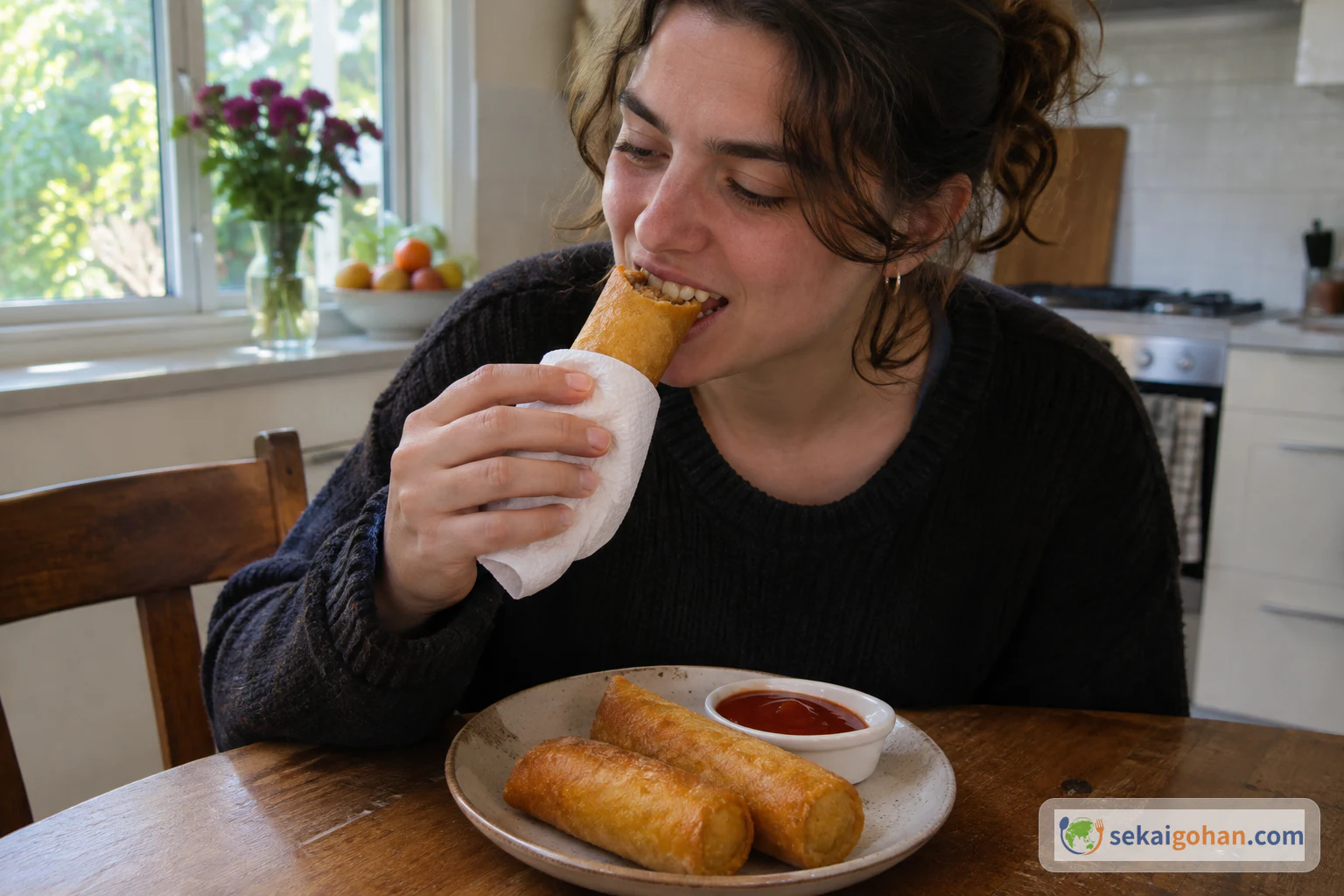
A Chiko Roll is a snack for eating hot, out of hand. Wrap the bottom half in paper or a napkin, the way the shops do, and keep a bowl of tomato sauce close by for dipping between bites. Cut one in half and you can see what the work was for: a thick, crisp wall of pastry around a dense filling of cabbage, carrot, onion and beef.
Variations
- Lamb mince in place of beef gives a stronger, older-style flavor.
- Chilli in place of some of the pepper adds the gentle heat of the shop roll's spice mix.
- Barley and celery, some cooked pearl barley and some thinly sliced celery added with the cabbage, moves the filling toward the factory roll, softer and more grainy.
- Party-sized rolls: cut each rolled rectangle into eight instead of four for 16 thinner rolls. They brown faster, so pull them when golden and check the center reads 167°F (75°C).
Storing and reheating
Chiko Rolls can be refrigerated or frozen after frying. Cool them, then refrigerate them right away in a covered container at 41°F (5°C) or below, or freeze them. As general food-safety guidance, fried rolls left at room temperature for under 2 hours can still go in the fridge; between 2 and 4 hours, eat them straight away; past 4 hours, throw them out. Thaw frozen rolls in the fridge or the microwave, never on the bench. Reheat by frying again or in the oven, quickly, until steaming hot all the way through.
Frequently asked questions
Can I bake them instead of frying?
Frying is what sets the thick egg pastry into a blistered, crackling crust. The oven works for warming rolls that have already been fried.
Do I need egg wash to seal the rolls?
All three eggs go into the dough, and a firm press along the seam holds the roll closed. Fry the rolls seam side down so the heat sets the join first. If you want extra security, brush the edge with a little beaten egg, which means cracking a fourth egg.
Can I make the dough or filling ahead?
Cook the filling first and keep it covered in the fridge until you roll. Make the dough on the day, give it its 30 minutes of rest and roll it straight away, since a soft rested dough is what lets you reach 1/16 inch (2 mm).