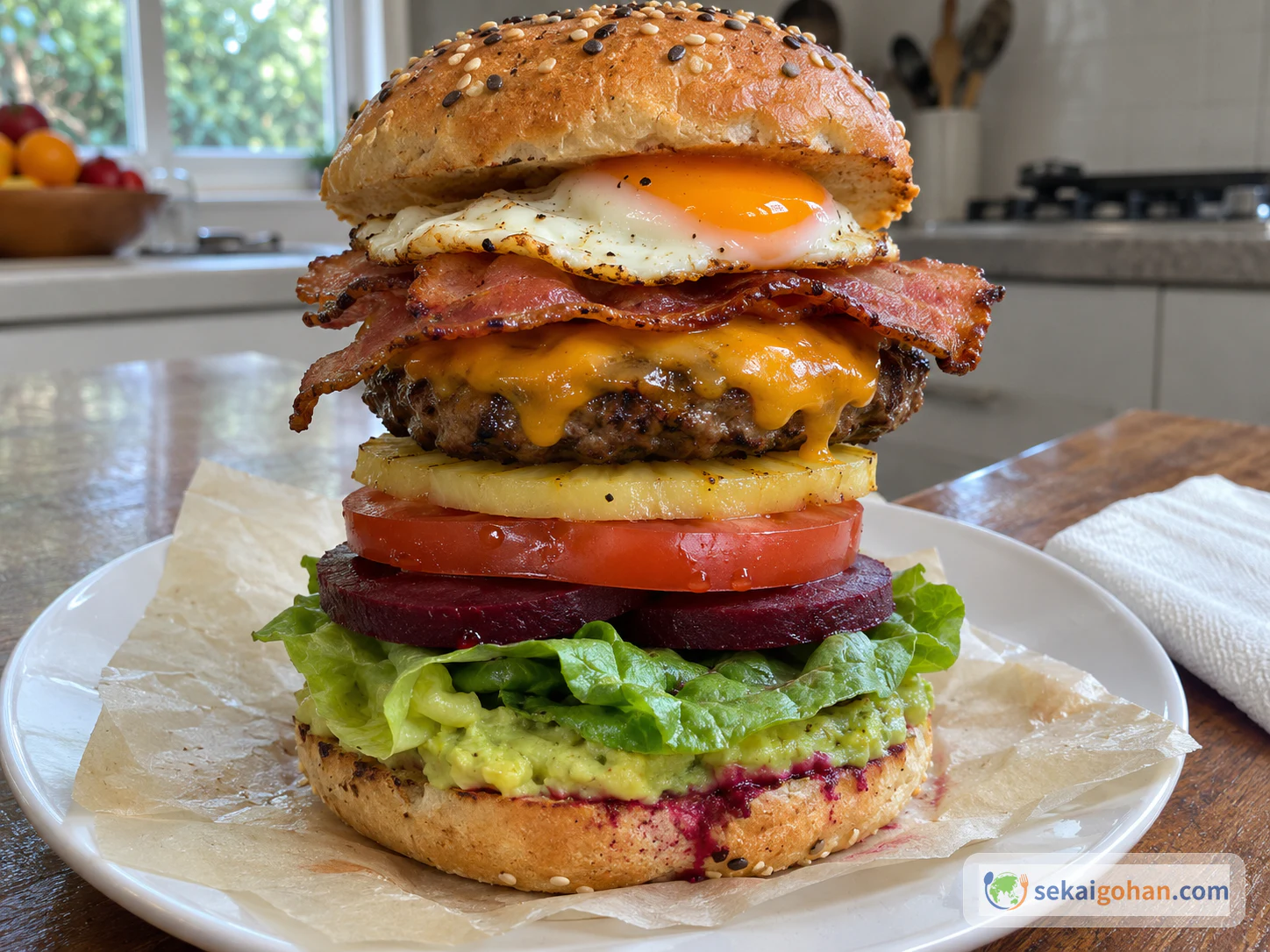
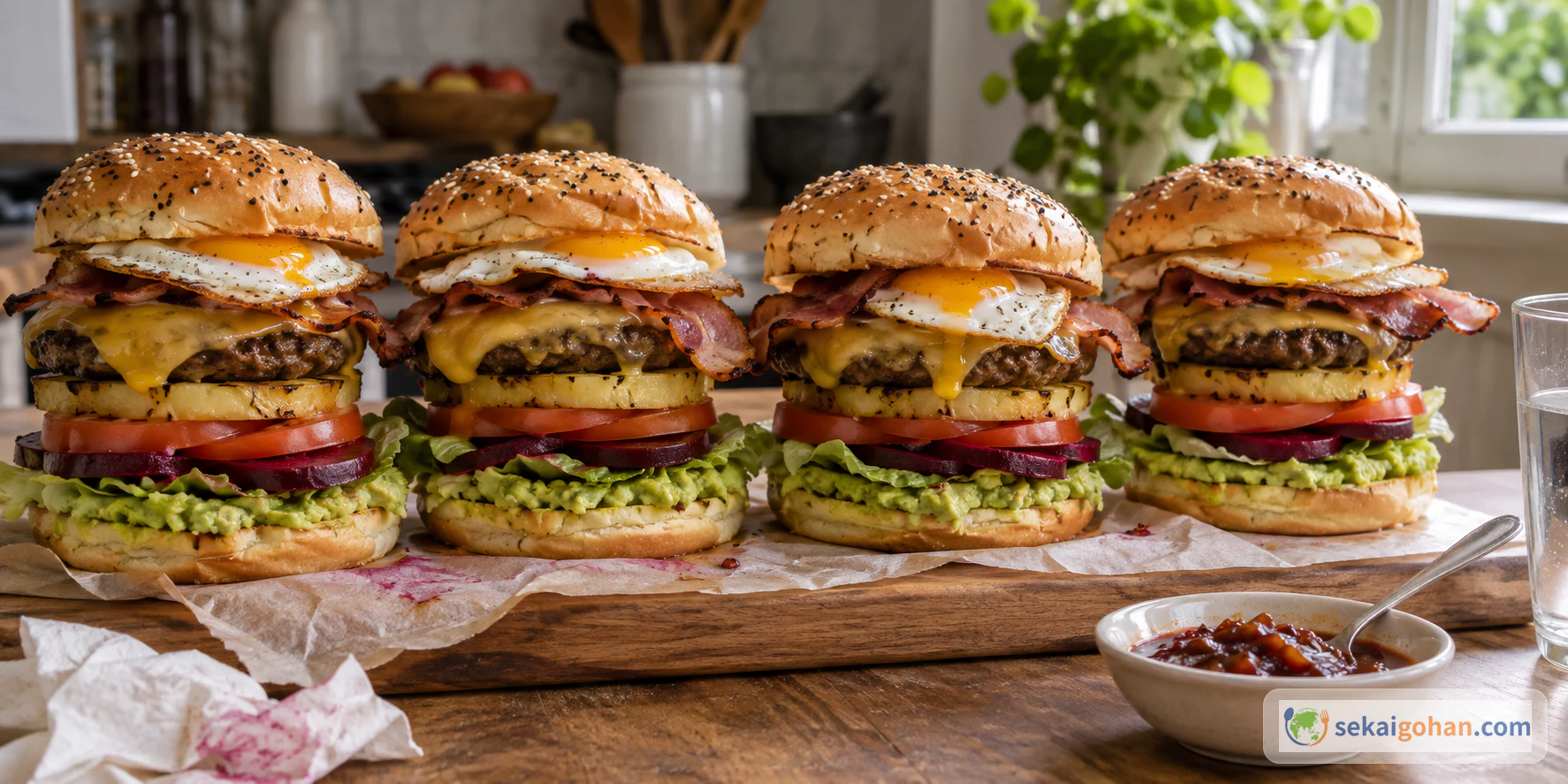
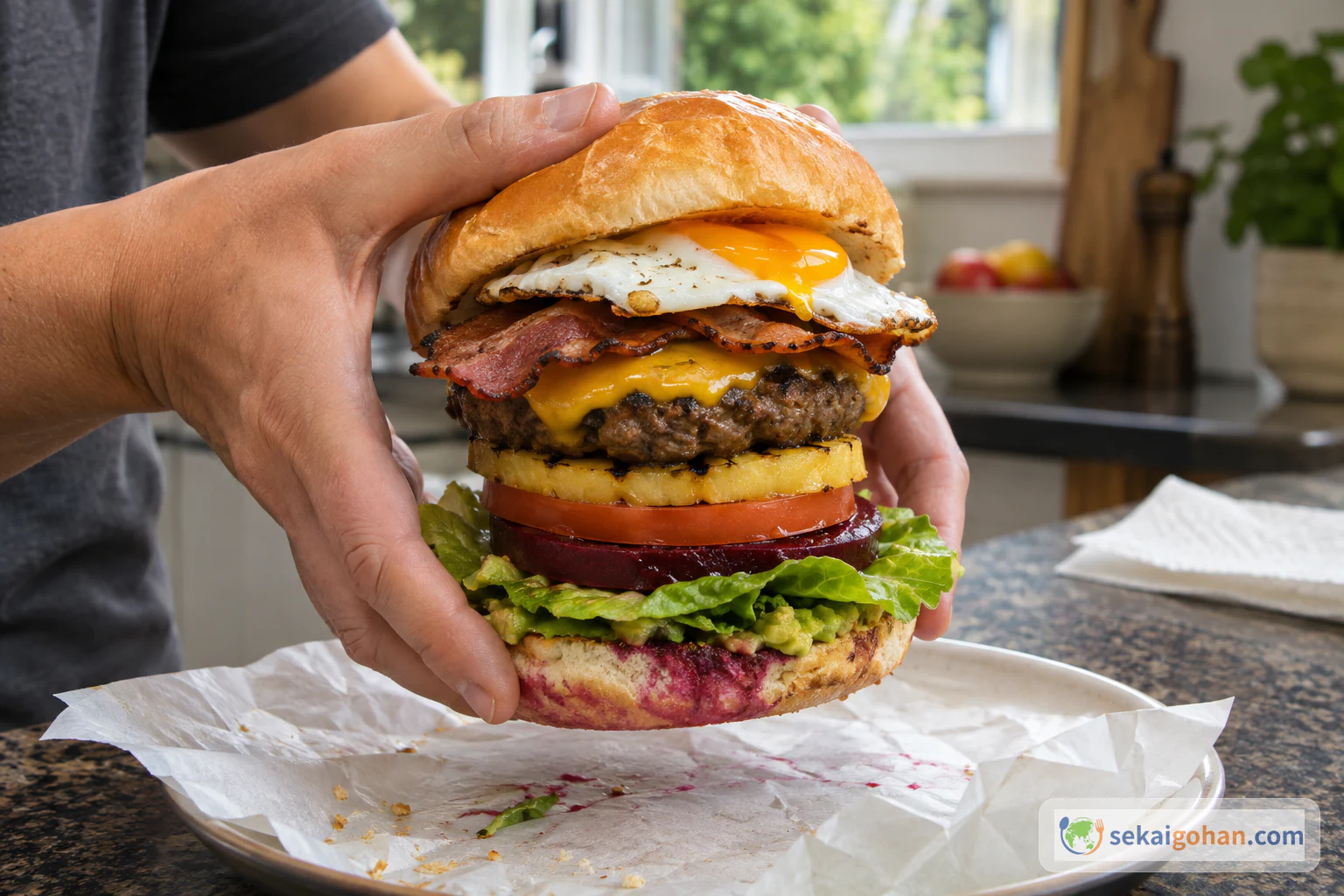
By the time a burger with the lot reaches your hands, the paper under it has already turned crimson where the beetroot juice has bled through. You need both hands and a napkin. The first bite goes through soft bun, the sharp, earthy sweetness of pickled beetroot, juicy tomato and pineapple, then a beef patty under melted cheddar, salty bacon, and a fried egg whose yolk runs down your wrist.
This is Australia's takeaway burger, sold from fish and chip shops, pubs and country cafés. It tastes sweet, sour, salty and rich all at once, and the beetroot is what makes people from elsewhere stop and stare.
Beetroot, Milk Bars and Everything on It
How the hamburger arrived
Hamburgers reached Australia in the 1930s. By the mid-1930s, American-style snack bars in Sydney were selling them next to hot dogs. In 1936 a Mrs Hayward was serving "The Hamburger" in Williamstown, a suburb of Melbourne. Andrew's Hamburgers opened in South Melbourne in 1939 and is still trading.
The Second World War pushed the burger further, as American servicemen stationed in Australia bought them. Sliced beetroot joined the burger in the 1940s. A popular story claims the beetroot started as a joke played on the Americans. Nobody has shown it to be true, and exactly why beetroot ended up on the burger was never recorded.
Why beetroot, and why milk bars
What made the beetroot possible was a can. Commercial canning grew after Edgell started in 1926, and by the 1940s and 1950s sliced beetroot in brine sat on every supermarket shelf. It was cheap, it kept, and it was always there.
From the 1930s, Greek migrants turned the American diner into the Australian milk bar, a corner shop with a counter, milkshakes and a hotplate, and the hamburger became one of its standard items. The Niagara Cafe in Gundagai is often introduced as the country's oldest milk bar. Across the 1950s and 1960s, the burger "with the lot" settled into a form everyone recognised. A 1960s version carried fried onion, tomato, lettuce, egg, bacon and tomato sauce, and sometimes pineapple.
"With the lot" means with everything on it. The phrase has no fixed definition, so each shop decides what "everything" is. Ask for a burger with the lot at the counter and you get that shop's full set.
One name, many stacks
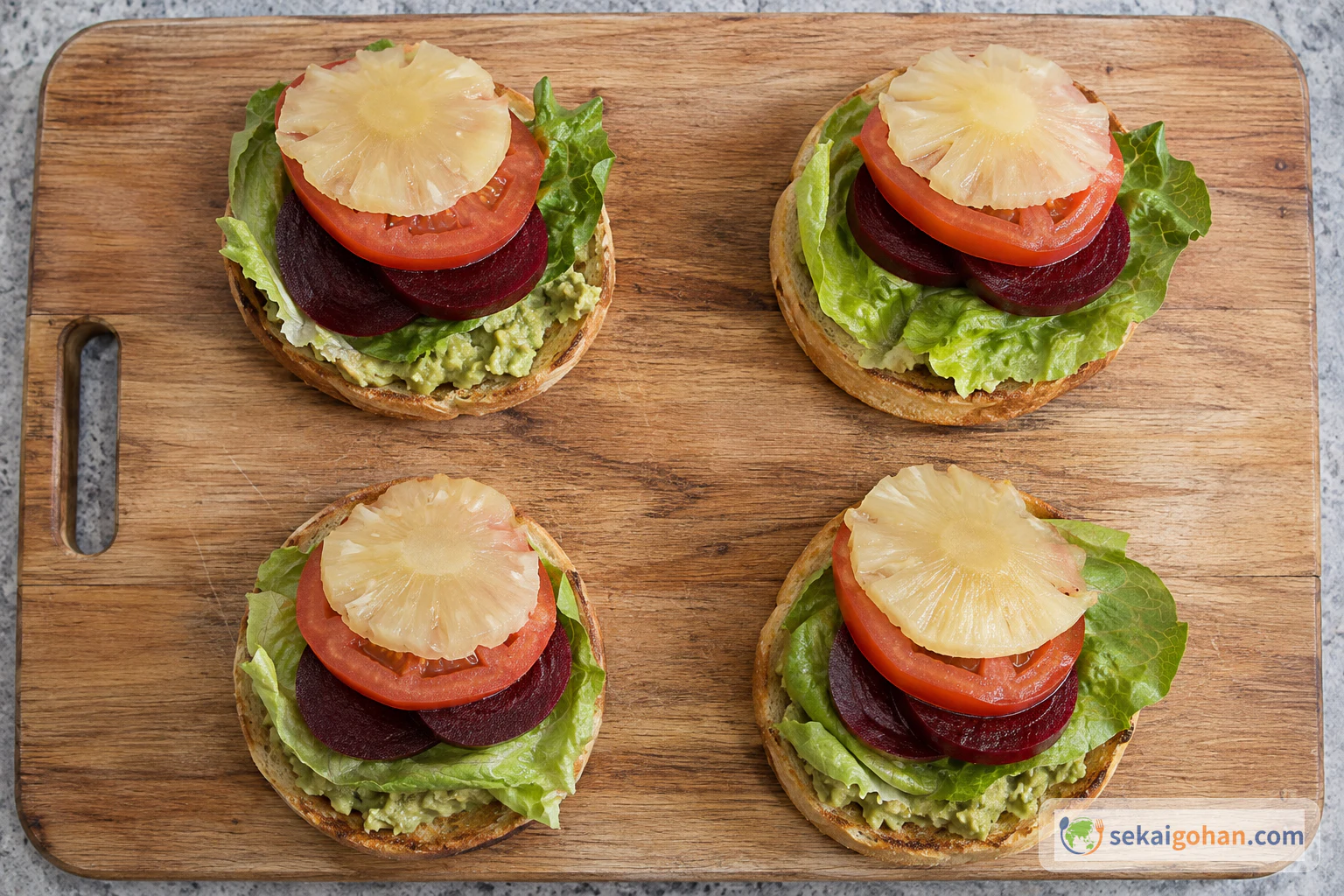
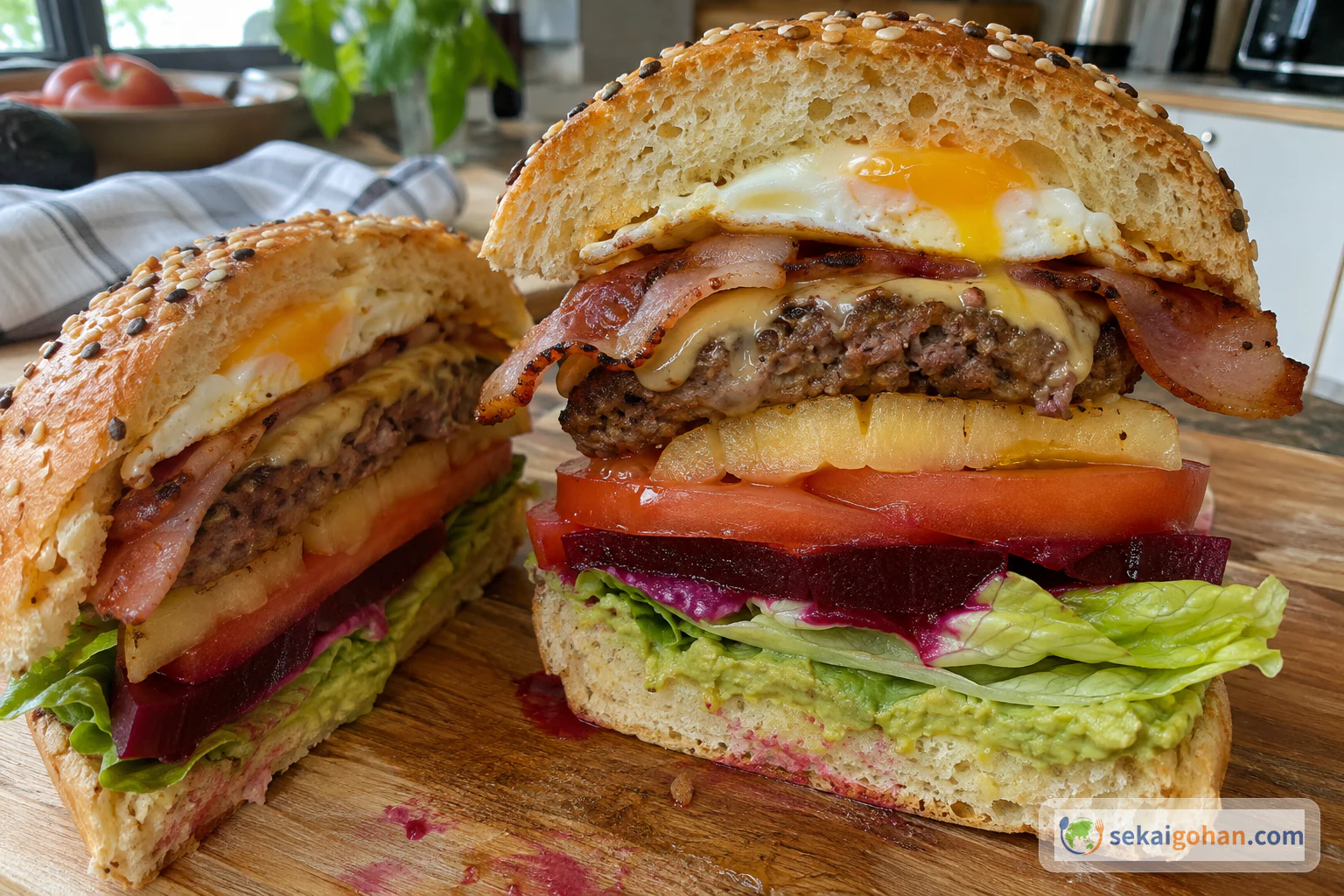
Because "the lot" belongs to whoever is cooking, the burger changes from counter to counter. Some versions spread avocado and tomato chutney, others use mayonnaise and barbecue sauce, others plain tomato sauce. Pineapple is in or out depending on the shop, and the order of the layers changes too. What every version shares is a beef patty, beetroot and an egg. Keep those three and the burger reads as Australian anywhere. The version below uses avocado, tomato chutney and fresh pineapple, stacked with the salad underneath and the meat, bacon and egg on top.
Across the Tasman, New Zealand has its own Kiwi burger built on the same pair of beetroot and fried egg. A New Zealand newspaper recipe spreads mustard alongside the tomato sauce and piles fried red onion on top, and it notes that some New Zealanders insist pineapple belongs on it. The same recipe recalls it as the burger bought at the fish and chip shop on a weekend. You can find more dishes from Australian kitchens on the site.
Ingredients (serves 4)
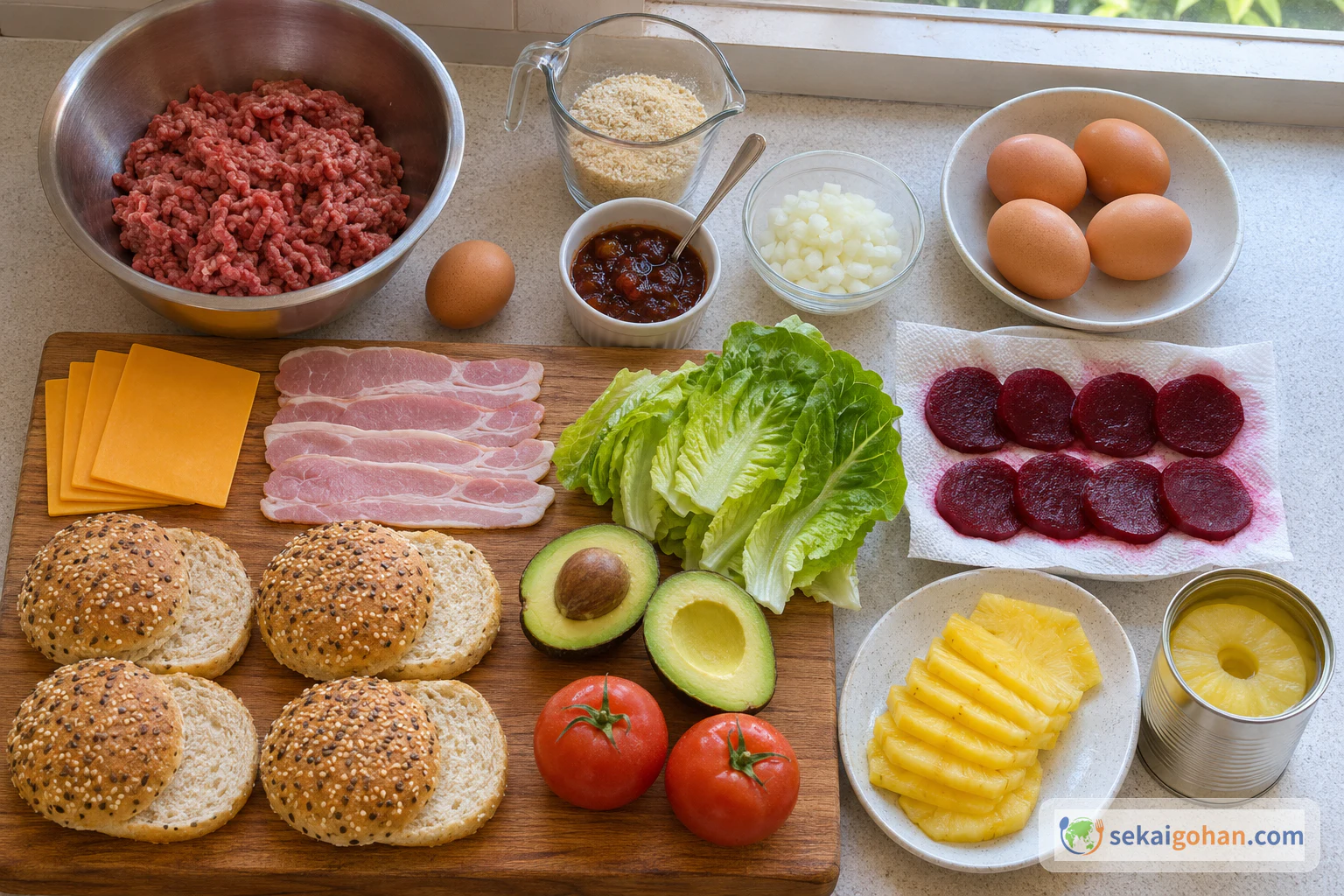
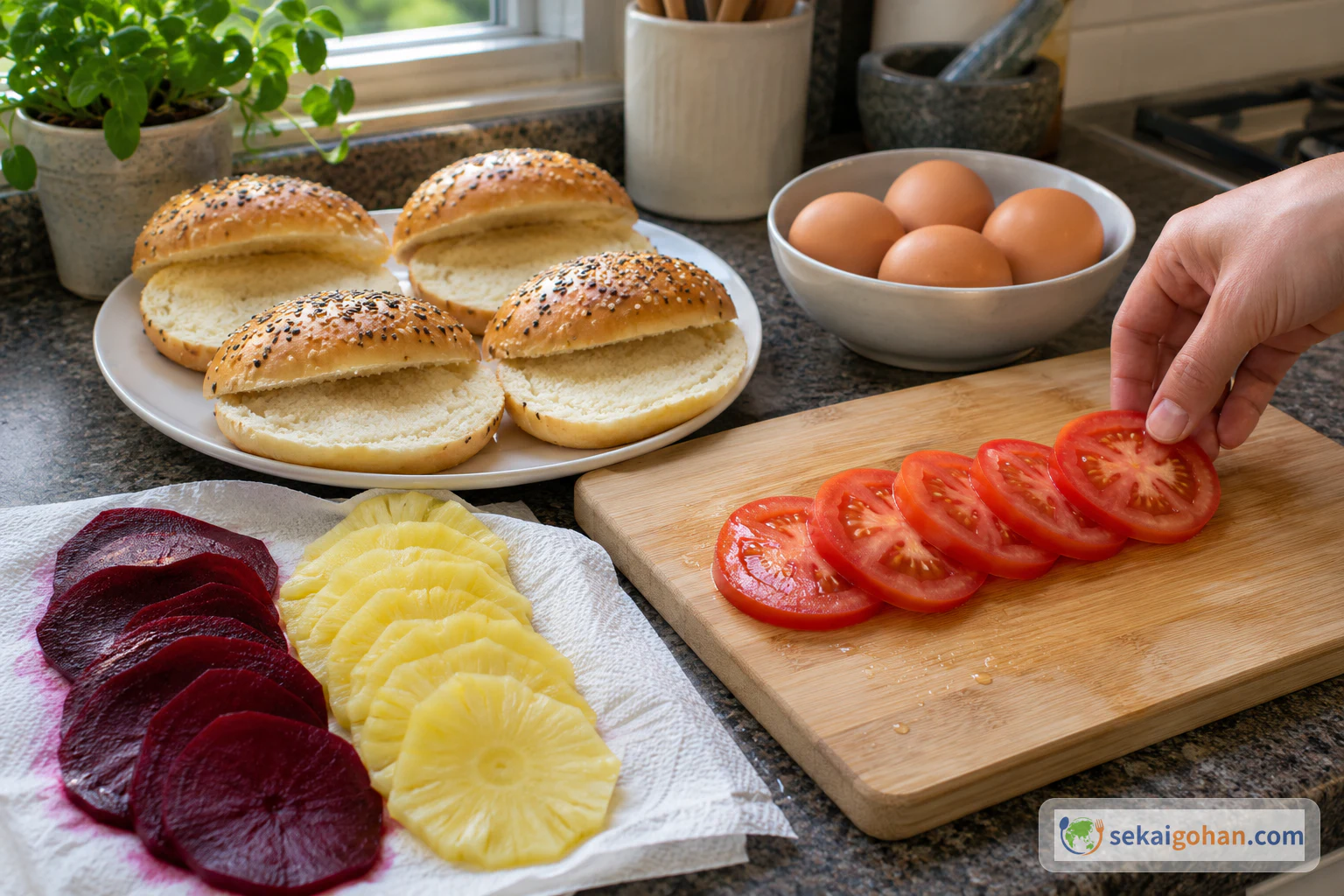
Beetroot, pineapple and tomato all carry juice. Blot the beetroot and pineapple thoroughly on paper towel. Wet slices soak the bun from the bottom up, and a soggy base is what makes the stack slide apart in your hands.
Contains wheat (buns, breadcrumbs), egg, milk (cheese) and pork (bacon). Bread and cheese can contain soy. Tomato chutney varies by brand, so read the label.
Equipment
- Large frying pan, 10 inches (26 cm) or wider
- Probe thermometer
- Paper towels
- Mixing bowl and fork
- Separate chopping boards for vegetables and raw meat
- Flat turner (spatula)
Choosing and Substituting
Canned sliced beetroot is the one ingredient worth hunting for. Look for pickled beetroot slices at import grocers or online. Pickled slices from a can carry the vinegar sharpness the burger needs; raw or plain boiled beetroot tastes and bites differently. If you cannot find a can, slice cooked beetroot and pickle it yourself in a brine of 1–1.1 lb (450–500 g) beetroot to a scant 2 cups (450 ml) white wine vinegar, a scant ½ cup (100 ml) water, 1¾ oz (50 g) sugar and 1 tsp salt, with black peppercorns, bay leaf, cloves, cardamom and lemon peel. That makes a full jar; the burgers need only eight slices. Homemade beetroot comes out less sour than canned.
The rest comes from an ordinary supermarket, and each swap shifts the result in a known direction:
| Ingredient | Swap | What changes |
|---|---|---|
| Tomato chutney | Ketchup with a little fruit chutney | Sweeter, with less spice |
| Fresh pineapple | 4 thin canned pineapple rings | Sweeter, less sharp |
| Beef mince | Coarse beef mince with around 20% fat is best; a beef and pork mix works | The mix adds pork sweetness and less beefy depth |
| Baby cos lettuce | Romaine | Thicker leaves are harder to stack flat |
| Cheddar slices | Processed cheese slices | Melts more easily, lighter flavour |
| Bacon | Lean short-cut rashers | Less fat in the pan |
| Seeded buns | Any burger bun or soft roll | Very soft bread soaks up juice and collapses |
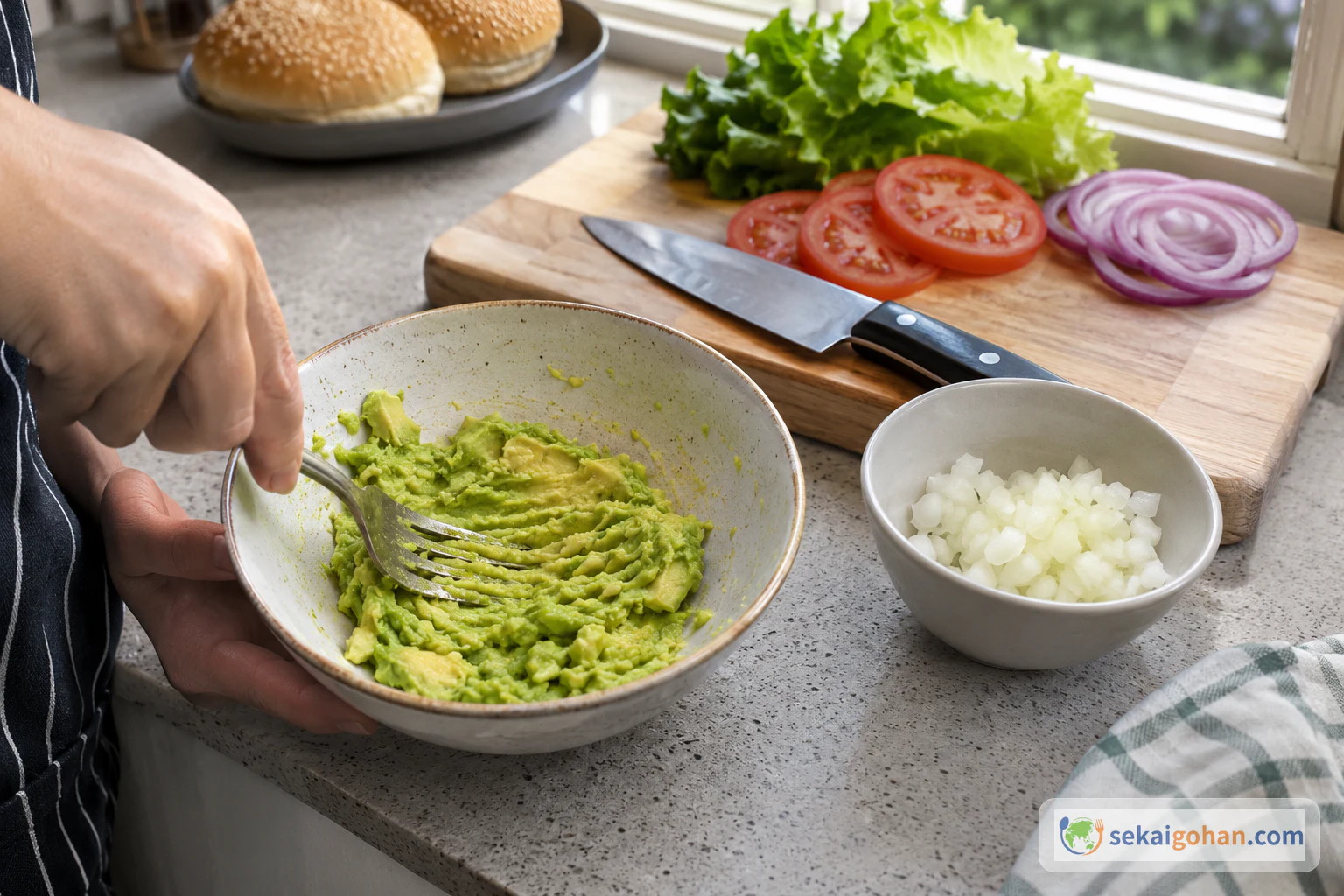
Choose an avocado that is fully ripe. An underripe avocado will not spread, and the base layers need that soft, even coat.
Method
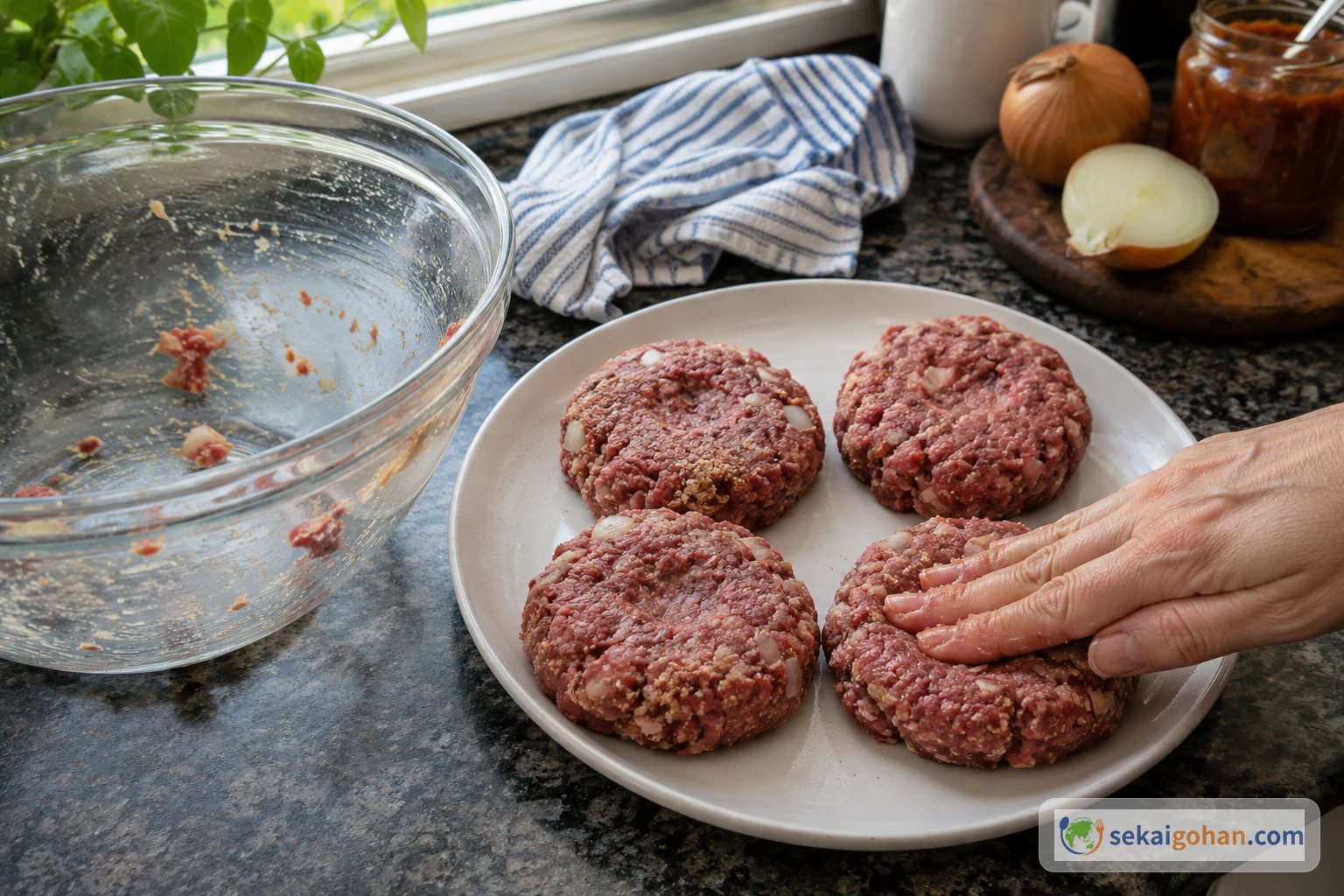
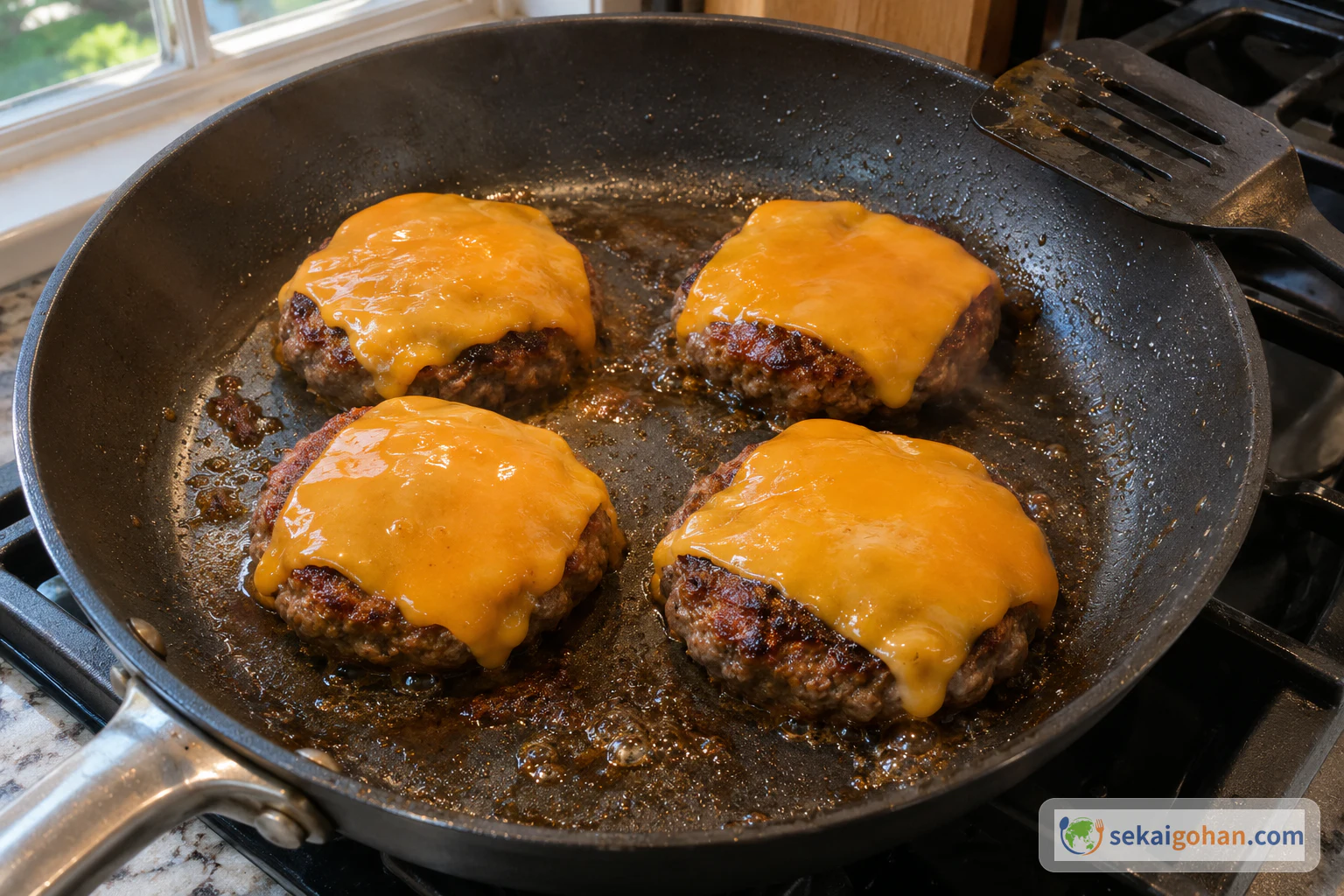
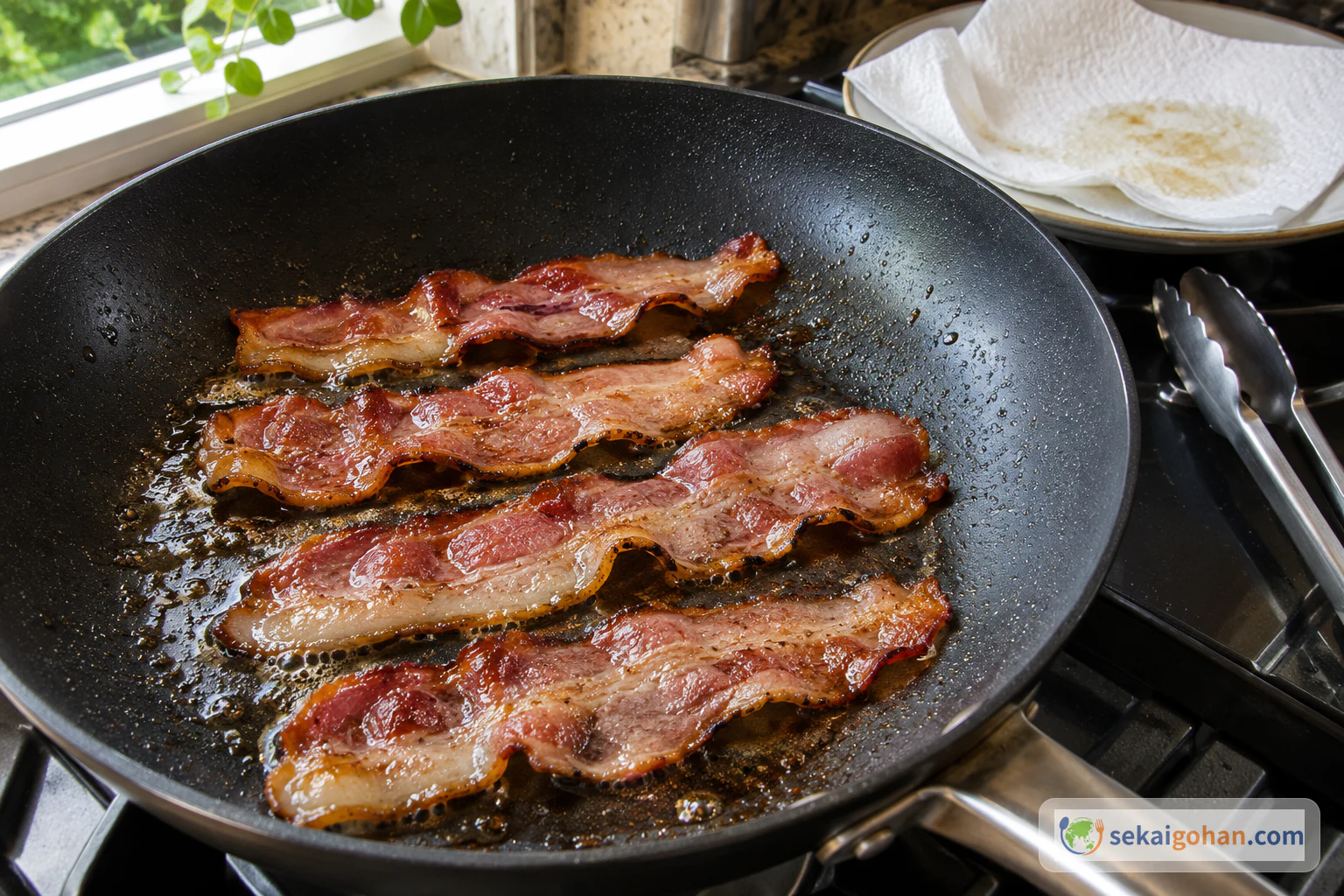
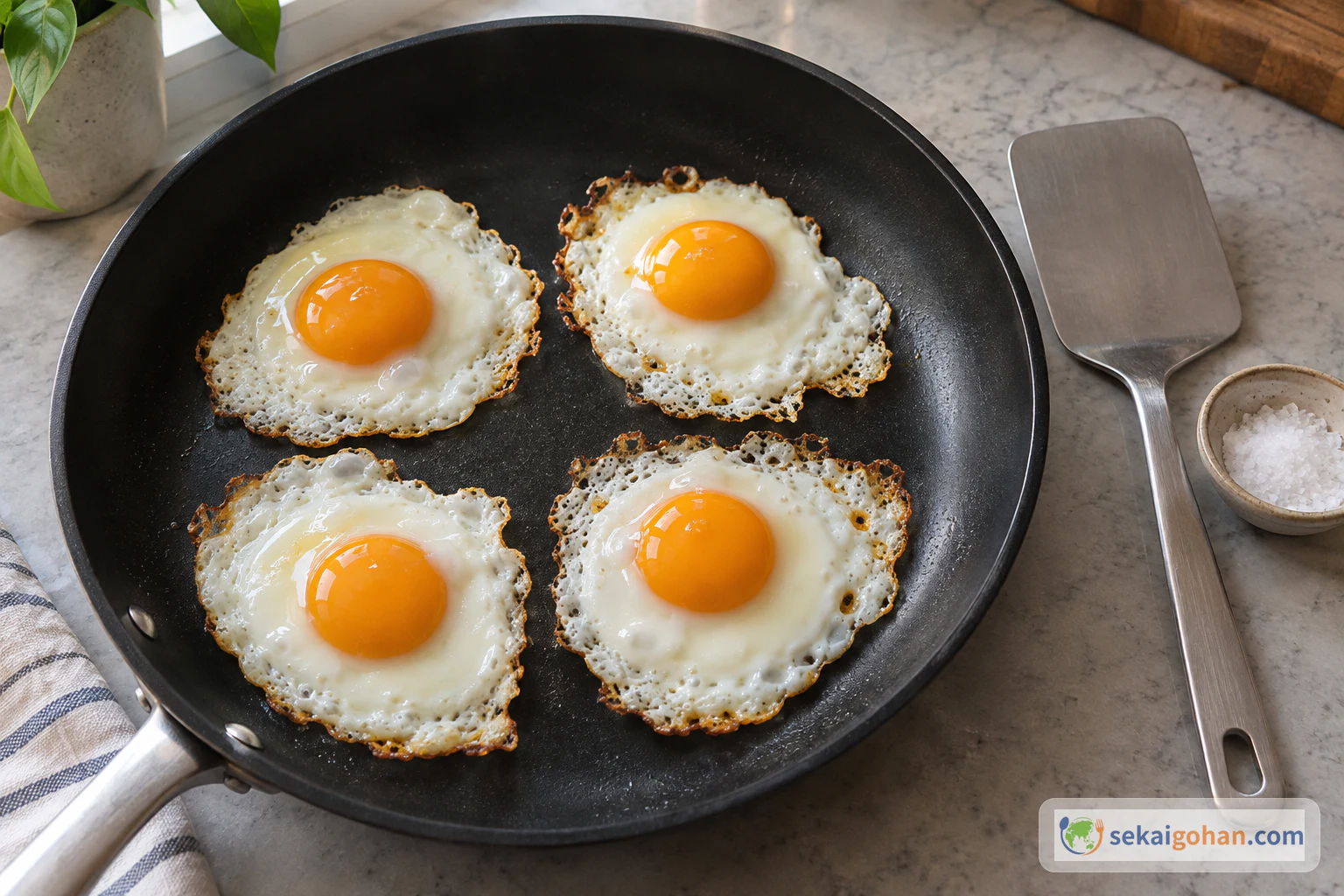
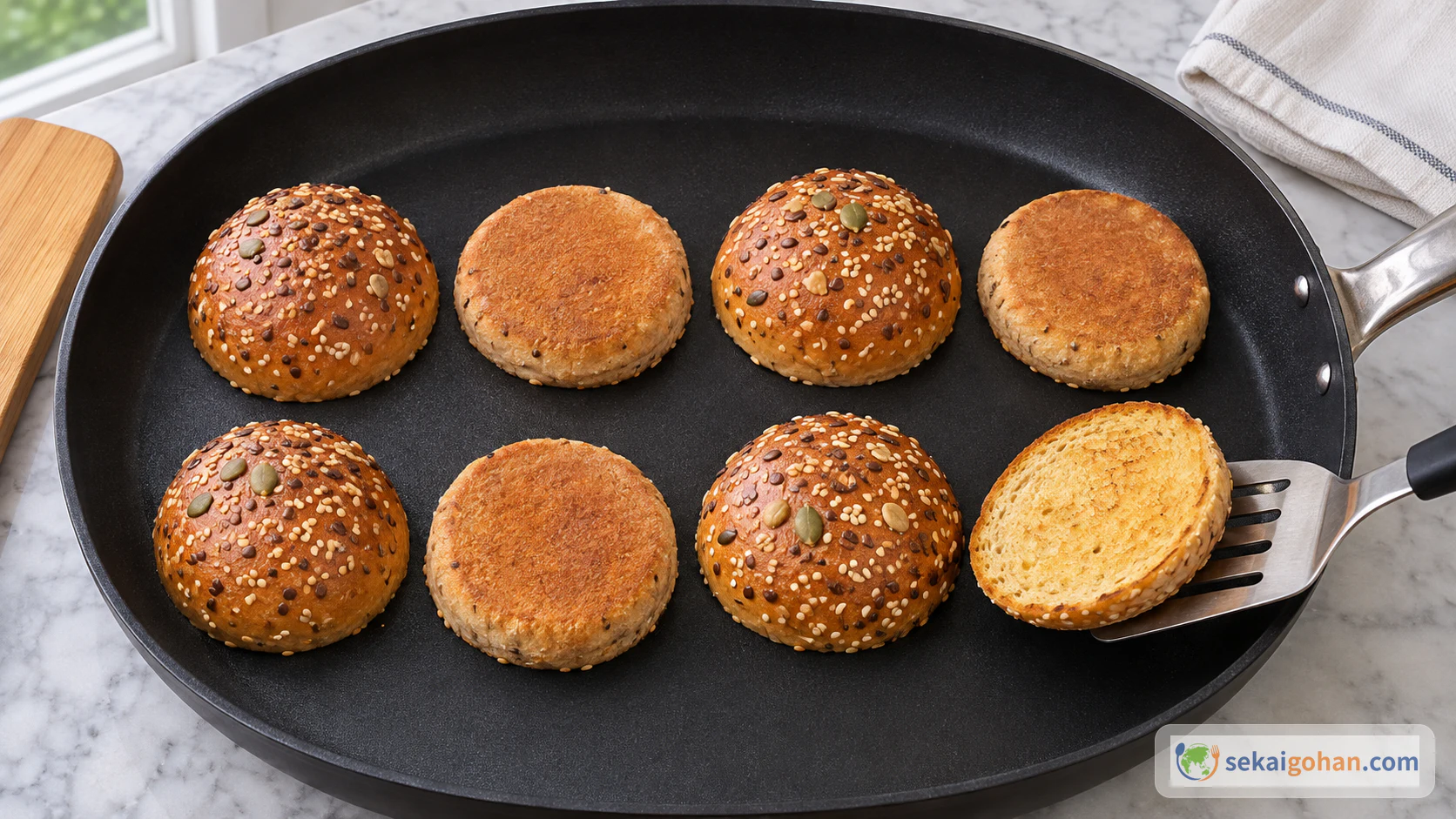
All the cold work comes first: cut, mash, drain and slice everything before the pan goes on. The patties then rest in the fridge, which is your only hands-off moment. One pan does the rest in sequence, patties, then bacon, then eggs, then buns, and the burgers are stacked the moment the buns come off.
Wash your hands, board and knife after handling raw mince, before you touch the lettuce, tomato or avocado. Minced beef is cooked through every time: the centre of the patty must reach 167°F (75°C), with no pink inside and clear juices. Undercooked eggs can carry salmonella; for children, pregnant women, older people and anyone with a weakened immune system, cook the yolks until firm.
Push the probe in from the side into the centre of the thickest patty. Patties of equal size finish together, so one reading tells you about all four. Pull them as soon as they reach temperature; every extra minute dries them.
When It Goes Wrong
| What you see | Why | What to do |
|---|---|---|
| Bottom bun turns soggy and tears | Juice from beetroot, pineapple or tomato | Blot the slices well, toast the cut faces, and assemble only when you are ready to eat |
| Stack leans and slides apart | Too tall, or the wet and heavy layers are in the wrong place | Keep lettuce low on the avocado, the patty above the fruit, the egg on top |
| Patty is dry and crumbly | Lean mince, overmixing or overcooking | Use mince with some fat, mix only until sticky, and take the patties off once they reach 167°F (75°C) |
| Centre still pink | Patty too thick or heat too low | Return it to the pan and cook until the probe reads 167°F (75°C) |
| Avocado will not spread | Avocado not ripe | Choose a fully ripe one; it should give under gentle pressure |
Serving, Variations and Storage
At the table
A burger with the lot is a meal in your hands. Serve it on paper or a paper-lined plate, put plenty of napkins out, and keep the extra chutney within reach. Expect the beetroot to stain the paper and the lower bun; at a takeaway counter, that red mark is part of the look. It suits a weekend lunch or a casual dinner where everyone eats with their hands.
Variations
- Wholemeal buns. Toastier and nuttier; the bread still needs dry toppings to hold.
- Onion on top. Leave the onion out of the patty and fry it in slices to pile on the burger instead. The patty comes out coarser, and the burger moves toward the New Zealand style.
- Kiwi leaning. Spread a little tomato sauce and mustard and add fried onion. Keep the beetroot and egg, and still cook the patty through to 167°F (75°C).
Making ahead and leftovers
You can mix and shape the patties ahead and keep them in the fridge until you cook them. Stack the burgers only at the last minute. Keep cooked food out of the 41–140°F (5–60°C) range: cool leftover cooked patties, then refrigerate them promptly, and reheat until the centre reaches 167°F (75°C) before eating.
Frequently asked questions
Can I use fresh beetroot instead of canned?
Canned pickled slices are the standard, and fresh beetroot changes both the texture and the acidity. If you start from fresh, cook and pickle it in the brine described above. Plain boiled beetroot lacks the sour edge that cuts through the bacon and cheese.
Is pineapple required?
Shops disagree. Some leave it off, some add it, and some people say it is not a burger with the lot without it. It brings a sweet-sour brightness, so if you skip it, the burger tastes richer and heavier.
My local shop stacks it in a different order. Which is right?
Both. The order changes from shop to shop, and some put the patty right under the salad. Keeping the patty above the fruit puts the hot, heavy layers together on top, and the egg stays whole as the last layer under the lid.
Can I make it with less bread, or as a smaller burger?
The proportions work best as written: one patty, one egg and two beetroot slices per bun. Whatever the size of the patties, the centre must still reach 167°F (75°C).