Te Tuae: Sweet Fruit Kept for the Days Ahead
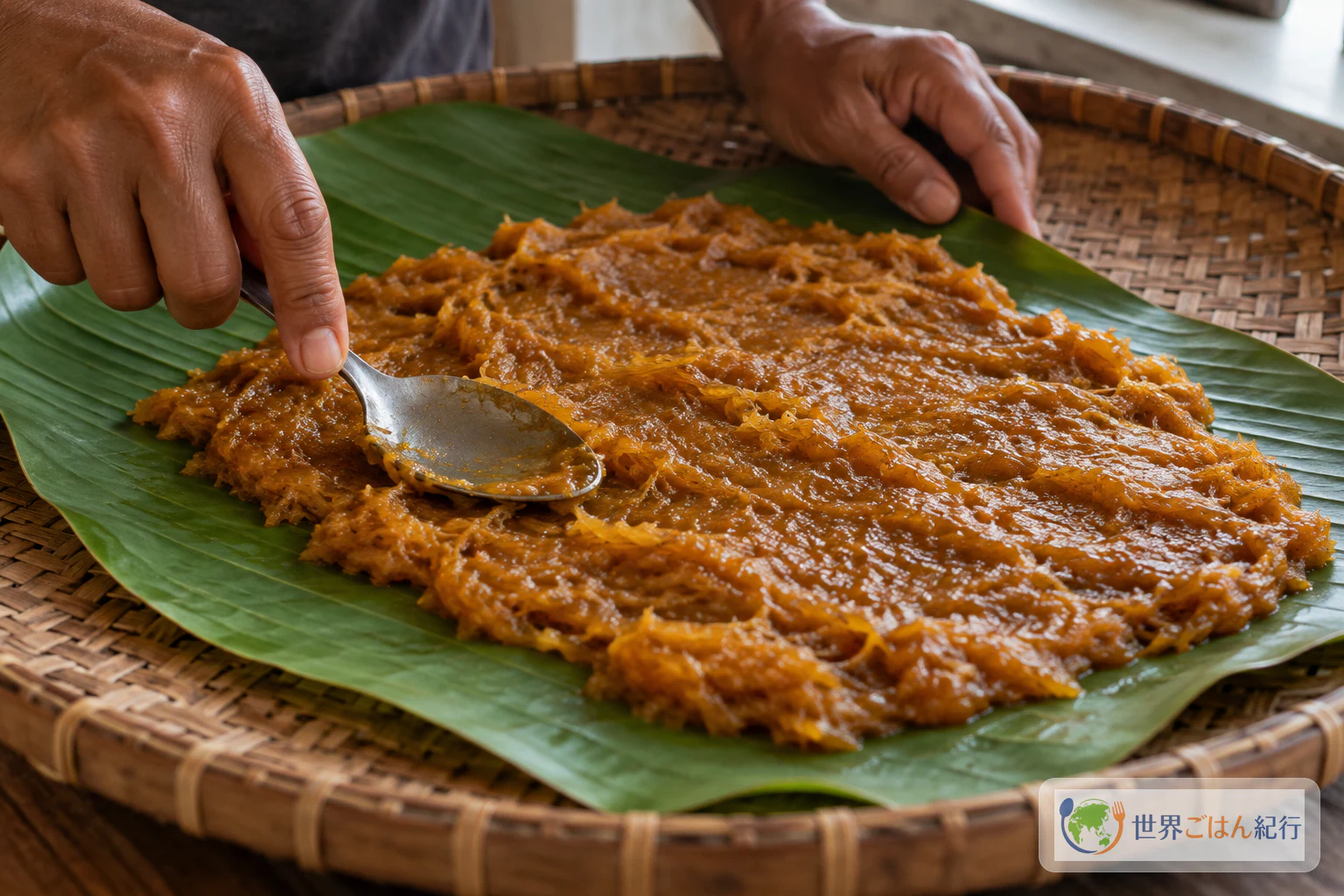
Te tuae is less a dessert than a way of keeping fruit. Ripe pandanus is cooked, most of its fibre is removed, the pulp becomes a paste, and the paste is spread on leaves and dried in the sun. It is then cut and dried further until it keeps.
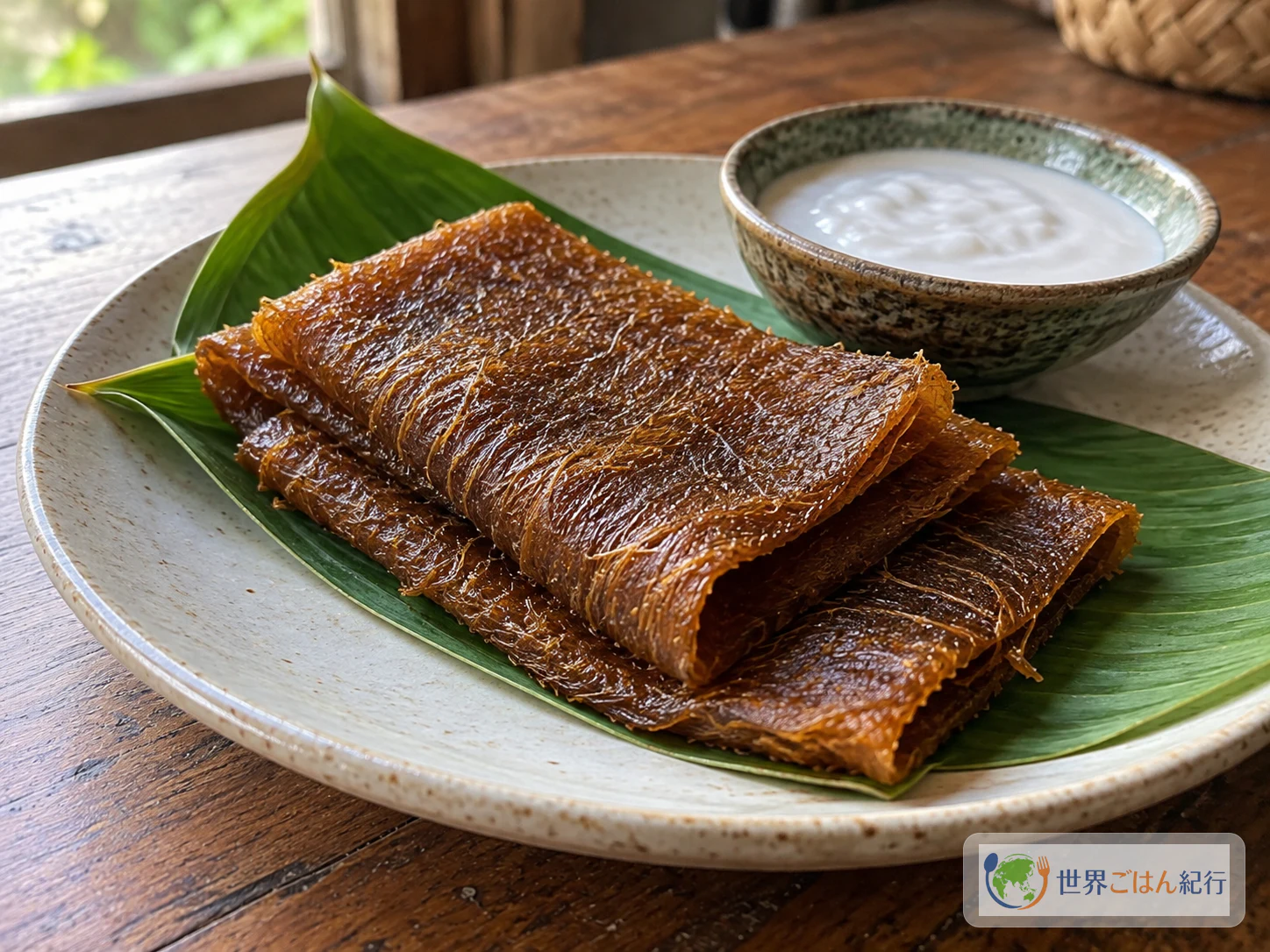
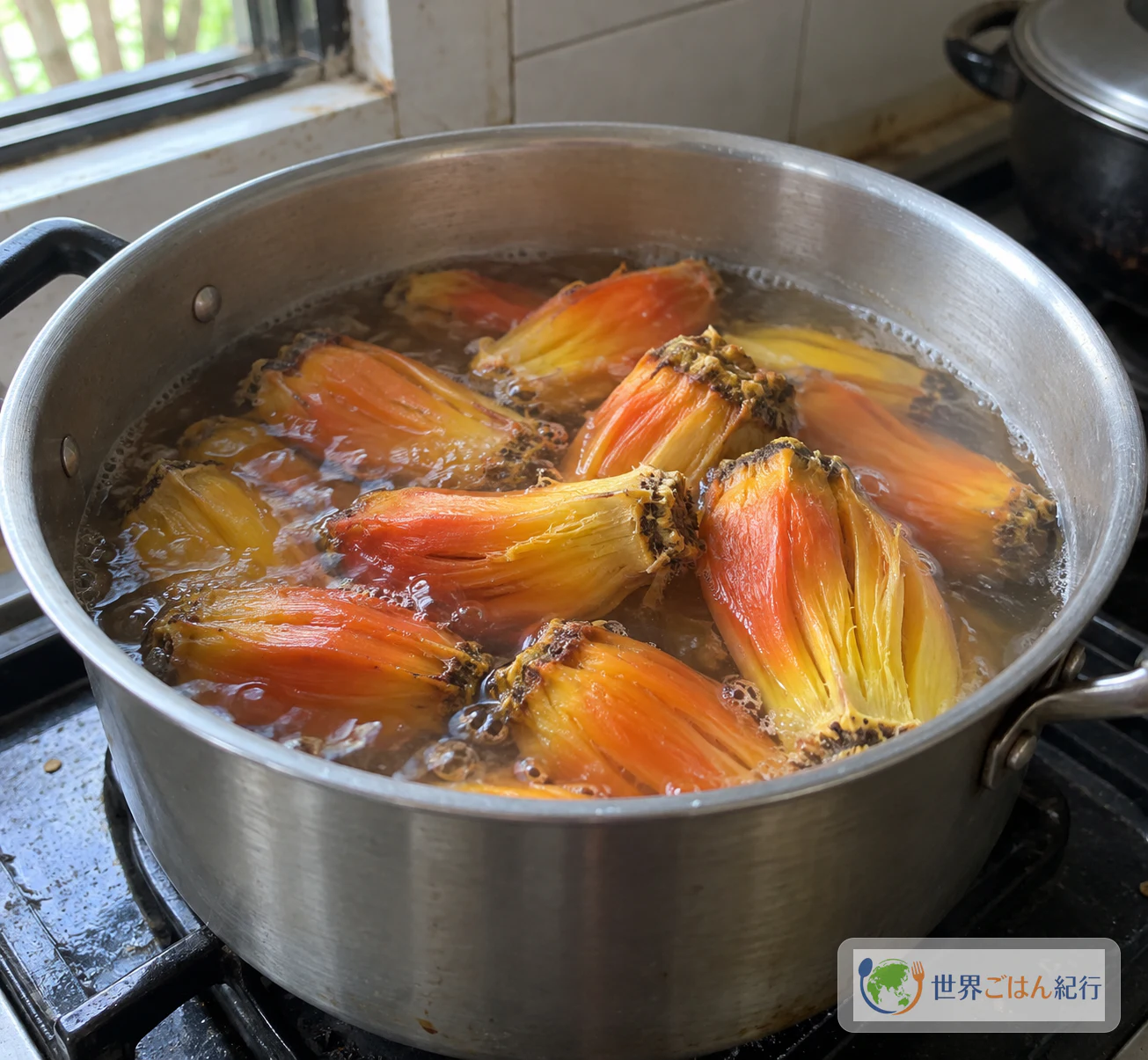
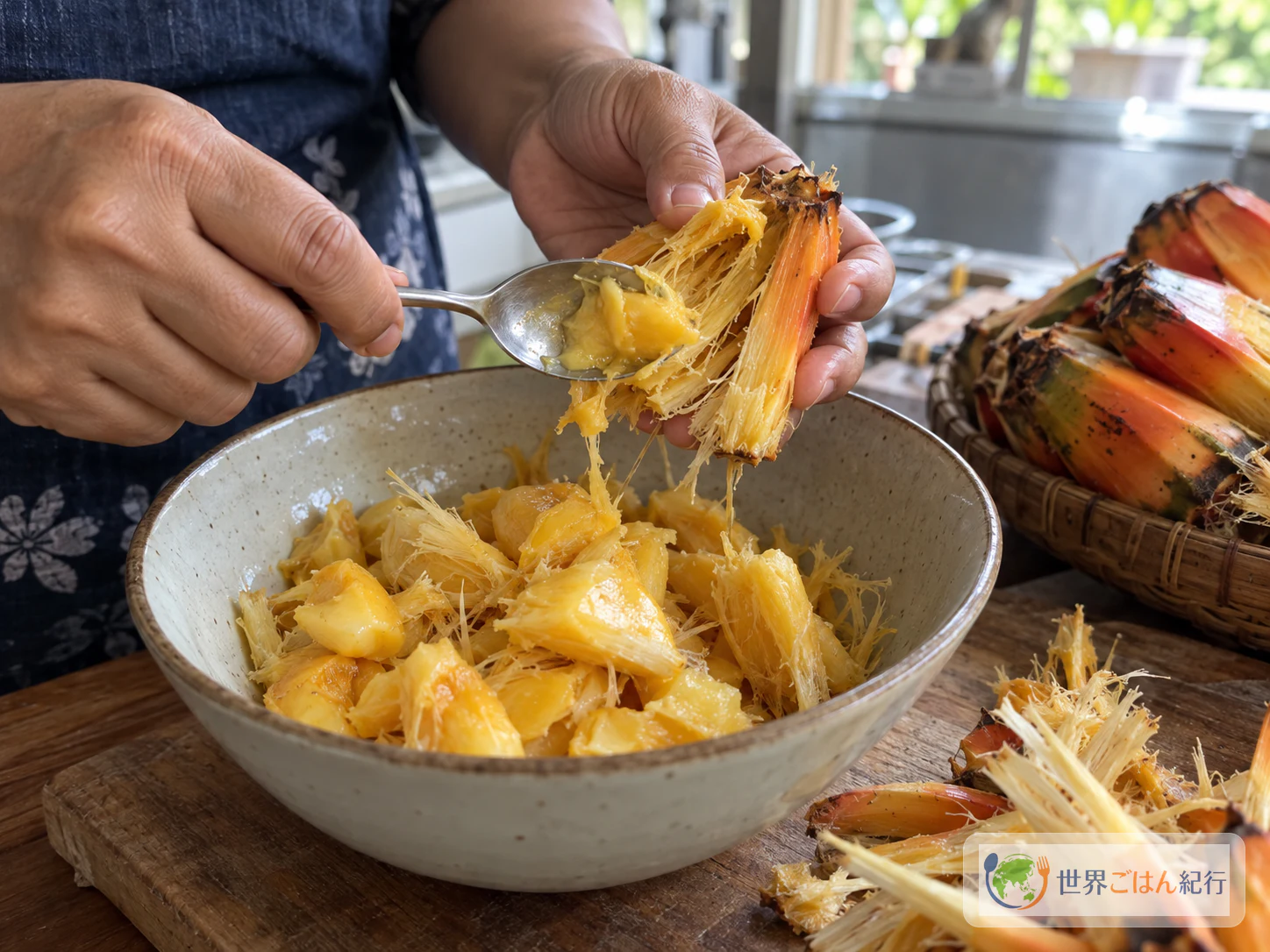
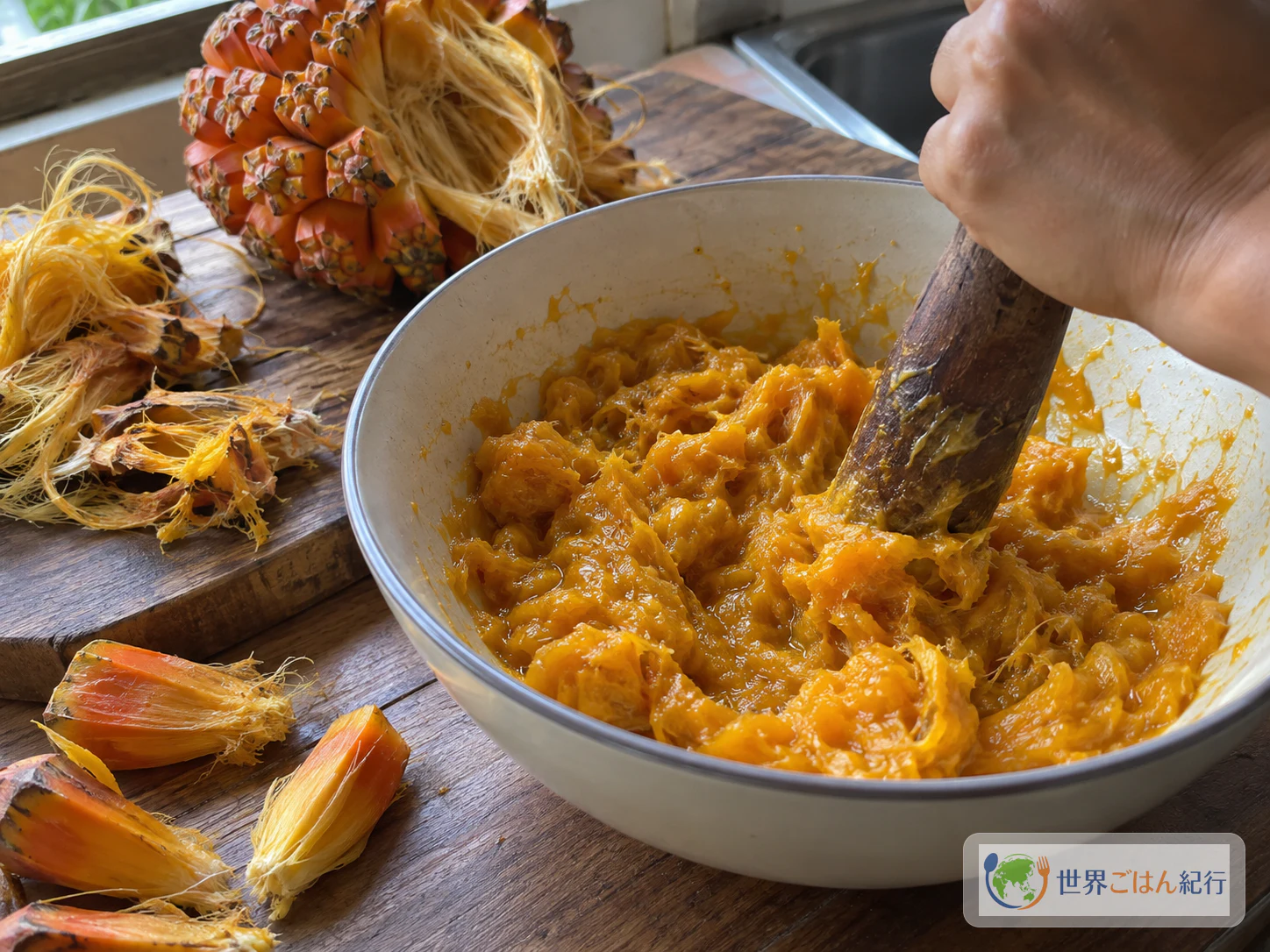
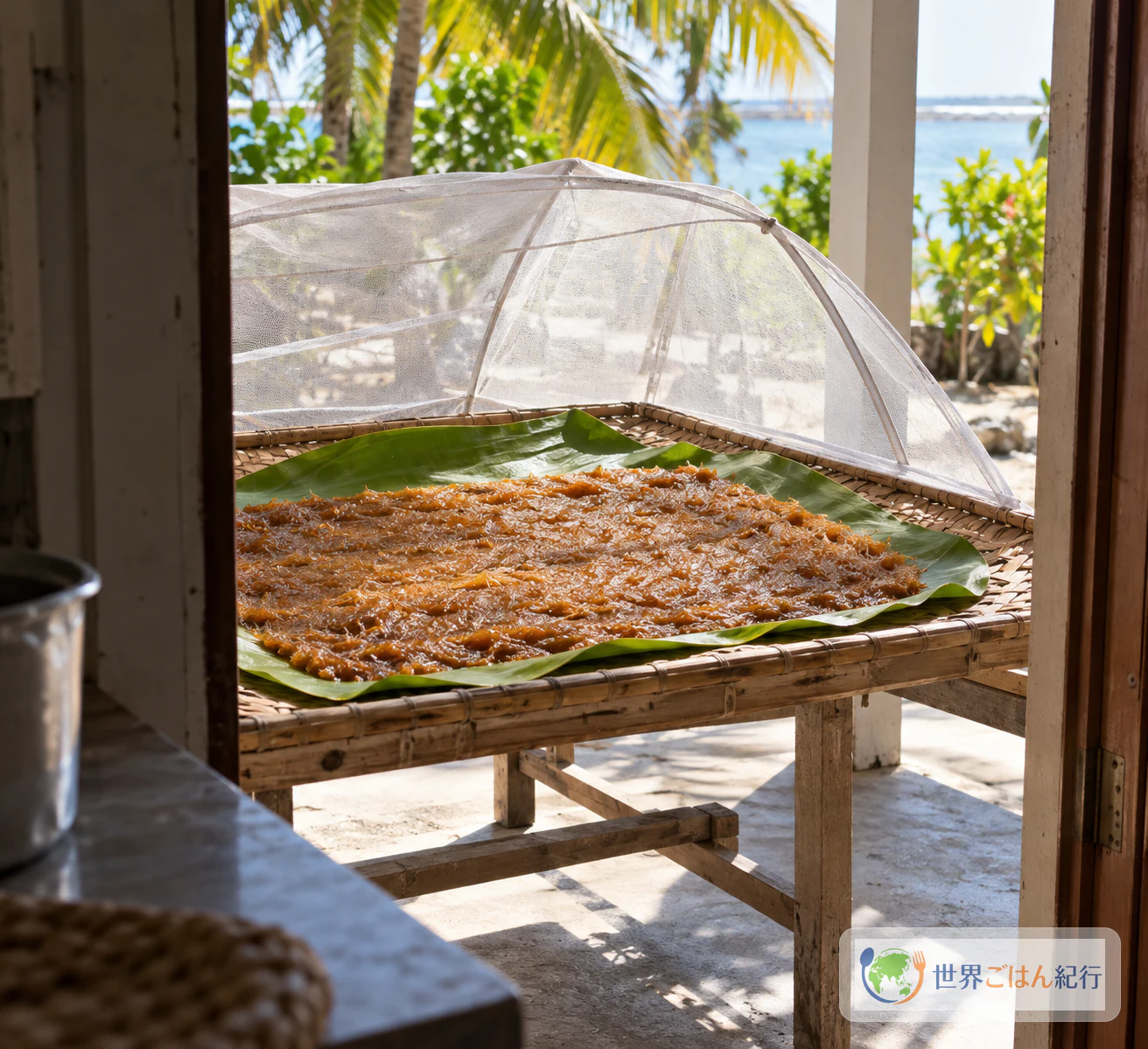
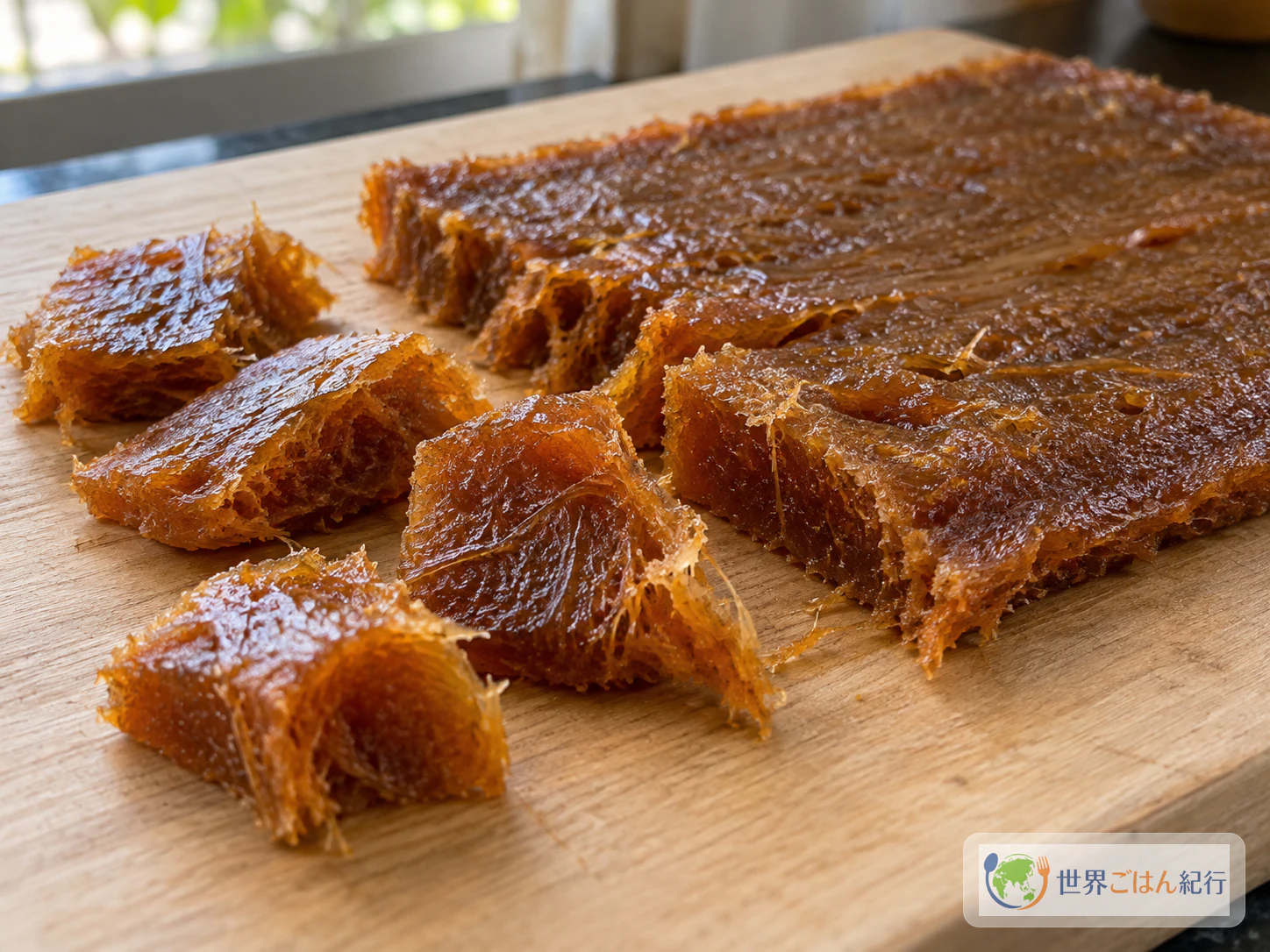
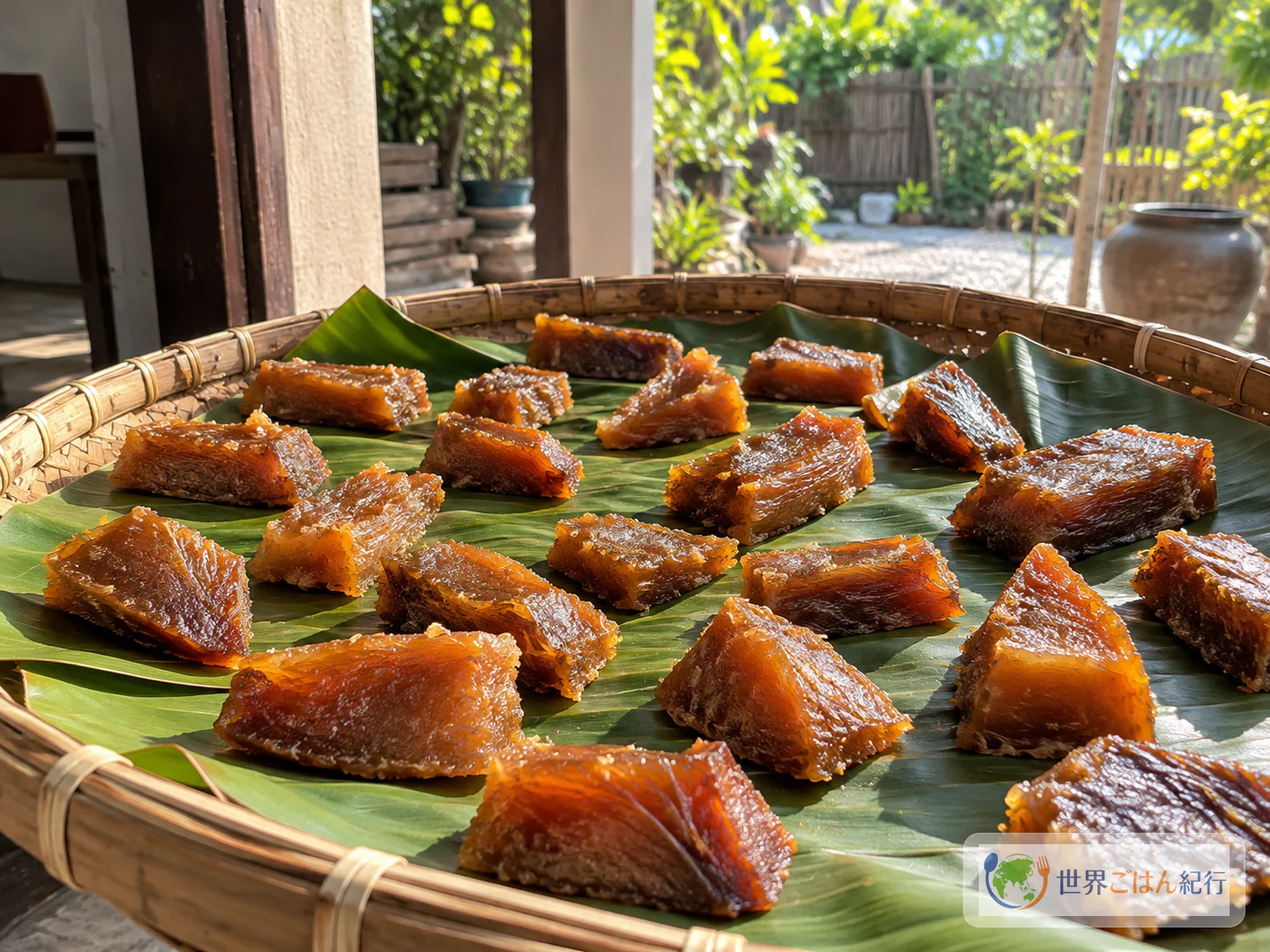
Ripe pandanus keys, the segments of the fruit, go into the cooking pot. Once cooked, the edible pulp is drawn away from the tough fibres and pressed into a thick paste. That paste is spread out on leaves and left in the sun. As it dries, it is cut into pieces and dried again. A research paper on Kiribati foods shows the result as a deep-brown, folded paste.
This is how te tuae is described in an ethnobotanical account of Kiribati agroforestry and in a nutrition study of Kiribati pandanus. Te tuae is a food made to be eaten later, not only on the day the fruit ripens.
The name also has a second, everyday use. In an interview for Kiribati Language Week, Noerin Redfern, who is I-Kiribati, named Te Tuae as a favorite Kiribati dish and described it as pandanus fruit mixed with coconut cream before serving. This article explains both uses side by side rather than merging them into one recipe.
This is a description of a documented traditional process. It is not a kitchen-tested home recipe. The sources give no quantities, no yield, no cooking or drying times, no thickness for the paste and no point at which it is safely dry. Nothing here confirms that the result is safe to keep at room temperature, especially when drying in a humid climate.
What Te Tuae Is
Te tuae is a preserved food made from processed pandanus fruit pulp. The agroforestry account describes it as cooked fruit with most of the fibre removed, made into a paste, spread on leaves and sun-dried. The Kiribati nutrition study identifies te tuae as preserved pandanus paste made from the pulp of many boiled keys and dried in the sun.
The interview account uses the same name differently. There, Te Tuae means fresh pandanus fruit mixed with coconut cream and served, with no preservation step. The technical sources describe a dried paste. The speaker describes a simple fresh dish. It is not clear from these materials whether one is the "real" te tuae and the other a separate dish. The fair reading is that the name covers more than one way of eating pandanus.
The nutrition study also separates te tuae from te kabubu, a different powder-like preserved pandanus product. Te kabubu is made by its own process, and this article does not go into it.
Ingredients and What the Sources Record
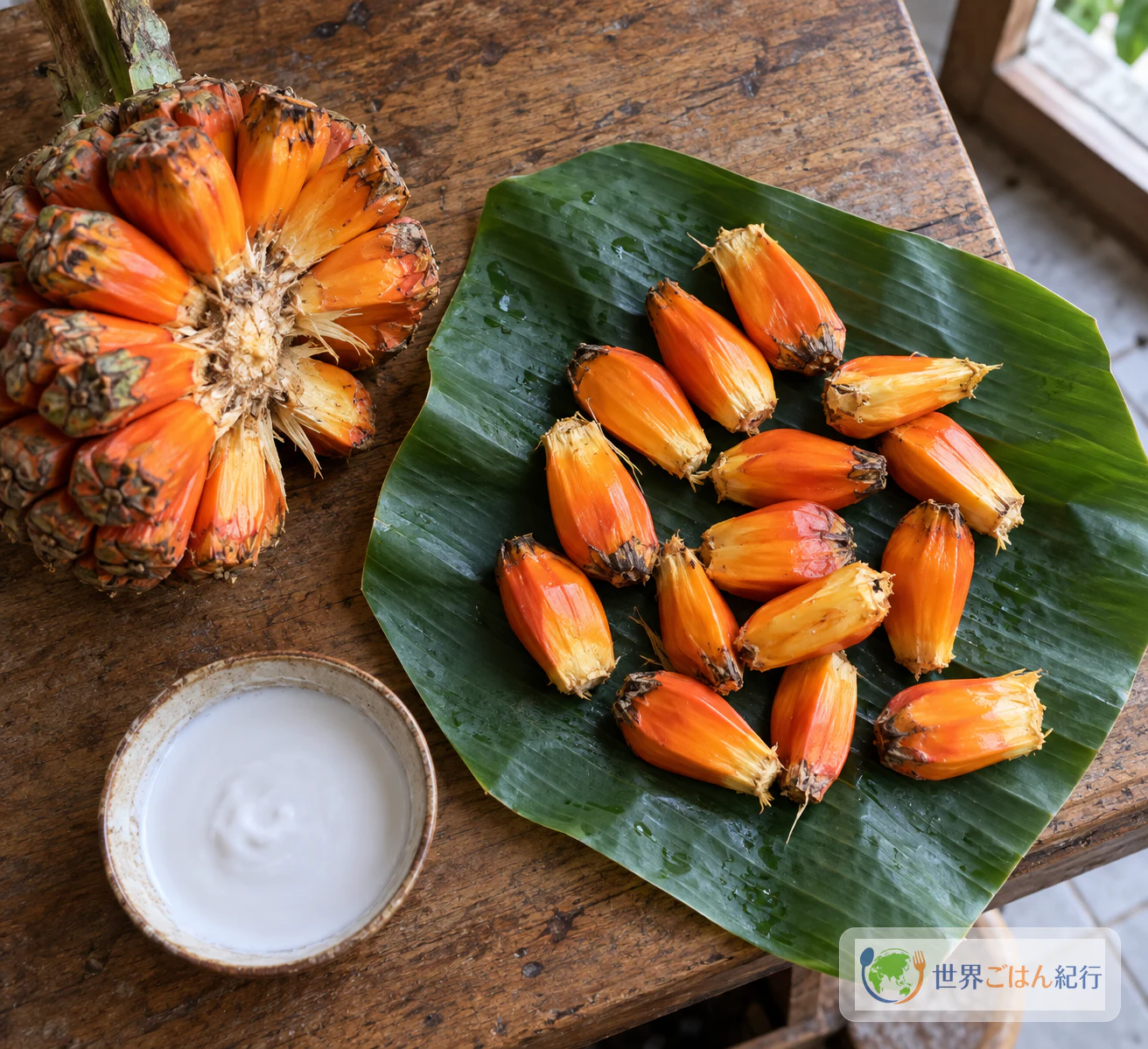
The main ingredient is ripe pandanus fruit. None of the sources give a weight or a number of keys, so the table records only what is documented. Fruit cultivar, ripeness and drying conditions will change how much paste you get and how it dries.
Equipment
- A pot for cooking the fruit (the sources describe the keys as cooked and boiled)
- Something to separate the pulp from the fibres; the sources do not name a specific tool
- A place to dry the paste in the sun
Choosing and Understanding the Ingredients
Pandanus fruit. It is not clear from the sources whether fresh pandanus is available in ordinary shops outside the Pacific. No other fruit is a documented equivalent. If you make something similar with a different fruit, it is a dish inspired by te tuae, not te tuae.
Leaves. The agroforestry account says "leaves" without naming a species. Banana leaf or any other leaf should not be described as the traditional material. Using a modern, hygienic drying surface instead is an editorial idea only. Its safety and its effect on the result have not been checked.
Coconut. Coconut cream, coconut milk and grated coconut are different ingredients and are kept apart here. Milk or grated coconut go with the preserved paste. Cream goes with fresh fruit in the interview's version. No source gives amounts for any of them. If you need to avoid coconut because of an allergy, check before serving either version.
No salt, sugar or water is added to the paste in any source, and none is added here.
How Te Tuae Is Made
These steps follow the order given in the agroforestry account, with the nutrition study confirming the boiled fruit and the sun-dried product. Where a source gives no detail, this article does not fill it in.
How Te Tuae Is Eaten
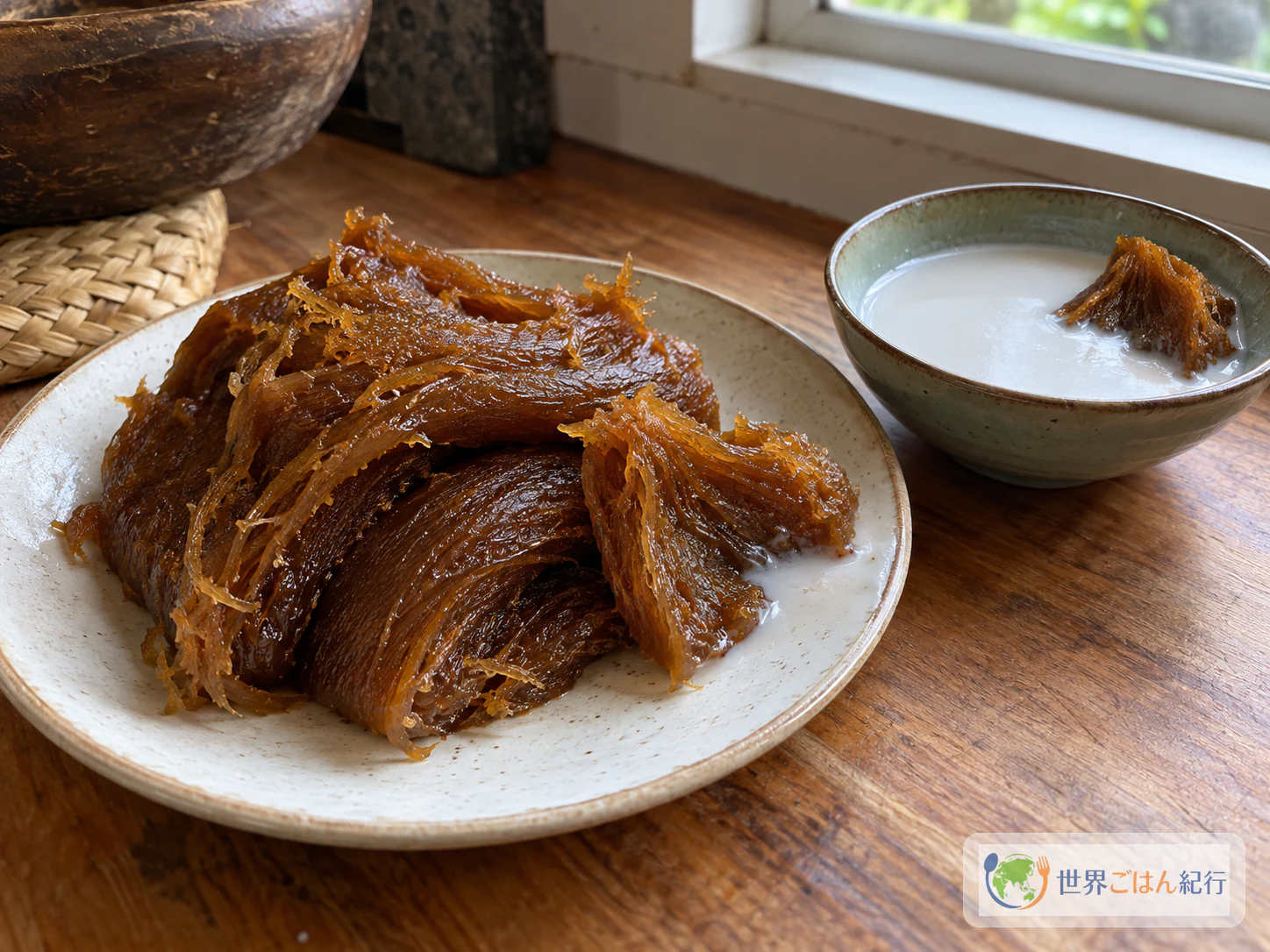
According to the agroforestry account, preserved te tuae can be softened, or prepared with coconut milk or grated coconut. No ratio or soaking time is recorded.
The interview describes a different, simpler dish under the same name: pandanus fruit and coconut cream mixed together and served. It uses fresh fruit, not the dried paste, and the speaker gives no amounts. How much cream to use and how sweet to make it are left to each household.
Pair the dried paste with coconut milk or grated coconut. Keep coconut cream for the fresh-fruit version. The sources do not support pairing the preserved paste with coconut cream.
When Things Don't Go to Plan
| Situation | What the sources allow us to say |
|---|---|
| You can't find fresh pandanus fruit | Availability outside the Pacific is unconfirmed. Another fruit is not an equivalent; anything made with it is an inspired dish, not te tuae |
| Some fibre remains in the paste | The traditional account says most of the fibre is removed, not all of it |
| The paste is still soft or sticky after drying | No endpoint is recorded. Do not treat it as preserved, and do not keep it at room temperature on the assumption that it is |
| Your climate is humid or the weather turns wet | Sun-drying under these conditions has not been verified as safe. No source supports moving the process indoors at a given temperature |
| You don't know how much coconut to add when serving | No source gives an amount for coconut milk, grated coconut or coconut cream |
Storage
The cultural sources describe te tuae as a food kept for later, but they give no home storage method, no container advice and no safe storage period. For that reason this article does not give a room-temperature storage method or a time limit. A safe home method would need further information on drying endpoints and food safety.
Variations
- Softened preserved paste with coconut milk, as recorded in the agroforestry account.
- Preserved paste with grated coconut, from the same account.
- Fresh pandanus fruit mixed with coconut cream, the simple dish the interview speaker calls Te Tuae. This is a separate way of eating, not a step in making the dried paste.
- Te kabubu is a different preserved product made from pandanus by its own process. It is mentioned here only to keep it distinct from te tuae.
Te Roro, a separate pandanus-and-coconut preparation, is a different dish and is not covered here. A version made with other fruit is better treated as an inspired recipe than as a traditional variation.
Why Kiribati Dried Its Pandanus
The agroforestry account describes pandanus fruit as an important food in Kiribati. A traditional-knowledge summary for the Convention on Biological Diversity names coconut and pandanus as important food plants. It says pandanus fruit is used for tuae and kabubu, foods that can be eaten right away or stored for future needs, especially for droughts and special occasions.
That summary draws on older works. It explains the values behind the food; it does not show that every household keeps the practice today. The nutrition study notes that pandanus cultivars differ, so the fruit itself is not uniform. Te tuae is best seen as a way of turning fruit into food for leaner days and important gatherings.
If you are exploring Pacific Island foods, you might also look at kokoda from Fiji, laplap from Vanuatu, which is wrapped in leaves and cooked, and banana poke, a fruit sweet from the Cook Islands.
Frequently Asked Questions
Are Te Tuae and Te Roro the same thing?
The sources here do not treat them as the same. Te tuae is the preserved pandanus paste, and Te Roro is a separate preparation. This article covers only te tuae.
What does te tuae taste like?
No source describes its flavor directly, so this article does not compare it to other dried fruits. The nutrition study notes that pandanus cultivars differ, and ripeness varies too, so the taste is likely to vary.
How long does te tuae keep?
The cultural sources describe it as a food stored for future needs, including droughts. They do not give a safe storage period for home cooks, so none is given here.
How much coconut cream goes with it?
The interview gives no amount. The coconut cream version is a fresh-fruit dish, not a set formula, and it is not a documented accompaniment for the dried paste.
Can I make it with another fruit?
You can make something inspired by it, but no other fruit is documented as a substitute. It would not be te tuae in the traditional sense.
Sources
- Pacific Collaborative Futures, "Kiribati Language Week with Baua Redfern & Nan Noerin Redfern." An I-Kiribati speaker names Te Tuae as a favorite dish and describes mixing pandanus fruit with coconut cream before serving; no quantities or preservation steps are given. https://www.pcf.org.nz/news/interview-baua-redfern-and-nan-noerin-redfern-kiribati-language-week
- South Pacific Regional Environment Programme (SPREP) / Atoll Research Bulletin, "Agroforestry systems of Pacific islands: Kiribati section." Pandanus as an important Kiribati food; te tuae made by cooking fruit, removing most fibre, making a paste, spreading it on leaves and sun-drying, cutting and drying further until preserved; eaten softened or with coconut milk or grated coconut. https://cookislands-data.sprep.org/system/files/58_3.pdf
- Convention on Biological Diversity, "Traditional Knowledge and Biodiversity: Kiribati country section." Coconut and pandanus as important food plants; pandanus used for tuae and kabubu, eaten right away or stored for future needs, especially droughts and special occasions. https://www.cbd.int/doc/meetings/tk/wg8j-03/information/wg8j-03-inf-09-en.pdf
- Public Health Nutrition / Cambridge University Press, "Carotenoid content of pandanus fruit cultivars and other foods of the Republic of Kiribati." Te tuae identified as preserved pandanus paste from the sun-dried pulp of many boiled keys; distinguished from kabubu; cultivar differences. https://www.cambridge.org/core/services/aop-cambridge-core/content/view/5218473E89962CA7559232DDA817901E/S1368980006001042a.pdf/div-class-title-carotenoid-content-of-pandanus-fruit-cultivars-and-other-foods-of-the-republic-of-kiribati-div.pdf