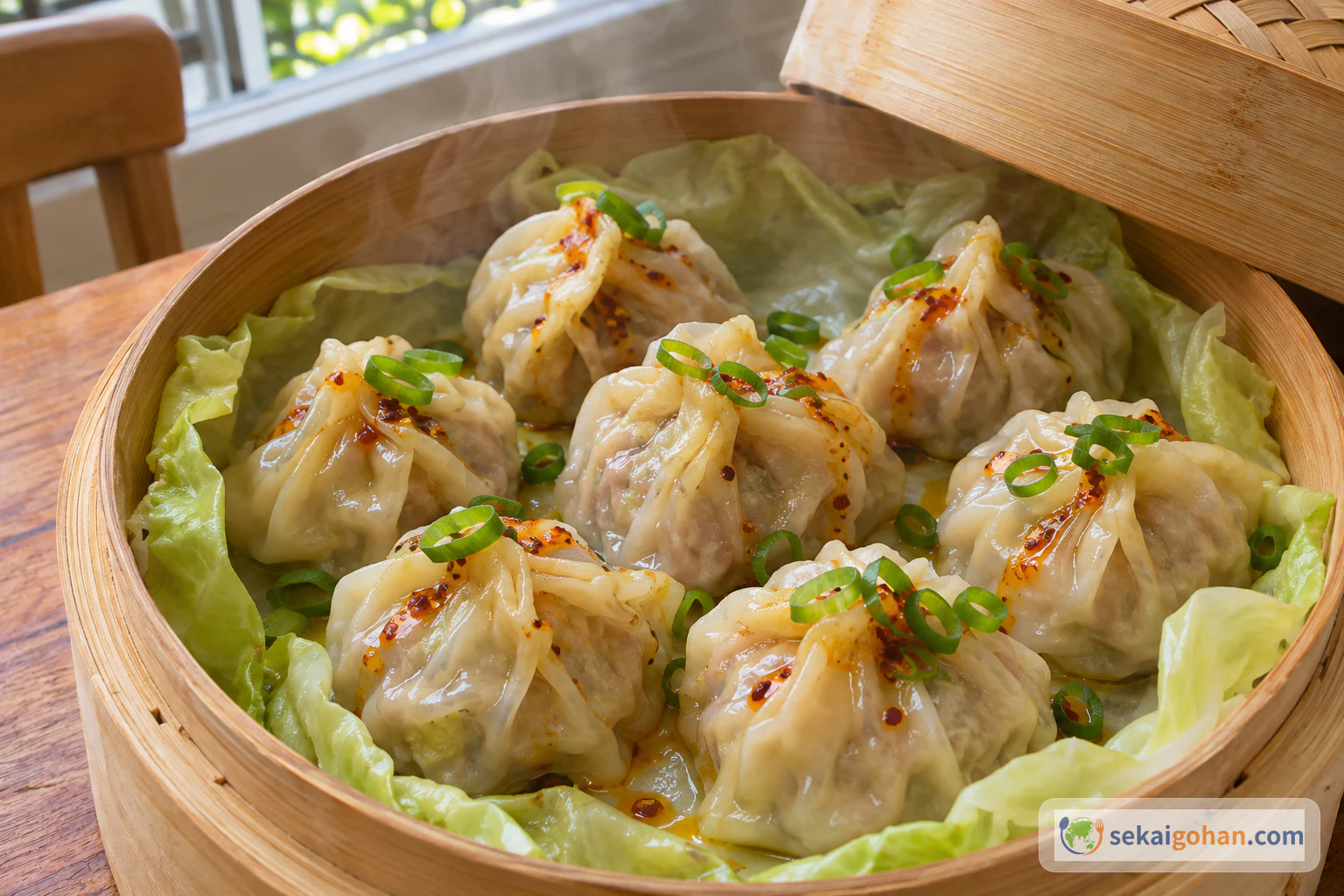
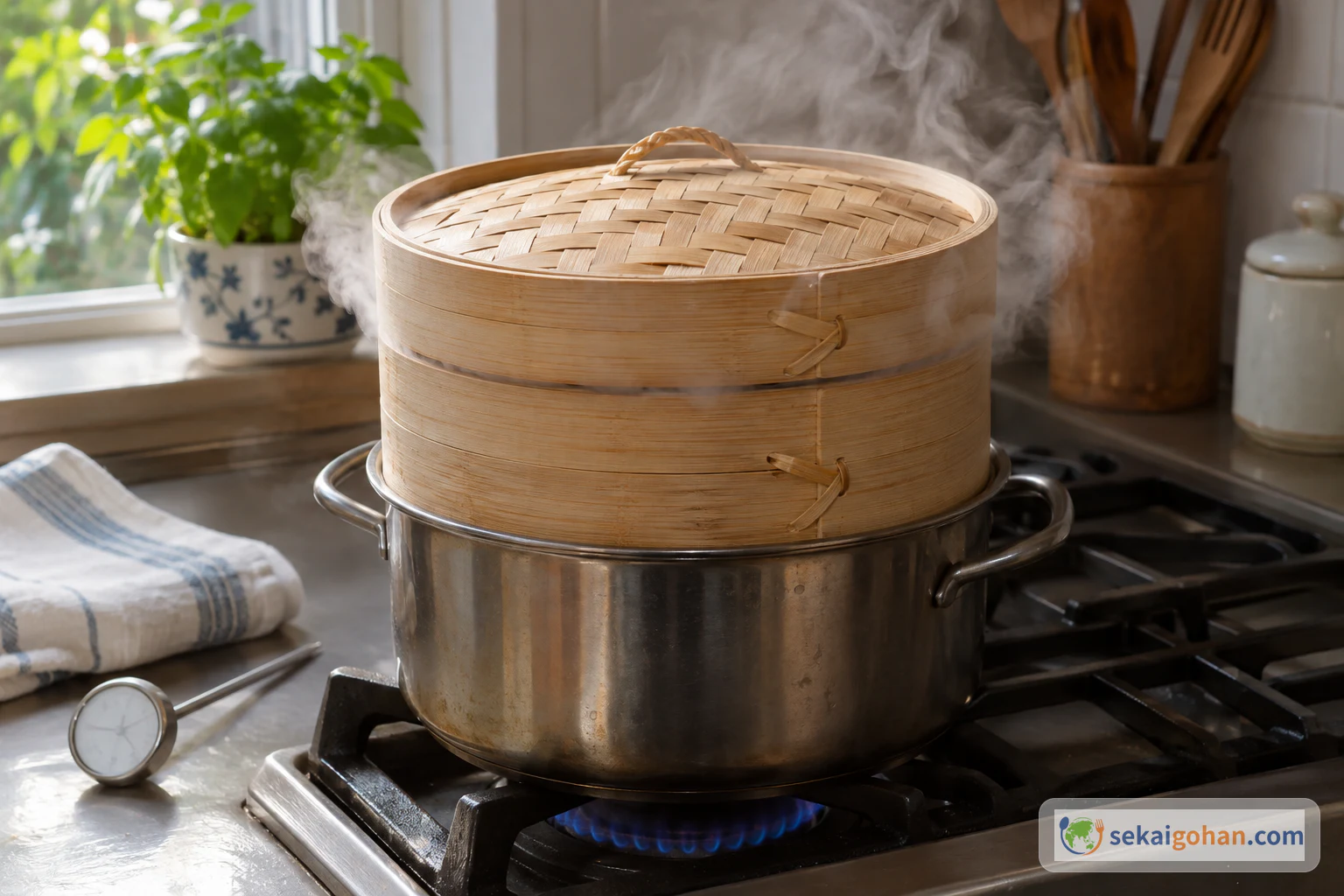
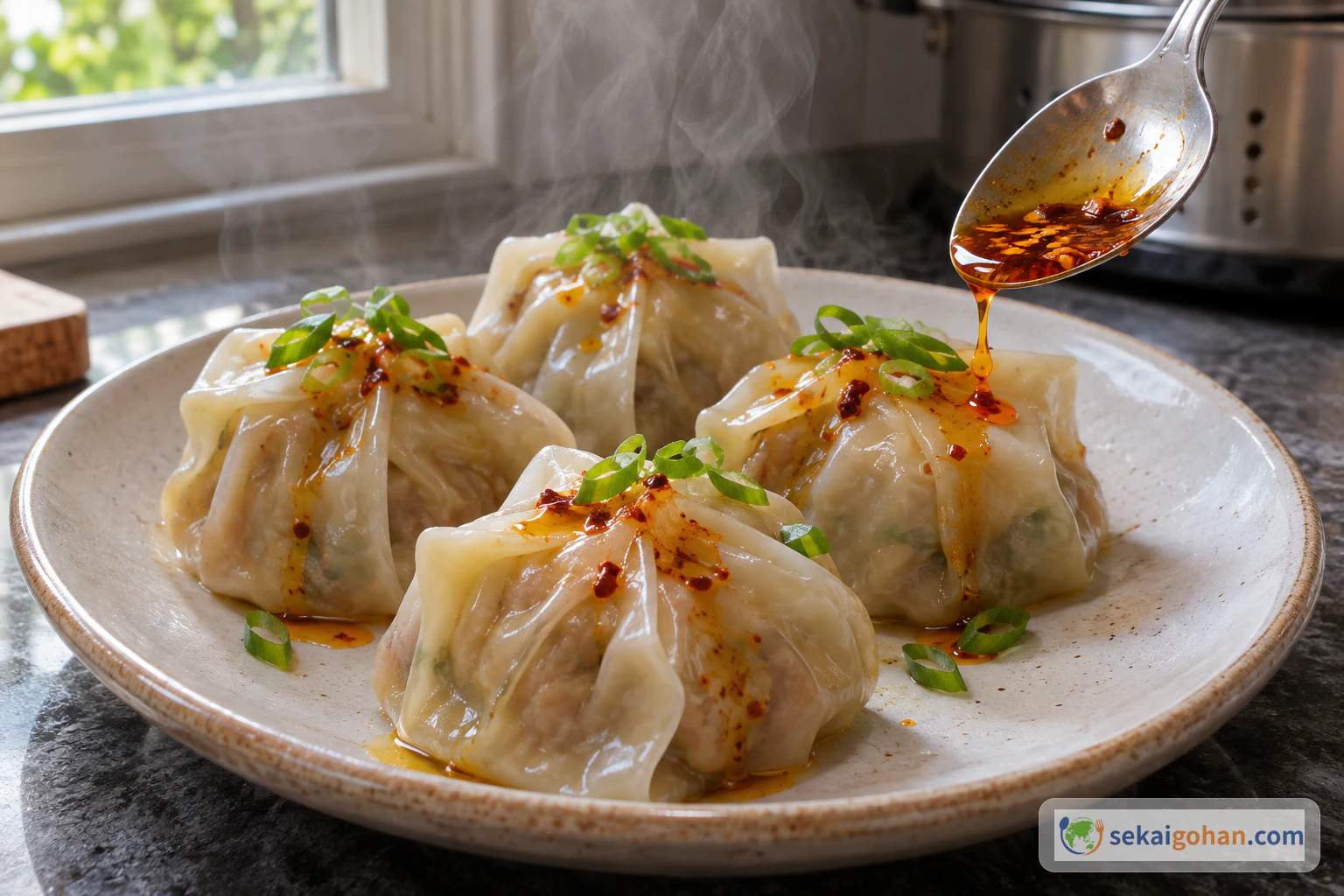
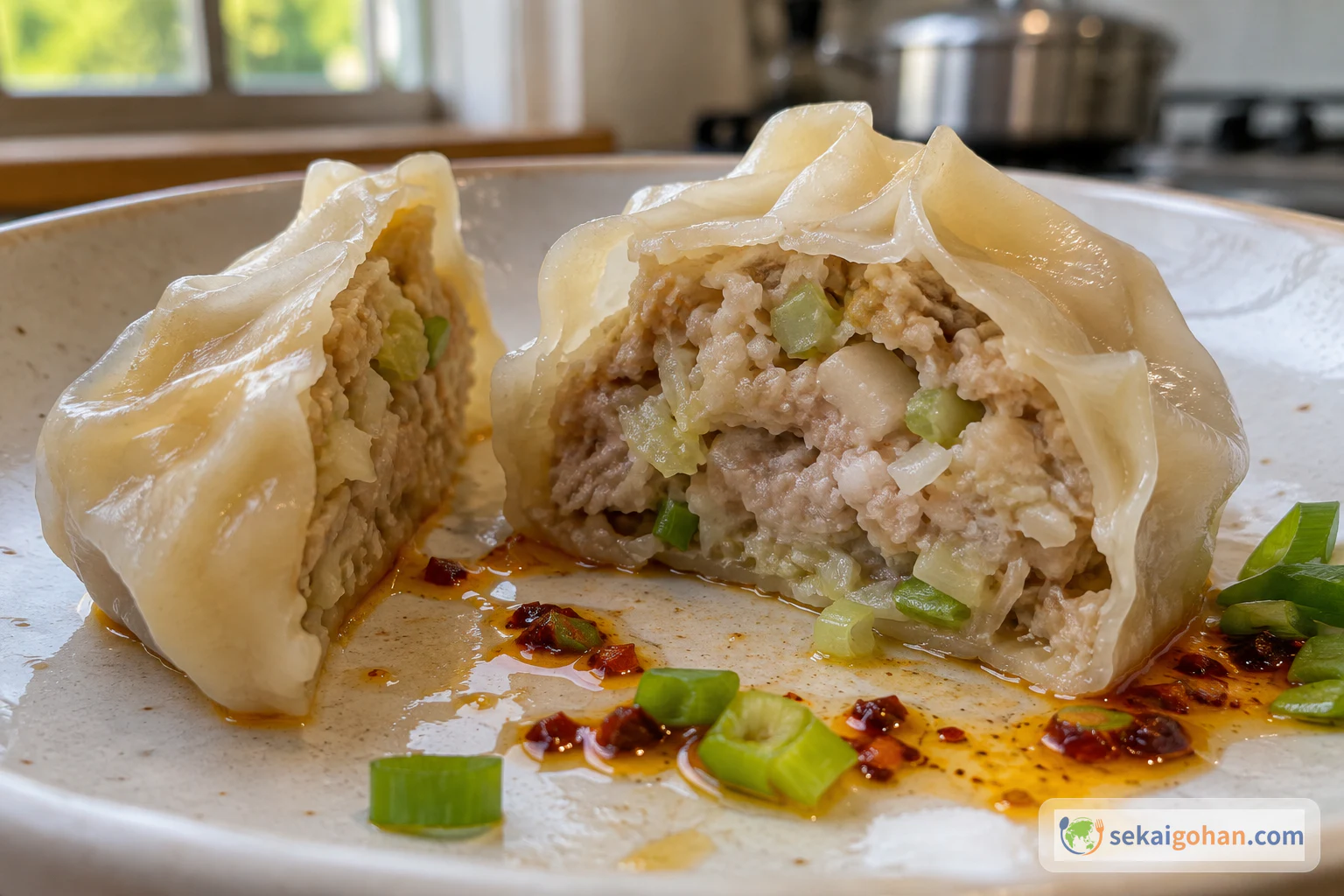
On market days in South Melbourne, the queue at the dim sim stall builds fast. What comes over the counter is a big, heavy parcel, thick-skinned and packed with beef, pork, lamb and cabbage, steamed or fried and splashed with soy and chilli. The home version is smaller and lighter: pork and chicken mince with sweet chopped cabbage, ginger and a back-of-the-throat bite of white pepper, sealed in a thin wonton wrapper and steamed until the skin turns glassy. A spoon of chilli oil and a scatter of spring onion greens go on top, and they are eaten hot, straight out of the basket.
Where dim sims come from
From siu mai to dim sim
Dim sum is the Cantonese spread of small dishes. Dim sim is one particular dumpling, and it grew up in Melbourne. Its model is siu mai, the open-topped Cantonese dumpling. The most common telling puts the turning point in the mid-1940s at Wing Lee, a restaurant in Melbourne's Chinatown, where William Chen Wing Young saw how much his Australian customers liked siu mai and built a dumpling around that taste. The early filling was pork, prawn, water chestnut, spring onion and soy sauce.
Who made the first one is not settled. A Melbourne newspaper already mentioned "dim sims" of pork minced with water chestnuts and wrapped in paste in October 1928, and whether those were anything like today's large dim sim is unclear. What is clearer is the next step. In 1941 Young set up a factory, brought wrapper makers from China and divided the wrapping into a production line. The dumpling was resized to survive freezing, reheating and transport, and to fill a Western appetite. The fried dim sim has its own story, as it is told: his elder brother supplied a fish and chip shop in Mordialloc, and the shop is said to have put them in the fryer.
Young's daughter, Elizabeth Chong, explains the spelling through her own family: in their dialect the word is said "dim sim," not "dim sum." It is a family account of one dialect, and it stuck to the Australian dumpling.
A racecourse stall and a market queue
Kuen (Ken) Cheng was born in Guangdong in 1922, went to Hong Kong at sixteen and cooked for the US Navy during the Second World War. A story passed down says he cooked for General MacArthur; the family itself has never been able to confirm it. Around 1947–48 he sold handmade dim sims near Caulfield racecourse, and in 1949 he moved to a stall at South Melbourne Market. The business still runs from Stall 91 on Cecil Street, takeaway only.
The market dim sim is round and heavy, 100–120 g (3½–4 oz) each, filled with cabbage, beef, pork, lamb and spices in a thick wrapper. Cheng and his wife, Marjorie Lo, born in Tahiti, passed the stall to their five children; brothers Edward and Phillip now make up to 20,000 a week. Customers take them plain or with soy and a little chilli.
Where you find them now
Dim sims are mostly a Victorian thing. In other states they are harder to come by, though fish and chip shops around the country serve them. An everyday takeaway dim sim is about 50 g (2 oz), and every shop has its own mix; frozen ones now sit in supermarket freezers too. Cooked at home with wonton wrappers, they shrink to a few bites each, which is the version here. They belong with the rest of the counter food in Australia's kitchen, eaten standing up, out of a paper bag.
Ingredients
This makes about 40 small dim sims, a light meal for four.
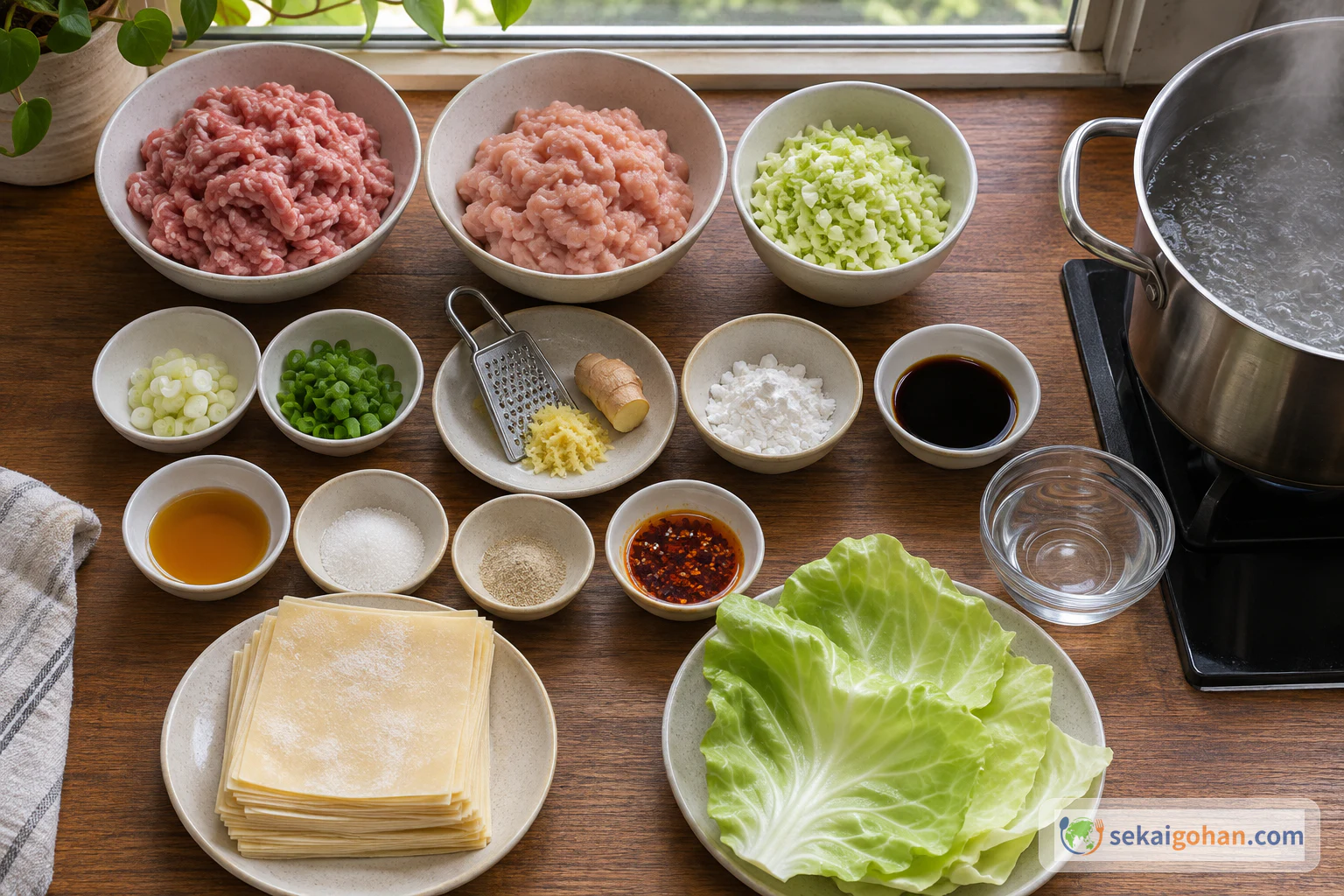
There is no salt in the filling. The soy sauce and white pepper carry it, so do not add more.
Wonton wrappers contain wheat, and some brands also contain egg; check the label. Soy sauce contains soy and wheat. Sesame oil contains sesame. This filling has no shellfish.
Equipment
- Large mixing bowl, chilled
- Tablespoon for portioning
- Small dish of water for sealing
- Tray lined with baking paper
- Pot and steamer; a 10–11-inch (26–28 cm) basket holds 10–12 at a time, and two tiers speed things up
- Small sharp knife
- Kitchen thermometer and a skewer
- Deep pan, only if frying
Choosing and substituting
Wonton wrappers are the one thing to check before you shop. Pack sizes vary, so make sure you have 40, and read the label for egg if that matters at your table. Thin square wrappers give the delicate, translucent skin of the home dim sim; they are far thinner than the market's thick wrapper.
Use cornstarch, sometimes sold as cornflour. Potato starch sits next to it on the shelf but behaves differently: it is a different product and changes how the filling binds and how translucent it looks. The cabbage is ordinary round white or green cabbage. Napa cabbage is a different vegetable, so leave it for other dishes.
Buy the pork and chicken mince as two separate packs rather than a pre-mixed blend, because the balance of pork fat to lean chicken shapes the bite. Chicken thigh mince gives a juicier filling than breast. An everyday light soy sauce suits the filling; a darker soy adds more color and salt. Black pepper can replace white, but it smells sharper and more upfront. Crunchy chilli oil with fried bits in it works as a topping and changes the flavor, since it comes with fried bits in it.
Method
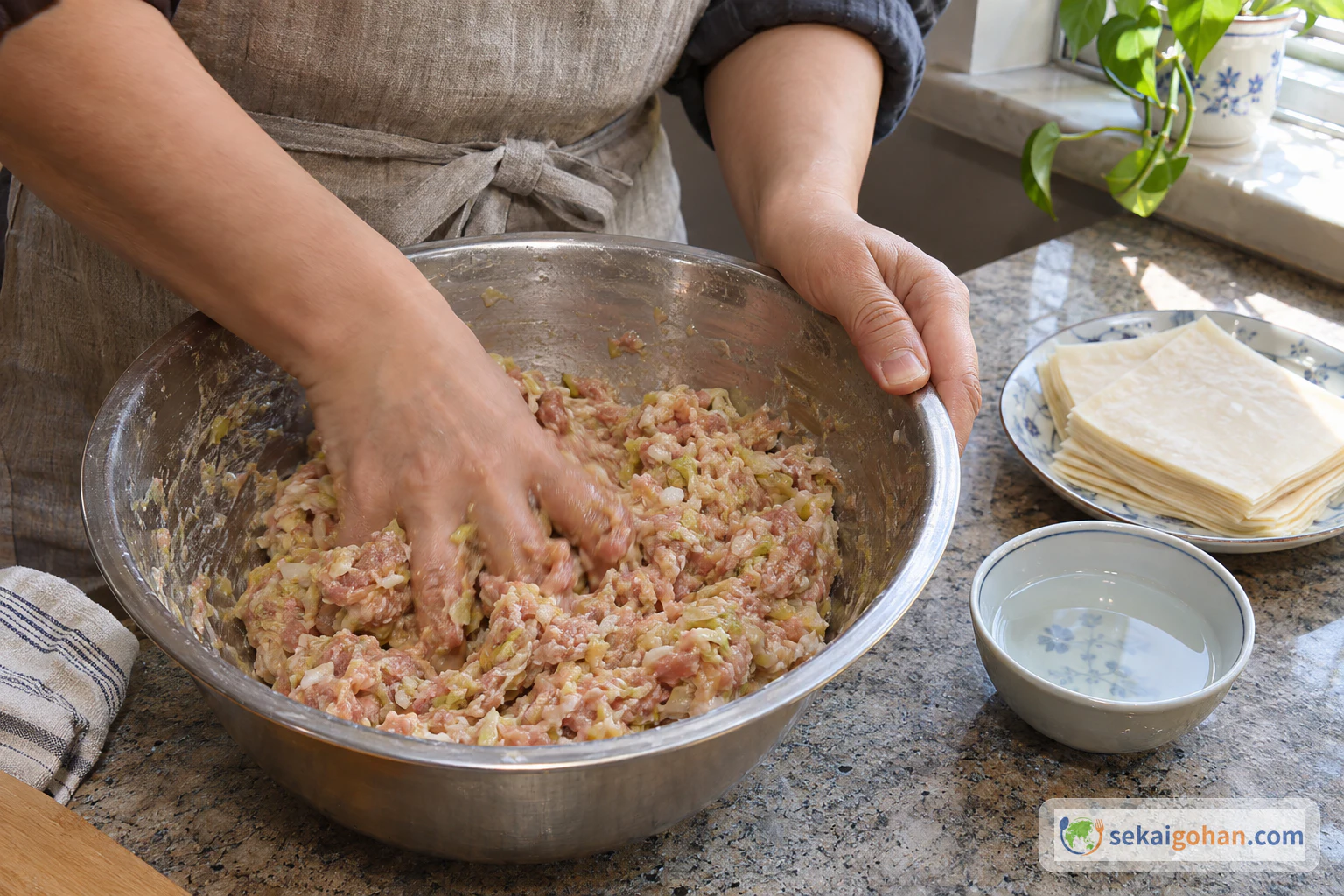
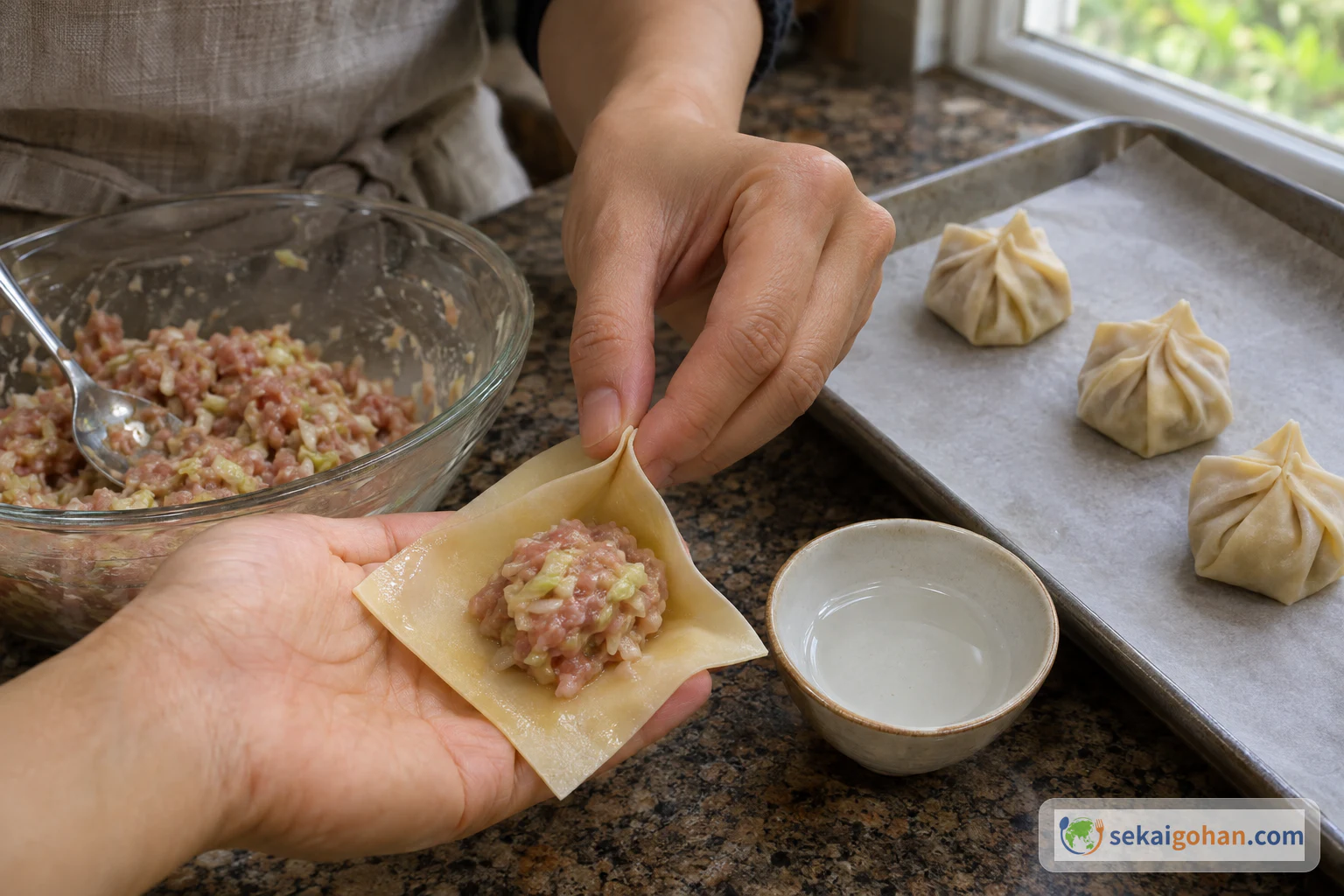
All the hands-on work happens at one bench: mix the filling, then wrap every dim sim and line them up on a tray. Only then move to the stove, where the work is steaming in batches while the next basket waits.
Minced meat must reach 167°F (75°C) at the center. Check one parcel from each batch with a thermometer, and steam longer if any read below that.
When it goes wrong
| What you see | Why | What to do |
|---|---|---|
| Wrappers tear while wrapping or steaming | Too much filling, or the tips were not wet enough | Keep to a level tablespoon; wet the tips again and press firmly |
| The dim sims come out watery | Wet cabbage, or condensation dripping from the lid | Drain the chopped cabbage before mixing; wrap the steamer lid in a cloth |
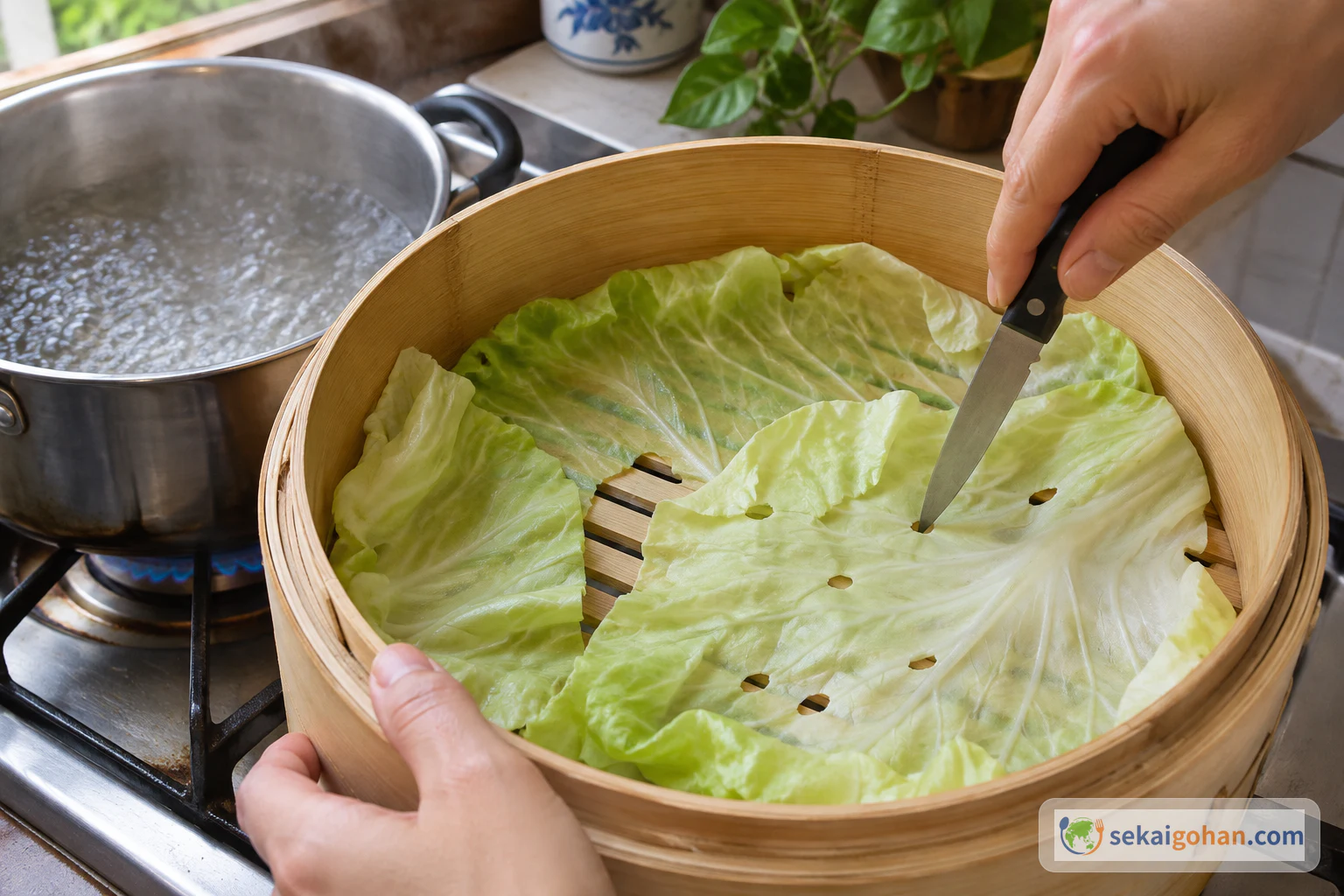
| Skins are sticky and cling to each other | Basket overcrowded, or no holes in the lining leaves | Steam 10–12 at a time with gaps; pierce the leaves |
| The center is still pink or below 167°F (75°C) | Overcrowded basket, or not enough time | Cover and keep steaming; check with the thermometer again |
| The filling runs out before 40 wrappers | Heaped spoonfuls | Use a level tablespoon from the start; use spare wrappers for another meal |
| Dim sims burst in the fryer | Oil too hot, or a loose seal | Fry at 320–340°F (160–170°C) and check every seam before frying |
Serving, variations and storage
At the table
Chilli oil and spring onion greens are the finish. Plain, with a dab of soy sauce, or with soy and a little chilli is how the market stall serves them. A dip of black vinegar, soy sauce and chilli oil sharpens things up, and sweet bean sauce loosened with vinegar works too. For children, leave the chilli oil in its own dish and put a bowl of soy sauce with vinegar out instead.
Variations
Fried after steaming. Steam them first, exactly as in the method, then fry at 320–375°F (160–190°C) until evenly golden, about 1–2 minutes as a rough guide. Start at the lower end, 320–340°F (160–170°C), where the wrapper blisters into a crisp shell instead of puffing up and splitting. Raw dim sims never go into the oil.
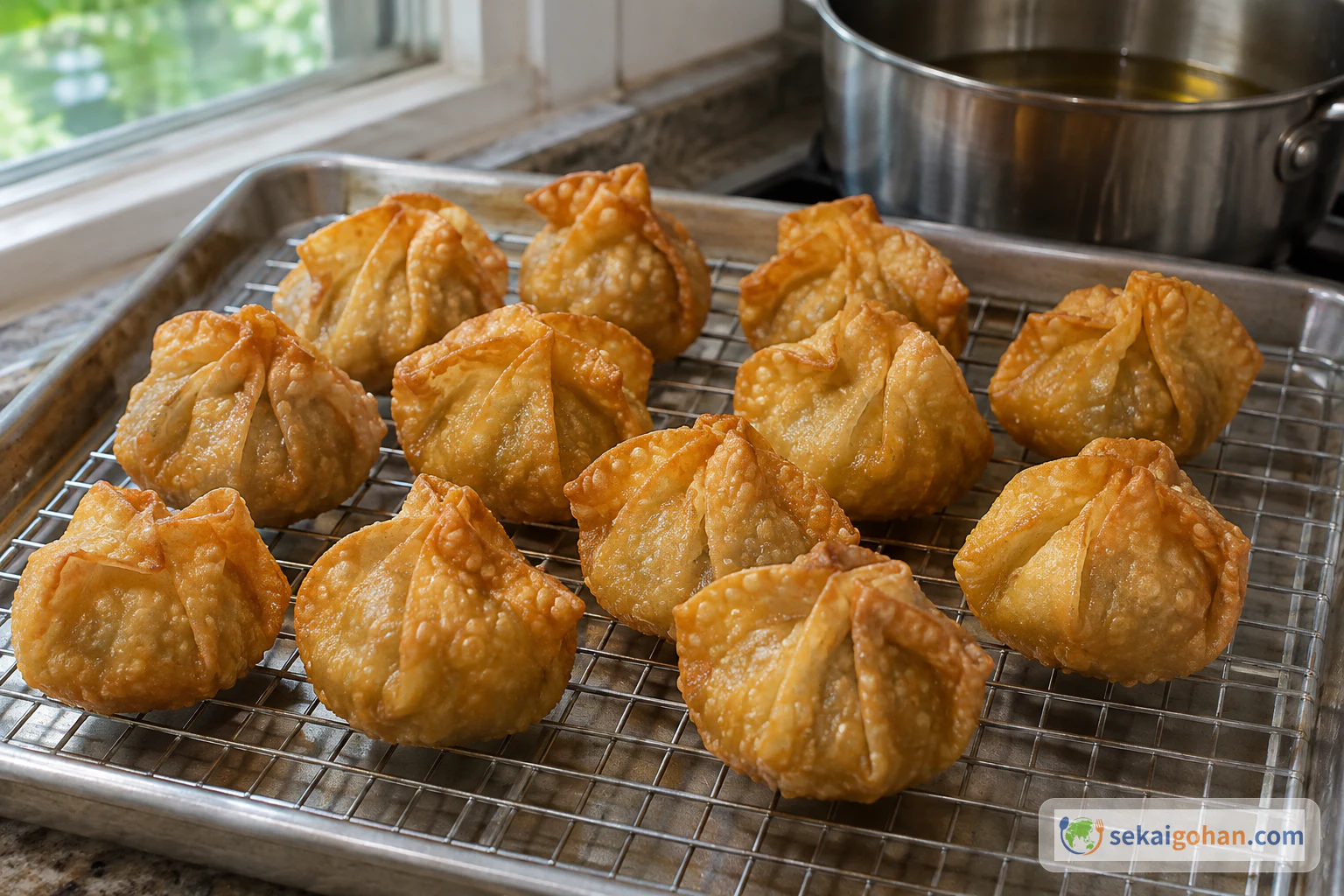
Use a deep pan, keep the kitchen ventilated and stay with the pot while the oil is hot. Let the oil cool completely before you dispose of it.
All chicken. Replace the pork with another 9 oz (250 g) of chicken mince and add 1 tsp more sesame oil. The filling turns lighter and milder, which suits younger eaters.
With prawns. Coarsely chop 3½ oz (100 g) peeled prawns and cut each mince to 7 oz (200 g). The filling moves toward the early pork-and-prawn dim sims, with a sweeter, bouncier bite. Add shellfish to your allergen check.
Storage
Cool leftovers quickly in small portions, cover them and refrigerate at 41°F (5°C) or below. To freeze, steam them first, let them cool, divide into portions and freeze at 0°F (−18°C) or below. Reheat by steaming until the center reaches 167°F (75°C). Food between 41°F and 140°F (5°C and 60°C) is in the danger zone: cooked dim sims left out less than 2 hours can go in the fridge, those left out 2–4 hours should be eaten right away, and anything out longer than 4 hours goes in the bin. Hold hot ones at 140°F (60°C) or above.
Frequently asked questions
How is a dim sim different from siu mai?
Siu mai is the model, but the dim sim moved away from it. The market-style Australian dumpling has a thicker skin and is larger, and the home version here closes all four corners over the filling where siu mai leaves the top open.
Steamed or fried, which is the real one?
Both. The South Melbourne Market stall sells both, and even the brothers who run it do not agree on which is better. Steamed shows off the filling; fried gives a crisp, blistered shell.
Why is there no salt in the filling?
The soy sauce already salts it, and the white pepper and ginger lift the flavor. No salt is added to the filling.
Can I use bought frozen dim sims with this method?
Large shop-bought ones are a different size and need much longer in the steamer, so follow the pack. Whatever you steam, check that the center reaches 167°F (75°C).