Neenish Tart: Australian Jam and Mock Cream Tart with Two-Tone Icing

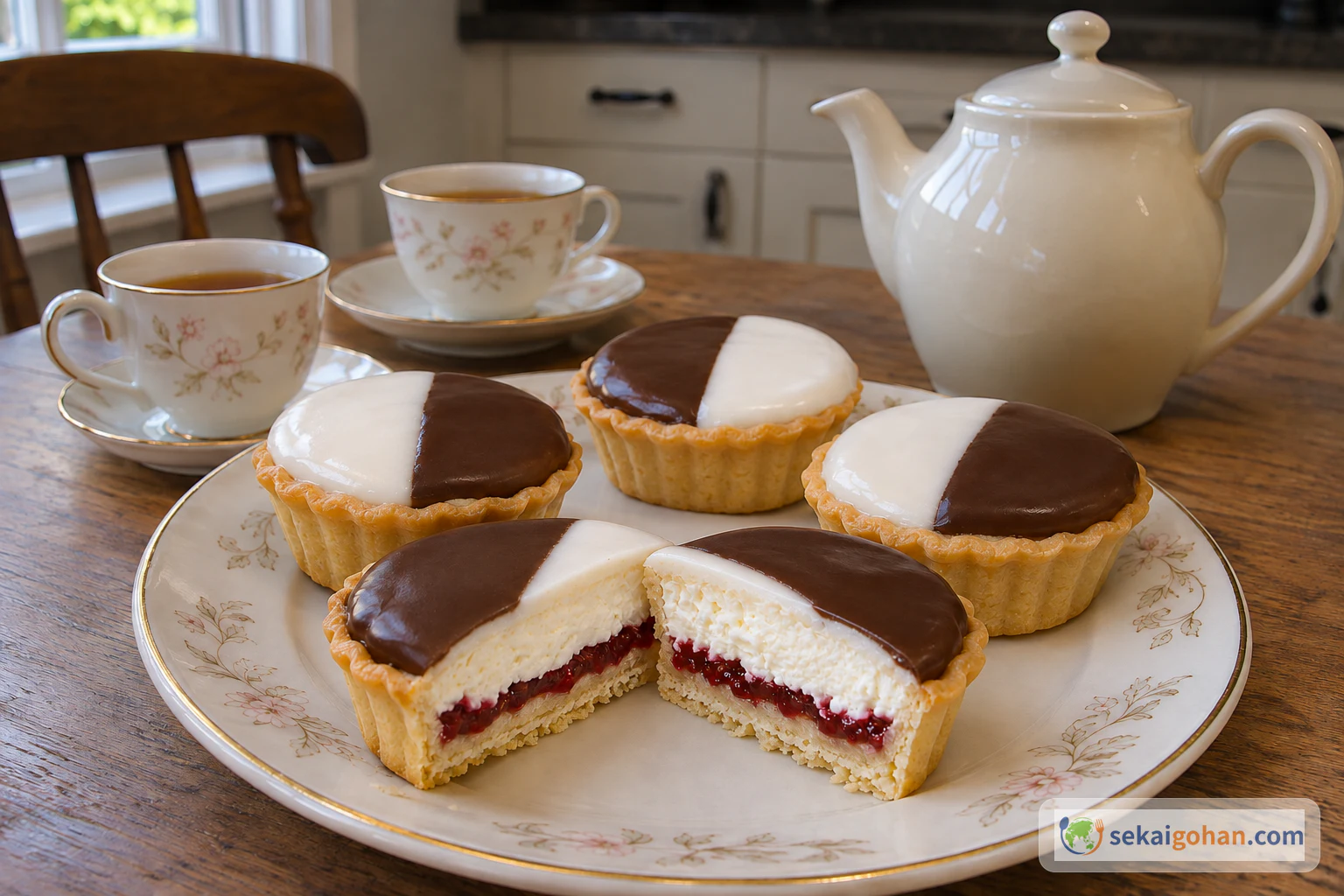
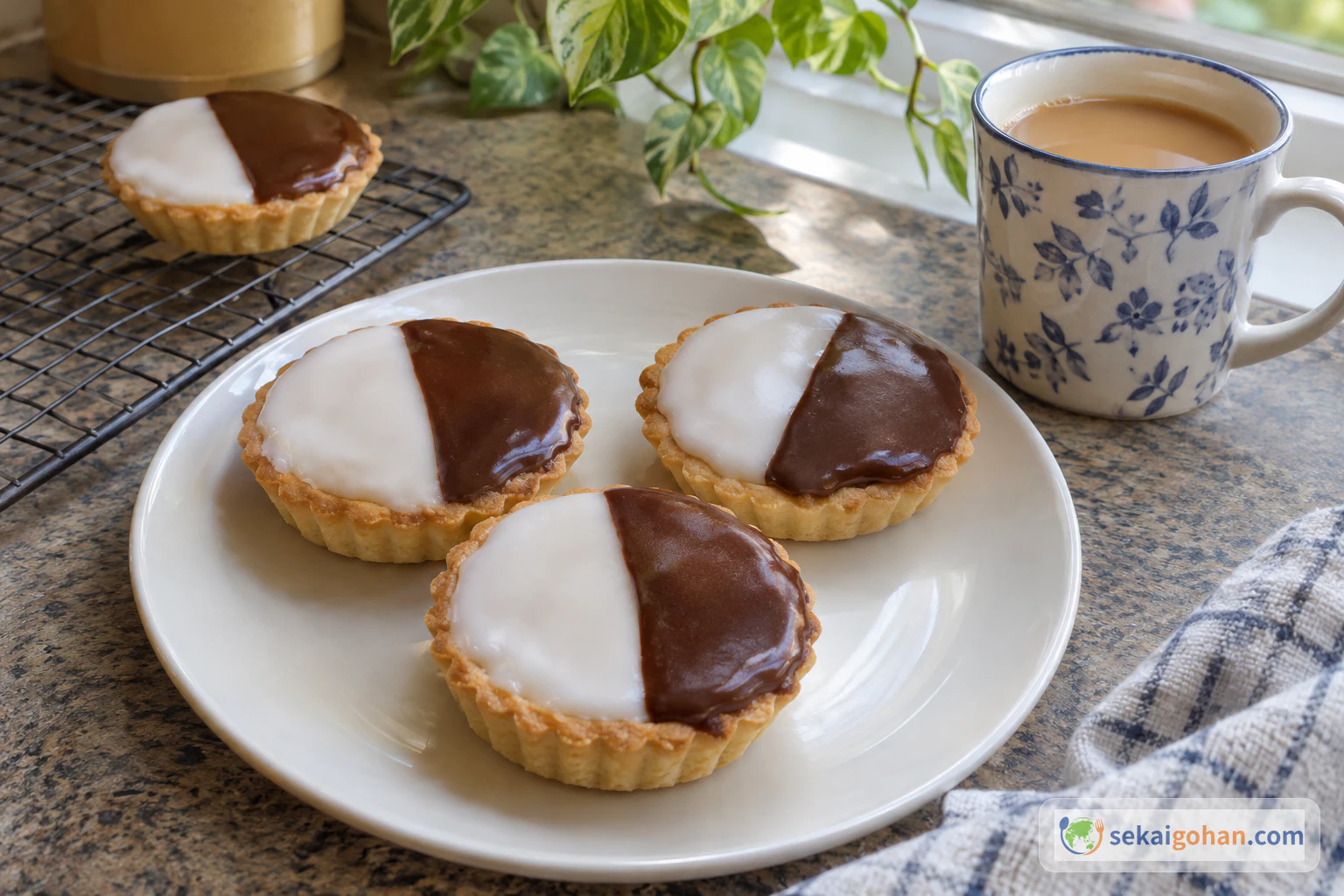
Finished neenish tarts with two-tone white and chocolate icing
Serves
12 tarts
Level
Intermediate
Cuisine
Australian

Neenish tarts are Australian jam and mock cream tarts iced half white, half chocolate. Learn the gelatine mock cream, short pastry and a clean icing line.

Cooking flow

Cooking steps

STEP 11 / 10

Rub the butter into the flour

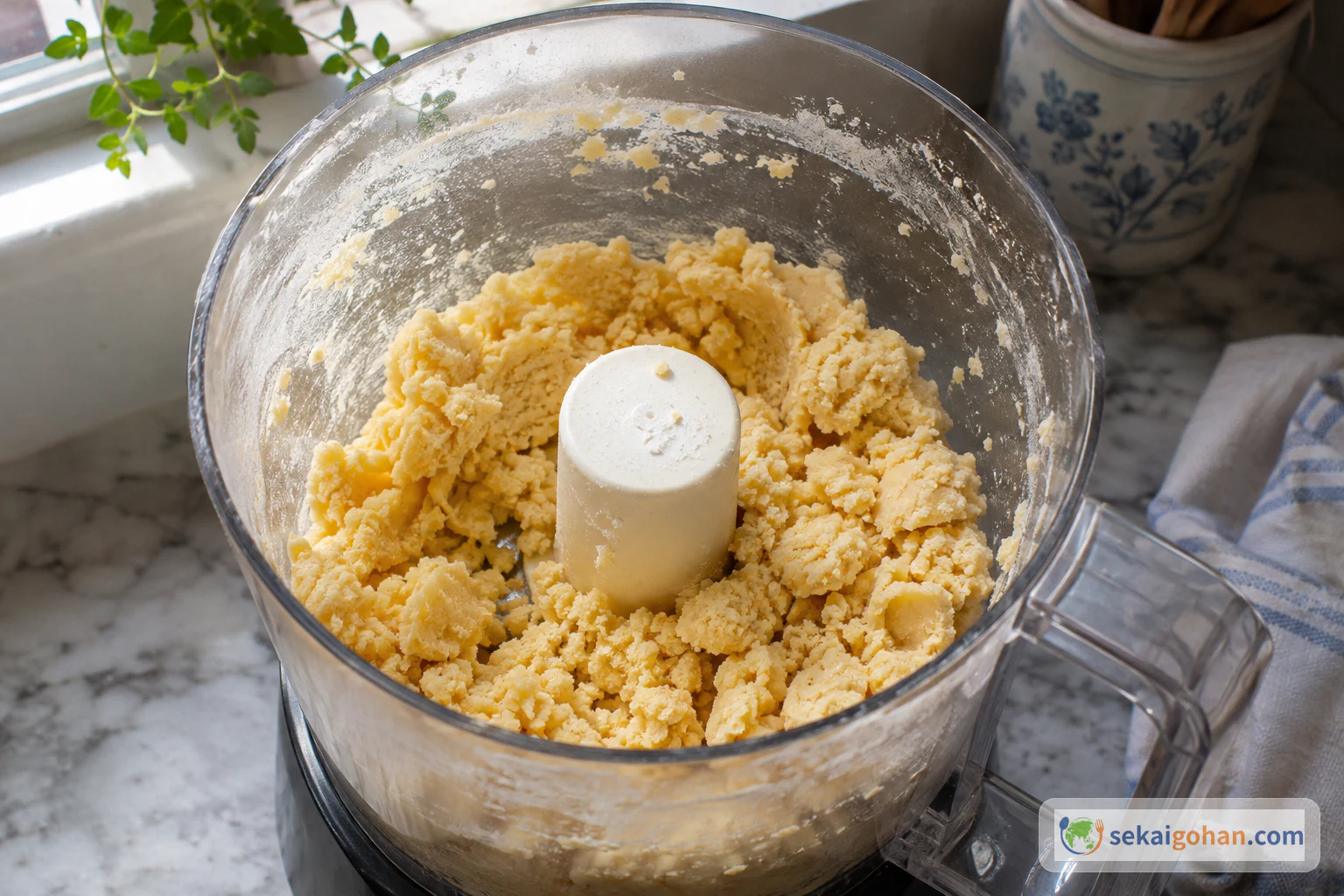
Flour and cold butter pulsed to crumbs, then yolk and iced water added until the pastry just begins to come together
Loose crumbs should still be visible when you stop the machine

Heat the oven to 390°F (200°C). Put the flour and the cold cubed butter in a food processor and pulse until the mixture looks like fine crumbs with no visible lumps of butter. Add the egg yolk and iced water and run the machine again. Stop the moment the crumbs begin to clump together but before they form a ball.

Cold butter, cold water

The chilled butter and iced water are what keep the pastry short and crumbly. Stop processing as soon as it clumps; working it further makes a tough case that shrinks in the oven.

STEP 22 / 10

Roll, cut and line the tin

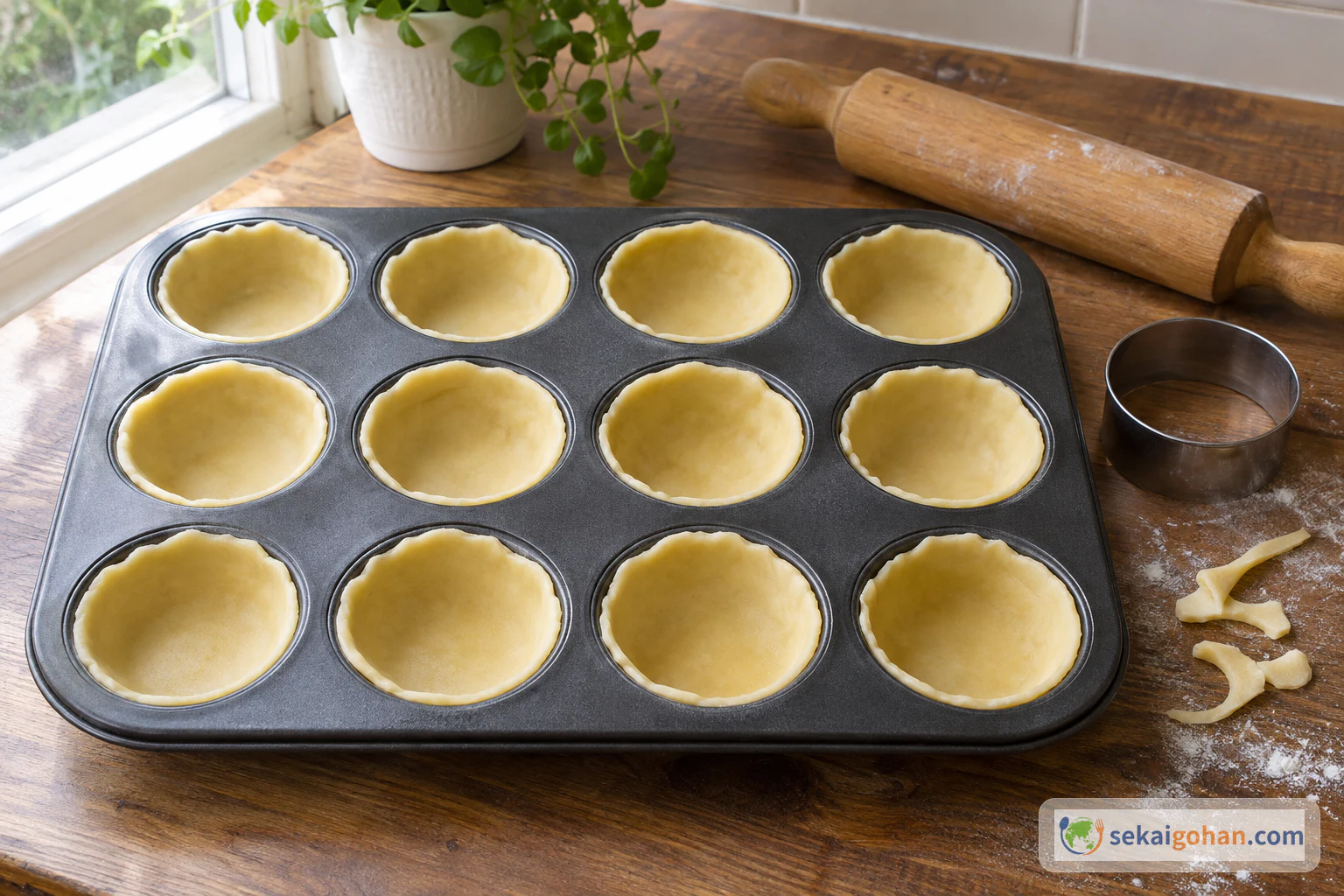
Pastry halved, rolled to 3 mm, cut into twelve 8 cm rounds and pressed into the 80 ml tin, ready for 15 minutes of chilling
All twelve holes lined, with only small scraps left on the bench

Tip the crumbs onto a floured bench and knead lightly just until they hold together, then divide in two. Roll one half to ⅛ inch (3 mm) thick and cut out 6 rounds with the 3-inch (8 cm) cutter. Press them into 6 holes of the muffin tin, then repeat with the other half. Refrigerate the lined tin for 15 minutes, until the pastry is firm and cold.

STEP 33 / 10

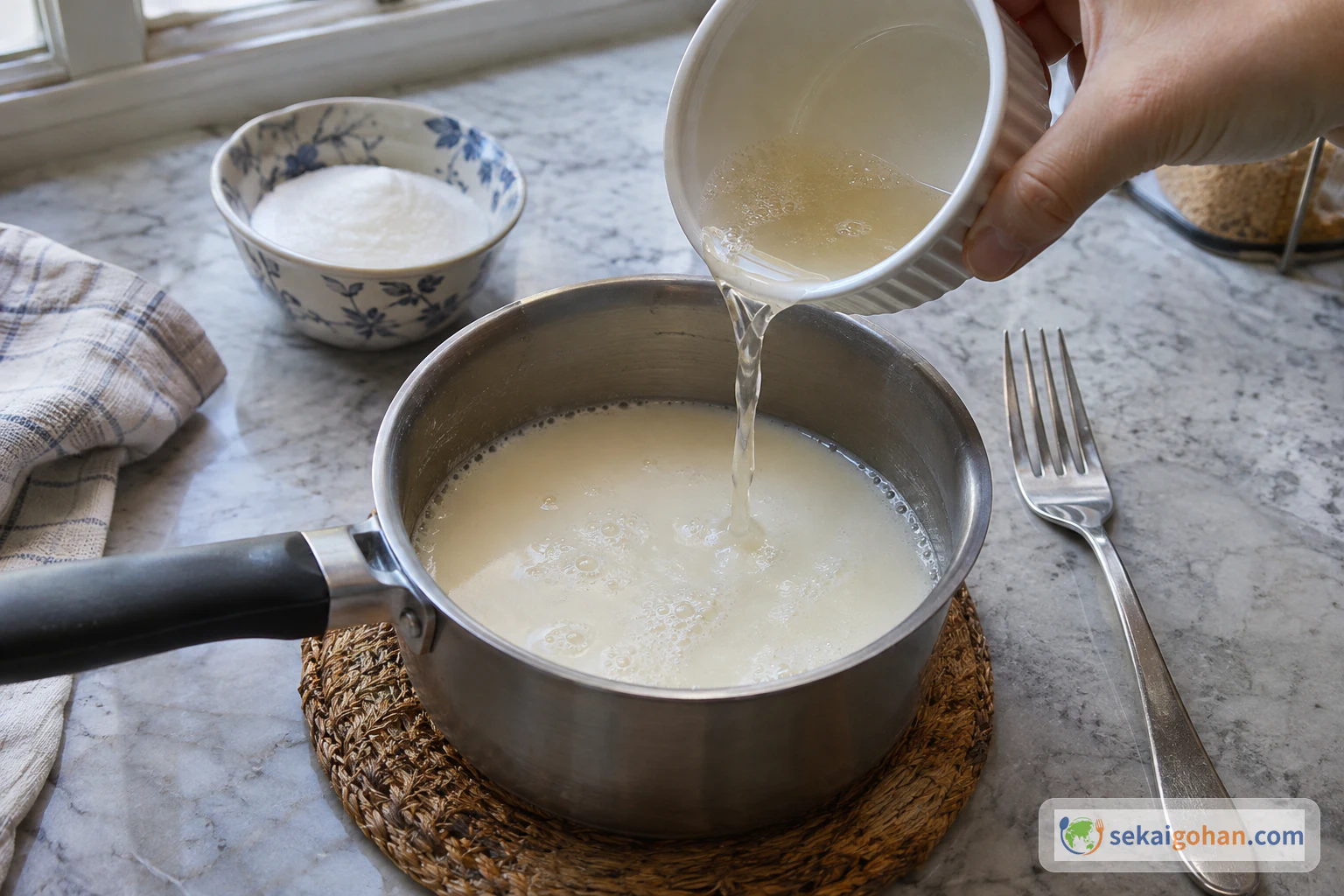
Make the gelatine syrup

Sugar, milk and water dissolved over medium-low heat, with gelatine dissolved in hot water added before 15 minutes of cooling
The syrup turns opaque and pale; cool it off the stove

Put the caster sugar, milk and cold water in a small saucepan over medium-low heat and stir until the sugar has dissolved and the liquid no longer feels gritty. Take the pan off the heat. In a ramekin, stir the gelatine into the boiling water with a fork until it dissolves. Add it to the sugar mixture and leave it to cool for 15 minutes.

STEP 44 / 10

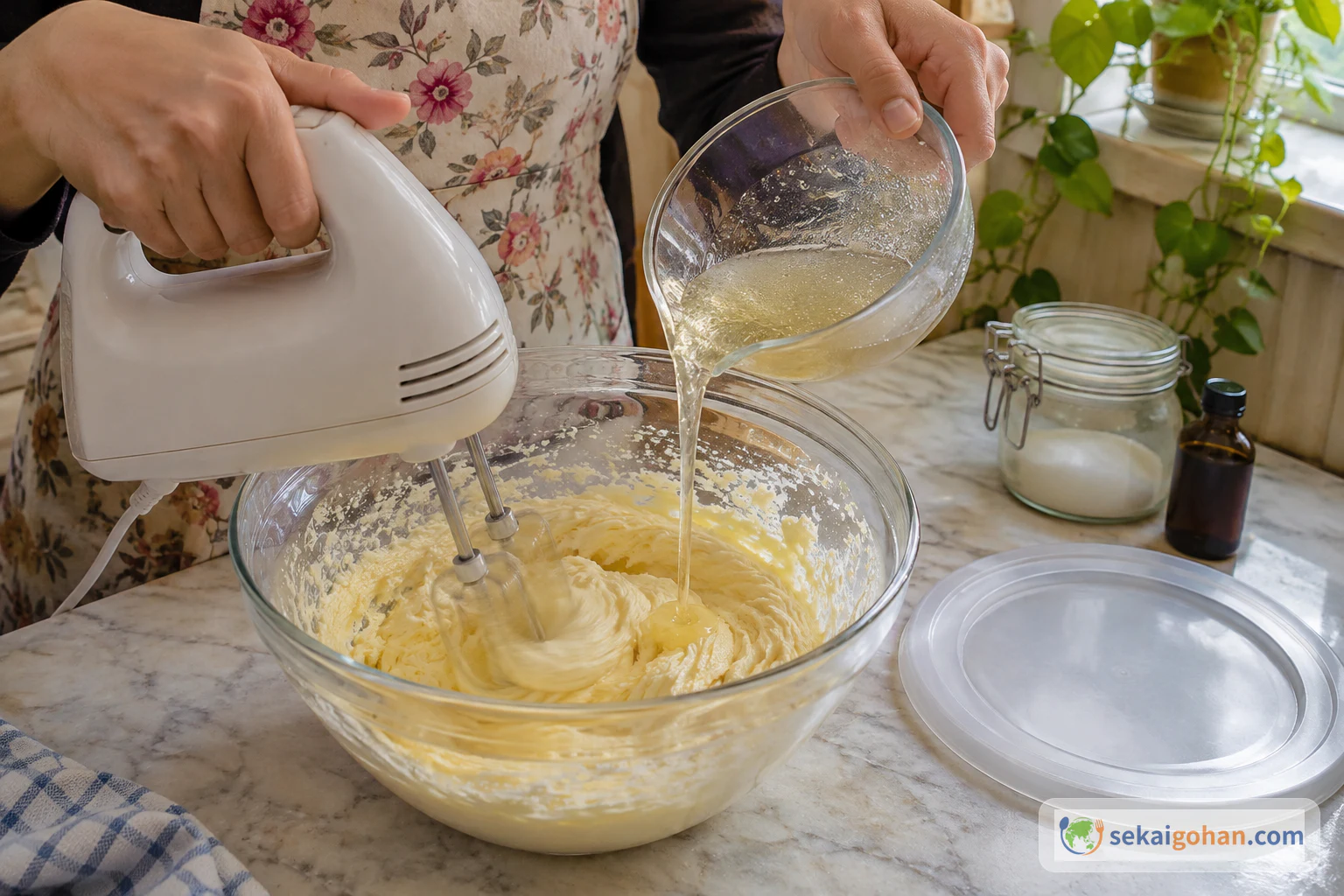
Beat the mock cream

Room-temperature butter and vanilla beaten pale, with the cooled syrup added gradually before covering
Pour the syrup in a thin stream while the beaters run

Beat the room-temperature unsalted butter with the vanilla essence until it turns pale and creamy. Pour in the cooled syrup a little at a time, beating after each addition so it disappears into the butter. Keep going until all the syrup is in and the cream is smooth and white. Cover the bowl and set it aside.

Patience with the syrup

Add the syrup only after its full 15 minutes of cooling, and in small amounts. Warm syrup or a single pour softens the butter and leaves a slack filling that will not stay flat under the icing.

STEP 55 / 10

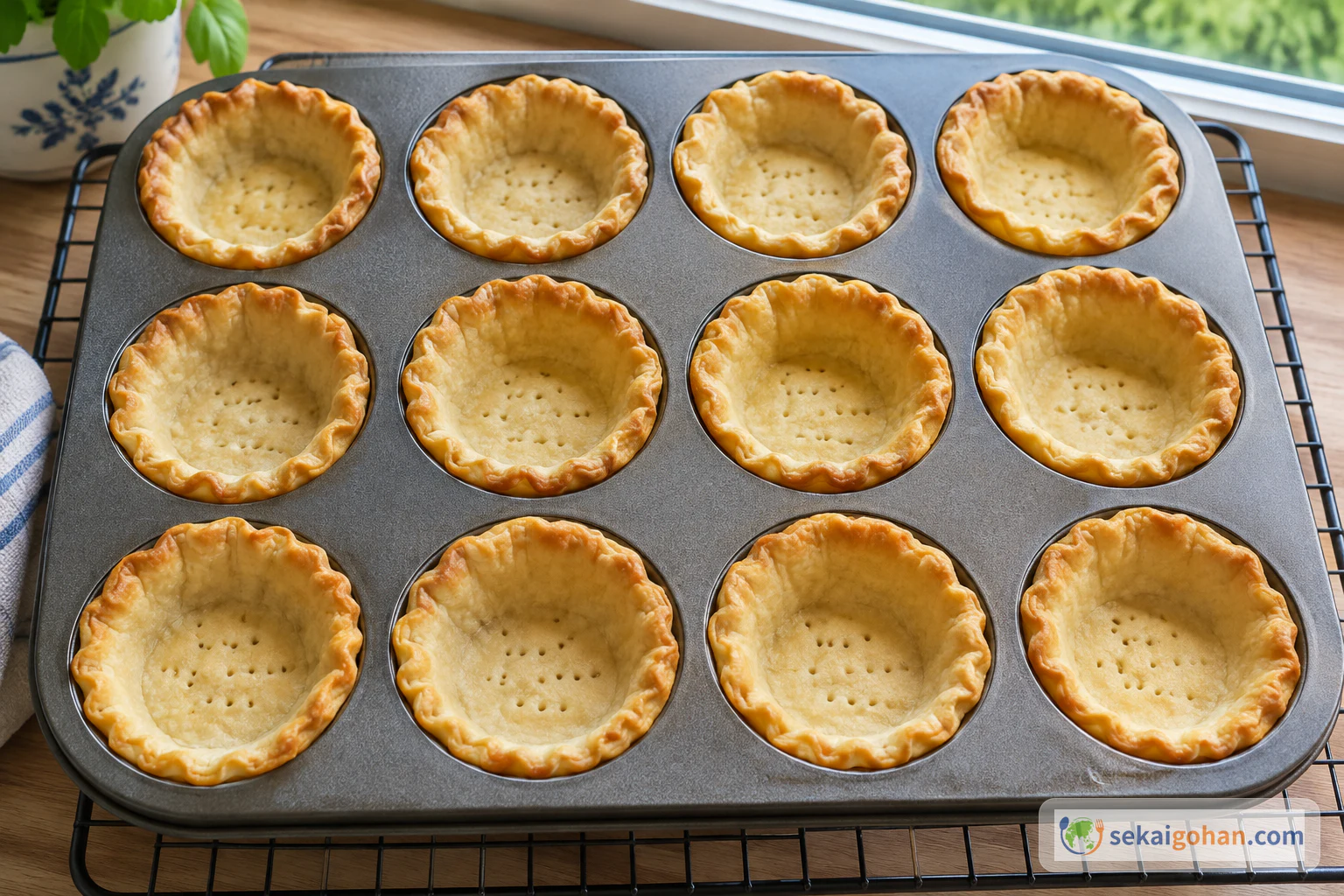
Prick and bake the cases

Fork-pricked cases baked at 200°C for 10 minutes or until golden, cooling on a rack for 15 minutes
Look for an even golden colour on the rims and bases

Take the tin from the refrigerator and prick the base of each case several times with a fork. Bake at 390°F (200°C) for 10 minutes, or until the pastry is golden. The pricked bases let steam escape, so the cases bake empty with no paper or weights. Set the tin on a wire rack and cool for 15 minutes, until the cases are cool enough to fill.

STEP 66 / 10

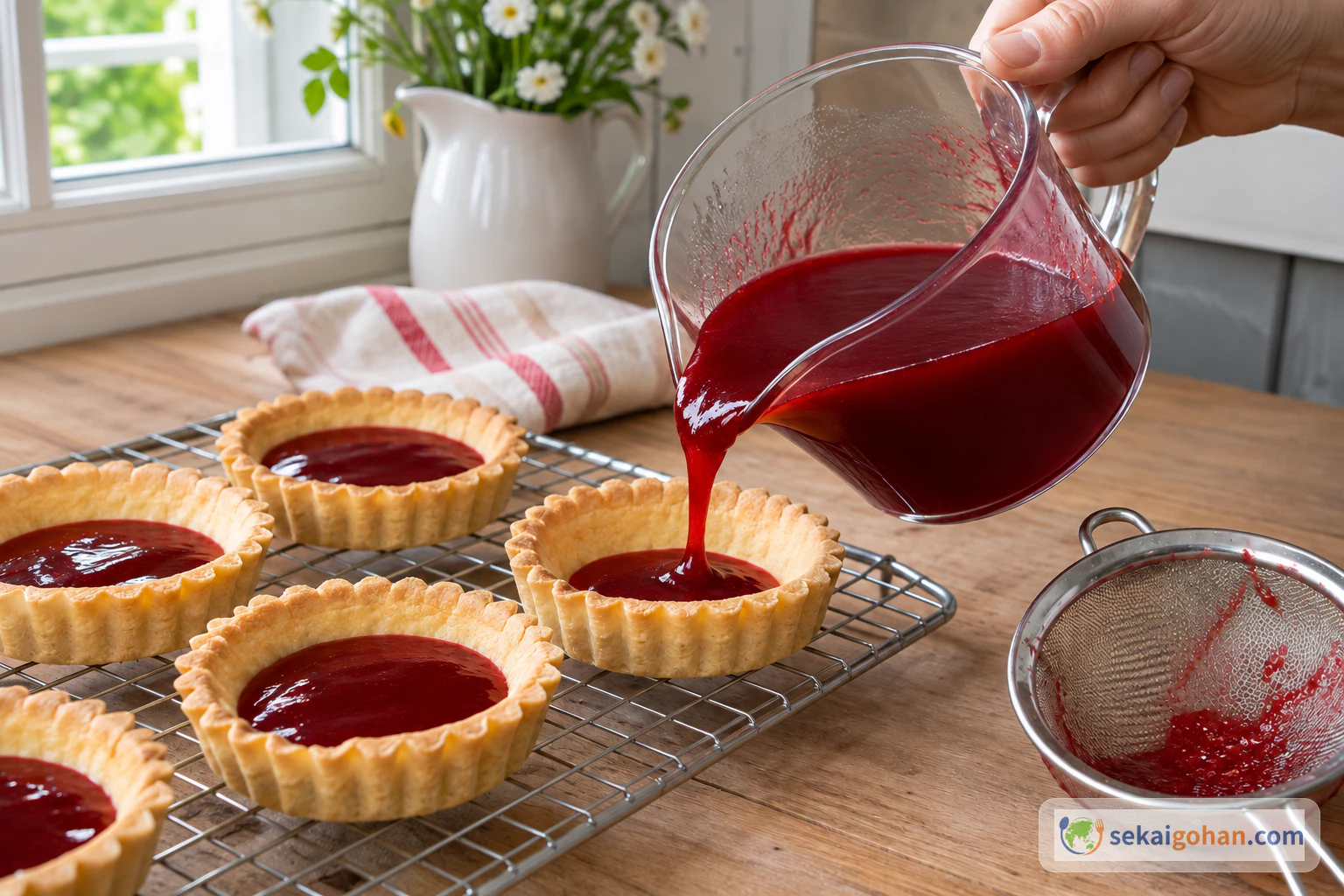
Pour in the jam

Jam warmed over medium heat for 2 minutes, strained into a heatproof jug and poured into the cases to stand 5 minutes
Strained jam pours in a smooth, glossy ribbon

Warm the raspberry jam in a saucepan over medium heat for 2 minutes, stirring, until it loosens and runs. Strain it into a heatproof jug to remove seeds and lumps. Pour it into the baked cases, sharing it evenly among all twelve. Leave them for 5 minutes, until the jam has settled into a smooth layer.

Hot jam and hot water

Warmed jam is very hot and sticks to skin. Pour it from the jug slowly, and take the same care with the pan of hot water used for the icing in steps 9 and 10.

STEP 77 / 10

Fill with mock cream

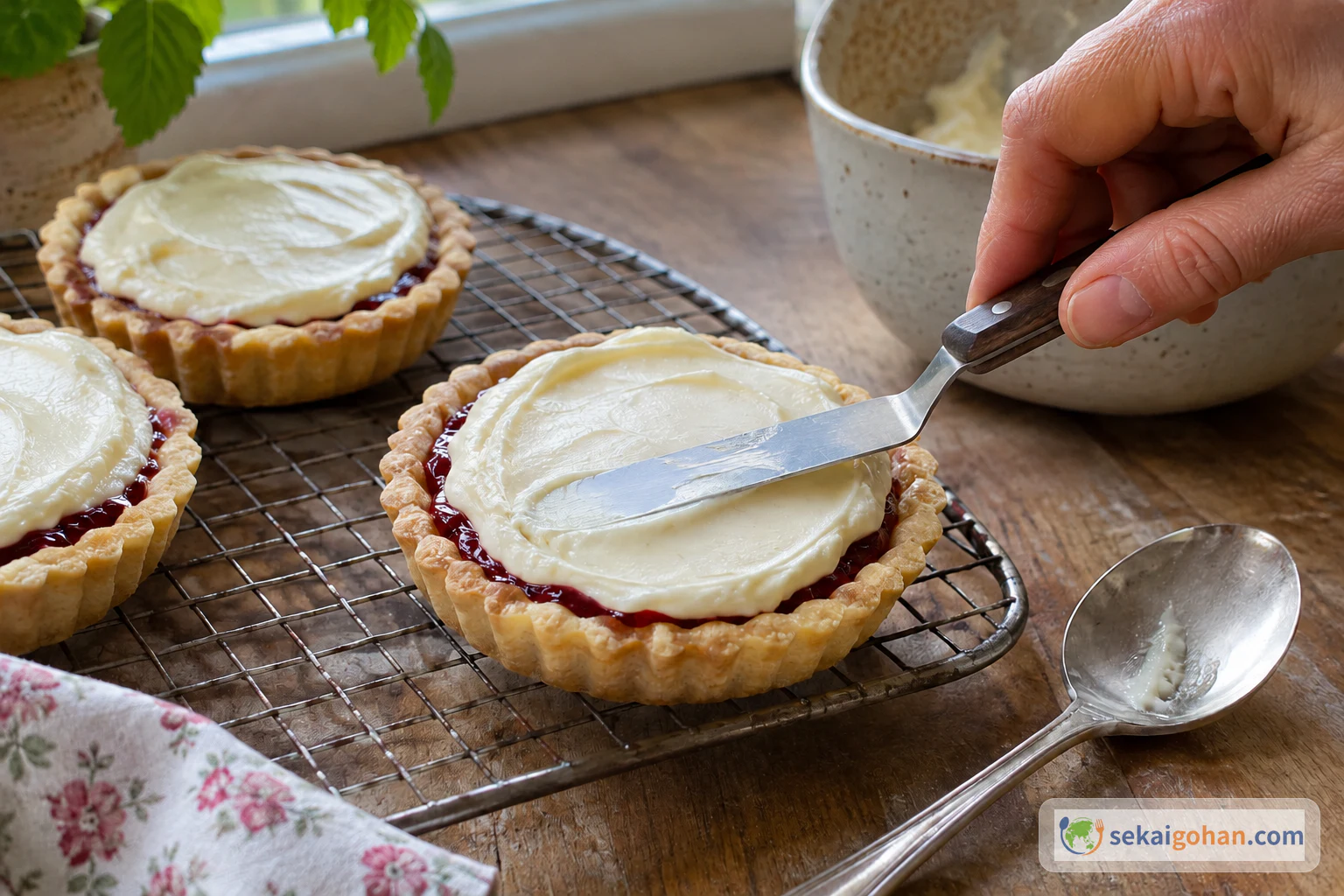
Mock cream filled evenly over the jam and smoothed flat
A flat surface now gives the icing a clean edge later

Spoon the mock cream over the jam, dividing it evenly among the cases. Smooth the top flat with a small palette knife. The surface should be level and even across the whole tart, ready to take the icing.

STEP 88 / 10

Mix the two icings

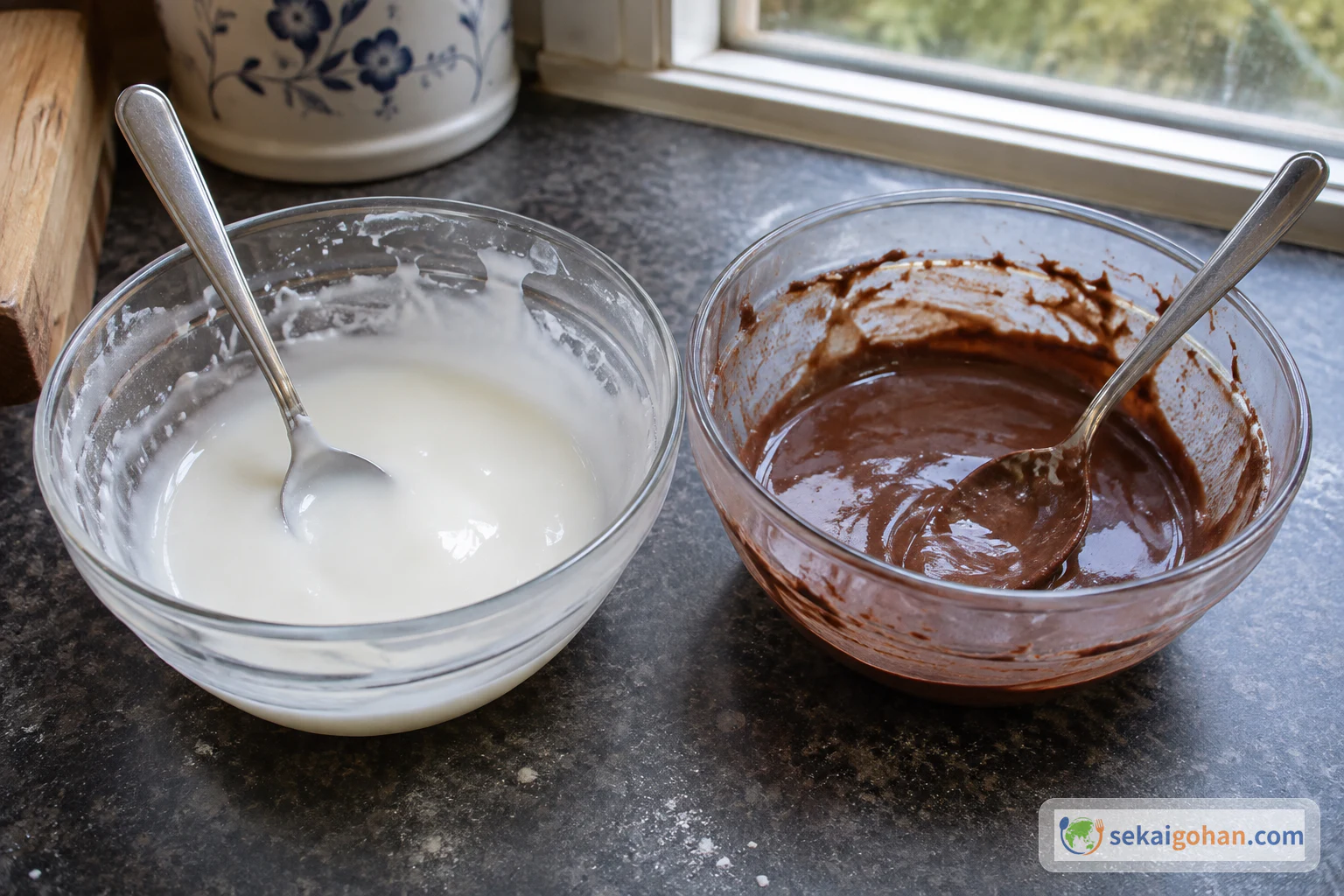
Icing sugar and 2 tbsp milk mixed and halved, with 1½ tbsp cocoa and 1 tsp milk added to one half
Both icings should look smooth and spreadable, never whipped

Mix the icing sugar and 2 tbsp milk in a heatproof bowl until smooth. Divide it in half between two heatproof bowls. Stir the cocoa and the extra 1 tsp milk into one of them. You now have a white icing and a brown chocolate one; keep butter out of both.

STEP 99 / 10

Ice the white half

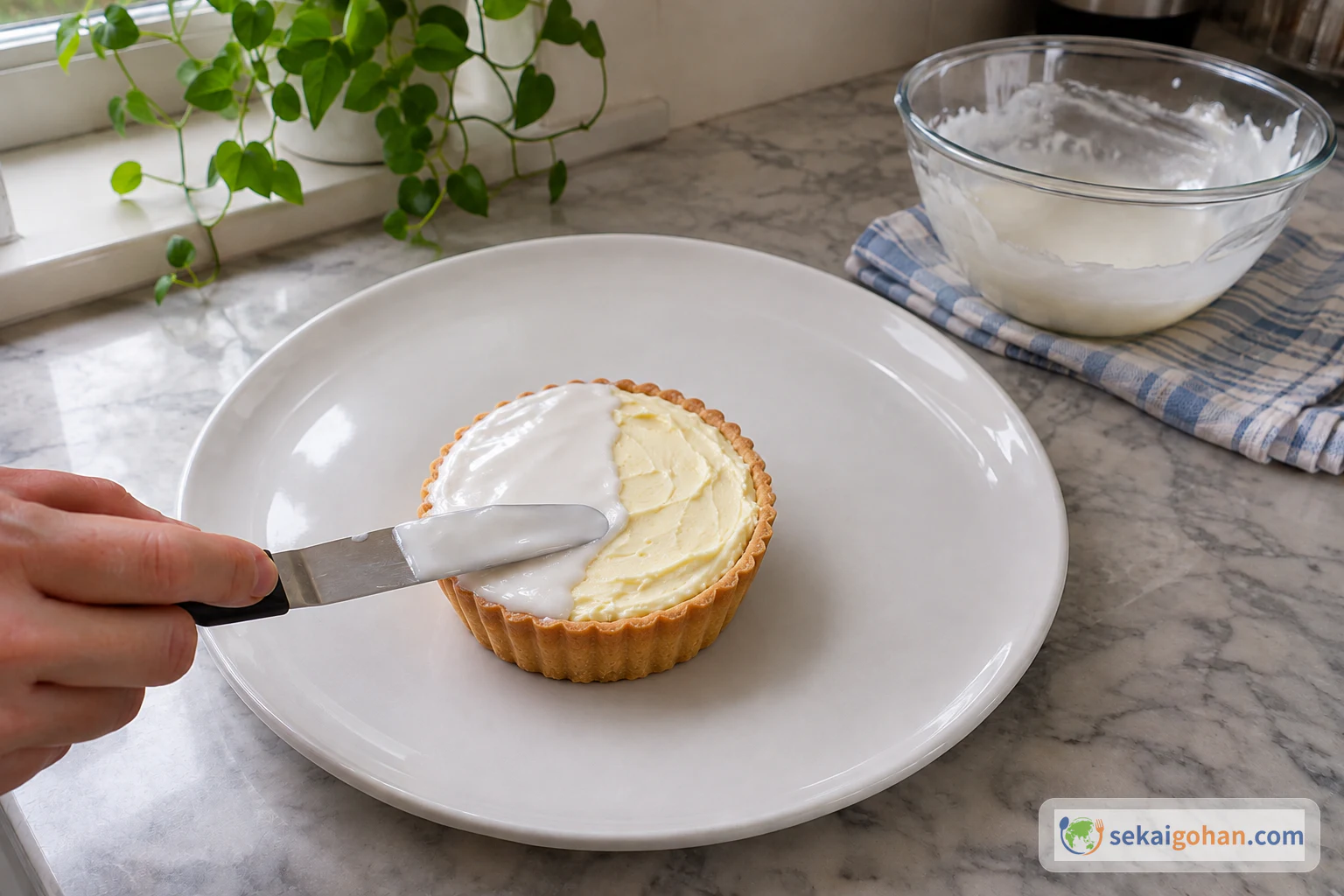
White icing smoothed over a hot-water bath and spread over half of each tart, then left 5 minutes
Push the white just to the centre and leave the other half bare

Set the bowl of white icing over hot water and stir until it melts and turns smooth and glossy. Spread it over one half of each tart, taking it right to the centre line. Work on all twelve before you move on. Leave them for 5 minutes.

The straight line

A clean, straight join between the colours is the hardest part of the tart. Set the white edge first and let it firm before chocolate touches it; that edge is the guide you work against.

STEP 1010 / 10

Finish with chocolate

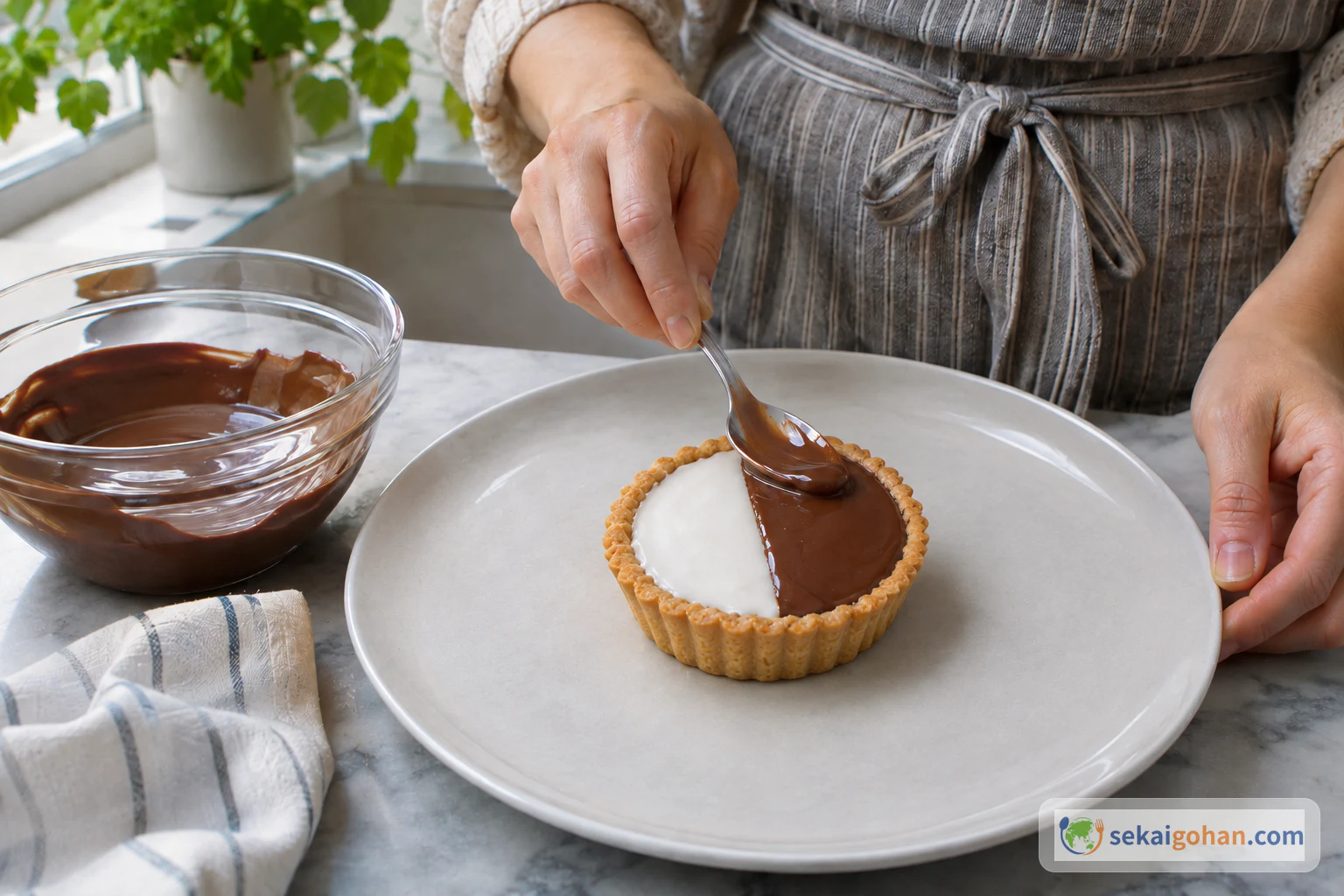
Chocolate icing smoothed over hot water and spread on the opposite half, against the set white icing
Use the tip of the spoon to push chocolate right up to the white edge

Warm the chocolate icing over hot water in the same way until smooth. Spread it over the uncovered half of each tart, easing it up to the white edge. Fill right into the join with no gap and no air pockets. The tart is finished when the top shows a neat line between white and chocolate.

0 / 0
Ingredients

Ingredients

1 / 1

Ingredients

Ingredient Amount Role
Plain (all-purpose) flour 1½ cups (225 g), plus extra for dusting Pastry
Butter, chilled and cubed 4¼ oz (120 g) Pastry; keep it cold until it goes in
Egg yolk 1 Pastry
Iced water 2 tbsp Pastry
Raspberry jam 1 cup (315 g) Bottom layer of the filling
Caster sugar ⅓ cup (80 g) Mock cream syrup
Milk 1 tbsp Mock cream syrup
Cold water 1 tbsp Mock cream syrup
Boiling water 1 tbsp For dissolving the gelatine
Powdered gelatine ½ tsp Holds the mock cream in shape
Unsalted butter, at room temperature 3½ oz (100 g) Body of the mock cream
Vanilla essence 1 tsp Mock cream flavour
Icing sugar 1½ cups (230 g) Both icings
Milk 2 tbsp, plus 1 tsp 2 tbsp for the icing base, 1 tsp extra for the chocolate half
Cocoa powder (unsweetened) 1½ tbsp Chocolate icing
0 / 0

The last move is the one everyone watches: a spoon of glossy chocolate icing pushed up against a half-moon of white that has already set, until the two colours meet in a straight line across the top of a small tart. Cut one open and you find the whole thing in layers: a short, golden pastry case, a thin seam of red raspberry jam, then a pale, sweet, buttery filling called mock cream. The pastry crumbles, the jam is sharp, the filling is soft and rich, and the icing is pure sugar. Neenish tarts are an Australian bakery classic, the kind still found in the glass cases of country bakeries in New South Wales and Victoria.

Half White, Half Chocolate: Where the Neenish Tart Comes From

The modern neenish tart is a fixed set of parts: a shortbread-style case, mock cream, raspberry jam and two-tone icing. The jam is common but optional, and some bakers leave it out entirely. The colours shift too. White and chocolate is the pairing here, while pink and chocolate, and white and pink, are both made. What never changes is the split top, each colour covering exactly half.

Food historians place the tart's origin in Australia. The earliest evidence is an 1895 advertisement from an ice and food company in New South Wales, and those early versions looked different from today's, with an almond-based pastry and a filling closer to thick cream. By 1929 a cookbook from Glenferrie, in Victoria, was printing a recipe for "neenish cakes". The name itself is a puzzle. One theory points to an Austrian or German word, another to a recipe gift book from Orange in New South Wales, and none of them is settled.

The Ruby Neenish story

The most repeated tale says a woman called Ruby Neenish, in the town of Grong Grong in 1913, ran short of cocoa and iced half of each tart white to stretch it. The story spread widely, but when a journalist looked into it, it turned out to have started as a joke. It still gets told at the counter.

From country bakery to pastry kitchen

The classic tart lives in regional bakeries in New South Wales and Victoria, sold one at a time next to vanilla slices and lamingtons. Modern pastry kitchens have taken it upmarket with chocolate pastry and ganache fillings, which keeps the split-top look while changing almost everything underneath. For more of the country's food, see the Australia country page.


Ingredients (makes 12 tarts)
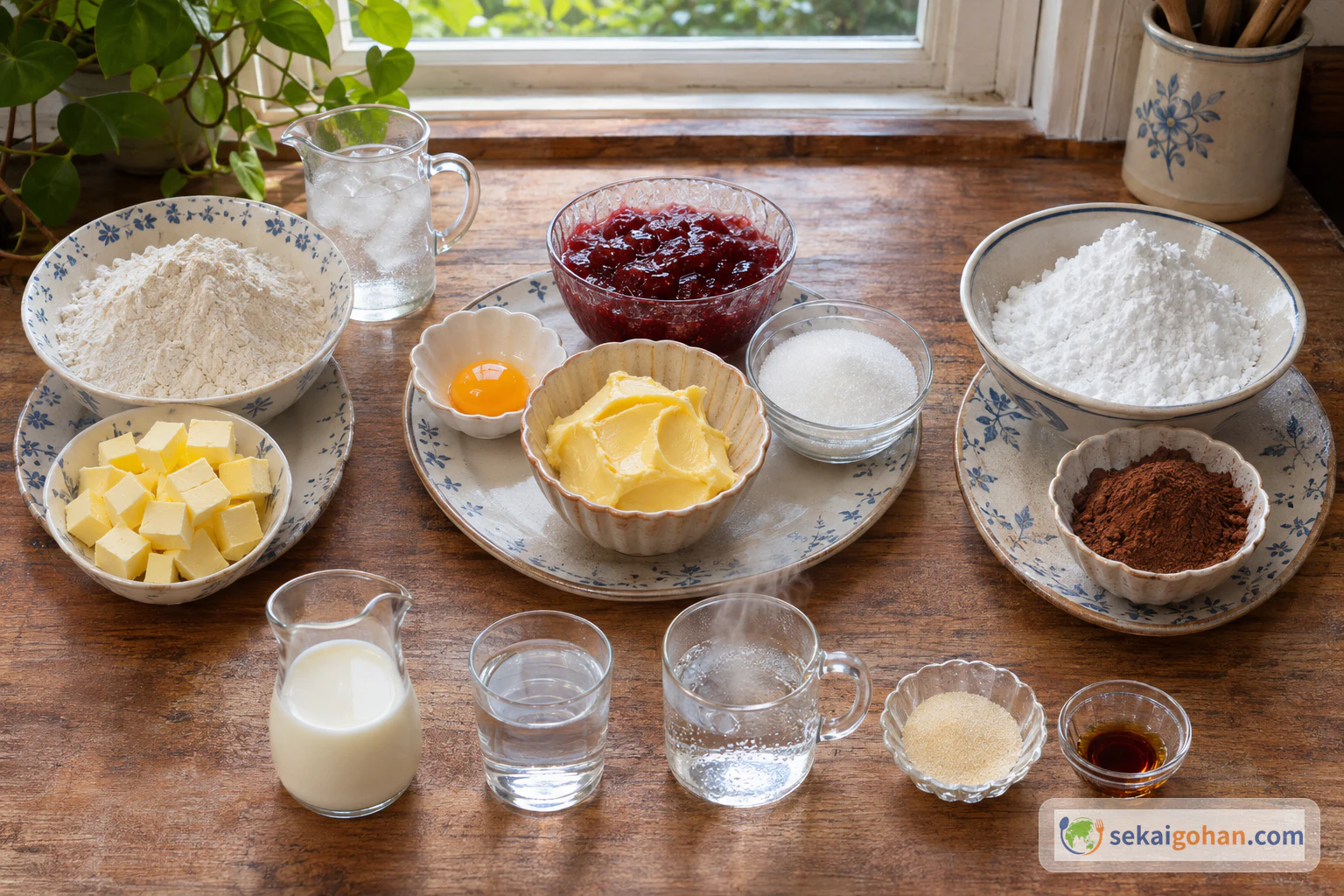
Ingredients for the pastry, raspberry jam, mock cream and two-tone icing
Keep the cold pastry butter and the soft filling butter apart from the start
Allergen information

Neenish tarts contain wheat, milk, egg and gelatine, which is animal-derived. Check the labels on the jam, icing sugar and cocoa for any other allergens or shared-facility statements.

Equipment

  • Food processor
  • Rolling pin
  • 3-inch (8 cm) round cutter, or a ring of the same size
  • 12-hole muffin tin with ⅓-cup (80 ml) holes
  • Fork
  • Small saucepan and a ramekin
  • Mixing bowl with a cover, and beaters
  • Wire rack
  • Strainer and a heatproof jug
  • 2 heatproof bowls and a pan of hot water to set them over
  • Small palette knife and a small spoon

Choosing and Substituting

Mock cream is the heart of this tart, and it contains no dairy cream at all. It is butter beaten pale with a cooled sugar-and-milk syrup set with a little gelatine, which gives a filling that tastes like a light buttercream but holds a clean flat surface under the icing. Use unsalted butter for it, and soft enough to beat easily.

Caster sugar is superfine sugar; it dissolves quickly in the small amount of liquid in the syrup. Icing sugar is powdered or confectioners' sugar, and some brands contain cornstarch while others do not, so the icing's texture shifts slightly from product to product. Use plain unsweetened cocoa for the chocolate half. Reach for vanilla essence rather than treating vanilla extract as the same thing.

Keep raspberry jam, white icing and chocolate icing together for the classic look. Swapping the white for pink still reads as a neenish tart in Australia; swapping the jam for another flavour makes a different tart.


Method: Pastry, Mock Cream, Then Two Colours

Make the pastry first and line the tin, then make the mock cream while the pastry chills. The baked cases need to cool before the jam goes in, and the white icing sets briefly before the chocolate half goes on, so there are three short waits of 15 minutes and two of 5 minutes. Ice the white half on every tart before starting the chocolate.

When It Goes Wrong

What you see Why What to do
A gap or bubbles along the colour line Chocolate went on before the white set, or was spread away from the edge Let the white stand its full 5 minutes, then push the chocolate up to the edge with the tip of the spoon
Pastry shrank down the sides of the holes The dough was overworked or went into the oven warm Stop processing as soon as it clumps, knead only lightly, and give the lined tin its full 15 minutes of chilling
Mock cream is runny or greasy The syrup was still warm, or went in too fast Cool the syrup the full 15 minutes and add it a little at a time while beating
Icing is too thick to spread It cooled in the bowl Set the bowl back over hot water and stir until smooth again
Seeds or lumps in the jam layer The jam went in unstrained Warm and strain it into the jug before pouring

Serving and Variations

Neenish tarts on the table with a pot of tea, one cut to show pastry, jam and mock cream
Cut one open to show the red line of jam under the pale cream

Neenish tarts are a hand-held sweet, served whole on a plate with a pot of tea or coffee alongside. They are very sweet, so one each is plenty, and a cut tart shows off the layers best.

Variations

  • Pink and chocolate. Colour the plain half of the icing pink instead of leaving it white. The taste stays the same; the look moves toward another familiar bakery style.
  • White and pink. Skip the cocoa and make one half pink. The top loses its chocolate note and the tart tastes sweeter and simpler.
  • No jam. Leave out the jam layer and fill the cases with mock cream alone. You lose the sharp fruit note, and the tart becomes richer and more buttery.
  • Chocolate pastry with ganache. Modern pastry kitchens swap the case and filling for chocolate versions, keeping the two-tone top. The result is a darker, more intense dessert.

Storage

Cover the finished tarts and keep them in the refrigerator for up to 4 days. Let them come back to room temperature before serving. Once out of the refrigerator, serve them rather than leaving the filled tarts sitting out for long.

Frequently asked questions

Do I need baking paper and weights for the cases?

No. Prick the bases well with a fork and bake the cases empty. The holes let steam out so the bases stay flat in the muffin tin.

What can I use if I don't have a 3-inch round cutter?

A ring of the same size works the same way. Press it straight down through the rolled pastry for a clean edge, then lift each round into the tin.

Can I use salted butter?

Use unsalted butter in the mock cream, where it is the main flavour. Unsalted butter is also the better choice for the pastry, for a cleaner, sweeter case.

Why is there gelatine in a butter filling?

The gelatine sets the sugar syrup that is beaten into the butter. That keeps the mock cream firm enough to hold a flat top under the icing.
Sources