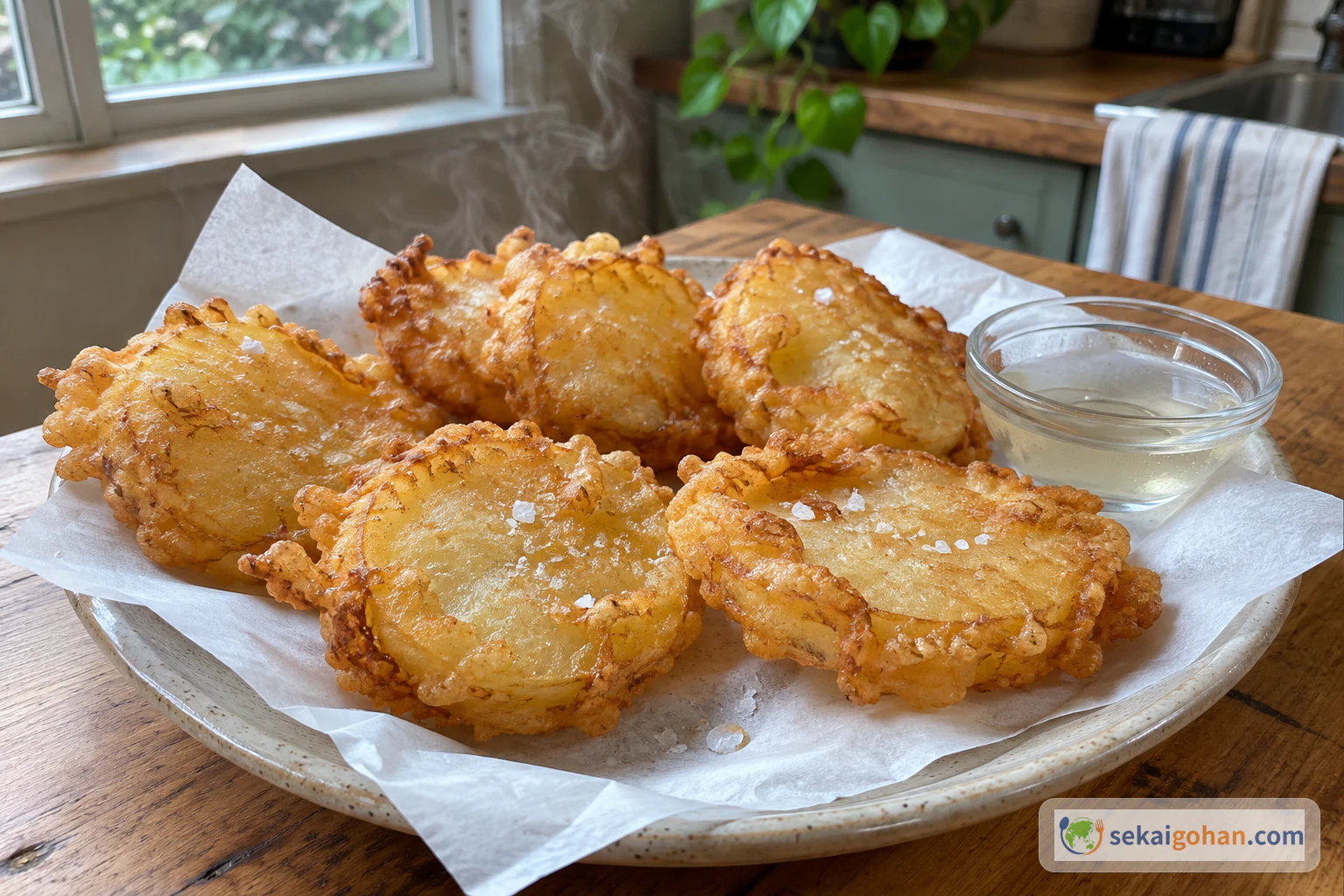
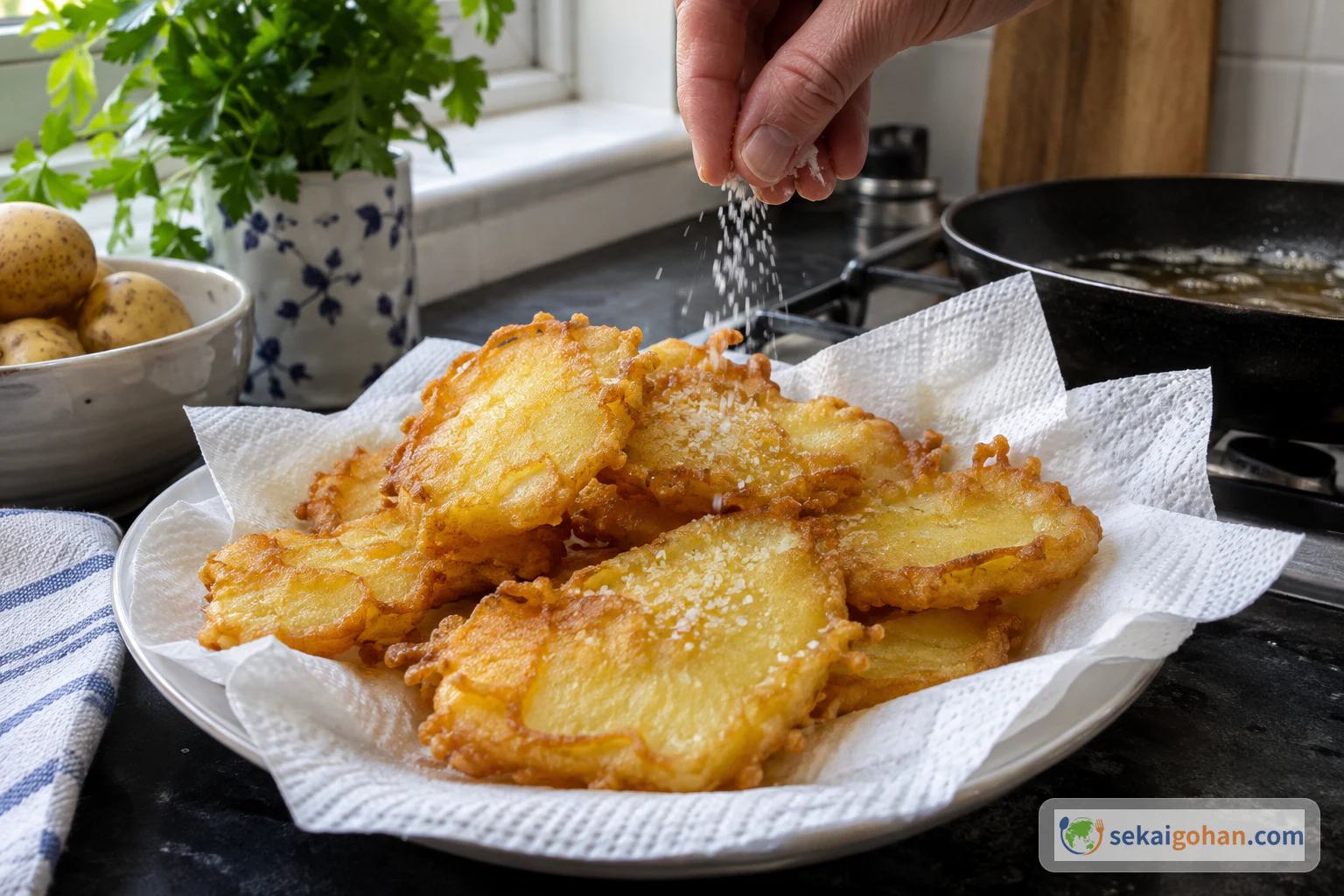
A pale, battered slice of potato goes into the hot oil and the pan answers with a roar of fine bubbles. When it comes out, the batter is deep gold and blistered, and stiff enough that it ticks when you tap it with the slotted spoon. Fine salt goes on while it is still hissing. Bite through the crust and there is a thick round of potato inside, soft and fluffy, nothing like a chip. It is one food all over Australia, but its name changes from state to state.
One Slice, Several Names
What you are making is simple: a thick slice of potato, cooked until just tender, battered and deep-fried until the crust is very crisp. The goal is contrast, a light, crunchy shell around a fluffy centre. Salt is the basic seasoning, and salt and vinegar are the usual pairing.
The arguments start with the name. In Queensland, the ACT and the east and north of New South Wales it is usually a potato scallop. In Victoria, Tasmania and the New South Wales towns along the Murray River it is a potato cake. South Australians tend to say potato fritter, and in Western Australia and the Northern Territory you hear both scallop and cake. Ask for the wrong one across a state line and you will get a correction along with your order. There is no seafood in it.
| Region | Name you are most likely to hear |
|---|---|
| Queensland, ACT, eastern and northern New South Wales | Potato scallop |
| Victoria, Tasmania, New South Wales along the Murray River | Potato cake |
| South Australia, New Zealand | Potato fritter |
| Western Australia, Northern Territory | Both scallop and cake |
Cross the Tasman and the words point somewhere else. In New Zealand a "potato cake" is often made from mashed or grated potato, shaped into patties and cooked without batter or deep-frying. That is a different dish and it has its own method. The battered slice here is the Australian one, and you can find more of the country's food on our Australia page.
"Potato flip" is another name for the same battered slice. One dish carries at least four names, and which one you grew up with says a lot about where you grew up.
Ingredients (serves 4)
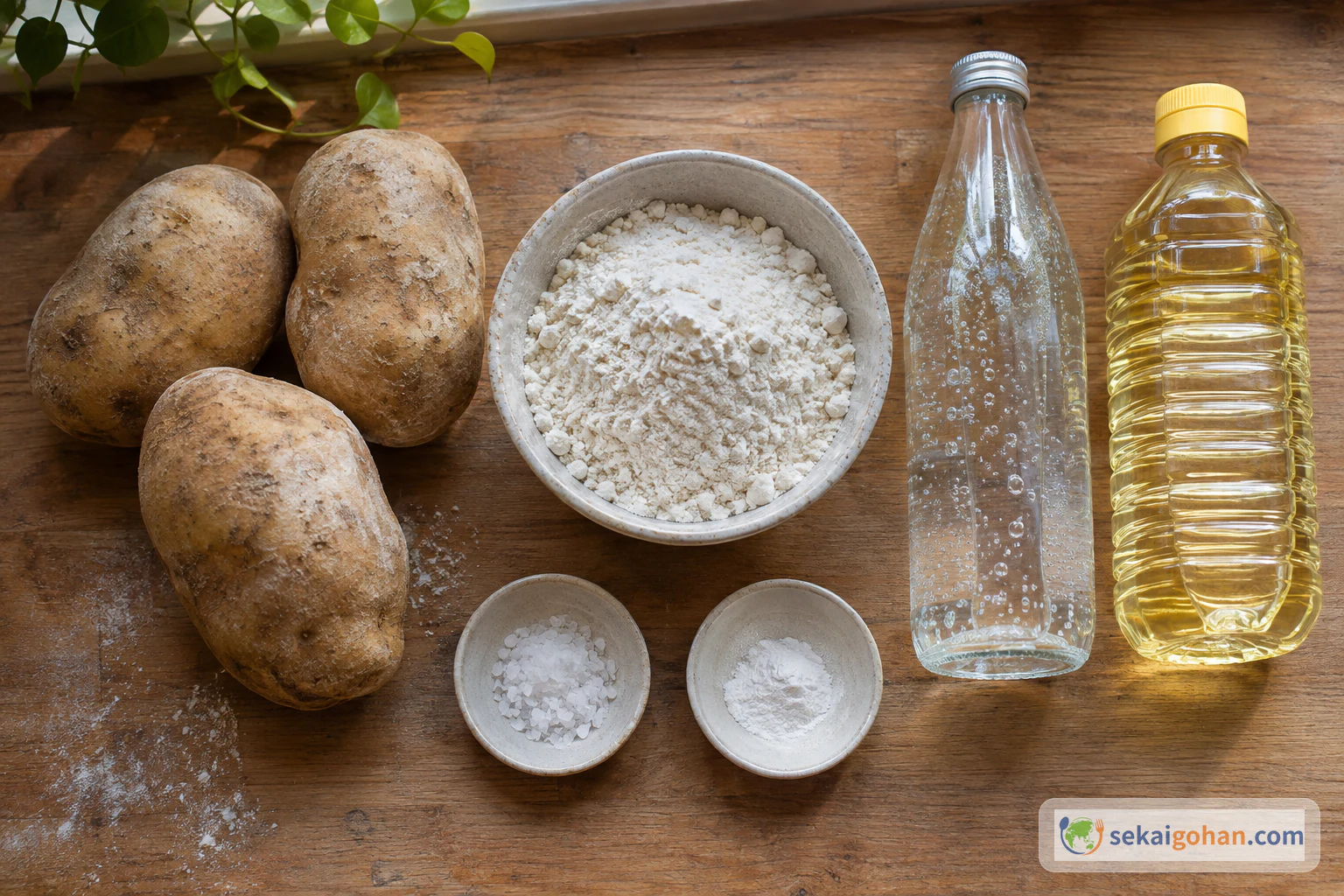
All the ingredients come from the supermarket. What matters is the type of potato and how fresh the fizz is.
The batter contains wheat. If you use beer in place of sparkling water, the batter also contains gluten from the beer. Check the label of your frying oil for any other allergens.
Equipment
- Sharp knife and chopping board
- Roasting tin and aluminium foil
- Kettle for boiling water
- Clean tea towels
- Slotted spoon
- Deep heavy-based saucepan or deep-fryer, with a lid that fits
- Deep-frying thermometer, or a cube of bread for testing
- Large mixing bowl and whisk
- Paper towels and a tray
- Oil splatter screen, if you have one
Choosing Potatoes, Flour and Fizz
The potato decides the result. A floury roasting potato such as russet or King Edward cooks to a dry, fluffy centre that contrasts with the crust. Waxy potatoes hold together well, but the inside turns dense and smooth. You get a firmer bite, not the soft centre you want.
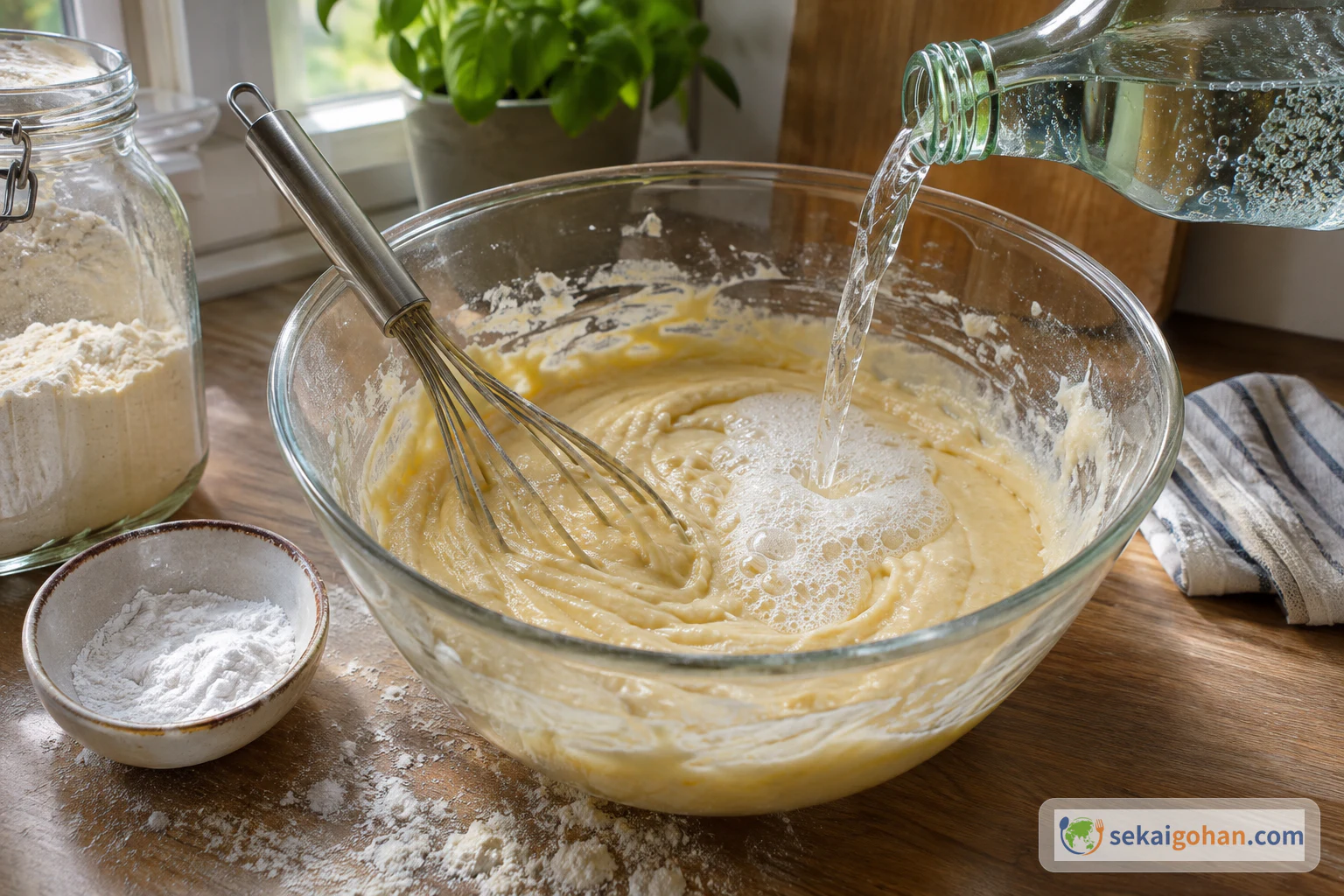
Plain flour is the same as American all-purpose flour, so use that. The batter needs no cornflour or other starch. Sparkling mineral water and soda water both work as long as they are unsweetened and unflavoured. A sweet soft drink will darken the batter too early and leave it tasting of the drink. Beer gives a fuller, slightly malty crust. For the oil, any mild-flavoured oil you would use for deep-frying is fine, such as rice bran oil or vegetable oil.
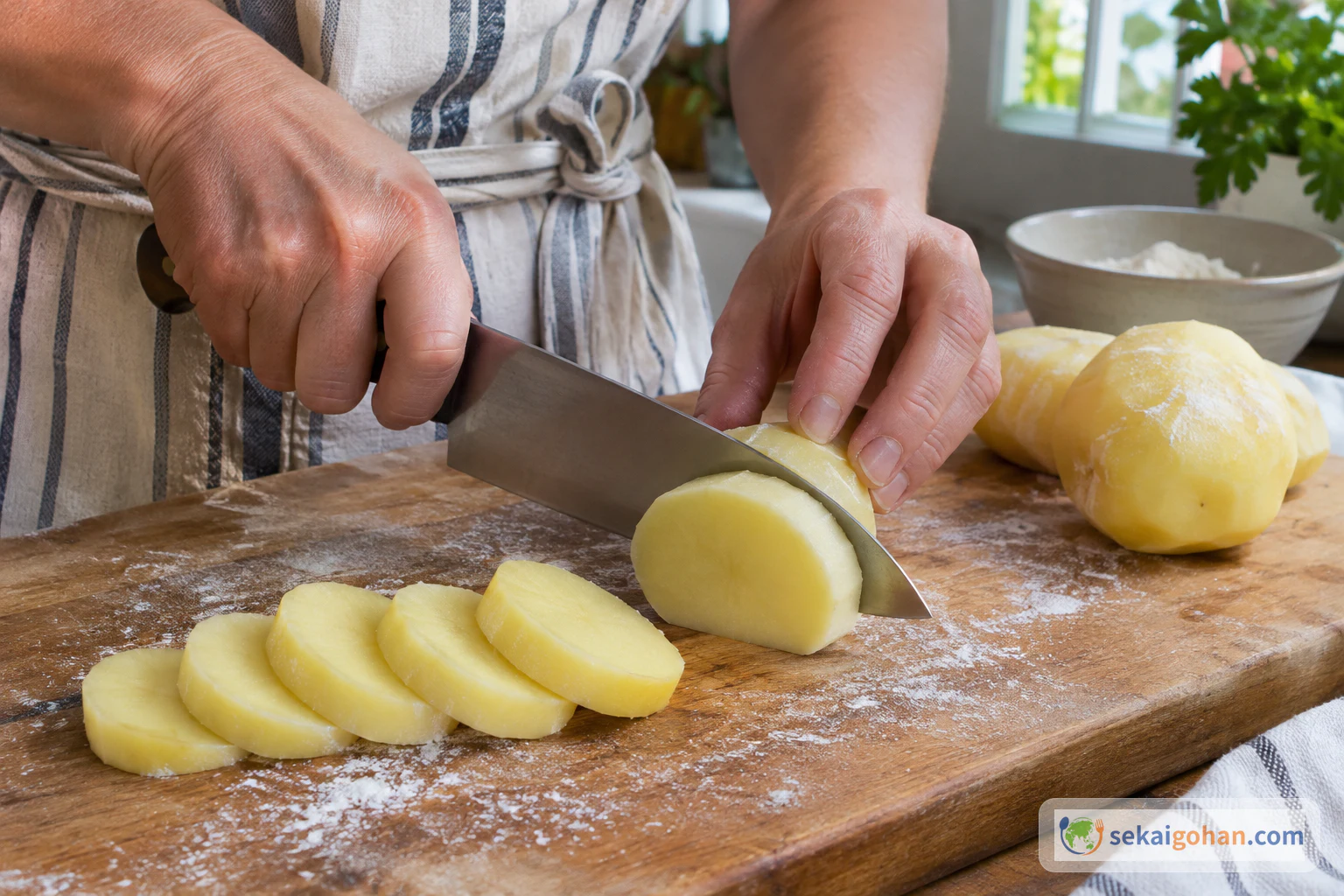
Three large potatoes give wide slices that look like the rounds in the shop window. Potatoes of a similar size also give slices that soften at the same pace in the tin.
Method: Par-Cook, Dry, Batter, Fry
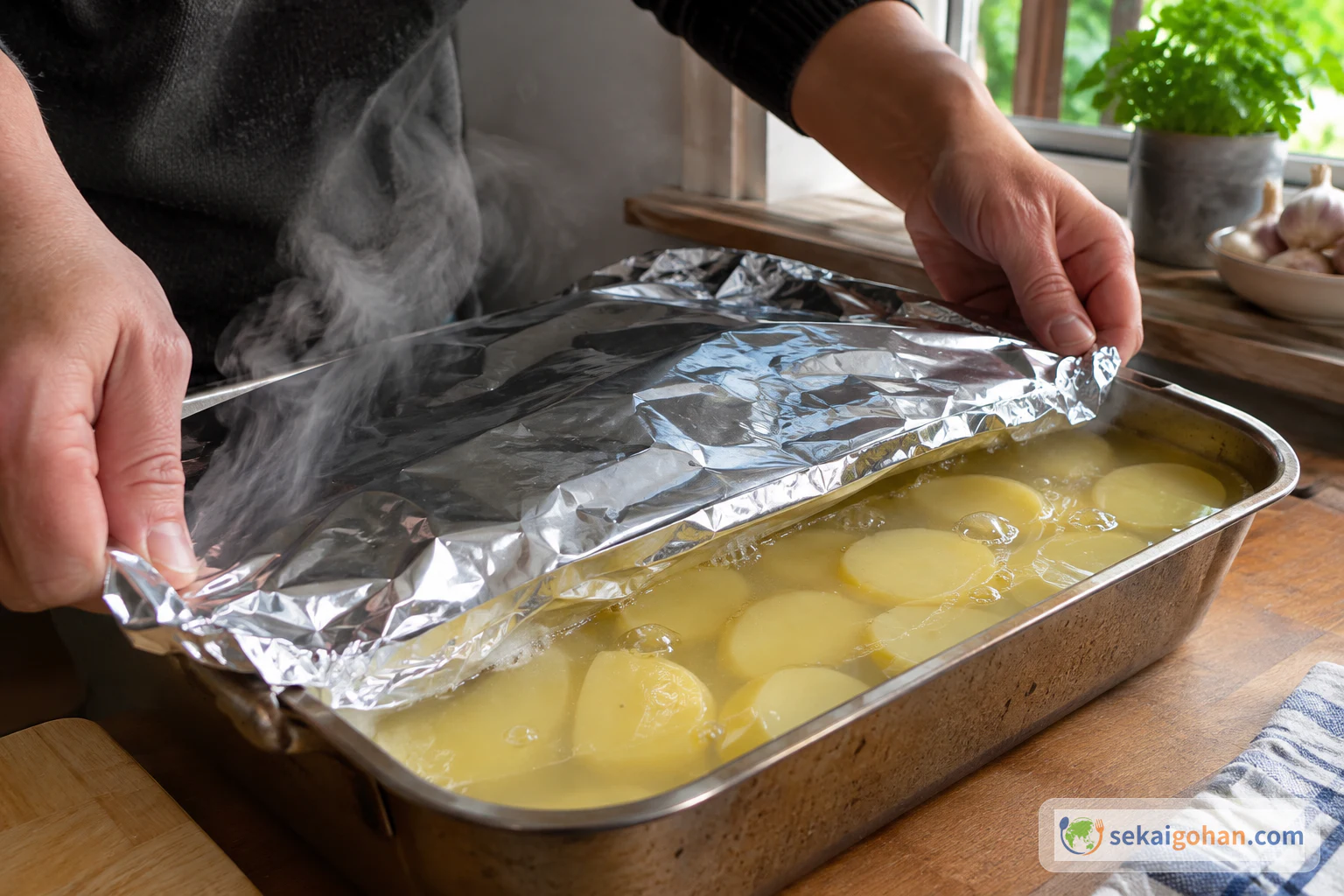
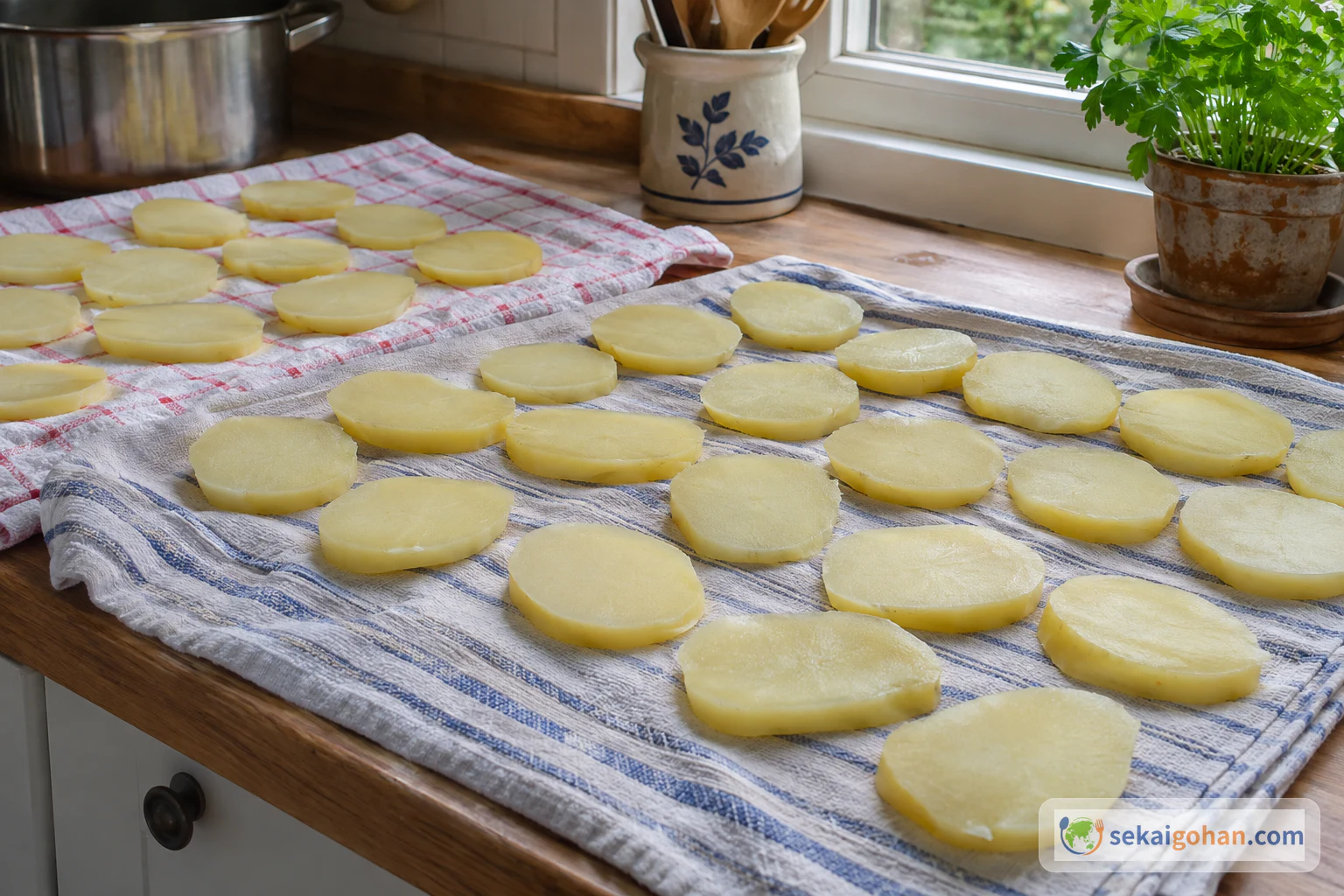
The work has two halves. First the slices are part-cooked in hot water in the oven, then cooled and dried. This is mostly waiting, and the dry surface you end up with is what the batter grips. Then the frying goes quickly: heat the oil, whisk the batter, and fry in batches while everything is hot.
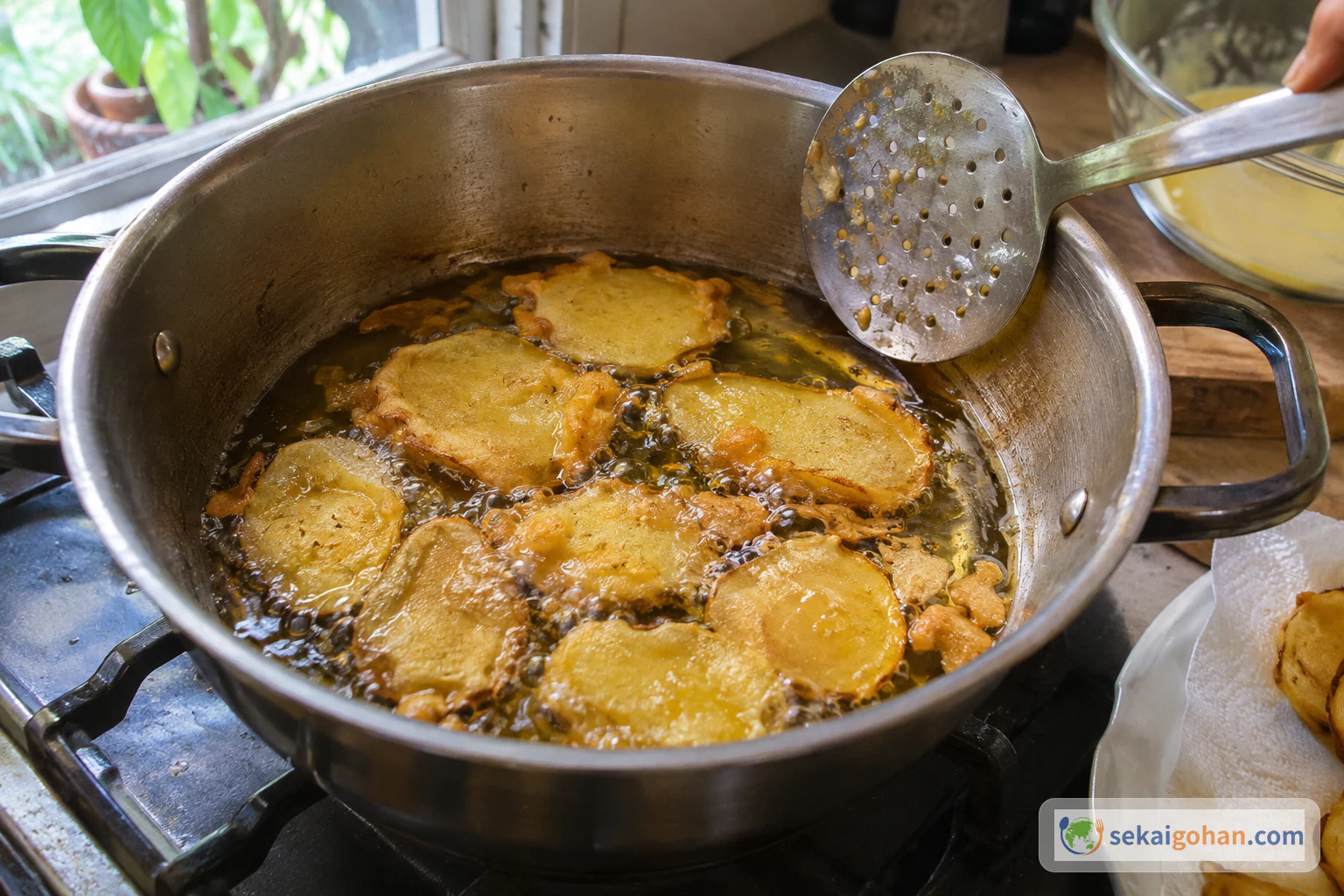
Fill the pan no more than one-third with oil and heat it gradually. Never leave hot oil unattended. If the oil catches fire, turn off the heat and smother it with a lid. Never use water. Lower battered slices in gently, away from you, and keep children and pets away from the stove.
Take the slices out when they have only just begun to soften. They finish cooking in the oil. Slices that go into the batter already soft fall apart. Slices that stay raw give a crisp crust around a hard centre.
Every batch cools the oil. Before the next slices go in, bring it back to 355°F (180°C), or until a cube of bread browns in 15 seconds. Oil that is too cool gives a pale, oily crust.
When It Goes Wrong
| What you see | Why | What to do |
|---|---|---|
| Crisp crust, hard centre | The slices were barely softened in step 2 | Next time, leave them under the foil until they just begin to give. Cut the slices to the same ⅜-inch (1 cm) thickness |
| Slices break as you batter them | Par-cooked too long, until soft | Take them out earlier, when they still hold their shape |
| Grey or discoloured slices | Left on the towels too long after drying | Batter and fry as soon as the slices are cool and dry |
| Batter slides off or spits in the oil | The slice surface is still wet | Leave the slices on the towels until they feel dry to the touch |
| Pale, greasy crust | The oil is too cool or the pan is crowded | Fry fewer slices at a time and wait for the oil to come back to temperature |
| Crust browns fast while the centre stays cool | The oil is too hot | Lower the heat, check with the thermometer or bread cube, and fry the full 7–8 minutes |
Serving and Variations
At the table
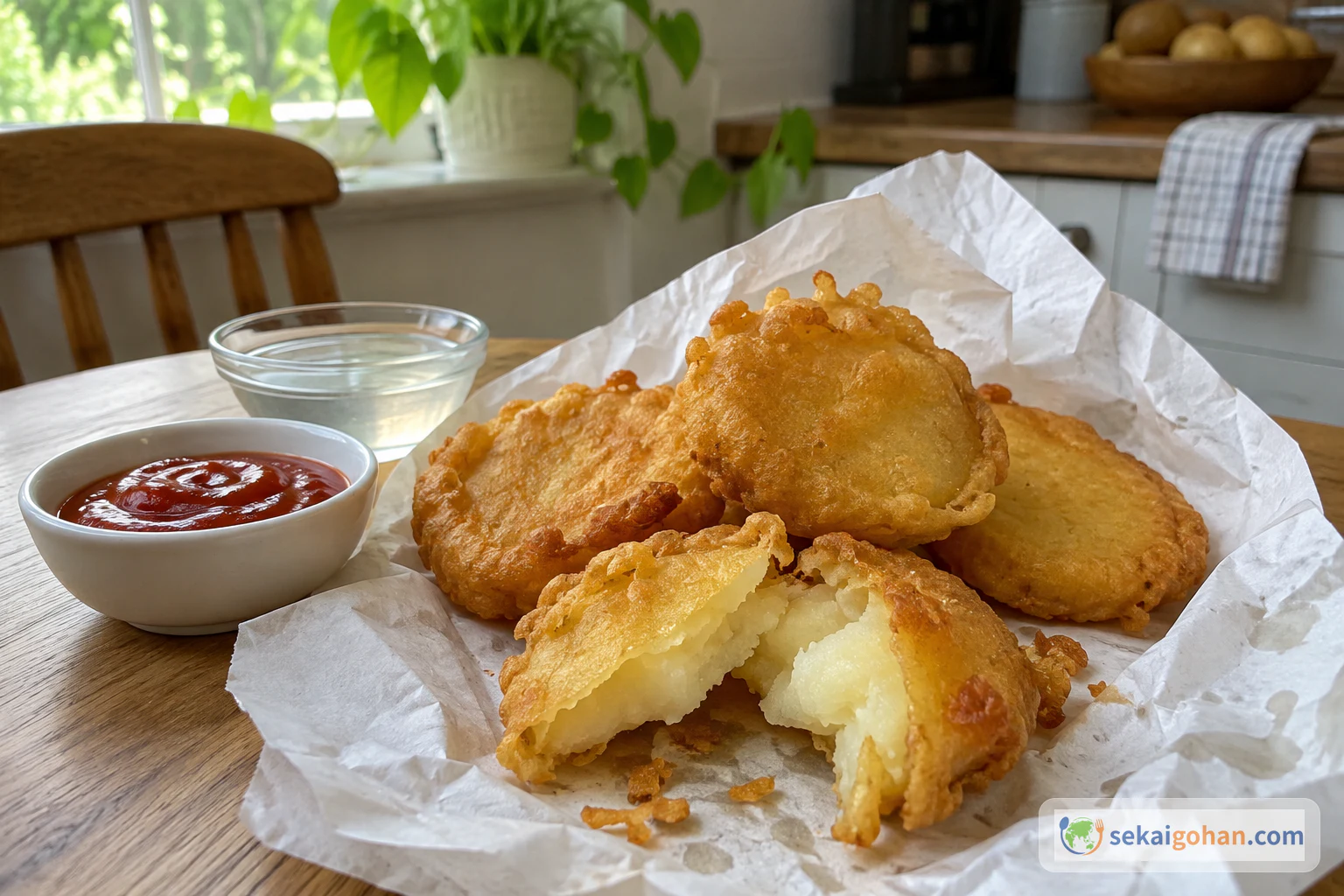
These are at their best within moments of leaving the oil, while the batter still crackles. Salt is all they need. A splash of vinegar is the classic companion and cuts through the fried crust. Wrap them in paper and put them in the middle of the table so everyone can grab one hot. Serve them alongside fish and chips, or as a snack on their own.
Variations
Beer batter. Use beer in place of the sparkling water, in the same amount. The crust comes out darker, with a malty edge, and it contains gluten.
Cream-baked slices. In a richer style, the potato slices are baked in cream and cooled. They are then battered and fried at a lower 320°F (160°C) for only 2–3 minutes. The result is richer and more like a gratin inside. It is a separate method, so don't combine its steps with the ones above.
Frequently asked questions
Is a potato scallop the same as a hash brown?
No. A hash brown is a different dish made from shredded or chopped potato. A potato scallop is a single whole slice of potato in batter, so you bite through a crisp shell into an unbroken round of potato.
I have Australian measuring spoons. Does that change anything?
Not for this recipe. An Australian teaspoon holds 5 ml, the same as a US teaspoon, so the salt and baking powder amounts are the same. The Australian tablespoon is 20 ml, so for the 1 tbsp in the fizz amount use a US 15 ml tablespoon, or simply follow the 375 ml total.
Why does "scallop" not mean seafood here?
In this case the word is only a name for the battered potato slice, and nothing from the sea goes in. It is used mainly in Queensland, the ACT and eastern and northern New South Wales.