Surf and Turf: Australian Pub Steak with Garlic Cream Prawns

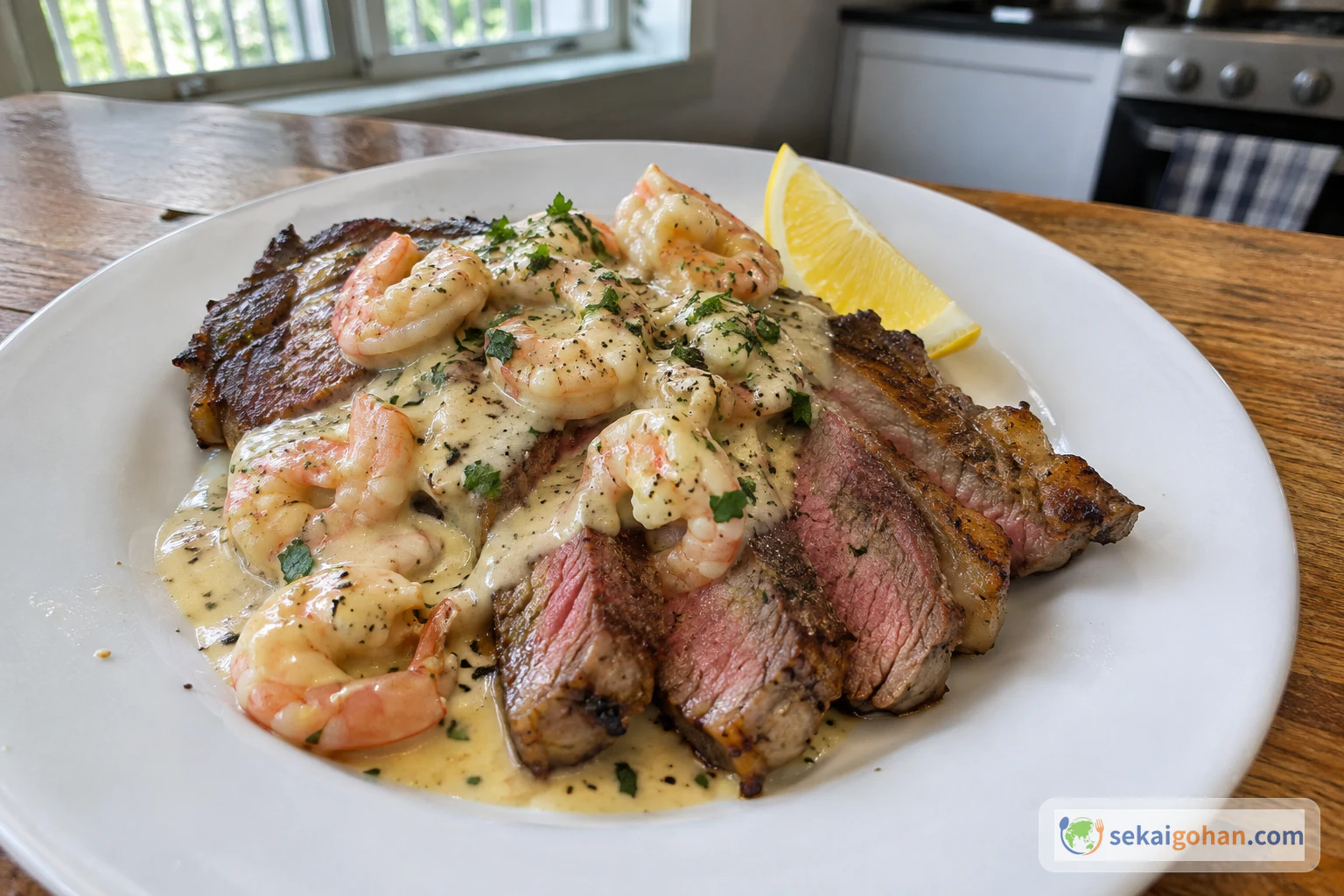
Sliced Scotch fillet steak topped with prawns and a garlic cream sauce
Serves
4 servings
Level
Beginner
Cuisine
Australian

Australian surf and turf: Scotch fillet seared hot and rested, then garlic butter prawns in a lemony cream sauce. Learn the rest, the pink cue and swaps.

Cooking flow

Cooking steps

STEP11 / 7

Season the steaks

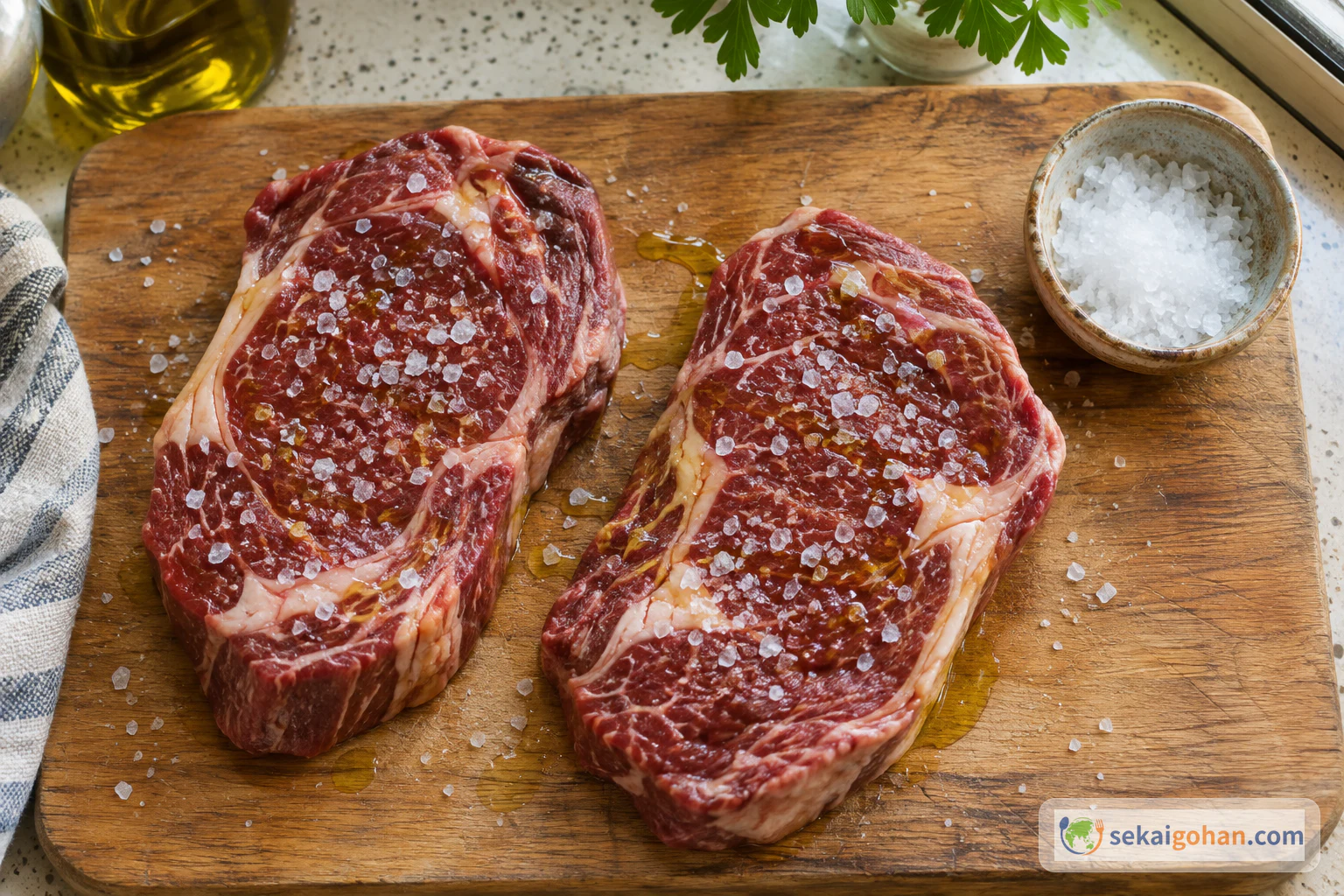
Two raw steaks on a wooden board seasoned with coarse sea salt and olive oil
Use coarse salt and be generous; much of it stays in the crust

Lay the two steaks on a board and salt both sides generously with sea salt. Rub over a little olive oil so the surface glistens all over. Meanwhile, get the barbecue or a heavy frying pan heating; it must be very hot before the meat goes on. The steaks are ready when every surface is lightly coated and the salt sits on them in visible crystals.

STEP22 / 7

Sear, turning once

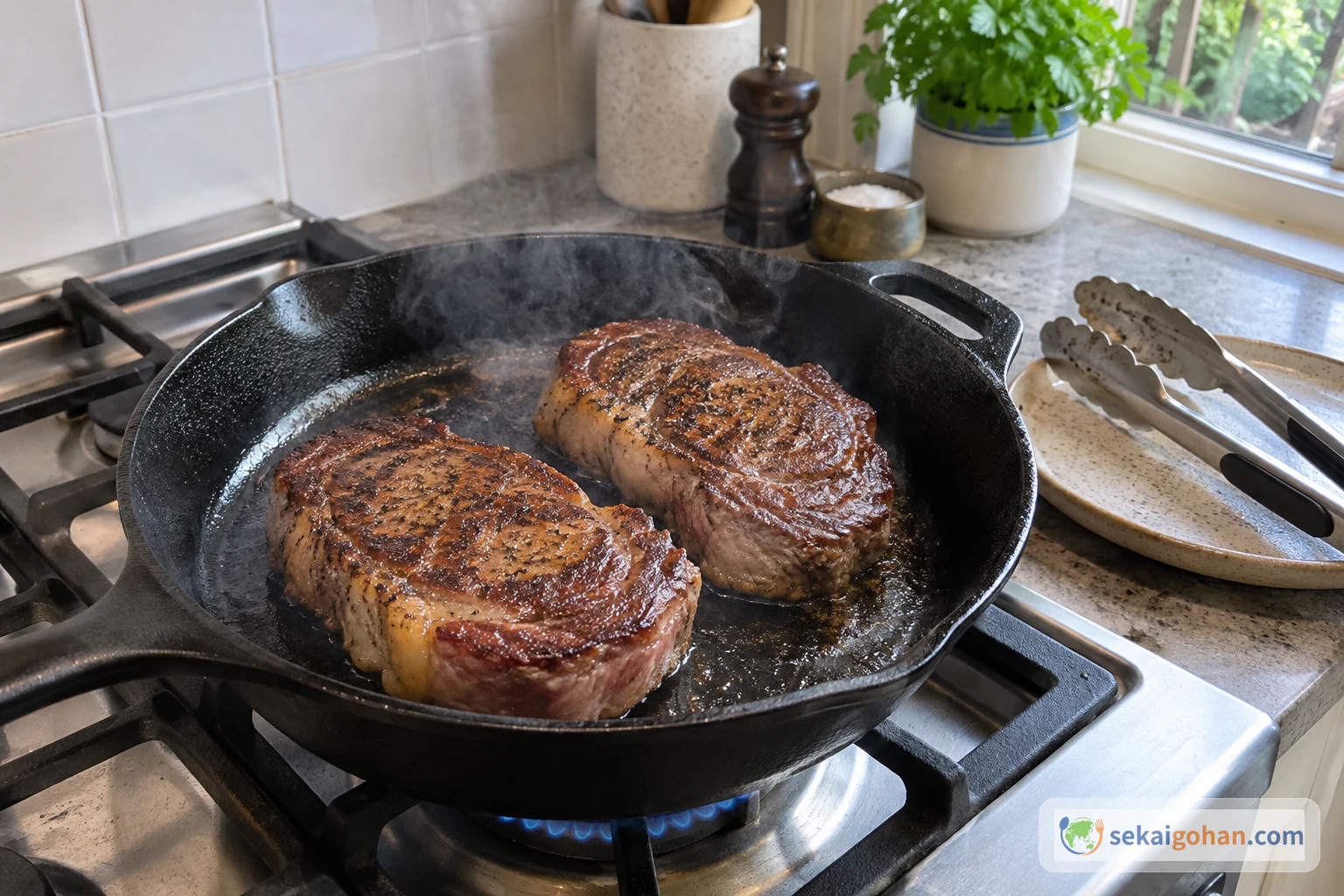
Two steaks searing in a black cast-iron pan on a gas hob
A steady, loud sizzle means the pan is hot enough to build the crust

Lay the steaks in the hot pan or on the barbecue grill; they should hiss loudly the moment they touch. Leave them alone so a brown crust builds underneath, then turn them once with tongs. Cook the second side until the steaks are done to your liking, and take note of how long they spent on the heat. They are ready to come off when both faces carry a deep brown crust.

Hot pan and oil

A very hot pan with oil smokes and spits. Turn the handle inward, use tongs rather than a fork, and keep your face back when the steaks go in.

STEP33 / 7

Rest the steaks

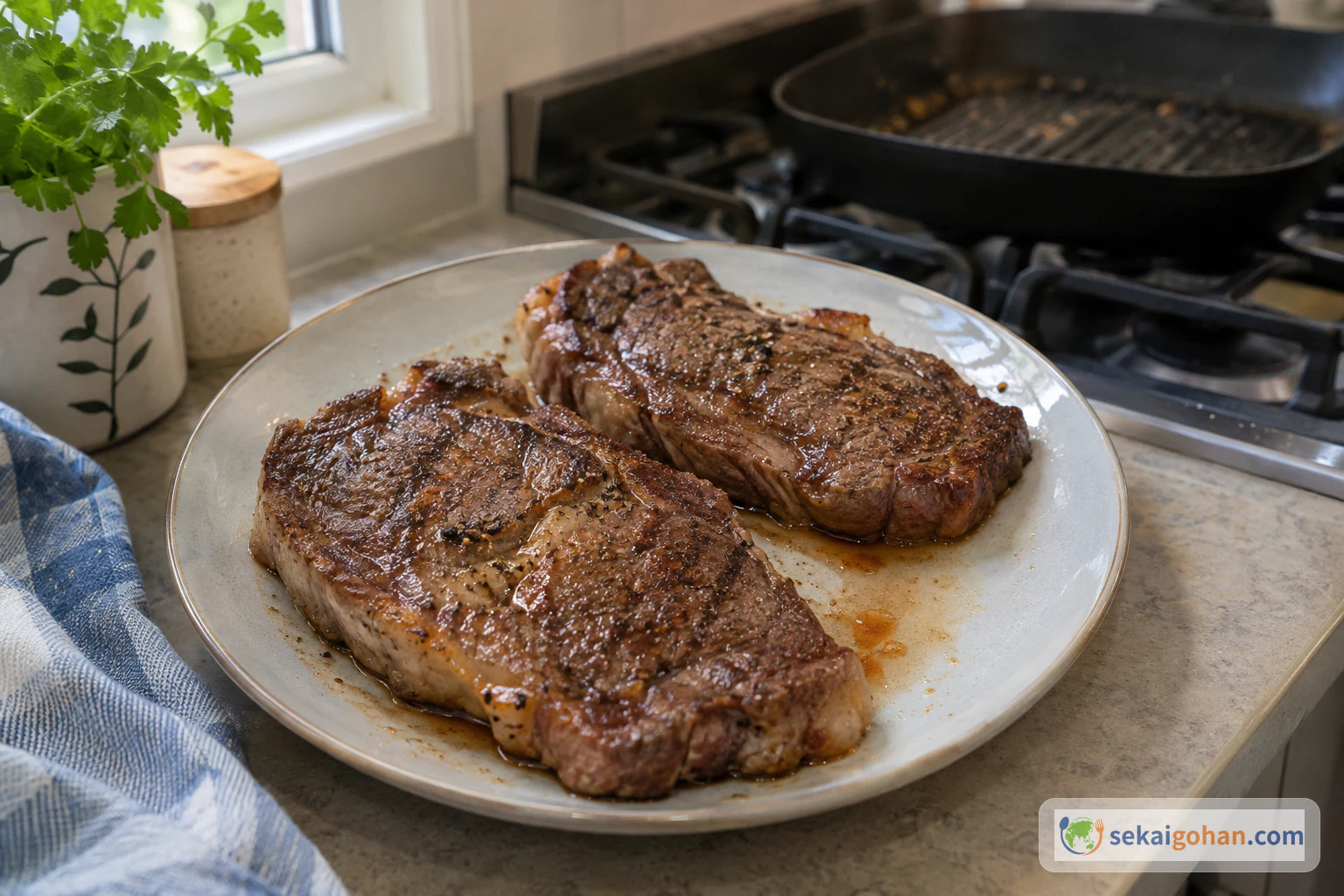
Two cooked steaks resting on a plate with juices pooling, a griddle pan behind
Rest them uncovered so the crust stays crisp

Move the steaks to a plate beside the stove. Let them rest for at least half as long as they cooked. Keep the stove on and start the sauce straight away, since this is its time. The steaks are rested once they have sat for at least half as long as they cooked.

Use the rest

Cutting the steaks early sends their juice across the board. The rest finishes the meat and gives the sauce exactly the time it needs, so treat the two as one step.

STEP44 / 7

Cook the garlic and prawns in butter

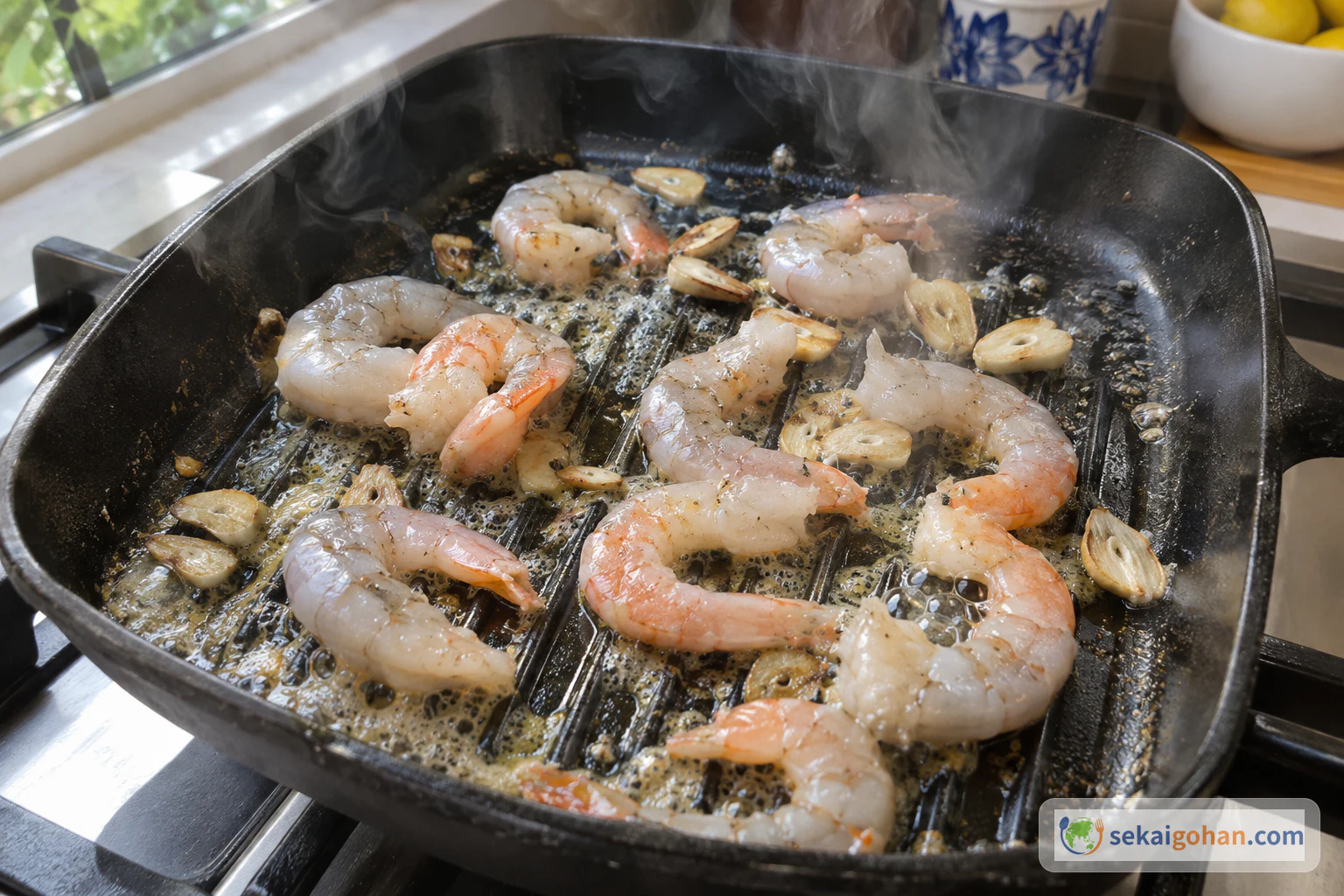
Peeled prawns and sliced garlic in bubbling melted butter, some prawns turning pink
Pink edges creep inward; wait until no grey patches remain

Melt the butter in the grill pan. Add the sliced garlic and stir until it smells fragrant and the slices turn golden. Add the peeled prawns and keep stirring so they cook evenly in the garlic butter. Move on when every prawn has turned from grey to pink all over.

STEP55 / 7

Reduce the beef stock

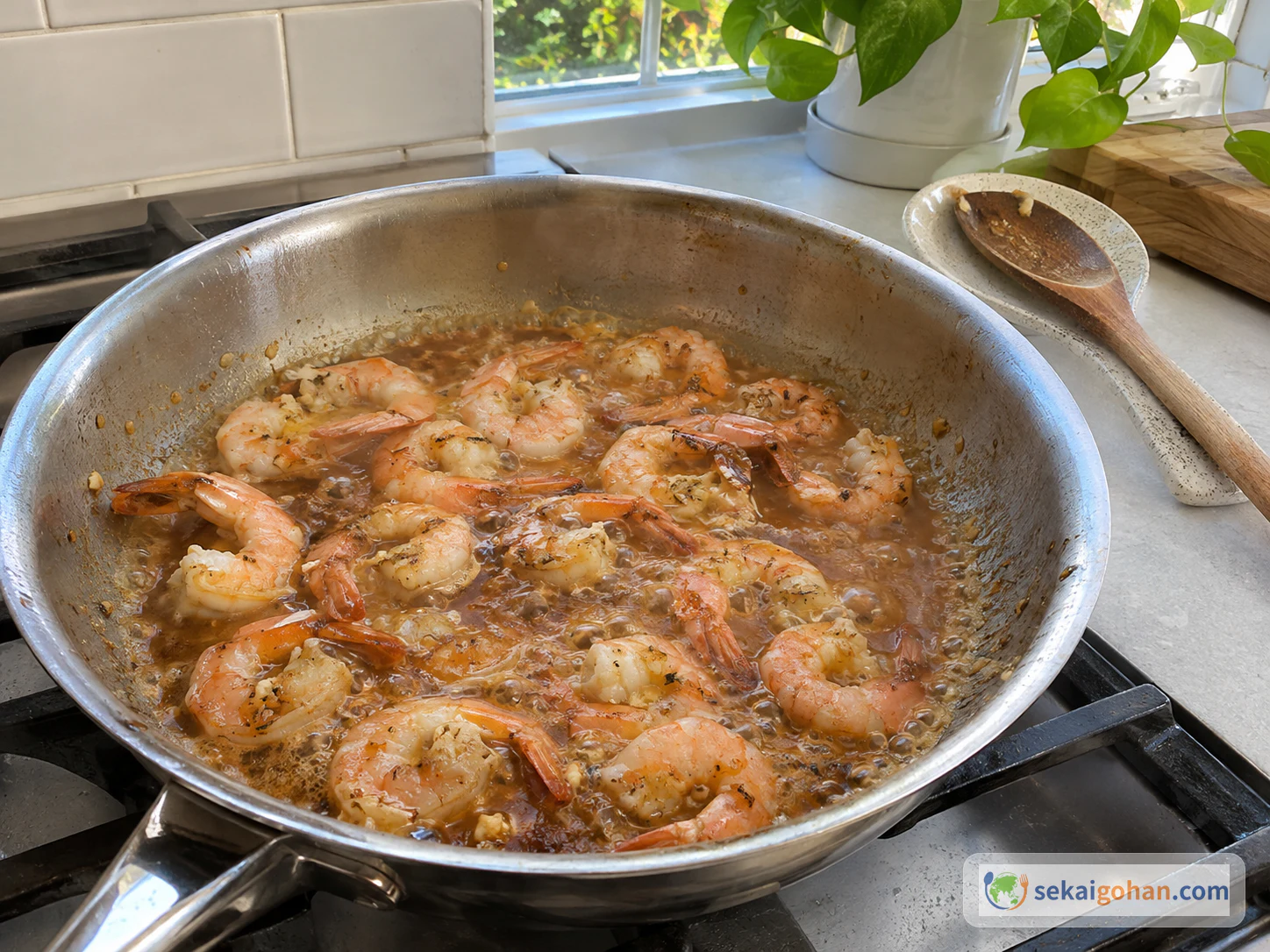
Prawns and garlic simmering in brown beef stock in a pan
Small, busy bubbles across the surface mean it is reducing

Pour the beef stock into the pan with the prawns and garlic. Let it bubble so it reduces a little, stirring once or twice and scraping up anything golden from the base of the pan. The smell shifts from garlic butter to something deeper and meatier. It is ready when the liquid has visibly dropped in the pan.

STEP66 / 7

Add the cream and finish off the heat

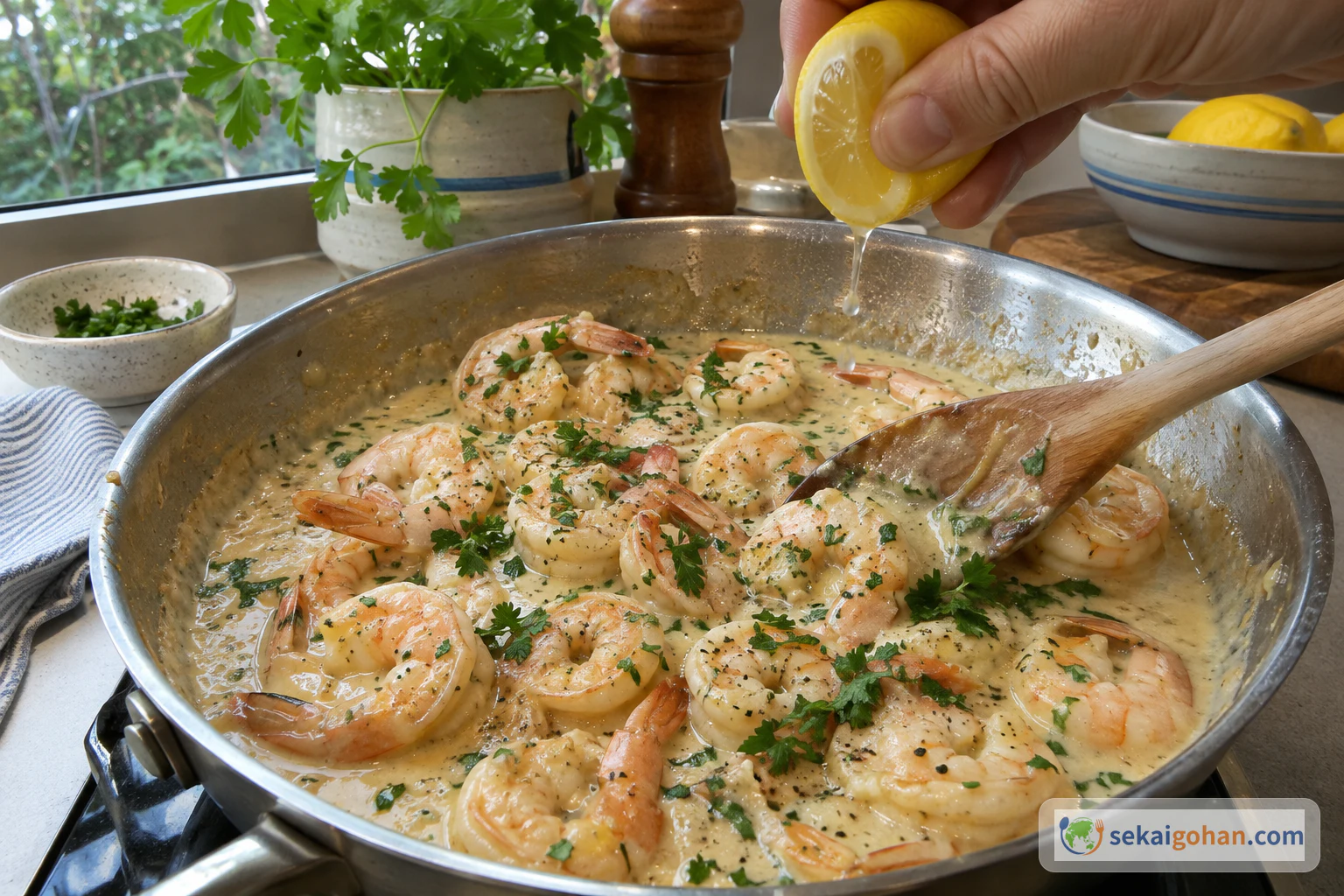
Prawns in a glossy pale cream sauce while a hand squeezes lemon over the pan
The surface should be still, not bubbling, when the lemon goes in

Pour in the cream and let it bubble and reduce further until the sauce turns glossy and slightly thick. Take the pan off the heat. Stir in the lemon juice, parsley and black pepper, then taste and add salt as needed. The sauce is right when it looks glossy and slightly thick and tastes bright as well as rich.

Lemon goes in off the heat

Stir the lemon, parsley and pepper in once the pan is away from the burner. The lemon stays fresh and sharp, the parsley keeps its green, and the cream stays smooth.

STEP77 / 7

Slice and sauce the steaks

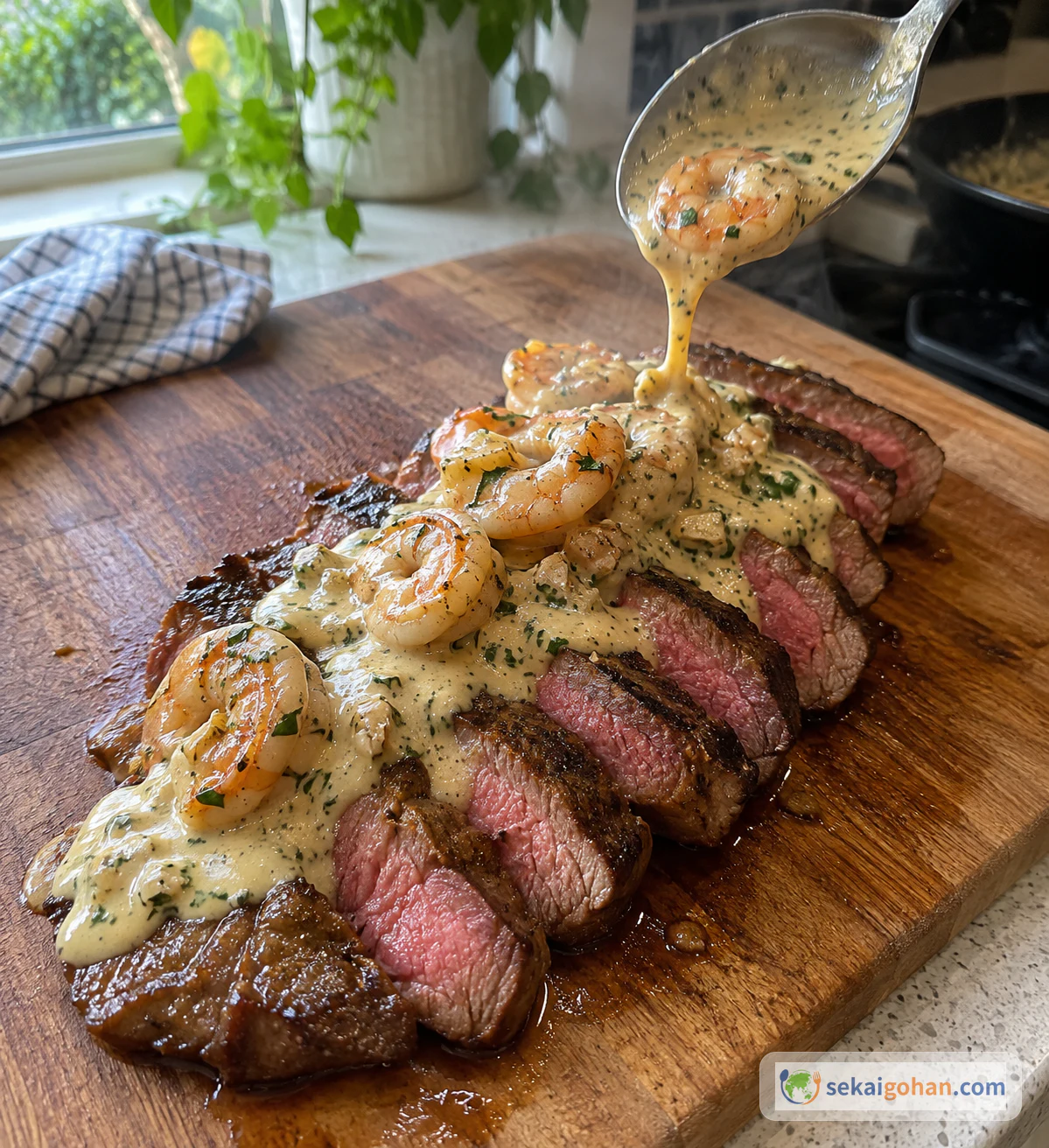
Sliced steak on a cutting board while a spoon pours prawn cream sauce over it
Sauce the slices right away, while both steak and sauce are warm

Slice the rested steaks across the grain with a sharp knife. Lay the slices out on a board or on plates, sharing the two steaks among four. Spoon the sauce over the top, making sure each portion gets its share of prawns. It is ready to eat when the slices show their cooked interior and the sauce is still steaming.

0 / 0
Ingredients

Ingredients

1 / 1

Ingredients

Ingredient Amount Role
Scotch fillet steaks 2 The "turf"; seared, rested, sliced and shared
Sea salt as needed Generous seasoning on the steaks; a final pinch in the sauce
Olive oil as needed A light coat on the steaks before searing
Butter 1 tbsp The base of the garlic prawn sauce
Garlic 2 cloves, sliced Cooked golden in the butter for aroma
Prawn tails 10, peeled The "surf"; cooked in the garlic butter
Beef stock ½ cup Reduced first for a savoury depth
Cream ½ cup Reduced second to body the sauce
Parsley ½ bunch, chopped Freshness and colour, stirred in off the heat
Black pepper ½ tsp Warmth in the finished sauce
Lemon 1, juiced Cuts through the cream and butter
0 / 0

The steaks sit resting on a plate by the stove, and in the pan beside them sliced garlic sizzles in butter until it turns gold and the kitchen smells of it. The prawns go in pale grey and, within a few stirs, curl and blush pink. A splash of beef stock, a pour of cream, a squeeze of lemon, and the sauce goes straight over the sliced steak. Surf and turf is steak and seafood on one plate, and in Australia it is a fixture of pub menus and backyard barbecues. This version is rich and savoury, with seared beef and sweet prawns under a garlicky cream sauce brightened by lemon and parsley.

Steak and Seafood on One Plate: Where Surf and Turf Comes From

Surf and turf means a red meat, usually beef steak, served with seafood. The "surf" is the sea, the "turf" is the pasture, and the pairing is a steakhouse classic in many countries. Australians also call it reef and beef, a name that fits a country with long coastlines and cattle country behind them.

Where the dish began is not settled. It is usually traced to the United States, and the name turns up in American print by 1961. A story places its first Australian serving at the Lithgow Hotel in Lithgow, New South Wales, in 1965, but that claim is unconfirmed. What is clear is that it settled in firmly: steakhouses, country pubs and barbecues around Australia all serve some version of it.

The dish has many faces. Some kitchens put a lobster tail beside a fillet, others make a beer and cream sauce, and campfire cooks marinate the prawns and steak together and grill them over coals. The plate here is a straightforward pub-style one: Scotch fillet seared hot, then prawns cooked in garlic butter and finished in a cream sauce with lemon and parsley. Two steaks are sliced and shared among four, and the prawns and sauce make up the rest of each plate.

Scotch fillet

In Australia, "Scotch fillet" is the name for a boneless steak cut from the rib. It is well marbled and takes a hard sear well, which is why it is a favourite for this plate.


Ingredients (serves 4)
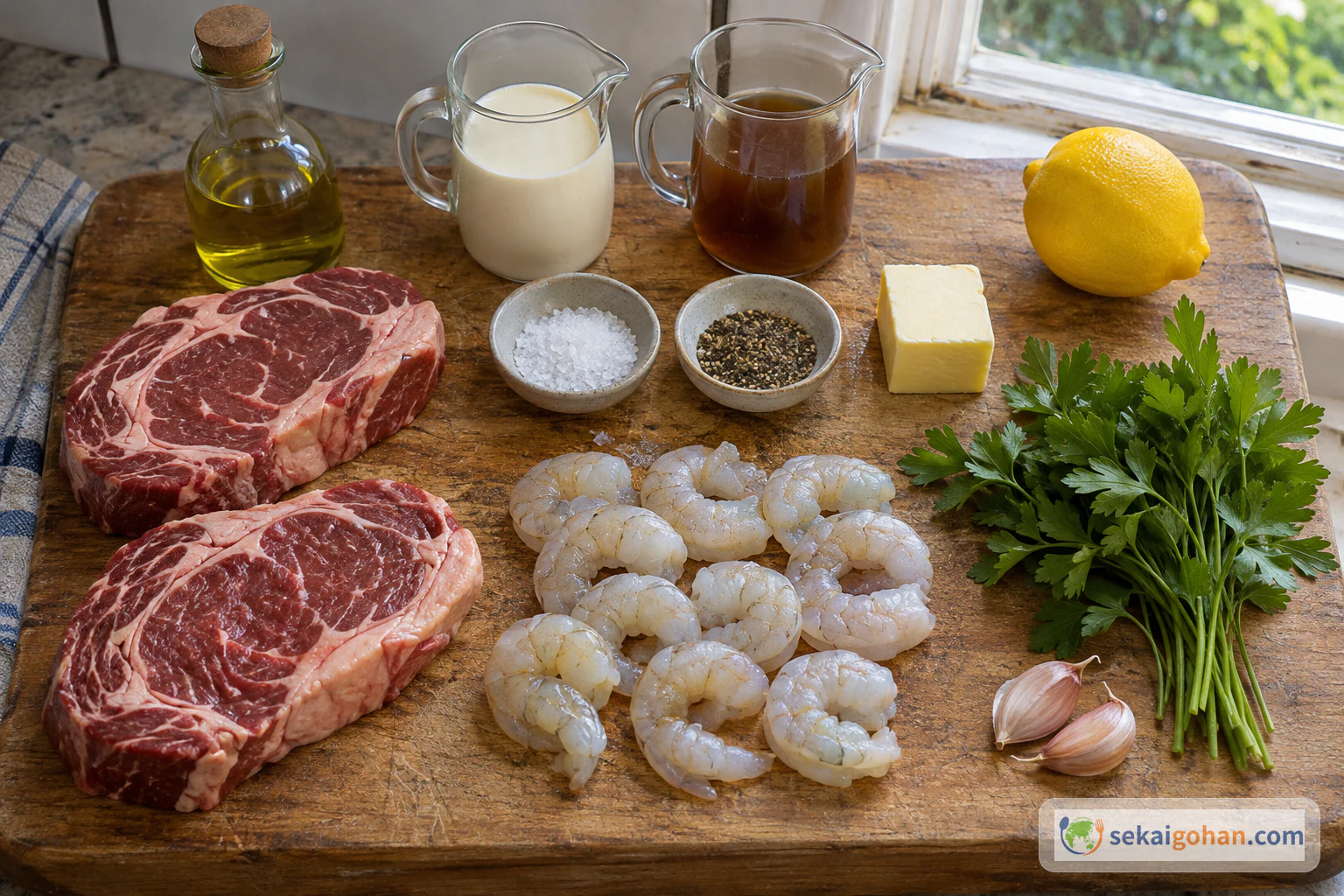
Two raw Scotch fillet steaks, ten peeled prawn tails, garlic, parsley, lemon, butter, cream, beef stock, olive oil, salt and pepper laid out on a board
Everything is set out before the pan goes on; once the steaks rest, the sauce moves fast
Allergen information

This dish contains crustaceans (prawns) and dairy (butter and cream). Check the label on the beef stock for any further allergens.

Equipment

  • Barbecue grill or a heavy frying pan that can get very hot
  • Grill pan or frying pan for the sauce
  • Tongs
  • Plate for resting the steaks
  • Cutting board and sharp knife
  • Spoon for saucing

Choosing the Steak and Prawns

Scotch fillet is sold under that name in Australia. Elsewhere, the closest match is a boneless rib steak, often labelled ribeye; it brings the same marbling and juicy bite. Sirloin also works, with a leaner, firmer chew and a little less richness.

Australian prawns are different species from what is sold in many other countries, so use whatever good raw prawns or shrimp you can find. Large raw prawns give the sweetest, juiciest bite. Frozen peeled prawns are a practical swap and cook the same way once thawed; the only thing they change is how much water they bring to the pan.

Use real cream, since it carries the sauce, and a beef stock you would happily taste on its own, because it reduces and concentrates.

Dry the prawns

Thaw frozen prawns fully and pat them dry with paper towel before they go into the butter. Wet prawns steam and dilute the garlic butter instead of sizzling in it.


Method: Sear, Rest, Sauce in the Gap

The whole dish turns on one piece of timing. The steaks cook first, and the resting time is the window for the sauce: while the meat sits on its plate, the garlic, prawns, stock and cream go through the second pan. Have every ingredient measured, sliced and squeezed before the steaks go on, because the sauce moves quickly.

When It Goes Wrong

What you see Why What to do
Steaks grey and steaming instead of browning Pan not hot enough, or crowded Heat the pan until it is very hot before the meat goes in; cook one steak at a time if needed
Juice floods the board when you slice The steaks did not rest long enough Rest them for at least half their cooking time; spoon any board juices over the sliced meat
Garlic dark brown and bitter Butter too hot, or garlic left too long Pull the garlic at golden; if it burns, wipe the pan and start the butter and garlic again
Prawns tight and rubbery Cooked well past the pink stage, then cooked on through both reductions Add the stock as soon as the prawns turn pink, and keep the reductions brief
Sauce thin and watery Wet prawns, or too little reduction Dry the prawns well; let the stock and then the cream bubble longer before taking the pan off the heat

Serving and Variations

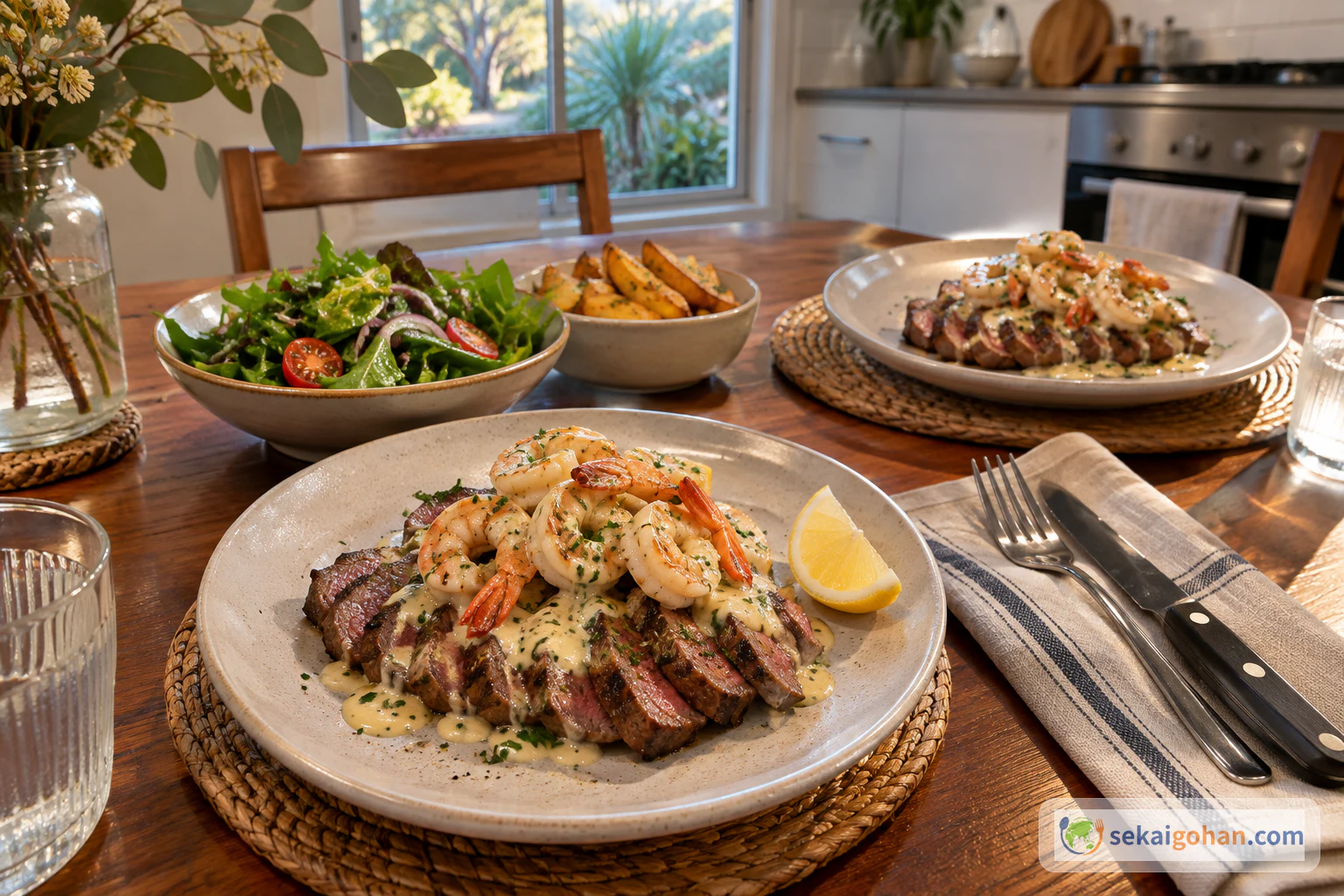
Two plates of sliced steak with prawns and cream sauce, with a green salad, potato wedges and a lemon wedge on a home dinner table
Wedges and a green salad round out the plate without competing with the sauce

Surf and turf is a pub dinner and a barbecue plate, eaten with a cold drink on a warm evening. Serve it with chunky oven fries or baked potato wedges to drag through the sauce, and a green salad to cut the cream. A lemon wedge on each plate lets everyone sharpen their own sauce.

Variations

  • Campfire marinade. Marinate the prawns and thick steaks together with garlic, olive oil, salt and lemon, then grill over the barbecue or campfire. The steaks go on first and the prawns take only a few minutes, until pink. You lose the cream sauce and gain smoke and char, a lighter plate for outdoor cooking.
  • Beer and cream sauce. Another Australian version makes its cream sauce with lager. The beer brings a gentle bitterness and malt that lean the plate toward the pub.
  • Kangaroo instead of beef. Kangaroo fillet replaces the steak for a leaner, gamier "turf".
  • Lobster and fillet. The steakhouse version pairs a beef fillet with lobster. It is grander and more expensive, with the seafood served whole beside the meat rather than in a sauce.

Frequently asked questions

Barbecue or frying pan?

Either works. A barbecue grill gives smoke and char marks; a very hot heavy frying pan gives an even, all-over crust. Make the sauce in a grill pan or frying pan on the stove either way.

How do I know the steak is done the way I like it?

Cook it to your preferred doneness, turning once. After you slice, the interior colour tells you how close you were, which helps next time.

Why only two steaks for four people?

The steaks are sliced and shared, and the prawns and cream sauce fill out each plate. With potato wedges and salad alongside, it is a full meal. For bigger appetites, cook an extra steak.

Can I cook the prawns ahead?

Cook them in the sauce while the steaks rest. The rest gives just enough time, and prawns cooked earlier then reheated toughen. With everything measured and ready, the sauce comes together in the gap.


Sources

  • Farm to Fork (Australia), recipe by Michael Weldon, "Surf and Turf." The main recipe: all ingredients, amounts and method, the serves-4 yield, turning the steak once, resting for at least half the cooking time, and the garlic butter, prawn, stock, cream, lemon and parsley sauce. https://www.farmtofork.com.au/recipe-index/surf-and-turf
  • Wikipedia, "Surf and turf." The names surf 'n' turf and reef and beef, the definition as red meat with seafood served at steakhouses, the likely American origin and 1961 first printed use, and the unconfirmed claim of a 1965 first Australian serving at the Lithgow Hotel. https://en.wikipedia.org/wiki/Surf_and_turf
  • Unsealed 4X4 (Australia), "Our go-to Surf & Turf Recipe for the campfire or BBQ." The marinated barbecue and campfire version, with steaks cooked first and prawns cooked a few minutes until pink. https://unsealed4x4.com.au/surf-turf/
  • World Food and Wine, "Surf 'n' Turf from Australia." The beer and cream sauce version, kangaroo fillet as an alternative to beef, and oven fries or potato wedges as sides. https://www.worldfoodwine.com/node/802