Toroī: New Zealand Māori Mussels and Watercress in Vinegar

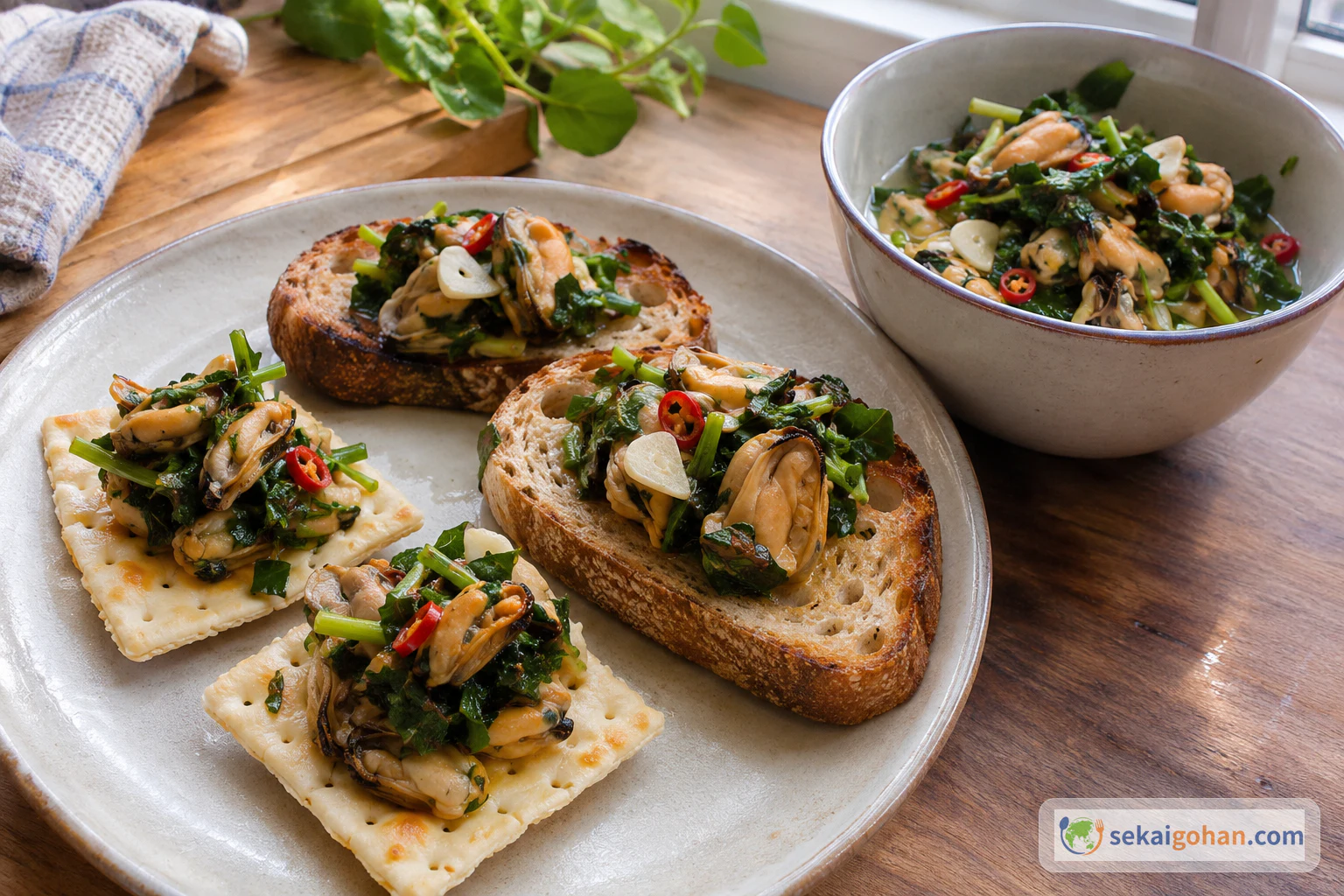
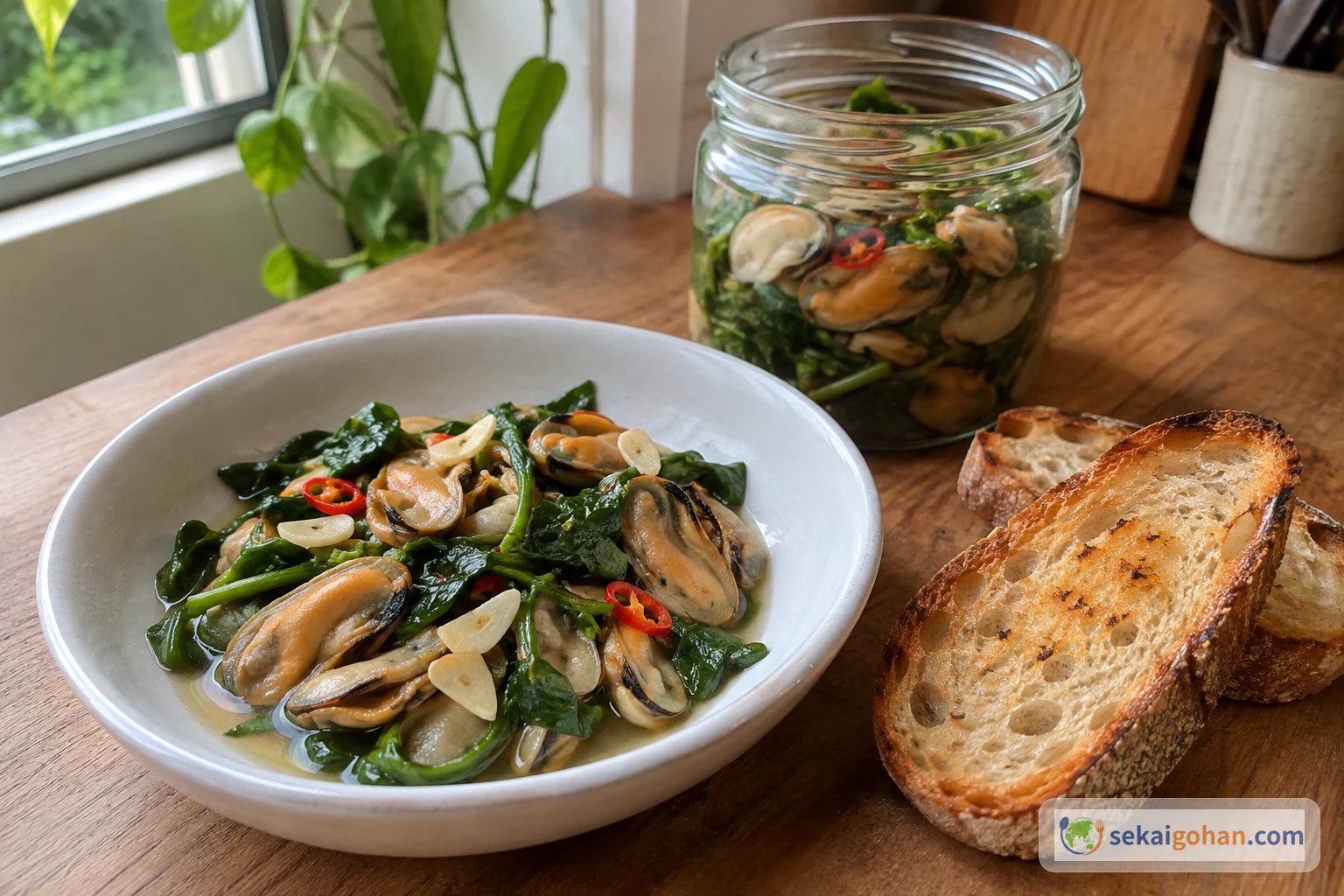
A jar and a bowl of finished toroī, sliced mussels and chopped watercress glossy with liquor, beside toasted sourdough
Serves
4 servings
Level
Beginner
Cuisine
Māori, New Zealand

Toroī is a sour Māori side of mussels and watercress from New Zealand. Learn the vinegar method, the 30-second blanch, and how to keep it submerged.

Cooking flow

Cooking steps

STEP11 / 8

Rinse the mussels

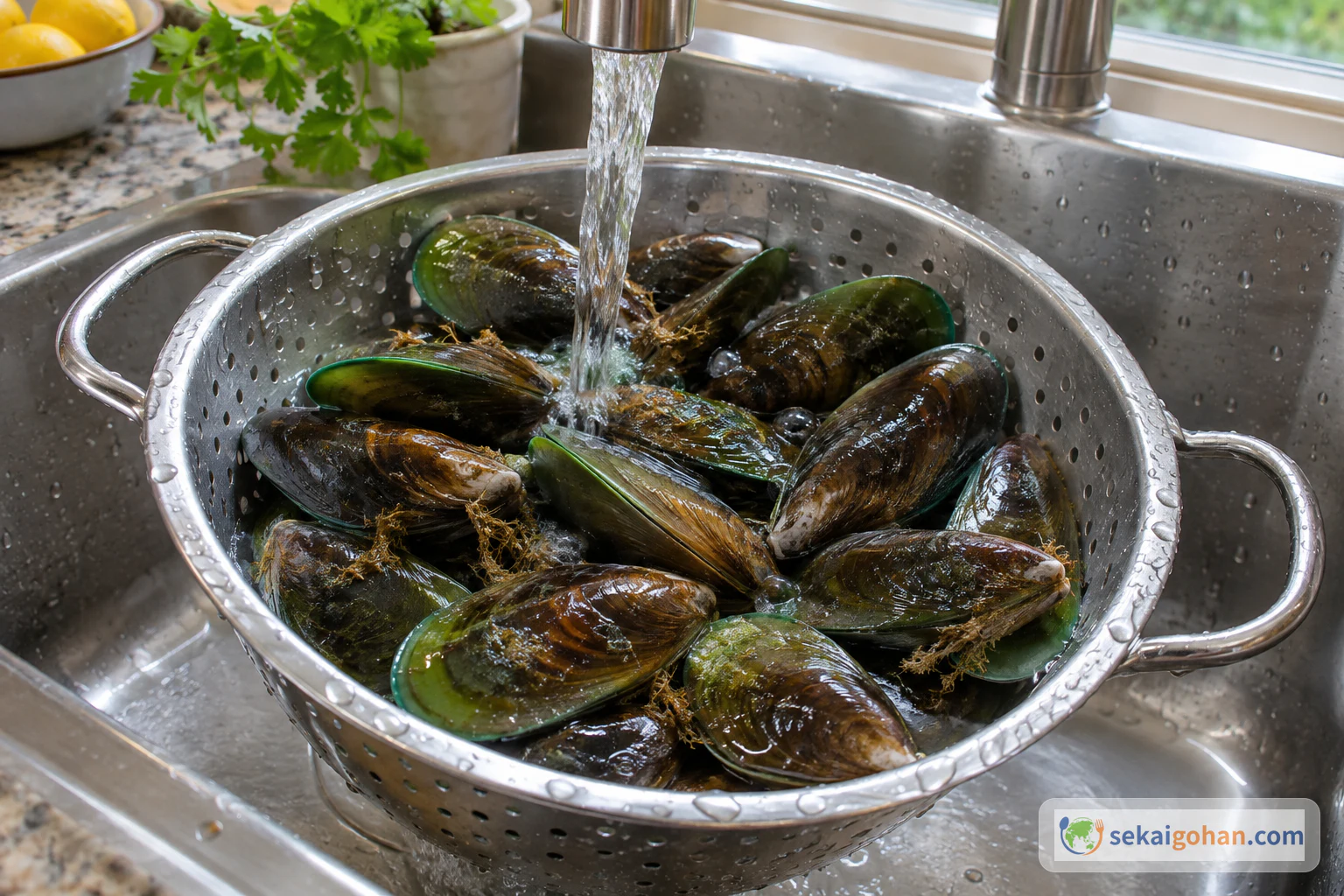
Closed mussel shells in a colander under running water in a kitchen sink
Beards still showing at this stage get pulled off now or after steaming

Put the mussels in a colander and keep them under cold running water for 30 minutes. Move them around with your hands now and then so every shell gets rinsed. Pull off any beards still clinging to the shells. Tip out the water at the end. The mussels are ready when the shells look clean and the colander drains clear.

STEP22 / 8

Steam until the shells open

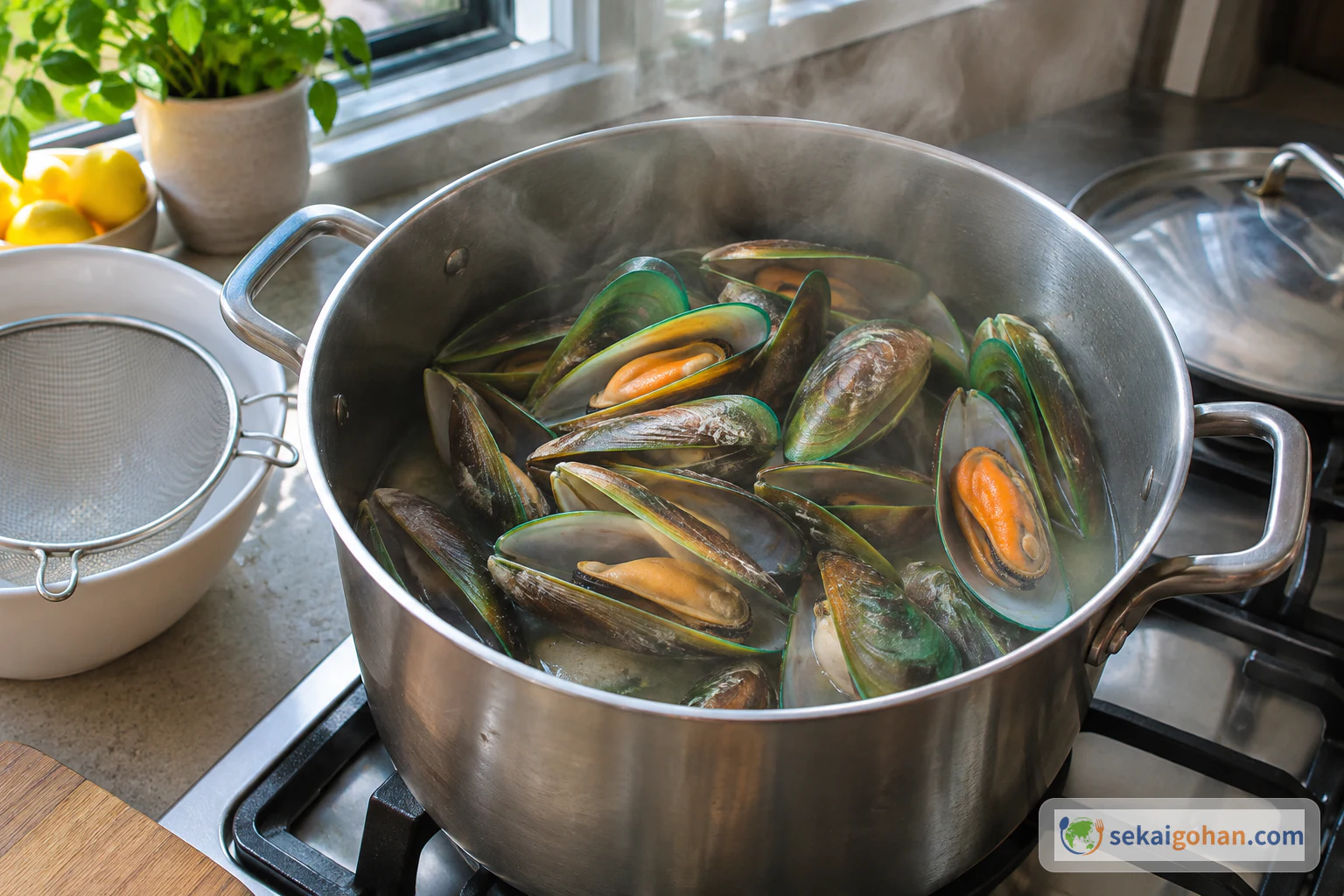
Steamed mussels open in a little liquid in a hot pot, steam rising, a bowl and strainer nearby
Open shells with plump, orange-cream meat show the pot has done its job

Put the mussels and the ¼ cup (60 ml) water in a pot and cover it with the lid. Steam over medium heat for about 5 minutes, until the shells open. Set a colander over a bowl and pour the mussels into it, keeping every drop of the liquor. Set the liquor aside. You are done when the shells are open wide and the bowl holds a cloudy, sea-smelling liquid.

Cook shellfish fully

Mussels must be cooked until their shells open. Raw or lightly cooked shellfish can carry Vibrio and other bacteria. People who are pregnant, older people and anyone with a weakened immune system should take particular care with shellfish.

STEP33 / 8

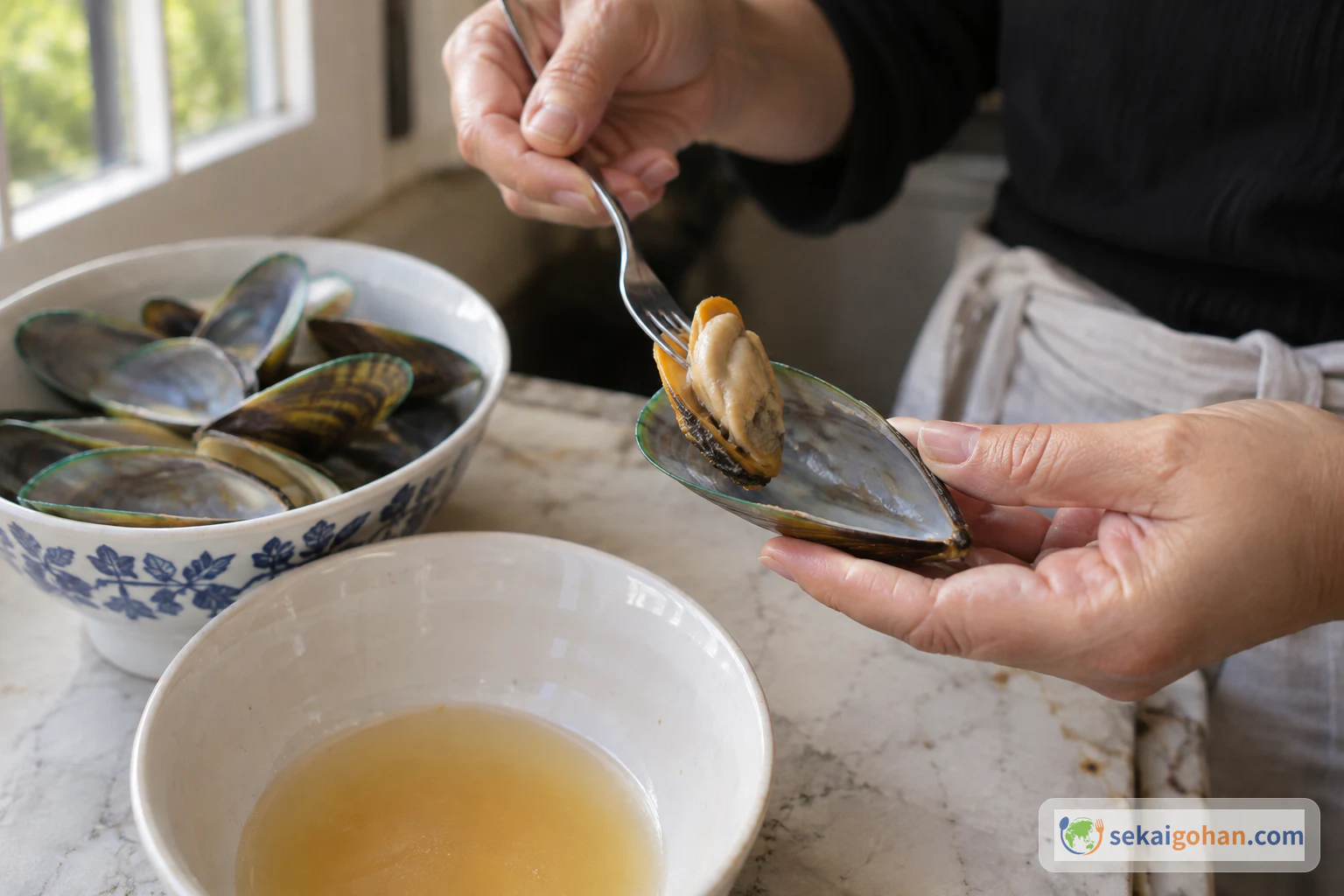
Cool and shuck

Hands lifting cooked mussel meat from an open shell with a small fork, a bowl of empty shells and a bowl of reserved liquor nearby
Keep the reserved liquor in its own bowl, away from the empty shells

Leave the mussels to cool for about 10 minutes, until you can handle them. Lift the meat out of each shell with a small fork. Throw away any mussel that did not open, and do not pry it open. Pull off any beard still attached to the meat. You should end up with a bowl of empty shells and a pile of clean, whole mussel meat.

STEP44 / 8

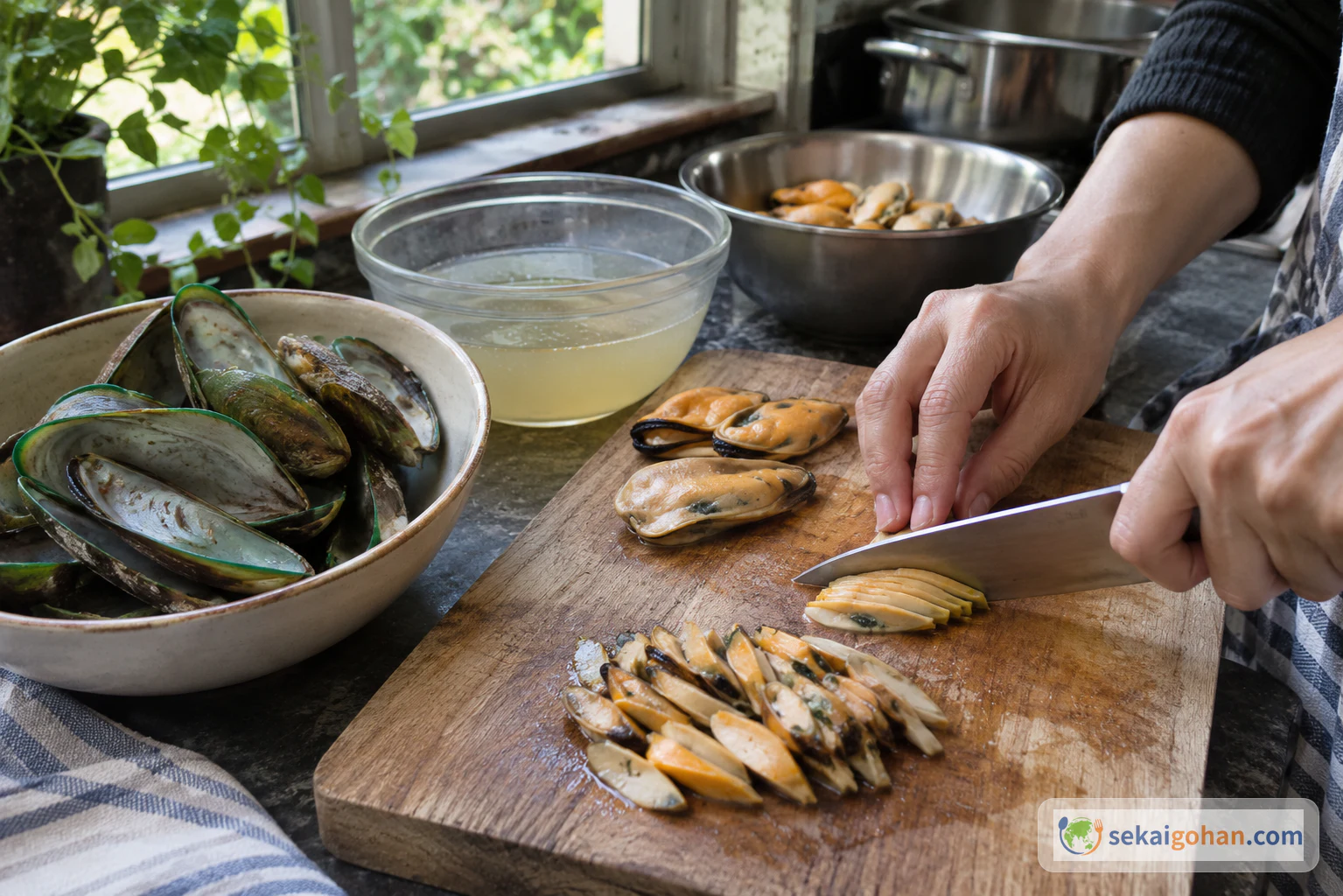
Slice and chill the mussels

Shucked mussel meat being sliced thinly on a cutting board, empty shells and reserved liquor beside
Thin, even slices mix evenly through the greens and fit neatly into the jar

Cut each mussel into 4 or 5 slices about a scant ¼ inch (5 mm) thick. Work on a board with a sharp knife so the meat slices cleanly. Gather the slices into a bowl and put them in the fridge. They are ready when every mussel is in thin, even slices and they feel cold.

The liquor is the brine

The steaming liquor is what keeps the jar wet and tasting of the sea. Keep it covered and close by until the last step, and do not season it or pour it out.

STEP55 / 8

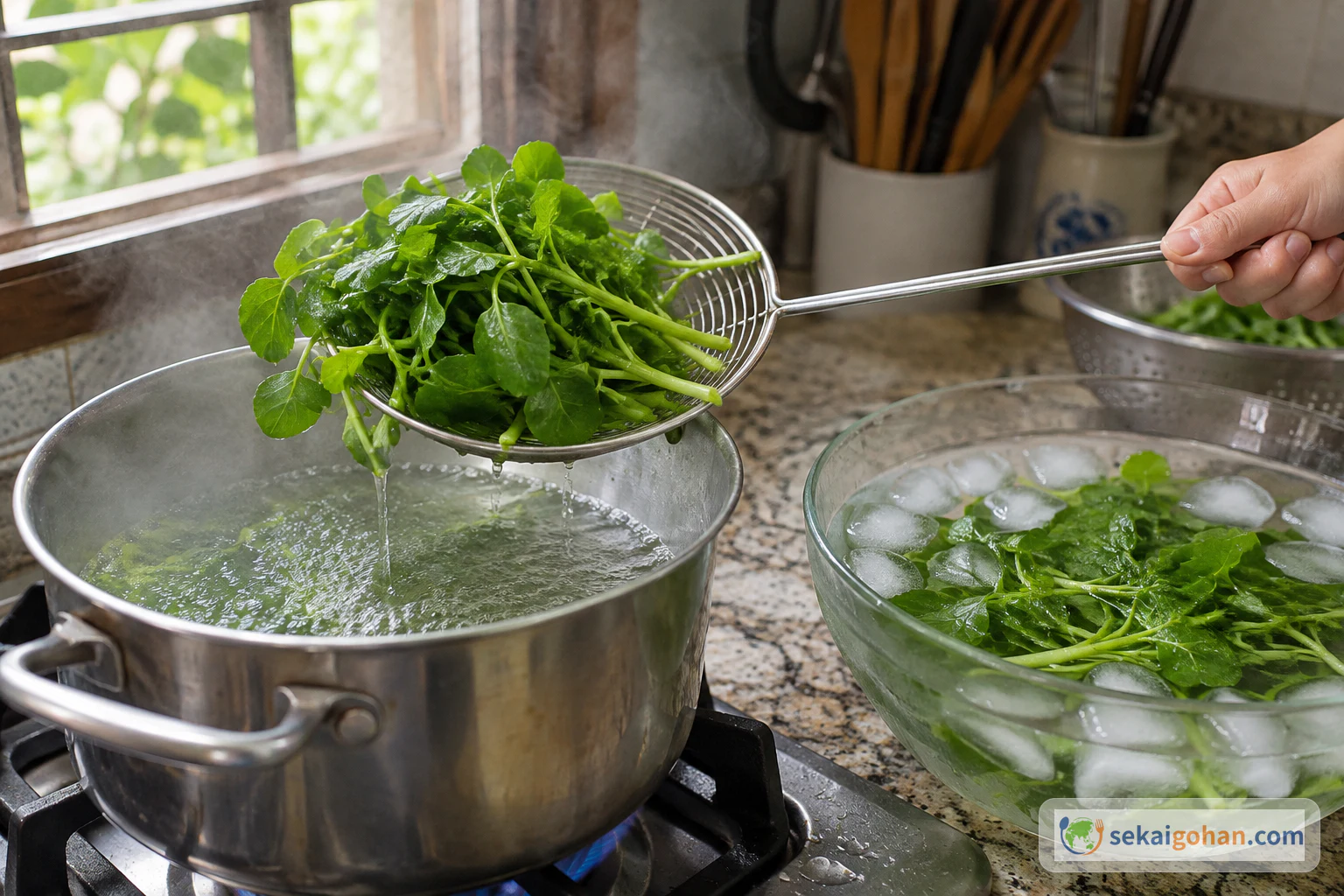
Blanch the watercress

Bright green watercress lifted from boiling water with a spider strainer toward a bowl of ice water
Move the greens straight from the pot to the ice so they stop cooking while still vivid

Bring a large pot of water to a boil and fill a large bowl with ice water. Pick the watercress down to its leaves and thin stems, and throw away the tough stems. Drop the greens into the boiling water for 30 seconds, then lift them straight into the ice water. They are right when the leaves are bright green and limp, and cold all the way through.

Boiling water

Keep the ice bath right beside the stove and lift the greens with a spider strainer or slotted spoon. That way you never carry a pot of boiling water across the kitchen.

STEP66 / 8

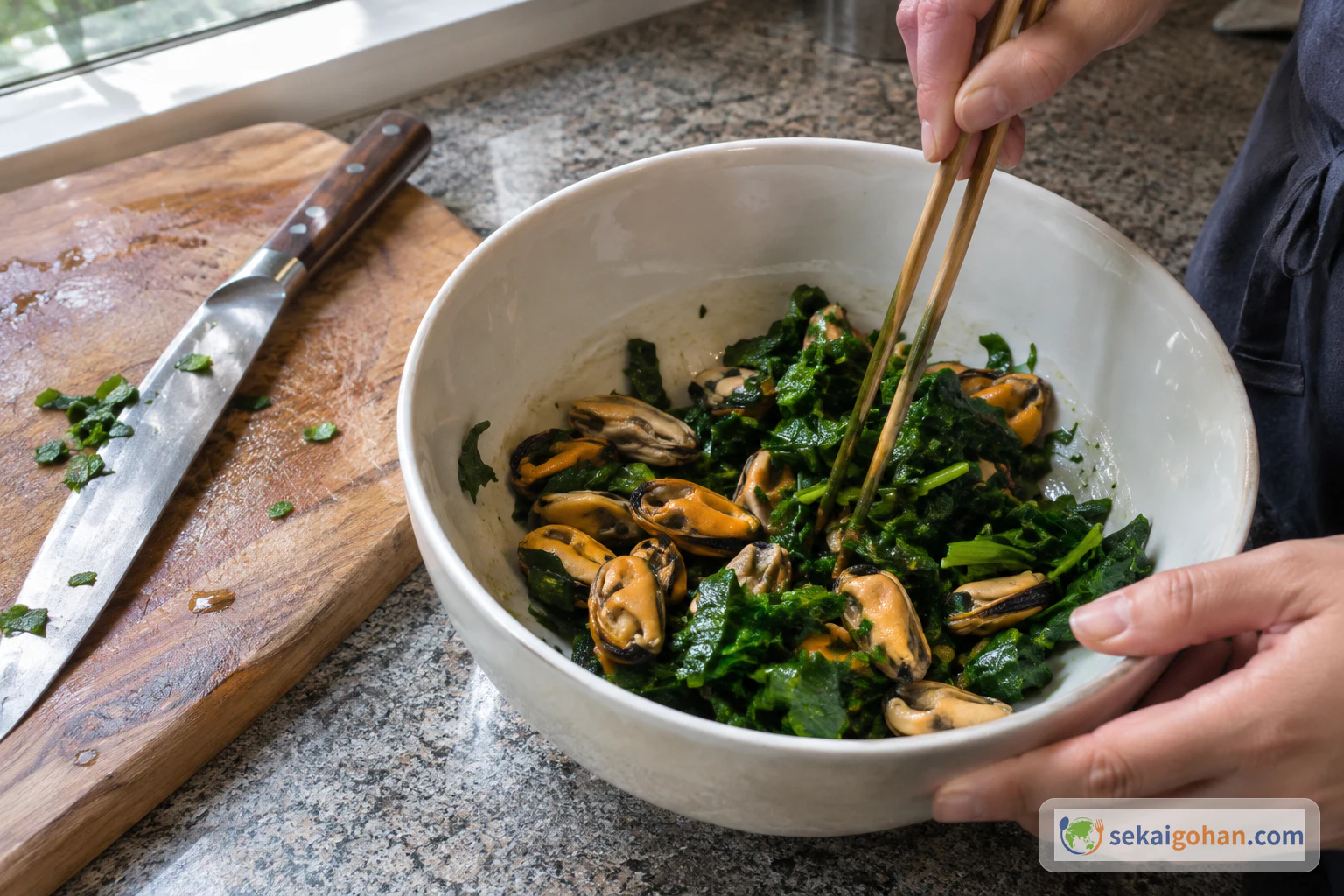
Squeeze, chop and combine

Roughly chopped blanched watercress being folded with sliced cooked mussels in a bowl
The greens should look dark and tight, not wet, as they go in with the mussels

Take the watercress out of the ice water a handful at a time and squeeze it hard until no more water drips out. Chop it roughly on the board. Add it to the chilled mussel slices and fold them together. You are done when the greens are spread through the mussels and the bowl has no pool of water at the bottom.

Squeeze harder than feels necessary

Water left in the greens thins the vinegar and the mussel liquor. The tighter the balls of watercress, the sharper and cleaner the finished toroī tastes.

STEP77 / 8

Season and taste

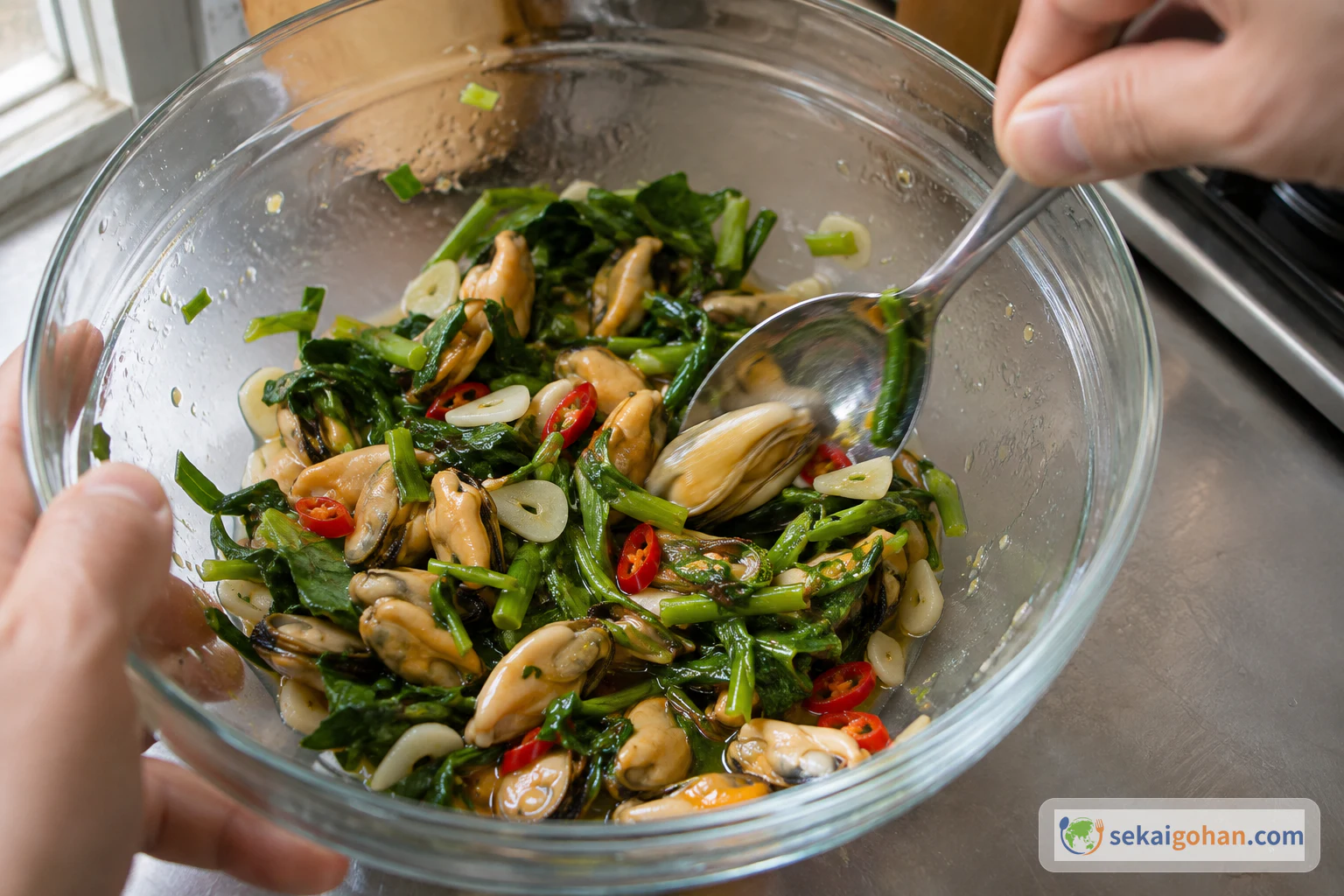
Mussels and watercress folded with thin garlic and chilli slices, salt and vinegar in a glass bowl
Garlic and chilli slices should be scattered evenly, not clumped in one spot

Add the garlic, chilli, salt and vinegar to the bowl. Mix with a spoon until every slice of mussel and every bit of green is coated. Taste a forkful. The mixture is ready when it looks glossy and tastes sour, salty and briny, with a little warmth from the chilli. Do not leave it to sit and ferment.

STEP88 / 8

Jar and cover with liquor

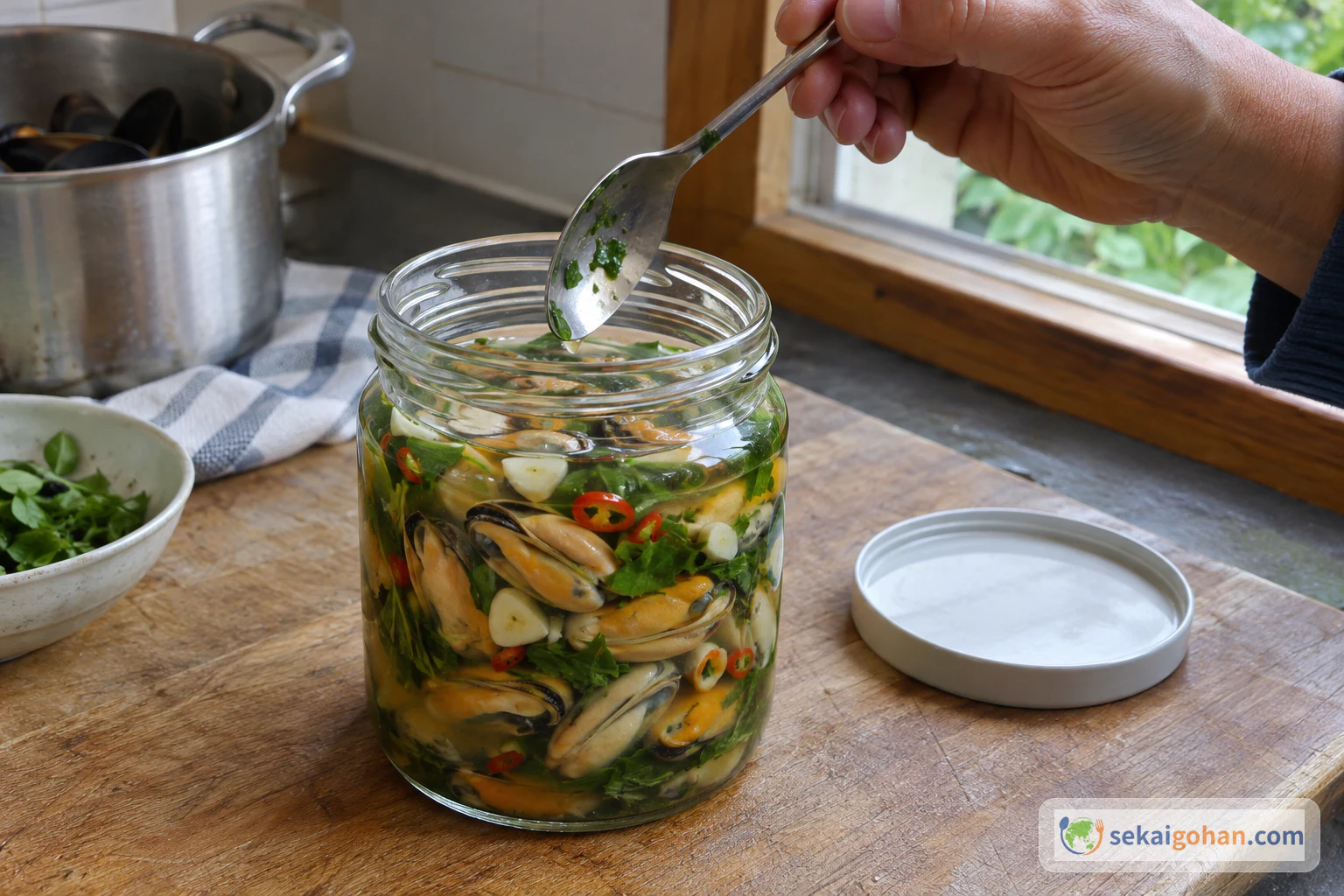
A glass jar filled with mussels and chopped greens submerged in liquid, a hand lifting out a spoon, the lid beside
Press down lightly with the spoon to see whether any pieces float up above the liquid

Spoon the toroī into a clean glass jar. If any mussels or greens stick up above the liquid, pour in some of the reserved liquor until everything is submerged. Put the lid on. Eat it right away or refrigerate it; it is best served cold.

0 / 0
Ingredients

Ingredients

1 / 1

Ingredients

Ingredient Amount Role
Fresh green-lipped mussels (kūtai), cleaned and debearded 2.2 lb (1 kg) The main ingredient, and its liquor
Water, for steaming ¼ cup (60 ml) Starts the steam in the pot
Watercress 2 large bunches (about 10½ oz / 300 g) The green, bitter half of the dish
Garlic 1 clove, thinly sliced Aroma
Bird's eye chilli 1, thinly sliced Heat
Sea salt ¼ tsp Seasoning
White distilled vinegar 1½ tbsp Sourness in place of fermentation
0 / 0

The lid comes off and the steam smells of the sea. The green-lipped mussels have gaped open in a shallow puddle of their own liquor, and that liquor gets poured off and saved, because it goes into the jar at the end. Toroī is a Māori side dish from New Zealand: mussels and leafy greens, pūhā or watercress, brought together with the shellfish's own juices. You eat it cold and sour. On a cracker it tastes briny and green at once, sharp with vinegar and lifted by a sliver of chilli and garlic.

Mussels, Greens and a Sour Jar

Toroī comes down to two things gathered from two places: shellfish from the shore, mostly kūtai (the green-lipped mussel) and sometimes pipi, and pūhā, a wild green with jagged leaves. Watercress is the other green cooks reach for. The greens and shellfish are cooked with the mussel stock, and the traditional jar is left to ferment, which gives the dish its deep, tangy sourness. Chilli and garlic sometimes go in too.

The dish is made in more than one way. The fermented jar is a craft Māori cooks pass on by hand, and the right way to learn it is from someone who makes it. Other cooks make a cooked, bottled toroī. They blanch pūhā in the water the mussels were cooked in and rub the leaves to take the edge off their bitterness. The recipe here is a third way. The sourness comes from white vinegar instead of fermentation, so the toroī can be jarred and eaten right away, or kept in the fridge.

The words on the jar

Toroī is written with a macron over the final i, and you will also see it spelled toroi. Kūtai means mussels, and green-lipped mussels from New Zealand are the usual choice. Pūhā is sow thistle, a leafy green that grows wild in New Zealand.

On the table, toroī is a relish to eat alongside other food, not a main course. A spoonful sharpens a plate of hāngī, the meat and vegetables cooked in an earth oven, and it sits just as well beside white fish, rice or a salad. People also spread it on crackers or toasted sourdough. Because it is chunky, wet and cold, it cuts through the smoky, soft food of a hāngī.


Ingredients (serves 4)
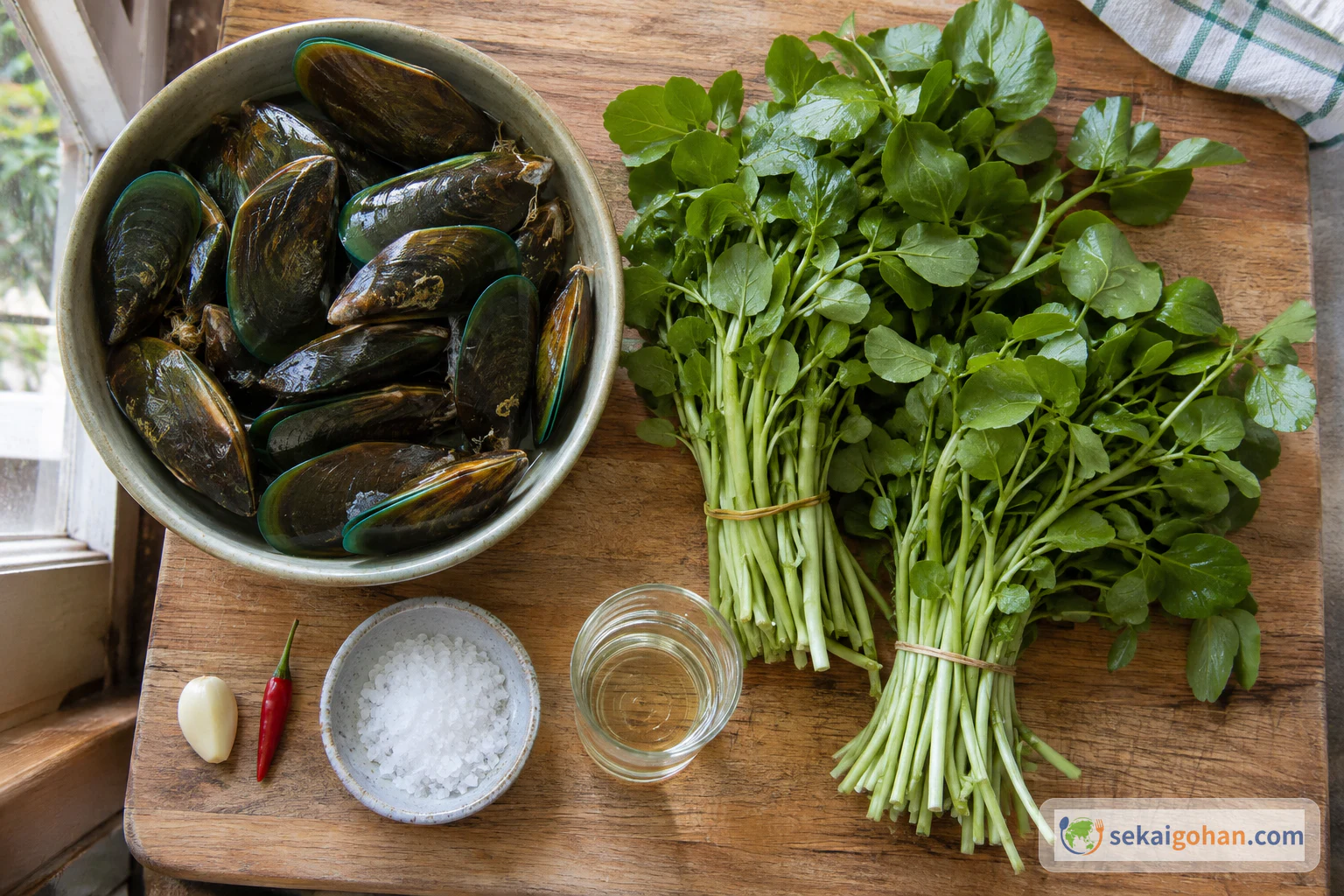
Mussels in a bowl, two bunches of watercress, a garlic clove, a bird's eye chilli, sea salt and white vinegar on a wooden board
Two big bunches of watercress look like a lot, but they lose most of their volume once blanched and squeezed
Allergen information

Toroī contains mussels, which are molluscan shellfish. Anyone with a shellfish allergy should not eat it.

Equipment

  • Colander or sieve
  • Large pot with a lid, for steaming
  • Bowl or container to catch the mussel liquor
  • Small fork or knife and a cutting board
  • Large pot of water and a large bowl of ice water, for blanching
  • Spider strainer or slotted spoon
  • Mixing bowl and spoon
  • Clean glass jar with a lid

Choosing and Substituting

The mussels matter most. Look for green-lipped mussels in the shell, either fresh or frozen in the shell, at a fish counter or an online seafood supplier. Blue mussels work as a swap. They are smaller, so each one gives fewer, smaller slices.
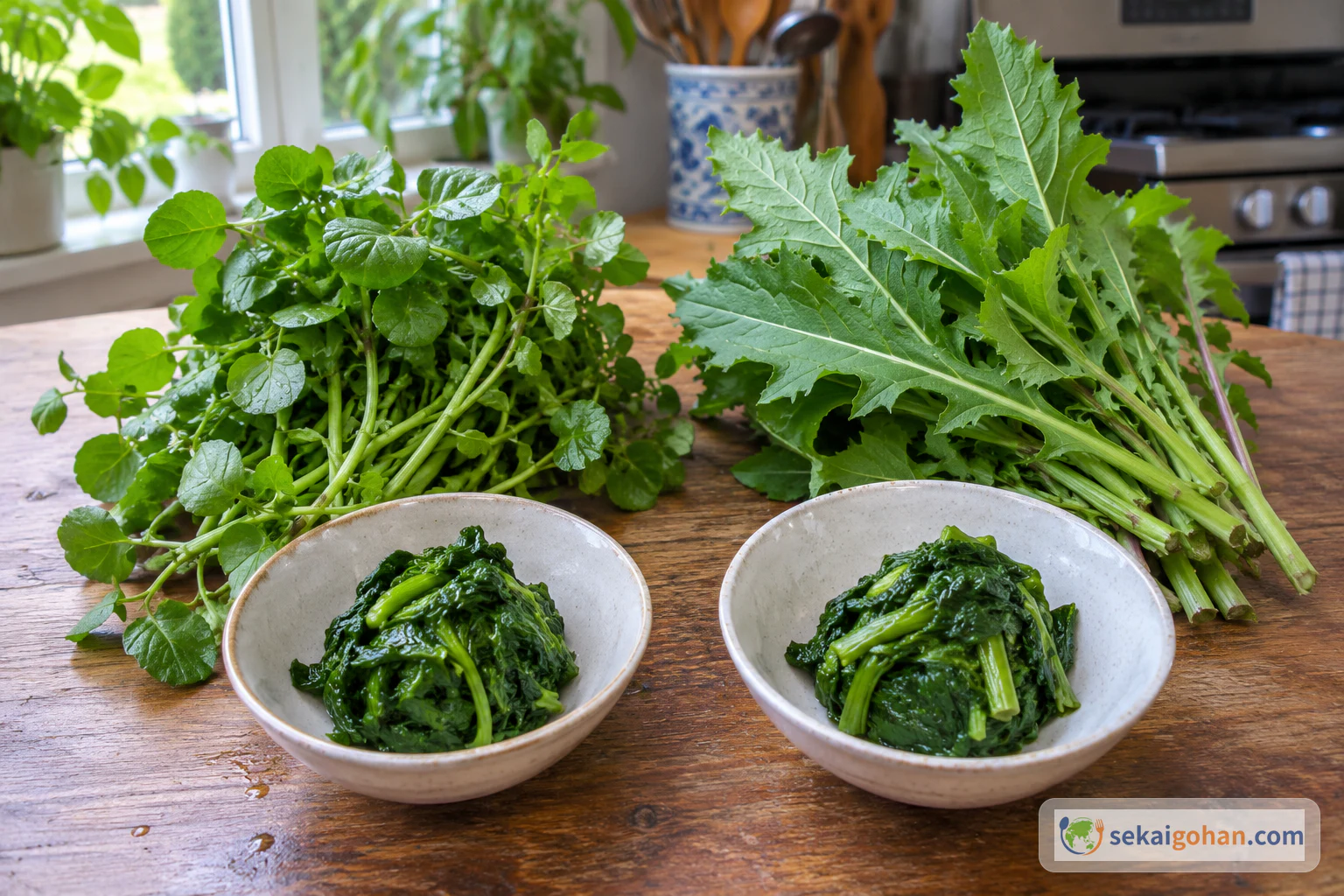
A bunch of watercress beside a bunch of pūhā, each with a small bowl of the blanched, squeezed greens
Watercress has small rounded leaves, while pūhā leaves are broader and jagged; once blanched, both go dark green

Pūhā is the green with the deepest roots in the dish, but it is hard to find outside New Zealand. Watercress is the practical choice, and supermarket bunches work fine. If watercress is missing, other leafy greens can stand in:

Green What it changes
Rocket (arugula) Keeps a peppery bite close to watercress
Mustard greens Adds a stronger mustard heat
Dandelion greens Brings the toroī closer to the bitterness of pūhā
Silverbeet (Swiss chard) Milder and softer, with more body

Any sea salt is fine. Measure it by the spoon and do not swap it in by weight. Plain white distilled vinegar keeps the sourness clean. Grain vinegars from other countries differ in strength and flavour, so taste after mixing.


Method

The work runs in a straight line. Clean and steam the mussels first, and while they cool, set up the blanching pot and ice bath for the greens. The only hands-off stretches are the 30-minute rinse and the 10 minutes of cooling, so use them to pick the watercress.

When It Goes Wrong

What you see Why What to do
A few mussels stayed shut after steaming They did not cook open Throw them away. Never force a closed shell open
Toroī tastes watery and flat The watercress held water Squeeze the greens much harder next time; for this jar, drain off the pooled water and taste again
Pieces poke up above the liquid in the jar Not enough liquid to cover the solids Top up with the reserved mussel liquor until everything is under
Stringy, chewy bits of green Tough stems went in Pick the watercress down to leaves and thin stems only
Greens turned soggy The toroī was frozen Keep toroī in the fridge only, and never freeze it

Serving, Variations and Storage

Spoonfuls of chunky toroī on crackers and toasted sourdough, with a small bowl of the same mixture beside
Spoon it on with some of the liquor so the cracker or toast soaks up the brine

On the table

Serve toroī cold, straight from the jar. Spoon it onto crackers or toasted sourdough, or set it beside white fish, rice, a salad or a hāngī as a sharp relish. A small bowl in the middle of the table is enough, since people take a spoonful at a time. For more cooking from this side of the Pacific, browse Australia.

Variations

  • Pūhā toroī. If you can get pūhā, rub the leaves to soften their bitterness and blanch them for 2–3 minutes in the mussel cooking water. The dish tastes greener and more bitter, closer to its roots.
  • Gentler heat. Remove the seeds from the bird's eye chilli, or leave the chilli out. The vinegar and the sea flavour come forward and the toroī suits people who avoid heat.

Storage

Keep toroī in its covered jar in the fridge for up to 3 days, with the mussels and greens submerged in liquid the whole time. Do not freeze it, because the watercress turns soggy. Never keep the jar at room temperature.

Frequently asked questions

Do I need to let the jar sit before eating?

No. The vinegar makes it sour from the moment it is mixed, so you can eat it as soon as it is jarred. Chilling it first gives the best flavour, since toroī is meant to be eaten cold.

Can I gather my own mussels for this?

Check the local shellfish toxin information for the area before you gather. Toxins in shellfish are not destroyed by cooking, so steaming the mussels does not make shellfish from a closed area safe. Bought mussels from a fishmonger avoid the question.

Is toroī the same as a boil-up?

No. A boil-up is a different Māori dish, a soup built on pork bones. Toroī is a cold, sour side of mussels and greens eaten in small spoonfuls.

Sources