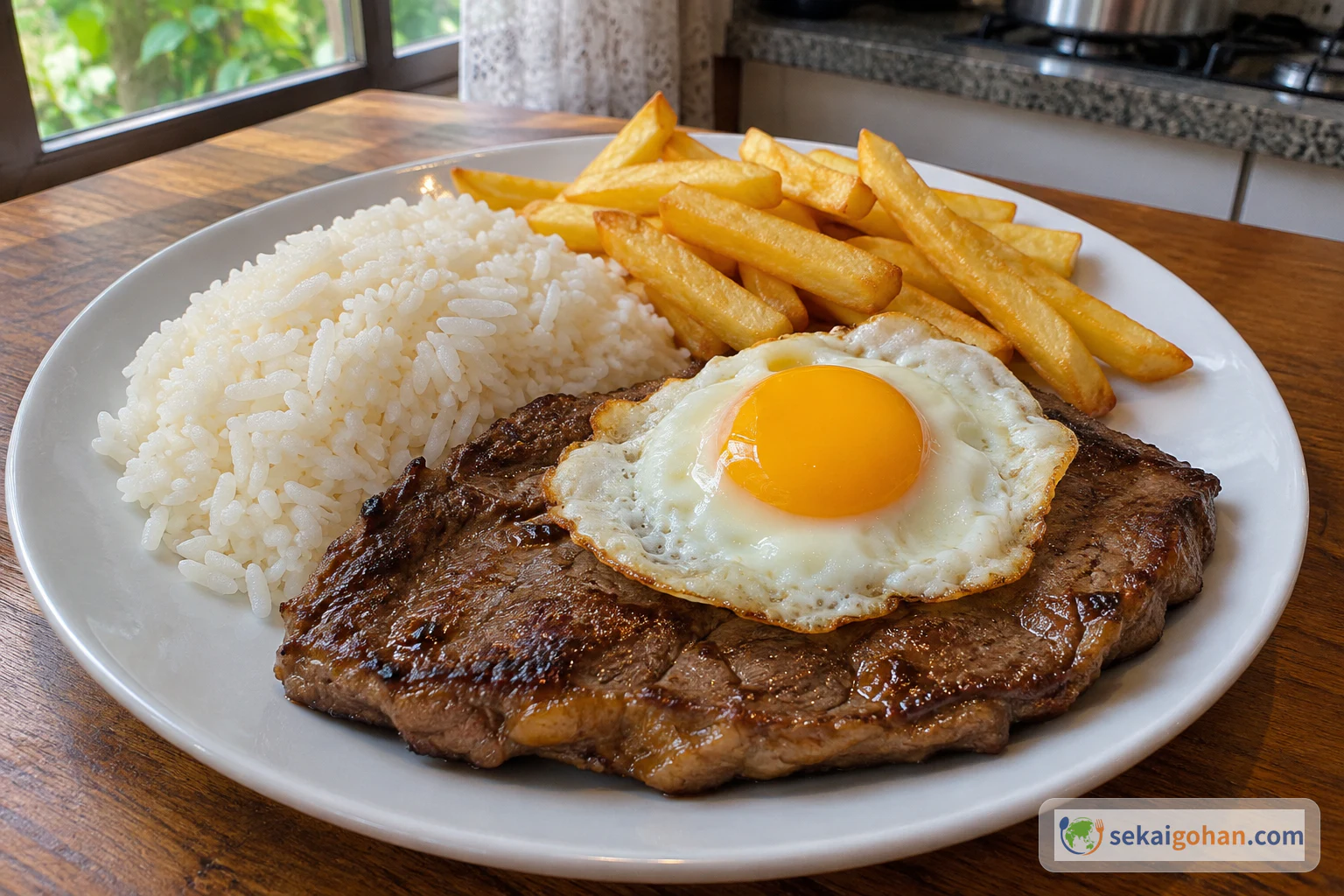
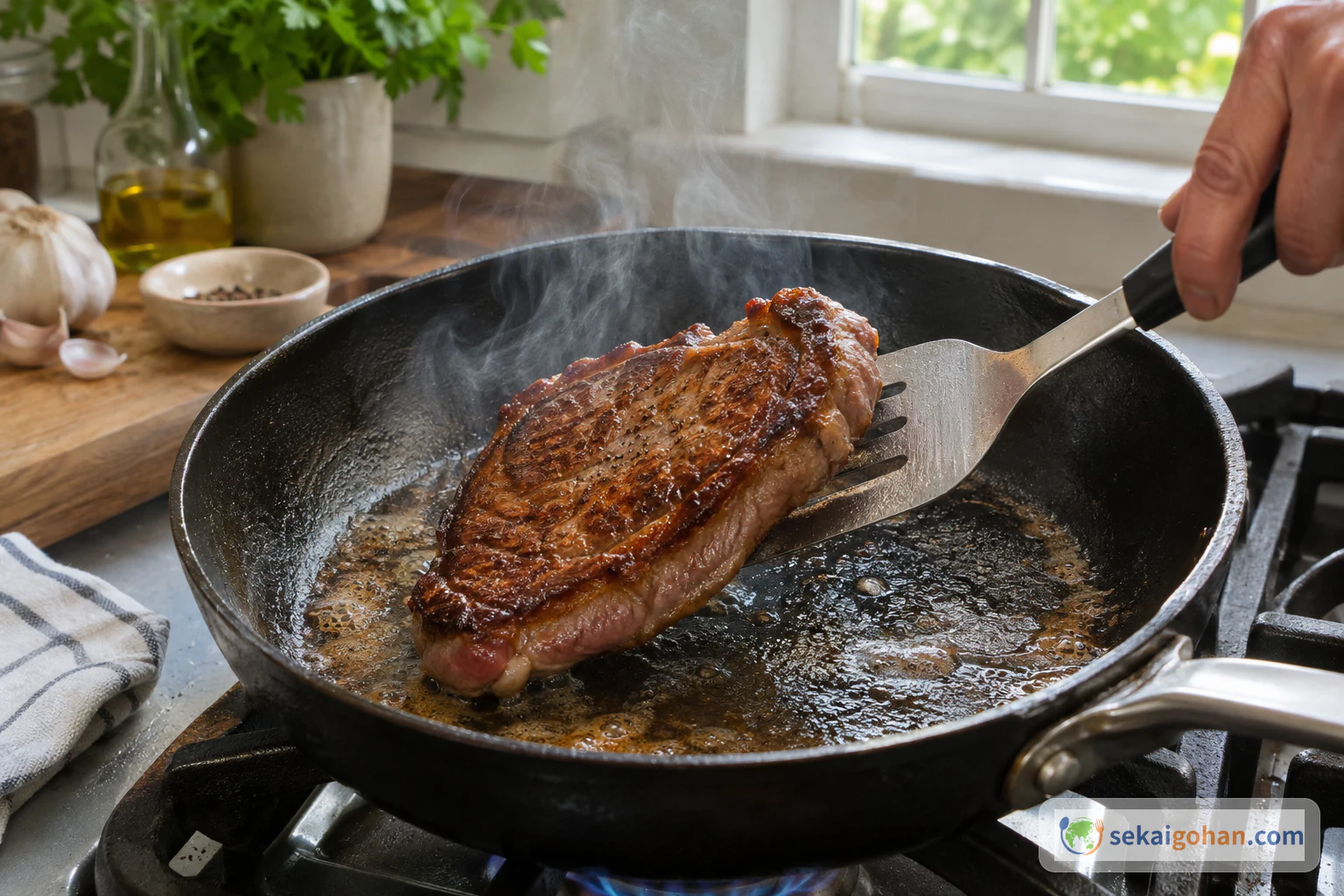
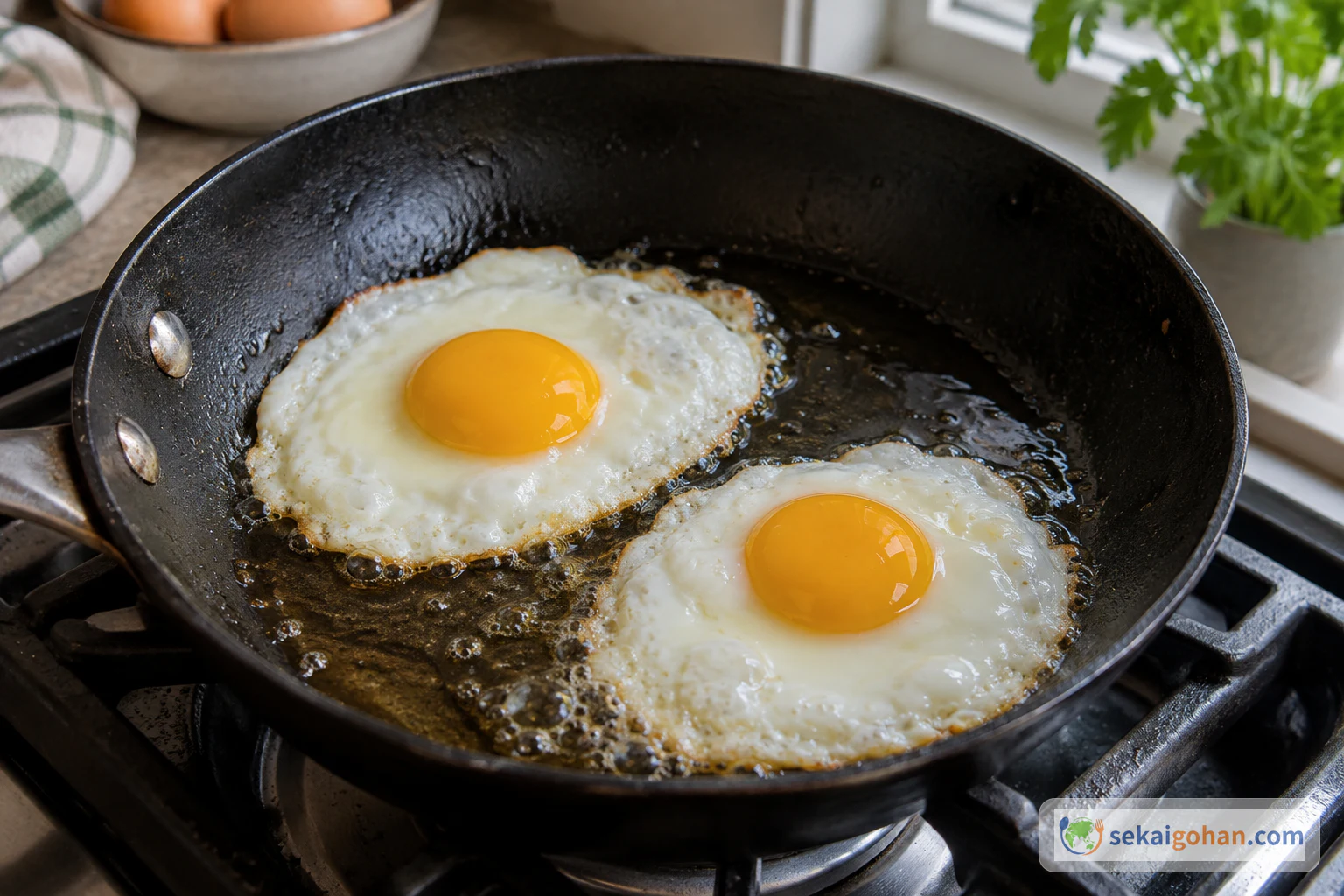
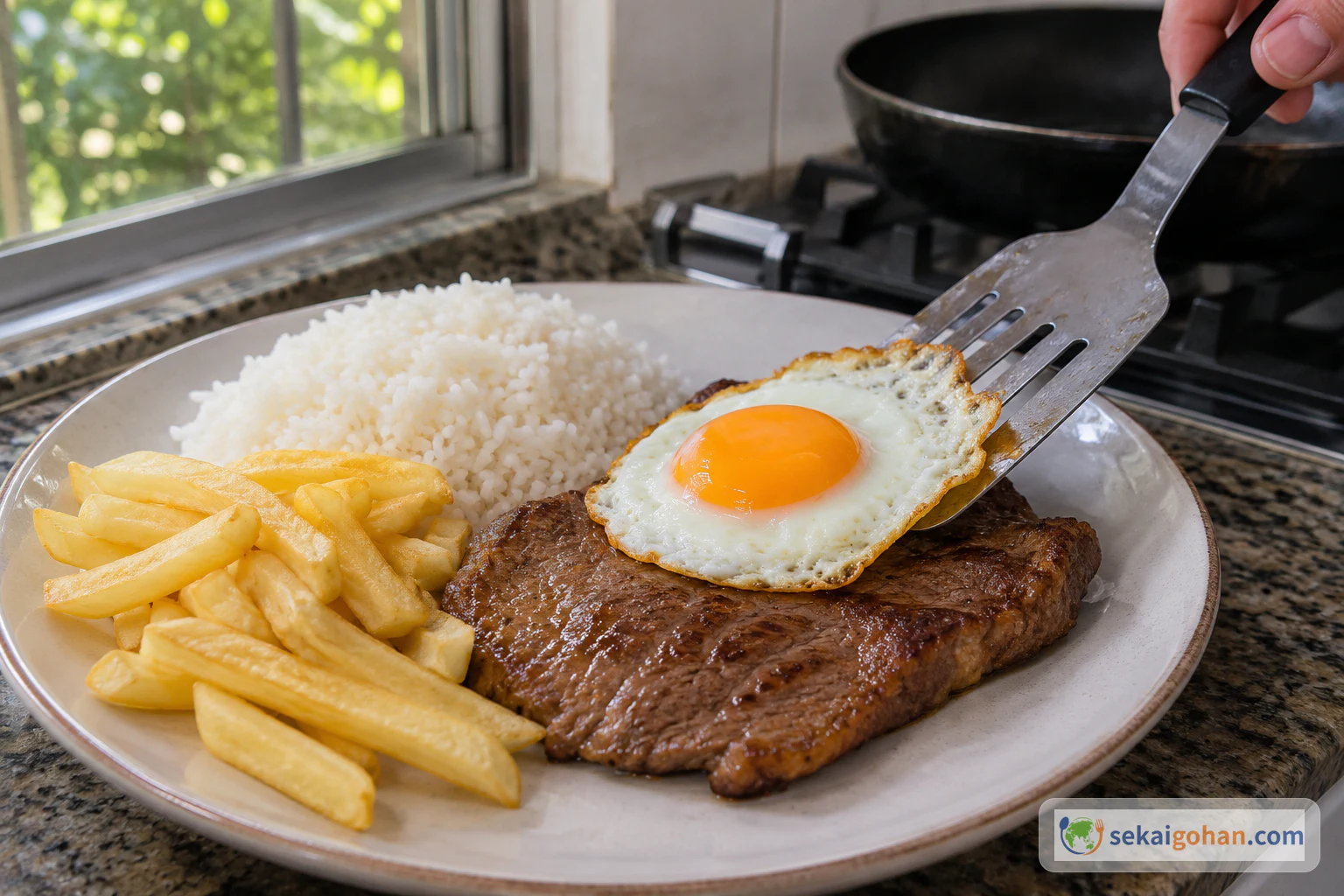
The steak goes into a hot pan and hisses, and the smell of garlic rises off the rub. After a while juice beads on the top of the steak, and you flip it to show a browned face. In the next pan two eggs spread out and their whites turn white. One egg goes onto each steak, and the steak sits on a plate already holding white rice and fries. That is bife a cavalo, the Brazilian home plate of a garlic-and-pepper steak with an egg riding on top. It tastes salty and savoury, the orange in the rub adds a light brightness, and the egg ties the steak and rice together.
Steak on Horseback: The Name, the Plate and One Long Train Ride
"A cavalo" means "on horseback," and the name is usually explained by the egg sitting on the meat the way a rider sits on a horse. Where the dish began is not settled. Similar plates turn up in Portugal, Paraguay and Argentina. In Portugal, bifes à cervejeira com ovo a cavalo puts the steak in a sauce of ham, beer and mustard before the egg goes on. The Brazilian home version is simpler: a pounded steak, a rub of garlic, salt and pepper, a fried egg, and the everyday sides of white rice and french fries. Caramelized onion and a simple salad often come with it too.
This is a weekday pan dish. It has nothing in common with Brazil's charcoal grilling of big cuts such as picanha or a full churrasco. It is one steak per person, cooked fast on the stove and eaten with a fork in one hand and rice on the other side of the plate. You can find more of the country's cooking on our Brazil page.
One family in Mato Grosso do Sul remembers bife a cavalo as the main meal in the dining car of the Trem do Pantanal, the train that took about twelve hours to run between Campo Grande and Corumbá. In that family's version the plate was built in layers: rice, then the steak, then the egg, with tomato sauce spooned over the top. It is one family's memory and not a general history. It still shows how far the dish travels from the plain pan version, which is the one below.
Bife is steak and a cavalo is "on horseback." In Portugal the egg alone can be called ovo a cavalo, an egg "on horseback" on top of whatever is underneath.
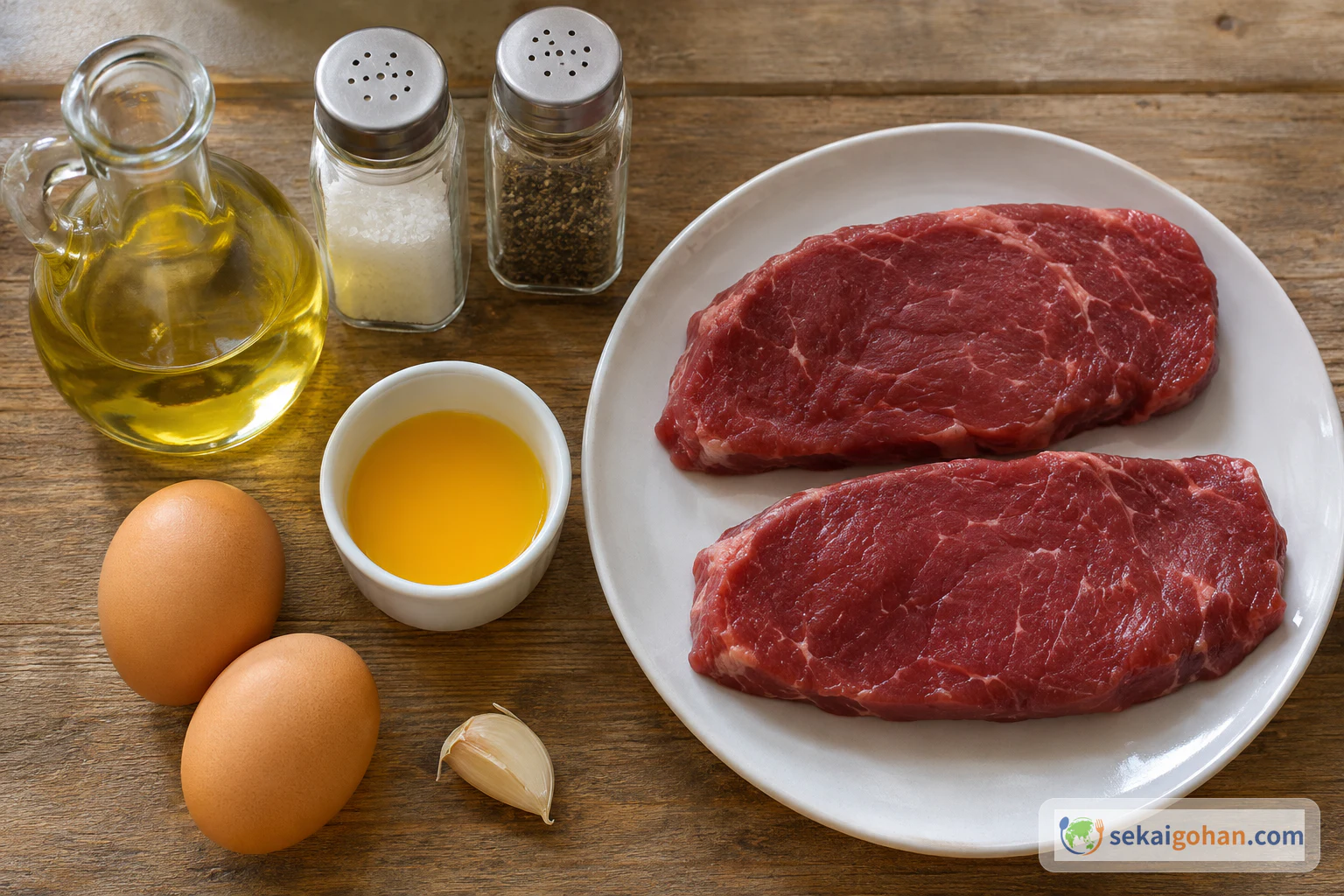
Ingredients (serves 2)
This dish contains egg. Check the labels on any ready-made fries for other allergens.
Equipment
- Cutting board
- Meat mallet
- Small mortar and pestle
- Pastry or basting brush
- Medium skillet, heavy-bottomed if you have one, for the steaks
- A second skillet for the eggs
- Wide spatula
- Serving plates
Choosing the Beef and Working Without a Mortar
Alcatra is the first choice. It is the rump or top-sirloin area, lean enough to pound and tender enough to cook fast. Coxão mole (top round) is leaner and a little chewier, and contrafilé (strip loin) is richer and more tender. Any of the three gives the right result as long as you buy ordinary whole-cut steaks, not chopped or re-formed meat. Ask the butcher for two steaks about 5 oz (150 g) each so they finish together.
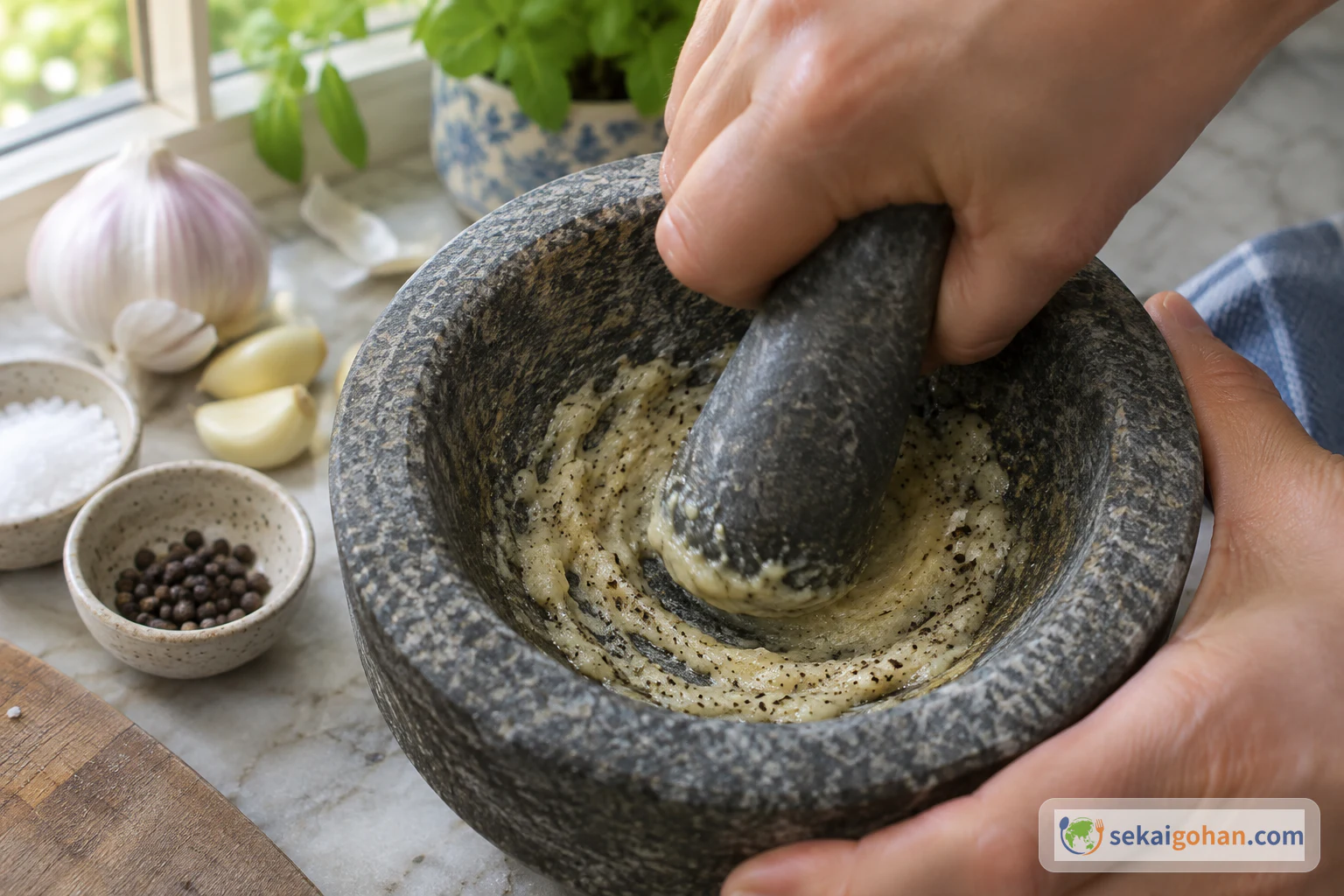
If you have no mortar, crush the garlic with the flat of a knife and use ground black pepper. The rub will be a little less smooth and will need more care to spread, but the flavour stays the same. Use any neutral cooking oil.
Some things need to stay for the plate to taste Brazilian: the garlic, salt and pepper rub, the egg on top of the steak, and rice and fries beside it. The orange juice, the caramelized onion and the salad can be left out abroad without losing the dish.
Buy fresh eggs. A fresh yolk sits up high and holds together when you crack it, so it stays whole all the way from the pan to the top of the steak.
Method
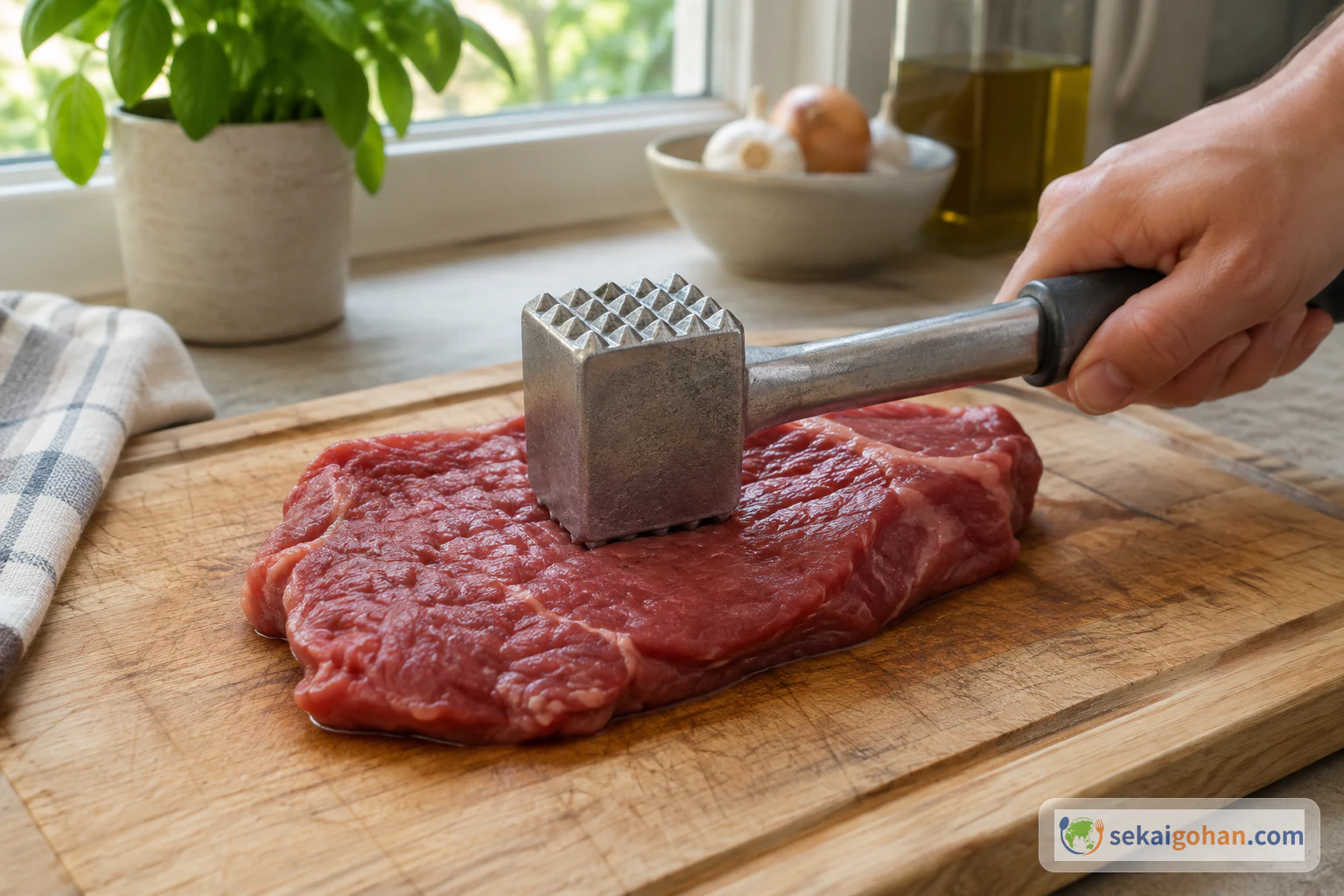
Get the rice and fries ready before anything touches the heat, because the steaks and eggs cook fast and should go to the table hot. Pound and season first, then run the two pans side by side: steak on high-then-medium, eggs on medium.
Once the steaks are in, do not move them. Juice rising on the top face is the signal that the underside has browned and is ready to turn.
Cook eggs until both the white and the yolk are firm. A runny yolk carries a risk of salmonella, though only a small number of eggs are affected. Lay the steaks in away from you, and crack the eggs low over the pan so the oil does not spit.
When It Goes Wrong
| What you see | Why | What to do |
|---|---|---|
| The steak curls up into a bowl shape in the pan | The fibres were not loosened | Pound each steak lightly all over before seasoning |
| The steak turns grey and sits in liquid instead of browning | The pan was not hot enough when the meat went in | Heat the skillet over high heat first, then turn down to medium only after the steaks are in |
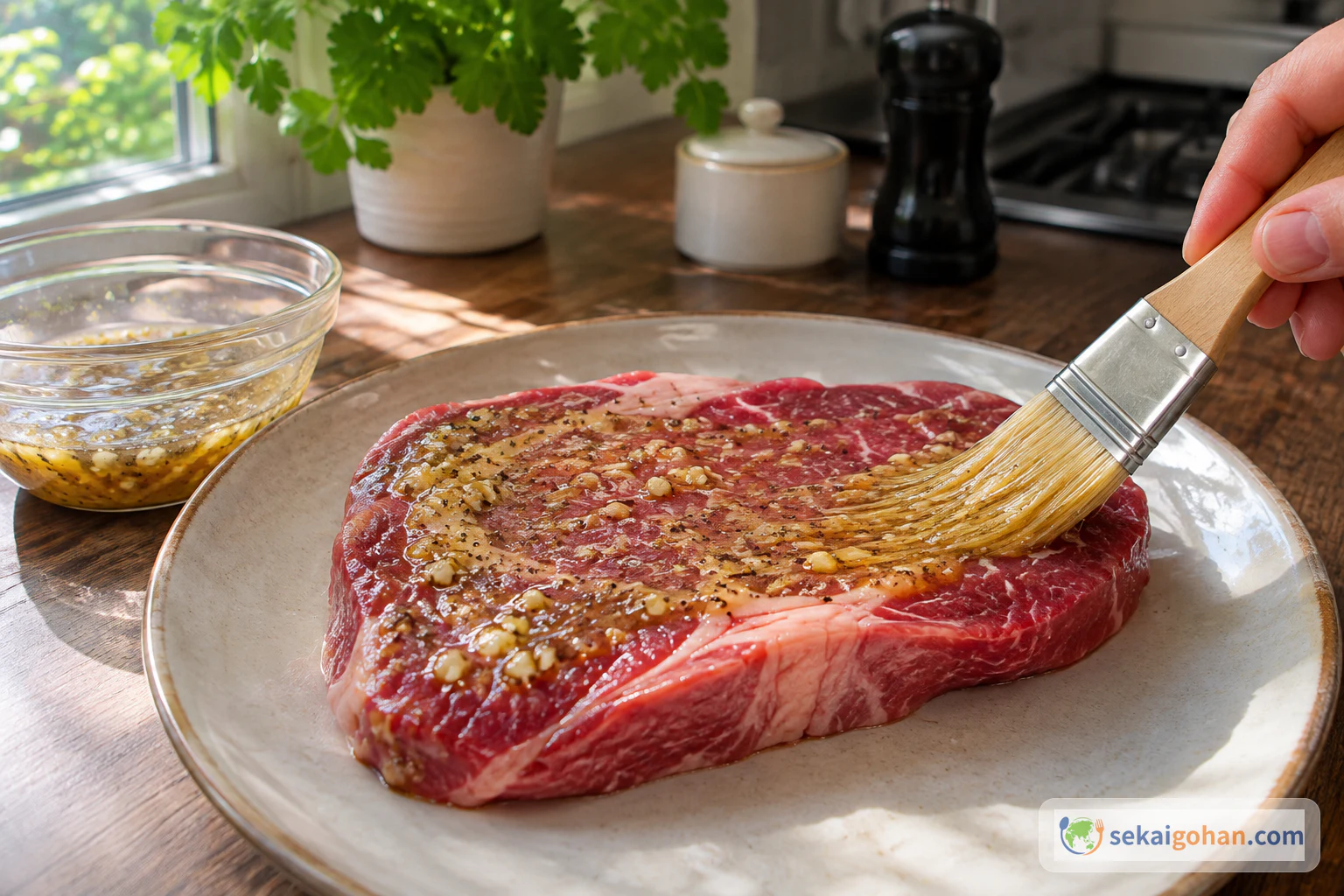
| The rub burns in dark spots | Thick lumps of paste or patches with no oil | Brush the paste on thin and even, with oil over the whole surface |
| Bits of garlic in the rub | The paste was not ground long enough | Keep grinding until it is smooth before adding the orange juice |
| The yolk breaks on the way to the plate | The egg was cracked from too high or lifted by its edge | Crack it low over the pan and lift it from the centre with a wide spatula |
Serving, Variations and Storage
At the table
Bife a cavalo is a one-plate meal: steak, egg, white rice and fries together, with caramelized onion and a simple salad beside it when you want more. Cut into the steak with the egg and take a bit of each in one forkful, with rice to catch the juices.
Variations
- Tomato sauce on top. Soften half an onion with two cloves of garlic, add two sachets of tomato sauce and the same volume of water, and simmer for 30 minutes. Layer rice, steak and egg, and spoon the sauce over everything. The plate turns saucier and sweeter, and the rice soaks up the sauce.
- Garlic-only rub. Leave out the orange juice and season with salt, garlic and black pepper alone. The flavour gets plainer and more peppery.
- A crowd plate. For six people, use eight steaks (contrafilé or alcatra) and ten eggs, season with salt, garlic and pepper, rest them for 30 minutes, and cook the steaks one at a time. Serve with fries cut into sticks.
- Portuguese-style. Ham, beer and mustard make a sauce under the egg. This is a different dish built on the same "on horseback" idea.
Storage
Keep raw eggs in the refrigerator at 40°F (4°C) or below, and never leave eggs at room temperature for more than 2 hours.
Frequently asked questions
Can I leave the yolk runny?
The safe way is to cook it until both the white and the yolk are firm. A runny yolk carries a risk of salmonella, even though only a few eggs are affected. Cook the egg gently over medium heat so the yolk firms without the white turning tough.
Do I need the orange juice?
No. The orange juice is optional. It adds a light brightness and helps soften the meat. Without it the rub tastes of garlic and pepper alone, and the steak is just as much a bife a cavalo.
Can I cook both steaks in one pan?
Yes. Two steaks of this size fit in a medium skillet. For a bigger batch, cook the steaks one at a time so the juice they give off does not steam the ones next to them.