Caipirinha: Lime, Sugar, Ice and Cachaça in One Glass
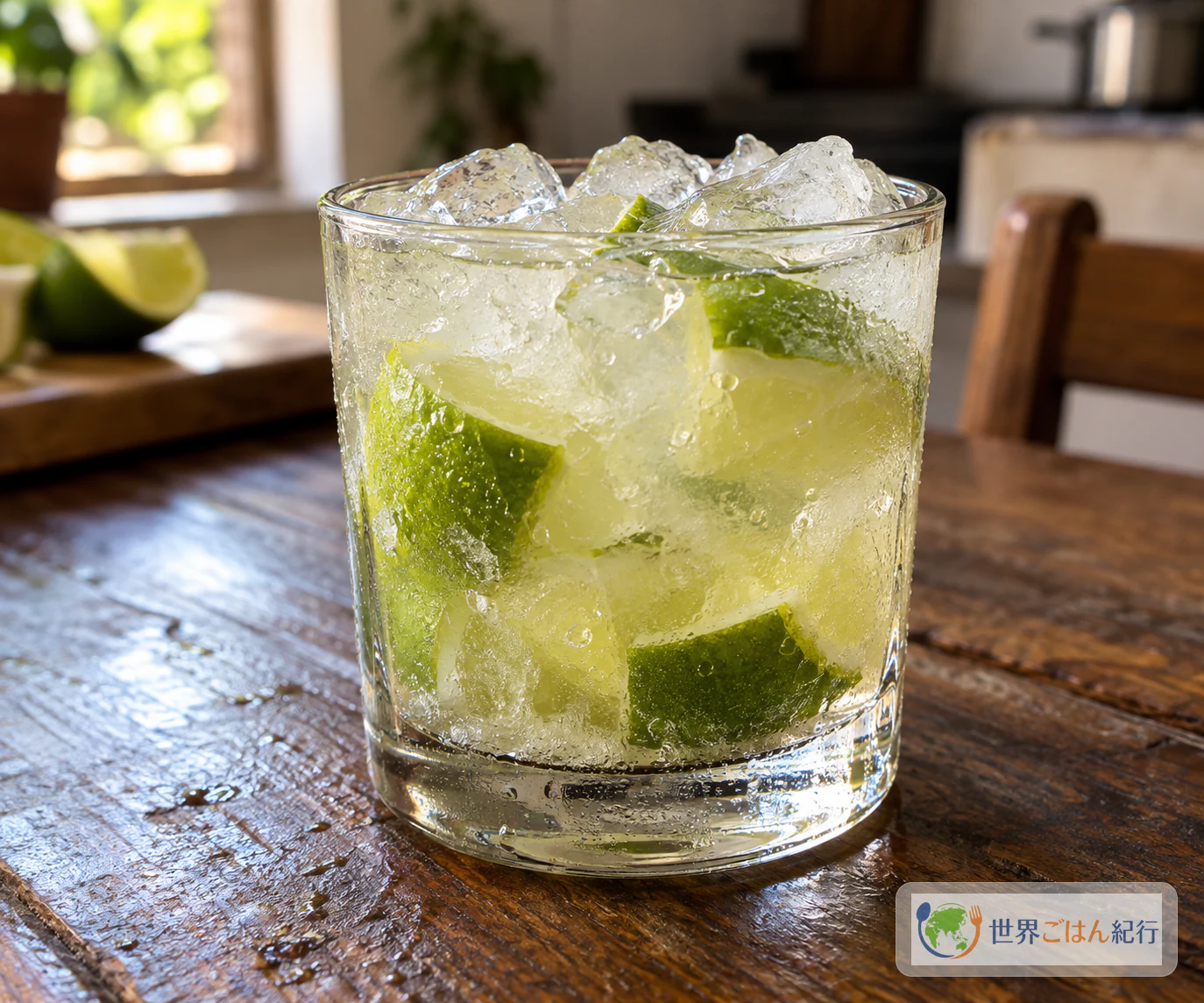
The aroma of the cachaça, the sourness and fragrant peel of the lime, and the sweetness of the sugar, cooled by cracked ice. Muddle gently, stir gently, and drink it soon after you make it.
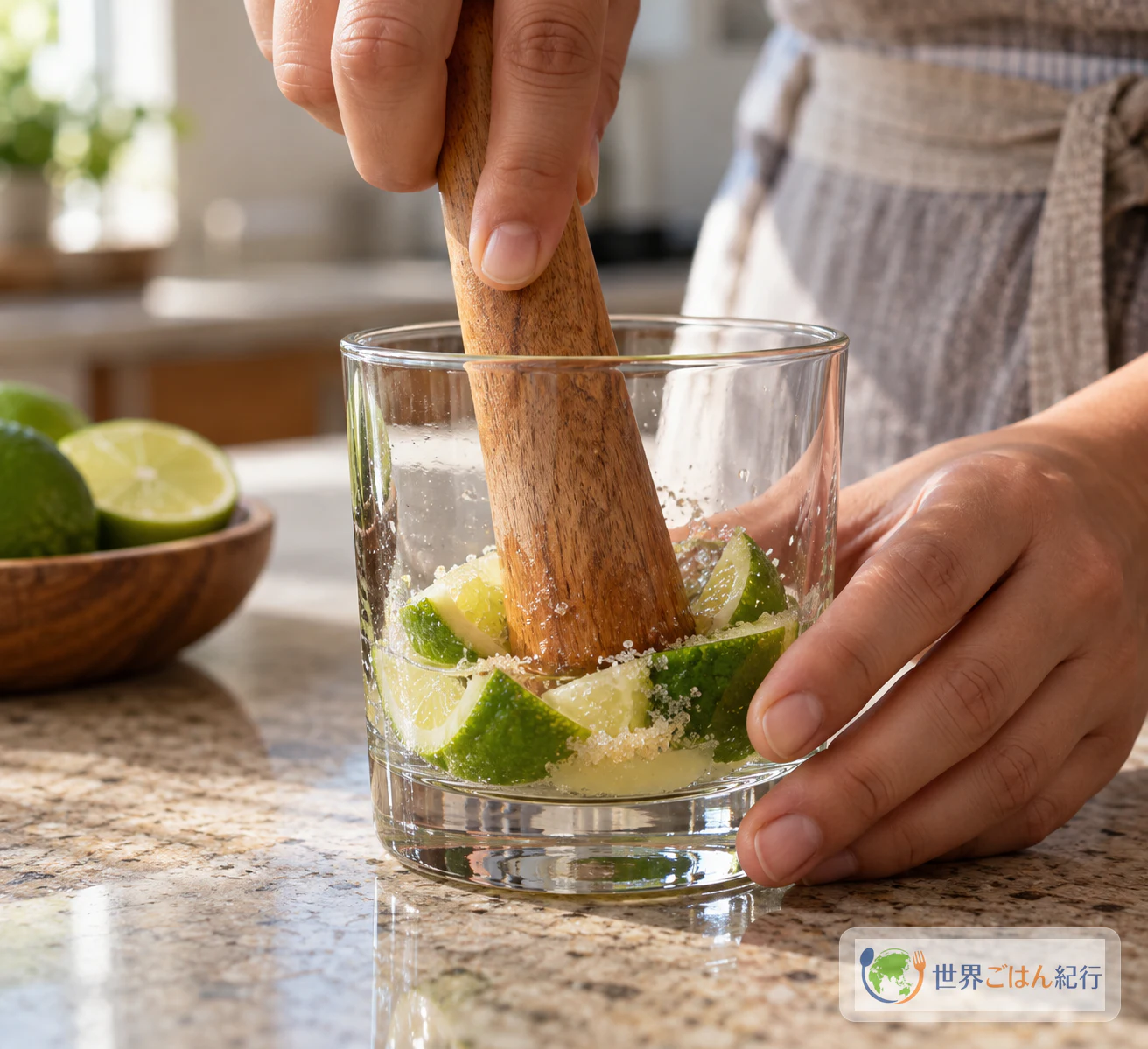
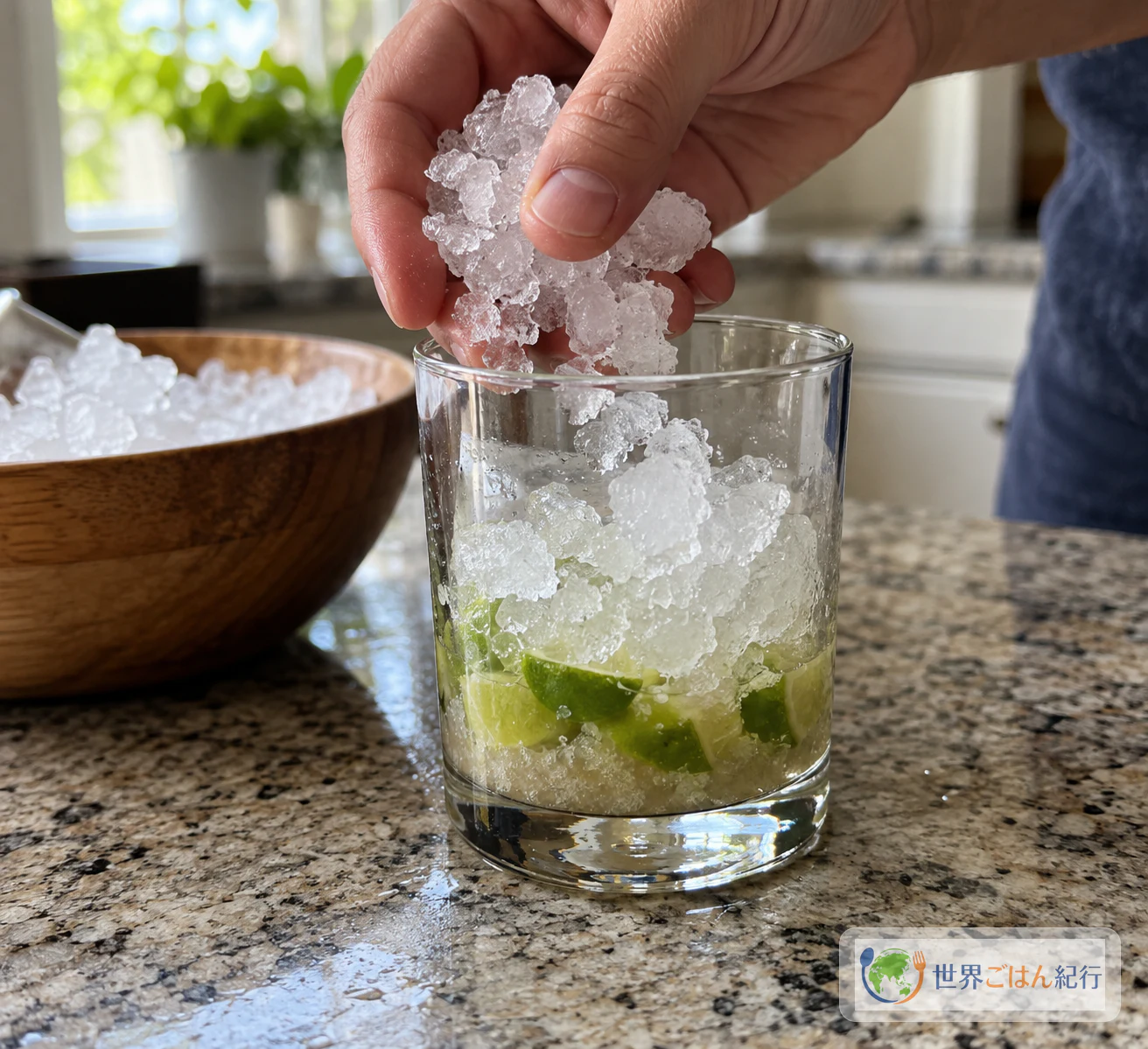
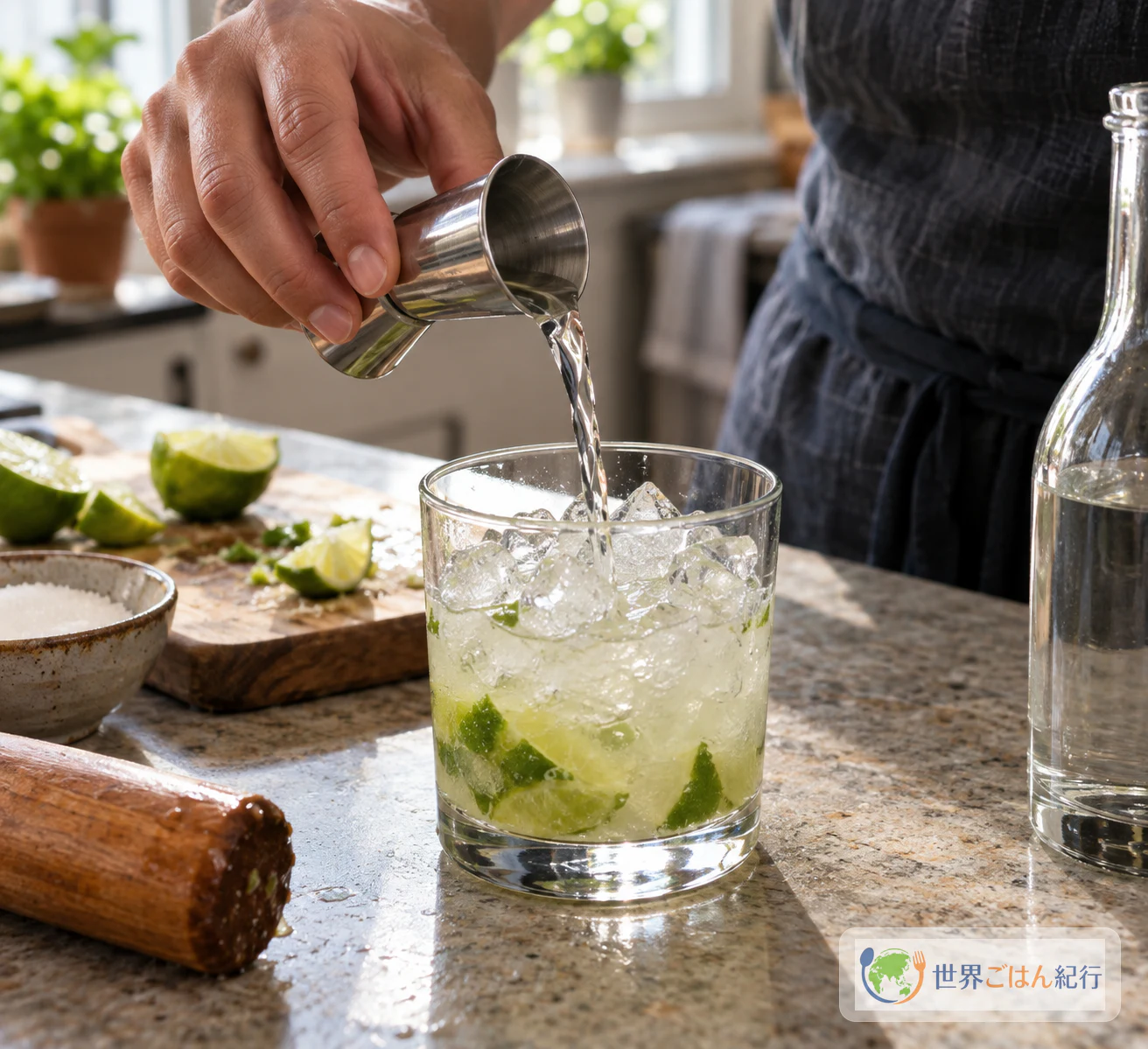
Lime wedges and sugar go into the bottom of a short glass. You press them until the juice runs and the sugar turns damp. Then the glass is filled with coarse ice and the cachaça is poured over it. The Associação Brasileira de Bartenders (ABB) presents the caipirinha as Brazil's cocktail and publishes it as an official IBA (International Bartenders Association) cocktail.
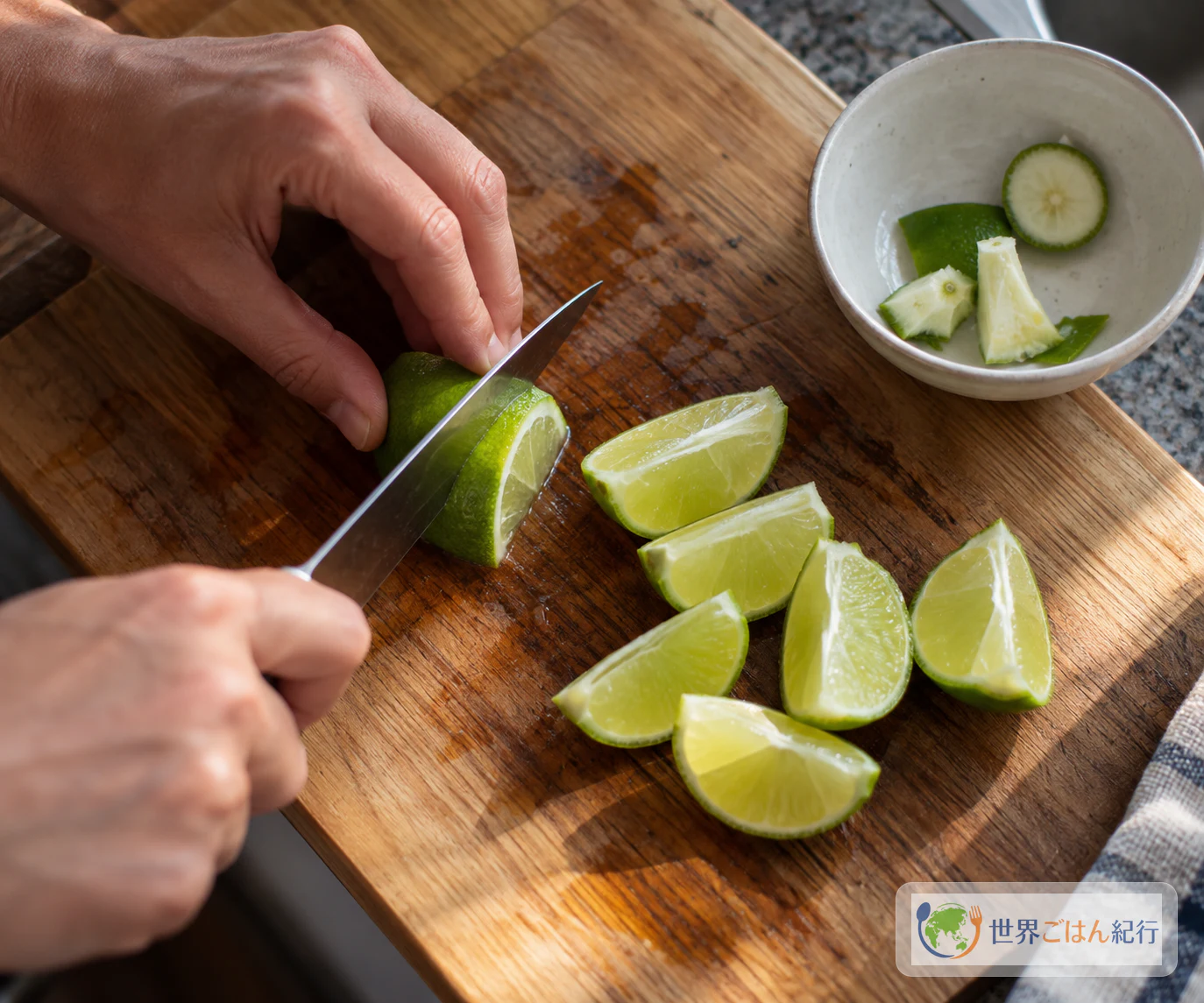
The shopping list is short: cachaça, one lime, white cane sugar and ice. Everything happens in the glass you drink from, so you do not need a shaker or any special bar tools. What makes the difference is in the hands. It depends on how you cut the lime, how hard you press the peel, and how you stir once the ice is in.
What Is a Caipirinha?
A caipirinha brings together cachaça, lime (limão in Portuguese), sugar and ice. Cachaça is a Brazilian spirit made from sugarcane. The Kitchn describes it as a spirit distilled from fermented sugarcane juice. The Portuguese spelling cachaça is kept here, because the spirit is central to the drink and is not interchangeable with other spirits.
The IBA keeps the caipirinha separate from drinks that follow the same method with a different spirit. Made with vodka, it is called a Caipiroska. Made with rum, it is a Caipirissima. The spirit defines the drink, so a version without cachaça is a related cocktail with its own name, not a caipirinha.
The origin, inventor and etymology of the caipirinha are not covered in this article.
Ingredients for One Glass
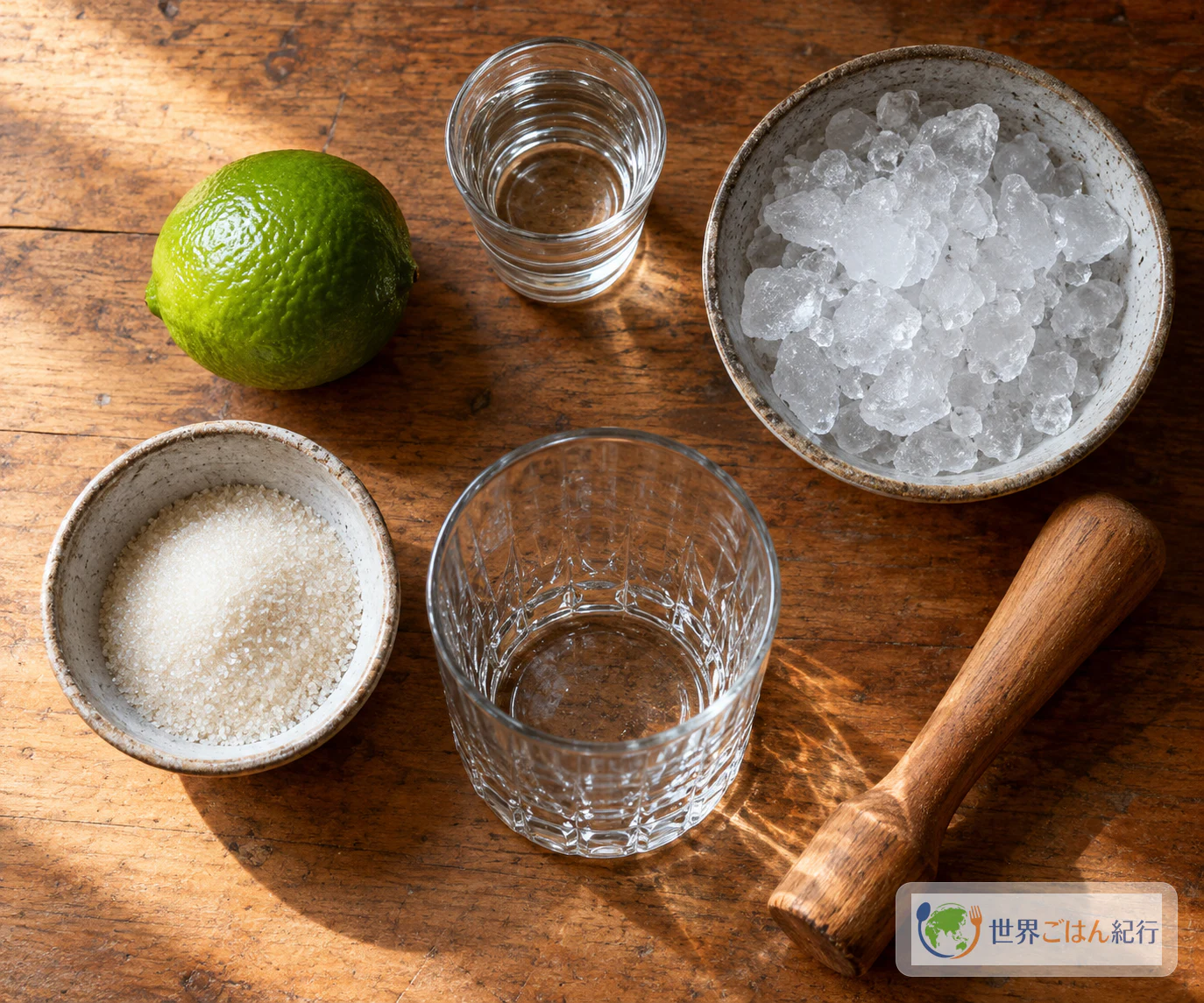
These are the IBA proportions. Other recipes use different amounts, for example 50 ml cachaça and 2 tablespoons of sugar with one lime. For a first glass, start with the amounts below.
Equipment
- A rocks glass (double old fashioned size)
- A bar muddler, or a wooden spoon
- A knife and cutting board
- A measure for the cachaça
- A spoon for stirring
You do not need to buy a muddler for this drink. The handle end of a wooden spoon works.
Choosing and Substituting
Cachaça. Look for it by its general name, cachaça. If you cannot find it, you can make the same drink with vodka or rum. It will taste different, and it will be a Caipiroska or a Caipirissima rather than a caipirinha. This article does not estimate how strong any of these versions are.
Lime. Limes differ in size and sourness depending on where they come from and their variety. One lime from your shop may give more or less juice than one somewhere else. That is why tasting matters more than adjusting the amounts in advance.
Sugar. Keep the sugar at 4 teaspoons. Do not switch it to tablespoons or to a weight in grams.
Ice. Cracked ice means coarsely broken pieces, not fine, snow-like shaved ice. You can use ordinary ice cubes instead. The drink will chill and dilute differently.
Garnish. The IBA specification does not include a garnish. If you add a lime wheel or mint for looks, that is your own touch, not part of the recipe.
A caipirinha contains spirits. This article does not give its alcohol strength or calories. The amounts in the recipe say nothing about how much is safe to drink. How strong a glass tastes also changes with the amount of ice and the lime.
How to Make a Caipirinha
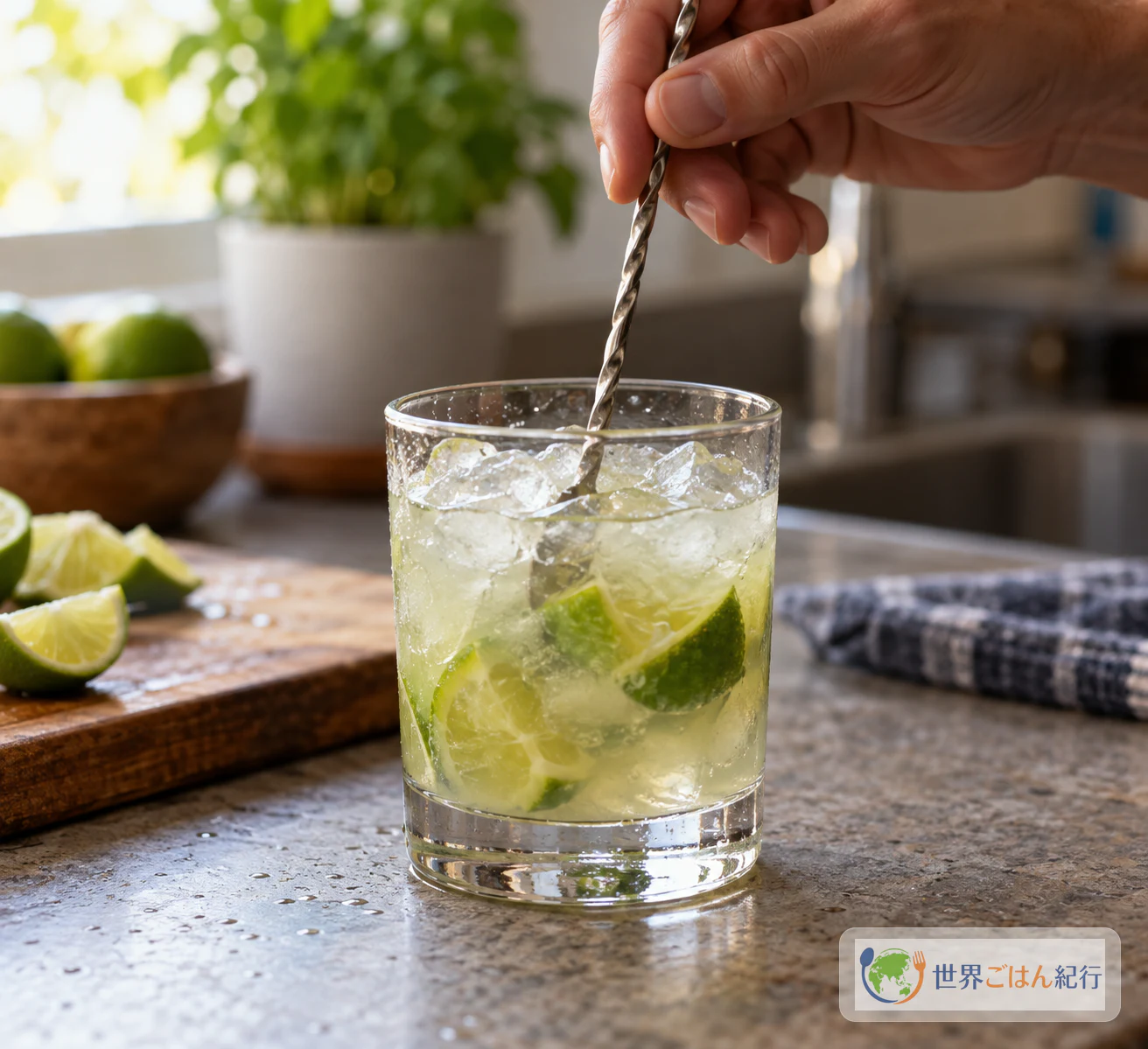
Everything is built in the serving glass. Muddle the lime gently and stir rather than shake. Then serve it right away.
Tips and Fixes: Bitterness, Dilution and Balance
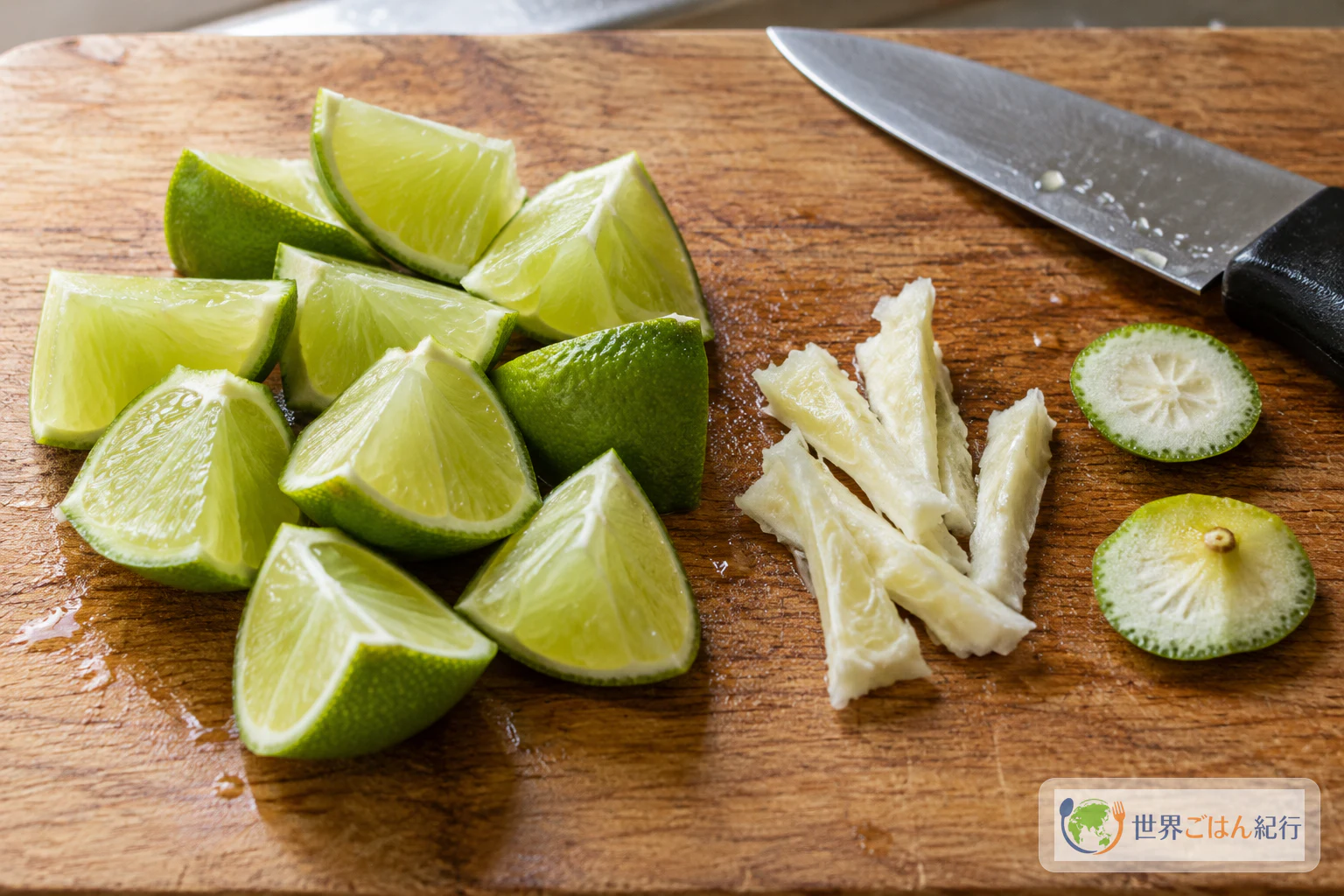
How the lime is cut and how hard the peel is pressed affect the bitterness of the finished drink.
| Problem | Likely cause | What to do |
|---|---|---|
| Too bitter | The tips or hard core went in, or the peel was crushed hard | Remove the tips and core, and press only until the juice runs |
| Watery | The ice was stirred roughly or knocked against the glass, or the drink sat before serving | Stir quietly in a circle and drink it soon after making. A caipirinha is not made ahead or kept |
| Too sweet or too sour | Limes vary in size and sourness | Taste. For a first glass, keep to the base amounts and adjust a little next time |
Variations
The basic drink has only four components, so changing any one of them changes the glass noticeably.
- The ice. Cracked ice and whole cubes chill and dilute differently, so the drink feels different from the first sip to the last.
- The lime. A more sour lime tightens the sweetness, and a milder one lets the sugar come forward.
- The spirit. Made with vodka instead of cachaça, the drink is a Caipiroska. Made with rum, it is a Caipirissima. Both are useful for comparison, but they are separate cocktails with their own names. Keep "caipirinha" for the cachaça version.
At the Table
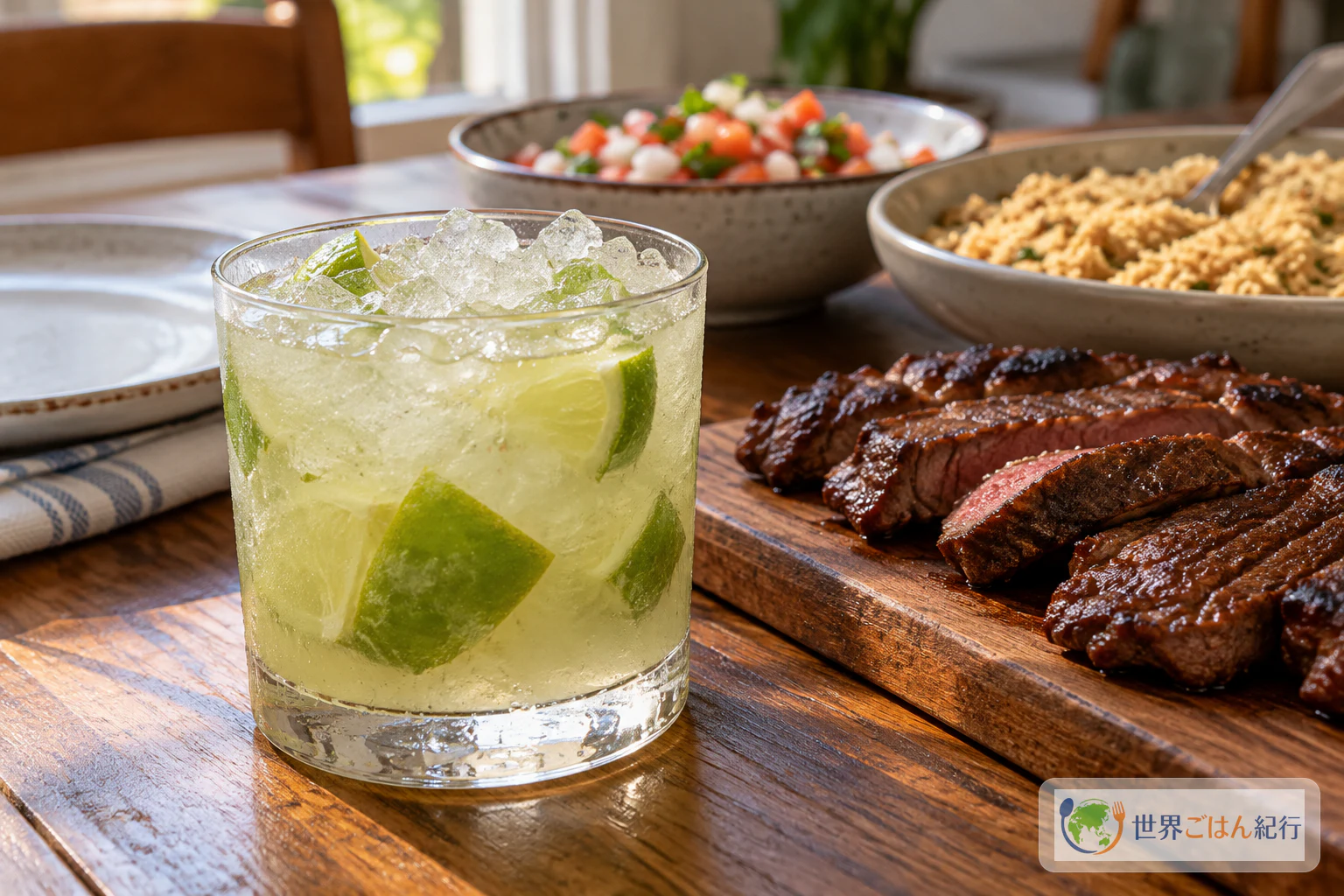
A caipirinha is easy to put together while a meal is on the table. It takes one glass and a few minutes, and the lime's sharpness sits well next to grilled meat and shared plates. If the drink is the star, keep the food simple and let the lime and cachaça come through.
The proportions differ between the IBA specification and other recipes, such as the Rio guide's. A home cook can treat the IBA version as a reference point and treat other recipes as other people's glasses, not mistakes.
Frequently Asked Questions
What can I use if I don't have cachaça?
Vodka or rum, made the same way, but the drink changes its name. With vodka it is a Caipiroska, and with rum a Caipirissima. The flavor also changes, because the cachaça's aroma is central to a caipirinha.
How much should I crush the lime peel?
Only until the juice comes out and the sugar is moist. If you grind the peel to a pulp, the drink tends to turn bitter. Cutting off the tips and removing the hard central core first also helps.
Can I make it without cracked ice?
Yes. Ordinary ice cubes work, but the drink will chill and dilute differently than with coarsely cracked ice. Avoid fine, snow-like shaved ice.
Is there an official garnish?
No. The IBA specification does not list one. A lime wheel or mint is fine if you like, but it is a decorative extra, not part of the recipe.
Should I shake it?
No. A caipirinha is built in the glass and stirred gently with a spoon. Rough handling breaks up the ice and waters the drink down.
Explore more dishes from Brazil, including churrasco and feijoada, for ideas for a shared table.
Sources
- International Bartenders Association, "Caipirinha." The IBA specification of 60 ml cachaça, one lime and 4 tsp white cane sugar; gentle muddling in the glass, then cracked ice and cachaça, stirred gently; the names Caipiroska (vodka) and Caipirissima (rum) for the versions with other spirits. https://iba-world.com/iba-cocktail/caipirinha/
- Associação Brasileira de Bartenders (ABB), "Caipirinha — Receita Oficial IBA." The caipirinha published as an official IBA cocktail by Brazil's bartenders' association, with the same proportions and method. https://abbartender1970.com/coqueteis/caipirinha
- Rio de Janeiro by Cariocas / Luiz Felipe Sandins, "How to make an authentic Caipirinha." Removing the lime tips and central core to limit bitterness, muddling gently, stirring in a circle, and not knocking the ice hard; a different recipe using 50 ml cachaça and 2 tablespoons of sugar. https://riodejaneirobycariocas.com/how-to-make-an-authentic-caipirinha/
- The Kitchn, "3-Ingredient Brazilian Caipirinha." A single-serving method finished in a rocks glass, and cachaça described as a spirit distilled from fermented sugarcane juice. https://www.thekitchn.com/brazilian-caipirinha-recipe-23540555