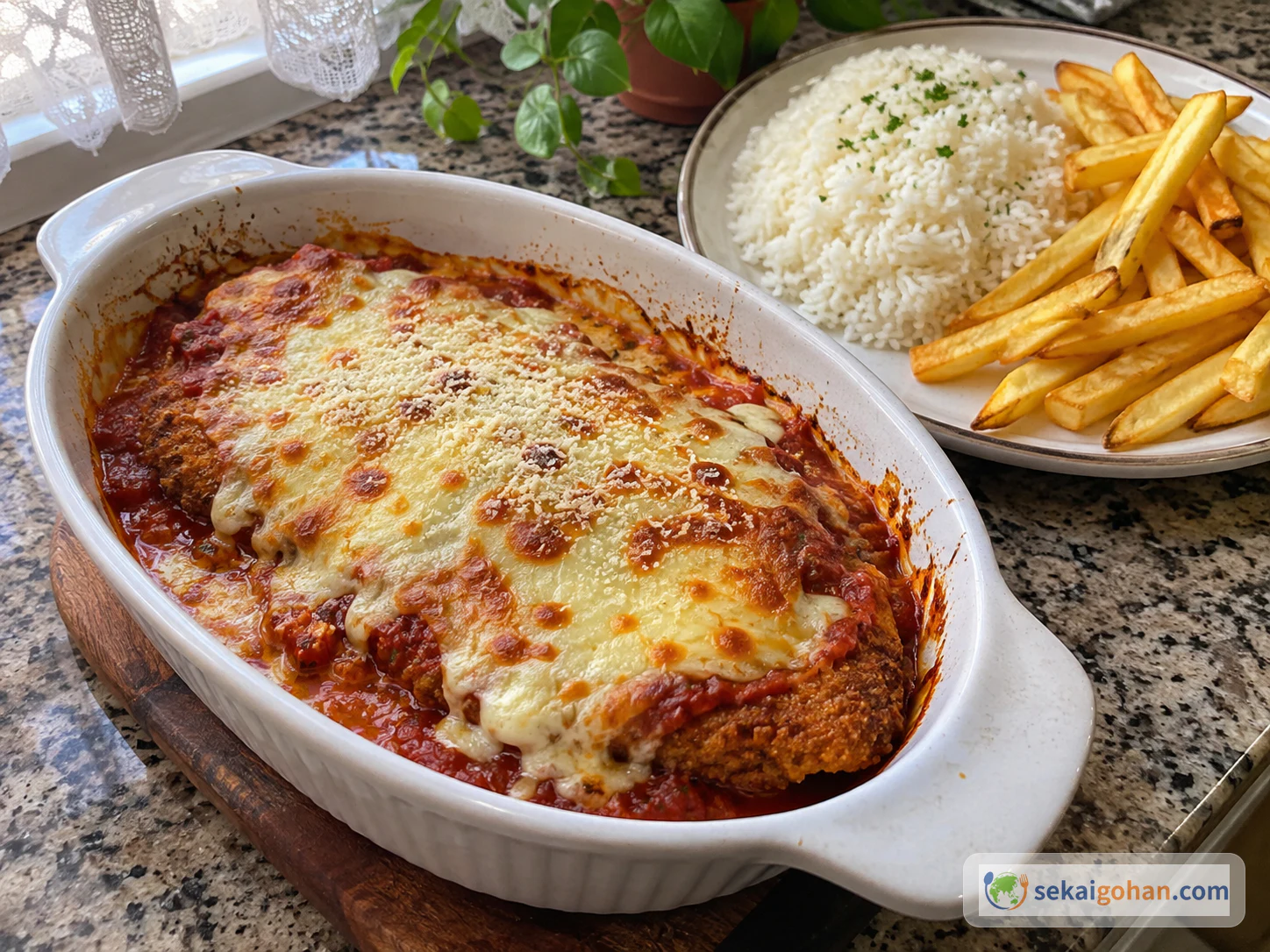
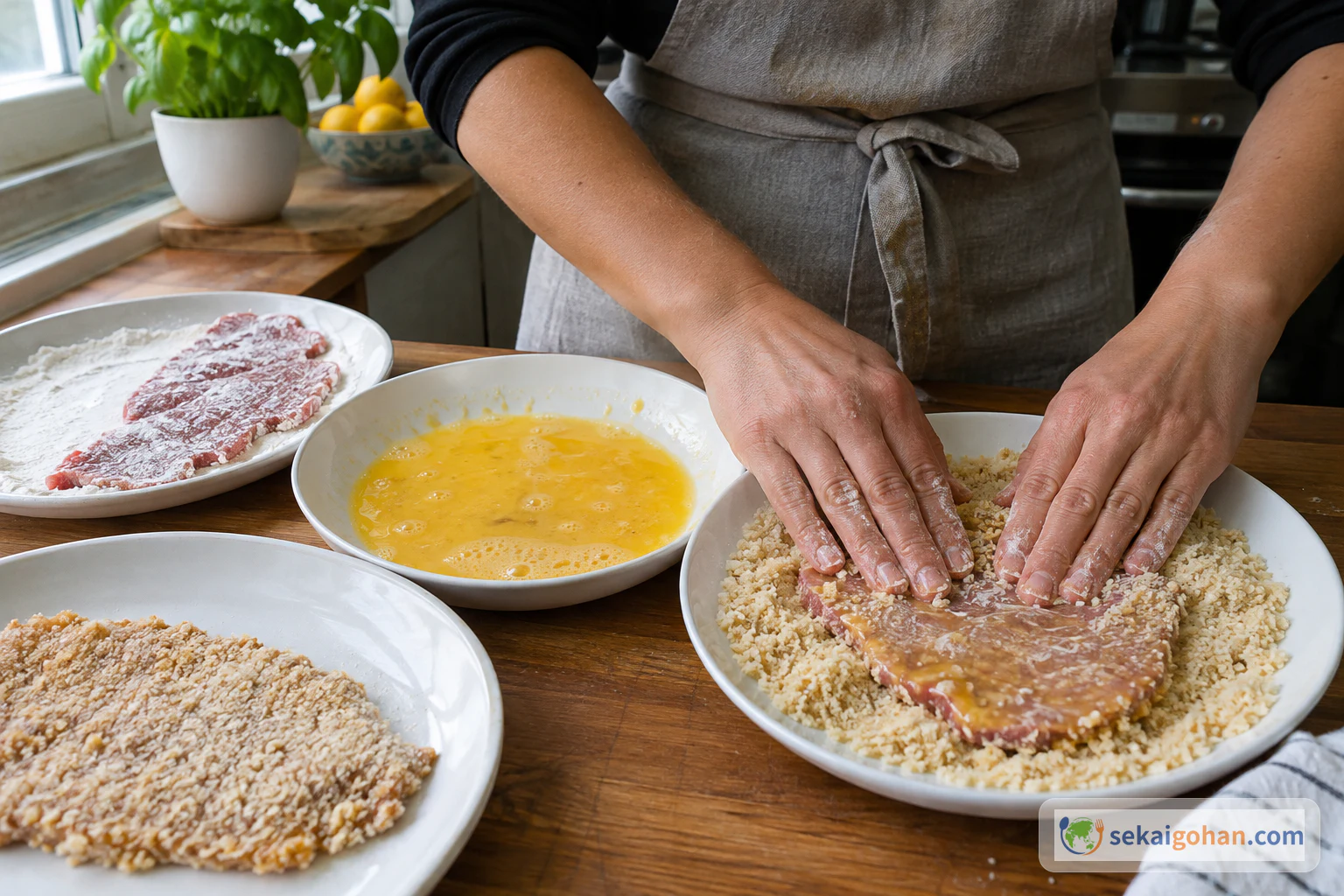
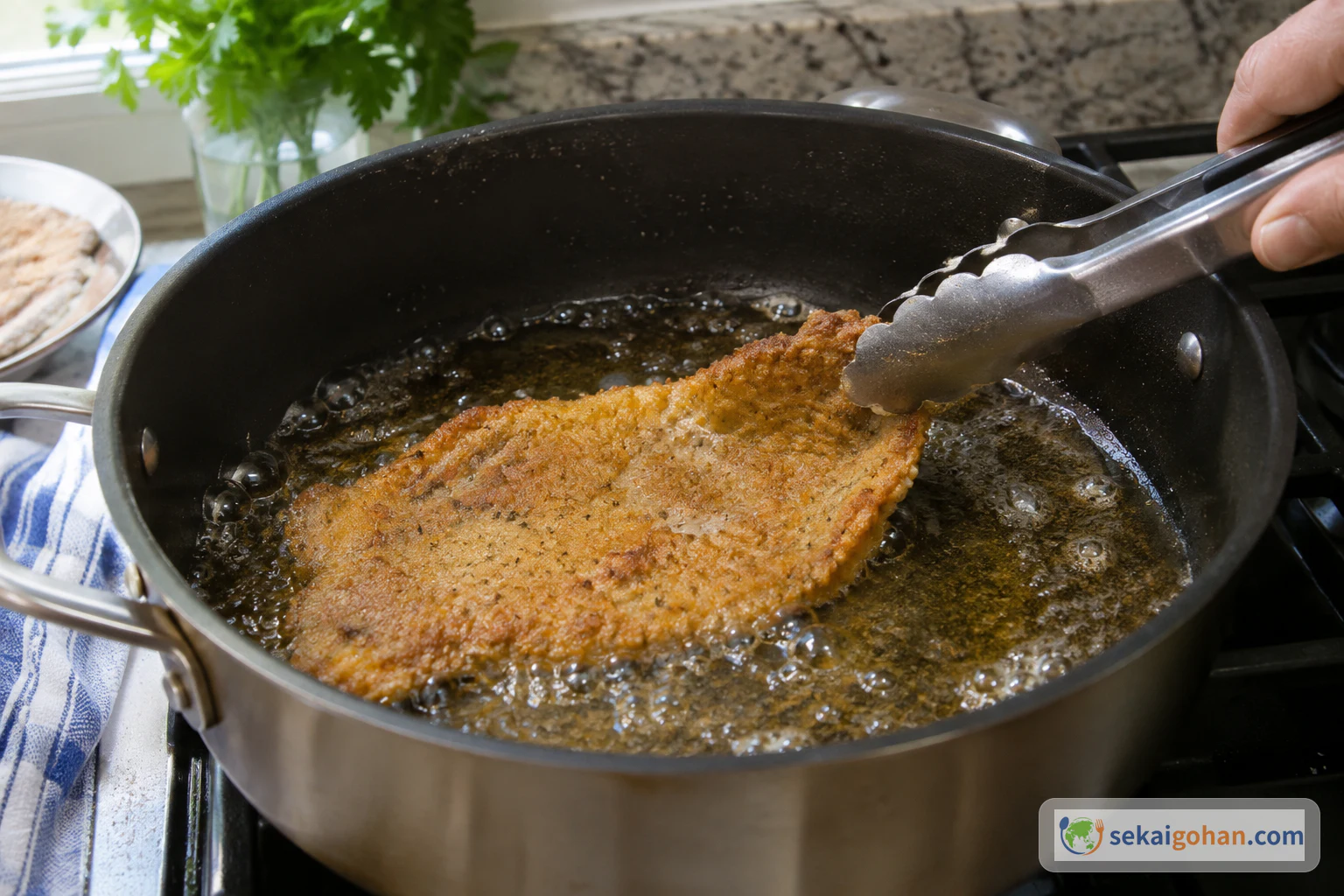
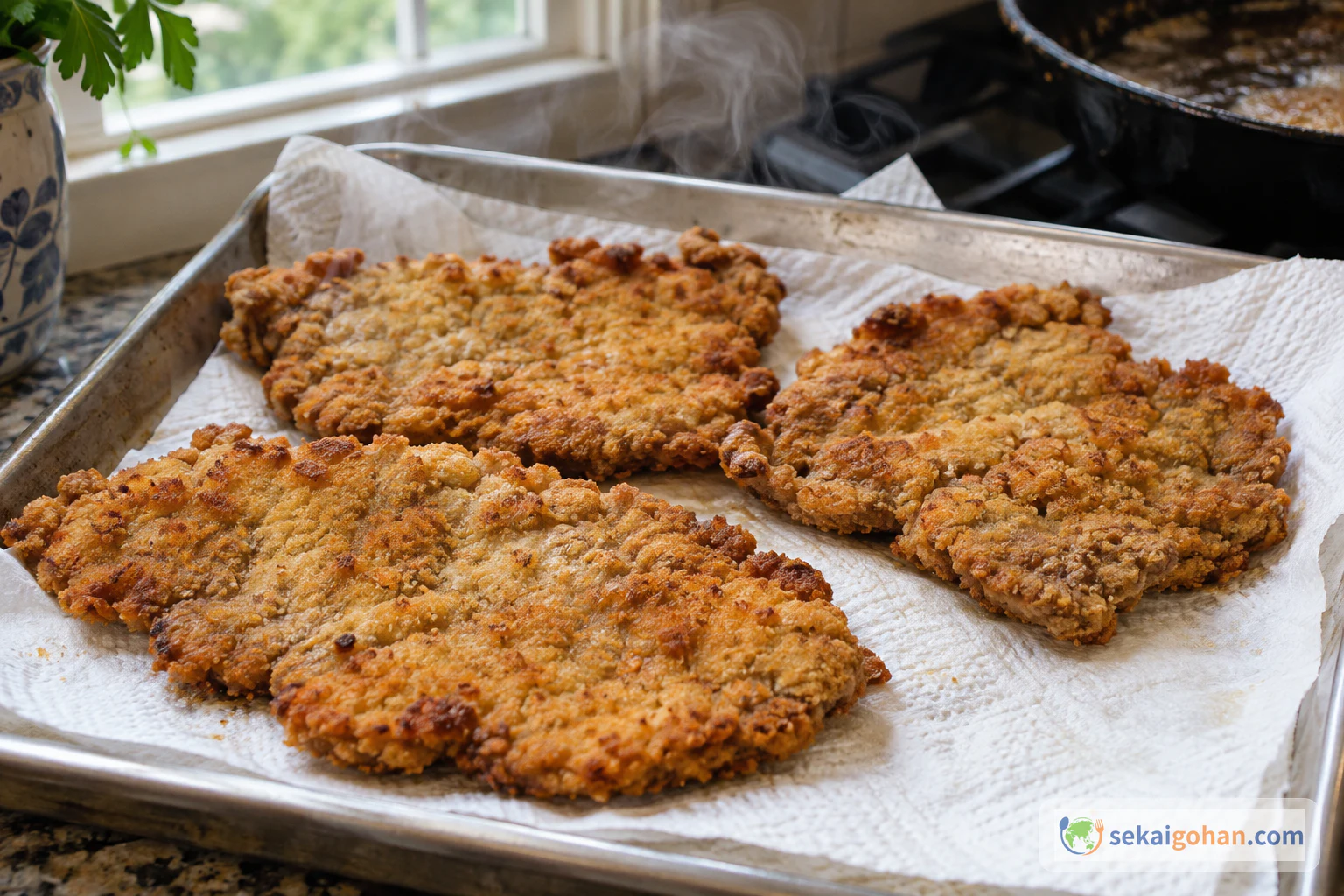
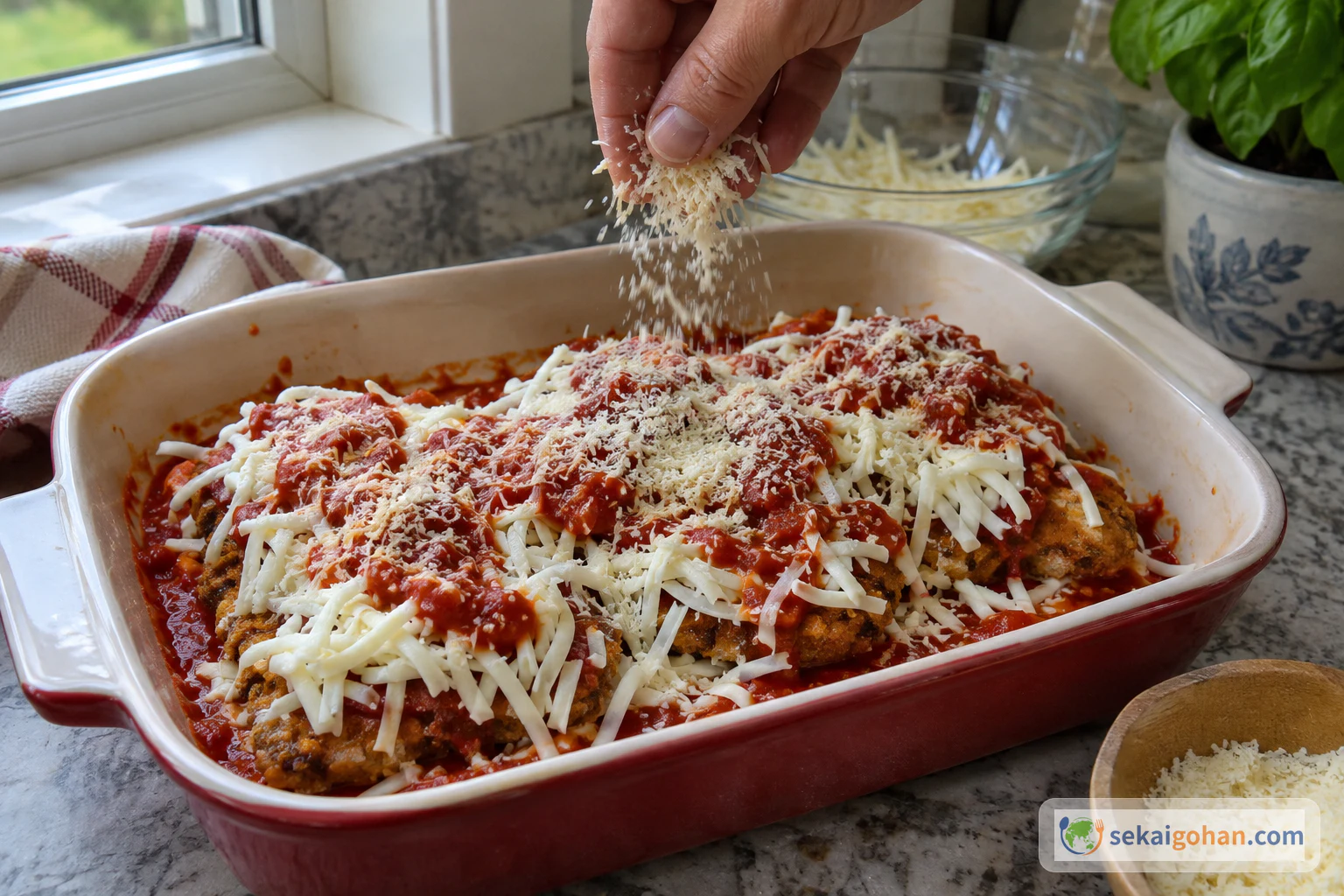
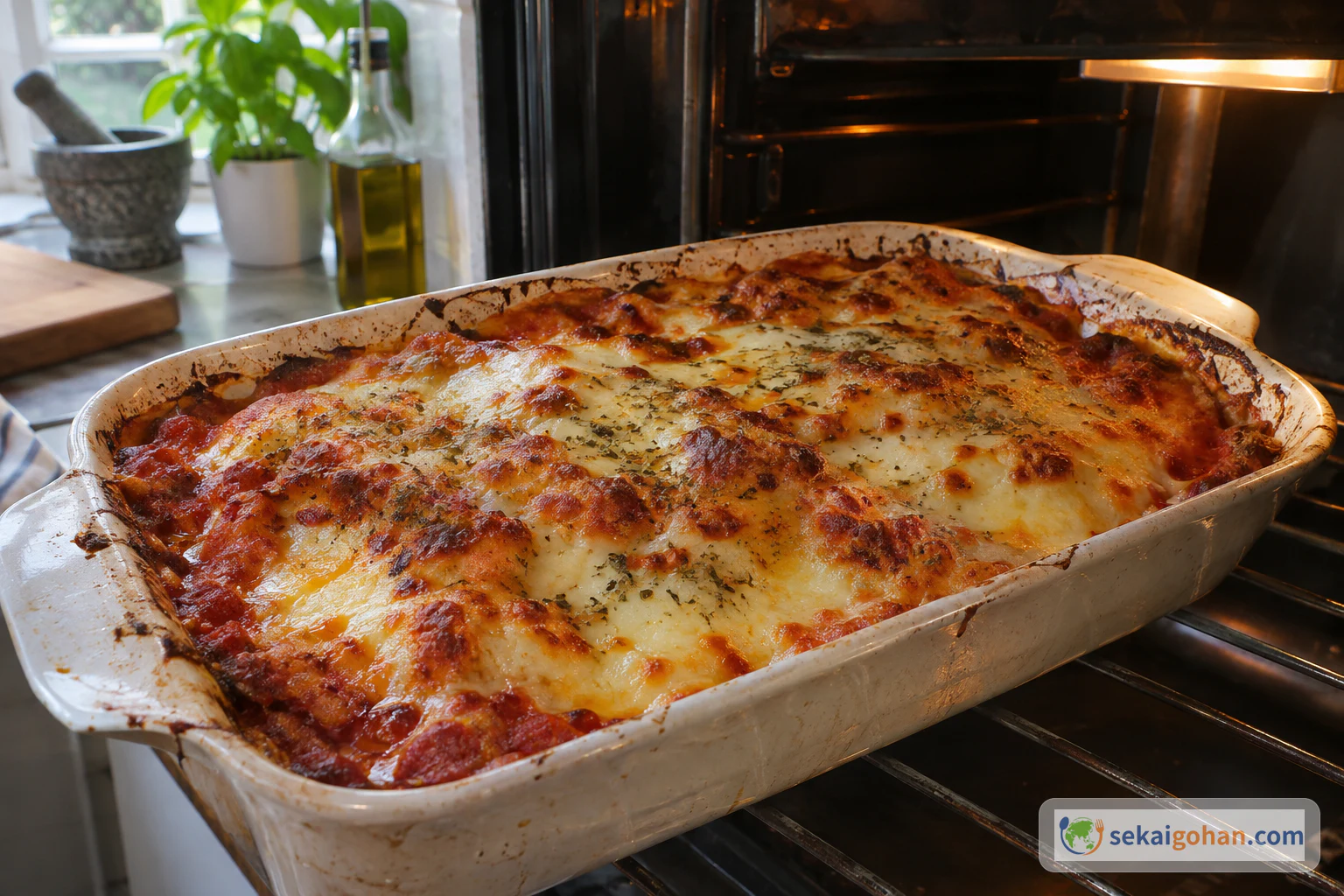
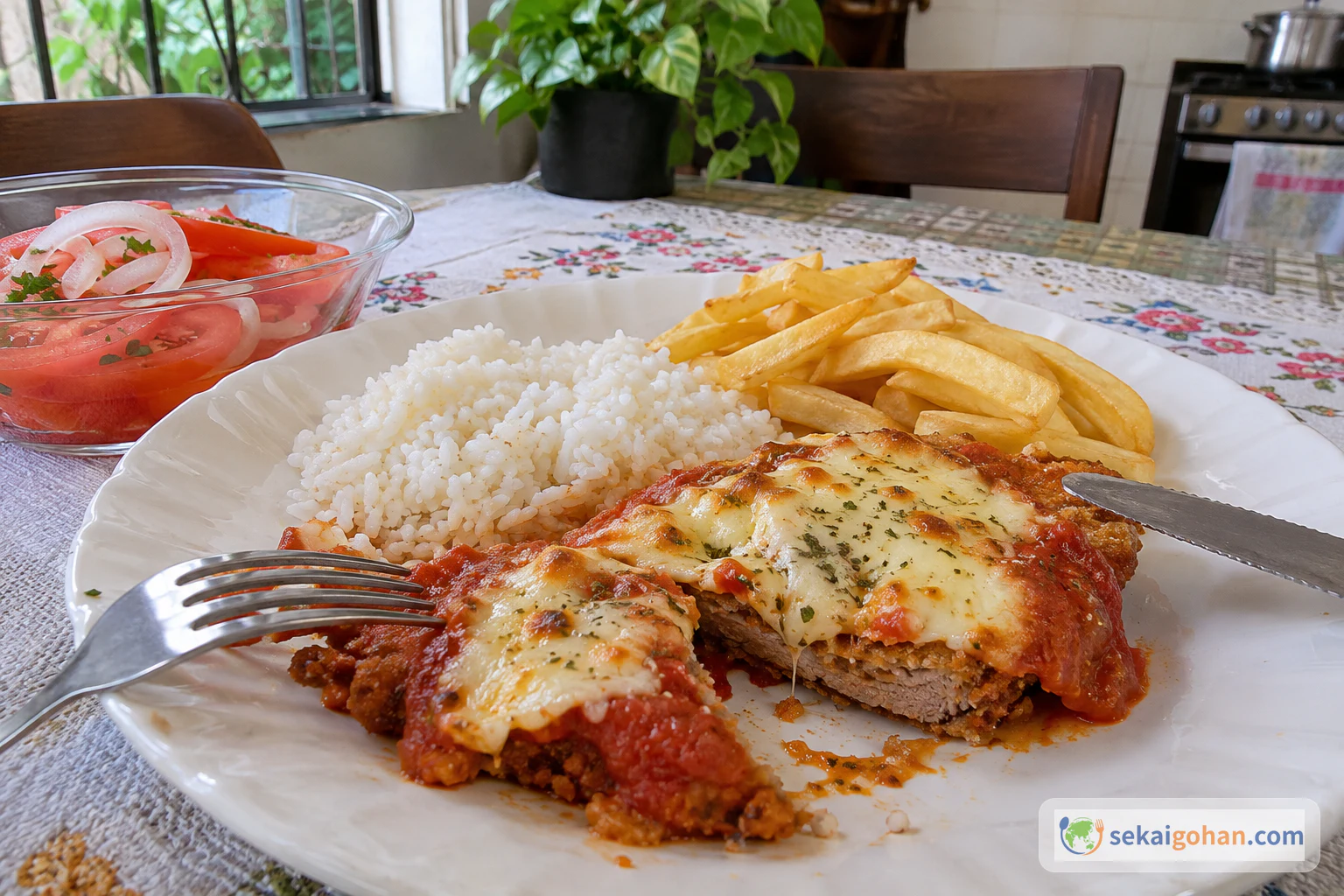
A pinch of breadcrumbs goes into the hot oil and foams up at once. That foam tells you the pan is ready. The breaded steak goes in and comes out pale gold, still a little steamy, after less than a minute and a half. Twenty-five minutes in the oven later, it comes out under red sauce and blistered mozzarella, the cheese still bubbling at the edges. Bife à parmegiana is thin beef coated in flour, egg and fine breadcrumbs, fried quickly, then baked under tomato sauce, mozzarella and parmesan. In Brazil it lands on the plate next to white rice and fries. You get a crunchy, salty crust, soft melted cheese and a sweet-sour sauce soaking into the crumb where they meet.
A Brazilian Dish With an Italian Name
The name sounds Italian, and most people who meet the dish abroad take it for Italian. Italy does not make it, though. It is usually described as a dish first made in São Paulo, which makes it one of a small group of Brazilian plates that look and sound Italian but grew up on the other side of the Atlantic. Who made it first, and when, is not known. Many people think it came from Italian immigrants or their children in the city, but no record confirms it.
The family resemblance is easy to see. The breaded, fried cutlet recalls cotoletta alla milanese. The tomato, mozzarella and parmesan finish recalls parmigiana di melanzane, the layered eggplant bake. Bife à parmegiana joins the two. You get a cutlet that keeps its crunch on the outside while the top goes soft and molten under the grill.
In Brazil it is everyday food. Home cooks make it and casual restaurants serve it, and it comes the same way almost everywhere: rice, fries or batata palha (crisp shoestring potato sticks), and a salad. The breaded meat and potatoes on one plate are what make it filling, and the rice soaks up the extra sauce. Households change it to suit themselves. Some use chicken fillets in place of beef, some use eggplant, and some make a slow onion-and-tomato sauce for the top instead of a ready-made one. You will find more of the country's home cooking on our Brazil page.
You will also see it written filé à parmegiana. "Parmegiana" is often traced back to Parma, the Italian city, but people still argue about it. The dish is better known in Brazil than the debate over where it came from.
Ingredients (serves 3)
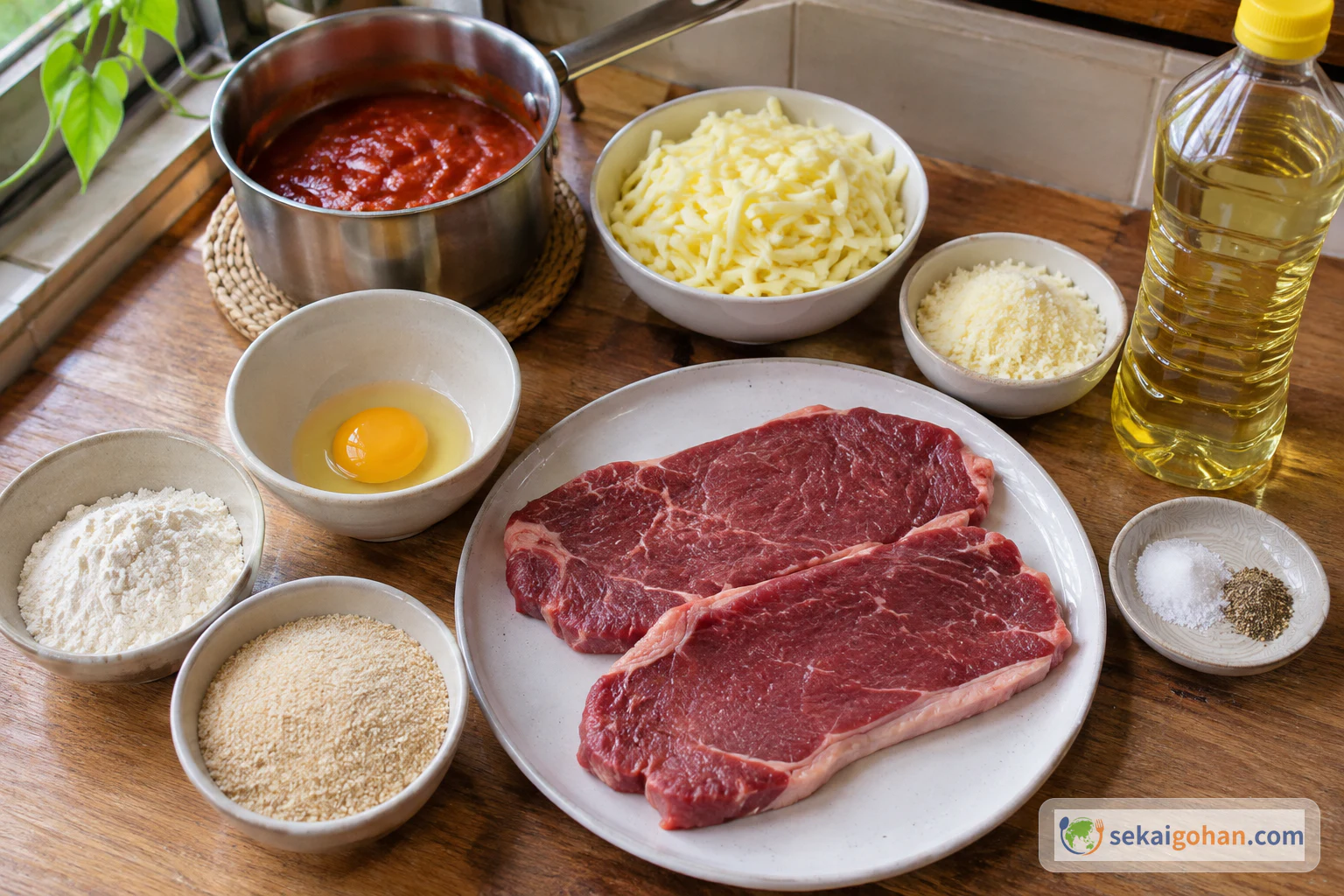
Thickness decides the texture. Slices thinner than about ⅜ inch (1 cm) dry out and turn tough by the time the dish leaves the oven. If your butcher sells thick steaks, ask for them sliced to that thickness, or cut and gently flatten them yourself.
This dish contains egg, wheat and milk. The flour and breadcrumbs carry wheat, the egg goes into the breading, and both cheeses are dairy. Read the label on store-bought tomato sauce and breadcrumbs, which can contain other allergens.
Equipment
- Oven with a grill (broiler) setting
- Heatproof baking dish
- Deep-sided skillet or frying pan
- Metal tongs
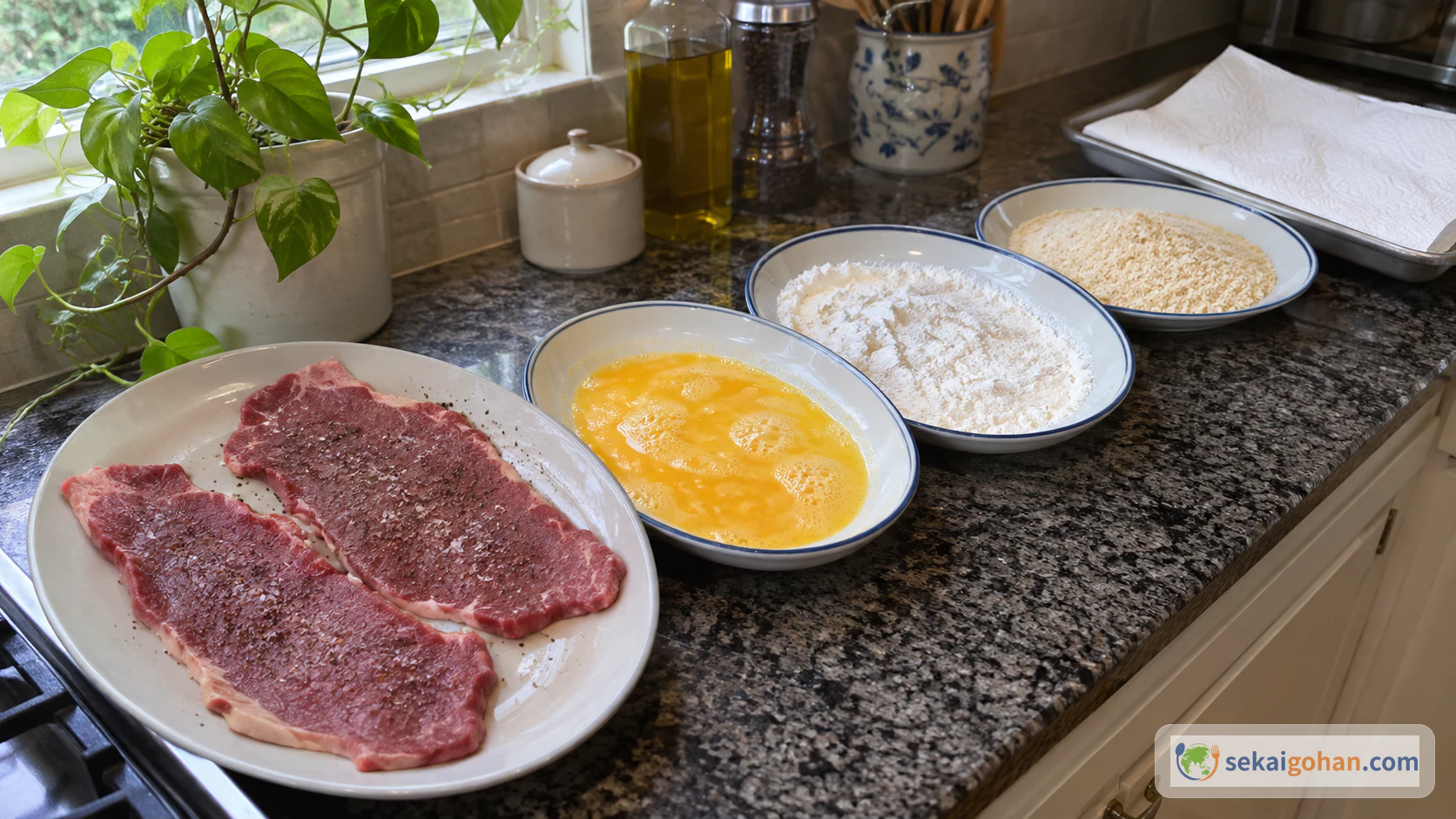
- Three shallow plates for breading
- Baking tray lined with paper towels
- Small saucepan or microwave-safe bowl for the sauce
Choosing and Substituting
Farinha de rosca is fine, dry breadcrumbs, almost a powder. Fine dry breadcrumbs from the supermarket are the closest match. Coarse panko or fresh crumbs make a thicker, shaggier crust that takes up oil differently and does not sit flat under the sauce. If coarse crumbs are all you have, crush them by hand or pulse them in a mill until they are fine.
Brazilian muçarela is a low-moisture cheese, closer to pizza cheese than to the fresh balls packed in water. Shredded low-moisture mozzarella melts and browns the same way. Fresh mozzarella gives off water in the oven and leaves the crust soggy. If you have to use it, drain it well and pat it dry first.
For the tomato sauce, a homemade one is best, but a seasoned store-bought pasta sauce works well. Brands differ a lot in salt, so taste the sauce before you build the dish, keeping in mind that parmesan and the seasoned meat add salt too. For the beef, contrafilé is the strip of the sirloin and alcatra is the rump, so a sirloin or rump steak from any butcher will do. Any neutral oil, such as rice bran or sunflower, works for frying.
How to Make Bife à Parmegiana
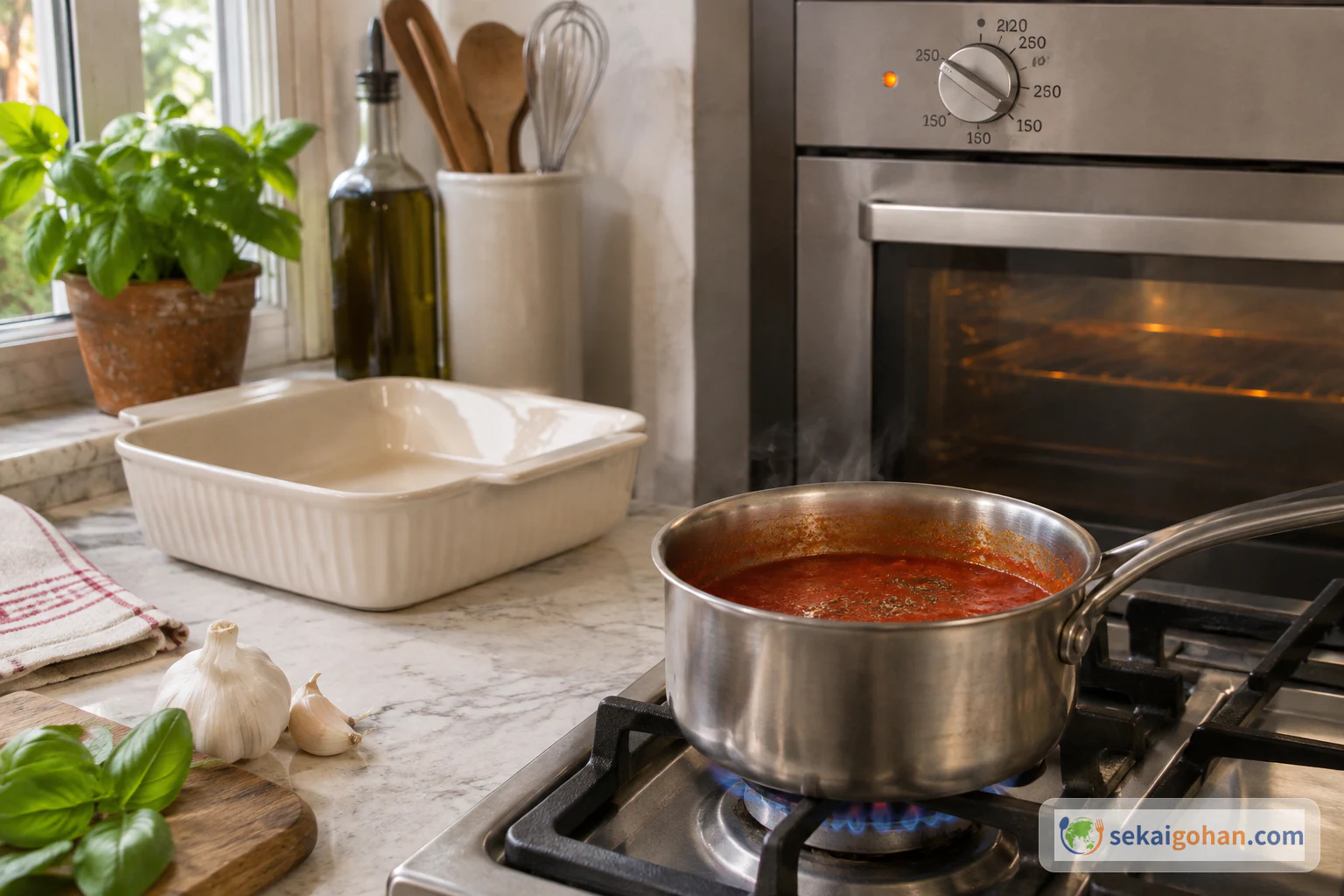
Get the oven heating and the sauce warm first, so everything after the frying moves straight into the dish. Set up your breading line, then fry quickly, about 40 seconds a side, and assemble while the crust is still crisp. The oven time is your only hands-off stretch. Use it to make the rice and fries.
When It Goes Wrong
| What you see | Why | What to do |
|---|---|---|
| The beef is dry and chewy | The slices were cut too thin | Cut or buy steaks about ⅜ inch (1 cm) thick next time |
| The crust slides off in a sheet | Too much flour, wet egg, or crumbs not pressed on | Shake off the flour, let the egg drip, and press the crumbs firmly with your palm |
| The crust comes out pale and greasy | The oil was not hot enough when the steak went in | Wait for the crumb test to foam before each steak |
| The dish is watery and the crust is soggy | Fresh, wet mozzarella, or too much sauce on top | Use low-moisture shredded mozzarella and only a thin spoonful of sauce over the cheese |
| The cheese melted but did not brown | The grill stage was skipped or cut short | Finish under the grill and watch for golden-brown spots |
| The whole dish tastes too salty | Store-bought sauce plus cheese plus seasoned meat | Taste the sauce first. With a salty brand, go lighter on salt for the meat |
Serving, Variations and Making Ahead
On the table
The rice-and-potatoes plate is the classic way to serve it. For a Brazilian-style spread, the salad can be a bowl of sharp vinagrete, and a spoonful of farofa adds toasty crunch to the rice. The cheese and fried crust are rich, so a crisp, sour side does a lot of work on this plate.
Variations
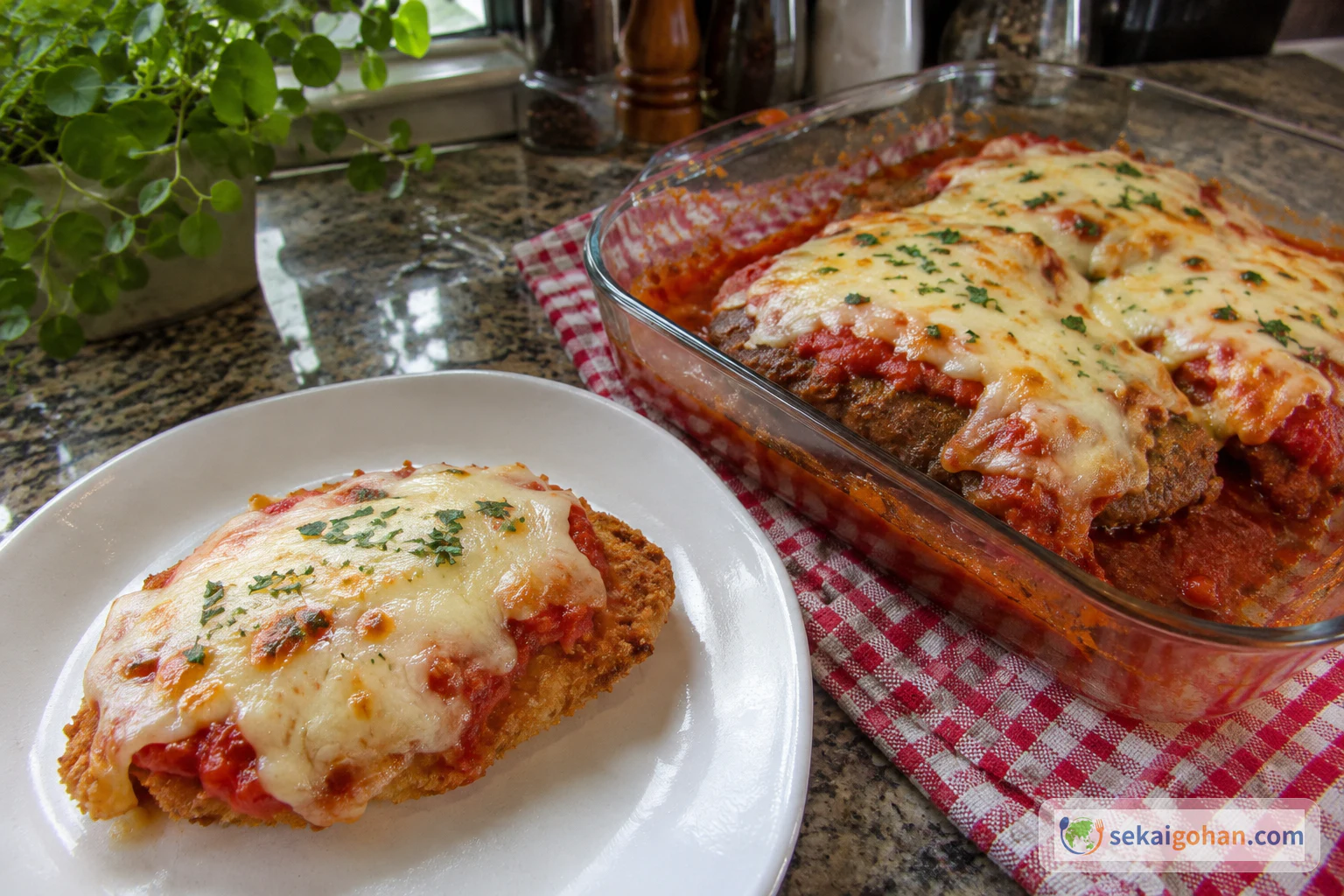
- Chicken fillet instead of beef. Bread and top chicken breast fillets the same way. The result is milder and softer, and the tomato and cheese stand out more. Cut into the thickest piece to check that the chicken is cooked through before serving.
- Garlic and oregano marinade. Some cooks season the meat with garlic, oregano and olive oil before breading, and some poke the meat with a fork. The meat comes out more aromatic, and the marinade carries more flavor than salt and pepper alone. Some also mix cornstarch into the breading to make the crust crunchier.
- Slow onion sauce poured on top. Some households cook onion with tomato paste into a thicker sauce, spoon it over the fried meat, scatter oregano and bake only briefly. The top comes out saucier and sweeter, and the cheese stays softer.
- Eggplant. Breaded eggplant slices turn the dish into a meatless bake, closer to its Italian relative.
Making ahead and storing
You can fry the steaks a day ahead. Keep the fried steaks and the sauce in separate covered containers in the refrigerator, and eat them soon. When you are ready to eat, assemble the dish cold from the refrigerator and bake it as in steps 6 and 7. Check that it is hot all the way through before serving.
Frequently asked questions
Do I need a thermometer for the oil?
No. The breadcrumb test is the cue: when a pinch of crumbs foams up as soon as it hits the oil, the steak goes in. Each steak only fries for a short time, so watching the bubbles and the color of the crust tells you more than a number would.
My oven runs hot. Should I change the temperature?
Some cooks bake the dish at 445°F (230°C) for about 20 minutes, and others give the assembled dish only 5 minutes. Since the meat is already fried, what you are really cooking in the oven is the cheese and sauce. If your oven runs hot, check early and go by the browned, bubbling top, and always cut into a steak to check the center.
Why fry the beef before baking it?
The quick fry sets the crumb crust while the meat stays tender. That crisp layer is what stands up to the sauce and cheese in the oven. If you skip frying and bake breaded raw meat under sauce, you get a soft coating with no crunch.
How many steaks should I make for three people?
The beef can be two large steaks or several smaller ones. For one piece per person, cut it into three portions of similar size before breading. Smaller pieces fry and bake at the same pace, as long as they keep the same thickness.