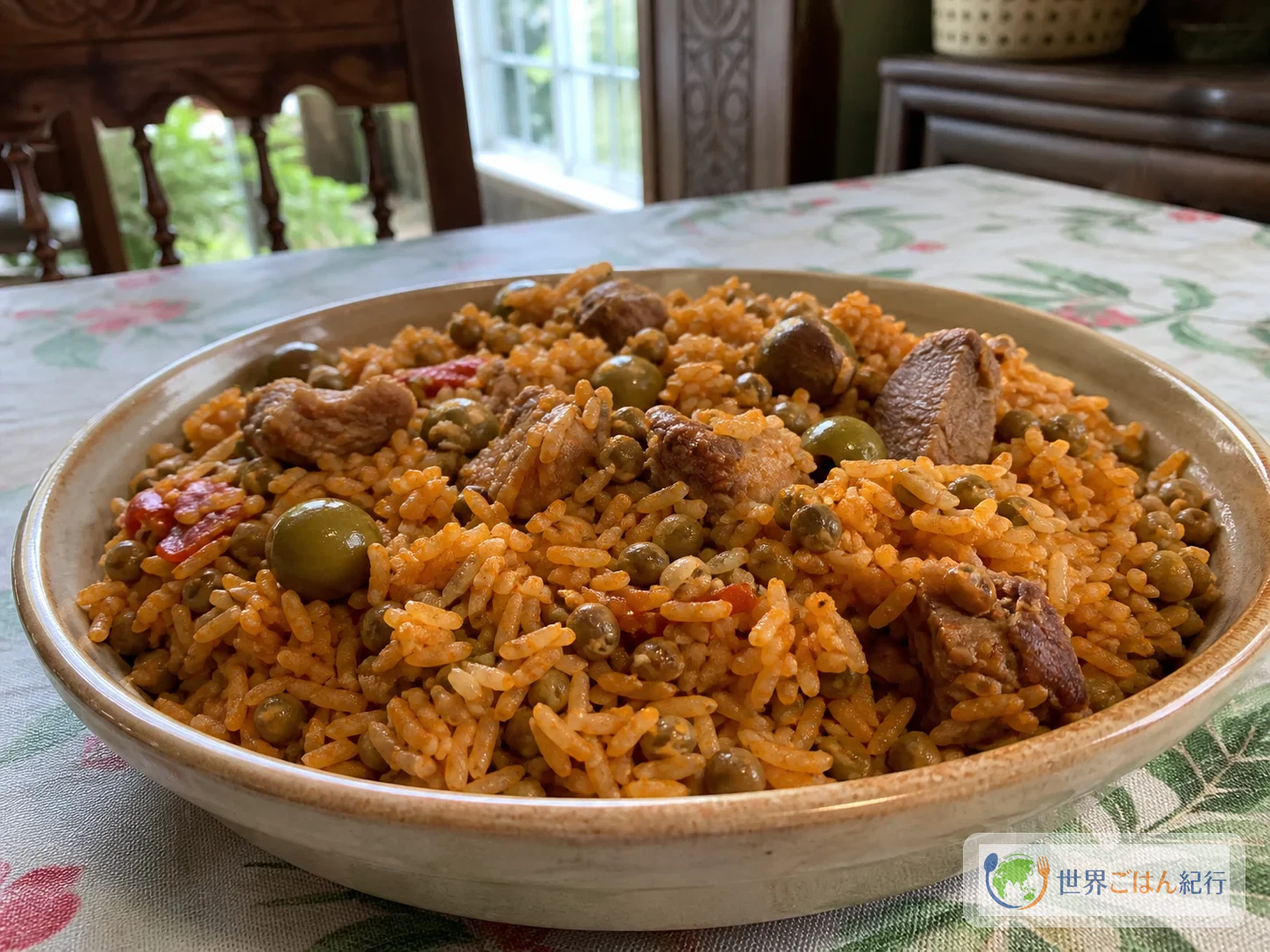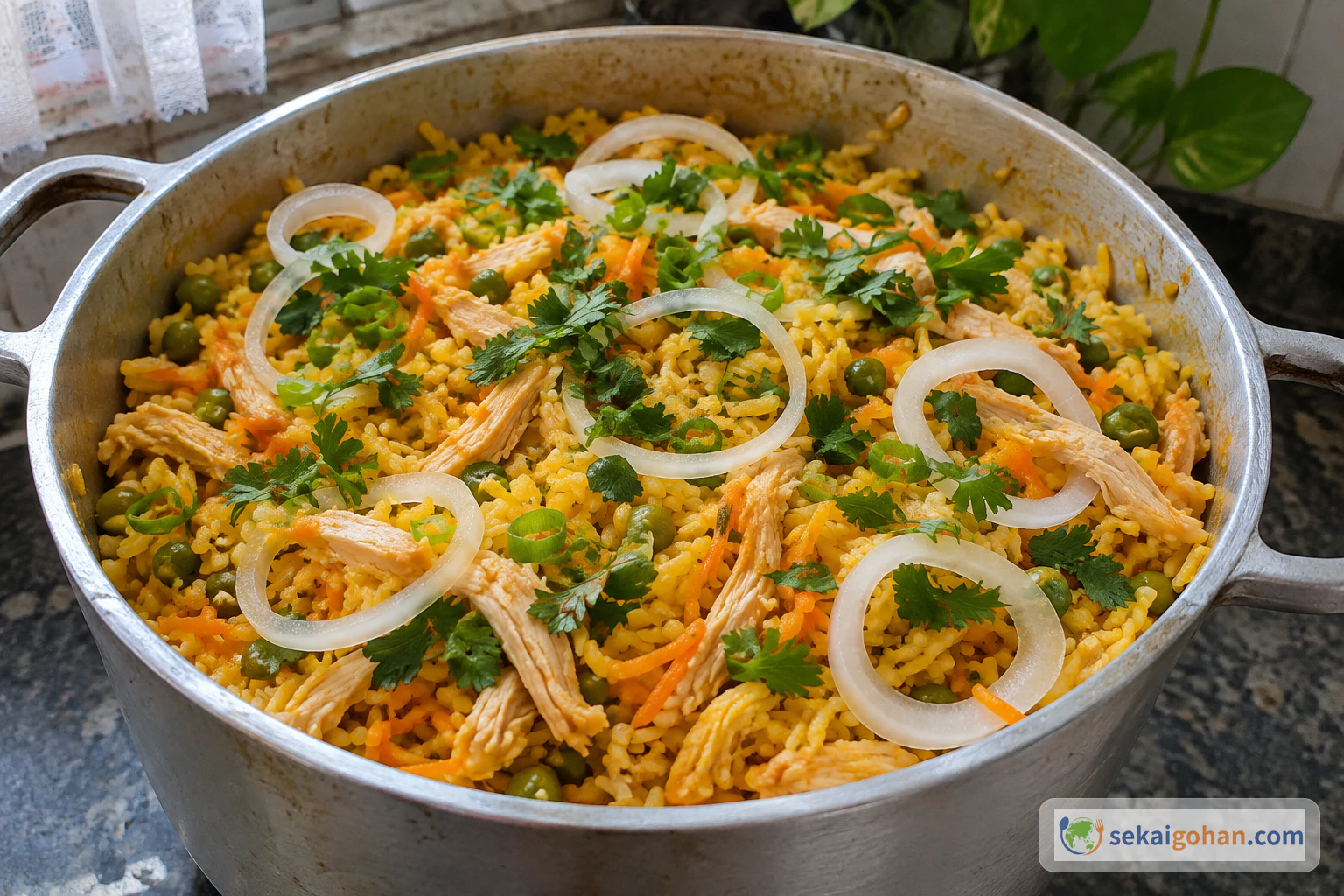
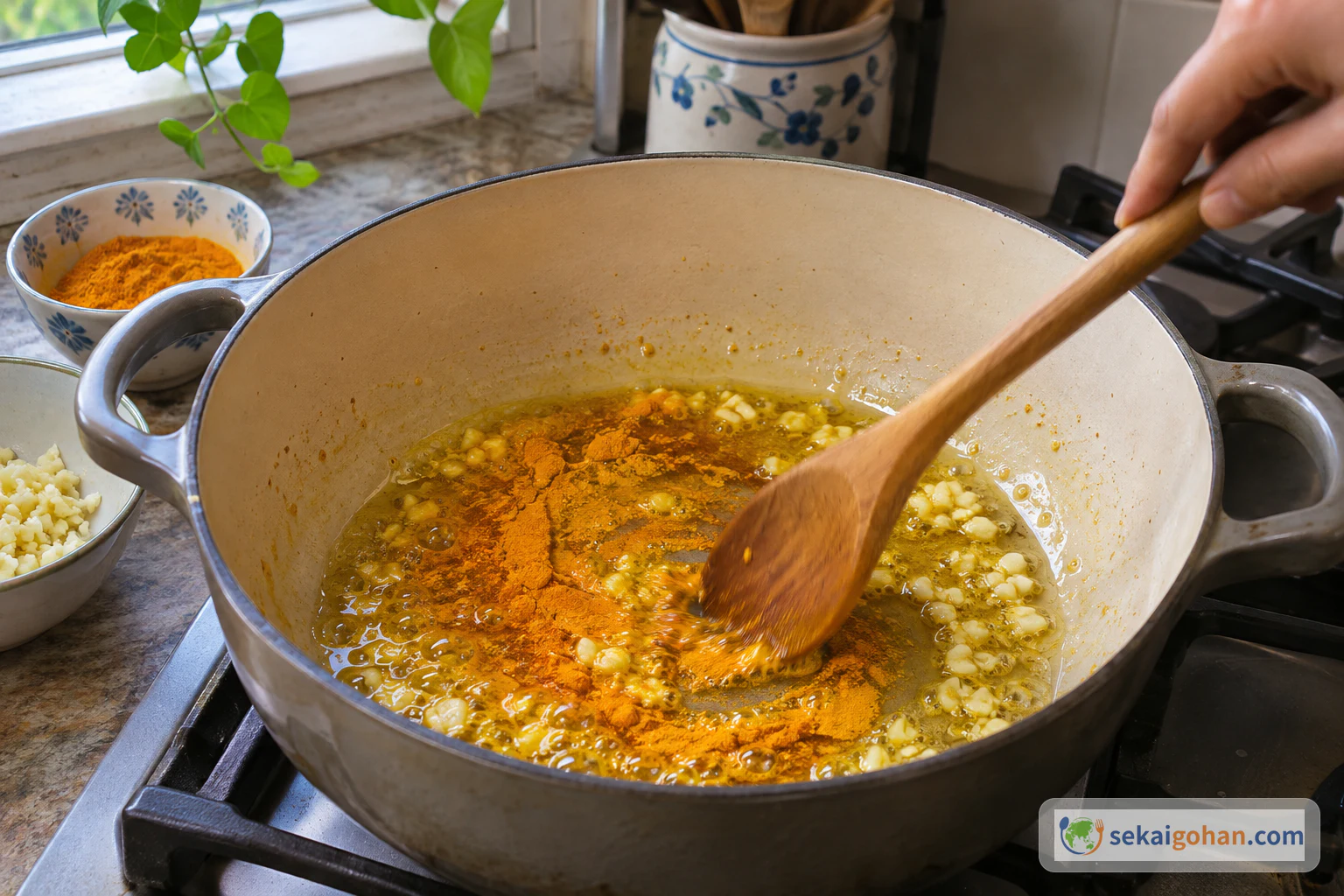
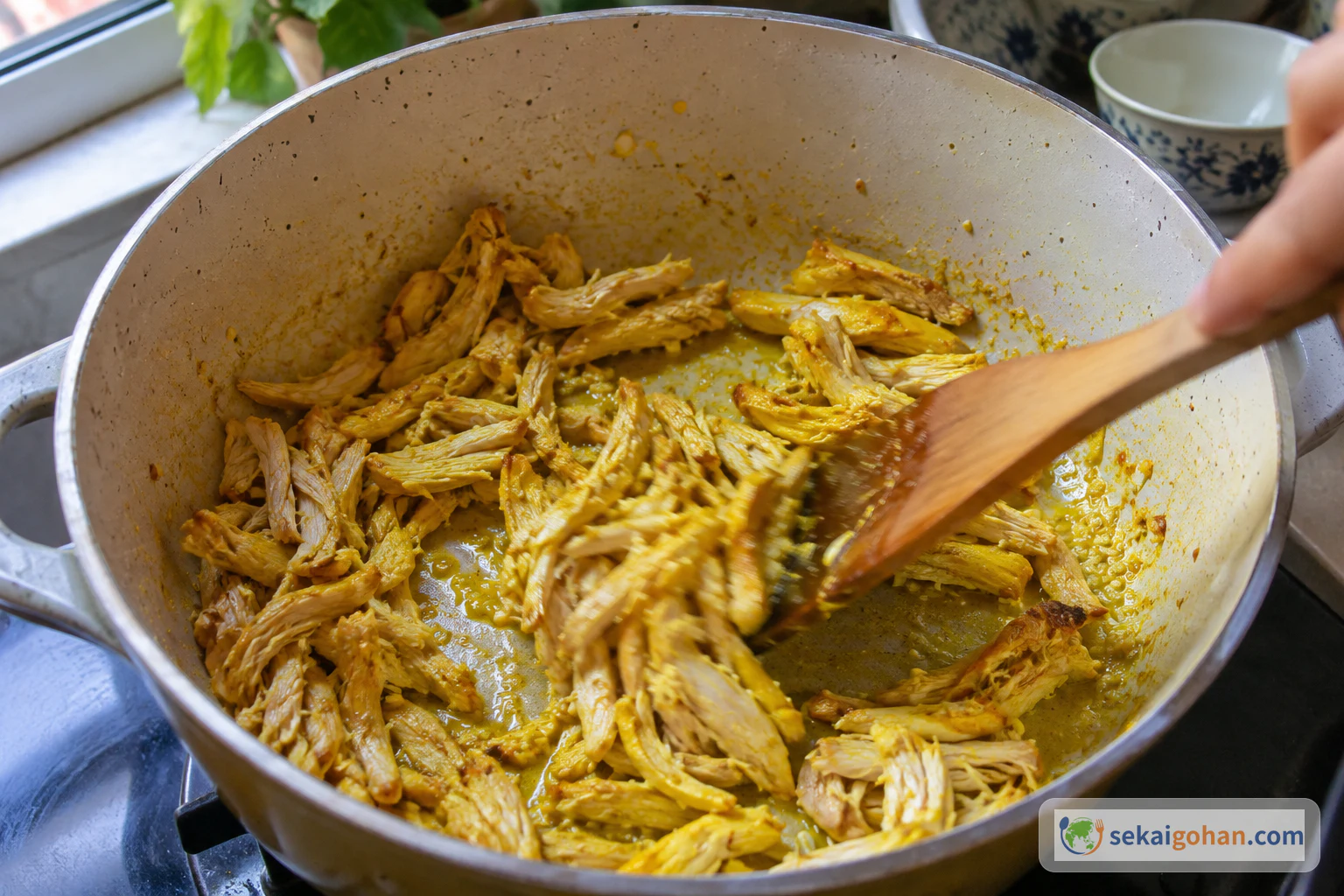
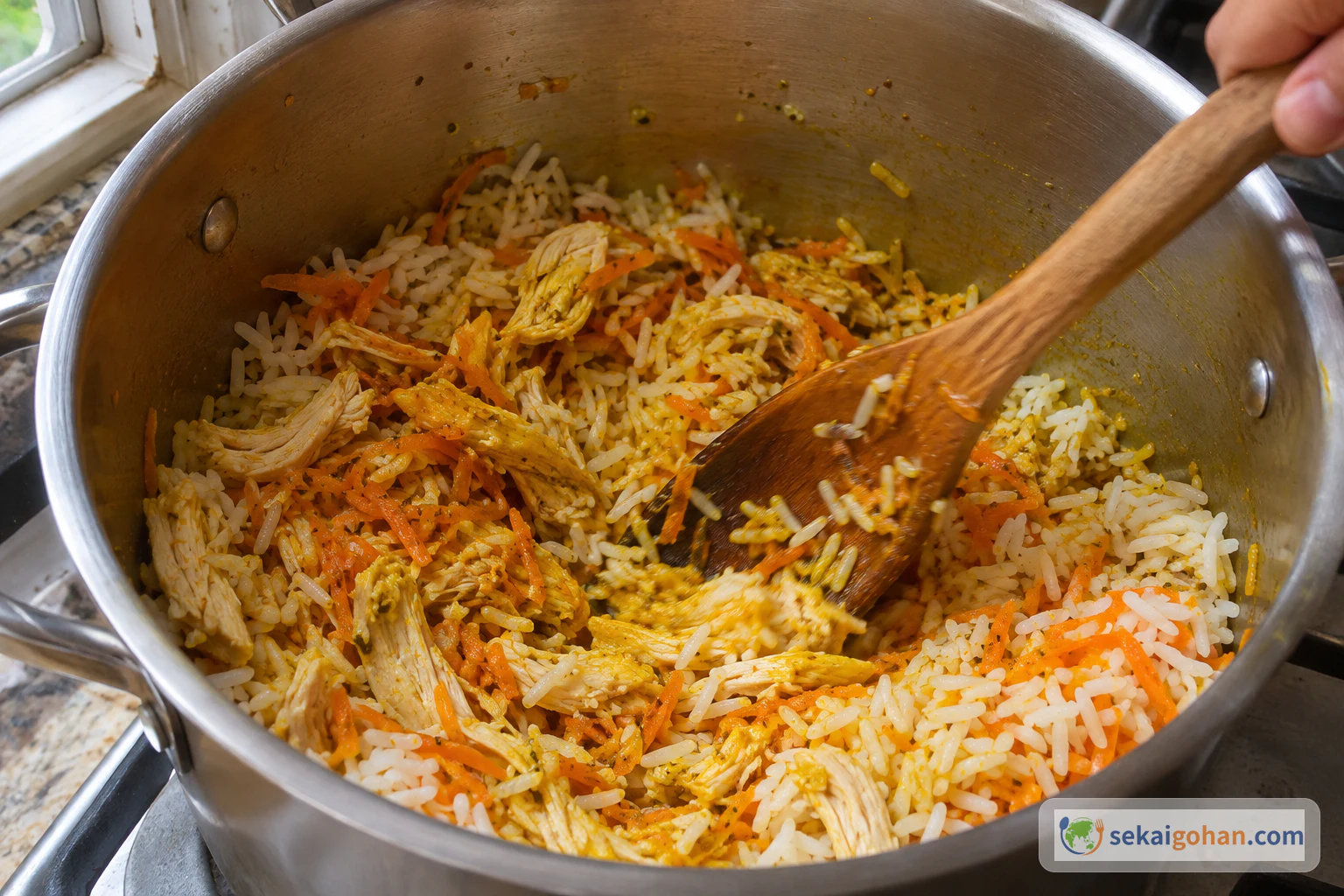
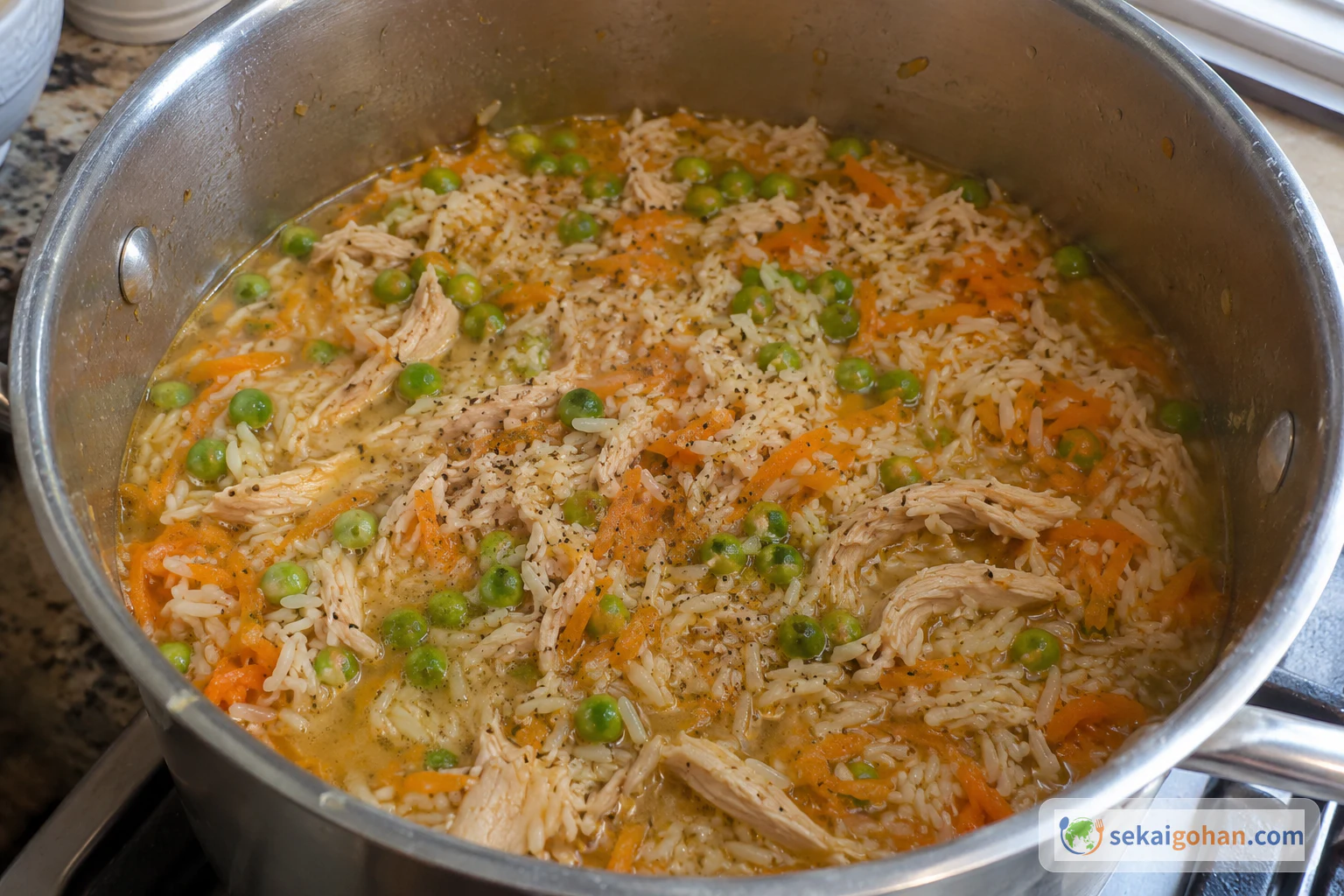
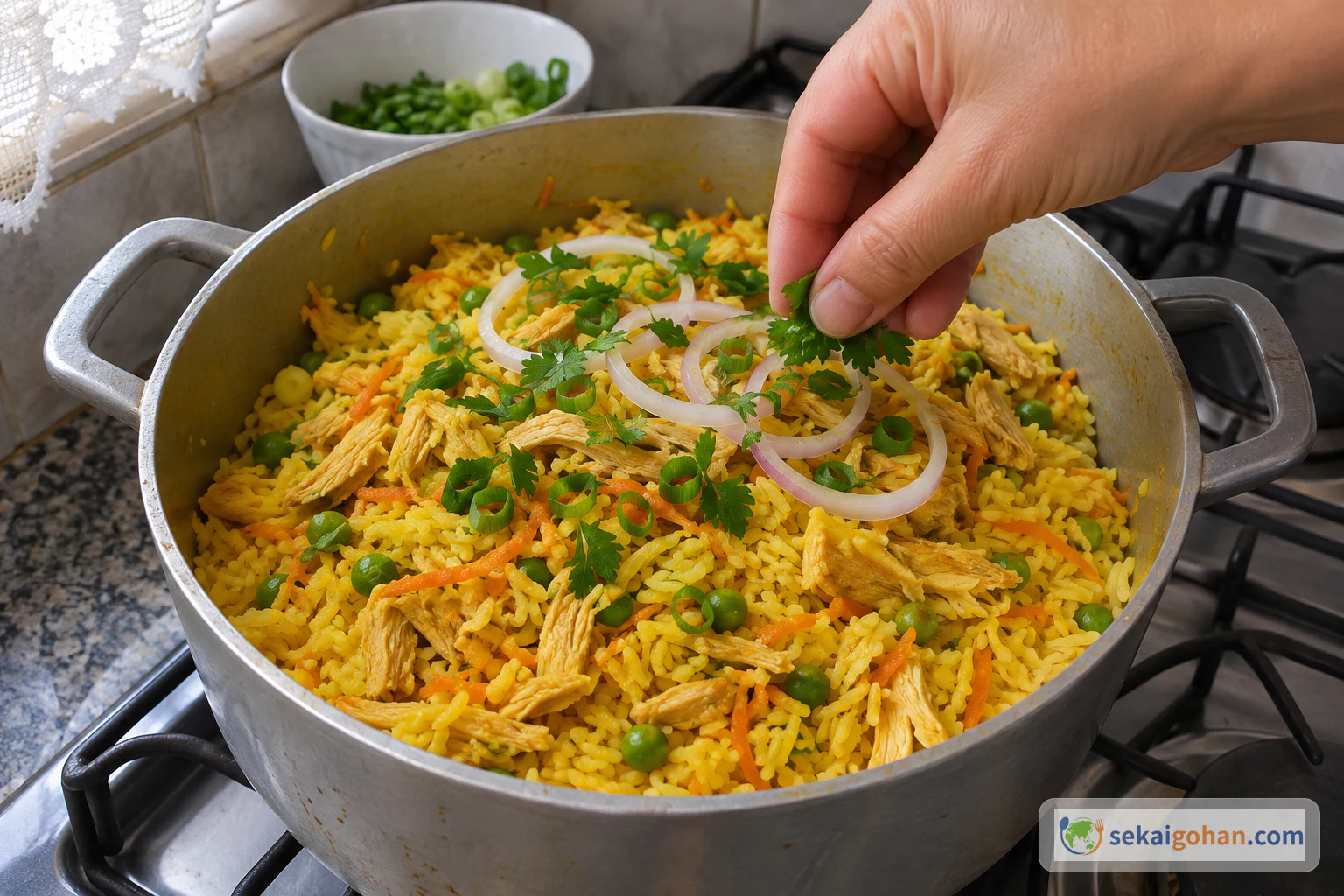
A spoonful of ground turmeric goes into hot oil with crushed garlic, and the oil turns deep gold within seconds. The yellow oil coats the shredded chicken, then every grain of rice, and by the time the boiling water goes in, the whole pot glows. That is galinhada as it is cooked in Goiás, in Brazil's centre-west: chicken and rice simmered together in one pot until the water is gone. It is finished with onion rings and green herbs over the top and carried to the table for Sunday lunch. It tastes savoury and gently earthy from the turmeric, sweet where the grated carrot has melted into the rice. The peas add small green bursts, and a spoon of sharp vinagrete on the side cuts through it all.
A Sunday pot found all over Brazil
Galinhada is cooked across Brazil, and every region seasons it differently. In Minas Gerais, okra goes into the pot. In Goiás, the rice is coloured with açafrão-da-terra, which is turmeric, and cooked with the chicken. The Goiás version also uses guariroba, a bitter palm heart that balances the richness of the chicken and rice. Some versions also include pequi, the strongly aromatic fruit of the cerrado. Pequi is common but optional. A pot coloured with turmeric and cooked with chicken is galinhada goiana with or without it.
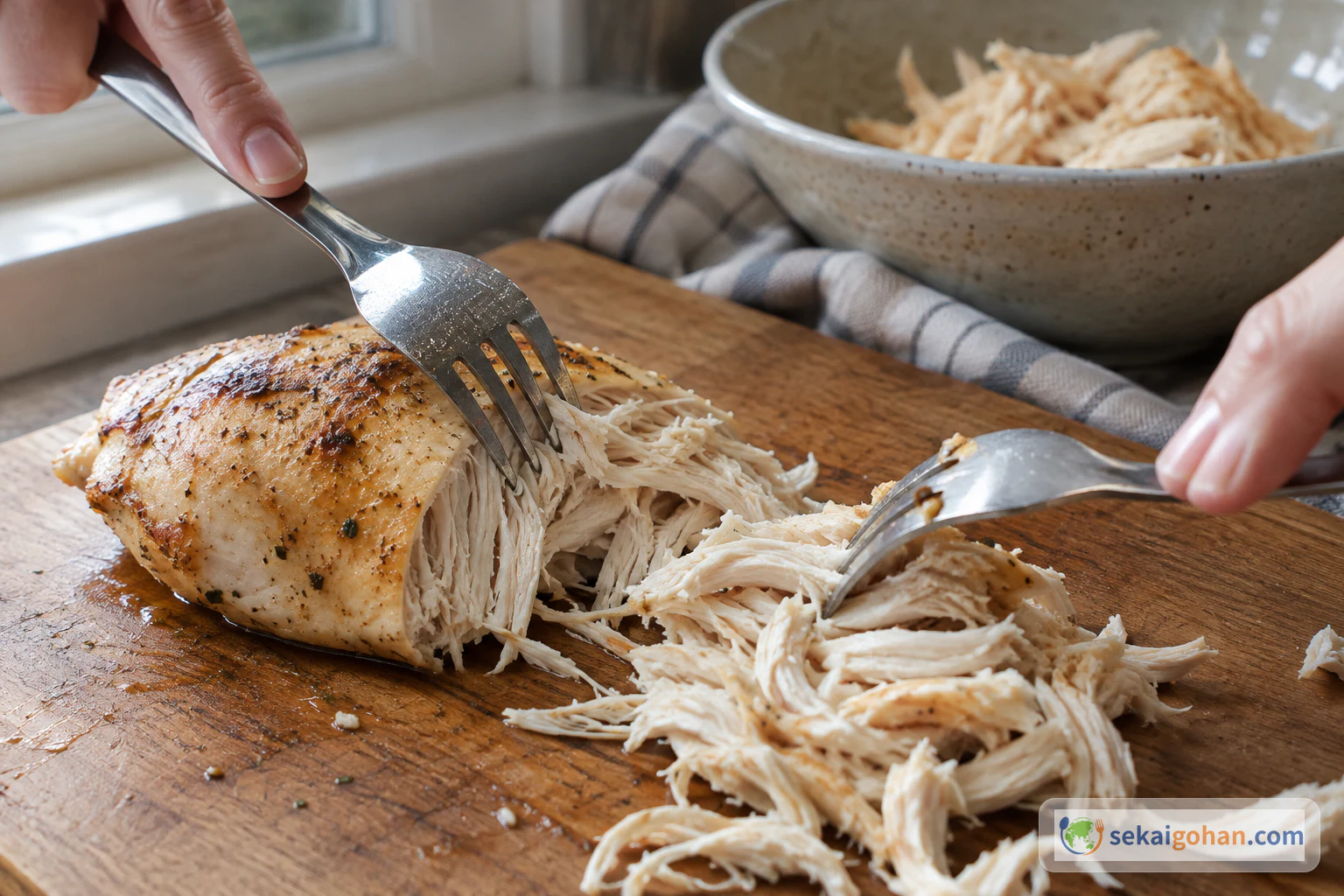
The version here is the everyday Goiás pot. A chicken breast is boiled and shredded first, then fried in turmeric-garlic oil before the rice goes in. Because the chicken is already cooked, the pot only has to fry the chicken, toast the rice and then cook the rice. It suits a home kitchen anywhere, and every ingredient is easy to find in an ordinary supermarket. Its place on the table is the long Sunday lunch, when one big pot feeds the family.
Galinhada belongs to the wider cooking of Brazil, but it is a separate dish from xinxim de galinha, the Bahian chicken dish. Galinhada is a rice dish first. The chicken is spread through the rice as it cooks, and the dish is served in scoops from the pot.
Galinhada comes from galinha, hen. Traditionally the pot was made with galinha caipira, a free-range country hen. The Goiás version here uses one chicken breast, boiled and shredded.
Ingredients (serves 6)
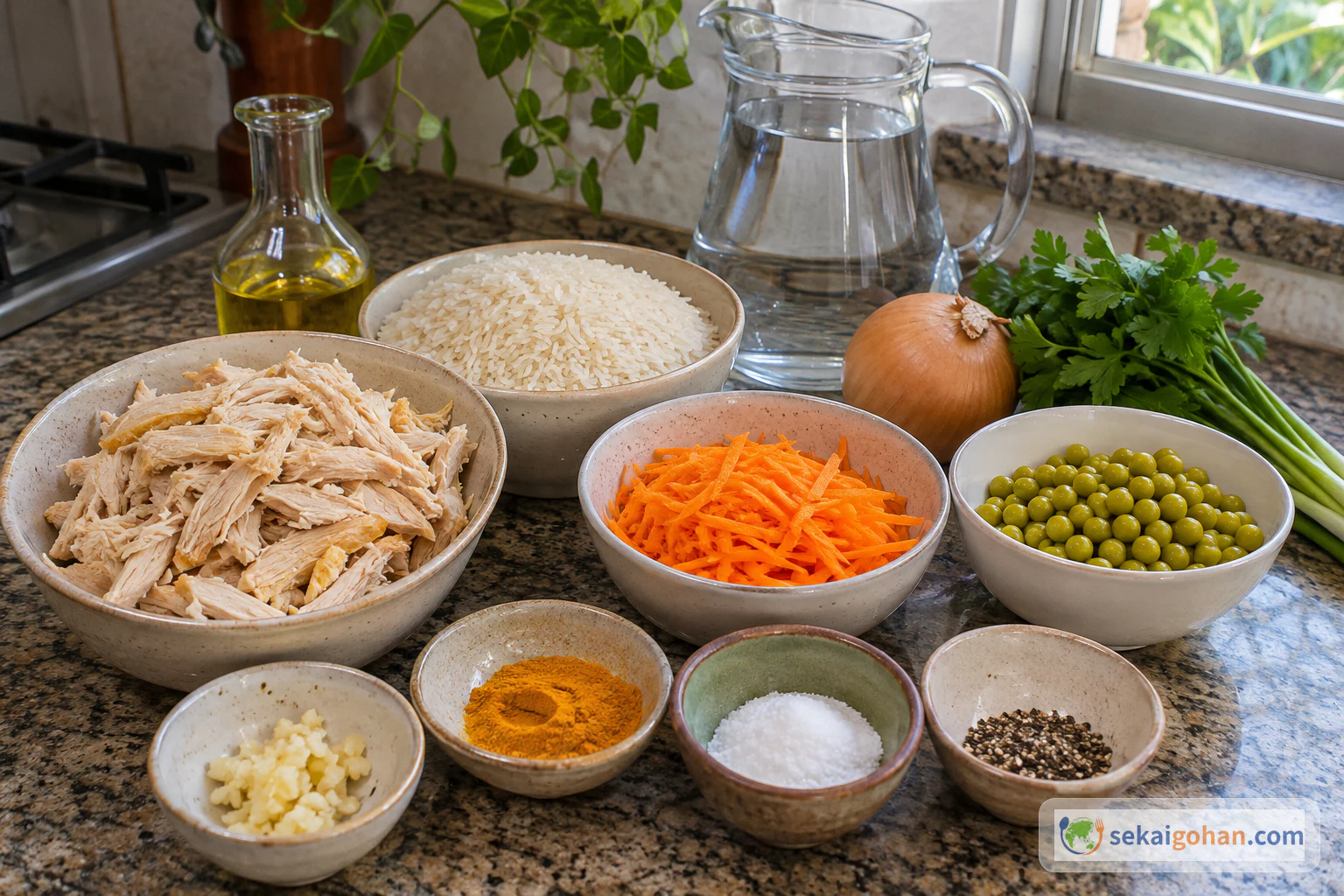
The rice and the water are measured in the same cup, 2 to 5. The size of the cup matters less than using it for both. Keep that ratio and the rice cooks through as the last of the water disappears.
Equipment
- Saucepan for boiling the chicken
- Cutting board and two forks
- Sieve for the rice and the peas
- Box grater
- Deep, heavy pot with a tight lid
- Wooden spoon
- One cup or mug for measuring both rice and water
- Kettle or second pan for boiling water
Choosing and substituting
Turmeric is the ingredient to get right. In Brazilian kitchens açafrão means turmeric, also called açafrão-da-terra, and the recipe uses one generous tablespoon of the ground powder. Saffron gives a different colour and a different, floral flavour, and the dish loses its warm earthy taste with it. Any supermarket spice shelf has ground turmeric, so there is no need for a specialty shop.
Long-grain white rice cooks into loose, separate grains. Short-grain rice also works, but it comes out stickier and softer, closer to a moist pilaf. Whichever you use, wash it and drain it well before it goes into the oil.
Cheiro-verde is the Brazilian bundle of parsley and scallion; buying the two separately and chopping them together gives the same thing. Canned peas go in drained. Guariroba and pequi are hard to find outside Brazil and are not used in this pot. The turmeric colour and aroma, the shredded chicken and the onion and herbs on top carry the taste of Goiás on their own.
Method
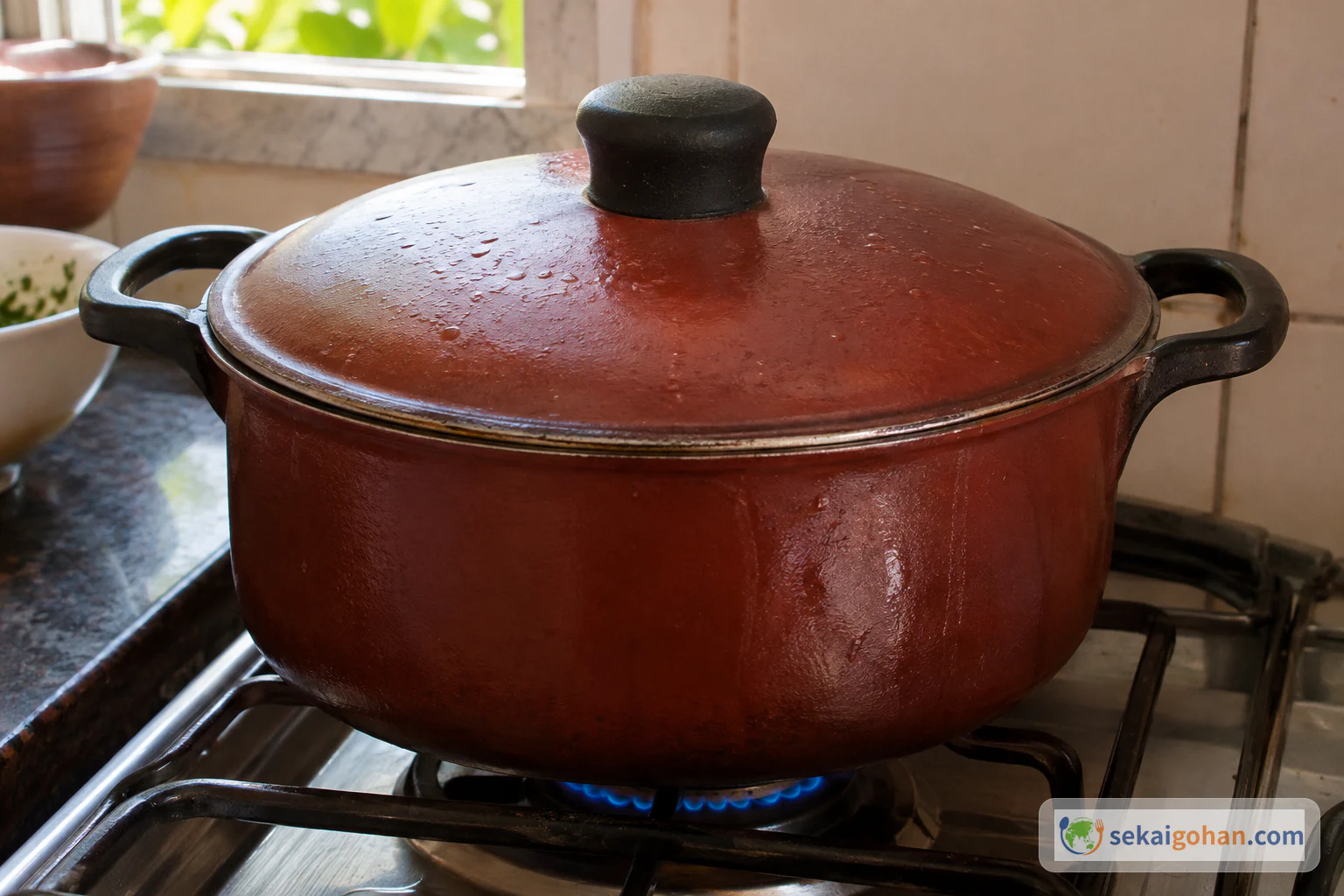
Everything that needs a knife or a grater happens before the oil heats. Boil and shred the chicken, wash and drain the rice, grate the carrot, drain the peas, slice the onion, chop the herbs and put the water on to boil. Steps 2 to 5 move quickly and need you at the stove with a spoon in hand. Step 6 is the hands-off stretch, and the whole pot takes about an hour from start to finish.
Boil the chicken until it is cooked all the way to the centre before you shred it, and check the thickest part. When the boiling water meets the hot oiled pot it hisses and throws up steam: pour slowly, away from your face and hands.
When it goes wrong
| What you see | Why | What to do |
|---|---|---|
| A brown crust sticks to the bottom while frying the rice | The spoon stopped while the pot had only oil in it | Stir without pause in step 4 and scrape across the whole base. If it catches, lower the heat and pour in the boiling water promptly |
| The garlic and turmeric smell scorched | They sat too long in the hot oil | Stir them quickly and add the chicken the moment the garlic is fragrant |
| The rice is still firm when the water is gone, or wet and soft when it should be done | Rice and water were measured in different cups | Measure both in the same cup, 2 to 5 |
| The rice is pale or tastes floral | Too little turmeric, or saffron instead of turmeric | Use a full tablespoon of ground turmeric and fry it in the oil first |
| The grains are soft and sticky | Short-grain rice, or rice not drained well | Use long-grain rice for loose grains, and drain the washed rice thoroughly |
Serving and variations
At the table
Galinhada is Sunday-lunch food, set down in the middle of the table in its pot and served in big scoops. It is a full meal on its own. Vinagrete is the natural partner: a relish of chopped tomato and onion in vinegar, served on the side so each person adds as much sharpness as they like. Its acidity makes the turmeric rice taste lighter.
Variations
- With a whole hen or bone-in chicken. The traditional pot uses galinha caipira, cooked on the bone. The meat is richer and the rice takes on more chicken flavour. The method also changes, because the chicken cooks in the pot rather than going in already shredded.
- Mineiro style with okra. Okra in the pot gives a green, slightly silky texture through the rice, typical of Minas Gerais.
- Goiano with guariroba. The bitter palm heart cuts the weight of chicken and rice and gives the pot its sharpest local taste.
- With pequi. Pequi gives the rice a strong, perfumed, cheesy-fruity aroma that people from the cerrado recognise at once.
Pequi has spines inside, under its flesh. Scrape the flesh off with your teeth and never bite straight down into it.
Frequently asked questions
Do I really need that much oil?
The oil does three jobs here: it carries the turmeric, it fries the chicken and it toasts the rice. Use as much as the pot needs for all three without catching. About 6 tablespoons is the amount this recipe uses, and the rice should look glossy rather than greasy after step 4.
Can I cook the chicken in the pot instead of boiling it first?
That is the bone-in style, and it works as its own recipe. Raw chicken pieces are browned in the pot and cooked with the rice, so the timing and liquid change. For this Goiás pot, boil and shred the breast first so the frying step stays short and even.
Can I leave out the peas or the carrot?
You can leave either out. The carrot adds sweetness and the peas add colour and small sweet bites, so the result is plainer without them. Keep the turmeric, chicken, onion and herbs, and it still tastes like galinhada.