


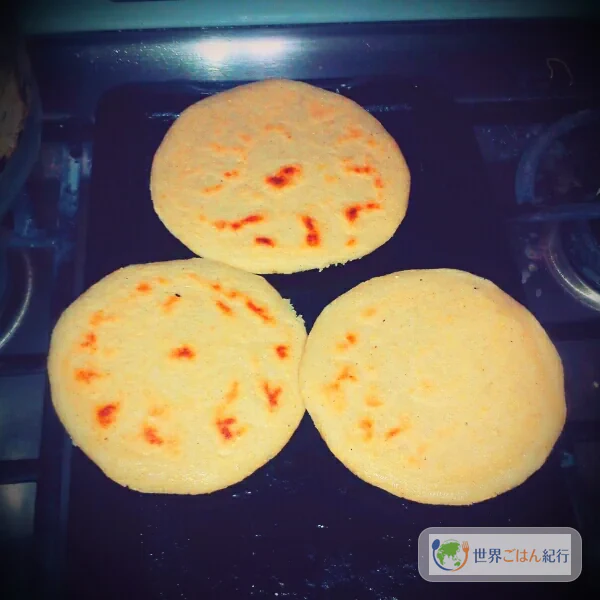

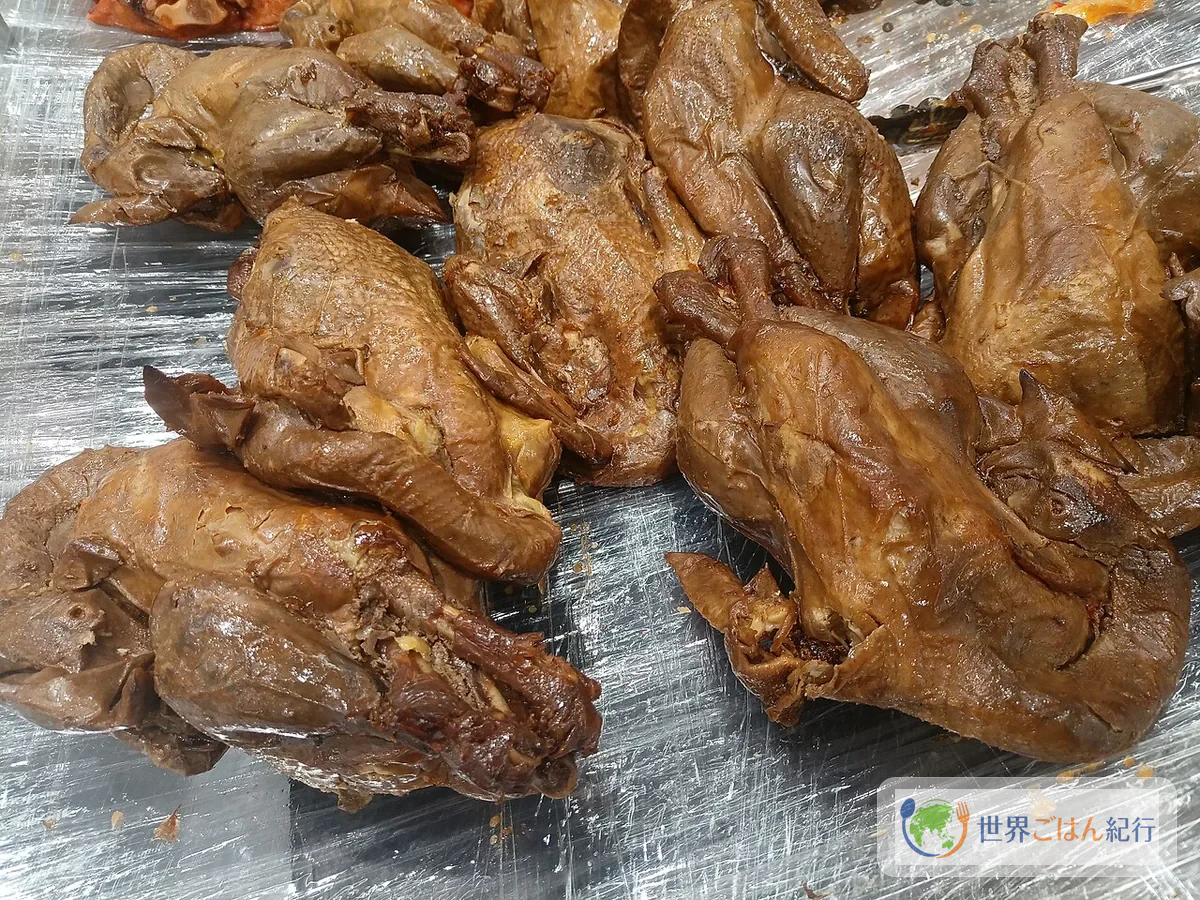

A Morning When the Smell of Roasted Corn Fills the Kitchen
In the morning, when you set round pieces of dough in the skillet, at first it is quiet. White corn flour that has absorbed water slowly takes in heat and begins to dry from the edge. After about 5 minutes, the sweet scent of roasted corn rises in the kitchen. It is not bread, not a rice cake, not a tortilla: crisp and thin on the outside, tender and crumbly inside, with that aroma. For the arepa, baked every day on the Venezuelan table, the flavor begins at this moment.
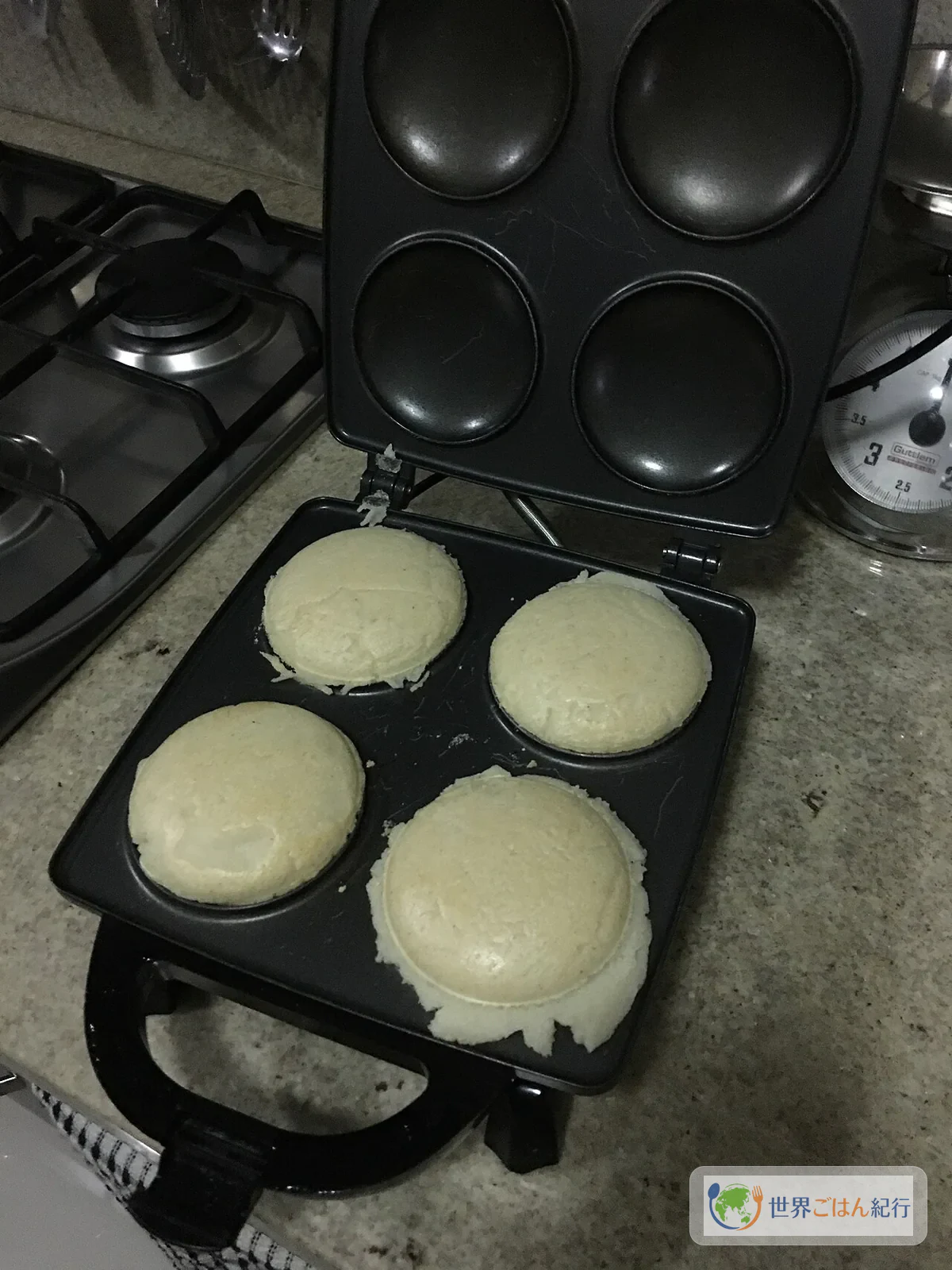
The arepa is a round corn bread eaten mainly in Venezuela and Colombia. In English it is often described as "South American corn cakes" or "cornmeal cakes," but when you actually make it, neither "bread" nor "griddle cake" quite fits. You split the baked dough from the side and fill it with as much cheese, chicken, beef, beans, and avocado as you like. For breakfast, lunch, or a late-night snack, it is a dish that is like the foundation of a table.
The key to the Venezuelan style is using masarepa (harina precocida), a precooked corn flour. It is not cornmeal, polenta, or the Mexican masa harina. Get this wrong and the dough won't hold together or turns out floury. It is an ingredient that is easy to be confused about when shopping, so this article spells out substitutes you can find elsewhere and a water amount that is hard to get wrong. Press the same flour thin and fry it, and it extends to the breakfast-stall Venezuelan empanada.
The South American cuisine overview (in Japanese) introduces many meat dishes and stews, but the arepa has the fun of making the staple itself. Unlike hearty plates such as Brazilian churrasco (in Japanese) or Colombian bandeja paisa (in Japanese), its appeal is that eggs, cheese, chicken breast, and avocado from the refrigerator can make that day's meal.
It is eaten as a national food in both Venezuela and Colombia. This article centers on the Venezuelan-style arepa, split from the side and packed with filling. In Colombia many regions bake them thinner and serve them with cheese or butter, so even under the same name "arepa" the way of eating differs a lot.
The Story of the Arepa

The arepa's origins lie in northern South America before Europeans arrived. The prototype was a dish in which indigenous people who grew corn crushed the kernels, kneaded them with water, shaped them into rounds, and baked them on hot stones or clay plates. Britannica describes the arepa as "a flat, round cornmeal cake especially popular in Colombia and Venezuela." Before bagged flour, softening dried corn, removing the hulls, and grinding it was heavy labor.
The turning point when the Venezuelan arepa spread explosively as home cooking was the spread of precooked corn flour in the mid-20th century. With precooked flour like the well-known "Harina P.A.N.," a household could make dough by simply mixing in water and salt. The Spruce Eats also sums up masarepa as an ingredient that simplified the traditional heavy process, a special flour for making arepas.
When an arepa shop opens on a Caracas morning, the order begins with "what to stuff it with." Reina pepiada, with chicken and avocado; domino, with black beans and white cheese; pelúa, with shredded beef and yellow cheese. El País's recipe article also introduces how these named fillings build Venezuela's arepa culture. When you cook elsewhere, including the split-and-stuff way of eating rather than copying only the dough shows what the Venezuelan style means.
Here is an important fork for readers elsewhere. You can't just buy anything labeled "corn flour" at a store. Cornstarch is only starch, so it won't do. Corn grits and polenta are coarse and unlikely to make an arepa dough. Mexican masa harina is a different line of flour, nixtamalized, and the aroma and texture change. For arepas, choose a bag that says pre-cooked corn meal / harina precocida / masarepa.
English-language recipes such as Bon Appétit and Epicurious repeat that "use masarepa" is the most important condition for making arepas. Search for "Harina PAN," "masarepa," or "arepa flour" at import grocers, South American grocers, and online shops. It isn't an ingredient you can count on finding at an ordinary store, so securing it online before you cook gives peace of mind.
Ingredients (makes 8)
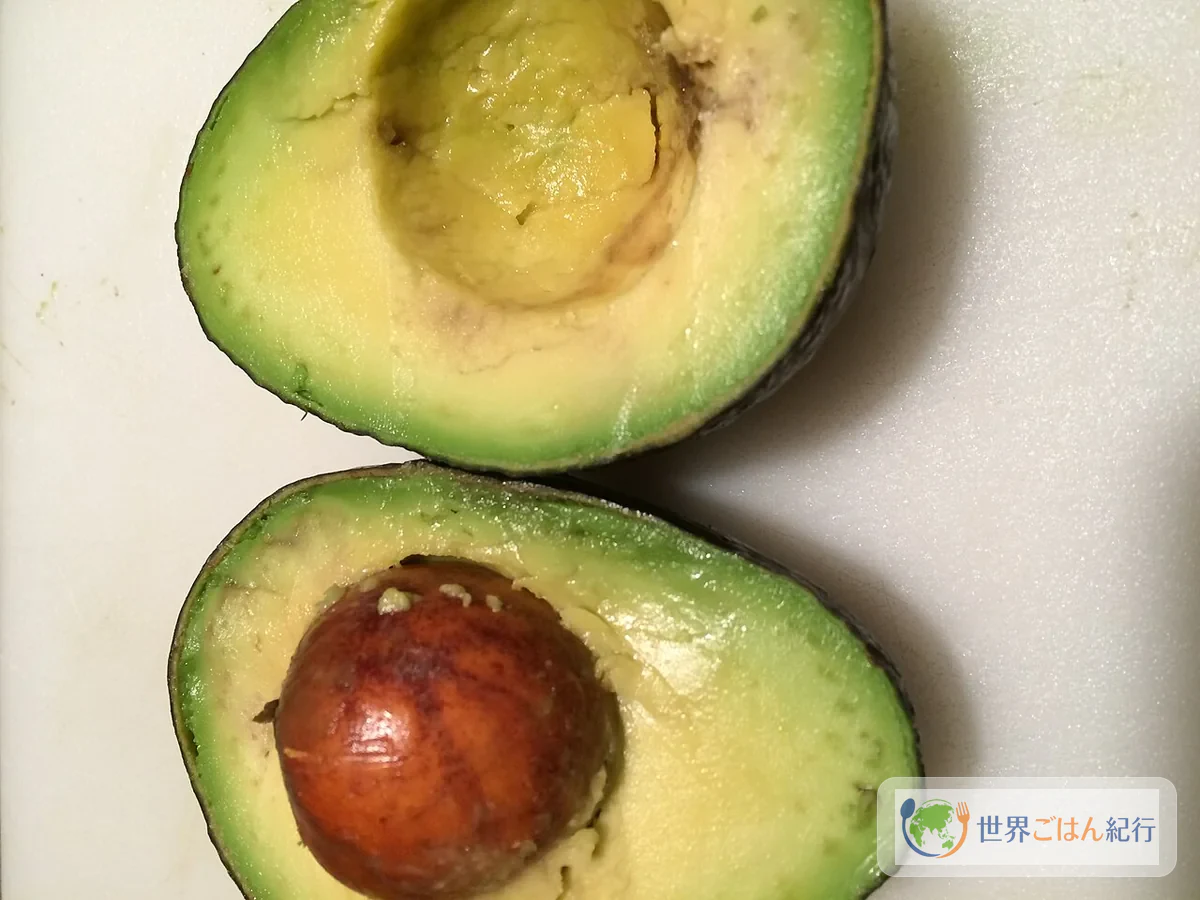
A basic arepa uses very few ingredients. That is why the flour and the water amount decide the result. Rather than making fancy fillings, first aim for a dough that is moist when split and thinly toasty only on the surface.
Basic arepa dough comes from corn and uses no wheat, but production-line labeling differs by product. The fillings use chicken, egg, and dairy. Check allergen labels on store-bought mayonnaise, cheese, and cooked chicken.
Shopping Guide
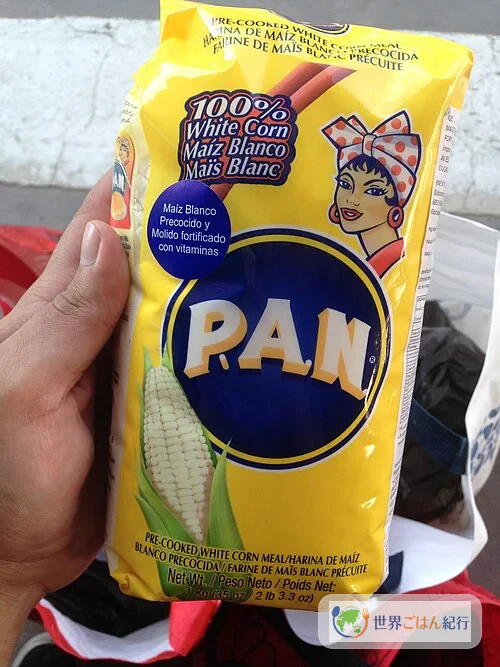
Masarepa can be used again and again once you buy it, so if you will keep making arepas, it's worth securing the flour and your skillet setup first. If you are unsure what to buy, prioritize three things: a white Harina P.A.N.-type flour, a heavy skillet with a wide cooking surface, and a thermometer to check the internal temperature of chicken. Avocado and cheese can be bought at a nearby supermarket, so they are covered in the ingredient notes rather than given product cards.
If you boil chicken breast yourself, it can be hard to judge by eye whether it has cooked through. With a thermometer, you can confidently cool the reina pepiada filling and mix it.
Masarepa itself is hard to find at ordinary supermarkets. If you absolutely want to make it today, you can get close in shape by letting fine cornmeal absorb boiling water, but the moist, tender quality when split is a different thing. Don't compromise with a substitute the first time; ordering the dedicated flour is recommended.
Method
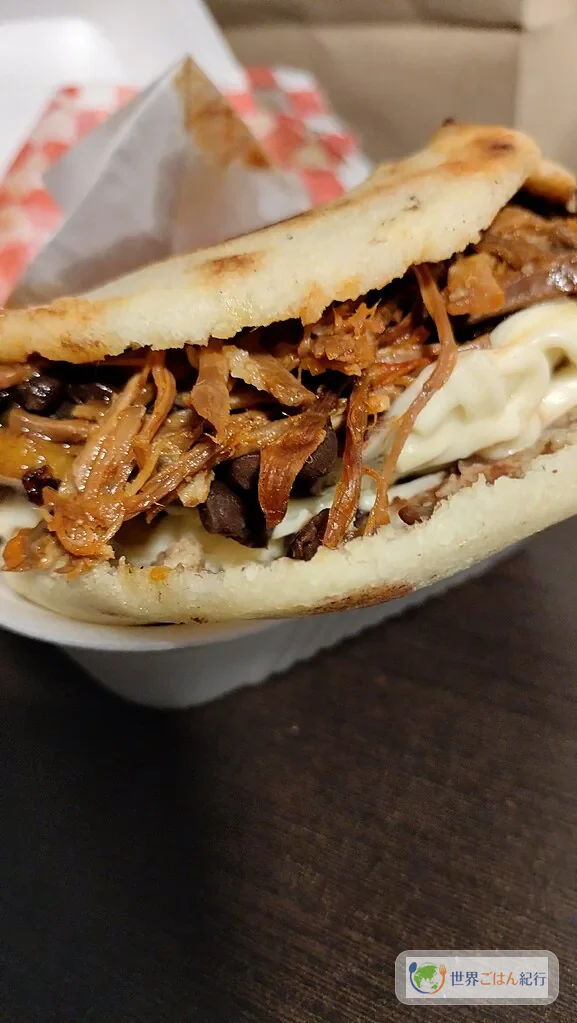
Arepas need almost no fermenting or resting. But resting a few minutes, rather than baking right after adding water, lets the flour absorb the water and makes cracking less likely. P.A.N.'s official recipe also follows the flow of mixing the flour into water and salt, kneading, a short rest, and shaping.
If it cracks badly when shaping, it lacks water. Masarepa absorbs differently by maker and storage. You don't need so much water that it sticks to your hands, but if pressing the edge produces fine cracks, add 1–2 tsp of water and knead again.
Cooking Tips
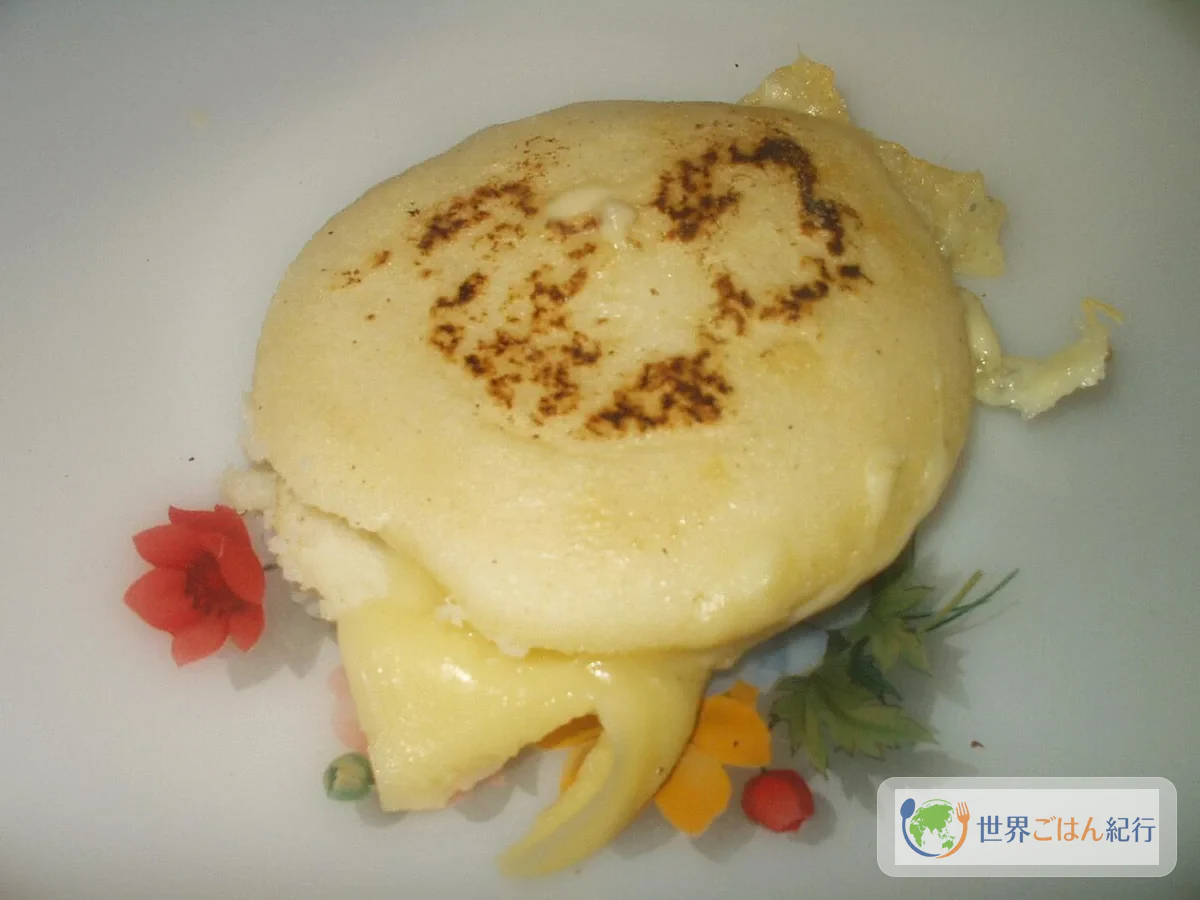
The guide is 420 ml of water to 300 g flour, but it's safer not to add all of it at the start. Masarepa absorbs within a few minutes of mixing, so even if it feels soft at first, it soon settles. Judge the firmness after a 5-minute rest.
Thin arepas cook fast but tear when split from the side. For Venezuelan-style stuffing, around 1.5 cm is an easy thickness. Too thick and the center stays floury, so if you worry about the skillet alone, finish in the oven at the end.
Even if only the surface is deeply browned, if the inside is still damp it collapses when you put a knife in. The guide to doneness is the dry, light sound when you tap lightly with a finger. English-language recipes also commonly use a two-stage cook of browning the surface and then heating through.
Arepas also suit making ahead. Cool baked ones completely, wrap in plastic wrap, and store: 2 days refrigerated or 2 weeks frozen as a guide. To eat, thaw naturally and brown the surface again in a skillet or toaster. The microwave alone makes it hard to bring back the toastiness of the outside.
Variations
Reina pepiada
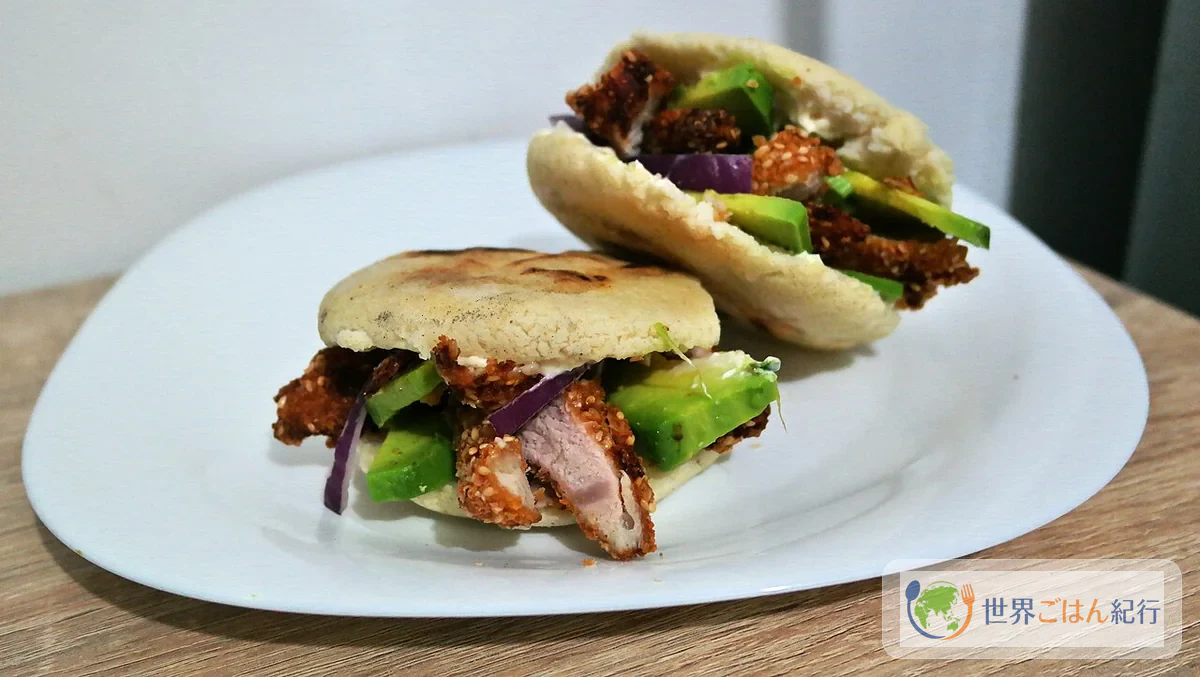
Reina pepiada is the classic Venezuelan filling of chicken, avocado, and mayonnaise. It is a famous style presented in Epicurious's recipe, and its name is known to refer to Susana Duijm, Miss World 1955. Using store-bought cooked chicken makes it easy for a weekday lunch. But store-bought products can be salty, so reduce the mayonnaise a little and add lime juice to lighten it.
Domino
Domino is the combination of black beans and white cheese. It gets its name because the black and white look like a domino tile. It's enough to warm canned black beans with a little cumin and salt and add shredded melting cheese or mozzarella. Even without meat it's satisfying. For white cheese, rather than a strong blue cheese, think mozzarella, feta, and cottage cheese in that order, so you don't spoil the sweetness of the dough.
Pelúa
Pelúa is shredded beef with yellow cheese. Using slowly stewed beef is authentic, but at home, sautéing thin beef pieces with onion, cumin, and paprika gives a similar mood. If you like meat dishes, filling it the next day with shredded meat from Cuban ropa vieja is also recommended.
Breakfast arepa
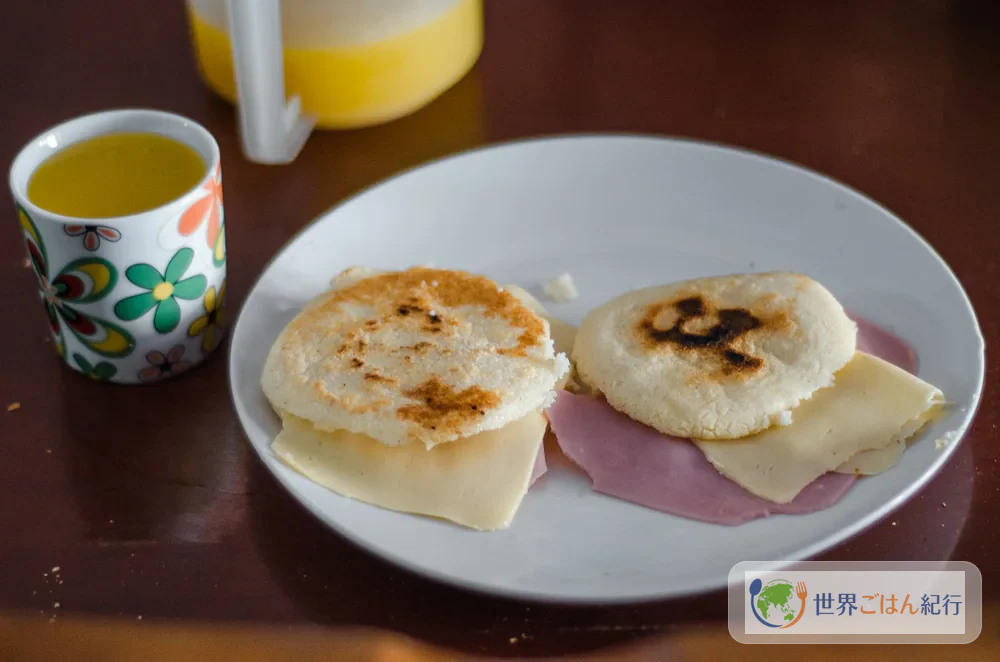
A breakfast arepa is made with butter, cheese, and a fried egg. Just spread butter thinly on a fresh arepa and tuck in a soft egg. The sweetness of corn mixes with the yolk, and even on a busy morning you feel you've "properly cooked."
Fusion-style arepa
For a Japanese-style arepa, tuna-mayo, kinpira, teriyaki chicken, and shiso go well. It's not completely authentic, but the good thing about the arepa is the breadth of fillings it accepts. Thinking of baking an arepa in place of white rice and stuffing in refrigerator leftovers makes it easy to keep going.
Background of the Dish
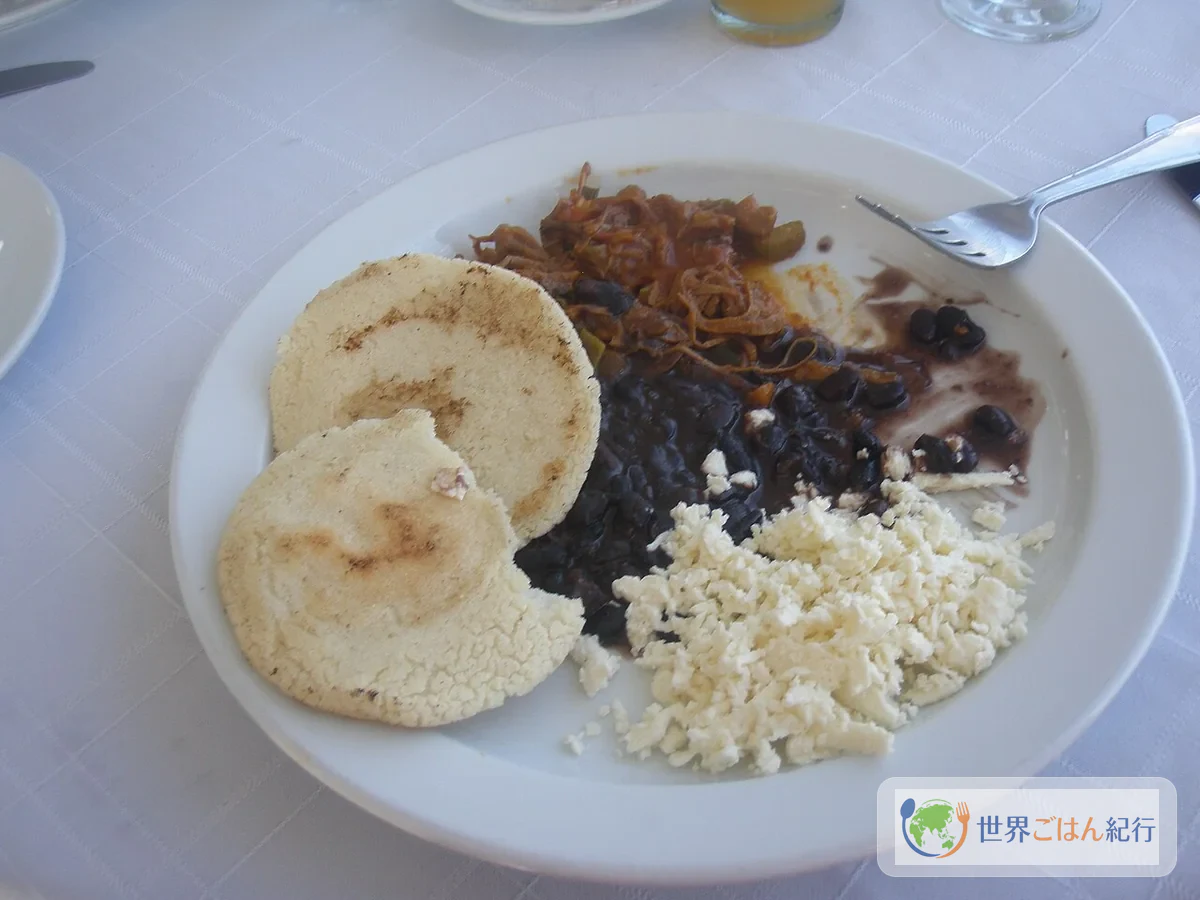
What makes the arepa special in Venezuela is not simply that it is "eaten often." Morning ones with cheese, lunchtime ones with meat, late-night ones with beans, fried arepas from stalls, baked ones at home. Because it appears in changing forms at every time of day, it is close to the center of eating life. Britannica too describes the arepa as a dish eaten throughout the day in Venezuela.
This flexibility also became a strength as an immigrant dish. For people living outside Venezuela, a bag of masarepa is tied to the memory of the table. The growth of arepa shops in cities in Spain and the United States is not only a trend for South American food but also a way to keep the taste of home in a new place. The time spent choosing "reina," "domino," and "pelúa" in a small shop is also an act of carrying a Venezuelan kitchen outward.
The difference from the Colombian style is interesting too. In Colombia there are very many types by region, with ranges such as cheese-filled, egg-filled, thin-baked, and sweet-corn arepas. The Venezuelan style leans toward being a "pocket for filling," easily completing a meal like a sandwich. If you start in your own kitchen, learning the Venezuelan basic dough first makes it easy to adapt. Comparing with the Colombian arepa (in Japanese), you can see clearly how, even with the same corn dough, one is served alongside and the other is stuffed.
If salteña is a dish that "wraps soup," the arepa is a dish that "wraps the table." Dough of just flour, water, and salt catches whatever fillings are in the refrigerator. South American cooking tends to draw the eye with spices and hearty meat, but knowing everyday staples like this brings the country's kitchen much closer.
FAQ
Can I make them with cornmeal instead of masarepa?
They won't turn out the same. Cornmeal and polenta differ in grain and heat treatment, and even mixed with water they are unlikely to form an arepa dough that holds together. If you must substitute, use boiling water and let it absorb for longer, but for the first time using masarepa is less likely to fail.
The dough is sticky and I can't shape it.
Either there is too much water or the rest was too short. First let it sit 5 minutes to absorb; if it still sticks strongly to your hands, add masarepa 1 tbsp at a time. Conversely, if the edge cracks badly, it lacks water.
Can I make them without an oven?
Yes. After browning both sides in a skillet, cover and cook through to the center over medium-low heat. Keeping the thickness to about 1.5 cm helps avoid a floury center even with the skillet alone.
Can I freeze arepas?
Only the baked dough can be frozen. Cool completely, wrap each in plastic wrap, put them in a freezer bag, and use within about 2 weeks. If frozen filled, the moisture makes the dough collapse easily, so add the filling just before eating.
What menu does it go with?
For a light meal, arepas with salad; for a heartier one, fill with black beans, egg, cheese, and chicken. To widen it into a South American table, ceviche (in Japanese) as an appetizer, churrasco (in Japanese) for meat, and feijoada for beans show the regional differences, which is fun.
Sources
- El País / El Comidista, "Arepas reina pepiada: una institución venezolana" https://elcomidista.elpais.com/recetas/2025-07-25/arepas-reina-pepiada-una-institucion-venezolana.html (accessed 2026-06-19)
- Britannica, "Arepa" https://www.britannica.com/topic/arepa (accessed 2026-05-05)
- P.A.N. USA, "Traditional Venezuelan Arepa" https://us.allofpan.com/recipes/traditional-venezuelan-arepa/ (accessed 2026-05-05)
- The Spruce Eats, "What Is Masarepa?" https://www.thespruceeats.com/masarepa-precooked-corn-flour-for-making-arepas-3029290 (accessed 2026-05-05)
- Bon Appetit, "How to Make Arepas" https://www.bonappetit.com/test-kitchen/how-to/article/how-to-make-arepas (accessed 2026-05-05)
- Epicurious, "Reina Pepiada Arepas" https://www.epicurious.com/recipes/food/views/reina-pepiada-arepas-365290 (accessed 2026-05-05)
- Wikimedia Commons, "Arepas venezolanas.jpg" by Periodismodepaz, CC BY-SA 4.0 https://commons.wikimedia.org/wiki/File:Arepas_venezolanas.jpg
- Wikimedia Commons, "Arepas cooked with firewood.jpg" by Wilfredor, CC BY-SA 3.0 / GFDL https://commons.wikimedia.org/wiki/File:Arepas_cooked_with_firewood.jpg
- Wikimedia Commons, "Flour mix to make arepas.jpg" by Ajsm712, CC BY-SA 4.0 https://commons.wikimedia.org/wiki/File:Flour_mix_to_make_arepas.jpg
- Wikimedia Commons, "Arepa de carne mechada.jpg" by Pequeño mar, CC BY-SA 4.0 https://commons.wikimedia.org/wiki/File:Arepa_de_carne_mechada.jpg


