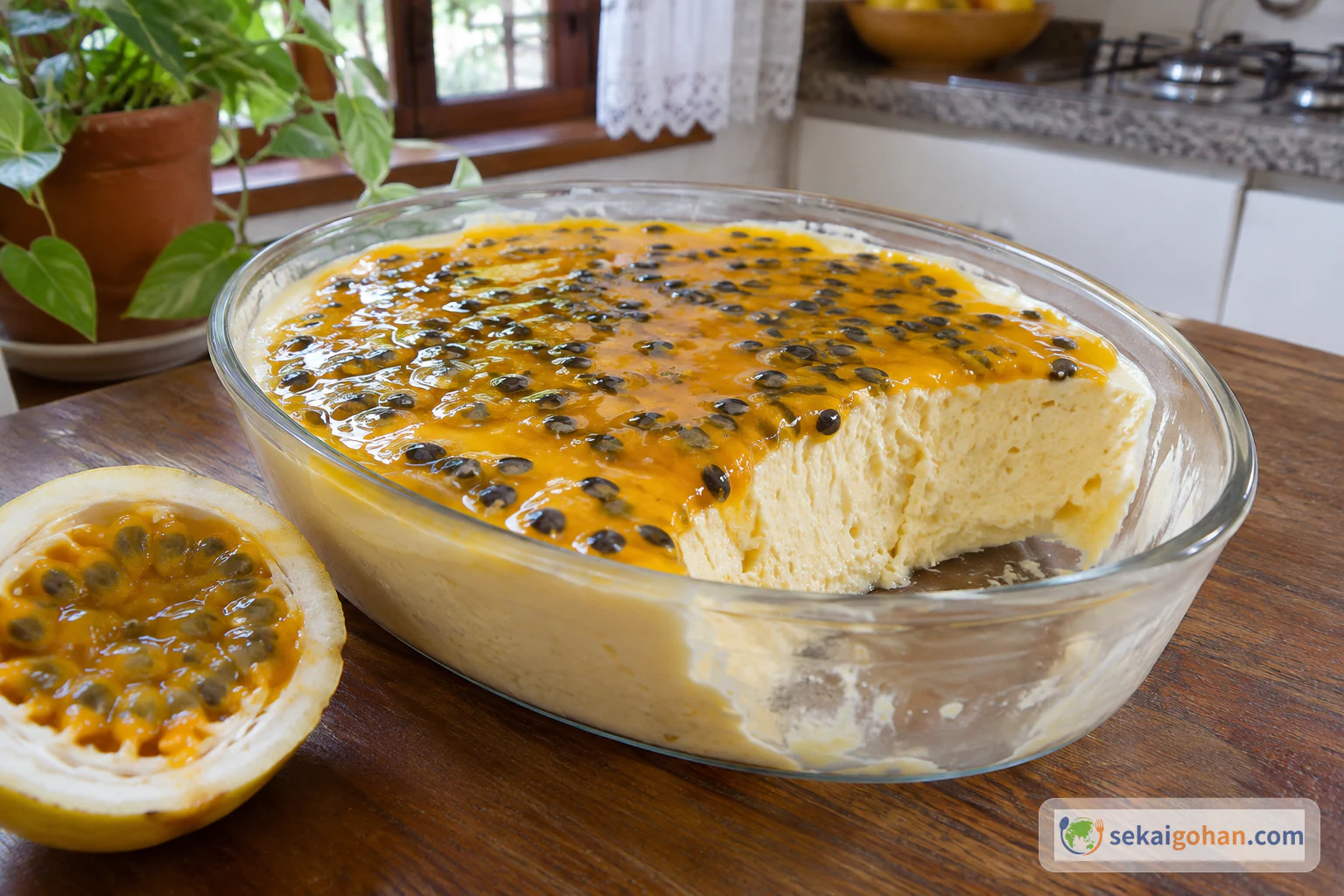
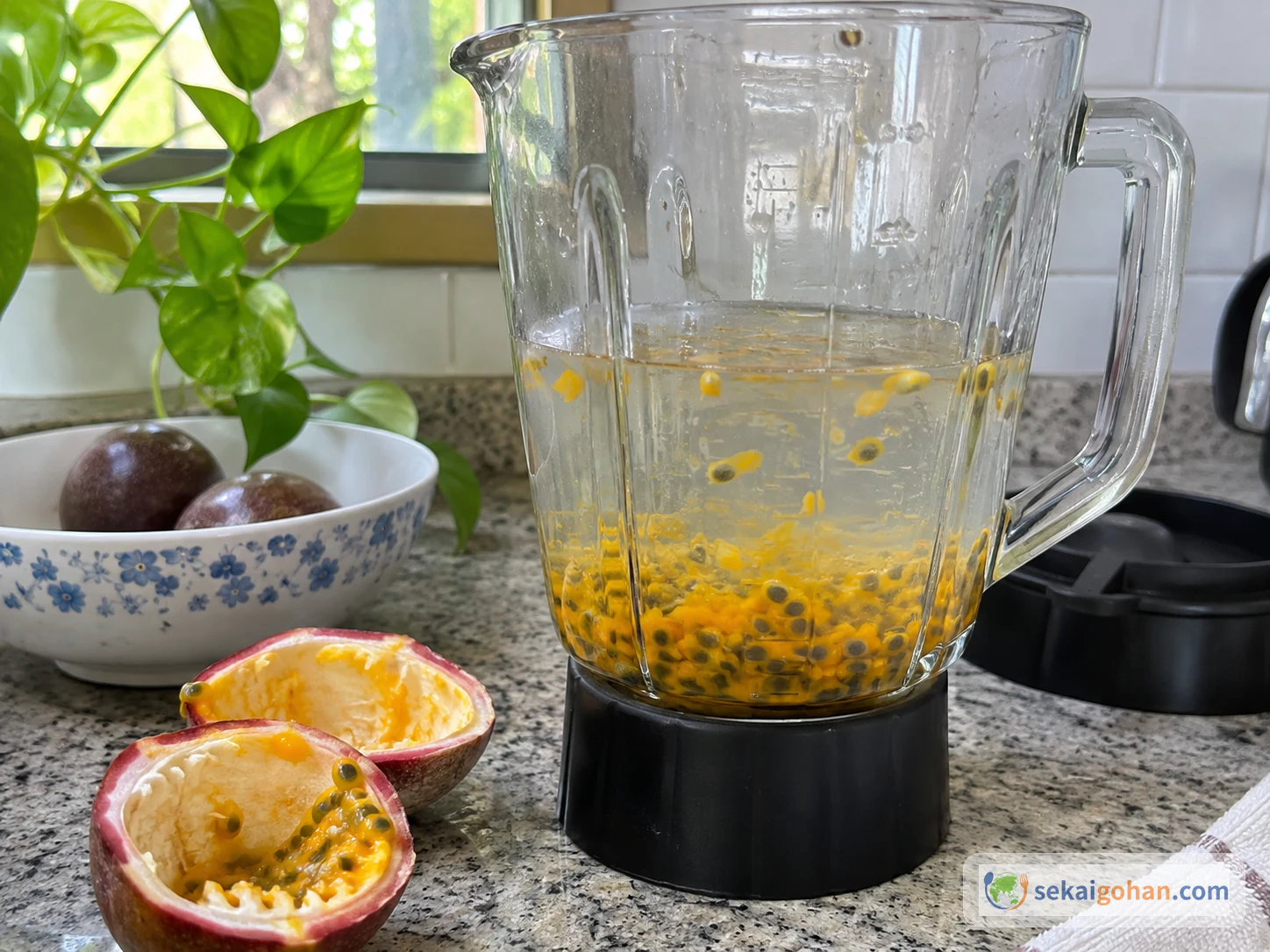
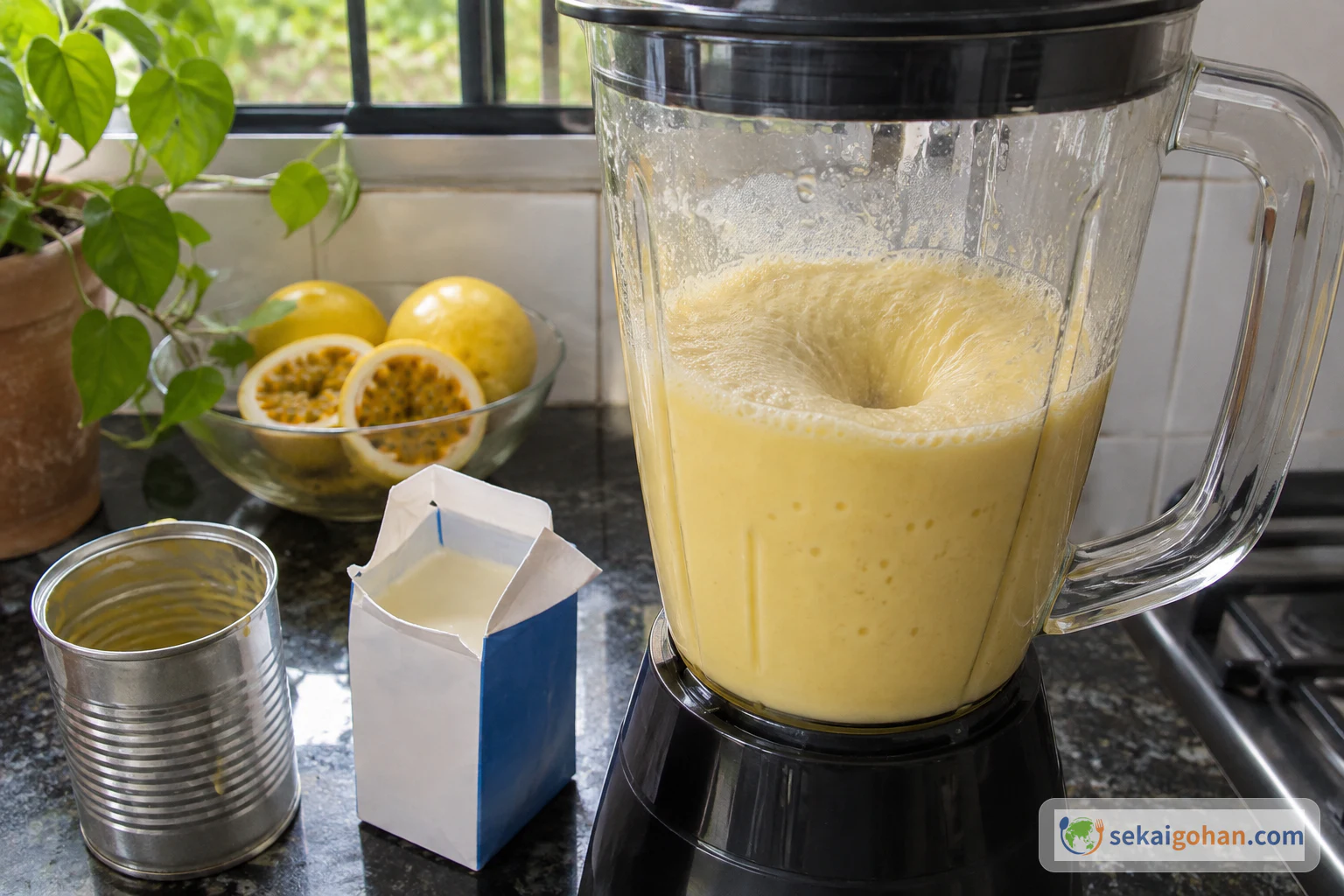
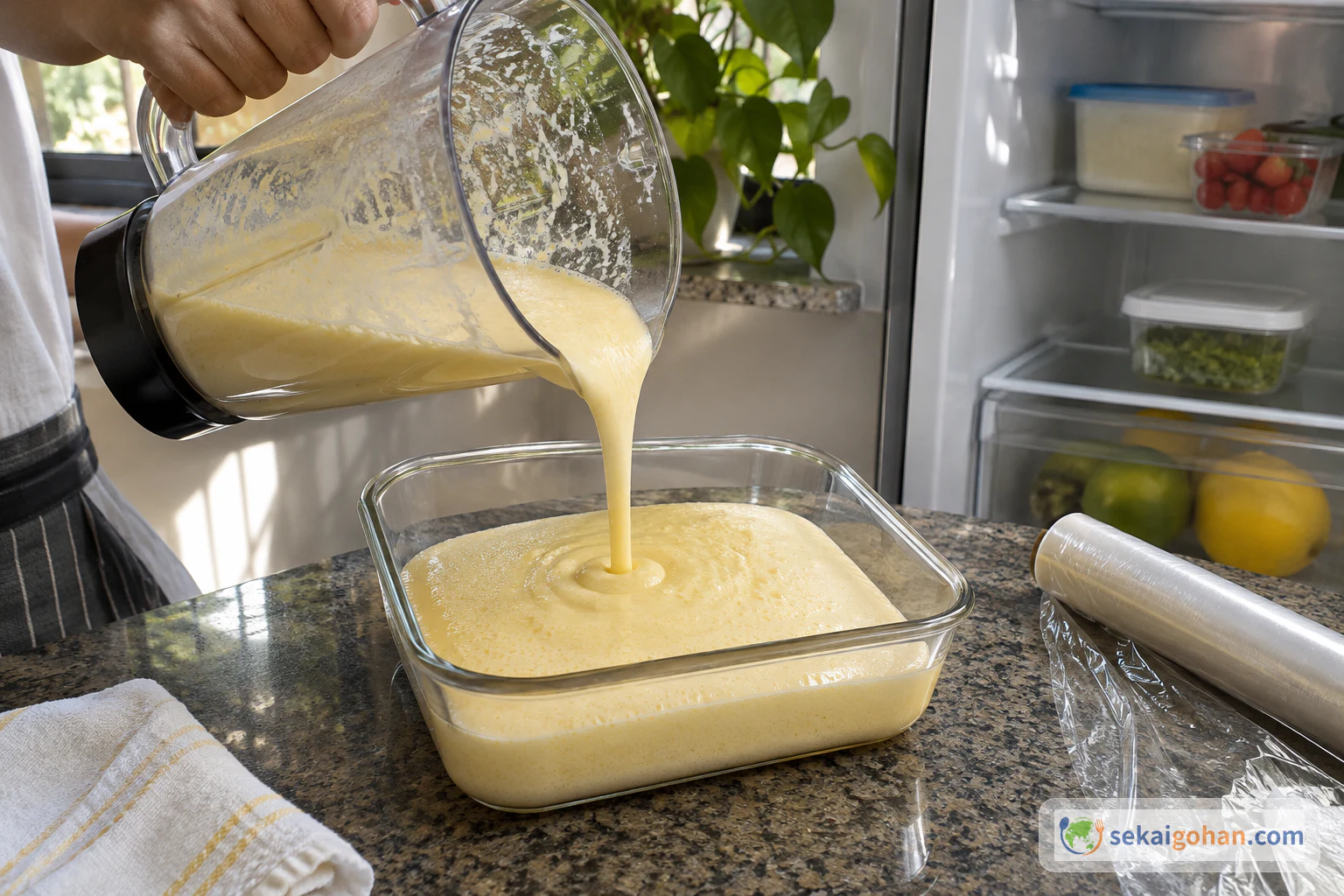
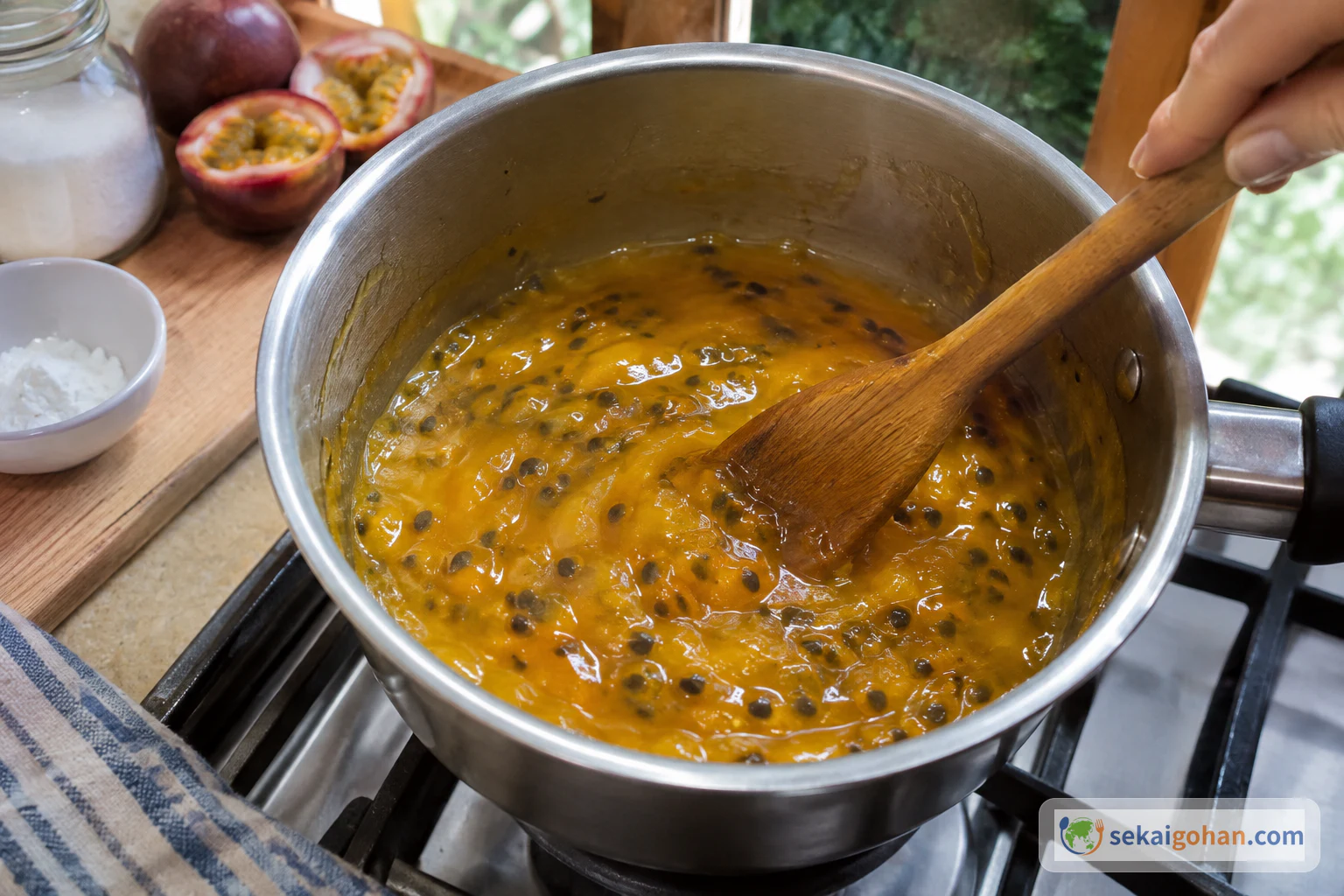
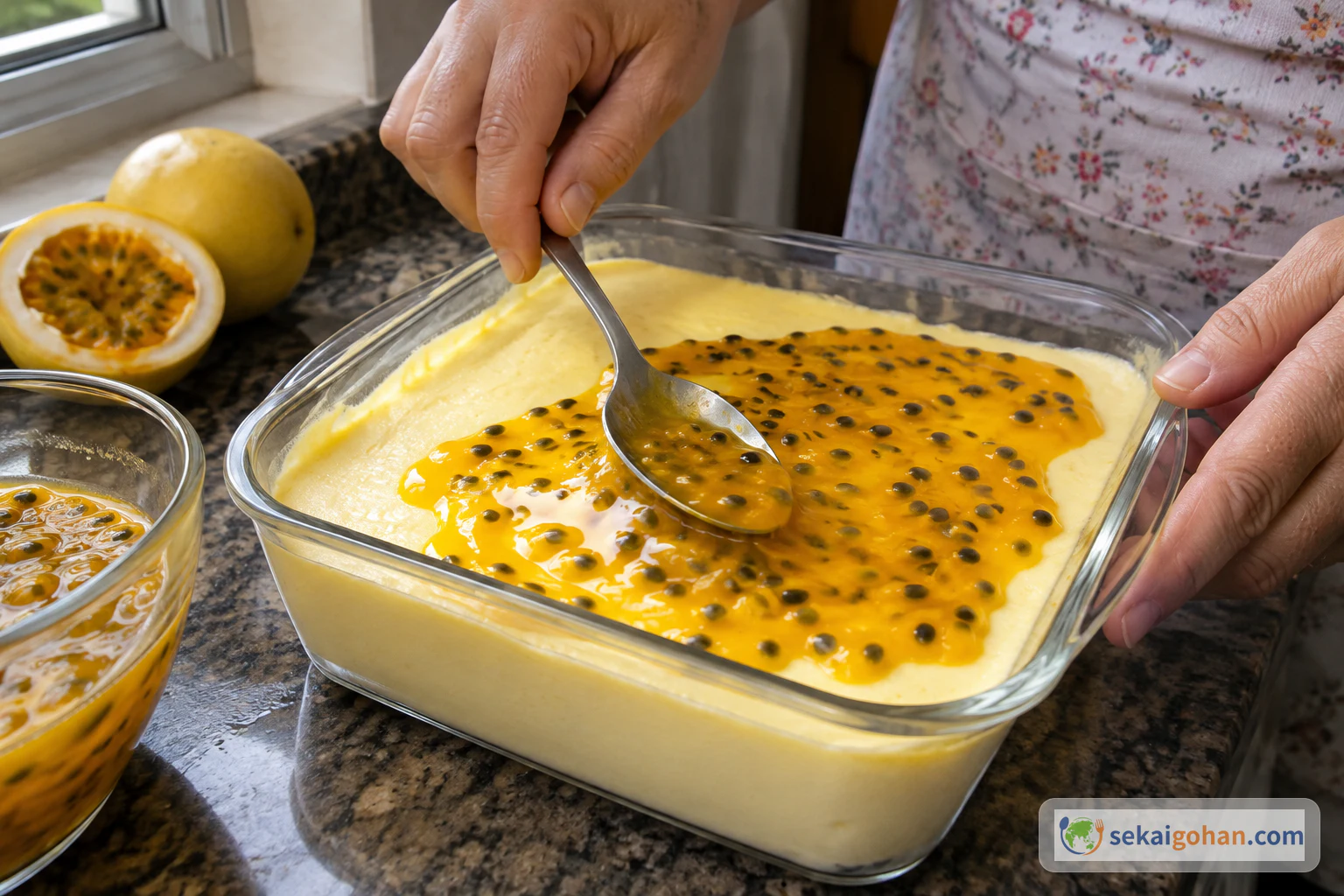
The blender runs for two minutes, and the sharp, perfumed juice disappears into condensed milk and cream. What comes out is pale yellow, thick and full of air. Later a small pan of passion fruit syrup bubbles on the stove, turning glossy and gold with black seeds hanging in it. Once it has cooled, you spoon it over the set mousse and the dish is finished. Mousse de maracujá is a Brazilian home dessert served cold. Every spoonful is very sweet and very tart, and the seeds in the syrup give a small crunch against the smooth cream.
A Brazilian Dessert Made in a Blender
What makes this dessert work is how little goes into it. Three things from the shelf and the fruit bowl do the work: a pack of sweetened condensed milk, a pack of table cream, and the pulp of a few passion fruits loosened with water. There is no egg and no oven, and the basic version has no gelatin either. The blender mixes it and the refrigerator sets it.
Brazilian recipe sites carry many versions of this dessert posted by home cooks, and they nearly all start from the same base of condensed milk, cream and passion fruit juice blended together and chilled. The differences come after that. Some cooks blend in a box of passion fruit–flavored gelatin and set the mousse in individual cups. Others build it in layers with crushed biscuits, whipped cream and chocolate. Others pour the mousse into one dish and finish it with a cooked syrup of fresh pulp, sugar and cornstarch, and that is the version below.
If you know Brazilian sweets, you will recognize the condensed milk. It is the same thick, sweet base behind pudim, the baked caramel custard. Mousse de maracujá uses it cold and lets the tart fruit pull against it. A golden quindim is dense and eggy. This mousse is light and sharp, so it suits the end of a long meal. You can find more of the country's cooking on the Brazil page.
Maracujá is Portuguese for passion fruit, and polpa de maracujá is its pulp. The cooked topping is called the calda, a word Brazilian cooks use for a syrup poured over a dessert. Here the calda is thickened with amido de milho, which is cornstarch.
Ingredients
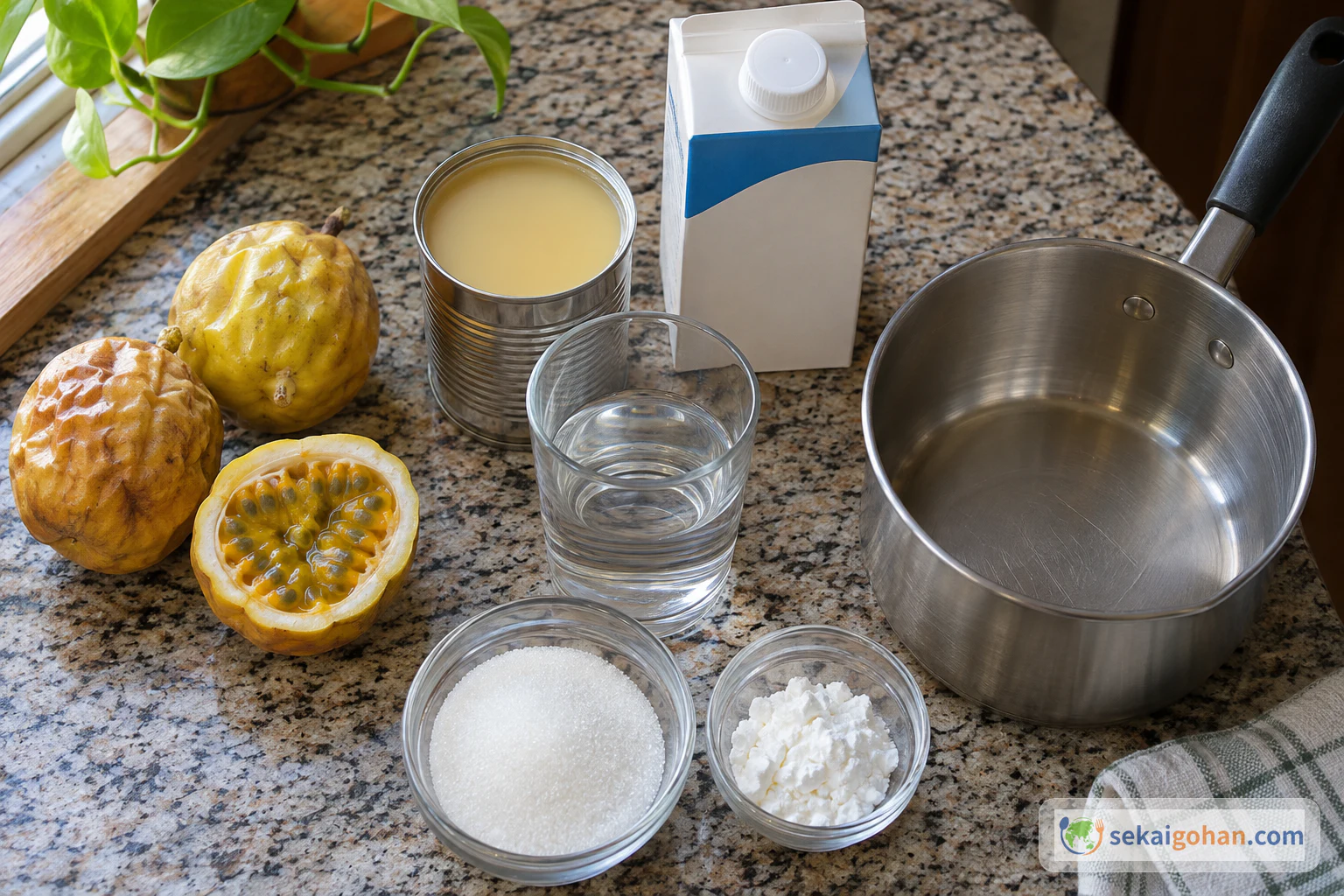
This dessert contains milk in the condensed milk and the cream. It contains no egg. If you add gelatin or biscuits for a variation, check the labels on those products too.
Equipment
- Blender (countertop or hand blender)
- Fine sieve
- Square glass dish, 7 inches (18 cm), with a lid or plastic wrap
- Small saucepan
- Wooden spoon
- Serving spoon for spreading the syrup
Choosing and Substituting
The fruit decides the flavor. Pick passion fruit with wrinkled, fully colored skin. Wrinkles mean the fruit is ripe and the pulp inside is fragrant. Fresh fruit can be hard to find outside the tropics. Frozen passion fruit pulp can stand in for fresh, but buy the unsweetened kind. Sweetened pulp pushes an already sweet dessert even sweeter and weakens the tartness that balances it.
Use fully ripe passion fruit with colored, wrinkled skin. Do not use hard, green, unripe fruit.
Brazilian creme de leite comes in small boxes and is sold as table cream. Outside Brazil, the closest match is heavy cream, used straight from the refrigerator. It is a different product, so the result may differ a little from the Brazilian original. Sweetened condensed milk is sold everywhere in cans and tubes in many sizes. Weigh out 14 oz (395 g) instead of counting cans.
For the syrup, use cornstarch. Potato starch is sold in some of the same aisles, but it is a different starch and thickens differently. Keep the dessert spoon as your measure for the cornstarch. Use one dessert spoon from your own drawer and do not swap in a teaspoon or a tablespoon.
Method
The mousse comes first because it needs the longest time in the refrigerator. Blend it, pour it, and chill it for at least two hours. During that time you make the syrup and let it cool completely. Both parts need to be cold before they meet. After that the dish needs one short rest and it is ready.
When It Goes Wrong
| What you see | Why | What to do |
|---|---|---|
| The mousse looks loose and less silky | The cream was warm when it went into the blender | Next time, take the cream from the refrigerator just before blending |
| Still runny in the middle after chilling | It has not been cold long enough | Give it the full 2 hours. Other home versions chill it for 4 hours, and longer chilling firms it further |
| The topping melts into the mousse and the surface turns soft | The syrup was still warm when it went on | Let the calda cool completely before you spread it |
| The syrup stays thin | It was not cooked long enough after boiling | Return it to medium heat and keep stirring at a boil until it thickens |
| Lumps in the syrup | The cornstarch sat still in the hot pan | Stir constantly from the moment the cornstarch goes in |
Serving and Variations
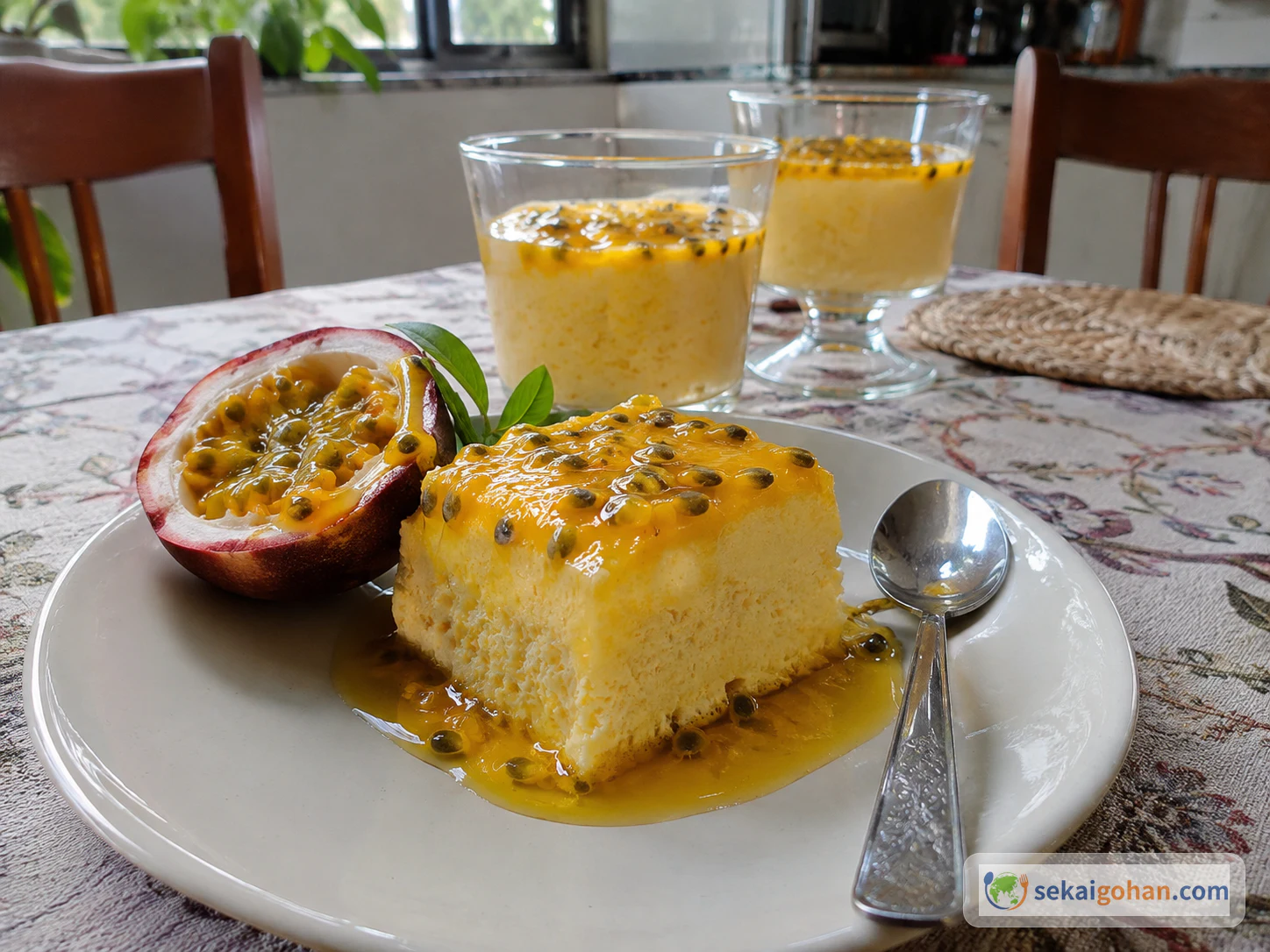
Serve the mousse well chilled, straight from the refrigerator to the table. Cut squares from the dish with a spoon and lift them out so every portion gets its layer of seeded syrup. It is rich, with a whole pack of condensed milk in it, so small portions are the right way to serve it. A spoonful or two after a meal is enough, and a halved passion fruit on the table shows guests what they are eating. Keep the dish covered in the refrigerator and eat it on the day you make it.
Gelatin-set mousse in cups
Some home cooks dissolve a box of passion fruit–flavored gelatin following the box instructions, blend it into the same condensed milk, cream and juice base, and set the mousse in individual cups for 4 hours. The gelatin gives a firmer mousse. For a firmer set without flavored gelatin, unflavored gelatin can be added instead; use the amount the product label directs.
Layered mousse with biscuits and cream
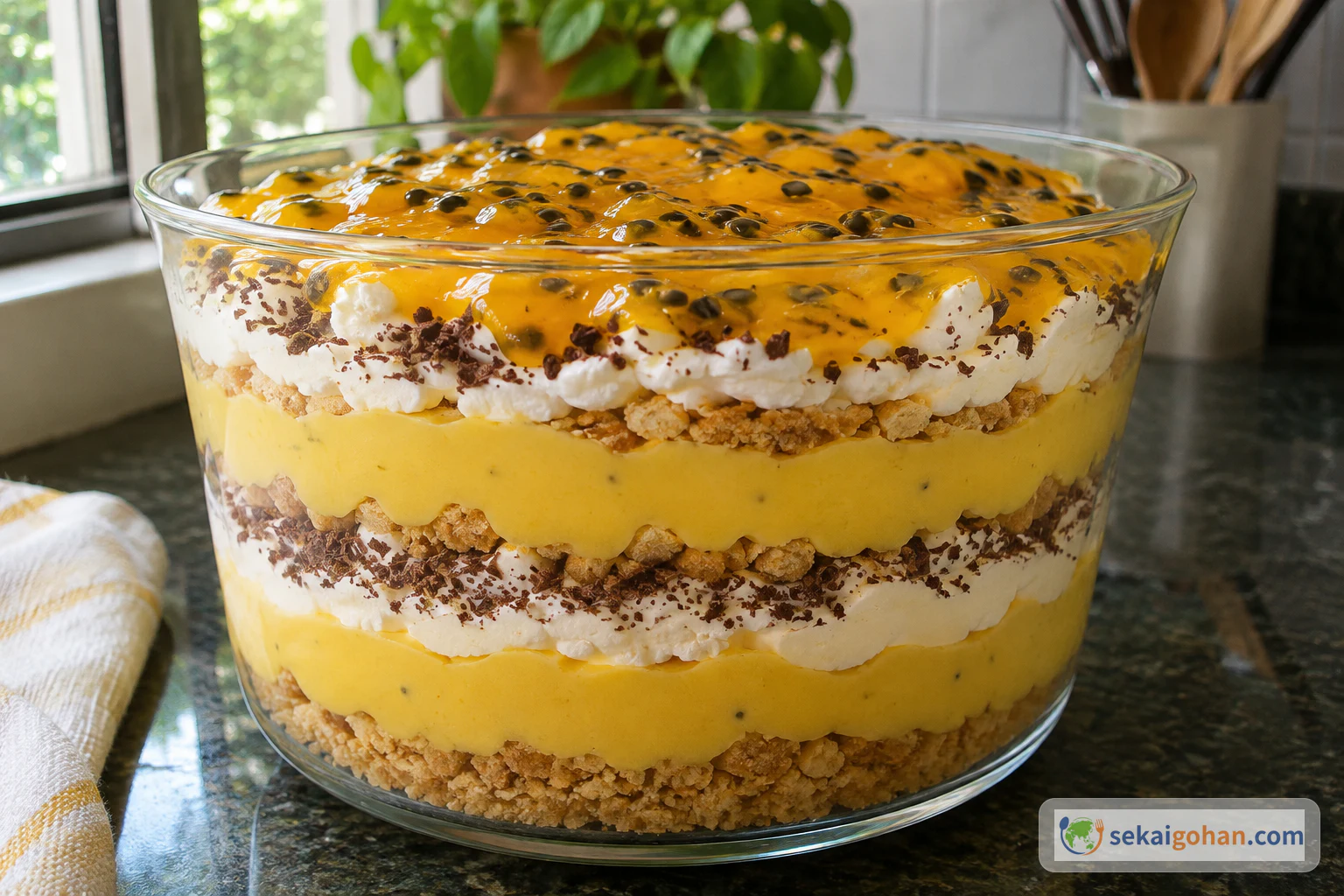
Another home version builds the dessert in layers in a glass dish. It alternates the mousse with crushed cornstarch biscuits (bolacha maizena), whipped cream (chantilly) and chocolate, and finishes it with a syrup on top. The biscuits add crunch and the cream softens the tartness. That version uses its own proportions and its own syrup. Make it as a separate recipe and do not mix it into the one above.
Frequently asked questions
Does mousse de maracujá need gelatin to set?
No. The condensed milk and cream thicken with the juice and firm up in the refrigerator, and the basic mousse contains no gelatin. Gelatin versions exist and give a firmer result.
Can I use frozen passion fruit pulp for both the mousse and the syrup?
Yes. Use unsweetened pulp and weigh out the same amounts as fresh. For the syrup, pulp that still has seeds gives you the black flecks and the crunch. If your frozen pulp has no seeds, the calda will be smooth and plain gold.