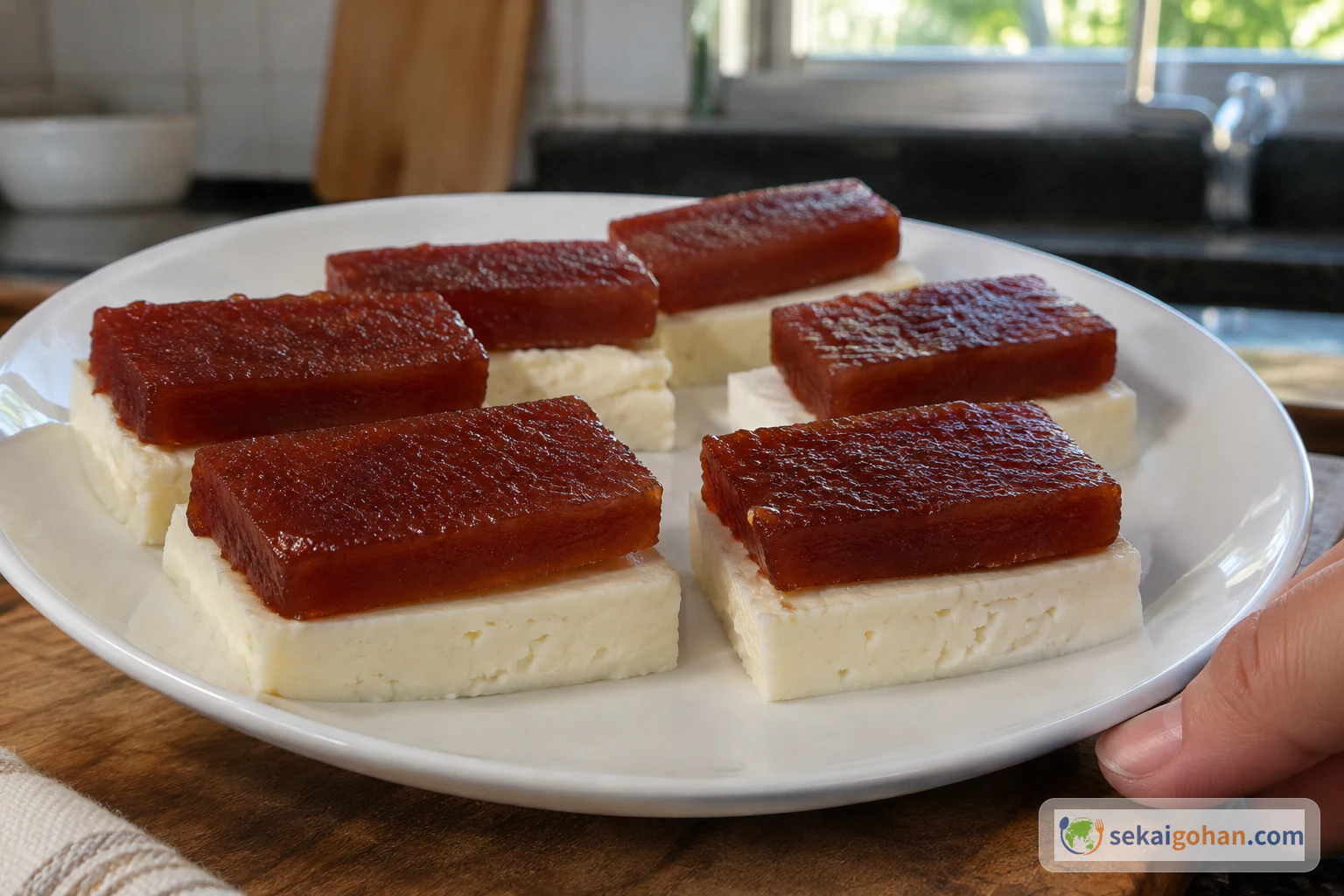
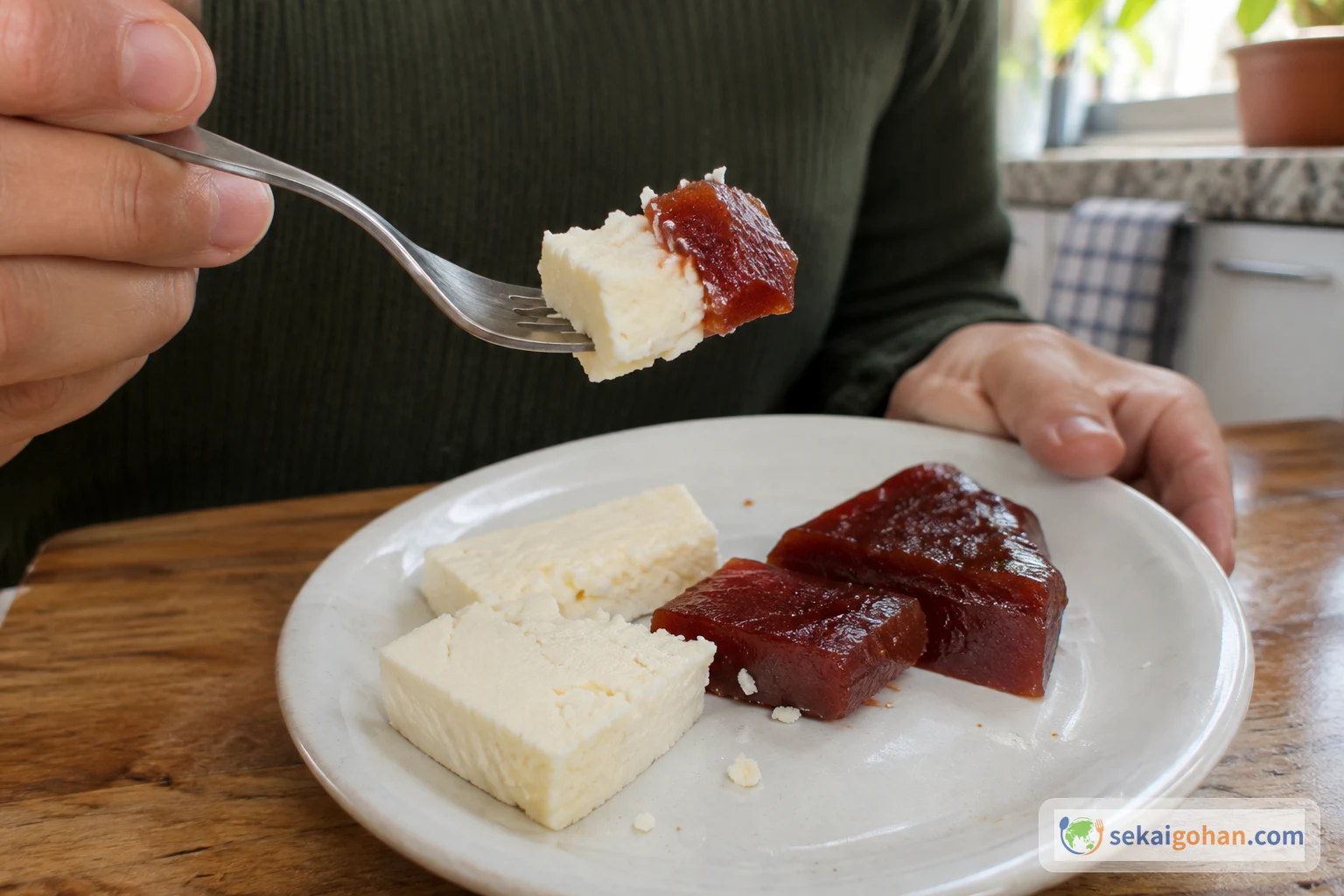
The fork goes down through two layers at once: a dark red slab of guava paste that drags a little against the tines, then a white block of fresh cheese that gives way cleanly. In the mouth the cheese is cool, milky and lightly salty, and the guava is dense, very sweet and faintly grainy. Neither one is cooked. Romeu e Julieta is Brazil's dessert of fresh cheese and goiabada, guava paste, sliced thick and eaten together. Brazilians make it when there is no time for anything else, because both pieces wait in the refrigerator until someone wants something sweet after a meal.
Two Lovers on One Plate
The name comes from Shakespeare. Romeu is the cheese and Julieta is the goiabada, two characters who belong together, and the joke works because the pairing sounds unlikely until you taste it. Salt and sweetness meet in one bite, and each makes the other taste more like itself. Where and when people first put the two together is not settled.
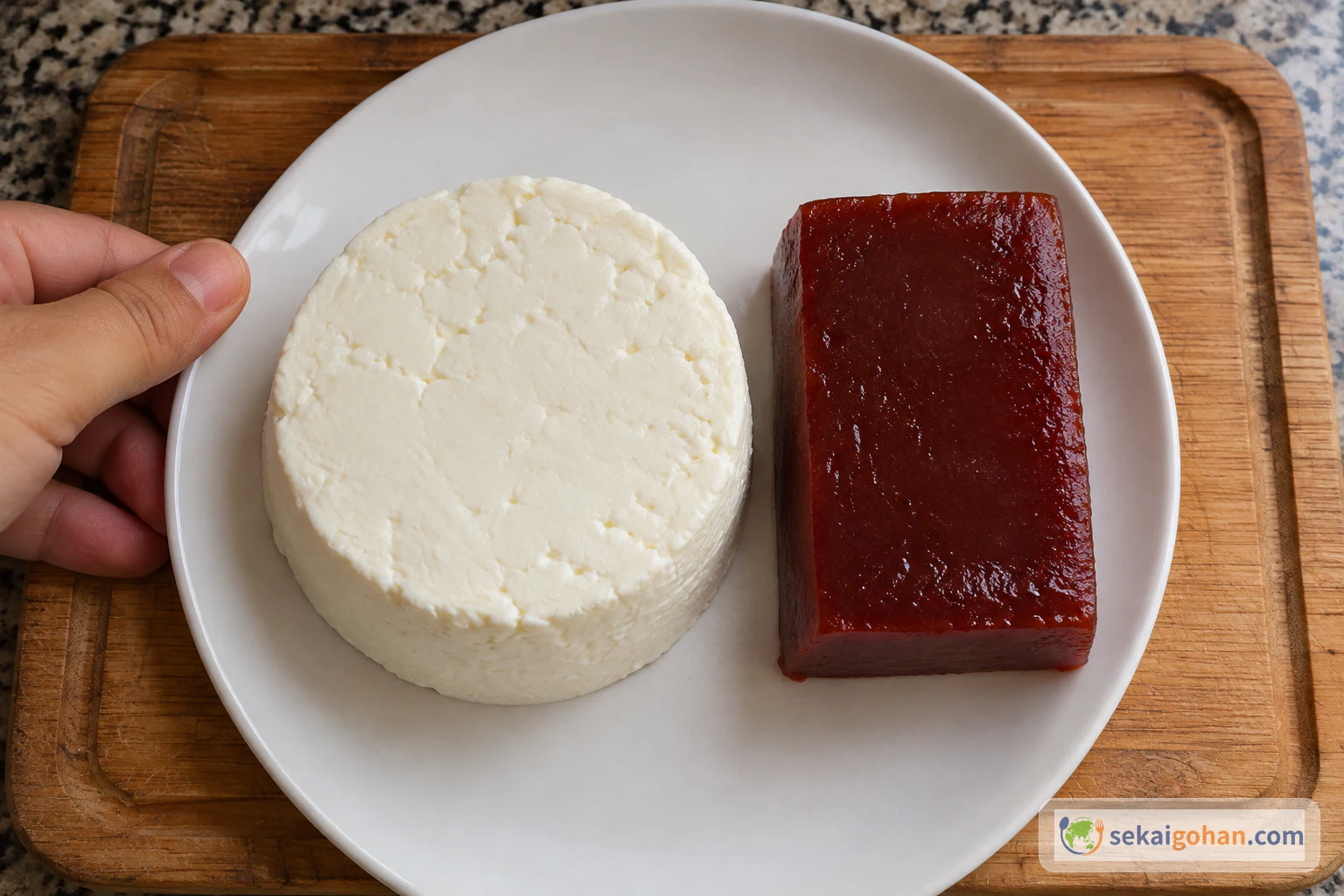
The cheese is usually queijo minas, a soft, white fresh cheese from the state of Minas Gerais that you can still slice. It tastes of fresh milk and a little salt, with no rind and almost no tang. Goiabada is guava pulp cooked down with water and sugar until it sets firm enough to cut. Its texture sits between a fruit butter and a fruit leather. Guava carries its own pectin, and together with the sugar that pectin lets the paste set into a bar and keep well. Goiabada is sold as a solid brick, and that solidity matters: it lets you cut a slab the same size as the cheese and stack the two.
The plate stays simple in most homes, cheese and guava cut thick and set side by side or one on top of the other. Brazilian cooks also turn the same pair into other desserts. One version bakes a creamy egg and cheese mixture over a layer of melted guava paste. Another is a chilled layered dessert of fresh-cheese cream over guava cooked in syrup, set with gelatin. Both appear further down. For more of the country's cooking, see the Brazil page.
In Portuguese the dish is written Romeu e Julieta, "e" meaning "and." Add "queijo" or "goiabada" to the name when you search for it.
Ingredients
Both versions contain milk. The baked version also contains eggs. Check the labels on guava paste and boxed cream for other allergens and shared-facility statements.
Equipment
- Sharp chef's knife
- Cutting board
- Serving plate and forks
- Cheese wire cutter (optional, gives clean edges on soft cheese)
- For the baked version: saucepan, blender, ovenproof glass baking dish
Choosing the Cheese and the Guava
The cheese is the half that needs care. In Brazil, queijo minas frescal is sometimes made from raw milk. Buy a commercially made fresh cheese that is labeled pasteurized, and judge it by the label, never by how it looks. Latin American grocers often stock a queijo minas or a similar fresh white cheese. Other Latin fresh cheeses work, and so does Italian ricotta salata, which is drier and saltier.
If none of those are in reach, a well-drained cottage-style fresh cheese or a firm mozzarella, both pasteurized, will hold a slice. The taste changes with each one. Cottage-style cheese is milder and softer, so drain it hard before you shape it. Firm mozzarella is more elastic and less salty, so the guava will taste sweeter against it.
Goiabada has to be the solid bar, sold in import shops and online, often under the Goya brand. Guava jam spreads and slides, so it won't stand in a slab beside the cheese. Quince paste (marmelada, or Spanish membrillo) has the same firm texture and cuts the same way, but it tastes of quince, so you get a different dessert. For the baked version, requeijão cremoso is hard to find outside Brazil, and cream cheese takes its place.
The basic plate uses uncooked fresh cheese. Buy a pasteurized, commercially made cheese, keep it refrigerated, use clean tools and a board kept apart from raw foods, and eat it the same day. Pregnant women, older adults, babies and young children, and anyone with a weakened immune system should skip the uncooked plate and choose the baked version instead.
What makes this dish work is a salty, milky cheese against a very sweet paste. If your substitute tastes bland, slice it a little thicker so the salt and milk can stand up to the guava.
Method
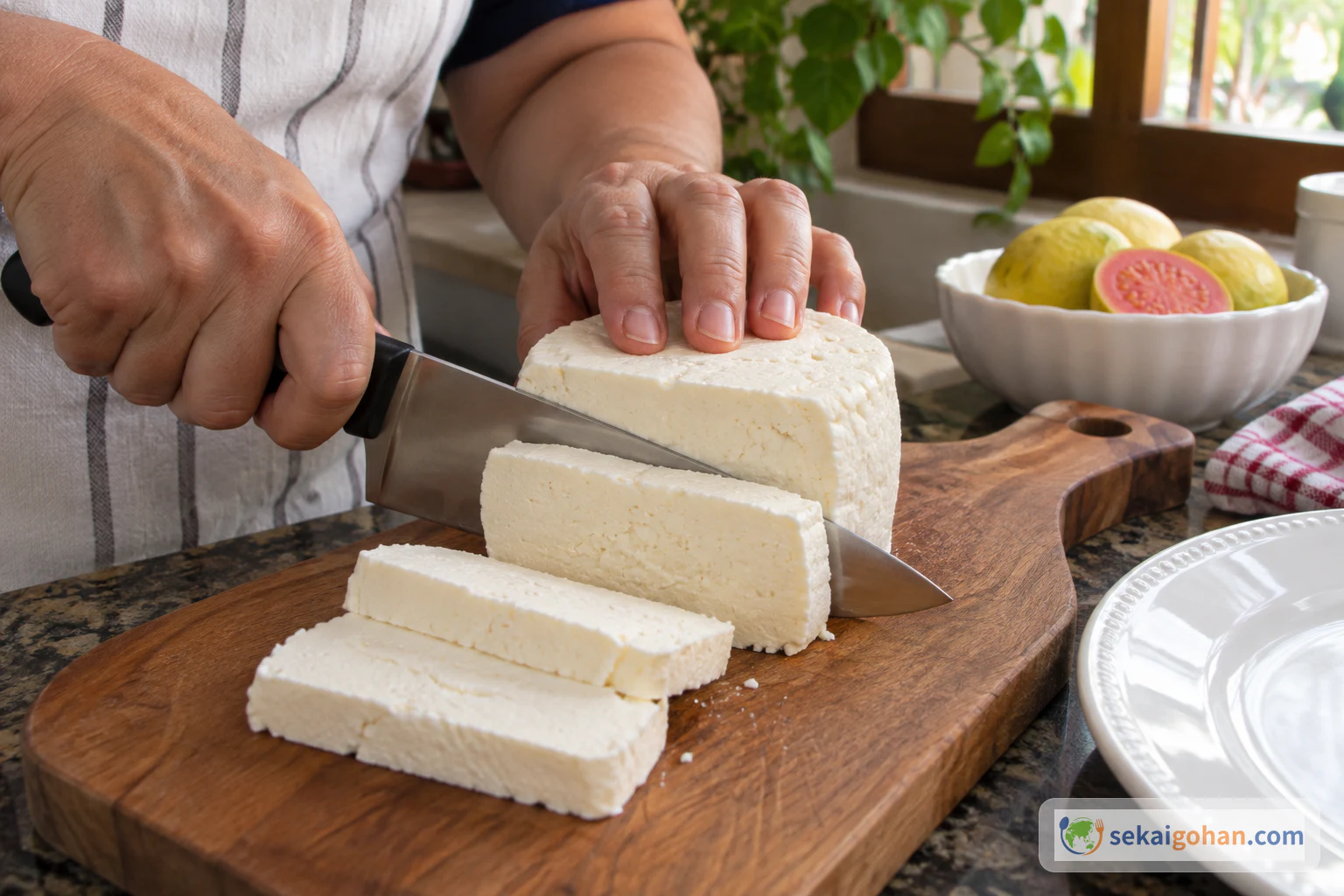
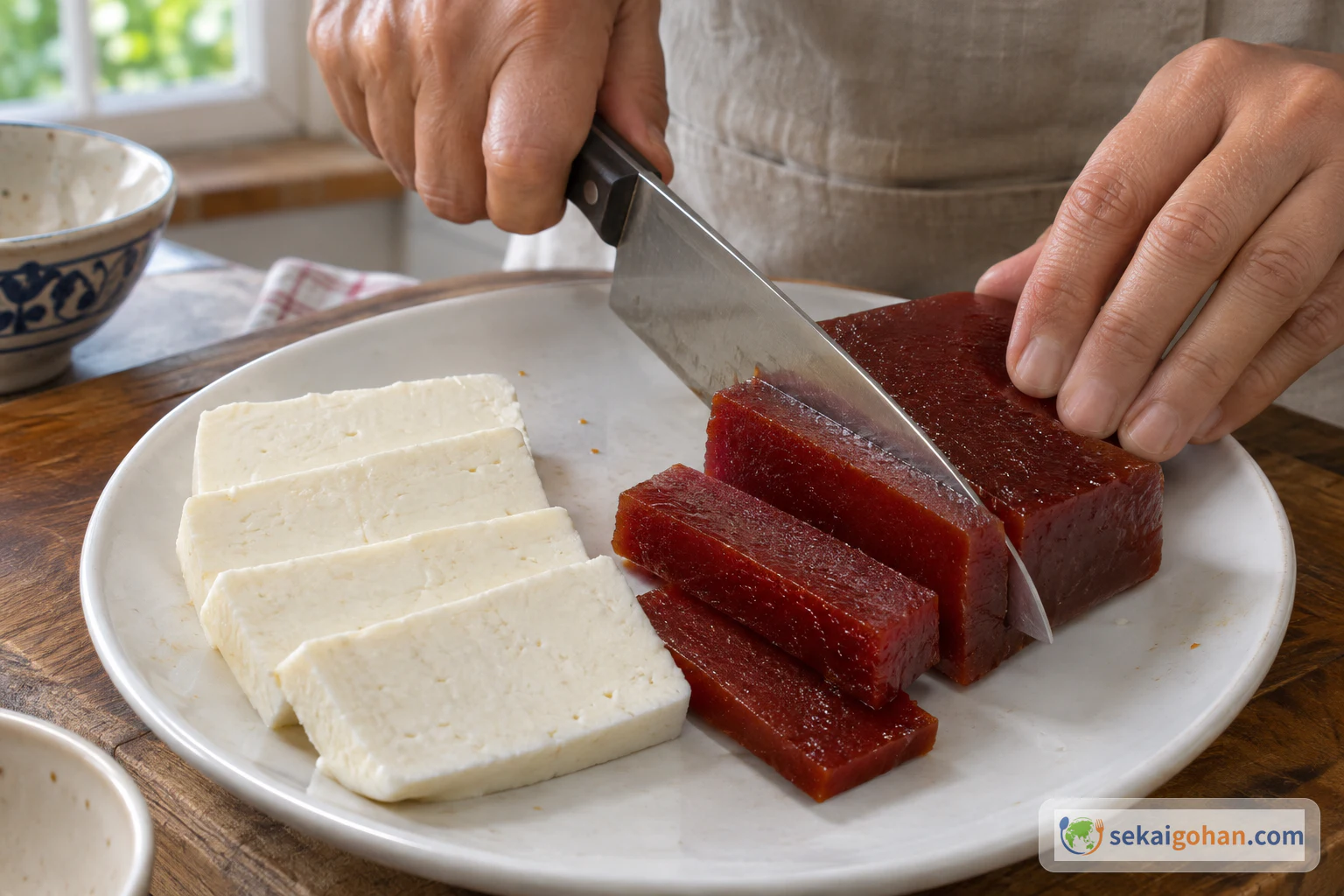
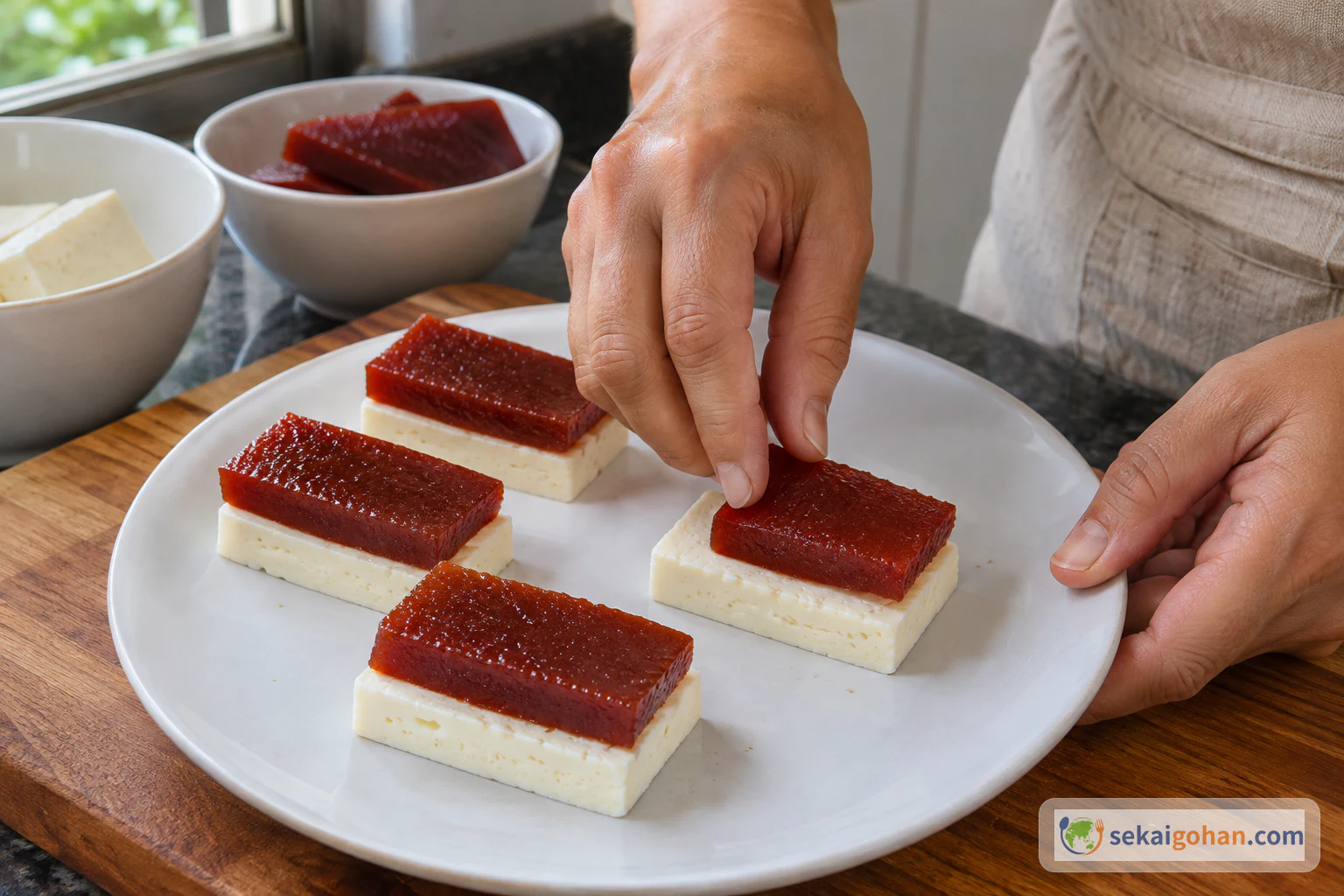
All the work is cutting. Cut the cheese first and set it aside, then cut the guava to match it, stack the two, and serve. Nothing is heated, so the plate can be ready while the dishes from dinner are being cleared.
Uneven pieces upset the balance in every bite. Too much guava turns it cloying, and too much cheese tastes flat. Cutting both to the same rectangle is what keeps each bite balanced.
When It Goes Wrong
| What you see | Why | What to do |
|---|---|---|
| The guava paste tears and sticks to the knife | Sugar and pectin build up on the blade | Wet the knife or wipe it clean before every cut |
| The cheese crumbles or slumps as you slice | The cheese is too soft or still wet | Pat it dry, cut with one long stroke, or choose a firmer fresh cheese |
| Water pools on the plate | A cottage-style substitute was not drained | Drain it well and blot the slices before stacking |
| The guava spreads instead of standing up | Guava jam was used instead of a solid bar | Use a solid bar of goiabada, or quince paste for a different flavour |
| Every bite tastes only sweet | The cheese is mild, or the guava slab is thicker than the cheese | Cut the guava thinner, or use a saltier cheese such as ricotta salata |
Serving, Variations and Storage
At the table
Romeu e Julieta is an after-dinner dessert, put out on a plate for everyone to share and picked at with forks. It is the sweet Brazilians reach for on a busy day, since both ingredients keep in the refrigerator and the plate takes only a few cuts.
Baked Romeu e Julieta
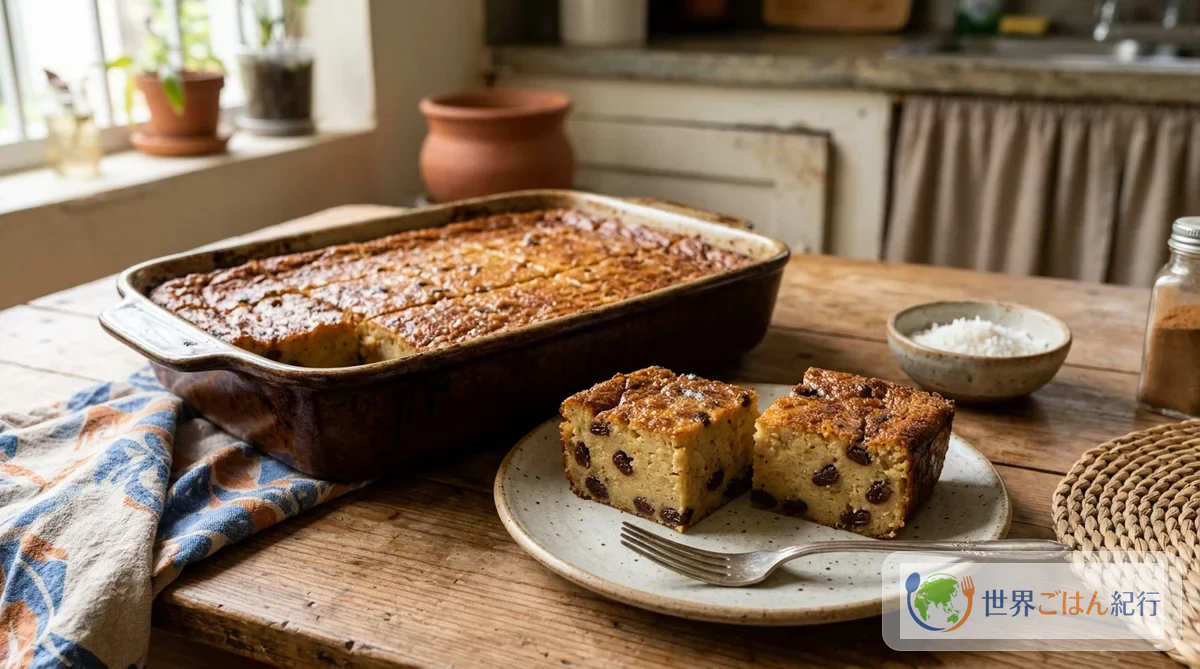
This version uses requeijão cremoso or cream cheese and eggs instead of slices of queijo minas, and the result is soft and spoonable. Heat the oven to 390°F (200°C). Melt the guava paste with the water in a saucepan over medium heat, stirring, until it turns into a thick red syrup. Pour it into the baking dish. If you prefer, skip the melting and lay thin slices of goiabada over the bottom of the dish instead. In a blender, process the eggs, requeijão or cream cheese, creme de leite and the sugar, if using, for about 1 minute, until smooth and pale. Pour the cream over the guava layer.
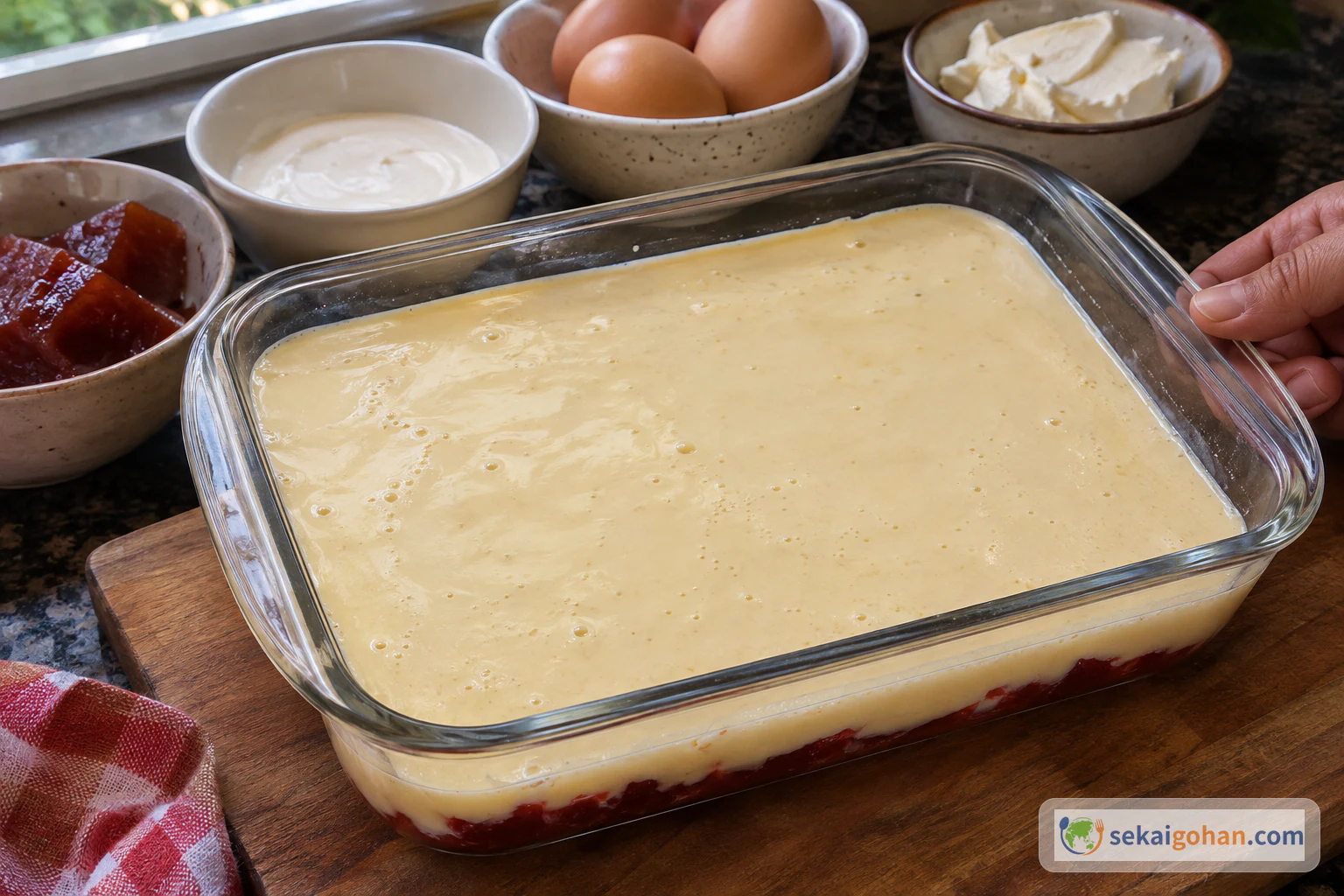
Bake for about 25 minutes, until the cream is set and the top is lightly colored. Check the center as well as the edges. Lift a spoonful from the middle, and if it is still liquid, keep baking until it is set all the way through. Serve it warm or chilled.
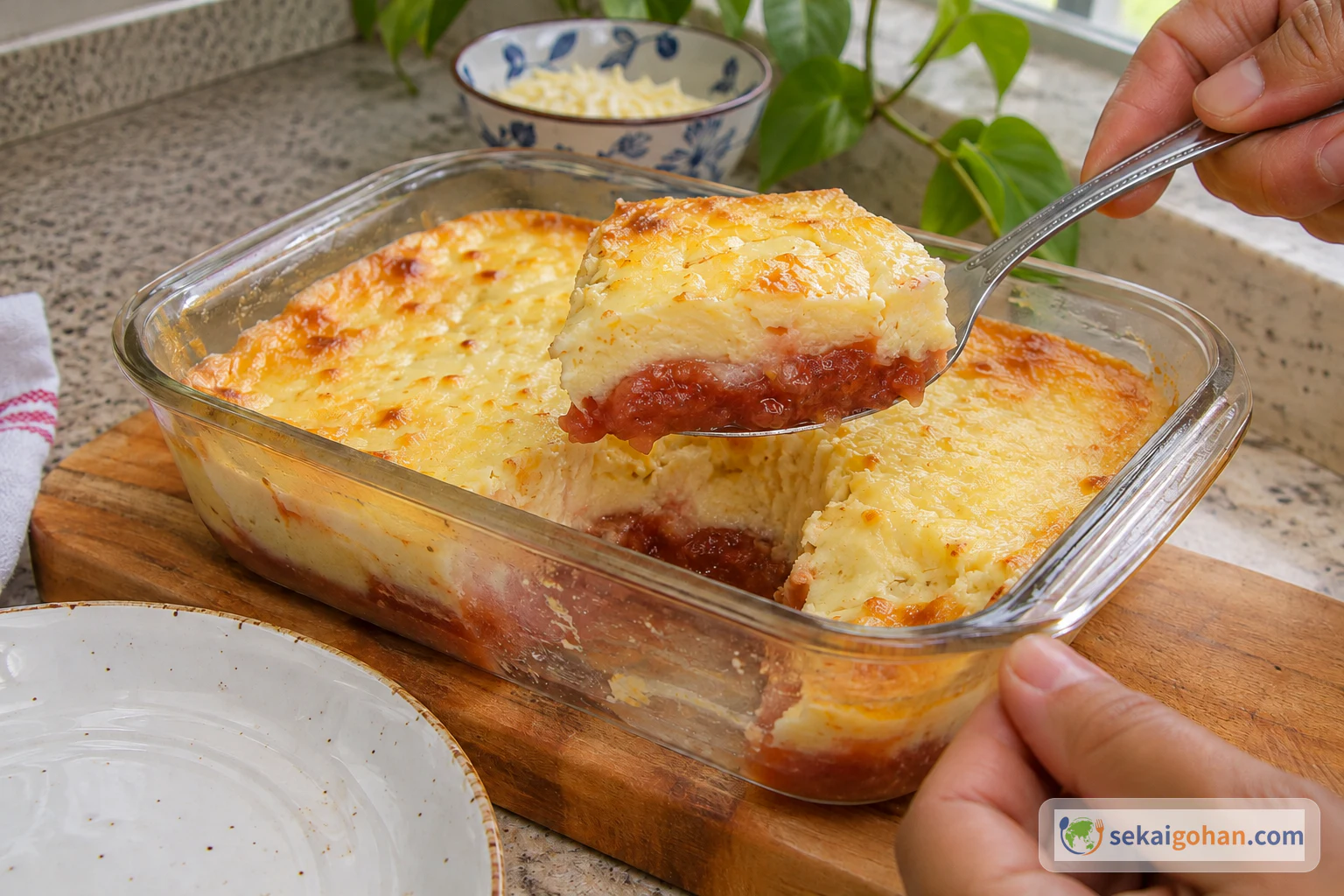
The baking dish and melted guava syrup are very hot. Use oven mitts, and let the syrup cool slightly before you pour the cream over it. The cream layer contains raw eggs, so bake until the center is set and never serve it runny.
Quince instead of guava
Make the same plate with quince paste and you keep the shape and the salty-sweet contrast. The fruit flavour turns more floral and less tropical. Use it when goiabada is out of reach, and treat it as a cousin of the dish.
Storage
Keep the fresh cheese and the goiabada wrapped in the refrigerator. Cut and plate only what will be eaten, and put leftover cheese back in the refrigerator promptly.
Frequently asked questions
Can I use guava jam instead of goiabada?
Not for the basic plate. Jam is too soft to cut into a slab, so it can't sit on the cheese as a matching layer. For the baked version, the guava is melted anyway, but a solid bar still gives the clearest red layer.
Can I use cream cheese on the basic plate?
Cream cheese is too soft and rich to slice into firm rectangles, and its tang pulls away from the clean milk flavour the plate needs. It belongs in the baked version, where it is blended into the cream layer. On the plate, use a firm fresh cheese.
Is there a chilled version?
Yes. One layered dessert spreads a fresh-cheese cream set with gelatin over guava cooked in syrup. It chills in the refrigerator for at least 6 hours or overnight before serving. It suits a party better than a quick weeknight plate.
Should the guava sit on top of the cheese or beside it?
Either way works. Stacking guava on cheese makes each forkful easy to cut as one piece, which is why it shows up so often. Side by side lets each person choose how much of each goes into a bite.