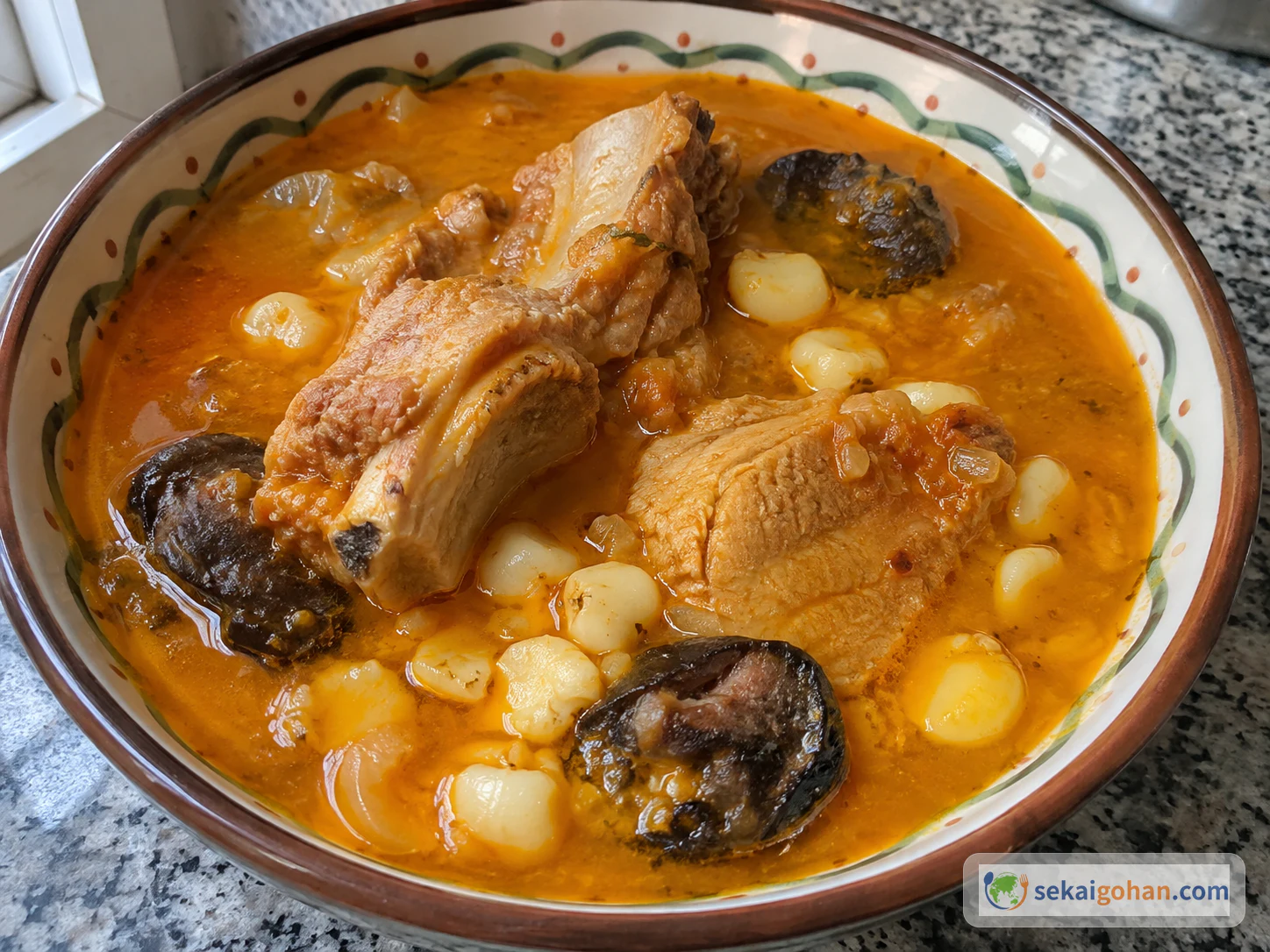
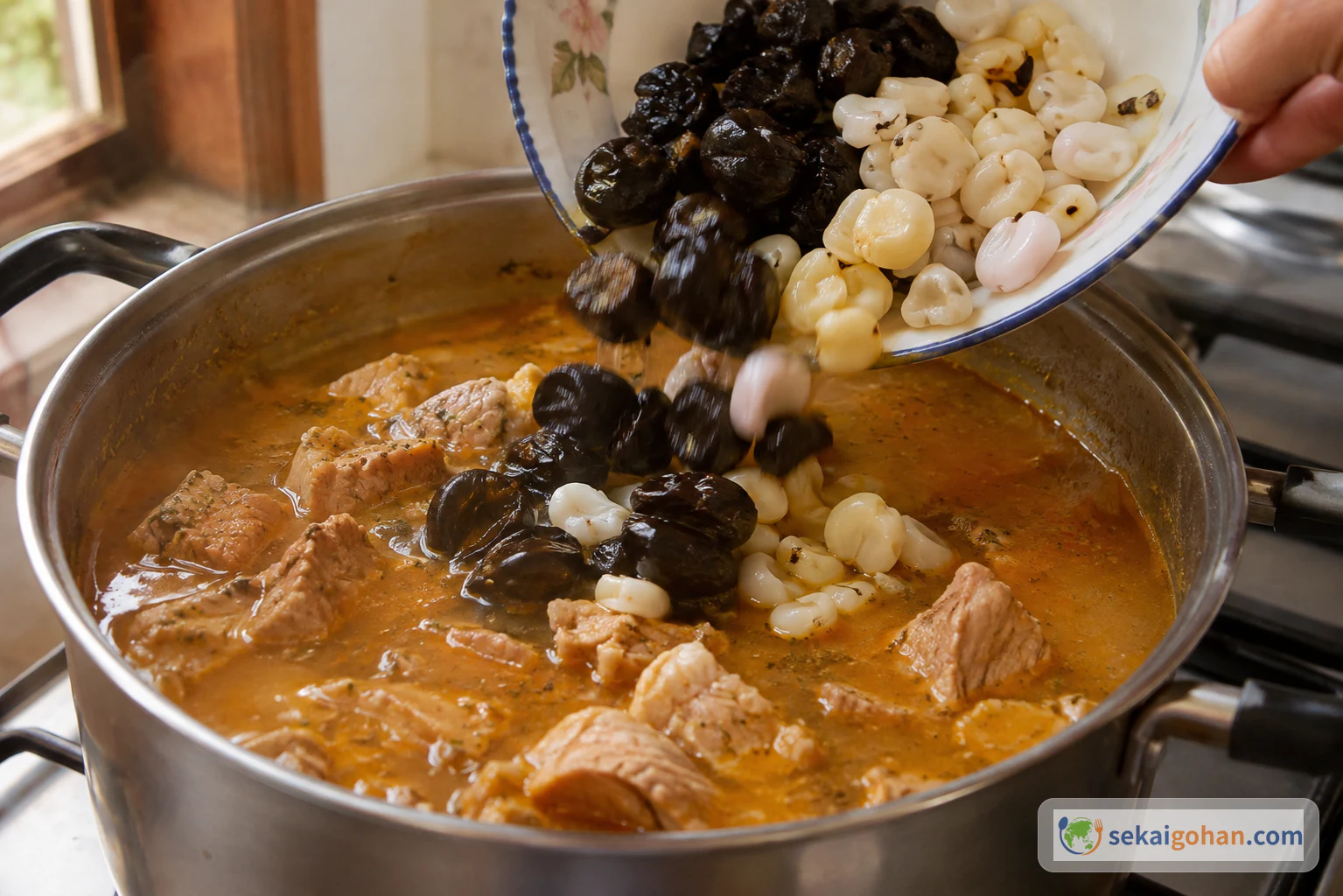
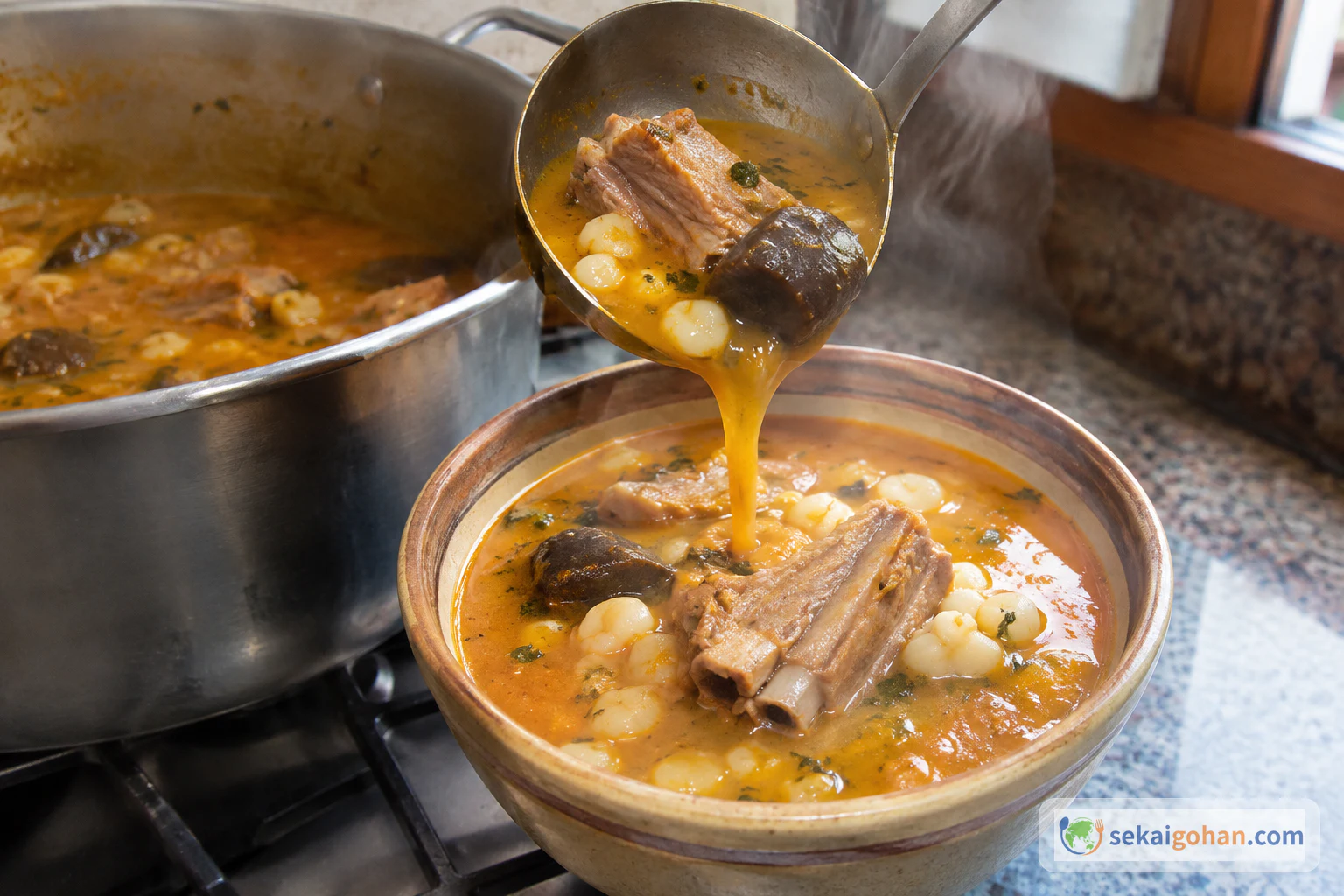
The broth comes out of the pot the colour of a marigold, and the pork underneath has gone so soft it barely holds to the bone. In the bowl sit two pieces of meat, a few dark, spongy chuño and a scattering of fat white hominy kernels, all of them drinking up a soup that is warm with cumin and yellow chilli and just thick enough to coat a spoon. This is fricasé, the pork soup of La Paz in Bolivia. It tastes of slow-cooked pork and garlic first, then the fruity heat of ají amarillo, with oregano rounding out the end of each mouthful.
A Golden Soup from La Paz
Fricasé belongs to the city of La Paz. It is a traditional caldo, a brothy soup, built on pork, white corn and chuño and seasoned with yellow chilli. People there often buy it and eat it in the morning, which surprises anyone who thinks of pork stew as a dinner dish. It is also served at celebrations and on cold days.
The name is usually traced back to the colonial period, when the dish is said to have begun as a local take on a Parisian fricassée. Where and how that happened is not settled. What is certain is that the bowl on a La Paz table shares little with the French one: the French fricassée is a pale, creamy stew, while fricasé is orange, brothy and spiced with cumin and chilli. The Tunisian fricassé is something else again, a fried sandwich with only the name in common.
Chuño, mote and the highland bowl
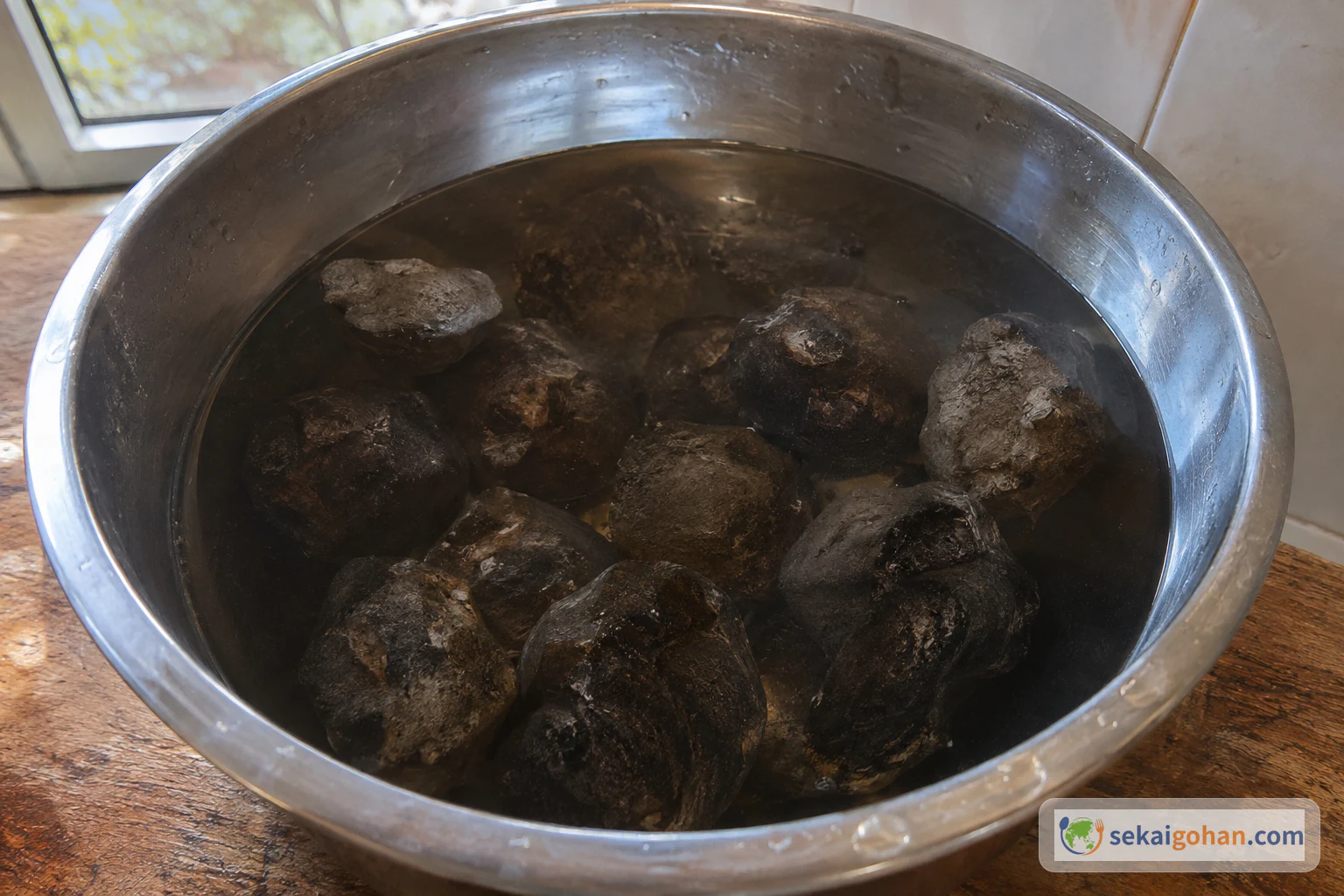
Two ingredients make fricasé taste of the Altiplano. Chuño is freeze-dried potato, black or white, with a distinct, earthy aroma and a texture like a soft sponge once it has soaked and boiled. On the high plateau it is the starch that goes into the soup; some cooks use ordinary potatoes instead, and some make the soup with chicken. Mote blanco is large-kernel white corn, the same family as hominy, and it soaks up the broth while keeping a gentle chew.
Fricasé also carries a reputation as a hangover dish. People eat it after a long night, though any cure it offers is theoretical. If you are cooking more from Bolivia, the peanut soup sopa de maní is another bowl from the same kitchens, and the Bolivia country page gathers the rest.
Traditionally, the chuño and mote go into the bowl first and the pork and broth are ladled over them. Simmering them briefly in the pot instead lets them take on more of the broth before they reach the table.
Ingredients (serves 4)
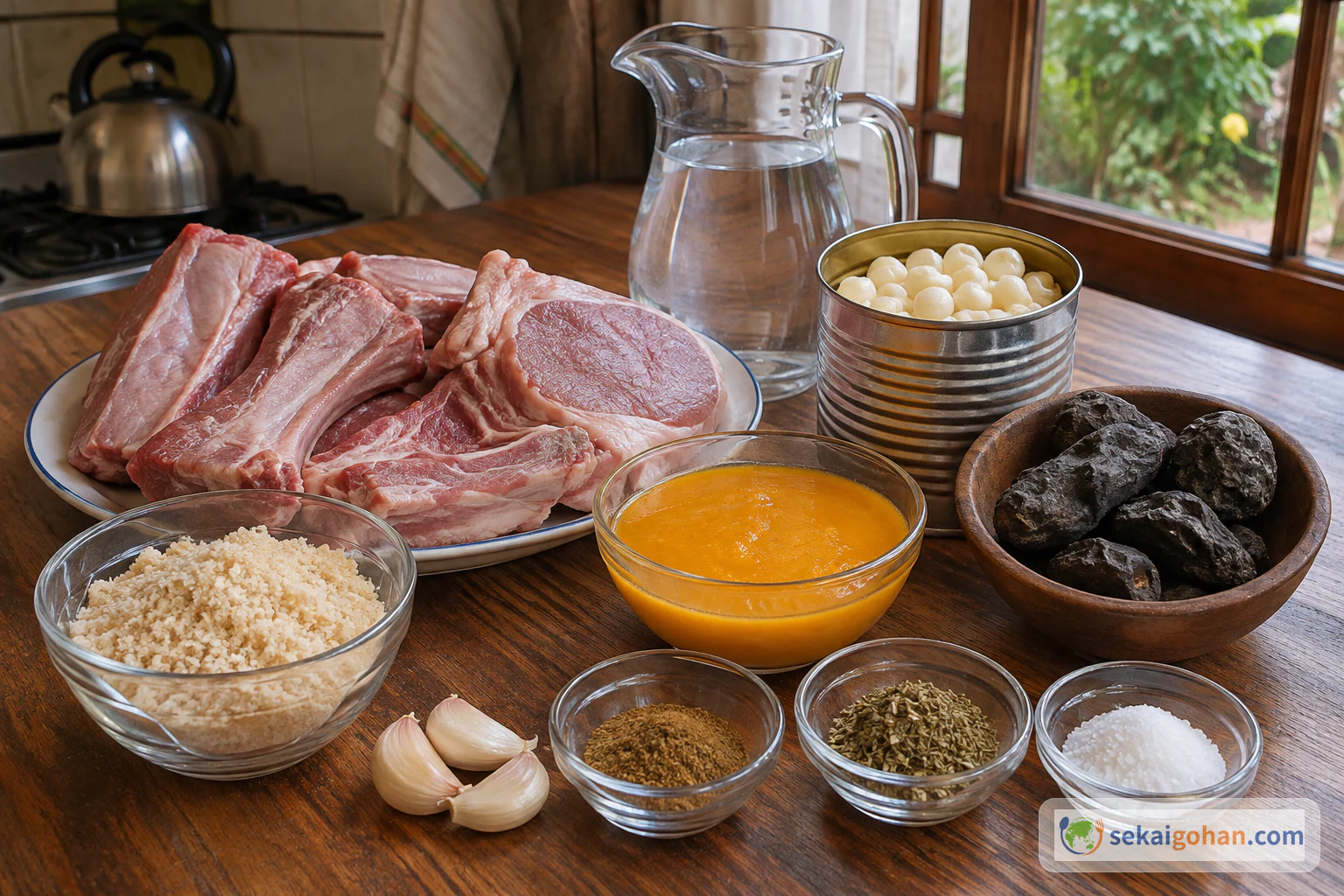
Breadcrumbs are made from bread; check the label for wheat and other allergens. Check the labels on jarred ají amarillo sauce and canned hominy as well.
Equipment
- Bowl for soaking the chuño overnight
- Cutting board and a sharp knife
- Large pot for the pork and broth
- Separate saucepan for boiling the chuño
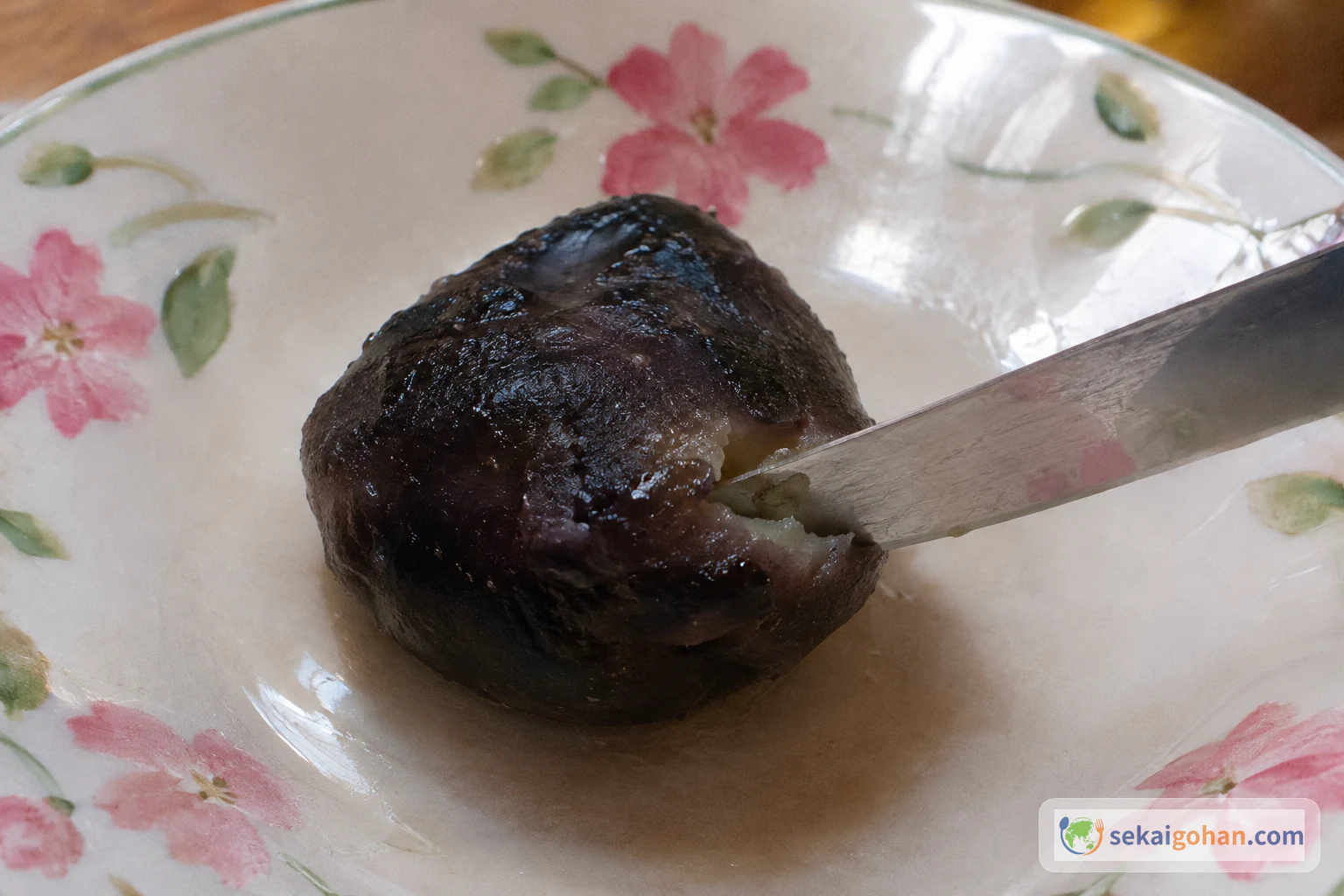
- Small knife for testing doneness
- Ladle and soup bowls
Choosing and Substituting
Ají amarillo is the one flavour you cannot fake. Jars of Peruvian ají amarillo paste are easy to order online and keep the colour and fruity heat of the soup. Paprika with a little chilli gives you an orange broth, but the taste moves away from fricasé, so treat it as an emergency swap only.
Chuño is hard to find outside the Andes; look online for Bolivian or Peruvian chuño, black or white. If you cannot get it, leave it out rather than using fresh potato, which turns the soup into a different dish. Keep the hominy at one can rather than adding more to fill the gap.
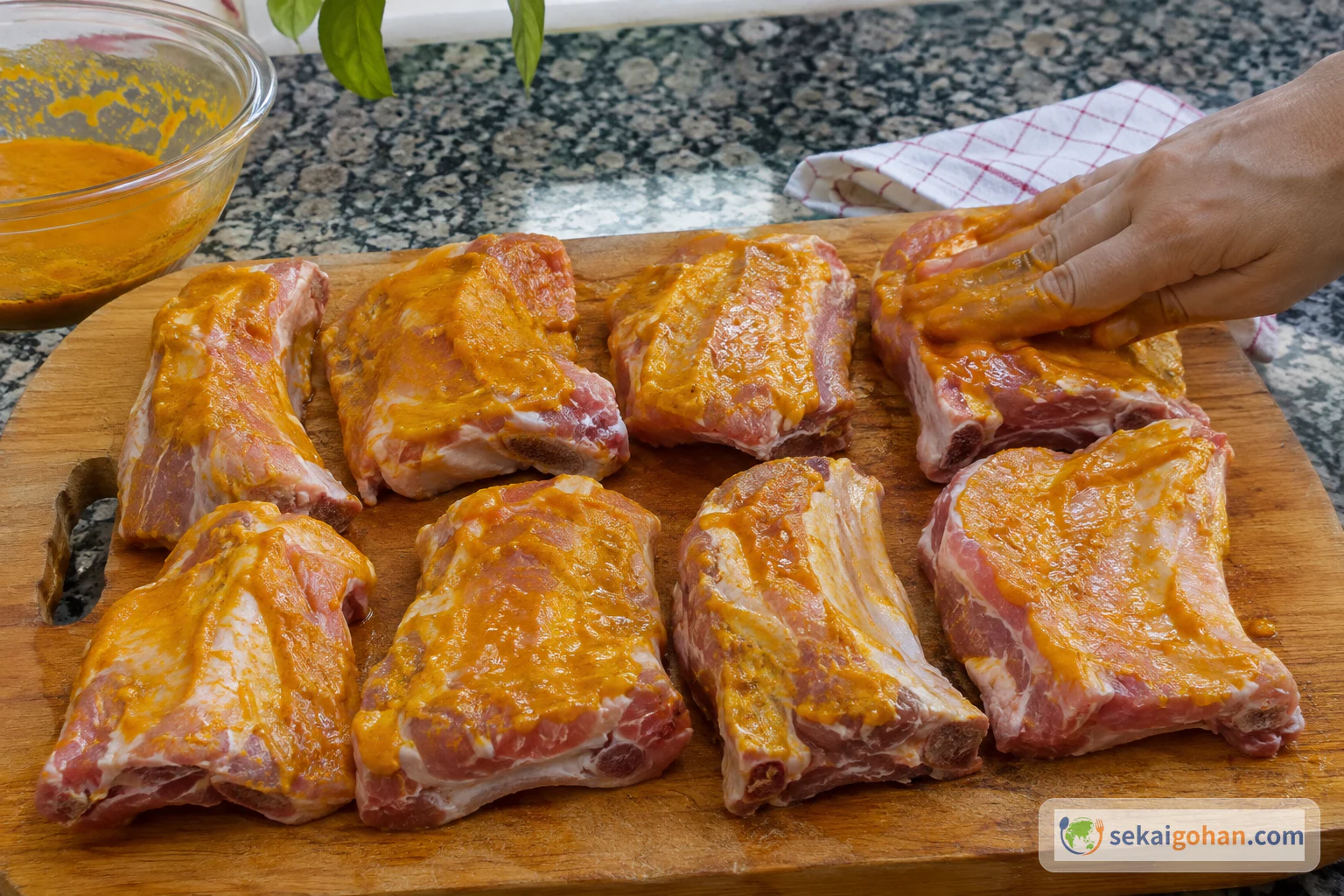
For the mote, canned white hominy sold for Mexican pozole is the right kernel. Rice, cornmeal and yellow sweet corn are different foods and change the soup entirely. Plain breadcrumbs from any supermarket work for thickening. For the pork, bone-in spare ribs, bone-in chops or a mix of the two all suit the long simmer.
Method
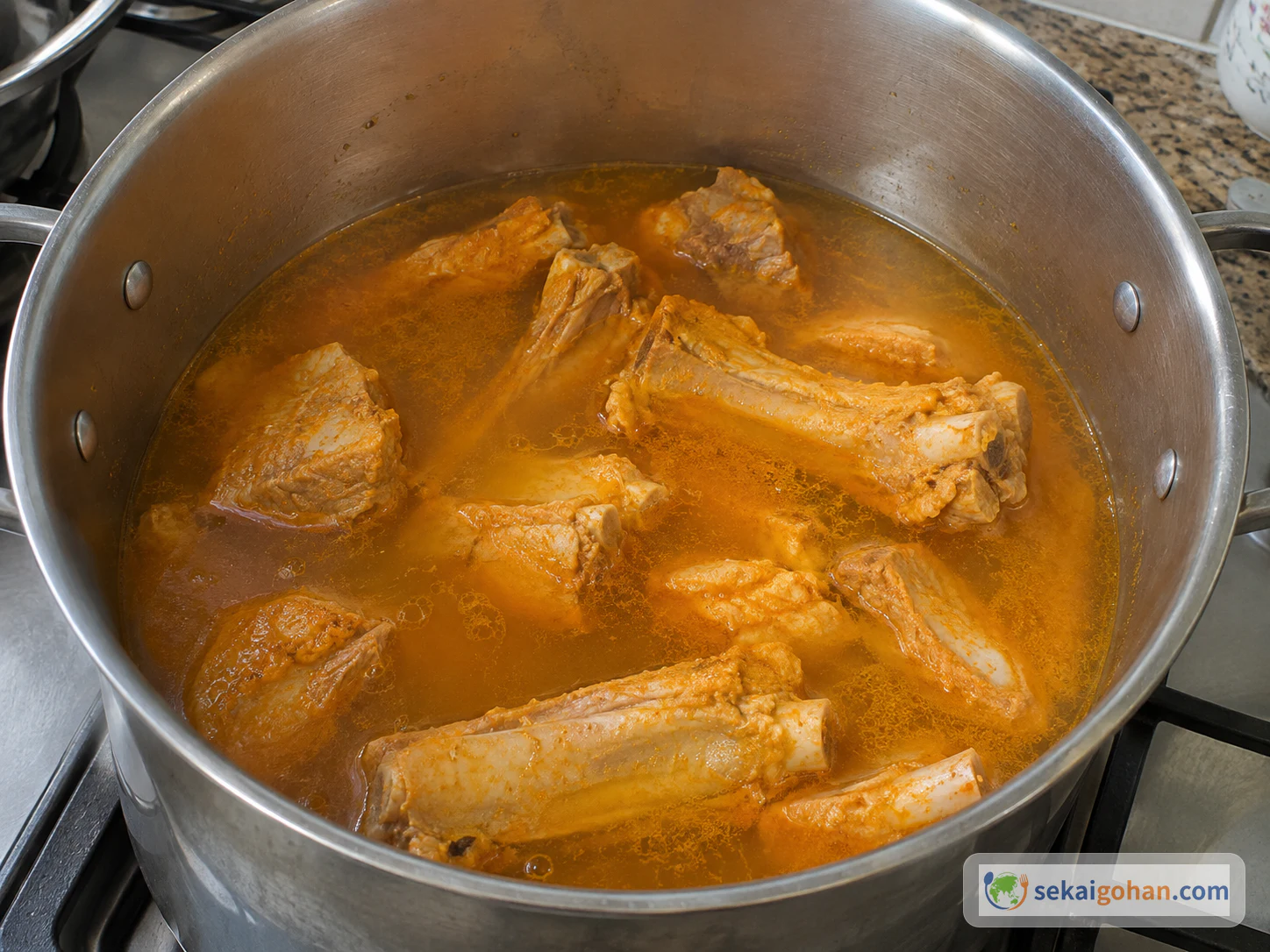
The work starts the night before, with the chuño soaking in water. On the day, the pork goes into a gently simmering pot for about 1½ hours of mostly hands-off time, and the chuño boils in its own saucepan during that stretch. The last ten minutes bring everything together.
A gentle simmer gives tender meat and a clear golden broth. A hard boil tightens the pork and clouds the soup, so turn the heat down the moment you see rolling bubbles.
Chuño needs the whole night in water to soften. Set it soaking before bed, and the rest of the recipe fits into one morning.
Cook the pork through to the centre before serving. Lift the lid away from you and use a ladle for the hot broth.
When It Goes Wrong
| What you see | Why | What to do |
|---|---|---|
| The chuño stays hard after boiling | It was not soaked overnight | Keep boiling until a knife slides in; next time, soak it the night before |
| The soaking water turns murky | Loose skin and residue from the chuño | Peel off loose skin, then rinse and change the water until it runs clear |
| The pork is still firm after the simmer | The pieces need more time | Keep simmering gently until the meat is tender and cooked through to the centre |
| The broth is cloudy | The pot boiled instead of simmering | Lower the heat to a barely moving surface for the rest of the cooking |
| The broth is thin | The breadcrumbs went in too late or had too little time | Give the full 10 minutes after adding the breadcrumbs |
Serving and Variations
At the table
Serve fricasé with marraqueta, Bolivia's crusty bread roll, for dipping into the broth, and a dish of llajwa, the hot salsa, so each person can add heat to their own bowl. It fits a slow breakfast, a celebration or a cold evening.
Other versions
- Mint and pepper. Pork loin cooked with chuño and dried corn that has been soaked overnight and boiled without salt until the kernels burst. The yellow chilli is crushed with cumin, black pepper, garlic and mint, which makes the broth sharper and greener in aroma. The broth thickens with breadcrumbs or with pork that has started to fall apart.
- Onion base. Pork shoulder simmered with a sauté of ají amarillo, plenty of onion and garlic, served with cooked chuño and mote. The onions make the broth sweeter and fuller.
- Chicken or potato. Chicken in place of pork gives a lighter soup, and potato in place of chuño gives a softer, milder starch.
Frequently asked questions
How spicy is fricasé?
The ají amarillo gives the broth warmth along with its colour and fruity note. The llajwa, the hot salsa served alongside, lets each person add heat to their own bowl.
Is fricasé really a hangover cure?
It is eaten as a hangover dish in Bolivia, and it is often eaten in the morning. Any cure is only theoretical.
Should I use water or broth?
Either works. With water, the pork bones, garlic and cumin build the flavour on their own. Broth gives the soup a deeper base from the start.
Black chuño or white chuño?
Both go into fricasé. Use whichever you can find.