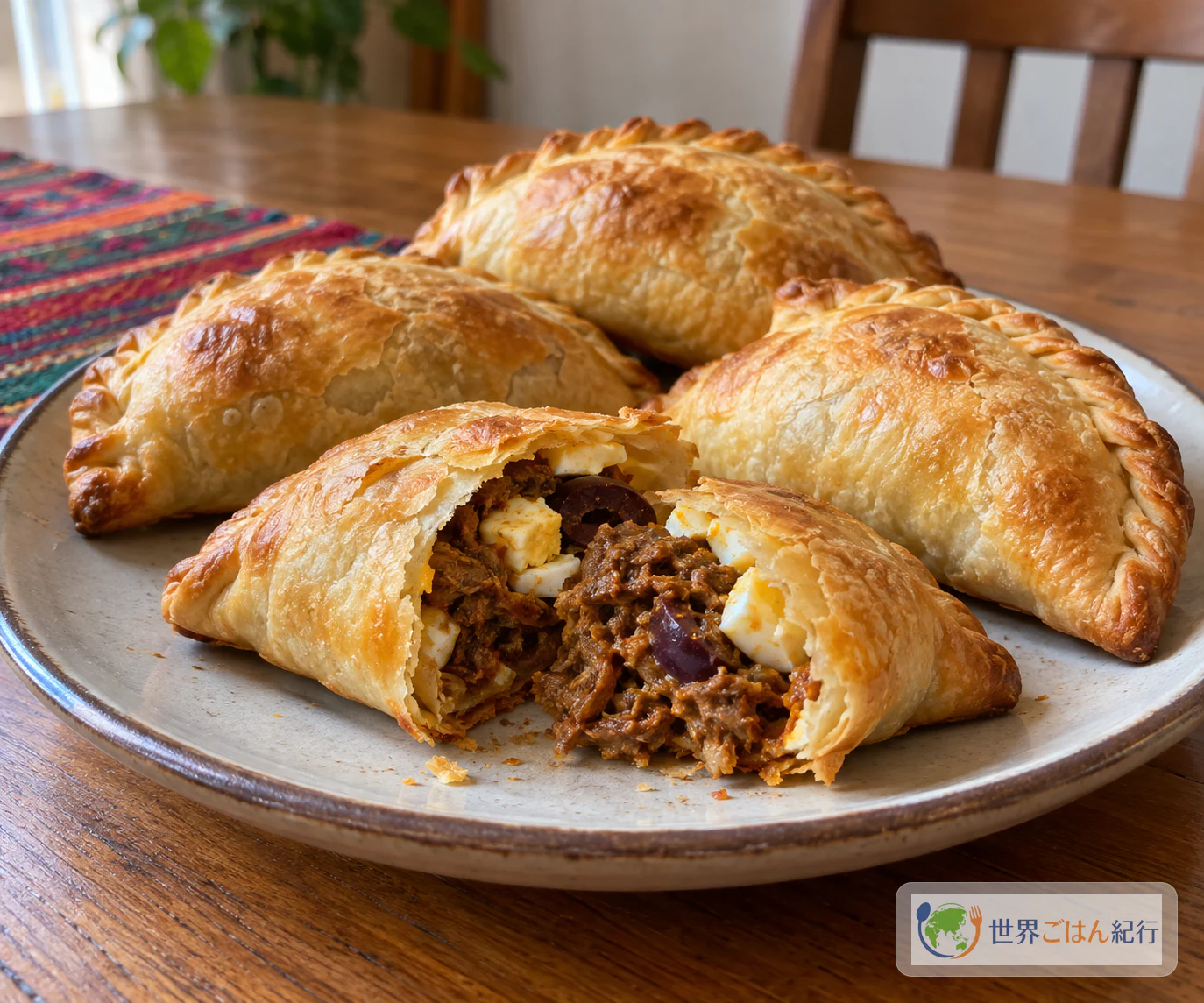
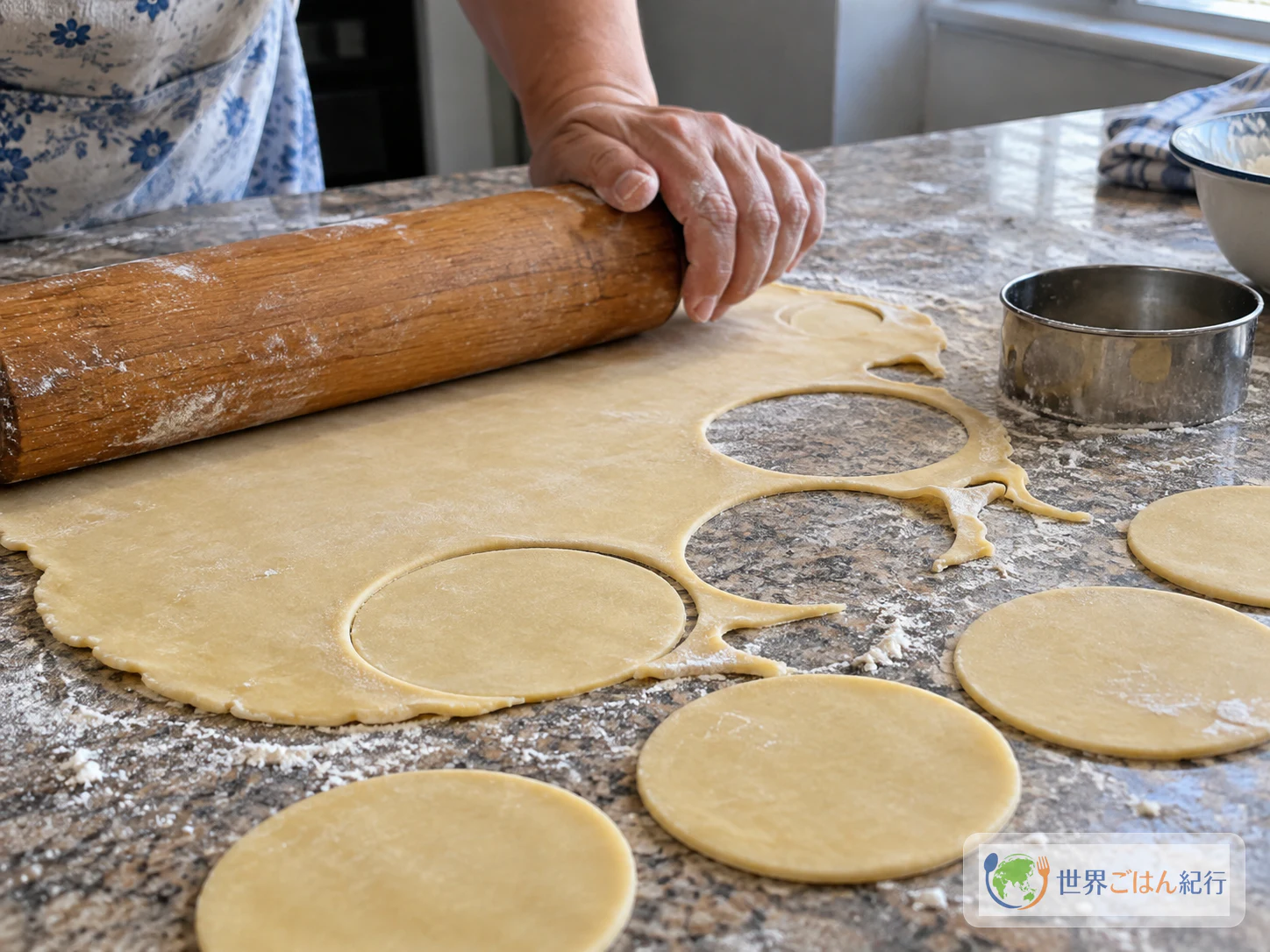
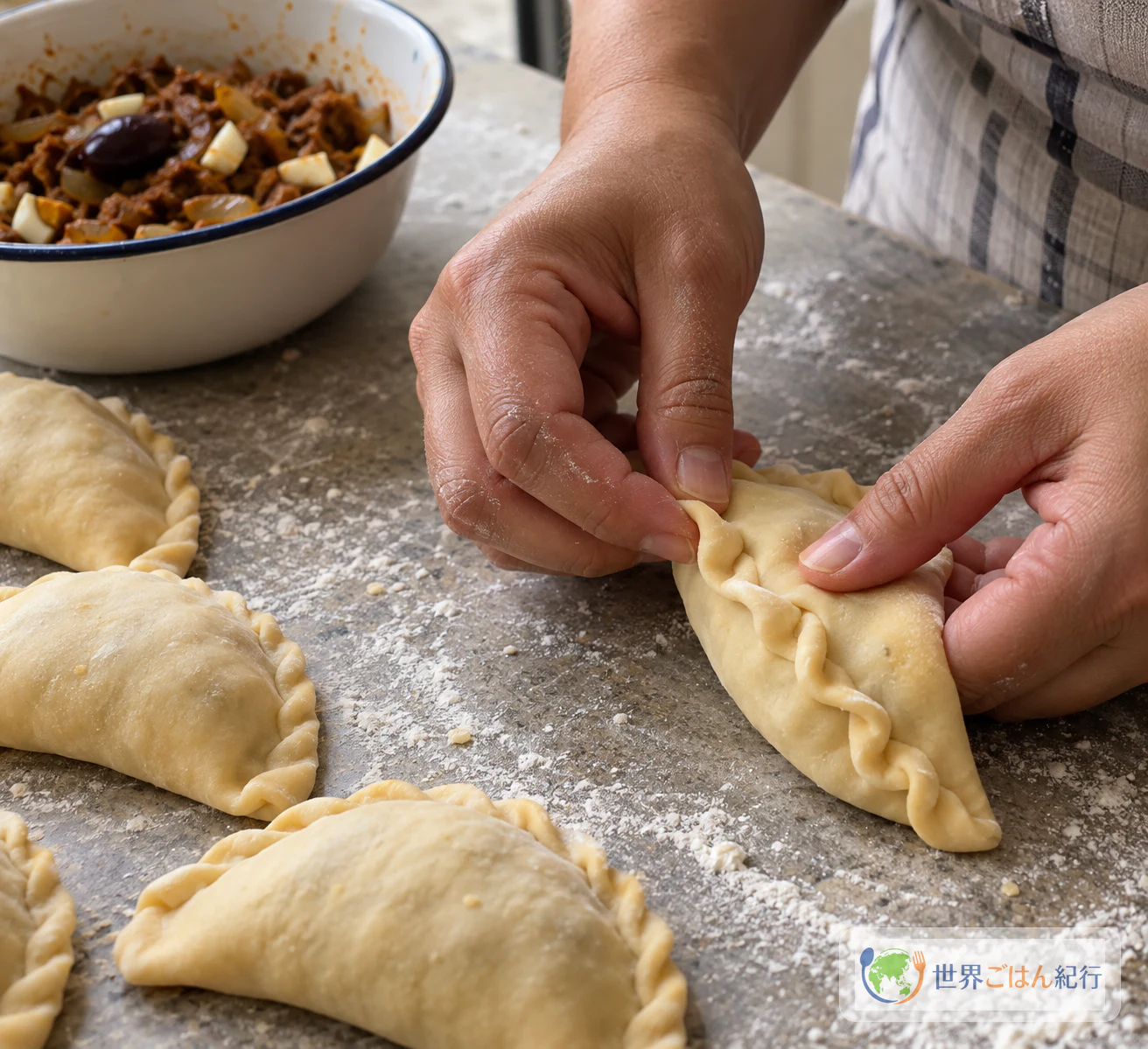
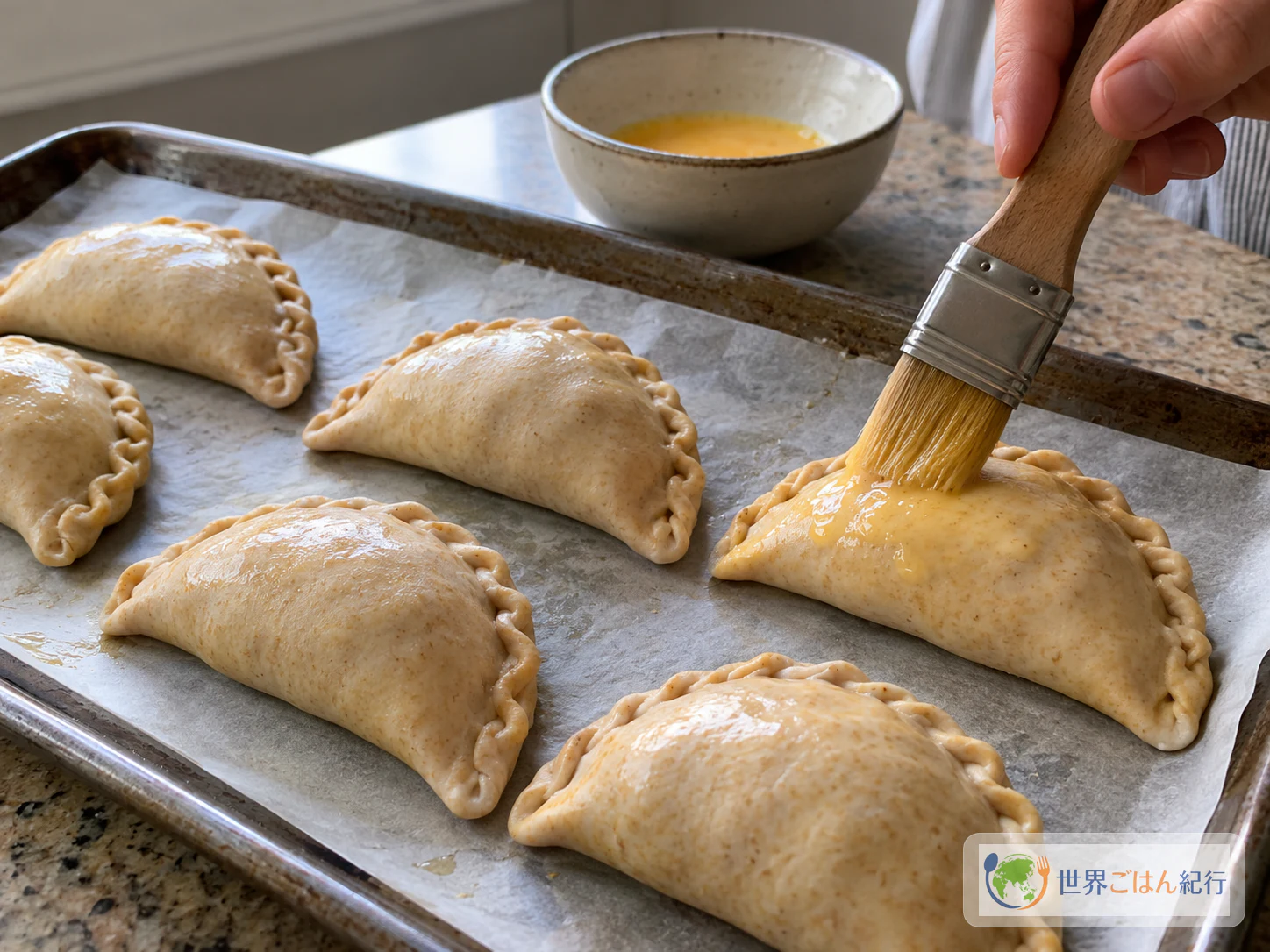
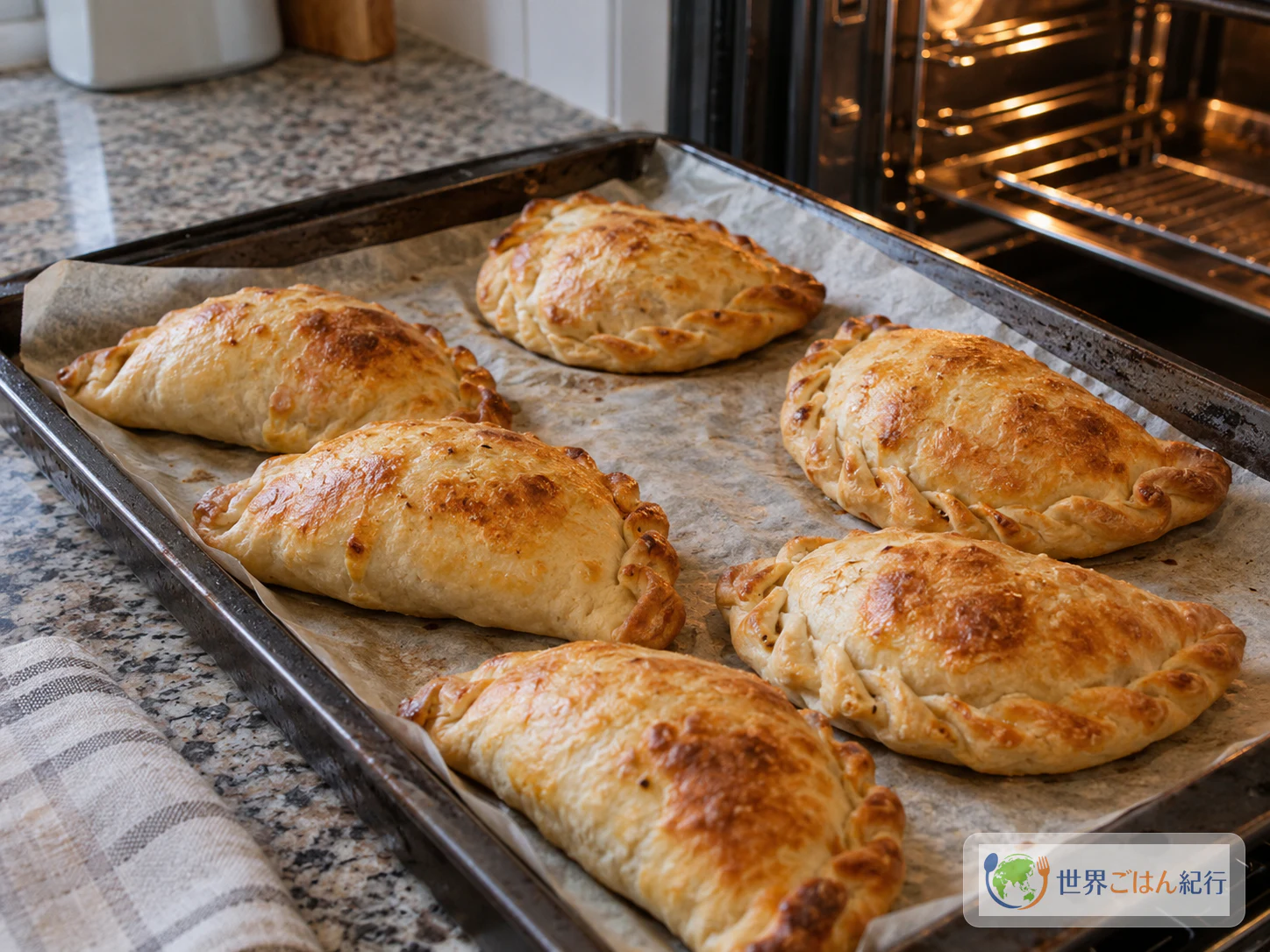
Break a freshly baked half-moon in two and the smell of beef and ají panca rises with the steam. Inside is a red-brown filling of beef, red onion and garlic, with a piece of black olive and soft chopped egg, all held in a golden, crisp butter pastry sealed with a hand-folded edge. These are Peruvian-style baked beef empanadas: small parcels with a deep chile aroma, best eaten while still hot. If you want to explore further, you can browse more Peruvian dishes.
About Peruvian Beef Empanadas
The Name
In Peru, this dish is called empanada, or empanada de carne (beef empanada). Empanadilla is a broader name for a filled pastry. It is linked to both Peru and the Philippines and doesn't point to one particular style.
The Filling
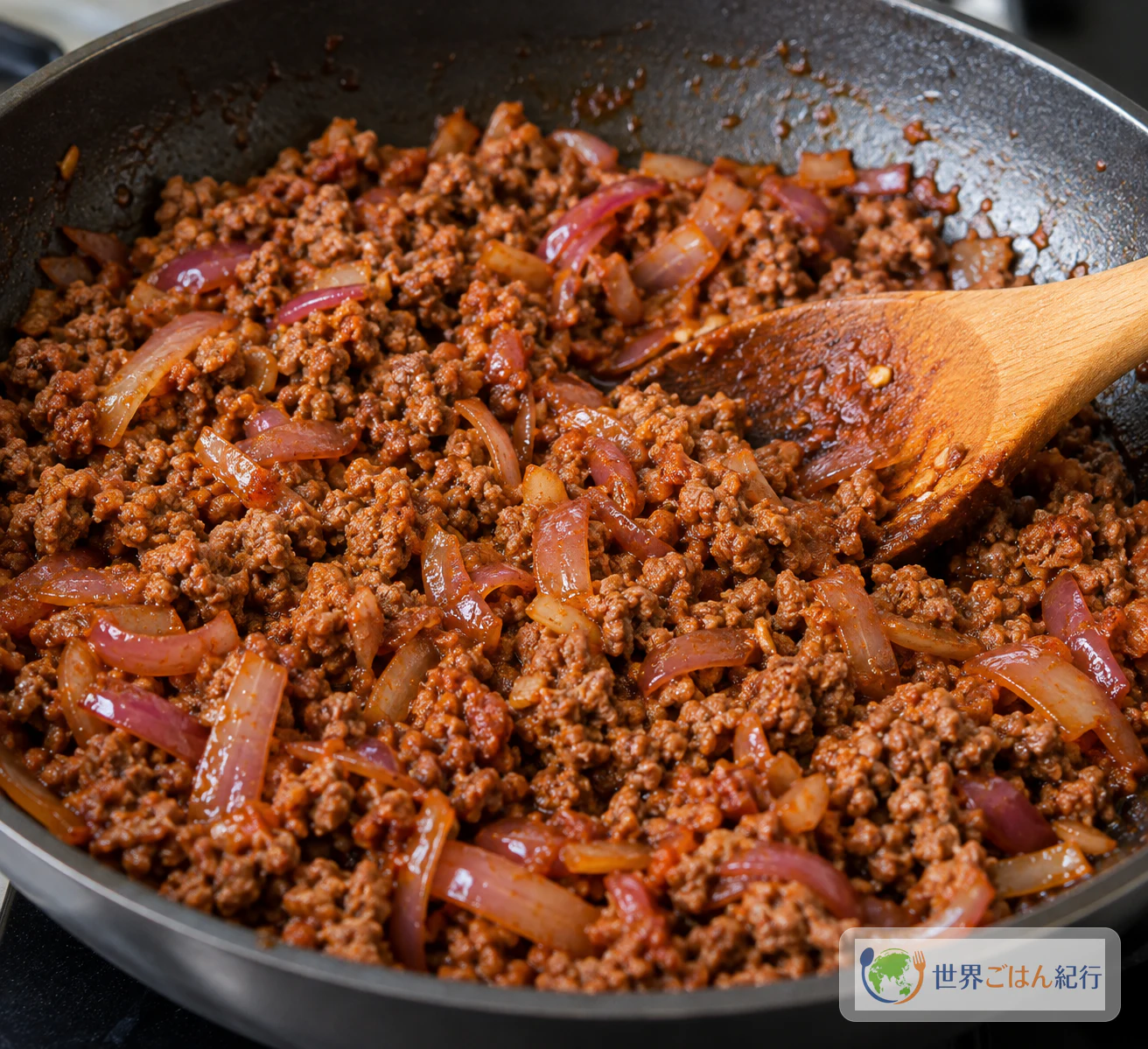
The filling starts with beef, onion and garlic. Then comes the red chile aroma of ají panca, rounded out with cumin and dried oregano. You can also add a little ají amarillo, which brings fruitiness and some heat. It's a different chile paste, though, and works on top of the ají panca, not in place of it.
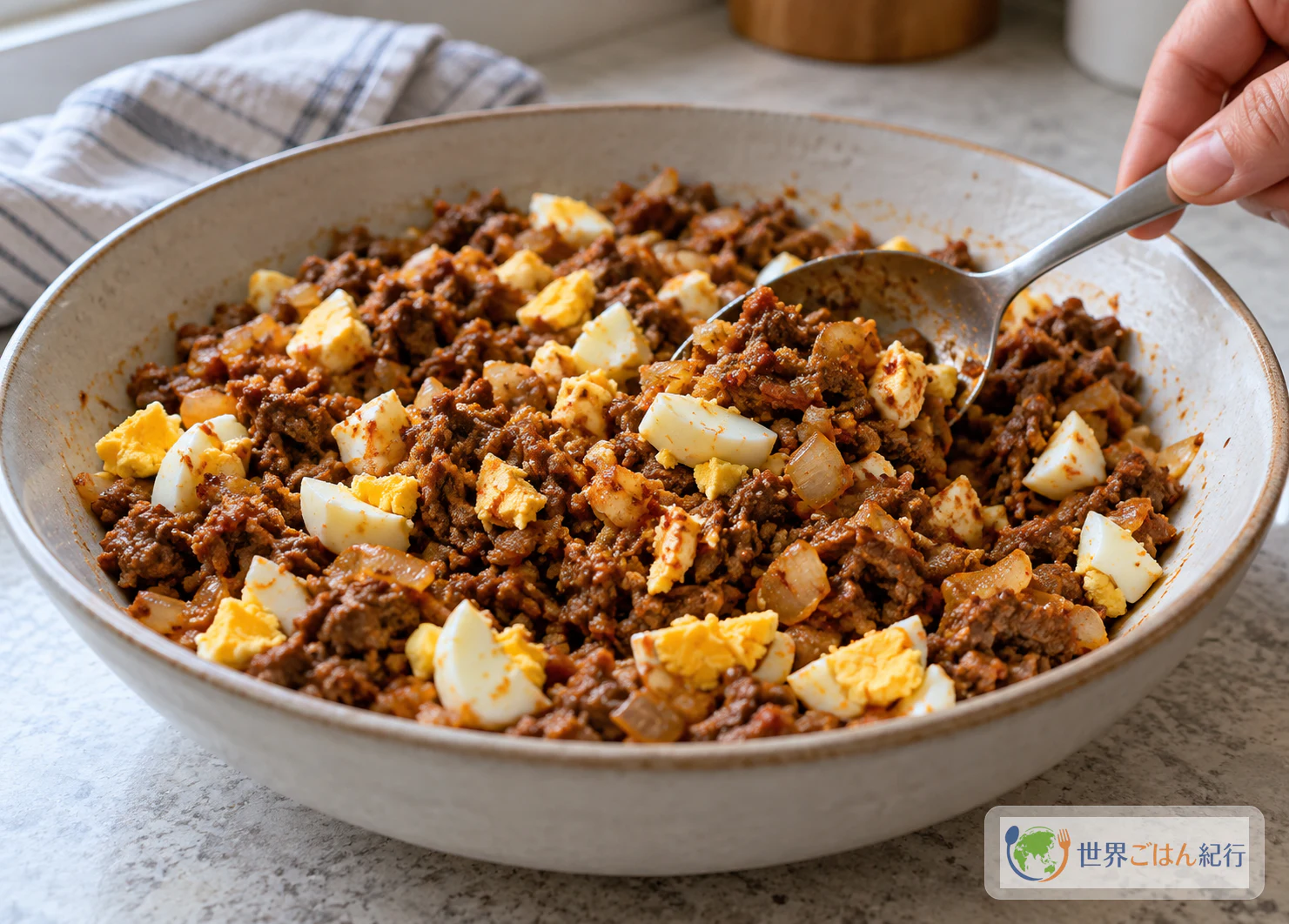
In each mouthful, the salty black olive and the soft hard-boiled egg tie the meat to the pastry. The dough itself has a faint sweetness from a little sugar mixed into the flour.
Regional and Household Differences
The empanada is a filled pastry that came over from Spain during the colonial period and took on local ingredients. Peruvian recipes vary a lot. One beef version uses ají along with raisins, cilantro, powdered sugar and lemon, and fillings range from beef and chicken to ají de gallina and cheese. Another adds raisins (pasas) and wine. Some finish the empanadas with powdered sugar and a wedge of lemon and serve them with coffee or chicha morada.
Ingredients: 4 Servings
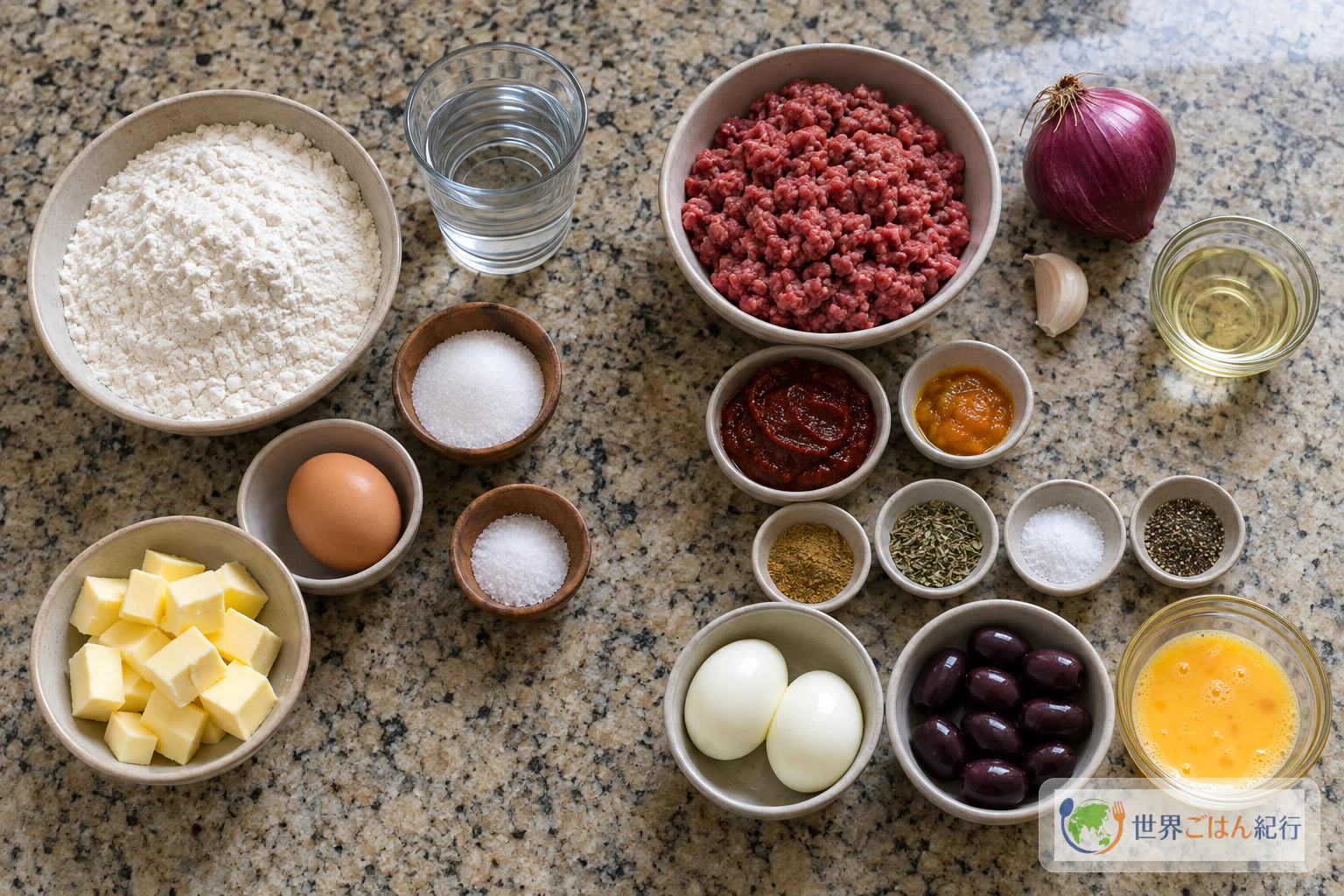
This recipe serves 4. Use the same cup for both the flour and the water.
There are three separate uses of egg: one raw egg goes into the dough, two hard-boiled eggs go into the filling, and one beaten egg is brushed on top before baking.
| Ingredient | Amount | Role |
|---|---|---|
| Plain wheat flour (harina sin preparar) | 3 tazas | The base of the pastry |
| Cold butter (mantequilla fría) | 5.5 oz (150g) | Rubbed into the flour for a short, crisp pastry |
| Egg (huevo) | 1 | Binds the dough. Separate from the egg for brushing |
| Cold water (agua fría) | about 1/2 taza | Added a little at a time; stop when the dough comes together |
| Salt (sal) | 1 tsp | Mixed into the flour |
| Sugar (azúcar) | 1 tsp | For the dough only, not a powdered-sugar finish |
Beef filling and finishing
| Ingredient | Amount | Role |
|---|---|---|
| Ground beef (carne molida de res) | 10.5 oz (300g) | The main filling ingredient |
| Red onion (cebolla roja) | 1 | Finely diced |
| Ají panca paste (ají panca en pasta) | 2 tbsp | Deep red color and a mellow chile aroma |
| Ají amarillo paste (ají amarillo en pasta) | 1 tsp (optional) | Adds fruitiness and heat; can be left out |
| Garlic (ajo) | 1 clove | Minced |
| Vegetable oil (aceite vegetal) | 1 tbsp | For cooking the filling only, not for brushing |
| Ground cumin (comino) | 1/2 tsp | Seasons the meat |
| Dried oregano (orégano seco) | 1/2 tsp | Seasons the meat |
| Salt and pepper (sal y pimienta) | to taste | Adjust by tasting |
| Hard-boiled eggs (huevos duros) | 2 | Chopped and mixed into the cooled filling |
| Black olives (aceitunas negras) | 8 | Added when wrapping. Remove pits if they have them |
| Beaten egg (huevo batido) | 1 | Brushed over the shaped pastries |
Equipment
- Mixing bowl
- Plastic wrap
- Skillet and a wooden spoon
- Rolling pin
- Round cutter or a knife for cutting circles
- Baking tray
- Pastry brush
- Oven
Choosing Ingredients for Beef Empanadas
Ají panca paste is the ingredient worth tracking down. It's a main ingredient here, not a garnish, and it tastes different from sweet paprika or ordinary chili flakes. No other chile gives the same result, so a substitute will change the flavor of the dish.
Ají amarillo paste is optional. If you leave it out, the filling is milder and tastes a little different. If you use it, look for it as its own product, separate from ají panca. Both pastes vary in heat and ingredients from brand to brand, so read the label.
Everything else is easy to find at an ordinary supermarket: beef, red onion, garlic, butter, eggs, vegetable oil, dried cumin and oregano, and black olives.
Method: Dough, Filling, Shaping and Baking
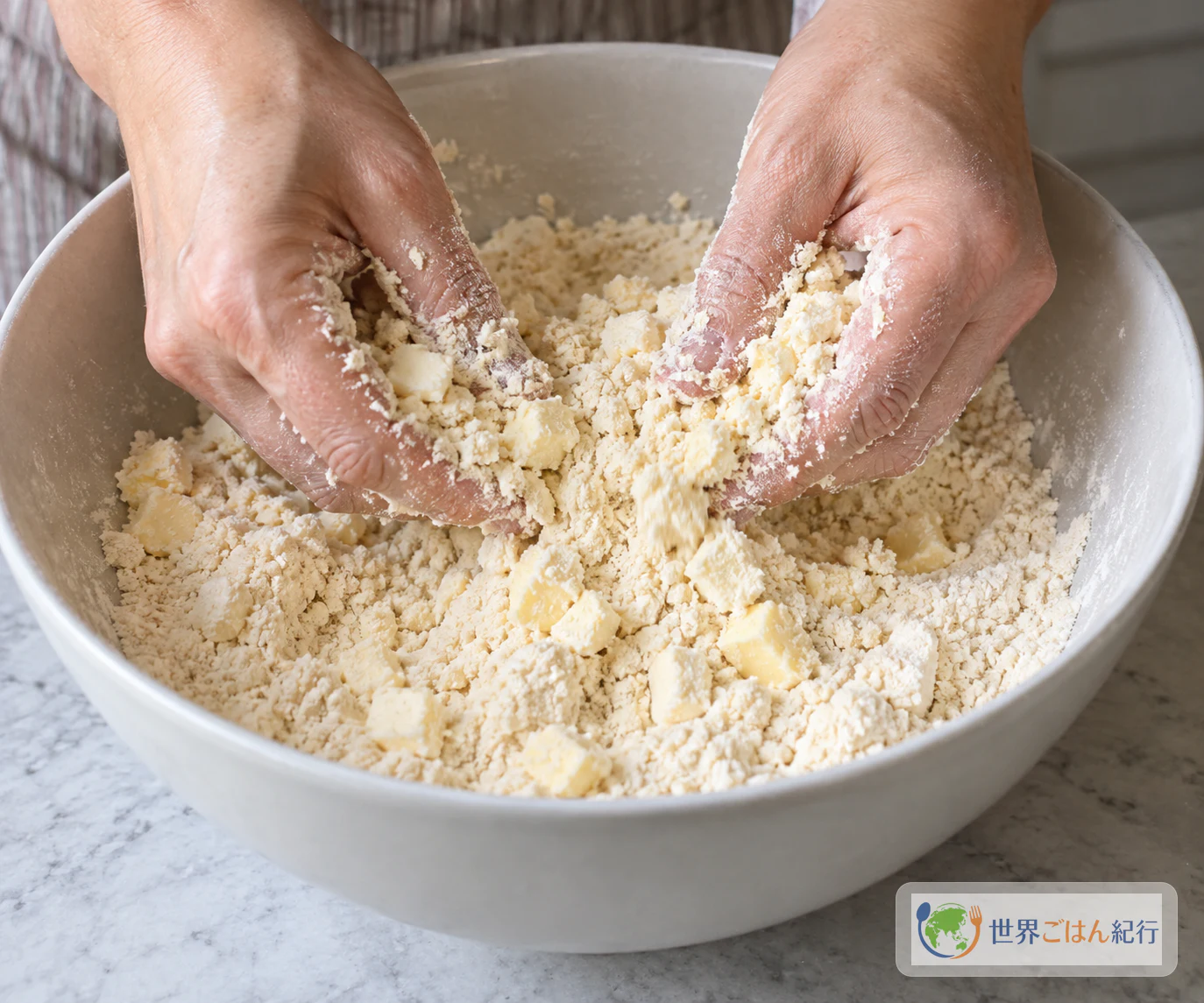
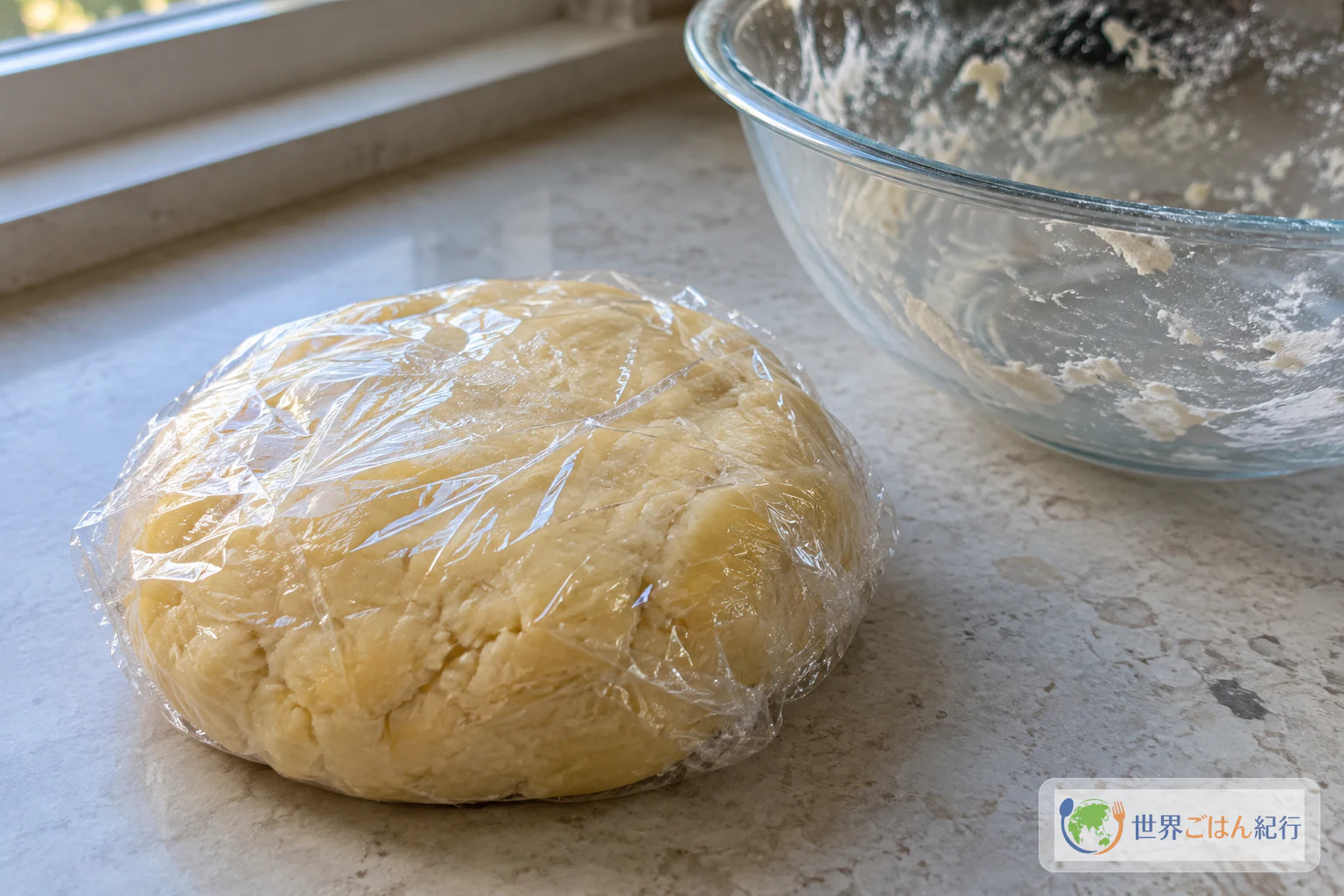
The dough rests in the refrigerator for 30 minutes, which is a good time to cook the filling. The filling then needs to cool completely before you wrap it.
Common Empanada Mistakes and Fixes
Most problems come down to the dough's temperature and how much water and filling go in. Above all, let the filling cool completely before you wrap. Warm filling softens the dough and makes the seams more likely to leak.
| Problem | Likely cause | What to do |
|---|---|---|
| The dough is sticky and hard to roll | Too much cold water added at once | Next time, add the water a little at a time and stop as soon as the dough comes together. Make sure it rests in the refrigerator |
| The dough softens and tears while wrapping | The filling was still warm | Let the filling cool completely before wrapping |
| The pastry won't close | Too much filling | Use less filling per circle so the edges can meet |
| The seam opens in the oven | The edge wasn't dampened, or filling got into the seam | Dampen the edge with water, keep filling off it, and fold the repulgue firmly |
| The filling tastes too salty | Salt added without allowing for the olives | Season with a little salt at first and taste, remembering the olives add saltiness |
Serving and Variations
Eat the empanadas hot, while the pastry is still crisp and the filling is steaming. For smaller pastries, shrink the dough circles and the filling by the same proportion. If you'd like to try the powdered-sugar-and-lemon finish from other Peruvian recipes, think of it as a different style rather than a tweak to this one.
Frequently Asked Questions
How many empanadas does this make?
The recipe serves 4 but doesn't give a piece count. The number depends on how big you cut the circles and how much filling you use, so count them as you shape them.
Can I convert the tazas to grams or another cup size?
The recipe doesn't specify a cup size, so there's no gram conversion. Measure the flour and the water with the same cup, and add the water gradually, judging by how the dough feels.