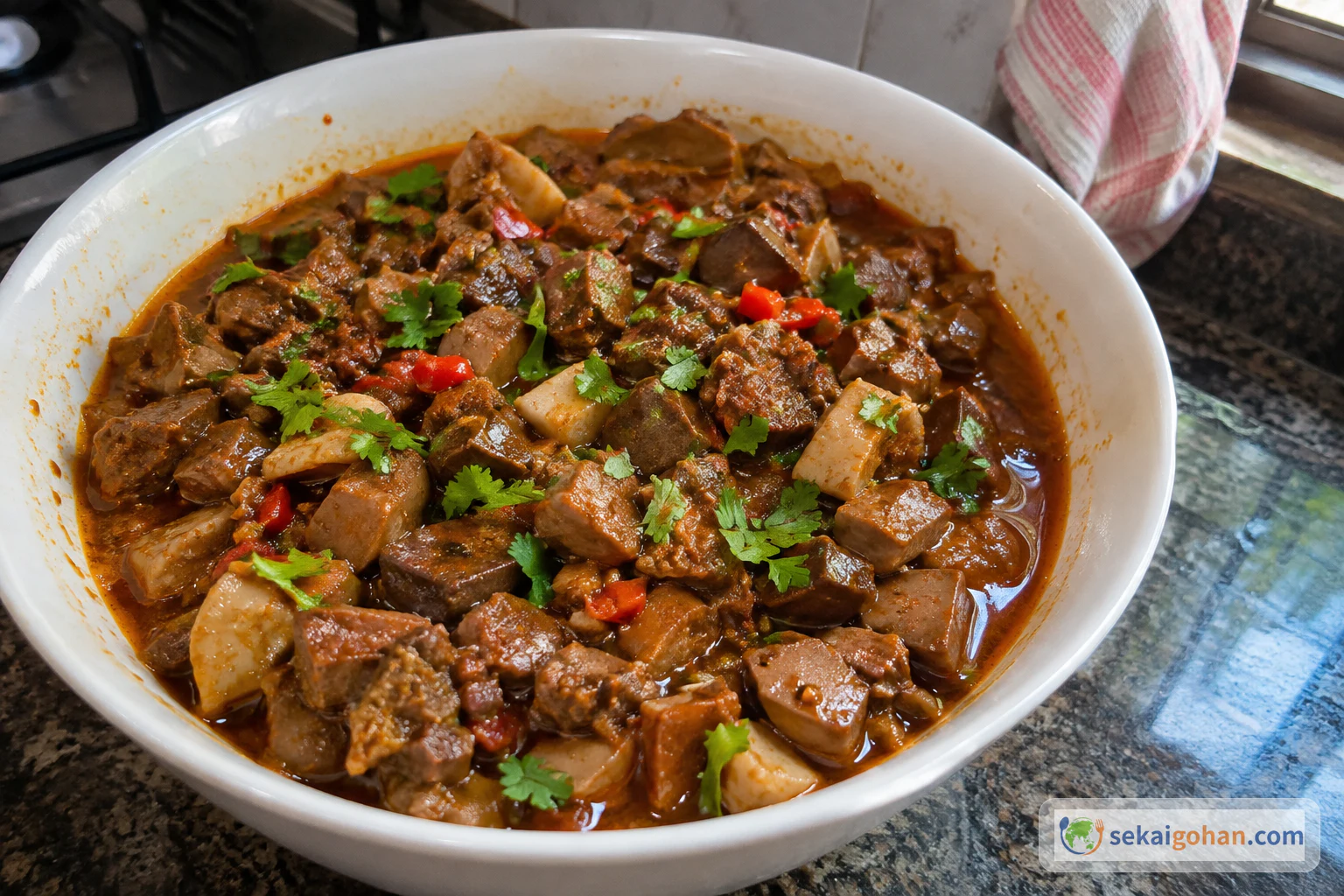
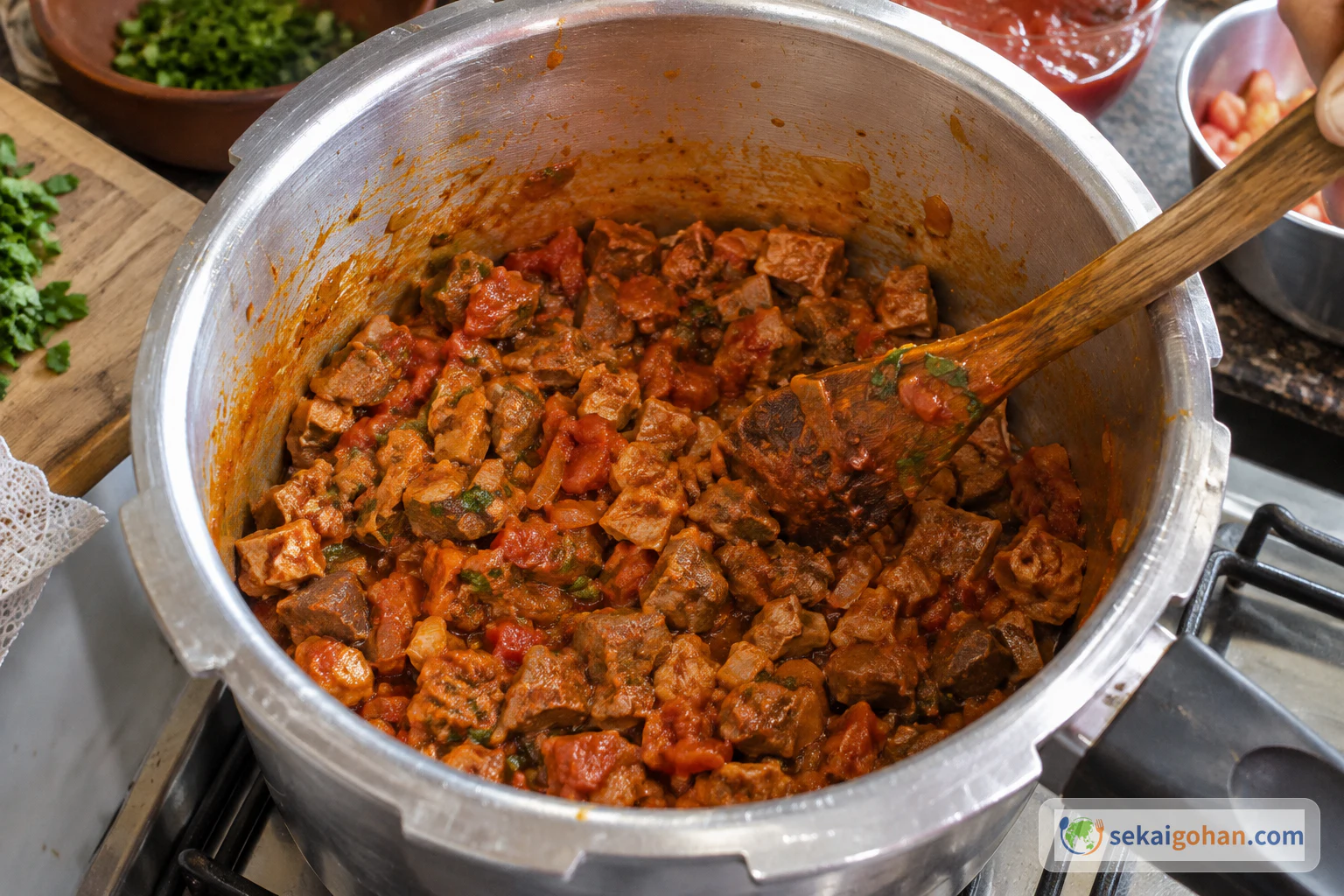
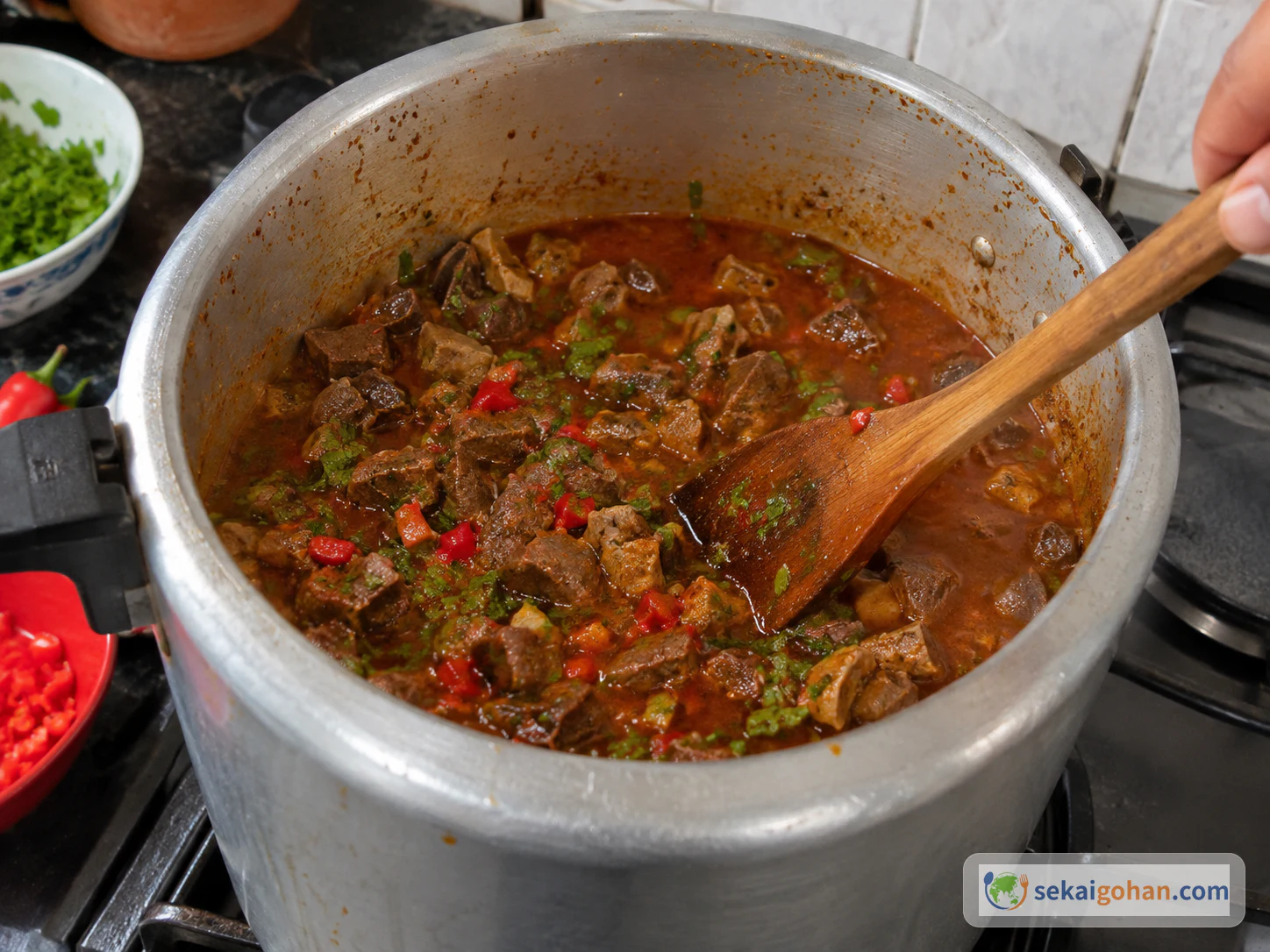
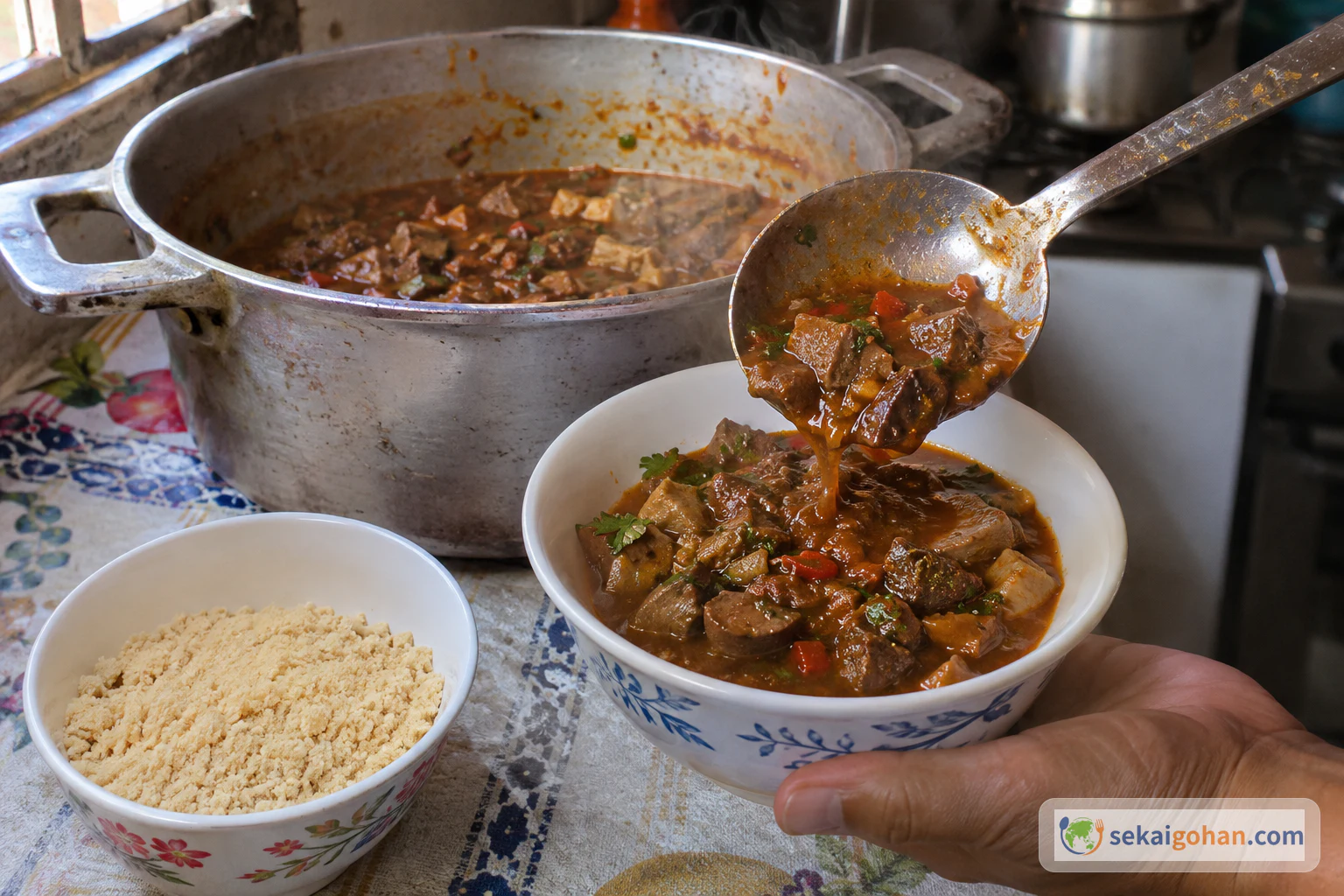
The pressure cooker goes quiet, the lid comes off, and a cloud of steam carries out tomato, cumin and the deep, meaty smell of pork offal. Into the open pot go a handful of chopped coriander and a red chili. Five minutes of bubbling later the stew is glossy and reddish-brown, and it goes to the table hot with a bowl of toasted cassava flour beside it. Sarapatel is small-cut pork heart, liver and tongue, scalded clean, seasoned with vinegar and braised with onion, garlic, annatto and herbs. It is a home dish of Brazil's Northeast, rich and savoury, with a sharp edge from the vinegar and a gentle heat from the chili.
A Pot of Small-Cut Offal From the Northeast
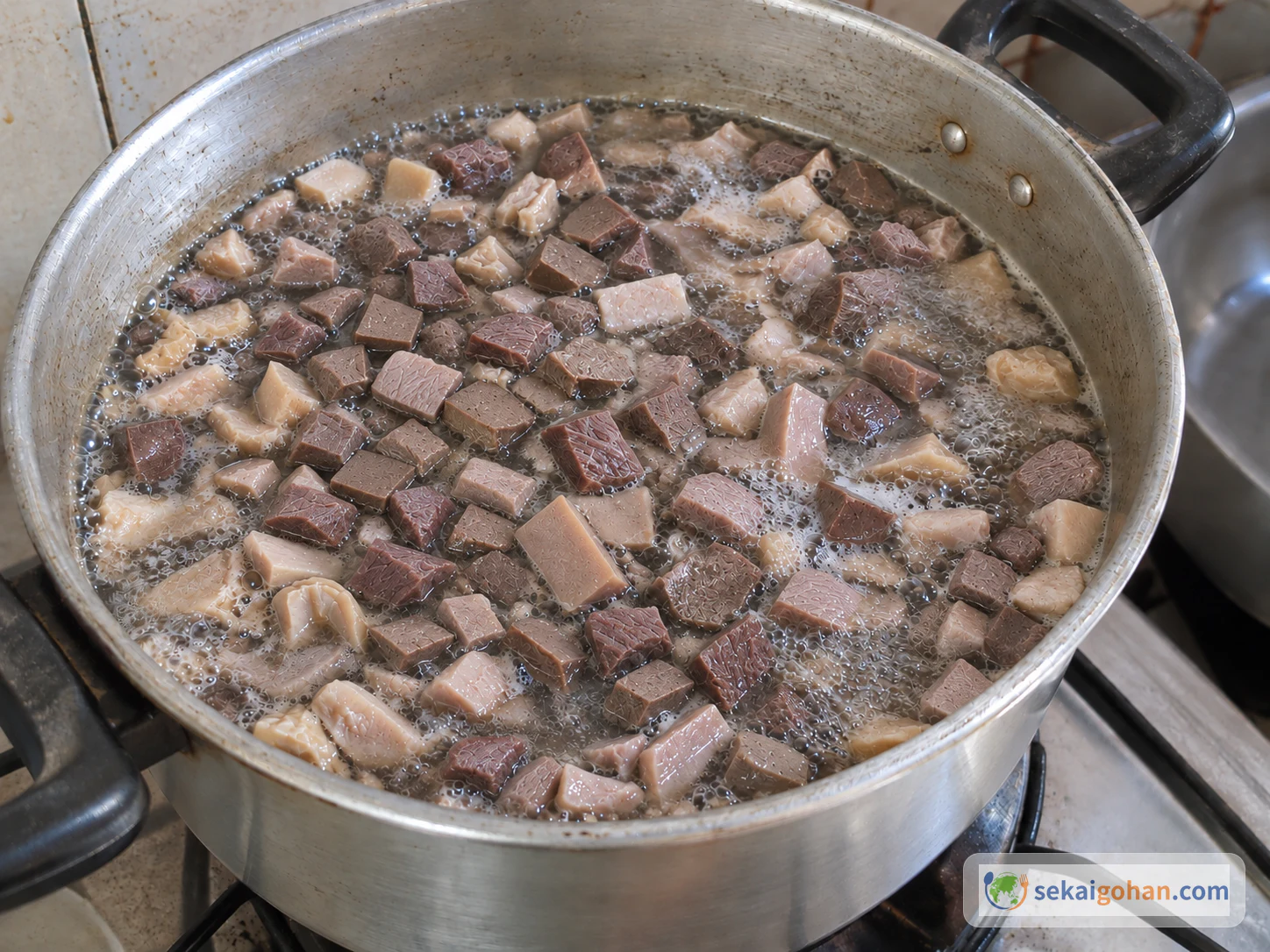
Sarapatel belongs to home kitchens across northeastern Brazil, the kind of dish a family makes when there is offal to use and people to feed. The pieces are cut small so every spoonful carries a little of each cut, and the sauce cooks down until it clings. What decides the dish is the cleaning before the cooking: offal carries a strong smell, and the scalding, rinsing and vinegar seasoning are what turn it into something people want a second bowl of.
The traditional pot also uses pork blood. In Alagoas, the old way scalds the offal and the blood with bay leaf, cuts everything into small cubes and cooks it down, and at the table each person adds chili, lime and cassava flour. Some families there drop olives into the pot, a household habit rather than a rule. Many home recipes today leave the blood out, and the version here is blood-free, which makes it practical in any kitchen.
Where the dish began is not settled. One story runs from Portugal to colonial Brazil and on to Goa; another has it travelling from Brazil back to Portugal. What is clear is that Brazil and Goa each have their own pot under a related name. For more from the same table, see the other dishes of Brazil.
Goa's sorpotel is a close relative and a different dish. It is built on a chili paste and palm toddy vinegar, uses offal and blood, and is left for several days so the vinegar settles in. Brazilian sarapatel is cooked and eaten fresh, with annatto, tomato and herbs.
Ingredients (serves 5)
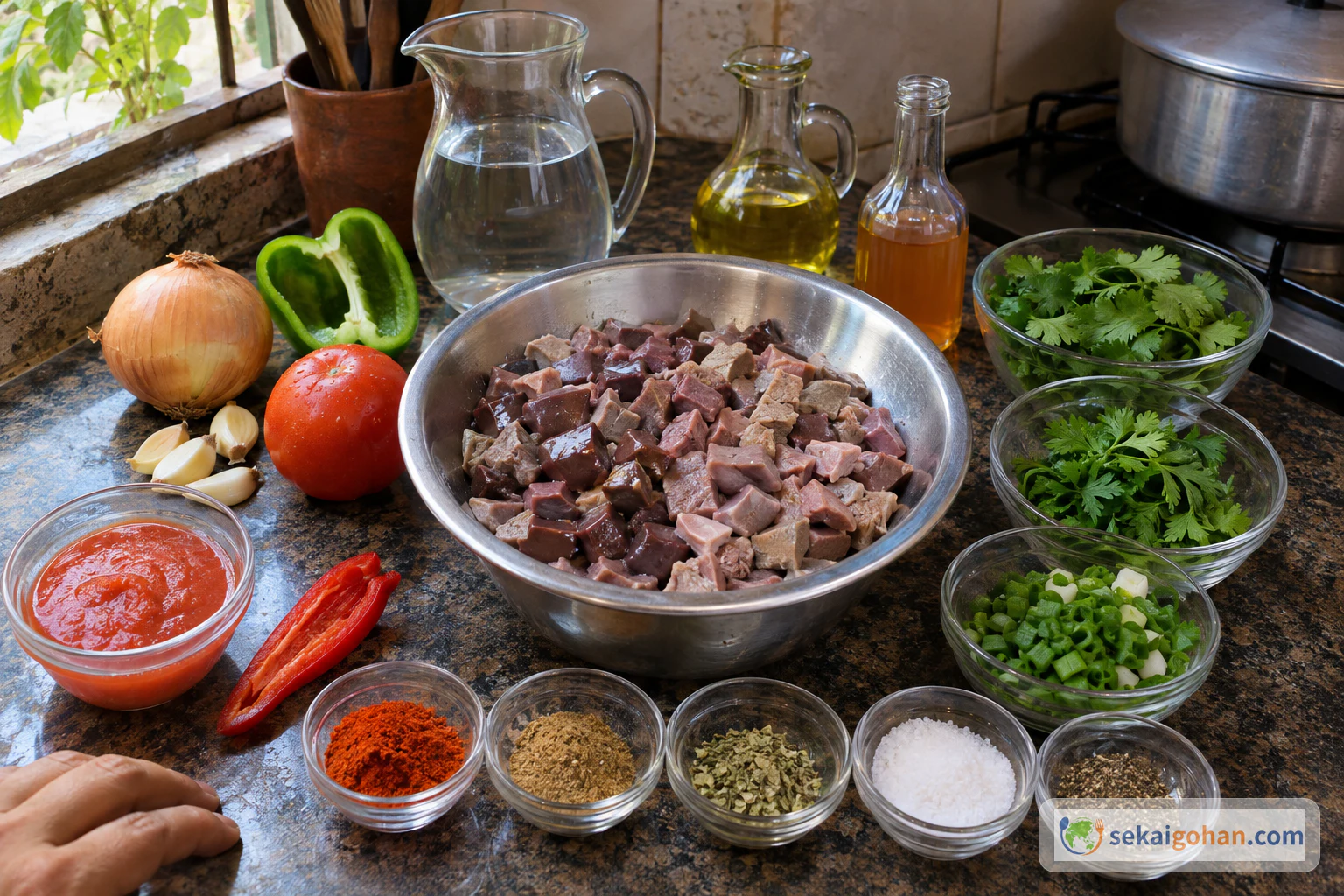
No dairy goes into this stew. Check the labels on the tomato sauce and the cassava flour for anything you avoid.
Equipment
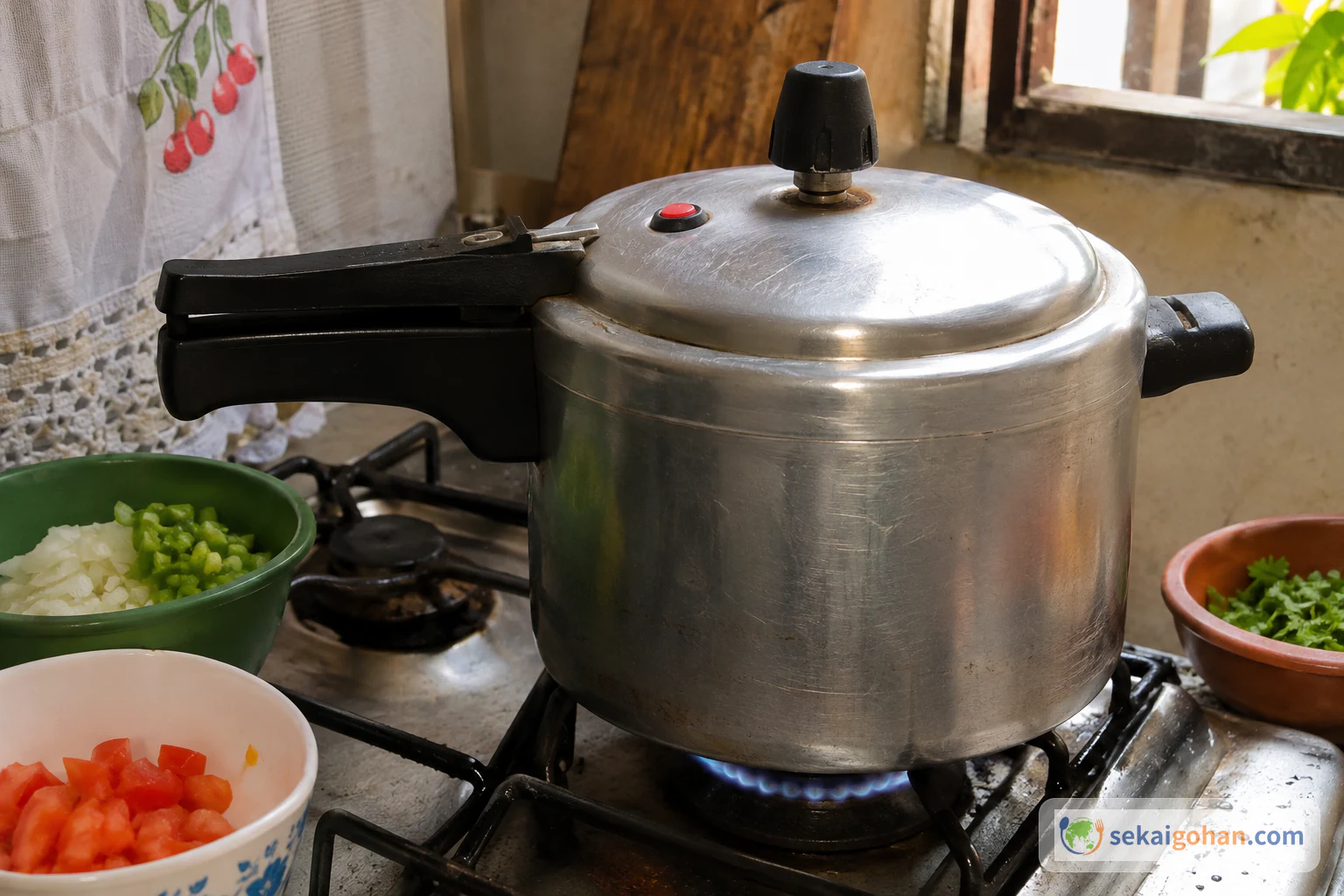
- Pressure cooker
- Large pot for scalding
- Colander
- Mixing bowl
- Wooden spoon
- Cutting board and sharp knife
- Ladle
Choosing and Substituting
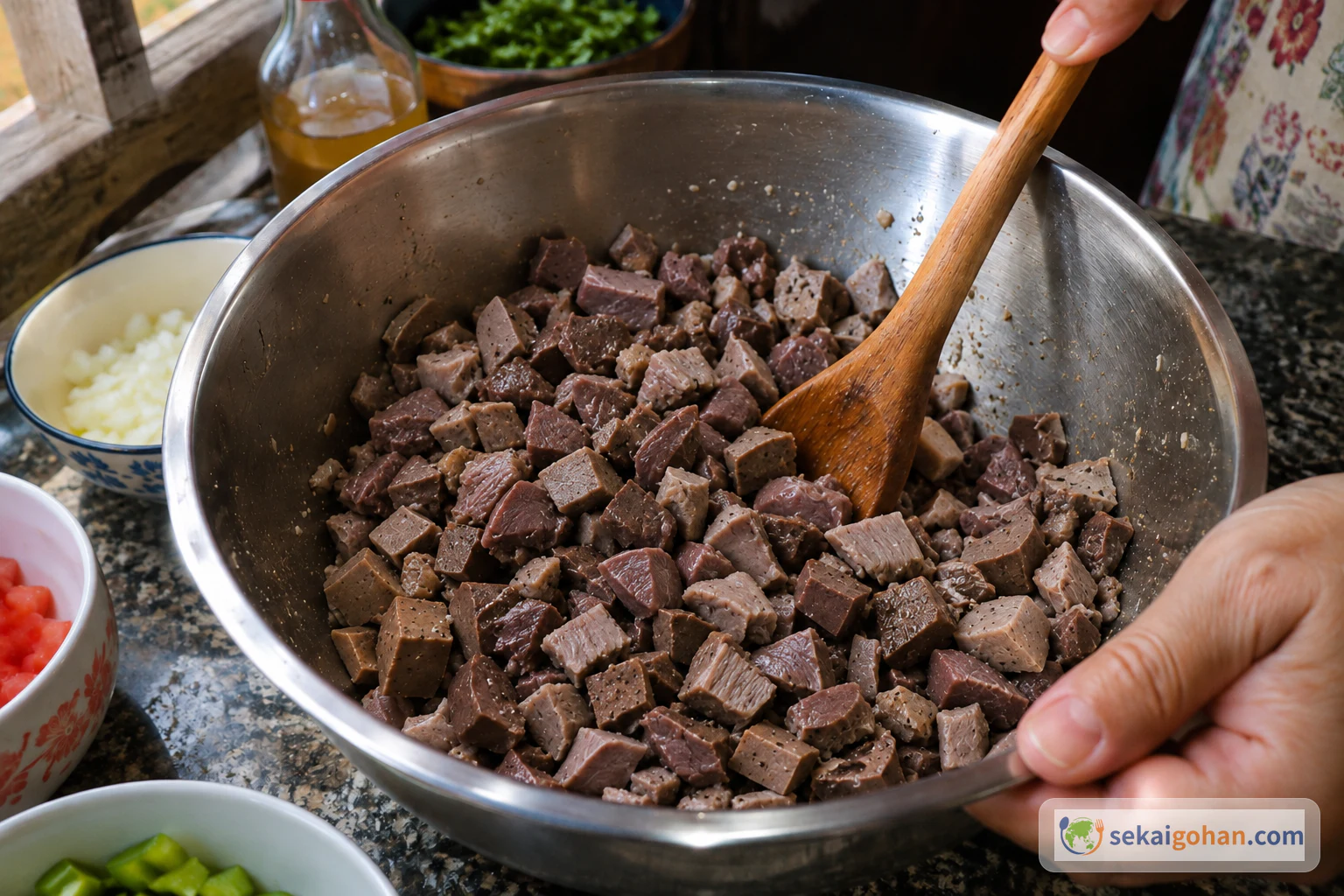
The offal is the one thing worth going out of your way for. Ask a butcher for cleaned pork heart, liver and tongue, and cut it into small, even dice at home so every piece cooks at the same pace. Freshness shows in the smell before you buy; a clean, mild smell means a clean-tasting stew.
Annatto powder is sold as colorau in Brazilian shops and as achiote or annatto powder in Latin American aisles and online. Paprika gives a similar colour with a different, sweeter pepper flavour. Cheiro-verde is simply parsley and scallion together, so parsley and scallion together cover it. Dedo-de-moça is a mild-to-medium red chili; a small hot dried chili brings sharper heat, so use less. Rice vinegar works in place of apple cider vinegar and tastes a little softer. Unsalted tomato purée stands in for tomato sauce; it carries less salt, so season more at the end.
The vinegar seasoning and the cassava flour at the table are what make this taste like the Northeast. Herbs and chili can bend to what your shop has; those two should stay.
Method
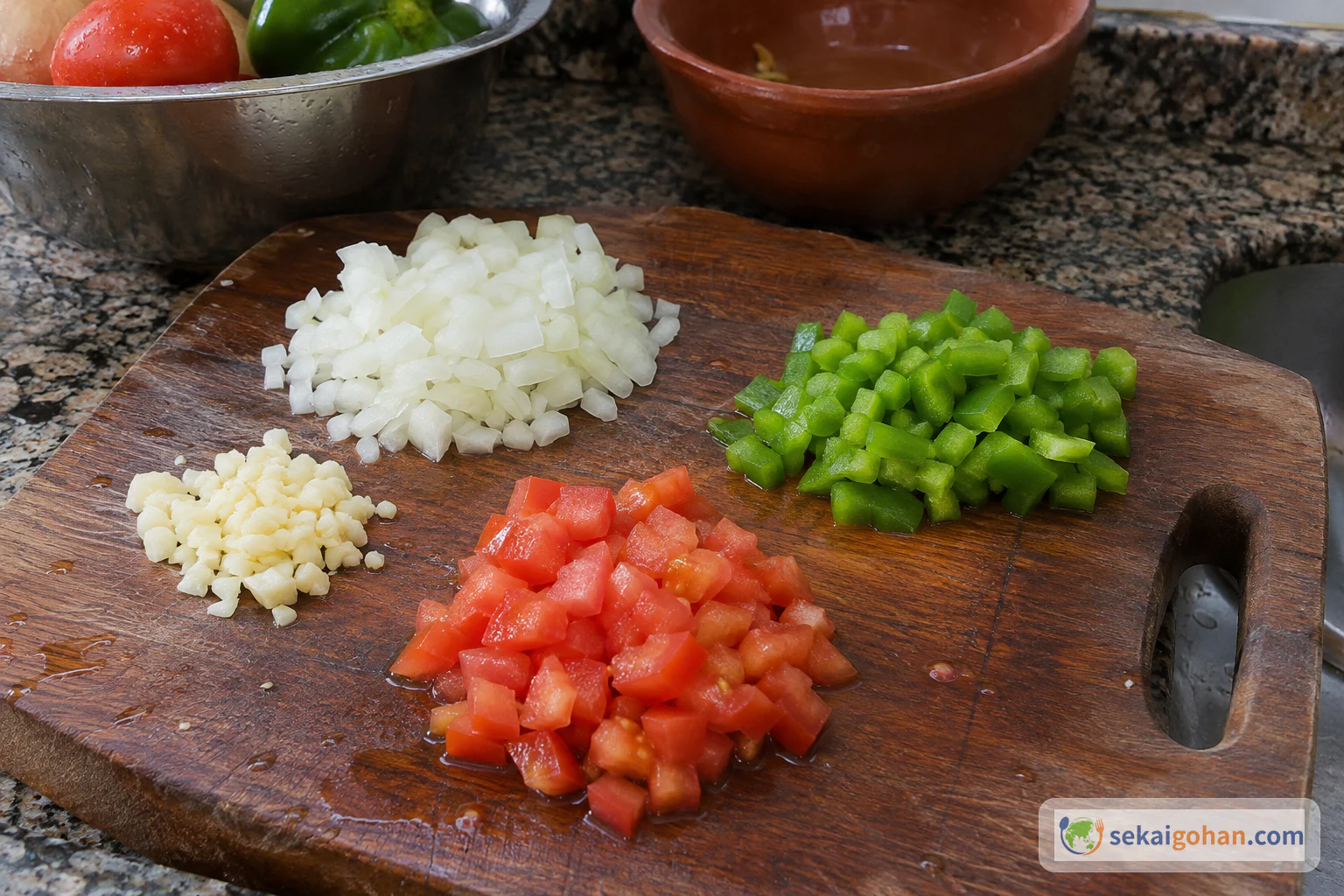
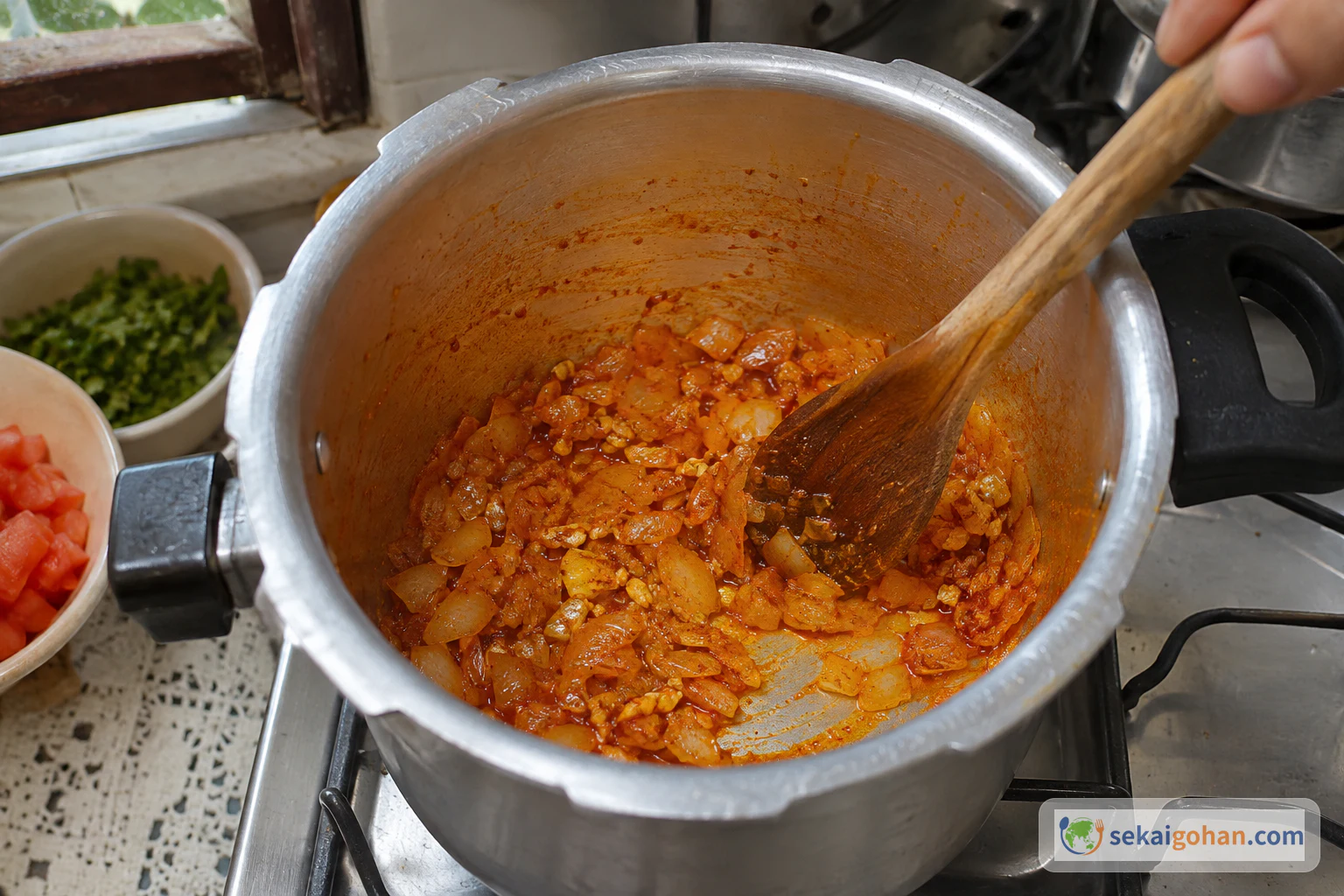
Everything moves fast once the pan is hot, so cut the vegetables and clean the offal before you light the burner. The only hands-off stretch is the pressure cooking and the natural release that follows, which is when you chop the chili.
When It Goes Wrong
| What you see | Why | What to do |
|---|---|---|
| A strong, gamey smell in the sauce | The offal was not scalded, rinsed and boiled twice, or the vinegar was skipped | Next time, do both boils and the vinegar seasoning in full |
| The sauce is thin and watery | Too much water went in before pressure cooking | Mash a few pieces of offal into the sauce and let it bubble uncovered over medium heat until it thickens |
| The stew is too hot | Chili seeds went in, or the chili was hotter than dedo-de-moça | Serve with more farinha or rice. Next time, remove every seed or use less chili |
| The offal is still firm | The cooker did not reach full pressure, or the time was cut short | Lock the lid, bring it back to pressure for a little longer, and release naturally again |
| The lid will not turn | Pressure is still inside | Leave it off the heat until the pressure drops by itself. Never force the lid |
Serving, Variations and Leftovers
At the table
Sarapatel comes to the table hot, with farinha de mandioca for sprinkling over each bowl. White rice is the other common partner when you want something softer under the sauce. In Alagoas, people also put out lime and chili so each eater sets the sharpness and heat for themselves.
Variations
- Bacon in the pot. Rendering bacon into the base adds smoke and extra fat and makes the stew heavier.
- A little dendê oil. A spoonful of palm oil brings a regional colour and a nutty, floral flavour.
- Mashed offal for body. Crushing part of the offal into the sauce gives a thick, almost spreadable stew.
- Olives. Some families in Alagoas add olives, which bring salt and a briny note against the rich offal.
Leftovers
Eat it the day you make it. Refrigerate any leftovers promptly in a covered container, and reheat them until hot all the way to the center.
Frequently Asked Questions
Do I need pork blood to make sarapatel?
No. The traditional pot uses blood, and many home recipes today make it without. The blood-free stew keeps the dish's flavour through the vinegar, annatto and herbs.
Can I make it without a pressure cooker?
Yes. Follow the same steps in a heavy, lidded pot, then simmer gently until the offal is tender, adding a splash of water if the pot runs dry. Make sure the center of the pieces reaches 167°F (75°C) for at least 1 minute before serving.
Can I let it rest for a few days like Goan sorpotel?
No. The Goan dish is built for resting with a large amount of vinegar, and this one is not. Eat sarapatel fresh and refrigerate leftovers promptly.
Can I use only liver, or only heart?
You can, and the stew changes with it. Liver alone gives a softer, more mineral stew; heart alone gives a firmer, meatier bite. A mix of cuts gives the contrast the dish is known for.