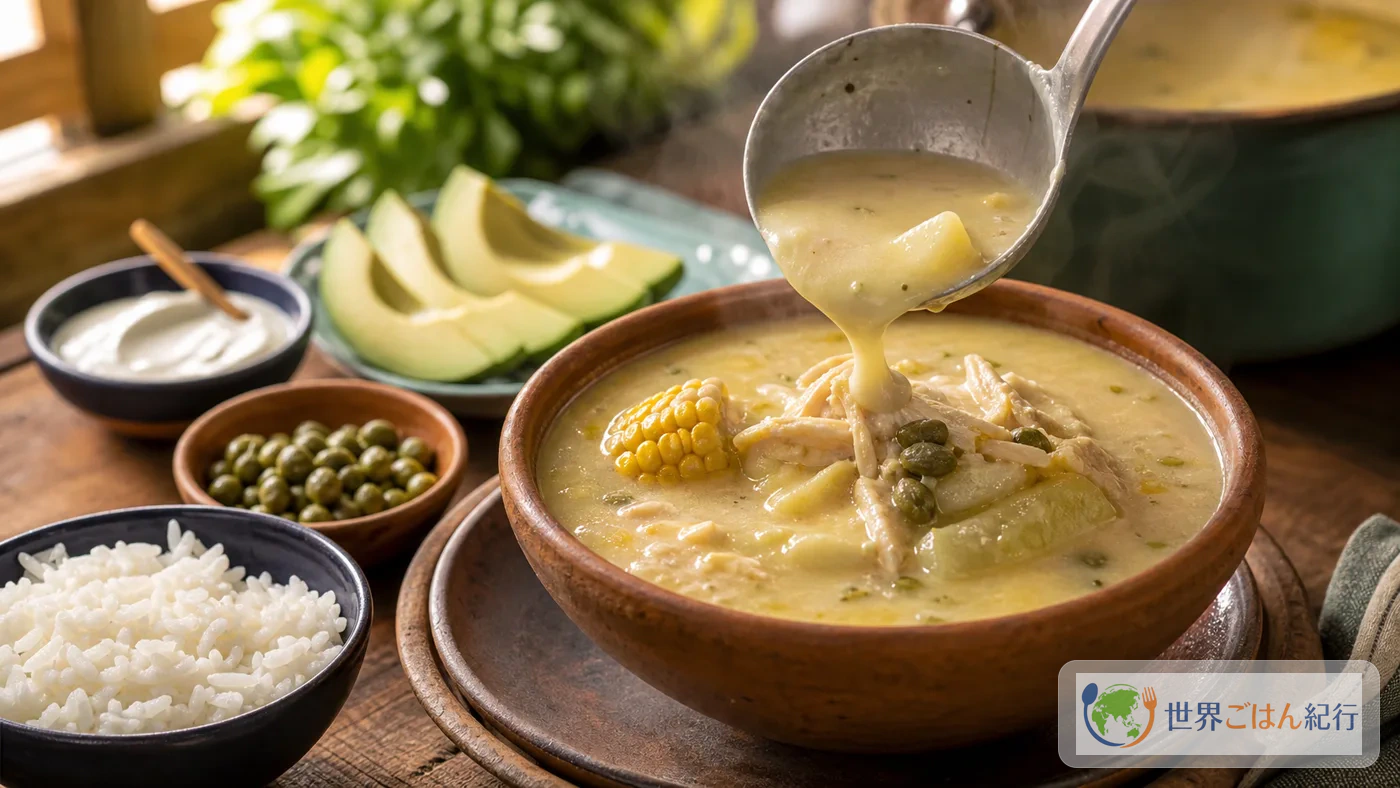
Ajiaco: A Deep Chicken and Potato Soup for Cold Bogotá
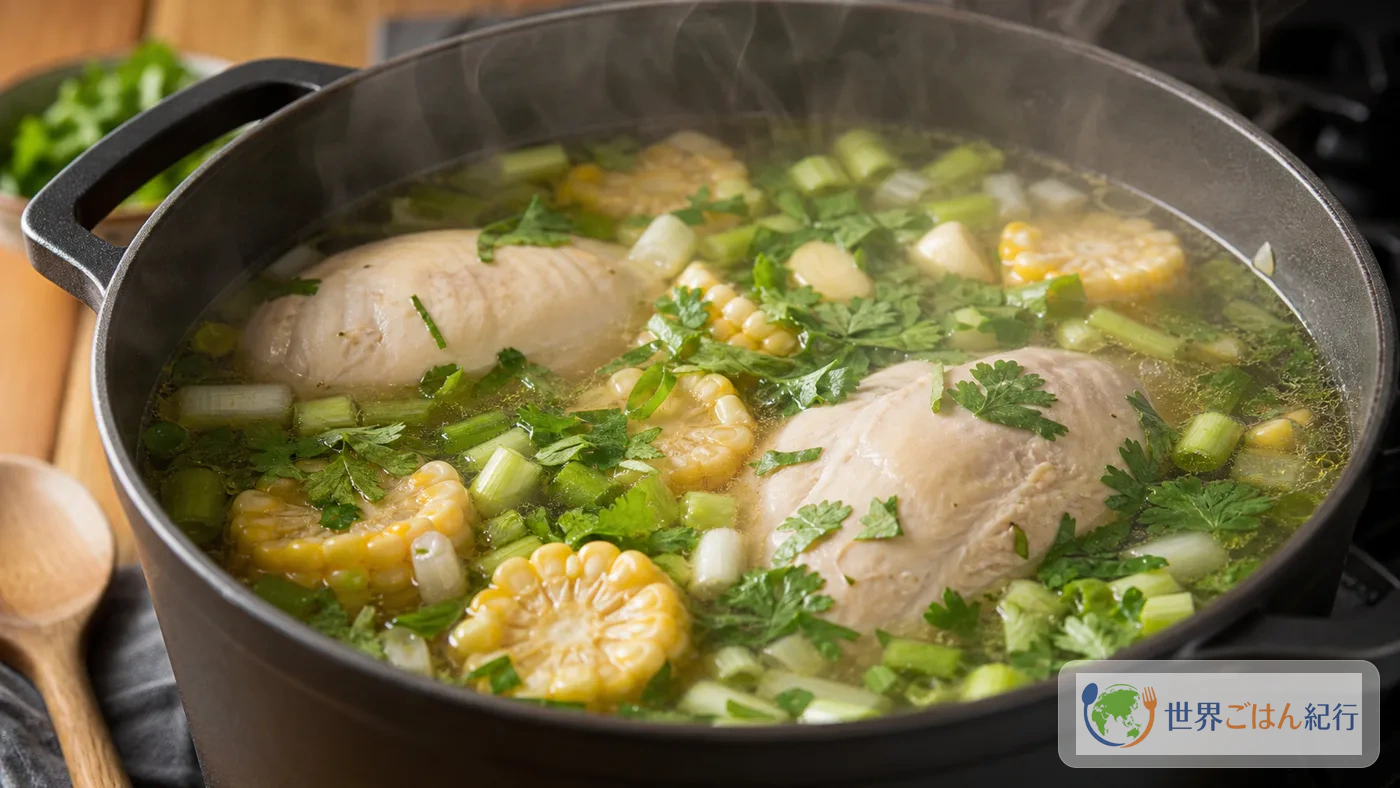
Make a potato soup on a cold day and the air in the kitchen settles a little. Corn bobs at the edge of the pot, the chicken gives up its broth, and the potatoes slowly break down. Add a pinch of an herb with a dry, grassy aroma, and it is no longer just chicken and potato soup; it comes closer to Bogotá's ajiaco.
Ajiaco santafereño, or ajiaco bogotano, is the signature chicken and potato soup of Colombia's capital, Bogotá. Chicken, corn, three kinds of potato, and an herb called guascas are simmered together, and at the table capers, cream, avocado, and white rice are served alongside.
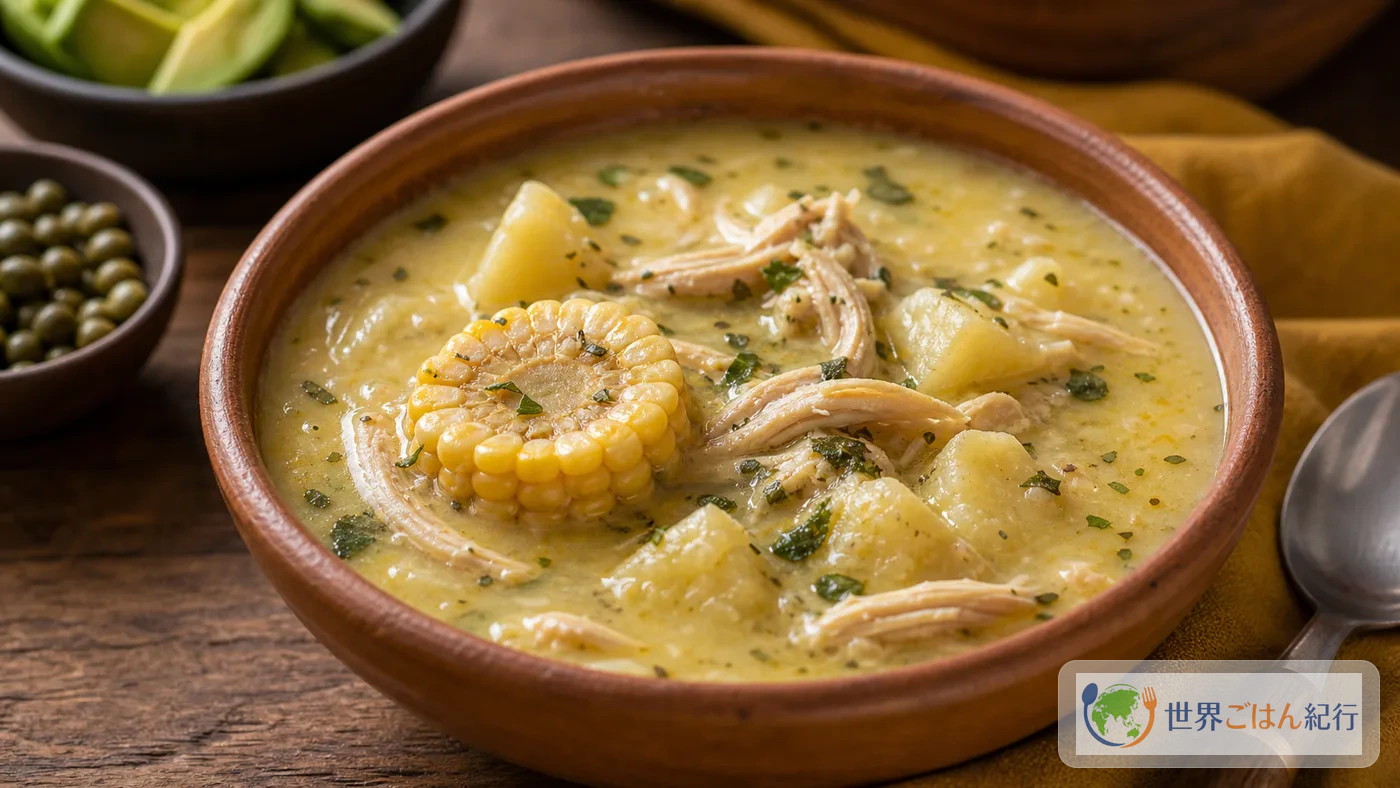
What is confusing when you make this outside Colombia is the potatoes and the guascas. In Bogotá, potatoes with different roles are combined: papa criolla, papa pastusa, and papa sabanera. The small yellow papa criolla breaks down to thicken the soup, while another potato keeps its shape and gives substance. Elsewhere, a combination of a starchy potato, a waxy potato, small yellow potatoes, and frozen potatoes gets you close.
The other peak is guascas. This Asteraceae herb, also called gallant soldier in English, is the core of ajiaco's aroma. It cannot be fully replaced with parsley or oregano. On a day you cannot get any, you can still enjoy it as a Colombian-style chicken and potato soup, but to give it the character of ajiaco you will want to have at least a little dried guascas.
This article keeps to the Bogotá axis while organizing a method that uses chicken breast, corn, and potatoes from an ordinary supermarket. If you have already read about bandeja paisa (in Japanese) as Colombia's bold platter, you will see an entirely different face of the same country here. And if you go on to mute, which simmers beans and hominy deeply, you will see that Colombia's soup culture does not end with chicken and potato. Not a big platter of meat and beans, but a bowl that warms the body in the cold highlands: this is where the range of Colombian cooking gets interesting.
Bogotá was once called Santa Fe de Bogotá, so in Colombia it is also called ajiaco santafereño. This article uses the more searchable "ajiaco" while centering the text on the characteristics of the Bogotá version.
The Story of the Dish: Muisca Potatoes and Capers at the Table
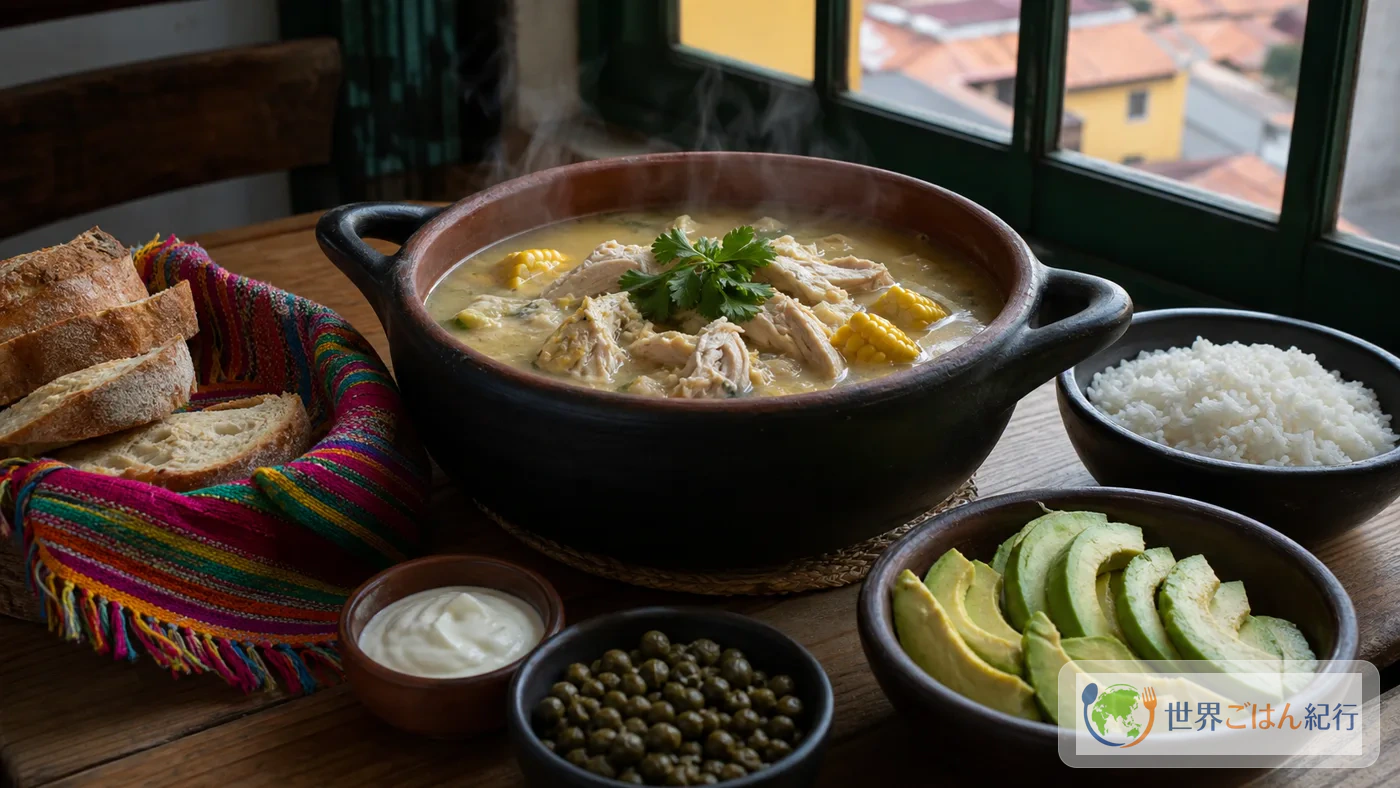
Behind ajiaco are the ingredients of the Andean highlands. Colombian tourism information presents ajiaco as a central-region dish using several potatoes from the plateaus of Cundinamarca and Boyacá, corn, guascas, and chicken. Colombia's national brand site also lists three kinds of potato and guascas as the Bogotá soup.
What makes this dish interesting is that ingredients of Indigenous origin and table customs that came later live together in one bowl. Potatoes, corn, and guascas are ingredients strongly tied to the highland soil. On the other hand, the way of adding capers and cream at the table shows influence from after the Spanish arrival. Food & Wine presents ajiaco as a dish where Muisca food culture and ingredients of Spanish origin overlap.
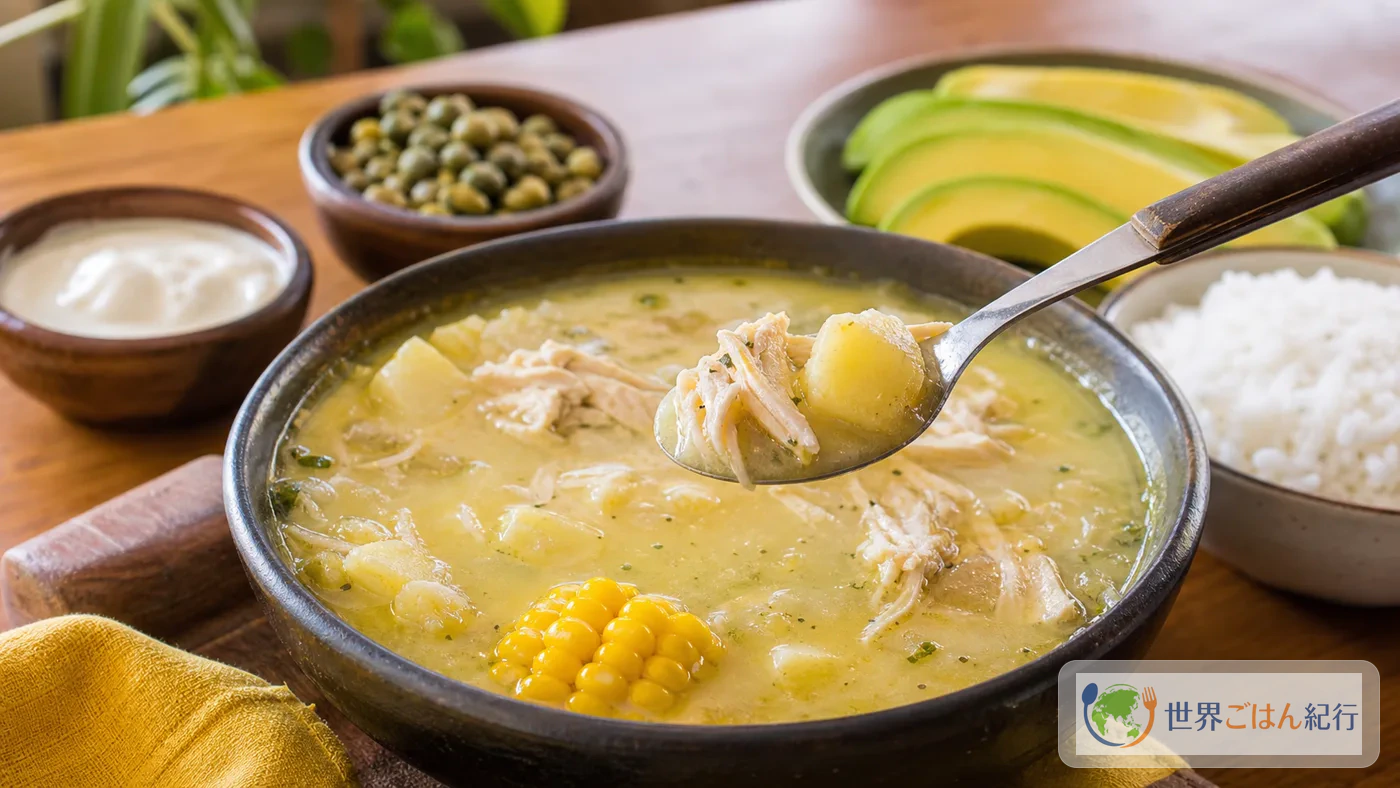
Bogotá is high in altitude and gets quite cold in the mornings and evenings. It is a climate where hot soup is more welcome than heavy meat dishes. Ajiaco is a dish suited to the temperature of that land, and rather than being plated, it is eaten cradled in a deep bowl. The sourness of capers, the roundness of cream, the fat of avocado, and the plainness of white rice come together at the table, not in the pot.
This part is easy to imitate at home. Rather than finishing the whole flavor in the pot before serving, let the person eating add a little at a time. Those who like sourness add more capers, those who dislike rich flavors use less cream, and for children more avocado and rice. It is close to setting out condiments for a hot pot, so Bogotá's way of eating suits any table.
Don't stop at the soup; serving capers, cream, avocado, and white rice on separate plates immediately makes it feel local. If you put the cream in the pot, everyone gets the same taste, so we recommend adjusting at the table.
Ingredients (serves 4)
This recipe contains chicken and dairy (heavy cream), and depending on the product, bouillon may contain wheat, milk, and soy. Capers are very salty, so if you are limiting salt, for example for high blood pressure, adjust the amount.
Ingredients and Equipment for This Dish
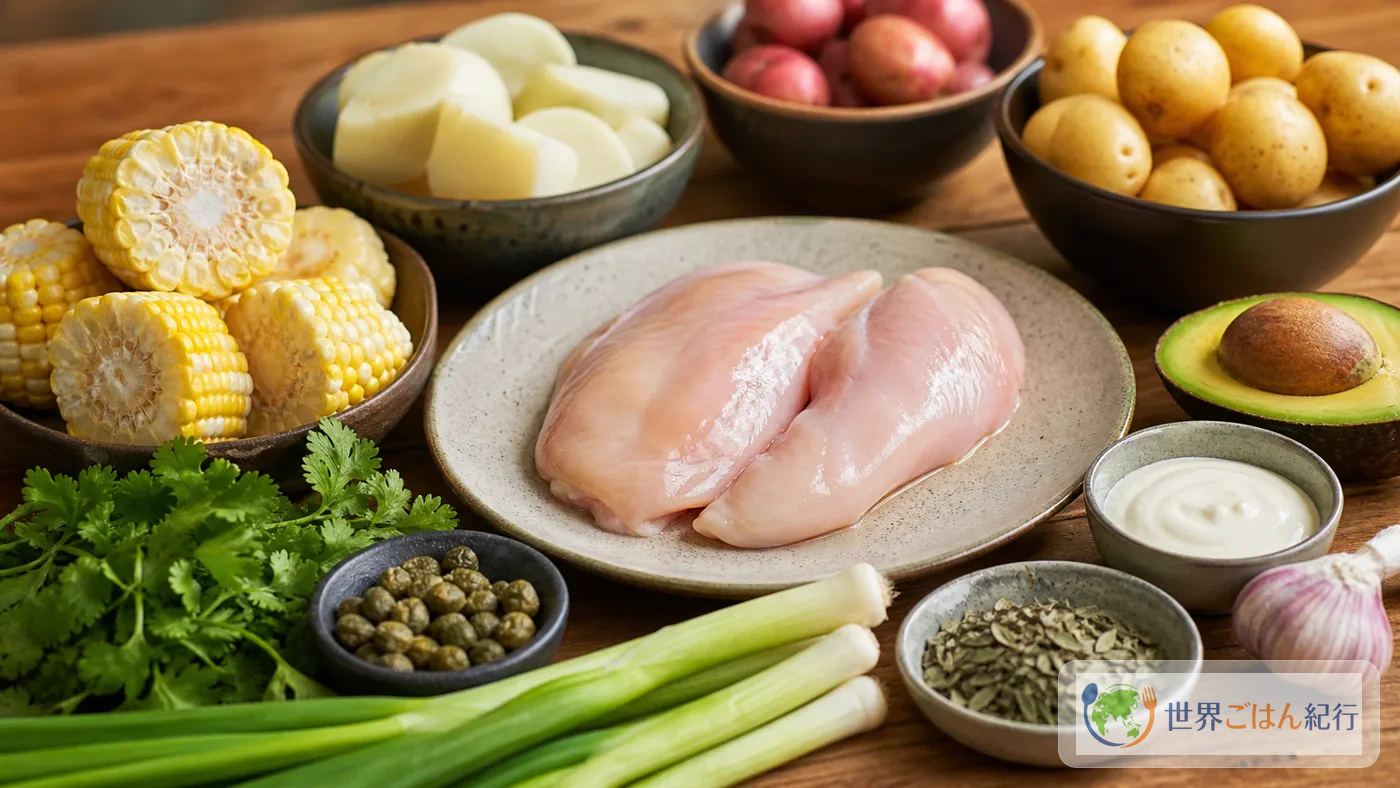
Guascas and capers may not be easy to find at a nearby supermarket. To give it the character of ajiaco, look for just these two first and shopping becomes easier.
On days you have no small yellow potatoes, approximate them with small yellow or frozen baby potatoes. Thickness can be built with the starchy potato, so think of the yellow potatoes as reinforcing aroma and appearance, and it is easier on the mind.
A little caper tightens the flavor. If any are left over, use them in fish dishes, potato salad, or creamed chicken.
Ajiaco is easier to make in a deep pot, where the corn and potatoes have room to swim. A clay pot also works, but stir from the bottom now and then so the potatoes do not scorch.
At the supermarket buy chicken breast, three kinds of potato, corn, avocado, and heavy cream. Add dried guascas and capers from a Latin American grocer or online, and you get quite close to the Bogotá version. To practice before the guascas arrive, first learn just the chicken broth and the potato thickness.
How to Make It: Break Down Some Potatoes to Build Thickness
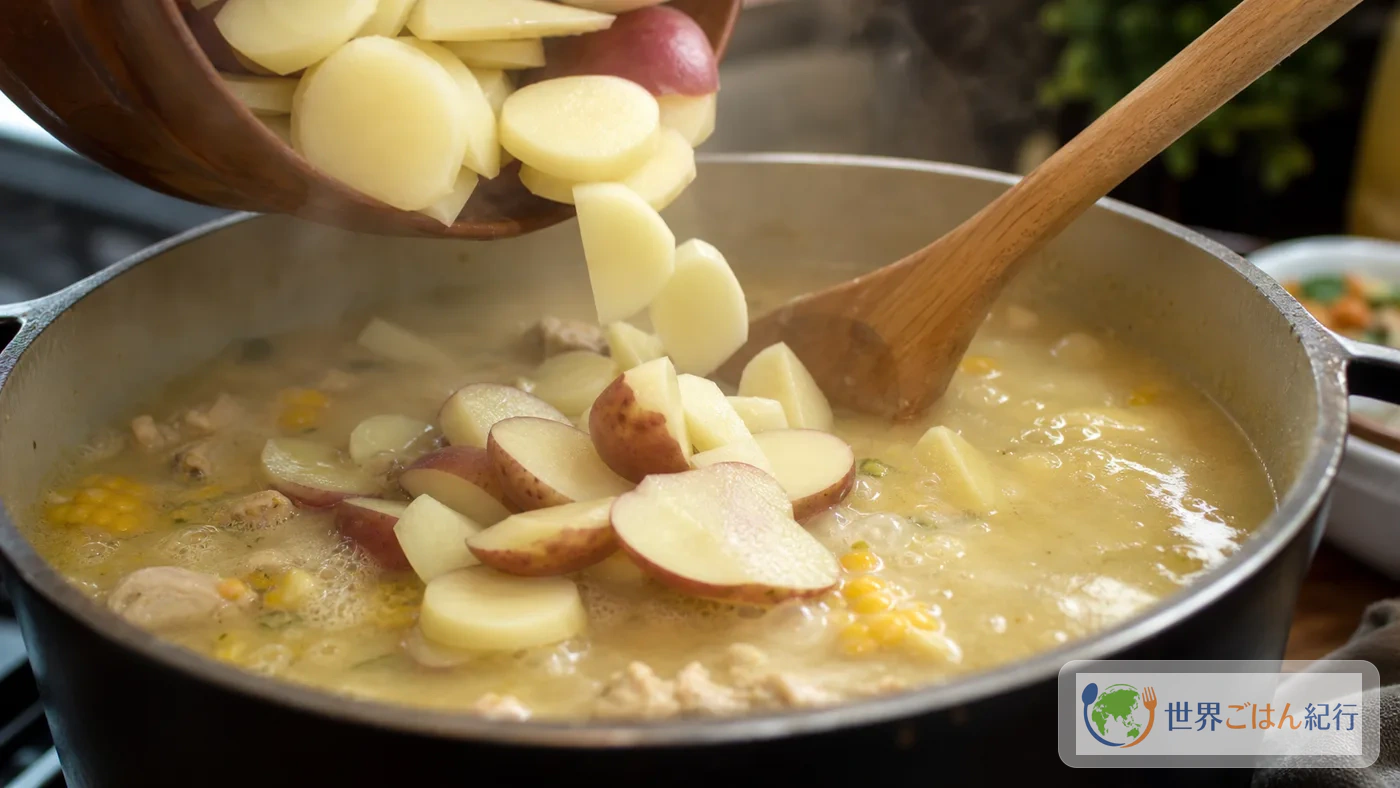
Ajiaco is not a soup made white with cream. The star of the thickness is the potato. If you put all the potatoes in from the start at the same size, some dissolve too much and some stay hard. Separate them into potatoes that break down, potatoes that keep their shape, and yellow potatoes that add sweetness at the end, and it fails less at home too.
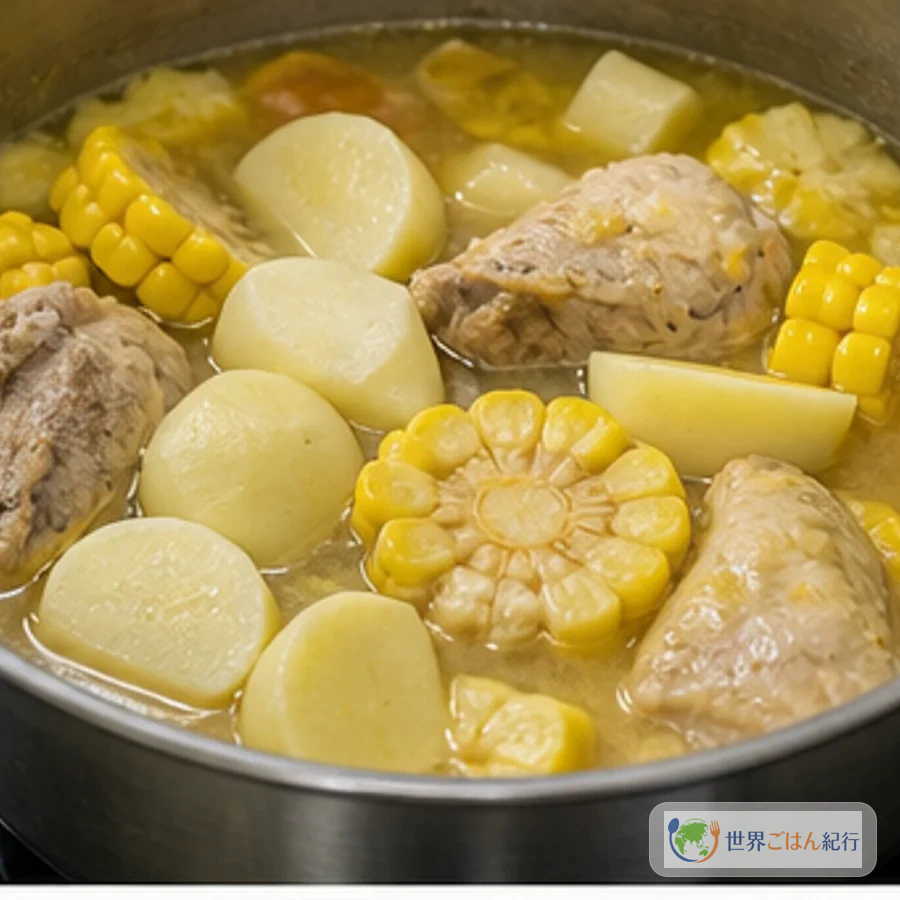
Frozen kernel-only corn gives sweetness too, but the Bogotá look and substance come from rounds of corn on the cob. If you can find frozen corn cobettes, they are handy. If not, use kernels, and serve avocado and capers properly at the table and the mood comes quite close.
Ingredients to Keep and Ingredients to Swap in a Home Kitchen
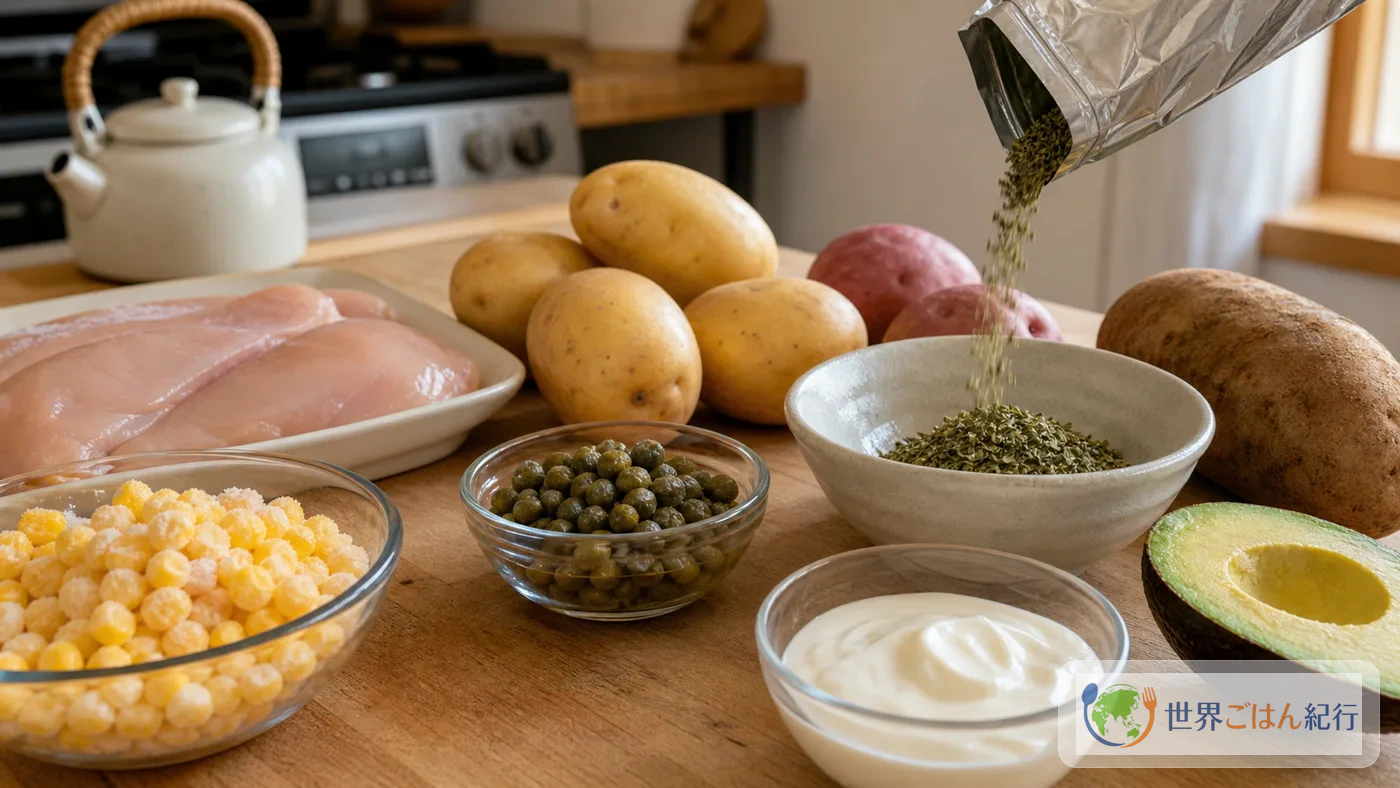
Ajiaco is not a dish you cannot make unless every ingredient matches the local one. But if you replace everything, it becomes "potato soup with chicken." Separate what to protect from what you can swap.
| Local anchor | Realistic choice | Thinking behind the swap |
|---|---|---|
| Guascas | Get dried guascas online or from a specialty grocer | Nearly irreplaceable. Oregano gives a different aroma |
| Papa criolla | Small yellow potatoes, baby yellow potatoes, frozen yellow potatoes | Role is color and sweetness. Do not aim for an exact match |
| Papa pastusa / sabanera | A starchy potato and a waxy potato | The starchy one for thickness, the waxy one to keep shape |
| Colombian corn | Frozen corn rounds, or fresh corn | Rounds feel more like the table than kernels alone |
| Cream | Heavy cream, sour cream | Do not put in the pot; add a little at the table |
| Capers | Jarred capers | Role is sourness and saltiness. Pickles have a different aroma |
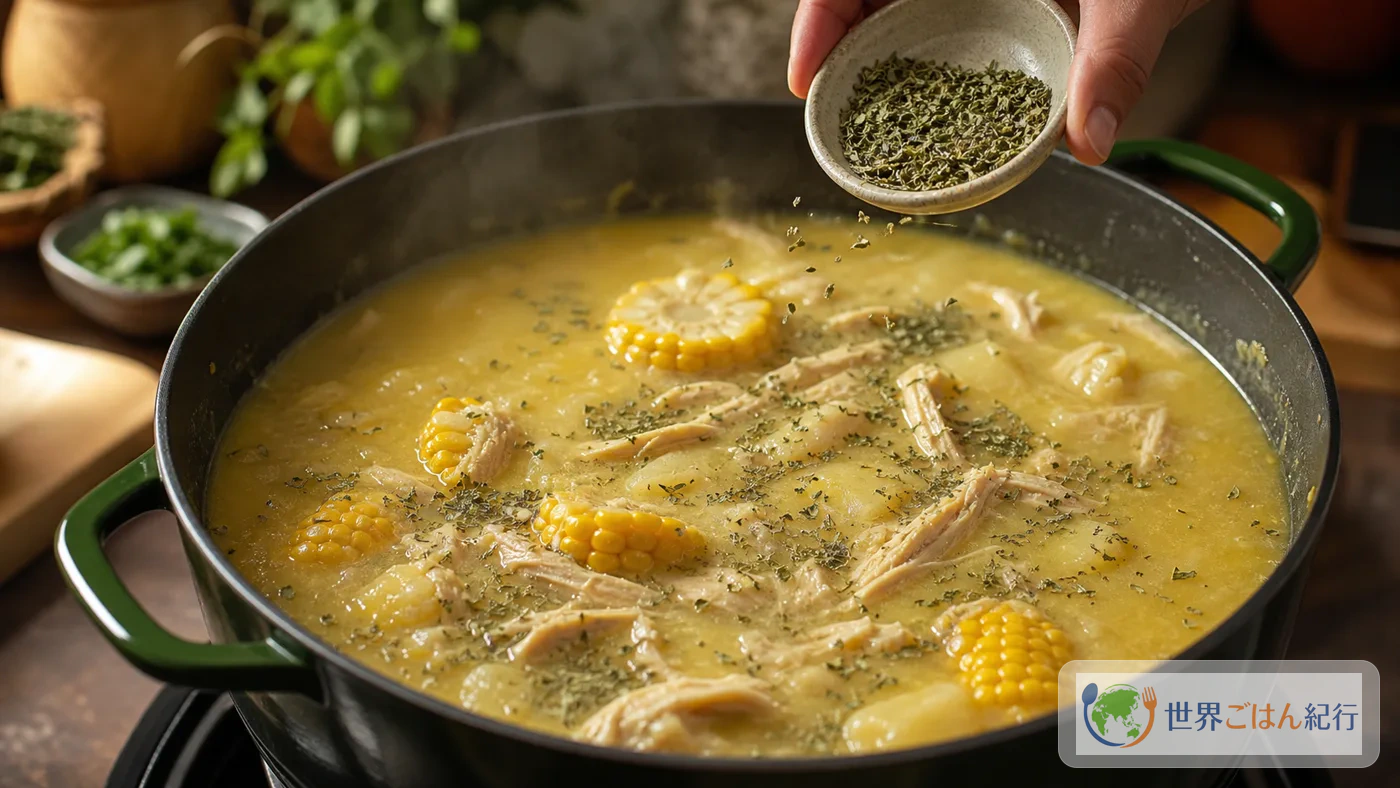
If you have no guascas, it is better not to force in large amounts of a similar herb. Adding more oregano or parsley leans Mediterranean and blurs the taste of chicken and potato. If you must make it, keep the herbs to a little cilantro and parsley, and remake it with guascas when they arrive. This order lets you see the difference in ajiaco.
Made with only one kind of potato, it is monotonous. With only starchy potatoes the soup thickens, but the pieces fall apart. With only waxy potatoes the shape stays, but it is thin. With only the Inca-style yellow potatoes it is expensive and the sweetness comes on strong. For the home version, it is realistic to build thickness with the inexpensive starchy potato, keep shape with the waxy one, and add aroma and color with small yellow potatoes.
Serving white rice alongside may look a little odd to some readers. But for Bogotá's ajiaco, serving rice and avocado on the side is widely described. You can sink the rice in the soup or eat it a little at a time from a separate plate. Half a bowl is enough. Since the soup itself has a lot of potato, think of the rice not as a staple but as a small companion that takes up the flavor.
Causes of Failure: Fixing Watery, Floury, or Lacking Aroma
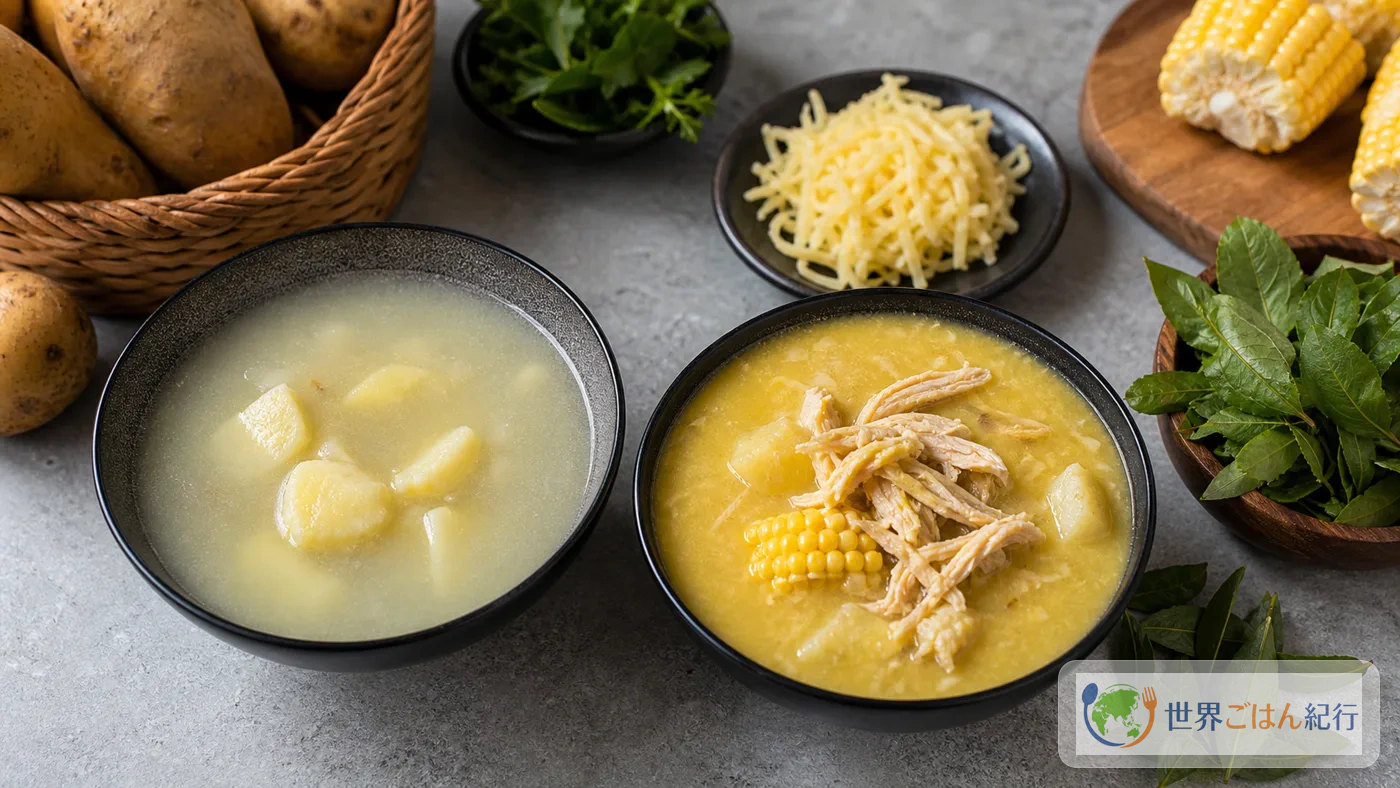
Ajiaco failures show in the look. If the ingredients float in a thin, clear soup, the potatoes have not dissolved enough. Conversely, if it is floury and heavy, the potatoes have been mashed too much. The Bogotá version is not completely smooth like a potage but a thick soup in which bits of potato and chicken remain.
When it is watery, grating one starchy potato into it is quicker than reducing over high heat. After adding the grated potato, simmer about 10 minutes over medium-low heat. It sinks easily, so stir by stroking the bottom of the pot. Epicurious's ajiaco also presents the idea of using grated russet potato to help thicken when papa criolla is not available.
When it is floury, add a little water or chicken broth and simmer the corn for a few minutes to bring back the sweetness. Thinning with cream pushes the dairy-fat flavor too far forward, so do not put it in the pot. The cream is strictly a finish at the table.
When the aroma is weak, check the guascas before adding salt. Old dried herbs lose their aroma. If you add more, limit it to about 1 tsp and taste after simmering 5 minutes. A large amount turns bitter, so instead of covering with herbs, it is more natural to add capers and cream at the table to build the outline.
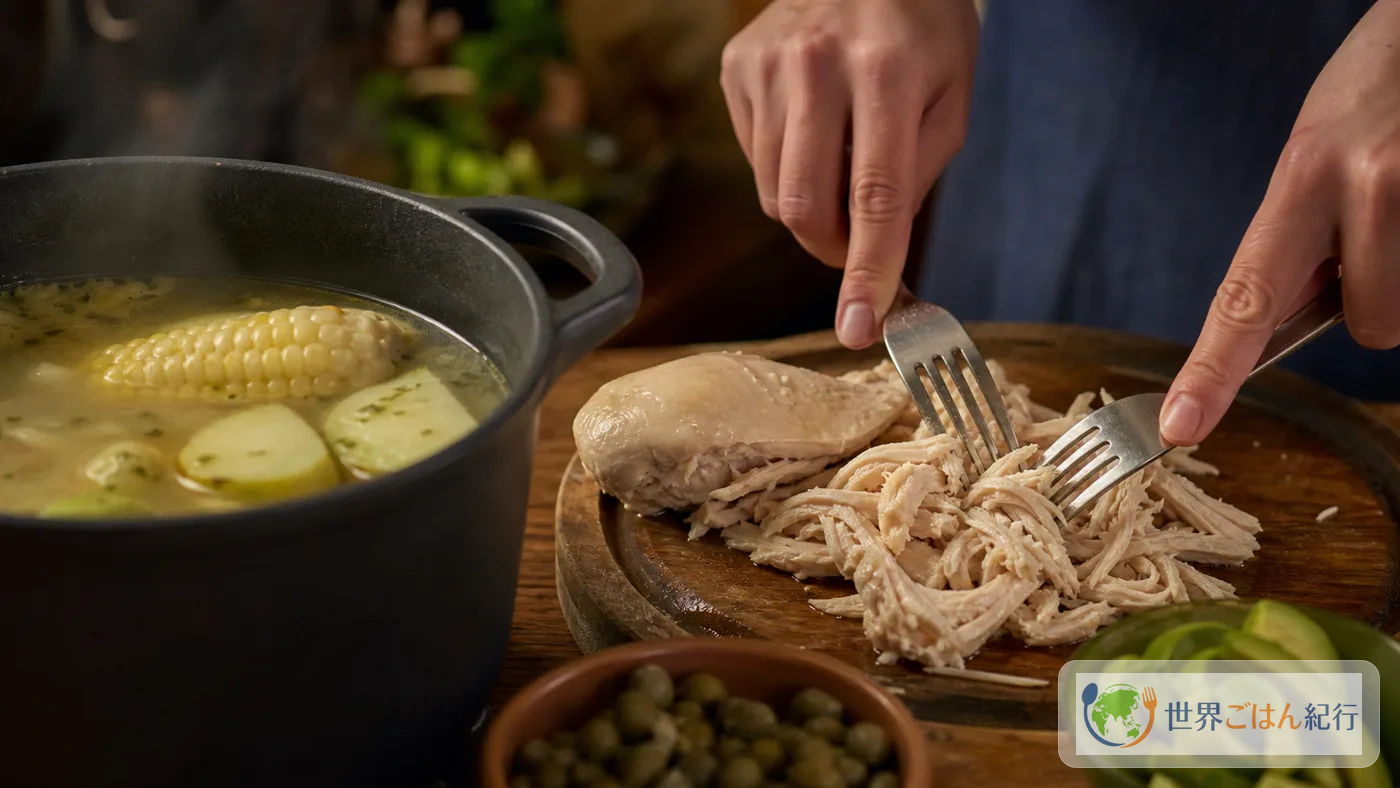
Dry chicken is also a common failure. Chicken breast simmered from start to finish turns tough. Take it out once cooked and return it at the end. That alone changes the texture a lot. Mixing in some chicken thighs makes a richer broth, but the white-chicken character of the Bogotá version is easier to get with breast.
Cook the chicken thoroughly to the center. If it is still pink after shredding, return it to the pot and reheat. When making ahead, do not leave it long at room temperature; move it to a shallow container to cool, then refrigerate.
How to Eat It, What to Serve, and Storage
When you eat, take the first sip with nothing added. Check the aroma of chicken, corn, potato, and guascas. Then add 1 tsp capers and about 2 tsp cream. Once sourness and dairy fat come in, it suddenly feels like a Bogotá table. Don't sink the avocado in the soup; eat it a little at a time on the side so it does not get heavy.
As a menu, ajiaco alone is plenty of a main dish. With white rice, avocado, and a simple salad on the side, it is dinner. To branch out into South American cooking, bandeja paisa (in Japanese) from the same country goes in a different direction, so eating them in comparison is interesting. If you become interested in corn as a staple, going on to Venezuela's arepa or the sweet corn pancake cachapa connects the corn culture of northern South America.
To build out a South American table further, we recommend keeping it for a different day from the meat dish churrasco (in Japanese) or the bean stew feijoada. Ajiaco has a lot of potato and fills you more than it looks. Rather than putting a heavy main dish beside it, finishing with a salad, avocado, and a little rice lets you enjoy it to the end.
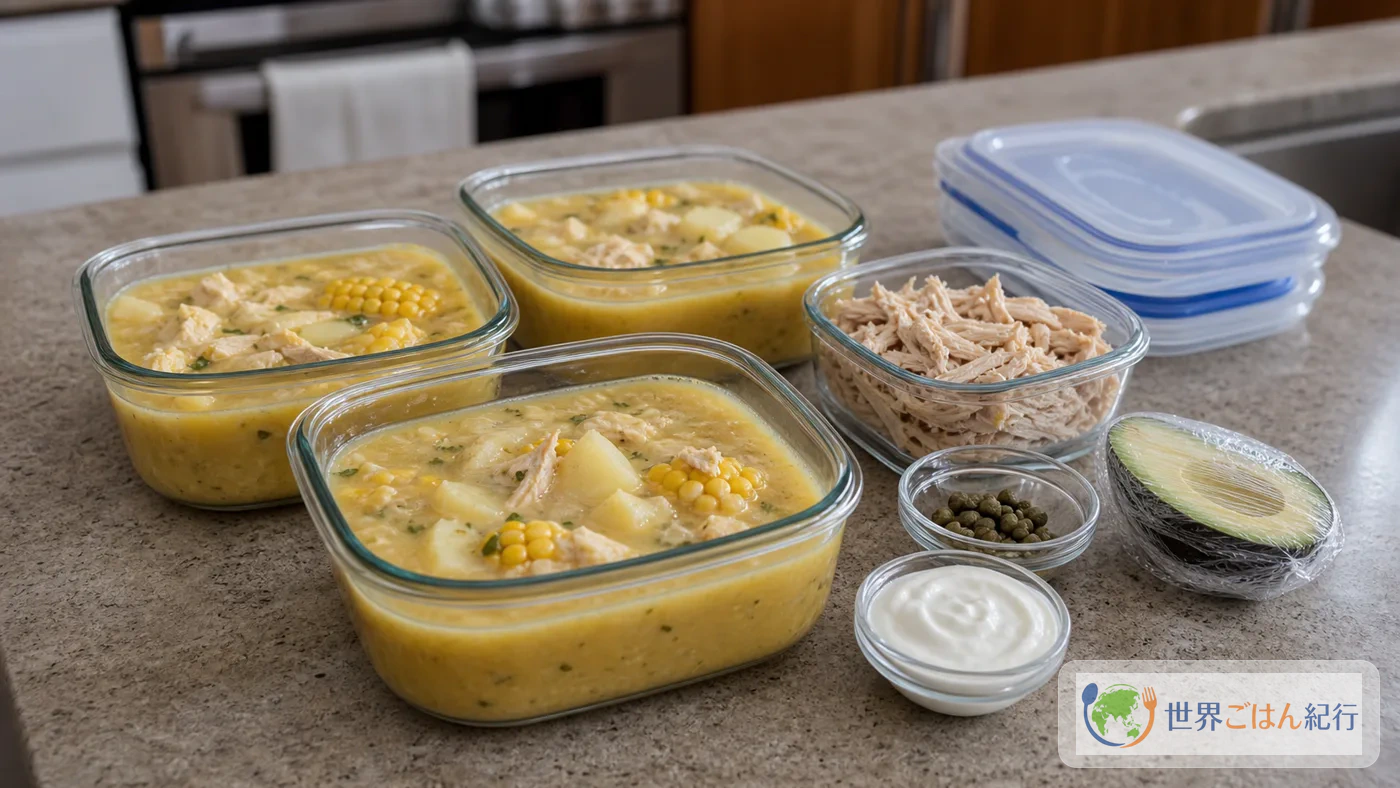
For storage, treat 2 days in the refrigerator as the guide. The potatoes absorb liquid, so the next day it is much thicker. When reheating, add 50–100 ml water or chicken broth and bring it back slowly over low heat. A microwave also works, but the corn gets hot easily, so stir once partway.
You can freeze it, but the texture of the potatoes declines. If you freeze it, take out the corn and use shallow containers, one serving each. After thawing the potatoes are slightly grainy, so reheat while lightly mashing with a wooden spoon. Do not freeze the capers, cream, and avocado; add them just before eating.
FAQ
Q1. Is it still ajiaco without guascas?
You can make a delicious chicken, potato, and corn soup, but the aroma of Bogotá-style ajiaco will be much weaker. Guascas is not a garnish but the herb that shapes the identity of the dish. You do not need to have everything perfect from the first time, but if you want to learn it as ajiaco, it is worth getting the dried herb.
Q2. Can I make it with only one kind of potato?
You can. But the thickness and texture will be monotonous. With one kind, use a starchy potato, breaking down half of it as thin slices and adding the other half in larger pieces later. If possible, even using just two kinds, starchy and waxy, gives you both the body of the soup and the substance of the pieces.
Q3. Can I put the cream in the pot?
We do not recommend it. Ajiaco's richness comes from the potatoes, and the cream is added to taste at the table. If you put it in the pot, the whole thing leans toward a dairy flavor and the aroma of capers and guascas is harder to see.
Q4. Can I use chicken thighs instead of breast?
You can use chicken thighs. The broth gets richer and the meat more tender. But the fat increases, so skimming a little fat from the surface when it cools makes it easier to eat. To get closer to the white chicken look of the Bogotá version, breast or bone-in breast suits.
Q5. Is it easy for children to eat?
It is not spicy, so it is easy to eat. Capers are very salty and sour, so use less for children. Adding cream and avocado rounds out the flavor. The corn rounds can be hard to eat, so serve children's portions with the kernels cut off for reassurance.
Wrap-Up: Ajiaco Gets Closer When You Separate the Roles of the Potatoes
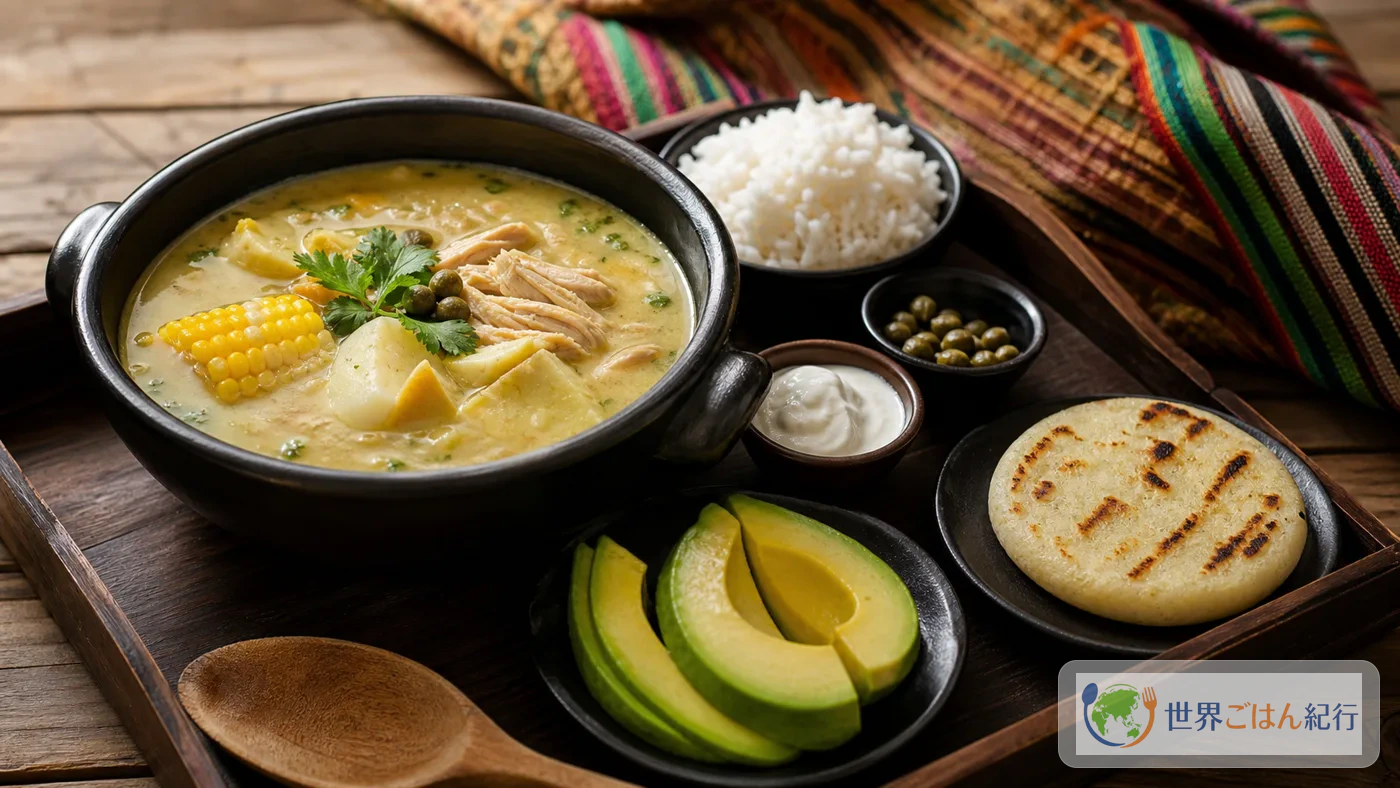
Ajiaco is humble by its ingredient names: chicken, potatoes, corn, an herb. But separate the roles of the potatoes, add guascas, and add the capers and cream at the table, and it suddenly becomes a Bogotá dish.
Outside Colombia, you do not need to gather everything from local ingredients. Build thickness with a starchy potato, keep shape with a waxy potato, add sweetness with small yellow potatoes. Get the guascas if you can. Keep the capers and cream out of the pot so the eater can choose. Draw this line and ajiaco becomes quite easy to make.
If you keep going with Colombian cooking, going on next to bandeja paisa (in Japanese) takes you into the platter culture of Antioquia. As another part of corn culture, making arepa and cachapa makes the northern South American table much more three-dimensional. Ajiaco on a cold day, arepas for a holiday lunch. As the dishes connect little by little like this, world cooking becomes not a one-time event but an option in your kitchen.
Sources
The ingredient makeup of ajiaco, how it is eaten in Bogotá, the roles of the potatoes, and the treatment of guascas were organized by cross-checking Colombian public information and English-language Colombian recipes.
- Bogota.gov.co: A celebrar el cumpleaños de Bogotá con estas delicias cachacas
- Colombia Country Brand: Top 5 Colombian soups
- Colombia Travel: Colombian Food, Typical Dishes and Modern Styles
- My Colombian Recipes: Ajiaco Colombiano
- Epicurious: Colombian Chicken, Corn, and Potato Stew
- Food & Wine: Head to This South American City for Soul-Warming Soup