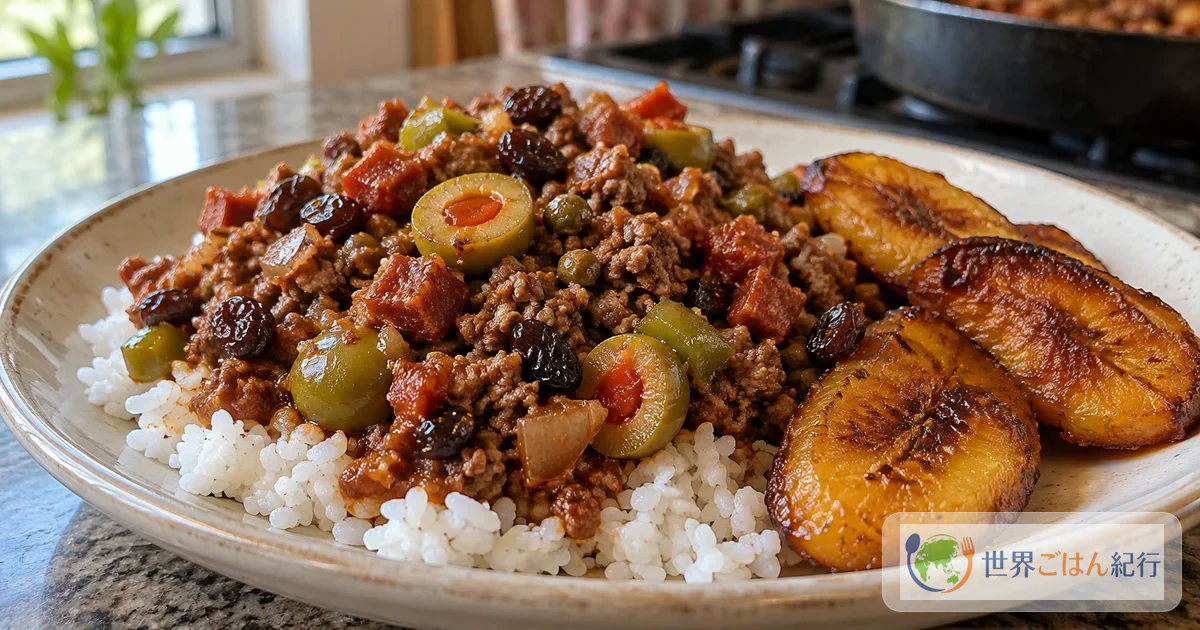
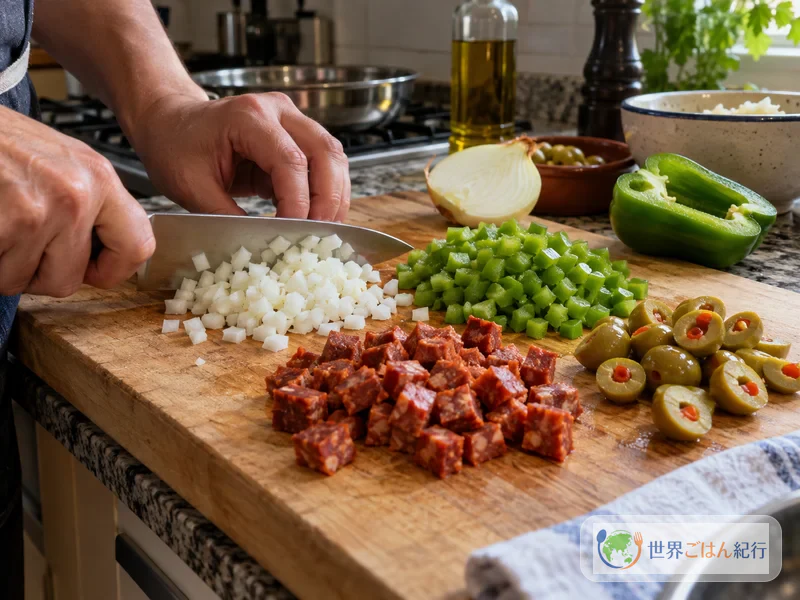
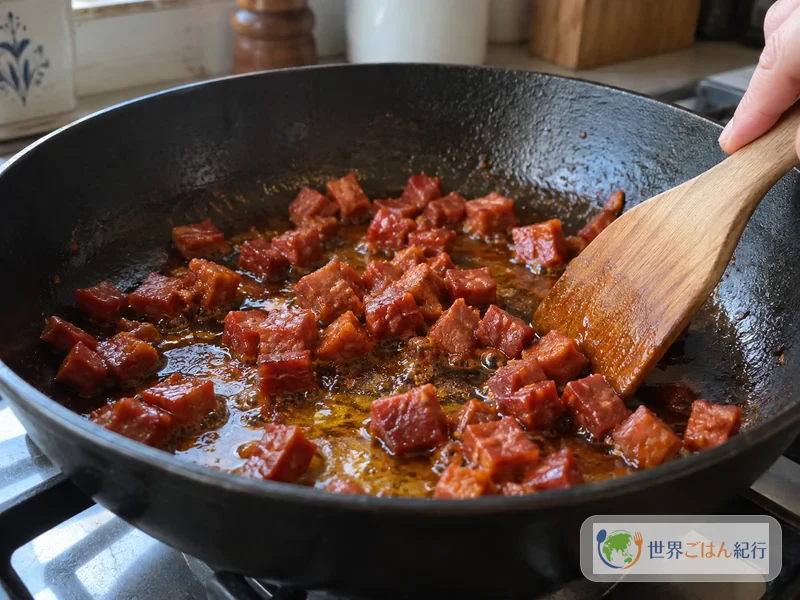
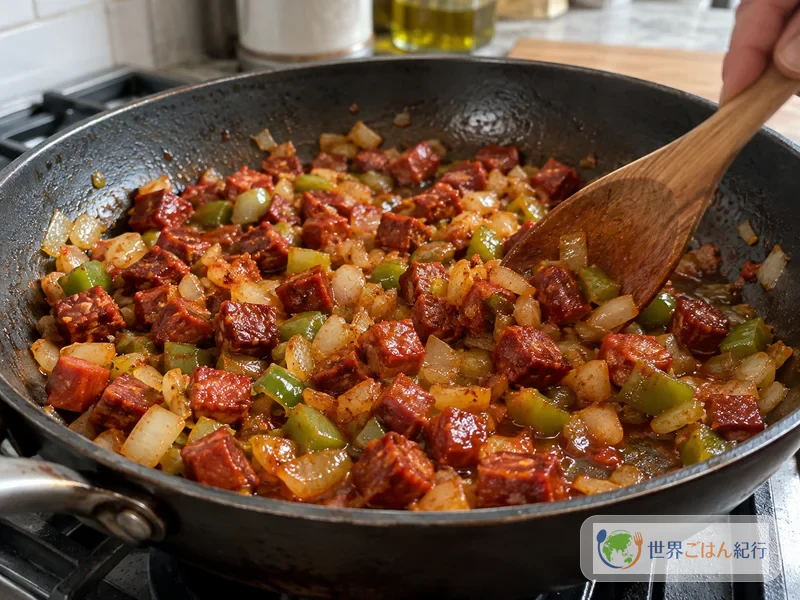
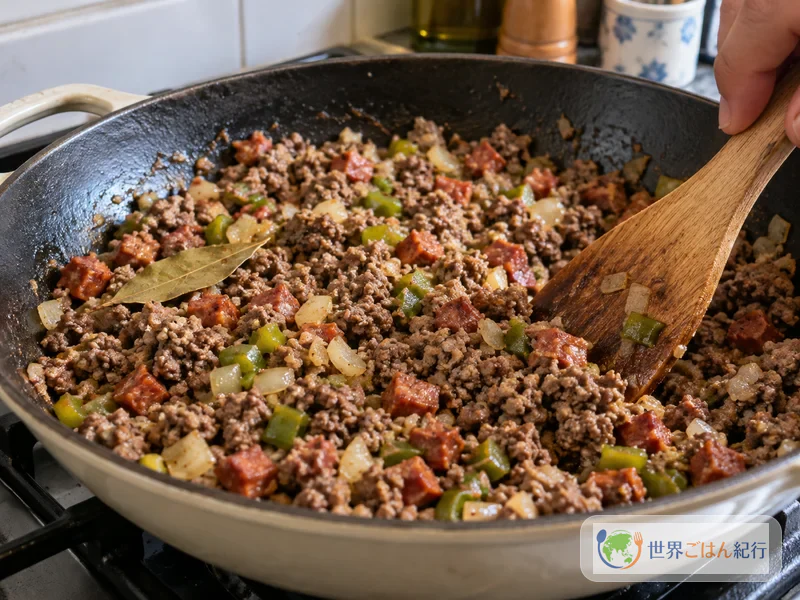
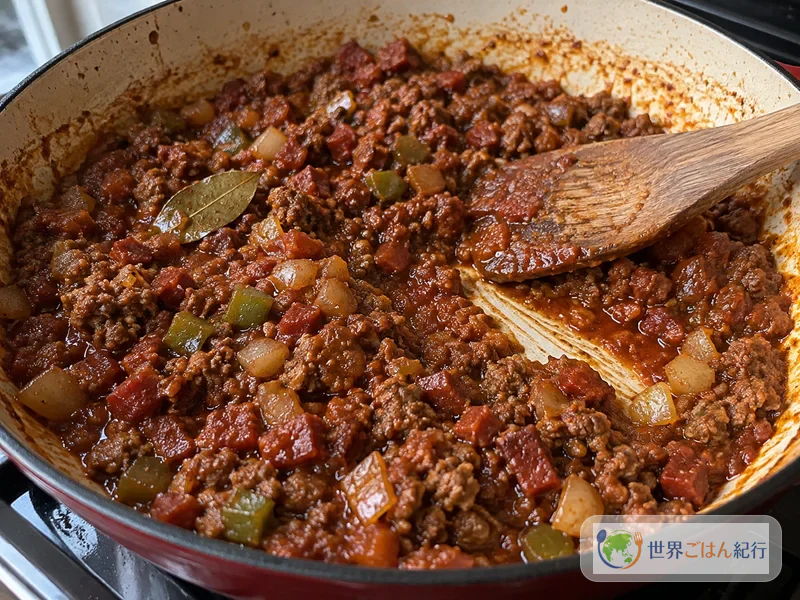
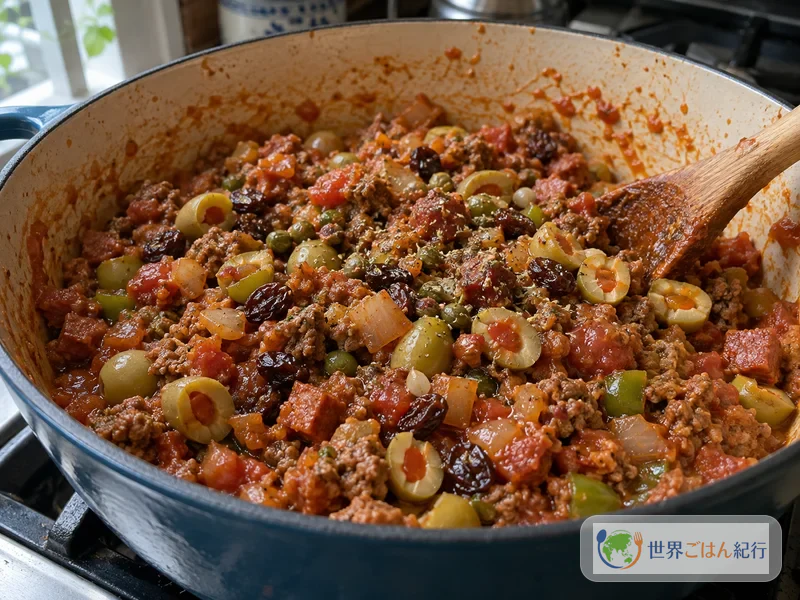
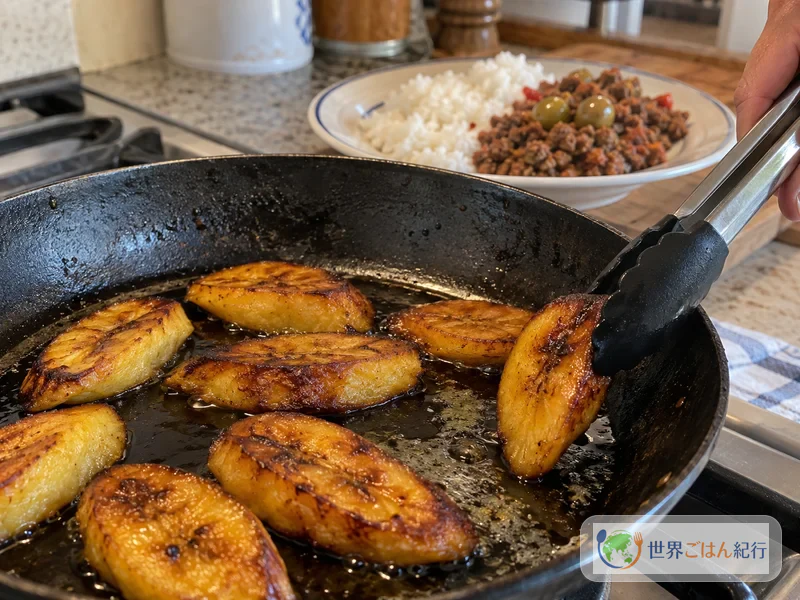
Diced chorizo hits a hot skillet, and within minutes the oil turns red and the smell of paprika and garlic rises. Onion, bell pepper and ground beef go in next, then tomato to simmer it down, and at the end a scattering of green olives, raisins and capers. Spooned generously over white rice with golden fried plantains (cooking bananas) on the side, it's a dish familiar on Cuban tables. This is picadillo a la habanera, a ground-beef stew that is salty, sweet and sour all at once. Most of the ingredients are at an ordinary supermarket, and it takes about 30 minutes to make.
What Is Picadillo a la Habanera?
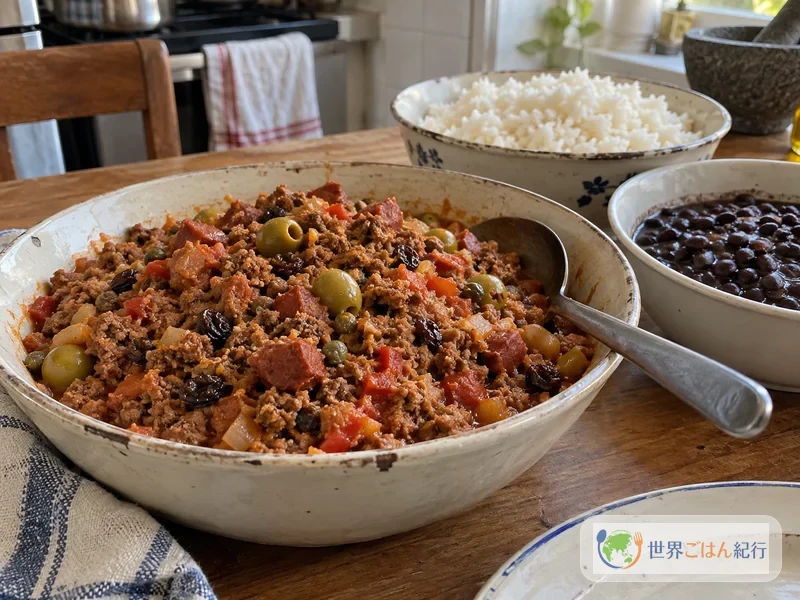
The name comes from the Spanish verb picar, "to chop finely," and picadillo covers dishes made with chopped or ground meat; "a la habanera" means "Havana-style." Picadillo is to Cuban and Latin American cooking what ragù is to Italian: a home cook's way of making the most of cheap meat that became everyone's comfort staple. It also works as a filling. In Cuba it goes into empanadas (stuffed fried pastries) and into "papa rellena," where mashed potato is wrapped around picadillo and fried.
Picadillo across the Caribbean
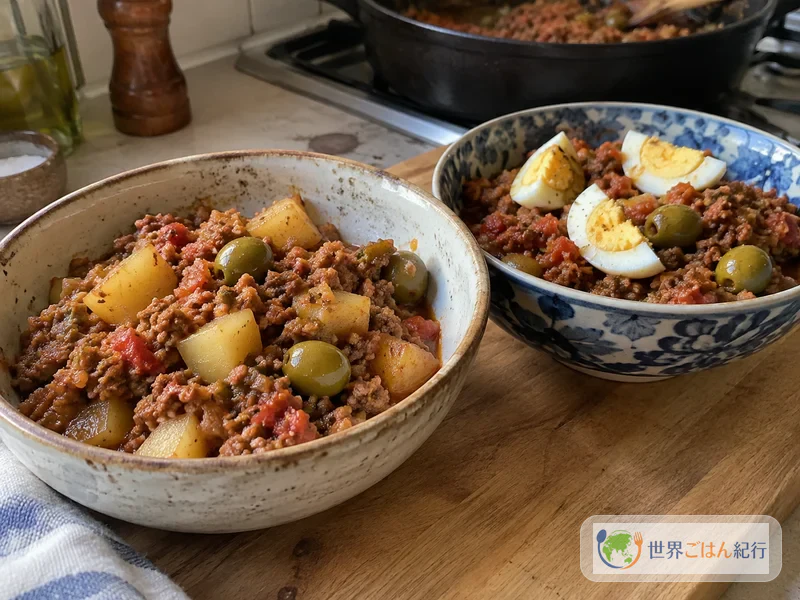
Caribbean and Latin American countries each have their own picadillo, built on the same frame of ground meat with green olives, raisins and spices. The Puerto Rican style adds capers and boiled potatoes, and the Dominican style comes with a boiled egg. The Cuban version's trademark is the sweet-salty note of olives and raisins.
Nitza Villapol and the Cuban kitchen
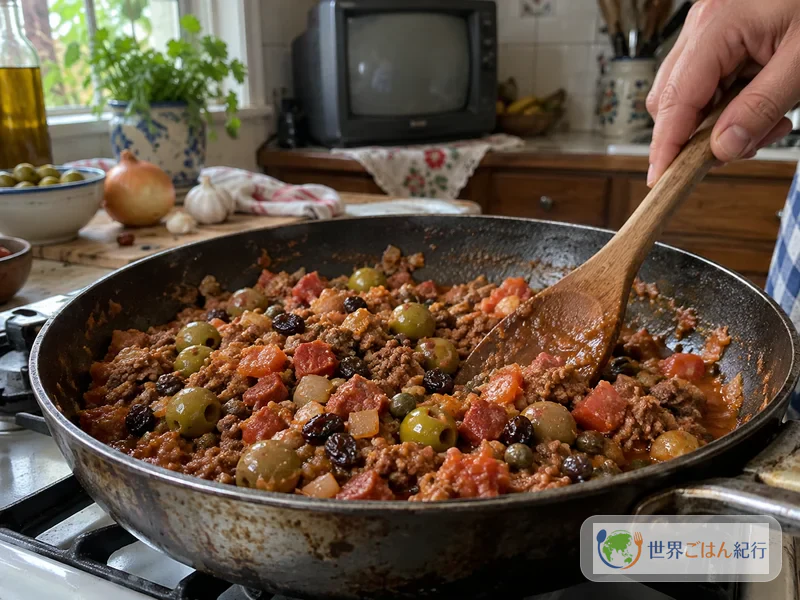
Talk about the history of picadillo and the name Nitza Villapol tends to come up. Called "the Julia Child of Cuba," she long hosted the television cooking show "Cocina al Minuto," which began in 1948, and in its early years the show often featured classic Cuban dishes such as picadillo, vaca frita (crispy shredded beef) and arroz con pollo (chicken and rice).
After the 1959 revolution, butter and fats became hard to get in Cuba, and pork, bread and milk ran short. Villapol cooked with whatever the market had that day, cutting back on oil and butter and reworking recipes for cheaper cuts of meat. Picadillo, which stretches a small amount of ground meat to feed a family, fit those kitchens well.
A "paladar" is a privately run restaurant in Cuba.
Ingredients (serves 4)
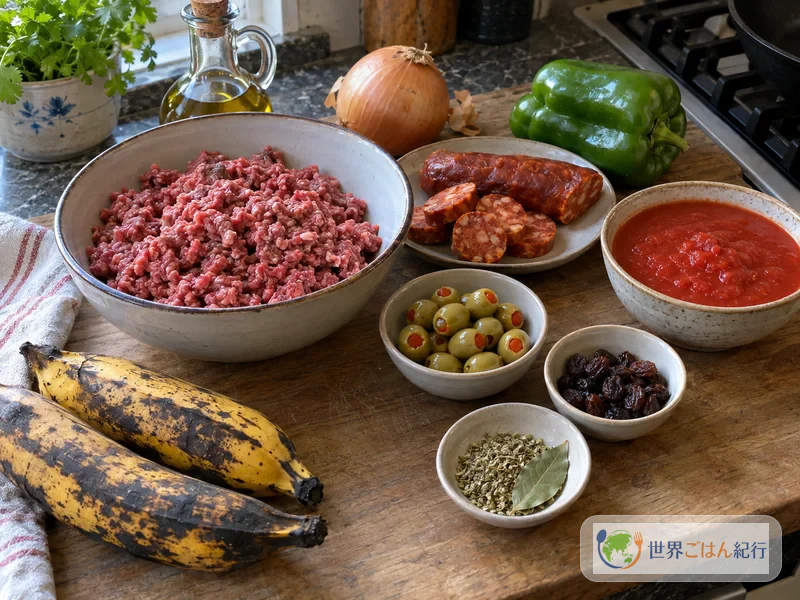
Picadillo
Sides
Plantains are cooking bananas available at import grocers and online. For a sweet fry, let them ripen at room temperature until the skin goes from yellow to blackish before using. While still green they have little sweetness and a starchy, potato-like texture.
Chorizo and sausage contain different ingredients depending on the brand, including pork, dairy and wheat. When serving someone with a food allergy, check the label first.
Choosing Ingredients for Picadillo
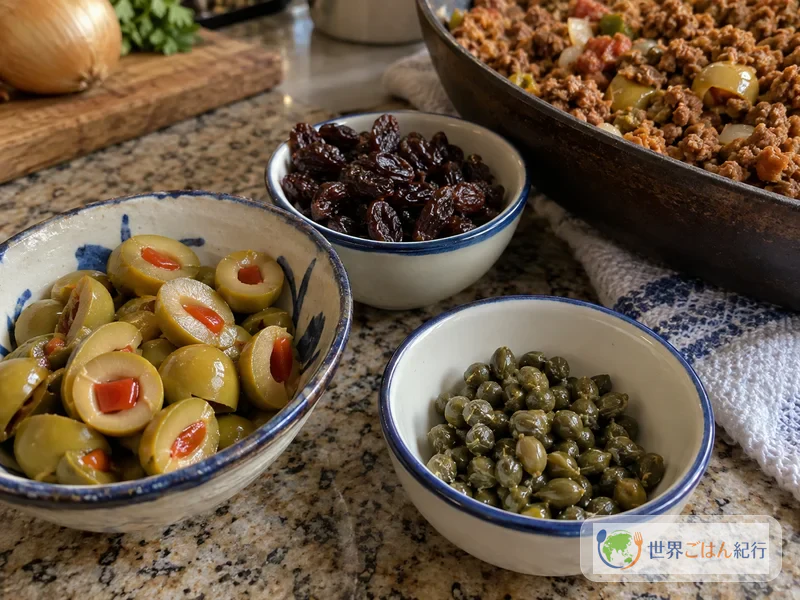
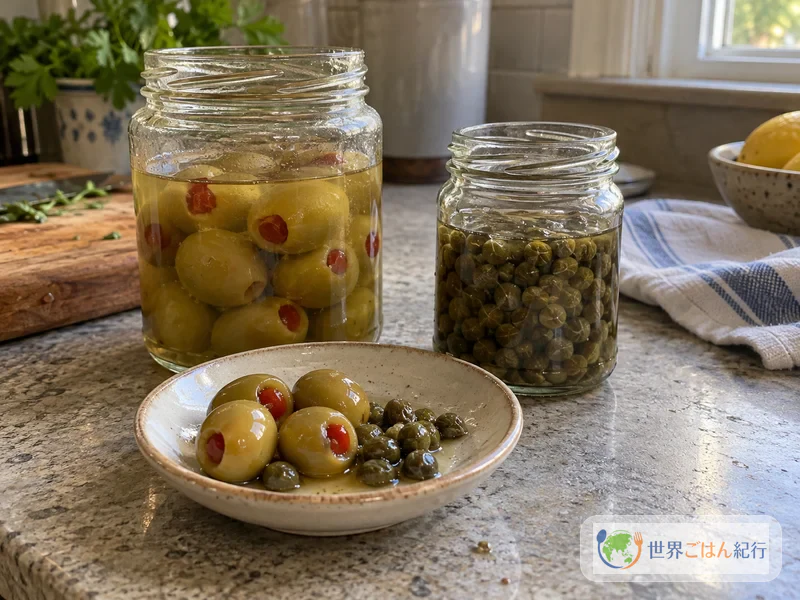
Have all three of olives, raisins and capers on hand. Leave out even one and the balance of sweet, salty and sour collapses, and the dish drifts toward plain meat sauce. For olives, the green pimiento-stuffed kind is the Cuban standard; black olives make the aroma heavier and dull the color. Drain vinegar-packed capers, and rinse salt-packed ones in water before adding.
If you don't like the sweetness of raisins, you can cut 3 tbsp down to 2 tbsp. But at zero, the Cuban character drops off sharply. Even when you want less sweetness, it is best to keep a little.
If you can't find cooking chorizo, use coarse-ground sausage. The red oil won't be as fragrant, but it's still delicious. The meat can also be ground pork or a beef-pork mix instead of all beef; pork makes the dish sweeter and goes even better with the raisins.
How to make picadillo
Allow about 15 minutes of prep, about 25 minutes to simmer and finish the picadillo, and about 10 minutes to fry the plantains. If you fry the plantains in a separate skillet while the picadillo simmers, both finish at the same time.
Ripe plantains are high in sugar, scorch easily and make the oil spatter more. Keep the heat at medium or below, and use tongs when turning them.
Getting the Salt Right in Picadillo
The easiest thing to get wrong is the salt. Chorizo, olives and capers are already salty, so the dish needs almost no added salt. Season only after the final taste and you won't overshoot.
Picadillo settles into better flavor if you let it stand a little after simmering. If you have time, turn off the heat, cover and rest about 10 minutes before plating, and the flavor of the olives and raisins moves into the meat.
Serving and Leftovers
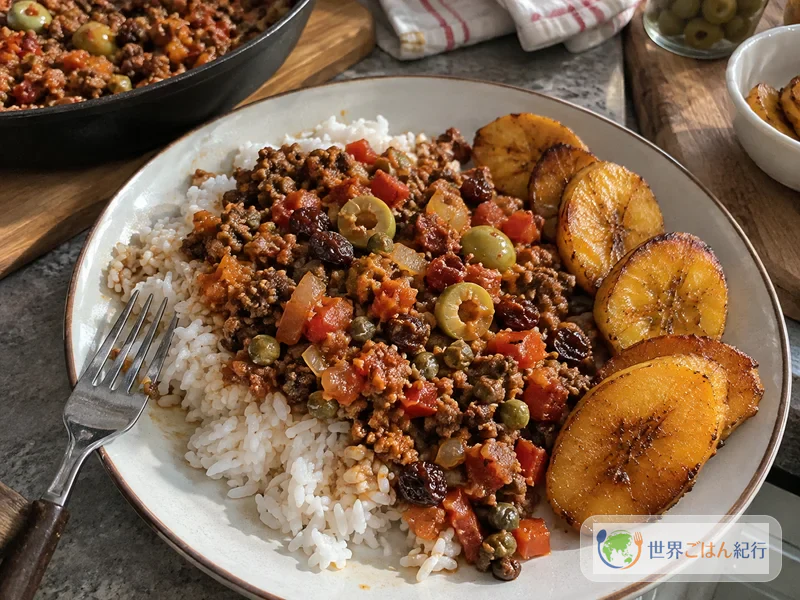
Put white rice on a plate, spoon on plenty of picadillo, and line up sweet fried plantains alongside. Tostones (twice-fried green plantains) and black beans with rice go well too, and with a stew of black beans it comes close to a set meal at a Cuban eatery. At its simplest, picadillo over rice with a fried egg makes a proper plate.
Make plenty, the way Cuban households do, and turn the leftovers into empanada or croquette filling the next day. Being delicious twice from a single cooking is one reason this dish has long been made at home.
For another Cuban meat dish, try ropa vieja, shredded beef stewed in tomato. For more plantains, try it side by side with mofongo, the Puerto Rican dish that makes mashed plantain the star. Same cooking banana, but ripeness and cooking method give entirely different flavors.
Frequently asked questions
Can I make it without chorizo?
Yes. Increase the olive oil to 1 tbsp and add about 1/2 tsp paprika when frying the onion and bell pepper; it makes up a little of the red color and aroma.
Can I use regular bananas instead of plantains?
I don't recommend it: dessert bananas are soft and fall apart when fried. If you can't get plantains, skip the side and eat it with white rice alone, or serve it with a stew of black beans.
Can I freeze it?
Yes. Cool the cooked picadillo, then freeze it in an airtight container and eat it up soon. When reheating, heat it until the center is hot.
Can I make it spicy?
Cuban picadillo is a mild dish. If you want heat, add hot sauce at the table.
Can I make it for children?
With no heat, it's easy for children as is. If the saltiness of the olives and capers is a concern, halve them and use a little more raisins.