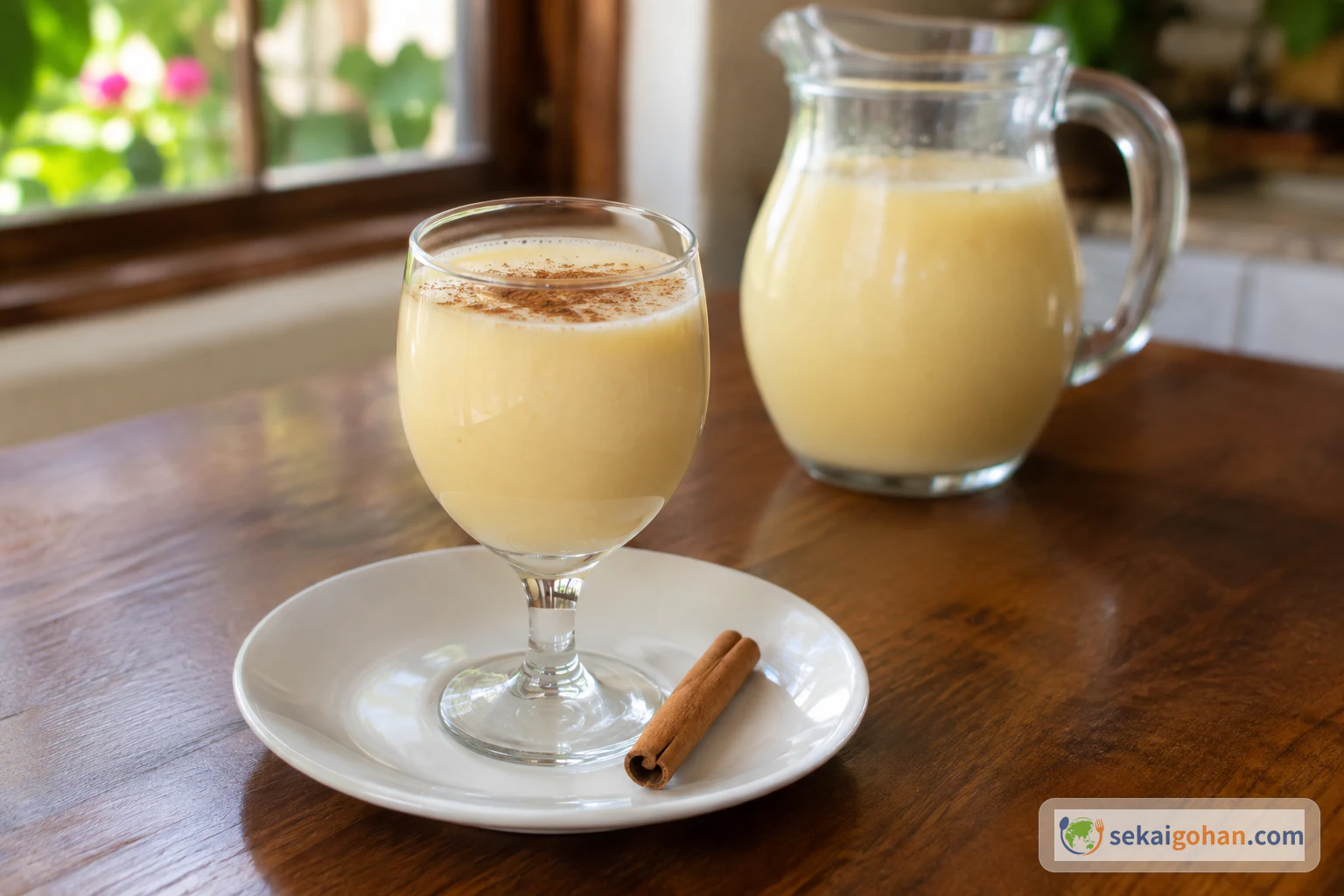
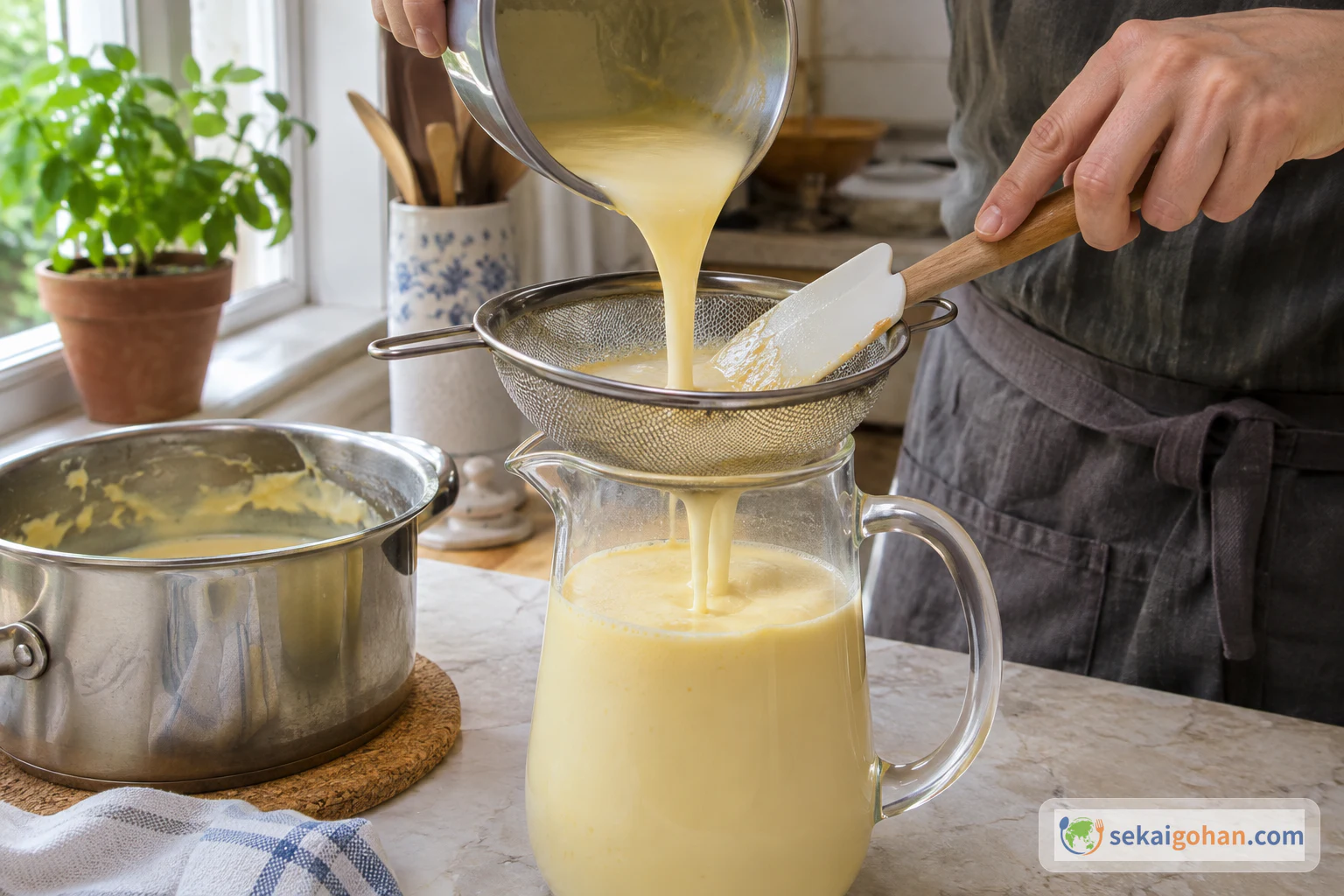
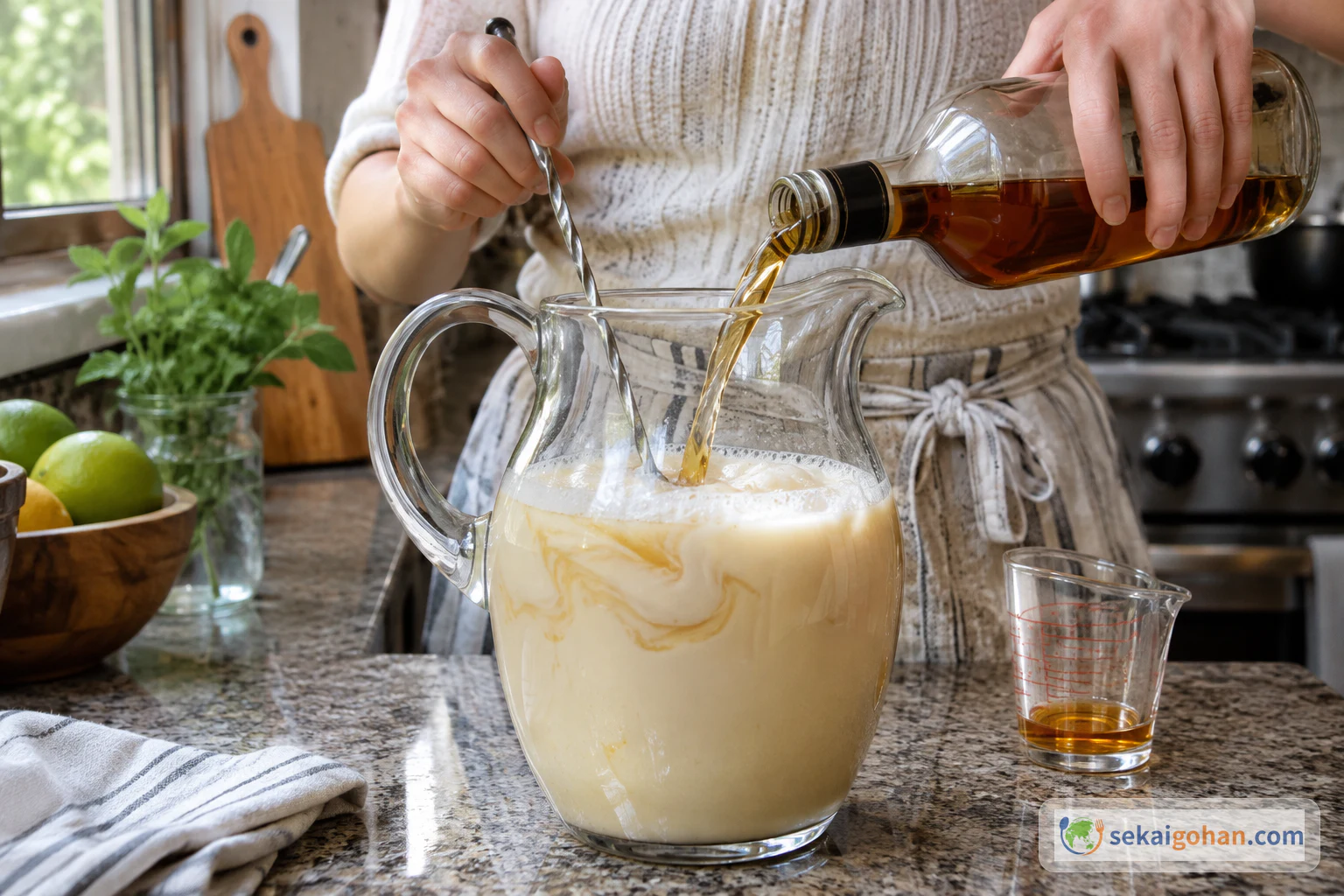
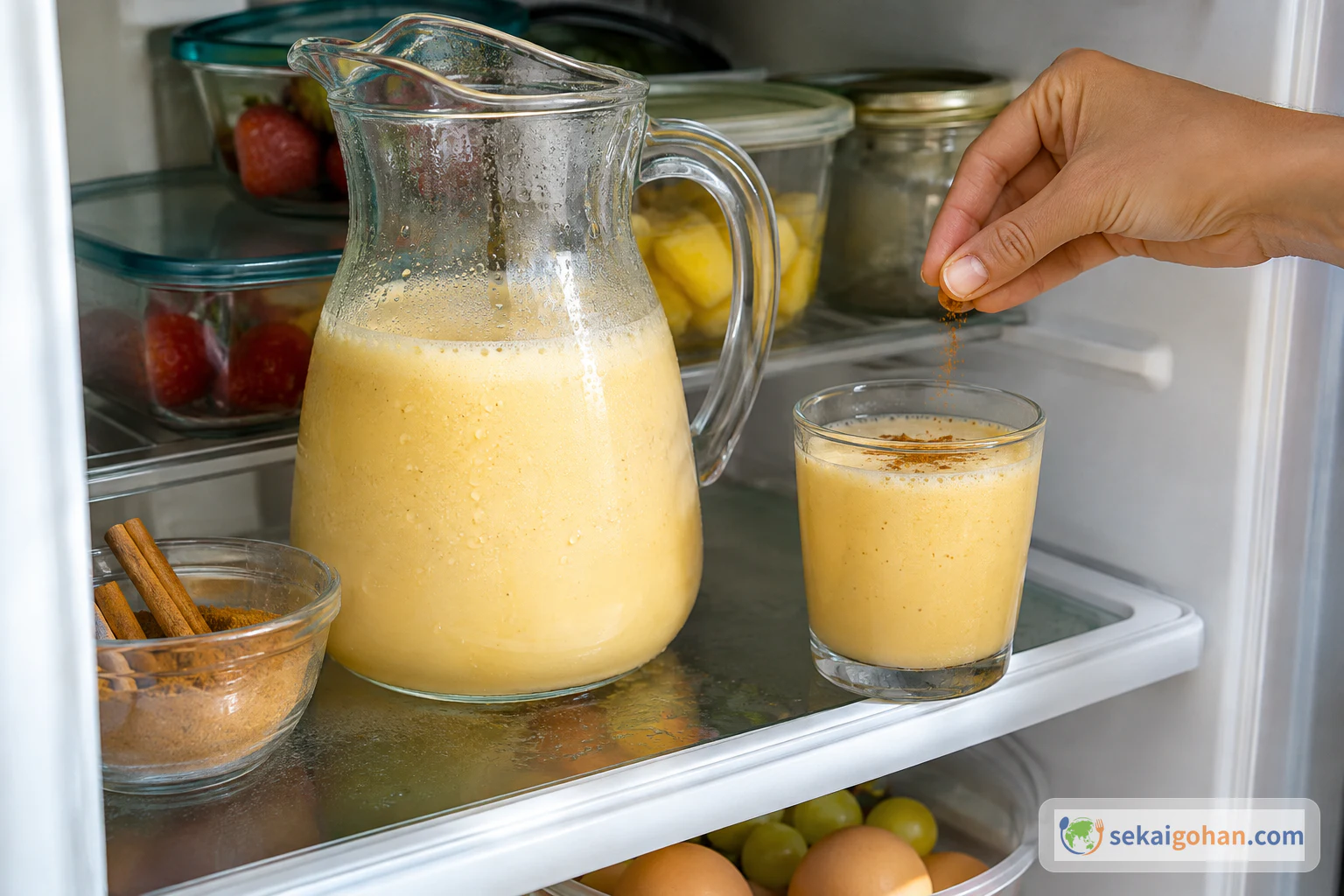
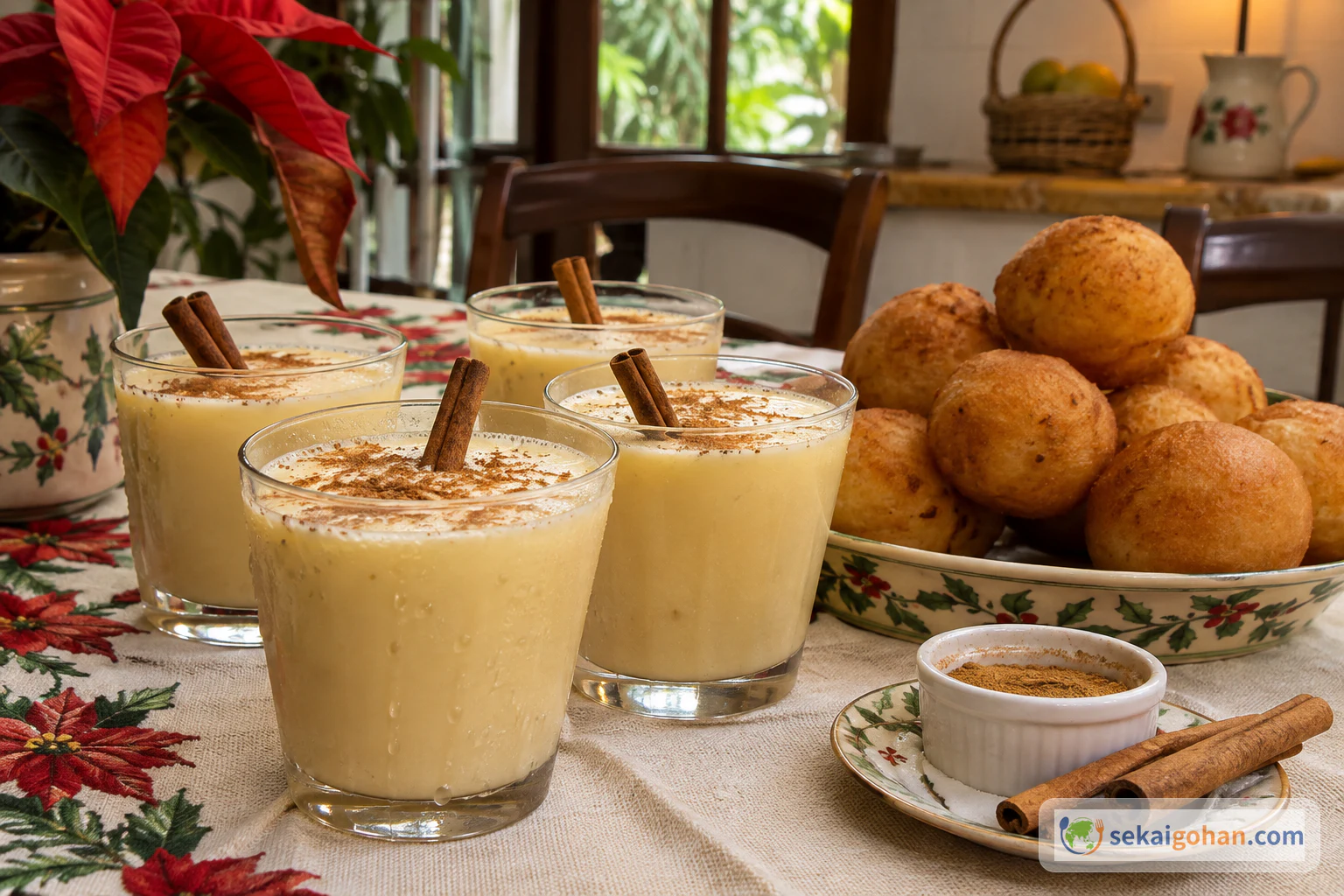
The pitcher comes out of the refrigerator cold enough to fog in your hand. Its contents are pale cream, a little thicker than milk, and they pour slowly into small glasses. A pinch of cinnamon goes on top of each one. Sabajón is Colombia's eggnog. It is a custard of whole milk, egg yolks and condensed milk, cooked gently, chilled, and spiked with rum or aguardiente. It tastes sweet and soft, with vanilla, a warm edge from the spirit, and cinnamon as you lift the glass.
A Christmas Glass That Stays in the Fridge All Year
In Colombia sabajón belongs to the Christmas season. Families drink it at the novena gatherings in the days before Christmas, along with the aguinaldos, and it is one of the drinks most often poured at Christmas Eve dinner, the Cena de Navidad. It is passed around the table among family and friends. Grandmothers, the abuelitas, are especially fond of it, and it is always served well chilled.
The season is only part of the story. Many Colombian households make sabajón whenever they like, and some keep a bottle of it in the refrigerator so there is something to pour when guests turn up unannounced. The custard base can be cooked hours ahead and finished cold, so it suits that kind of habit.
Colombia also has ponche de huevo, a single glass beaten together from raw yolk, whipped egg white, sugar and aguardiente. It is a separate preparation. In sabajón the eggs are cooked, and the heat is what makes the drink safe to share. More dishes from the country are on the Colombia page.
The novena gatherings before Christmas bring families together night after night. Sabajón is the drink poured at those gatherings and again at Christmas Eve dinner, usually in small glasses, since it is rich and sweet.
Ingredients (serves 8)
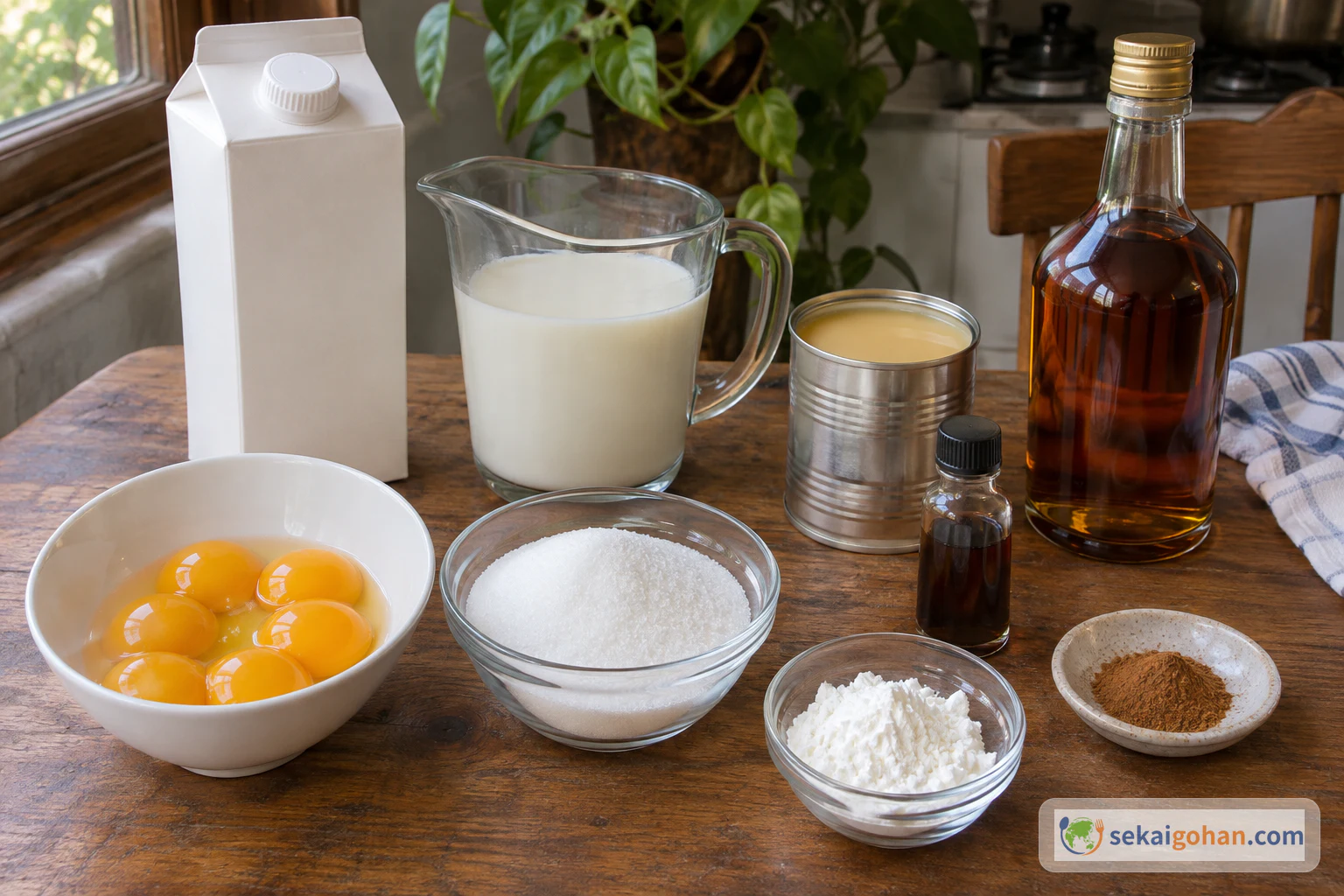
Sabajón contains eggs and milk, and the finished drink contains alcohol. It is an adult drink. For children or anyone who is not drinking, make the alcohol-free version described under Variations.
Equipment
- Heavy saucepan
- Blender or hand blender
- Wooden spoon or whisk
- Instant-read thermometer
- Fine-mesh sieve
- Glass pitcher or jug with a lid or cover
- Small glasses for serving
Choosing and Substituting
Whole milk is the one to buy. Low-fat milk makes a thinner drink with less body. For the condensed milk, look for sweetened condensed milk. It brings both the sugar and the thick, cooked-milk taste. Keep the leftover egg whites for another dish.
Aguardiente is Colombia's anise-flavored spirit and the local choice for sabajón. It is hard to find outside the country, so rum is the practical spirit in most kitchens, and it is a standard choice in Colombia too. Pick a rum you would happily drink, since it goes in uncooked.
Use pure vanilla extract. Imitation vanilla varies in strength, so add it a little at a time if that is what you have. Stick with cornstarch for the thickener. Other starches, potato starch among them, behave differently in a custard. Cinnamon can be ground or a stick, and either one works for the finish.
Method
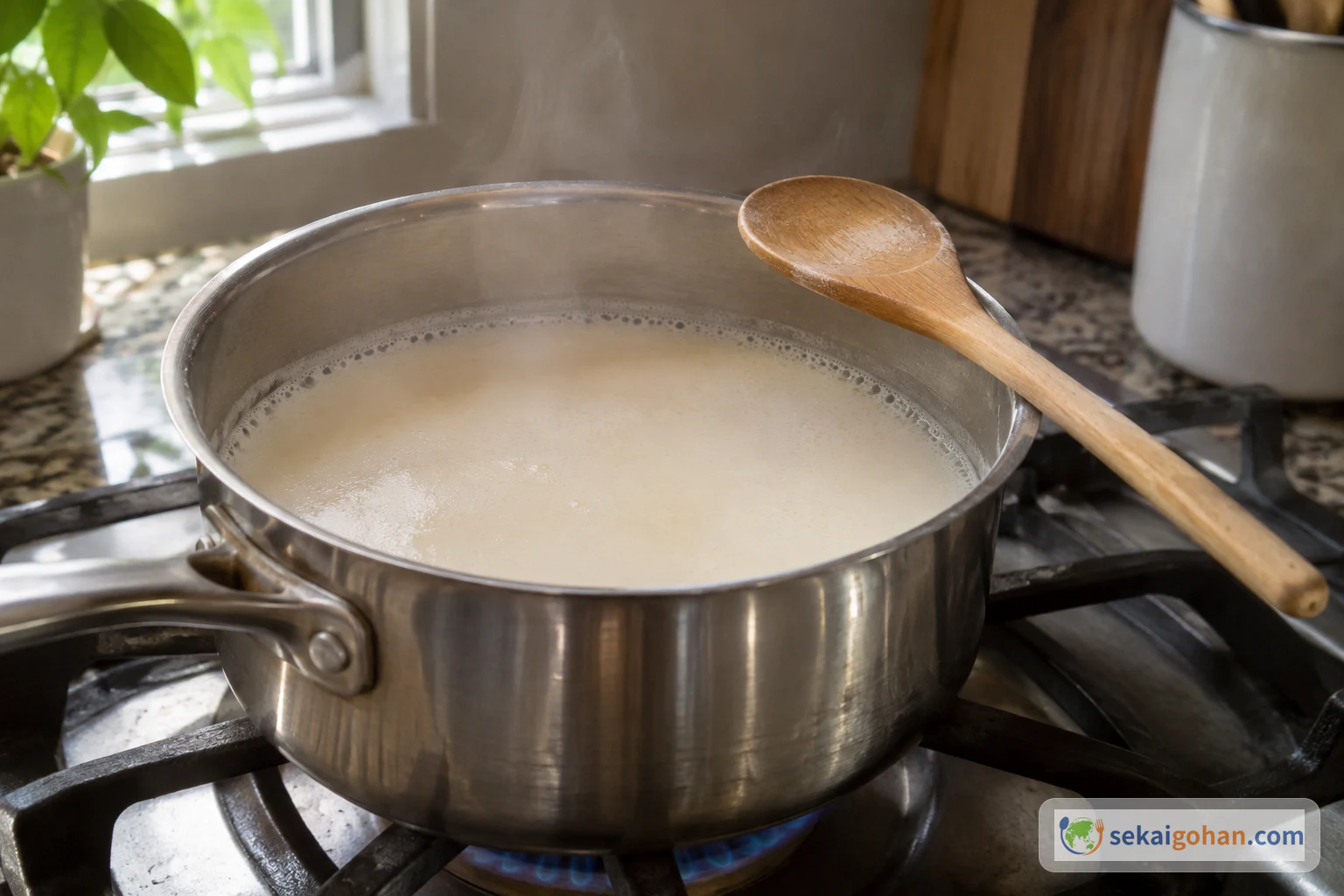
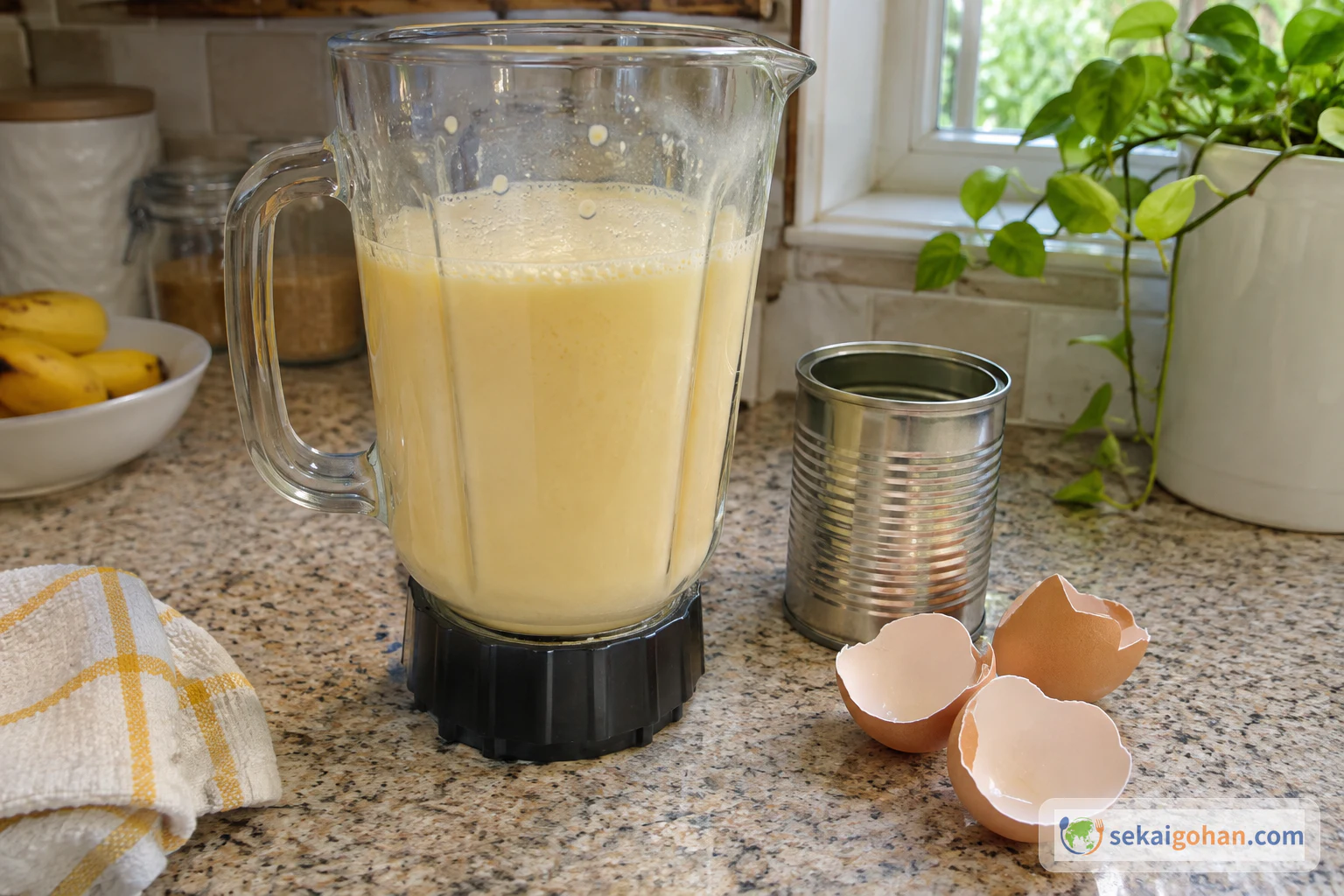
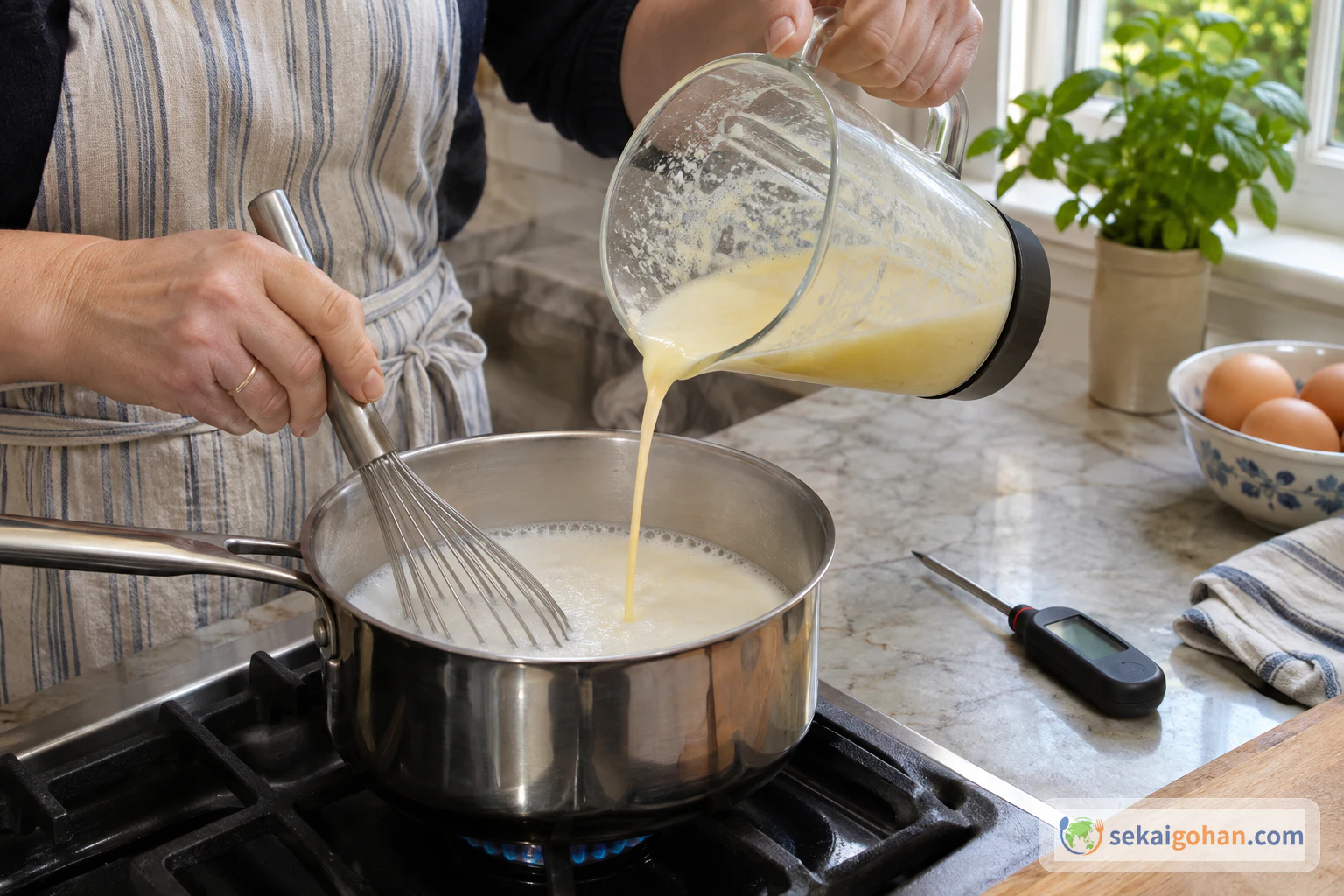
The work has two parts. First comes about half an hour at the stove: the milk reduces gently while you blend the yolk mixture, and then the two are cooked together into a light custard. After that the work is hands-off. The base cools completely, the rum goes in, and the pitcher chills until it is cold. Have the thermometer, sieve and pitcher ready before the yolks meet the hot milk.
Cook the egg mixture to 160°F (71°C). This holds even when you use pasteurized eggs. Alcohol does not make raw eggs safe, however much spirit you pour in. Drinks made by beating raw yolks with aguardiente, or by pouring yolks into hot milk without checking the temperature, need that 160°F reading before they are safe to serve. Hot milk can spatter, so keep your hand clear when you pour into the pot.
When It Goes Wrong
| What you see | Why | What to do |
|---|---|---|
| Small bits of cooked egg in the custard | Heat too high, or the yolk mixture went in too fast | Strain through the fine sieve. Next time keep the heat low and pour in a thin stream |
| Lumps of starch | The cornstarch was not fully blended | Strain. Next time blend until no white specks remain |
| Thin after 8–10 minutes, and the thermometer reads below 160°F (71°C) | The heat is too gentle to finish the job | Keep stirring over low heat until it thickens lightly and reaches 160°F (71°C) |
| Too sweet | Condensed milk and sugar both add sweetness | Add rum in small amounts and taste, or serve it very cold in smaller glasses |
| The spirit is too strong | Too much rum went in at once | Next time add it in small pours and taste between each. For this batch, serve smaller glasses |
Serving, Variations and Storage
At the table
Sabajón goes out cold, in small glasses, for the novena evenings, for Christmas Eve dinner, and for any day when people gather. Pour it for the whole table at once, with cinnamon on top of each glass. Outside the season it is the drink a Colombian host can pour straight from the fridge when friends drop by. For more Colombian dishes, try arepas or bocadillo.
Variations
- A quicker version. Bring about 4 cups (1 L) of milk to a boil and whisk in 7 oz (200 g) of condensed milk. Lower the heat, then pour in 8 egg yolks while stirring constantly until the mixture is creamy and reaches 160°F (71°C). Once it has cooled, pour in about ⅔ cup (150 ml) of aguardiente, or rum, in a thin stream while stirring. It is quicker and has no starch, so it comes out lighter.
- Alcohol-free. Leave out the spirit and stop after the custard is strained and chilled. The vanilla and cinnamon come forward, and it is the version for children and anyone not drinking.
- Next-day rum. Chill the strained base overnight and stir in the rum the following day. The base is fully cold and settled, so tasting and adjusting the spirit is easier.
- Sweeter. Some households use 1 cup (240 ml) of sugar instead of ½ cup. The drink becomes sweeter and more dessert-like, so add the rum with a lighter hand.
Storage
Keep sabajón covered in the refrigerator and serve it straight from the cold. Stir or shake it before pouring, and drink it soon rather than letting the pitcher sit.
Frequently asked questions
Can I leave out the condensed milk?
It brings much of the sweetness and body, so without it the drink is thinner and less sweet. If you leave it out, taste the hot base and add a little more sugar, then let the cooking thicken it. Keep the 160°F (71°C) check exactly the same.
Is sabajón the same as Italian zabaione?
They are two different dishes. Zabaione is egg yolks whipped over heat into a warm, foamy dessert sauce. Sabajón is a milk-based custard drink that is chilled and poured into glasses.
Can I use whole eggs instead of yolks?
Use yolks only. They give the drink its color, richness and smooth thickness. The cooked whites would set into strands that the sieve would have to catch.
Why add the rum only after the base is cold?
The cold base keeps the spirit's flavor fresh and lets you taste the balance properly as you pour. Adding it at the end also means the custard has been cooked to 160°F (71°C) first, and that heat is what makes the eggs safe.