Tres Leches Cake: Colombian Three-Milk Sponge with Meringue

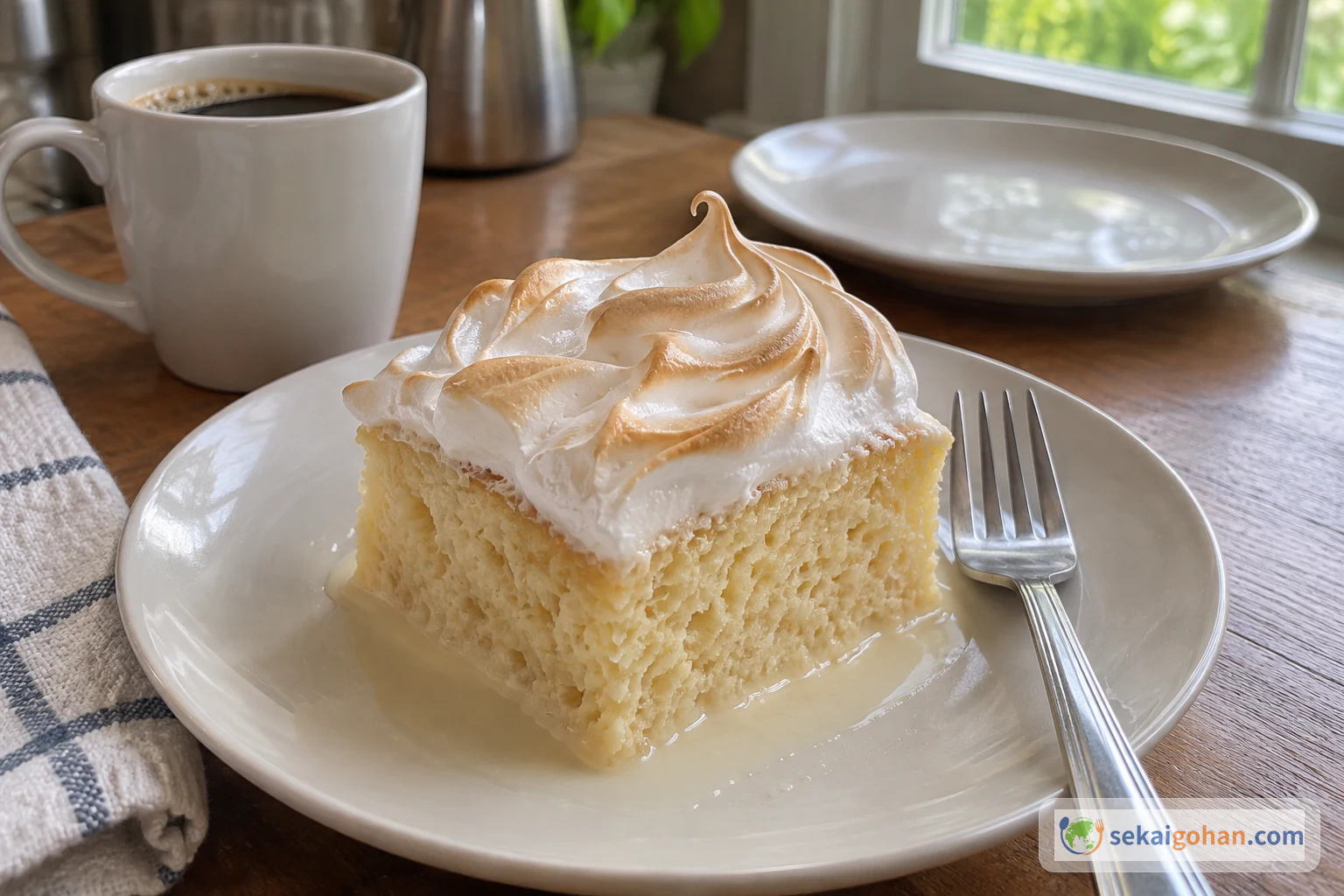
A finished tres leches cake topped with meringue
Total
9 hr 21 min
Serves
8 servings
Level
Intermediate
Cuisine
Colombian

Colombian tres leches cake: a sponge soaked in three milks and crowned with meringue. How to beat the batter, soak it fully, chill it and broil the top.

Cooking flow

Cooking steps

STEP 1 1 / 11

Prepare the dish and the dry mix

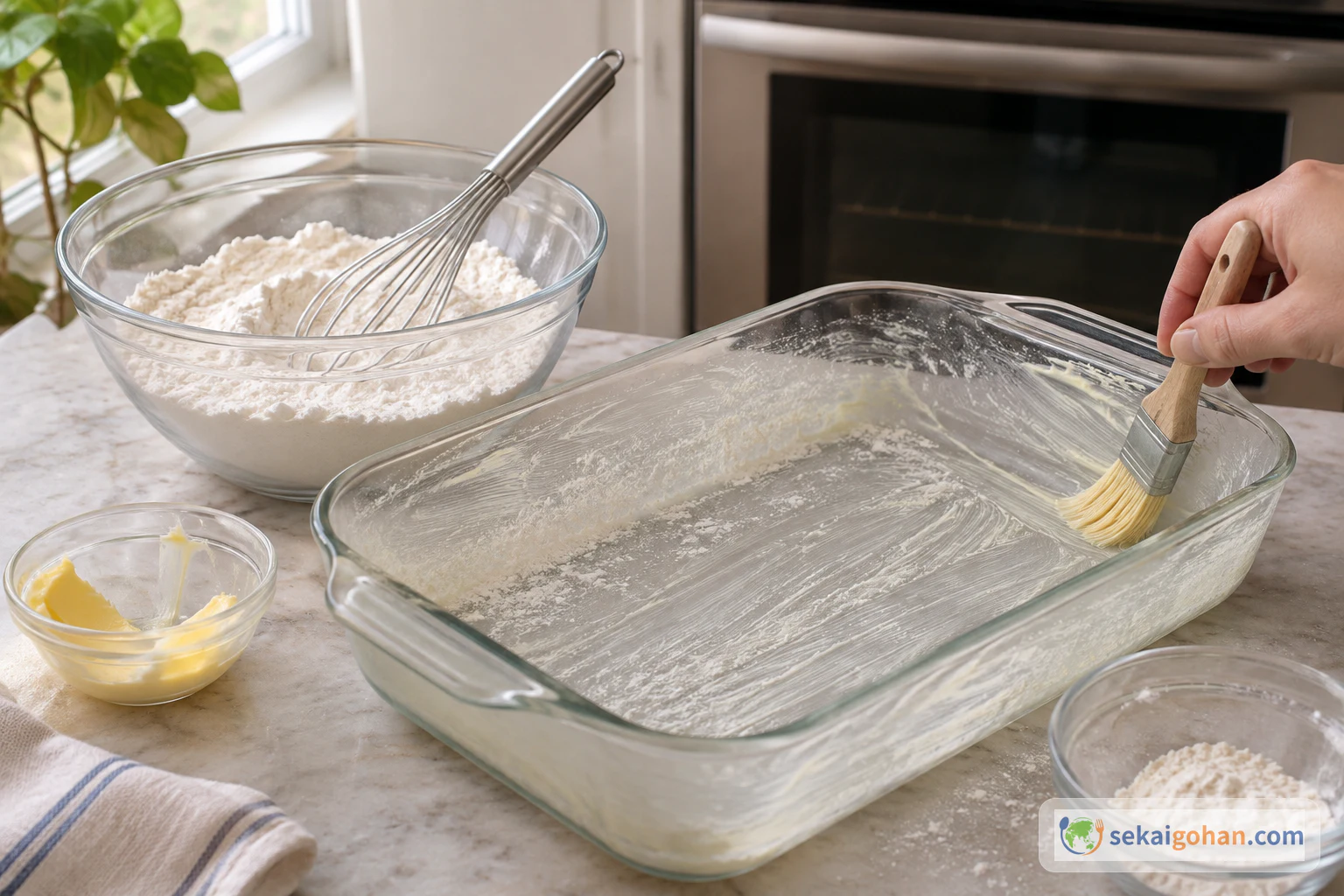
Greasing and flouring the dish beside the whisked dry ingredients
A thin, even film of flour on the sides keeps the edges from sticking when you poke and soak

Heat the oven to 350°F (177°C). Rub the inside of the baking dish with butter or oil, dust it lightly with flour, and tilt and tap the dish until the bottom and sides are coated. Knock out the loose flour. In a bowl, whisk the flour, baking powder and salt together until the mix looks even, with no streaks or lumps.

STEP 2 2 / 11

Warm the milk and butter

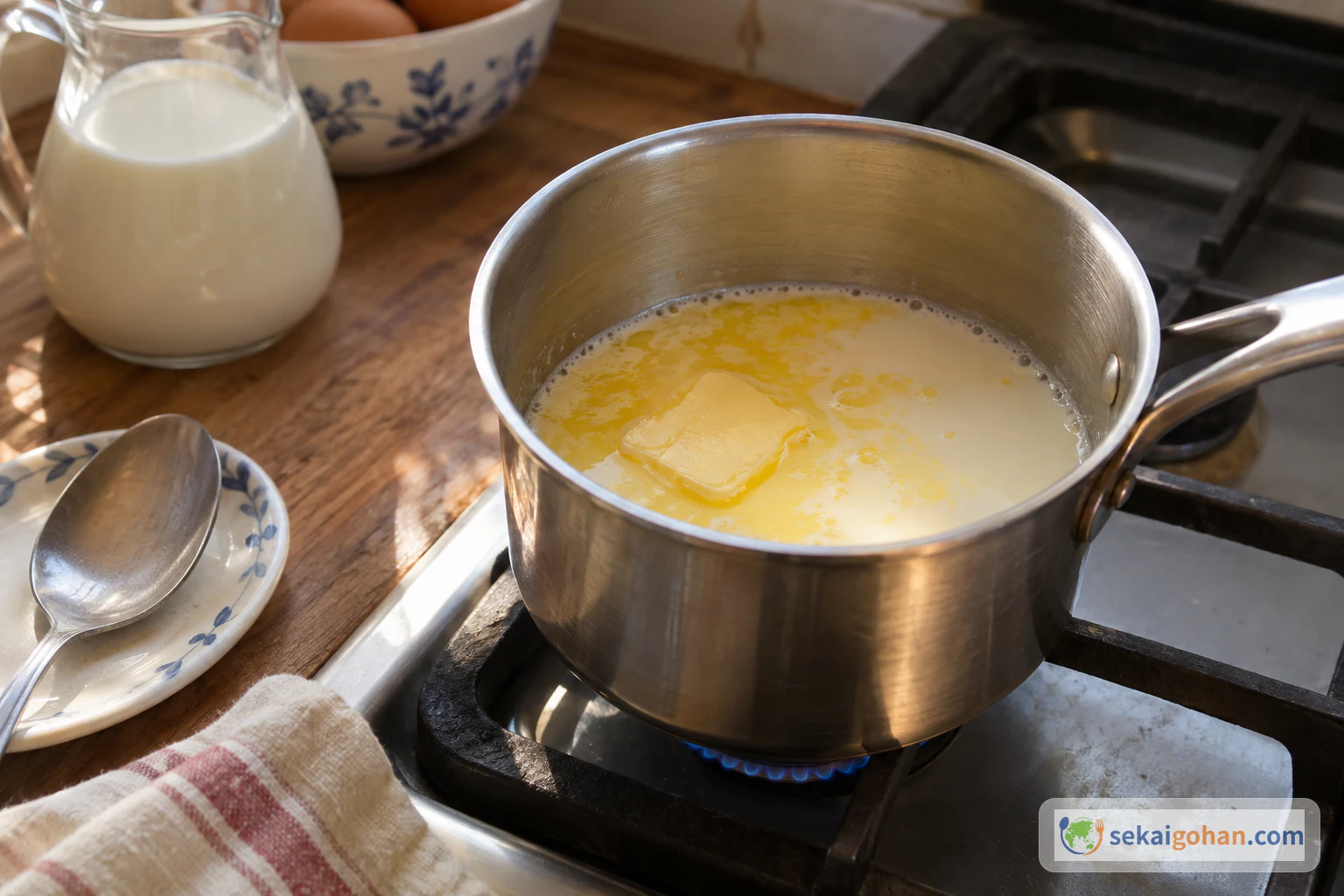
Milk and butter warming together in a small saucepan
Pull the pan off as soon as the last piece of butter disappears

Pour the whole milk into a small saucepan, add the butter and set it over gentle heat. Stir now and then as the butter softens and melts into the milk. Take the pan off the heat and set it aside while you beat the eggs. It is ready when no solid butter is left and the milk is warm but has not boiled.

STEP 3 3 / 11

Beat the eggs, then the sugar

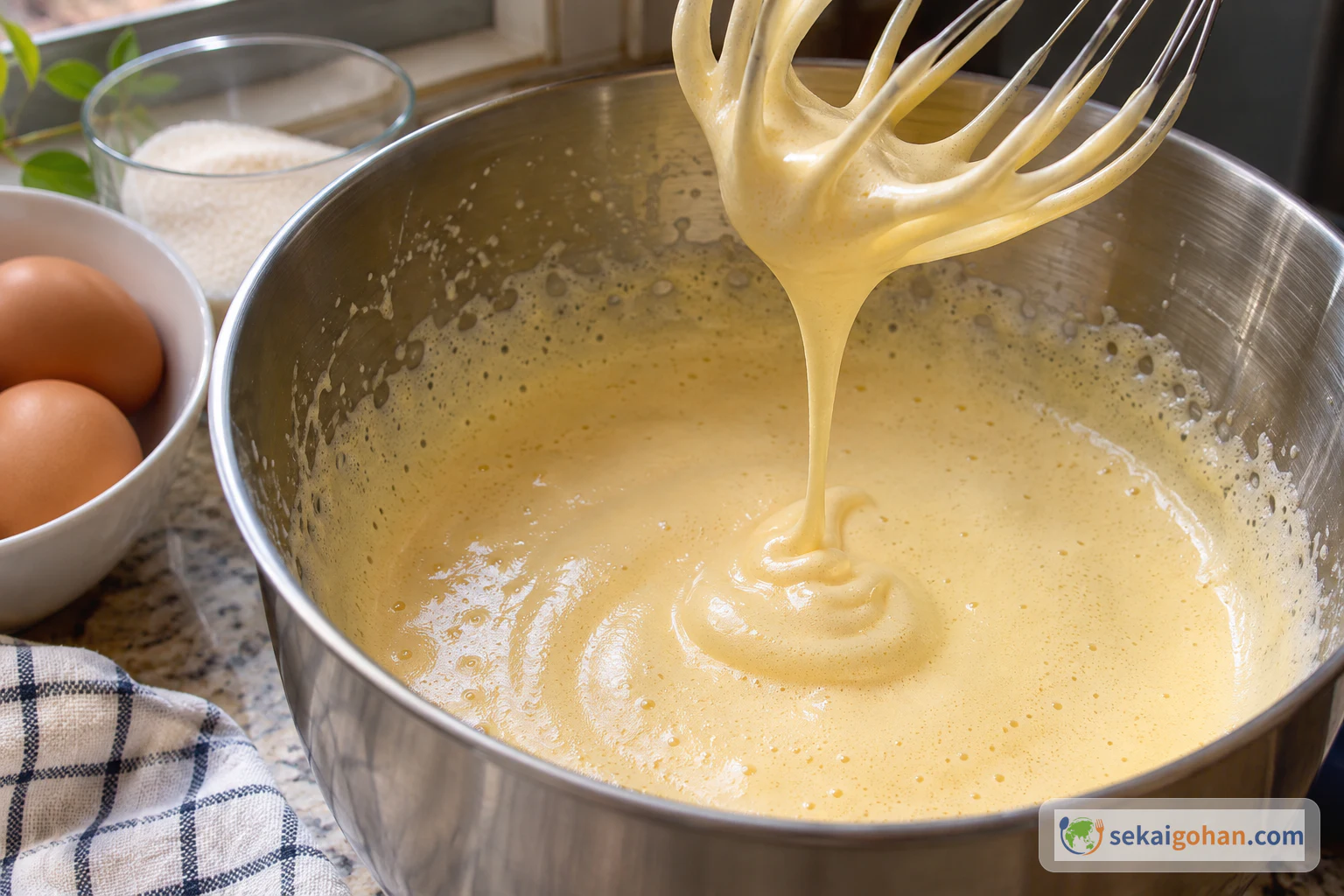
Eggs and sugar beaten into a thick, pale foam
The ribbon should hold its shape on the surface briefly before it sinks back in

Crack the eggs into the mixer bowl and beat on high speed for 2 minutes. Add the sugar and keep beating on high for 5 more minutes. The mixture grows in volume and turns pale and thick. Stop when you can lift the whisk and the foam falls back in a slow ribbon that sits on the surface for a moment.

The beating is the cake

Those full 7 minutes on high give the sponge its open crumb, and that open crumb is what drinks up the three milks later. Cut the time short and you get a tighter cake that leaves milk sitting on top.

STEP 4 4 / 11

Bring the batter together on low

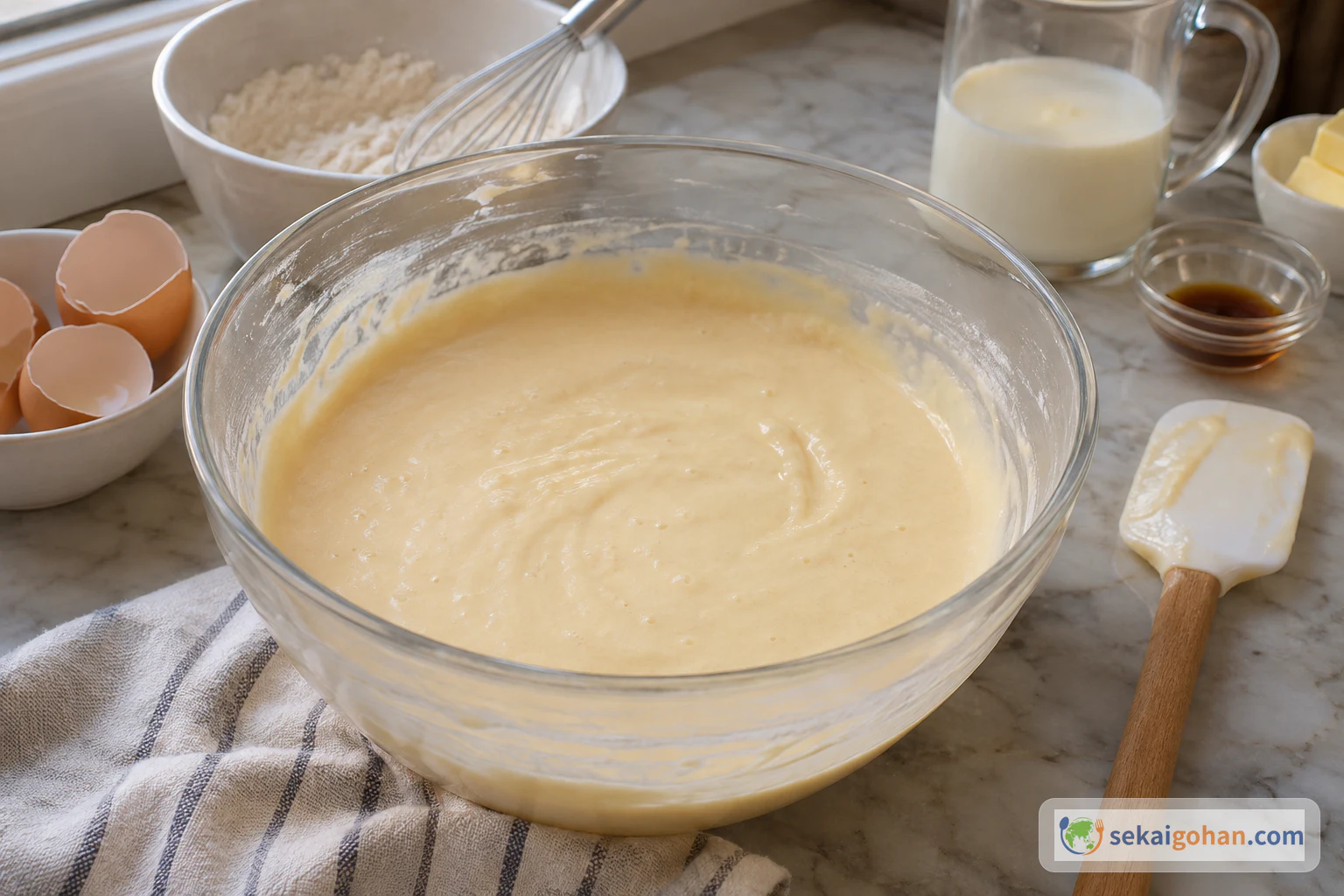
Smooth batter with the flour and milk just mixed in
Stop as soon as the last dry streak disappears so the foam stays light

Turn the mixer down to low. Add the flour mixture, the warm milk and butter, and the vanilla, and mix for 1 minute. Scrape the sides and bottom of the bowl once with a spatula so nothing hides there. Stop when the batter is smooth and pale with no dry streaks, and mix no further.

STEP 5 5 / 11

Bake the sponge

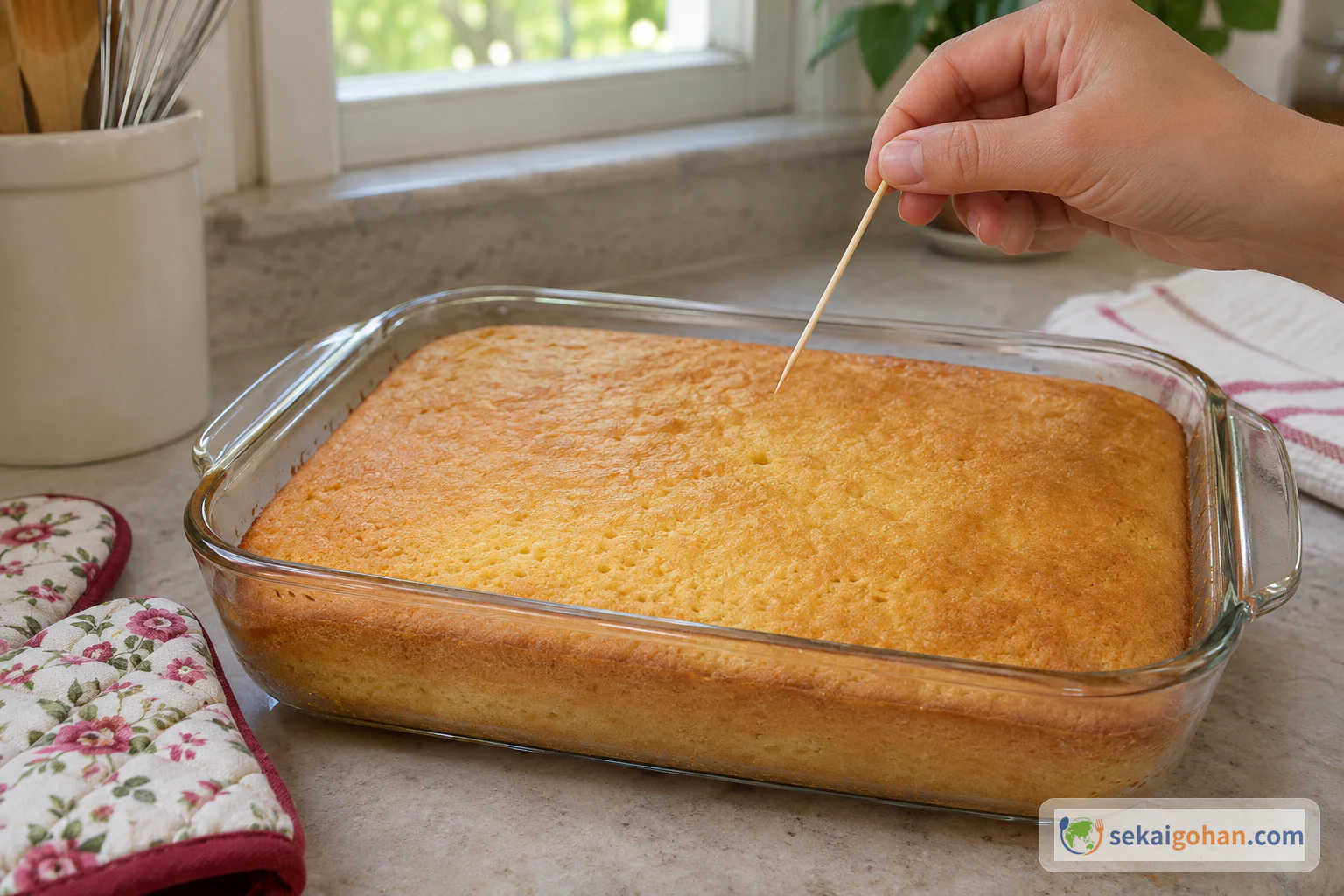
The baked sponge with a toothpick in the centre
Test the very centre. The edges finish baking first

Pour the batter into the prepared dish and nudge it into the corners with the spatula. Bake for 40–45 minutes. Push a toothpick into the centre of the cake. It is done when the top is golden and the toothpick comes out clean, with no wet batter on it.

STEP 6 6 / 11

Poke it while it is hot

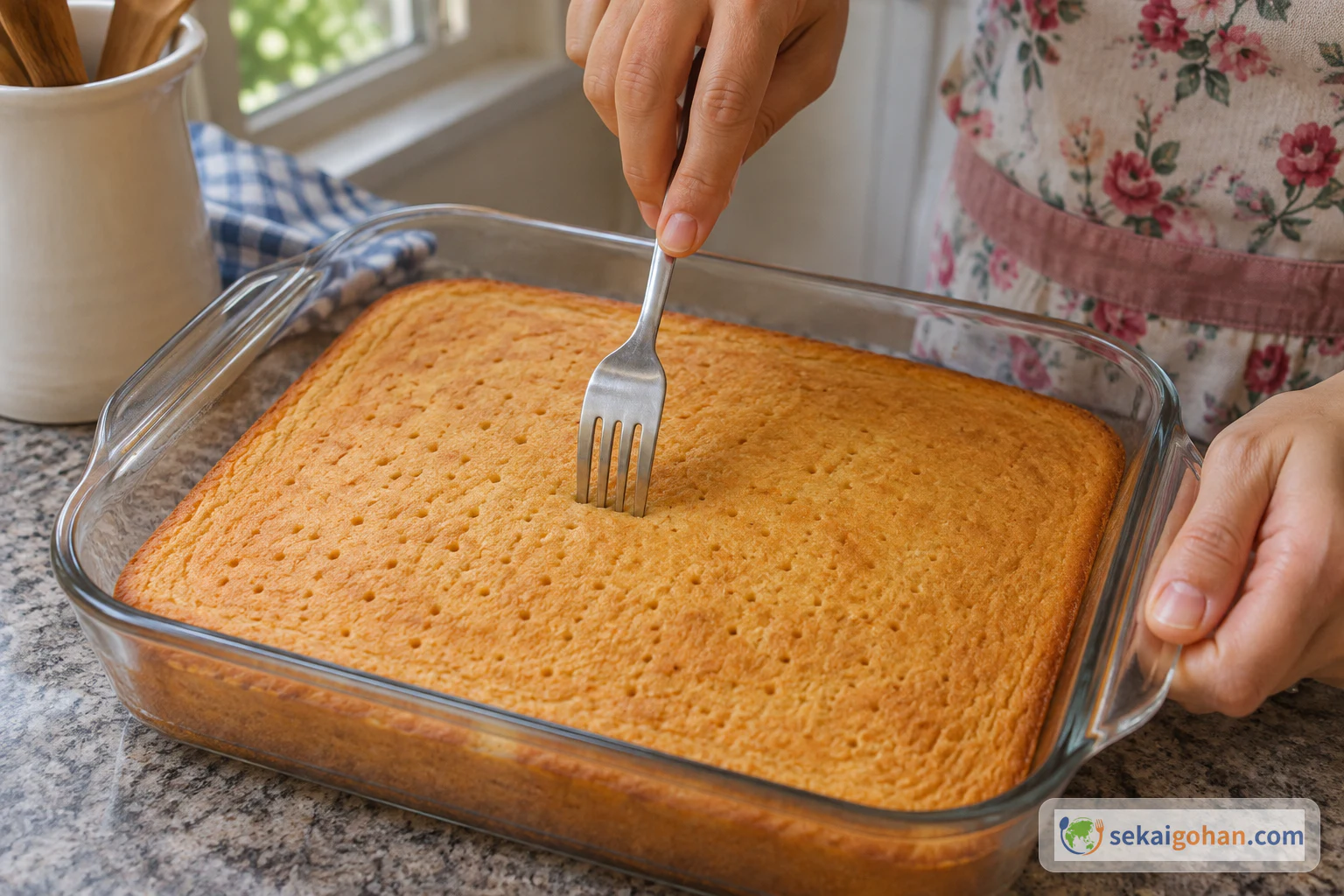
Poking holes all over the hot sponge with a fork
The corners need holes too, or they stay dry while the centre soaks

As soon as the dish comes out of the oven, prick the whole surface with a fork, right out to the edges and into the corners. Work in close rows so no patch is left solid. Leave the cake to cool for 10–15 minutes. Move on when there are holes over every part of the top and the strongest steam has faded.

STEP 7 7 / 11

Mix the three milks

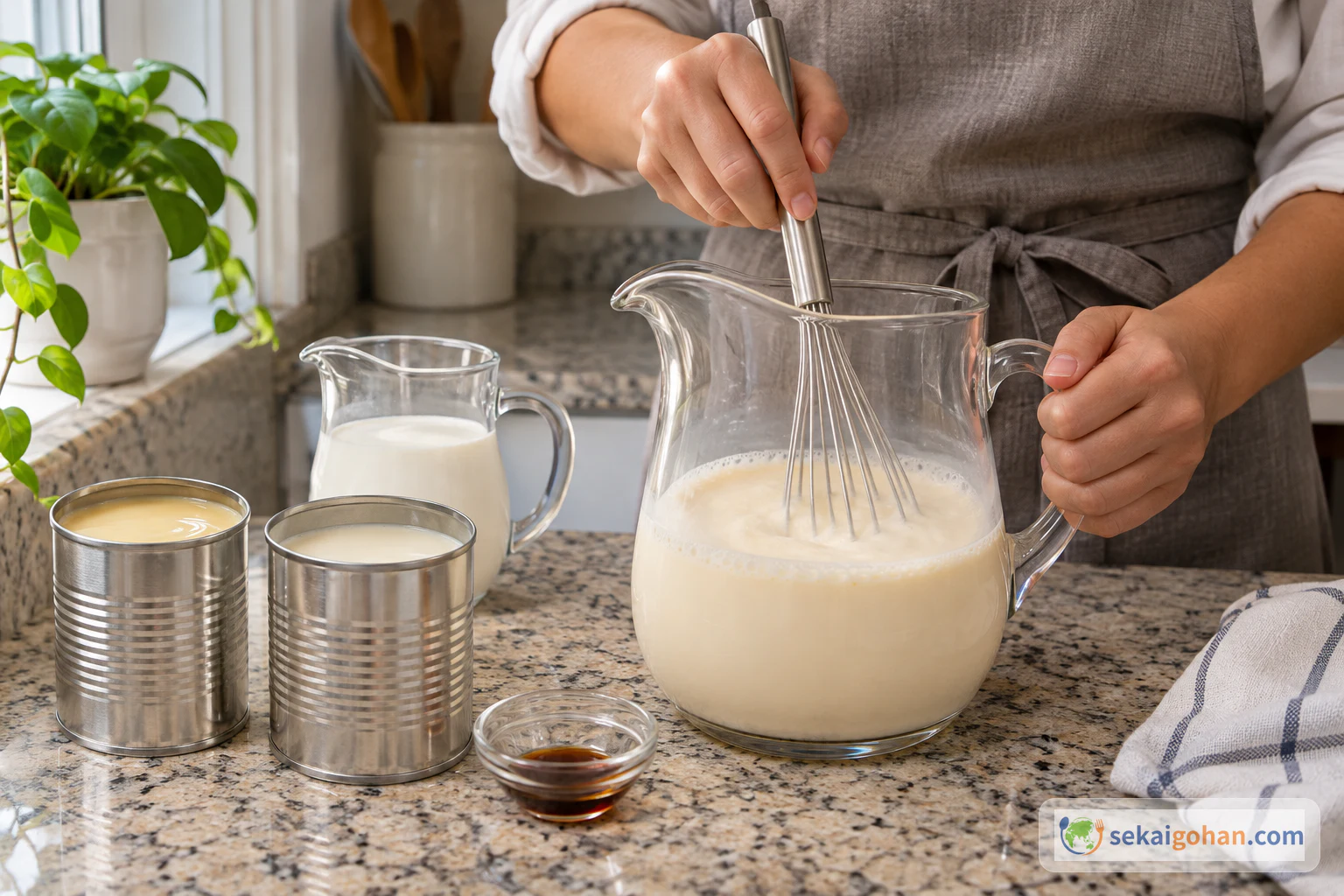
The three-milk mixture whisked in a glass pitcher
Run the whisk along the bottom of the pitcher, where the condensed milk settles

Empty the condensed milk and the evaporated milk into a pitcher. Add the heavy cream and the vanilla. Whisk until the mixture is an even ivory colour and the thick condensed milk no longer sits in a layer at the bottom. Scrape the cans so none of it is left behind.

STEP 8 8 / 11

Soak the cake and chill it

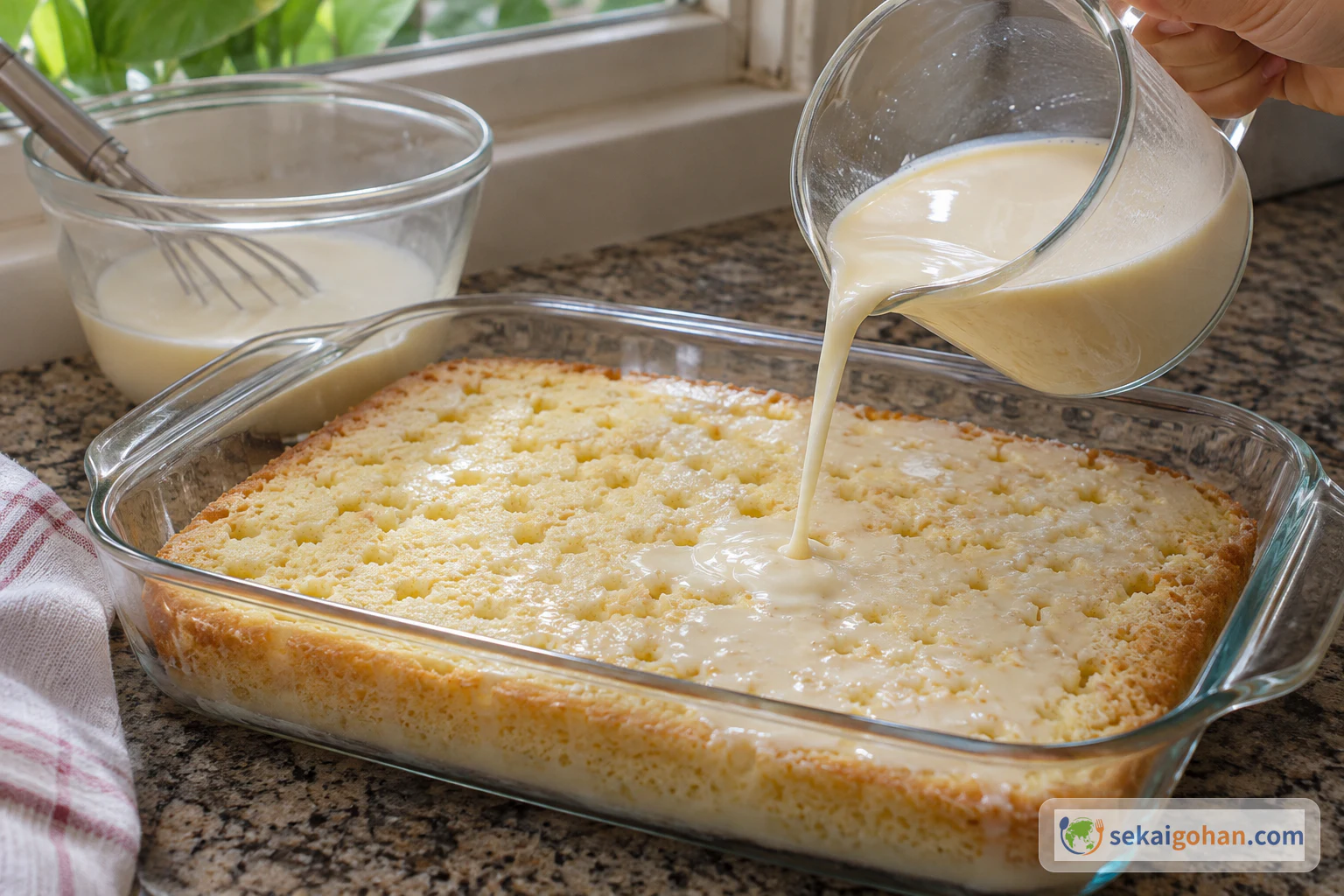
Pouring the milk mixture slowly over the poked cake
Pour in rounds. Each round should disappear before the next goes on

Pour a little of the milk mixture over the cake, moving across the whole surface, and wait for it to sink in. Keep pouring in small amounts. Milk will pool along the edges of the dish, so give it time to soak in before you add more. When all of the milk has been absorbed, move the cake to the refrigerator for at least 3 hours, or overnight. It is ready to top when it is cold all the way through and no liquid stands on the surface.

Patience with the pour

The cake takes in all of the milk, but only when you pour it slowly. Tipping it all on at once floods the top and leaves a puddle that never soaks in. The result is a wet top over a drier middle.

STEP 9 9 / 11

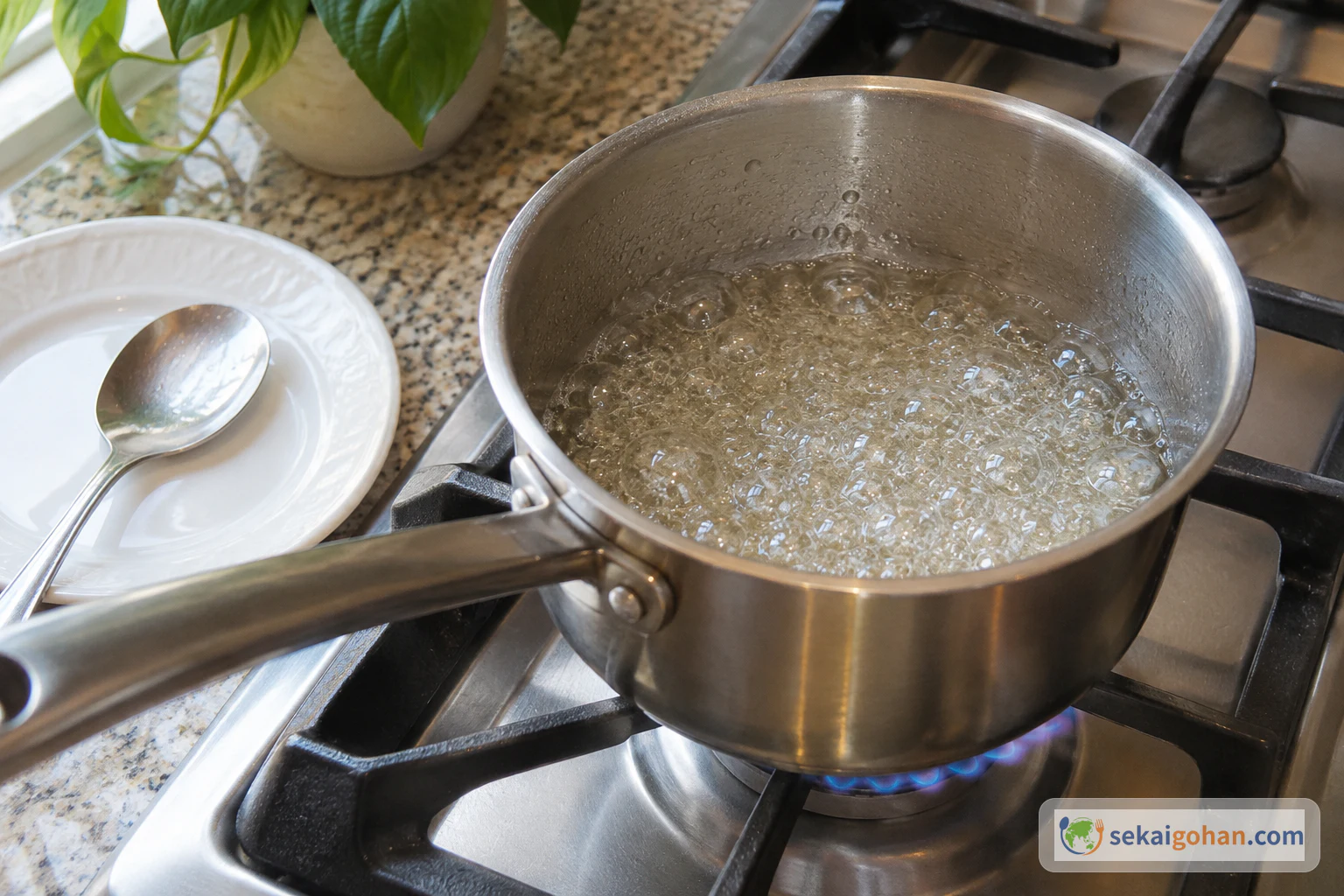
Cook the syrup

Sugar and water syrup bubbling in a small saucepan
Clear bubbles all across the pan mean the sugar has dissolved

Once the cake is chilled, put the sugar and water for the meringue in a small saucepan. Set it over medium-high heat and stir for about 5 minutes. Take it off the heat and set it beside the mixer. The syrup is ready when the sugar has fully dissolved.

STEP 10 10 / 11

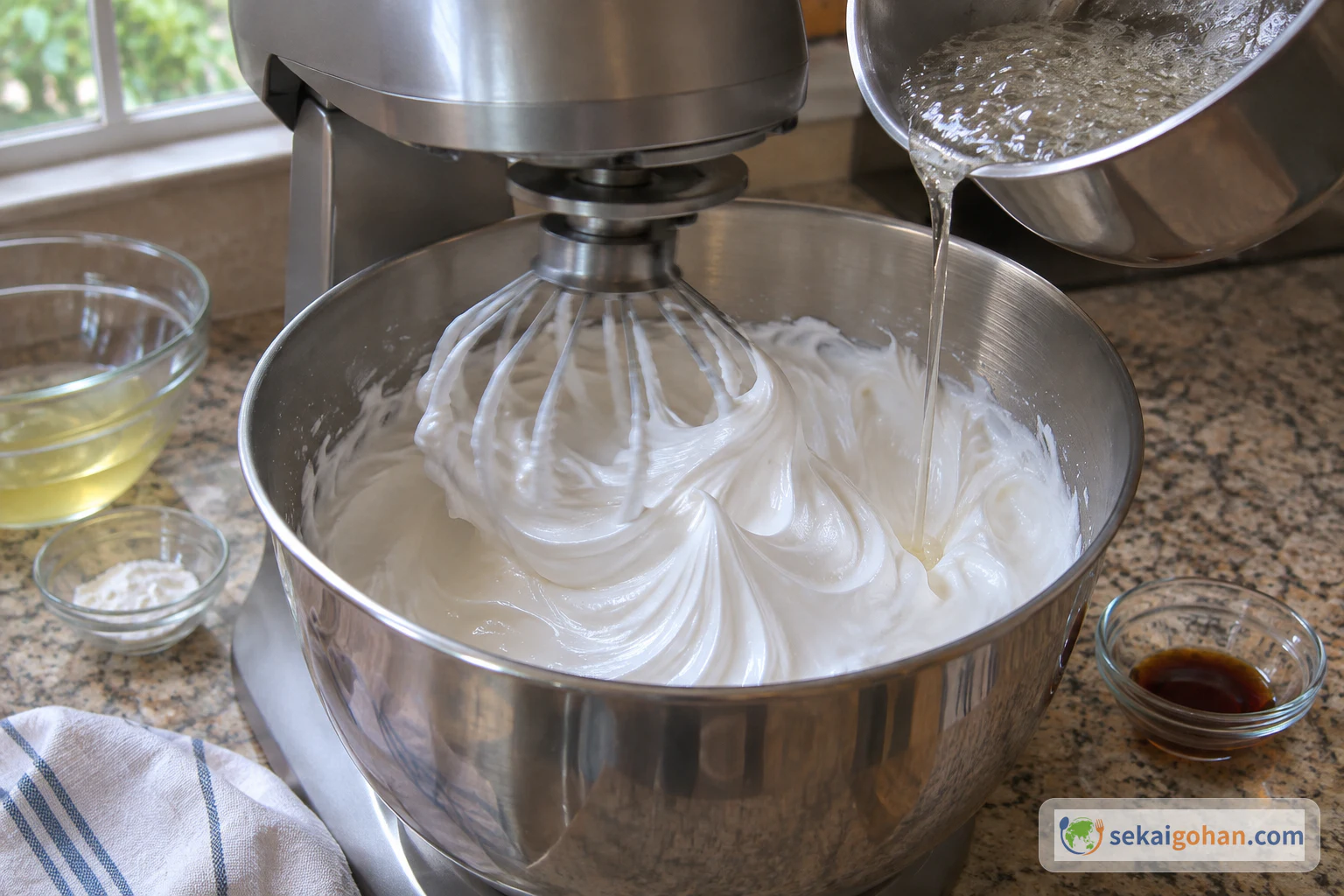
Whip the meringue

Pouring the syrup in a thin stream into the stiffly whipped whites
Aim the syrup at the side of the bowl, not at the moving whisk

Put the egg whites and cream of tartar in a perfectly clean, grease-free bowl. Beat them until peaks stand up. With the mixer running, pour the syrup in a thin stream down the side of the bowl and keep beating for about 5 minutes. Add the vanilla and beat 1 more minute. It is done when the meringue is glossy and white and holds stiff peaks.

Raw-egg safety

Pouring hot syrup into the whites does not reliably heat them to 165°F (74°C), which is the heat that kills salmonella. Use fresh eggs that have been kept refrigerated. Separate them just before you use them, never in advance. Wash your hands, bowls and whisk well. Serve the cake soon after topping it. For older people, young children, pregnant people or anyone with weakened immunity, make the meringue with pasteurized liquid egg whites, or leave it off and top the cake with whipped cream.

STEP 11 11 / 11

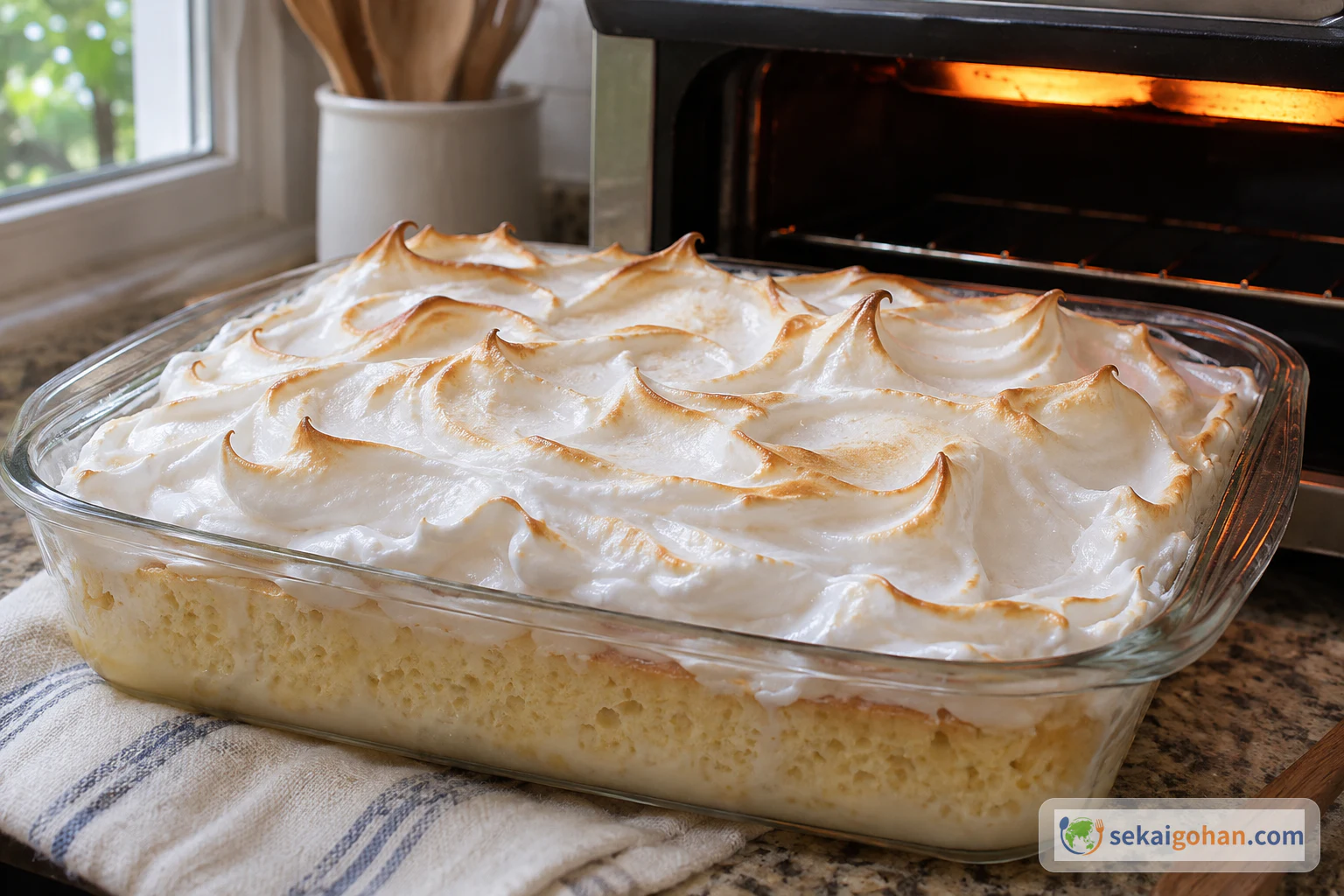
Spread the meringue and brown it

Broiling the meringue on the chilled cake until the tips turn golden
Take it out while only the peaks are coloured. They keep darkening for a moment after

Turn on the broiler. Take the cold cake from the refrigerator and spread the meringue over it with a spatula, pulling it up into peaks and swirls. Slide the dish under the broiler for about 2 minutes and stay at the oven door the whole time, because meringue burns fast. Pull it out when the tips are lightly golden and the hollows are still white.

Ingredients

Ingredients

1 / 3

Sponge

Ingredient Amount Role
All-purpose flour 2 cups (480 ml) Structure of the sponge
Baking powder 2 tsp Lift
Salt ½ tsp Sharpens the sweetness
Eggs 5 The beaten foam that becomes an open crumb
Sugar 2 cups (480 ml) Sweetness and a steady foam
Whole milk 1 cup (240 ml) Moisture in the batter
Butter 6 tbsp Richness
Vanilla extract 1 tsp Aroma
2 / 3

Three-milk soak

Ingredient Amount Role
Sweetened condensed milk (leche condensada) 1 can Sweetness and body
Evaporated milk 1 can Milky depth without extra sugar
Heavy cream 1 cup (240 ml) Fat and a rounder finish
Vanilla extract ½ tsp Aroma
3 / 3

Meringue

Ingredient Amount Role
Egg whites 2 The meringue itself
Cream of tartar ½ tsp Steadies the whipped whites
Sugar ½ cup (120 ml) Syrup for a glossy, firm meringue
Water ¼ cup (60 ml) Dissolves the sugar into syrup
Vanilla extract ½ tsp Aroma

The sponge comes out of the oven golden and still hot. You prick it all over with a fork, and then the pale, ivory milk goes on slowly, pour after pour, while the cake drinks it in. Hours later it comes out of the fridge cold and heavy, under a cap of meringue with browned tips. Cut a square and the crumb is soaked through, sweet and milky, with the meringue light and airy on top.

This is torta de tres leches, the "three milks" cake, and in Colombia it is a standard cake to make at home. Sweetened condensed milk, evaporated milk and heavy cream go into one bowl and then into the sponge. The cake tastes like the milk itself, set and chilled, and the meringue keeps the top light.

Three Milks, Many Countries, One Colombian Way to Top It

The name says what goes in: tres leches, three milks. The cake is made all over Latin America, and where it began is not settled. Nicaragua is often named as the strongest candidate and Mexico also has a claim. A popular story traces the recipe to a printed label on a Nestlé can, but no such label survives. What is certain is that the cake depends on canned milk. Commercial condensed milk dates from 1853 and evaporated milk from 1885, so the dish could only take shape after both were in shops. Some people read religious meaning into the three milks, but that is a guess with nothing to back it up.

In Colombia, families have made this cake for generations. The Colombian habit that stands out is the topping. Meringue on top is the traditional Colombian finish, although it changes from household to household and from country to country. Other Colombian kitchens build the cake a different way. They make a sponge with extra yolks, cook condensed milk and cream down together for 20 minutes into a thicker sauce, chill the cake for just an hour, and add meringue and cinnamon only if they want them. The version here keeps the three milks uncooked and poured straight on, then sets them overnight under a meringue made with hot sugar syrup.

The name on the menu

In Colombia you will see it written as torta de tres leches or simply tres leches. "Torta" is the everyday Colombian word for cake, and the name spells out what goes in it: three milks.

Flavoured versions show up beside the plain one: arequipe (dulce de leche), chocolate, coffee, mandarin and coconut. All of them keep the same idea of a sponge soaked in milk and served cold.


Ingredients (serves 8)
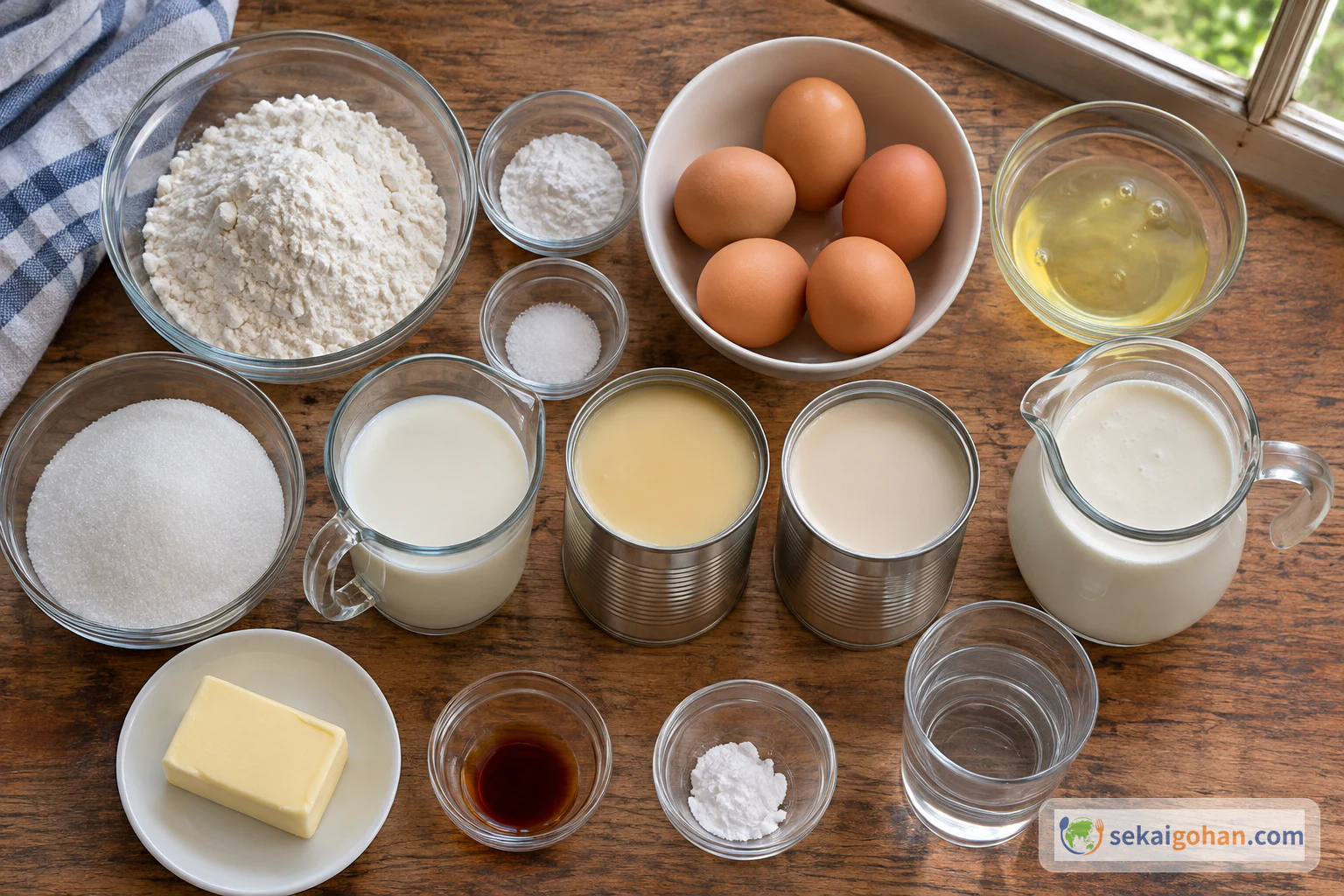
All the ingredients for tres leches cake
Keep the two cans apart on the counter. The condensed milk is the thick, sweet one
Allergen information

This cake contains wheat (sponge), eggs (sponge and meringue) and milk (sponge and soak).

Equipment

  • 9x13-inch (23 x 33 cm) baking dish
  • Stand mixer or hand mixer
  • Mixing bowls, one of them completely grease-free for the meringue
  • Whisk
  • 2 small saucepans
  • Flexible spatula
  • Fork
  • Toothpick or thin skewer
  • Pitcher or jug for the milk soak
  • Oven with a broiler

Choosing the Milks and the Rest of the Shopping

Sweetened condensed milk and evaporated milk are two different cans, and mixing them up is the one shopping mistake that ruins this cake. Condensed milk is thick, sticky and very sweet. Evaporated milk is pourable and unsweetened. The cake needs one of each. Buy them in the size the shop sells as a standard can, and heavy cream or whipping cream from the dairy case.

Cream of tartar is in the baking aisle with the baking soda. If you can't find it, a little lemon juice is the usual stand-in to steady the whites. Flour, eggs, milk, sugar, salt and butter come from any supermarket. If anyone at the table is older, very young, pregnant or has weakened immunity, buy a carton of pasteurized liquid egg whites for the meringue.

Keep this Let this go
All three milks, soaked in completely The brand of each can
The long chill before topping Cream of tartar, if you use lemon juice
A light meringue on top Meringue itself, if you top with whipped cream instead

Method

The work comes in three parts with a long wait in the middle. Make and bake the sponge, soak it, then refrigerate it for at least 3 hours, ideally overnight. Make the meringue only when the cake is cold and ready to top. Making the cake a day ahead suits it, because it tastes better the day after it is made.

When It Goes Wrong

What you see Why What to do
The toothpick comes out sticky The centre is underbaked Return the dish to the oven and test again until the toothpick is clean
Milk sits on top and will not soak in Poured too fast, or the crumb is tight because the eggs were not beaten long enough Wait, then spoon the pooled milk back over the holes a little at a time. Next time give the eggs the full 2 + 5 minutes
The cake is heavy and rubbery The batter was mixed too long once the flour went in Keep the low-speed mixing to 1 minute and stop at the last dry streak
The whites will not whip up Grease in the bowl or on the whisk Wash the bowl and whisk thoroughly and start with fresh whites
The meringue is scorched in spots The broiler browns in seconds Stay at the door and pull the dish out at about 2 minutes or sooner. Scrape off any black tips
The meringue softens in the fridge Milk from the cake slowly soaks up into it This is normal. The meringue gets softer each day the cake is stored

Serving and Storage

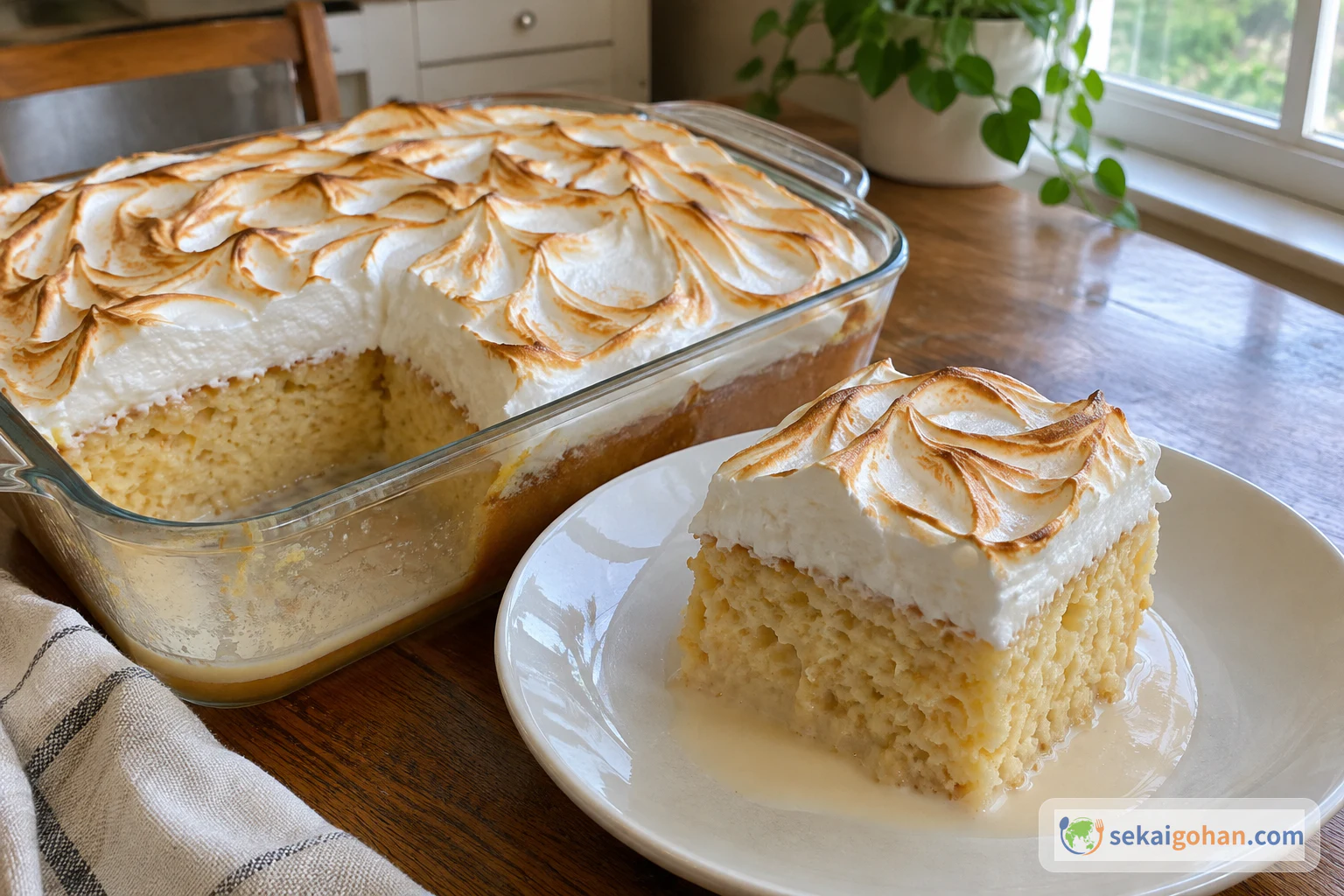
A cold square of tres leches cake with meringue on a plate
Serve it straight from the fridge. The crumb should be cold and wet right through

At the table

Serve tres leches cold, straight from the refrigerator. Cut it in the dish into squares and lift each one out with a spatula. Bring a spoonful of the milk that gathers in the corners along with each slice. A fork goes through soaked sponge and soft meringue together, and the day after baking it tastes even better, so it is a good cake to finish the night before a gathering.

Variations

Arequipe, chocolate, coffee, mandarin and coconut versions keep the same soaked sponge and change the flavour of the cake. Swapping the meringue for whipped cream gives a richer, creamier top and avoids the egg-white question entirely. A cooked-down sauce of condensed milk and cream makes a thicker, more caramel-like soak, and it is a different recipe from this one, built around a sponge with extra yolks.

Storage

The soak is never cooked, so keep the cake in the refrigerator whenever it is not being served, and do not leave it out on the counter. Kept cold, it lasts about 4 days.

Frequently asked questions

Can I leave the meringue off?

Yes. Other toppings work, and whipped cream is the easiest choice. Spread it on the cold cake just before serving and skip the broiler.

Can I use less sugar in the sponge?

The sugar does more than sweeten. It helps keep the beaten egg foam steady. Use the 2 cups as written.

Does a hand mixer work?

Yes. Keep the same speeds and times: high for the eggs and sugar, low for the minute after the flour goes in. Judge the eggs by the thick, pale ribbon falling from the beaters, and hold the bowl steady while you pour the syrup into the whites.

Is this the same cake as Mexican pastel de tres leches?

It belongs to the same family, a sponge soaked in milk and served cold, and the recipe changes from country to country and kitchen to kitchen. The Colombian version is set apart by its meringue topping.
Enjoyed this recipe?

0 likes

Sources