Bake Them into Rings, and the Kitchen Turns to Mate Time
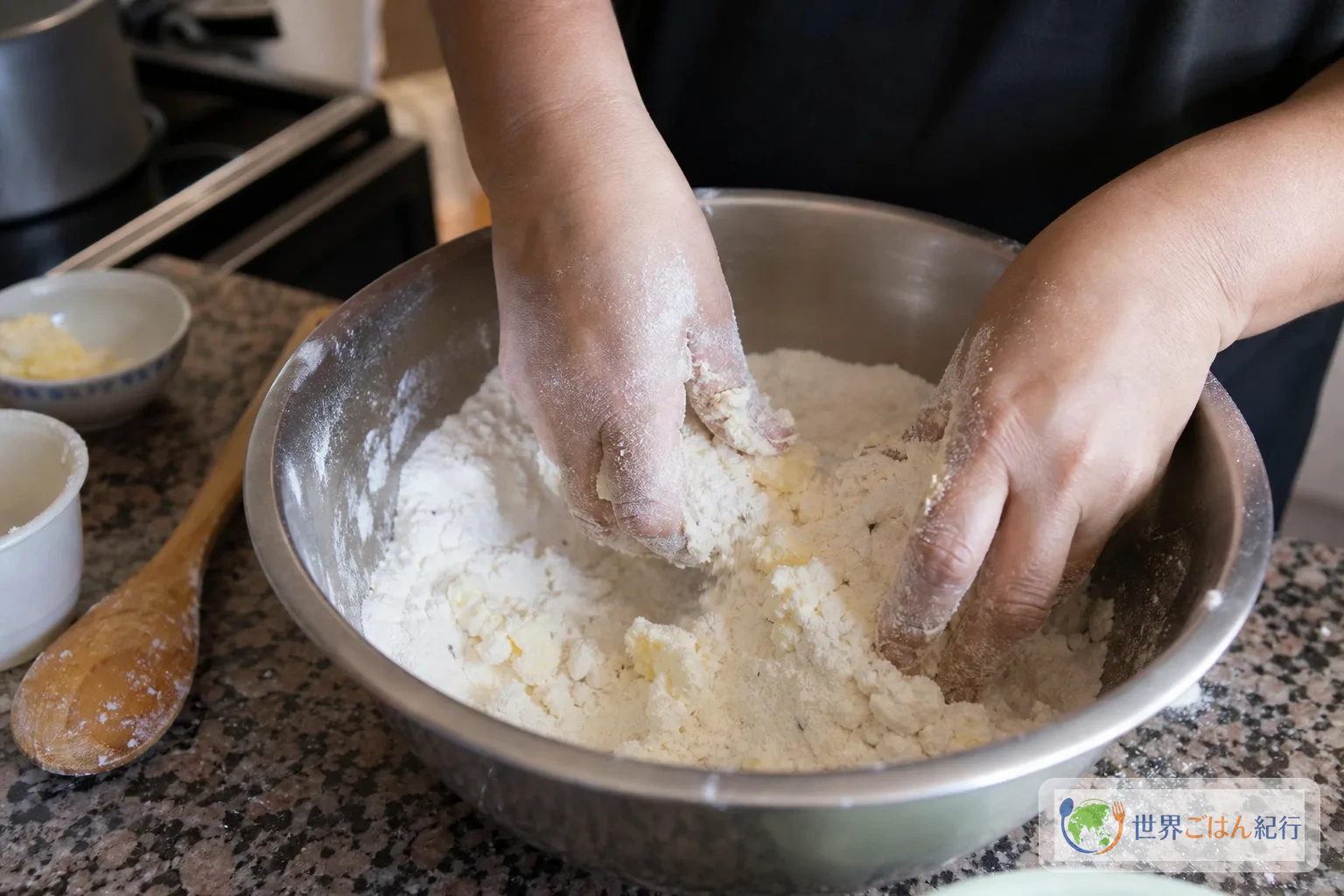
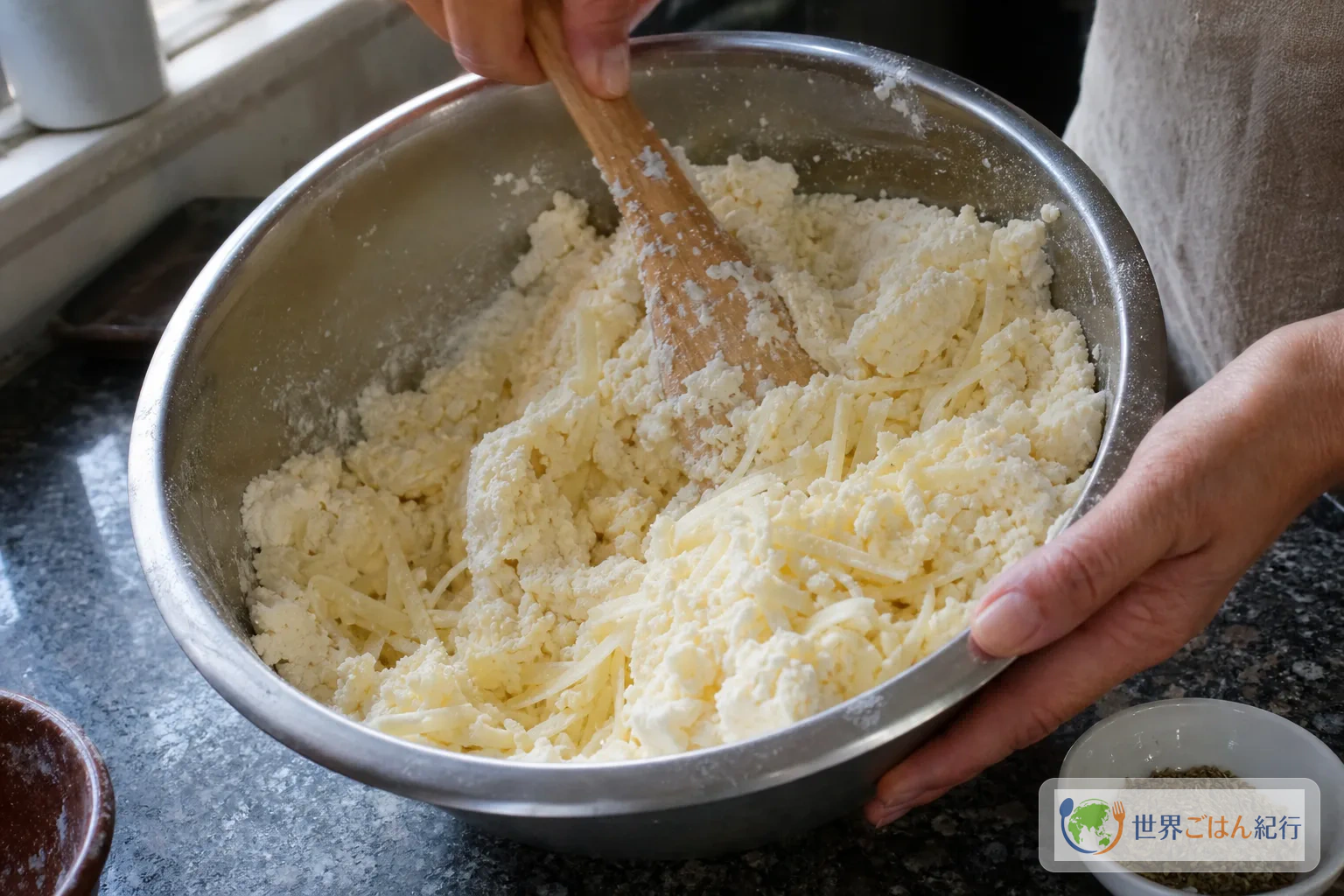
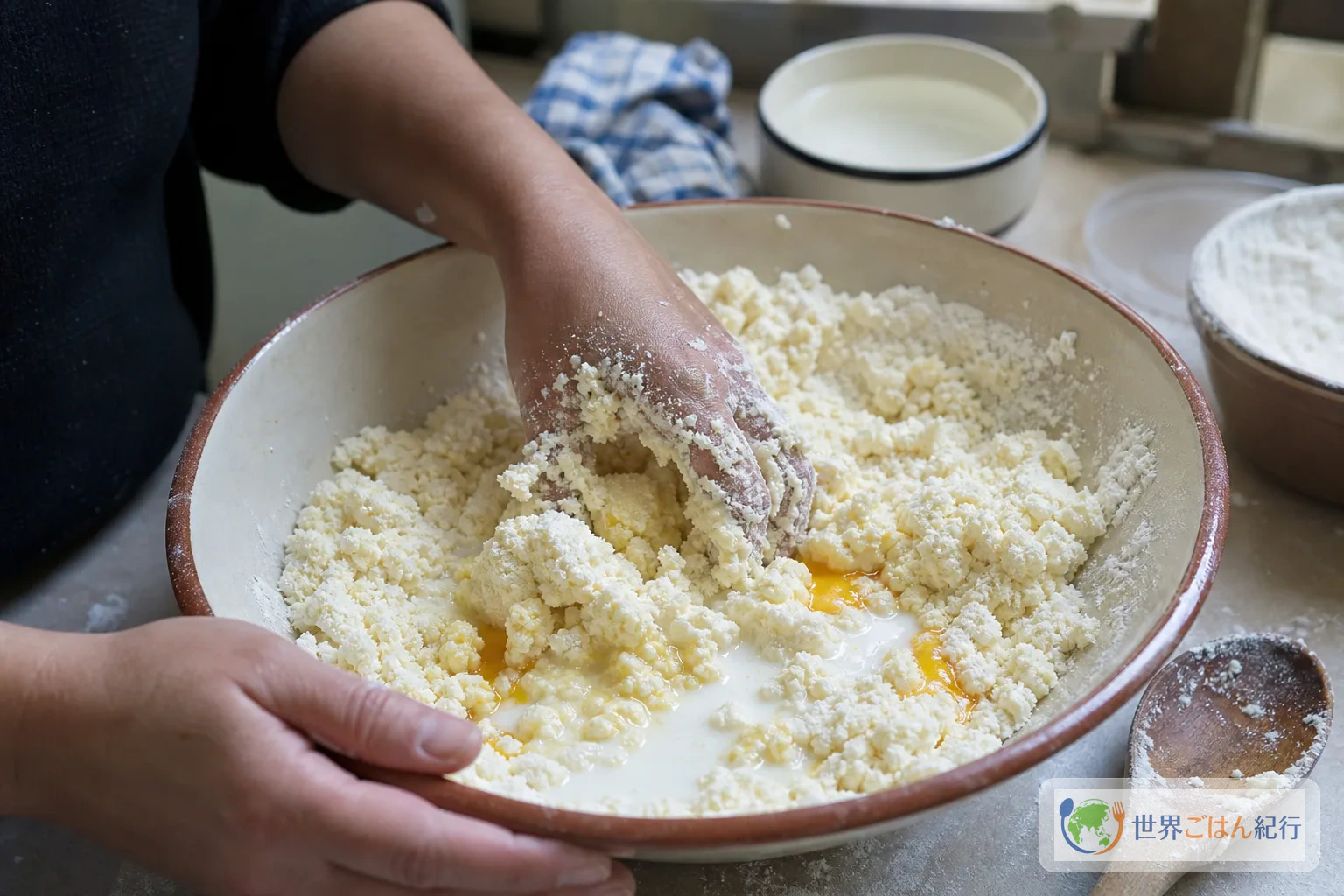
In the morning kitchen, tapioca starch in a bowl looks like nothing but loose white powder at first. Crush butter into it with your fingers, mix in cheese, and add egg and milk a little at a time, and suddenly the powder comes together in your hand. It is not a dough that stretches like wheat bread. It cracks when pressed and holds when squeezed. Shaping this into rings and baking it is Paraguay's chipa almidón.
"Cheese bread" makes many people think of Brazil's pão de queijo, but chipa is a little different. Pão de queijo gelatinizes the starch with a hot liquid and puffs into a round snack. Chipa almidón kneads cassava starch, cheese, egg and fat, shapes it into rings or sticks and bakes it into a plainer, chewier bread.
What matters among the local ingredient names is almidón de mandioca and queso Paraguay. Almidón de mandioca can be replaced with tapioca starch or cassava starch. Queso Paraguay is not easy to find everywhere, so combine a stretchy mozzarella with a salty feta or grated cheese. Rather than a perfect replica, keeping to the type of starch, the saltiness of the cheese and a gentle bake makes it easier to feel "this is chipa" at the table.
This guide scales the recipe to what a home electric oven can bake. Instead of the high heat of a clay oven like the local tatakuá, you bake slowly at 190°C, aiming for a thin fragrant outside and an inside where cheese and starch stay moist. The steps are detailed, but no difficult tools are required. What to protect is three things: don't swap the starch for wheat flour, don't make the cheese too mild in salt, and don't let the dough dry out.
In the Spanish-speaking world it is written chipa almidón or chipa de almidón. Spelling of "chipa" varies by region. This guide uses "chipa almidón" throughout.
Where Chipa Sits Among Paraguayan Starch and Grain Dishes
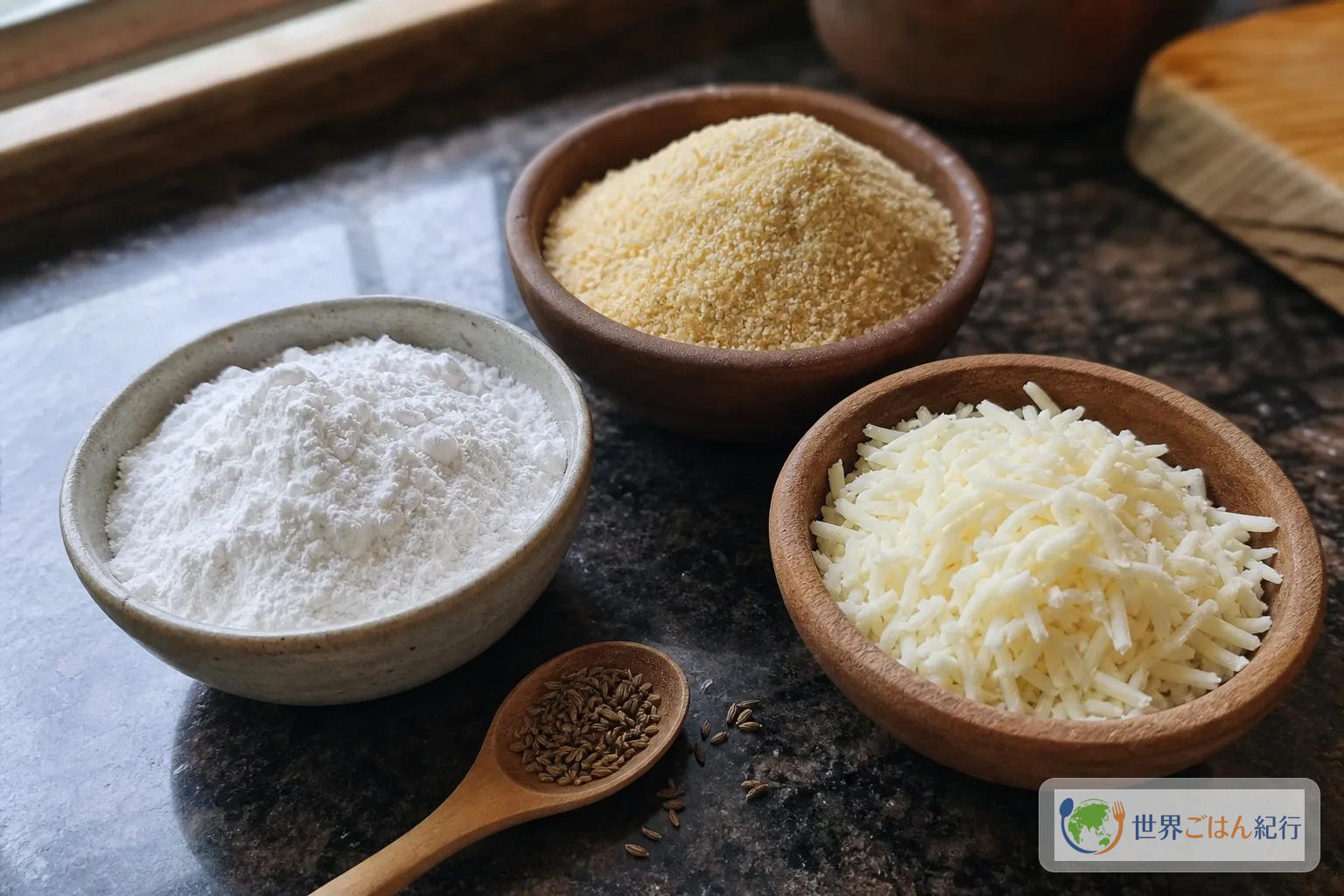
Cassava and corn appear again and again in Paraguayan cooking. Mbejú (in Japanese) is a thin pan-cooked cake of cassava starch. Chipa guasú is a dish of corn kernels combined with egg and cheese and baked in a dish. Sopa paraguaya is a savory, cake-like staple made with corn flour. Among them, chipa almidón has the place of a bread made by kneading cassava starch and baking it in the oven.
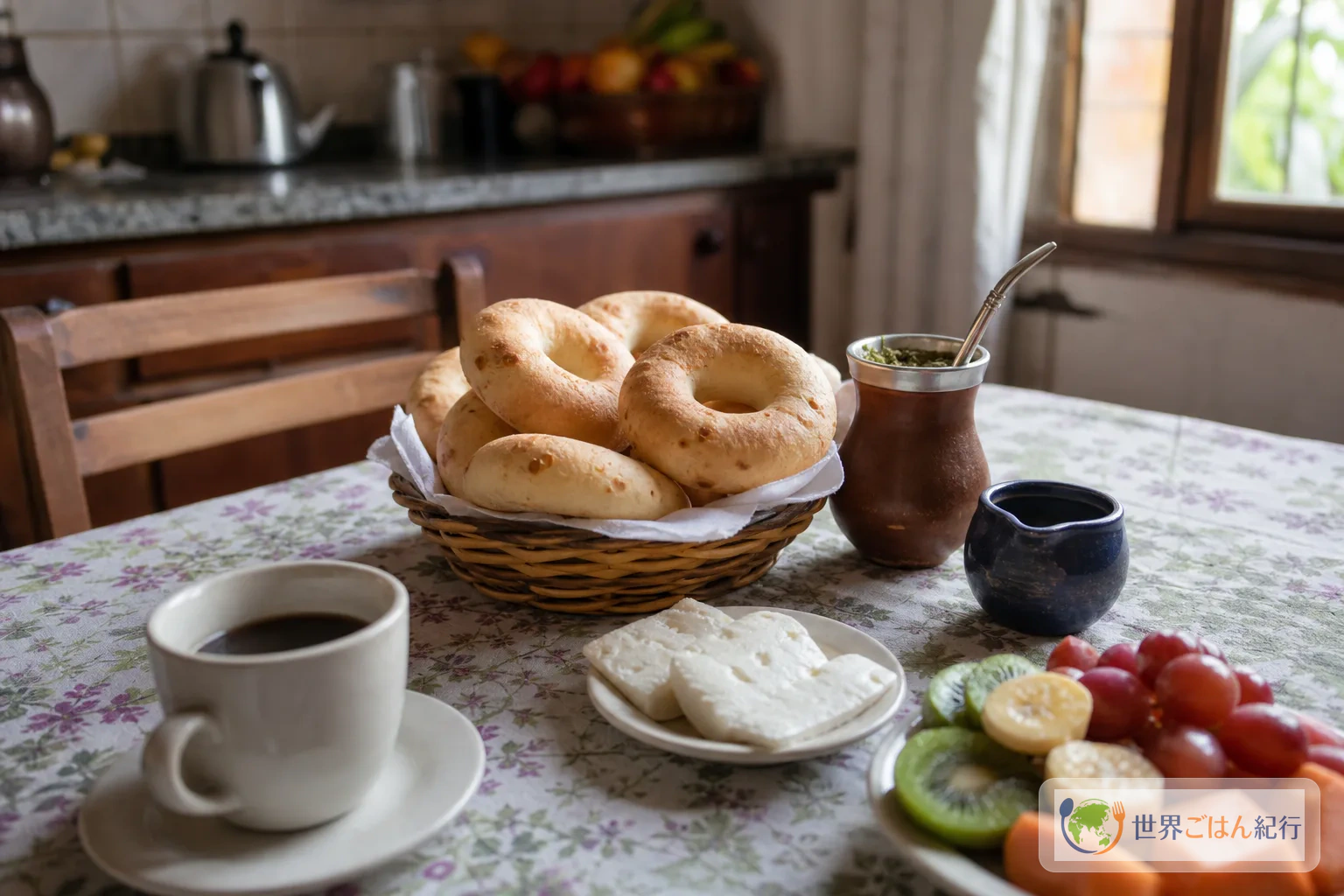
Paraguay's national nutrition institute INAN introduces chipa as a traditional Paraguayan food and bases the traditional foundation on cassava starch and cheese. It is eaten in many settings: breakfast, a snack before mate cocido or tereré, and family occasions at Easter. During Holy Week in particular, the "chipa apo" tradition of making chipa as a family comes up. It also has the face of a food made in big batches in the kitchen and baked to last several days.
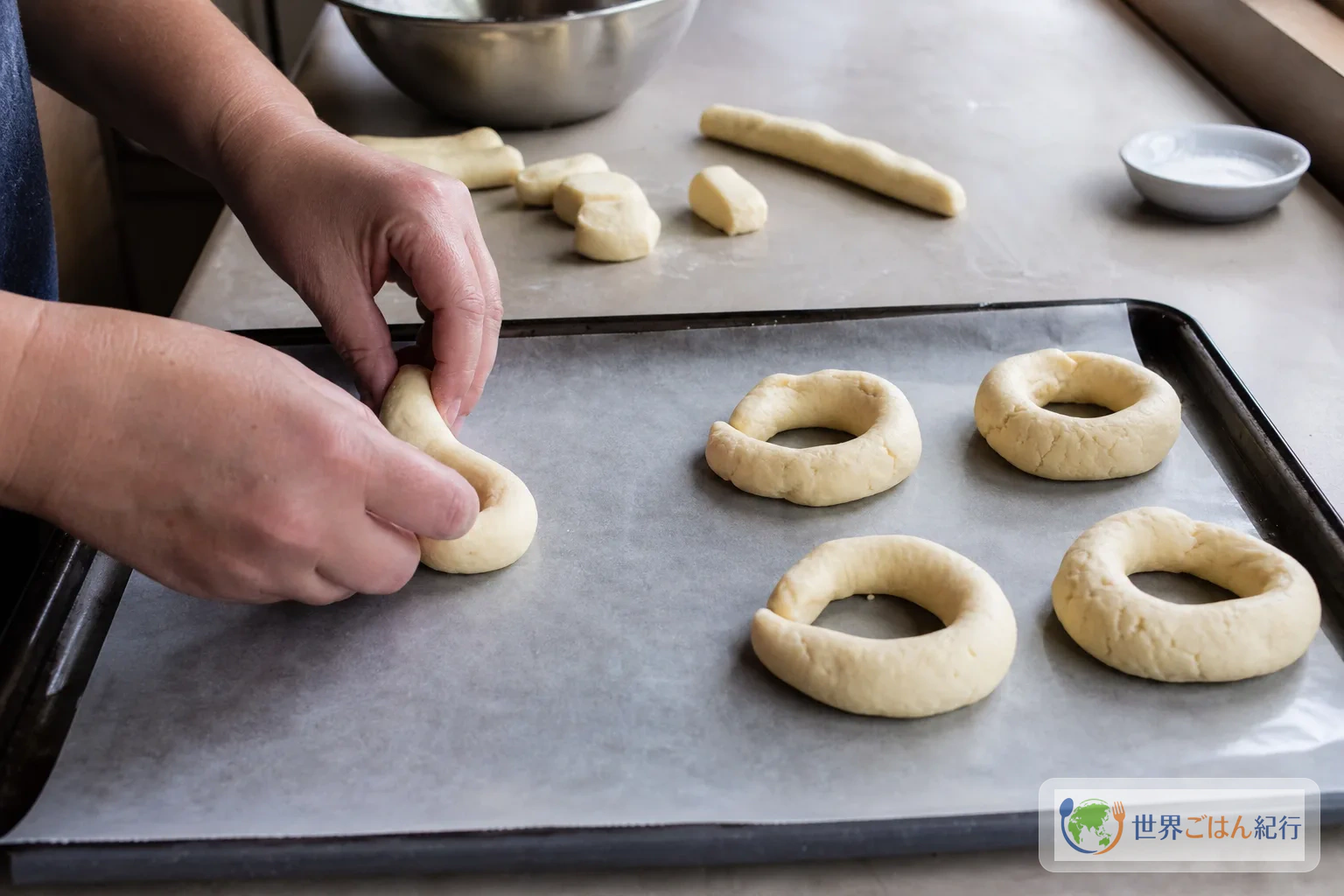
On the other hand, chipa is not just one shape. There are rings, sticks, braids, long thin ones, ones using corn, and even ones with meat inside. Shapes vary by household and town, so there is no need to think "it fails if it isn't a ring". Rings do cook through to the center easily and avoid undercooking in a home oven, so they suit a first try.
Differences from similar dishes
| Dish | Main ingredients | Cooking method | Texture guide |
|---|---|---|---|
| Chipa almidón | Cassava starch, cheese, egg, fat | Knead, shape into rings or sticks, bake in the oven | Thin and fragrant outside, moist and slightly dense inside |
| Mbejú (in Japanese) | Cassava starch, cheese, fat, milk | Cook damp starch in a skillet | Crumbles lightly, then springs back chewily |
| Chipa guasú | Corn, egg, cheese | Bake in a dish | Corn sweetness and moist egg |
| Pão de queijo | Tapioca starch, cheese, egg, hot liquid | Roll and bake at high heat | Somewhat hollow inside, lightly stretchy |
Knowing this keeps you from getting lost when buying ingredients. The center of chipa almidón is cassava starch, not corn flour. Made with wheat flour it bakes as a bread, but you lose the characteristic crispness and spring-back of chipa. Potato starch can also make the shape, but it tends to get hard when cold and changes the aroma of fresh-baked chipa. For a first try, get tapioca starch.
Ingredients: A Home Version with Tapioca Starch and White Cheese
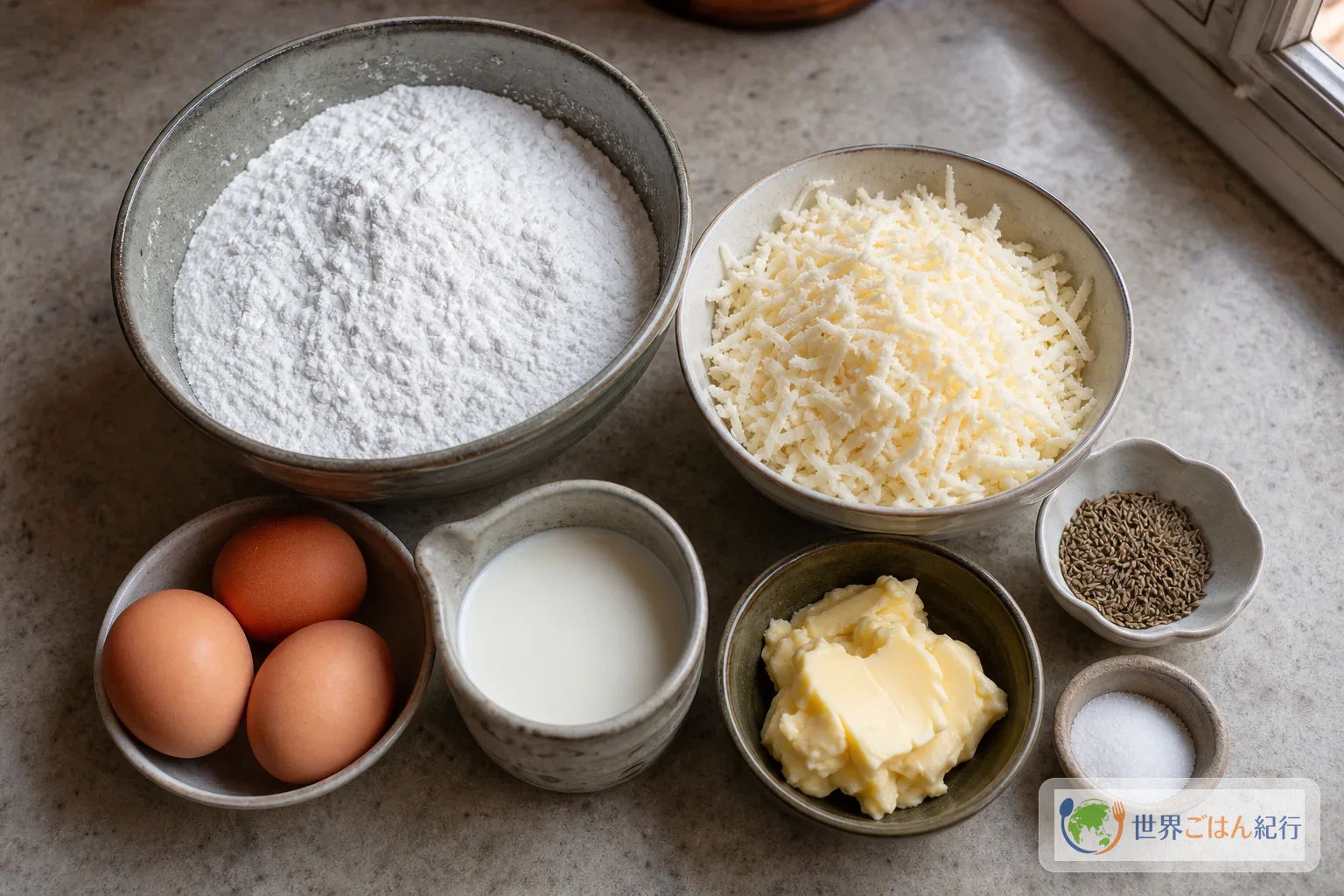
This amount makes 12 ring-shaped chipa about 8 cm across. It serves 6 as breakfast or a snack, or can be shared among 8 beside a meat or bean dish. Local recipes often make big batches with 1 kg of starch, but in a home oven this amount is easier to handle.
This recipe uses egg and dairy. Tapioca starch itself is not wheat flour, but manufacturing lines and the labels on grated cheese vary by product. People with restrictions on egg, milk, wheat and so on should always check the allergen label on the package.
Local ingredients and substitutes
| Local ingredient | Candidates elsewhere | Judgment |
|---|---|---|
| Almidón de mandioca | Tapioca starch, cassava starch | The most important. Replacing it with wheat flour makes a different dish |
| Harina de maíz | Fine cornmeal, corn flour | A small amount adds aroma and crispness. Avoid coarse corn grits |
| Queso Paraguay | Mozzarella + feta, or mozzarella + grated cheese | Cover stretch and saltiness separately |
| Grasa or manteca | Butter, lard | Butter suits home cooks. Lard is closer to the local fat flavor |
| Leche or cuajada | Milk, a little plain yogurt | Milk is stable for a first try. If using yogurt, only 20 ml |
| Anís en grano | Anise seed | Omitting weakens the aroma. Fennel seed gives a different sweetness |
The most important things to buy are tapioca starch and cheese. For tapioca starch, choose the white powder labeled "tapioca starch" or "cassava starch". Tapioca pearls for drinks and granular products that you soak can't be used. Old starch absorbs water sluggishly and bakes up powdery, so once opened, store it away from moisture.
With mozzarella alone, stretch comes through but the flavor goes flat. Adding a little feta or grated cheese gives chipa-like saltiness. If the feta is wet, press it lightly with paper towel and crumble it finely before mixing. If you add saltiness with grated cheese alone, add just 10 ml more milk so the dough doesn't dry.
Buy eggs, milk, butter and mozzarella at the supermarket, and look for tapioca starch and anise seed only at an international grocery or online. If you can't find feta, make up the saltiness with 70 g grated cheese and reduce the salt to 2/3 tsp.
Method: Don't Overwork It, and Keep the Ring Shape While Baking
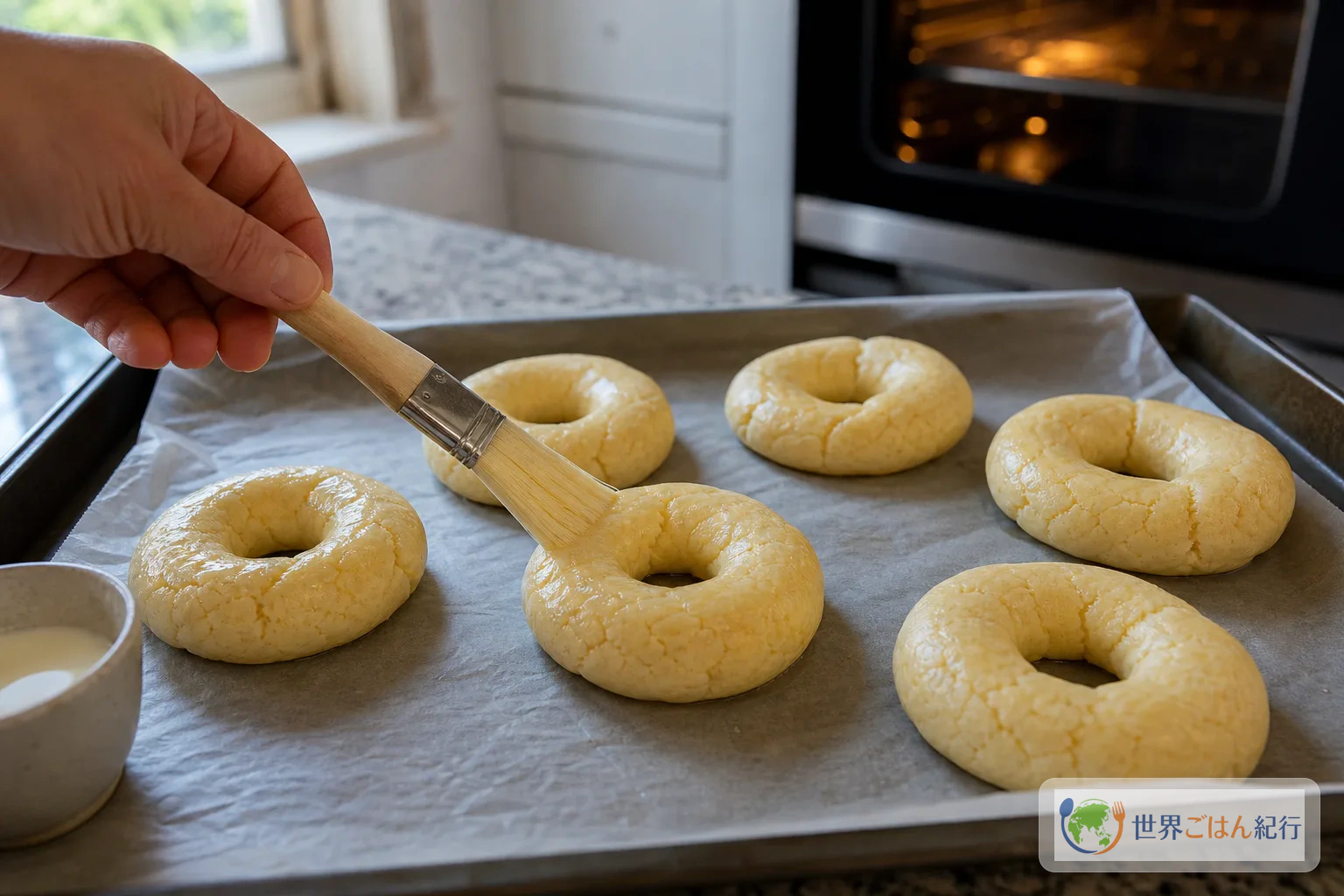
Chipa almidón is not a dish that develops gluten like bread. Rather than kneading hard until smooth, distribute fat and egg through the starch, don't crush the cheese too much, and stop at a firmness you can shape. Before baking the dough should be slightly firmer than an earlobe, with fine cracks appearing when pressed.
Checking the dough before baking
| State in your hands | Judgment | Fix |
|---|---|---|
| Holds when squeezed and fine cracks appear at the edges when stretched | Shape as is | Don't add milk |
| Cracks and sheds powder even before rolling into a stick | Not enough moisture | Add 2 tsp milk and rest 2 minutes |
| Sticks to your hands and rings sag | Too much moisture or wet cheese | Add 1 tbsp tapioca starch and rest 5 minutes |
| Surface dries before baking | Shaping is taking too long | Cover with a damp, well-wrung cloth |
| Only the bottom darkens when baked | Thin pan, strong bottom heat | Double the pan or lower to 180°C and bake 3 minutes longer |
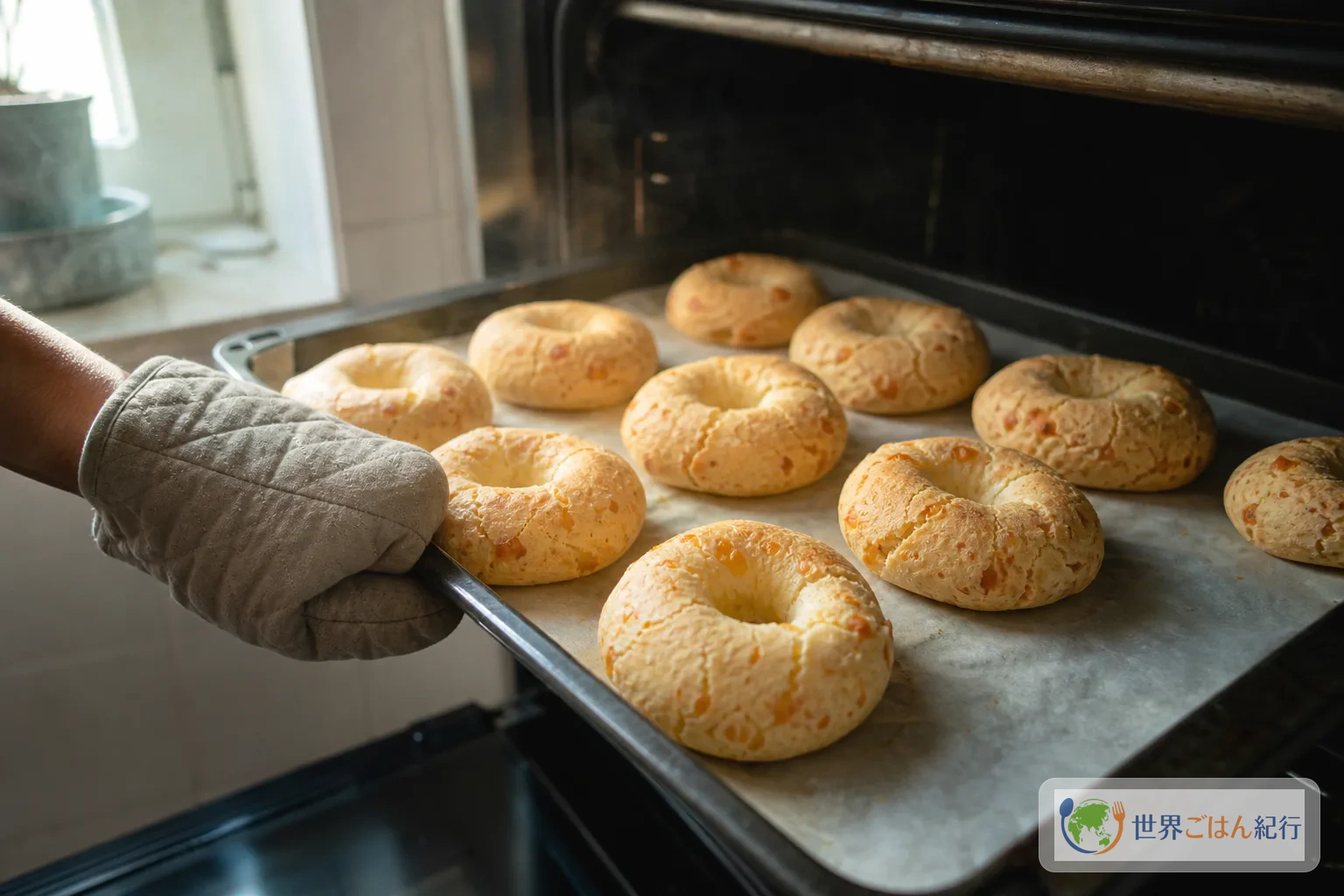
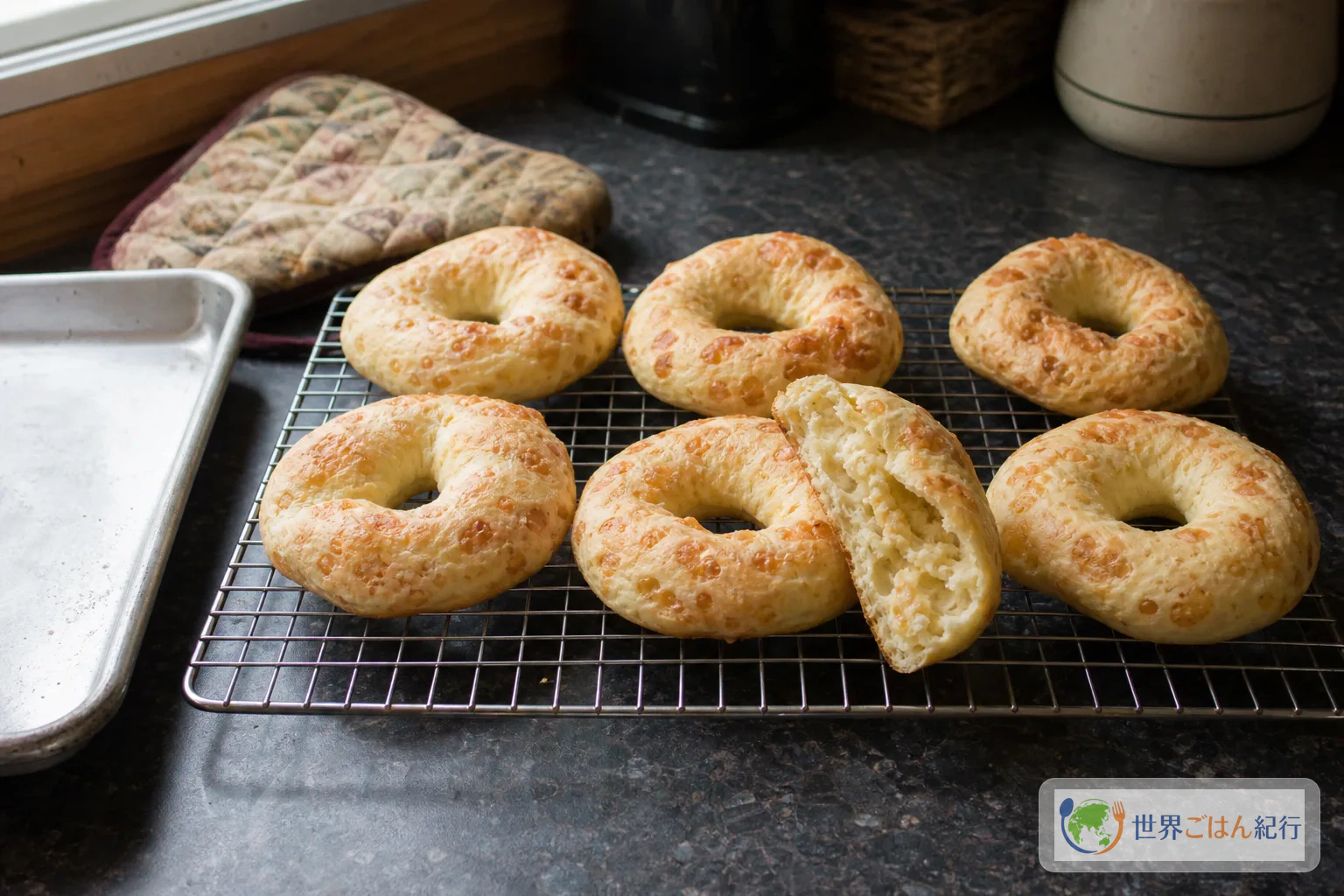
Once baked, rest on a rack for 5 minutes. Broken open while hot, there is a little steam in the center and the cheese and starch are moist. They firm up as they cool completely, so serve what you will eat warm. Wrap what you will store after it has cooled a little.
If deep cracks form as you shape the ring, the dough is dry. Wet your hands with just 2 tsp milk, stroke the dough's surface and rest 2 minutes. Returning it to the bowl and adding too much moisture makes the whole thing sag and the ring won't hold its shape.
Failure Causes: Separating Cracking, Spreading and a Heavy Center
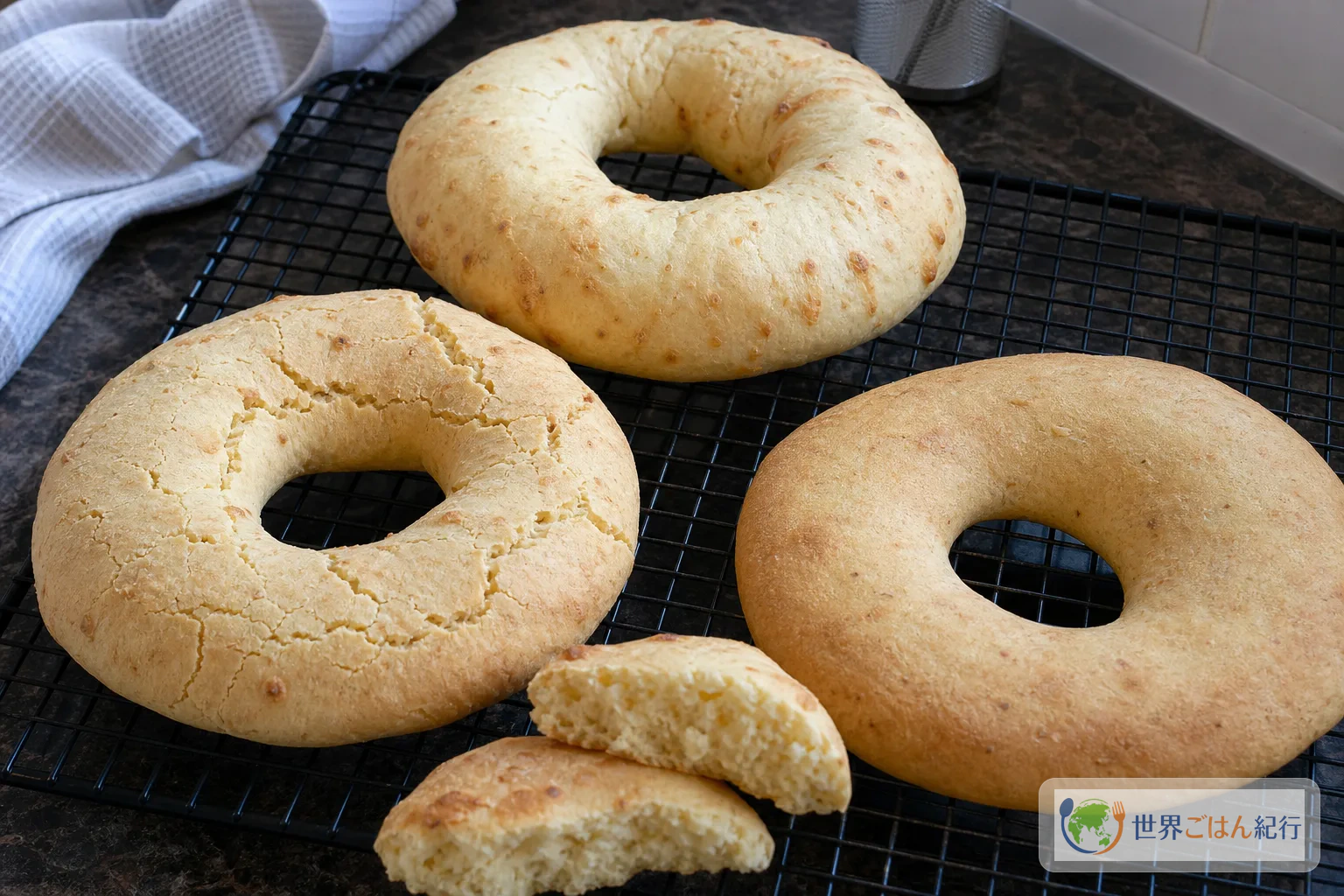
Chipa almidón failures can look alike but have different causes. If your only fixes are "add more milk because it cracked" and "bake longer because it's pale", a different failure will show up next time. Look separately at the moisture in the starch, the saltiness of the cheese, the heat of the oven and the thickness of the shaping.
| State | Main cause | Fix |
|---|---|---|
| Surface cracks widely | Dough dried out, shaping took too long | Stroke the surface with 2 tsp milk and cover the remaining dough with a cloth |
| Rings spread sideways | Too much milk, wet cheese | Add 1 tbsp tapioca starch and rest 5 minutes |
| Heavy, dense center | Too thick, low baking temperature | Keep to 2 cm thickness, 190°C for 22–25 minutes |
| Only the bottom burns dark | Thin pan, strong bottom heat | Double the pan or bake a little longer at 180°C |
| Flavor is vague | Not enough cheese saltiness, cut the salt too far | Increase feta or grated cheese and keep salt at 2/3 tsp or more |
| Hard when cold | Overbaked, too much added starch | Don't chase color; add starch in 1 tbsp units |
Cracking is not entirely bad. Chipa tastes good when the surface cracks a little and the aroma of cheese comes out of the cracks. The problem is deep splits that dry the center. To avoid this, don't let the dough dry out, keep the thickness of the rings consistent, and add milk by the teaspoon.
When the center is heavy, suspect shape before starch. Thick rings look impressive, but heat reaches the center poorly in a home oven. With a ring about 8 cm across and 2 cm thick, the center warms before the outside hardens. To make larger ones, rather than lowering to 180°C and baking about 28 minutes, making thinner rings from the same amount of dough is more stable.
The choice of cheese also affects the result. Made with pizza cheese alone, fat comes out but the saltiness is weak and the aroma goes vague. Feta brings saltiness, but a wet product loosens the dough. Grated cheese is easy to handle, but too much makes it salty and browns it quickly. For a first try, use 220 g mozzarella and 70 g feta or grated cheese, then adjust to the cheese in your home from the next time.
Serving and Storage: Beside the Mate, Freeze Before Baking
Freshly baked chipa almidón is best eaten as is, with nothing on it. The saltiness of the cheese and the aroma of anise are enough without butter or jam. In the morning pair it with coffee or mate cocido, in the afternoon with tereré or unsweetened tea to cut the richness. It also goes with strong roasted tea or dark roast coffee.
On a South American menu, chipa is an opener or side bread. Set beside grilled-meat churrasco, tangy vinagrete and black bean feijoada, the role of the starch dish becomes clear. To stay within Paraguay, making small amounts of chipa almidón, mbejú (in Japanese) and chipa guasú shows the difference between cassava and corn.
Storage and reheating
| Storage method | Guide | How to reheat |
|---|---|---|
| Room temperature | Same day | Wrap in a cloth so it doesn't dry, and warm lightly before eating |
| Refrigerator | 2 days | Mist lightly with water and heat in a toaster oven at 160°C for 5–6 minutes |
| Frozen, baked | 2 weeks | Straight from frozen in a 180°C oven for 10–12 minutes |
| Frozen, unbaked dough | 3 weeks | Straight from frozen at 180°C for 28–32 minutes |
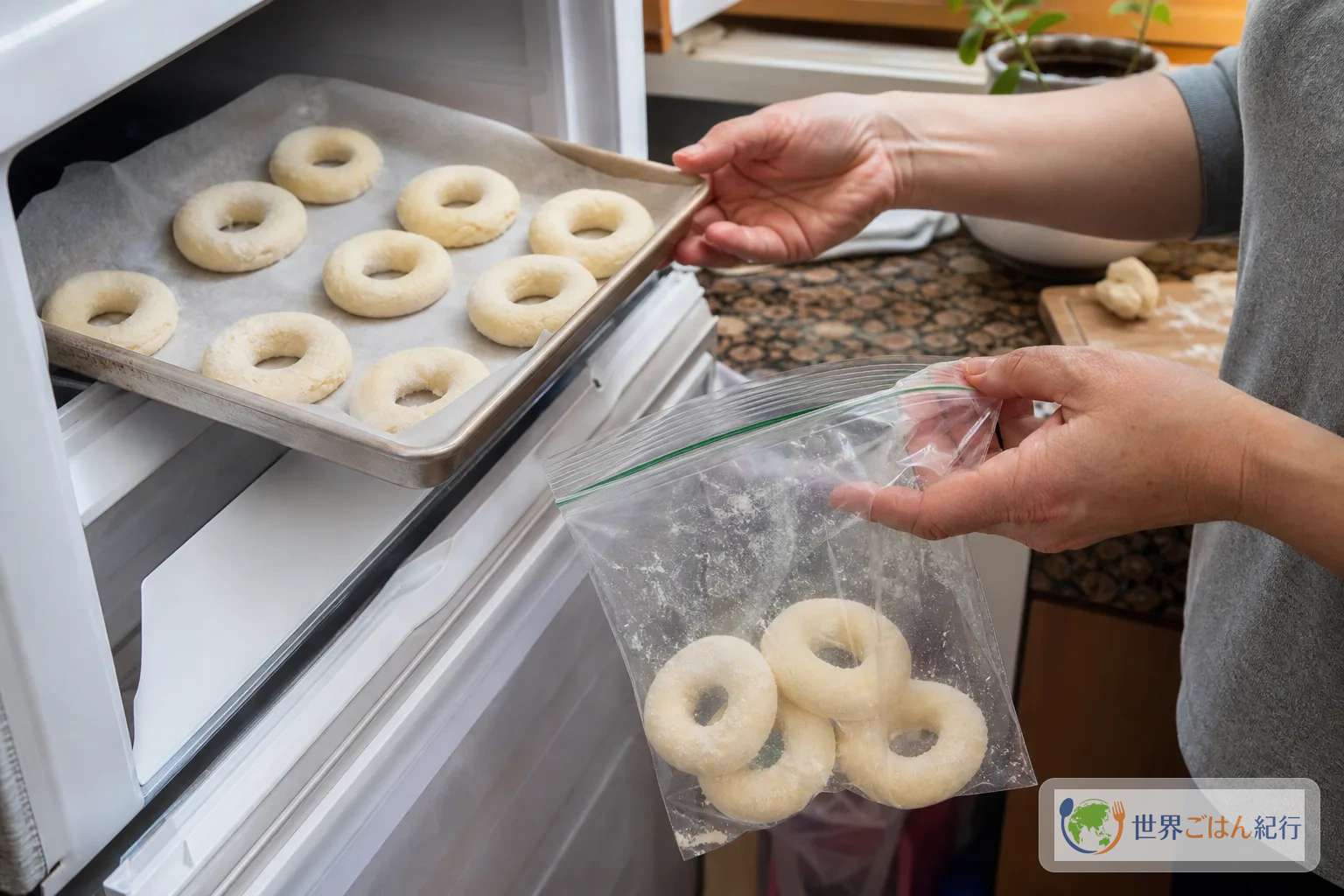
Freezing before baking is recommended. Arrange the shaped rings on a baking sheet and freeze about 1 hour to firm them, then move them to a storage bag so they don't get crushed. To bake, don't thaw; bake 28–32 minutes in an oven preheated to 180°C. The center of frozen dough is slow to warm, so it is safer not to shape them too thick.
Cooled chipa reheated in the microwave alone tends to get heavy at the center. If you use the microwave, heat at 600 W for only 20 seconds, then re-crisp in a toaster oven at 160°C for 3–4 minutes. Misting a very small amount of water helps keep the surface from drying.
Leftover chipa can be broken up the next morning with egg or tomato, but serving it alongside keeps the texture better than stuffing it. Because chipa itself contains egg and dairy, pair it with an acidic salad, grilled meat or a bean stew as the main so the meal doesn't feel heavy.
Frequently Asked Questions
Can I make it with potato starch instead of tapioca starch?
You can make the shape, but the chipa character weakens. Potato starch is very sticky and tends to get hard when cold. For a first try use tapioca or cassava starch. If you must mix, limit it to 400 g tapioca starch and up to 100 g potato starch.
Can I leave out the anise seed?
You can. But the characteristic chipa aroma gets much quieter. If you don't like the sweet aroma of anise, reduce to 1 tsp. Fennel seed has a similar direction of aroma but is a little greener and leans toward another dish. Starting with 1 tsp anise is safest for a first try.
Is pizza cheese alone enough?
It bakes, but the flavor tends to be vague. If you use pizza cheese alone, add 3 tbsp grated cheese and keep salt at 2/3 tsp or more. Wet cheese makes the dough sag, so start with 90 ml milk.
Is baking powder needed?
Local recipes vary on whether it is included. This home version does not use it because it bakes on the structure of egg, fat and starch. If you want a little extra rise, you may add just 1 tsp, but too much cracks the surface and gives a powdery smell.
Can I make it without an oven?
Baking in the oven is basic for chipa almidón. If you cook it in a skillet, you will do better moving the formula toward mbejú (in Japanese) than using the same dough. If you must, shape it into 1 cm-thick ovals instead of rings, cover, and cook over low heat 6–7 minutes on one side, then flip and cook 5 minutes. The texture will be different, though.