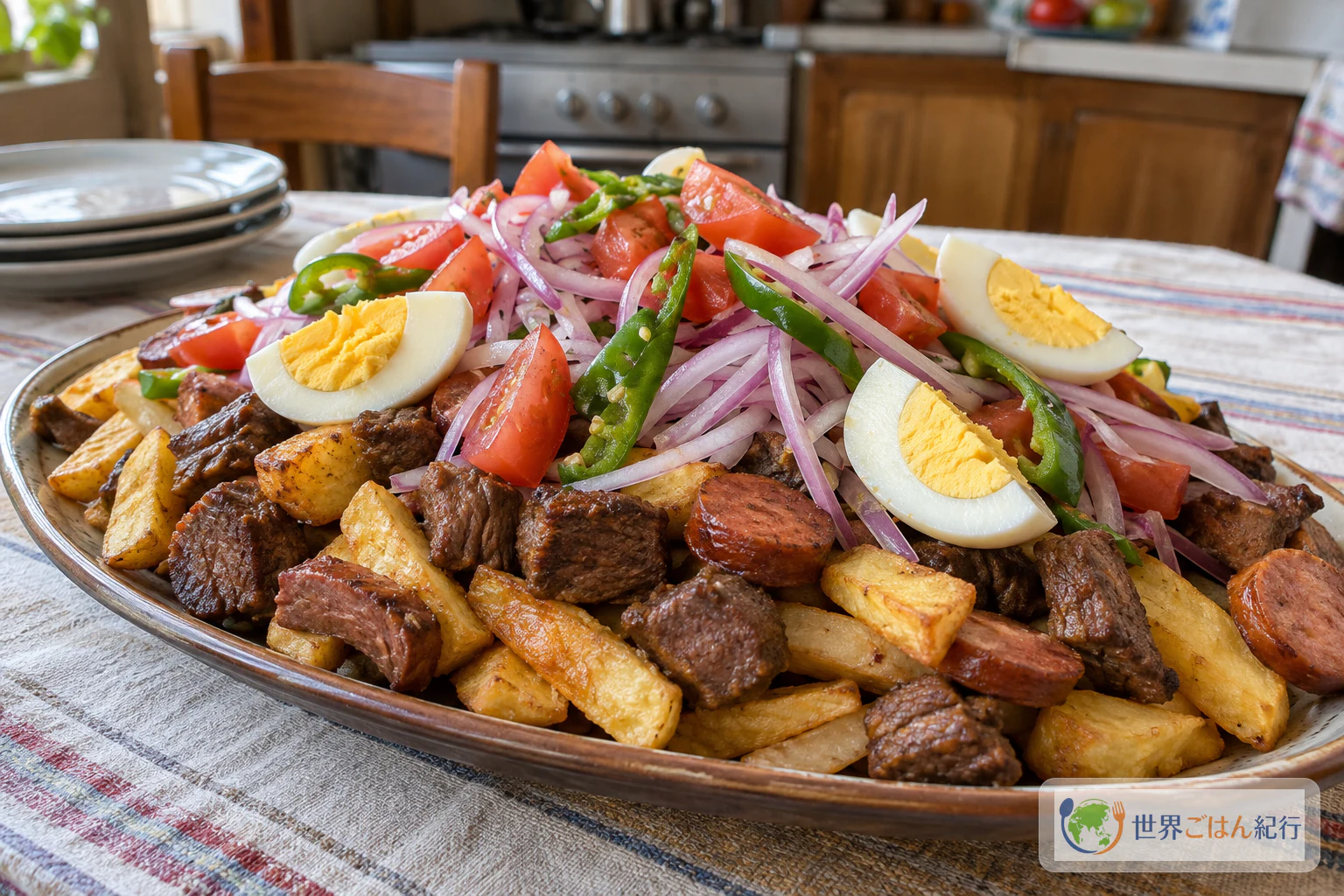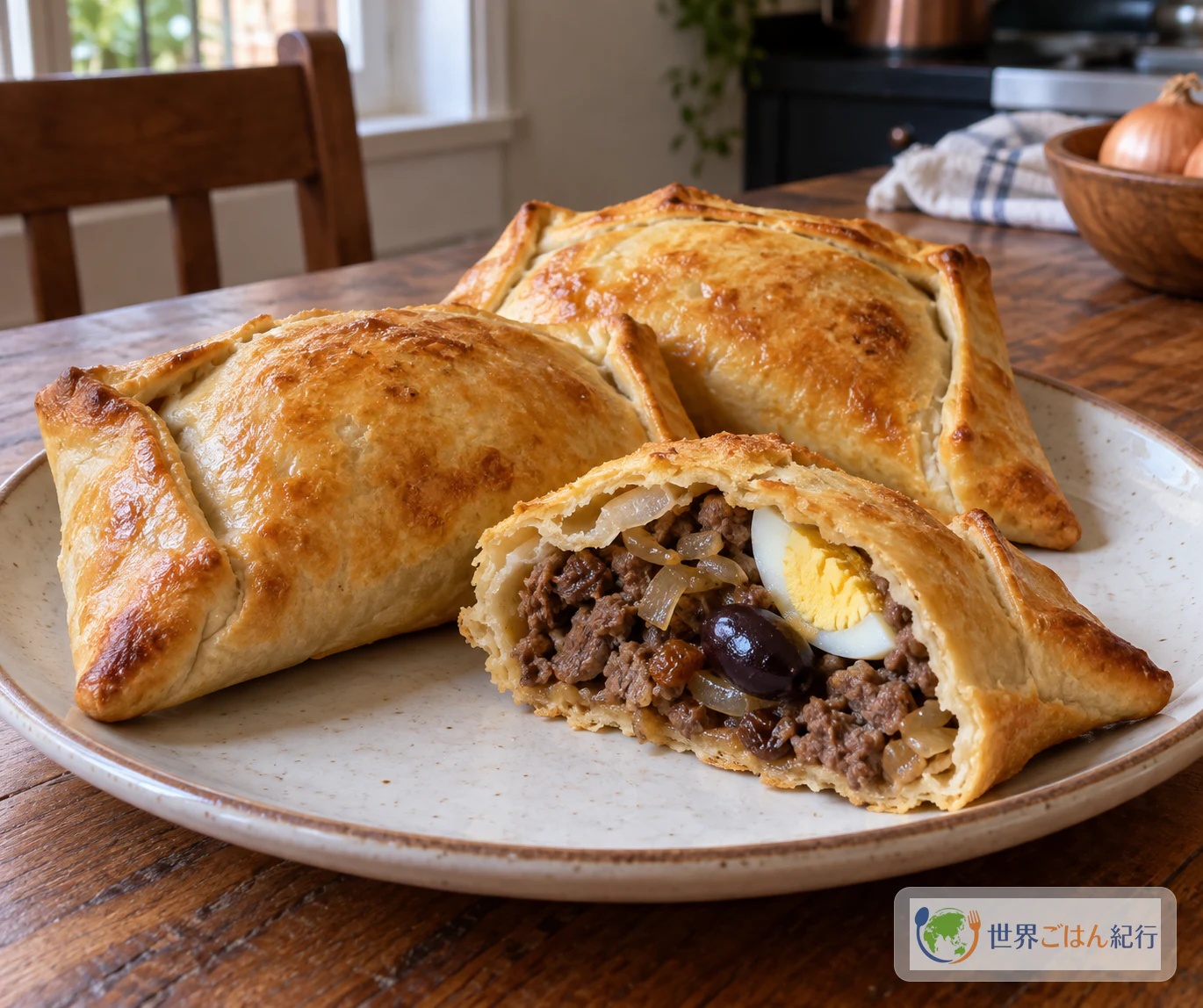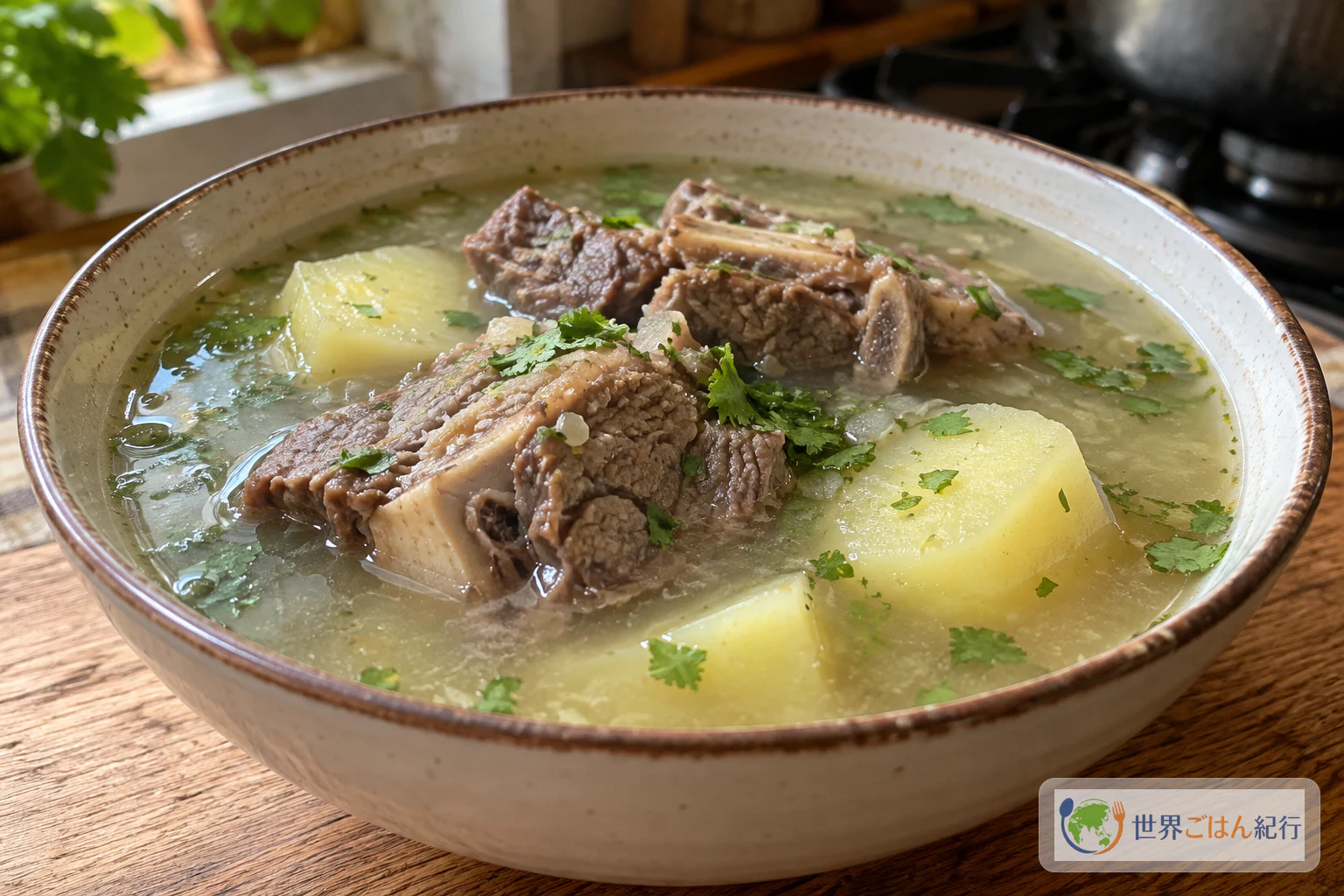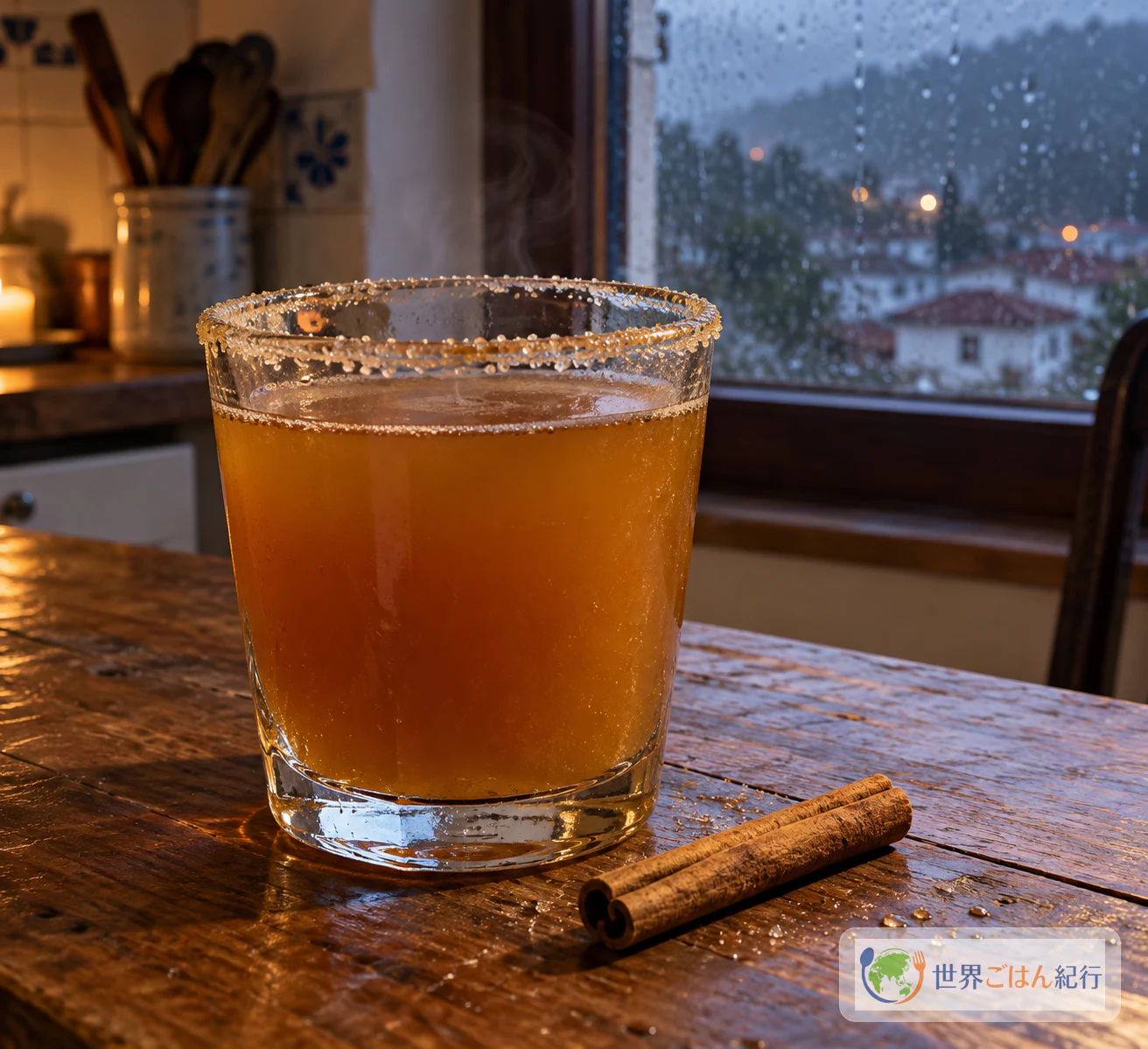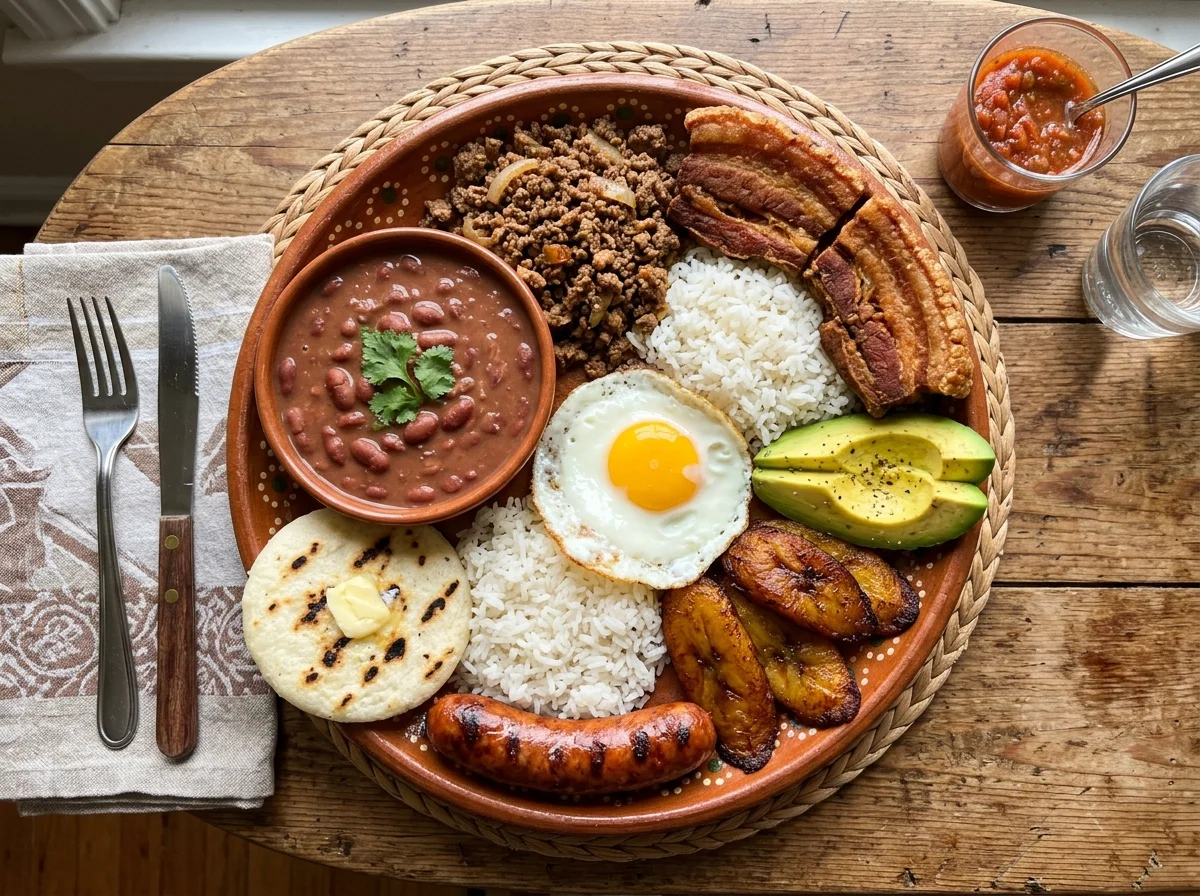
The steam of beans and the smell of seared pork gather on one plate
Midday on a day off, just before the rice cooker chimes, red beans tremble in the pot. In the next pan fat renders from pork belly, and on a third burner the edges of an egg crisp. So many pots, pans, and plates crowd the kitchen that at some point you laugh once and ask whether this is really one plate. That bustle is part of what makes bandeja paisa interesting.
Bandeja means platter, and paisa is the name for the people of Antioquia and the coffee region of northwestern Colombia. The official Colombian tourism site also introduces bandeja paisa as a powerful plate that fills the bellies of working people, combining beans, rice, ground meat, chicharrón, chorizo, egg, arepa, plantain, avocado, and hogao.
What is hard in a home kitchen is not the unusual ingredients but the timing. Red beans, carne molida, chicharrón, chorizo, egg, plantain, arepa, and white rice are each made separately, and in the end everything has to be plated as hot as possible. So this article puts more weight on which parts to move to the day before and which to cook last than on assembling every ingredient in its authentic form.
Among other South American bean dishes, Brazil's feijoada charms with the unity of the pot. Bandeja paisa is the opposite: a dish where beans, rice, meat, corn, and sweet plantain meet on a large platter. If you have already made Colombia's ajiaco, you will see how the same country can show the highland soup and the Antioquian platter as entirely different faces.
Bandeja paisa is also called Paisa platter in English, and in Spanish-speaking regions bandeja antioqueña or bandeja montañera. This article uses the easy-to-search "bandeja paisa" while organizing it around the table of Antioquia and its surroundings.
Ingredients (serves 4)
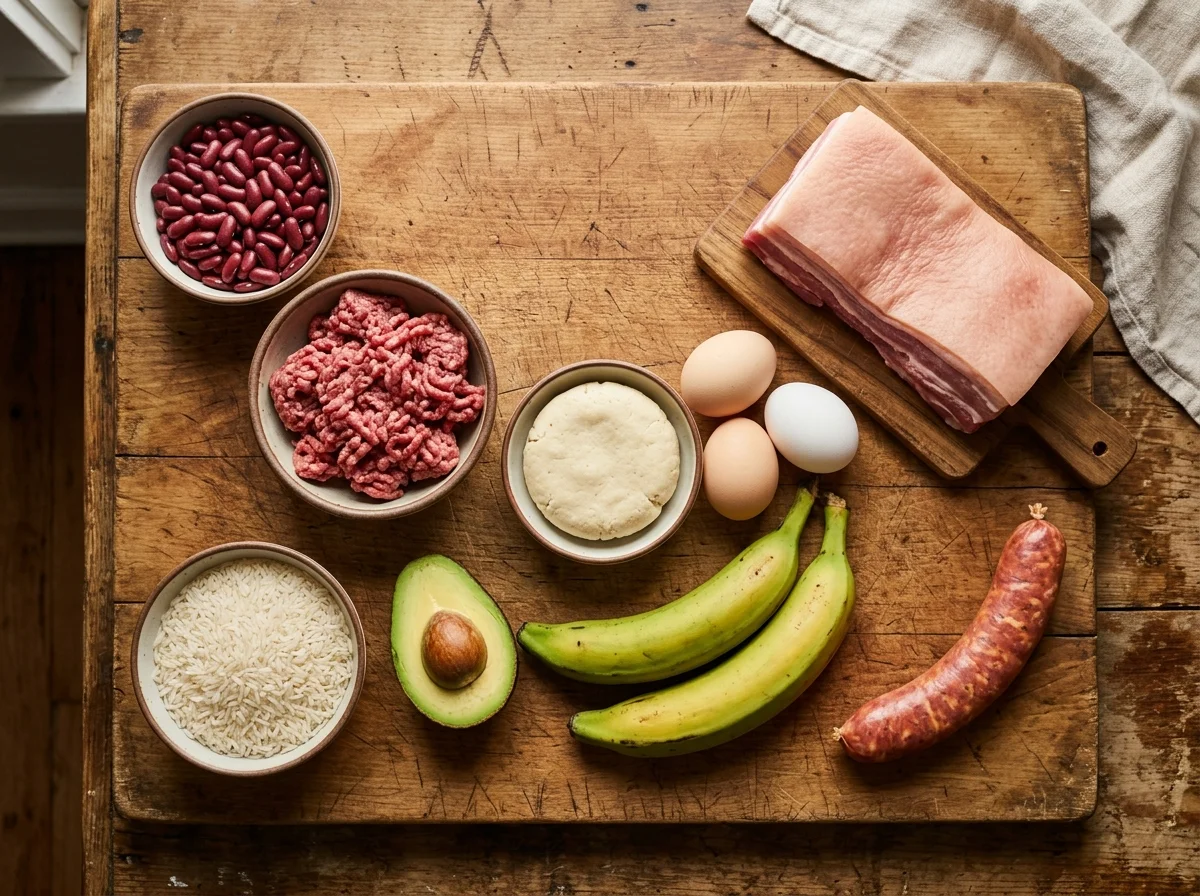
Ingredients and tools for this dish
For Colombian-style corn bread, using precooked corn flour rather than coarse cornmeal makes failure less likely. Yellow masarepa is toasty, and white P.A.N. is easier to move toward the local table, so choose by preference.
Cumin, used in small amounts in both the beans and the meat, evens out the outline of the aroma. A small jar is enough, but if you keep cooking South American or Middle Eastern food, a large container is easier to use up.
White P.A.N. is convenient when you want the dough to bake pale. Leftover flour can also go into Colombian arepas or cachapa.
Method: timing so the big platter does not go cold
Bandeja paisa uses every burner. If you finish the beans first, follow with the meat and chicharrón, and finally cook the egg, plantain, chorizo, and arepa, temperature differences on the plate are less likely. Start cooking the rice before Step 2.
Cooking tips: temperature, order, and hogao
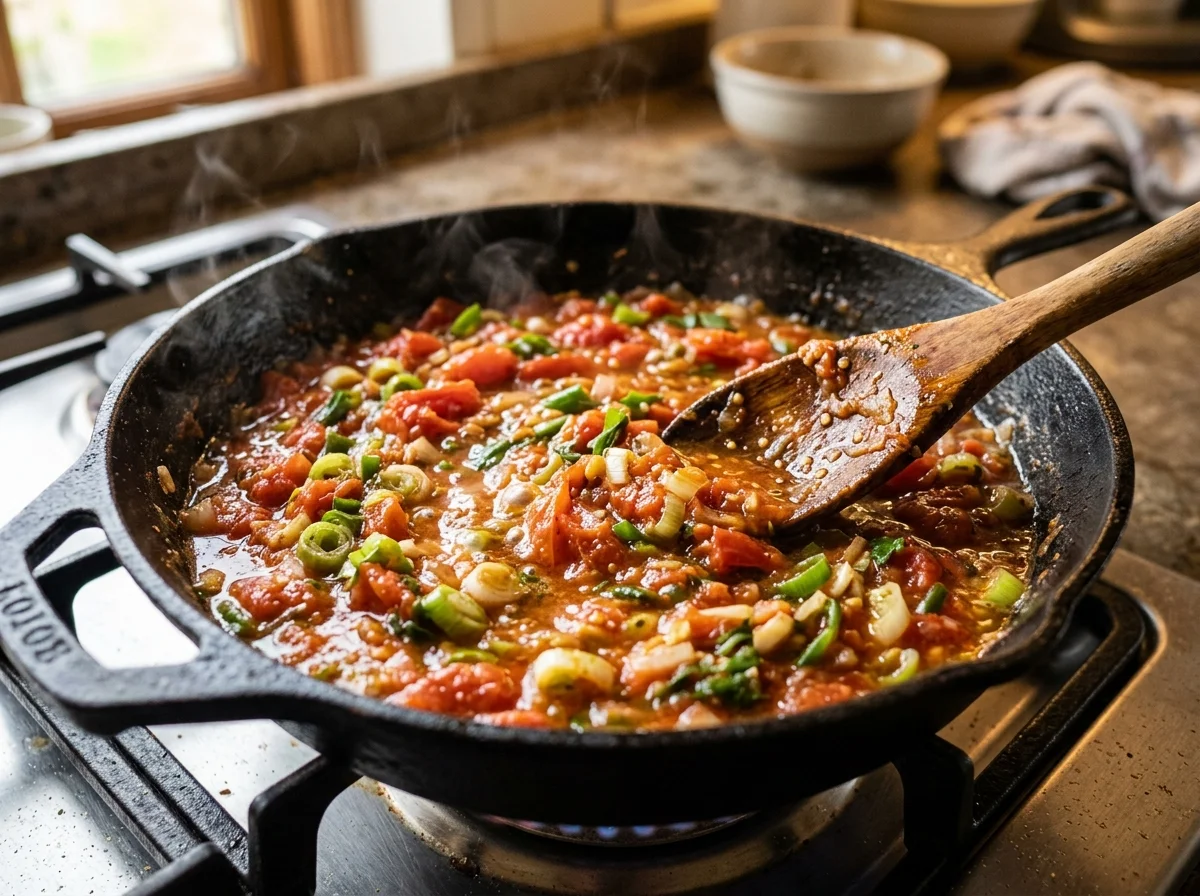
Order of cooking: beans, meat, frying, and eggs last
If you set each part on the plate in the order it is finished, the later ones will cool. Separate what is good reheated from what needs to be freshly cooked.
| Can be made ahead | Make just before | Reason |
|---|---|---|
| Frijoles | Fried eggs | Beans do not lose flavor when reheated |
| Carne molida | Plantain | Plantain tends to taste oily when it cools |
| Arepa dough | Chorizo | Fat in sausage sets when the cut ends cool |
| White rice | Avocado for plating | Avocado browns easily |
Do not make hogao taste like thin ketchup
Hogao is the basic Colombian sauce of tomato and scallion reduced in oil. If you add the meat right after the tomato, you get a watery ground meat stir-fry. First drive off the tomato's water and reduce until a trail left by a wooden spoon along the bottom stays for just a moment, and then add the meat. Beans, meat, and rice on the same plate will not scatter in flavor.
Do not put chicharrón into hot oil
If you put pork belly straight into hot oil, only the outside hardens and the fat inside stays heavy. Starting from water, it first simmers and later fries in its own fat. Large bubbles mean water remains, and coloring starts after the bubbles become fine. Do not judge by browning alone; check that it is white through the center and the juices are nearly clear.
If you have no plantain, choose slightly green bananas
Substituting fully ripe bananas makes it very sweet and prone to falling apart while frying. On days you cannot get plantain, choose bananas with yellow to yellow-green skin that do not dent much when pressed. Cut diagonally 1 cm thick and fry briefly over medium heat with little oil to avoid a too-sweet dessert feel.
What to keep and what to replace in a kitchen outside Colombia
For bandeja paisa, protecting the structure of the plate matters more than assembling every local ingredient. If the roles remain, beans, rice, meat, corn, sweet plantain, fatty pork, and egg, even a home version tastes like bandeja paisa.
| Local axis | Realistic choice elsewhere | How to think about the substitution |
|---|---|---|
| Red kidney beans | Dried kidney beans, canned kidney beans | Red beans are closer than black beans in color and flavor for the plate |
| Chicharrón | Skin-on pork belly, pork belly block, thick-cut bacon | Keep the pork fat and crisp texture |
| Colombian-style chorizo | Coarse-ground sausage, fresh sausage | Do not lean too far toward spicy Mexican chorizo |
| Arepa from masarepa | Harina P.A.N., Goya Masarepa | Coarse cornmeal alone does not hold together easily |
| Plantain | Imported plantain, slightly green bananas | The sweet role, but prioritize a firmness that does not fall apart |
| Hogao | Tomato, scallion, onion, garlic | Do not replace with ketchup; fry and drive off the water |
Masarepa is the one ingredient worth preparing if you can. Ordinary cornmeal is not precooked and is often coarse, so as arepa it cracks easily. If you truly have none, make the dough with 150 g fine-ground cornmeal, 50 g rice flour, and 260 ml boiling water, rest it 10 minutes, then cook. But the aroma and texture will be closer to a griddled corn flatbread than an arepa.
Storage and make-ahead
It is served as one plate, but parts that suit make-ahead and parts that do not are clearly divided. Do not store everything together; separate by component.
| Component | Storage | Reheating |
|---|---|---|
| Frijoles | 3 days refrigerated, 1 month frozen | 5 minutes in a pot over medium heat. Add 2 tbsp water |
| Carne molida | 2 days refrigerated, 2 weeks frozen | 3 minutes in a skillet over medium heat. Drive off the liquid |
| Chicharrón | 2 days refrigerated | 6 minutes in a toaster oven at 180 °C. A microwave softens it |
| Arepa | 2 days refrigerated, 2 weeks frozen | 2 minutes per side in a skillet over medium-low heat |
| Plantain | Same day | Freshly fried is better than reheated |
| Fried egg, avocado | Do not store | Prepare just before eating |
If you send the white rice in a lunchbox, do not leave it at room temperature long; cool it quickly and refrigerate. Beans and meat can be spooned over rice the next day like a rice bowl. Leftover arepas, re-cooked in the morning with cheese in the middle, make a light Colombian breakfast.
Background of the dish
The official Colombian tourism site presents bandeja paisa as a dish linked to Antioquia and the coffee region. It is a meal of great quantity and variety, gathering beans, rice, meat, egg, arepa, and plantain onto one plate to fill farmers working steep slopes and harvest workers.
What is interesting is that, though it is easily spoken of as a dish representing the nation, its composition is not entirely fixed. In restaurants morcilla (blood sausage) may be included, while at home the meat may be reduced a little and the beans and rice made more generous. Even in home recipes by Colombians such as My Colombian Recipes, the skeleton is held to white rice, beans, chicharrón, ground or powdered beef, chorizo, fried egg, plantain, avocado, and arepa, assembled from whatever is available.
The value of making this dish in a home kitchen is not only "the impact of everything on top." Simmering beans, reducing tomato and scallion, frying pork from a water start, kneading corn flour: separate techniques connect on one plate, so it teaches a good deal as an entry to Colombian cooking. It is a heavy plate, but lime, avocado, and sweet plantain come in between, so the rhythm of eating does not stay monotonous.
Nutrition information (per serving, out of 4)
Bandeja paisa puts beans, rice, meat, egg, and corn on one plate. It suits a solid lunch better than dinner. On days you want it lighter, halving the chicharrón, making the arepa smaller, and keeping the beans and avocado preserves the character of the plate.
| Nutrient | Amount |
|---|---|
| Calories | 980kcal |
| Protein | 52g |
| Fat | 42g |
| Carbohydrate | 96g |
| Fiber | 14g |
| Sodium | 920mg |
The listed values are estimates from the ingredient table. They change greatly with the amounts of chicharrón, chorizo, egg, and oil. Swapping pork belly for thick-cut bacon tends to raise the salt, so go light on salt in the beans and meat.
Frequently asked questions
Q1. Does it still taste local if I use canned beans?
Yes. Dried beans give more aroma and thicker liquid, but even with canned, adding hogao, cumin, and a little pork fat makes a base for the plate. With canned beans, put them in the pot with their liquid, simmer 15 minutes, and then adjust the seasoning. Rinsing them with water weakens the thickness of the liquid.
Q2. I have no masarepa. Can I use ordinary cornmeal?
You can substitute 150 g fine-ground cornmeal, 50 g rice flour, and 260 ml boiling water. But water absorption differs from precooked corn flour such as Harina P.A.N. or Goya Masarepa, so it cracks more easily. For the first time, preparing masarepa is less likely to fail.
Q3. Where can I buy plantains?
They can sometimes be found at Latin grocers, Asian grocers, produce shops that carry imports, and online. On days you cannot find them, fry slightly green bananas only briefly. Fully ripe bananas are too sweet and soft, which pushes the whole plate toward dessert.
Q4. I cannot finish it alone. How do I make a smaller amount?
The realistic way is to halve the ingredients and make the eggs and chorizo only per person. Beans and meat suit make-ahead, so making a 4-serving batch and freezing it is fine. At the table, dividing each component into small dishes like a "Colombian set meal" makes it easier to eat.
Q5. Are there rules for how to eat it?
There are no strict rules. Mix beans and rice, add a little meat, bite the chicharrón, and bring your mouth back with the sweetness of plantain, and the plate's strengths come out. Breaking the egg yolk and working it into the rice and beans helps bring the fatty components together.
South American dishes to make alongside
- Ajiaco - Even in the same Colombia, Bogotá's chicken and potato soup is light.
- Colombian arepas - Use leftover masarepa and continue with the corn staple culture.
- Feijoada - Another answer in South American bean and meat stews.
- Lomo saltado - Peru's Chinese-influenced stir-fry that puts meat and rice on one plate.
- Empanada - A South American filled pastry that reuses cumin and ground meat.
Sources
- Colombia Travel, "Five traditional foods that tell you everything about Colombia." https://colombia.travel/en/blog/five-traditional-foods-tell-you-everything-about-colombia
- Colombia Travel, "Colombian Food: Typical Dishes and Modern Styles." https://colombia.travel/en/blog/colombian-food-typical-dishes-and-modern-styles
- My Colombian Recipes, "Bandeja Paisa (Paisa Platter)." https://www.mycolombianrecipes.com/paisa-tray-bandeja-paisa/
- Colombia.com, "Bandeja paisa." https://www.colombia.com/gastronomia/asi-sabe-colombia/plato-fuerte/sdi140/16606/bandeja-paisa
- FoodSafety.gov, "Cook to a Safe Minimum Internal Temperature." https://www.foodsafety.gov/food-safety-charts/safe-minimum-internal-temperatures