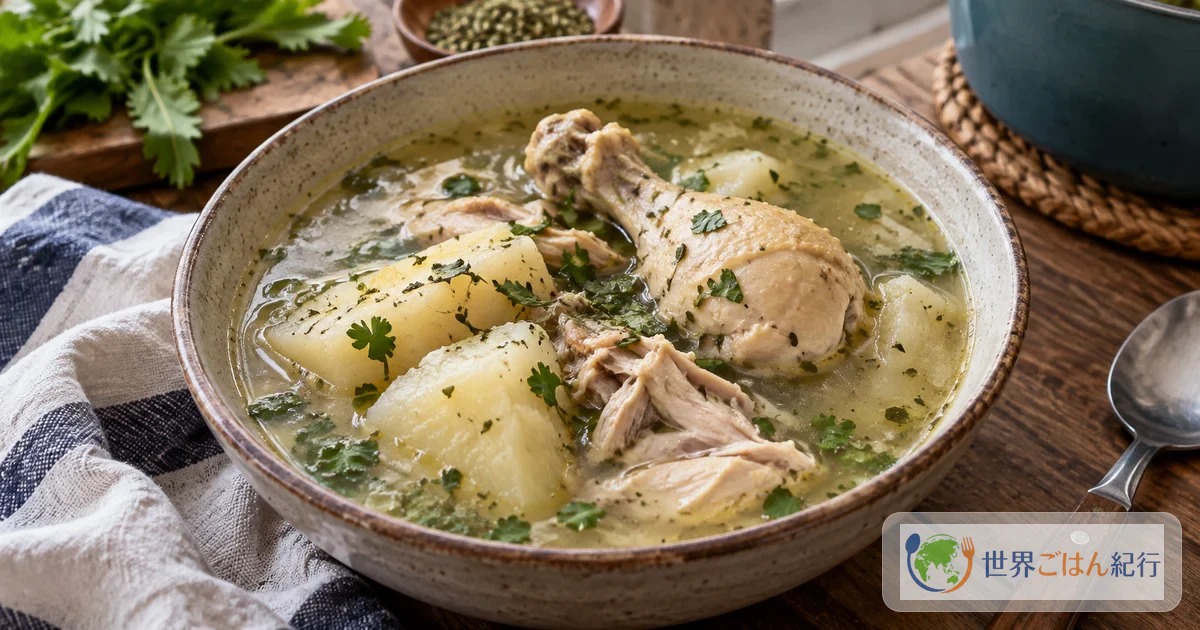
In a country kitchen in Panama, a big pot simmers over a wood fire, holding a tough yard chicken and peeled, knobby roots. The steam carries the strong green scent of culantro, the herb with serrated leaves. This is sancocho panameño, the national soup you find everywhere in Panama. It takes very few ingredients: chicken, root vegetables, culantro, oregano, garlic, onion, and salt. There are no bouillon cubes or coloring seasonings, so what you taste is the chicken, the roots, and the herbs.
Sancocho in Panamanian Life
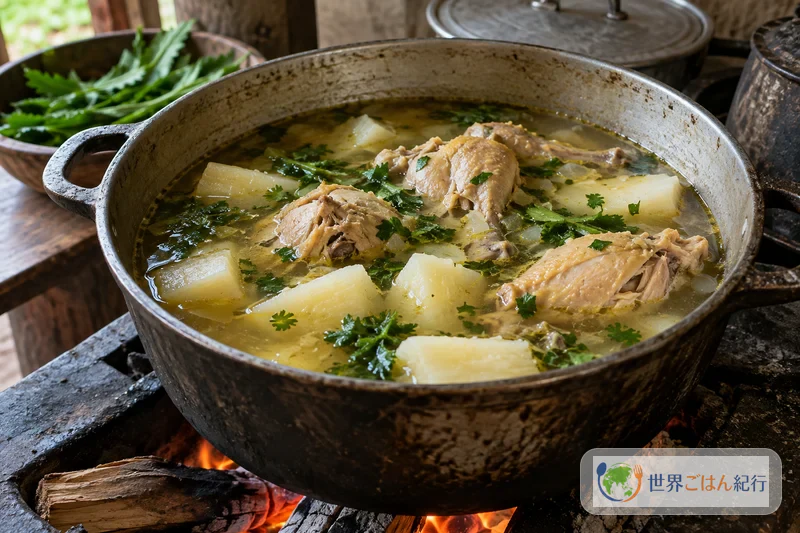
In 2019, Panama City marked the 500th anniversary of its founding, and a short documentary called "Sancocho de película" was screened at the Panama Canal Museum for the occasion. The cooks behind it, Neptalio Cabrera and Fifita Bichiri, filmed three people making sancocho: a hotel cook, a city housewife, and a country woman. Some cooked on a stove and some over a wood fire, but all three used the same ingredients: chicken, culantro, oregano, onion, salt, and ñame.
What do you drink when you're hungover? Sancocho. After a party? Sancocho. At a baptism? Sancocho. It turns up on the table so often that it became a national symbol without anyone planning it. It is also the soup you give someone weakened by a fever or a cold.
Much of the origin of sancocho is still unknown. There is debate over whether ñame originally grew in the Americas or came with people from Africa. The first sancocho was made with beef rather than chicken: at the founding of Panama City in 1519, chicken was a precious food that the Spanish treated like medicine, and beef went to the poor.
The traditional version is defined as much by what it leaves out as by what goes in. It calls for free-range chicken, ñame, culantro, garlic, and onion. Add corn, otoe (a relative of taro), or cassava, and it is no longer the standard Panamanian sancocho. Bouillon, soy sauce, and coloring seasonings stay out too. Locals call it a "natural soup from the yard."
Ingredients (serves 4)
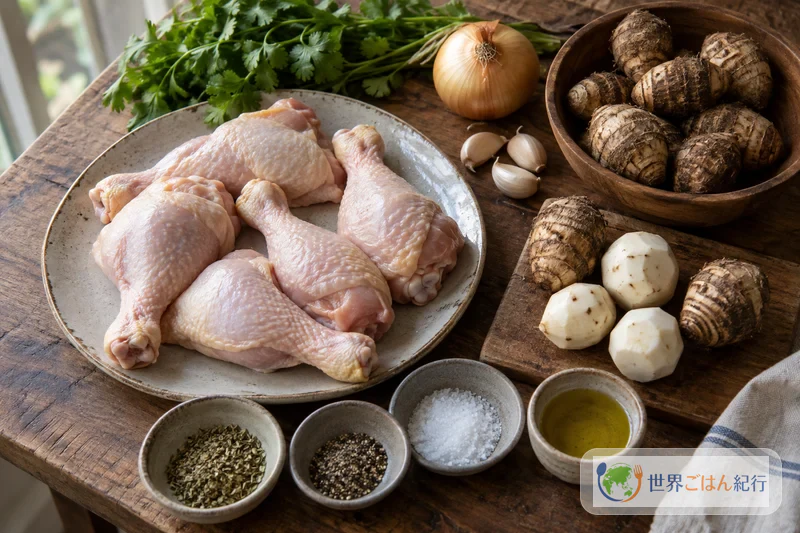
The amounts below are for a Panama City home-style sancocho, narrowed to the standard central-Panama ingredients.
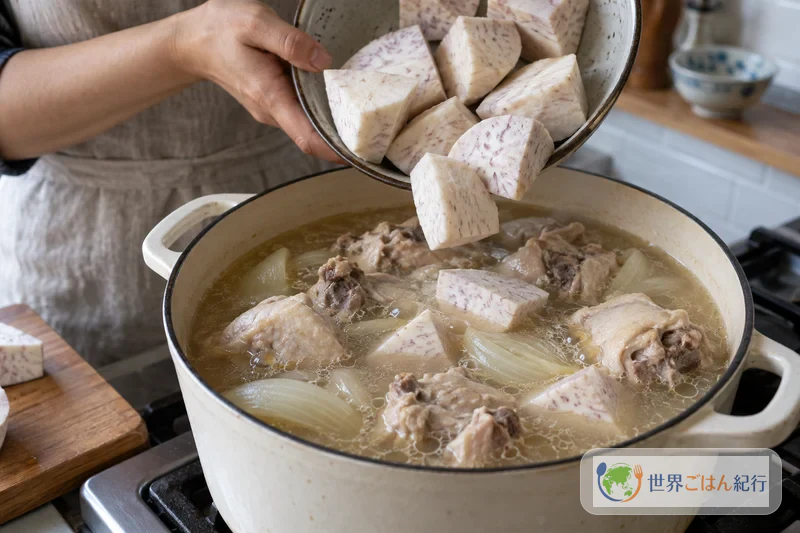
The ñame used in Panama is a large tuber in the yam family. Other long yams are relatives, but they turn very sticky when cooked. Taro gives both a mealy texture and a body that melts into the soup, making it the easiest substitute to handle in a home kitchen.
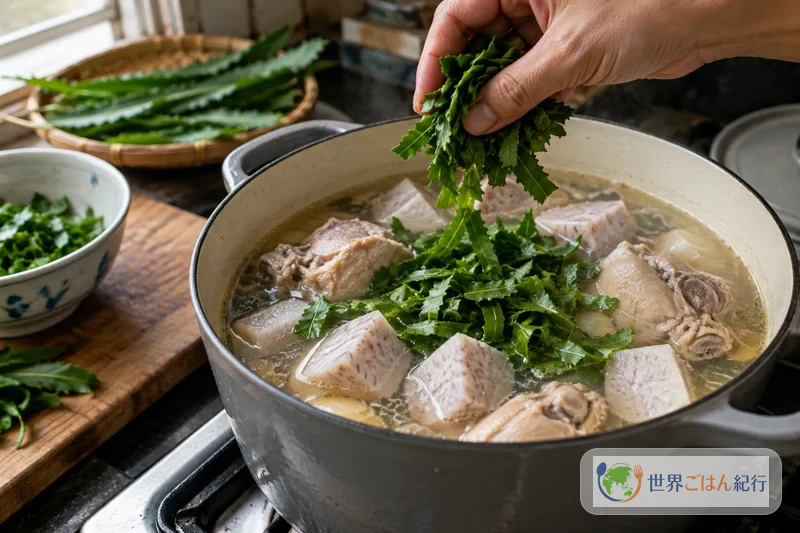
Culantro has longer, narrower leaves than cilantro, serrated at the edges, and a much stronger aroma. It is sometimes available as "culantro" or "sawtooth coriander" at Latin American and Asian groceries or online. When substituting cilantro, use about 1.5 times the amount.
Choosing Ingredients for Sancocho
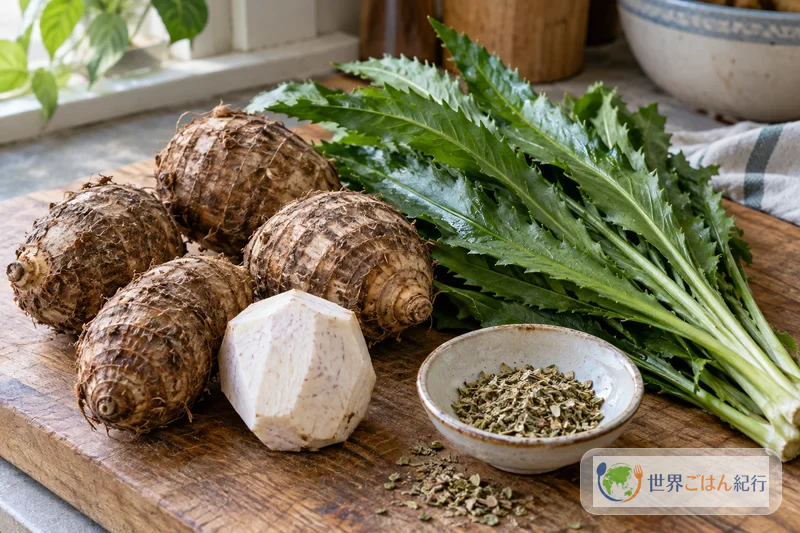
Ñame, a large yam, and culantro are the two ingredients that can be hard to find outside Panama. Taro and cilantro get you close to the humble local flavor.
For a more traditional pot, use an old hen (stewing hen). The traditional Panamanian sancocho is made with a tough yard chicken, gallina de patio. Its meat is firm, but the longer it simmers, the deeper the savoriness in the soup. Butcher shops and online sellers carry old hens as bone-in pieces.
How to Make Sancocho Panameño
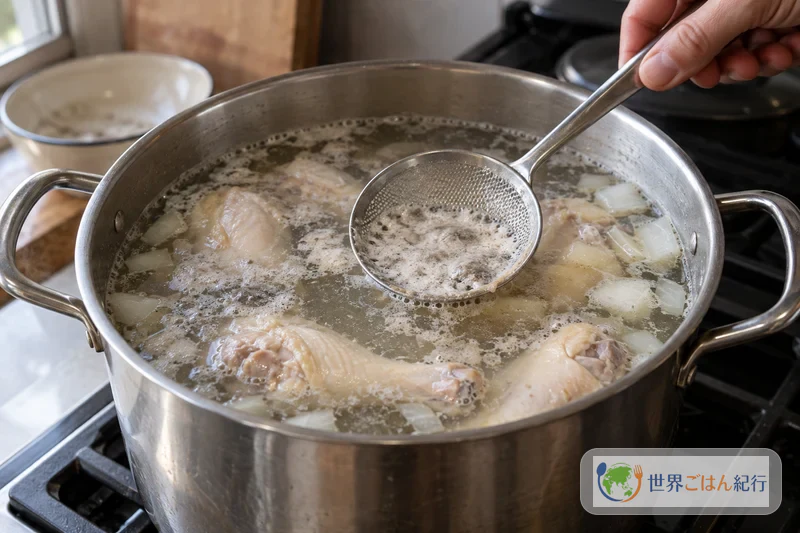
Allow about 20 minutes of prep and about 1 hour 30 minutes to simmer the chicken and roots and finish. If you use an old hen, allow about an hour more for simmering the chicken alone.
Cook the chicken thoroughly, all the way around the bone, to an internal temperature of at least 74°C (165°F). Aim for 75°C to leave a margin.
Peeling taro can make your hands itch from the slime. If that bothers you, wear gloves, or boil the taro in its skin for about 5 minutes, cool it, and then peel it.
Getting the Herbs and Salt Right
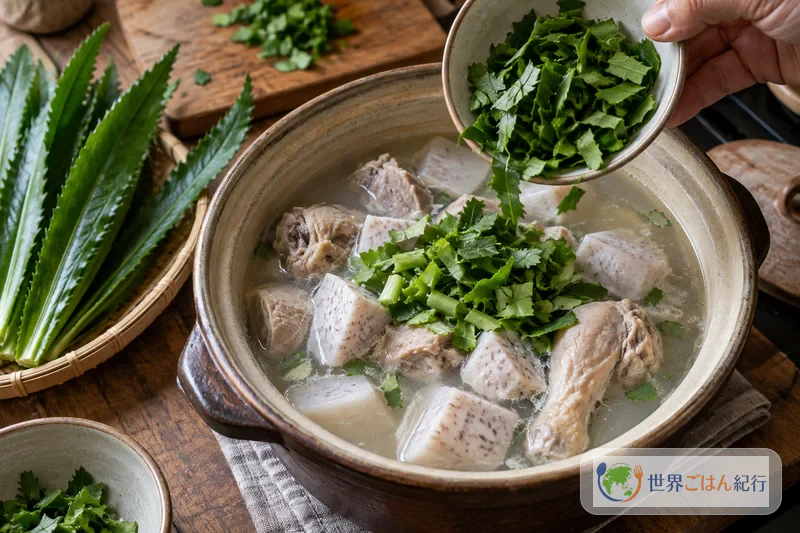
The order you add the herbs in decides the flavor. Even a strong herb loses its aroma if it cooks too long, so the culantro goes in after the roots are tender, and fresh leaves are scattered over at the end. You get the aroma in two layers, and the green scent of a Panamanian sancocho stays clear.
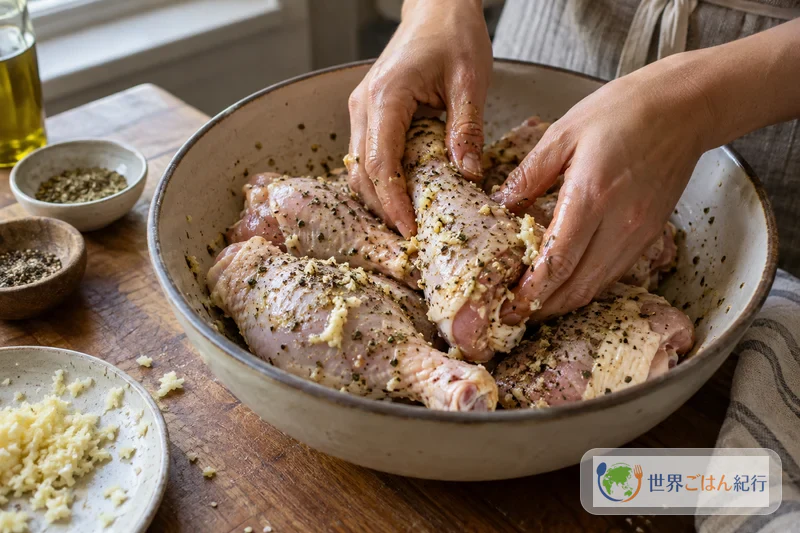
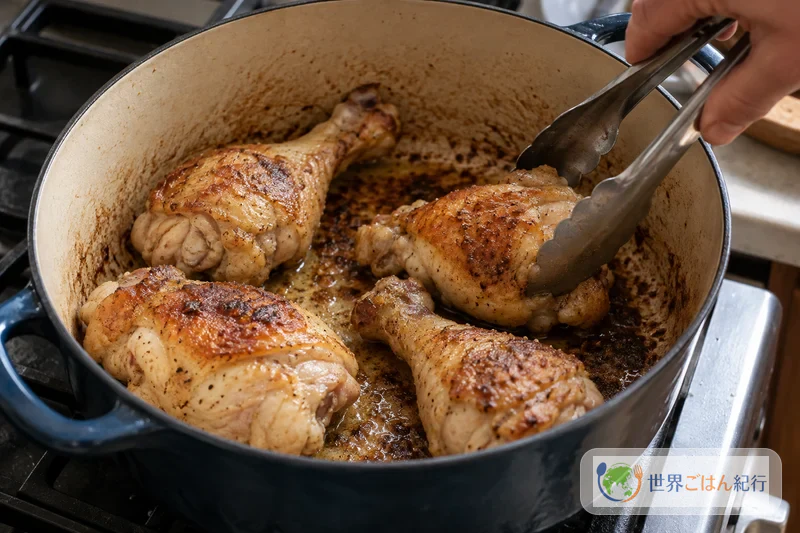
The oregano is rubbed into the chicken as seasoning rather than added to the soup. Its aroma rises as the chicken browns and dissolves into the broth, so even dried oregano carries the herb aroma deep into the chicken.
Without bouillon, the salt decides the flavor. Go light on salt when you season the chicken, then add 1/2 tsp at a time at the end, tasting as you go. The right balance is the point where the sweetness of the chicken and roots just starts to come through.
Serving Sancocho and Its Variations
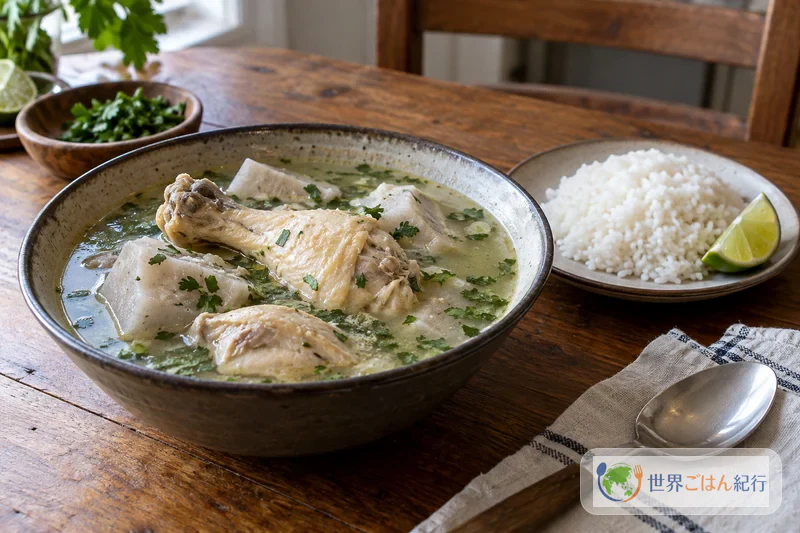
Put the chicken and taro in a deep bowl, ladle in plenty of hot soup, and scatter the reserved culantro on top. White rice on the side is good too, with the soup spooned over it.
The same name can mean a different dish from one country to the next. Colombia's sancocho de gallina (in Japanese) is a hearty version, and its stars are corn, cassava, and plantain, the very things a Panamanian cook leaves out. If you'd like another Central American chicken stew, try Guatemala's jocón (in Japanese).
Regional and Home Versions
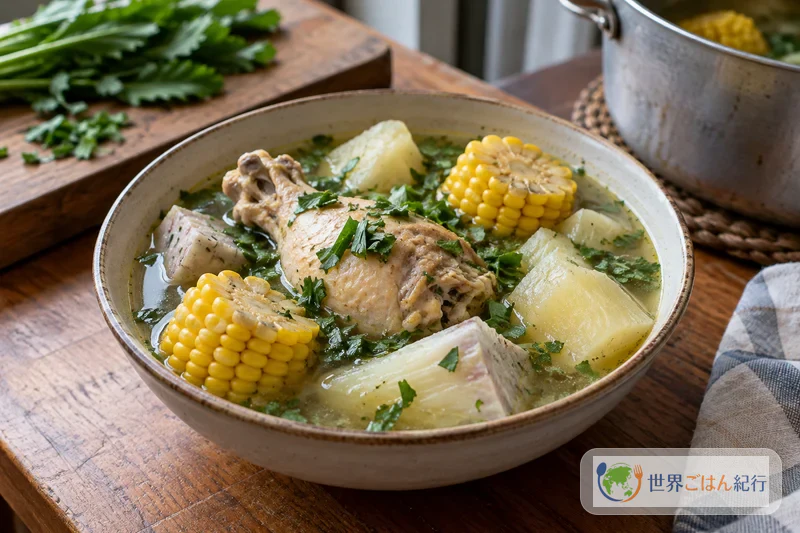
Sancocho changes across Panama. The standard version is most often made in the central provinces. In Chiriquí province in the west, you'll find sancochos with corn and otoe, and in Bocas del Toro province there is a soup made with pig tail and spare ribs.
Home cooks have their own versions too. One Panama City household combines otoe, ñame, cassava, and green plantain, then adds rounds of corn on the cob for the last 15 minutes. For a heartier pot at home, add frozen corn or potatoes along with the taro.
Frequently Asked Questions
Are culantro and cilantro the same thing?
They are different plants, but their aromas are very similar. Culantro (sawtooth coriander) has firmer leaves and a stronger aroma, so if you use cilantro instead, use 1.5 times as much.
Can I make it with chicken breast?
You can, but bone-in meat gives the soup more savoriness. If you use breast, take it out after 15 minutes of simmering in step 3, then return it to warm through when the taro is done. That way it is less likely to dry out.
Can I make it ahead?
Yes. The flavors meld the longer it sits, and it can be frozen. Reheat refrigerated or frozen soup in a pot until it boils, and eat it soon.
Is it spicy?
No. There is no chile, and the culantro and oregano carry the flavor. If you want heat, add a little chile sauce at the table.