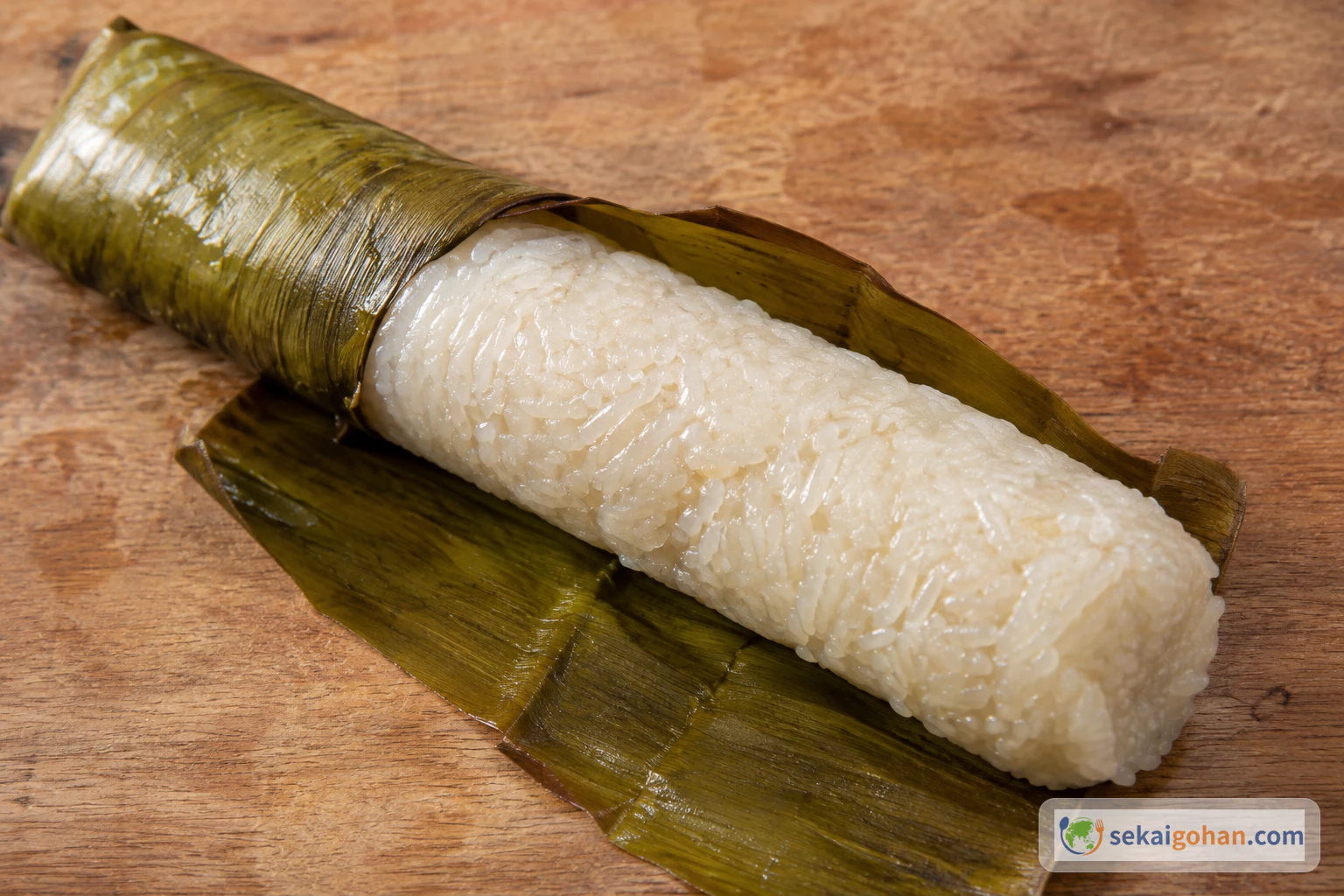
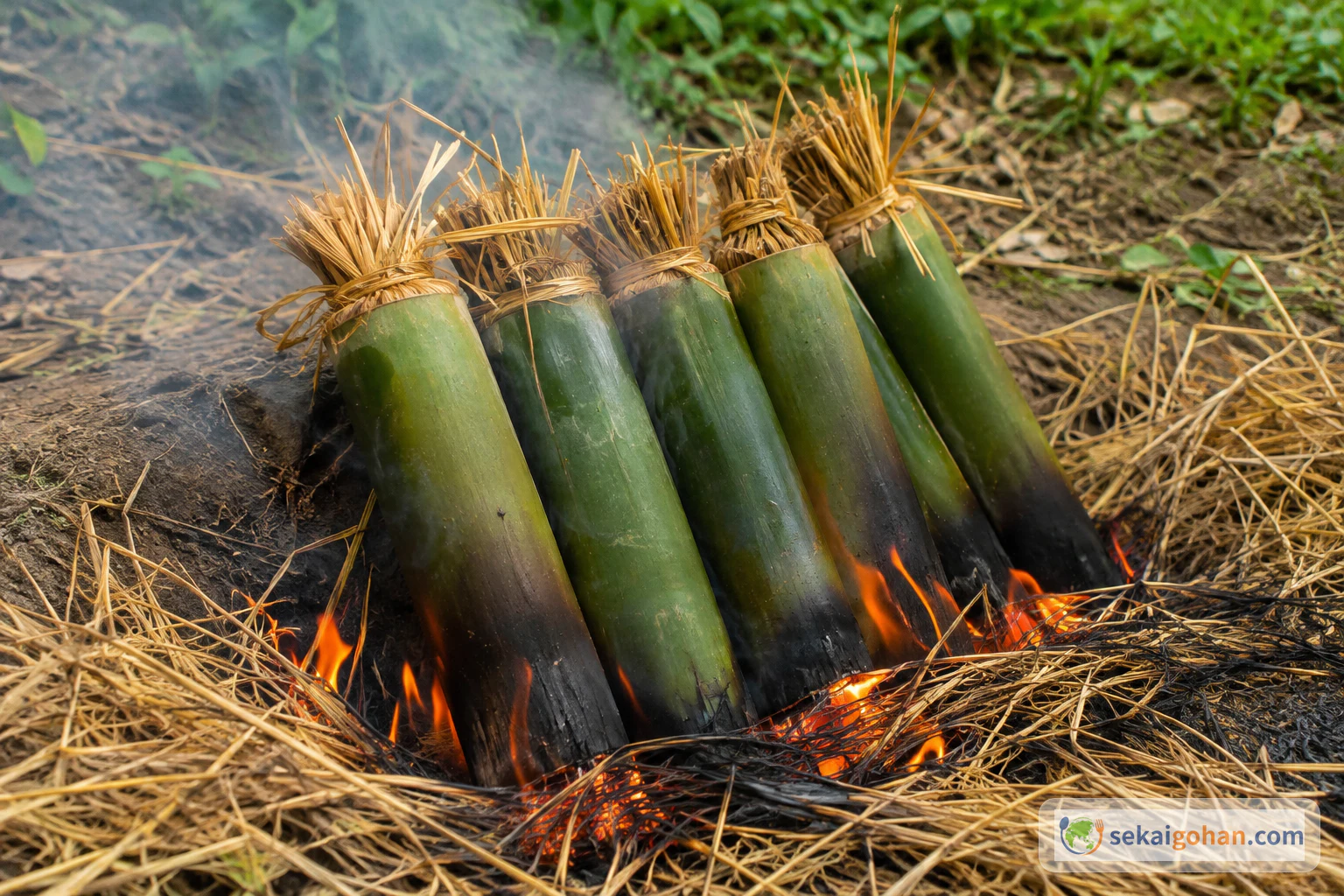
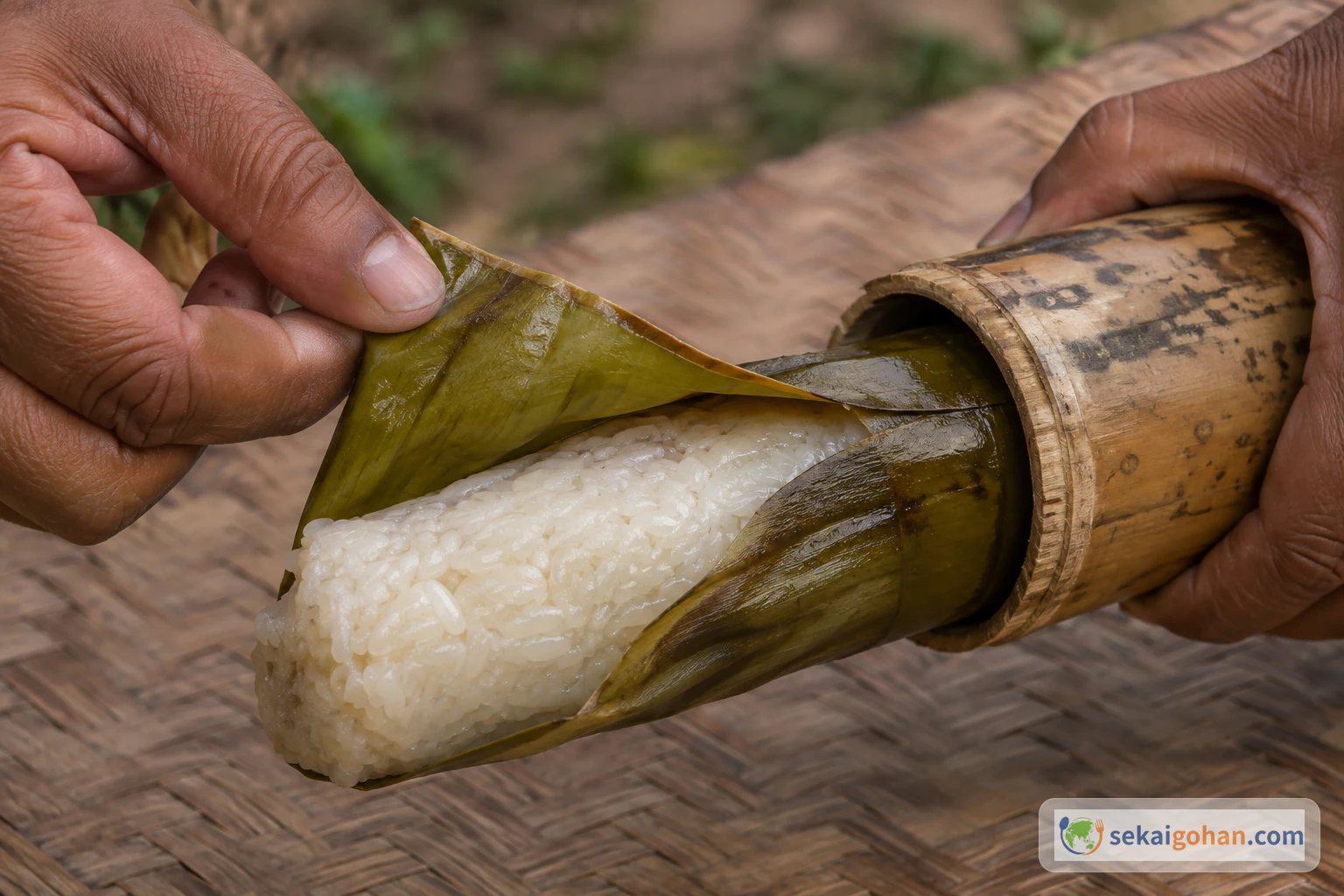
The bamboo comes off the straw fire blackened in patches, and once it has cooled, a smooth column of rice slides out of it, still wrapped in a soft, dark green banana leaf. Peel the leaf back and you have a candle of sticky rice. The grains are glossy and hold together, and they carry a faint taste of bamboo and leaf. This is chunga pitha, the winter rice cake of Sylhet in northeastern Bangladesh. It is made from nothing more than soaked new-season glutinous rice and the tube it cooks in, and it is eaten warm with fish or meat curry, or later on, cold.
Bamboo, Straw and New Rice in Sylhet's Winter
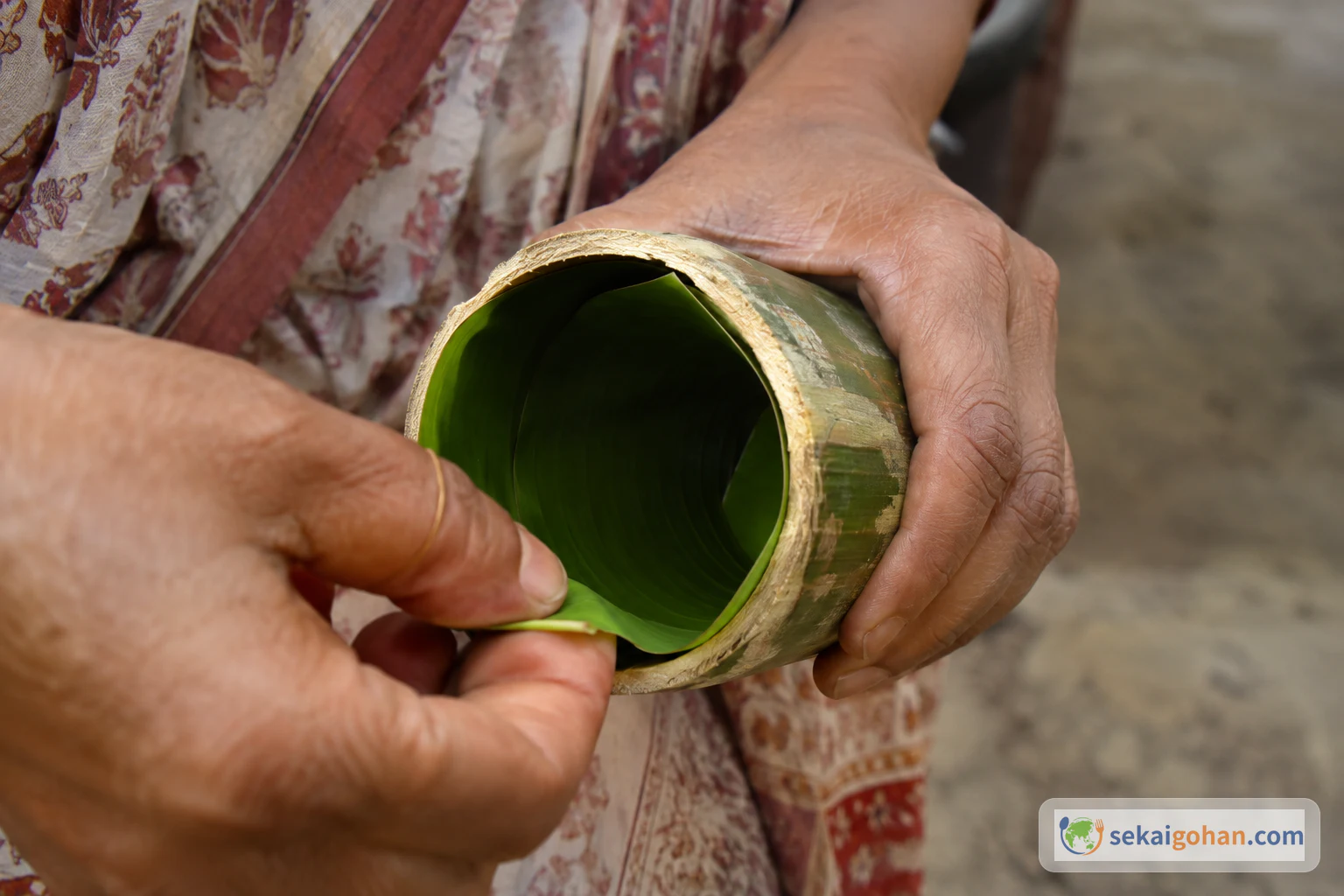
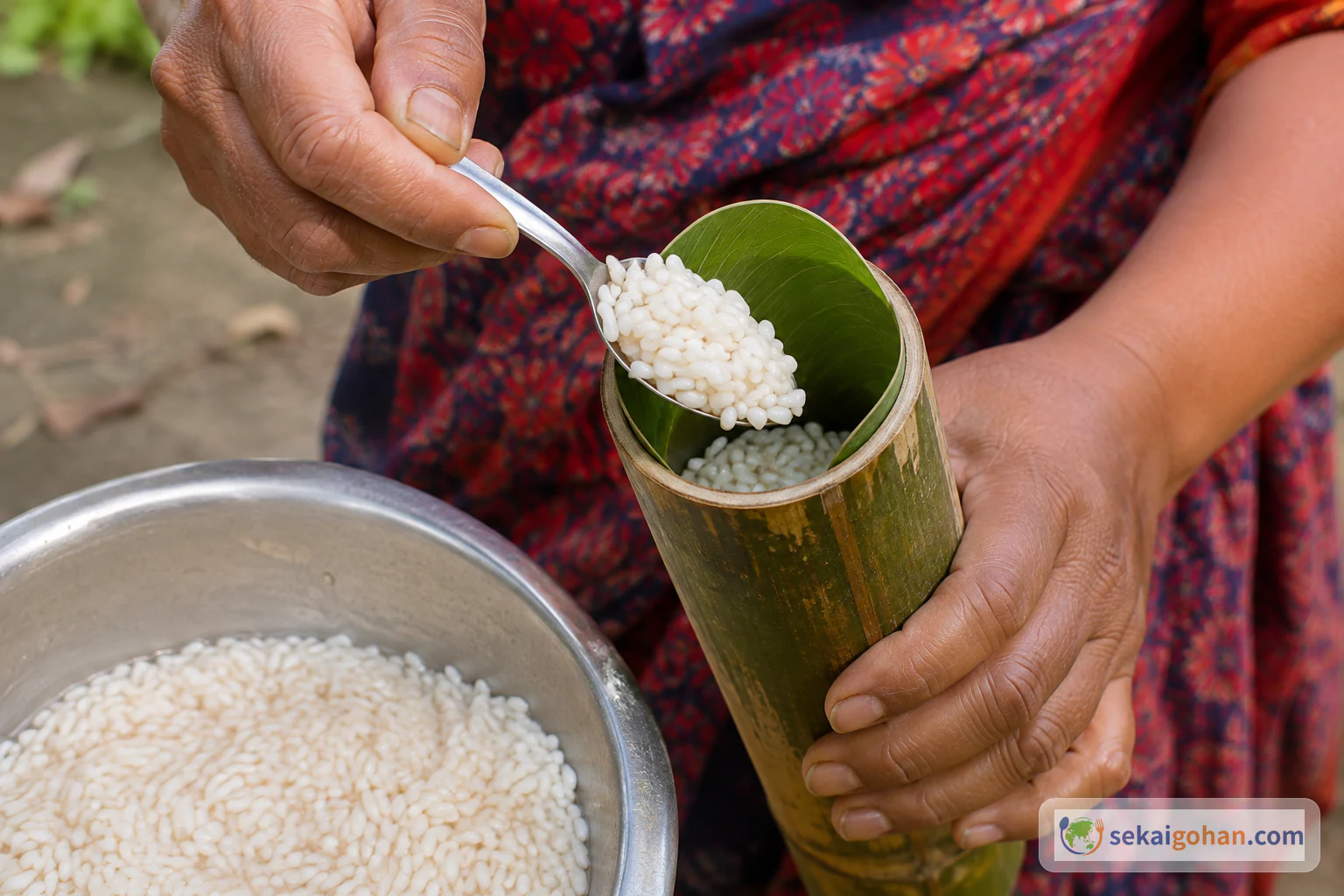
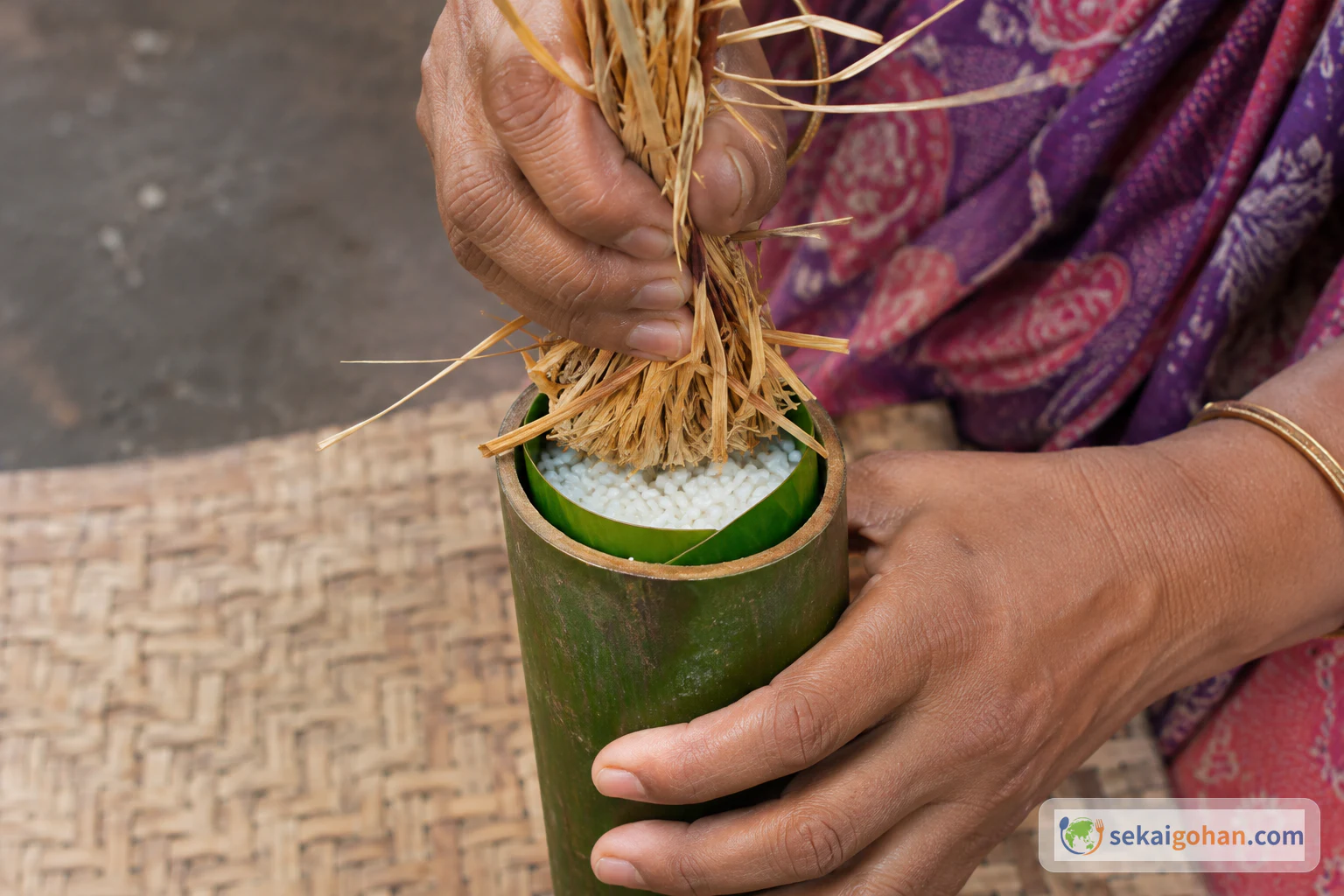
Chunga means a tube-shaped pot, and the dish takes its name from the bamboo it cooks in. It is also called Chungapura Pitha. It belongs to winter in Sylhet and Moulvibazar. That is when the newly harvested rice comes in, including Binni, the local glutinous variety that gives chunga pitha its chew. A section of bamboo is cut so that one node stays in place to close the bottom. The inside is lined with banana leaf and filled with soaked rice, and the open end is plugged tight with straw. The tubes then cook slowly on a fire pit. The bamboo resists burning and holds moisture in, so the rice steams in its own water inside the tube.
People in the area believe the dish began with the hill communities. Where it was first made is not settled. The bamboo itself is getting harder to find. Dolu bamboo is now scarce enough that a bundle of 20 tubes sells for Tk 500 to 700. Which bamboo species is traditional is also unsettled. It is usually called dolu, and other accounts call it mulibash.
Chunga pitha has a close relative across the border in Assam. There it is called sunga pitha and made for Magh (Bhogali) Bihu, the harvest festival. In both places, glutinous rice is wrapped in banana leaf inside young bamboo and burned over straw. Southeast Asia has its own bamboo-tube sticky rice too: kralan, khao lam and com lam.
Grain or flour, plain or sweet
The Sylhet version on this page is plain whole grain, cooked in bamboo with nothing added. In the Barak Valley of Assam, a sweet version is common. Sticky rice flour is mixed with finely grated coconut and sugar, pressed into tender bamboo and turned slowly over an open fire. The tube is split open at the table and eaten with cream and jaggery. Other households add milk or rice powder. Elsewhere in Bangladesh, bhapa pitha is the steamed rice cake. Chunga pitha gets its shape and flavour from the bamboo and the fire instead.
Ingredients
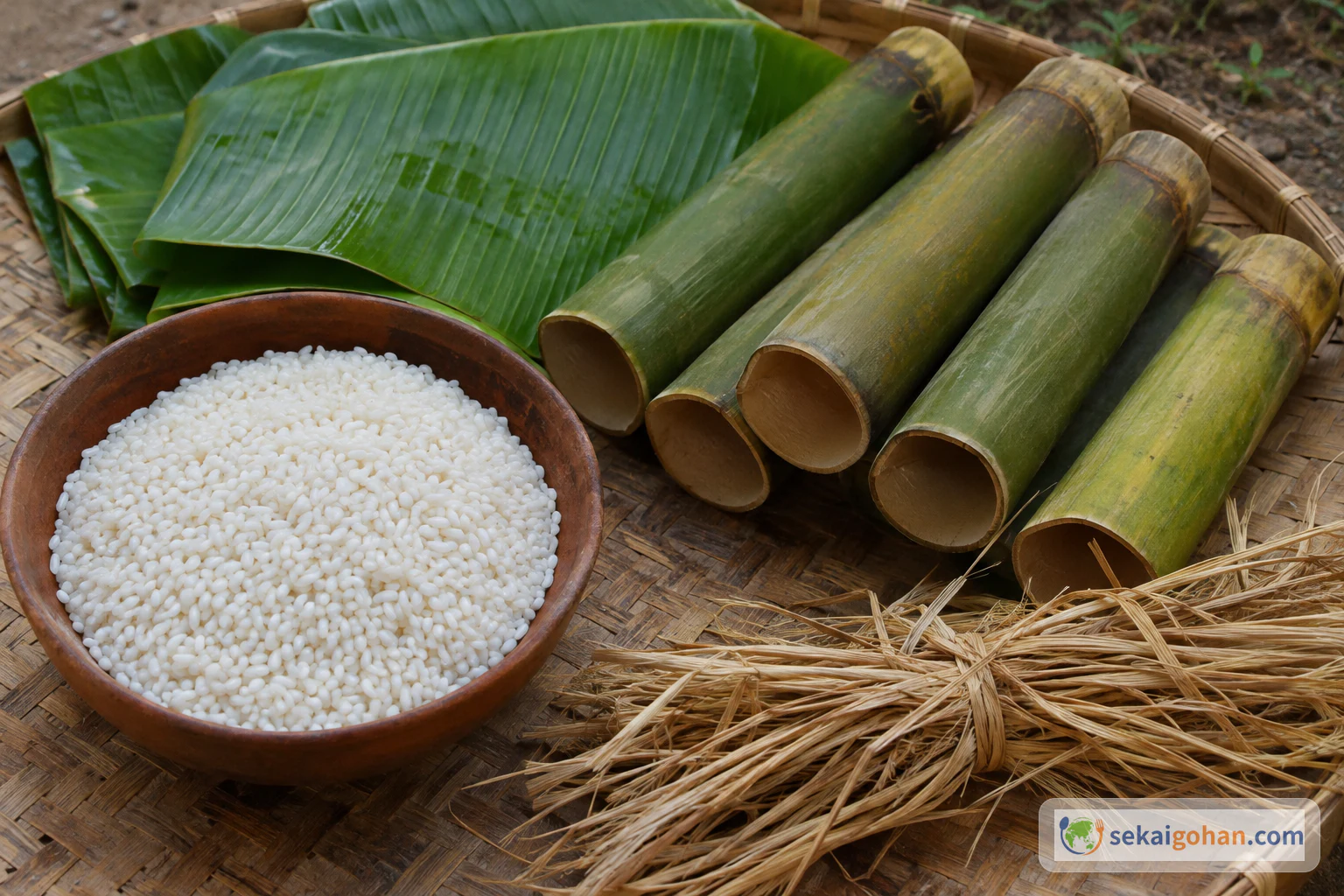
This amount fills three small bamboo tubes. The banana leaf is there so the rice slides out cleanly, and it adds a light green fragrance. Nothing is mixed into the rice.
The cake itself is glutinous rice only. The usual accompaniments add other allergens: fish in haor fish curry, and milk in milk and rice pudding. Coconut also appears at the table and in the sweet flour version. Check what you serve alongside.
Equipment
- 3 bamboo tubes, each closed by a node at one end, about 1¼–1½ inches (3–4 cm) across inside and about 8 inches (20 cm) long
- Dry straw, enough to plug the tube openings (and to feed the fire, if cooking outdoors)
- A large bowl and a sieve for washing, soaking and draining the rice
- A spoon for filling the tubes
- An outdoor fire pit, or a large steamer if cooking indoors (see the next section)
- Long tongs and heatproof gloves for moving the hot tubes
Choosing and Substituting
The rice decides the texture. Japanese or Thai glutinous rice, sold as sticky rice or sweet rice, is the easiest swap for Binni. It gives the same cohesive column, but the chew and stickiness differ from the new-season local rice. Ordinary long-grain or sushi rice will not hold together into a candle.
Frozen banana leaves are sold at Asian and Latin American grocers and online. Thaw them and wipe them before use. Baking parchment can line the tube instead. The rice still releases cleanly, but you lose the leaf's green fragrance.
Bamboo is the hardest part to find outside the region. Look online for bamboo tubes sold for cooking, or for fresh green bamboo cut with one node left in place. The bamboo and the leaf touch the rice for the whole cook, so use only tubes and leaves meant for food.
| Keep this for the Sylhet taste | You can let this go abroad |
|---|---|
| Whole soaked glutinous rice, with nothing added | The exact Binni variety |
| A bamboo tube closed at one node | Straw as the seal (aluminium foil works) |
| A banana-leaf lining | An open fire pit (a steamer works) |
Without a fire pit, use a steamer. Line, fill and close the tubes as below, but cap each opening tightly with aluminium foil instead of straw. Stand them upright in the steamer and steam for 40–50 minutes, then check that the rice is translucent all the way to the centre. You get the same column of rice without the smoky, charred edge of the fire.
Method
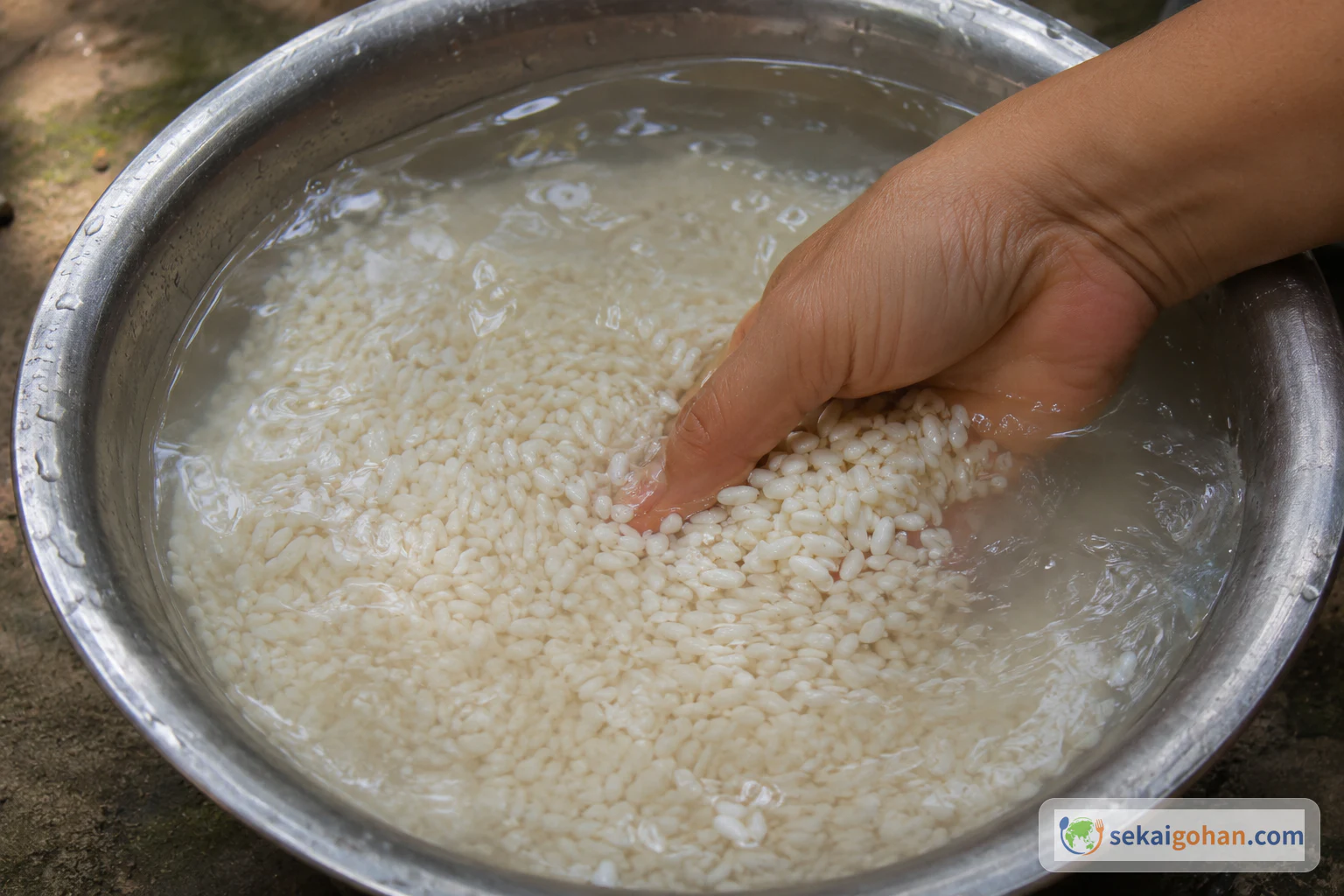
Wash and soak the rice the night before. Next day, the lining and filling take only a short while. After that come the hands-off stretches: the slow cook in the tube, then the cooling before you open it.
Build a fire pit only outdoors, somewhere open fires are allowed, and keep children and anything flammable well away. Move the tubes with long tongs and heatproof gloves. Steam builds up inside the sealed bamboo, so let the tubes cool before you pull out the straw and the rice.
When It Goes Wrong
| What you see | Why | What to do |
|---|---|---|
| A white, hard core in the centre of the rice | Not cooked long enough, or the fire was too fierce for the heat to reach the middle | Seal the tube again and return it to a gentle fire, or steam it, until the centre turns translucent |
| The straw plug pushed out, with rice escaping | The tube was filled to the rim | Next time, leave ½–¾ inch (1–2 cm) of headspace and don't press the rice down |
| Rice stuck to the bamboo wall | Gaps in the banana-leaf lining | Overlap the leaf edges so no bamboo shows before you fill |
| The tube cracks or burns through | The heat was too high or too direct | Keep the fire low and move charring tubes to a cooler spot |
| Grains stay separate and dry | The rice was not soaked long enough | Soak it overnight and drain it well before filling |
| The column breaks as you pull it out | It was removed while very hot | Let the tube cool until you can hold it, then draw the rice out by its leaf |
Serving and Variations
At the table
Chunga pitha is plain, and the food around it brings the flavour. In Sylhet it is served warm with fish from the haor wetlands, meat curry, rice pudding, milk, grated coconut, or a chutney of lai leaves. Slice the column into rounds and spoon the curry over them, or pour warm milk over the pieces with a little coconut. It is also eaten cold, once it has firmed up. Cold, it slices more cleanly and the chew is denser.
Variations
- The sweet flour version. Mix sticky rice flour, finely grated coconut and sugar in a ratio of about three parts flour to one part coconut to half a part sugar. Press the mixture into tender bamboo, leaving headspace, and seal with banana leaf or foil. Turn it slowly over an open fire, then split the tube and serve with cream and jaggery. The result is a sweet, close-textured cake, not a column of whole grains.
- With milk, sugar or coconut. Some households add these to the rice for a richer, sweeter cake. The tube and the method stay the same.
- The steamer version. Foil-capped tubes in a steamer give you the same shape and chew, with a clean bamboo flavour and no smoke or char.
Frequently Asked Questions
What kind of bamboo do I need?
In Sylhet it is usually called dolu bamboo, and other accounts call it mulibash, so the exact species is not settled. What matters at home is a tube sold for cooking, with one end closed by a node and roughly 1¼–1½ inches (3–4 cm) across inside.
Do I add salt or sugar to the rice?
The Sylhet version goes into the tube as soaked rice and nothing else. The seasoning comes from what you eat with it: the fish or meat curry, the chutney, the milk and coconut. If you want a sweet cake, make the flour, coconut and sugar version instead.
How do I know it's done when I can't see inside the tube?
Cook for the full time, let one tube cool, then pull out its straw and draw out the rice. Break the column in the middle. If the centre is glossy and translucent like the outside, the whole batch is ready. If it is white and firm, seal the remaining tubes and give them more gentle heat.