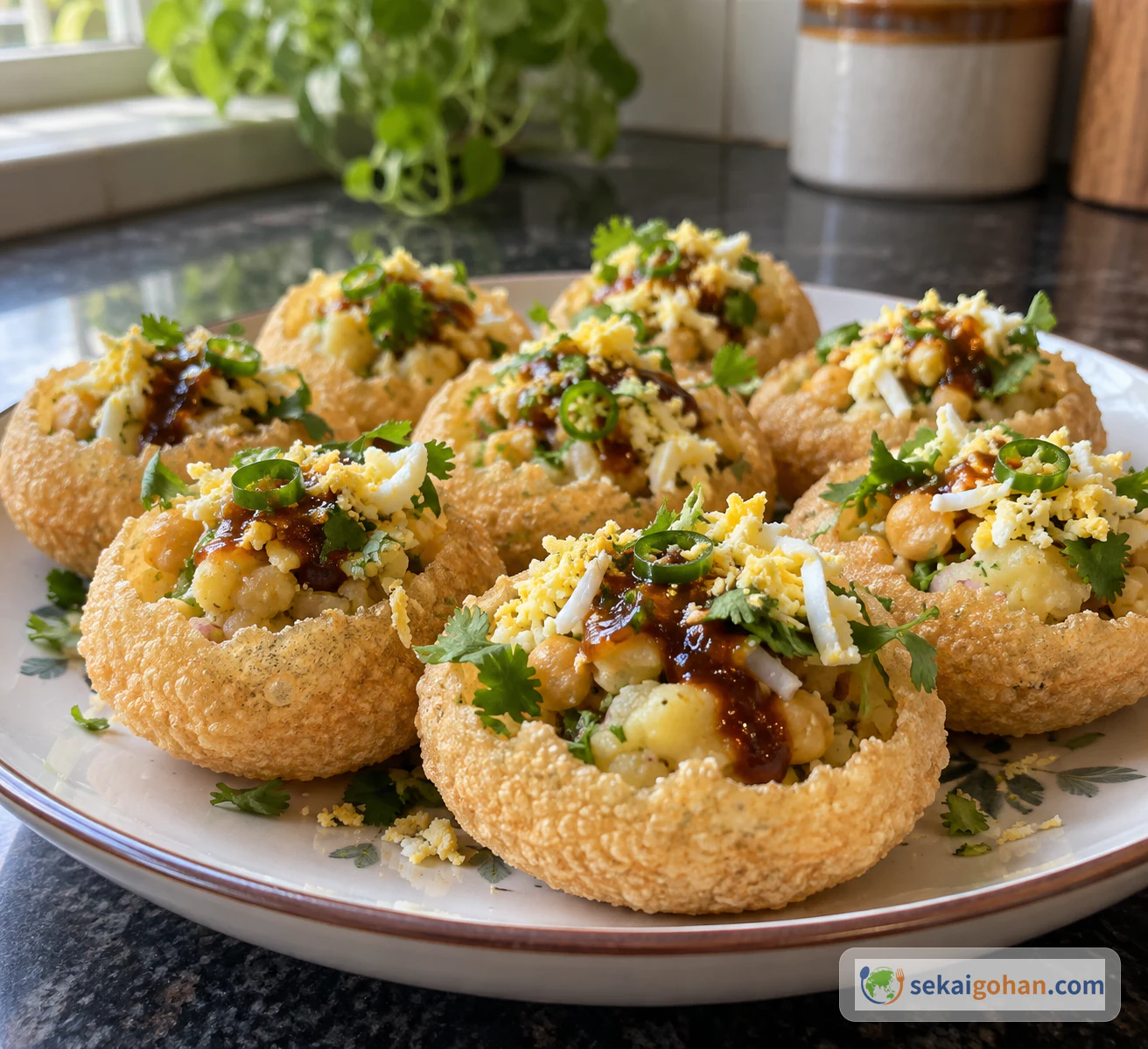
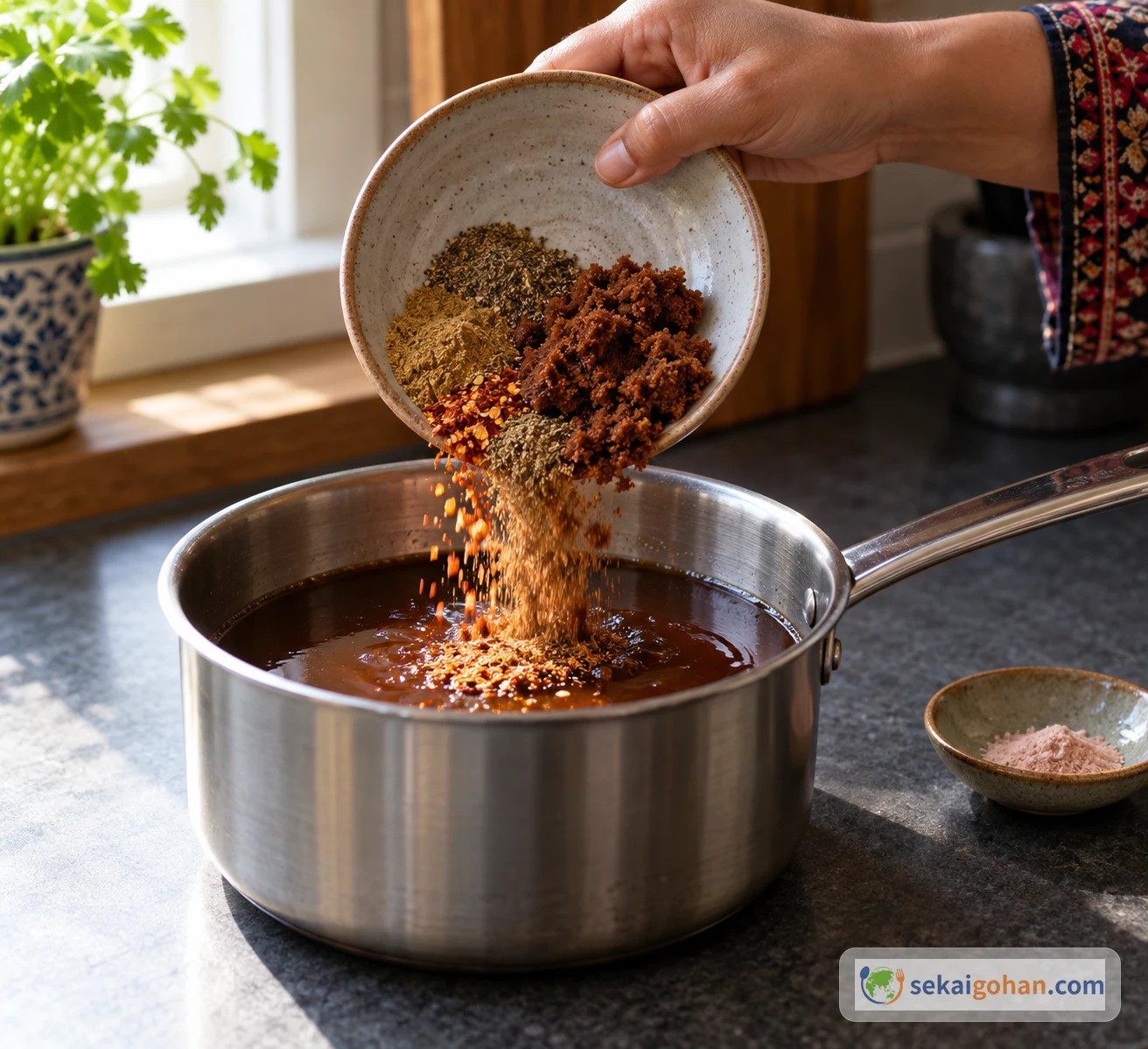
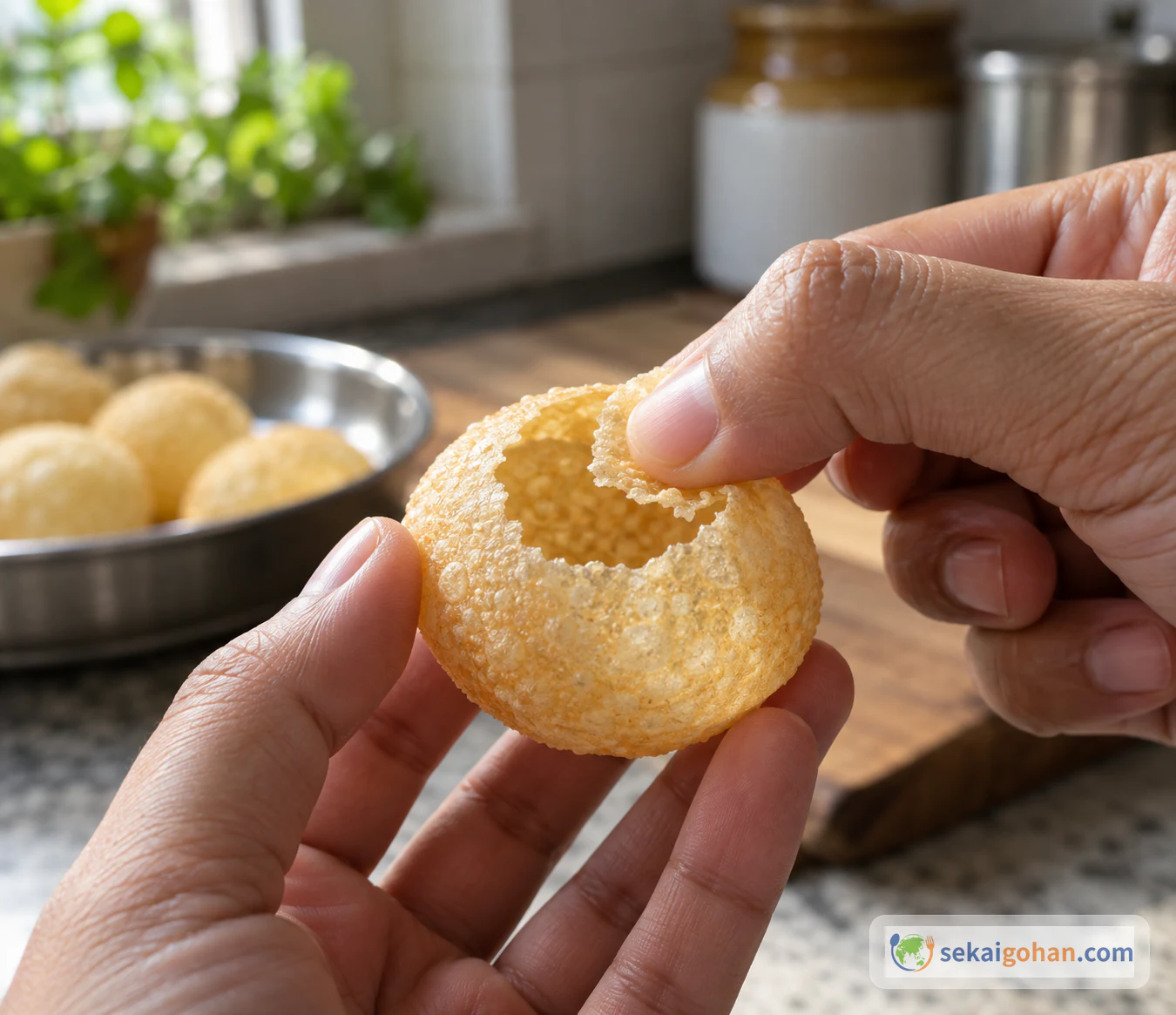
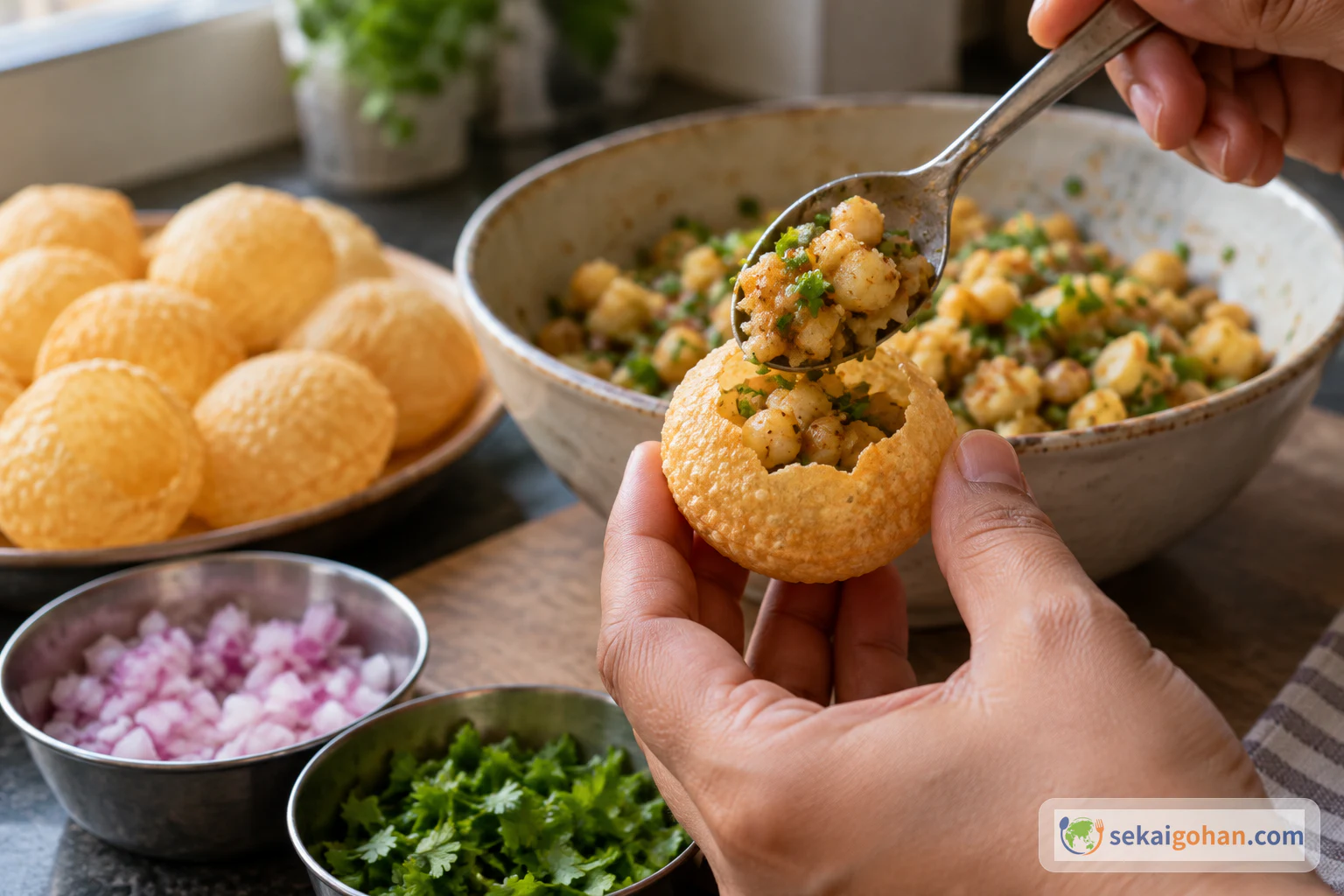

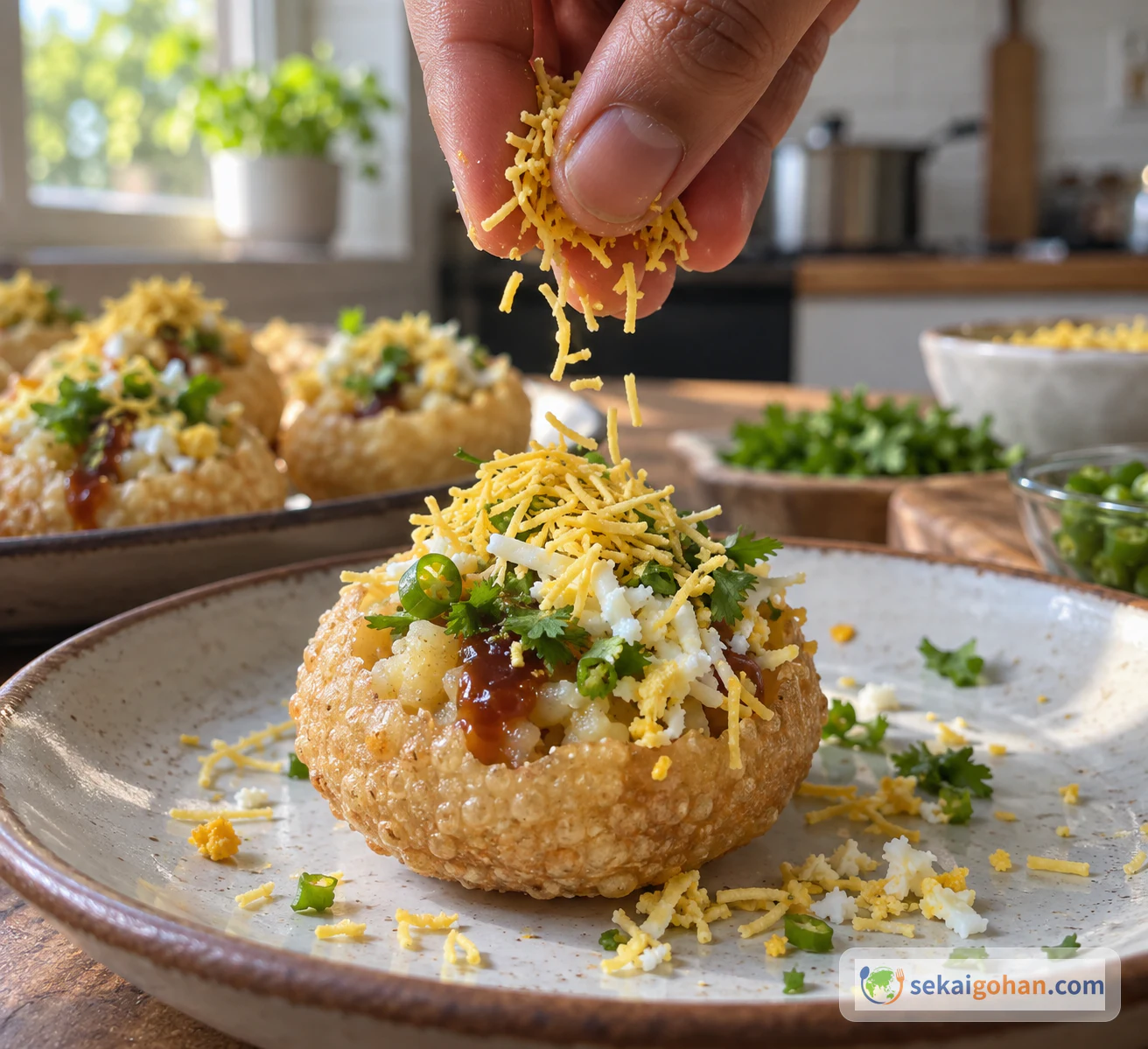
Fuchka carts stand in Dhaka's neighbourhood alleys and in front of the city's parks and lakes. The shell gets cracked open, filled, sauced and eaten right there, while its thin wall is still crisp. Each cart sets its own tamarind, sharp and sour at one and sweetened at the next. Fuchka is Bangladesh's street snack of small hollow shells packed with potato and chickpeas. In this version the tamarind is cooked down into a thick, dark sauce with cumin, coriander, dried mango powder and brown sugar. Some goes into the filling and some is spooned over the top, and then come grated egg, green chilli, fresh coriander and a scatter of crunchy sev.
From the Dhaka Cart to Your Own Table
Fuchka belongs outdoors. It is eaten in streets and markets and at festivals, and it is a favourite afternoon snack, something you stop for on the way somewhere. A cart is a small, quick operation built around the hollow shell, a filling and the tamarind.
No two carts make it quite the same. The tamarind water is the first thing that changes: some vendors keep it sour, others sweeten it, and some offer extra choices such as mint or yogurt. Other descriptions of the street version add cucumber, lime or egg. Doi fuchka, where yogurt takes the lead, is treated as its own dish. Bangladesh has no single fixed fuchka. Each cart and each household settles on its own balance.
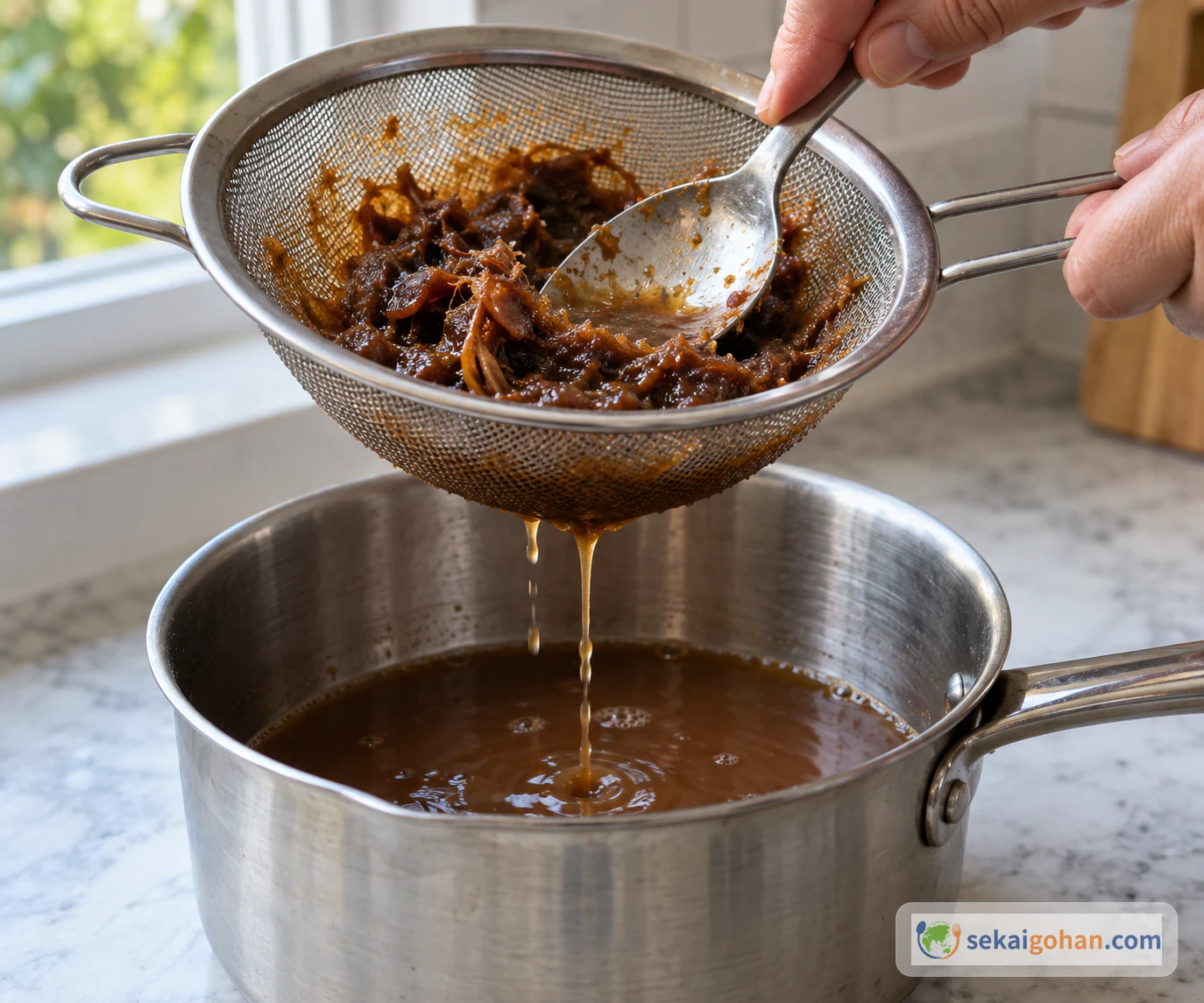
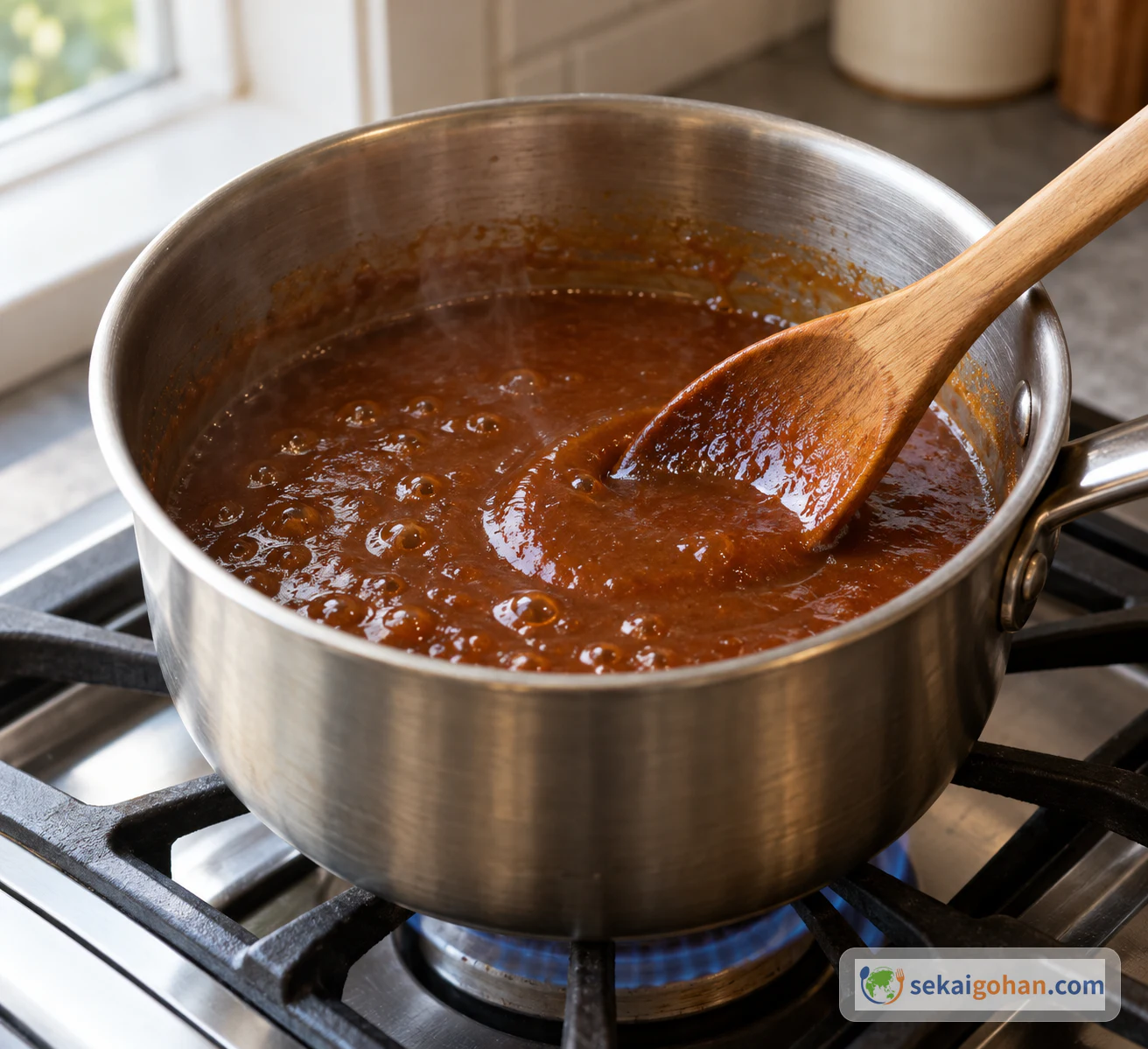
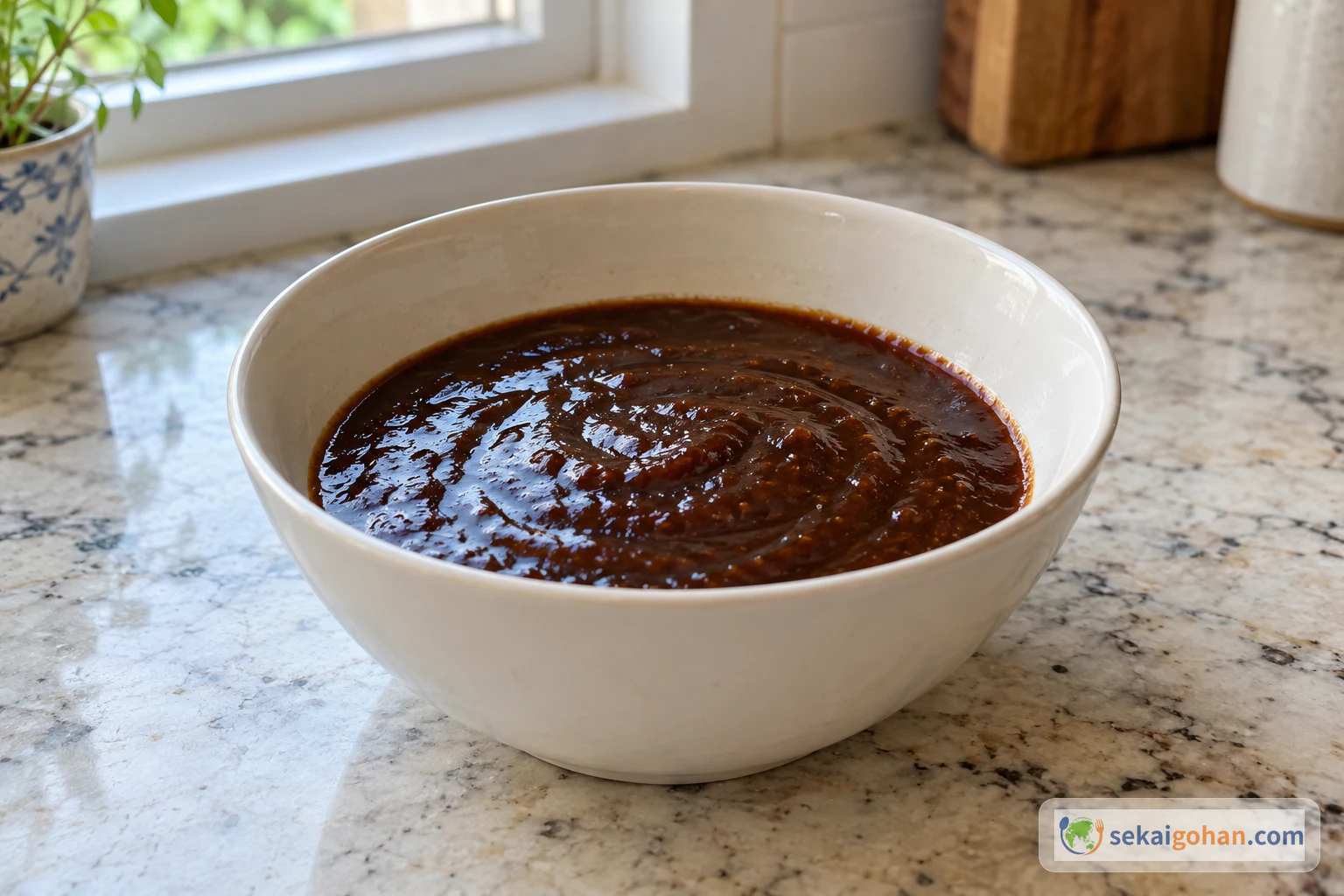
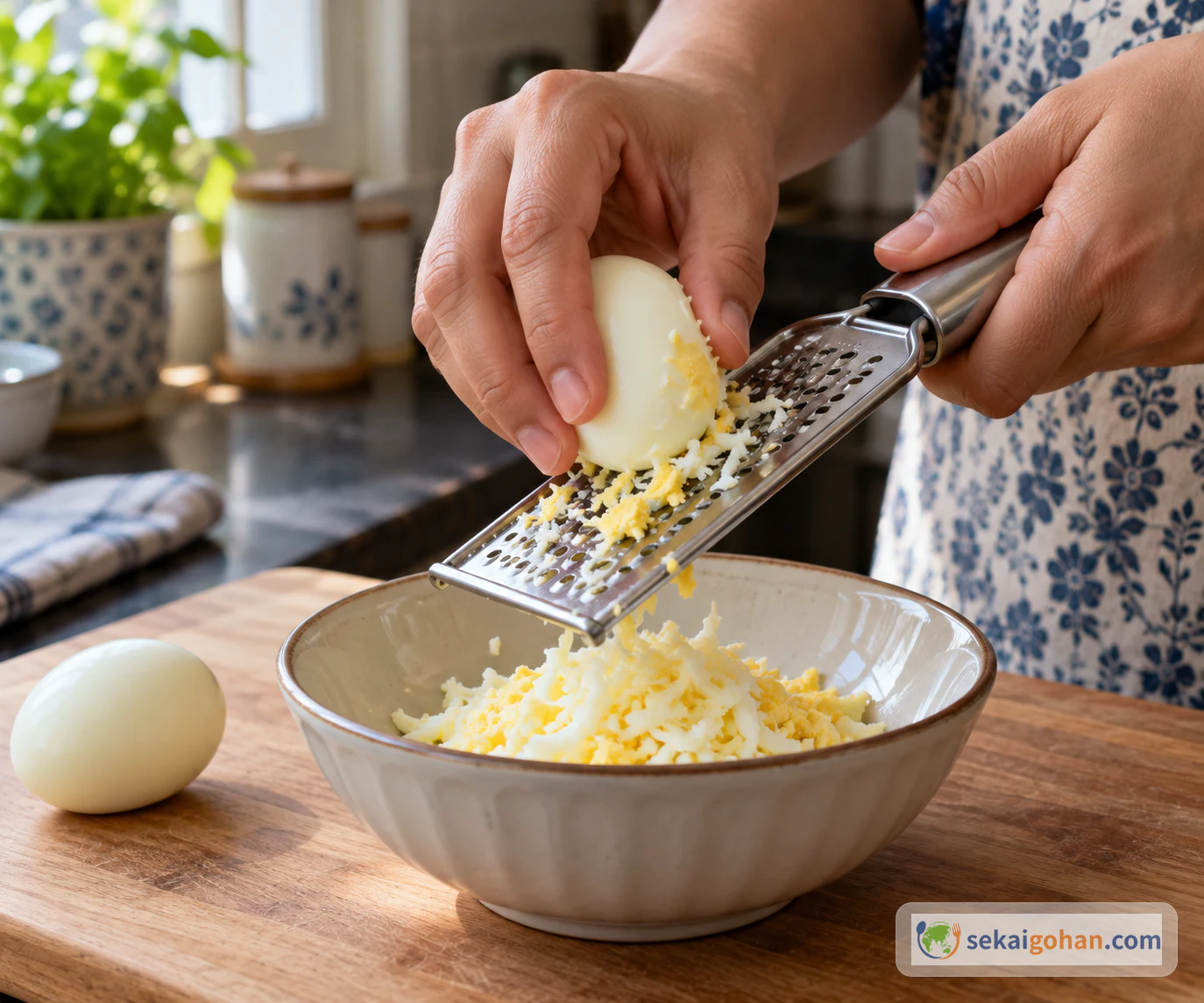
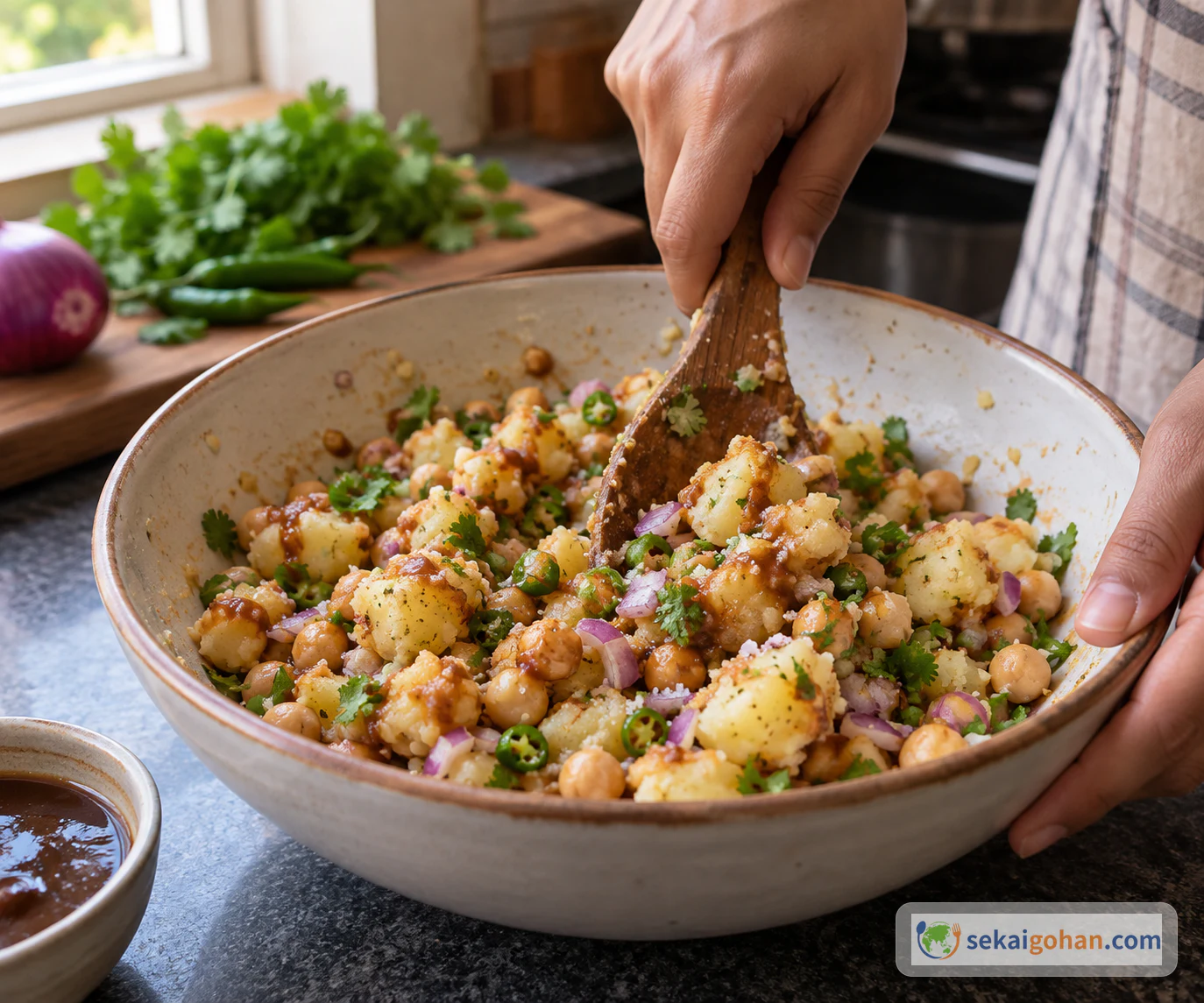
This home version gives the tamarind a different job. It is cooked into a sauce thick enough to cling, not poured in as a thin water. The sauce does two things: 3 tablespoons season the potato and chickpea filling, and a teaspoon more goes over each filled shell. Grated hard-boiled egg makes a soft, pale layer on top, and sev adds a dry crunch that holds out against the wet sauce.
In India, pani puri also uses hollow shells with potato and chickpeas and pairs them with a green mint water and a separate tamarind chutney. People often compare the two, but how the names and dishes are connected is not settled. If fuchka gets you curious about the rest of the country's food, start at the Bangladesh page.
In English you will see Fuchka, Puchka and Fuska. In Bengali it is often written ফুসকা (fuska). Search all three spellings when you look for shells, recipes or cart stories.
Ingredients
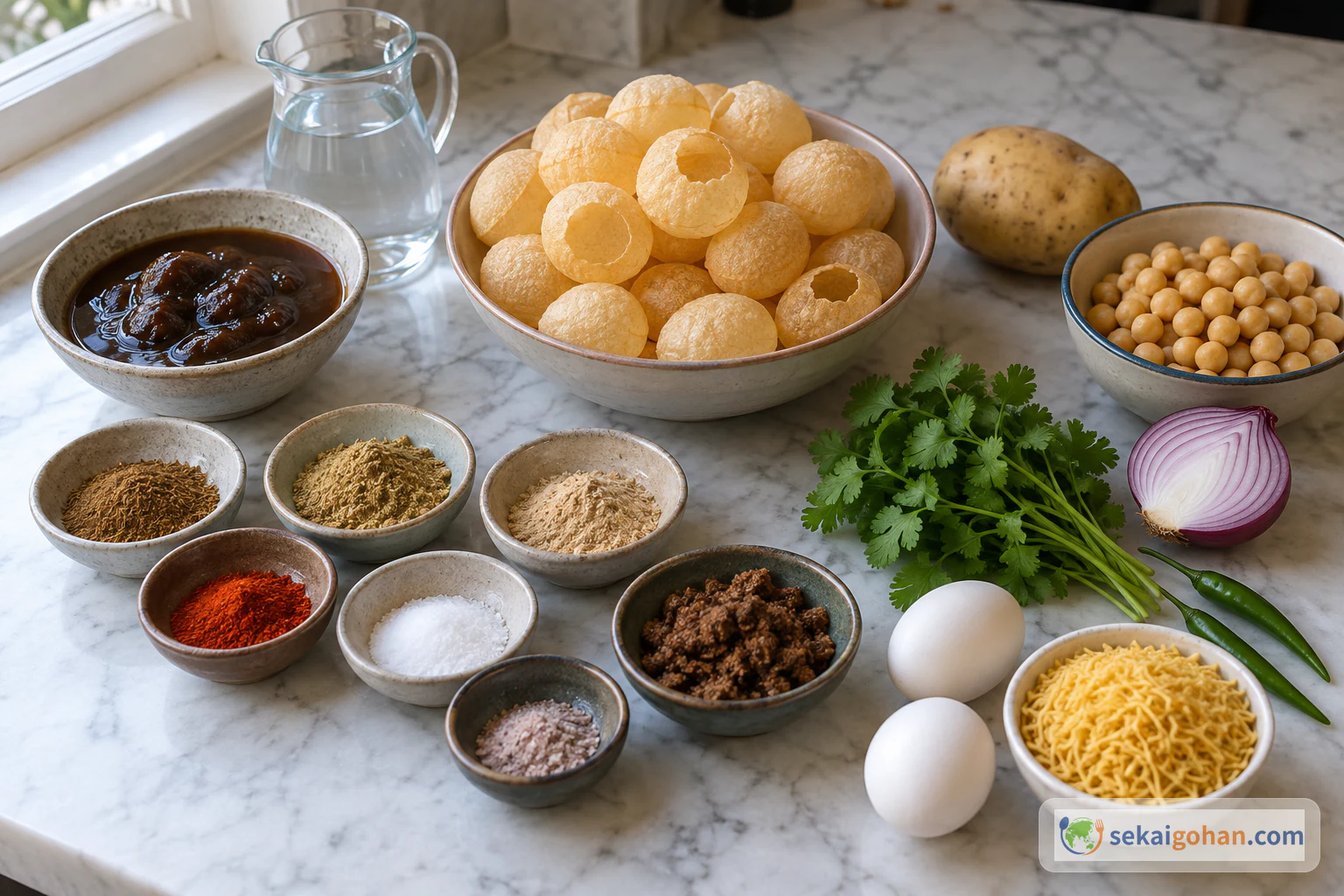
Chilli, coriander and salt each appear twice in the list, once for the filling and once elsewhere. Measure each group separately so nothing gets used up in the wrong place.
This dish contains eggs and chickpeas, and sev is made from gram flour, which is ground chickpeas. Check the labels on pani puri shells for wheat, and read every packaged item (shells, sev, spice blends) for other allergens before you buy.
Equipment
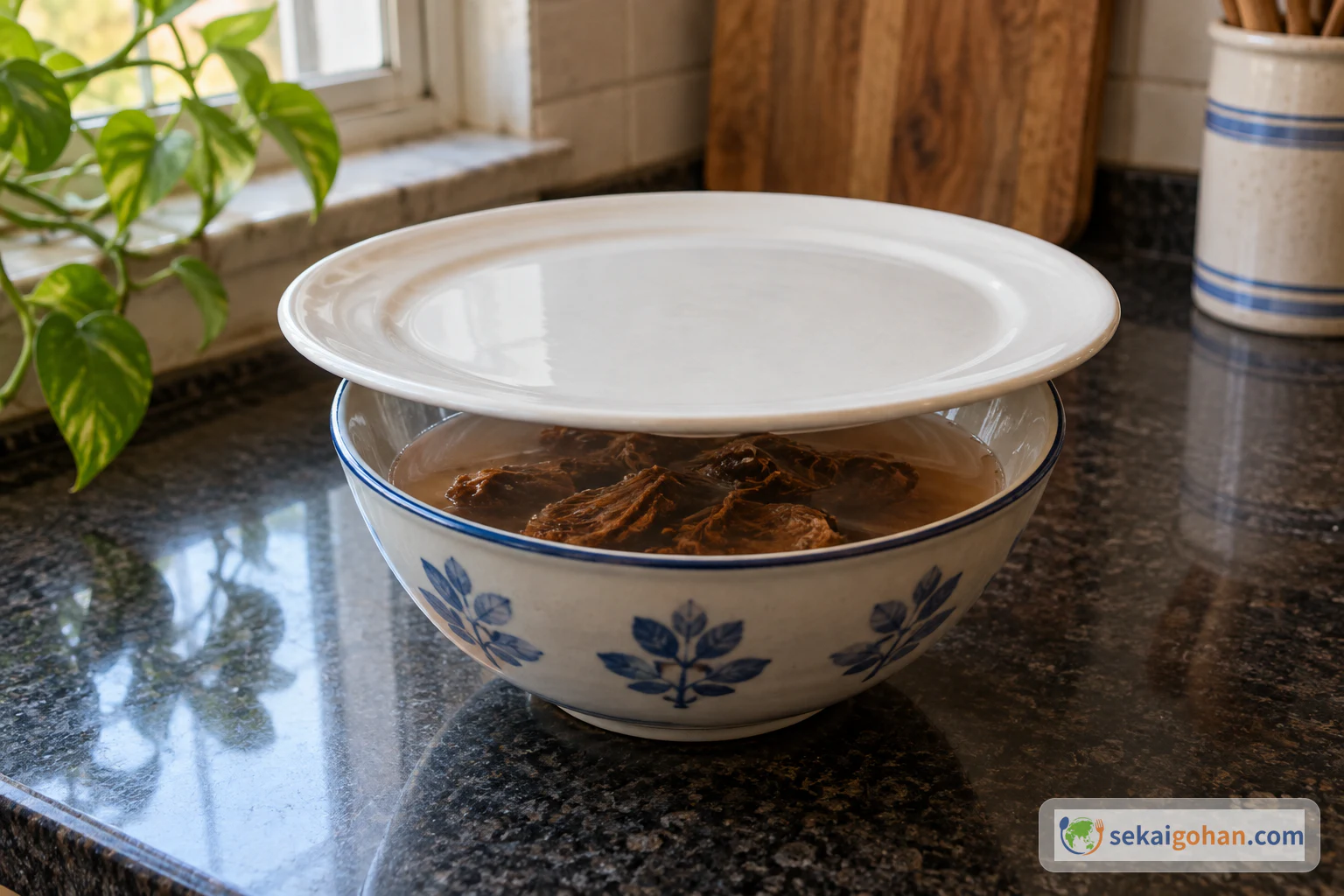
- Heatproof bowl with a lid or plate to cover it
- Fine-mesh sieve
- Small saucepan
- Medium saucepan for the potato and eggs
- Slotted spoon
- Box grater
- Mixing bowl and clean teaspoons
- Serving dish
Choosing and Substituting
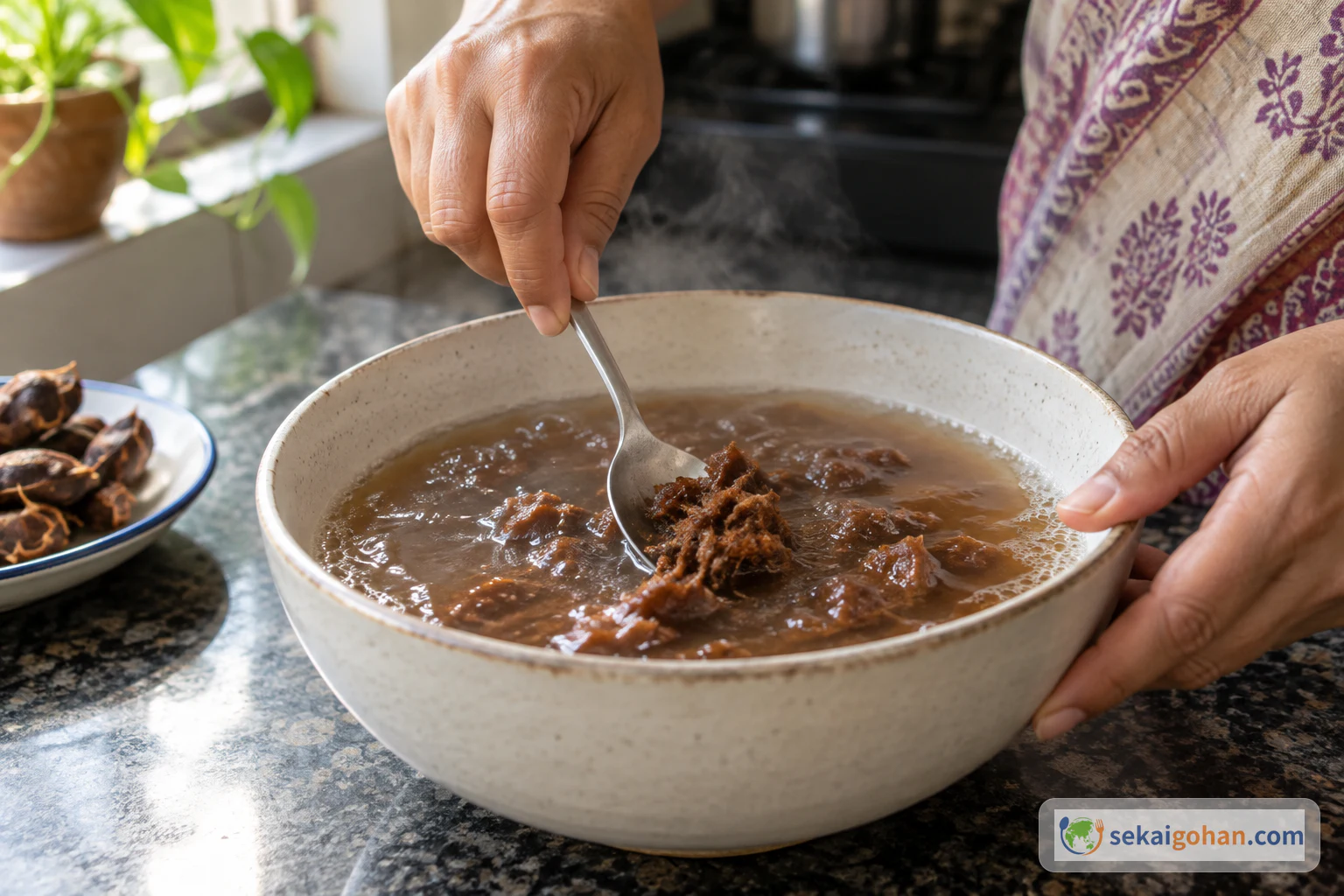
Shells, amchoor, sev and black salt are sold at South Asian grocers and online. Search by the exact names: "pani puri shells," "amchoor" or "dried mango powder," "sev" or "fried gram-flour noodles," and "black salt." Buy tamarind as pulp, the soft brown block, because this sauce relies on soaking it and pressing it through a sieve.
| Item | Keep or swap | What changes |
|---|---|---|
| Pani puri shells | Keep | They are the dish. Crackers or other snacks give you something else entirely. |
| Tamarind pulp | Keep | Paste and concentrate vary in strength, and there is no direct swap for the pulp in this sauce. |
| Amchoor | Keep | Lemon juice brings a wet, different acid. There is no direct swap. |
| Sev | Keep | Other crunchy toppings make a different finish. |
| Black salt | Optional | Leave it out if you don't have it. The sauce already has its own salt. |
| Dark brown sugar | Keep | Use the same sugar in the same amount. |
What makes it fuchka is a thick, sour-sweet tamarind sauce, a chunky potato and chickpea filling, and crisp shells filled just before eating. Keep those three and the rest of the list follows.
Method
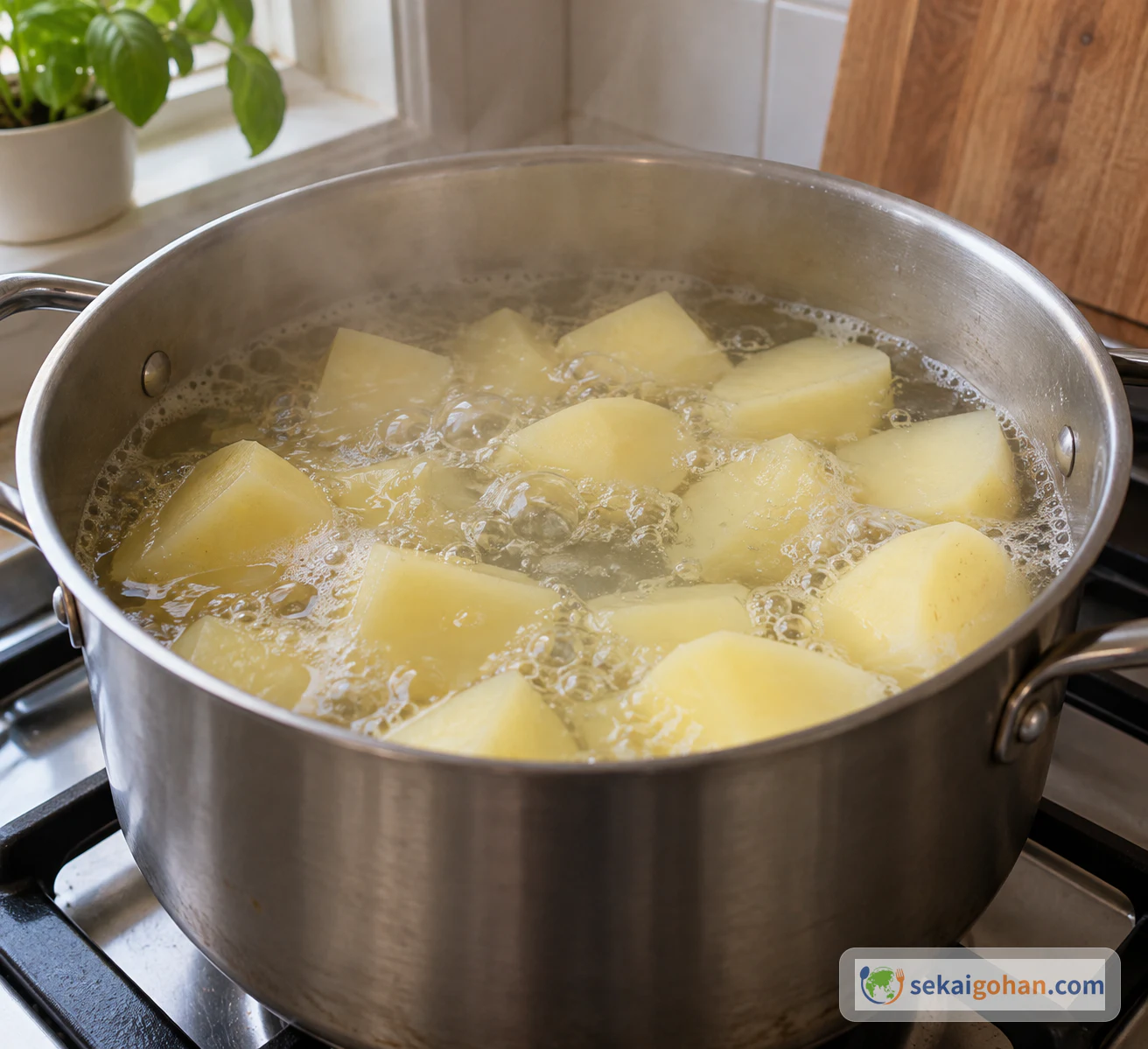
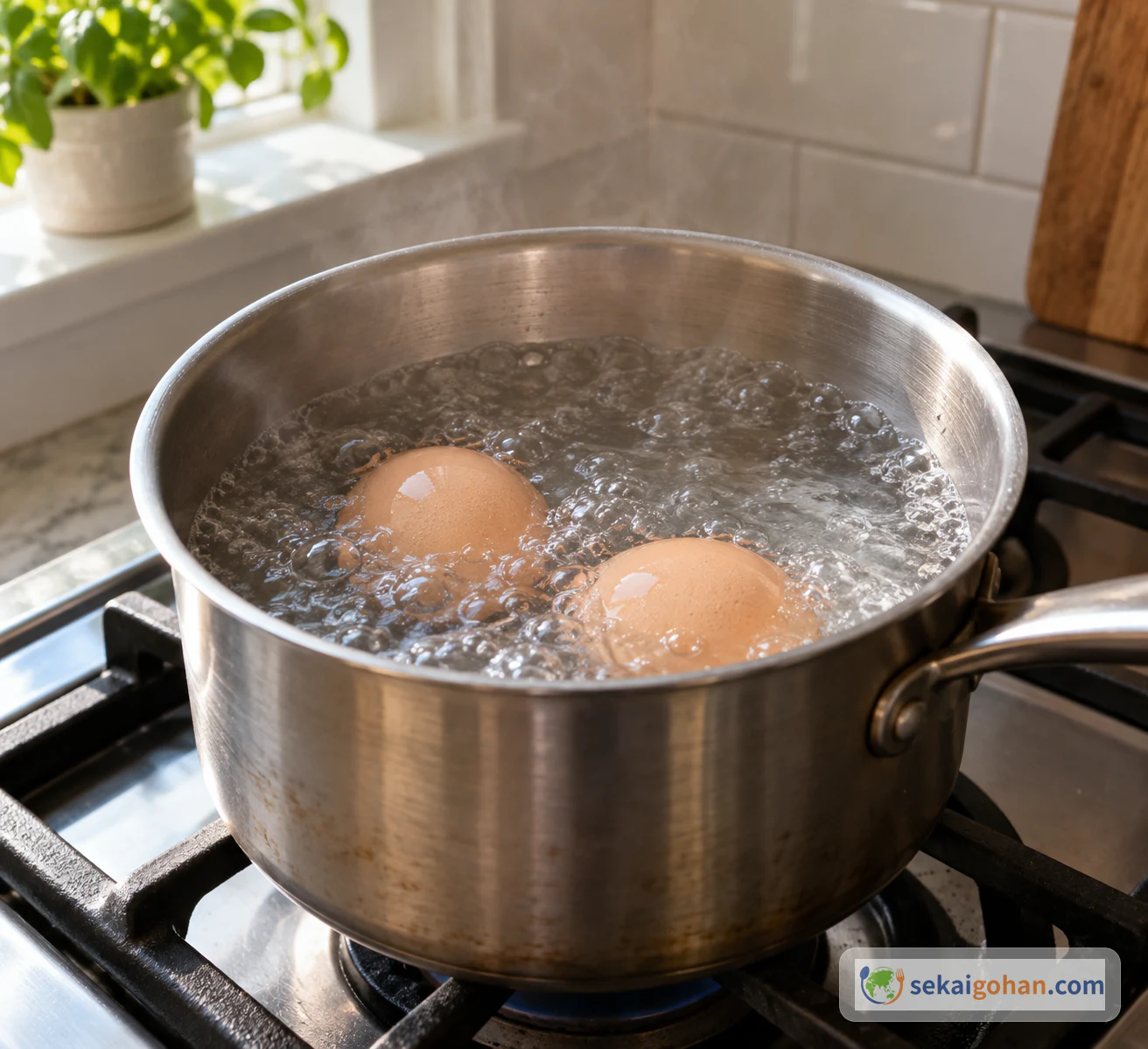
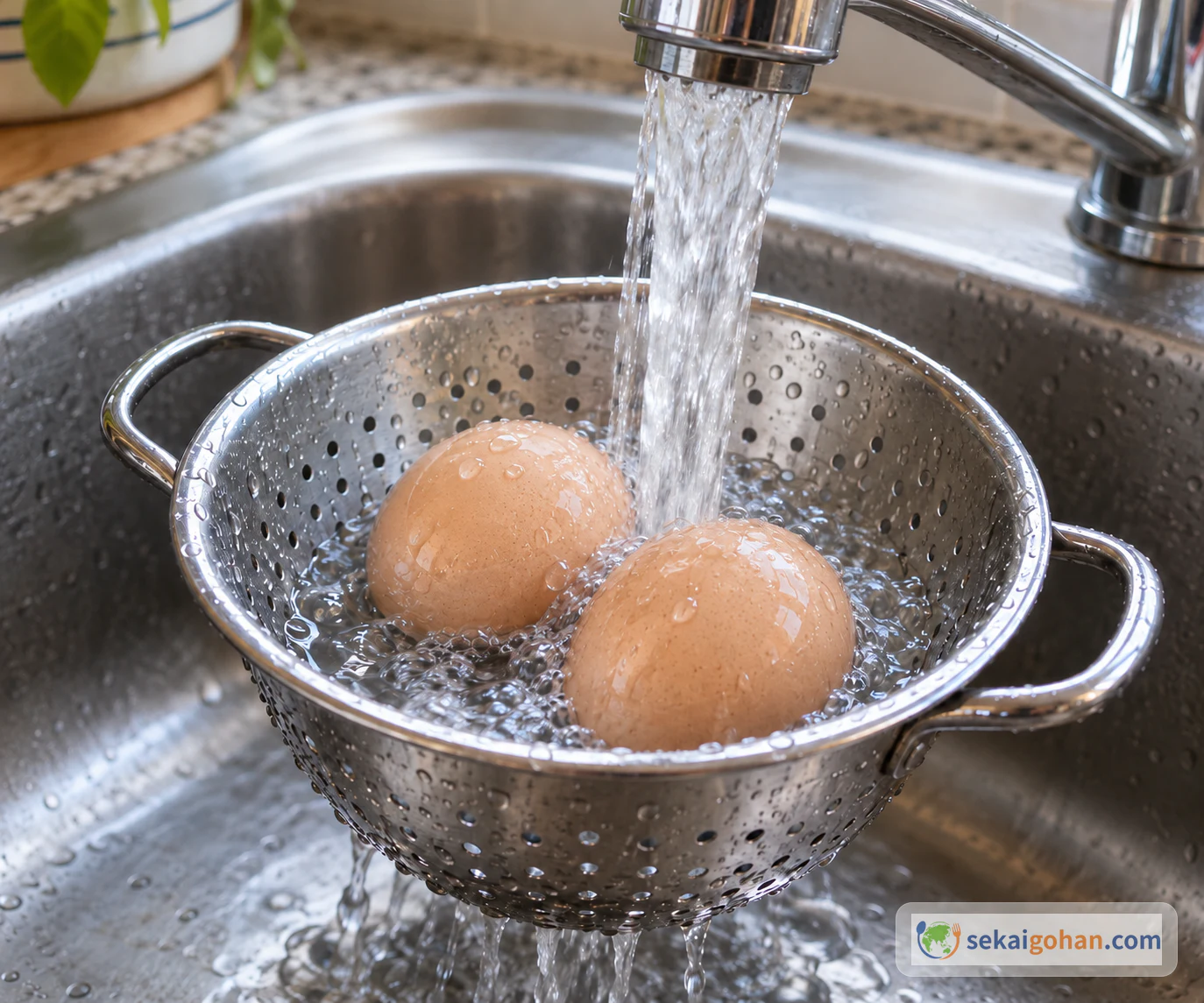
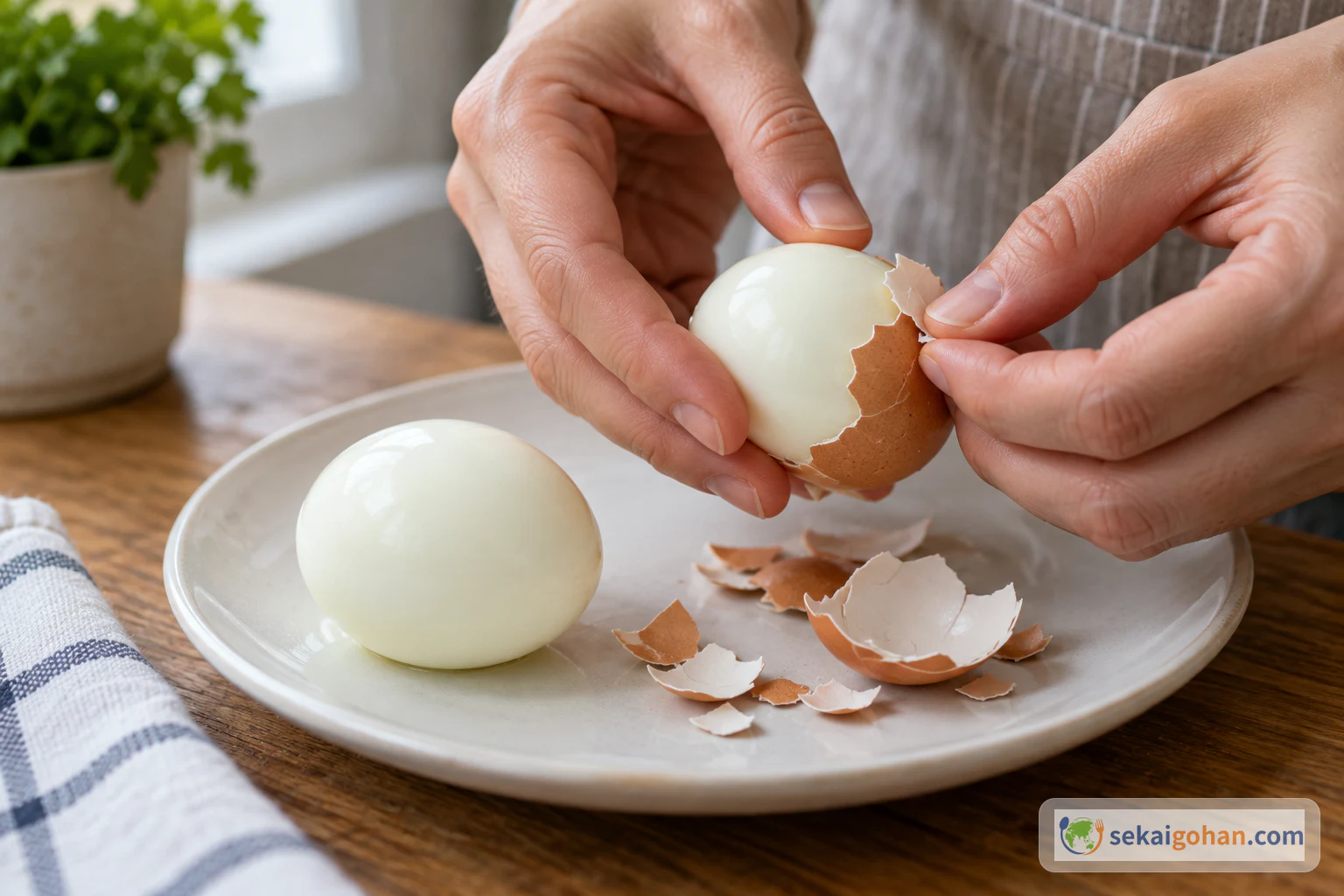
Start with the sauce. It needs a soak, a simmer and a cool, and the filling uses some of it. While the tamarind soaks or the sauce cools, boil the potato and then the eggs in the same water. Assemble only when everyone is ready to eat, because a filled and sauced shell is meant to be eaten at once.
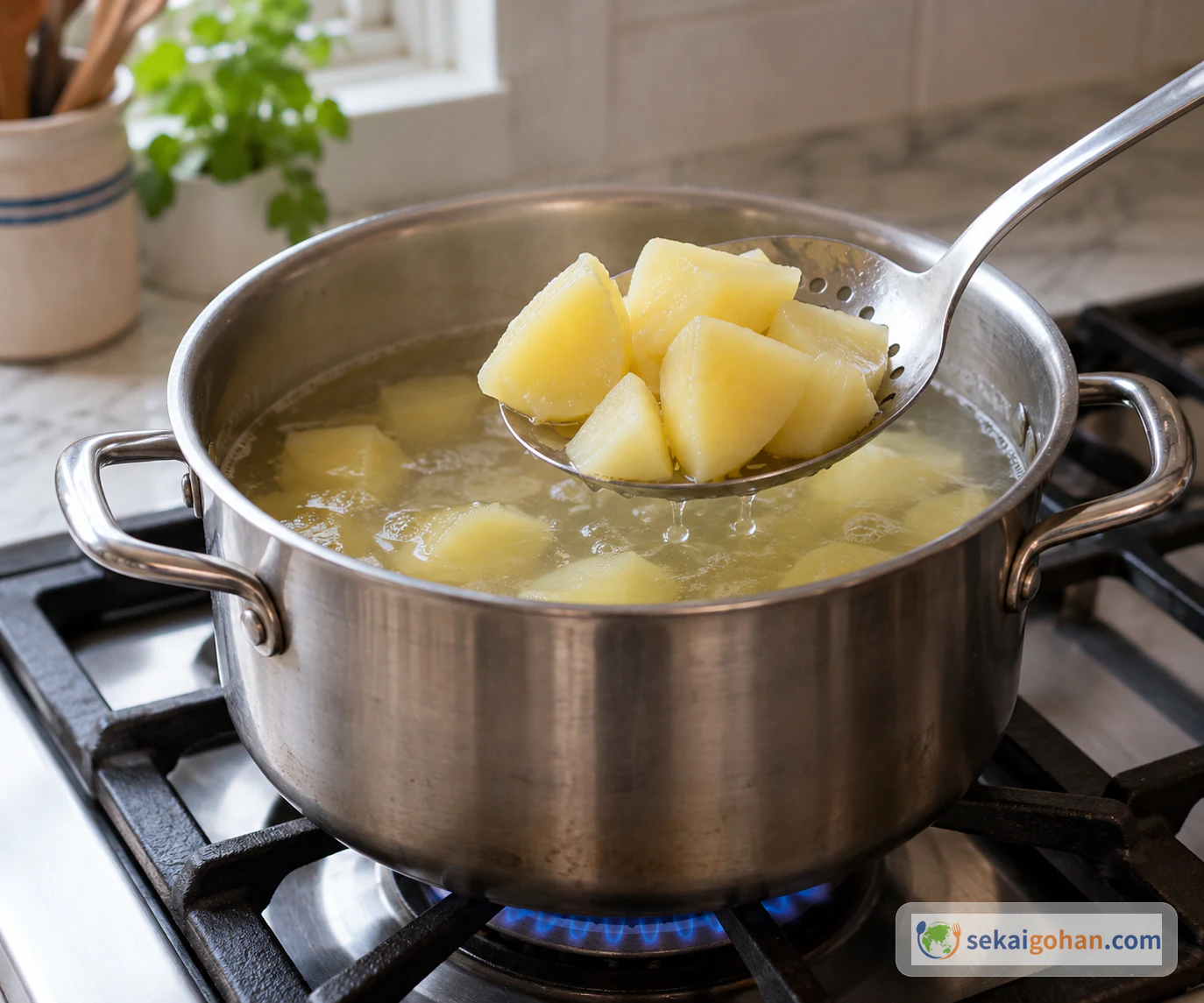
Wash your hands before you start and again before eating. Use clean tools, bowls and plates, and wash the onion, chillies and coriander well. Pour boiling water slowly, and lift potatoes and eggs out of the pot with a slotted spoon rather than your fingers. If you stop partway through, put the prepared parts in the refrigerator and don't leave them at room temperature for long.
When It Goes Wrong
| What you see | Why | What to do |
|---|---|---|
| The sauce runs off the spoon like water | It hasn't simmered long enough | Put it back over medium-high heat and simmer until it is thick and falls from the spoon in a heavier ribbon. Don't add starch. |
| The shell shatters when you open it | Too much pressure, or pressing on the side | Press lightly on the top with your thumb. Set broken shells aside and open the next one more gently. |
| The filling is a smooth paste | Over-mashed | Press only lightly next time. Chopping the potato into rough pieces before mixing helps. |
| The shells go soft before anyone eats | They were filled and sauced too early | Assemble only when people are at the table, and fill a batch at a time. |
| The potato pieces are hard in the middle | Lifted out too soon | Put them back in the boiling water before the eggs go in, and cook until tender. |
| The filling tastes flat | The salt or the 3 tbsp of sauce got missed | Check that both went in, then taste again and adjust the seasoning. |
Serving, Variations and Keeping
At the table
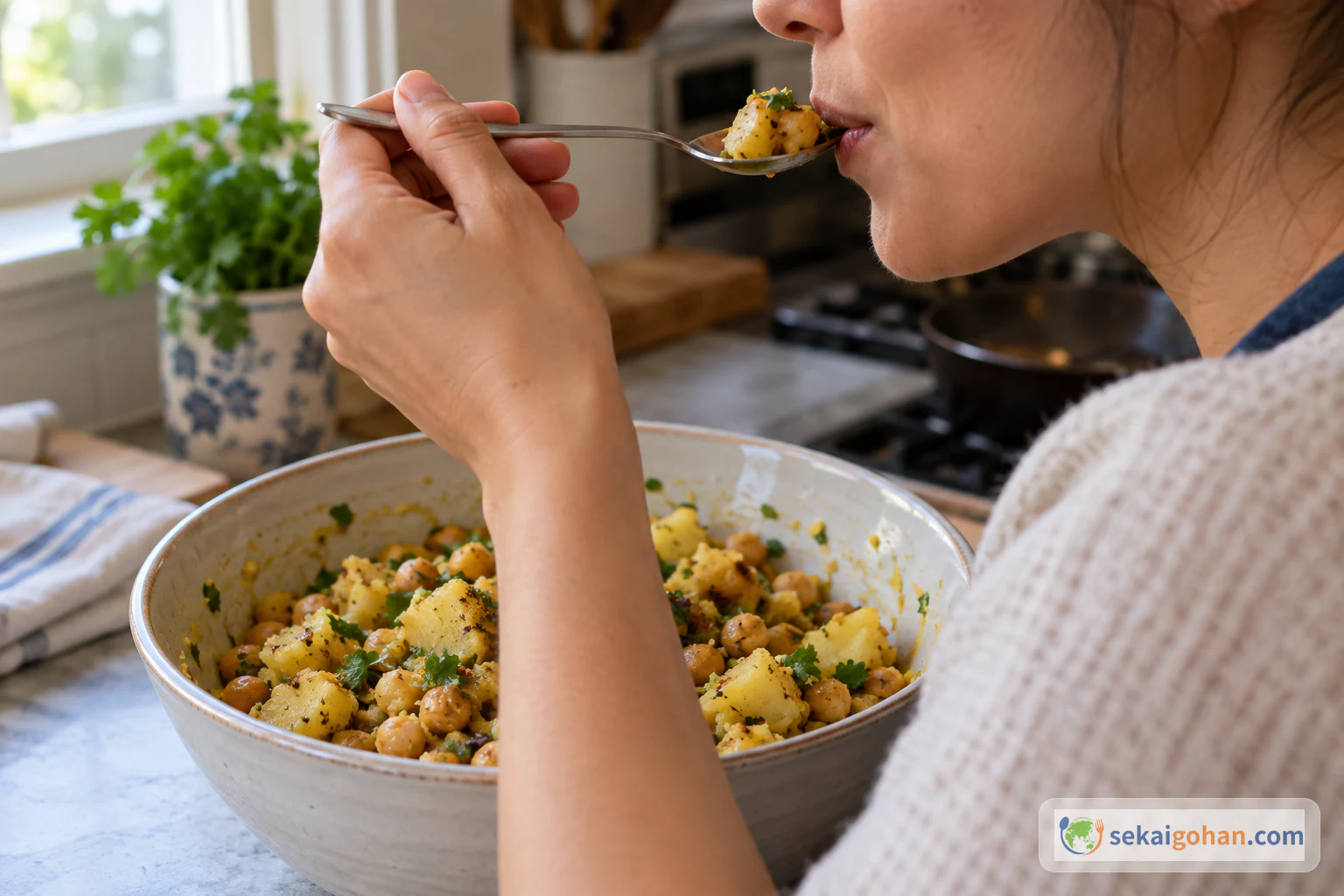
Fuchka is an afternoon snack. Bring the serving dish out as soon as the sev is on and let everyone take from it right away. If there are more eaters than shells on the dish, keep the filling, sauce and toppings ready and assemble the next round when the first is gone, so each shell is eaten fresh.
Variations
- Milder heat. Use less chilli powder in the sauce, or leave out one or both green chillies.
- Without egg. Leave the grated egg off. The top becomes just chilli, coriander and sev.
Making it in stages
The sauce, filling and toppings are done before anything goes into a shell, so the only last-minute work is cracking, filling, saucing and topping. If you stop partway, refrigerate the prepared parts in covered containers and don't leave them at room temperature for long. Filled shells are served immediately and are not kept.
Frequently asked questions
Do I need to make the shells myself?
No. Start with ready shells and this recipe begins from there. Making shells is a separate recipe with its own dough and frying, and it is not part of this one. Look for pani puri shells at a South Asian grocer or online.
Is fuchka the same as pani puri?
They share hollow shells and a potato and chickpea filling, and people often compare them. How the names and dishes relate is not settled. In practice they differ in what goes over the filling. Here it is a thick cooked tamarind sauce with egg and sev on top. Pani puri in India uses a green mint water and a separate tamarind chutney.
What is doi fuchka?
Doi fuchka is a yogurt-based version, and it is treated as its own dish. This recipe has no yogurt. If you want doi fuchka, make it from its own recipe rather than adding yogurt to this one.
Can I use the leftover tamarind sauce for anything?
The recipe gives no keeping time for the sauce. Once it has cooled, put it in a covered container in the refrigerator rather than leaving it on the counter, and use it on the next round of shells soon.