Masala Boondi: A Small Fried Snack Born from a Perforated Ladle
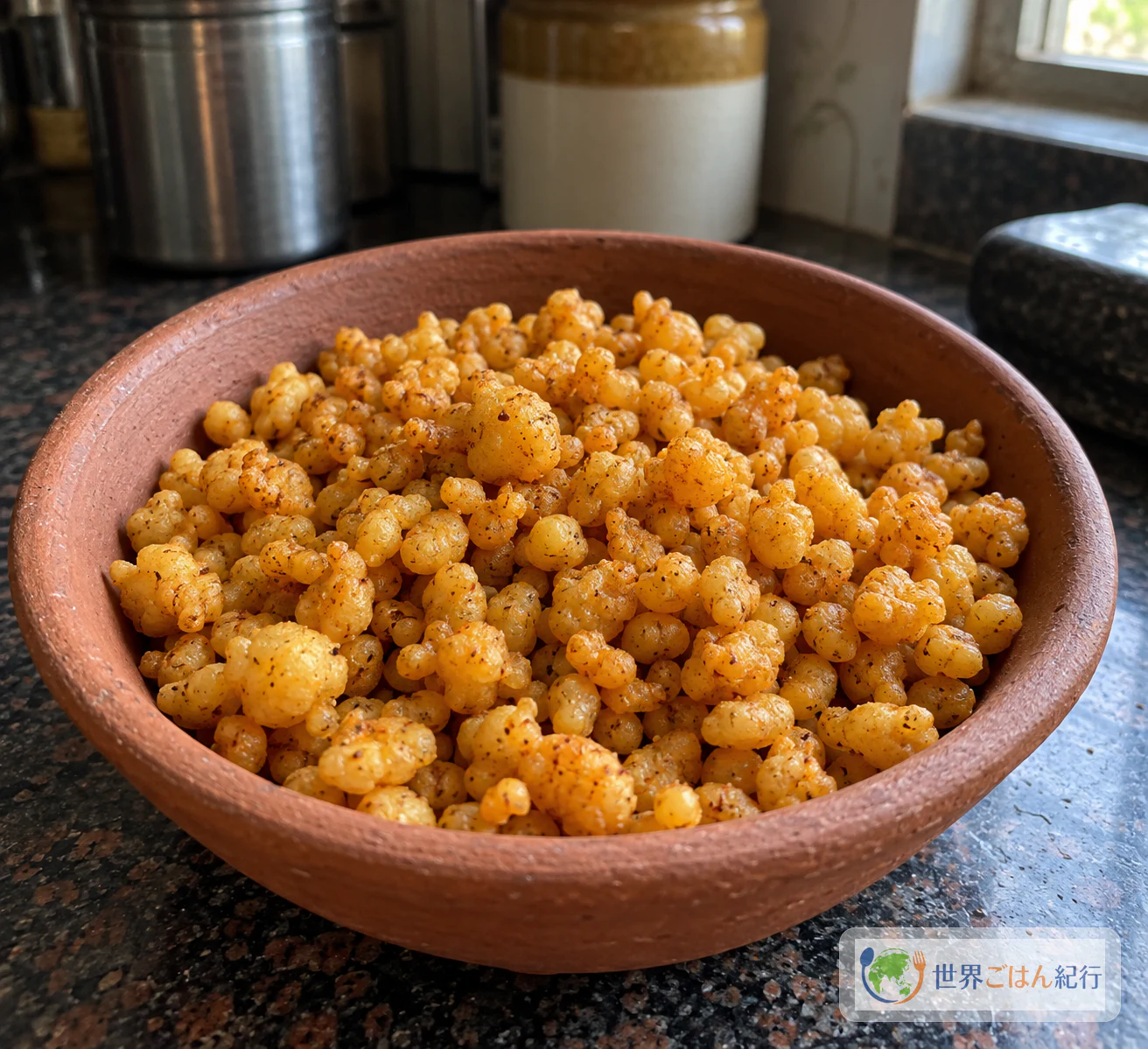
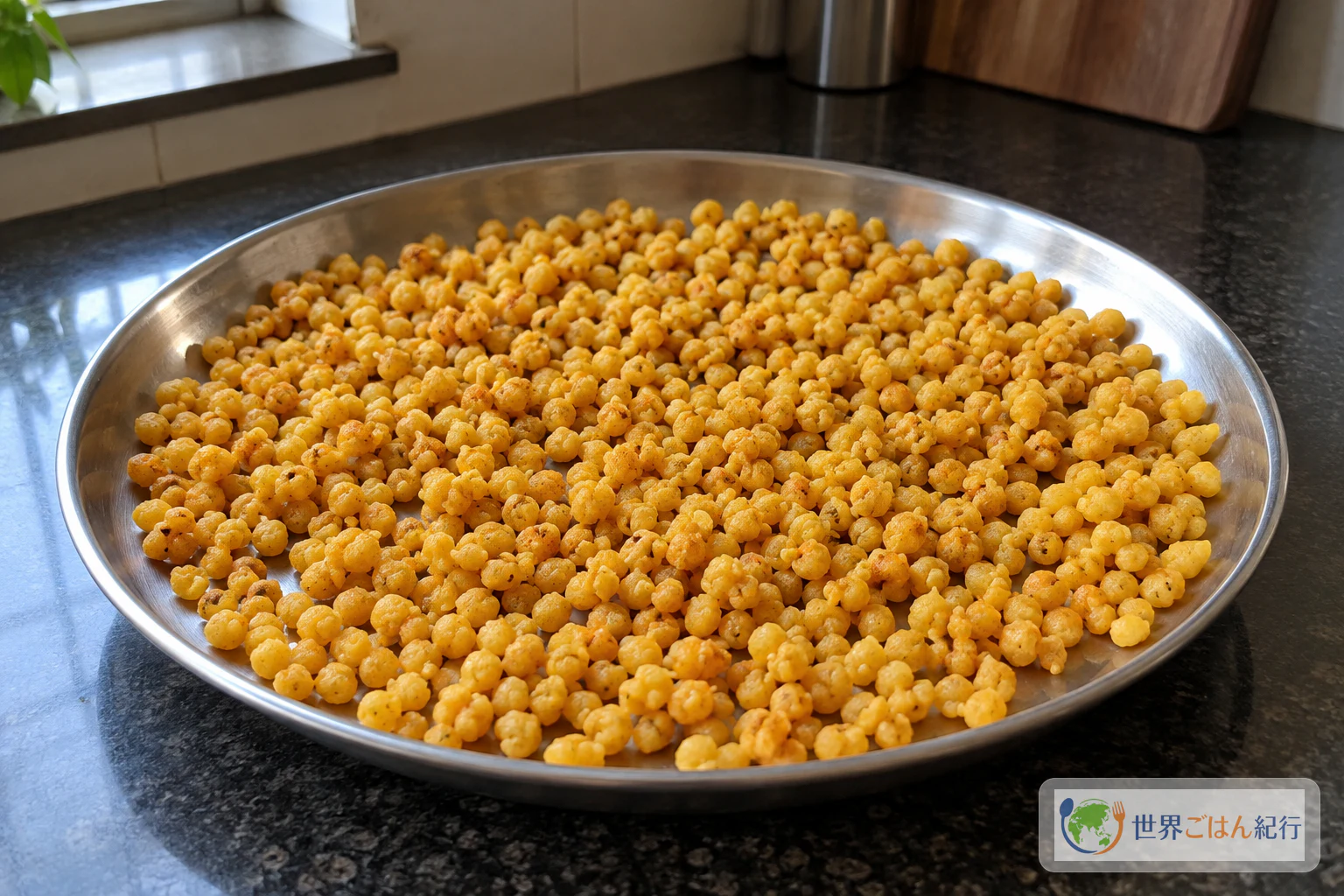
Small, separate, golden droplets of chickpea-flour batter, with every spice already mixed into the batter. Nothing is dusted on after frying.
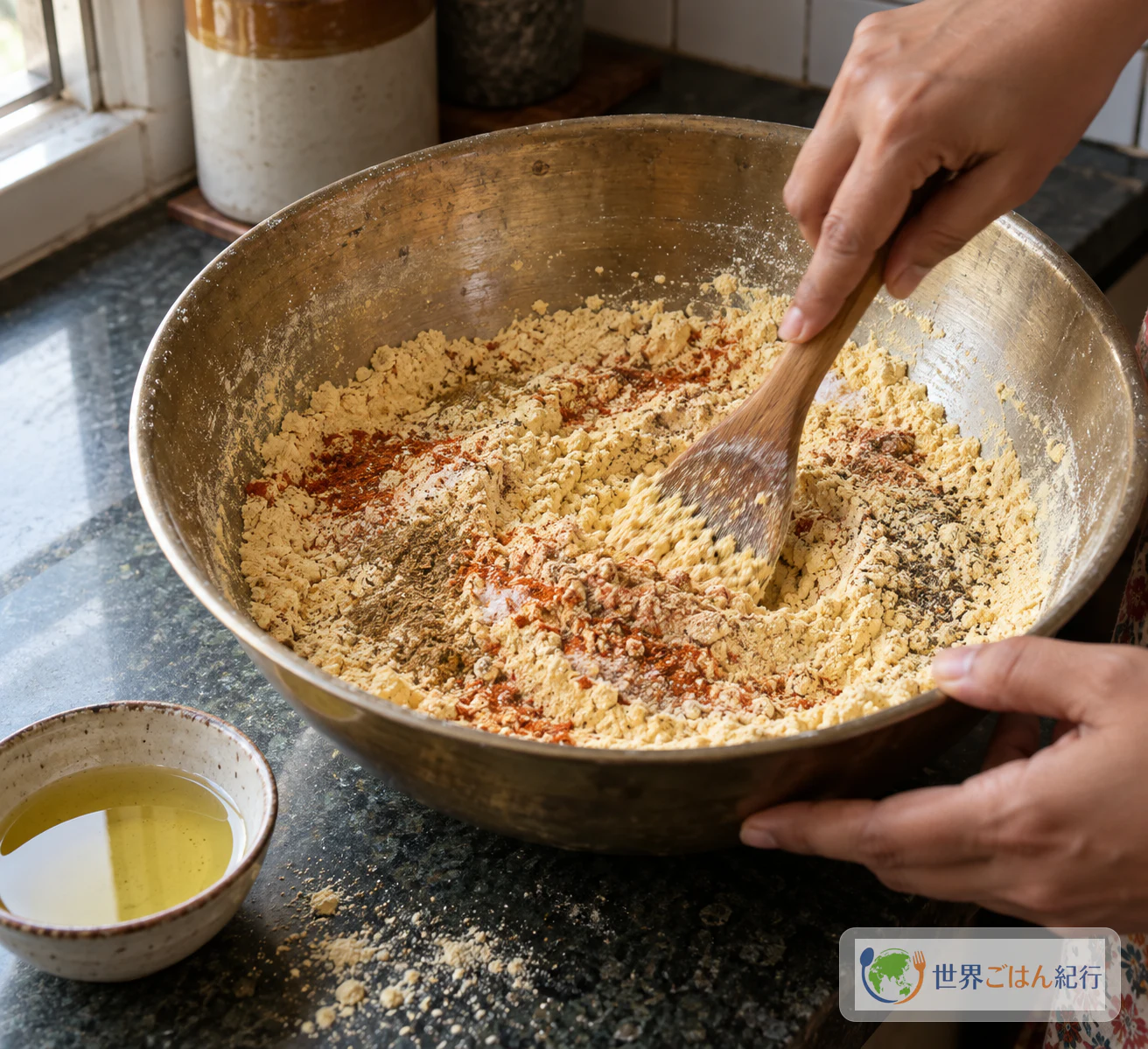
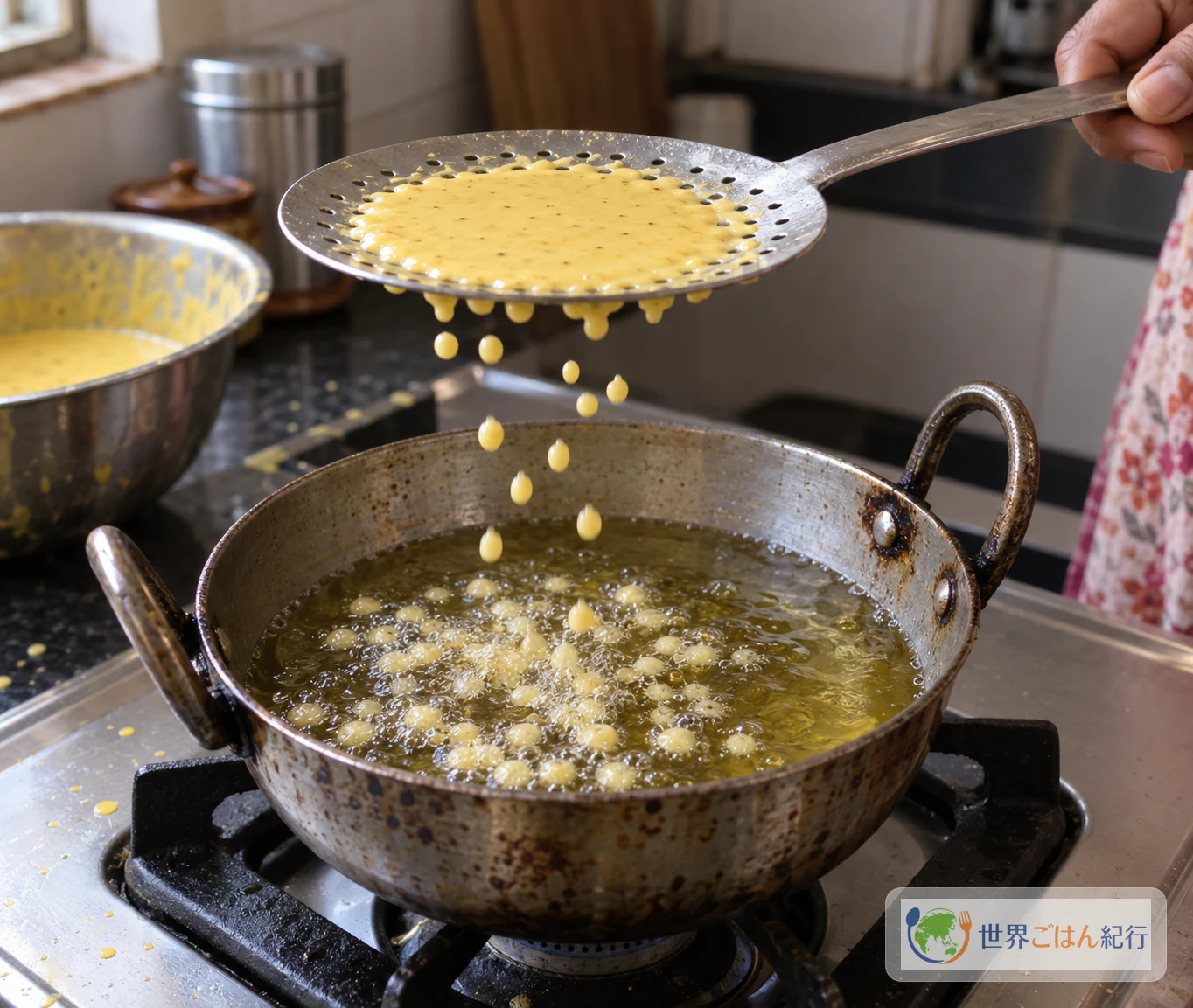
Hold a perforated ladle over a pan of hot oil, pour on a little yellow batter, and it falls through the holes as small drops. Within moments they become boondi: tiny fried beads of gram-flour batter. In the version here, ground chili, coriander, cumin, black pepper, dry mango powder and a touch of cinnamon go into the batter itself, so each bead comes out of the oil already seasoned. Once drained and cooled, the result is a dry, crunchy, savory snack to eat by the pinch.
This article uses one recipe as written, the masala boondi published by Magic of Indian Rasoi. The dish is sometimes written "boondi masala"; the recipes this article draws on call it masala boondi, meaning spiced, savory boondi. It is a snack in its own right and should not be confused with boondi raita, where boondi goes into yogurt, or with boondi ki sabzi, an onion and tomato curry with boondi in it. Both are separate dishes, and none of their ingredients or steps are used here. For more dishes from the same country, see the India page.
The amounts and steps below follow the source recipe as published. Sekai Gohan has not kitchen-tested this recipe, so the yield is not confirmed, and frying times and finished results are the source's guidance rather than measured results.
One Droplet, Many Dishes: Sweet, Savory, Crunchy or Soaked
Boondi (बूंदी) is, at its most basic, fried droplets of gram-flour batter. Simple Indian Recipes describes a sweet version and a spicy version made from the same droplets. A food science study in the International Journal of Food Science and Technology describes boondi as batter passed through a perforated ladle into oil, and places it alongside related forms such as khara boondi, ladoo and raita. NDTV Food explains the word boondi as meaning a "droplet", which fits the way the batter falls from the ladle, though this comes from a secondary article.
NDTV Food also describes how savory boondi, sometimes called khara or tikha boondi, is eaten: as a snack together with other namkeen, the savory snacks made from things like lentils and peanuts, as well as in raita, in jaljeera and in boondi ki sabzi. These are examples of how it can be used, not a single standard for every Indian home. The same article reports, from chefs' explanations, that boondi is said to have come from Rajasthan and connects it with keeping qualities; this is a chef-attributed account rather than settled history.
Masala boondi recipes also differ by cook. Madhura's Recipe, for example, publishes a masala boondi with rice flour and baking soda in the batter and chaat masala and black salt tossed onto the boondi after frying. That is a different formula with a different order of seasoning. This article follows only the Magic of Indian Rasoi method, where the spices go into the batter, and does not combine the two recipes, since mixing them would break both.
Ingredients: The Source Recipe in US Cups (1 cup = 237 ml)
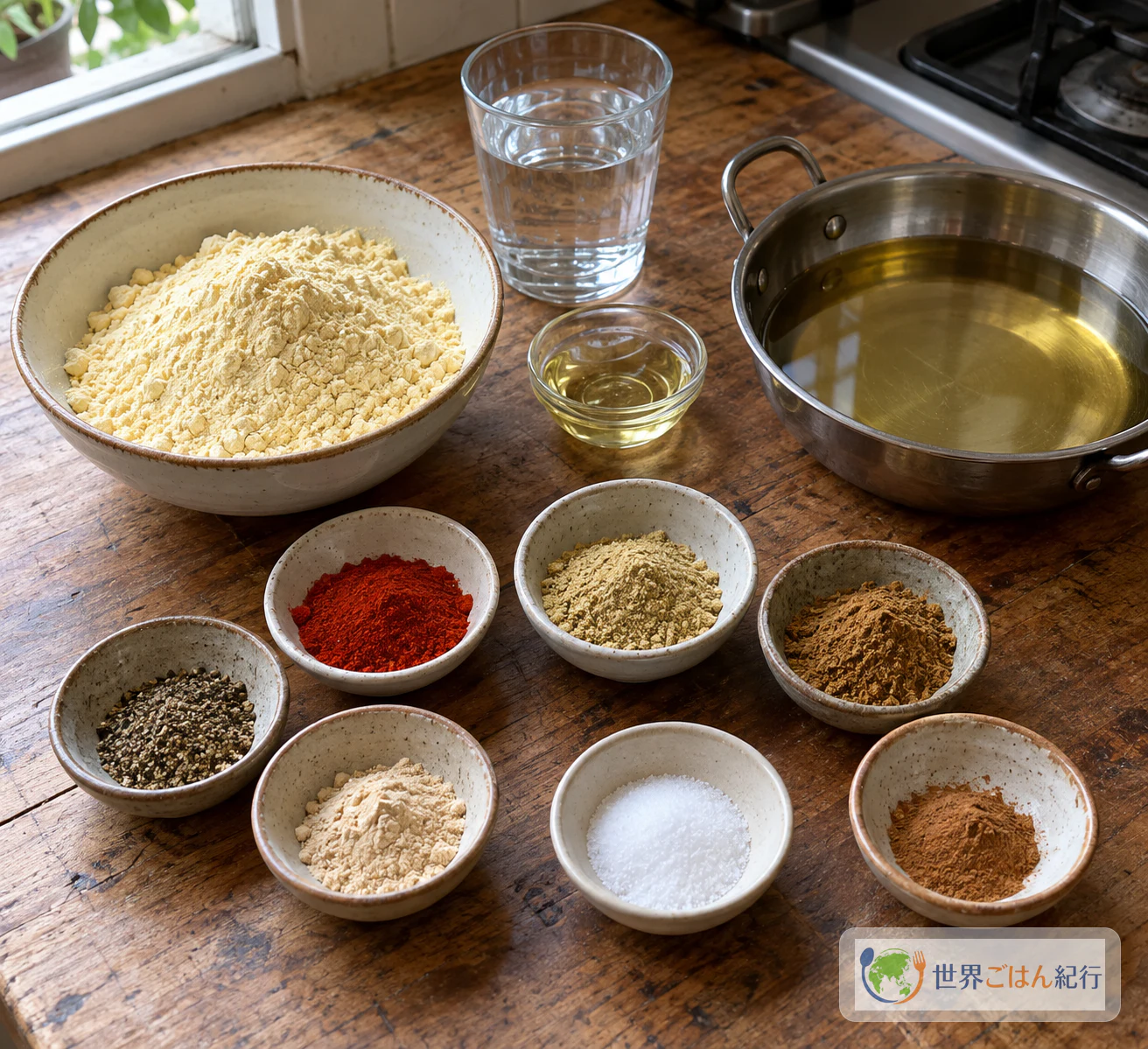
1 cup = 237 ml; don't swap in a cup of a different size. The water is given as two measures, both approximate, because it is added gradually.
There is no turmeric, rice flour, baking soda, asafoetida (hing), curry leaves, peanuts, chaat masala or black salt in this recipe, and no spice is added after frying.
Equipment
- A mixing bowl
- A whisk or spoon for mixing the batter
- A perforated boondi ladle (size no. 1)
- A pan for deep frying
- A perforated ladle or skimmer for lifting out the boondi
- Paper towels for draining
- A wide plate for cooling
- An airtight container for storing
Choosing and Substituting: What Holds the Flavor Together
The flavor of masala boondi rests on chickpea flour, amchur and the dry ground spices, finished with salt and sourness. Keep those, and the snack stays recognizable.
Chickpea flour. Look for packs labeled besan, gram flour or chickpea flour at Indian grocers or online. A generic chickpea flour may not absorb water or have the same grind as besan, so the amount of water you need may differ. Don't replace it with cornstarch or potato starch; they won't give the same droplets or flavor.
Amchur. Leaving it out makes the boondi less sour and loses its fruity note. Lemon juice is not an equal swap, because it adds liquid to the batter. If you can't find amchur, serve lemon on the side instead of putting it in the batter.
Red chili powder. Chili powders differ in heat and aroma, so the result will vary with what you use.
Cumin and the other spices. Use plain ground cumin rather than a roasted version. Leaving out the cinnamon changes the flavor of this particular recipe.
Allergens. Because shared production lines vary, check the label of the specific besan and spices you buy.
Don't leave the pan of frying oil unattended. If you need to step away, turn off the heat first. Keep water and wet utensils away from the oil. If the oil ever catches fire, never pour water on it; hot oil can splatter violently.
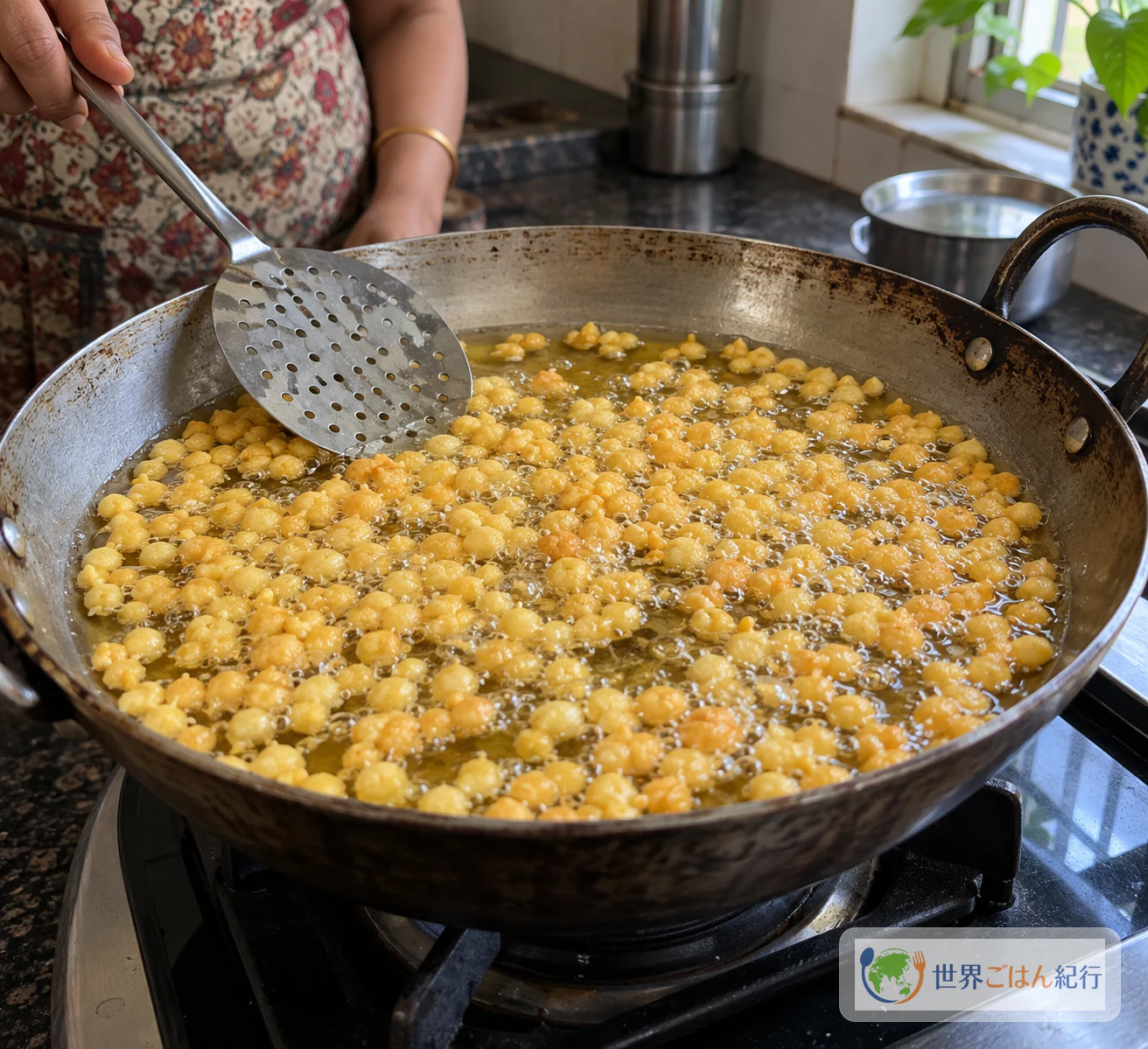
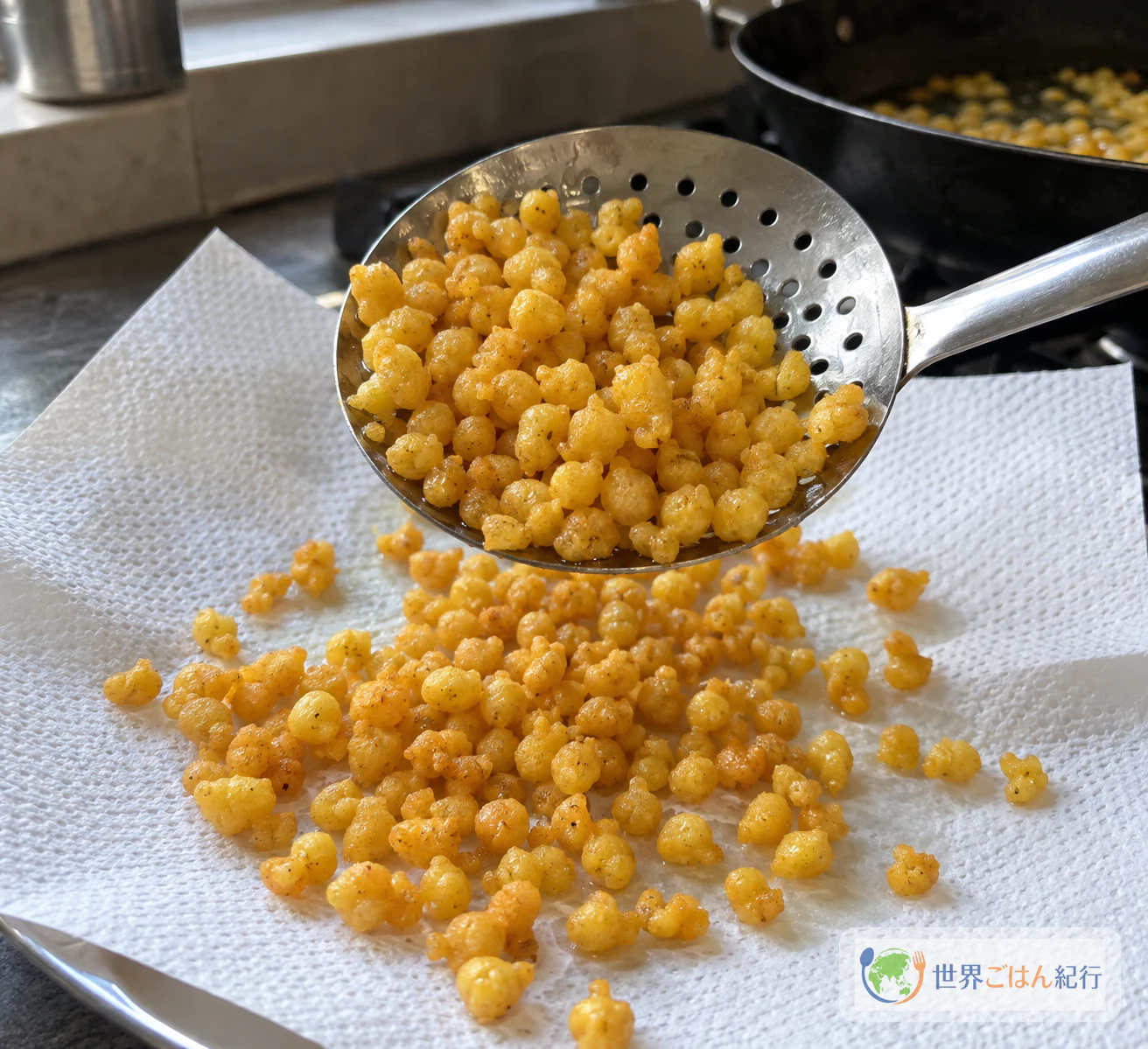
How to Make Masala Boondi
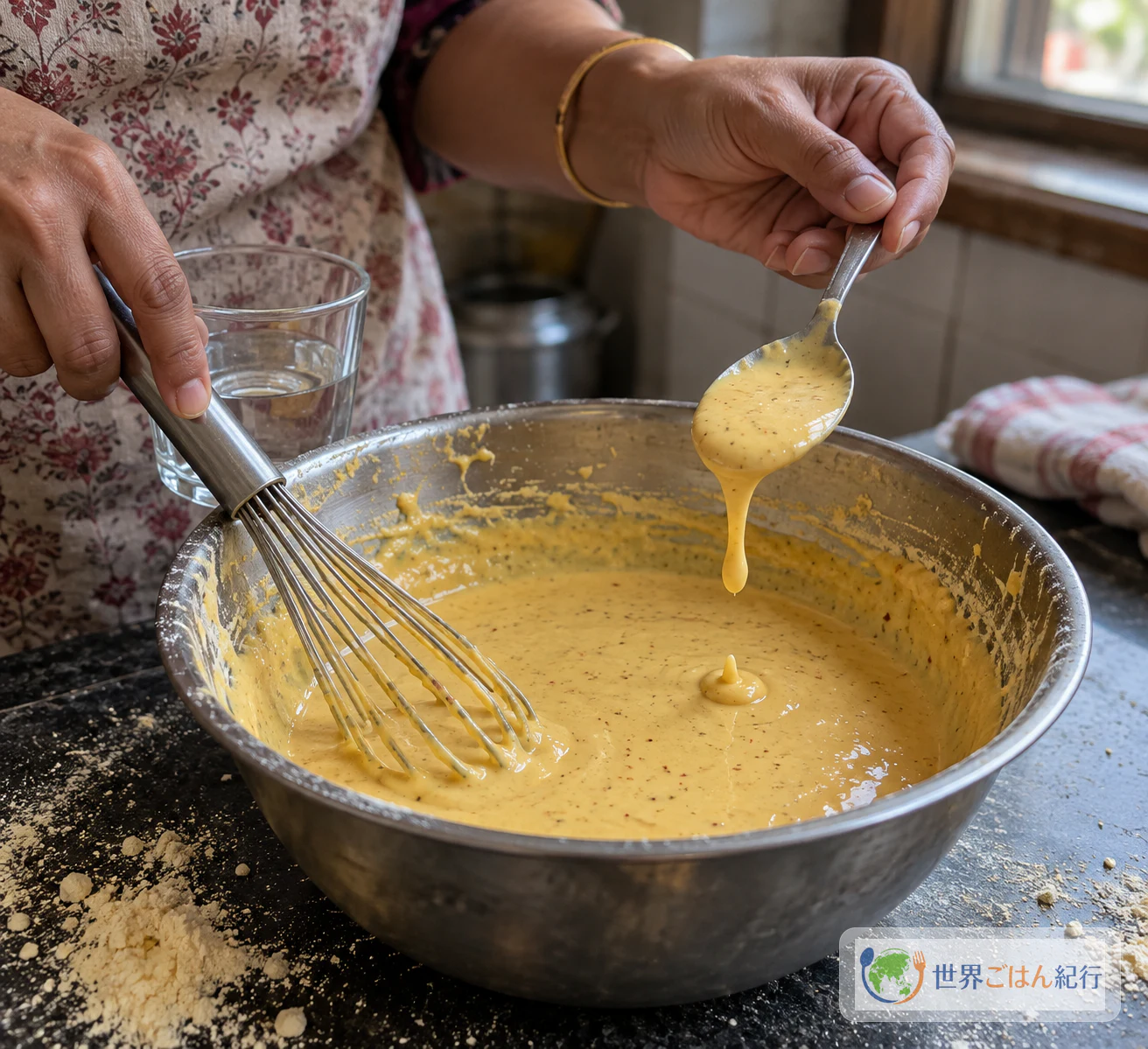
The two things to read are how the batter falls from a spoon and how the color changes in the oil. Watch the pan closely.
Uneven, Stringy or Soft: What to Look At
Most problems with boondi come back to the batter and the way it leaves the ladle. Because this recipe has not been kitchen-tested, the fixes below are directions to adjust in, not measured corrections.
| What you see | Likely cause | What to do |
|---|---|---|
| Batter won't fall through the holes, or forms clumps | Batter too thick | Add water a little at a time, up to the source's total. The source gives no amount beyond that |
| Batter runs in lines and the drops lose their shape | Batter too loose, or the hole size and batter don't match | Next time, keep the water to the source's amount and add it gradually |
| A mix of large and small drops | Uneven holes, or uneven movement of the ladle | Hold the ladle steady and don't pour too much batter on at once. A dedicated boondi ladle (jhara) has holes of one size |
| Boondi turns soft and loses its crunch | Sealed before it had fully cooled | Always cool completely before sealing |
In the food science study cited below, batters with different solid contents, tested under controlled laboratory conditions, produced boondi with different shapes and textures. That supports the general point that the amount of water affects the shape of the drops, but the study's batter figures, temperature and time belong to its own experiment and are not instructions for this recipe.
Serving and Using Boondi
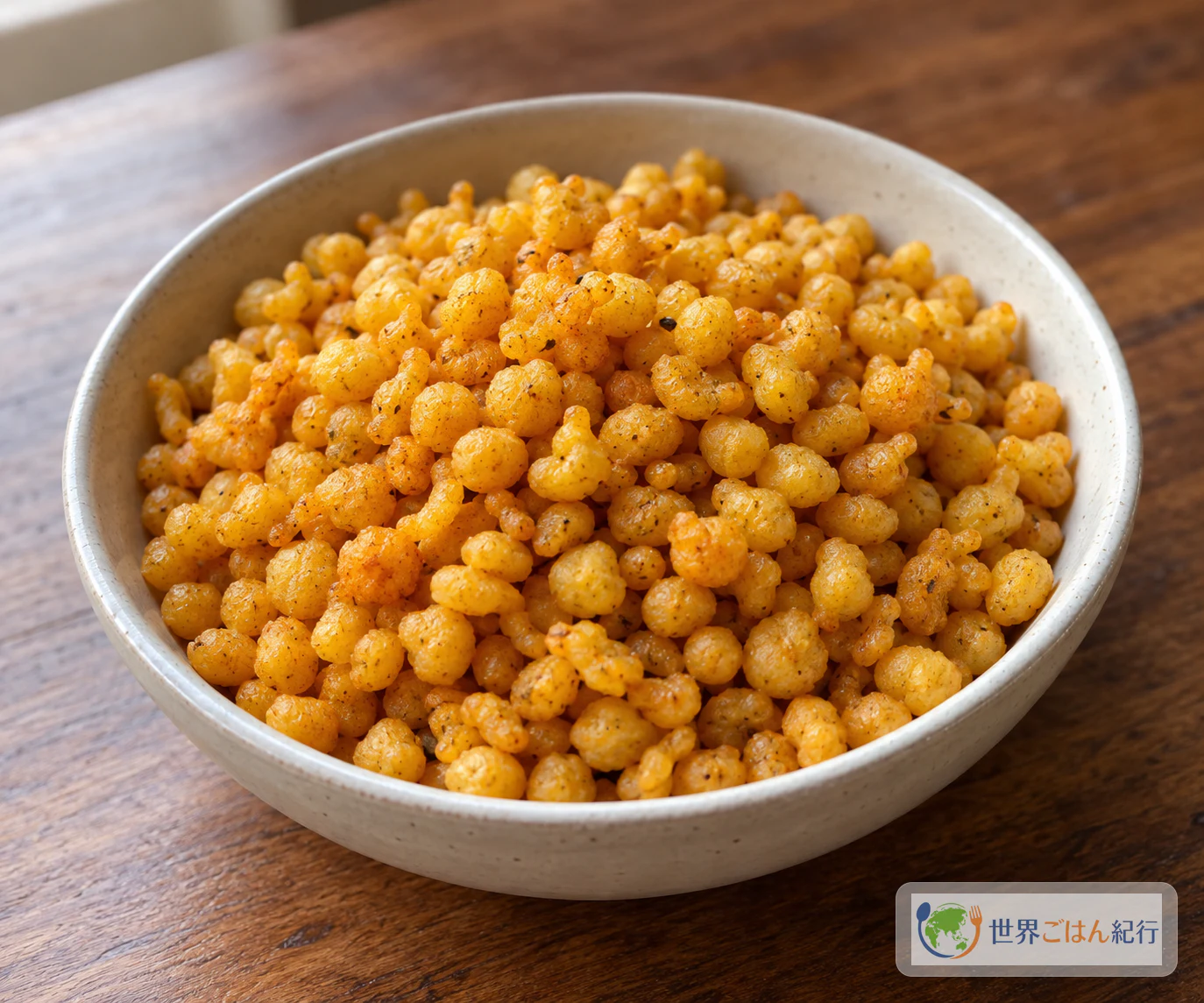
Masala boondi is ready to eat as it is, a savory snack picked up by the pinch. Following NDTV Food's examples, it can also sit alongside other namkeen, or go into dishes such as raita, jaljeera and boondi ki sabzi. Once it is in yogurt or a sauce, it soaks up moisture and loses its crunch; those are separate dishes with their own recipes, so nothing from them is added to the snack here.
Storage
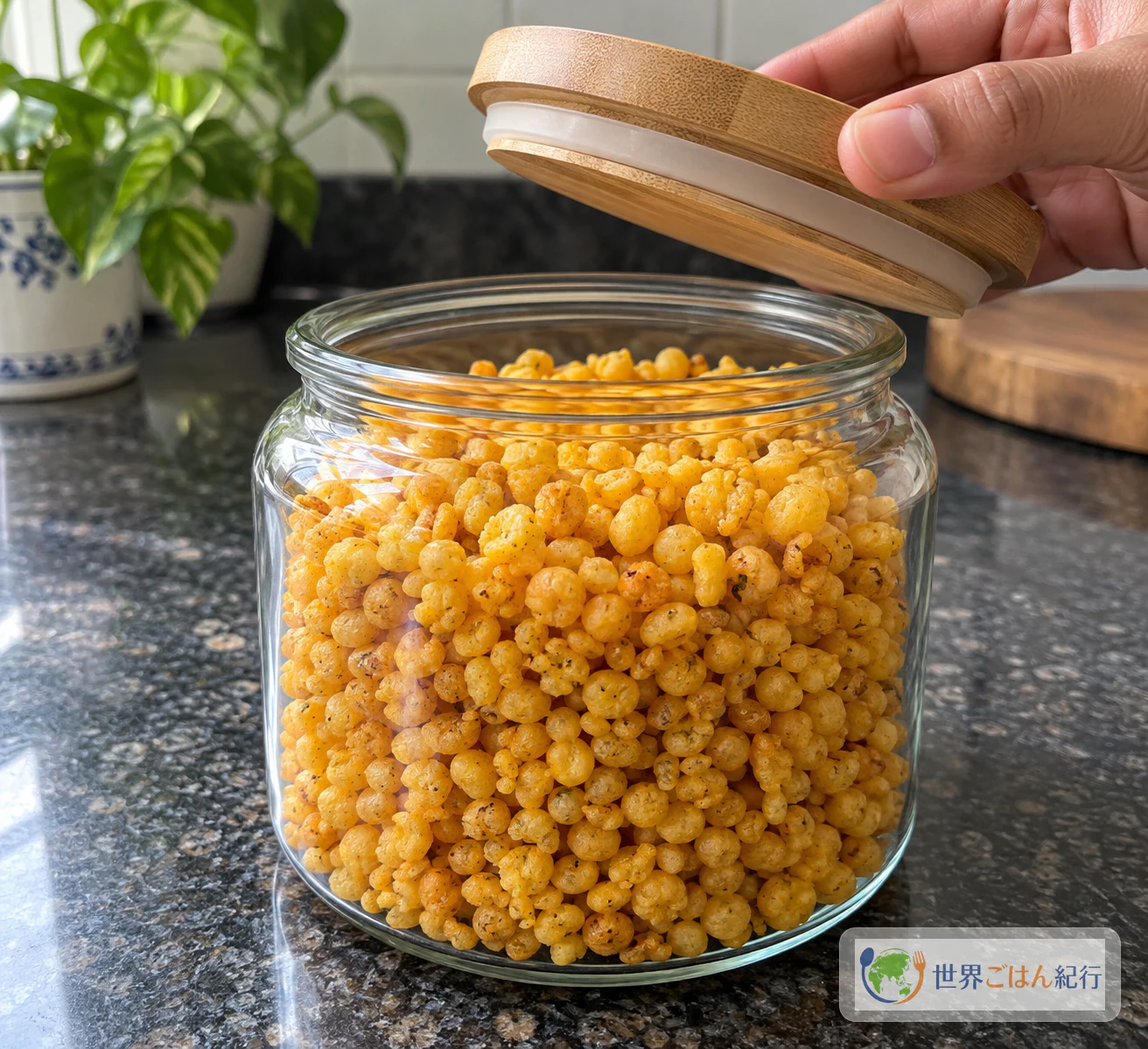
Let the boondi cool completely, then store it in an airtight container. The source recipe states that it keeps for 7–10 days; that figure has not been verified, so treat it as the source's claim rather than a guaranteed shelf life. Sealing it while still warm traps moisture and softens the droplets.
Variations
These are departures from the source recipe. No amounts are given for them because none have been tested.
- Heat: Use less or more red chili powder to suit your taste.
- Sourness: The base keeps the amchur. Leaving it out gives a less sour version. Adding lemon juice to the batter is not recommended, since it changes the amount of liquid.
- Spice: Leaving out the cinnamon changes the aroma; it is a feature of this recipe rather than a standard for all masala boondi.
- Seasoning after frying: Some cooks, such as Madhura's Recipe, season boondi after frying with a different set of ingredients. Treat that as a separate recipe and don't combine its amounts with this one.
- Soaked boondi: Using cooled boondi in raita or similar dishes softens it into a different texture and calls for a separate recipe.
Frequently Asked Questions
Is it boondi or boondi masala or masala boondi?
Boondi is the general name for the fried droplets, which can be sweet or savory. Masala boondi is the spiced, savory snack in this article; it is sometimes written boondi masala. NDTV Food also mentions the names khara boondi and tikha boondi for savory boondi.
What if I don't have a boondi ladle?
The source uses a boondi ladle, size no. 1. Any perforated ladle or spoon can let batter fall through, but the hole size and the thickness of the batter both change the shape of the drops, so the results may differ.
Are besan and chickpea flour the same?
Besan is a chickpea flour sold for Indian cooking, often labeled gram flour. A generic chickpea flour may not have the same grind or absorb water the same way, so you may need to adjust the water gradually while watching the batter.
What can I use instead of amchur?
There is no equal substitute. Leaving it out makes the boondi less sour; lemon juice adds liquid to the batter, so it is not a direct swap. Serving lemon on the side is one option.
How is this different from boondi raita or boondi ki sabzi?
Masala boondi is the dry, crunchy fried snack. Boondi raita puts boondi in yogurt, and boondi ki sabzi simmers it in an onion and tomato curry. Both are separate dishes.
How long does it keep?
Cool it completely, then store it in an airtight container. The source gives 7–10 days, but this has not been verified, so it is not a guaranteed shelf life.
Sources
- Magic of Indian Rasoi, "Masala Boondi Recipe." The recipe followed in this article: ingredients and amounts (with 1 cup = 237 ml), mixing the spices and oil into the flour, adding water gradually, the boondi ladle, frying 1–2 minutes until golden brown, draining, cooling and airtight storage. Its stated yield and shelf life have not been verified. https://www.magicofindianrasoi.com/2017/10/masala-boondi-recipe.html
- Madhura's Recipe, "Masala Boondi." A different home method with rice flour and baking soda, seasoned after frying; cited only as an example of variation and not combined with the recipe here. https://madhurasrecipe.com/appetizers/masala-boondi/
- Simple Indian Recipes, "Boondi (Sweet Boondi & Spicy Boondi)." Basic boondi as fried droplets of gram-flour batter, sweet and savory versions, the perforated spoon method and batter consistency. https://simpleindianrecipes.com/boondi.aspx
- International Journal of Food Science and Technology (Oxford Academic), "The effect of the concentration of batter made from Chickpea (Cicer arietinum L.) flour on the quality of a deep-fried snack." Boondi made by passing batter through a perforated ladle into oil, related forms such as khara boondi, ladoo and raita, and laboratory findings on batter solids and shape and texture. https://academic.oup.com/ijfst/article/39/7/755/7913216
- NDTV Food, "Boondi: The Rajasthani Drop-sized Gram Flour Balls Perfect for Both Sweet and Savoury Delicacies." The names khara and tikha boondi, eating it with namkeen and in raita, jaljeera and boondi ki sabzi, the meaning of "boondi", and a Rajasthan-origin account attributed to chefs. https://food.ndtv.com/food-drinks/boondi-the-crunchy-besan-drop-sized-balls-that-are-perfect-for-both-sweet-and-savoury-delicacies-1717936
- NDTV Food, "Boondi Ki Sabzi Recipe." Used only to show that boondi ki sabzi is a separate onion and tomato curry dish. https://food.ndtv.com/recipe-boondi-ki-sabzi-hindi-955122
- National Research Institute of Fire and Disaster (Fire and Disaster Management Agency, Japan), "天ぷら油火災(消火器具)" (Cooking-oil fires: extinguishing equipment). The danger of adding water to an oil fire and the splattering of hot oil. https://nrifd.fdma.go.jp/public_info/faq/tenpura_shokaki/index.html
- Fire and Disaster Management Agency, Japan, "1.ガス安全(都市ガス編)" (Gas safety: city gas). Not leaving frying oil unattended and turning off the flame before stepping away. https://www.fdma.go.jp/relocation/e-college/cat67/cat50/cat48/1-38.html