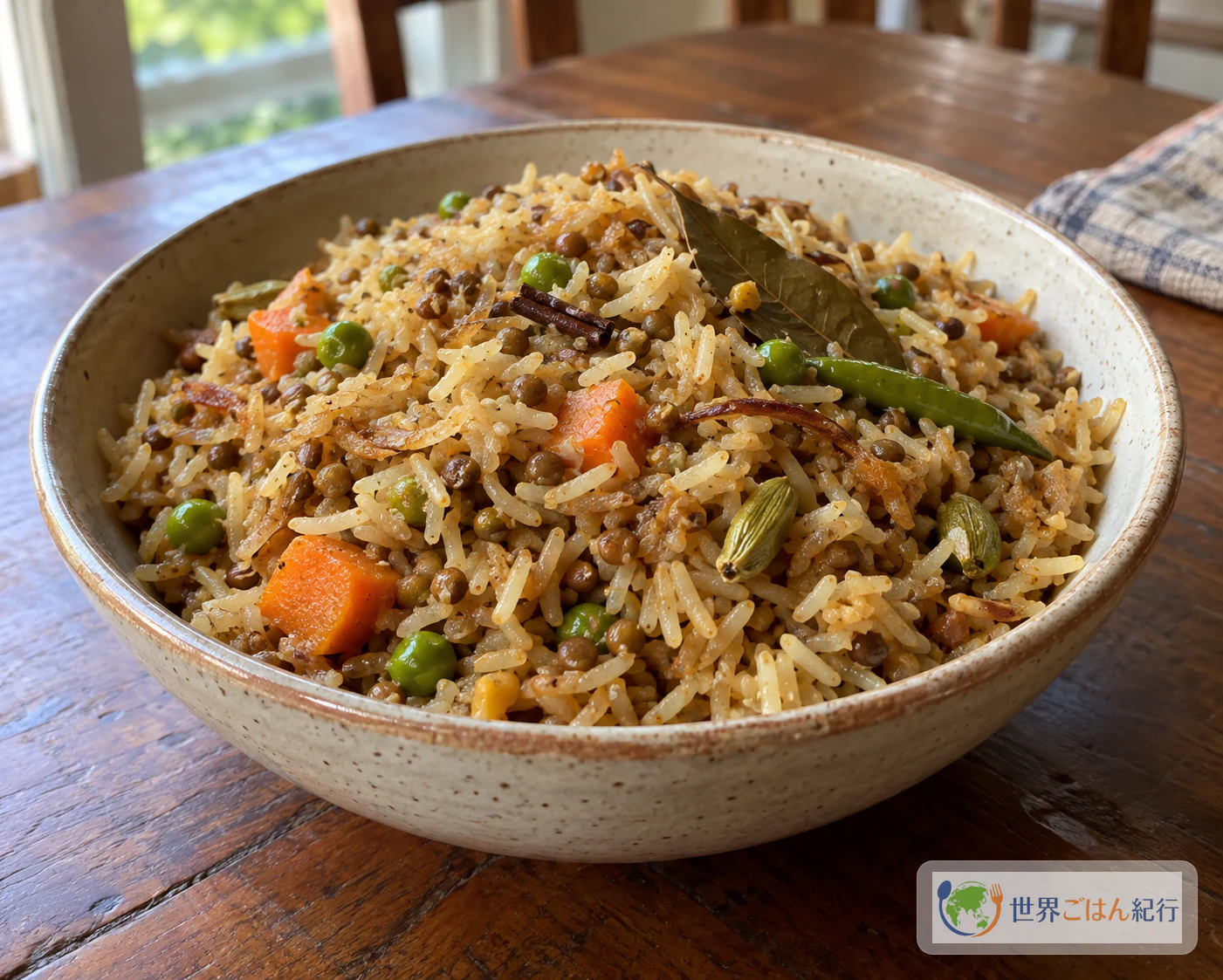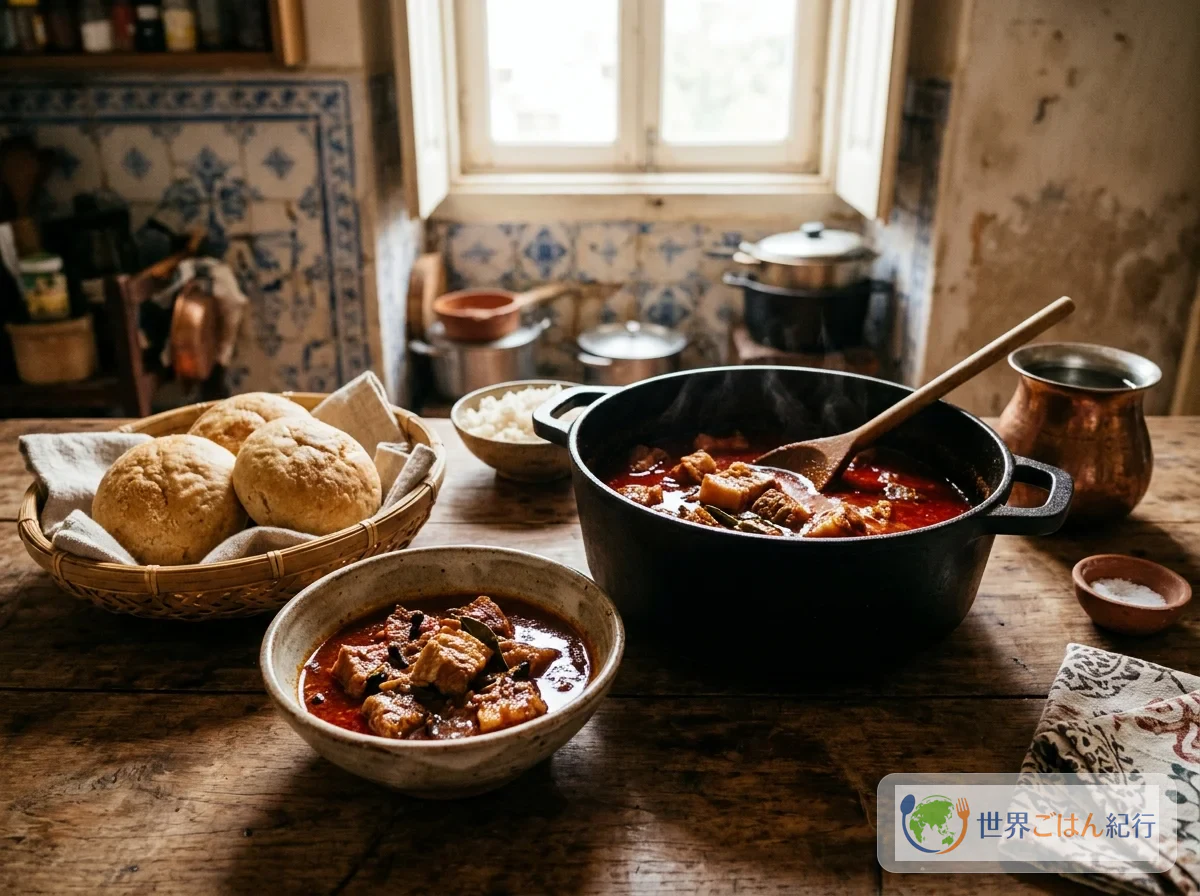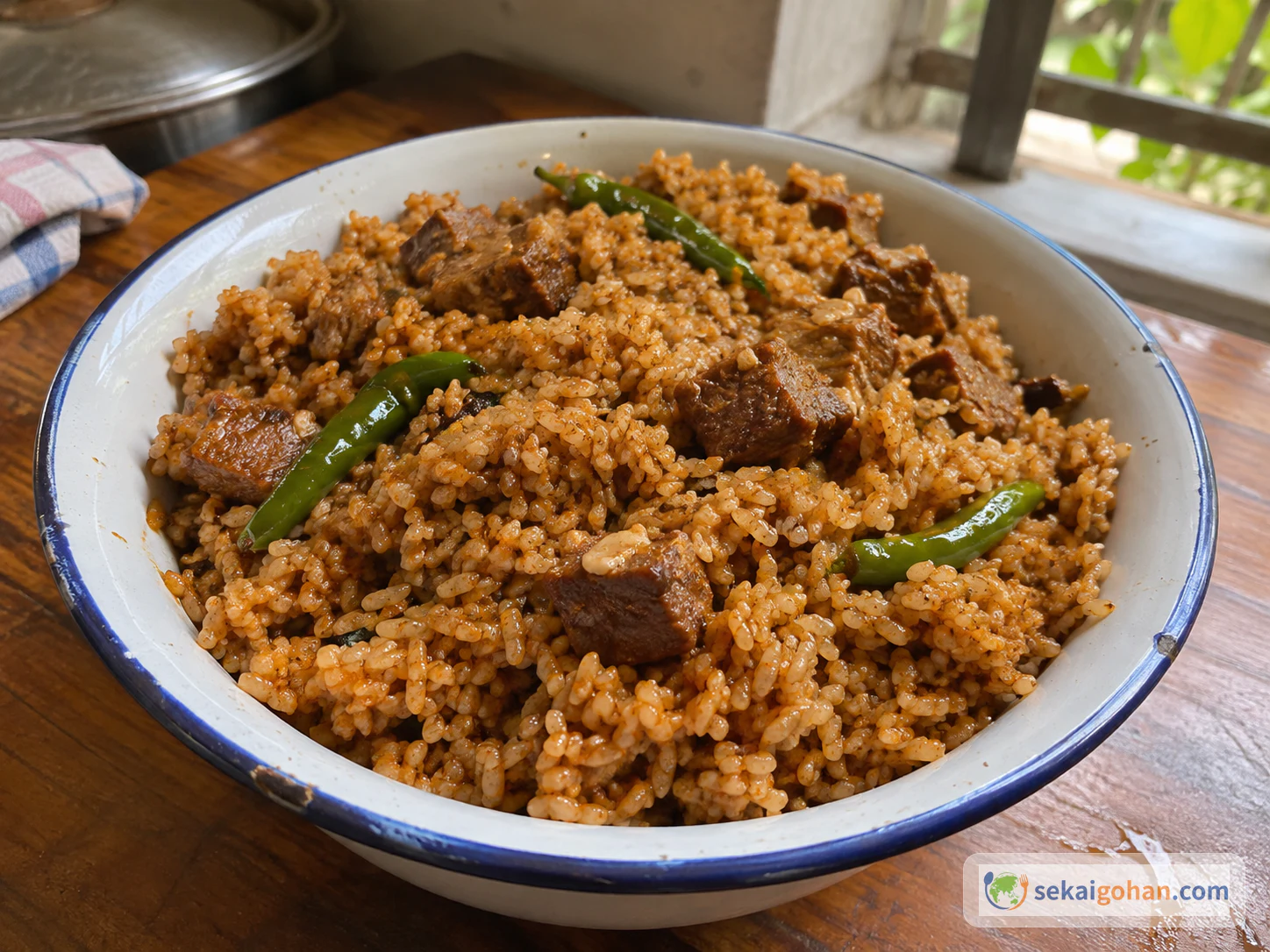
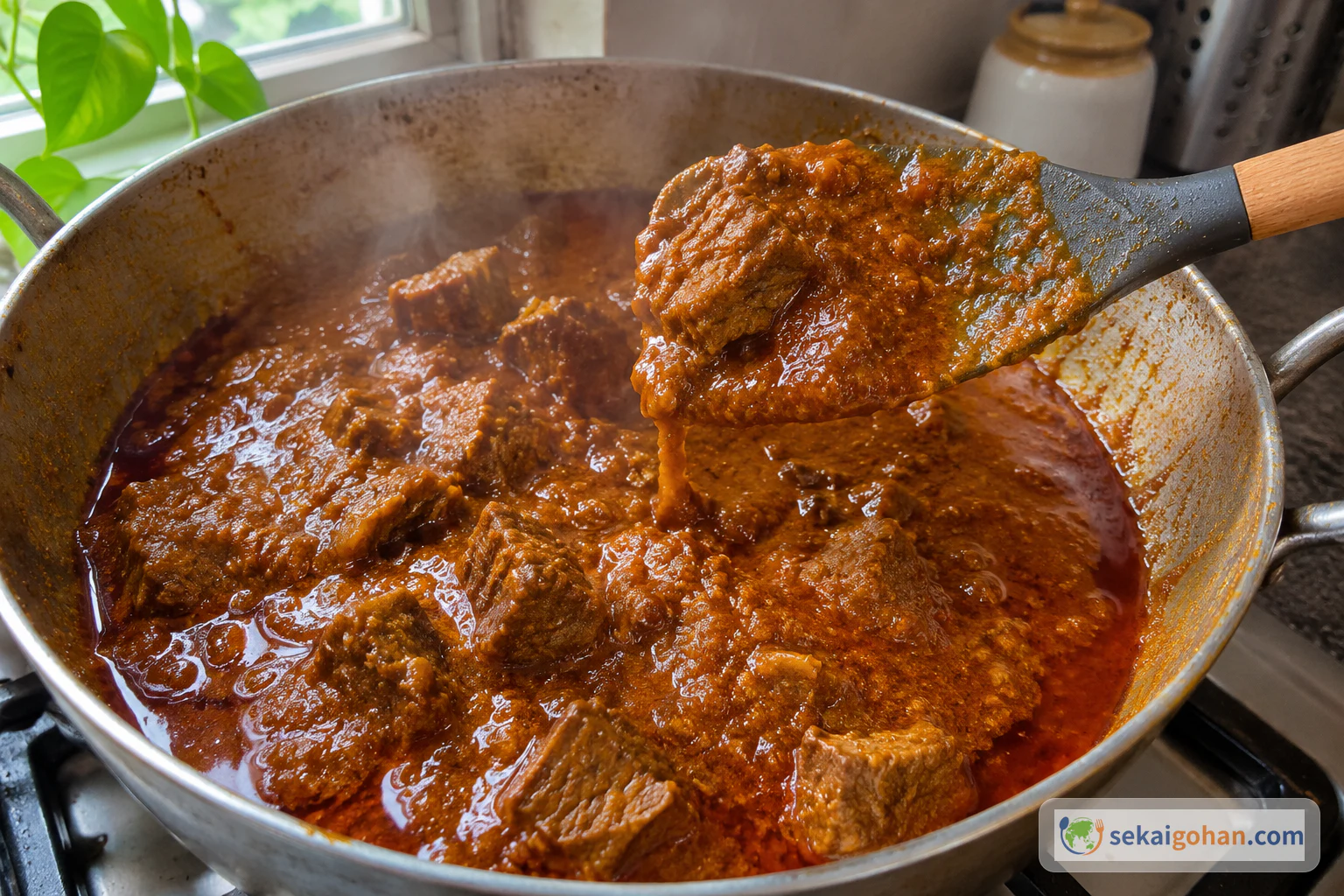
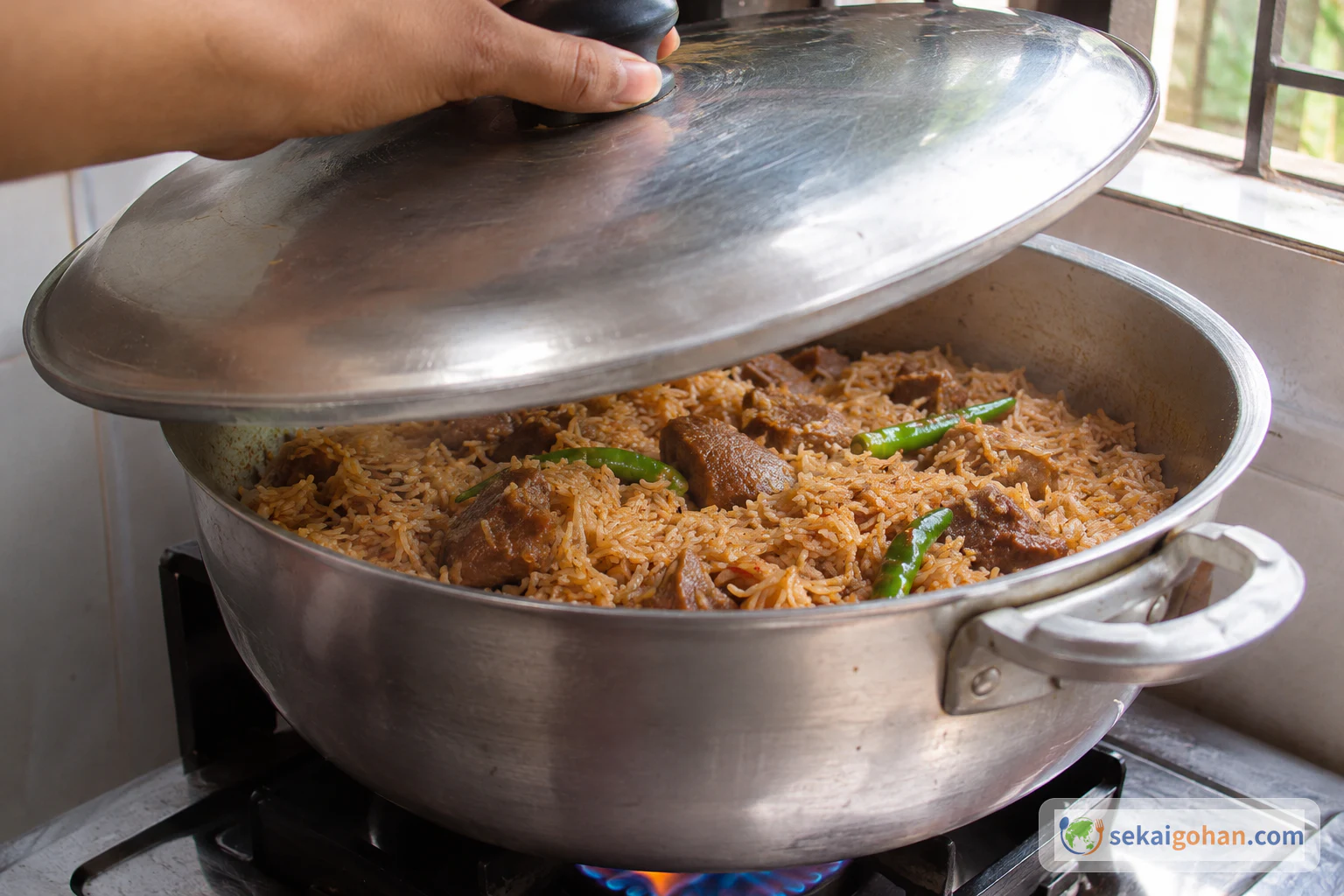
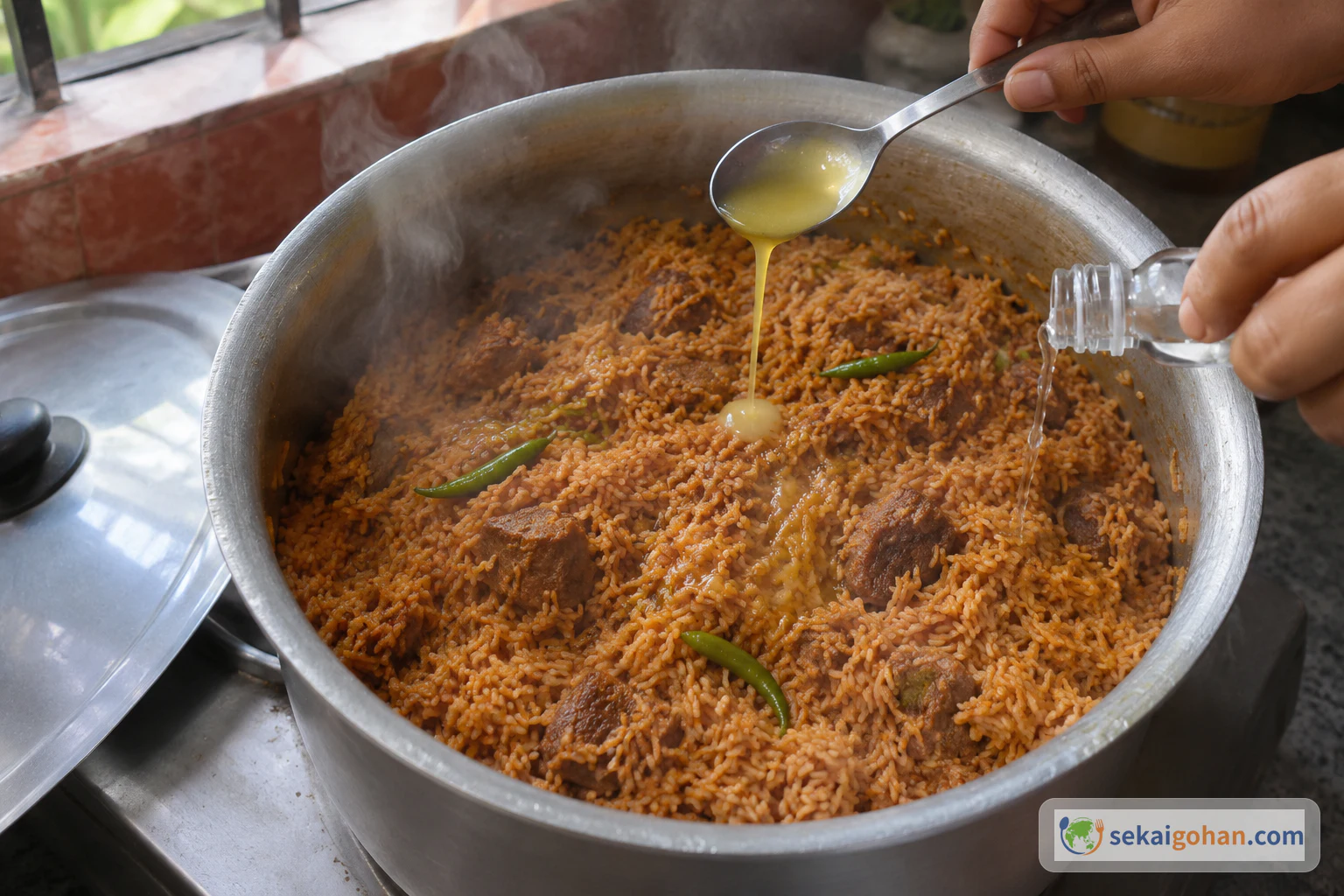
When the lid comes off for the last time, a spoon of ghee and a little kewra water go over the rice, and the steam carries both up together with the sharp smell of mustard oil. Under it the grains are a warm reddish brown. They hold small cubes of beef and whole green chillies that have gone soft and glossy. Tehari is the beef and fragrant-rice pot of Old Dhaka, Bangladesh. The beef is braised with ground spices, and then the rice cooks in the fat and gravy the beef leaves behind. It tastes deep and meaty, and the heat comes straight from the chillies. The yogurt and milk give it a lighter feel than biryani.
Old Dhaka's one-pot rice
Tehari belongs to Puran Dhaka, the old city. It is beef or mutton cooked with small-grained aromatic rice, mustard oil and a lot of green chilli, and in English it sometimes goes by "Old Dhaka-style beef biryani." On the plate it looks like biryani. In the mouth it is considerably spicier, and the whole thing comes out of one pot. The meat is cut small, so every spoonful gets some. For more of the country's cooking, see the Bangladesh page.
Next to biryani
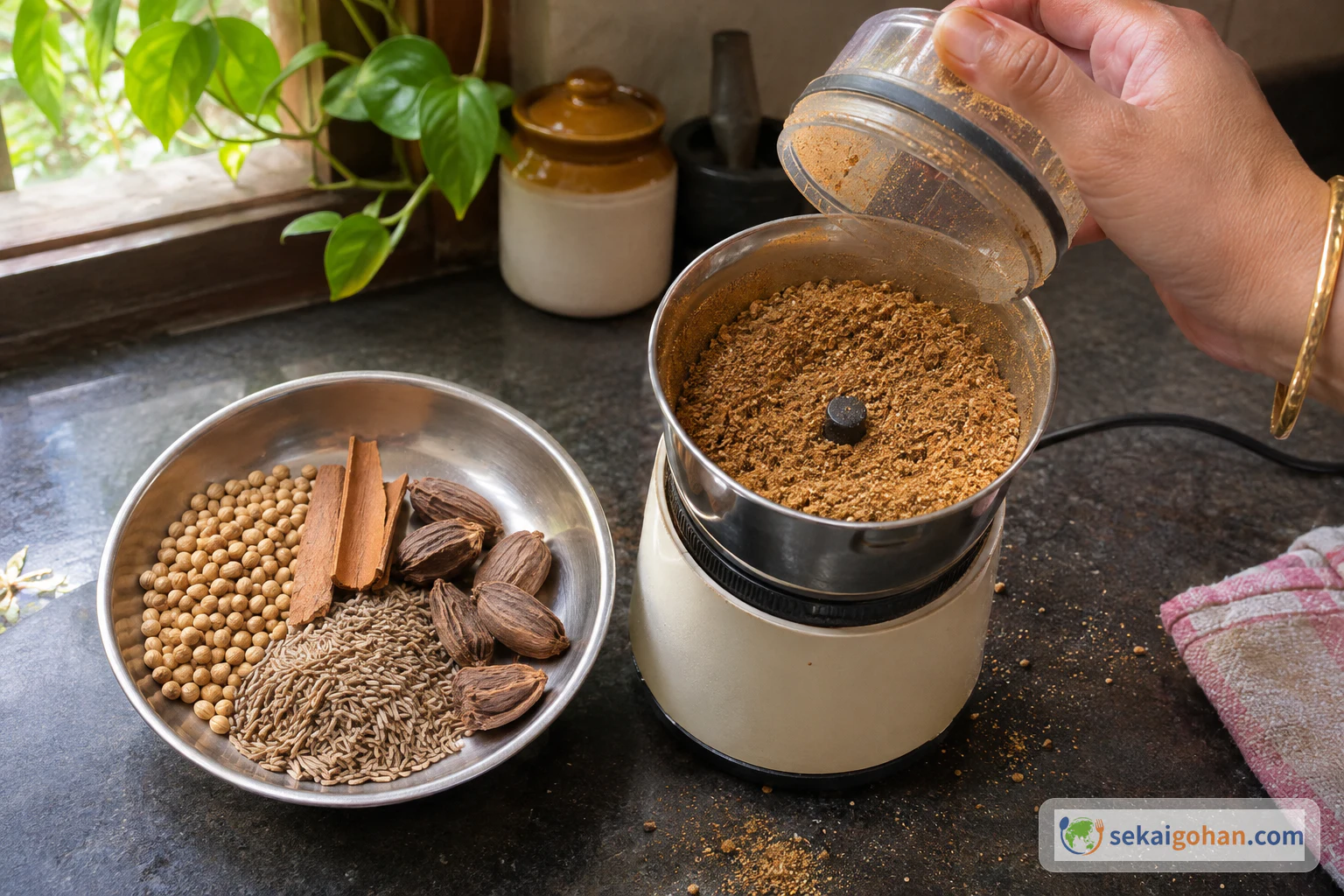
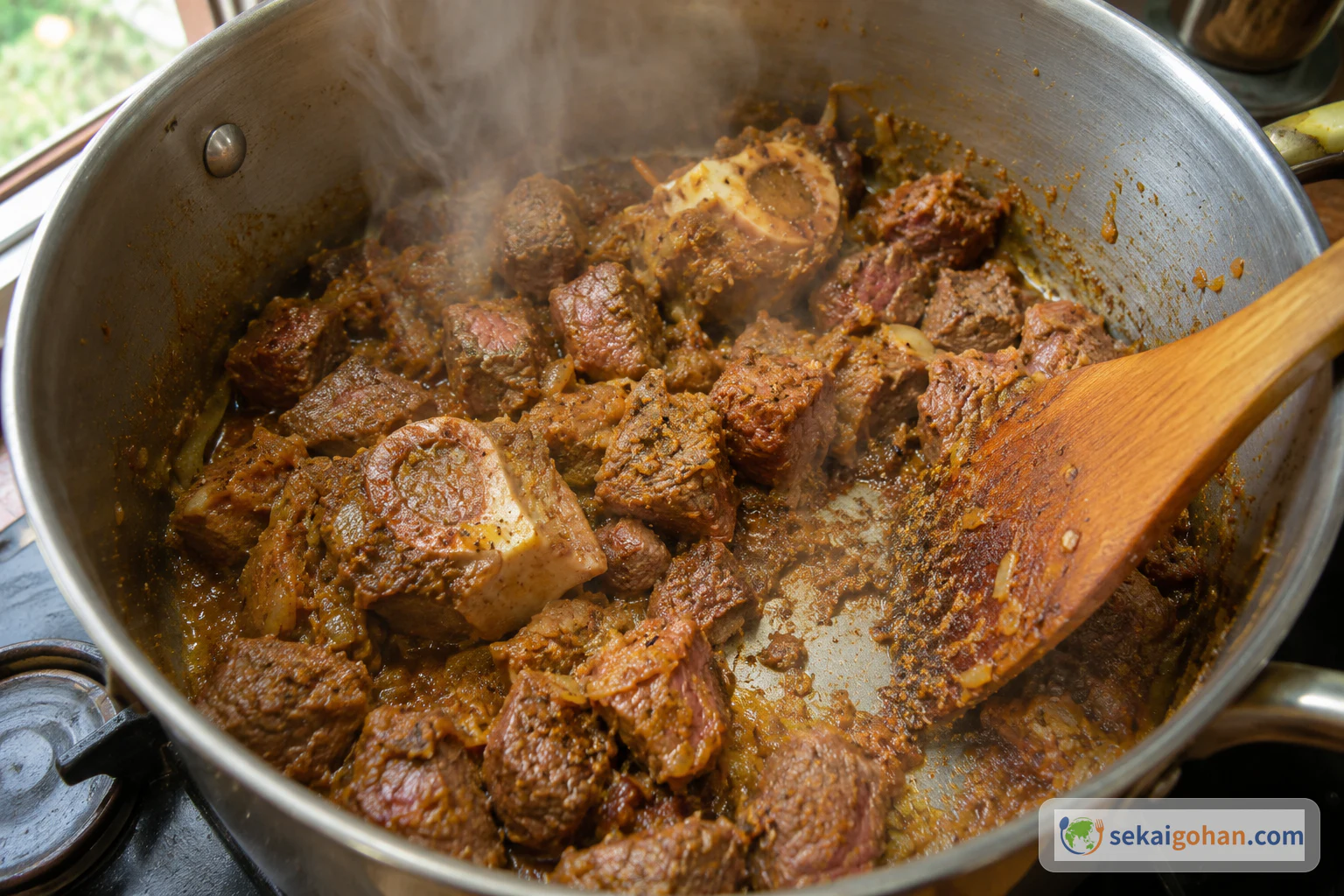
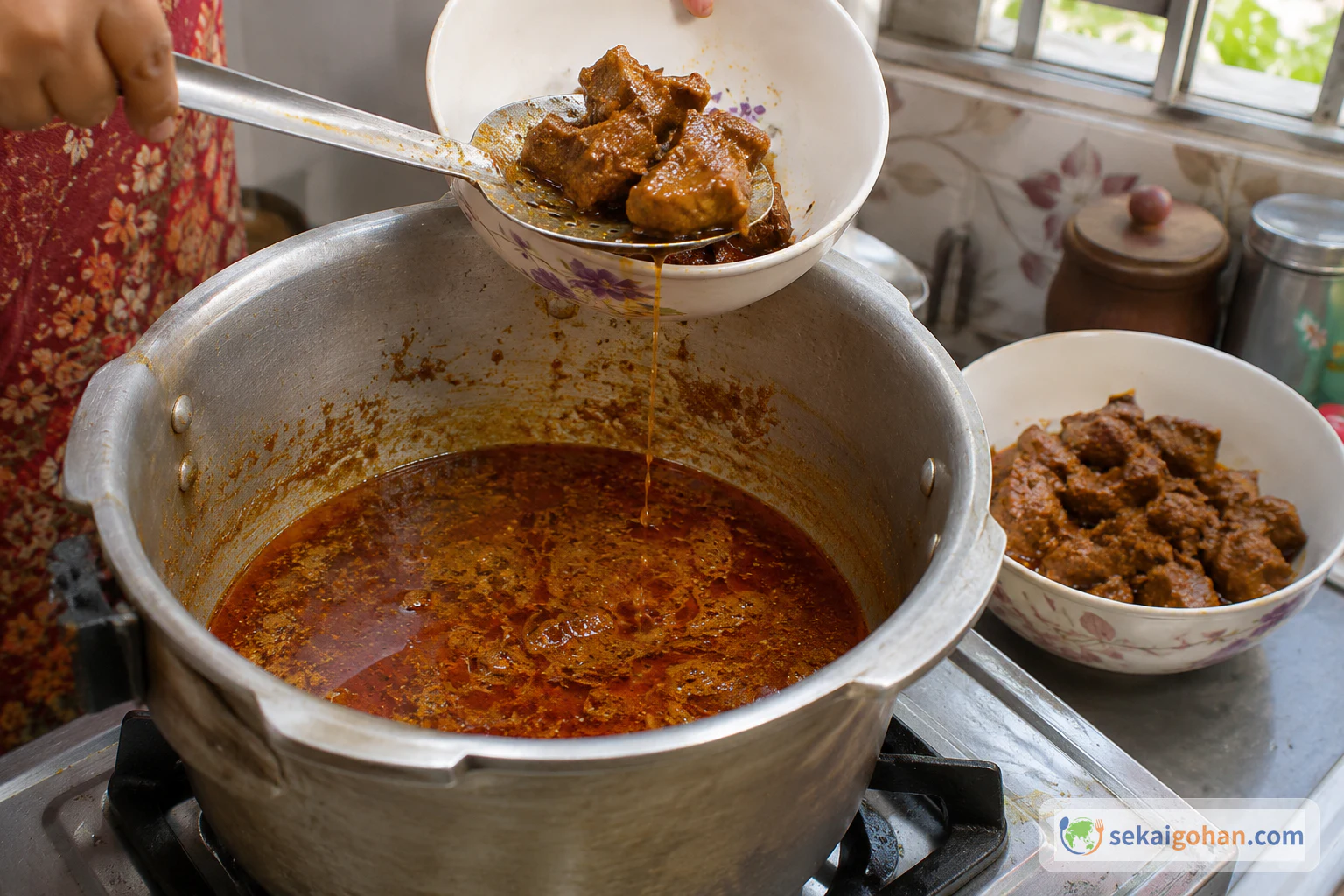
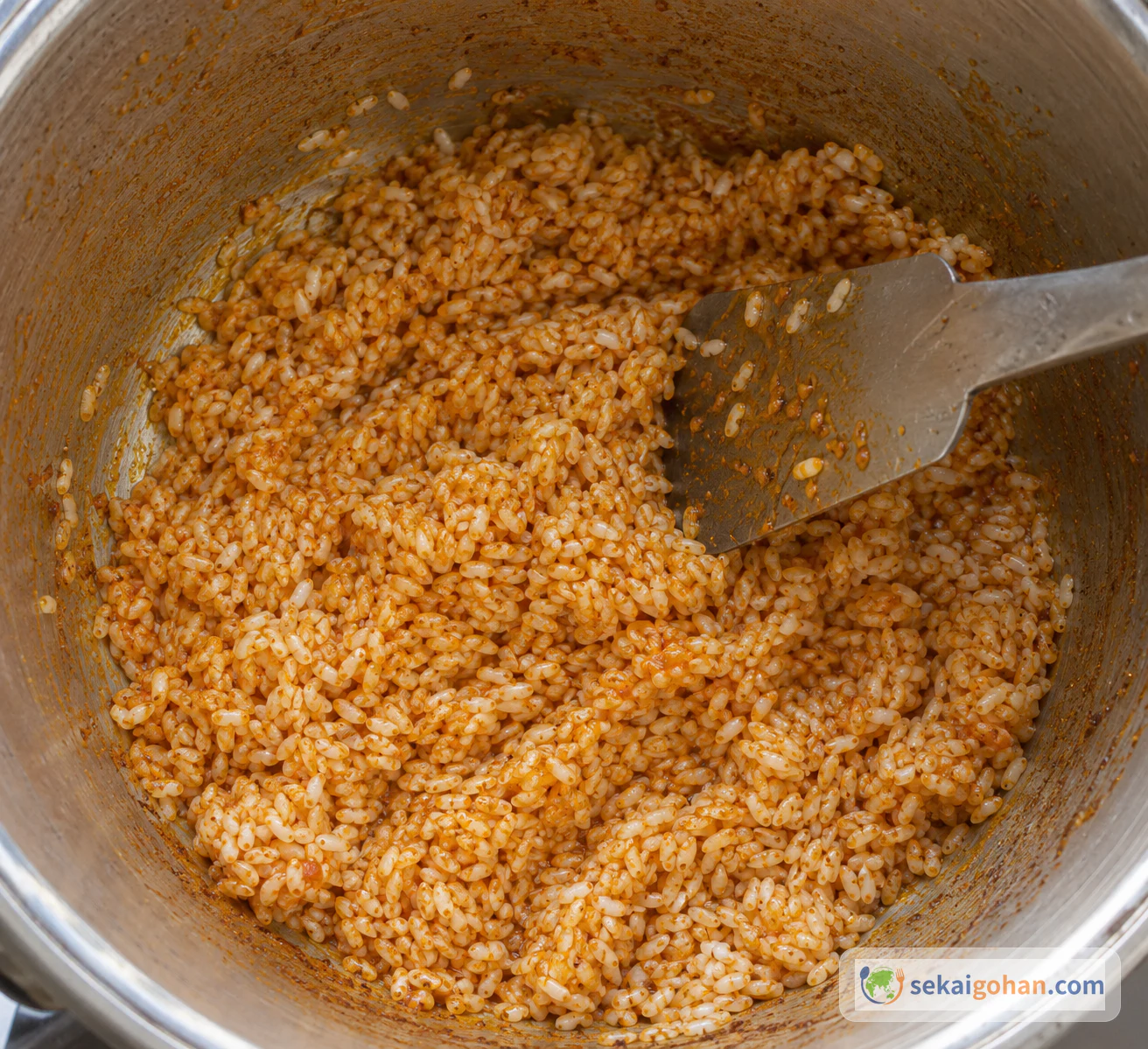
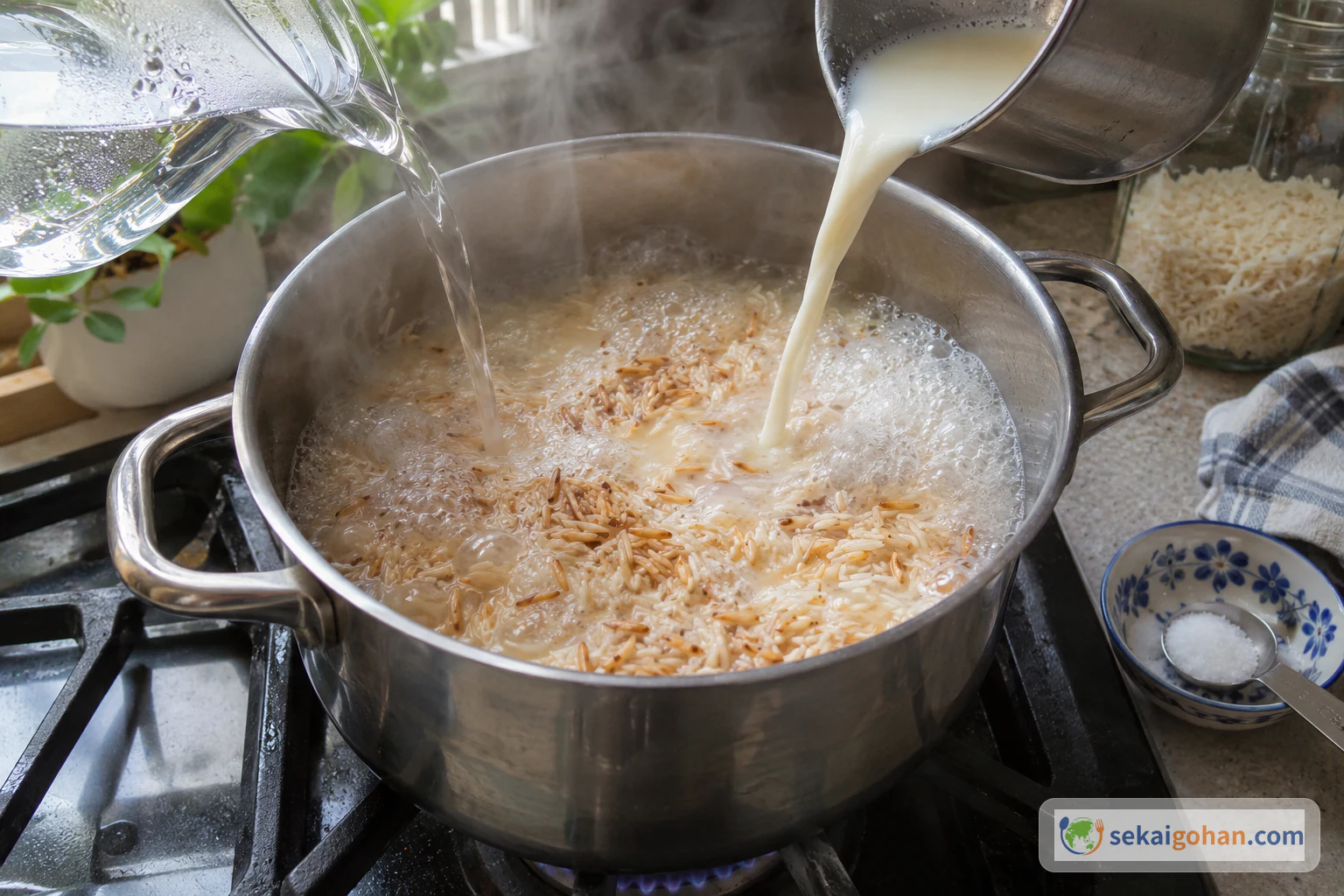
Biryani uses long-grain basmati, ghee, whole spices and often potatoes. The rice and meat cook separately and are then layered and steamed under a sealed lid. Tehari goes the other way. The beef is fried and braised in mustard oil with ground spices. The rice is toasted in what is left in the pot and cooks in that gravy, and the meat and chillies are folded back through it. Nothing is layered. Because every spice is ground to powder, you never bite into a whole clove or cardamom pod, and one recipe writer counts that as one of tehari's strengths.
From breakfast stalls to lunch plates
In older Dhaka, stalls sold tehari from early morning, and many people ate it for breakfast or a late-morning meal. The breakfast habit has faded, but the dish has not. It is a standard lunch and dinner, a quick plate for students and families, and Old Dhaka and Dhanmondi are full of places that make it. At home, tehari is the rice dish people cook for guests and celebrations.
Shops each have their own style. In 2022, a long-running Dhaka tehari house served a plate with four or five pieces of potato and seven or eight pieces of meat. Another shop was known for beef tehari with a strong mustard-oil aroma. Some shops use almost as much turmeric as the other ground spices, so their rice comes out yellowish. This pot has no turmeric, and its colour comes from chilli powder, yogurt and mustard oil.
Potatoes, peas and mutton
The potato in shop tehari is usually traced to the Second World War. Meat prices rose, potatoes and vegetables stood in for part of the meat, and that version found its own following. Some households also made a winter tehari with green peas and tomato. A Dhaka newspaper essay calls mutton and mustard oil the original tehari, while beef is the usual meat in Bangladesh today. The pot below sticks to beef. It has no potato, tomato, fried onion, saffron, nuts or raisins.
The name is usually traced to Tehri (or Tahri) from Awadh in northern India. That dish is a yellow turmeric rice, and its vegetarian versions use vegetables or dried lentil dumplings. Kashmiri Tehar is also vegetarian. It is turmeric rice with hing, whole spices and ghee, with no onion or garlic, and it is served as a festival plate. Dhaka's tehari is the meat version, built on mustard oil and green chilli.
Ingredients (serves 6–8)
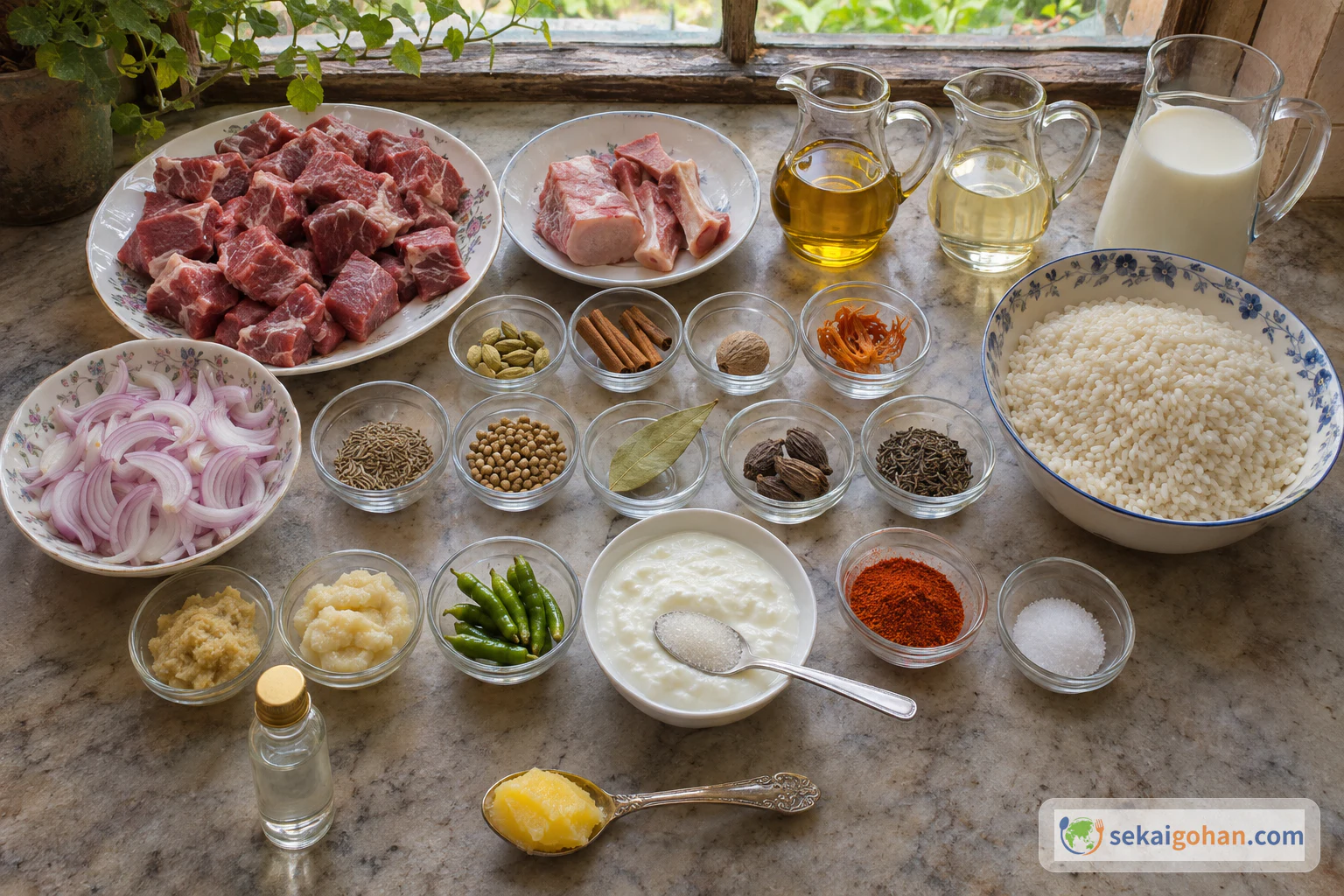
The salt, water and green chillies each go in at two or three different points. Every row below is a separate addition.
Contains milk (milk, yogurt and ghee) and mustard (mustard oil). To leave out mustard, use ½ cup (120 ml) vegetable oil in place of both oils. If you buy ready-made spice blends or ghee, check the labels for other allergens and shared-facility statements.
Equipment
- Heavy pot at least 9½ inches (24 cm) across, with a tight-fitting lid
- Electric spice grinder or coffee grinder
- US measuring cups and spoons
- Kitchen scale, for the beef
- Rubber or silicone spatula
- Slotted spoon and a bowl for the cooked meat
- Fork, for loosening the rice
Choosing and substituting
A South Asian grocer or an online shop will have everything that matters here. Look for kalijeera or chinigura rice, mustard oil, ghee, kewra water, shahi jeera, black cardamom and mace. The beef, onion, ginger, garlic, chillies, yogurt, milk and common spices all come from an ordinary supermarket.
- Rice. Kalijeera and chinigura are small-grained and fragrant, and they give the dish its look in Dhaka. Basmati is the swap. Its grains are longer and its scent is different, and you keep the liquid exactly as written. Japanese short-grain rice absorbs water differently and is stickier, so with this much liquid the result will not match the dish described here.
- Mustard oil. It gives the dish its bite. You can use ½ cup (120 ml) of mustard oil alone for a stronger edge. Or use ½ cup (120 ml) of vegetable oil, which makes a milder pot without that pungent aroma.
- Black cumin. Look for the label "shahi jeera." Some sellers call it caraway. Ordinary cumin smells quite different, so don't use it as a replacement.
- Kewra water. If you can't get it, leave it out. You lose the floral note at the end. Don't use a different flower water.
- Green chillies. Buy a hot variety. You control the heat by how many you use, not by which kind.
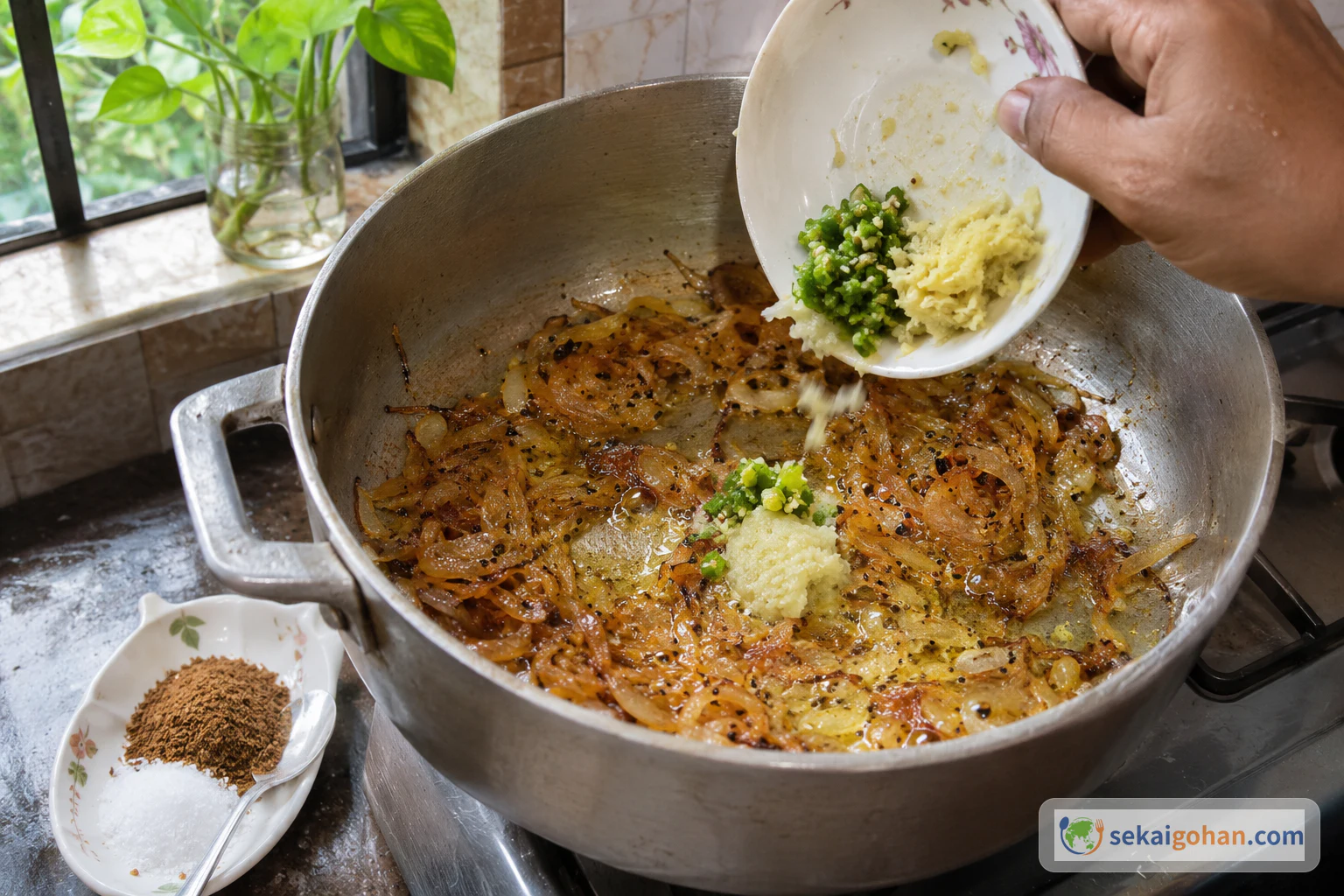
Three things make this tehari. The onion is fried to golden. The spices are ground raw, never toasted. The rice is toasted in the fat the beef leaves behind. Any other ingredient can change and the dish is still recognisable. Change one of these three and it becomes a different rice dish.
Method
Grind the spices and slice the onion before you turn on the heat, because once the oil is hot things move quickly. Everything happens in one pot. The braise builds the gravy, the rice cooks in that gravy, and the meat goes back in for the final steam. The long hands-off stretches are the 45-minute simmer and the 40-minute steam on low heat. Both need a check on the bottom of the pot now and then, because scorching is the most common failure with this dish.
When it goes wrong
| What you see | Why | What to do |
|---|---|---|
| A burnt layer and smell from the bottom | Heat too high, or the bottom went unchecked during the simmer or steam | Use a heavy pot, keep the heat low, and check the bottom during steps 6 and 11. Don't scrape up the burnt layer into the rice |
| Broken, mushy grains | Stirred hard after the meat went back in | Fold gently with a rubber spatula and loosen only with a fork |
| Bitter, scorched spice taste | The powder sat in hot oil without the water | Pour in the ½ cup (120 ml) hot water as soon as the powder goes in |
| Rice tastes flat | The cooking liquid wasn't salty enough at step 9 | Next time, season until the liquid tastes slightly too salty |
| Too hot to eat | All 8–10 finishing chillies went in | Use fewer finishing chillies and keep the 5 in the meat stage |
| Meat still tough, gravy drying up | The pot ran low during the 45 minutes | Add a little hot water and keep simmering until the meat is tender, with plenty of gravy left |
Serving, variations and storage
At the table
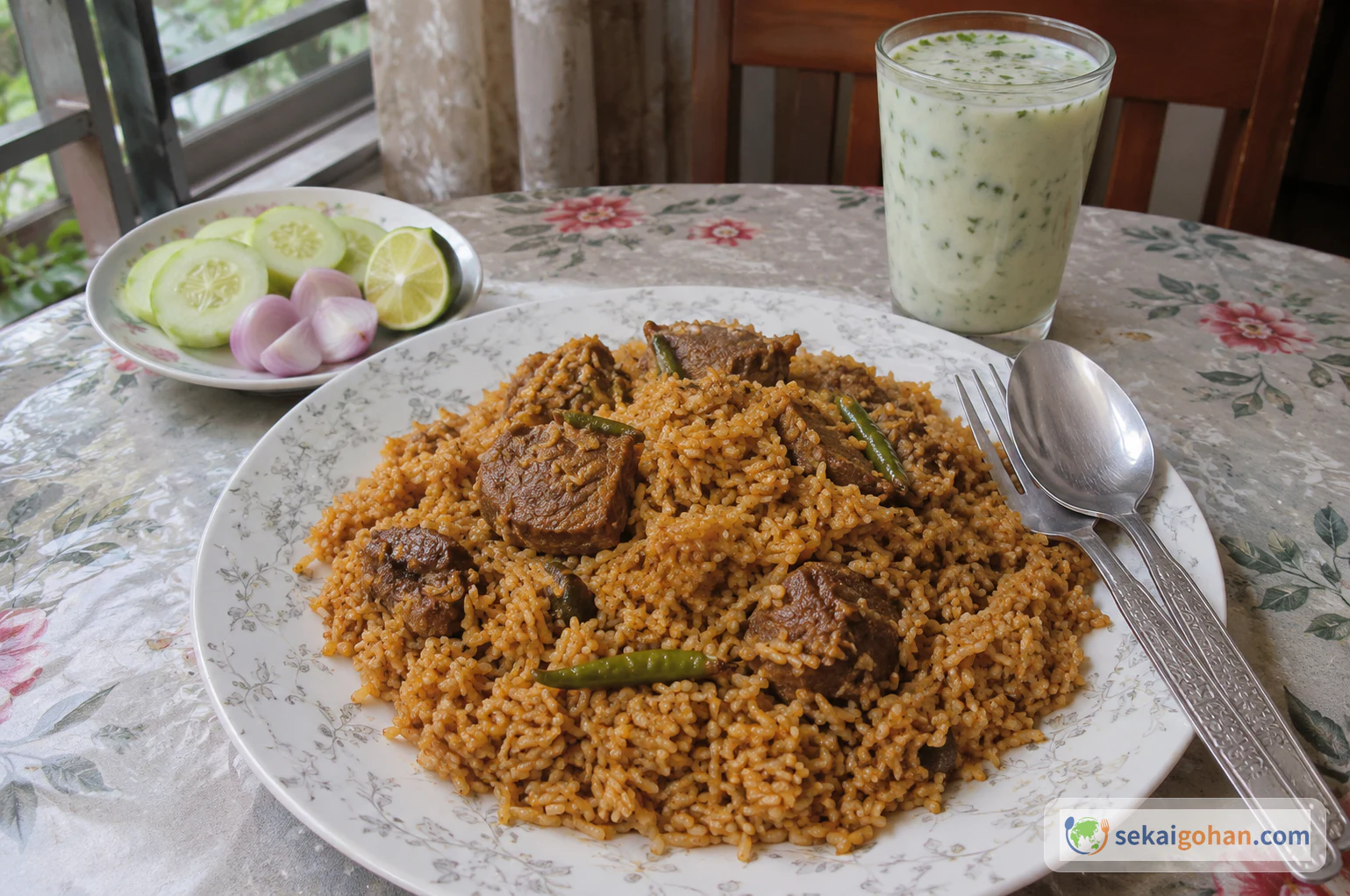
Serve tehari hot from the pot with borhani, a spiced yogurt drink, plus sliced cucumber, shallots and a wedge of lime. The cool, tangy drink and the raw vegetables cut through the mustard oil and the chilli. Plain yogurt and a simple salad do the same job if you have no borhani. Tehari works as a weekday lunch, and it is also the rice you make when guests are coming.
Variations
- Lamb. Use the same amounts and the same method. Lamb gives a richer pot and comes closer to the mutton tehari described as the original. Check that the meat is tender before you lift it out in step 7.
- Milder heat. Cut back the finishing chillies and leave the 5 in the meat stage alone. For aroma with less heat, leave the whole chillies unslit, so they flavour the rice without releasing much burn.
- Basmati. Use the same liquid. The grains come out longer and the scent is different from small-grained kalijeera.
- Shop-style potatoes. Add small potatoes with the beef so they simmer in the gravy. They soak up the spice and make the pot go further, the way Dhaka shops serve it.
Storing leftovers
Raw rice can carry Bacillus cereus spores that survive cooking, so cooked tehari needs care. Cool leftovers as quickly as possible, ideally within an hour. Divide them into small containers so they cool faster, rather than leaving them in the pot. Cover and refrigerate, and eat within 24 hours. Reheat only once, until it is steaming hot all the way through. Don't leave cooked tehari standing at room temperature.
Frequently asked questions
Why is my tehari reddish brown when the shop's was yellow?
The colour here comes from chilli powder, yogurt and mustard oil, and there is no turmeric in this pot. Some Dhaka shops add almost as much turmeric as the other ground spices, which turns their rice yellowish. Both are tehari. They are simply different house styles.
Should I soak or rinse the rice first?
This method toasts dry rice in the meat fat and then cooks it in plenty of liquid. Some one-pot versions soak the rice and use much less water. The two approaches don't mix. If you soak the rice and keep these liquid amounts, the grains are likely to turn soft and break.
What does the milk do?
Warm milk cooks into the rice along with the water. It softens the edge of the chilli and mustard oil, and together with the yogurt it makes tehari feel lighter than a ghee-heavy biryani. Some cooks dissolve milk powder in hot water instead. Here, plain whole milk does the job.
Do I need the shank bones?
No. They add depth to the gravy that the rice later takes up, so use them if your butcher has them. Without them the pot is still complete. Just make sure the gravy gets to the point where the oil separates in step 5.