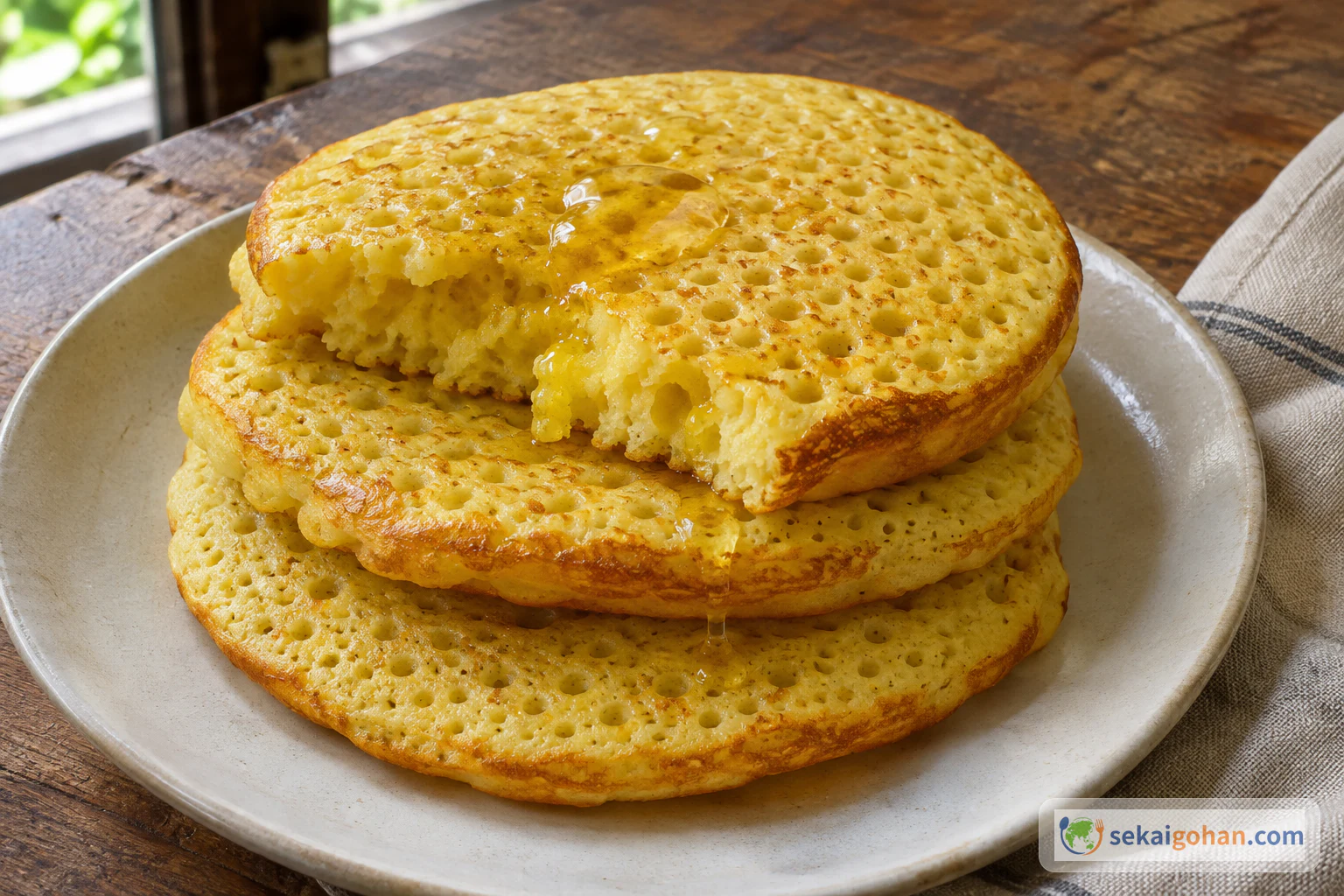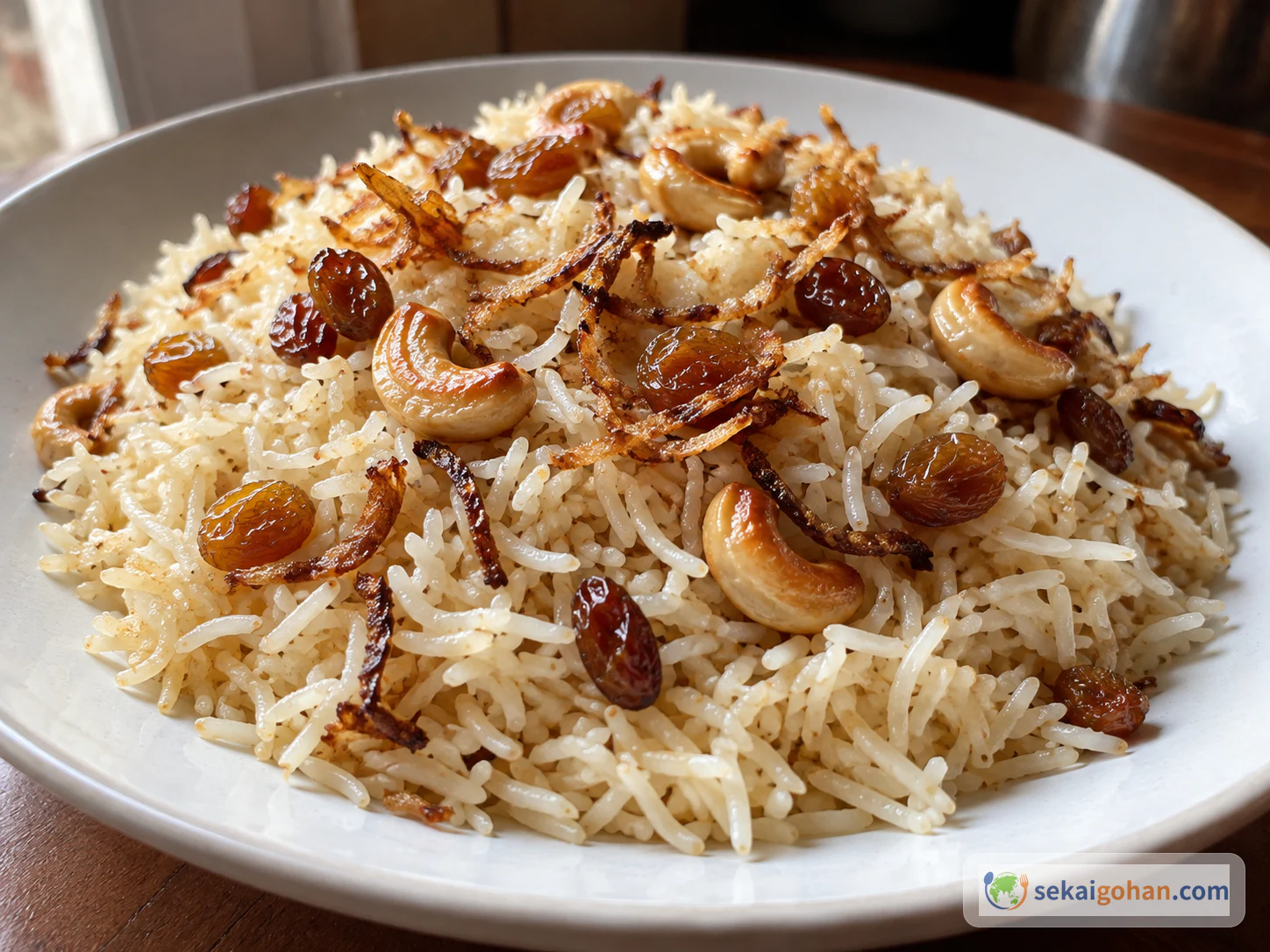
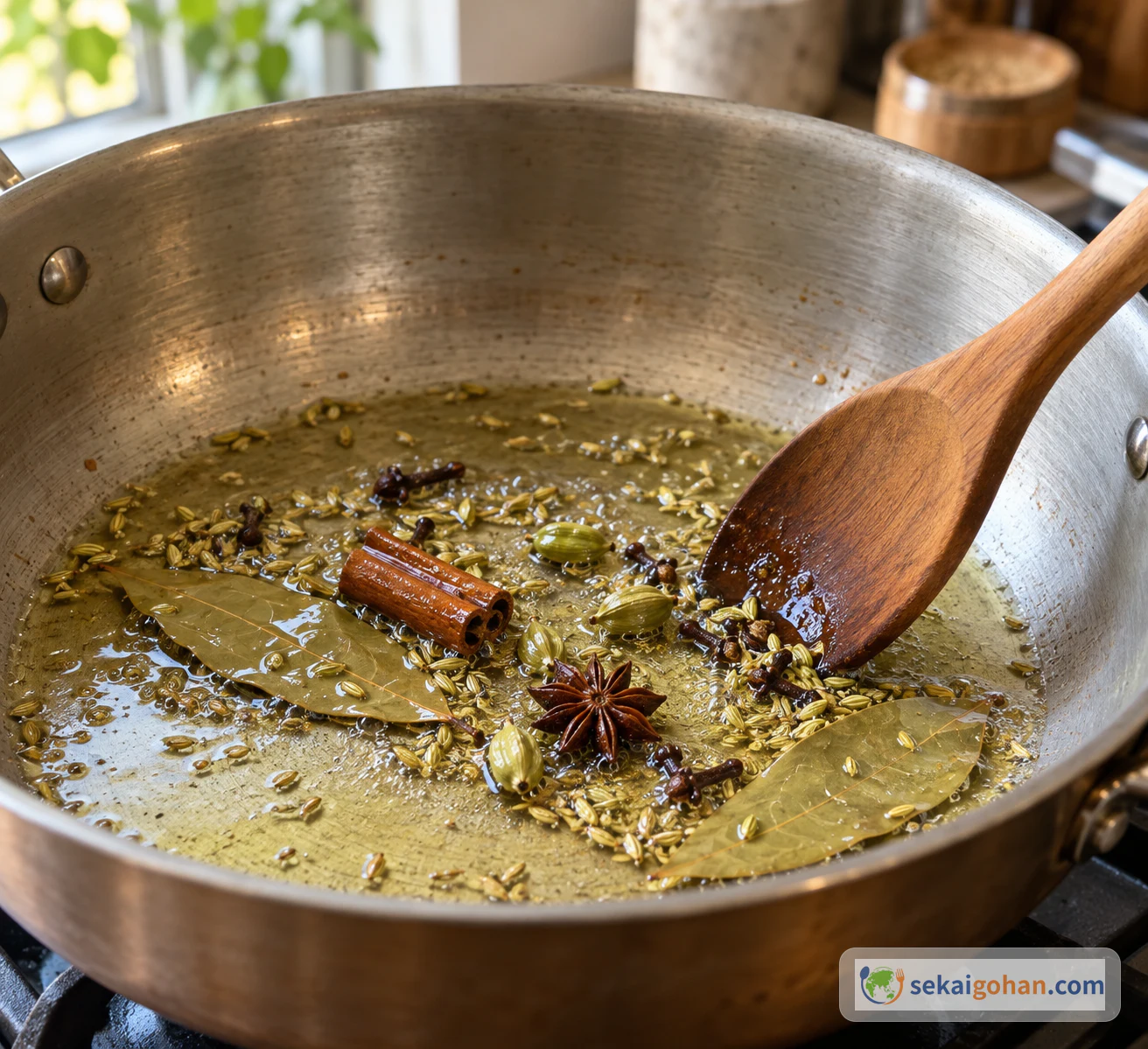
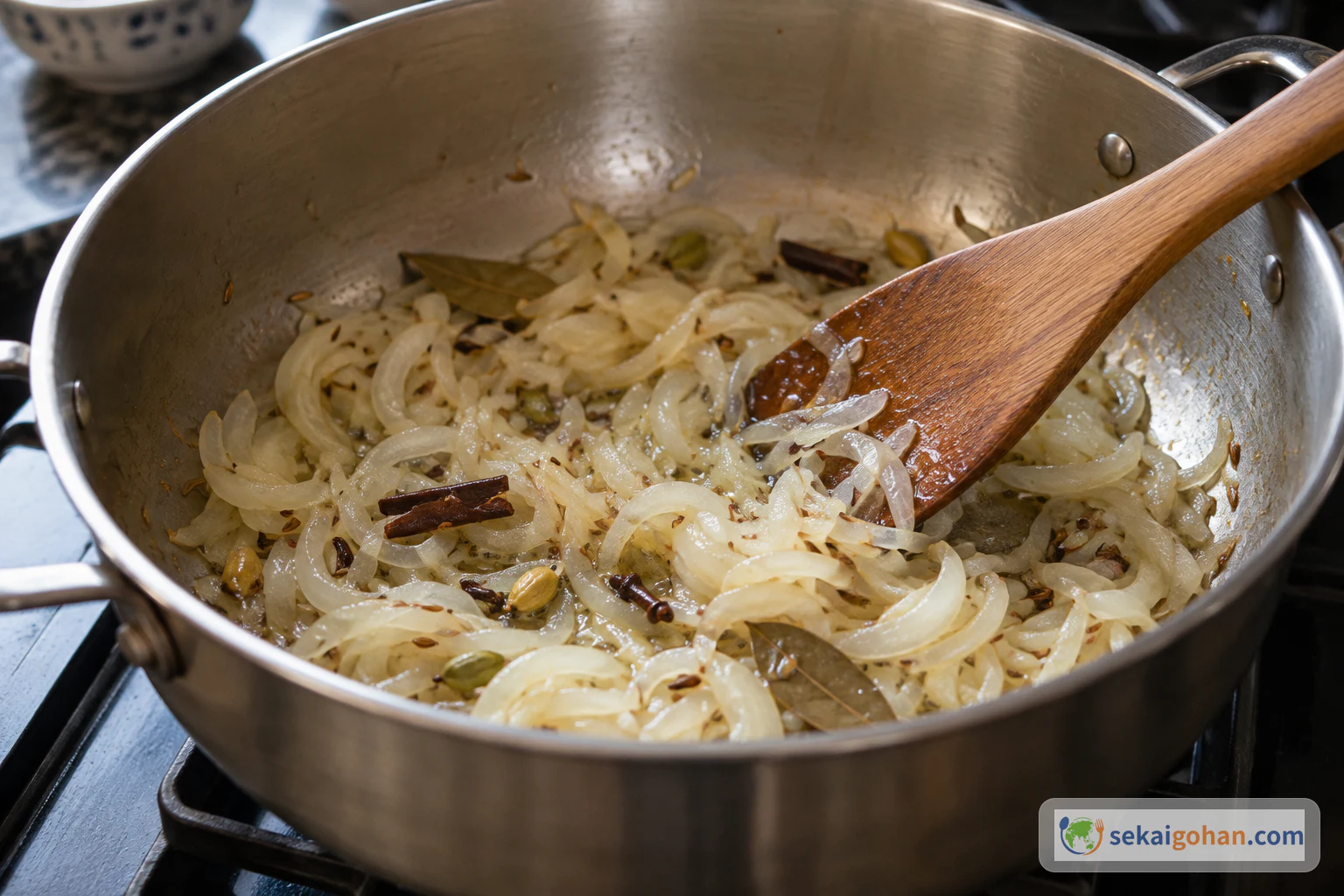
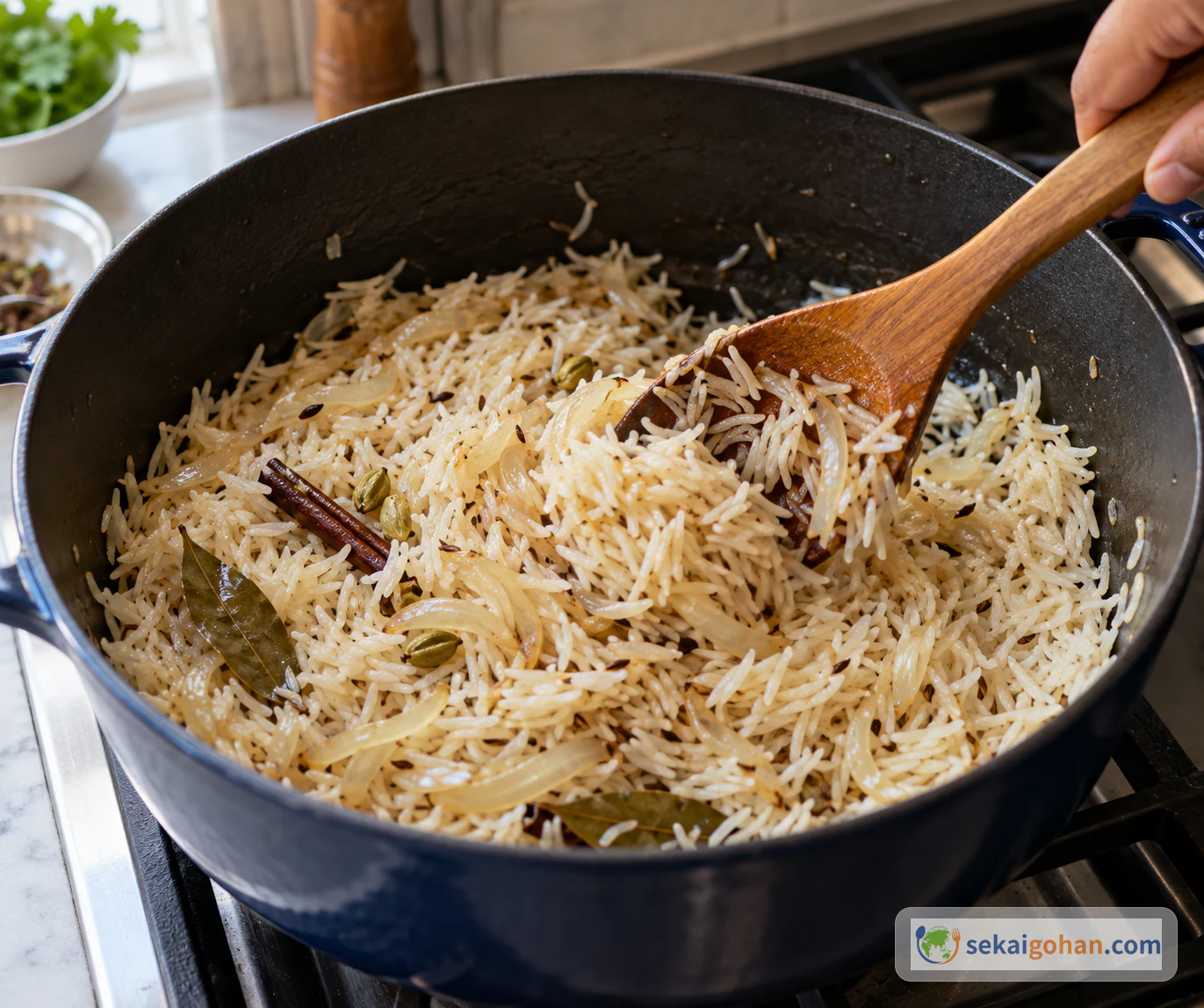
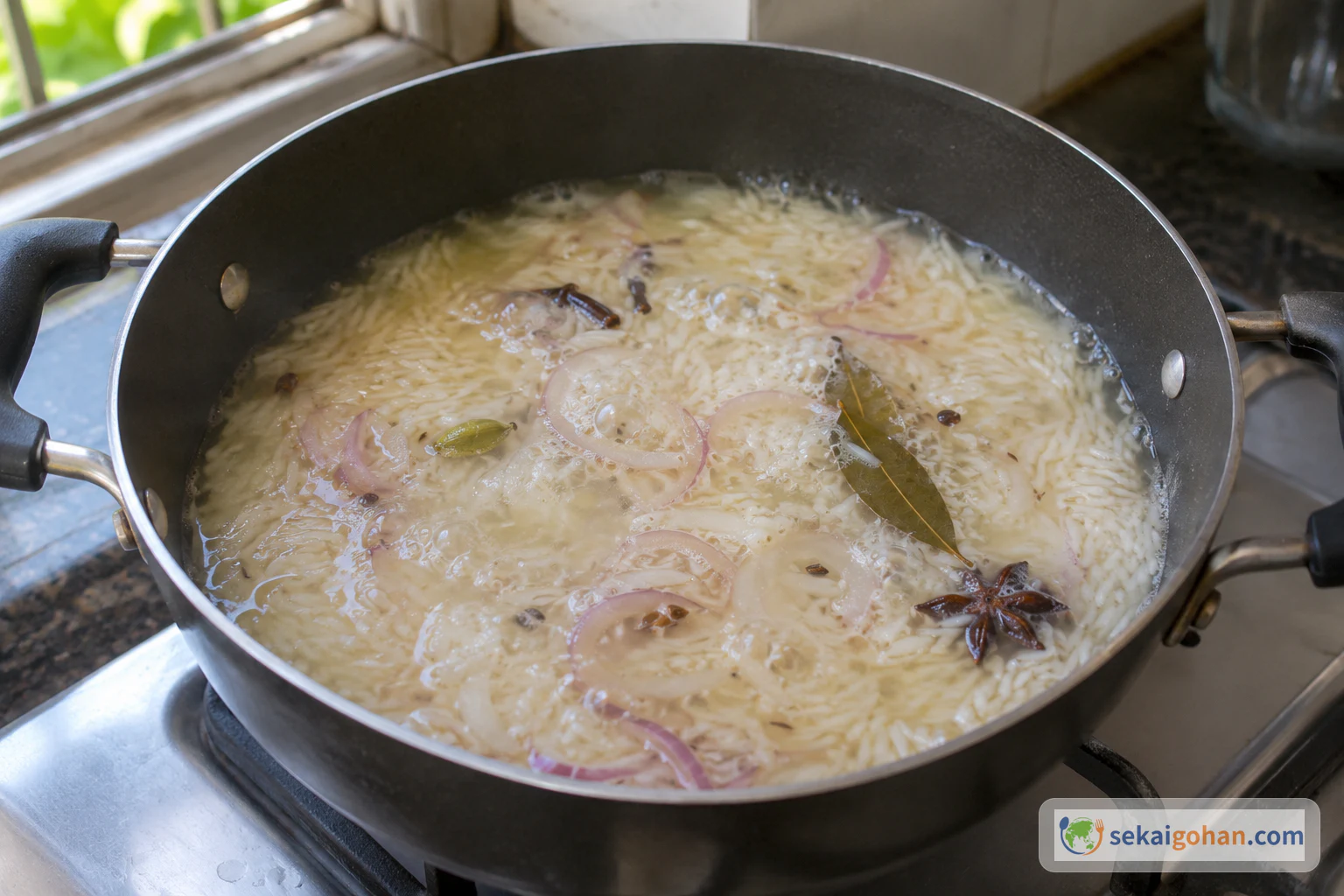
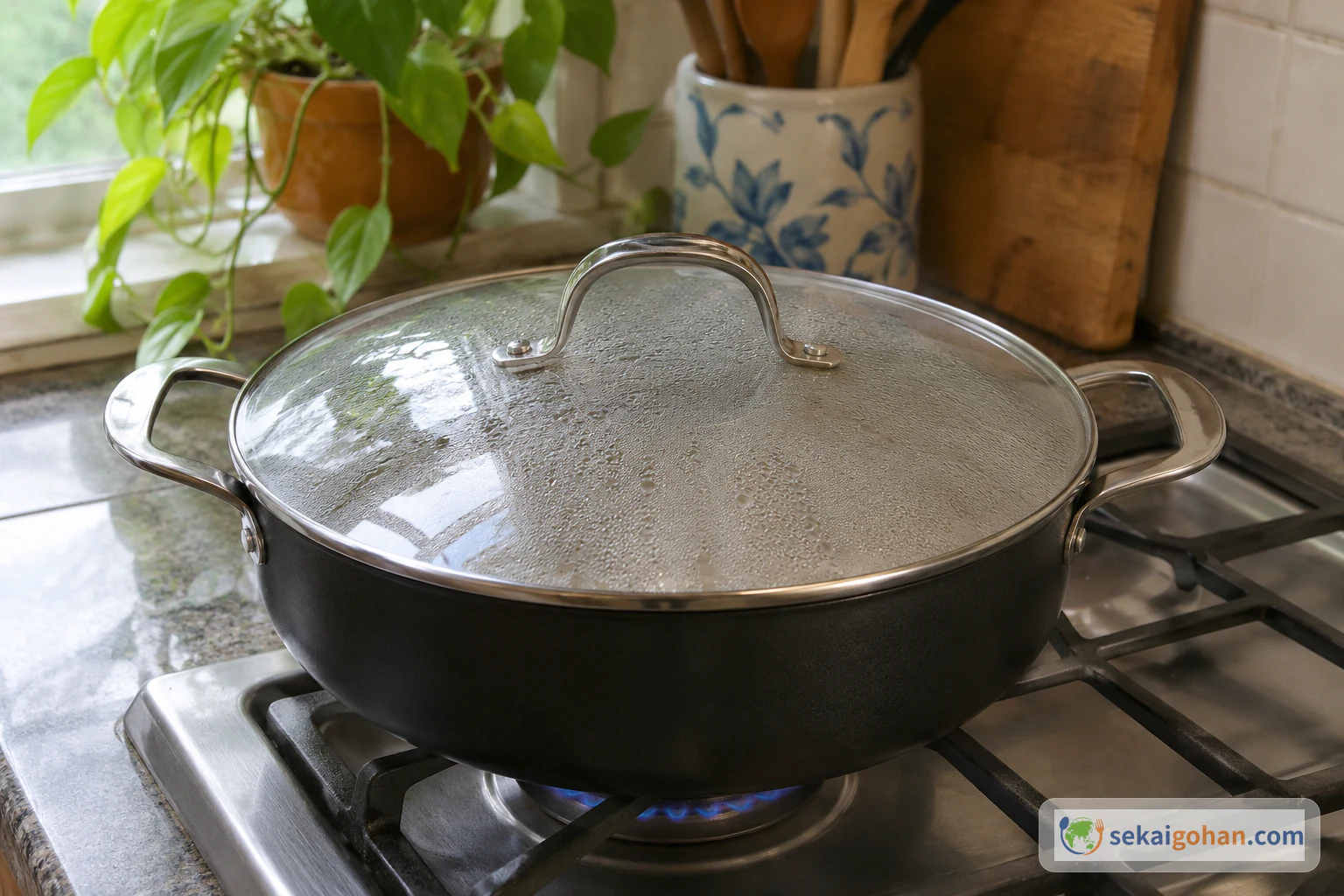
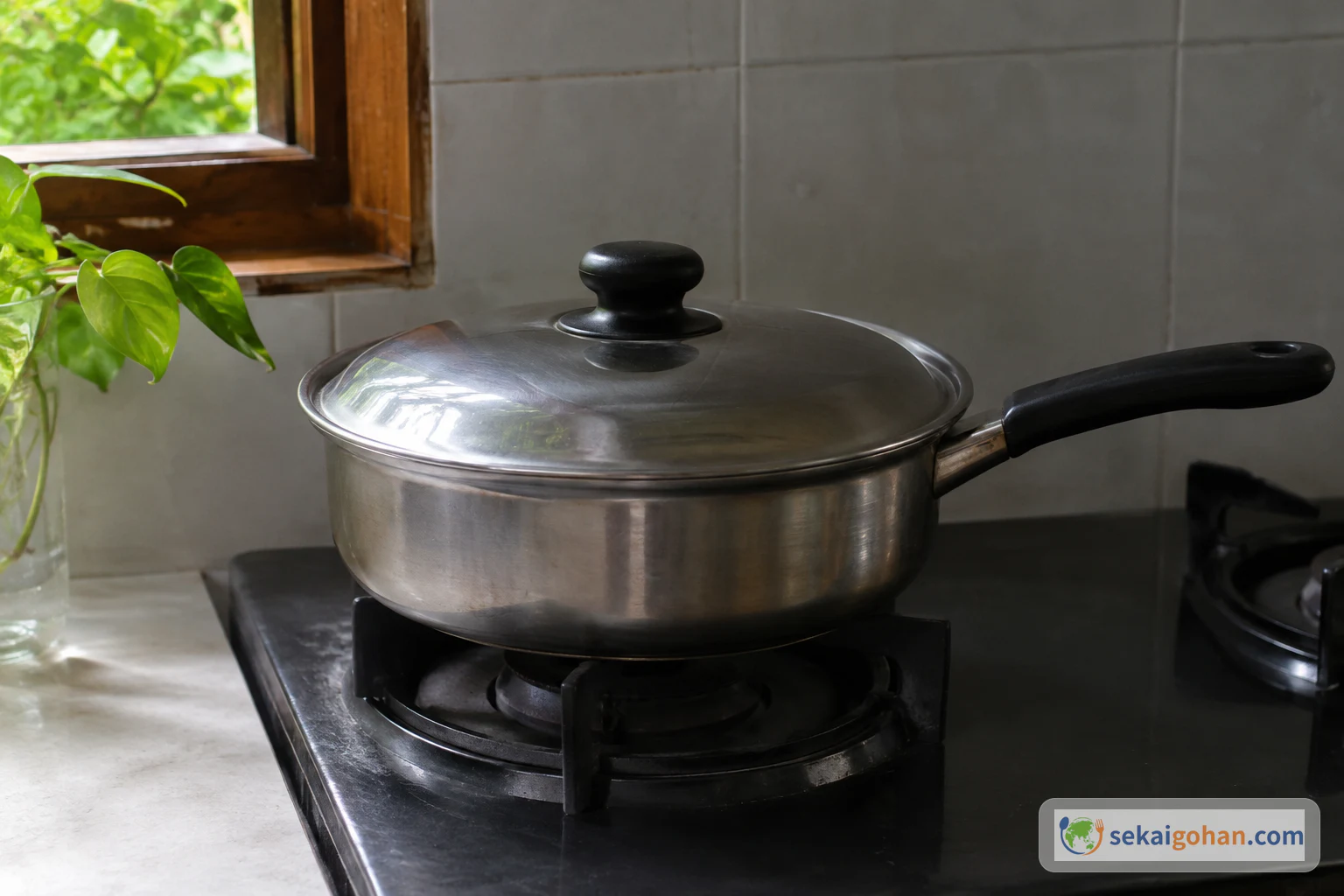
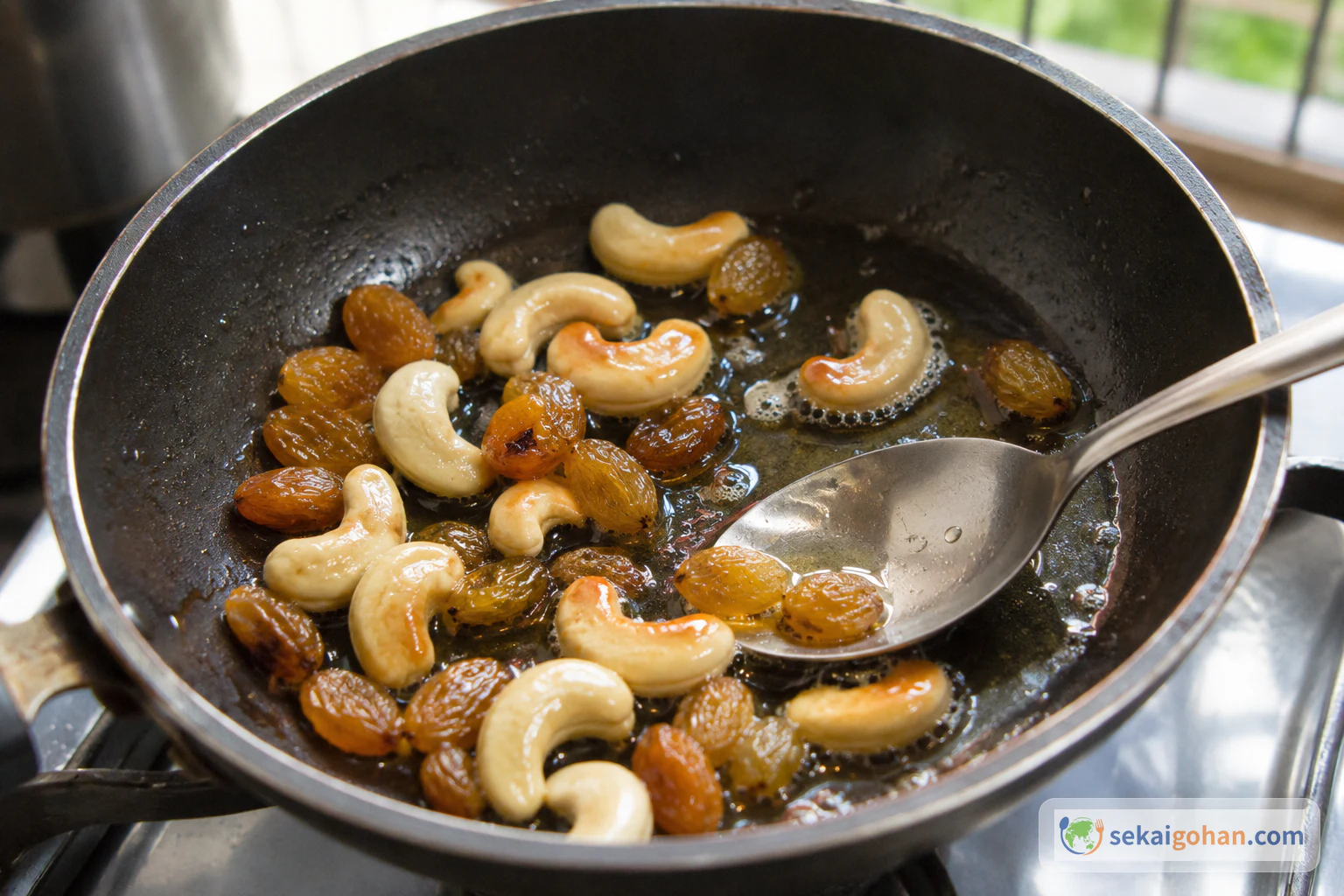
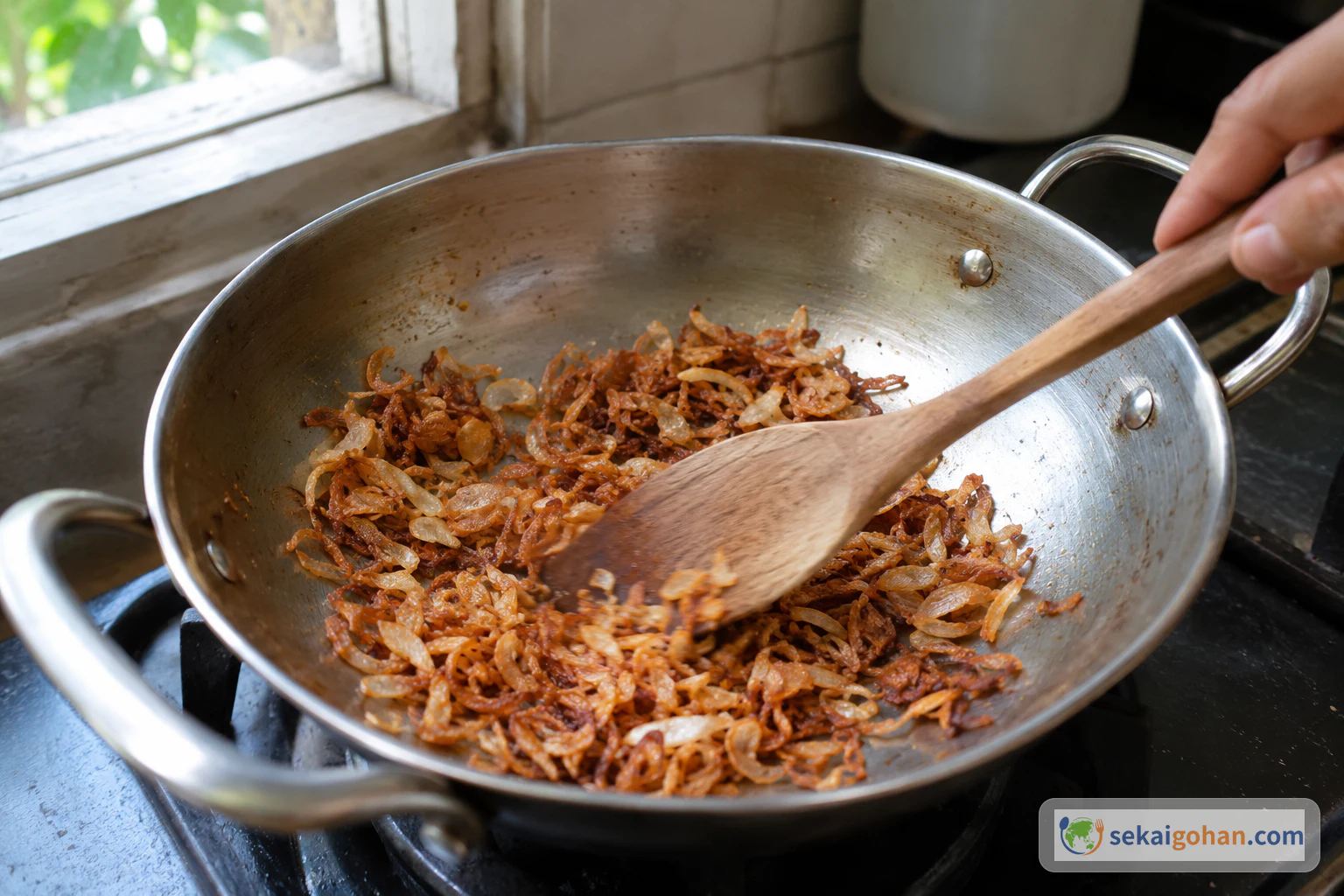
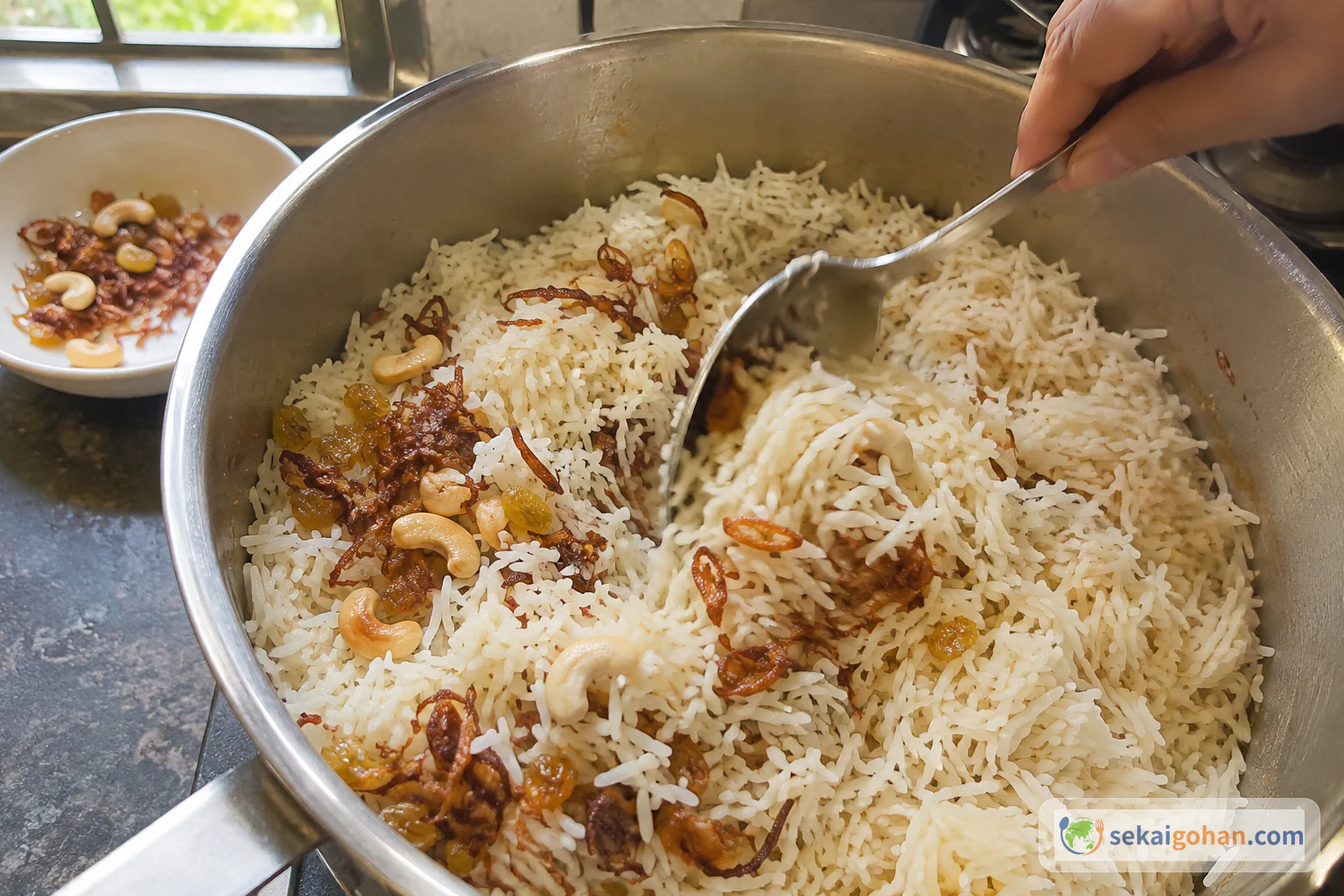
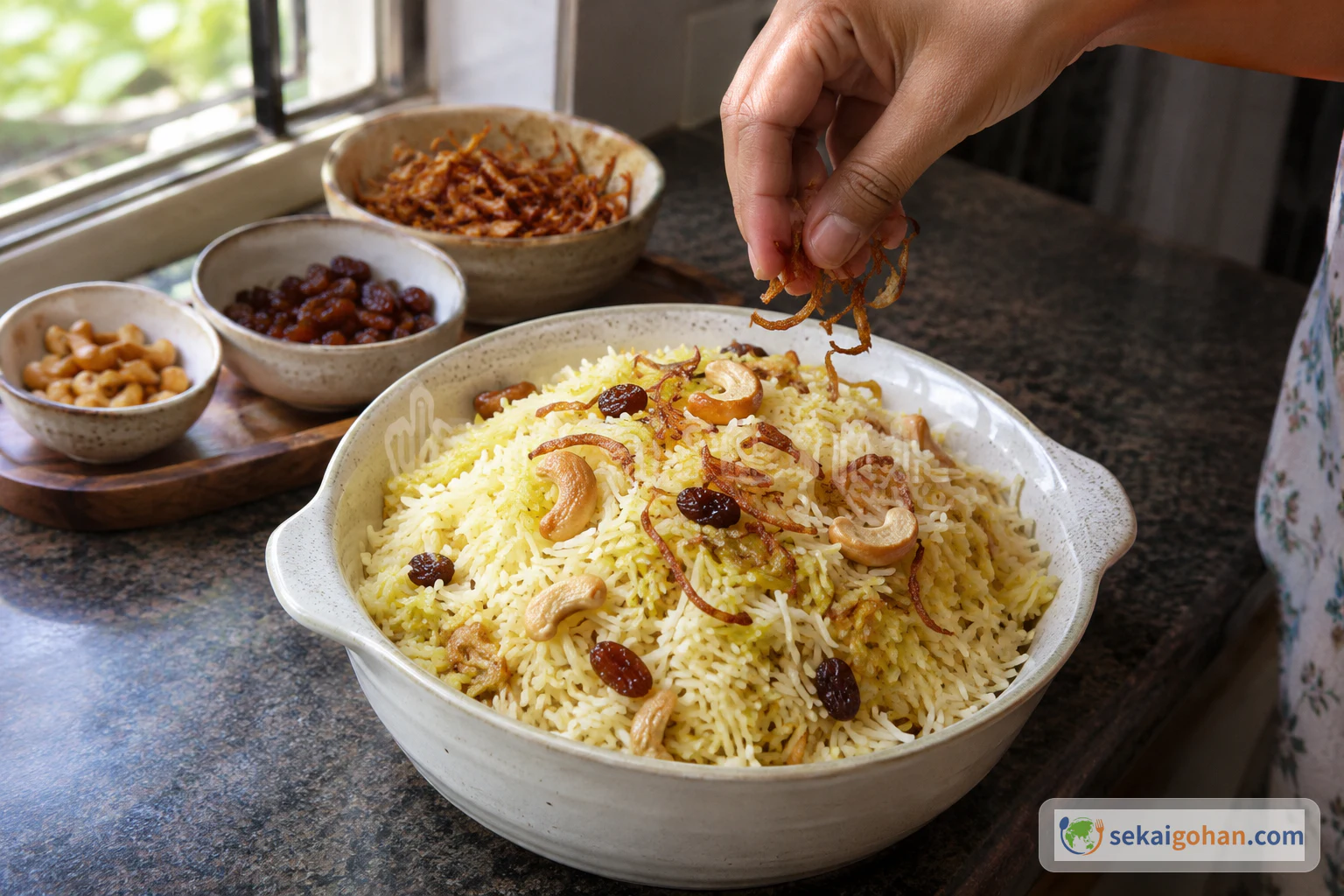
The fennel seeds hit the hot ghee first. Then the cinnamon, bay leaves, cardamom, cloves and star anise go in, and within a couple of minutes the whole kitchen smells warm and sweet. Neychoru, or ghee rice, comes from the Malabar coast of northern Kerala. Long grains of Basmati are fried in spiced ghee with soft onion and then cooked under a tight lid until each grain stays separate. Cashews, raisins and crisp fried shallots finish the pot. The rice tastes rich and gently sweet, with spice in the aroma and no heat on the tongue, and it is made to sit next to a spicy curry.
Neychoru on the Malabar Table
The Kerala Department of Tourism describes neychoru as a fragrant rice dish of the Malabar region and a festival staple, cooked with ghee, onions and spices, garnished with fried cashews and raisins, and often served with chicken curry, beef curry or spicy gravies. Jisha, the author of the written Basmati recipe used here, calls it popular in Northern Kerala and suggests spicy chicken or mutton gravies, or a vegetarian gravy such as paneer or mushroom makhani. The rice is mild and buttery, and its job is to calm and carry the curry next to it, so the two go on the table as a pair.
What stays the same from pot to pot is ghee, onion and whole spices, with fried cashews and raisins on top. The rice and the method change by household. The stovetop Basmati method below gives long, separate grains. Another published Kerala version uses Khaima or Jeerakasala rice, a mix of sunflower oil and ghee, and a pressure cooker, cooking to the first whistle. That article suggests beef curry, pickle and pappad alongside. Both are neychoru. They simply cook differently, and you cannot mix the steps of one with the rice of the other. Ghee rice is only one dish from one region in a very large food culture. For a wider look at the country, see India.
In Malayalam it is written നെയ്യ് ചോറ്. In English you will see neychoru, ney choru, nei choru and neichoru, and in Kerala people use "ghee rice" as well. All of these mean the same dish, so try more than one spelling when you shop or search.
Ingredients
Ghee is clarified butter, so this dish contains milk. Cashews are a tree nut. Read the label on store-bought fried onions or shallots for other allergens and shared-facility statements.
Equipment
- Bowl for soaking the rice
- Fine sieve or strainer
- Deep pan with a tight-fitting lid
- Small frying pan for the garnish
- Wooden spoon and a broad spoon for folding
- Slotted spoon and a plate for draining the garnish
- Measuring cups and spoons
Choosing and Substituting
The rice decides the dish. Buy long-grain Basmati. The water range, the frying time and the covered cooking are all set for it. Basmati from different brands and ages takes up water differently, which is why the water is a range. Start in the middle the first time and note how your bag behaves. Khaima or Jeerakasala rice from an Indian grocer belongs to the pressure-cooker method and does not fit these steps.
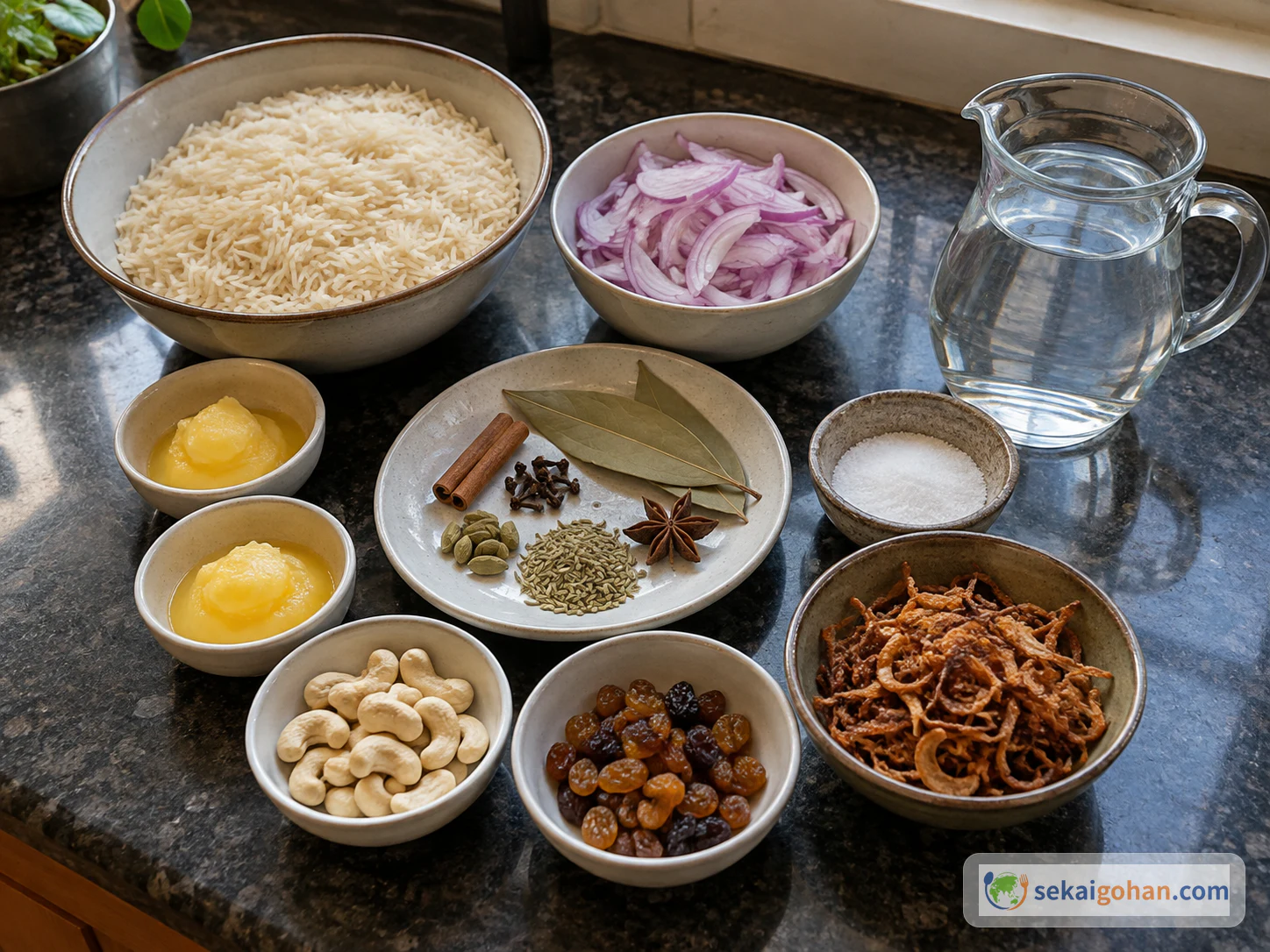
The whole spices are listed with their Malayalam names in the table, which can help when you shop. Fried red onions and fried shallots both work. Shallots taste a little sweeter, and red onions give longer, crisper strands. Buy the fried onions or shallots ready-made, as the recipe uses them.
Measure out both ghee portions before you start, and put the garnish portion out of reach of the rice pan. It is easy to tip all the ghee into the first pan and have none left for the cashews.
Method
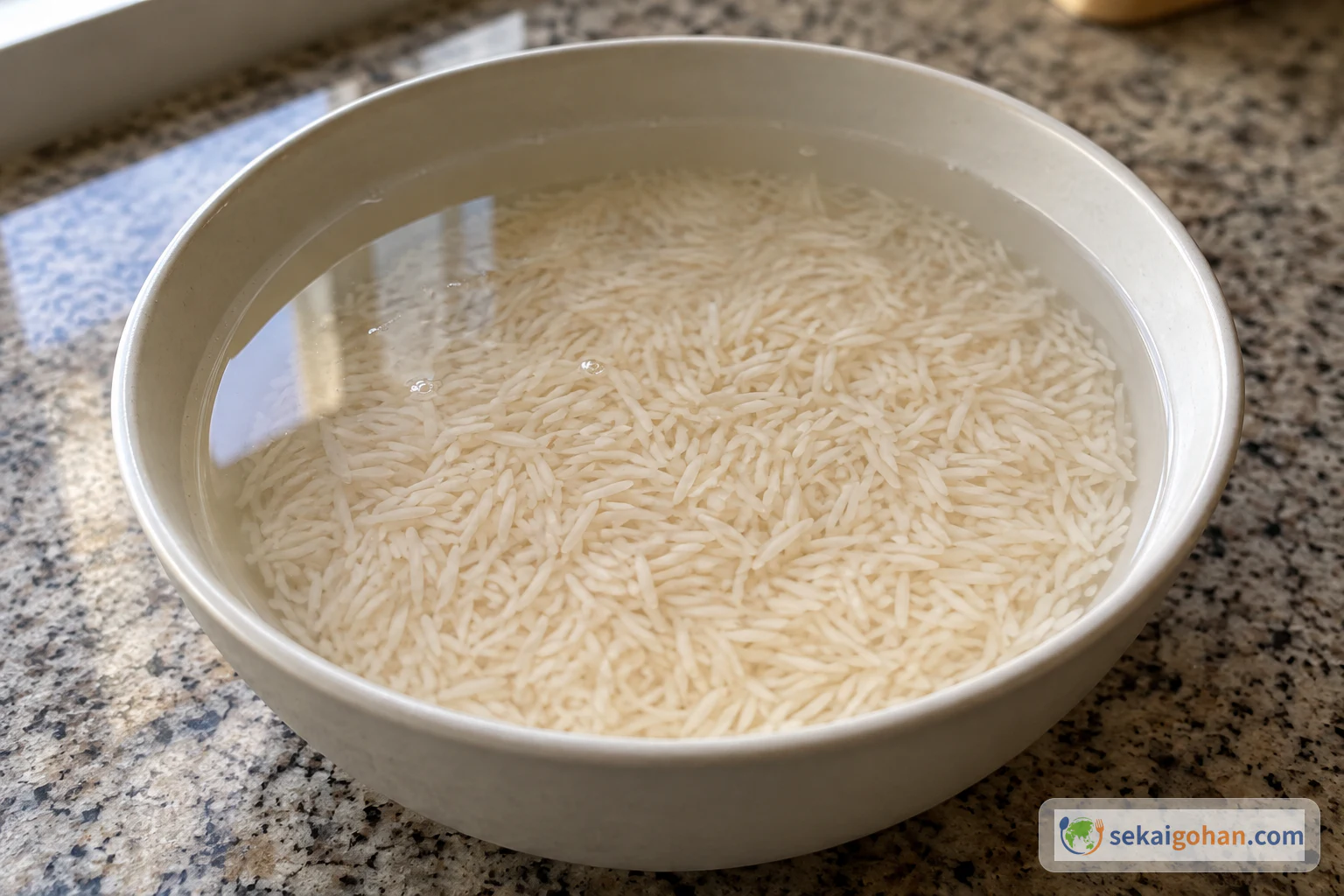
Measure everything before the rice comes out of its soak, because after that the steps follow each other with no pause until the lid goes on. The covered cooking and the rest give you time to fry the garnish in a second pan, so the rice and its topping are ready together.
The onion in the pot should stay pale. Brown onion makes the rice darker and gives it a bitter edge. All the browned, toasty flavour comes from the shallots on top.
Ghee heats up fast in a small pan, and cashews go from gold to burnt in moments. Stay at the stove during steps 7 and 8, keep the pan handle turned inward, and use a slotted spoon to lift out the garnish rather than tipping the pan.
When It Goes Wrong
| What you see | Why | What to do |
|---|---|---|
| Water still sits in the pan after the covered cook | This batch of Basmati takes up water more slowly, or the lid let steam escape | Put the lid back on firmly and keep it on medium-low until the water is absorbed, then rest it as usual |
| The rice is dry or firm with all the water gone | Your Basmati wants more water | Use the top of the water range next time |
| The grains are soft and sticky | Too much water for this rice, or rough stirring | Use the bottom of the range next time and fold gently at the end |
| The onion turned brown and the rice looks dull | The heat was too high in step 3 | Lower the heat and stop at the glassy, translucent stage |
| The cashews are dark and bitter | They stayed in the ghee too long | Pull them out at light brown. They keep colouring off the heat |
| The spices smell burnt | The ghee was smoking before they went in | Start again with fresh ghee. Burnt spice flavour runs through the whole pot |
Serving and Other Ways to Make It
What goes with it
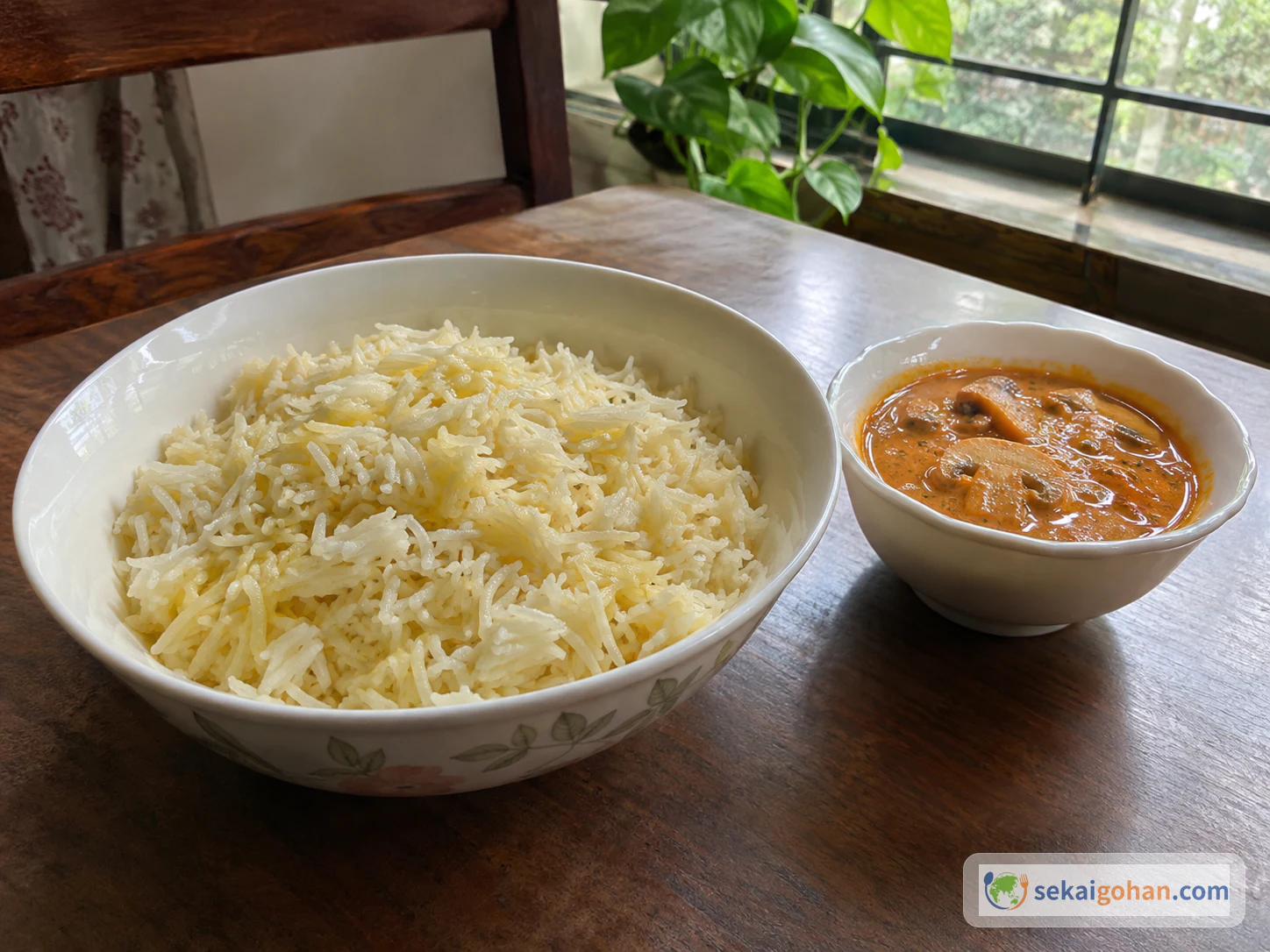
Ghee rice is made to sit next to a gravy with heat. The recipe author suggests spicy chicken or mutton gravy, and Kerala Tourism lists chicken curry, beef curry or spicy gravies. The rice softens the chilli, and the curry cuts through the richness of the ghee. For a meatless table, the recipe author suggests paneer makhani or mushroom makhani. Bring the gravy in its own bowl and let everyone spoon some over their rice, so the crisp shallots on top are still crisp when they are eaten.
Variations
- Fried red onions instead of shallots. You get longer, crisper strands and a slightly less sweet topping.
- The pressure-cooker version. Khaima or Jeerakasala rice, sunflower oil plus ghee, and a pressure cooker taken off at the first whistle make a different neychoru with its own timing. That article suggests pickle and pappad alongside it. Follow that method as a whole and do not combine it with the Basmati steps above.
- A meat or a vegetarian table. The rice stays the same, but a mutton gravy makes the meal heavy and festive, while a makhani makes it milder and creamier.
Frequently Asked Questions
Is ghee rice vegetarian?
Yes. There is no meat, fish or egg in the pot, and the topping is nuts, dried fruit and fried shallots. It is not vegan, because ghee is clarified butter. Serve it with a paneer or mushroom gravy for a fully vegetarian meal.
Can I leave out the cashews?
Yes. Fry the raisins alone in the garnish ghee until plump, then warm the shallots in the same pan as usual. You lose the crunch of the nuts, but the sweetness of the raisins and the crispness of the shallots stay.
Do I take the whole spices out before serving?
You can leave them in. They keep scenting the rice in the bowl. Point them out to anyone eating so nobody bites into a clove or a cardamom pod by surprise.