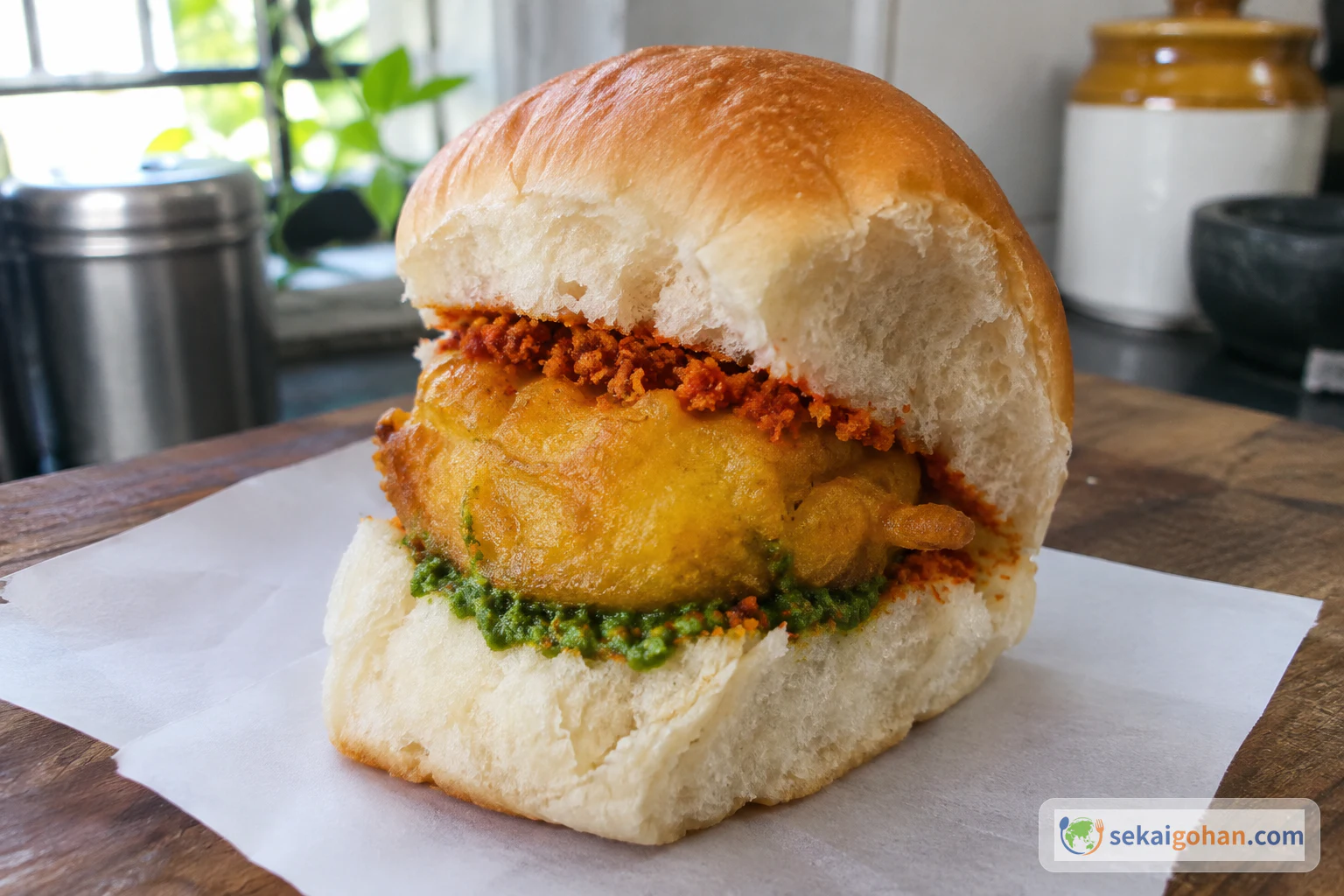
Vada pav: a golden batata vada with green chutney and dry garlic chutney inside a pav bun slit with one end still joined
Serves7 to 8 vada pav
CuisineIndian

Vada Pav: Mumbai Spiced Potato Fritter in a Soft Bun

Vada pav, Mumbai's potato fritter in a soft bun, with the batter drop test for oil, the two-minute rule for frying, and green and dry garlic chutneys.

Level: Beginner

Cooking flow

Cooking steps

STEP 11 / 11

Blend the green chutney

STEP 1

Dry-roast the cumin seeds in a small skillet until they smell toasty and turn a shade darker. Put them in the blender with the coriander leaves and tender stems, green chillies, garlic, lemon juice and salt. Add 1 tbsp of water, blend, and add the second only if the blades cannot turn; blend in the optional coconut, peanuts, fried gram or bread if you want it thicker. Stop when you have a thick, spreadable paste that holds its shape on a spoon.

Keep the green chutney thick

A runny chutney soaks into the pav and turns it soggy before the first bite. If it slides off the spoon, blend in one of the thickeners rather than serving it loose.

STEP 22 / 11

Toast and grind the dry garlic chutney

STEP 2

In the same skillet, dry-roast the garlic cloves for 2–3 minutes until they colour in spots. Add the dried red chillies and roast until they are crisp and snap when pressed. Warm the copra, with the peanuts if using, just until it smells sweet and before it turns brown. Grind everything with the salt and the optional Kashmiri chilli powder until it is a coarse, dry, deep-red crumble.

STEP 33 / 11

Cook the potatoes and pound the paste

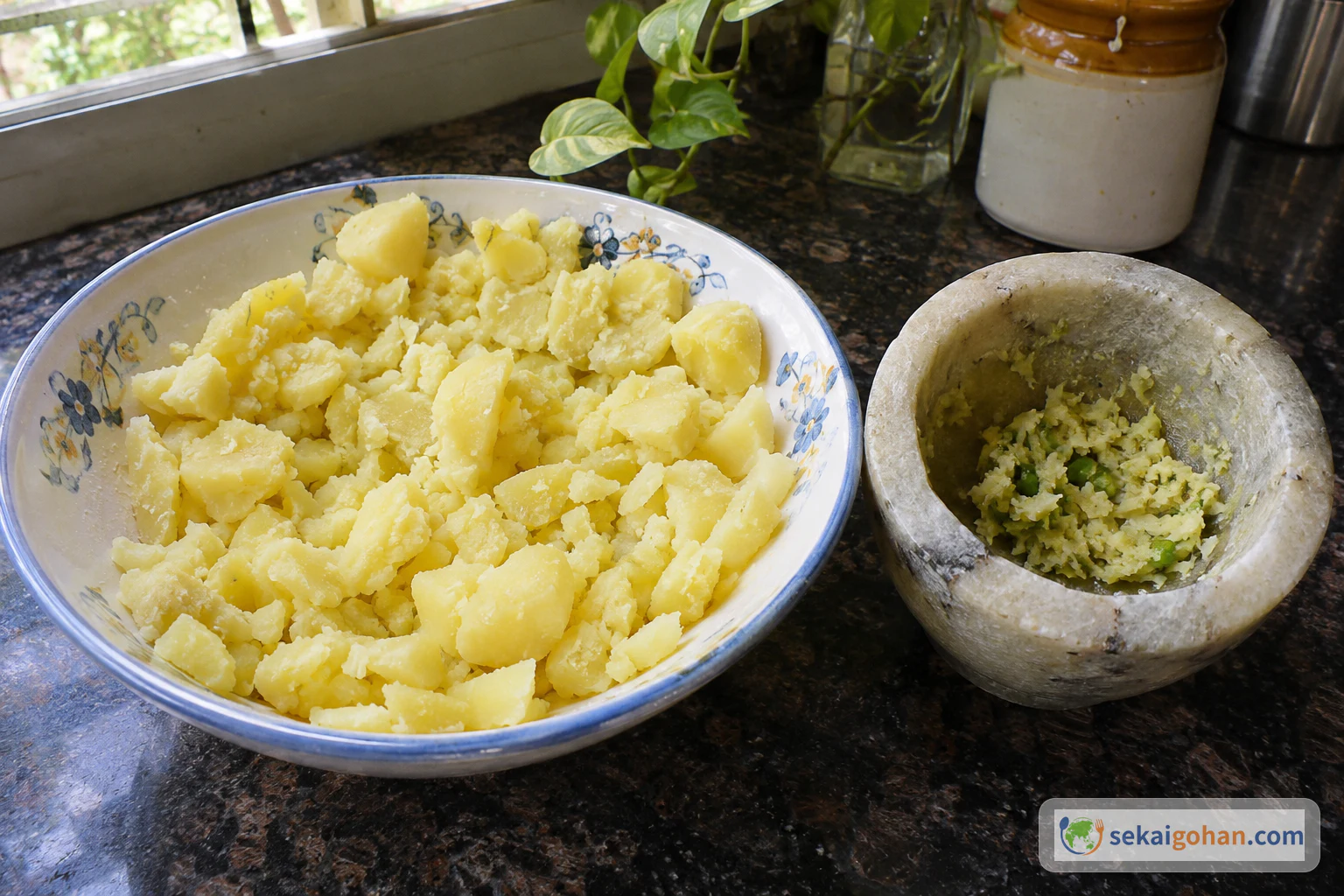
Coarsely crumbled cooked potatoes beside a mortar of ginger, garlic and green chilli paste
The crumbled potato should look dry and floury, with no water pooling in the bowl

Steam or pressure-cook the potatoes until a fork slides in easily; in a pressure cooker that is 2 whistles. Peel them and crumble them coarsely by hand, keeping them dry: do not leave them sitting in water and do not mash them to mush. Pound the ginger, garlic and green chillies to a paste in a mortar or blender. You are ready when the potato is in dry, fluffy pieces and the paste is smooth.

STEP 44 / 11

Temper the mustard seeds, curry leaves and paste

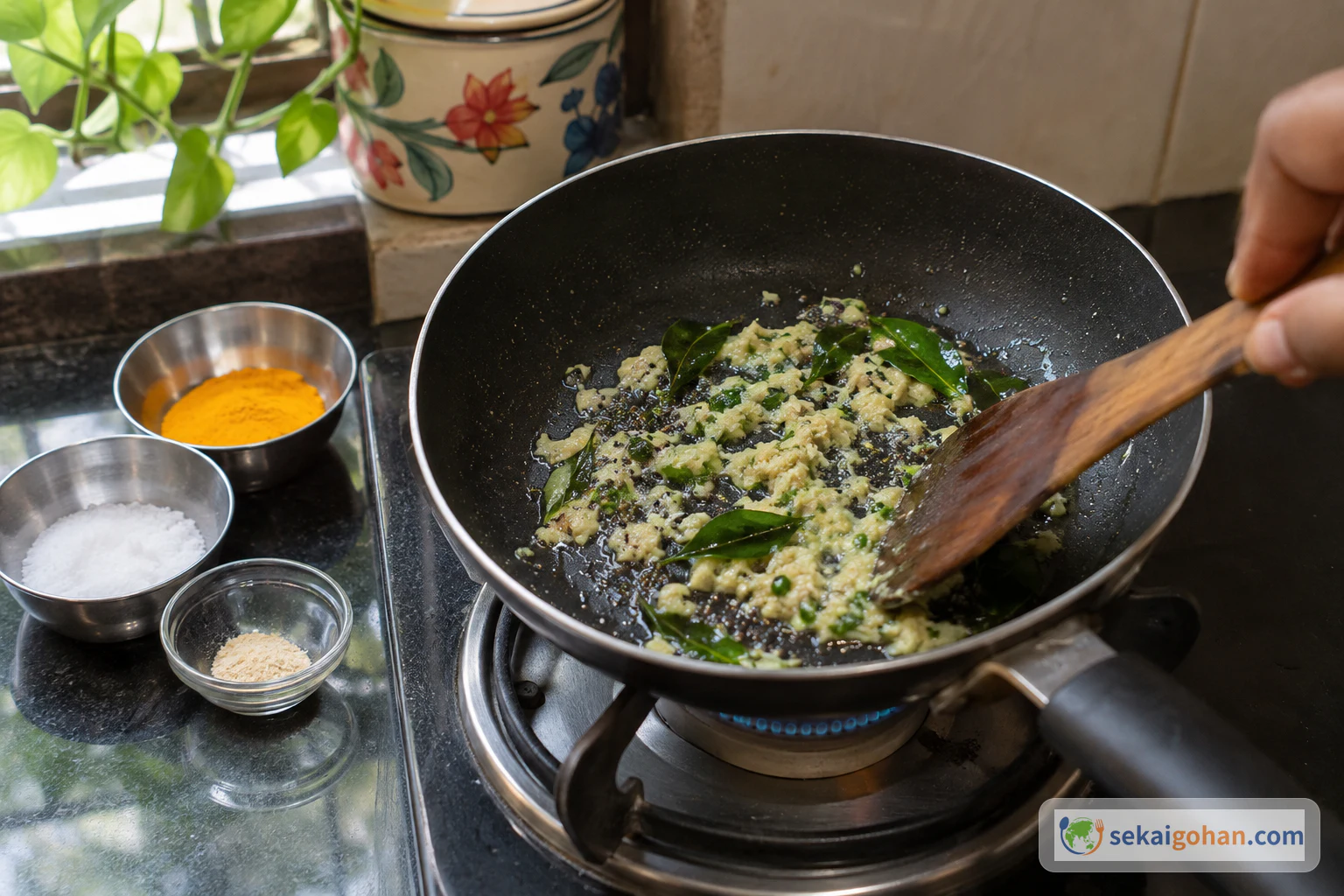
Mustard seeds, curry leaves and pale ginger-garlic-chilli paste stirred in oil over a low flame
Keep the flame low; the paste should stay pale while the mustard seeds crackle

Heat 1 tbsp oil in a small pan over low heat and add the mustard seeds. When they pop, add the curry leaves, then the ginger-garlic-chilli paste. Keep the heat low and stir until the raw smell turns fragrant, with the paste still pale. Brown or burnt paste turns bitter, so lower the heat at any sign of colour.

STEP 55 / 11

Season and mix in the potatoes

STEP 5

Add ½ tsp salt, the turmeric, 2 pinches of hing and the optional red chilli powder, and stir for a few seconds without letting the spices scorch. Tip in the crumbled potatoes and the chopped coriander, then turn off the heat. Fold everything together gently so the potato stays in pieces. Taste and add salt up to ¾ tsp in total; the mixture is ready when it is evenly yellow and flecked with green.

STEP 66 / 11

Cool the filling and shape the balls

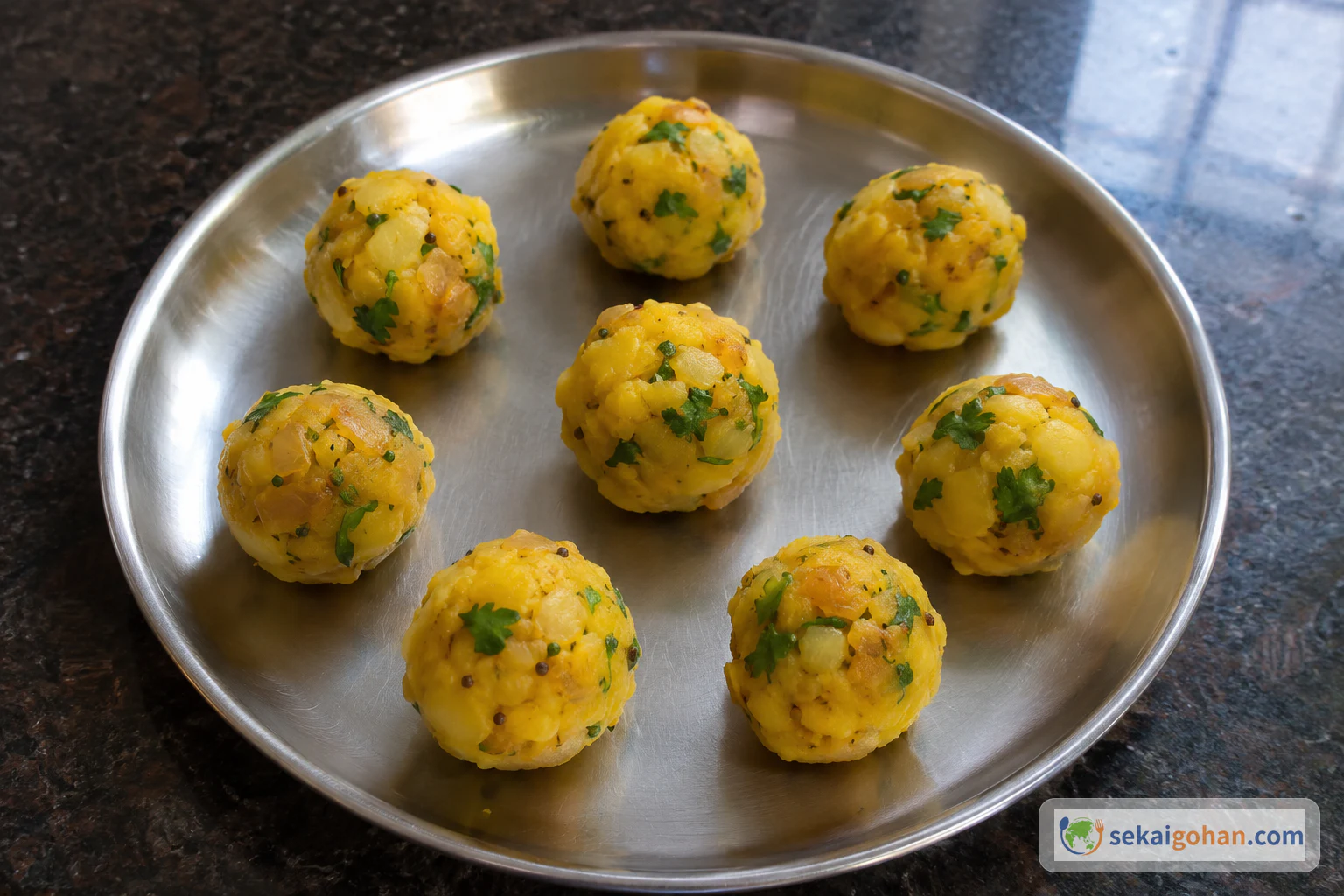
Eight round, uncoated potato balls flecked with coriander on a tray
Round balls with small green flecks; they are flattened only later, at assembly

Spread the mixture out and let it cool completely. Divide it into 8 portions and roll each into a firm ball. Press any loose crumbs back in so the surface is smooth. The balls are ready when they feel cool in your hand and hold their shape without cracking.

Cool the filling all the way

A warm filling is soft and falls apart in the batter. Fully cooled balls hold firm while you coat and lower them into the oil.

STEP 77 / 11

Mix the batter

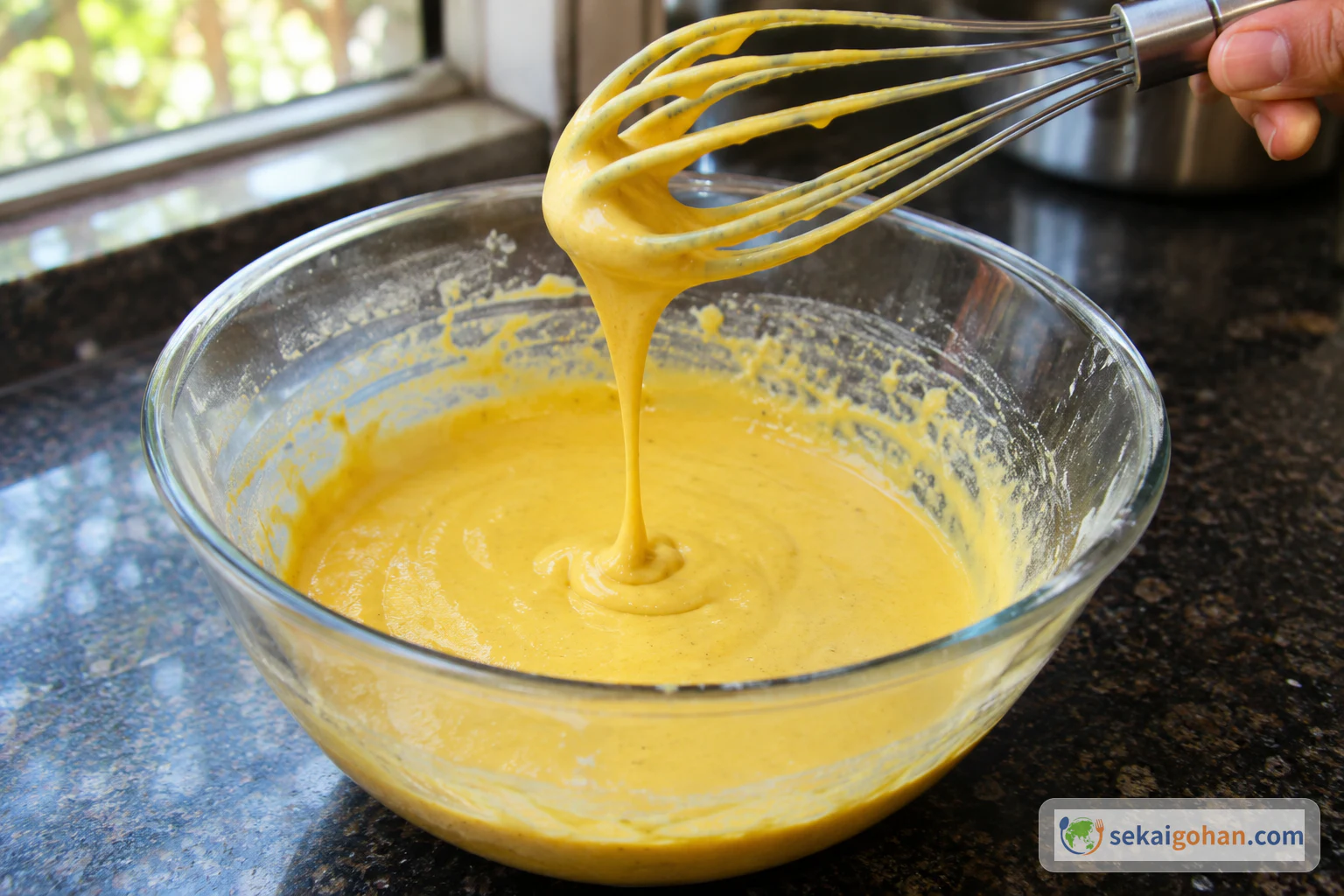
Smooth, pale yellow besan batter falling from a whisk in a thick ribbon
The ribbon should fold back into the bowl and sink in slowly

In a bowl, combine the besan, rice flour or corn starch, ¼ tsp salt, 1 pinch of hing, 1 pinch of turmeric and the optional red chilli powder. Add 4 tbsp water and whisk until there are no lumps, then add water a little at a time until the batter is thick but flowing. A batter that is too thick gives a heavy coat; one that is too thin tears away from the potato. Stir in the optional tiny pinch of baking soda just before frying; the batter should fall from the whisk in a short, thick ribbon.

STEP 88 / 11

Heat the oil and test it

STEP 8

Heat oil for deep-frying in a deep, heavy pan over medium heat. Drop in a little batter. If it sinks and stays down, the oil needs more time; if it browns at once, turn the heat down. The oil is ready when the batter sizzles and rises to the surface straight away.

STEP 99 / 11

Fry the vadas

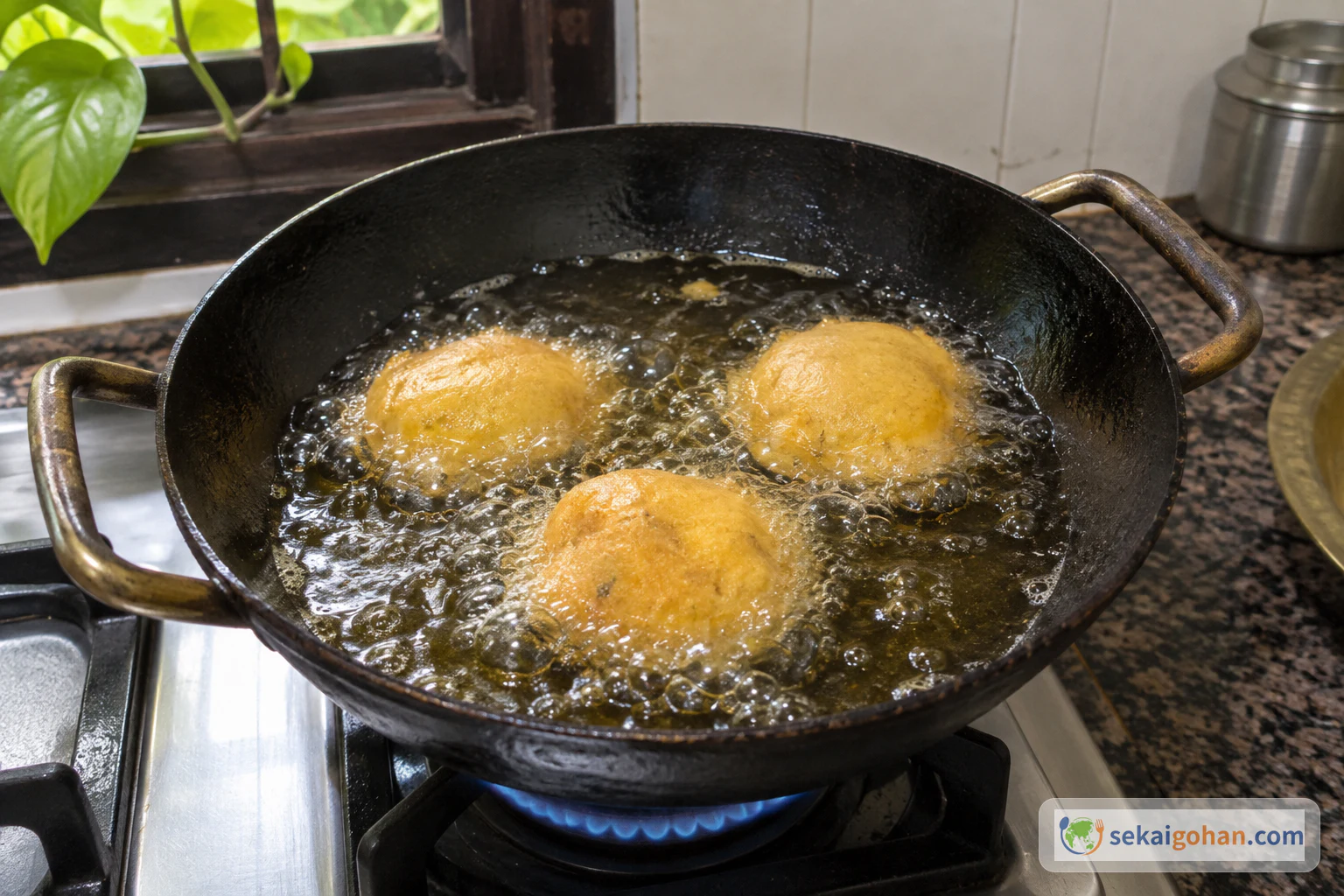
Three batter-coated vadas frying in deep oil, surrounded by bubbles
Fry in small batches so the vadas have room and the bubbles stay lively around each one

Dip a ball in the batter so it is coated all over and lower it gently into the oil. Add only a few at a time. Leave them alone for the first 2 minutes, while the coating sets; then stir and keep frying on medium heat until they are golden all over. Lift them out onto a wire rack or strainer to drain, and fry the rest.

The two-minute rule

Touch a vada in its first 2 minutes and the soft coating cracks open. Let it set untouched, then turn it as often as you like.

STEP 1010 / 11

Fry the green chillies

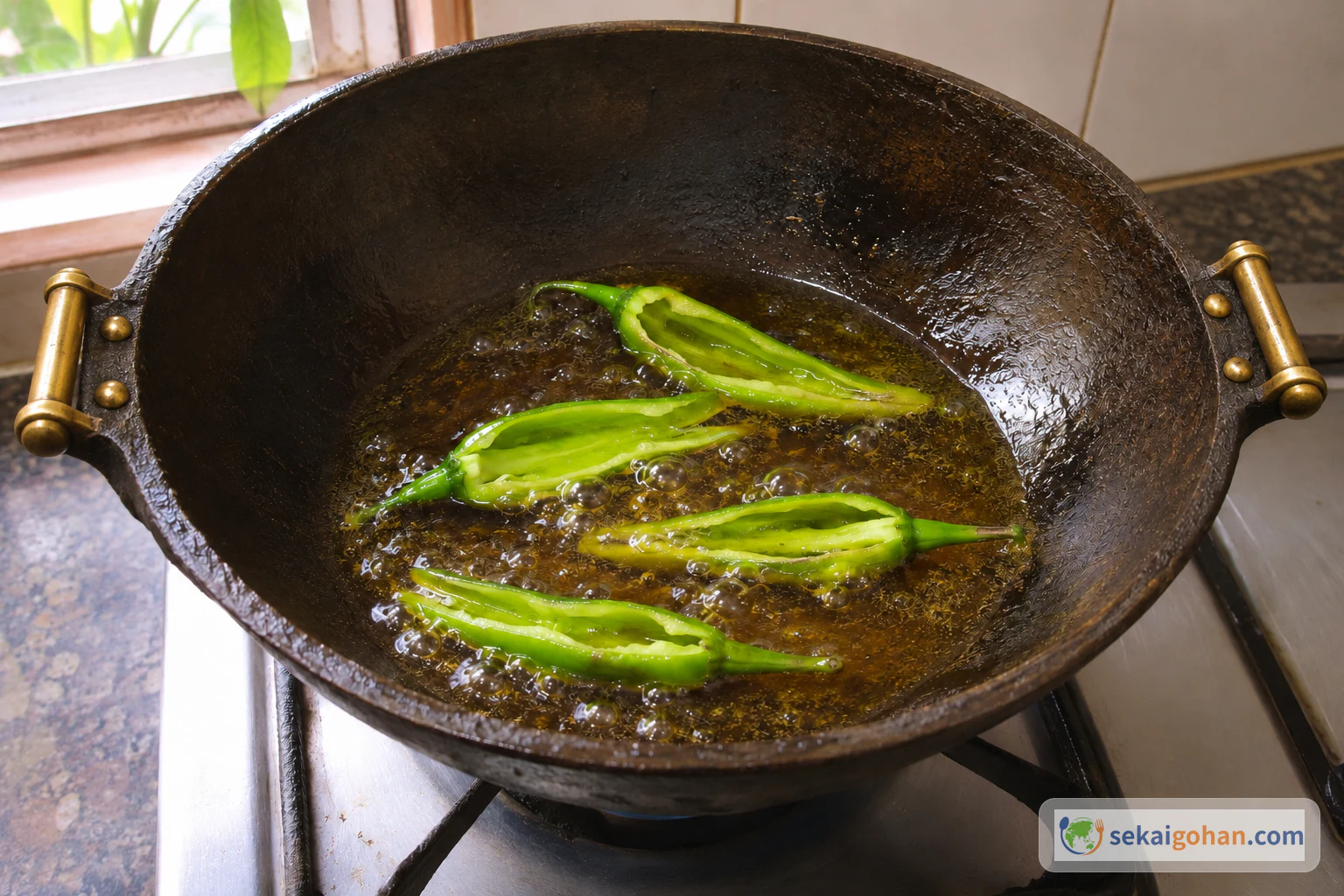
Slit, deseeded green chillies frying lightly in the oil used for the vadas
Open cavities with no seeds left inside, and no water on the skins, before they go into the oil

Wipe the green chillies completely dry. Wearing gloves, slit them and remove all the seeds, because seeds can burst in hot oil. Fry them lightly in the same oil for about 1 minute.

Hot oil and chilli seeds

Water and chilli seeds both make hot oil spit and burst. Dry each chilli thoroughly and deseed it before it goes near the pan, and wear gloves while handling the cut chillies.

STEP 1111 / 11

Assemble and serve at once

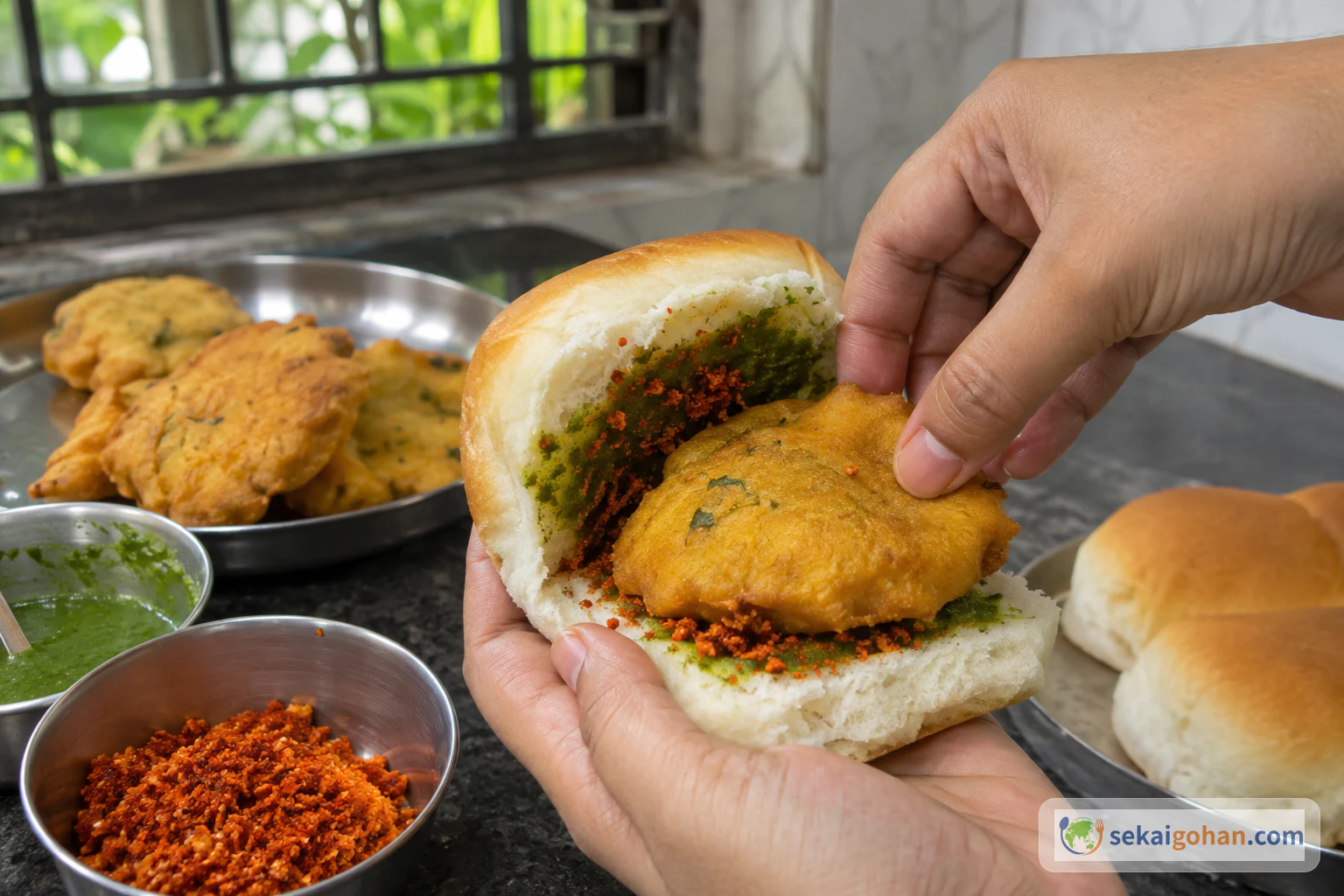
Hands placing a lightly flattened vada into a chutney-lined pav that is still joined at one end
Flattening the vada lets the bun close around it and keeps the chutney in every bite

If you like, warm the pav for about 1 minute in the oven or air fryer. Slit each bun, keeping one end joined, and spread green chutney on both inner sides; add tamarind chutney to one side if using. Sprinkle in the dry garlic chutney, flatten a vada lightly and press it into the bun. Serve immediately with a fried chilli, while the coating still crackles against the soft bread.

0 / 0
Ingredients

Ingredients

1 / 5

Green chutney

Ingredient Amount Role
Coriander leaves, tender stems included 1–1½ cups The body and colour of the chutney
Cumin seeds (jeera) ½ tsp Dry-roasted for an earthy note
Hot green chillies 2, to taste Heat
Small garlic cloves 2 Bite
Lemon juice 1–2 tsp, to taste Sharpness
Water 1–2 tbsp, only as needed Just enough to blend
Salt ¼ tsp, to taste Seasoning
Dried coconut, roasted peanuts, fried gram or white bread (optional) 1–2 tbsp (or 1 slice of bread) Thickens the chutney
2 / 5

Dry garlic chutney

Ingredient Amount Role
Garlic cloves 6–8 The main flavour
Dried red chillies (Byadgi, Kashmiri or another mild variety) 6–10 Colour and gentle heat
Dried coconut (copra) ½–1 cup; ½ cup for a stronger garlic taste The base of the crumble
Peanuts (optional) 1 tbsp Nuttiness and body
Salt ¼–½ tsp Seasoning
Kashmiri red chilli powder (optional) ½ tsp Deeper red colour
3 / 5

Batata vada filling

Ingredient Amount Role
Medium potatoes (aloo) 3 (2¼ cups crumbled) The body of the vada
Green chillies 2–3, to taste Heat
Ginger, peeled ¾ inch Fresh, warm aroma
Garlic 2–3 cloves Aroma
Oil 1 tbsp For tempering
Mustard seeds (rai) ¼–½ tsp The popping base of the tempering
Asafoetida (hing) 2 pinches Savoury depth
Curry leaves 1 sprig The street-stall aroma
Turmeric ¼ tsp Colour and earthiness
Red chilli powder (optional) ⅛ tsp Colour and a little heat
Salt ½–¾ tsp, to taste Seasoning
Coriander leaves, finely chopped 3 tbsp Freshness and green flecks
4 / 5

Batter (vada covering)

Ingredient Amount Role
Besan (gram flour) ¾ cup The coating
Rice flour or corn starch 2–3 tbsp Crispness and a clean edge
Salt ¼ tsp Seasoning
Asafoetida (hing) 1 pinch Aroma
Turmeric 1 pinch Colour
Red chilli powder (optional) ⅛ tsp Colour
Baking soda (soda bi-carbonate, optional) 1 tiny pinch A puffier coating
Water 4 tbsp to start, more as needed Brings the batter together
Oil as needed Deep-frying
5 / 5

To assemble

Ingredient Amount Role
Pav 7–8 The soft bun
Green chillies, for frying 7–8 Served alongside
Tamarind chutney (optional, store-bought is fine) ¼ cup Sweet-sour contrast
0 / 0

Drop a bead of batter into the oil and listen. It should hiss at once and float up to the surface. Then a ball of yellow potato flecked with coriander goes in, the coating puffs, and the kitchen fills with the smell of toasted chickpea flour and garlic. Vada pav is that fried potato vada pressed into a soft pav bun with green coriander chutney and a coarse red garlic-coconut chutney, and it is Mumbai's quintessential street food. Eaten hot, it is crisp first, then soft and warm with ginger and green chilli, then sharp with garlic, the bread holding just enough chutney to keep everything together.

A Mumbai Street Snack Built on Potato and Bread

On a Mumbai street the vada pav comes with three chutneys: green coriander, sweet-and-tangy tamarind, and dry garlic, known as lasun. A fried green chilli rides alongside, and the whole thing is traditionally handed over wrapped in old newspaper. People buy it with loose change for breakfast, lunch or dinner and eat it standing, with no plate and no cutlery. Hawkers sell it on the street and vendors carry it through trains, which says everything about how it is meant to be eaten: in the hand, right away, still hot.

Among the street foods of India, this one belongs to Mumbai and Maharashtra so completely that it has picked up the nicknames Bombay burger and India's veggie burger. The comparison is fair only in shape. The filling is potato with no onion and no peas, carried by garlic, ginger and coriander, with mustard seed, curry leaf, turmeric and hing giving it the tempered aroma of a home kitchen.

Where it started

The potato itself reached India through Europeans, and the bread through the Portuguese. A Mumbai food historian names an eatery called Mama Kane's as the first restaurant to serve batata vada, in 1928. Putting it into a pav is most often traced to 1966, when Ashok Vaidya sold vada pav from a handcart outside Dadar railway station; his son Narendra later kept the stall going. Sudhakar Mhatre is credited with selling it around the same time, and Khidki Vada Pav in Kalyan, run by the Vaze family and served from the window of their home in the late 1960s, is counted among the oldest. Who put the vada in the bun first is not settled, and the central Mumbai mill districts are the usual answer for where.

Politics and work shaped its spread. The Shiv Sena, led by Balasaheb Thackeray, encouraged Maharashtrians to open their own eateries, and after the 1982 textile mill strike, workers who had lost their jobs opened vada pav stalls. The party later held vada pav gatherings and in 2009 introduced a "Shiv vada pav." Chains followed: as of 2016, Jumboking had 82 outlets and Goli Vada Pav had 350 stores across 90 cities in 21 states.

Names and neighbours

The name

Batata is the Marathi word for potato, and vada is a fried savoury snack. Pav comes from the Portuguese pão, bread. You will also see it written vada pao, wada pav, wada pao and batata wada pav. In Nashik a variant called pav vada is famous.

The batata vada on its own is the fritter; vada pav is the finished sandwich. Dahi vada shares only the word: it is a separate North Indian dish of lentil dumplings soaked in yogurt. Misal pav, pav bhaji and masala pav use the same soft bread but are entirely different Mumbai dishes.


Ingredients (makes 7 to 8 vada pav)
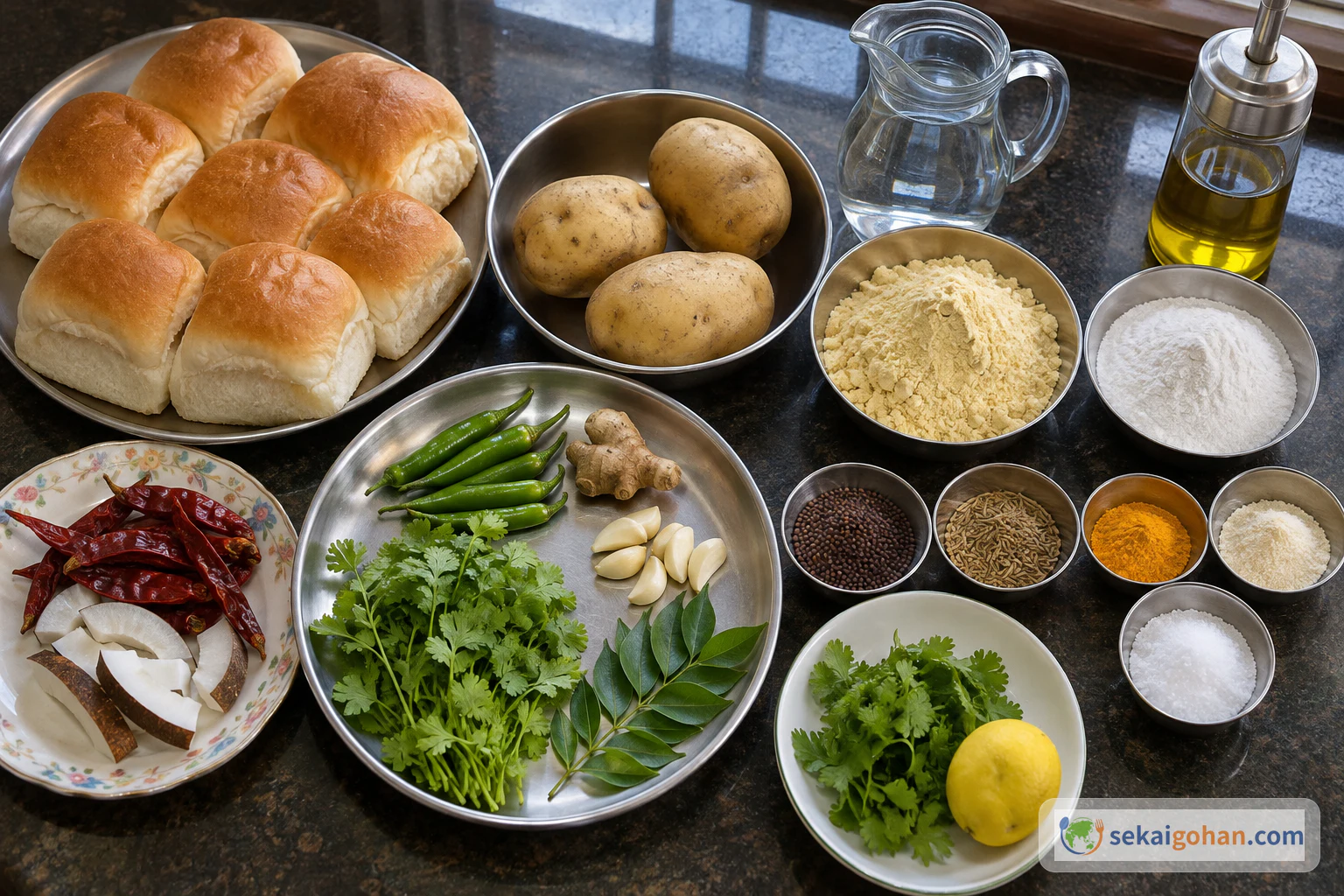
Potatoes, pav, besan, rice flour, aromatics and the ingredients for two chutneys laid out for vada pav
Group the chutney ingredients apart from the filling; the lemon belongs only to the green chutney
Allergen information

The batter is made from chickpea flour (besan). Peanuts appear as an option in both chutneys, and the green chutney can be thickened with white bread. The recipe contains no egg and no dairy and is vegan. Check the labels on the pav and on any store-bought tamarind chutney.

Equipment

  • Pressure cooker or steamer, for the potatoes
  • Mortar and pestle or small blender, for the paste and the chutneys
  • Small skillet, for dry-roasting
  • Small pan, for the tempering
  • Deep, heavy pan, for frying
  • Slotted spoon and a wire rack or strainer
  • Kitchen gloves, for deseeding the chillies

Choosing and Substituting

Besan is the one ingredient with no stand-in. The coating is chickpea flour, and its toasted, slightly sweet smell is what makes a batata vada taste right; look for it at an Indian grocer or online as besan or gram flour. Hing and curry leaves come from the same shop and go into both the filling and the batter, so buy them together. Fresh curry leaves give the aroma that people recognise from a stall.

For the dry garlic chutney, buy copra (dried coconut) at an Indian grocer: it is the bulk of the crumble and decides its dry, coarse texture. Byadgi or Kashmiri chillies bring a strong red colour with mild heat; an ordinary dried red chilli works and makes the chutney hotter. Either rice flour or corn starch gives the batter its crisp edge, so use whichever is in the cupboard.

We suggest a floury potato, which crumbles into the dry, fluffy pieces the filling needs; a wet filling makes the coating more likely to crack. Green chillies vary in strength, so set the heat by the number of chillies and by whether you add the red chilli powder. Store-bought tamarind chutney is a good shortcut for the optional sweet layer.


Method

Make both chutneys first; they keep for 2–3 days in the fridge, so they can be done the day before. The potato filling then needs to cool completely, which is the hands-off stretch of the recipe. Once the oil is hot, the vadas, the chillies and the assembly follow one after another, and the vada pav goes straight from the board to the eater.

When It Goes Wrong

What you see Why What to do
The coating cracks in the oil The vada was moved in its first 2 minutes, or the filling was wet Leave it untouched for 2 minutes; next time keep the potatoes dry and cool the filling completely
The coating is thick and doughy The batter is too thick Whisk in water a little at a time until it flows in a thick ribbon
The coating slips off in patches The batter is too thin Whisk in a little more besan until the batter flows in a thick ribbon
The batter test sinks The oil is not hot enough Wait and test again until the batter sizzles and rises
The vadas brown before the coating crisps The oil is too hot Lower the heat and test again before the next batch
The pav turns soggy A runny green chutney, or a wait before eating Thicken the chutney and serve each one the moment it is assembled

If the heat is too much, use fewer green chillies in the filling and leave out the red chilli powder next time.


Serving, Variations and Storage
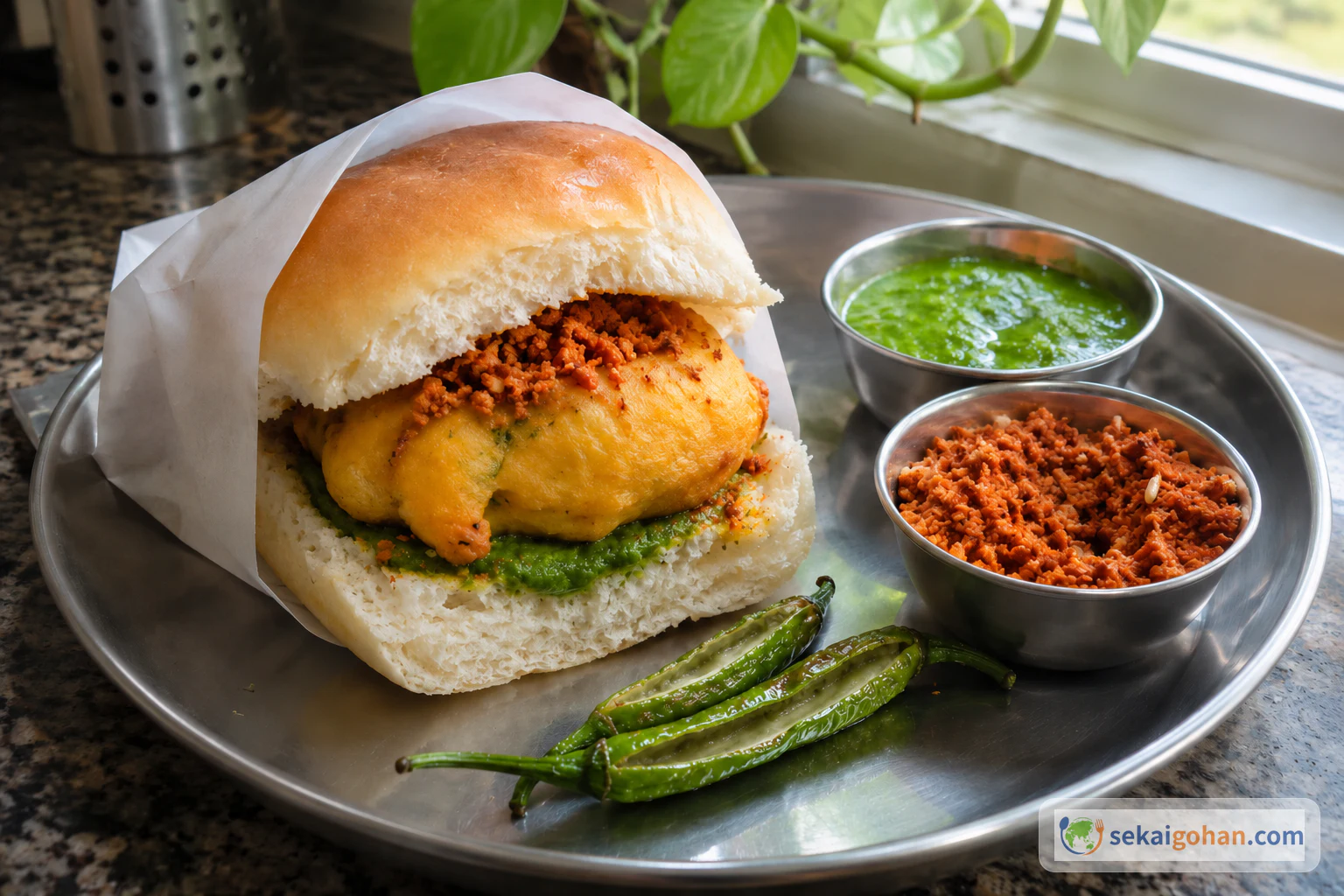
A vada pav partly wrapped in white paper, with fried green chillies and bowls of green and dry garlic chutney
Put extra chutney and the fried chillies on the side so everyone can add more as they eat

Vada pav needs nothing more than its chutneys and a fried green chilli to bite between mouthfuls. Wrap each one in a square of paper and hand it over, the way it comes from a stall, and eat it standing at the counter while the next batch fries.

Variations

  • Three chutneys: Add the tamarind chutney to one side of the bun for the full street set; its sweet-sour edge softens the garlic and chilli.
  • Oval vadas: Shape the filling into ovals instead of balls, the usual stall shape; they fit the pav more neatly and need less flattening.
  • Milder or hotter: Use mild Byadgi or Kashmiri chillies in the garlic chutney for colour with little heat, or ordinary dried red chillies for a fiercer crumble.
  • A richer green chutney: Blend in roasted peanuts or dried coconut; the chutney becomes thicker and rounder and clings to the bread.

Storage

Make the green and dry garlic chutneys 2–3 days ahead and keep them refrigerated in covered containers until you assemble. Fry the vadas and assemble the vada pav only when you are ready to eat; they are best eaten immediately, before the bread turns soggy.

Frequently Asked Questions

What is the difference between a batata vada and an aloo bonda?

Both are batter-fried potato, but the batata vada stuffing is potato without onion or peas, with garlic, ginger and coriander at the front. Batata vada for vada pav is typically oval, while a bonda is round. A round vada flattened during assembly works just as well.

Is batata vada related to dahi vada?

Only by name. Dahi vada is a North Indian dish of lentil dumplings soaked in yogurt, served cool. Batata vada is potato in a chickpea batter, fried and eaten hot in bread.

What does the baking soda do, and can I leave it out?

A tiny pinch of baking soda makes the coating puffier. It is optional, and the vadas can be made without it. Stir it in just before frying so the batter is at its liveliest when it hits the oil.

Sources

  • Swasthi Shreekanth, "Vada Pav Recipe (Mumbai Street Style)," Swasthi's Recipes (Indian Healthy Recipes), updated 2023-06-26. Recipe quantities and method, the drop test for oil, the two-minute rule, deseeding and frying the green chillies, making the chutneys ahead, store-bought tamarind chutney, the vegan ingredient list, and serving immediately. https://indianhealthyrecipes.com/vada-pav/
  • Hebbar's Kitchen, "Vada Pav Recipe - Street Style | Mumbai Batata Vada Pav." The potato-only stuffing without onion or peas, oval vadas compared with round bonda, and street-style assembly. https://hebbarskitchen.com/vada-pav-recipe-make-vada-pav-wada-pav
  • Rathina Sankari, "Meet Mumbai's Iconic Veggie Burger," NPR, republished by KPBS, 2016-11-04. Mama Kane's in 1928, Ashok Vaidya at Dadar station in 1966, the Shiv Sena and the 1982 mill strike, the three chutneys and newspaper wrapping, eating without plates, and 2016 chain figures. https://www.kpbs.org/news/2016/11/04/meet-mumbais-iconic-veggie-burger
  • Department of Tourism, Government of Maharashtra, "Mumbai Suburban." Vada pav as the quintessential Mumbai street food. https://maharashtratourism.gov.in/districts/mumbai-suburban
  • Wikipedia, "Vada pav." Alternative names, etymology, competing origin accounts including Sudhakar Mhatre and Khidki Vada Pav in Kalyan, the 2009 Shiv vada pav, and the Nashik pav vada. https://en.wikipedia.org/wiki/Vada_pav