
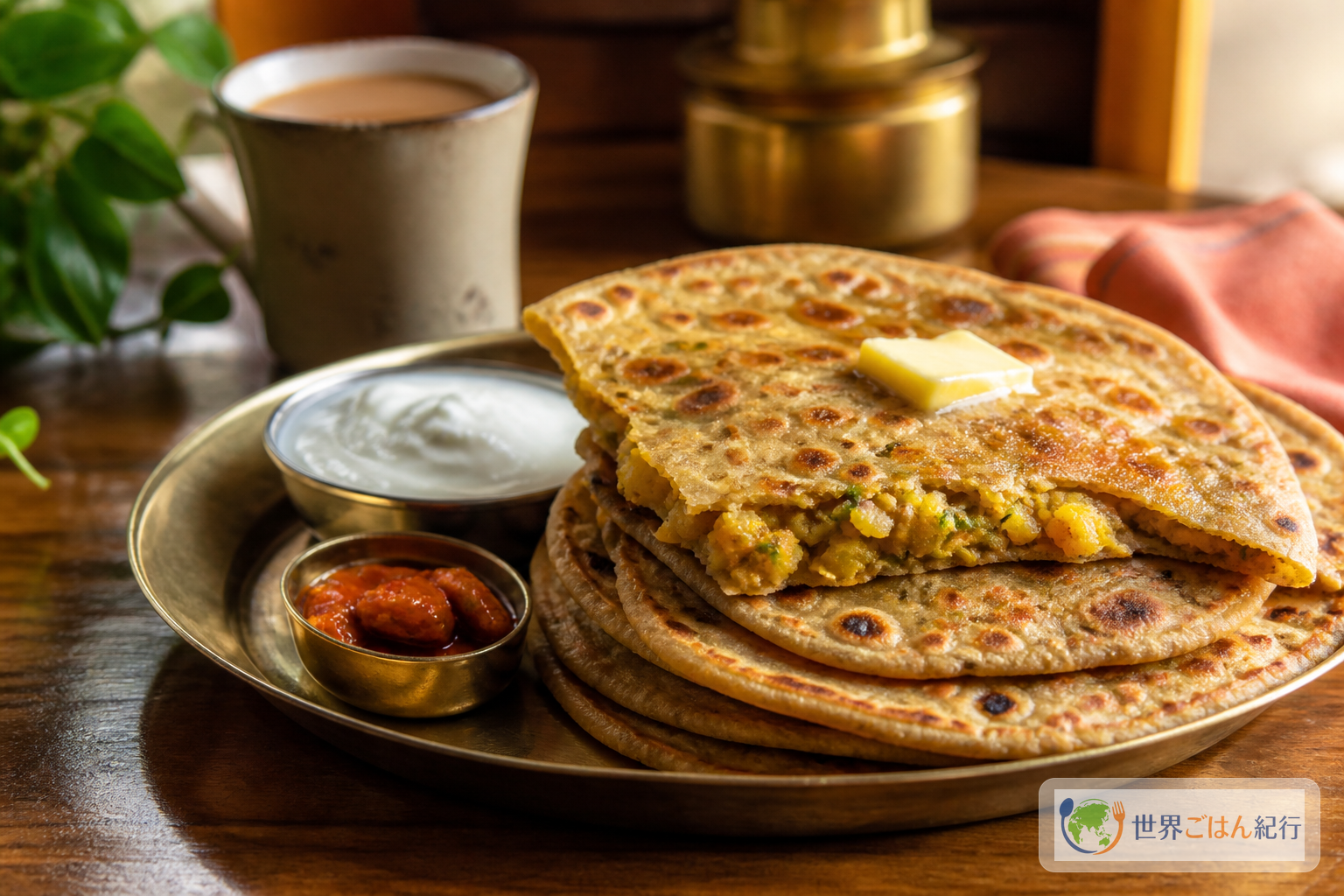
Set the dough on a hot tawa and the smell of potato rises
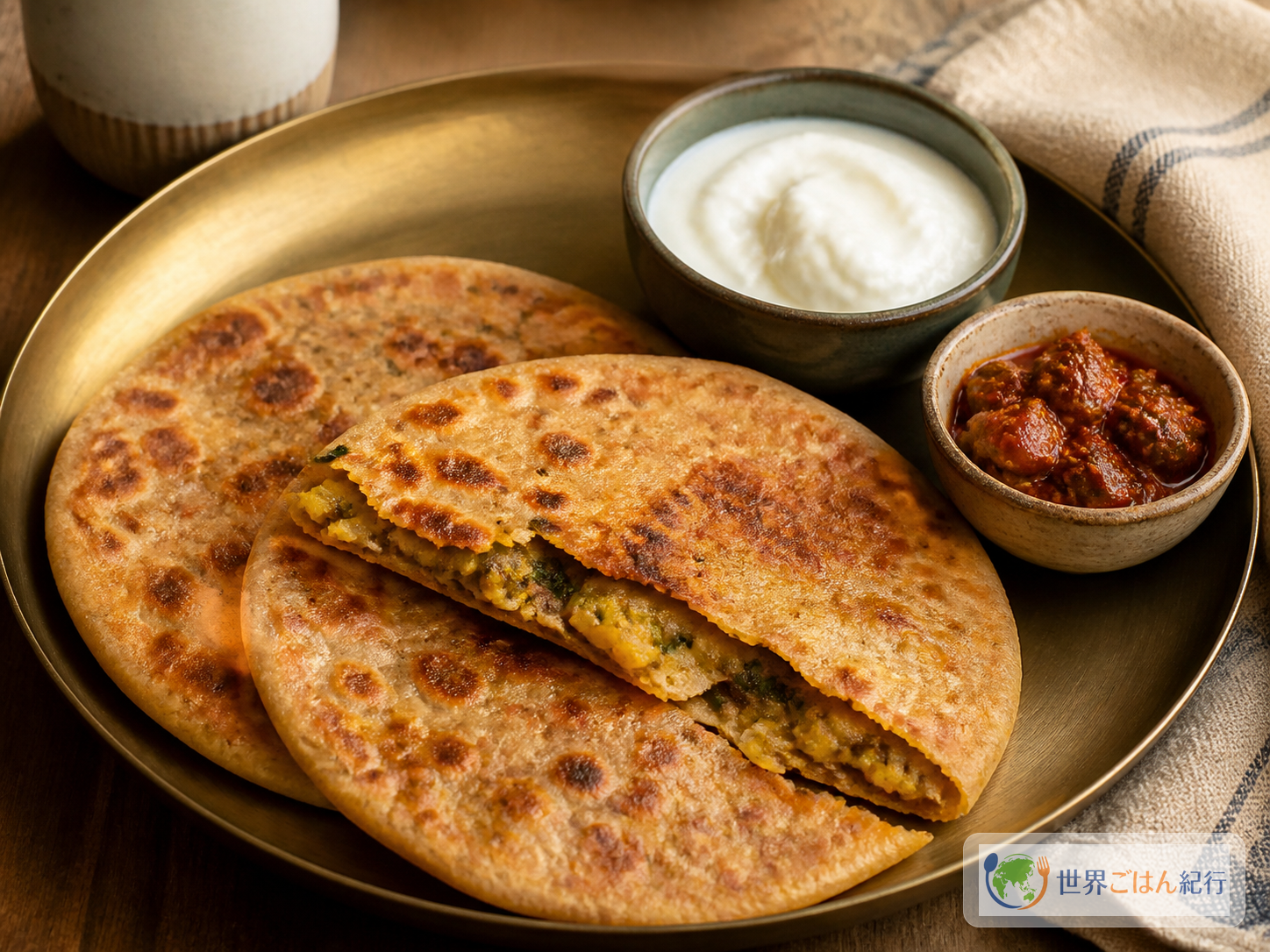
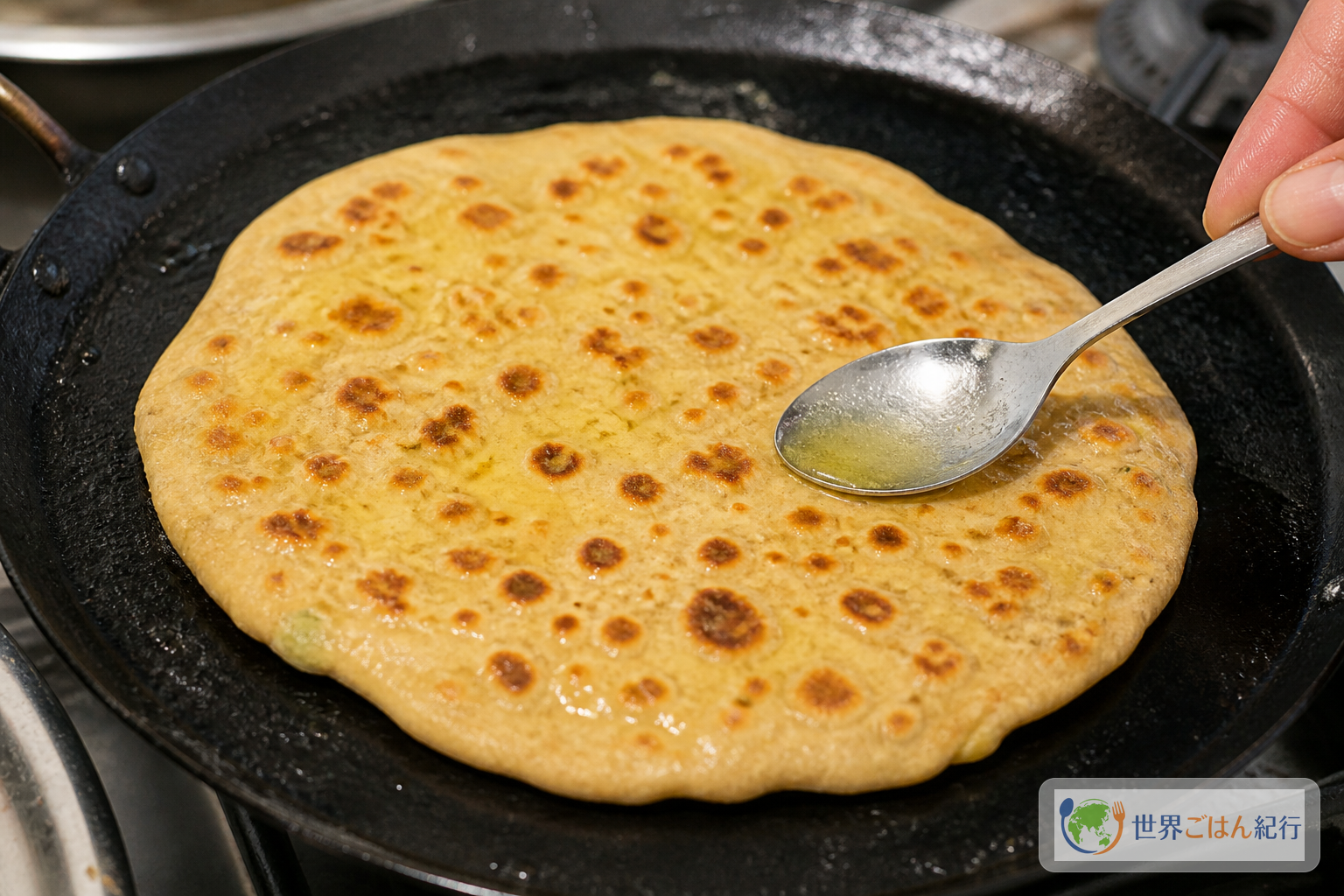
Set the dough on a hot tawa and small bubbles rise on the surface, and with every flip more brown spots appear. When you break one open, the filling is thicker than the thin wheat dough around it: potato mixed with cumin and green chili. Add the sourness of yogurt and the saltiness of pickle and you have a breakfast that carries you through to lunch.
Aloo paratha (आलू पराठा) is a flatbread of spiced potato wrapped in wheat dough and cooked on a griddle or frying pan. India's Ministry of Tourism, in its introduction to Chandigarh, also presents it as a Punjabi breakfast dish served with butter, yogurt and pickle. English-language recipes treat it as food for times other than breakfast, so there's no need to limit it to one time of day.
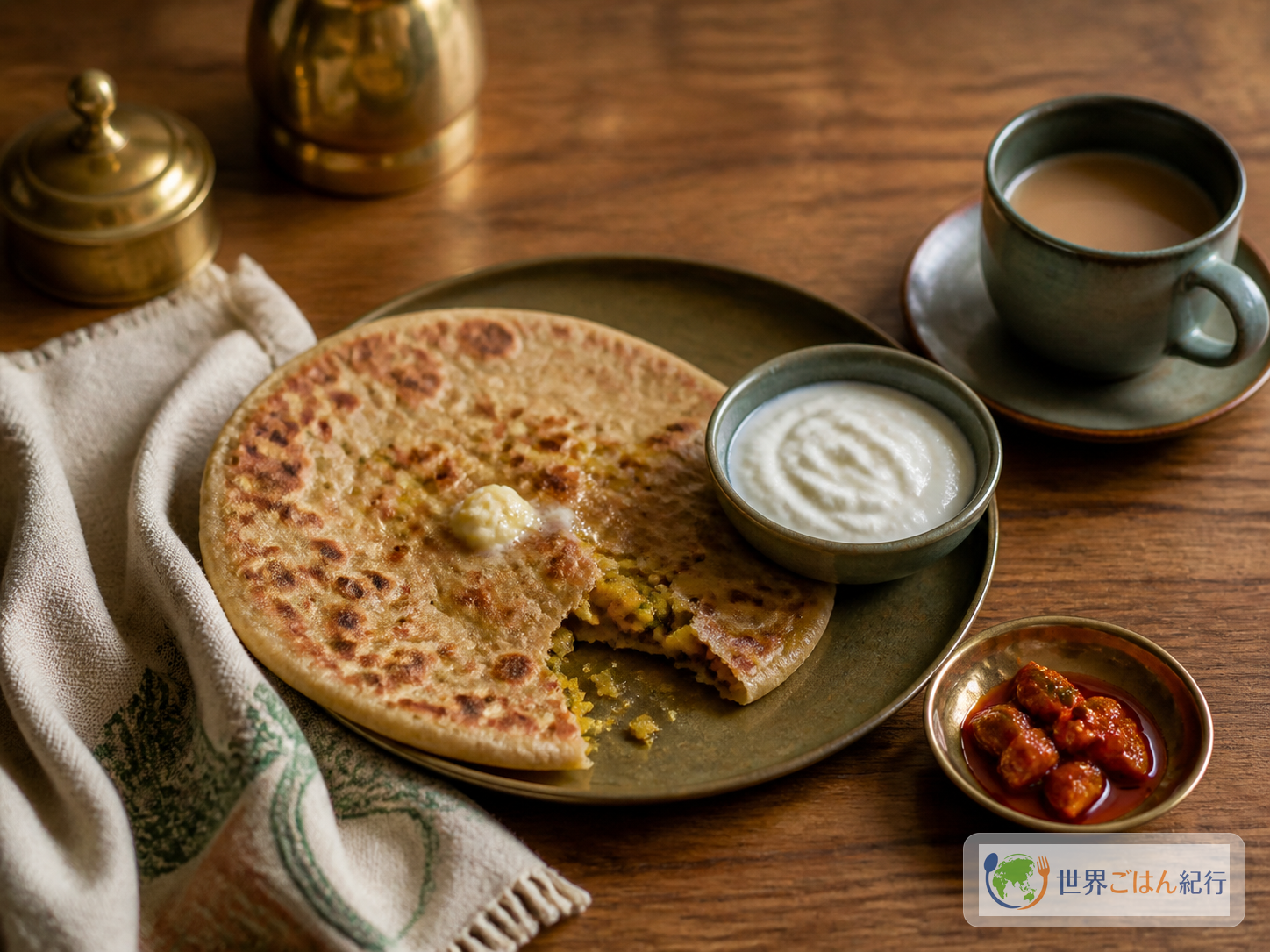
Where cooks get stuck are the dough tearing around the filling, moisture from the potato seeping into the dough, and a surface that browns while the center stays floury. Aloo paratha isn't better the more filling you add. Seal a cool, dry filling evenly in the center of the dough and keep the cooking surface at a steady temperature, and you get a toasty outside and a fluffy inside at the same time.
Among Indian flatbreads with similar names, some go with dry vegetable dishes like aloo gobi (in Japanese), and others, like thepla (in Japanese), work herbs into the dough. Aloo paratha keeps the filling inside a single piece, so how you shape it directly affects the flavor.
In Japanese the name is spelled several ways ("aaru parataa," "aro parata" and so on). Aloo means potato, and paratha refers to a layered bread cooked with fat. This article uses the spelling "aloo paratha" as the main form because it is easy to find in searches.
Punjabi breakfast and the local table: a flatbread that spread by changing its filling
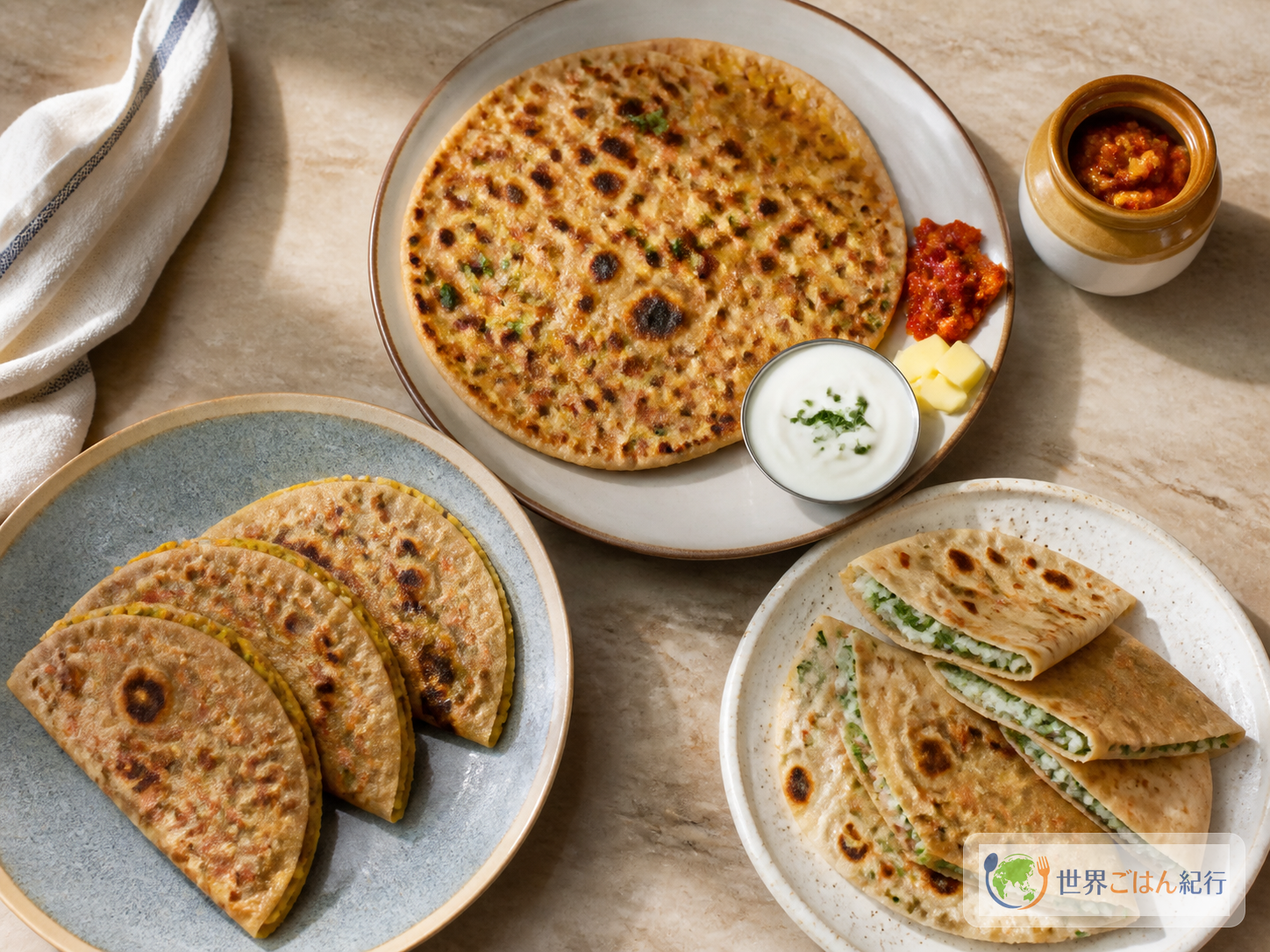
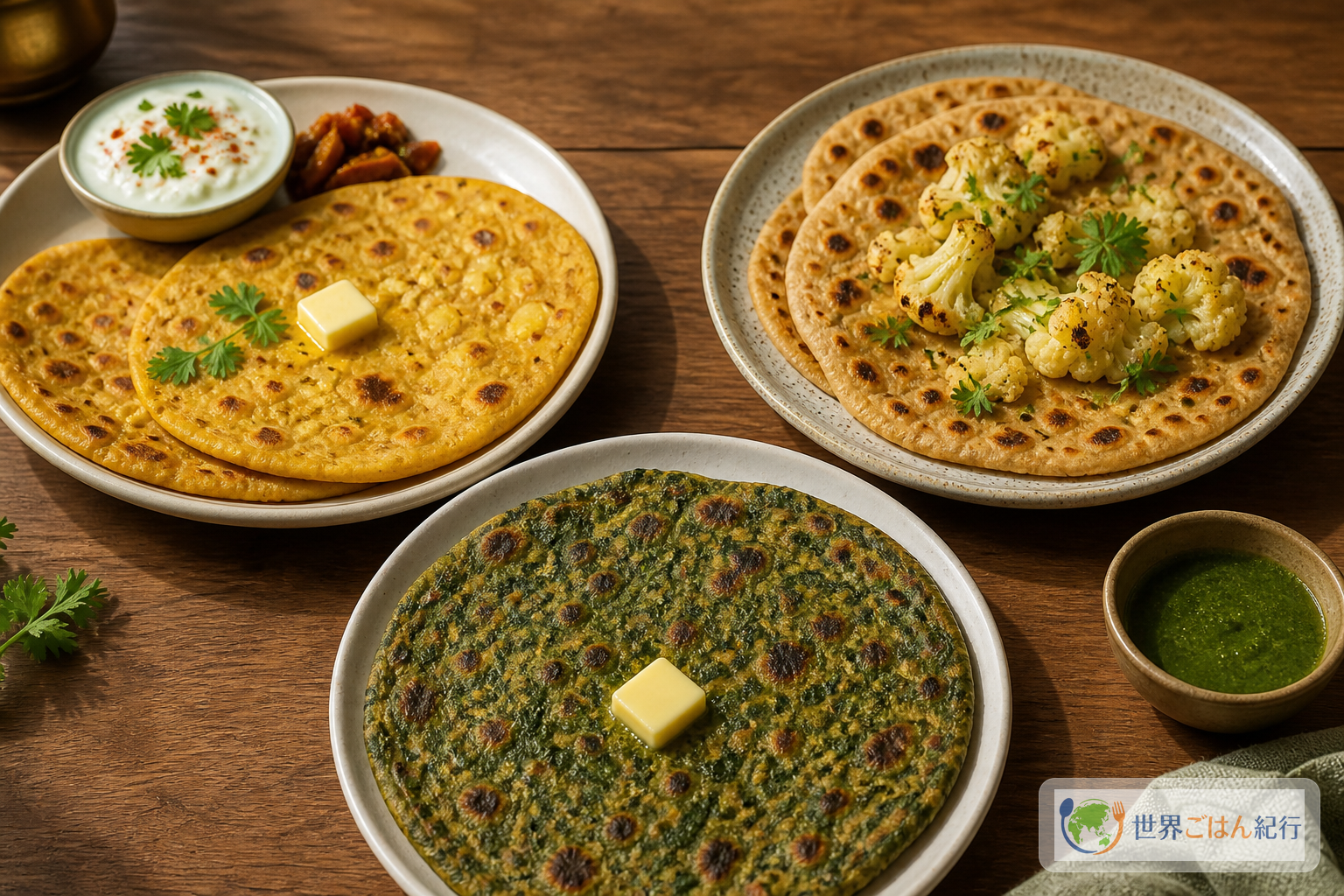
Aloo paratha is known as a Punjabi dish, but potato isn't the only form. Parathas that spread from northern Punjab across North India include versions stuffed with cauliflower, radish and fenugreek leaves, and the aroma and moisture vary by region, season and household. Potato is easy to mash and season, and the filling is uniform, so it's a good first stuffing to try in a home kitchen.
At the local table, hot parathas are served with yogurt, pickles and butter and torn by hand. BBC Good Food also describes it as eaten as part of the staple in North India, torn by hand to scoop up side dishes. Because a stuffed bread is complete in one piece, adding sourness and saltiness is enough to make a meal without a separate curry.
| Type | Dough and filling | Practical notes for cooking in Japan |
|---|---|---|
| Aloo paratha | Seasoned potato wrapped in whole-wheat dough | Cooling the potato before wrapping makes it less likely to tear |
| Gobi paratha | Finely chopped cauliflower filling | Releases moisture, so aloo is better for a first try |
| Mooli paratha | Shredded or grated daikon filling | Needs a step of salting and squeezing out the water |
| Methi paratha | Fenugreek leaves added to the dough or filling | Strongly aromatic, but fresh leaves are hard to find in Japan |
South India's Kerala parotta is not the same bread despite the similar name. The Indian Express explains that North Indian parathas use whole-wheat flour, while Kerala parotta uses refined flour and is characterized by layers formed by coiling the dough in ropes. The dough here is mainly whole wheat and wraps a potato filling, in the North Indian manner.
Rather than pinning the dish's origin to a single region, it's more practical to look at how it settled into local eating and how a home version in Japan differs. In Japan you can replace atta with whole-wheat flour and cake flour, but because they absorb water differently, don't add the water all at once. To keep the thickness expected of a Punjabi breakfast while cooking through to the center on a Japanese stove, it matters not to make the diameter too large.
Ingredients (serves 4, makes 8)
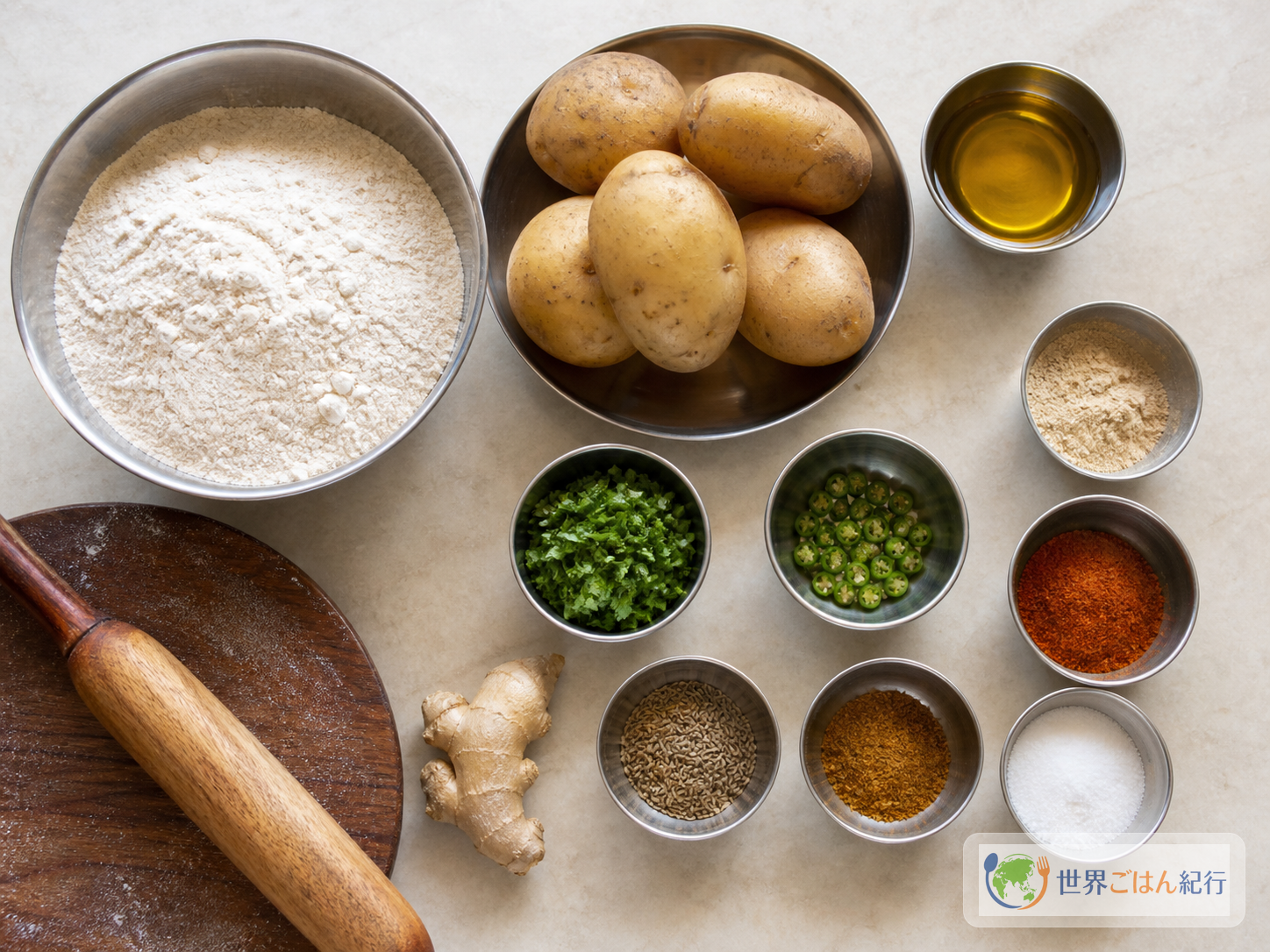
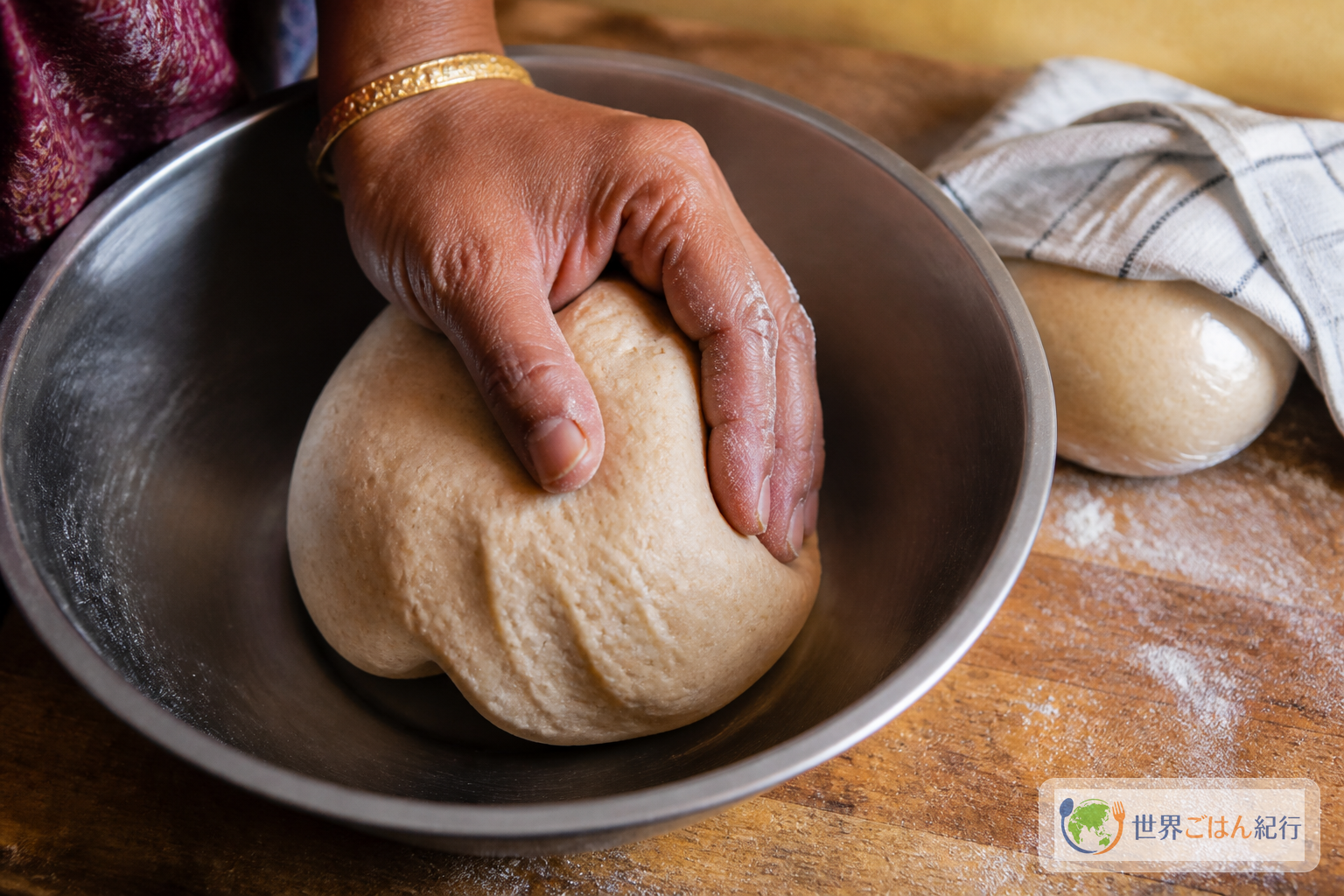
This makes 8 parathas. Two per person is the basic serving, and with yogurt, pickle and a salad it becomes a breakfast or light lunch. Don't knead the dough stiff from the start: begin with 190 ml of water and add only 10–20 ml more depending on the state of the flour.
Atta is a flour that easily gives you the aroma of whole wheat and a dough that comes together well when it takes up water. If you're only making this once, the whole-wheat and cake flour substitute is enough. If you'll go on to roti and chapati, it is worth buying a bag labeled "whole-wheat flour," 1 kg, from an Indian grocer. Check the weight and ingredients before choosing.
Amchur is dried mango powder, and it gives a dry sourness that can be added as a powder rather than the bright aroma of lemon. Because this dish needs to tighten flavor without making the filling watery, amchur keeps the filling easier to wrap than lemon juice. Make it with lemon the first time, and if you'll also use it in samosas or chana masala (in Japanese), consider whether you'd use up a larger bag.
Atta and cake flour contain wheat. Ghee and yogurt add dairy, so if you have an allergy, switch to rice bran oil and plant-based yogurt, and check the labels on the spices and any store-bought pickles.
Method: cool the filling and roll the dough evenly
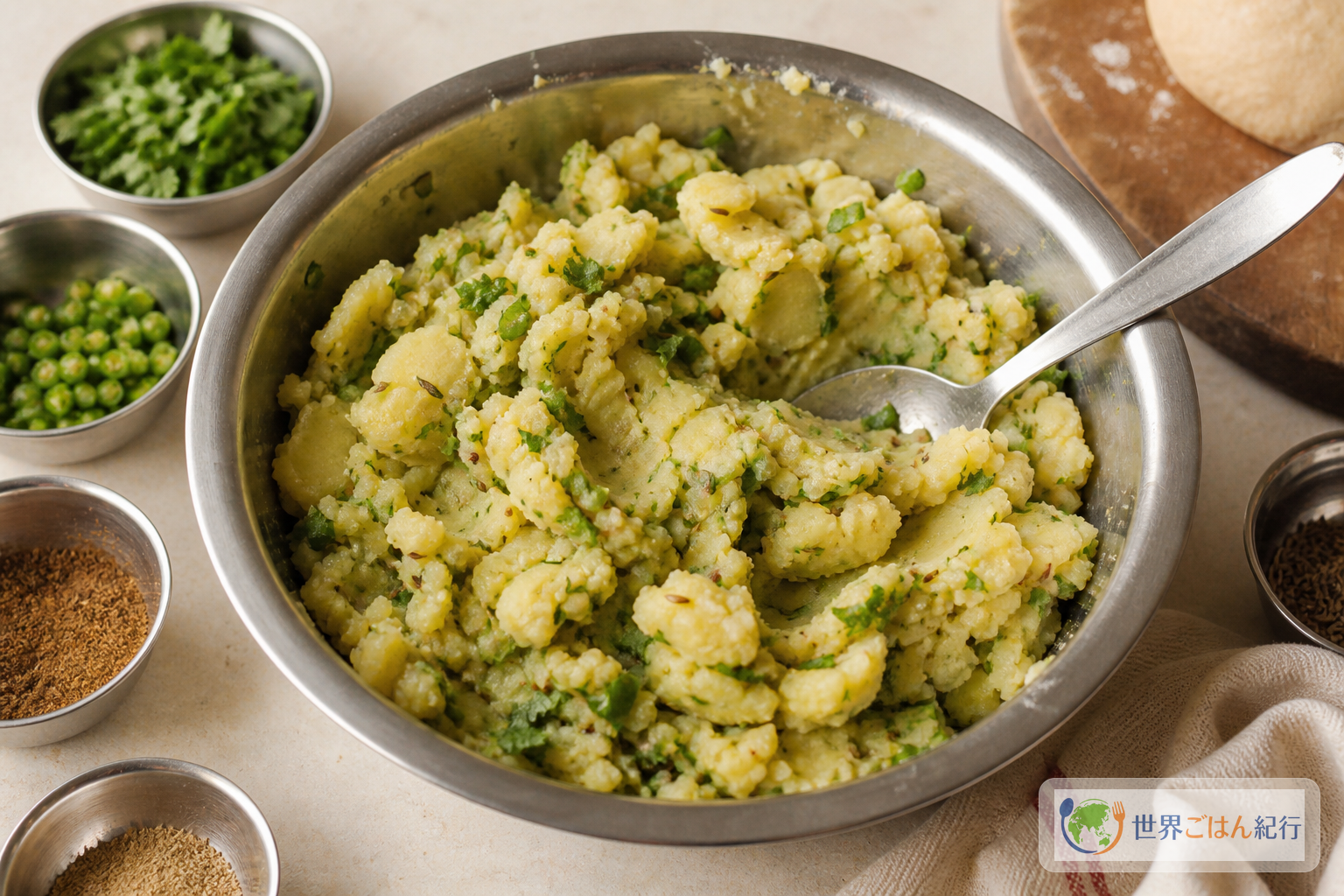
It is easier to go calmly if you separate making the potato filling from wrapping and cooking. If the filling is hot, the oil in the dough melts and the softened potato tends to push out through the seam.
Potato filling and dough
The browned surface and the filling's moisture decide the result
Season the filling hot, wrap it cool
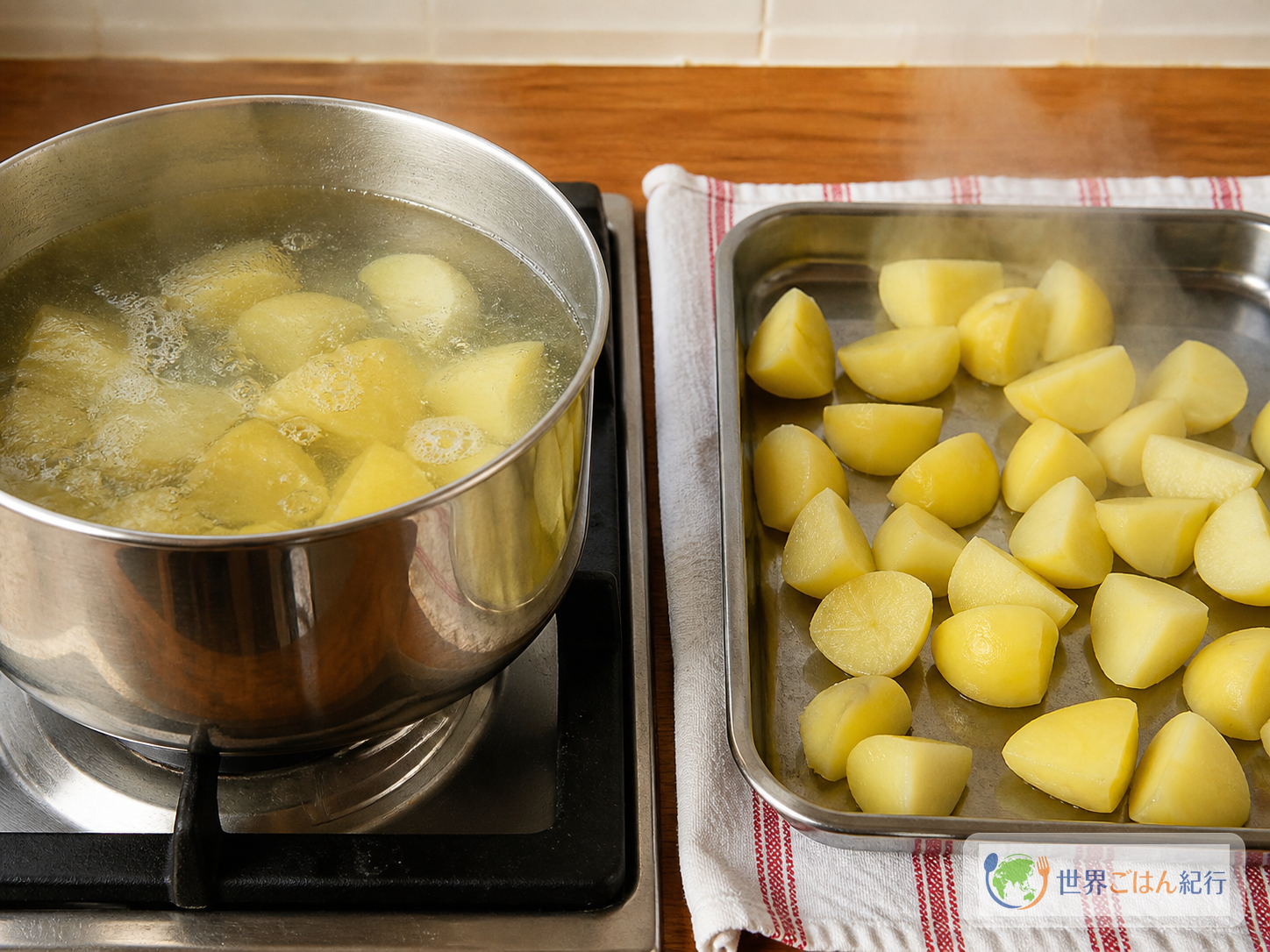
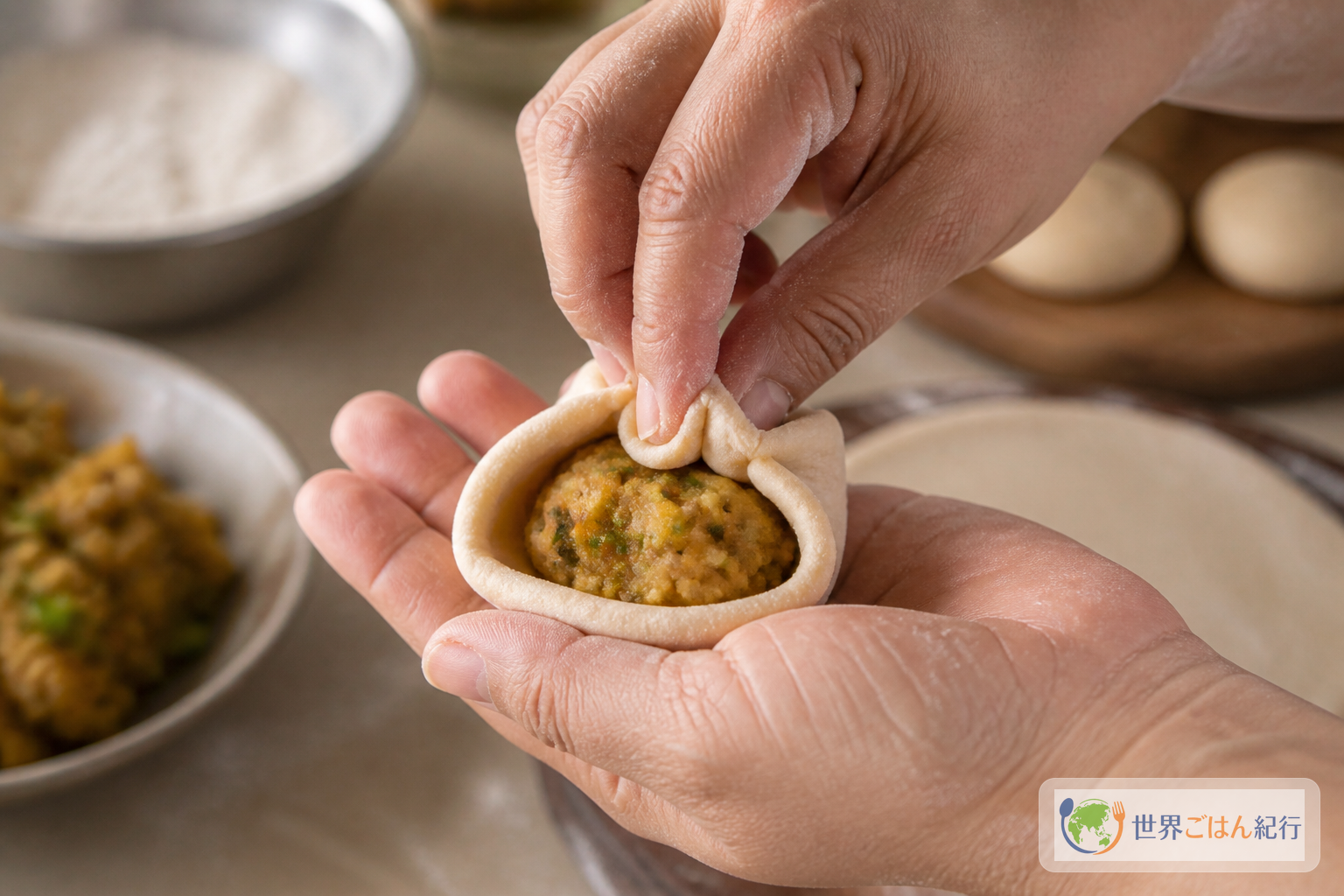
Warm potato is easier to mash and takes in the spices. But if you place a hot filling on the dough, the oil-rich dough loosens. Spread it for about 15 minutes after boiling until it no longer seeps water when squeezed, and you can wrap it without reducing the amount of filling.
Make the center thin rather than add more filling
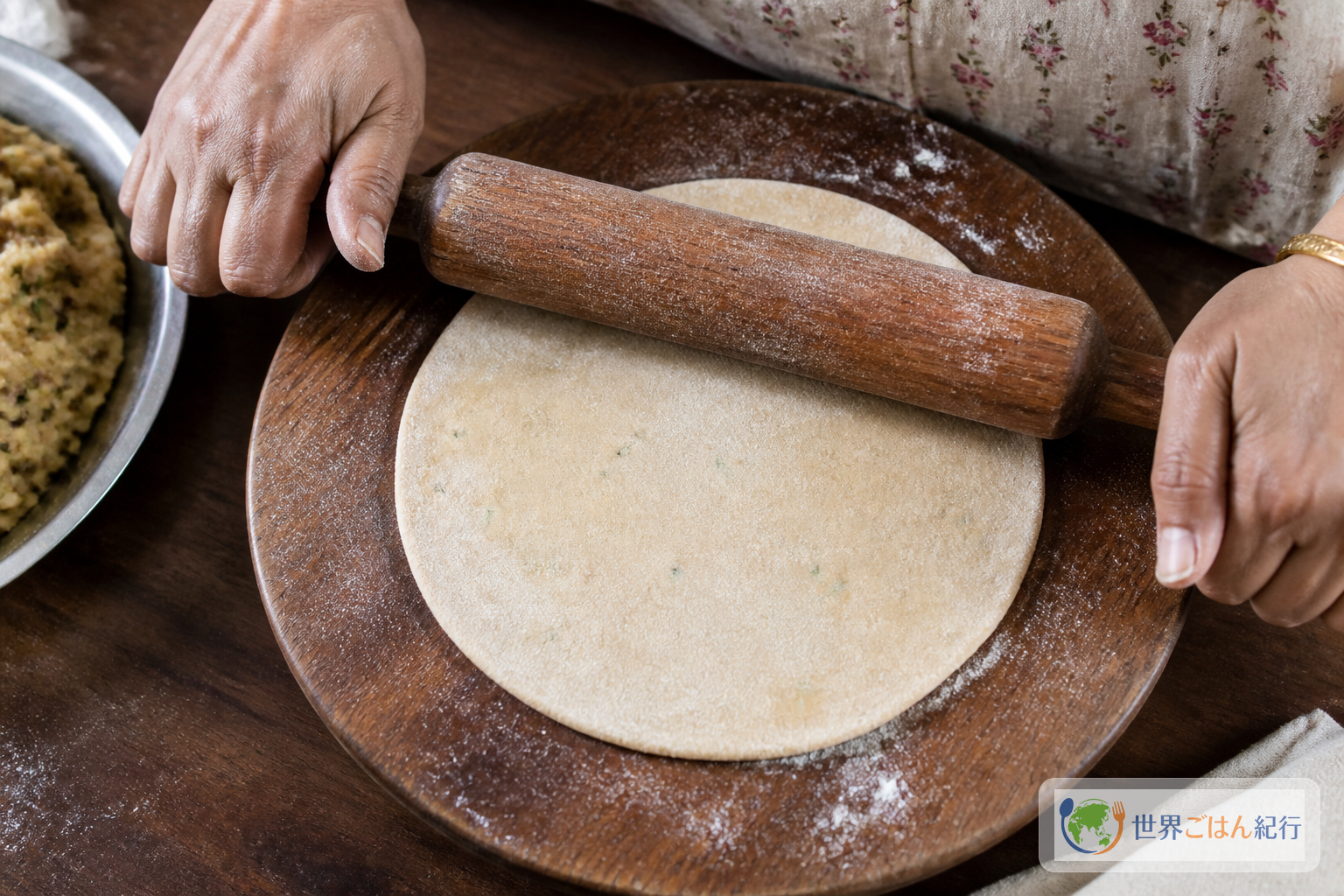
Great British Chefs' recipe also keeps the filling to 2–3 tablespoons and notes that too much makes it hard to roll. Dividing the filling into 75 g per paratha across 8 is a way to reproduce that idea with a home scale. If you thin the edge of the dough and don't mound the filling high in the center, it won't escape in one direction when the rolling pin passes over.
A dedicated tawa is for people who have a reason to buy one
A tawa is a flat cooking surface with no rim that makes it easy to lay dough out evenly to the edge. If you cook aloo paratha several times a month, also use it for chapati and dosa, or don't have a heavy frying pan, a 3 mm-thick surface is worth choosing. If you already have a heavy frying pan and will only make this once a year, try your existing equipment first.
Judge the browning by surface spots and the floury center, not a thermometer
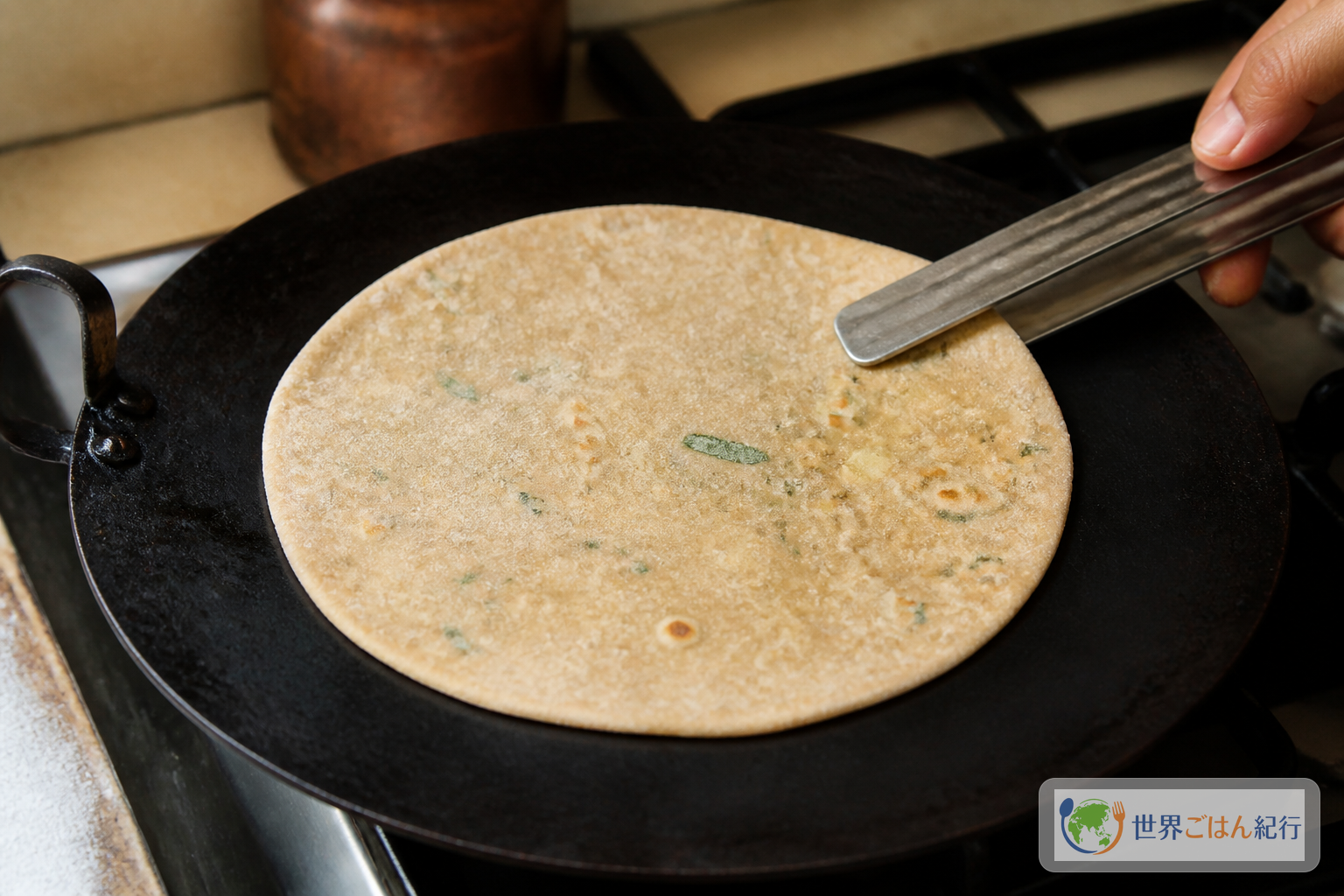
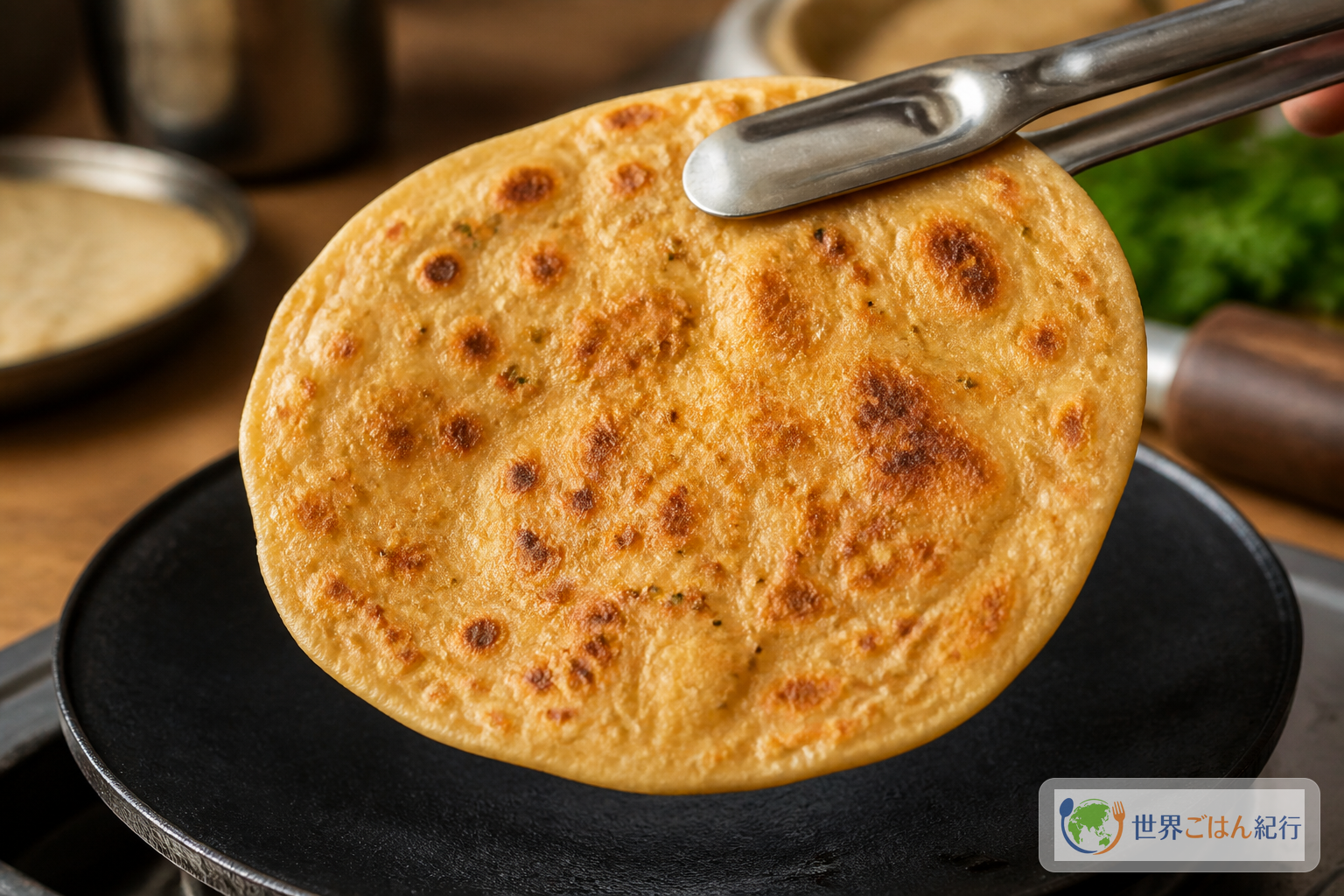
On a home stove, even if you measure the tawa's temperature at one point it changes with the dough's position and the fat. Use 1 minute 30 seconds per side as a baseline and check in order the small bubbles on the surface, the brown spots on the underside and the suppleness when lifted. If a floury center remains, go back to medium-low heat for 30 seconds per side, which is less likely to burn the surface.
For a small hole before cooking, sprinkle a little flour around it, pinch the dough shut with your fingers and rest it seam-side down for 5 minutes. If you put it on the tawa with the filling exposed, the burned spices turn bitter, so don't try to spread and cook it; close the hole first.
If only the surface browns first, lower the heat and cook 30 seconds per side, pressing the edge lightly with a spatula. If the center is cold, extending the time over low heat preserves the surface texture better than covering and steaming for 1 minute. If the dough is too thick, don't roll the next one larger than 18 cm; keep to a thickness of 2–3 mm.
Change the heat and sourness to suit the season
Make it milder
Leave out the green chili and make it without chili powder. If you don't want to weaken the aroma, keep the cumin and ginger. Yogurt on the side dilutes the heat, but the salt in the filling doesn't change, so if you reduce the salt, taste the filling right after mixing the potato.
Swap the filling for cauliflower or leafy greens
Finely chop 500 g cauliflower, sprinkle with 2 g salt, rest 10 minutes and squeeze out the water, and you can turn it into gobi paratha. For spinach, blanch 150 g for 30 seconds, cool in cold water, squeeze out the water thoroughly and chop finely. In both cases don't use the same weight as the 600 g of potato; reduce the moisture until it holds its shape when squeezed.
Make it vegan
Change the cooking fat from ghee to rice bran oil and swap the yogurt for unsweetened soy yogurt. The atta, potatoes and spices stay as they are. Store-bought pickles and spice mixes sometimes contain dairy, so you can't skip checking the labels.
Freeze and cook in the morning
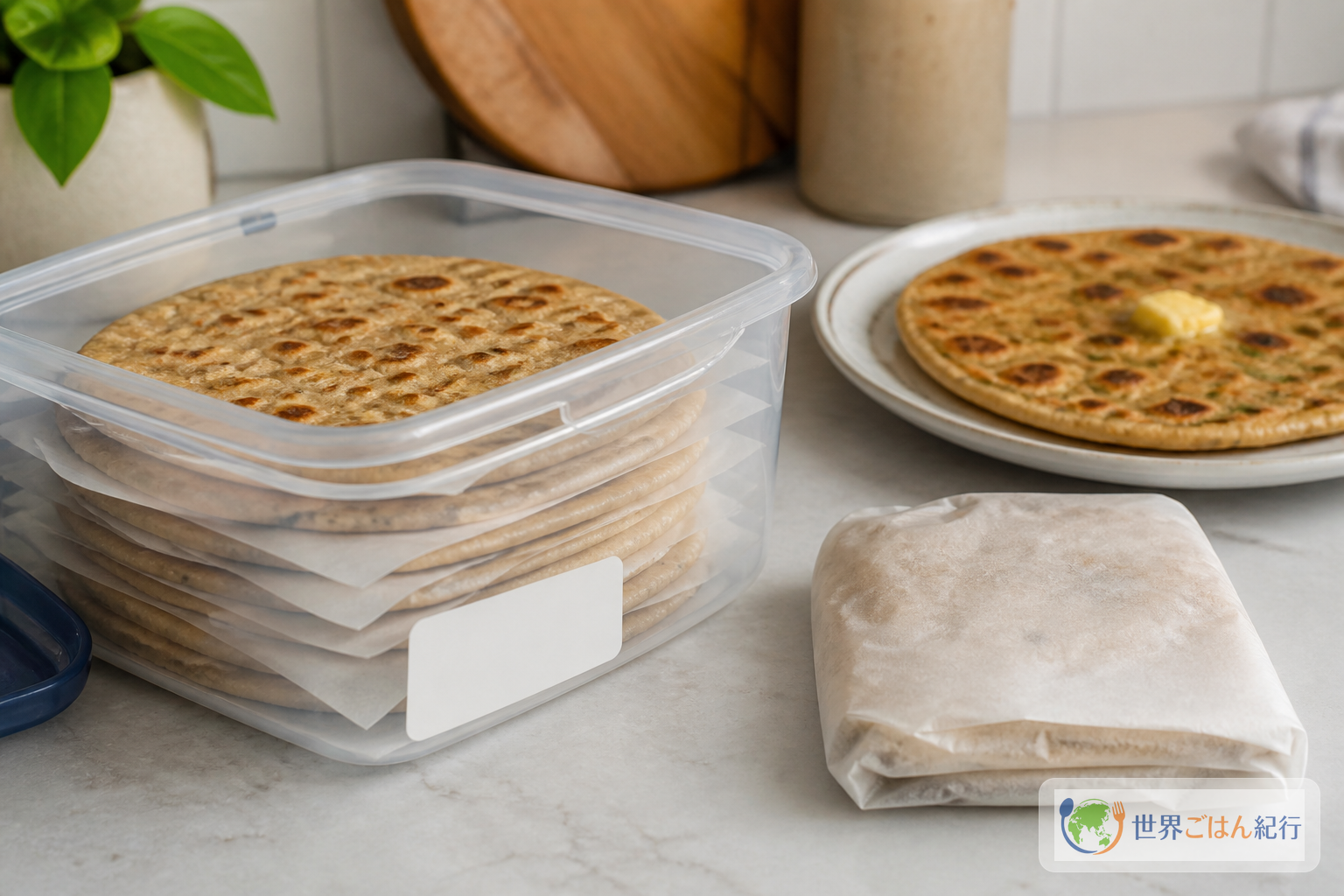
Cool the cooked parathas completely, put parchment between each and freeze. Don't thaw naturally; cook over medium-low heat for 1 minute 30 seconds per side, and add 30 seconds at a time until the center is hot. Leftover moisture before freezing makes the surface prone to cracking, so don't bag them straight from the pan.
FAQ
Can I make it with just cake flour if I don't have atta?
You can wrap with cake flour alone, but the whole-wheat aroma and chew are weaker. The substitute of 240 g whole-wheat flour mixed with 60 g cake flour comes together more like atta. Start with 190 ml water and add 5 ml at a time only if the flour looks dry.
Does the potato have to be completely cool?
You don't need to chill it in the refrigerator until firm. Spreading it for 15 minutes after draining until it is just warm to the touch is enough. If too much heat remains the dough turns soft, and if it is too cold the filling stiffens and gaps tend to open at the seam.
What can I use if I don't have a tawa?
Use a flat-bottomed, thick frying pan. If it can hold a dough circle of 18–20 cm without trouble and you can turn it around the handle, it's fine. Thin pans lose heat quickly, so reheat for 30 seconds over medium heat after each paratha.
How long does it keep after cooking?
Cool completely, then seal; eat within 2 days refrigerated or about 2 weeks frozen. Reheat refrigerated ones over medium-low heat for 1 minute per side and frozen ones from 1 minute 30 seconds per side, and check that the center is hot. Keep yogurt and pickle in separate containers.
What can I use if I don't have amchur?
You can substitute 5 ml lemon juice. It adds moisture to the filling, so mix it in after cooling the potato, and if it gets soft, spread it on a flat plate for 5 minutes. The same applies if you use umeboshi vinegar: not adding too much liquid is what keeps it easy to wrap.
Sources
- A gastronomic journey through must-try local foods in Chandigarh, Incredible India (its place as a Punjabi breakfast, accompaniments. Accessed and checked 21 August 2026 JST)
- Aloo Paratha Recipe, Great British Chefs (resting the dough, amount of filling, cooking on the tawa. Accessed and checked 21 August 2026 JST)
- Meera Sodha's vegan recipe for aloo paratha with quick lemon pickle, The Guardian (eating it outside breakfast, wrapping, doneness, freezing. Accessed and checked 21 August 2026 JST)
- Aloo Paratha Recipe, Bon Appétit (ratio of potato to dough, smoothing the filling, sealing. Accessed and checked 21 August 2026 JST)
- Paratha (Indian flatbreads), BBC Good Food (North Indian way of eating, resting the dough, the cooking surface, eating by hand. Accessed and checked 21 August 2026 JST)
- What is parotta and where does it come from, The Indian Express (differences in dough and shaping between North Indian paratha and Kerala parotta. Accessed and checked 21 August 2026 JST)


