A Kerala Side Dish That Turns Banana Flower into Something for Rice
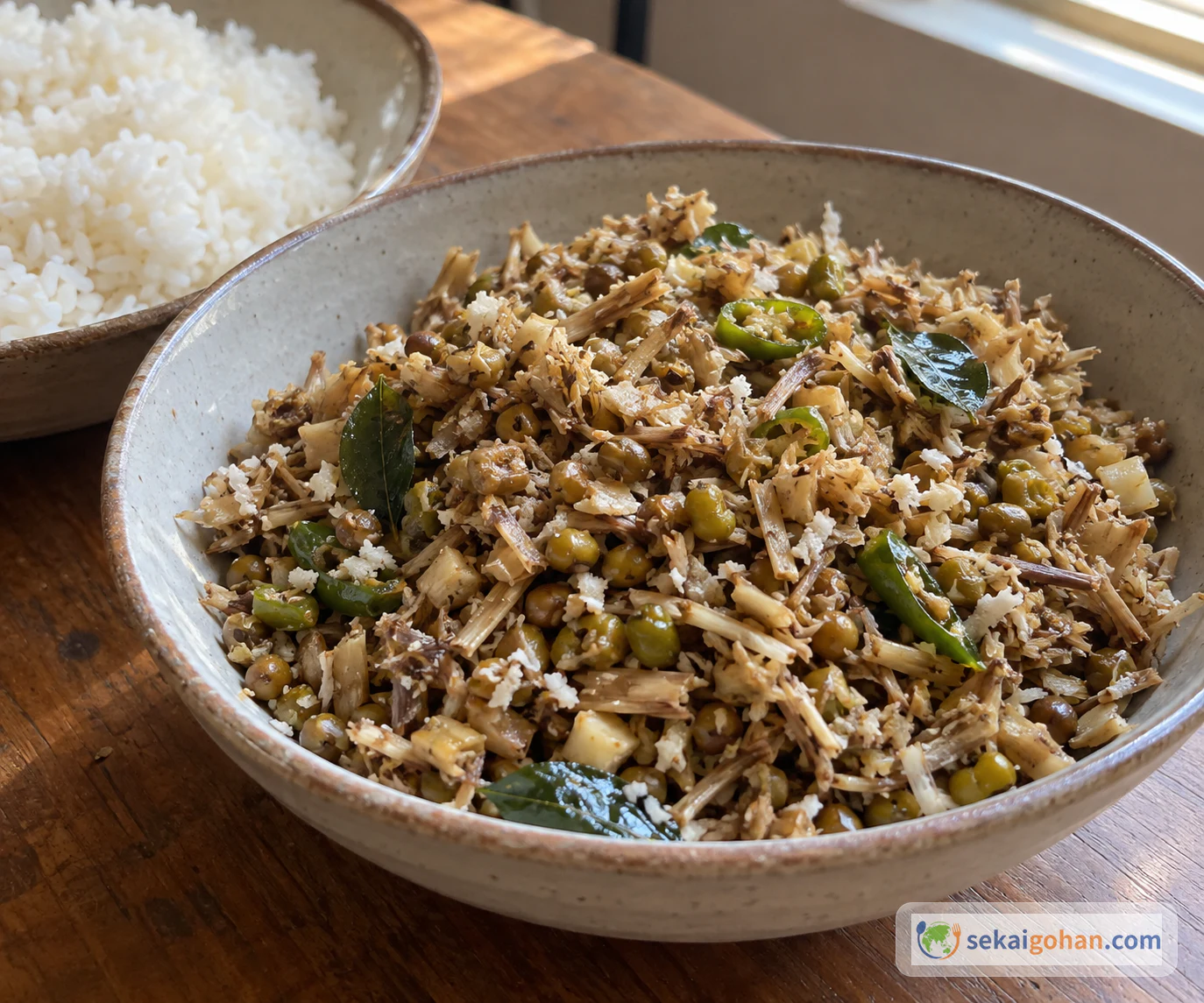
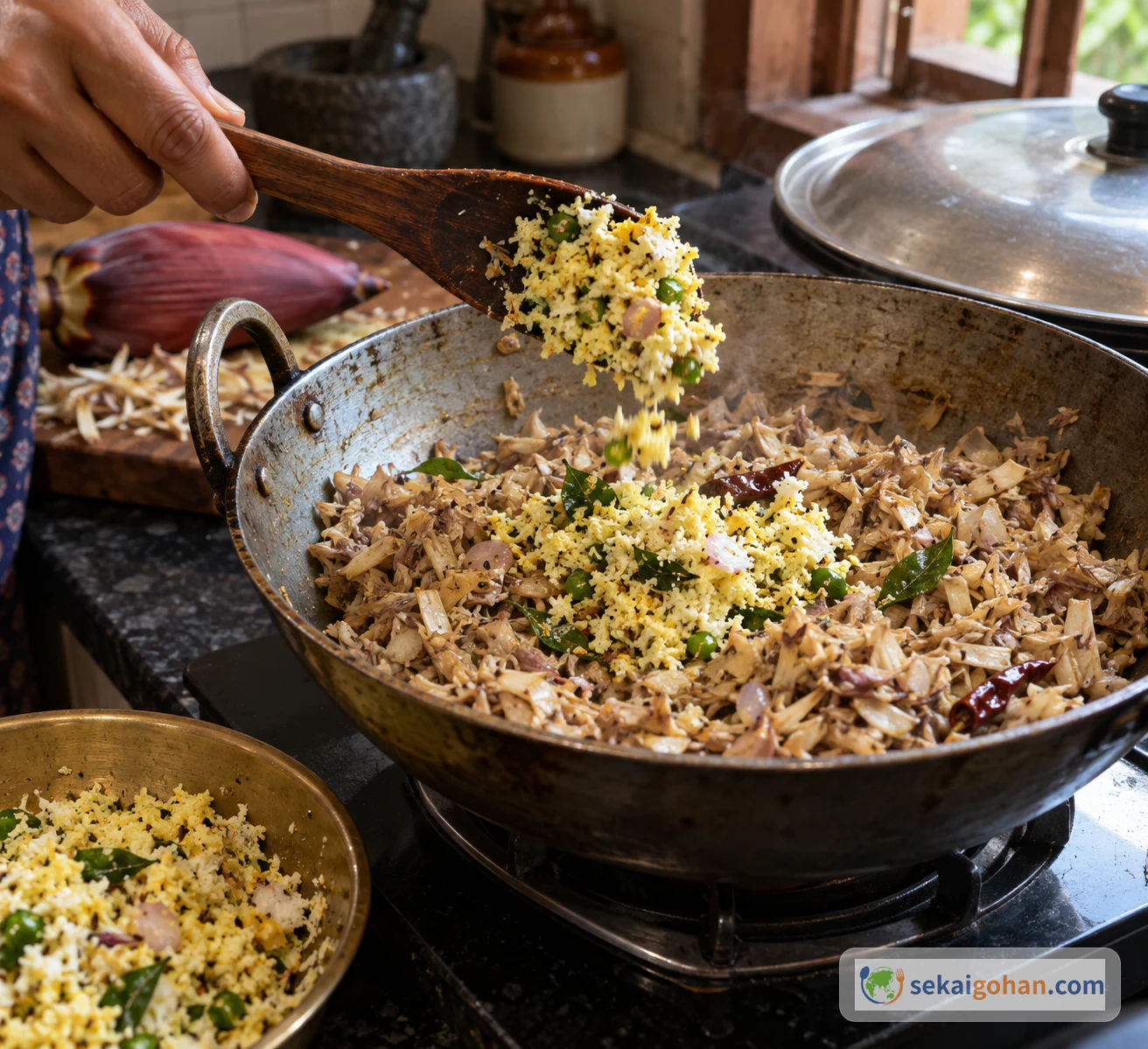
Finely chopped, tender banana flower, beans that still hold their shape, and coarse flecks of coconut, all cooked until no liquid gathers in the pan. This is a dry side for rice, not a saucy curry.
A plate of rice, and beside it a small heap of something pale, finely chopped and speckled with coconut and curry leaves. In Kerala, thoran is the name for this kind of dish: vegetables cut small and cooked with grated coconut until dry. This one is made from the banana flower, and it is served the way the recipes for it describe: as a side dish eaten with rice.
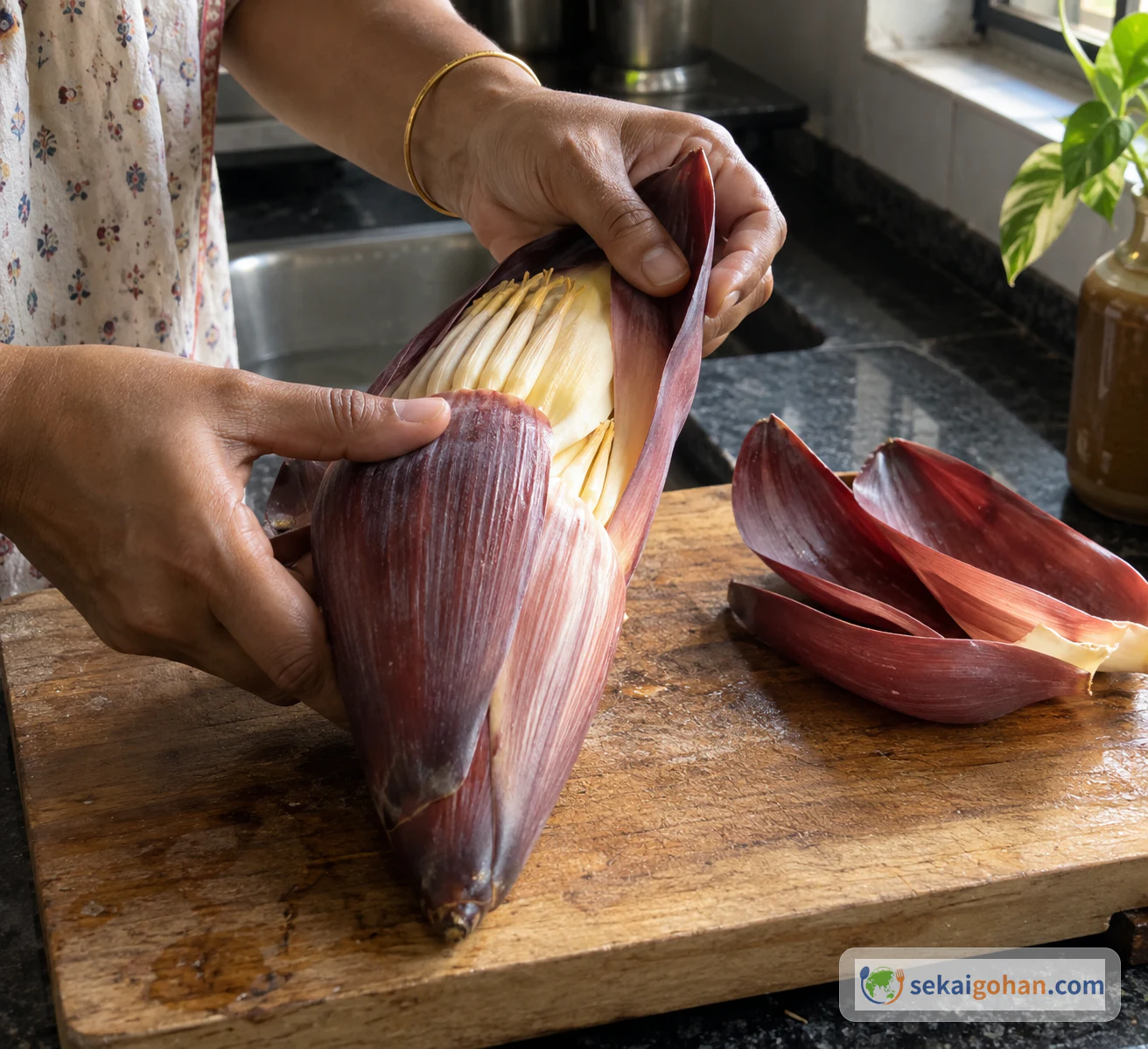
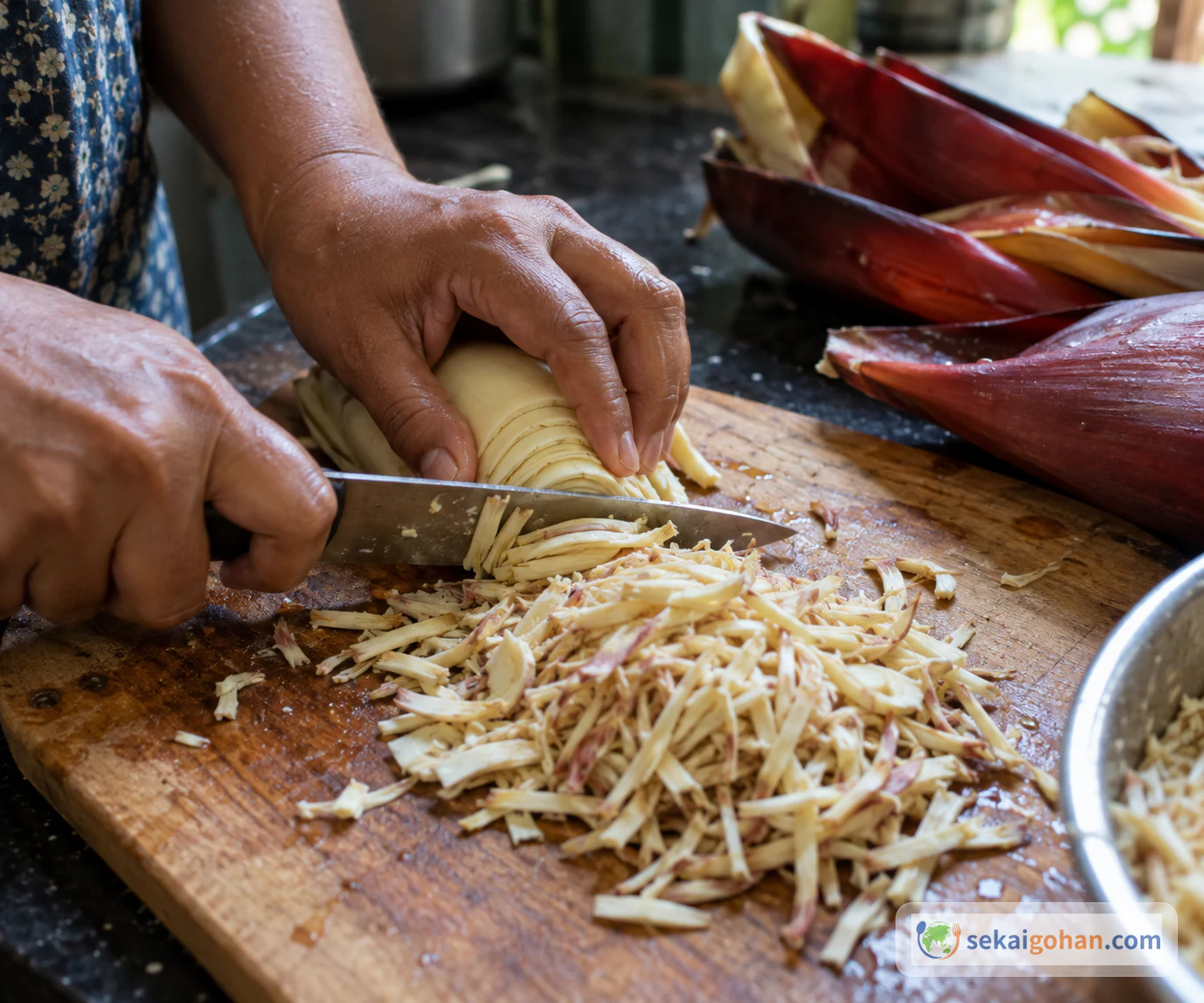
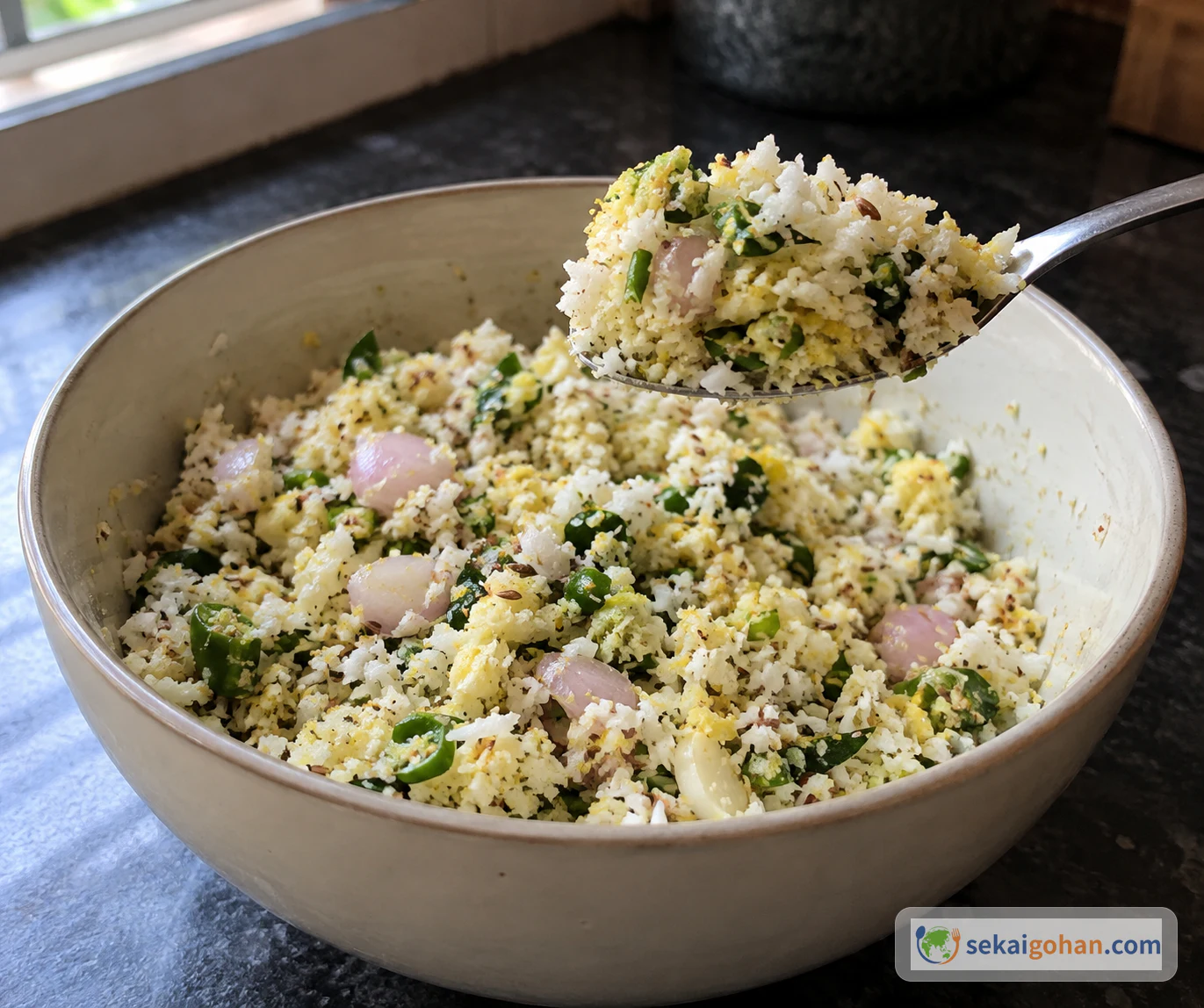
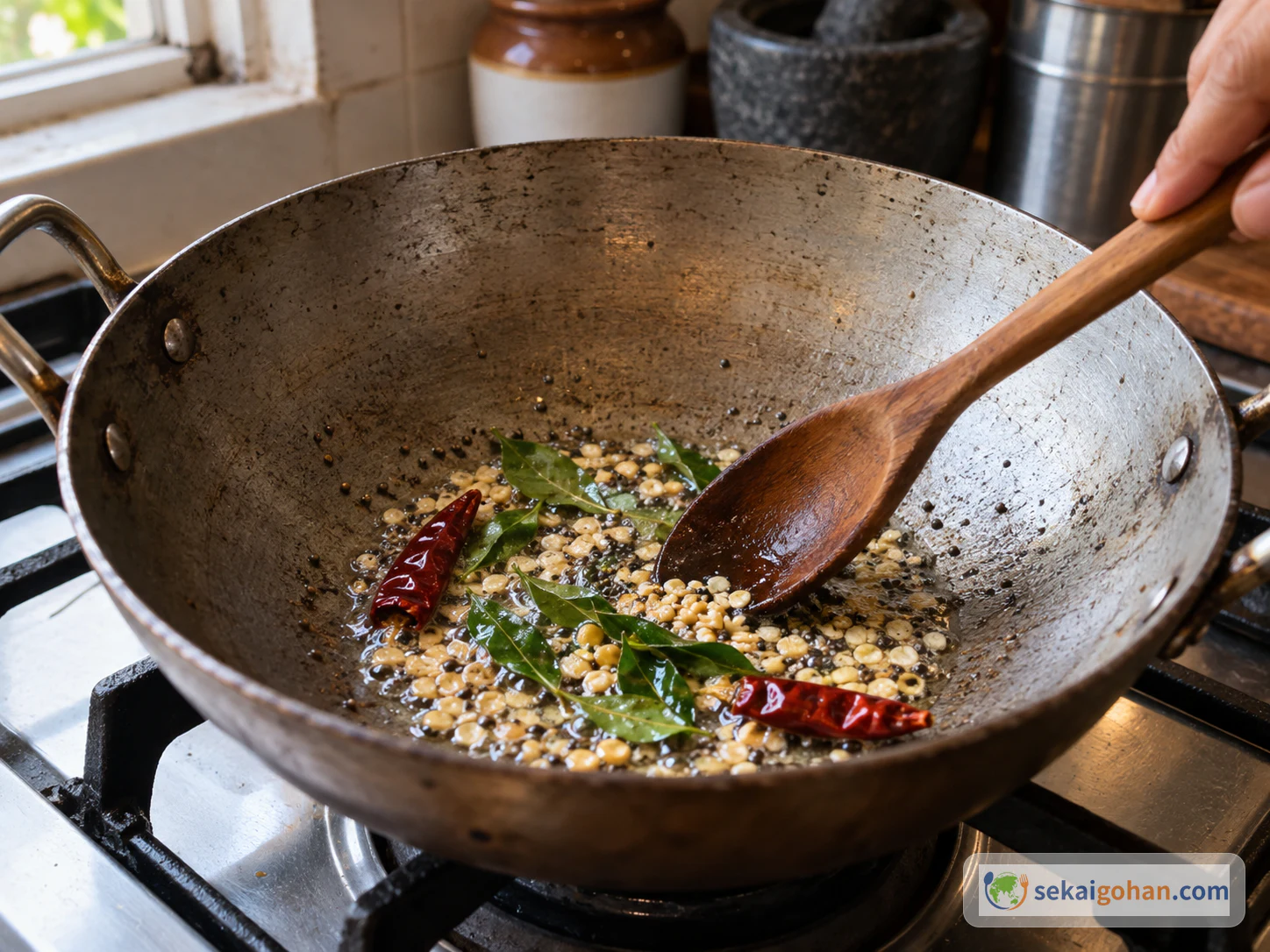
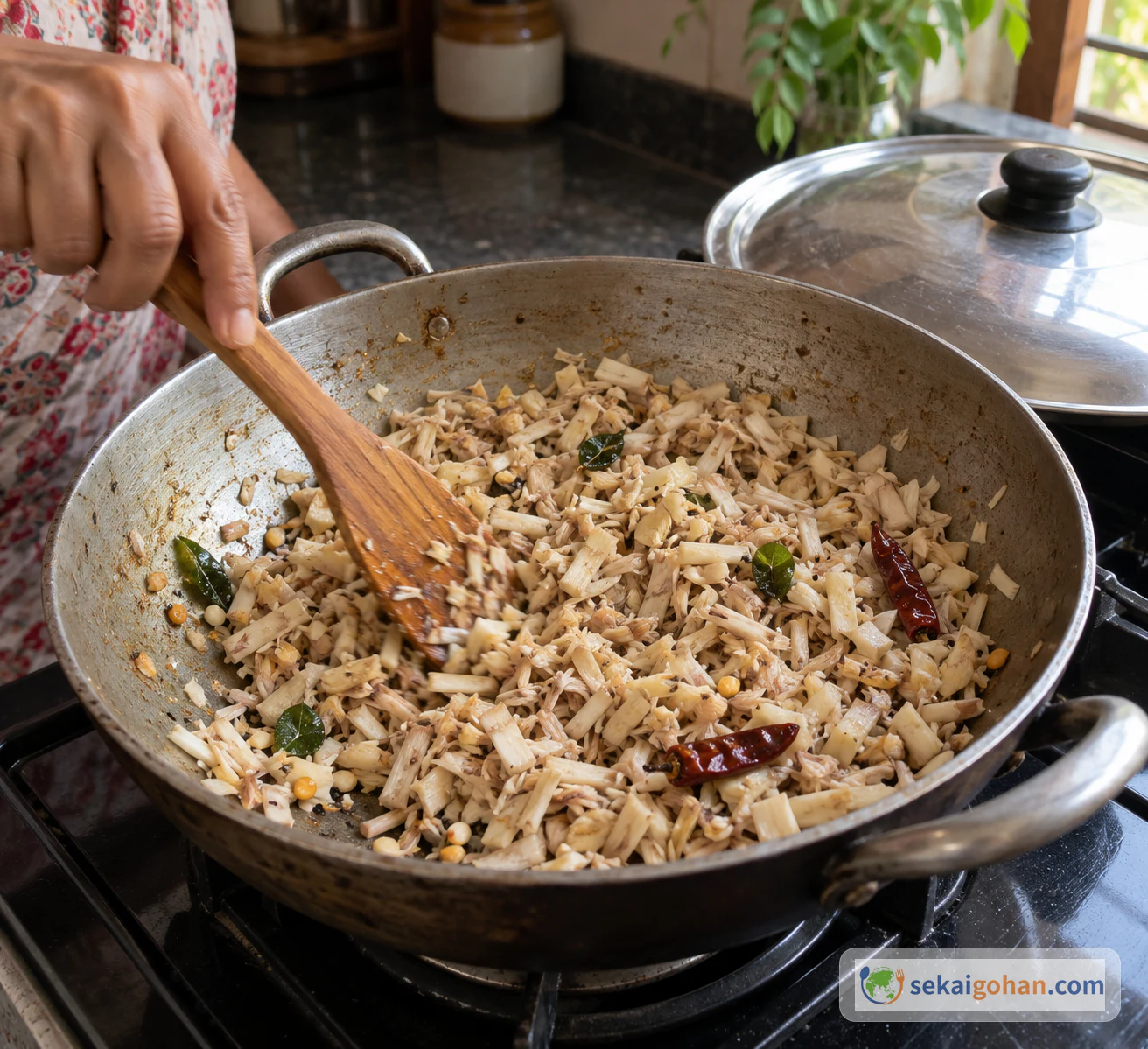
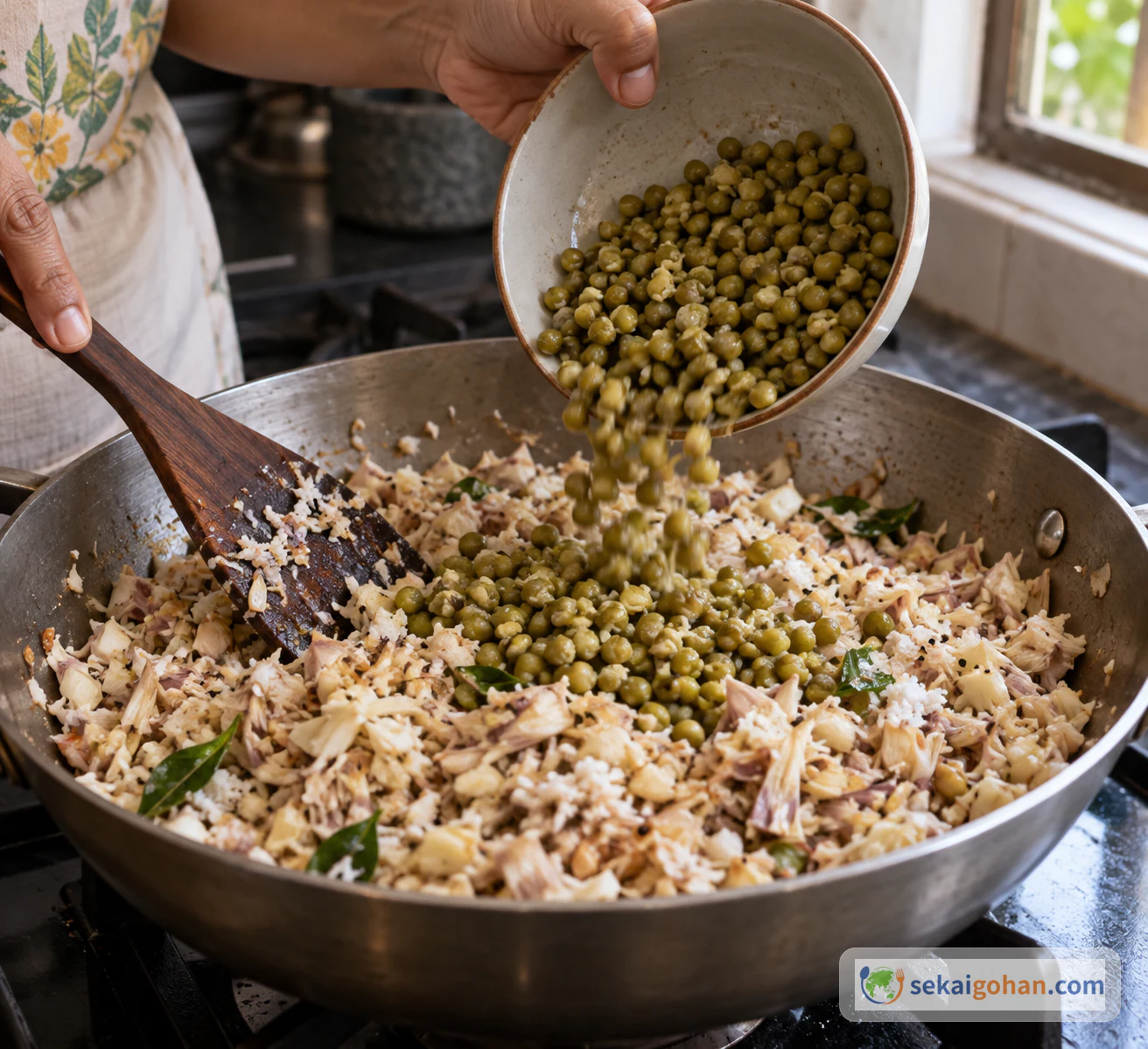
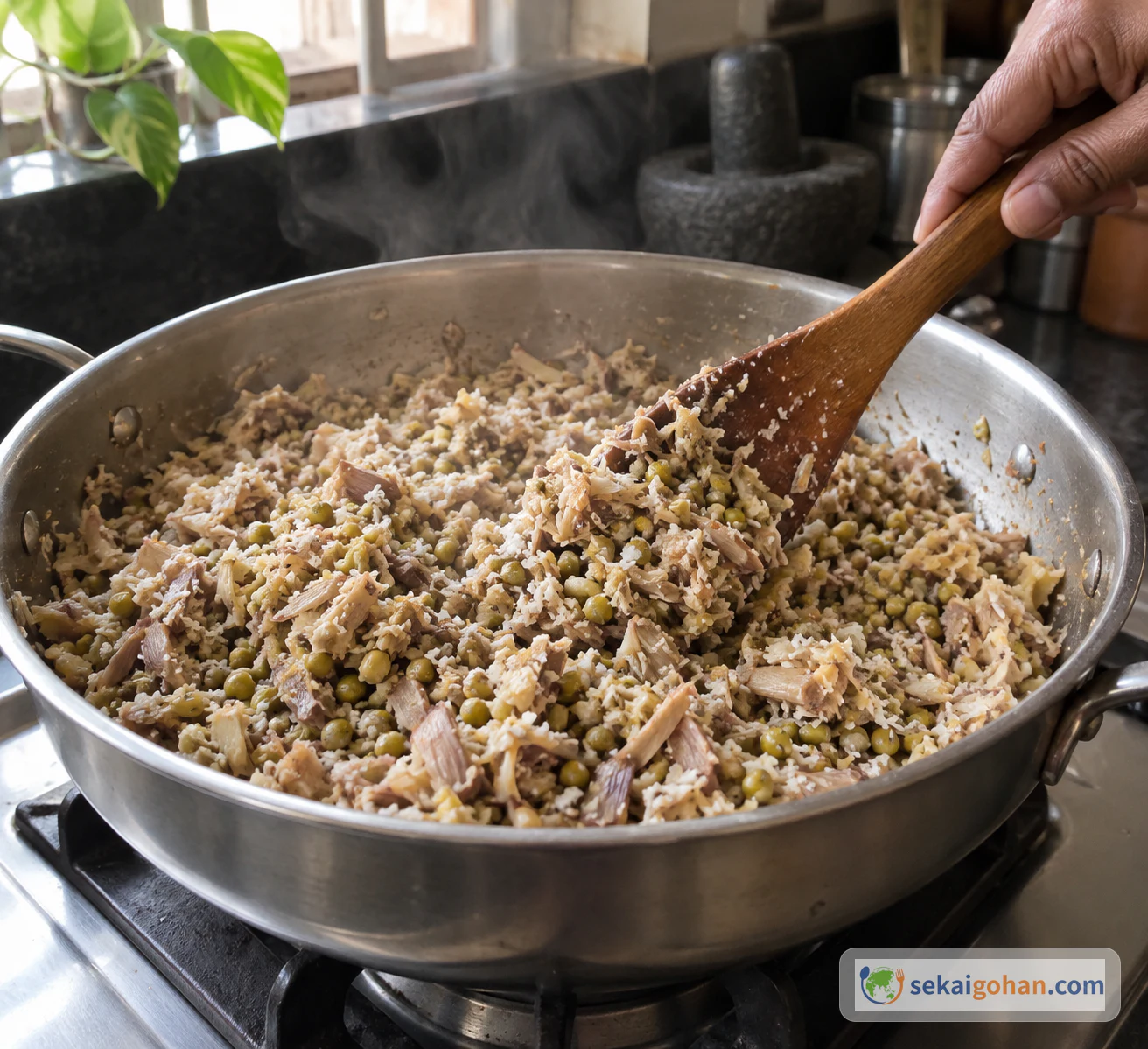
The work happens before the pan ever gets hot. The tough outer bracts come off, the pale inner layers are chopped fine, and the sticky sap is dealt with. After that, the cooking is short and orderly: a tempering of mustard seeds and dried chili, then the flower, then a coarse coconut mixture, then the partly cooked green gram. Nothing here is a heavy sauce, so the faint bitterness of the flower, the softness of the beans and the bite of the coconut all stay distinct.
This version follows the four-serving recipe by Kerala cook Sobha Varghese, published in Gulf News, without mixing in amounts or steps from other recipes. It has not been kitchen-tested by Sekai Gohan. For more dishes from across the country, see our Indian recipes.
What Vazhakoombu Thoran Is
Vazhakoombu thoran (വാഴക്കൂമ്പ് തോരൻ) takes its name from the Malayalam word for banana flower. DineTable gives the names vaazha koombu and kodappan for the flower and describes the dish as a Kerala side commonly served with rice. Gulf News places the recipe in Kerala cuisine.
Kerala Tourism describes coconut as widely used in the state's traditional cooking, and describes thoran as grated coconut sautéed with vegetables. It also lists thoran, a dry vegetable stir fry with coconut, among the dishes of Sadya, the vegetarian feast served on banana leaves for occasions such as Onam, Vishu, weddings and celebrations. That is a description of thoran in general: the materials do not say banana flower is the required or only vegetable for a Sadya thoran, and this is an everyday side as much as anything else.
Household recipes differ. The Gulf News version cooks the flower with green gram and 150 g of coconut; a recipe on Kerala Cooking Recipes pairs the flower with red cowpeas (vanpayar) in different quantities; DineTable's version leaves the beans out entirely. Each of those is its own formula, so this article keeps to one of them rather than blending the three.
Ingredients (4 servings)
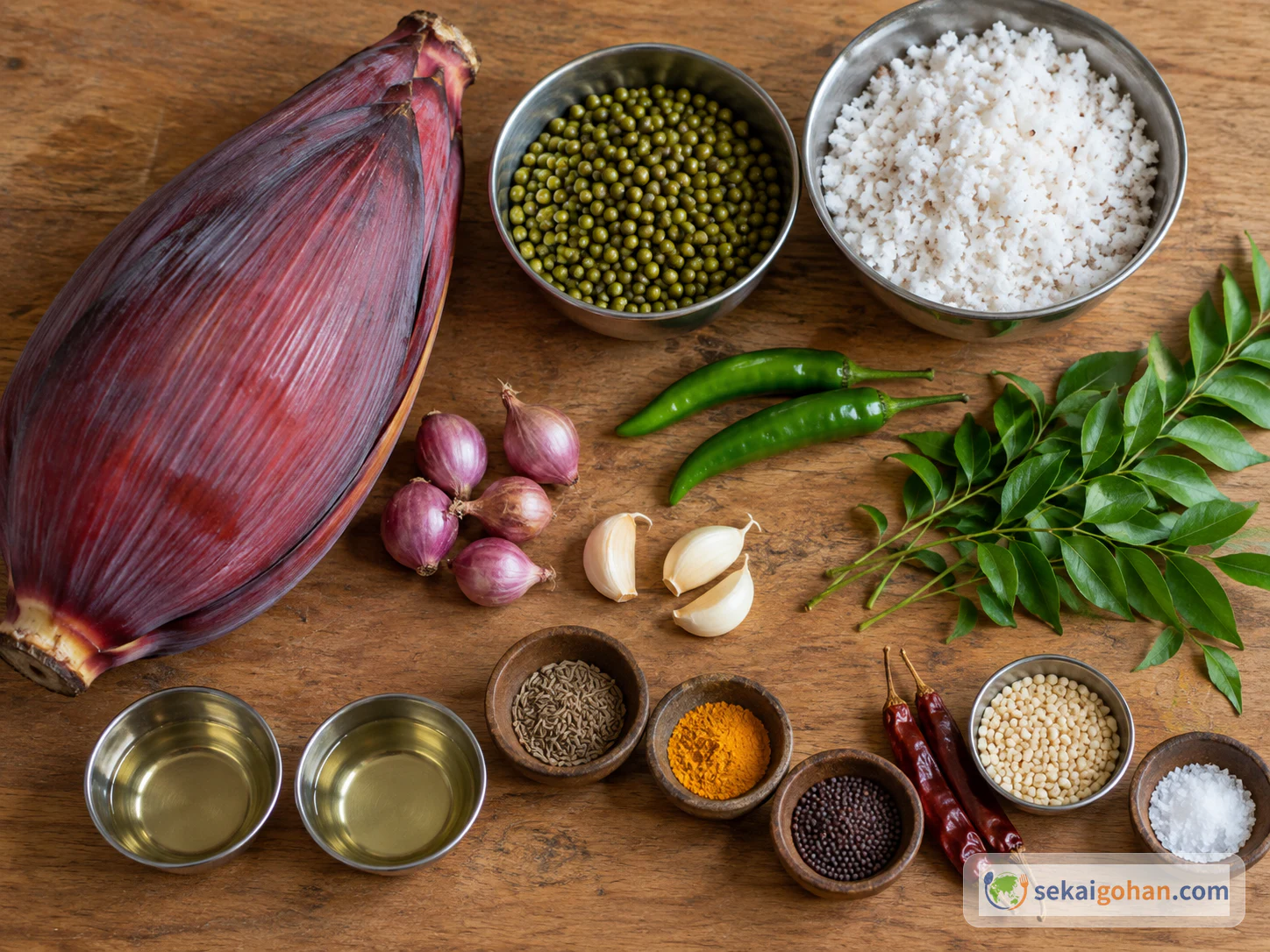
Start with one banana flower; use only its pale, tender inner part. The edible yield depends on the flower you buy. The coconut oil is used in two separate tablespoons: one rubbed into the chopped flower, one heated for the tempering.
Equipment
- Knife and cutting board
- Bowl for the chopped flower
- Wooden stick or the handle of a wooden spoon
- Pan for partly cooking the beans
- Grinder for the coarse coconut mixture
- Wide, deep pan with a lid
- Disposable gloves (optional, if staining bothers you)
Choosing and Substituting
Fresh banana flower is not something every supermarket stocks. Look in Indian or Southeast Asian grocers or online, and check availability before making a special trip. Canned or jarred banana flower differs in moisture, salt and texture, so treat it as a different version of the dish rather than a like-for-like swap.
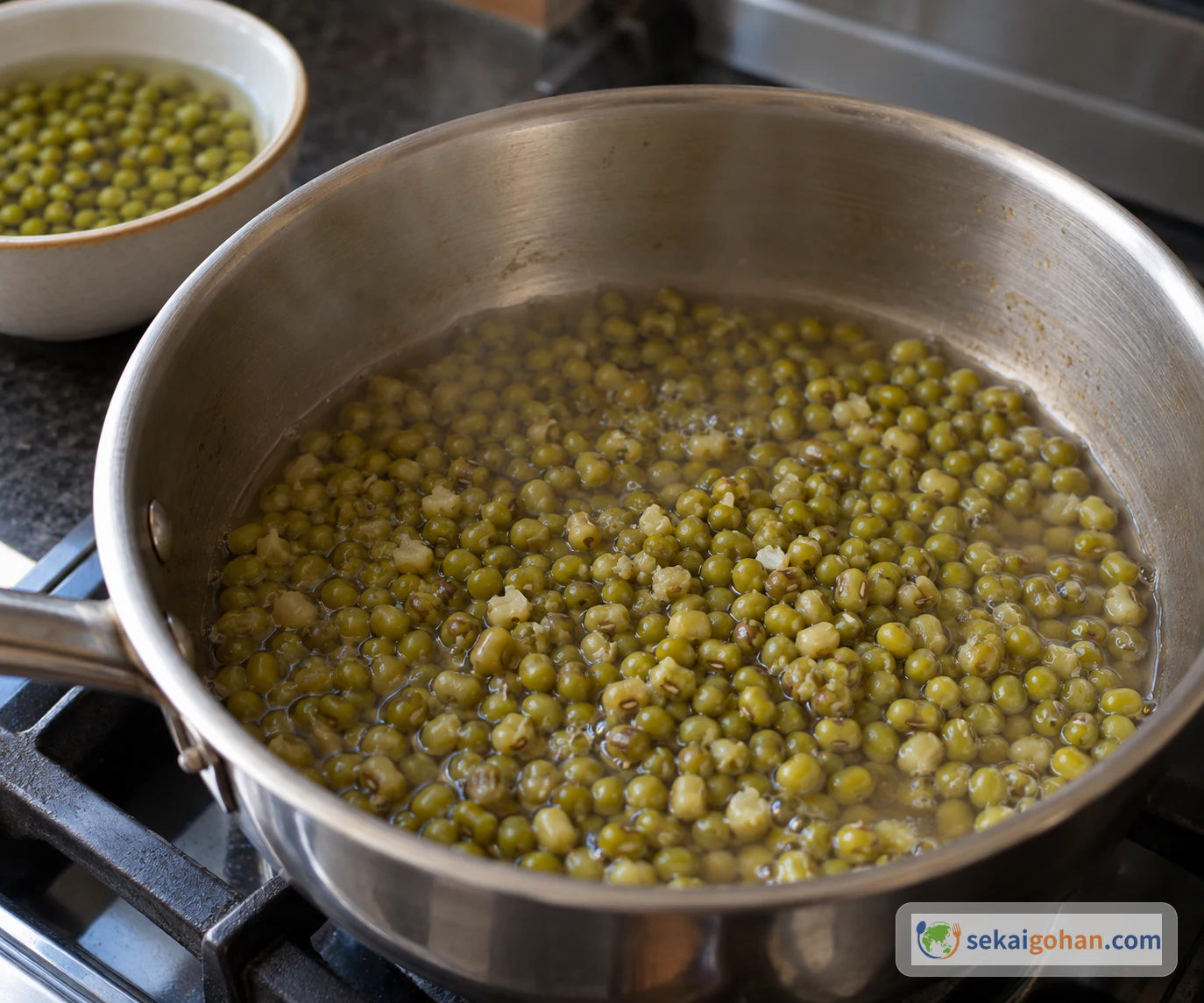
Green gram here means whole mung beans, which keep their shape through two rounds of cooking. Split, skinned mung cooks differently and breaks down more easily; it will not give the same result at the same amount.
Coconut: frozen grated coconut is the closest substitute for freshly grated. Dried (desiccated) coconut has a different texture and moisture, so it is not a 1:1 replacement for 150 g of fresh.
Coconut oil carries the aroma of the dish. A neutral vegetable oil works, but the coconut fragrance will be weaker.
Urad dal or rice: use urad dal for this version; rice is an alternative for the tempering. Urad dal gives a toasty crunch; rice changes that texture.
Shallots are the small kind. Swapping in the same number of large onions changes both flavor and moisture.
The main ingredients are legumes (green gram, and urad dal if you use it) and coconut. Anyone with allergies to these should check labels on every product. Mustard seeds pop and spatter in hot oil, so keep your face and hands back from the pan. Taste a few beans before serving and serve only when no hard center remains.
Method: Clean the Flower, Then Cook in Short Covered Stages
The green gram needs to be washed and soaked for a few hours. Put it to soak before you start on the flower, so it is ready by step 3.
When Things Go Wrong
The times in the steps are guides; pans, stoves and flowers vary. Judge the finish by the pan: dry bottom, tender flower, whole beans.
| Problem | Likely cause | What to do |
|---|---|---|
| Watery at the end | Moisture from the flower and beans still in the pan | Keep the lid off and stir over the heat until no liquid gathers on the bottom |
| Catching on the bottom | Not stirred during covered cooking | Stir occasionally while covered, and lower the heat if it sticks |
| Beans still firm | Not softened enough before going in | Keep cooking gently, covered, until no hard center remains; next time cook them a little longer before adding |
| Beans broken up | Cooked too soft beforehand, or stirred hard | Cook them only until slightly soft, and fold rather than stir |
| Stained hands or knife | Sap from the cut flower | Oil hands and knife before chopping, or wear gloves; oil helps but may not prevent all staining |
Variations
Heat: green and dried chilies vary a lot in strength. Using fewer reduces the heat, and also changes the aroma of the coconut mixture and the tempering.
Rice instead of urad dal: a valid choice for the tempering, with a different texture.
Other legumes: a red cowpea version of banana flower thoran exists in Kerala home cooking, but it is a separate recipe with its own quantities; it is not a simple swap here.
Without fresh flower: canned or frozen banana flower makes a different version, with different moisture and salt. There is no tested conversion for it here.
On the Table: A Dry Side for Rice
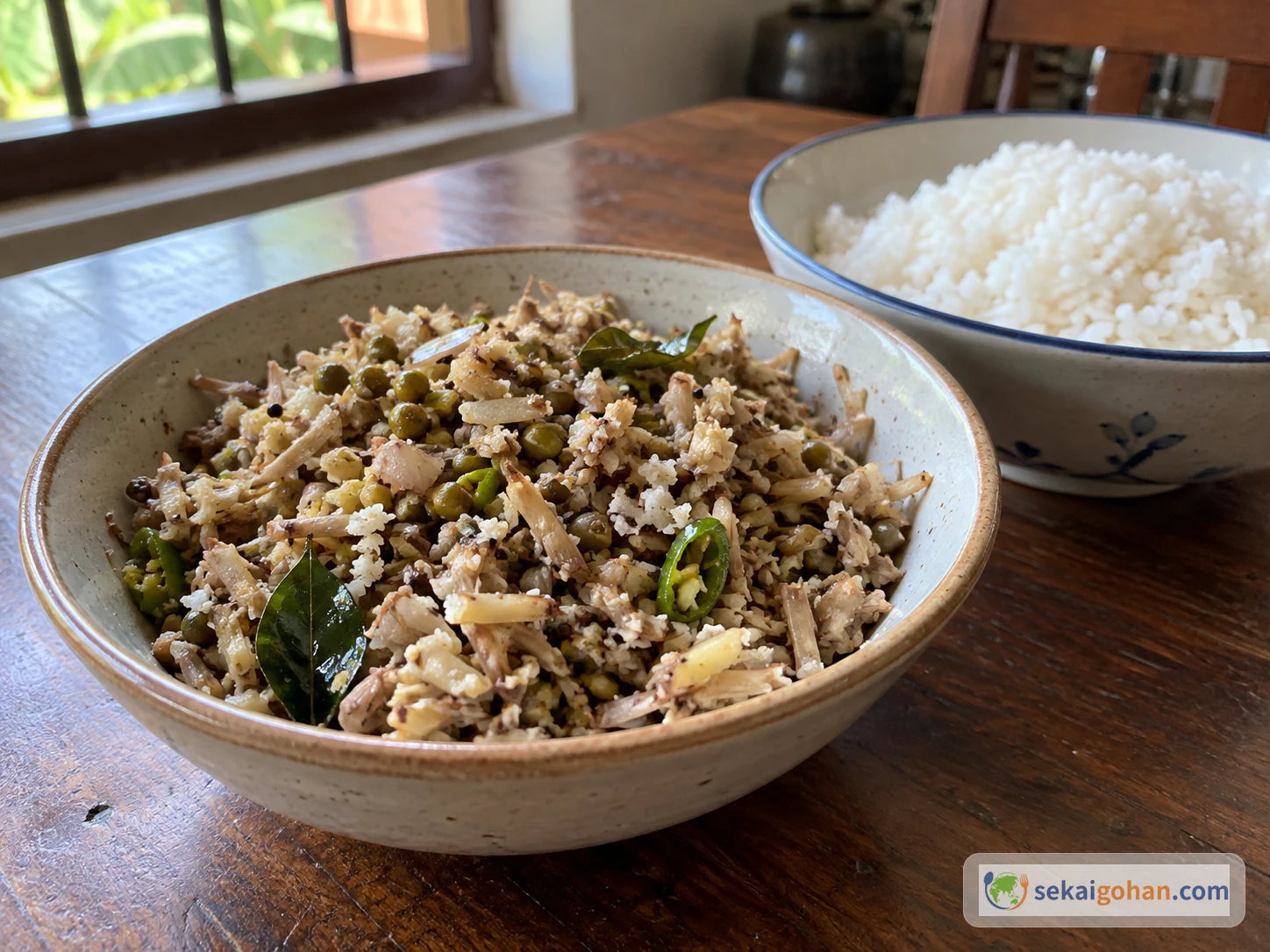
All three of the recipes consulted for this article present banana flower thoran as a side dish eaten with rice. Because it is cooked dry, it sits neatly beside rice and other dishes without running into them. On a Sadya leaf, thoran is one dry vegetable dish among many; on an ordinary day, a bowl of it next to rice is enough.
Frequently Asked Questions
Which part of the banana flower do I eat?
Remove several of the tough, dark red outer bracts and use the pale, tender inner part. Both the Gulf News and DineTable recipes describe trimming the flower this way. Kerala Cooking Recipes, in its cowpea version, also mentions removing mature florets.
Is preparing a fresh flower a lot of work?
It is the most hands-on part. Oiling your hands and knife, rubbing oil into the chopped flower and turning a wooden stick in the bowl to collect the sap all come from the Gulf News recipe. Canned banana flower is easier, but it is not the same dish.
Which green gram should I use?
The Gulf News recipe lists "green gram" without saying whether it is whole or split. This article chooses whole mung beans because they hold their shape through partial cooking and the final stage. Split mung is a different option with different results.
How long do the beans soak and cook?
The recipe says to soak them for a few hours and cook them in a little water until slightly soft. It does not give an exact soaking time, amount of water or cooking time, so judge by the beans: slightly soft, still whole.
How long does the whole recipe take?
Gulf News lists 20 minutes prep and 20 minutes cooking. It is not clear whether that includes the few hours of soaking or the time to trim and chop the flower, which varies with each flower, so plan for the soaking separately.
Why does the ingredient list call for 4–5 sprigs of curry leaves when the tempering uses 2–3?
That is how the Gulf News recipe gives them: 4–5 sprigs in the ingredient list and 2–3 sprigs in the tempering step. Curry leaves are also listed in the coconut mixture without a separate amount. The recipe does not say exactly how to divide the rest.
Is this a Sadya dish?
Kerala Tourism lists thoran in general among the dishes of Sadya. DineTable tags its own banana flower thoran as Onam/Sadya-related. Neither says banana flower is the required thoran vegetable, and the dish is also an everyday side for rice.
How should I store leftovers?
The recipe followed here gives no storage or reheating guidance, so this article does not suggest a keeping time.
Sources
- Gulf News, "How to prepare banana flower stir fry or Vazha Koombu Thoran," recipe by Sobha Varghese (Sobha's Kitchenette). The recipe followed in this article: Kerala identification, four servings, prep and cook estimates, ingredients and amounts, soaking and partly cooking the green gram, trimming and chopping the flower and handling the sap, the coconut mixture, tempering and cooking order, and serving with rice. https://gulfnews.com/food/guide-cooking/how-to-prepare-banana-flower-stir-fry-or-vazha-koombu-thoran-1.1616080143875
- DineTable.com, "Vaazha koombu thoran | Banana Flower Stir Fry." The names vaazha koombu and kodappan, the dish as a Kerala side served with rice, using the pale inner part after removing the outer petals, and an example of a different formula; its Onam/Sadya tag describes that site's recipe. Not used for amounts or method. https://dinetable.com/recipe/vaazha-koombu-thoran-banana-flower-kerala-recipe/
- Kerala Cooking Recipes (Neena), "Chundum Payarum Thoran / Vazhakoomb-Kodappan-Vanpayar Thoran." A red cowpea version served with rice, removing outer bracts and mature florets, and evidence that household recipes vary in legumes and coconut. Not used for amounts or method. https://www.keralacookingrecipes.com/chundum-payarum-thoranvazhakoombkodappan-vanpayar-thoranbanana-flower-red-cow-peas-stir-fry-recipe/
- Kerala Tourism, "What are the Coconut dishes can I taste in Kerala?" Coconut in Kerala's traditional cooking, thoran as grated coconut sautéed with vegetables, and thoran among Sadya dishes. https://www.keralatourism.org/faq/what-are-the-coconut-dishes-i-can-taste-in-kerala
- Kerala Tourism, "What is Kerala Sadya and what is special about it?" Sadya as a vegetarian feast on banana leaves for Onam, Vishu, weddings and celebrations, with thoran listed as a dry vegetable stir fry with coconut. https://www.keralatourism.org/faq/what-is-kerala-sadya-and-what-is-special-about-it