A Sour Southern Curry, Cooked Until the Liquid Is Gone
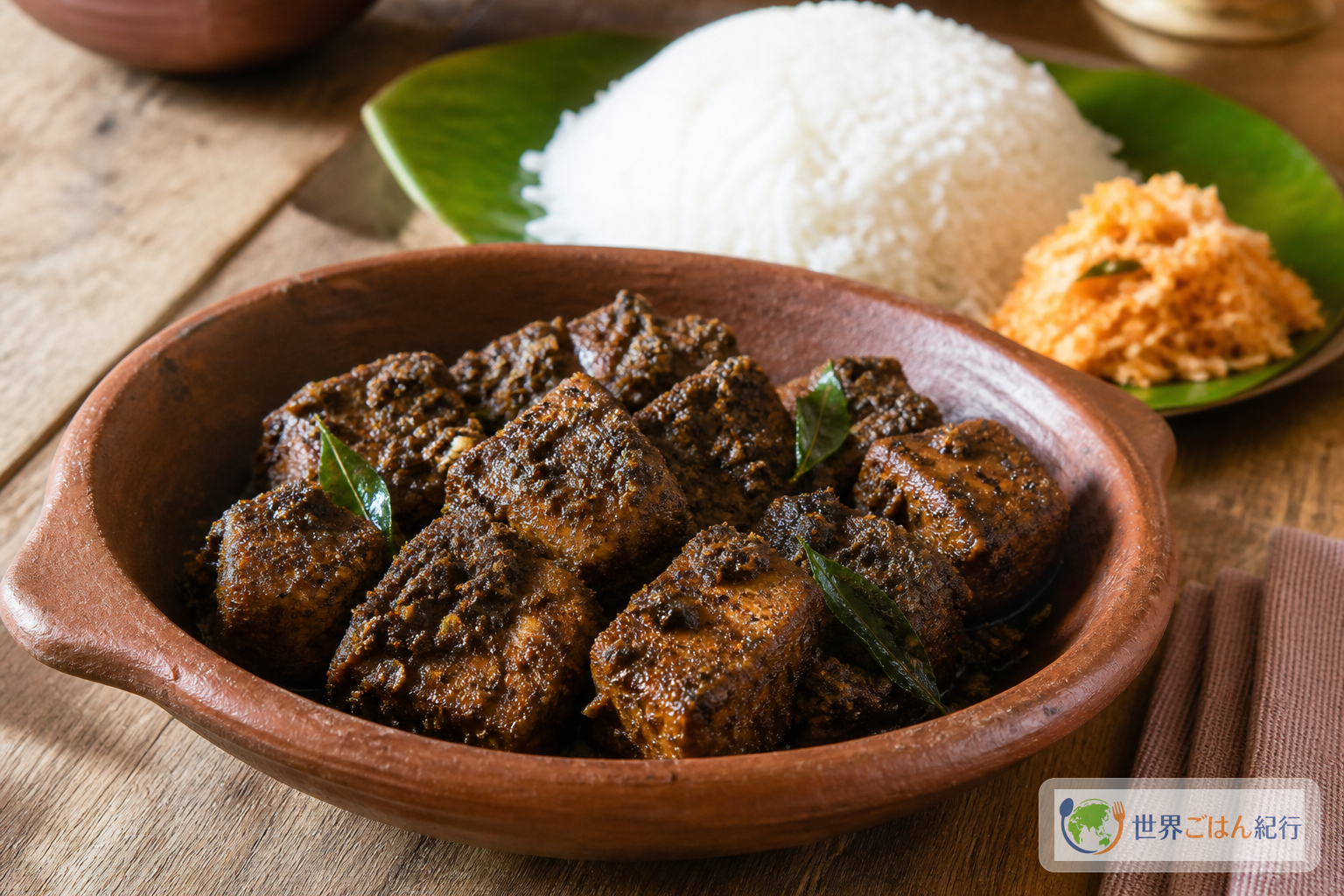
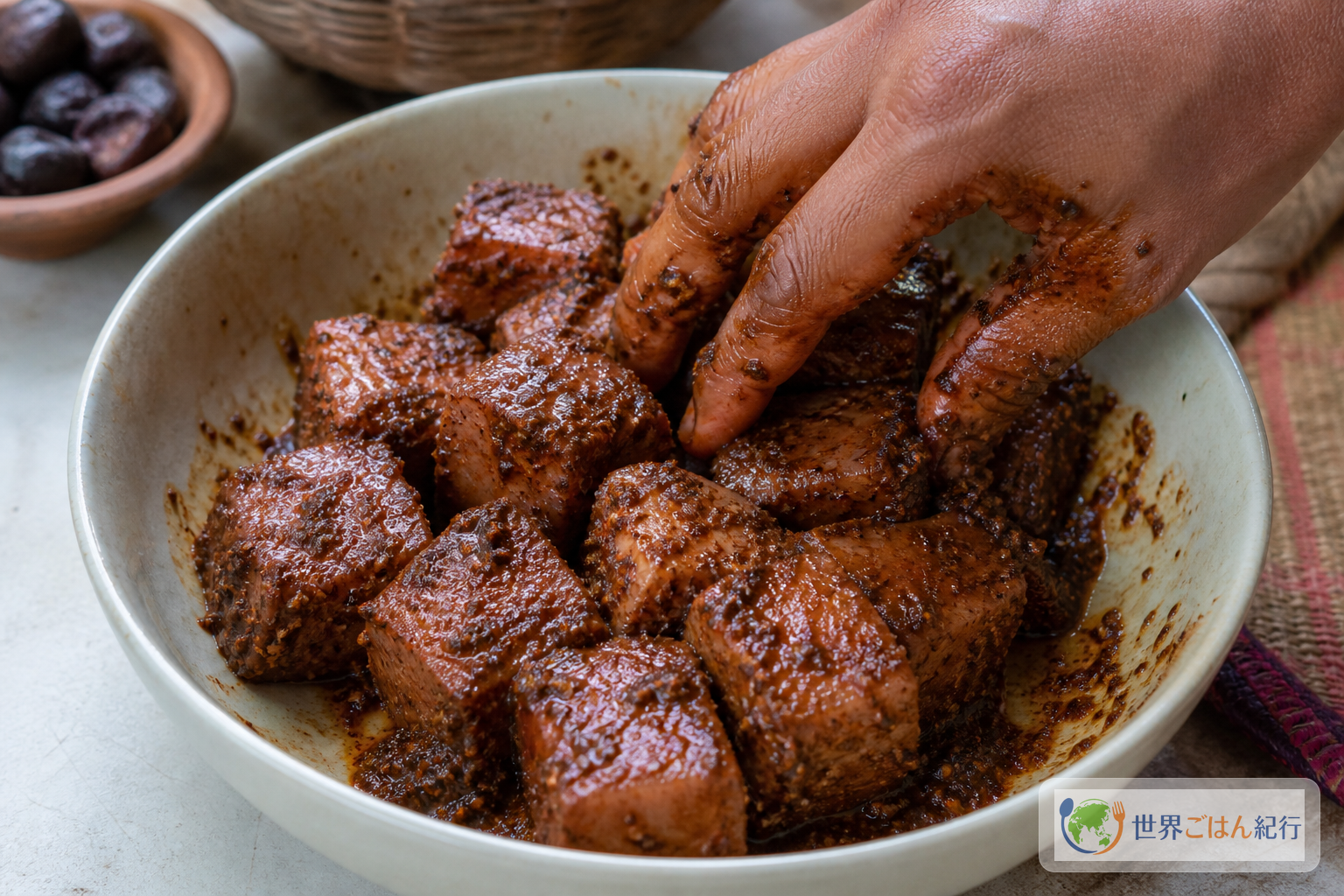
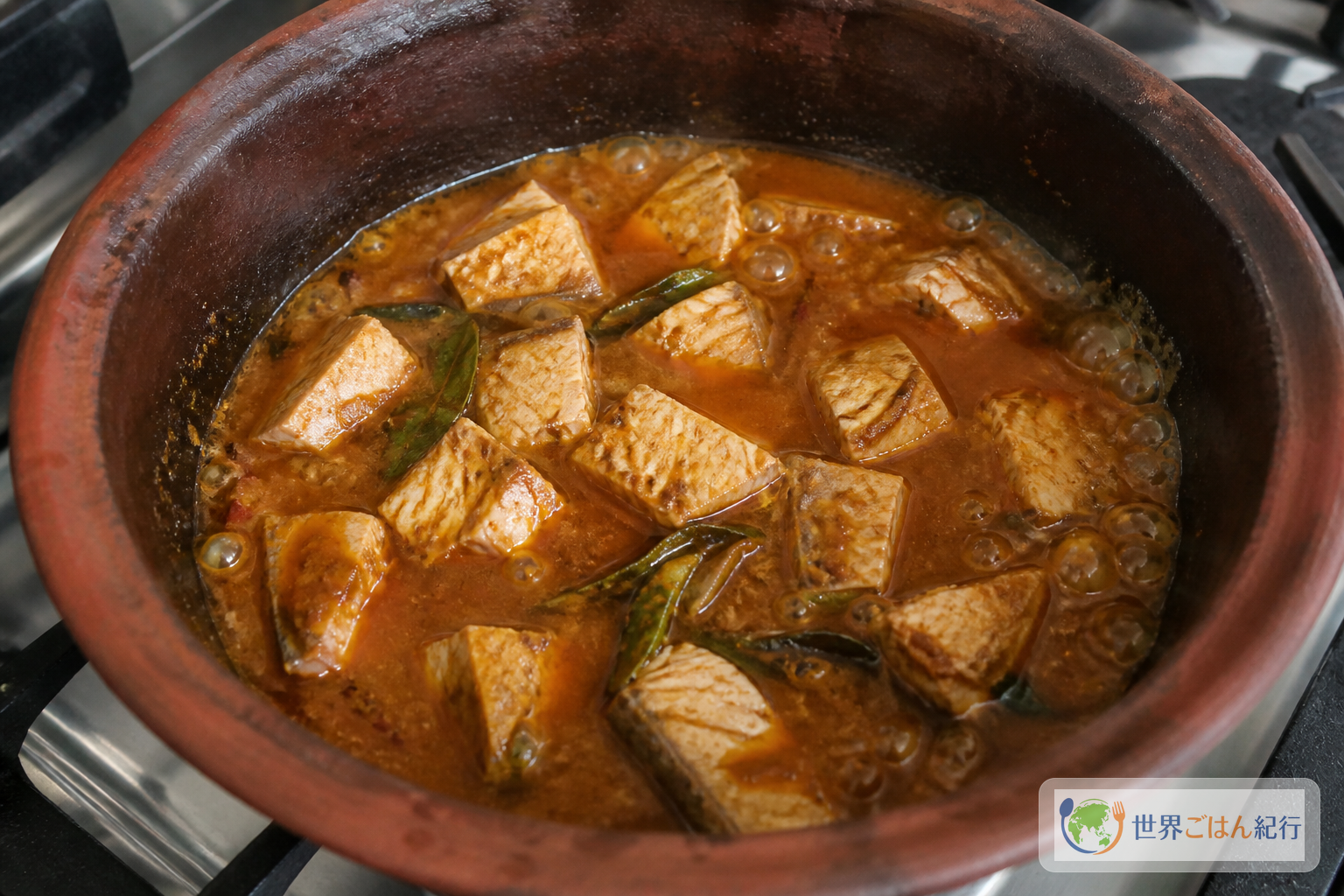
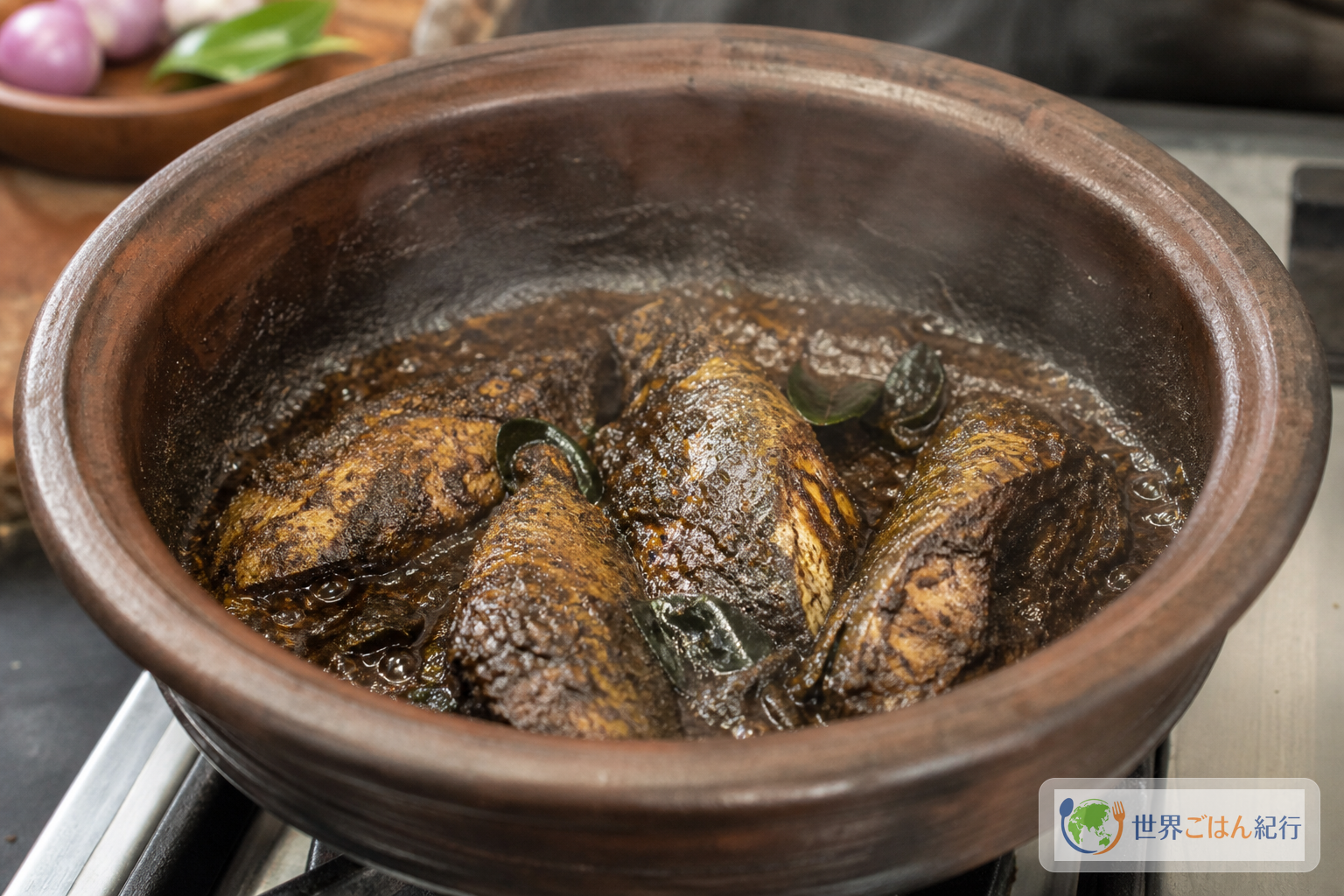
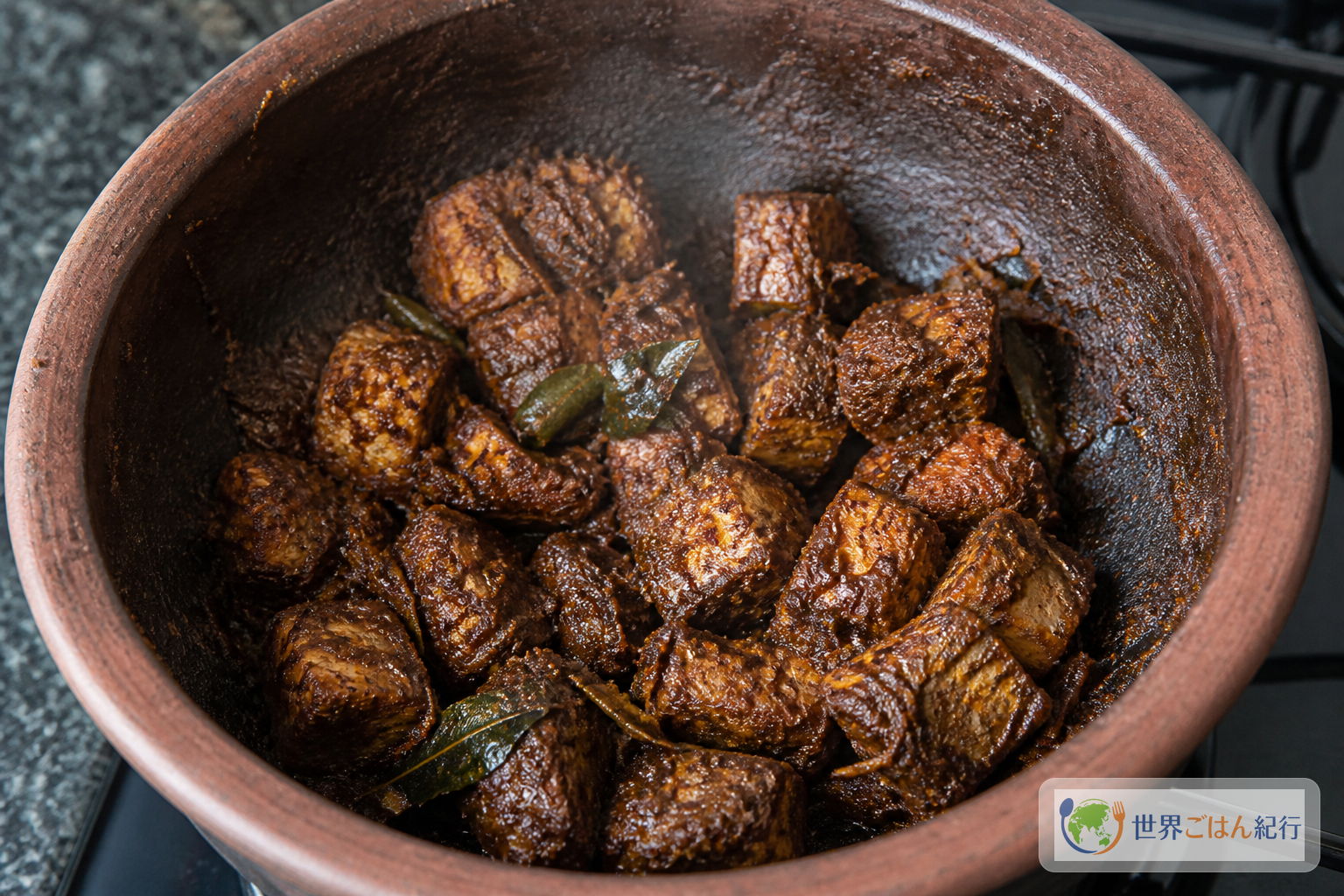
A paste of crushed black peppercorns clings to the fish, and the red-brown liquid in the pot shrinks little by little. What is left in the end is not a soup but cubes of fish wearing sourness and salt.
Ambul thiyal (Malu Ambulthiyal) is a fish dish made in southern Sri Lanka, in which goraka, the dried rind of a fruit, gives a dark, round sourness. In Japanese it is sometimes described as a "sour fish curry," but unlike curries thinned with coconut milk, it is a dish where the fish is cooked in very little liquid and taken all the way to a dry finish.
What is difficult at home is not adding more spices. It is allowing for the water the fish gives off, cooking the liquid away before the flesh breaks apart, and cooking the center safely through. Without goraka you can build the sourness with tamarind, but the fruity aroma and the lingering bitterness change. It is easier to cook if you don't hide that difference and think of it as two separate days: one for hunting down the local ingredient, and one for starting with a substitute in your own kitchen.
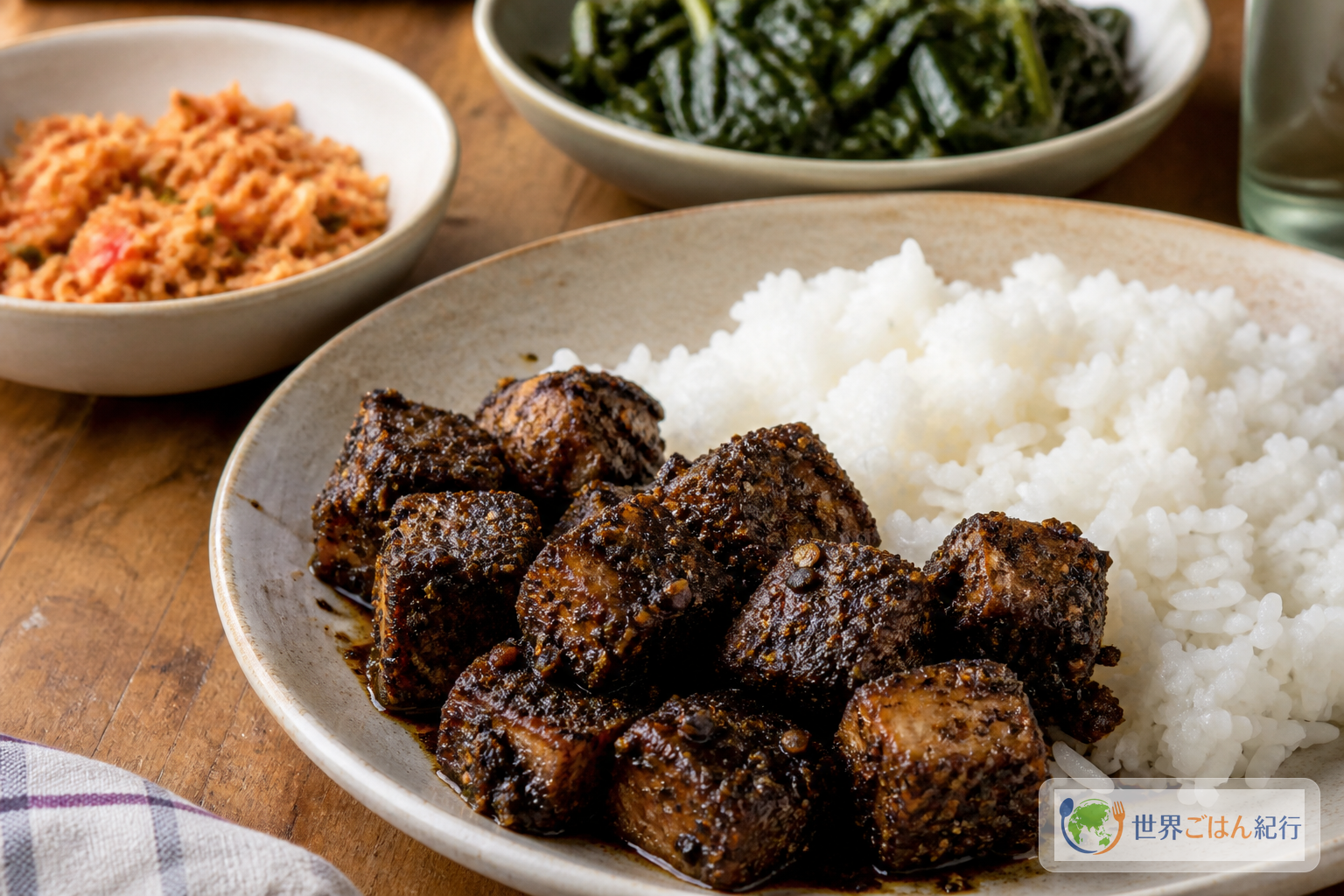
This home version uses lean yellowfin tuna cut into 4 cm cubes, with goraka, black pepper, and salt as the backbone, plus curry leaves and pandan leaf. If you can get goraka, you come closer to the sourness of the south; if you swap in tamarind, the same dish's way of thinking becomes easier to carry out in an ordinary kitchen.
The Southern Coast and the Rice Table: What Ambul Thiyal Left Behind
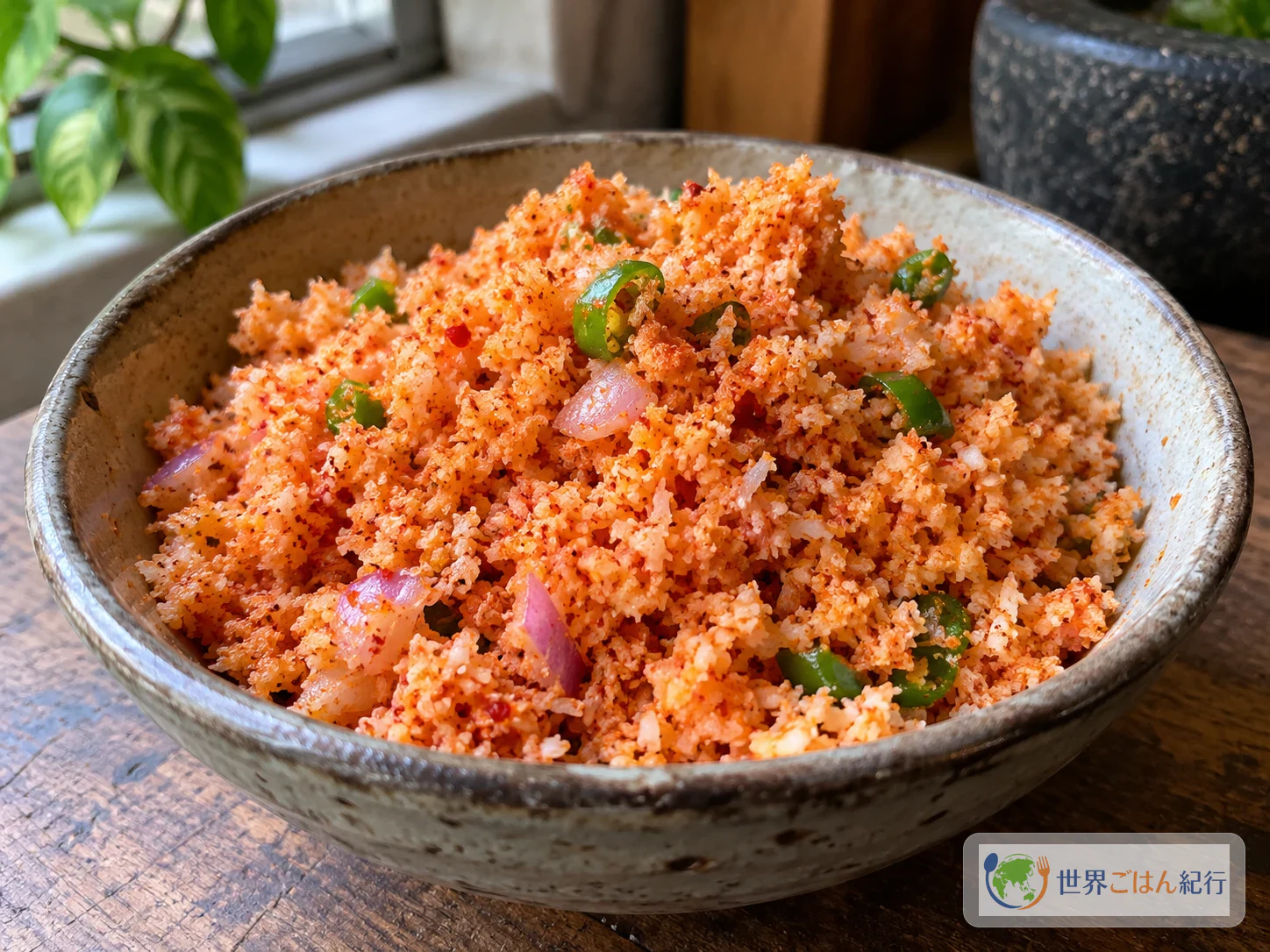
Sri Lanka Tourism presents Malu Ambulthiyal as one dish in a food culture where rice is laid out with several curries and sambols. The fish is not set alone in the center of the plate; it sits at the same table as white rice, a lentil curry, greens, and pol sambol. Because the sourness of the fish and the black pepper are strong, mild rice and the sweetness of coconut act as the receiving surface.
The place of origin can't be pinned to one spot, but the local magazine Explore Sri Lanka explains it as a dish thought to originate in Ambalangoda, a coastal town in Galle District. The same article notes that spice combinations and ways of simmering vary a little from region to region. This is not a dish where every southern household makes the same flavor; each home's profile shows in the kind of fish, the amount of goraka, and where the curry leaves and pandan leaf go.
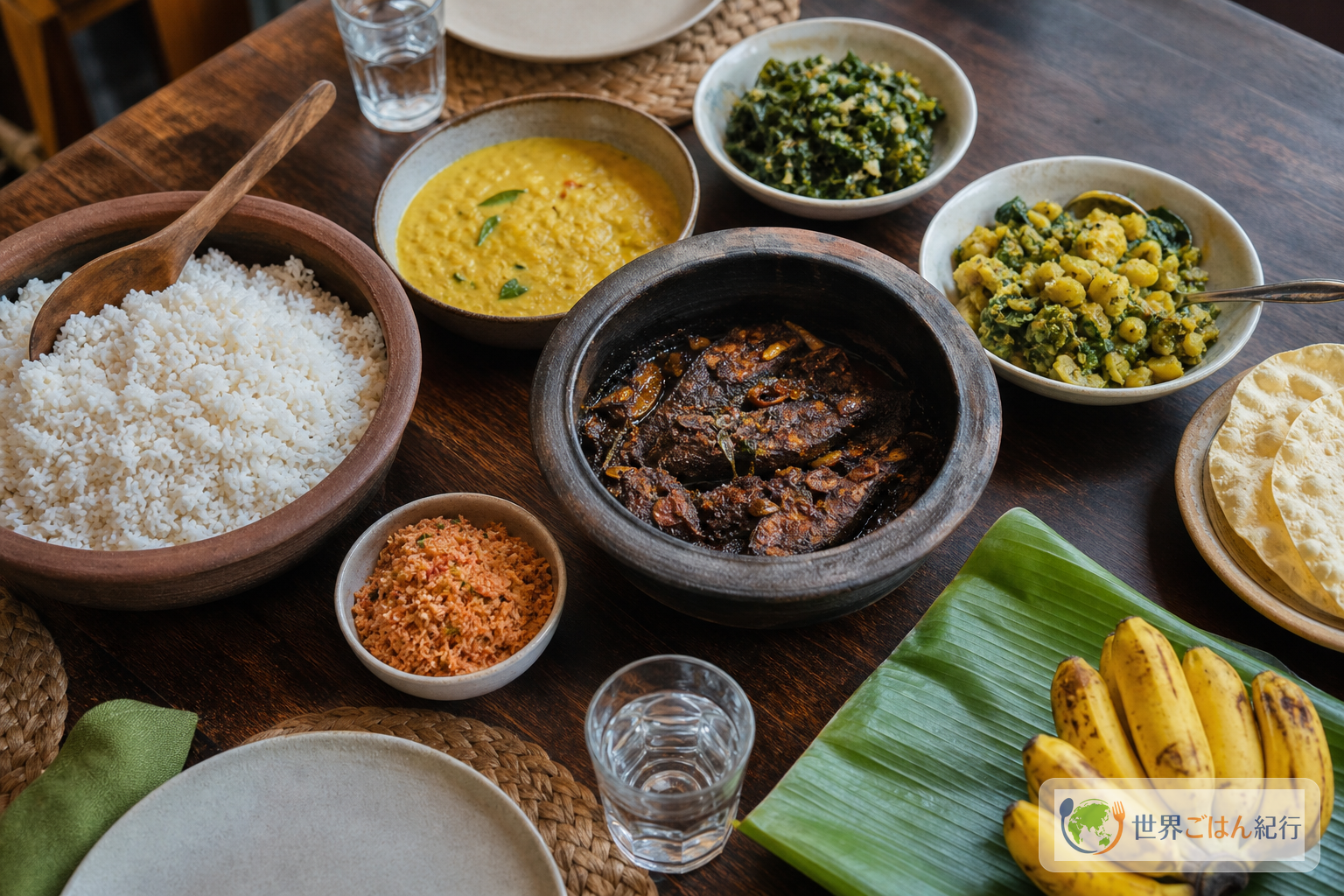
There is also a record of village tables after the harvest, where ambul thiyal and pol sambol were served with angiti bath, rice from a half-yielding crop that was cooked and mashed. It is told as a way of eating from a time when rice mills were not close at hand, and does not mean households today necessarily choose that same combination. If you make it now, serving it with white rice or red rice, or on a celebration day with coconut rice like Kiribath, makes the place of the sourness easy to see.
Storage cannot be separated from the background of this dish, either. Because goraka and salt keep the moisture down, local sources sometimes introduce it as a dish that keeps at room temperature. However, the freshness of the fish, the cooking environment, and even the degree of dryness in that place cannot be reproduced in a home kitchen elsewhere. Don't leave it out at room temperature as a preserved food: use very fresh fish, cool it quickly in a shallow container after cooking, and refrigerate it. Knowing the traditional wisdom, it is safest to bring only the hygiene practice back to today's home standards.
Compare southern cooking with Sri Lankan cooking in other regions and a direction emerges that keeps the sourness of the ingredient and goraka rather than pushing roasted curry powder to the front. In the north and in cities there are versions with more spices and sautéed aromatics, and there is no need to dismiss any one of them as the "real" one. This recipe is built around the dry fish dish of the south, and keeps the aromatics to what is easy to reproduce in a home kitchen.
Ingredients (serves 4): Decide the Goraka and the Fish's Water First
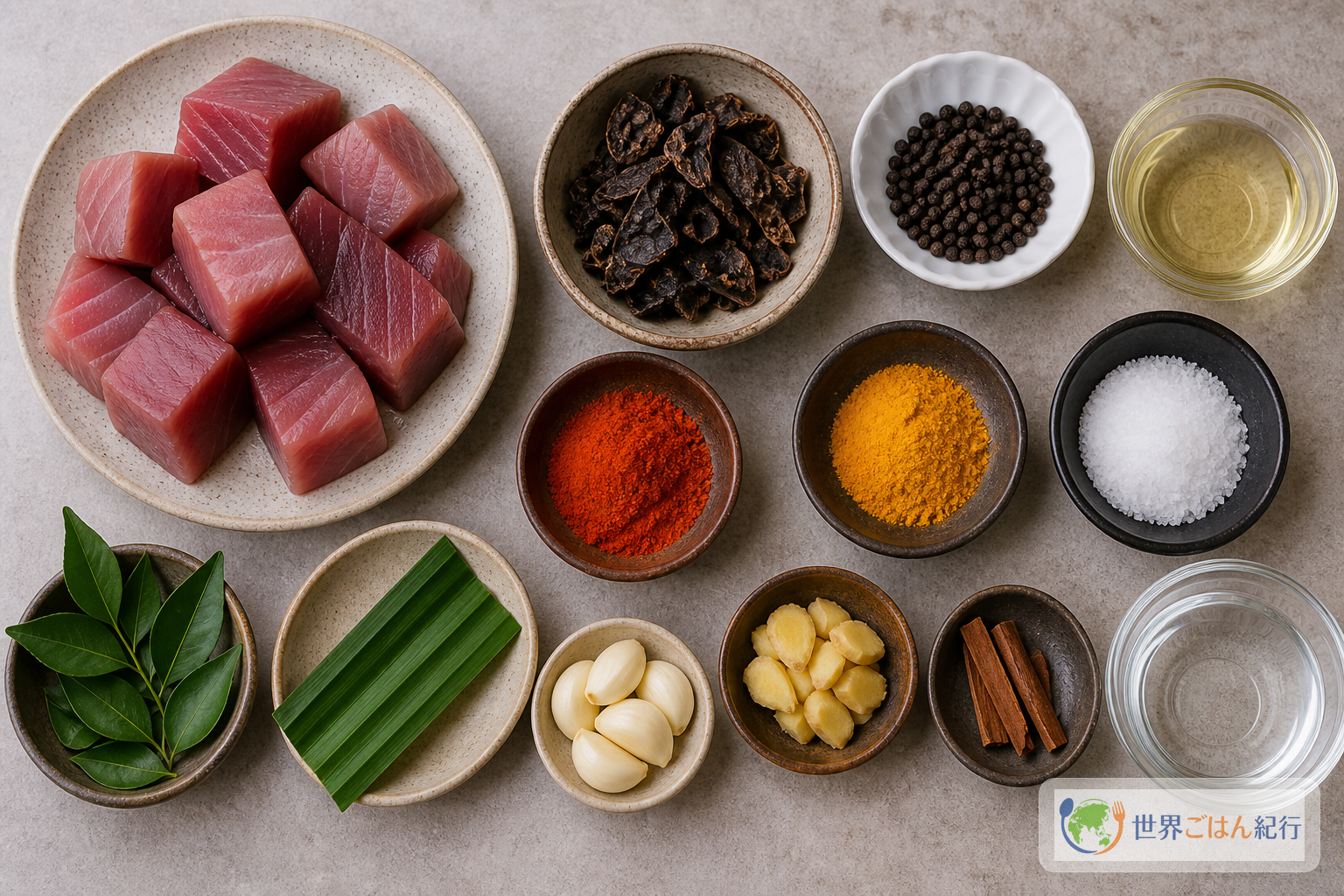
The ingredients are for four. Choose a firm-fleshed fish such as a yellowfin tuna loin, swordfish, or marlin. Fatty fish and thin fillets break down easily when simmered, so at first a block-shaped fish whose thickness you can even out is easiest to handle.
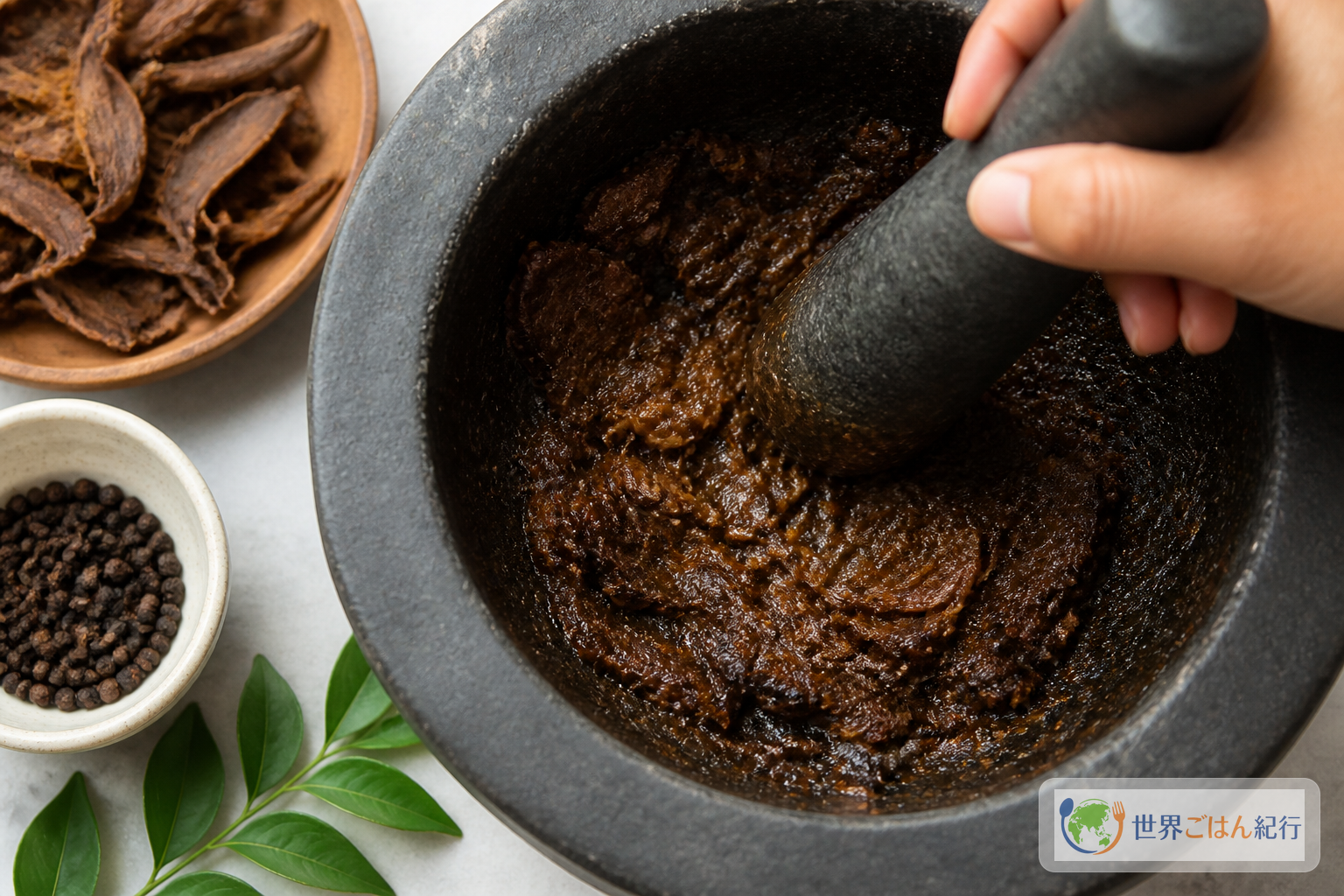
If dried goraka stays rubbery and hard, it won't turn into a paste. After soaking in warm water, crush it with the black pepper in a mortar, or blend it with a small amount of water. If you swap in concentrated tamarind paste, don't add all 25 g at once: dissolve 18 g in water, taste, and add more. The sourness of goraka is dark, while tamarind brings forward a fruity sweet-sour, so don't try to correct it afterward with sugar.
Choose the fish last when shopping, and refrigerate it as soon as you get home. Japan's Ministry of Health, Labour and Welfare advises that fish whose freshness has declined can cause histamine poisoning, which cooking does not destroy, so cold storage and a freshness check are needed. Don't assume that because the dish is sour, it hides the condition of the fish.
Hunting for Goraka, and Starting with Tamarind: Two Different Days
Goraka is the local ingredient that defines the flavor of ambul thiyal, but it is hard to find in ordinary supermarkets outside Sri Lanka. If you plan to keep cooking Sri Lankan food, dried goraka is worth looking for. If you only want this one dish, it isn't too late to try tamarind paste first to confirm the direction of the sourness and order goraka the next time.
When you choose tamarind, don't decide by the product name alone: check on the product page whether the ingredients are mainly tamarind, whether it is a paste or a concentrate, and whether you can use up the size. As a stand-in for goraka, a paste whose sourness you can adjust with water suits better than one with strong sweeteners or flavorings. Made with rice vinegar alone, the sourness is thin and has trouble holding up against the bitterness of black pepper.
Method: Don't Stack the Fish, and Cook the Liquid Off to the End
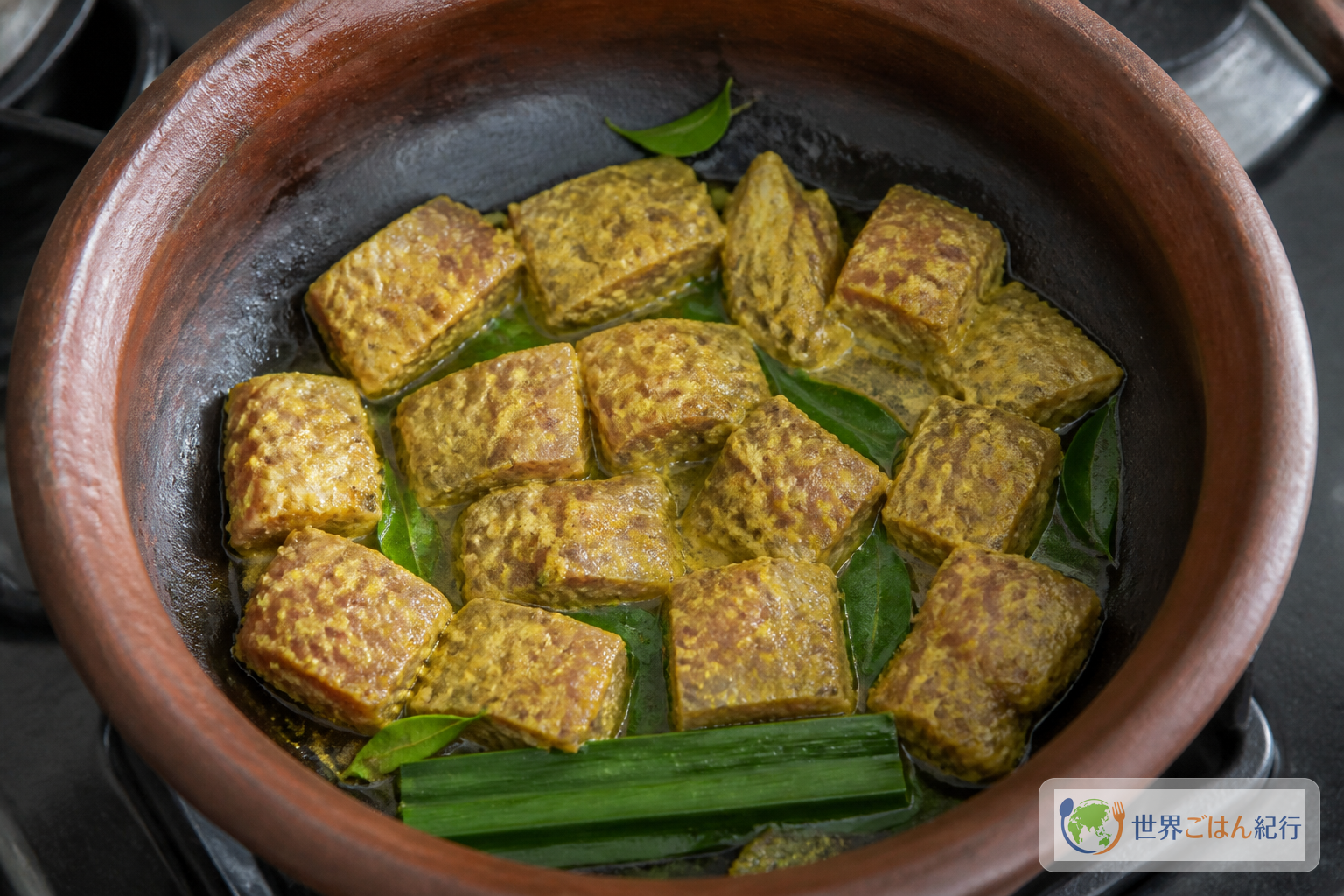
Use a small heavy pot or a shallow clay pot about 18 to 20 cm across. In a pot that is too big, the liquid spreads out and evaporates quickly, so only the surface of the fish dries and the center is slow to cook. In a pot that is too small, stacking the fish crushes the pieces underneath.
Fixing a Finished Pot: Adjust Sourness and Moisture by Adding and Subtracting
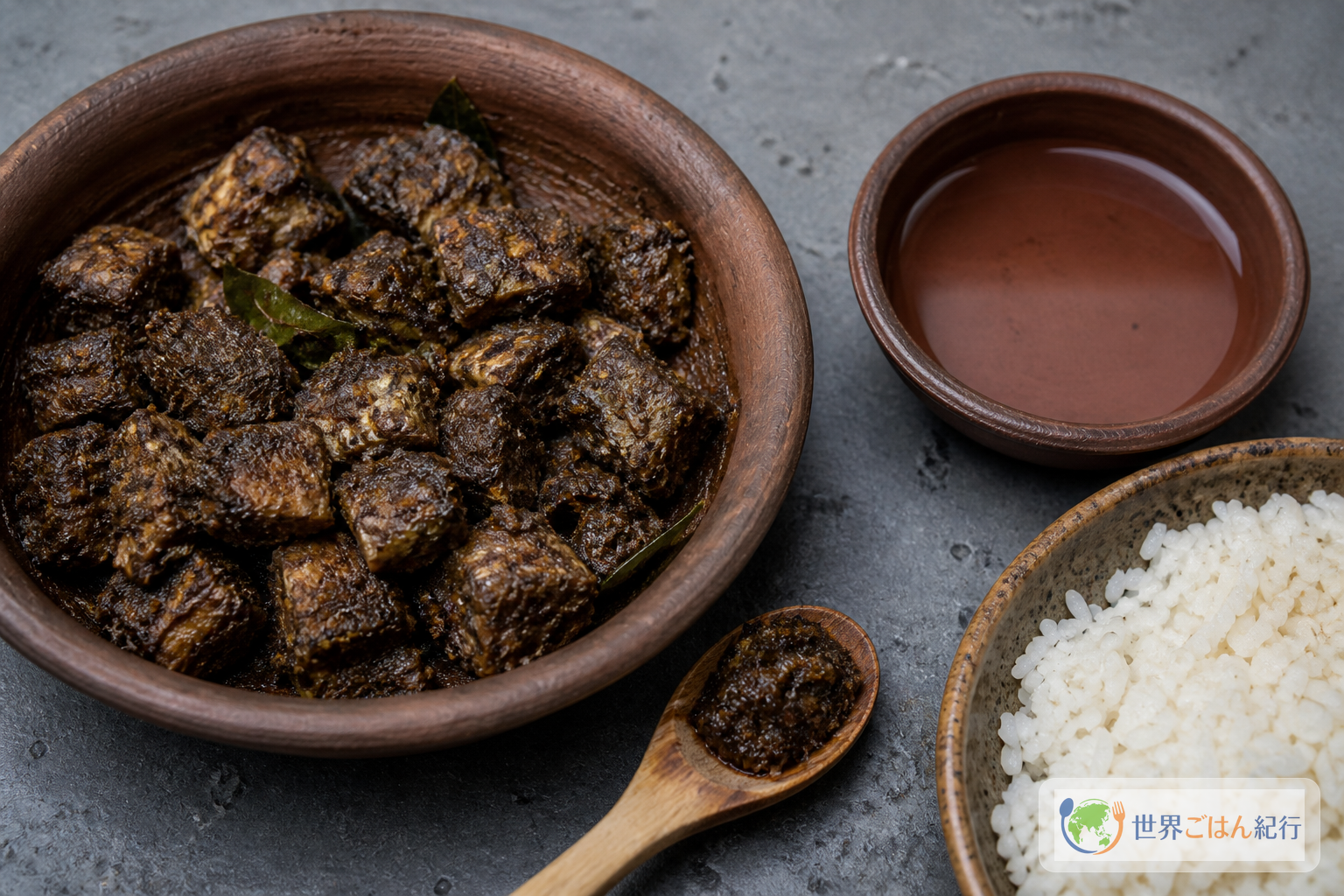
Ambul thiyal is not a dish that just waits in the pot to be finished. Water varies with the thickness of the fish, how well the goraka softened, and the size of the pot, so knowing how to correct along the way means you don't have to disturb the fish.
Take out the fish and set it on a separate plate, and reduce the pot alone over medium heat for 3 to 5 minutes. When the liquid reaches a thickness that leaves a thin film on the back of a spoon, return the heat to low, put the fish back in the pot, and shake for just 30 seconds. If you boil hard with the fish still in the pot, the flesh breaks before the liquid reduces.
Mix 1 tbsp water and a pinch of salt in a small dish and add a little at a time from the edge of the pot. Rather than adding sugar to sweeten it, check whether the fish had too little moisture relative to the amount of goraka. The tamarind version softens its sharp edges slightly if rested for 10 minutes until the sourness rounds out.
Don't put in chopsticks or a wooden spoon; hold the pot and shake it side to side. If the flesh has already split, don't force it back into chunks; eat it as a flaked finish over rice. Next time, don't cut the fish smaller than 4 cm cubes, and don't touch it until the liquid boils.
If you crush black pepper from whole peppercorns, you keep aromatic grains instead of only fine powder. A mortar is enough. If you will be making goraka fiber and black pepper into paste in small amounts regularly, a small spice mill is an option too. If you already own a mortar or are only making it once, you can get by without buying anything by chopping the black pepper with a knife before crushing.
Five Variations: Keeping the Southern Sourness in Your Own Kitchen
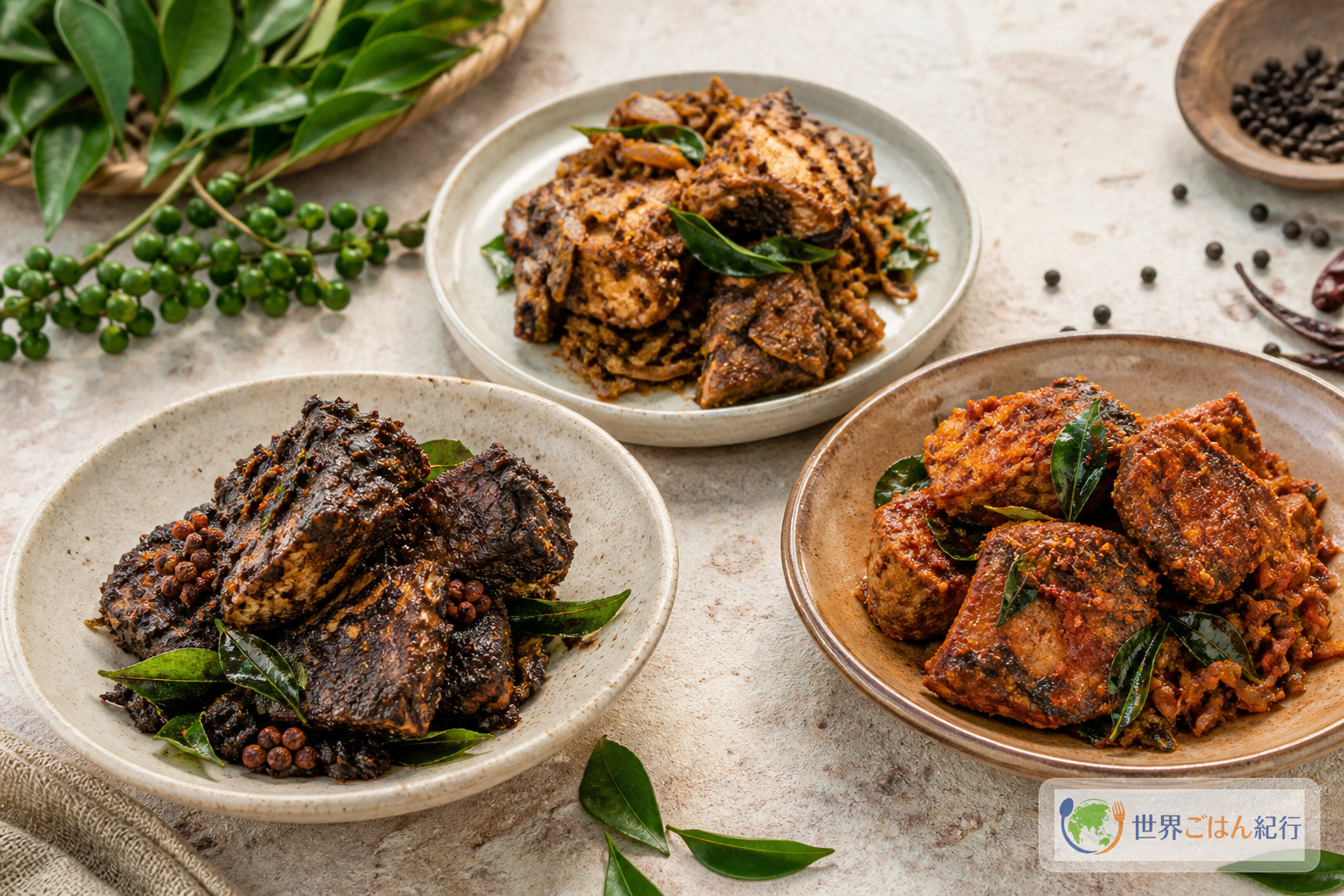
1. Southern-leaning, with only goraka, black pepper, and salt
Leave out the garlic, ginger, cinnamon, curry leaves, and pandan leaf, and make it with only goraka, black pepper, salt, and water. The aroma is simpler, but the sourness and the flavor of the fish are clearest. There are sources in which local cooks describe making it with only goraka, pepper, and salt, so not adding more ingredients is not cutting corners but one direction to take.
2. A home version with tamarind in place of goraka
Use 18 to 25 g tamarind paste in place of 30 g dried goraka. It is sweeter-sour than goraka and slightly lighter in color, so don't cut the black pepper too far. Concentrated types can be very sour, so dissolve 18 g in 50 ml water, then taste the pot and add more.
3. Bringing the aromatics forward, in the direction of city and home cooking
Add garlic, ginger, green chilies, curry leaves, and pandan leaf to the paste. This suits times when the smell of the fish bothers you, but the moisture of the aromatics increases the water, so start with 100 ml. If you want a stronger spice aroma and add curry powder by the tablespoon, it hides the sourness of the goraka.
4. An oven version for days without a clay pot
Arrange the fish and paste in a single layer in an ovenproof dish, seal it with aluminum foil, and bake in an oven preheated to 180°C for 25 minutes. Remove the foil and add 10 to 15 minutes, cooking off liquid until a thin layer of sauce remains on the surface of the fish. A local magazine also presents an oven version in which the fish is covered and cooked in its own steam, but it does not give exactly the same savory depth.
5. Swapping the fish for swordfish
It is whiter than tuna and keeps its corners when simmered. Cut fillets 3 cm or more thick into 4 cm cubes and choose the lean parts, and it holds up the sourness of goraka better. Mackerel and sardines have a lot of fat and moisture and push the dish toward the fish's fat, so I don't recommend them for a first plate.
A version with tamarind in place of goraka is not made from the same ingredients as the local one. Even so, the idea survives: coat the fish in a firm aromatic paste, cook it in very little water, and drive off the liquid at the end. If you name the substituted ingredient when you serve it, it can be treated as a home version that approaches the dish.
From the Southern Plate to a Weeknight Dinner: Let the Staple Absorb the Sourness
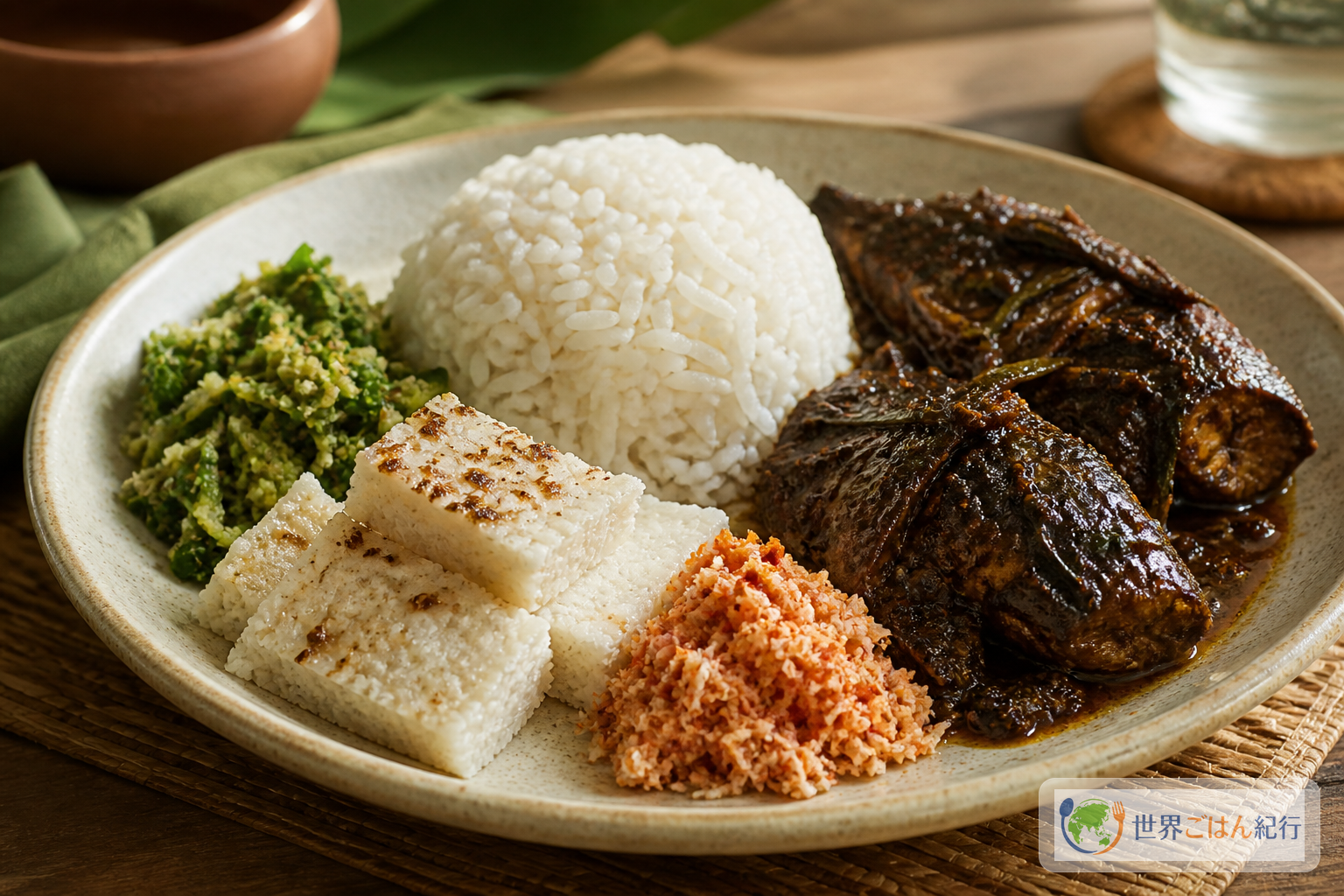
If you serve only ambul thiyal on a single plate, the goraka and salt feel strong. At a Sri Lankan rice-and-curry table, fish, lentils, vegetables, and sambol are set in small amounts on the same plate, so the sourness tightens the whole meal.
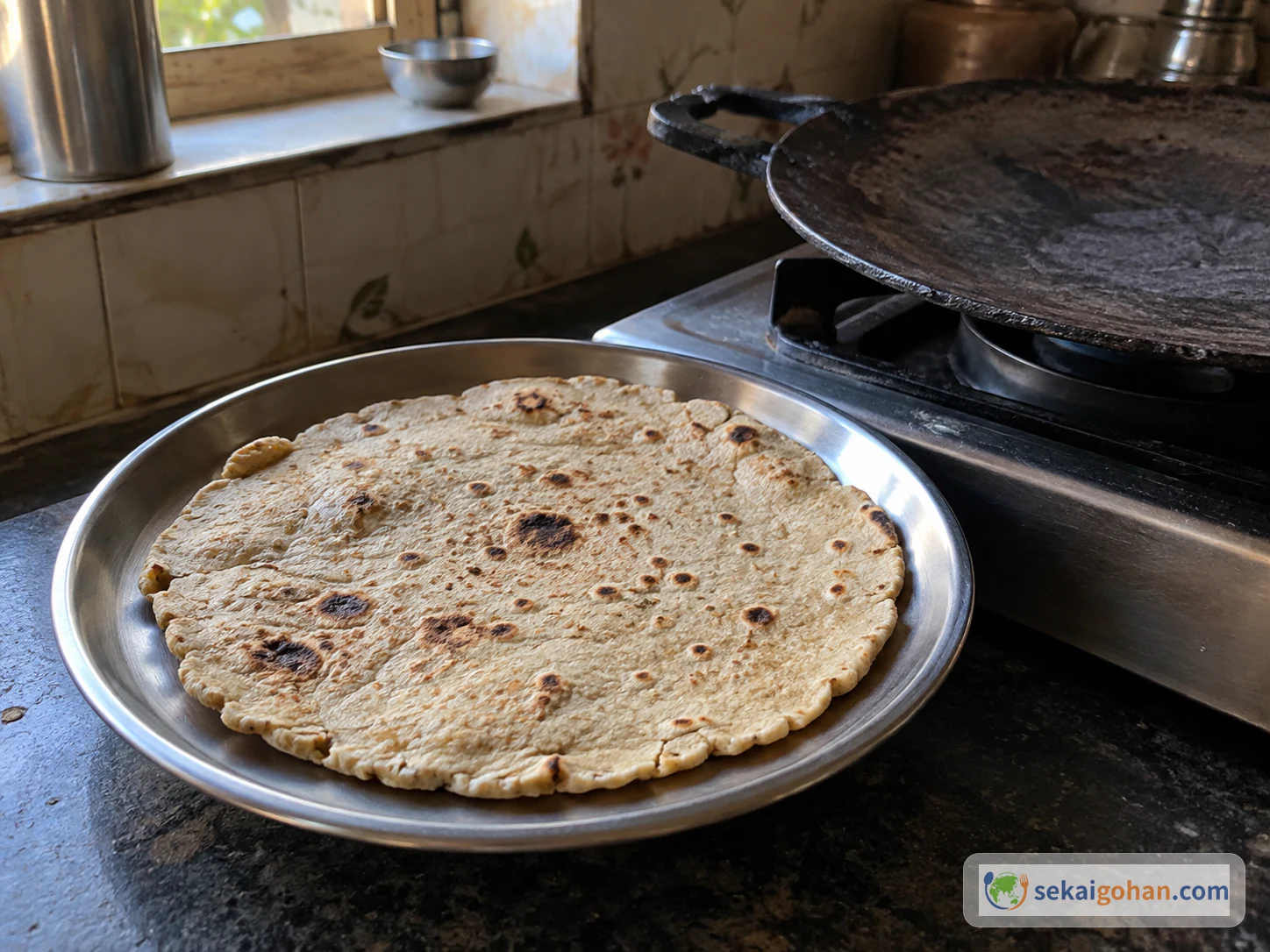
The staple can be not only white rice but red rice, pol roti, hoppers, or kiribath. You can set a small amount of fish on a fermented rice-flour bowl like Hoppers, or serve it with kiribath, which has coconut's sweetness, and the sharp edge of the sourness feels rounded. Even within Sri Lankan food, it differs in eating speed and in how the heat is shown from Kottu, where chopped roti and curry are stir-fried on a griddle.
On a day you make the simple southern version, put just a bite of fish on the rice and add pol sambol or cucumber. With the version that has more aromatics, keep the lentil curry and greens mild. If the side dishes are spicy too, there is no place left to notice the sourness of the goraka, so leave one mildly flavored dish on the plate.
Storage, Safety, and FAQ
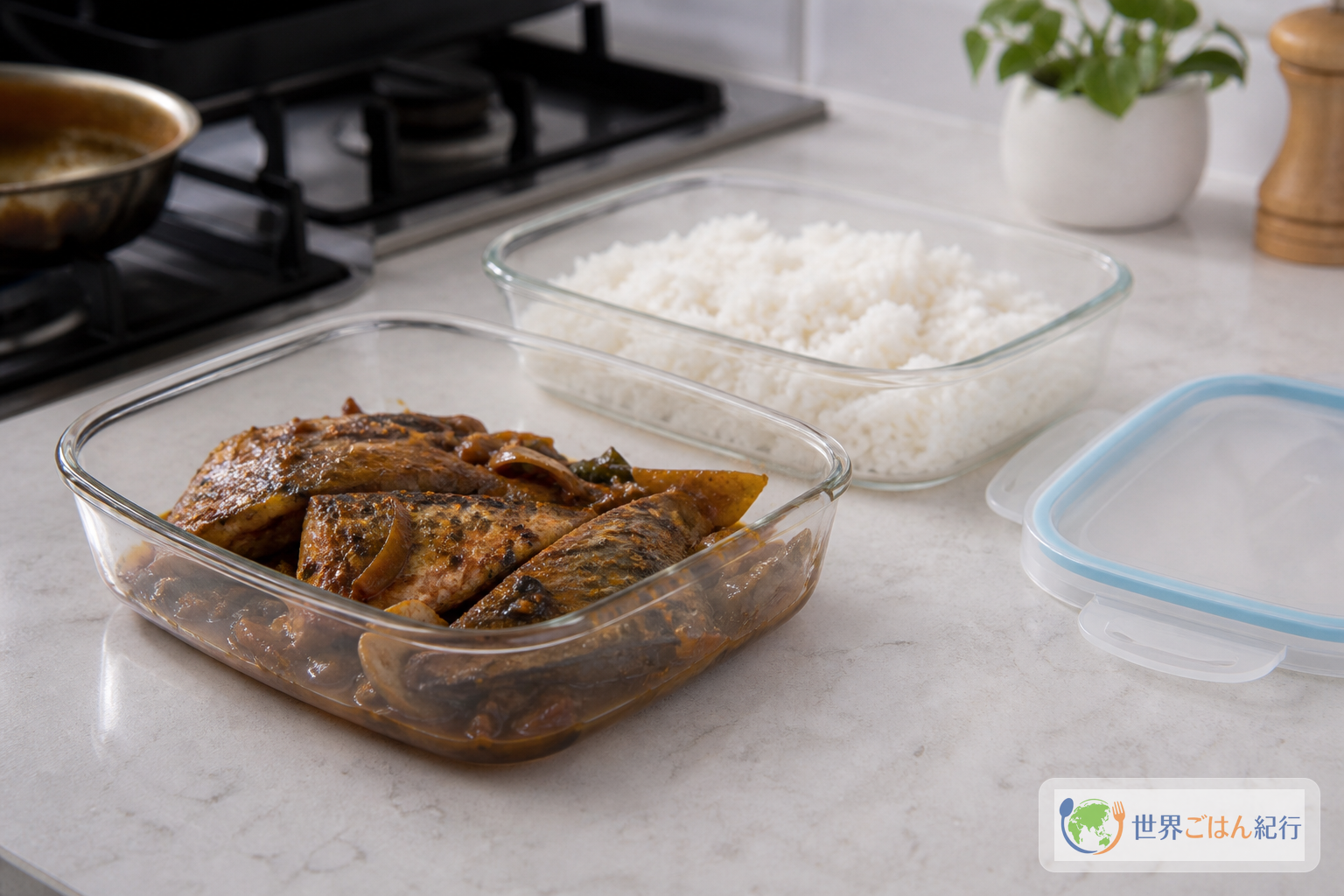
For a home version, put the freshness of the fish and refrigeration ahead of keeping quality. Japan's Ministry of Health, Labour and Welfare advises not leaving cooked food at room temperature for long, dividing leftovers into shallow containers so they cool quickly, and heating thoroughly when reheating. Once the fish has cooled slightly, move it to a shallow container and finish it within about a day in the refrigerator. To reheat, add 1 to 2 tsp water to the pot, cover, and warm over low heat until hot in the center. If there is an off smell, sliminess, or a sharp odor different from the sourness, don't eat it; discard it.
Are goraka and tamarind the same thing?
No. Both make sourness, but goraka is the dried rind of a garcinia fruit, with an earthy bitterness and a dark aroma in its sourness. Tamarind brings the sweet-sour of its pulp forward, so the outline of ambul thiyal becomes lighter. It is a practical substitute as suggested in the local magazine, but the ingredient itself is not the same.
My goraka is hard and won't crush.
If it is still hard after 10 minutes in warm water, boil the goraka alone in a small amount of water for 5 minutes, let it cool, and then crush it. Put into a mill dry, the blades spin without catching and the fibers stay long. If the paste is too stiff it won't coat the fish evenly, so add water 1 tsp at a time and adjust to a thickness that stretches without dropping off the spoon.
Can I stir while the fish is cooking?
Better not to. If you put chopsticks in before the flesh has set, the paste on the surface falls to the bottom of the pot and the corners of the fish break. Hold the pot in both hands and shake it lightly, and circulate the liquid once after 5 minutes. If the fish is thick, break open one piece at the end to confirm that it is opaque through the center.
Can it keep for a week at room temperature?
I don't recommend it in a home kitchen. Local sources give examples of it being presented as a dish that keeps at room temperature thanks to goraka and salt, but the freshness of the fish, the degree of dryness, the container, and the room temperature differ. Japan's Ministry of Health, Labour and Welfare advises keeping fish at a low temperature and not using fish whose freshness has declined, even if cooked. Refrigerate everything except what you will eat the day you make it, and finish it within about a day.
How do I tone down the heat?
Leave out the chili powder and reduce the black pepper to 12 g. The sourness remains, so even without the heat the backbone of the dish does not disappear. If you shake a little black pepper over only the adults' plates afterward, the same pot can be shared with the family.
Is there a substitute if someone has a fish allergy?
I don't recommend replacing the fish with something else and calling it ambul thiyal. On days without fish, coat eggplant or fried tofu with the same goraka and black pepper paste and cook it down with a small amount of water as a different dish. Wash knives, cutting boards, and cooking chopsticks that handled raw fish with detergent, and don't use them as they are on cooked food.
More Sri Lankan Dishes to Cook Alongside
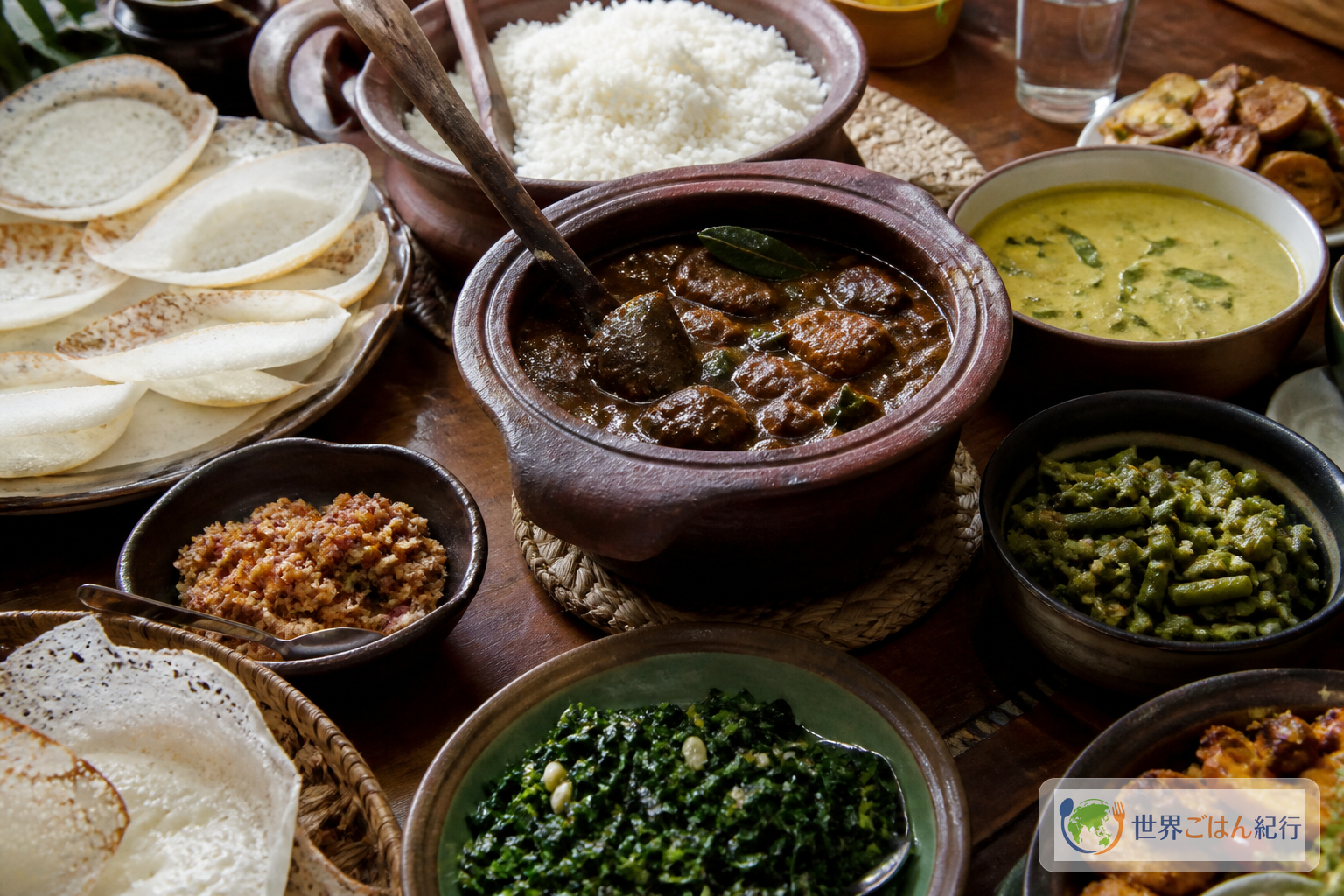
If ambul thiyal is the center, deciding on the staple first keeps the flavors of the side dishes from scattering.
- On a celebration day, add a small amount of fish to Kiribath, cooked in coconut milk.
- To layer on the aroma of fermented rice flour, serve it in Hoppers, baked like round bowls.
- To widen the plate with a chicken coconut curry, add just one dish with sauce such as Kukul mas curry.
In any combination, the flavor is easier to follow if you don't pile on the ambul thiyal. Take a little fish with a bite of rice and a little coconut or greens, and the sourness of the goraka, the heat of black pepper, and the savor of the fish appear one after another.
Sources
- Sri Lanka Tourism: So Rich In Flavours (Sri Lankan rice and curry, Malu Ambulthiyal, regional food cultures. Accessed 17 August 2026)
- Sri Lanka Tourism: Food (Food culture of rice, curries, seafood, hoppers, and more. Accessed 17 August 2026)
- Explore Sri Lanka: Sour and Spicy… Ambul Thiyal! (Origin in Ambalangoda, regional differences, goraka, clay-pot method. Accessed 17 August 2026)
- Explore Sri Lanka: Sri Lankan Delights Made Easy (Goraka, black pepper, types of fish, oven version, pairings at the table. Accessed 17 August 2026)
- National Science Foundation of Sri Lanka: Sri Lankan Traditional Food Cultures (Traditional sourness from goraka and tamarind, rural food culture. Accessed 17 August 2026)
- Maggi Sri Lanka: Fish Ambulthiyal (Amounts and steps of a local recipe using fish, goraka paste, black pepper, and a clay pot. Accessed 17 August 2026)
- Ministry of Health, Labour and Welfare (Japan): Preventing food poisoning at home (Storing fish, heating to 75°C for 1 minute at the center, cooling and reheating leftovers. Accessed 17 August 2026)
- Ministry of Health, Labour and Welfare (Japan): About histamine food poisoning (Not using fish whose freshness has declined, cold storage. Accessed 17 August 2026)
- FoodSafety.gov: Cook to a Safe Minimum Internal Temperature (Guide to doneness for seafood. Accessed 17 August 2026)