Chembu Puzhungiyathu: Steaming Taro and a Rough, Fiery Dip
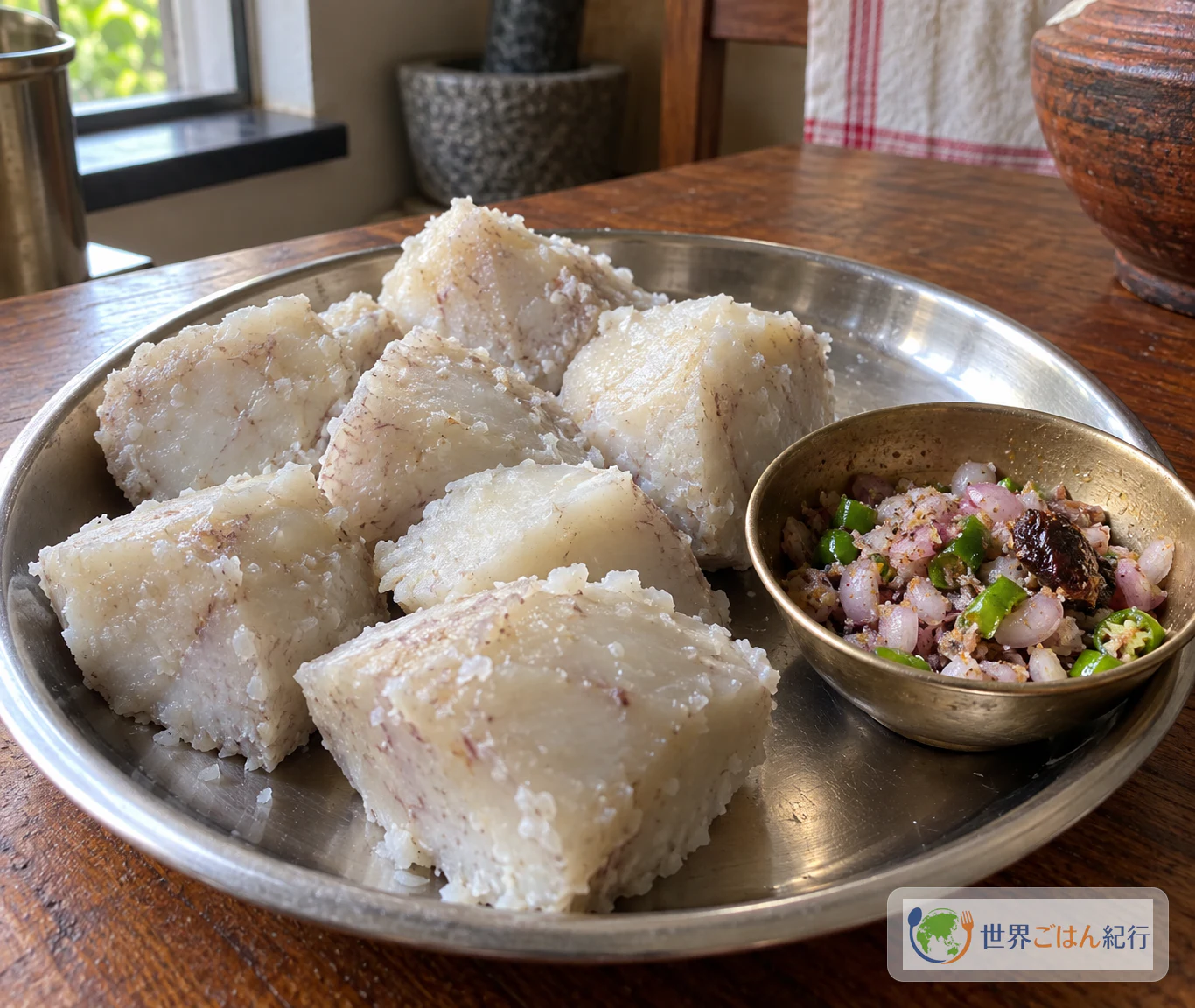
Taro pieces boiled until tender all the way through yet still holding their shape, and a separate, coarsely crushed dip of shallots, green chillies and tamarind finished with a little coconut oil. This is not a curry: the corm and the dip stay apart until they meet on the plate.
Large pieces of peeled taro come out of the pot still steaming, and beside them sits a small bowl of shallots, green chillies and tamarind crushed together into a rough paste. In Kerala, this boiled taro is called chembu puzhungiyathu: chembu is the Malayalam name for taro, and the dish is simply the boiled corm with a spicy dip alongside.
There is no spice blend, no gravy and no tempering on the taro itself. The interest of the plate lies in the contrast between the plain, salted corm and the sharp, hot dip. The recipe here follows a single Kerala home recipe from Malayali.me, keeping its amounts as written: 3–4 large corms (about 1 kg), with water and salt left "as needed" and "to taste."
This recipe has not been kitchen-tested by our team. The amounts and steps come from the source recipe, which gives no boiling time, water amount, salt amount or number of servings. Judge doneness by the state of the taro in the pot, not by the clock.
Names and the Plant: Chembu Is Colocasia, Not Malanga
The source recipe is titled "Boiled Malanga/Taro," but its own text separates the two. It identifies taro as Colocasia esculenta, called chembu in Malayalam and arvi or arbi in Hindi, and notes that malanga is Xanthosoma, a different plant that only looks similar. This article follows that distinction: chembu puzhungiyathu here means the boiled corm of edible Colocasia esculenta, not malanga, and not taro leaves or stalks.
Spellings of the dish name vary between publications; this article uses the source recipe's form, Chembu Puzhungiyathu.
Where It Is Eaten: One Documented Kerala Table
A Malayala Manorama travel report on the Rajapuram toddy shop in Kavalam describes boiled chembu offered alongside boiled yam and tapioca, crushed kanthari chilli and a spicy fish curry. That is a record of one particular shop, not a rule for every Kerala household, but it gives a concrete picture of how plain boiled chembu can sit beside stronger-tasting dishes.
Another Kerala home recipe, from the blog Third Kitchen, also calls the preparation a Kerala-style dish: the taro is peeled, cut, boiled until fork-tender, drained and served hot, with its own, different dip. Nothing in these sources establishes the dish's origin, history or ritual meaning, so this article does not describe them. For more dishes from the same country, see India.
Ingredients for About 1 kg of Taro
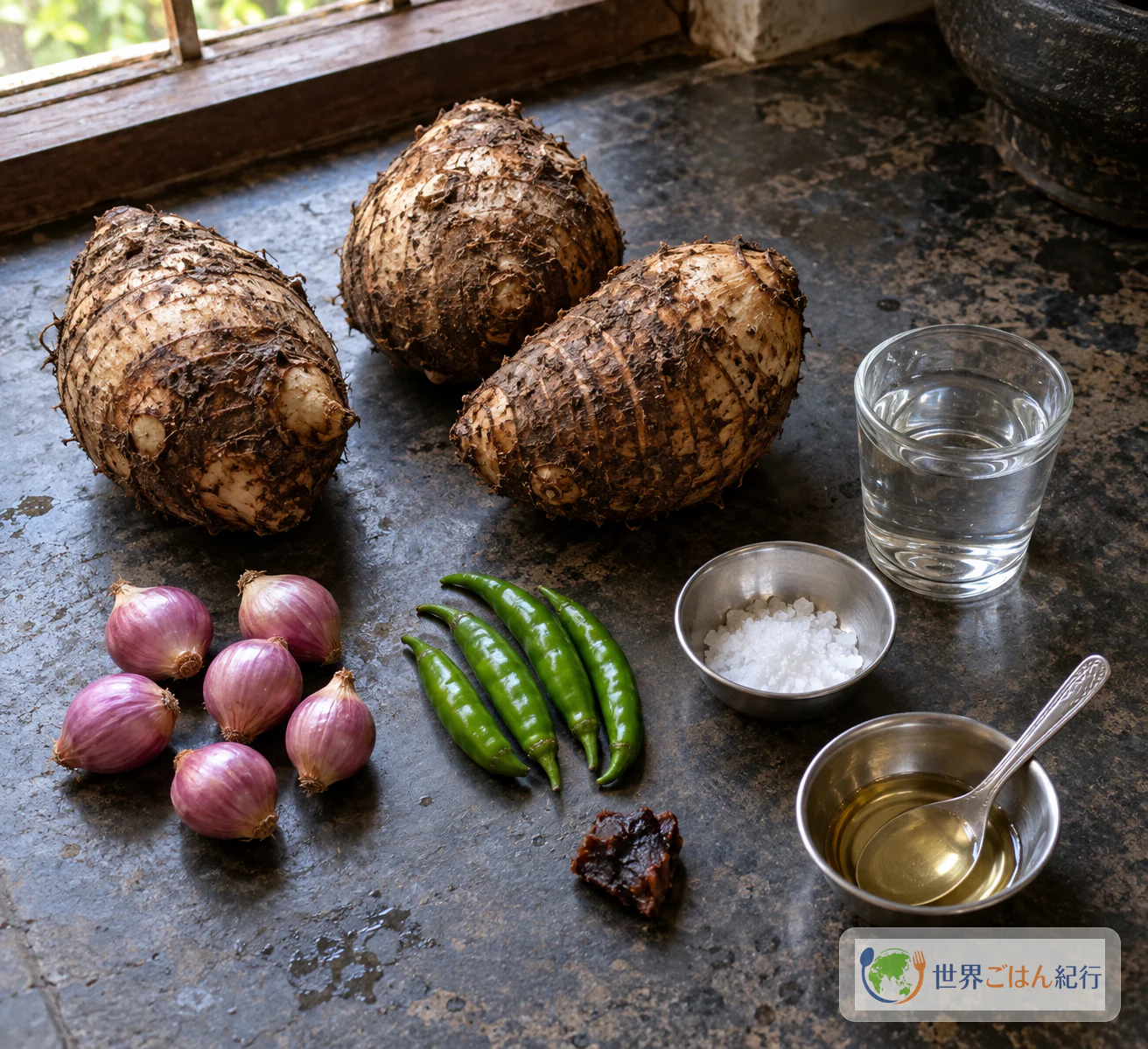
The amounts are stated for about 1 kg of taro. There are two separate salts: one for the boiling water and one for the dip.
Equipment
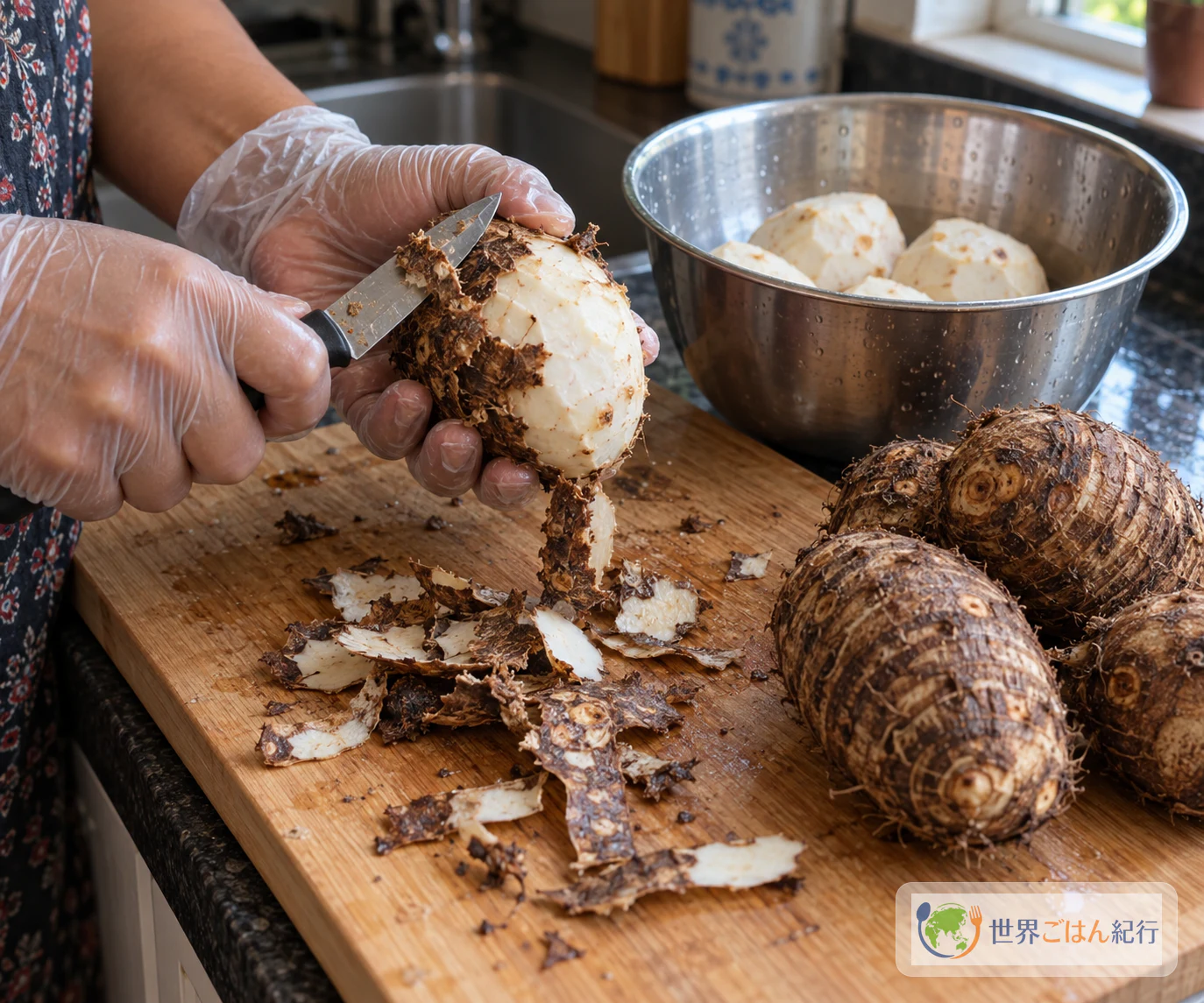
- Gloves for handling the taro
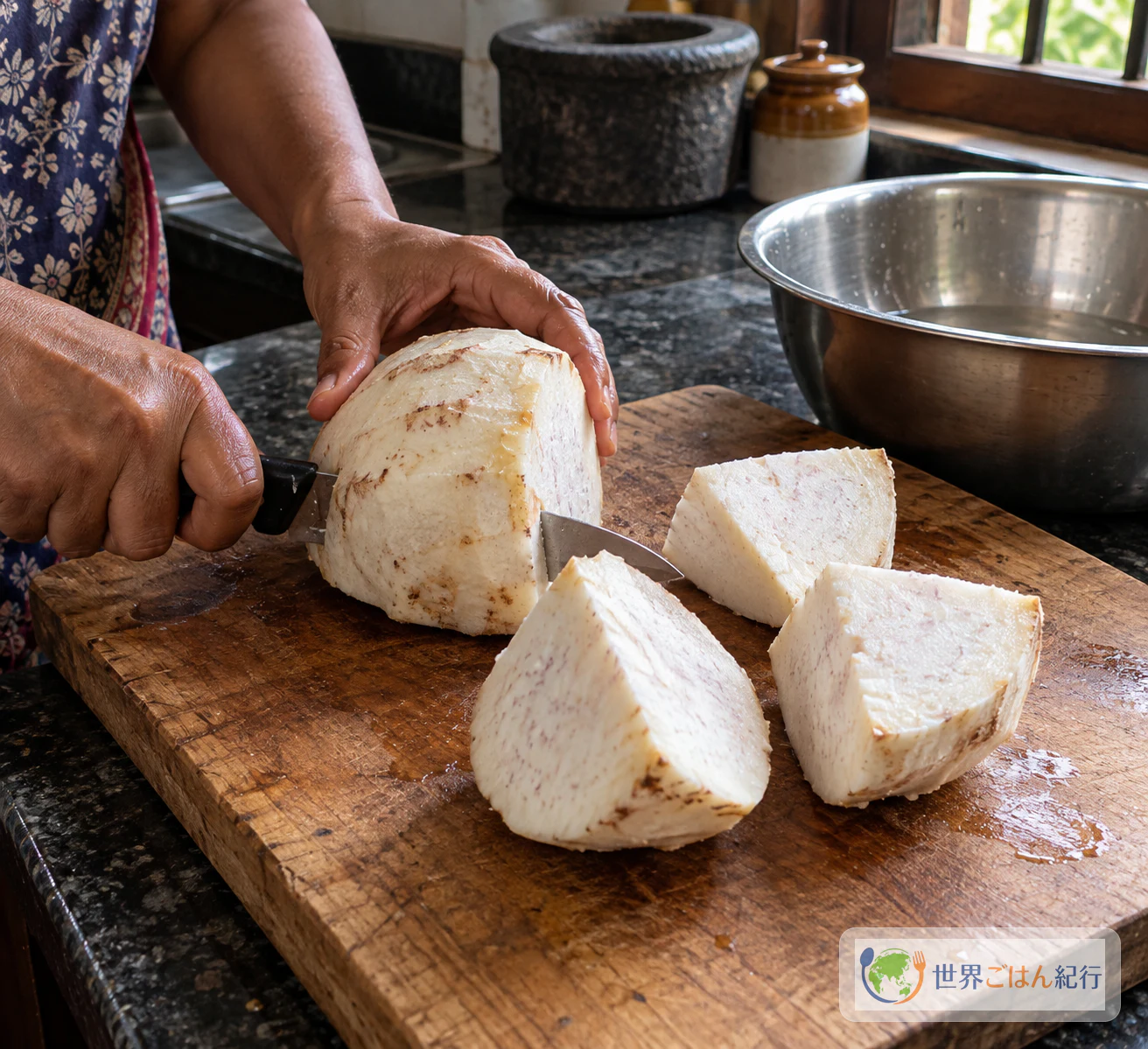
- Small knife and cutting board
- Large, deep pot
- Bamboo skewer or fork
- Colander
- Mortar and pestle
- Small bowl for the dip
Choosing the Taro and Substitutions
Buy edible taro from a reliable supplier. Do not gather wild or unidentified taro-like plants. According to Hong Kong's Centre for Food Safety, peeling, cutting, boiling and thorough cooking reduce the risk of irritation from edible taro, but these steps do not make wild taro safe. Cook every piece through to the center and do not serve it raw or half-cooked.
Look for fresh corms labeled taro, chembu, arvi/arbi or Colocasia. Malanga (Xanthosoma) can look similar in the shop, but it is a different plant, so do not choose by appearance alone or swap it in as if it were the same thing.
Japanese satoimo is also Colocasia and may be easier to find in some places, but its variety and size differ. Treat it as a practical stand-in; how its cooking time and texture compare has not been verified, so watch the pieces in the pot.
For the tamarind, use one small piece, or 1 tsp tamarind paste. Paste saves you from hunting for block tamarind, but sourness and strength vary by product and have not been compared here.
Method: From Rough Corm to Tender Pieces and a Coarse Dip
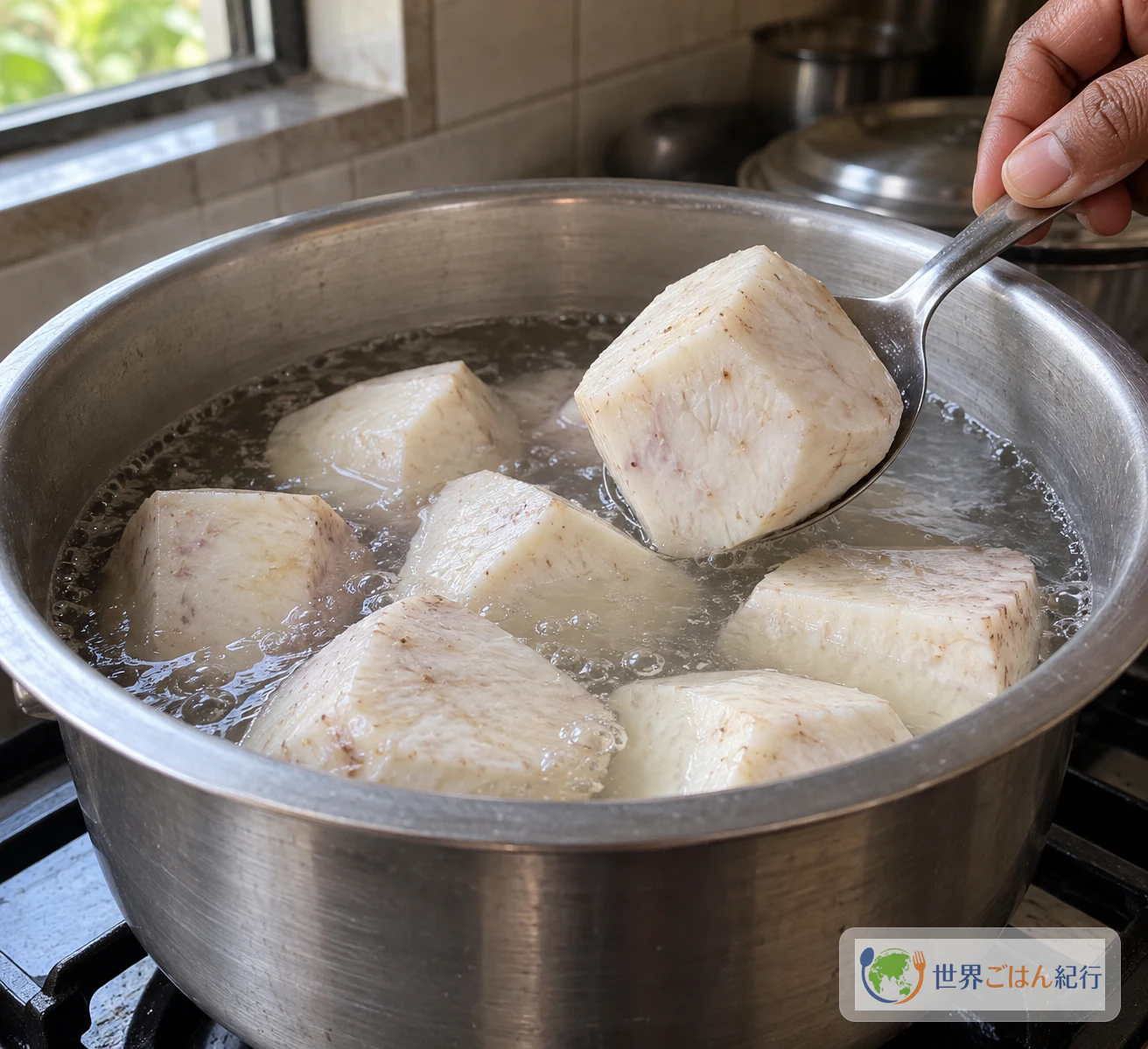
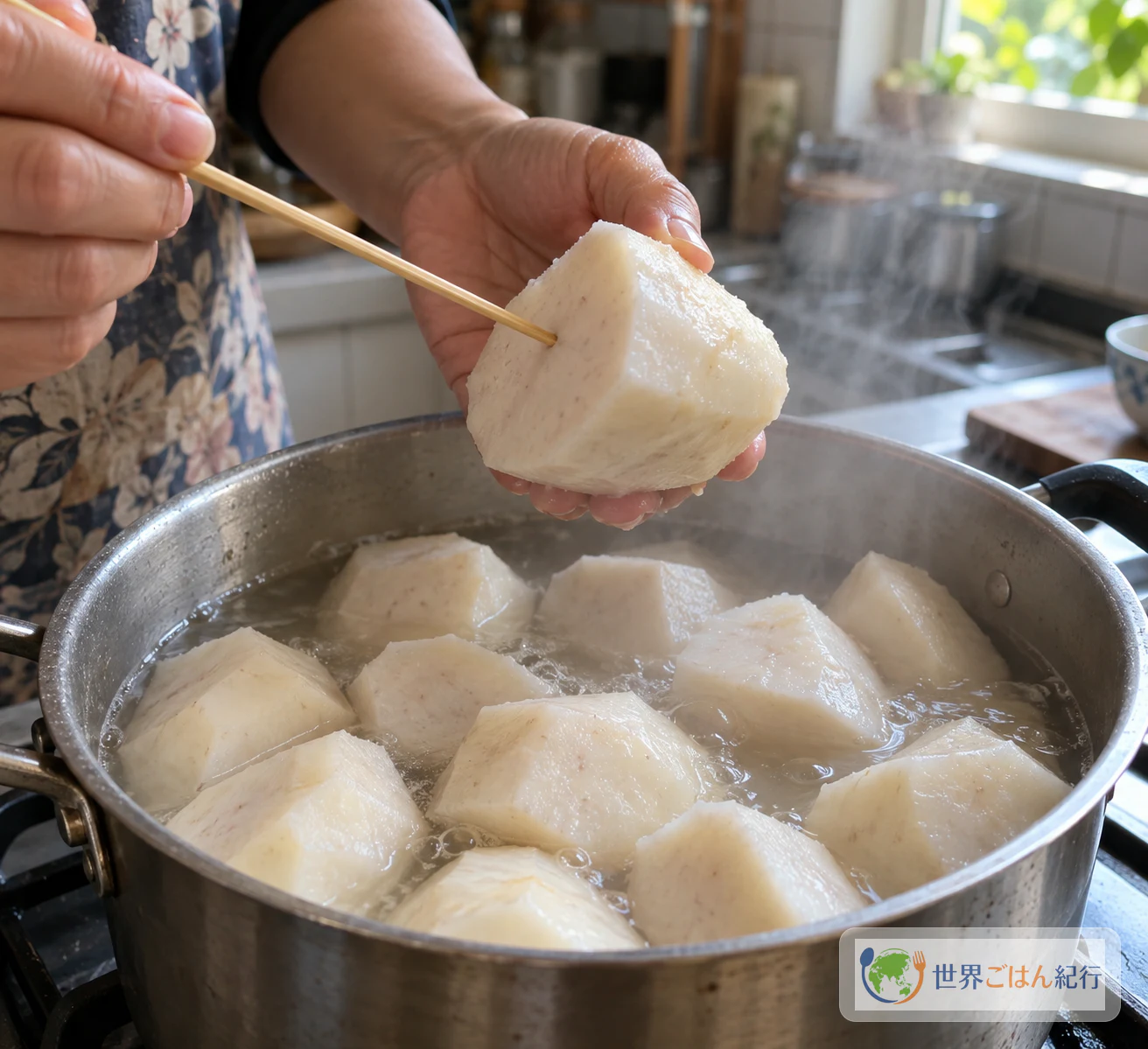
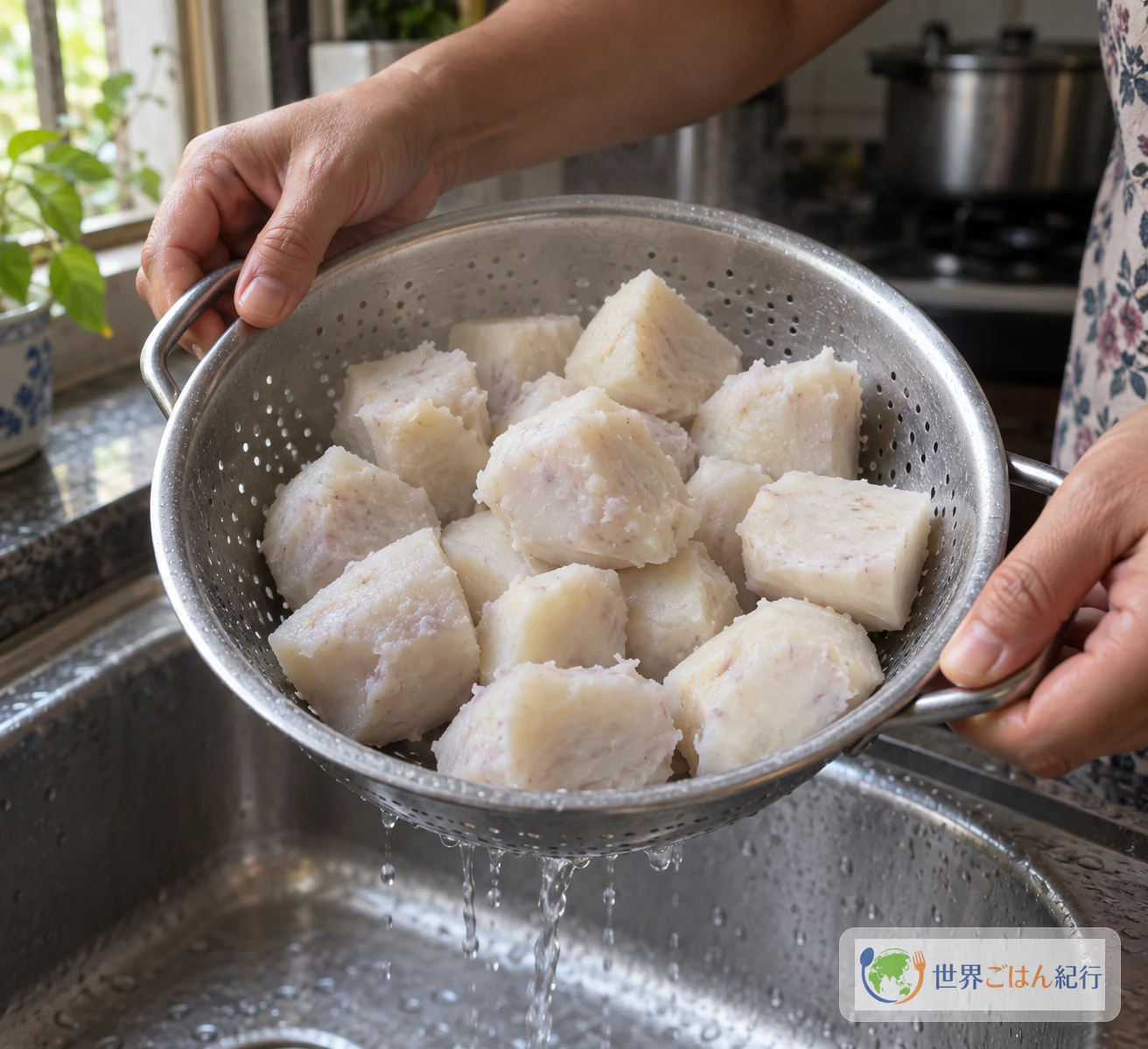
Cook the taro until "tender but firm." There is no fixed time: test the pieces with a skewer or fork and stop when the center gives way while the piece keeps its shape.
Hard Centers, Broken Pieces, Too Much Heat: Fixing Problems
| Problem | Likely cause | What to do |
|---|---|---|
| The center is still hard | Not cooked long enough, or the pieces are very large | Return them to the boiling water and keep testing with a skewer. Do not serve undercooked taro |
| The pieces fall apart | Boiled past "tender but firm" | Start testing earlier next time; serve the broken pieces as they are |
| The corm looks or behaves unlike taro | Malanga (Xanthosoma) or an unidentified corm was bought | Buy produce clearly labeled as edible taro/Colocasia from a reliable supplier |
| The dip is too hot | Four green chillies are strong for some eaters | Use fewer or milder chillies next time; this departs from the source amount |
| The dip is far too sour | Both tamarind piece and paste went in | Use only one of the two; the source gives them as alternatives |
How to Serve
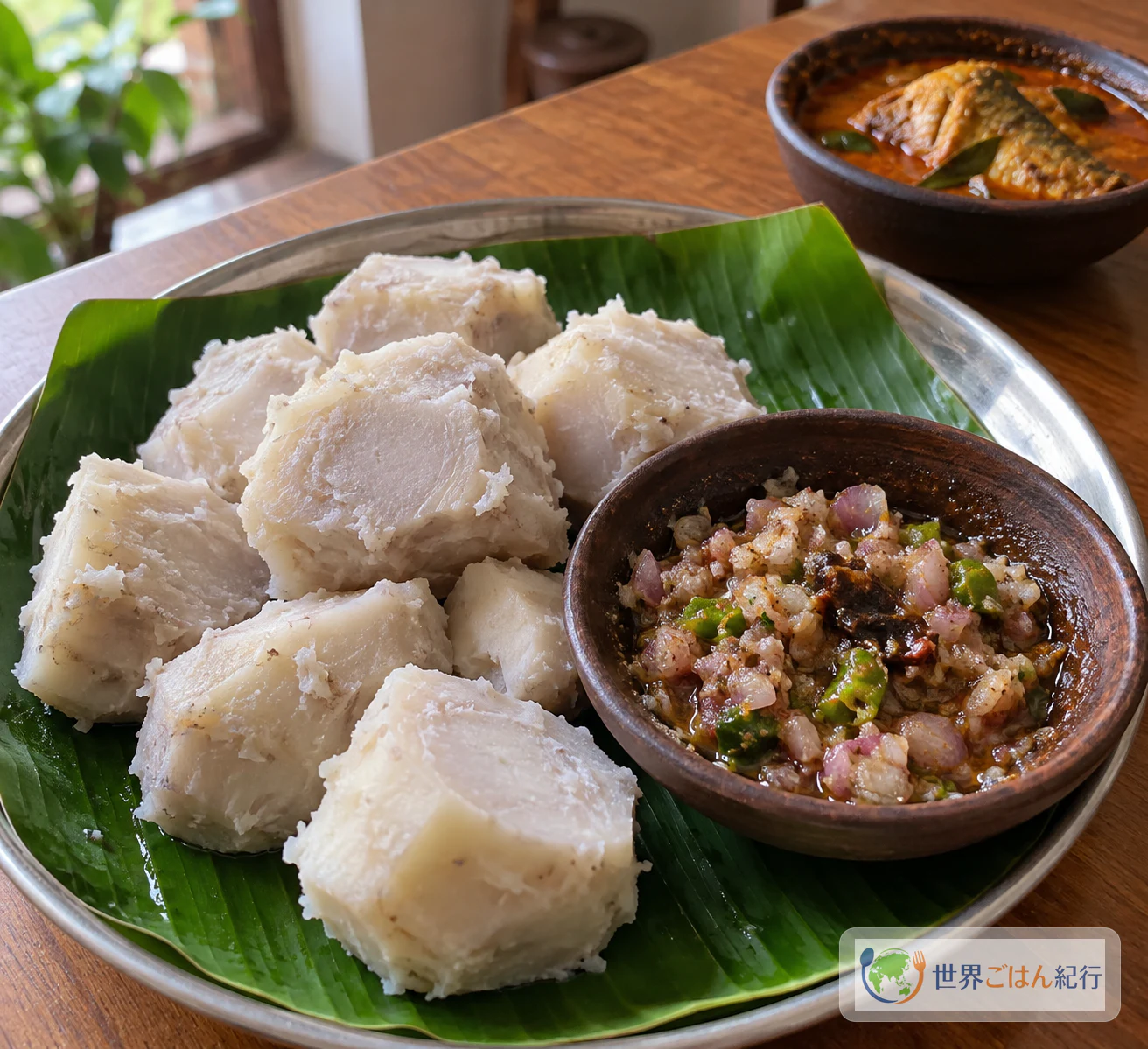
Serve the drained taro hot with the dip on the side, so each eater can take as much heat as they like. The Kavalam toddy shop example pairs boiled chembu with boiled yam and tapioca, crushed kanthari chilli and spicy fish curry. None of those are required for this recipe; if you have a fish curry on the table, it can sit alongside, but there is no need to buy anything extra.
The sources give no storage guidance for this dish, so the recommendation here is simply to eat it freshly made.
Variations
- Milder dip: Choose milder green chillies or use fewer than 4. This lowers the heat but changes the source amount.
- Tamarind paste instead of a piece: The source allows 1 tsp paste in place of the small piece. It is easier to measure, though products differ in strength.
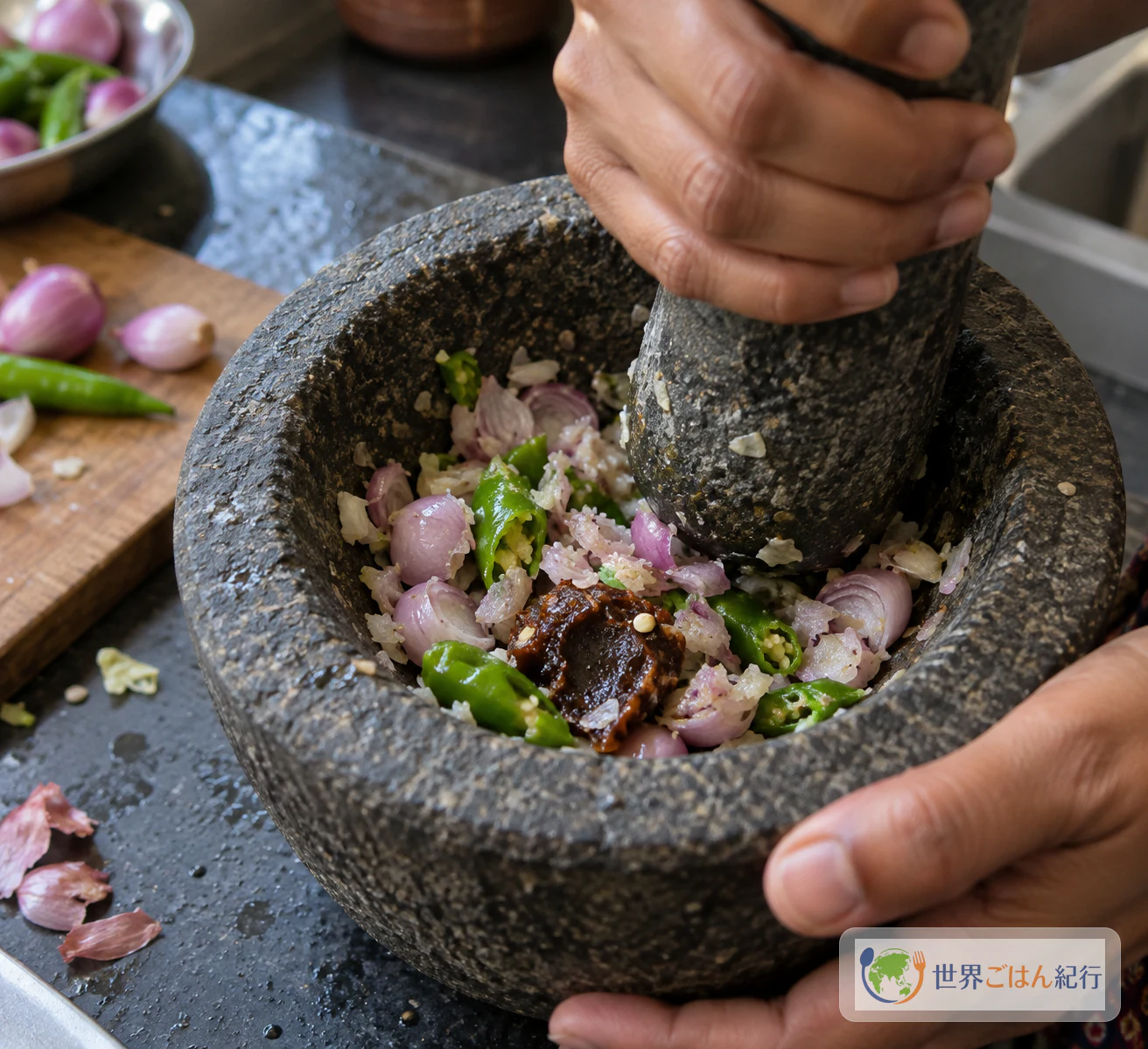
- Coarser or finer dip: Crush the shallots more or less. The source asks for a coarse crush; finer textures are your own adjustment.
- Satoimo in place of larger taro: A Colocasia stand-in that is easier to buy in some places. Size, moisture and cooking behavior differ, so judge doneness by testing each batch.
- A yogurt dip instead: The Third Kitchen recipe serves its boiled chembu with mulaku pottichathu, a separate dip of yogurt, pearl onions and green chillies. It is a different recipe; use it in place of the tamarind and coconut oil dip, not mixed into it.
Frequently Asked Questions
Is chembu puzhungiyathu a curry?
Not in the form used here. It is boiled taro served plain, with a spicy dip on the side. Curry appears only as an optional accompaniment, as in the Kavalam shop example.
Can I use Japanese satoimo?
You can try it as a practical substitute, since it is also Colocasia, but the variety and size differ and the result has not been verified. Cook until the skewer passes into the center and the pieces hold their shape.
Are malanga and taro the same?
No. The source recipe identifies malanga as Xanthosoma and taro as Colocasia esculenta, two different plants. This recipe uses taro.
How many minutes should I boil it?
The source recipe does not give a time. Boil until the center is tender all the way through and the pieces are still intact, testing with a skewer or fork.
Does the dip need yogurt?
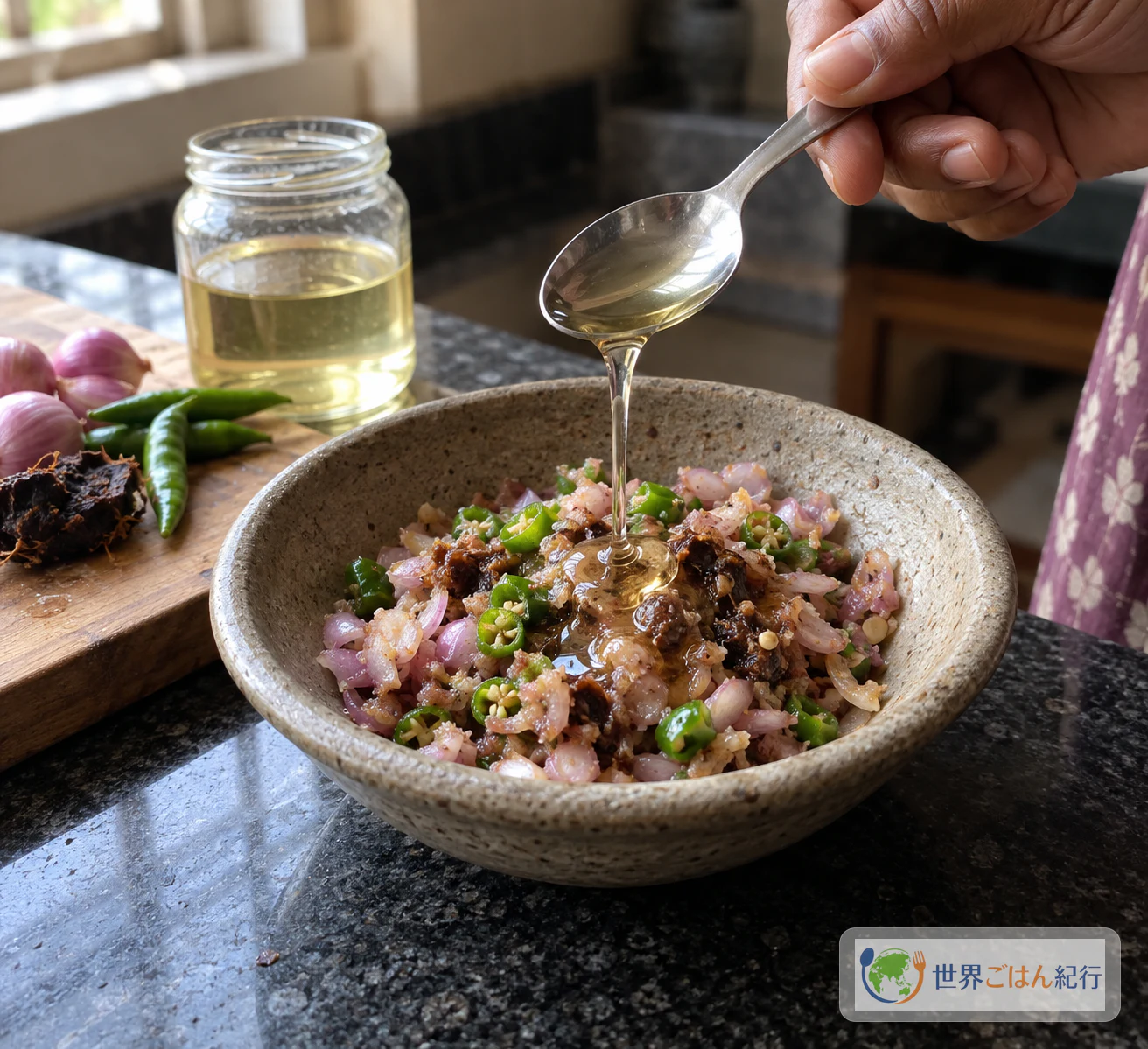
Not this one. The dip here is shallots, green chillies, tamarind, salt and coconut oil. A yogurt dip belongs to a different Kerala home recipe.
Sources
- Kerala Recipes / Malayali.me, "Chembu Puzhungiyathu (Boiled Malanga/Taro)." Source of the recipe followed here: the Malayalam name chembu, the distinction between malanga (Xanthosoma) and taro (Colocasia esculenta), the ingredient amounts, peeling, washing, cutting into 4–5 large pieces, boiling in salted water until tender but firm, the use of gloves, and the shallot, green chilli and tamarind dip with coconut oil. https://recipes.malayali.me/menu/easy-recipes/chembu-puzhungiyathu-boiled-malangataro
- Third Kitchen (Jincy Joseph), "Chembu puzhungiyathu (Boiled Malanga)." A separate Kerala home recipe describing the dish as Kerala style, with peeling, cutting, boiling until fork-tender, draining and serving hot, and its distinct yogurt, pearl onion and green chilli dip. Not used for the amounts in this recipe. https://thirdkitchen.blogspot.com/2011/08/chembu-puzhungiyathuboiled-malanga.html
- Malayala Manorama, "കായൽ തീരത്തുണ്ട് കിടിലൻ ഷാപ്പ്, രാജപുരം." Report on the Rajapuram toddy shop in Kavalam, where boiled chembu is offered with boiled yam and tapioca, crushed kanthari chilli and spicy fish curry. One documented serving context, not a statewide custom. https://www.manoramaonline.com/travel/travel-kerala/2019/07/22/rajapuram-toddy-shop-kavalam.html
- Centre for Food Safety, Hong Kong SAR Government, "Beware of Wild Taro and Cook Edible Taro Properly to Reduce Risk." Guidance to buy edible taro from reliable suppliers, not to gather wild taro-like plants, and that peeling, cutting, boiling and thorough cooking reduce irritation risk for edible taro but do not make wild taro safe. It does not give a time or temperature for this recipe. https://www.cfs.gov.hk/english/multimedia/multimedia_pub/multimedia_pub_fsf_243_03.html