Coconut Chutney: A Raw Coconut Base and a Short Tempering Poured Over It
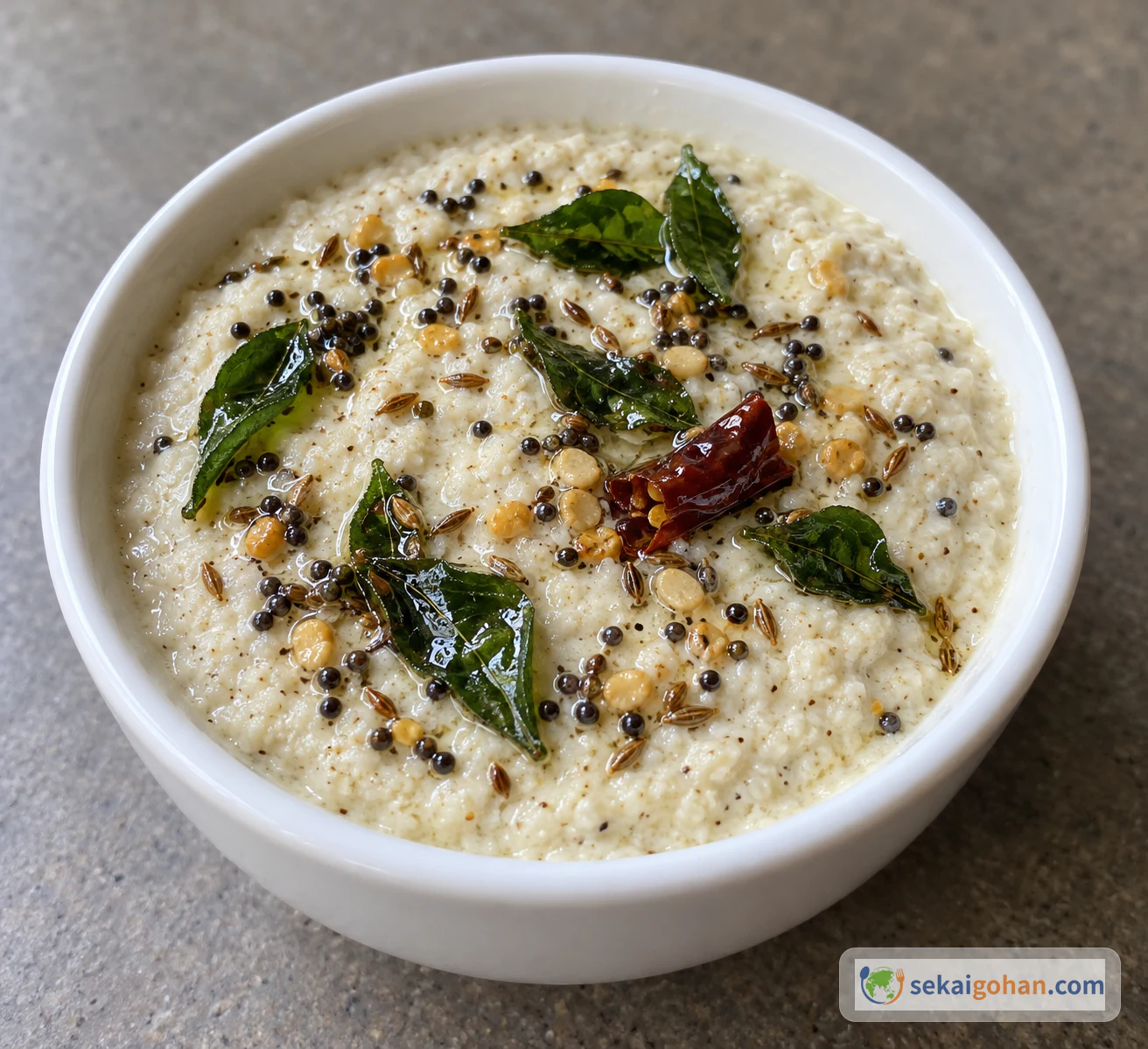
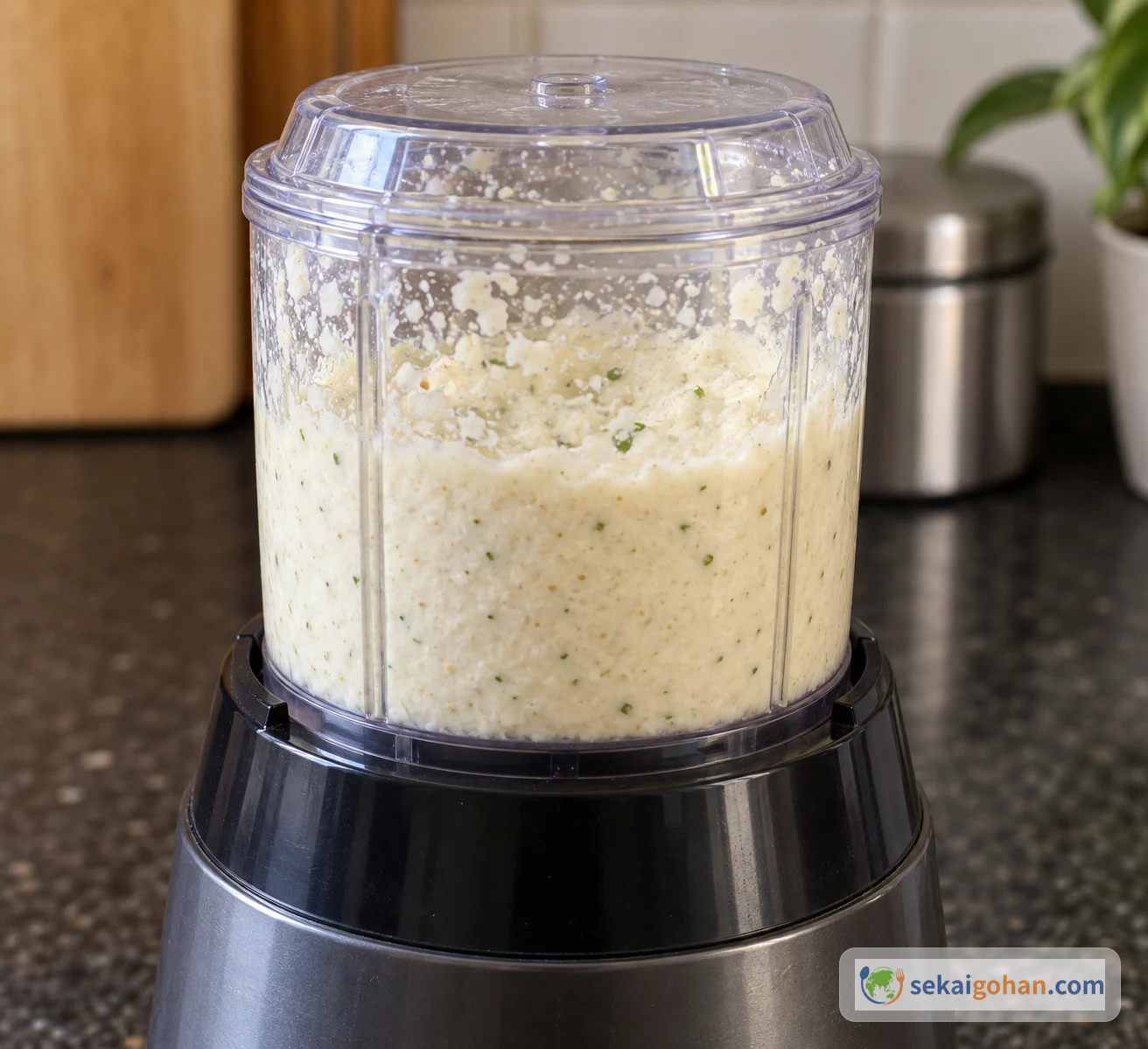
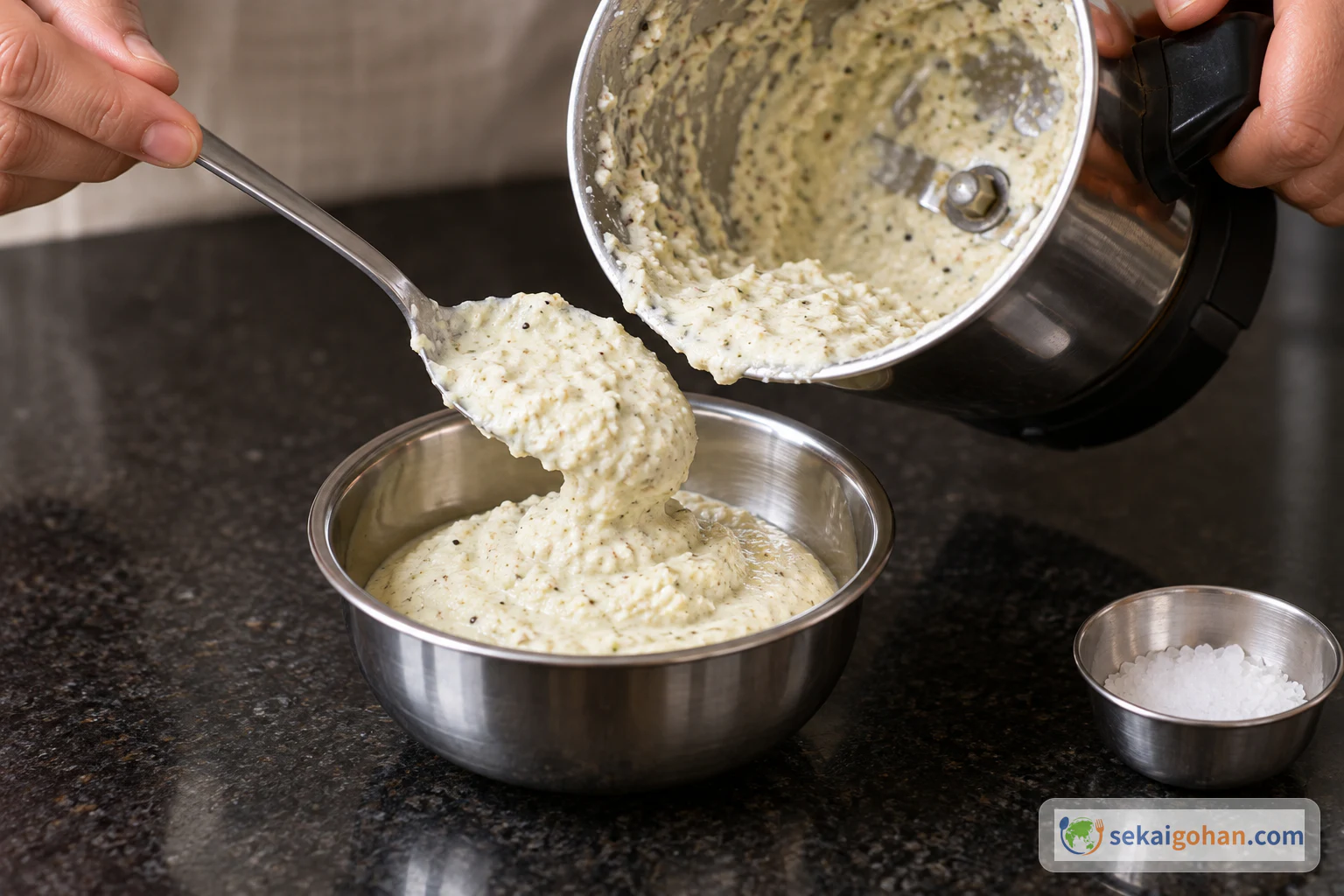
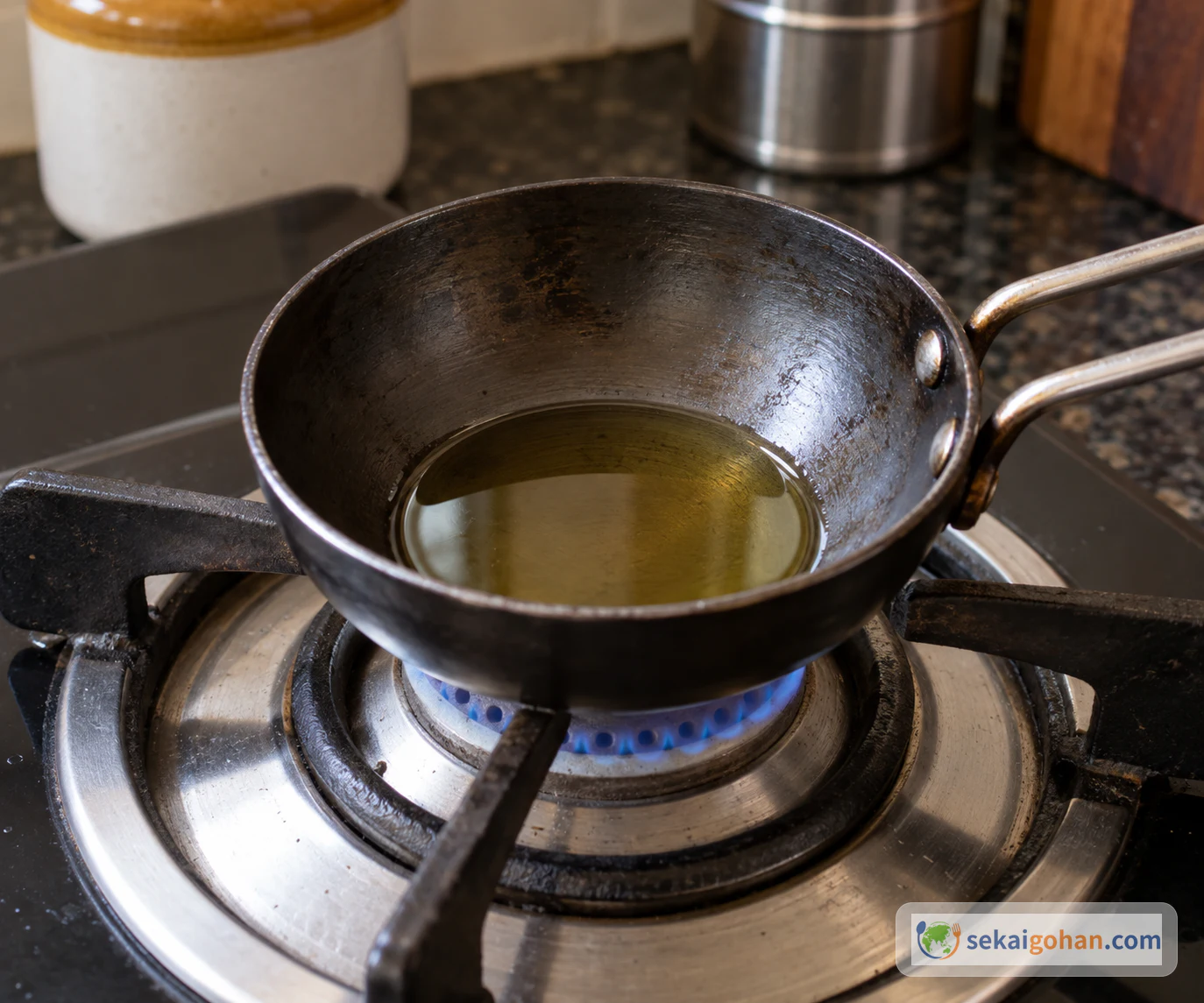
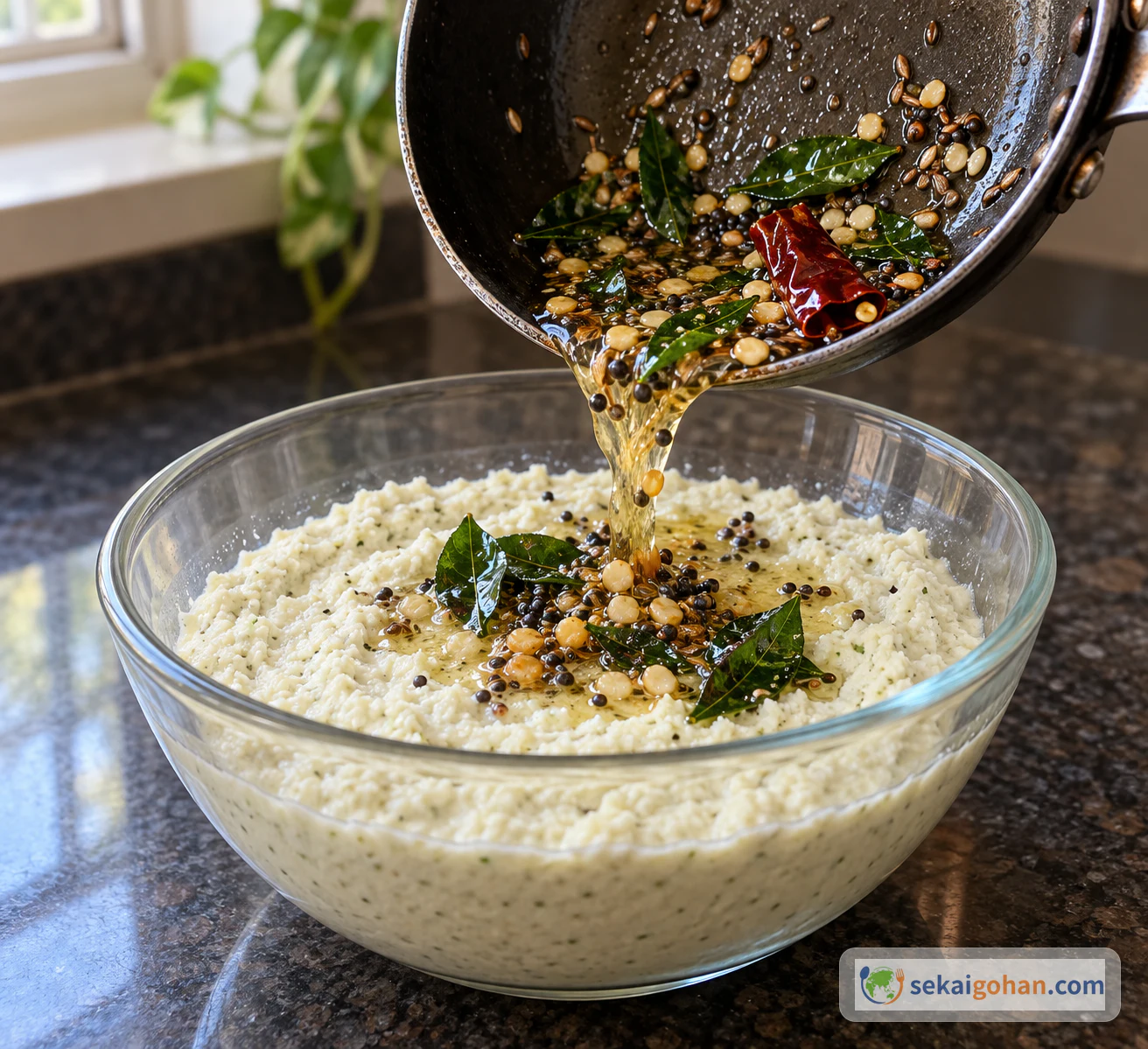
Two parts, made separately. First grind a smooth, wet base of fresh coconut, roasted chana dal, green chili and ginger, with no cooking. Then, in a small pan, run a short tempering in sesame oil and pour all of it, oil included, over the base.
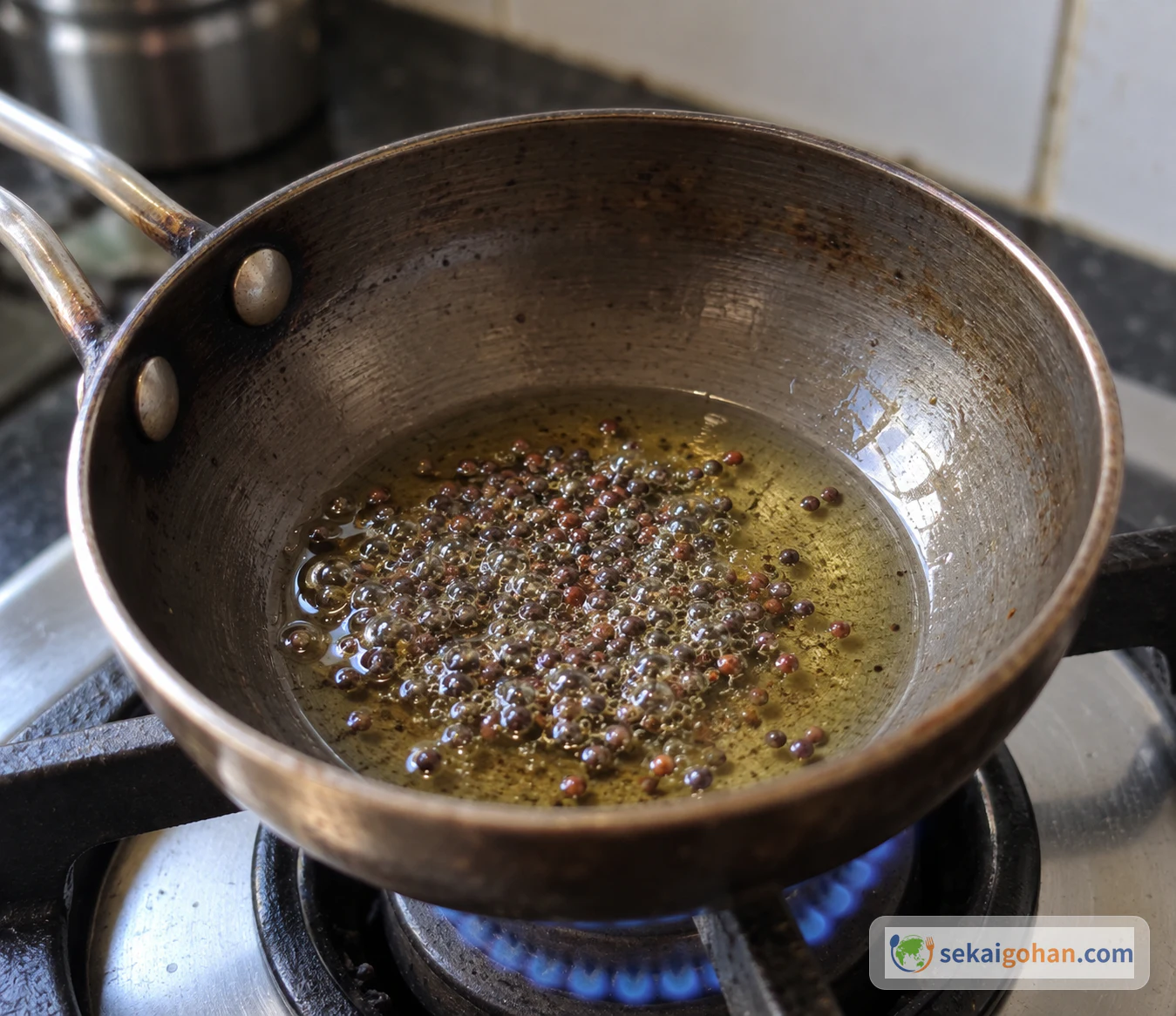
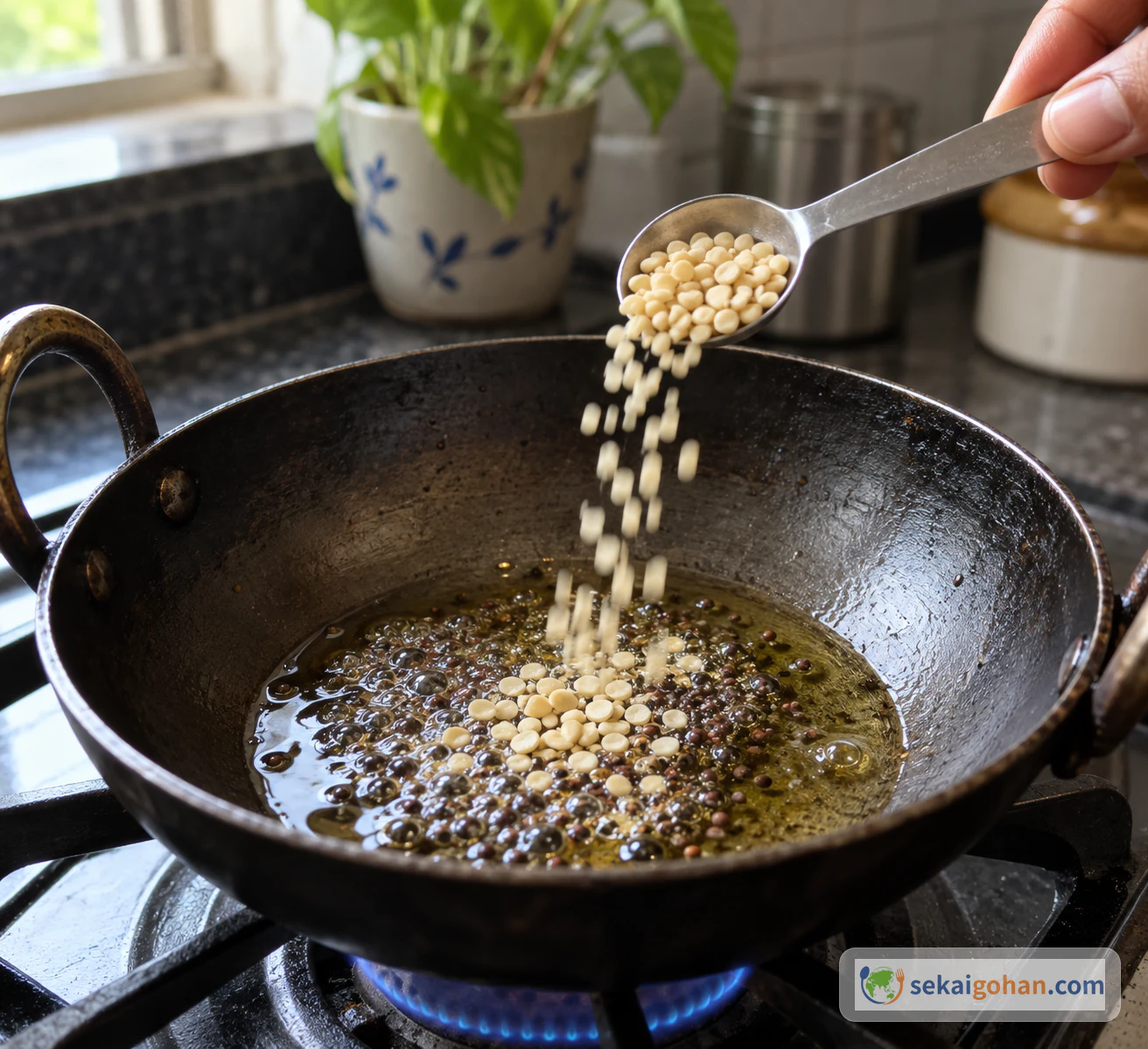
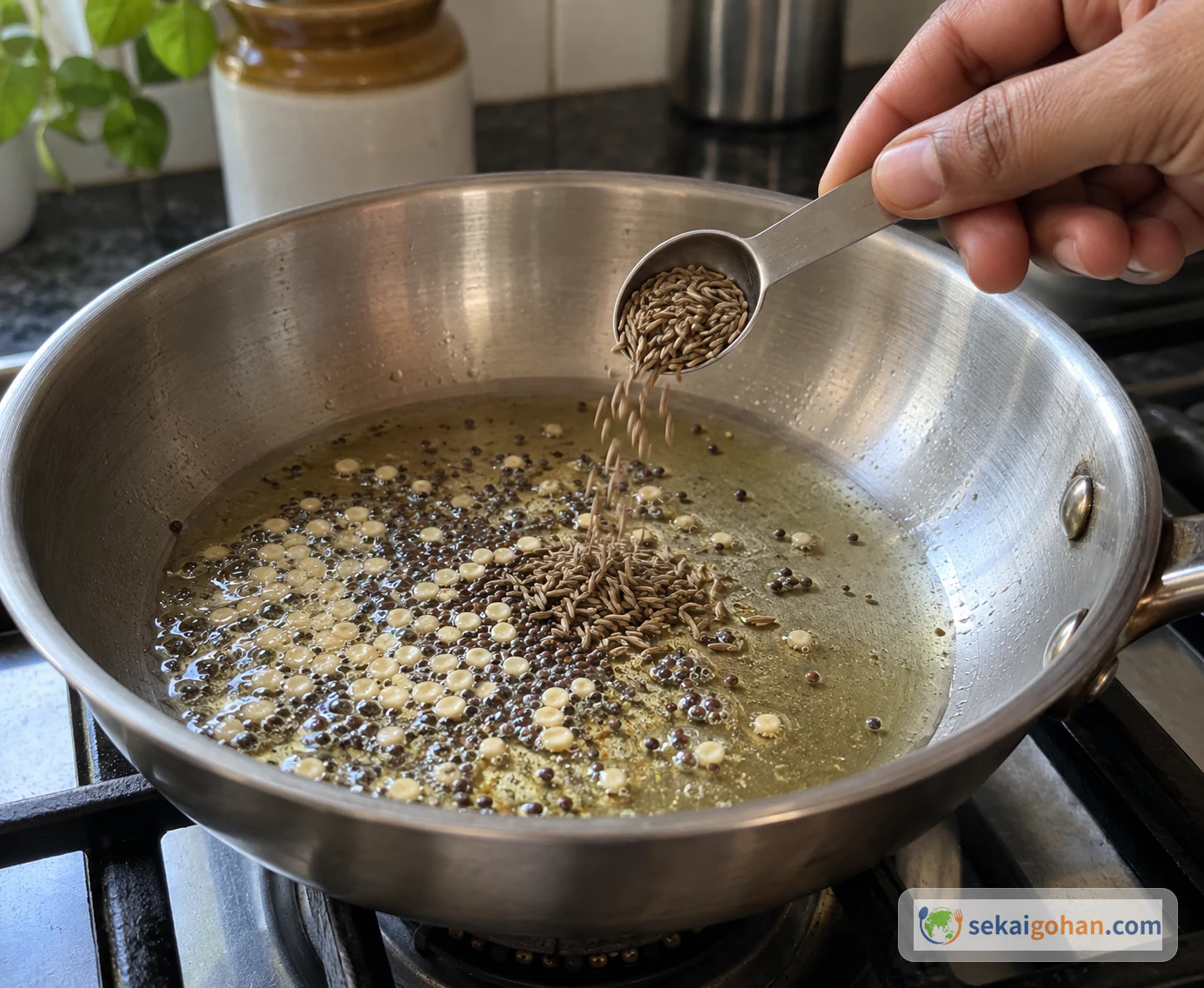
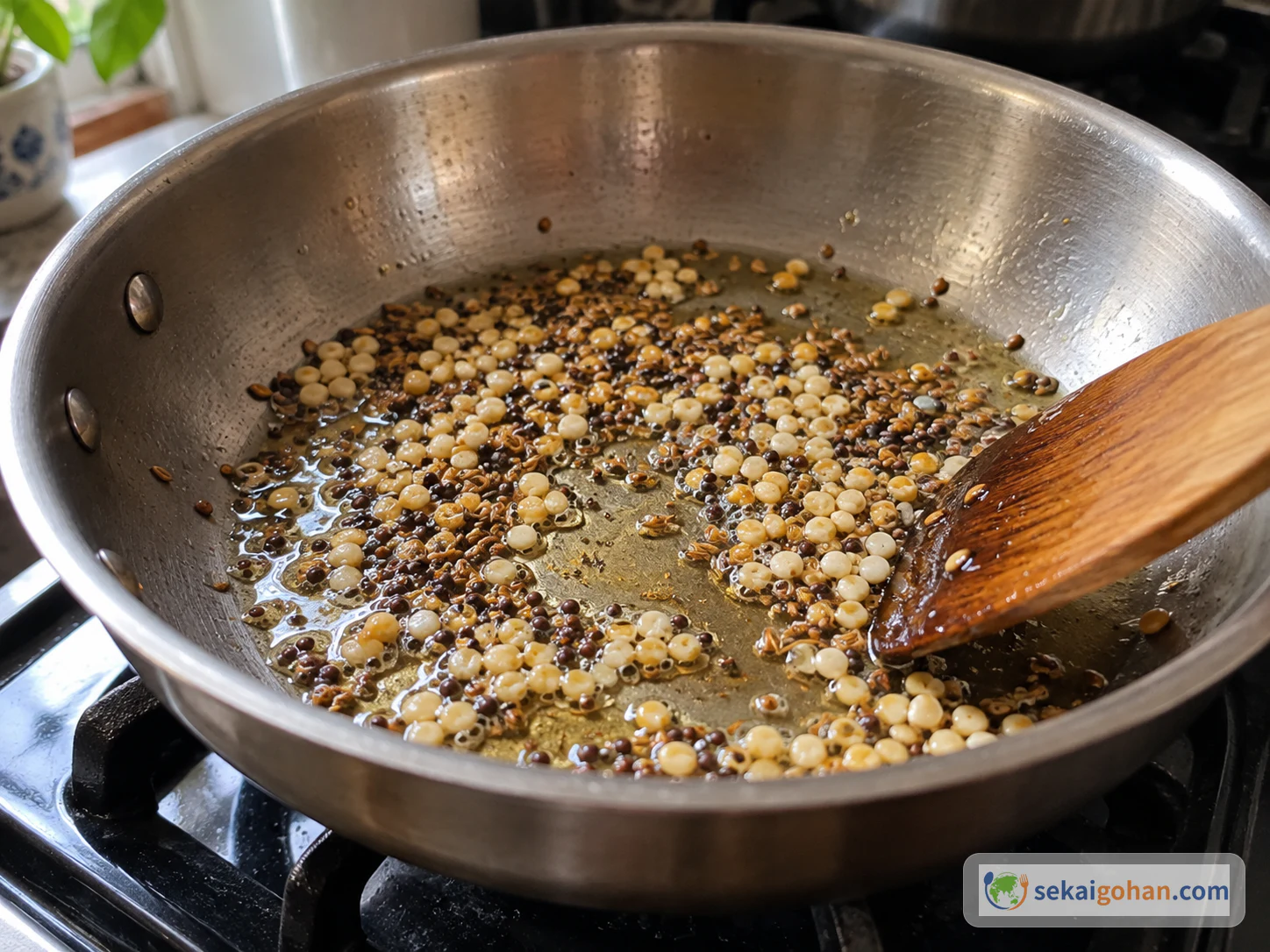
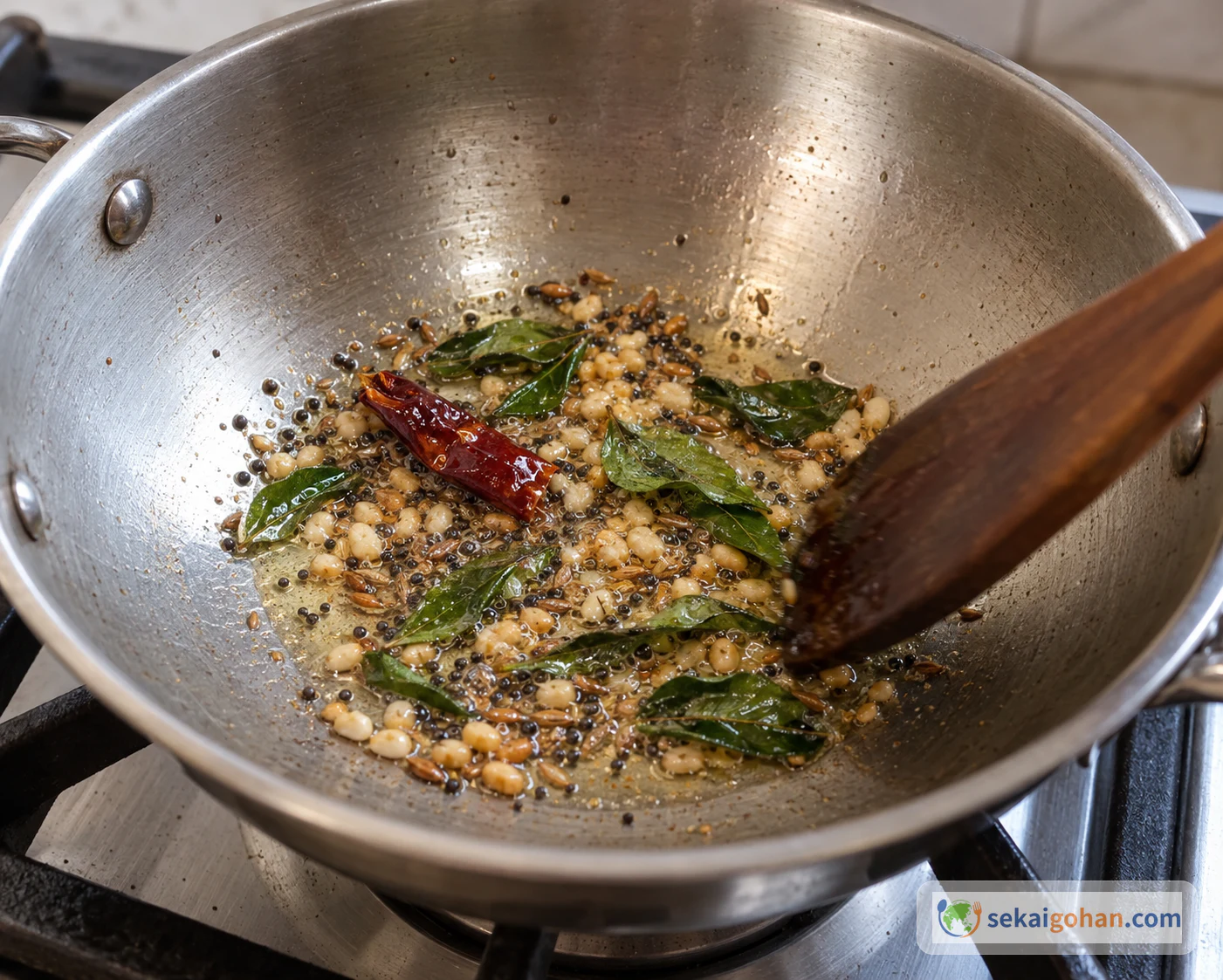
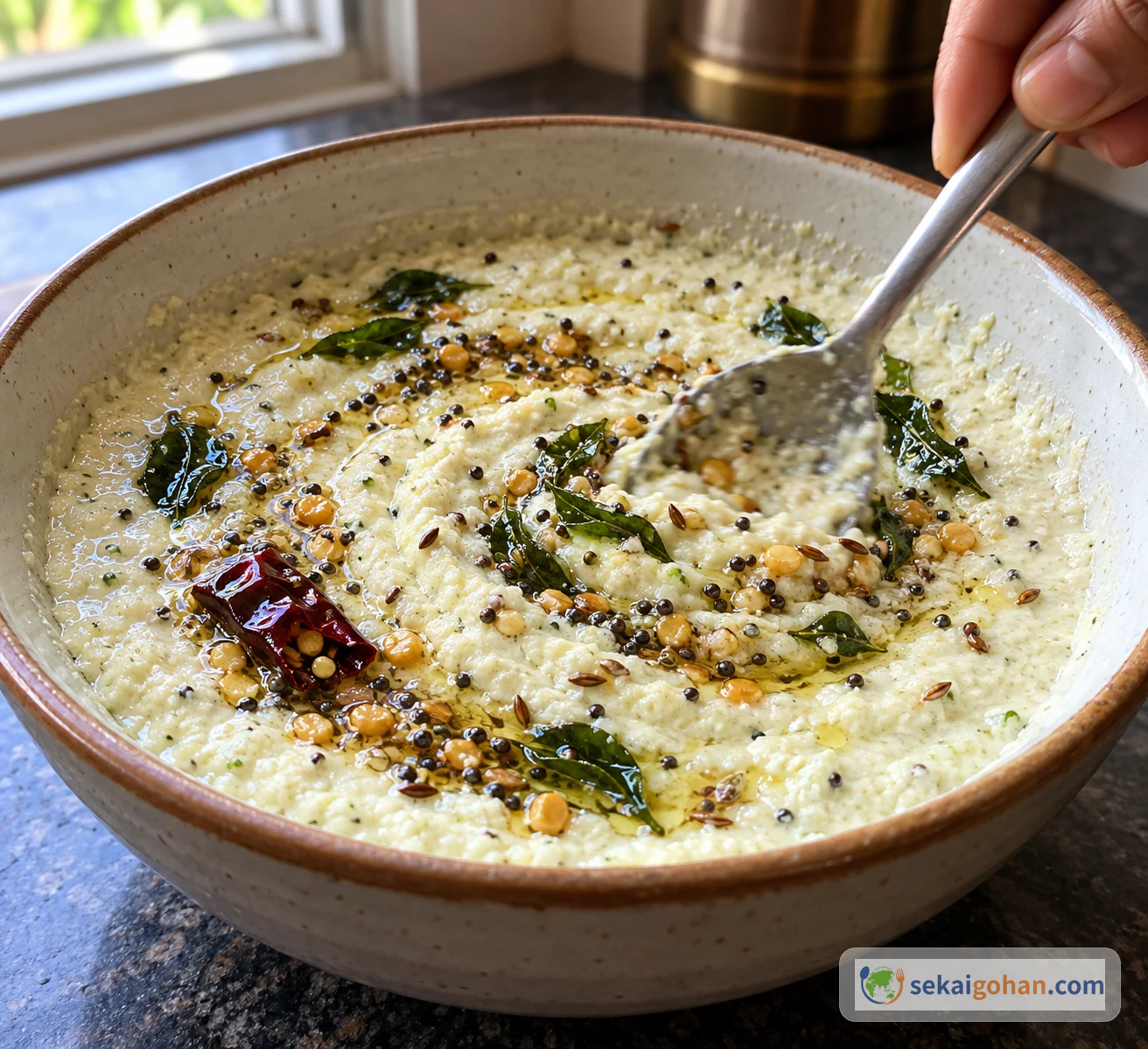
A small amount of white coconut goes into a grinder jar with a spoonful of roasted chana dal, one green chili, a little ginger, salt and a few tablespoons of water. It comes out pale and smooth. In a second pan, mustard seeds crackle in sesame oil, urad dal and cumin turn lightly golden, and curry leaves crisp for a few seconds before everything is poured, sizzling, over the chutney.
This page covers one specific version: the coconut chutney that Dassana Amit publishes on Dassana's Veg Recipes and describes as Tamil Nadu style. It uses fresh coconut, roasted chana dal, green chili and ginger, with a separate tempering. It is not offered as the single recipe for all coconut chutneys from Tamil Nadu or South India, and it is not a stand-in for Kerala-style or dry coconut chutneys. Sekai Gohan's idli and dosa articles each include a quicker coconut chutney of their own (one thinned with water, one made with yogurt and lemon); this page gives a different mix, with full amounts for both the base and the tempering.
This recipe has not been kitchen-tested by Sekai Gohan's editors. The amounts and the order of steps follow Dassana Amit's published recipe.
About This Version: One Author's Tamil Nadu-Style Chutney
Dassana Amit labels this chutney Tamil Nadu style. The author suggests serving it with idli, dosa, uttapam and medu vada, and with other South Indian snacks. You can find more dishes from the same country on our India page.
The recipe card on that page lists 3 servings, 12 minutes of prep, 3 minutes of cooking and 15 minutes in total. Those are the author's figures; Sekai Gohan has not measured them.
One detail differs within the author's own page. In the step-by-step photo guide, the urad dal goes into the oil after the mustard seeds crackle, and the cumin follows. The recipe card text adds the cumin right after the mustard and the urad dal after that. The amounts are the same in both. This article follows the photo-guide order: mustard, then urad dal, then cumin.
The author marks some ingredients as optional and gives alternatives for others. This article makes one consistent set of choices:
- Included: roasted chana dal and cumin seeds, both marked optional.
- Green chili: one chili by count. The chopped-measure option is not added on top.
- Ginger: used. Garlic, the author's alternative, is not.
- Curry leaves: 9–10 leaves. A separate sprig is not added.
- Oil: gingelly oil pressed from raw sesame seeds.
Other cooks publish coconut chutneys that are quite different. Indian Healthy Recipes (Swasthi Shreekanth) gives a basic hotel-style coconut chutney and a separate coriander coconut chutney with tamarind on the same page. Archana's Kitchen (Archana Doshi) has another recipe titled Tamil Nadu style, which uses more coconut, two green chilies, more ginger and lukewarm water. Its description mentions lemon or yogurt for sourness, and its method mentions lemon juice, though its ingredient list gives no amount for either. Those recipes are separate dishes in their own right, and nothing from them is mixed into the recipe below.
Ingredients: Coconut Base and Tempering
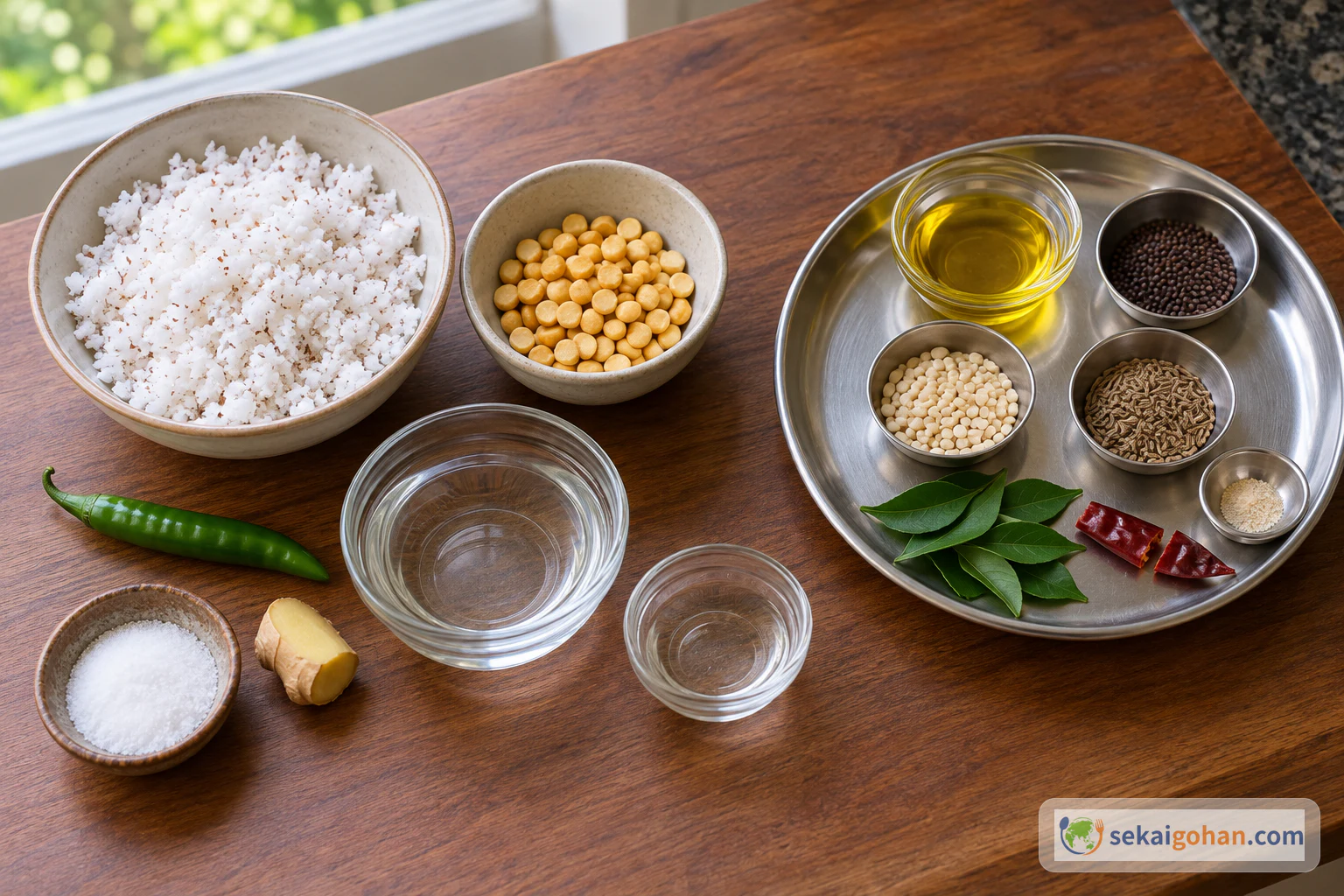
Roasted chana dal is sold already roasted, so it does not need to be cooked first. The split urad dal in the tempering is a different ingredient from the roasted chana dal in the base.
Equipment
- Mixer grinder or small blender jar with a lid
- Spoon or spatula
- Small heatproof bowl
- Small pan for the tempering
Choosing and Substituting
Roasted chana dal: Look for packs labeled "roasted chana dal" or "chana daria." Raw chana dal is not the same ingredient, so don't use it in its place. If you can't find the roasted kind, you can leave it out, but that makes a different version of the chutney.
Coconut: This version uses fresh grated coconut. Frozen coconut or unsweetened desiccated coconut can stand in when fresh isn't available, but that also makes a different version.
Oil: Gingelly oil is pressed from raw sesame seeds and differs in aroma from the dark, toasted sesame oil sold in many supermarkets. Treat the two as different oils. Sunflower, peanut, coconut or another neutral oil can also be used for the tempering, but the aroma will change.
Green chili and ginger: This version uses one green chili and ginger, with no garlic.
Method: Grind the Base, Then Temper Separately
The base is ground raw and is never heated. All the cooking happens in the small pan, over low heat, and it is quick. Get the base into its heatproof bowl before you start the tempering.
Fixing Common Problems
| Problem | What to do |
|---|---|
| The grinder blades won't turn | Add the extra water a little at a time, up to 1–2 tablespoons, and grind again. |
| The chutney is too thick | Add a little of the extra water and grind again. Don't go past 1–2 tablespoons in all. |
| It tastes flat after grinding | Taste, then add a little salt and mix. |
| The urad dal is darkening too fast | Keep the heat low and stir often. Move on as soon as the dal starts to turn golden. |
| The curry leaves or chili are starting to burn | Give them only a few seconds. Turn off the heat once the leaves are crisp and the chili begins to change color. |
| The oil spatters when the leaves go in | Some spluttering is expected when the curry leaves go in. |
Other Versions and Swaps
Each change below gives a different chutney from the one above. If you make one of them, think of it as a separate version rather than a fix to this one.
| Change | What it does |
|---|---|
| Frozen or unsweetened desiccated coconut instead of fresh | Possible when fresh coconut isn't available, but the base differs from the fresh-coconut version. |
| No roasted chana dal | The chutney is made with coconut, chili, ginger and salt only. Don't roast raw chana dal to replace it. |
| 1–2 small cloves of garlic instead of ginger | Moves the flavor from ginger toward garlic. |
| Sunflower, peanut, coconut or neutral oil for the tempering | Changes the aroma of the finished chutney. |
| Coriander and tamarind, or lemon and yogurt | These come from other coconut chutney recipes and belong to those recipes, not this one. |
Frequently Asked Questions
Why does the cumin go in after the urad dal?
That is the order in the step-by-step photo guide on Dassana Amit's page, and this article follows it. The recipe card on the same page lists cumin before urad dal. The amounts are identical either way. This article uses one order throughout, so the photos and the steps match.
Can I use toasted sesame oil?
The oil in this recipe is gingelly oil from raw sesame seeds. Dark toasted sesame oil has a different, roasted aroma, so it is not the same thing. If you don't have gingelly oil, Dassana Amit also lists sunflower, peanut, coconut and other neutral oils as options, but the aroma will be different.
Do I need lemon or yogurt?
Not for this version. Archana's Kitchen's Tamil Nadu-style recipe mentions lemon or yogurt, and Sekai Gohan's dosa article includes a quick yogurt and lemon chutney, but those are separate recipes. Nothing sour is added here.
How many people does it serve, and how long does it take?
Dassana Amit's recipe card lists 3 servings, 12 minutes of prep, 3 minutes of cooking and 15 minutes in total. These are the author's figures, not times measured by Sekai Gohan.
Is this the same as thenga chammanthi?
This page doesn't treat the two as interchangeable. This is one author's Tamil Nadu-style wet chutney with roasted chana dal and a separate tempering. Kerala-style chutneys and dry chutney powders are other dishes and are not covered here.
Sources
- Dassana Amit, "Coconut Chutney Recipe (South Indian Classic)," Dassana's Veg Recipes. The main recipe for this article: the Tamil Nadu-style label, all base and tempering amounts, the step-by-step photo-guide order and how it differs from the recipe card, the author's alternatives (coconut, chana dal, garlic, oil choices), the suggested accompaniments, and the recipe card's listed servings and times. https://www.vegrecipesofindia.com/coconut-chutney-recipe-coconut-chutney/
- Swasthi Shreekanth, "Coconut Chutney Recipe," Indian Healthy Recipes. Used for comparison only: the page lists a basic hotel-style coconut chutney and a separate coriander coconut chutney as distinct recipes. None of their ingredients are added to this recipe. https://www.indianhealthyrecipes.com/coriander-coconut-chutney/
- Archana Doshi, "Tamil Nadu Style Coconut Chutney Recipe - For Idli And Dosa," Archana's Kitchen. Used for comparison only: a different Tamil Nadu-style recipe with other proportions and lukewarm water, whose description mentions lemon or yogurt without giving an amount in the ingredient list. None of its ingredients are added to this recipe. https://www.archanaskitchen.com/recipe/video-recipe-coconut-chutney-a-delicious-south-indian-accompaniment