Chhena Mandua: Small Fried Discs of Fresh Cheese with a Thin Dusting of Sugar
Fresh chhena kneaded smooth before anything else goes in, a soft dough scented only with cardamom and clove, gentle frying in ghee, and sugar on the outside rather than inside the dough.
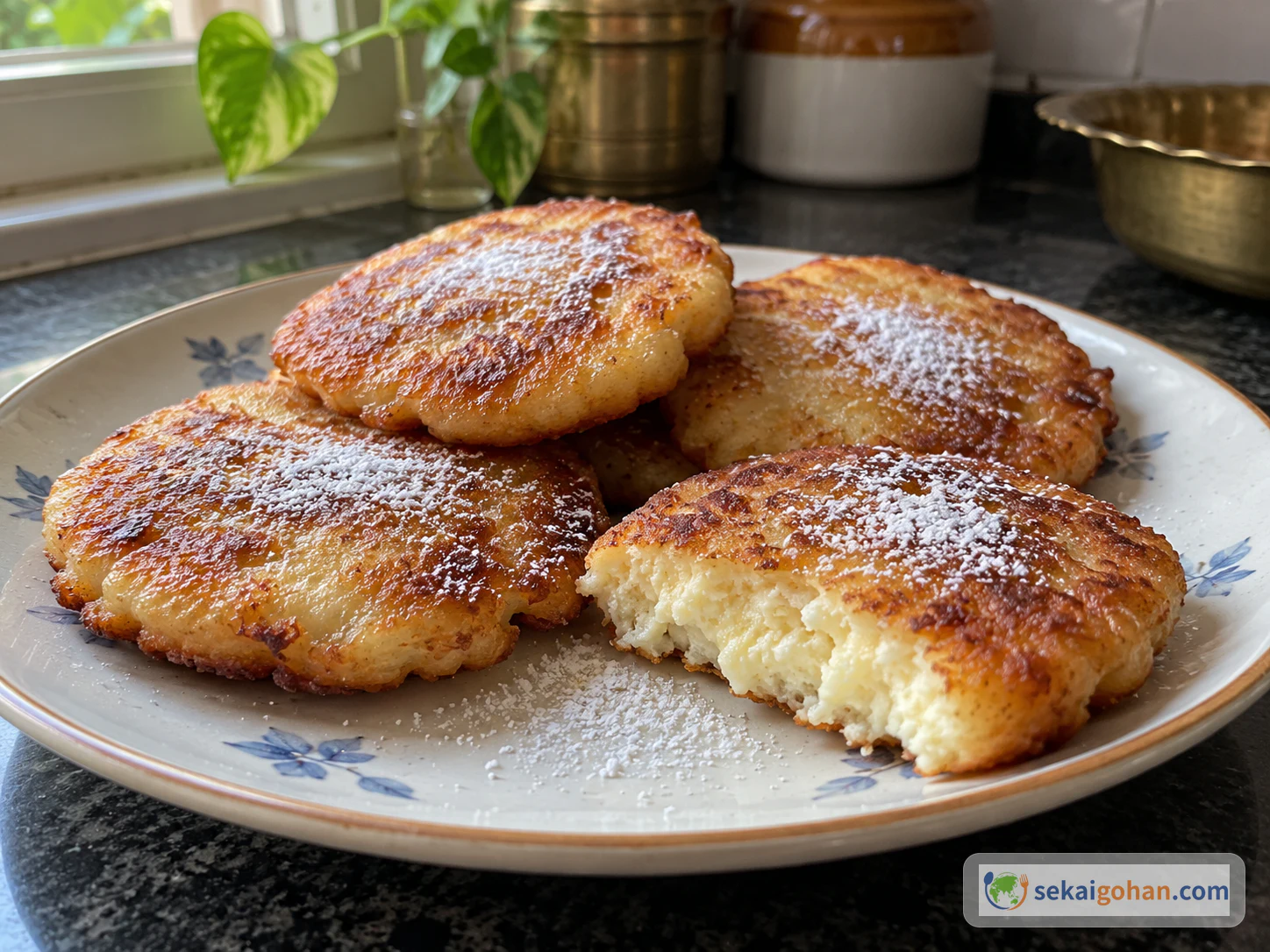
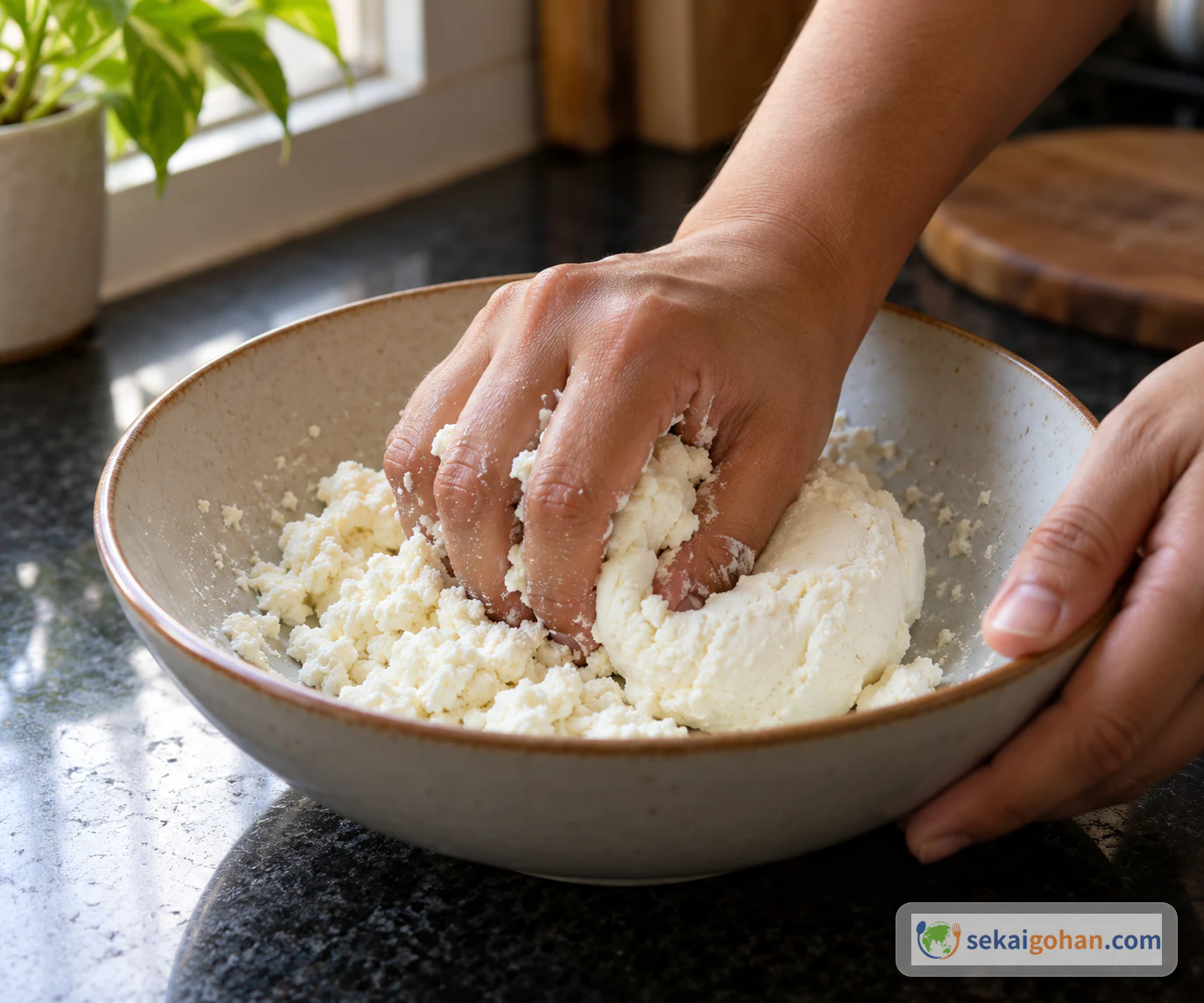
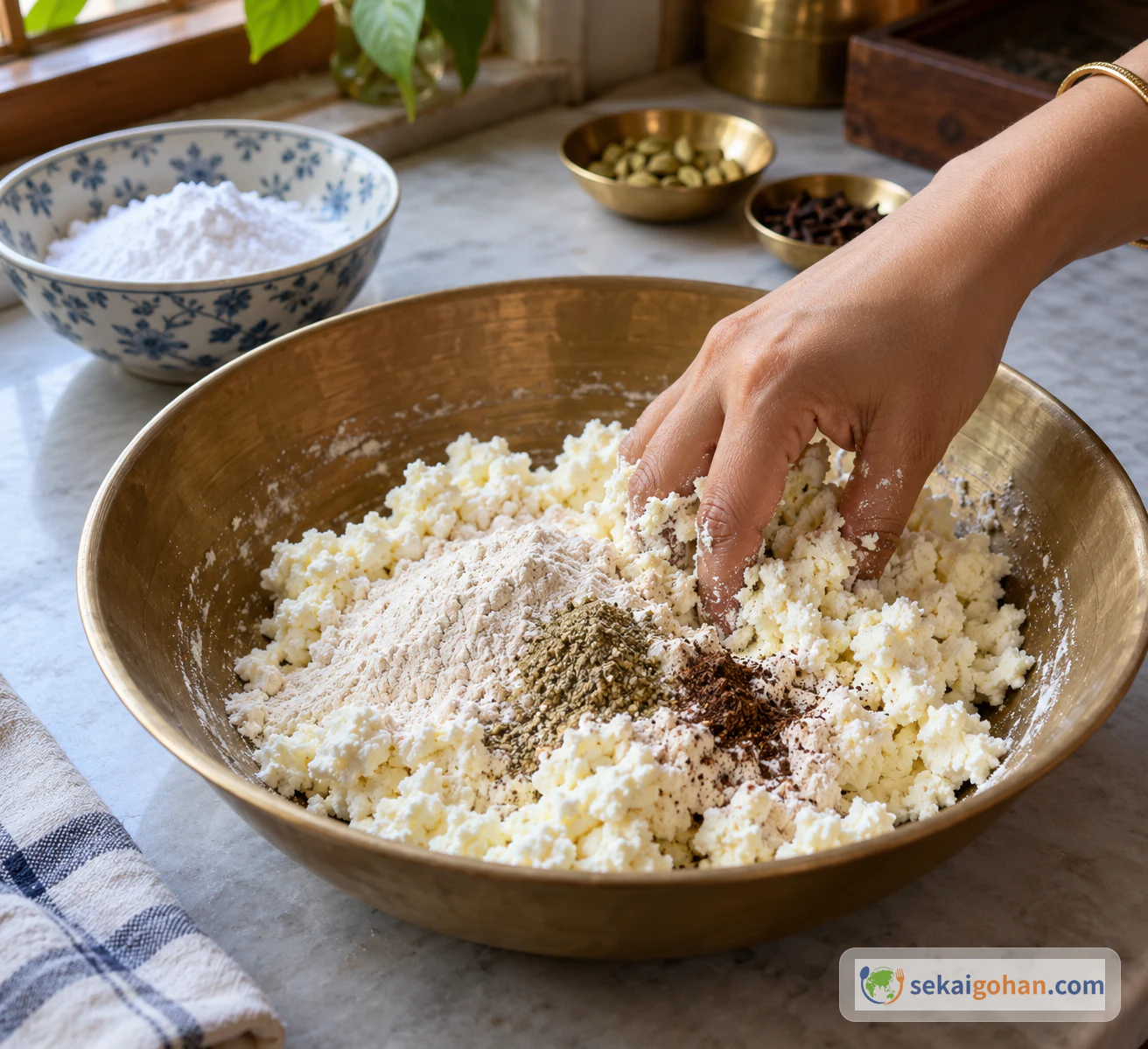
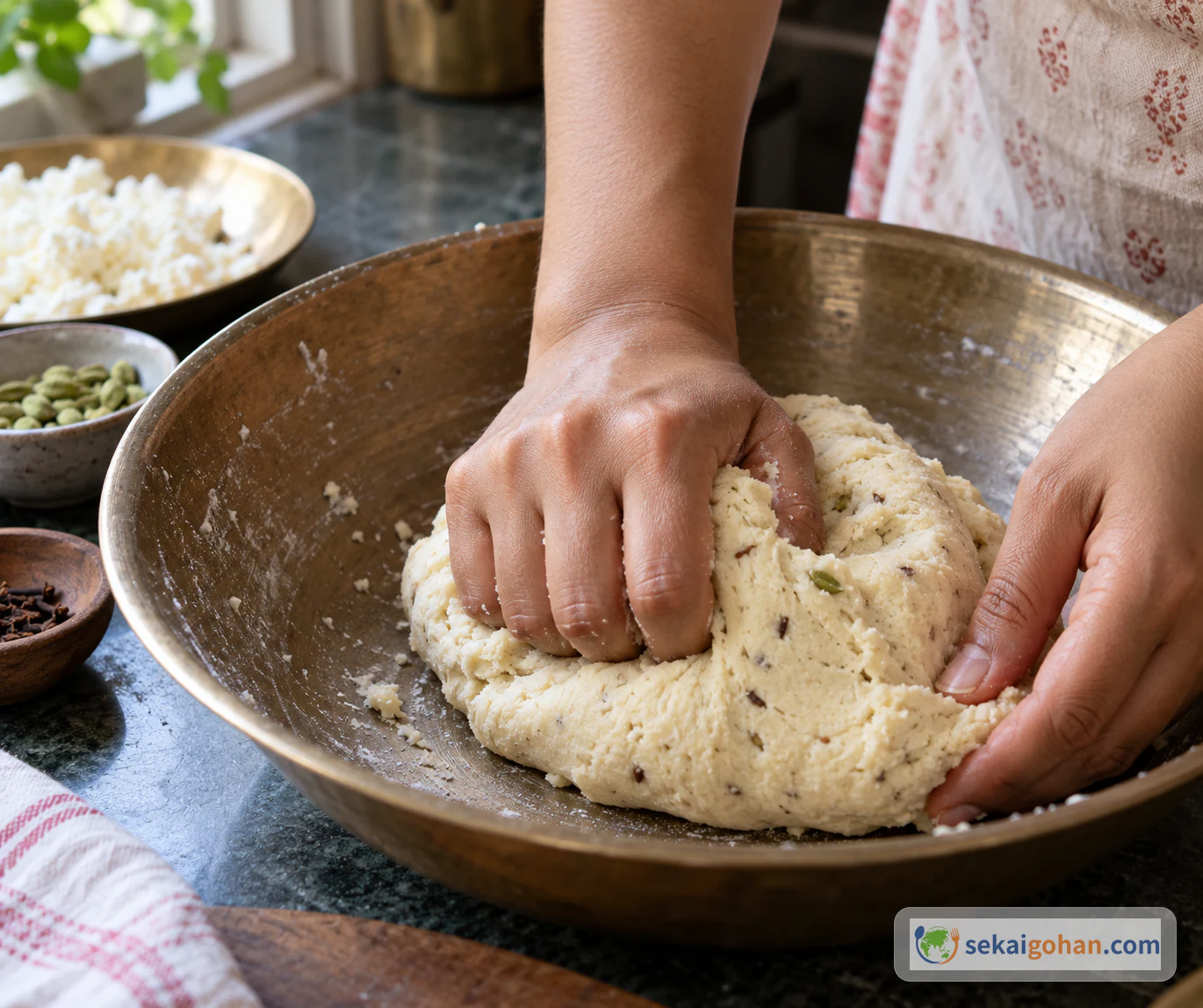
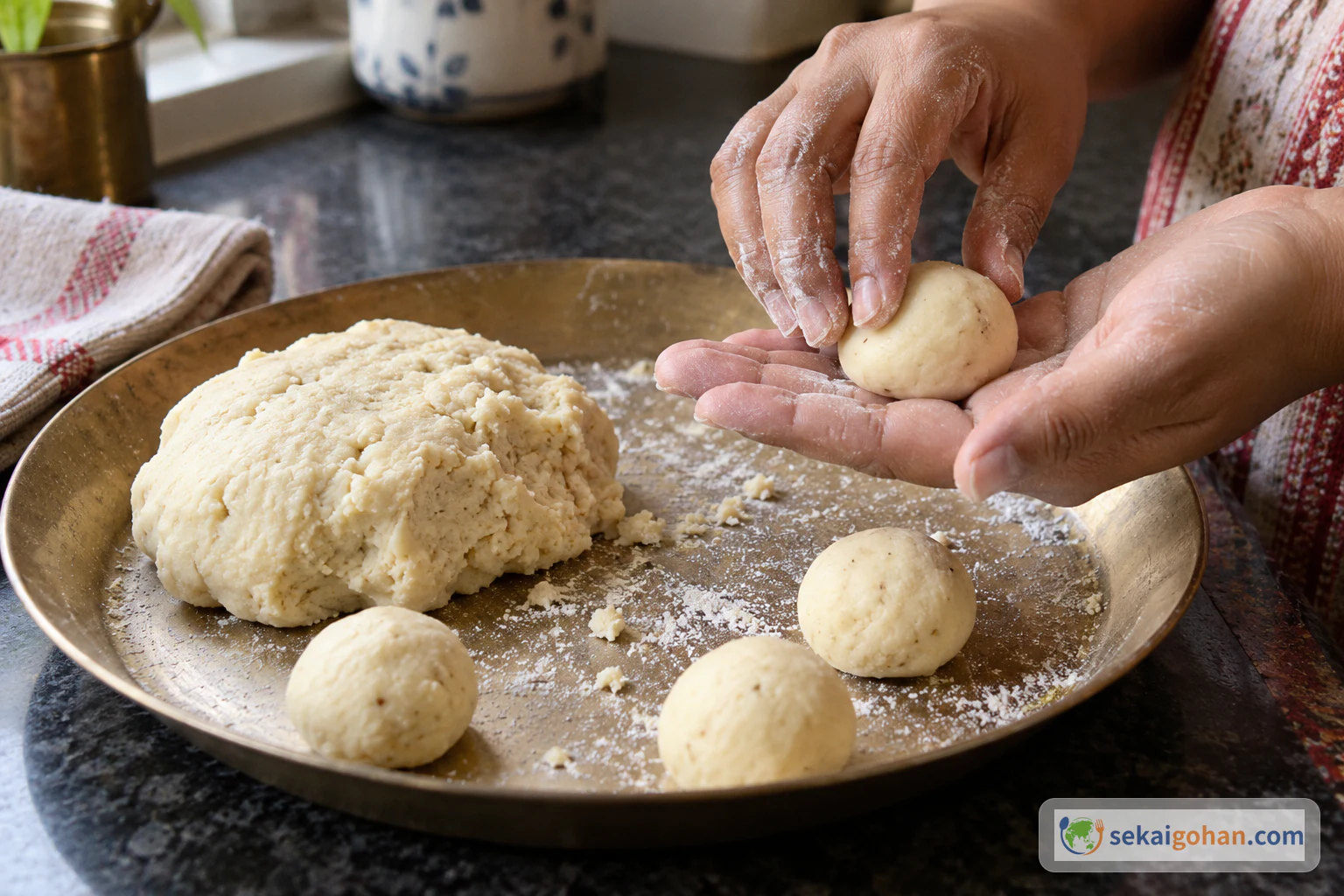
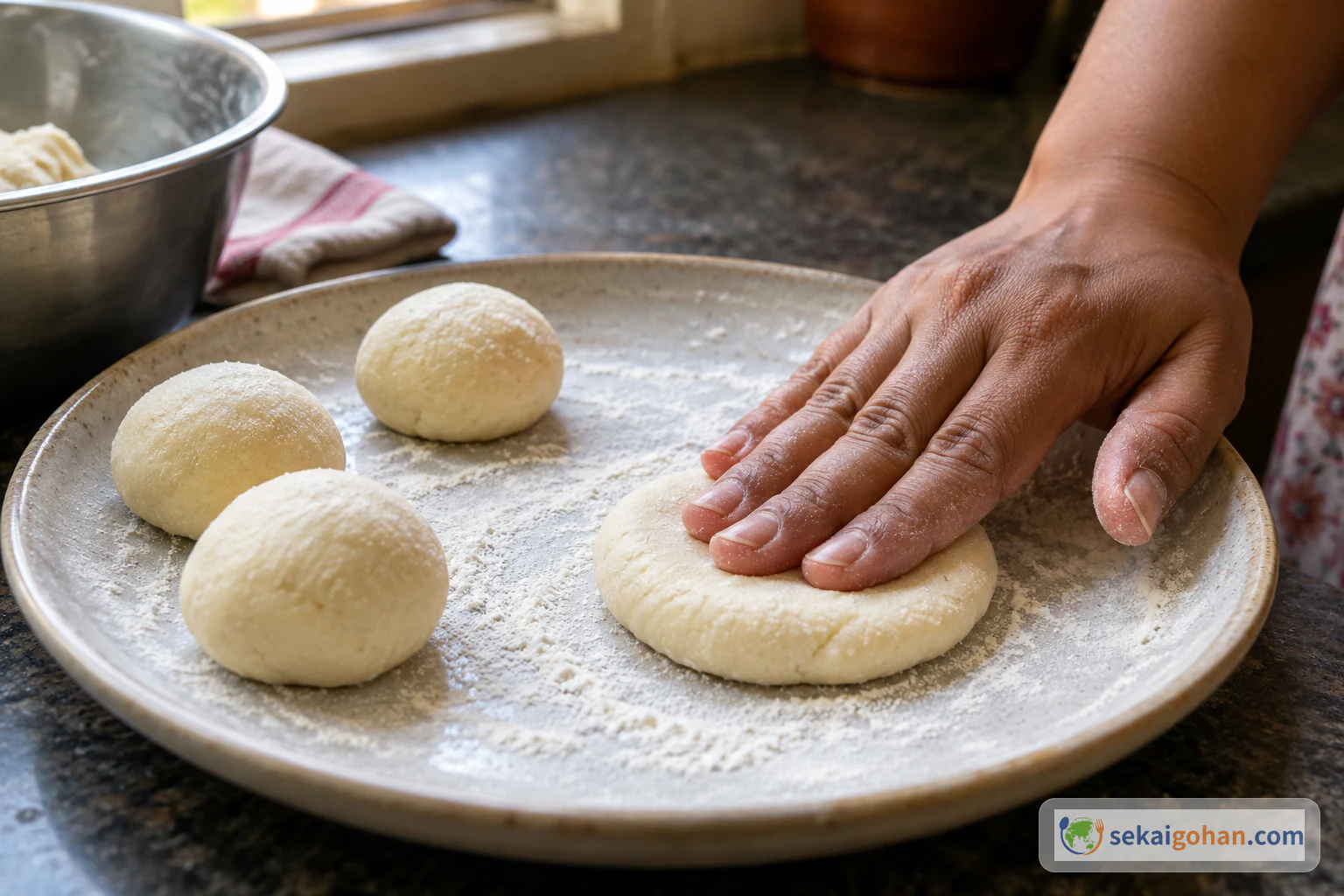
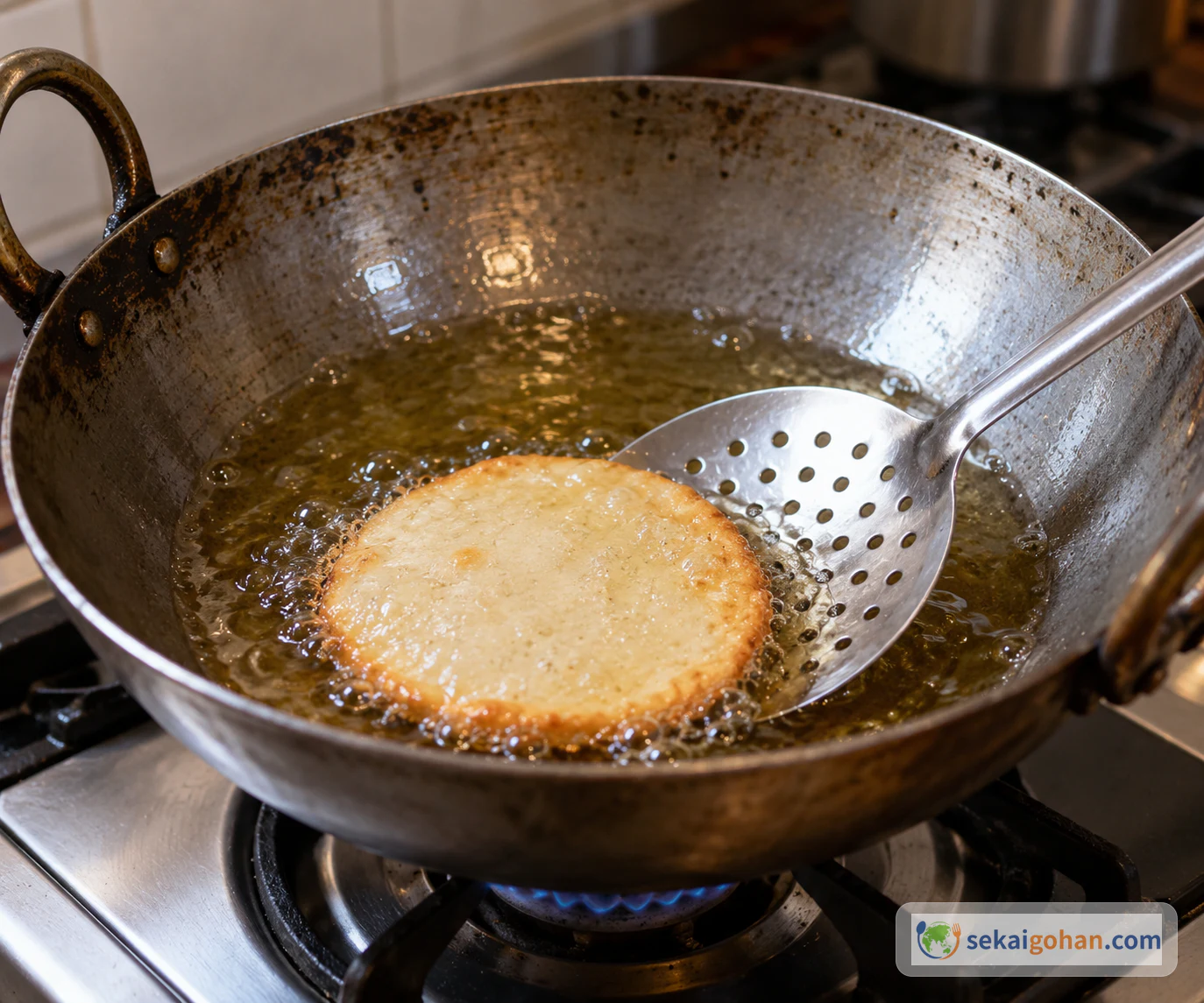
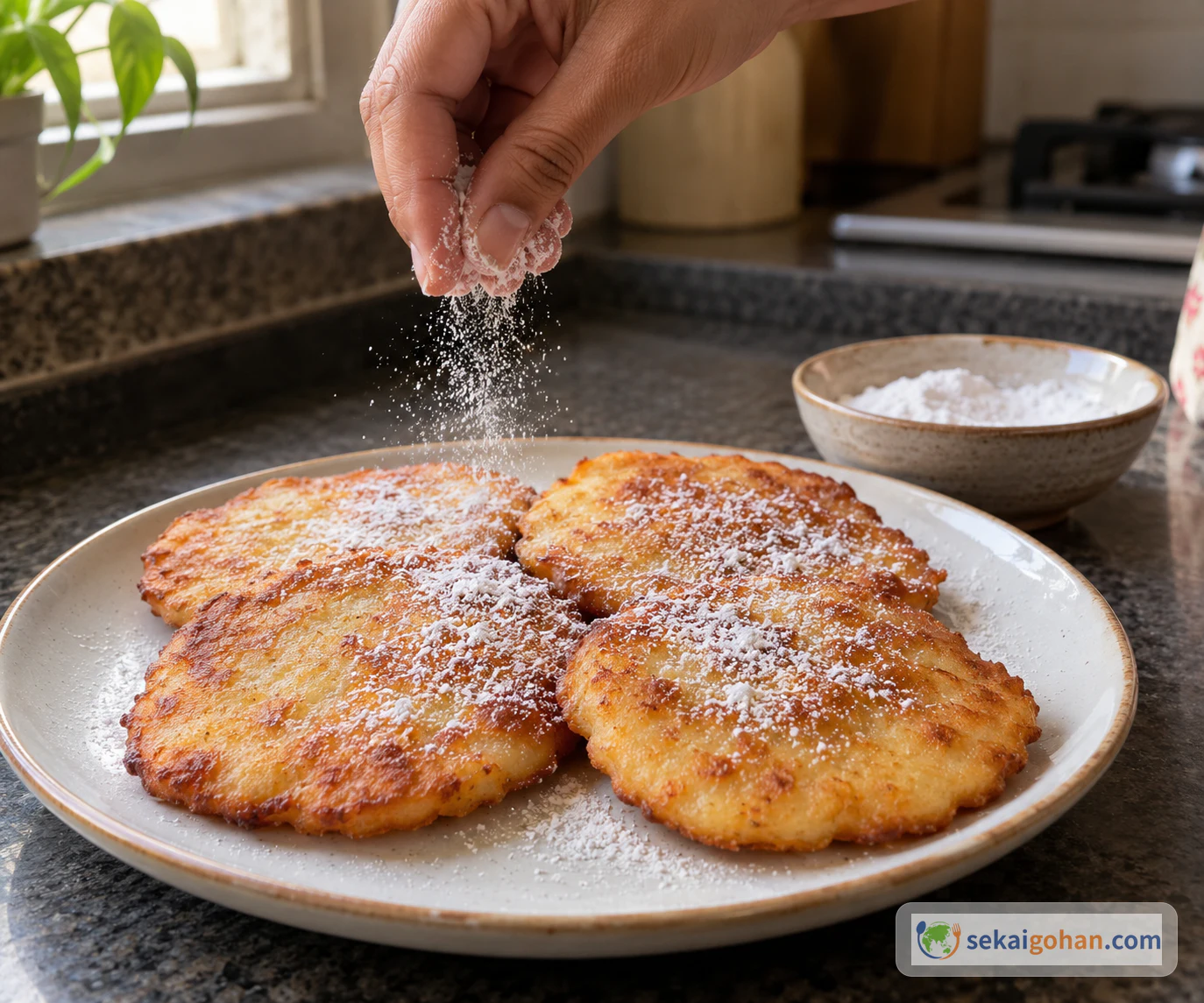
Fresh, drained chhena is worked by hand until the curds turn smooth. A little wheat flour, ground cardamom and ground clove go in, and the dough is kneaded again until soft. It is then pinched into small portions, pressed into flat, puri-like discs and fried in ghee until golden. The finished pithas get a light sprinkle of powdered sugar, so a thin white layer sits on a browned surface.
This page follows one specific recipe for Chhena Mandua, also written Chenna Tada: a dough of chhena and wheat flour, flattened and fried. It is not the steamed rice-flour Manda Pitha, and it is not a millet sweet. Because several Odia pithas share similar names, the sections below sort out the names first, then move on to the ingredients and method.
The amounts and steps follow one published home recipe exactly, in its original units. This version has not been kitchen-tested by Sekai Gohan, so piece count, size, frying temperature and frying time are not given anywhere on this page.
What Chhena Mandua Is: A Flat Fried Chhena Pitha from Odisha
Chhena Mandua is a pitha made from a dough of fresh chhena and wheat flour, scented with cardamom and clove, flattened, fried, and finished with powdered sugar. The recipe followed here comes from Mahaprasada, a personal food blog about temple offerings. It is titled "Chenna Tada / Chenna Mandua". A separate Odia recipe publication, Lost Recipes of Odisha, describes a Chhena Mandua with the same basic method and calls the prepared, unsweetened pitha Tada. So you may see Chhena Mandua, Chenna Mandua, Chenna Tada or simply Tada for this kind of sweet.
Both writers connect the dish with offerings to Jagannath in Puri, and a general list of the Jagannath chhapan bhoga, the offerings of the Puri temple, also includes Chhena Mandua. These accounts do not agree on which festival occasion it belongs to. Even a single page names more than one. This article therefore introduces it as a sweet associated with Jagannath offerings in Puri, without fixing it to a particular festival or date. The Mahaprasada recipe is a home recipe written by a blogger. It is not an official temple formula.
Similar names, different dishes
Name overlap is common among Odia pithas, and a shared word does not mean the same recipe. An article on Jagannath temple offerings notes that an Odia dictionary lists chhena-manda and chhena mandua as forms related to chhena bada. The same article separately describes a chhena manda made of rice-flour balls stuffed with chhena and steamed.
| Name | Main dough | How it is made | Same as this recipe? |
|---|---|---|---|
| Chhena Mandua / Chenna Tada (this page) | Fresh chhena and wheat flour, with cardamom and clove | Flattened into discs, fried in ghee or oil, dusted with powdered sugar | — |
| Sijha Manda | Rice-flour dough | Filled with grated coconut, jaggery and cottage cheese, then steamed | No |
| Finger Millet Manda Pitha | Ragi (finger millet) flour and rice flour | Filled with coconut and jaggery, sealed and steamed | No |
| Mandua / Suanli | Wheat flour with jaggery, fennel and black pepper, no chhena | Shaped and deep-fried | No |
| Gaja Mandua Pitha | Rice flour with jaggery, a little chenna and coconut | Shaped on a greased banana leaf and fried | No |
Ingredients and steps from these other dishes should not be swapped into Chhena Mandua. If a recipe you find uses rice flour, jaggery, coconut or millet, it is describing a different pitha. For more dishes from across the country, browse our India page.
Ingredients: One Batch in Cup Measures
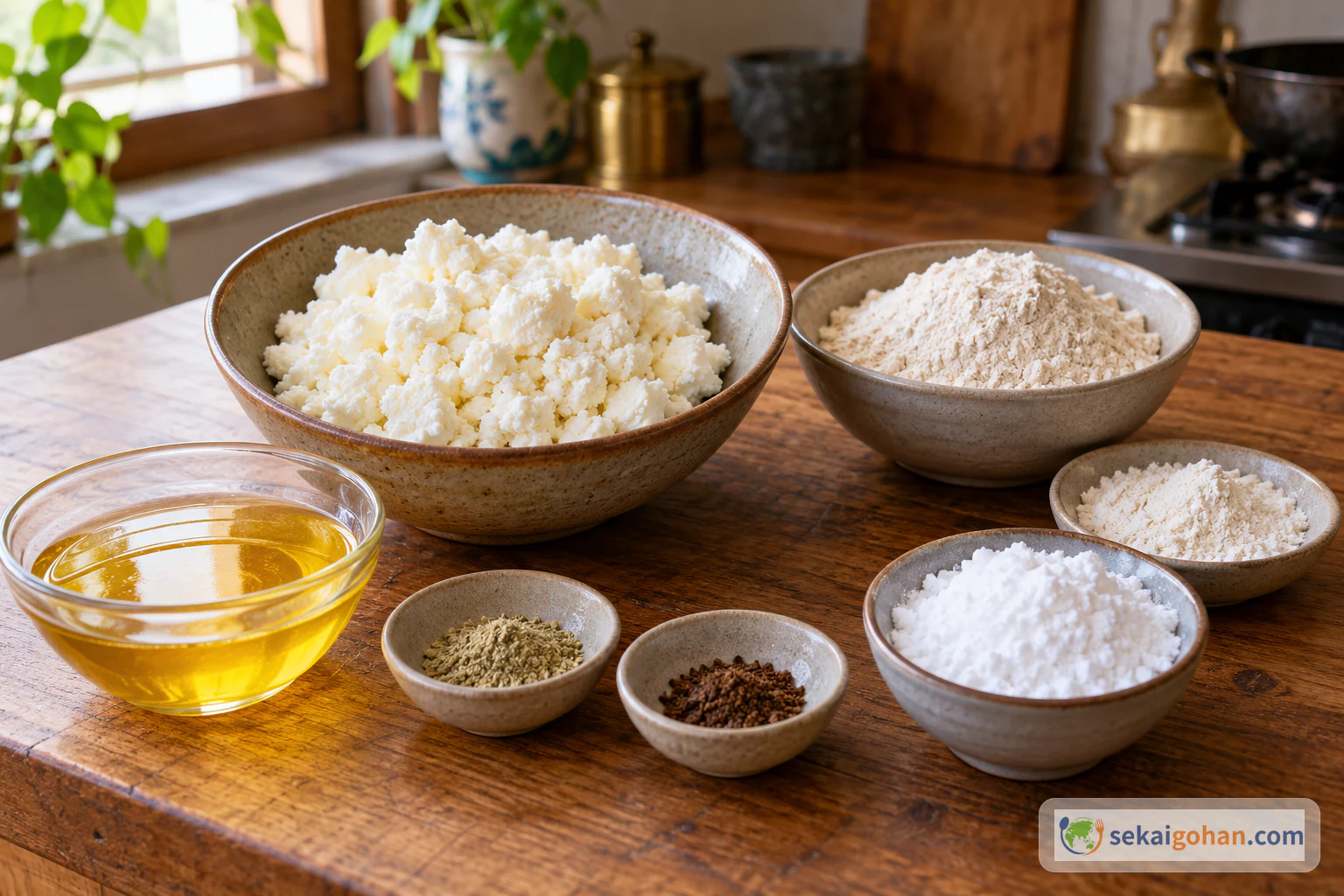
Use the same cup for the chhena and the flour.
Edible camphor is not used in this version; see the FAQ.
This sweet contains dairy (chhena and ghee) and wheat, so it contains gluten.
Equipment
- A bowl for kneading the chhena and dough
- A plate for dividing and flattening the dough
- A deep pan or kadai for frying in ghee
- A slotted spoon or similar tool for turning and lifting the pithas
- A rolling pin (optional; hands work too)
- A cloth for straining, only if you make chhena at home
Choosing the Chhena, Fat and Sugar
Chhena: Start from 1 cup of fresh chhena that has already been drained. To make it at home, heat milk, curdle it with lemon (both as needed), strain the curds through cloth and squeeze out the whey, then measure 1 cup of the finished, drained cheese.
Supermarket substitutes: Supermarket cottage cheese or firm paneer is not recommended here as an equal swap. Fresh, well-drained chhena is the first choice.
Ghee or oil: Either can be used for frying. This page uses ghee. Oil is a valid choice within the same recipe, but it will taste different.
Khand or sugar: Use powdered khand or sugar for the finish. Either way, it goes on after frying and is never kneaded into the dough.
Method: Smooth Chhena, Soft Dough, Gentle Frying
Knead the chhena smooth before the flour goes in. Then add only flour and the two ground spices. No water, egg or sugar goes into the dough.
Troubleshooting: Sticky Dough, Grainy Texture, Dark Color
| Problem | What the source shows | What to do |
|---|---|---|
| The dough sticks to your hands or the plate | The notes suggest dusting the plate with a little flour before shaping | Dust the plate lightly with the extra flour. Don't keep working more flour into the dough |
| The dough feels grainy | The chhena is kneaded alone for 8–10 minutes first to make it smooth | Make the chhena smooth before adding flour; the first knead is what removes the graininess |
| The dough turns tight | The goal is a soft dough; the source adds no water or fat | Avoid over-kneading and too much dusting flour. No extra liquid is called for |
| The pithas brown too fast | The notes say to keep the flame low to medium; no temperature or time is given | Lower the flame and watch the color as they fry |
Variations Within This Recipe
The source supports only two real choices:
- Frying fat: ghee (used on this page) or oil. Oil changes the flavor.
- Finishing sweetener: powdered khand or powdered sugar, sprinkled on after frying.
No other fillings, flours, sweeteners or spices are supported for this recipe, so none are suggested. Adding coconut, jaggery, rice flour or millet would turn it into one of the different pithas described above.
Storage
The source gives no guidance on storing, reheating or freezing Chhena Mandua, so no storage times or methods are given here.
Frequently Asked Questions
Is Chhena Mandua a millet (ragi) sweet?
No. This Chhena Mandua is a fried dough of chhena and wheat flour. Finger Millet Manda Pitha, a recipe from the Government of Odisha's millet program, is a different dish: a ragi and rice-flour dough filled with coconut and jaggery, then steamed.
Is it the same as Manda Pitha?
Not this recipe. Sijha Manda, as described by the Bhubaneswar city portal, is a steamed rice-flour dumpling with a filling. Chhena Mandua is a flat, fried, unfilled dough. The cooking methods are different.
Should I add edible camphor?
The source lists it (1/2 tsp) among the ingredients but never adds it in any step or photo caption, and another Odia recipe also lists camphor without using it in its method. This recipe leaves it out, and adding it is not recommended here.
How many pieces does this make, and how many people does it serve?
The source gives no piece count, size or number of servings, and this version has not been kitchen-tested, so none is stated here.
Can I use store-bought cottage cheese or paneer?
The source also calls chhena "cottage cheese", but there is no basis in it for treating supermarket cottage cheese or firm paneer as an equal substitute. Fresh, drained chhena is the ingredient the recipe is built on.
Sources
- rashmisudheendra, "Chenna Tada / Chenna Mandua," Mahaprasada. The adopted recipe: ingredient list, photo-caption method (8–10 minute and 3–4 minute kneading, dividing, flattening, frying, sugar dusting), notes on dusting the plate with flour and keeping the flame low to medium, the listed-but-unused camphor, and the association with Jagannath offerings in Puri. https://mahaprasada.home.blog/2020/03/09/chenna-mandua-pitha/
- Sweta, "Divine Desserts: Mandua Pitha," Lost Recipes of Odisha (Medium). The Chhena Mandua name, the name Tada for the unsweetened pitha, the same fried method, and its association with Jagannath. Its separate amounts are not used here. https://medium.com/lost-recipes-of-odisha/mandua-pitha-yes-please-a63ff0cd2364
- Shree Anna Abhiyan, Directorate of Agriculture and Food Production, Government of Odisha, "Finger Millet Manda Pitha." Used only to show that the steamed finger millet pitha is a different dish. https://milletsodisha.com/recipe/info/finger-millet-manda-pitha
- Visit Bhubaneswar, "Dalma, Ghuguni, Odia Pithas, Pakhala, Machha Munda Chhenchda." Used for Sijha Manda as a steamed, filled rice-flour pitha. https://visit.bhubaneswar.me/taste/eat-exclusive/odia-cuisine
- Prasanna Kumar Mahapatro, "Sree Jagannath Chhapan Bhoga," Odisha Astrology. A general list that includes Chhena Mandua among the Jagannath chhapan bhoga. https://odishaastrology.com/sree-jagannath-chhapan-bhoga/
- OdishaPlus, "Rasagola: The Ritual Offering at Jagannath Temple." The dictionary forms chhena-manda and chhena mandua related to chhena bada, and a separate steamed chhena manda, as a caution about overlapping names. https://odisha.plus/2019/07/rasagola-the-ritual-offering-at-jagannath-temple/
- Jolly Bisoyi, "Mandua/Suanli (Odia Cuisine)," Cookpad. A separate fried pitha of wheat flour, jaggery, fennel and black pepper, without chhena. https://cookpad.com/eng/recipes/3467524
- rashmisudheendra, "Gaja Mandua Pitha – Bhog of Dabaleshwar Temple of Lord Shiva, Cuttack," Mahaprasada. A separately named pitha of rice flour, jaggery, a little chenna and coconut, used to keep it apart from Chhena Mandua. https://mahaprasada.home.blog/2021/03/26/gaja-mandua-pitha/