Jowar Bhakri: Flatbread Shaped by Hand, Finished Over Flame
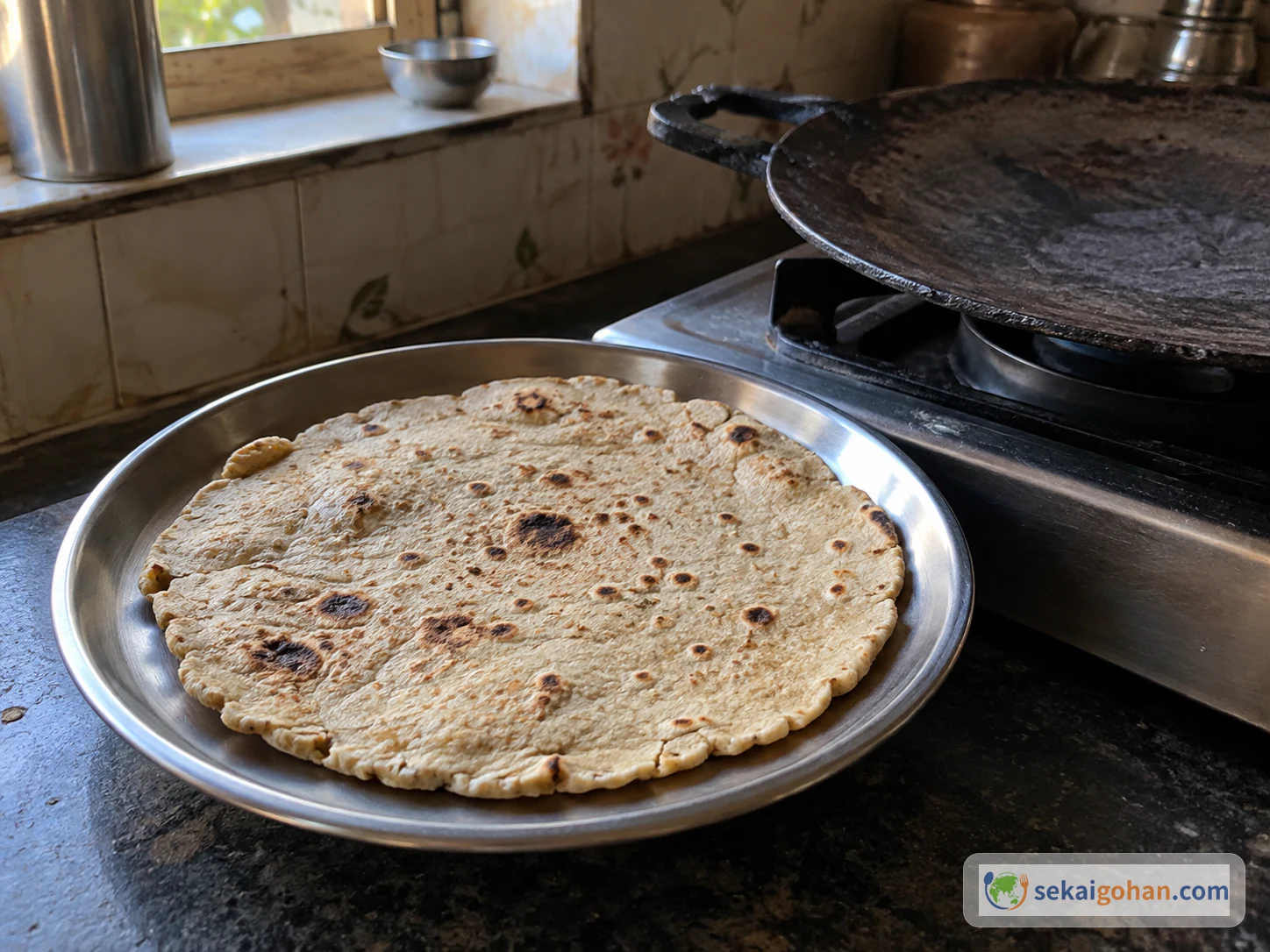
Jowar flour, hot water and a little salt, pressed into a round with your palms. No oil goes into the dough or the pan. The tawa does the first cooking, a film of water goes over the top, and an open flame finishes both sides.
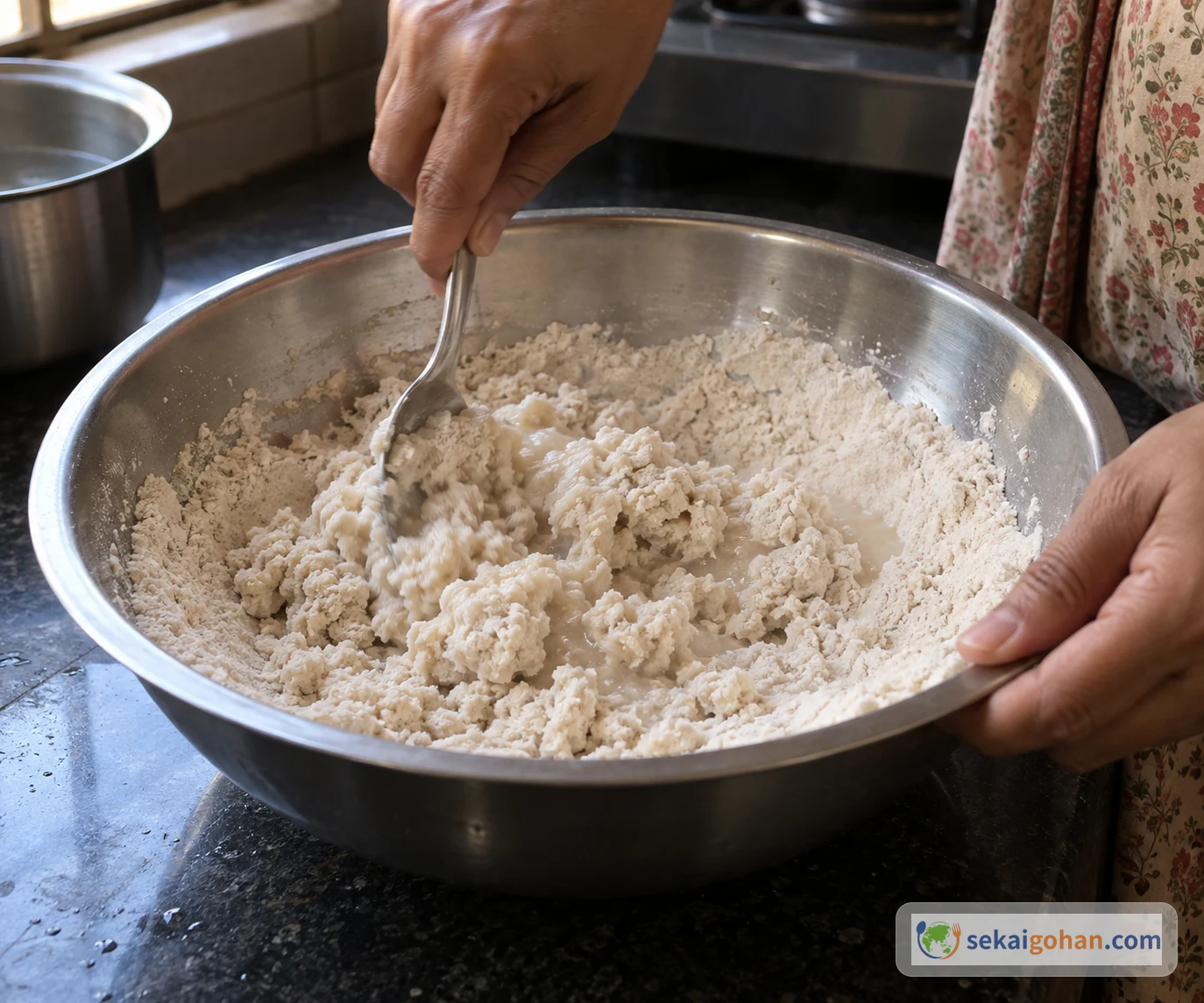
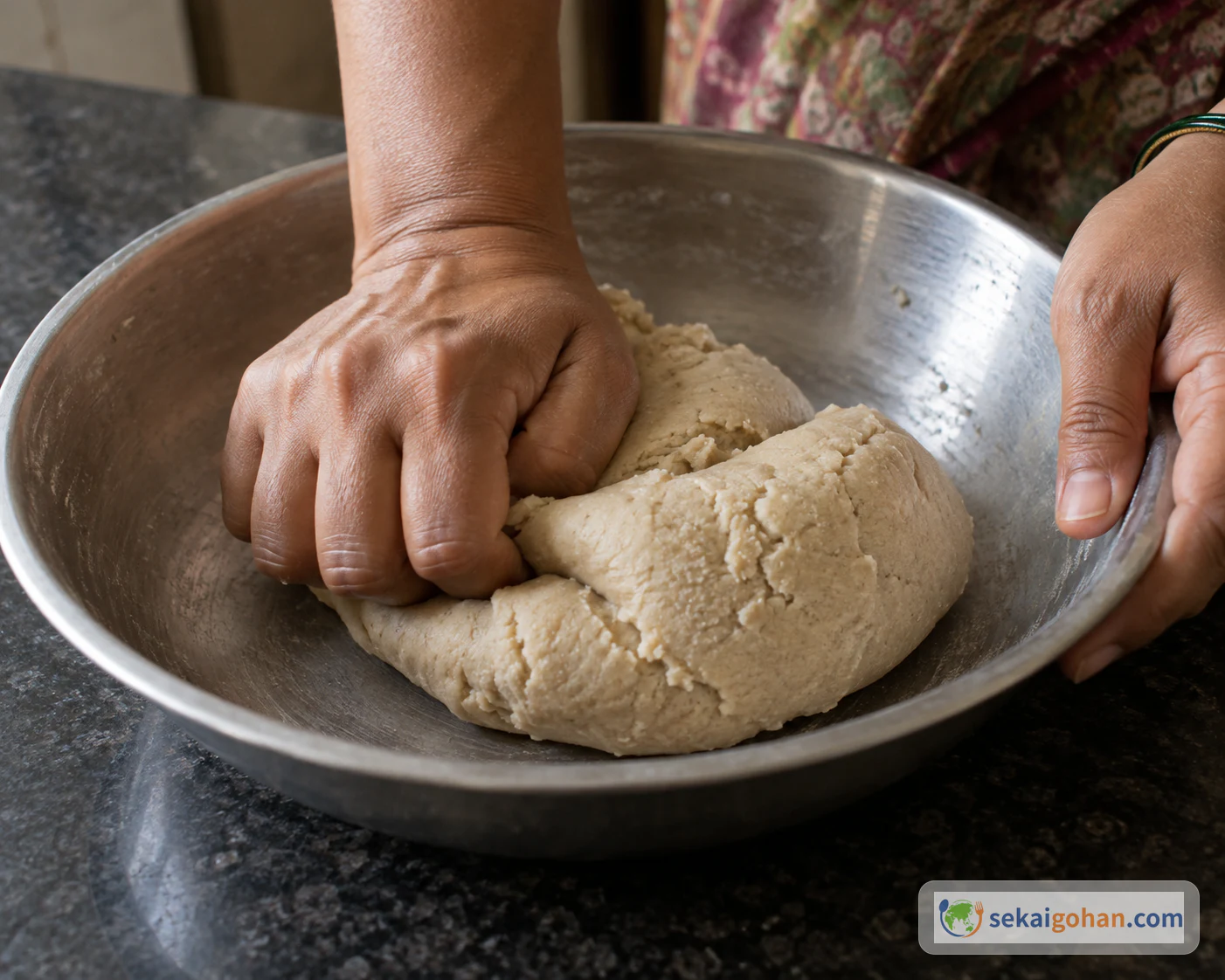
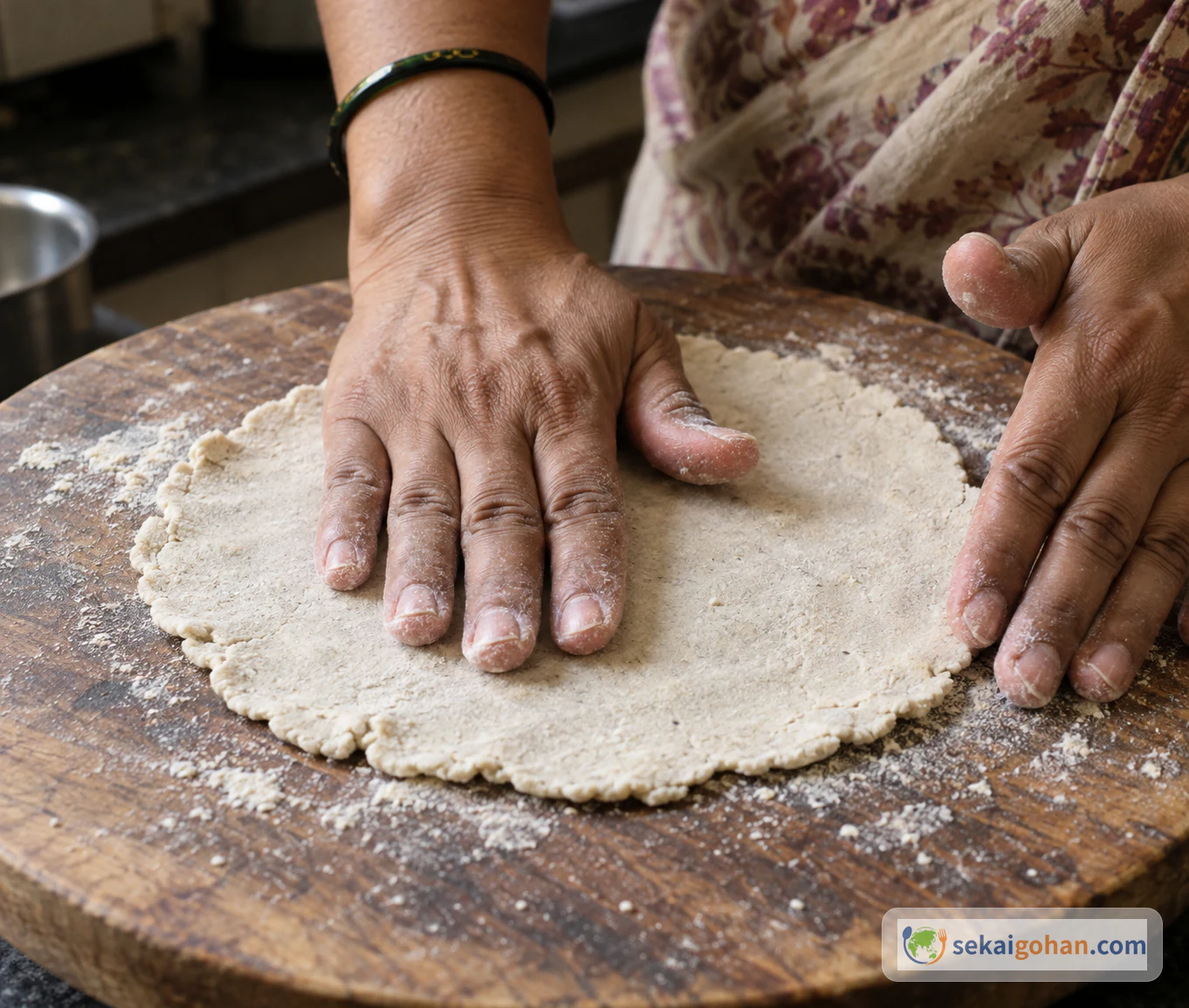
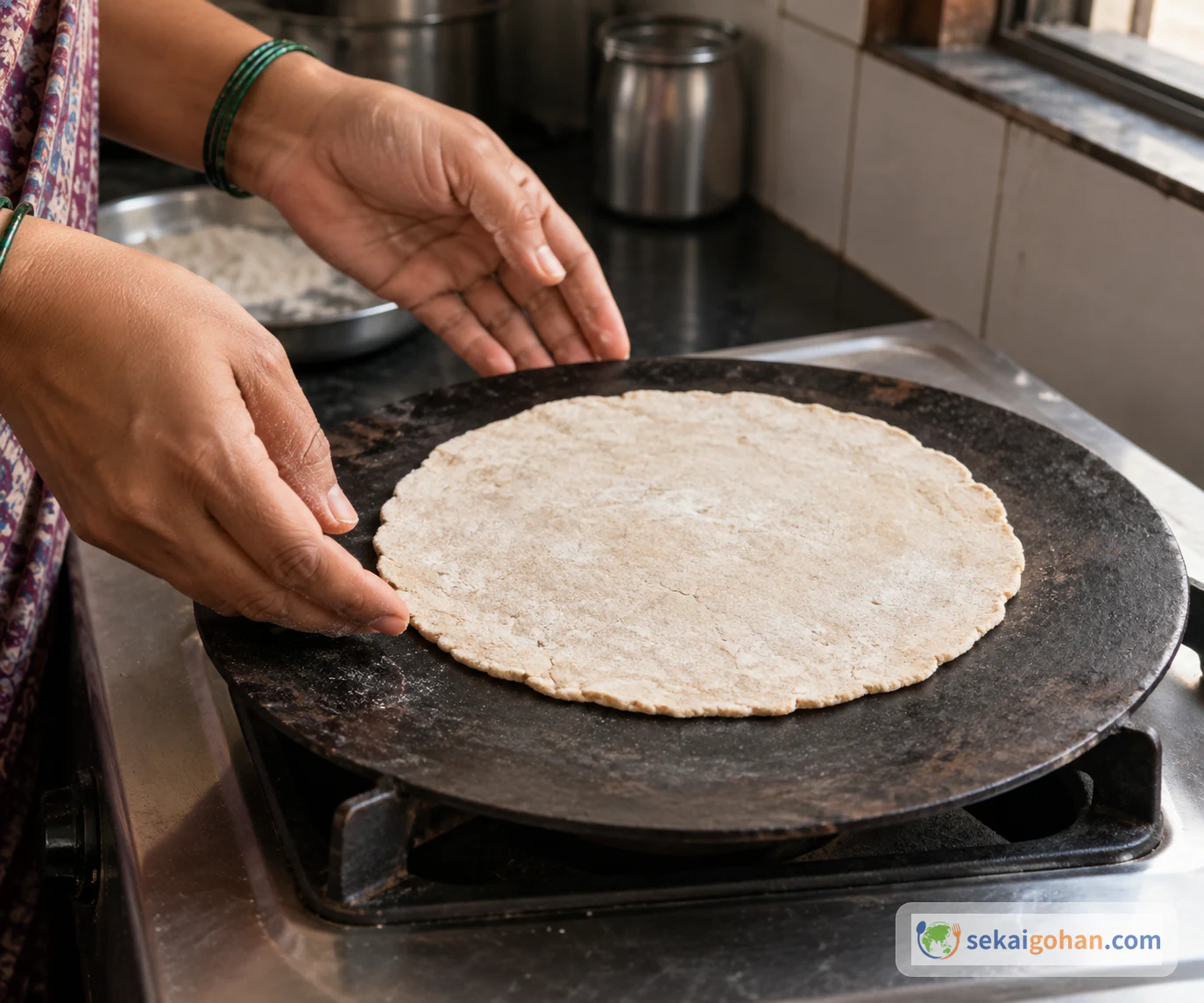
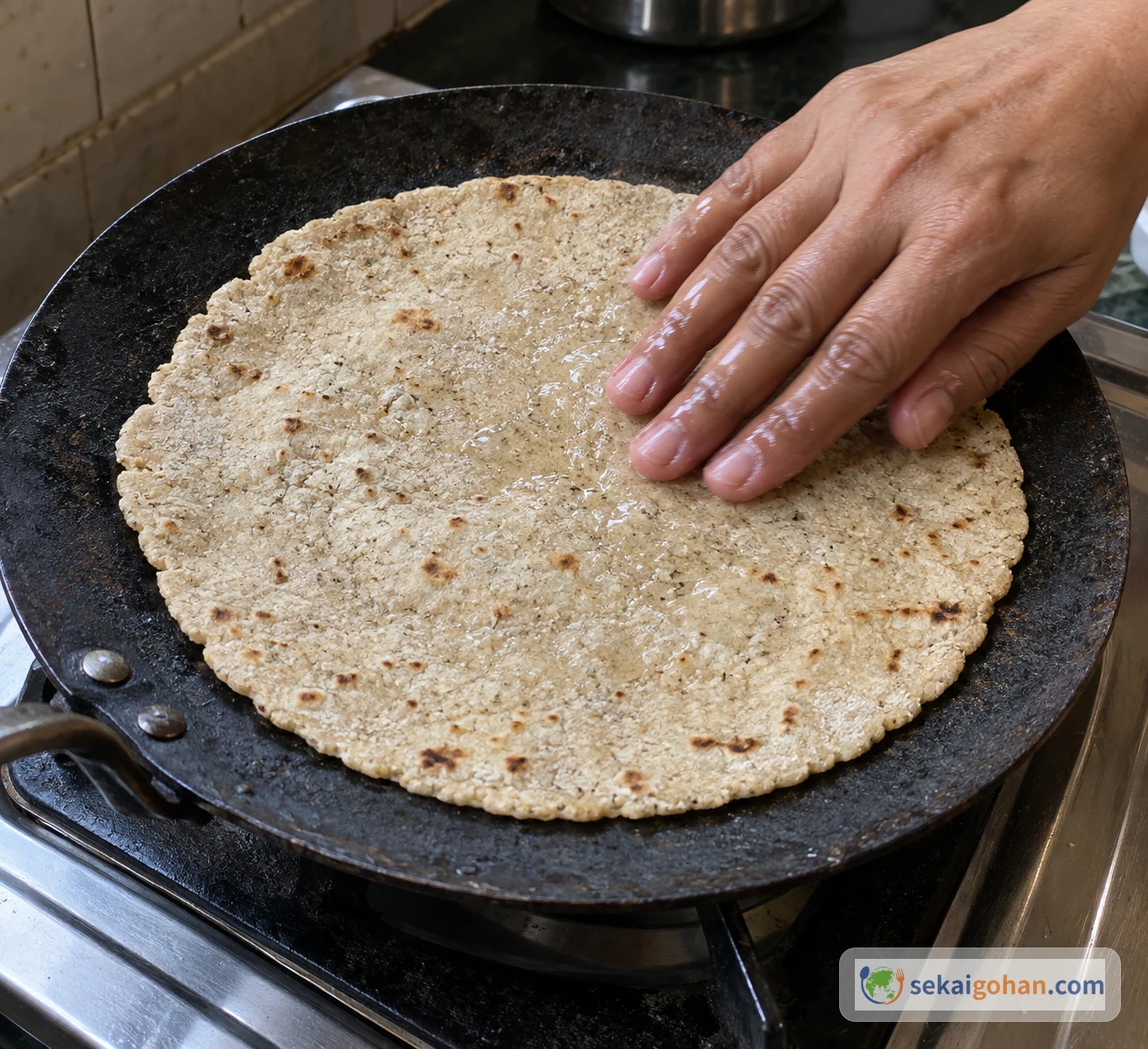
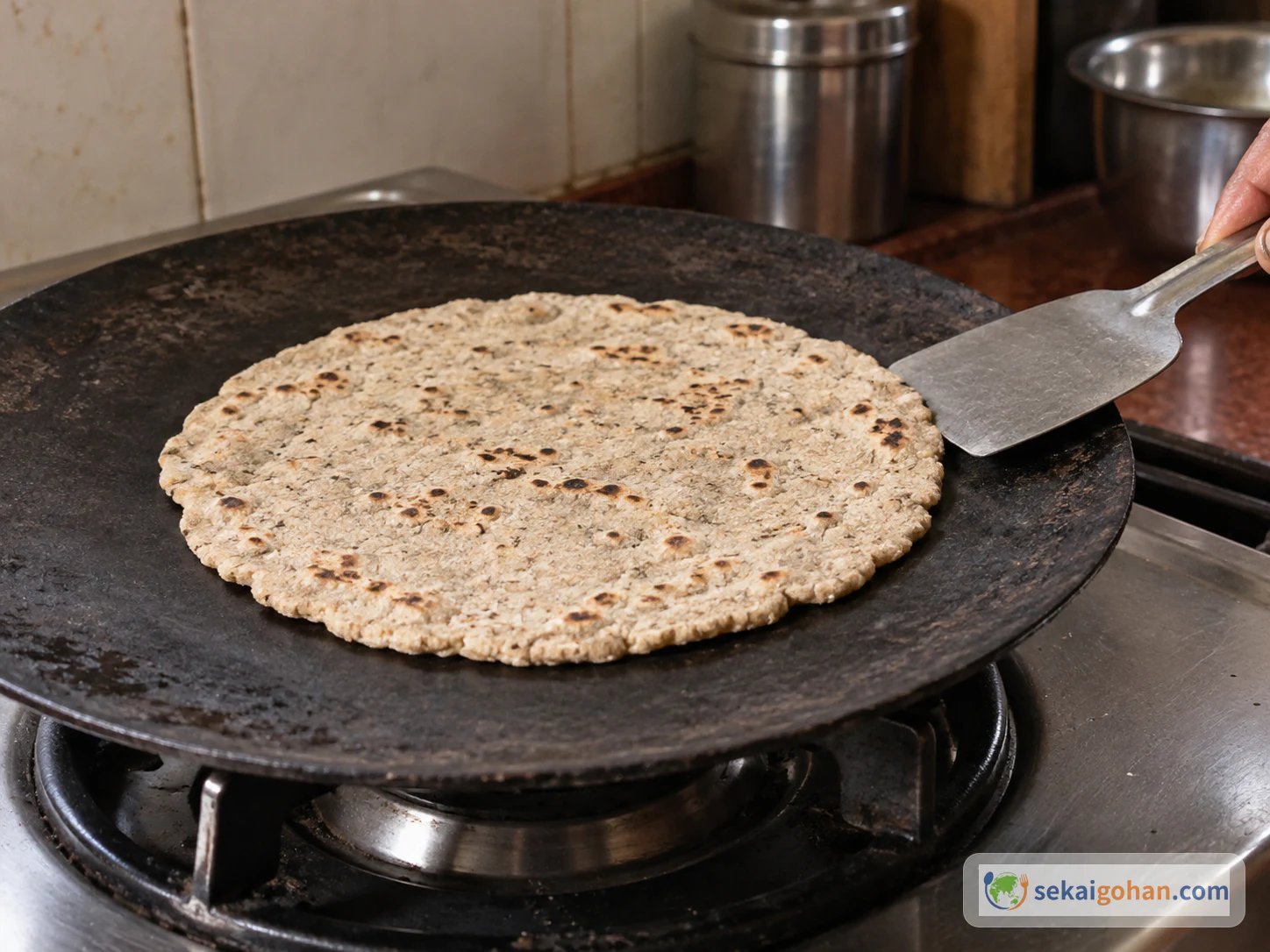
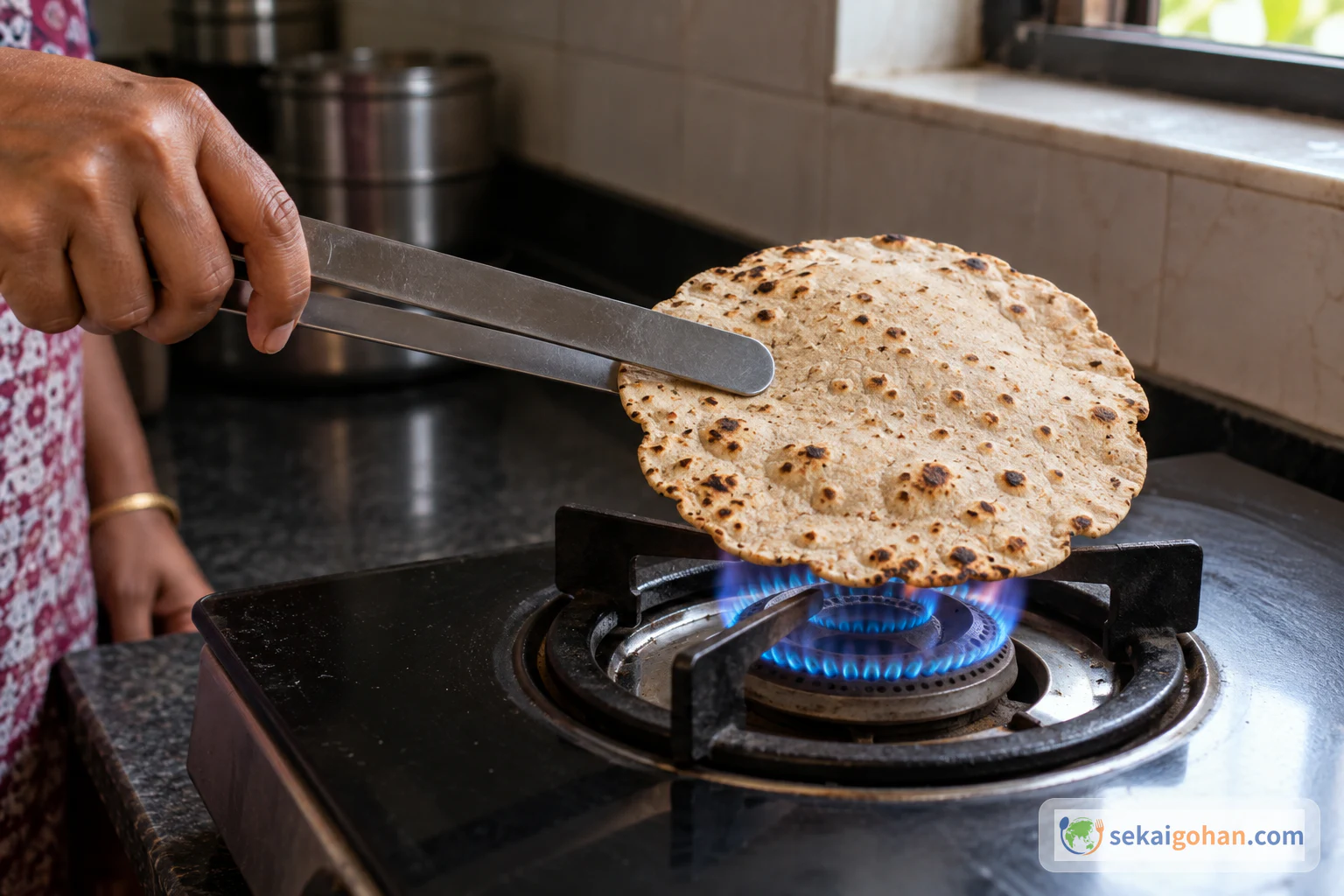
Hot water goes into a bowl of pale sorghum flour and is stirred with a spoon. Once the dough has cooled enough to handle, it is kneaded, pressed out into a round between the palms, and laid on a tawa that is hot but not fierce. Water is spread over the top; when it begins to steam away, the bread is turned, cooked on the second side, then lifted off the pan and held over the flame.
This is jowar bhakri, written in Marathi as ज्वारीची भाकरी (jwarichi bhakri). The word bhakri covers flatbreads made from several grains in several regions. This article does not try to cover all of them; it focuses on one Maharashtrian version made with jowar (sorghum) flour.
The recipe here follows the jwarichi bhakri published by Madhura Bachal on Madhura's Recipe: 1 cup jowar flour, 2 tbsp rice flour (optional), salt to taste and approximately 1/4 cup hot water, labeled as serving 2. That recipe does not state how many bhakri the dough makes, and its header time of 5 minutes prep and 5 minutes cooking does not match a method that includes at least 5 minutes of kneading, about 2 minutes on the second side and a flame finish, so this article gives no total time or bhakri count. This recipe has not been kitchen-tested by Sekai Gohan.
For other dishes from the same country, see the India page.
What This Bhakri Is: One Grain, One Region, One Method
This article is about jowar bhakri as made in Maharashtra, not every bread called bhakri. Other published recipes take noticeably different routes. Indian Cooking Manual's "Jowar/Jowarichi (Any Millet) Bhakri" by Nag Ratna Sahu cooks the flour in water, covers it to rest, then shapes and cooks it on a tawa; its ingredient list gives 2 cups jowar flour, 1/2 teaspoon salt and 3 cups water, a water amount that is hard to reconcile with its own instruction to add more only if needed. Bharatha Yoga Shala in Mysuru describes a version set in a north Karnataka context, using 250g jowar flour with boiling and lukewarm water, keeping some dry flour aside, pressing the bread on the tawa with a damp cloth and turning it once it has color. These are separate methods with their own proportions, and none of them is blended into the recipe below.
The most detailed picture of bhakri in daily life among the sources comes from Shahu Patole's book Dalit Kitchens of Marathwada, in an excerpt translated by Bhushan Korgaonkar and published by Scroll.in. Patole writes that bhakri was at the center of daily meals for Dalit households in Marathwada, made from jowar or bajra, including a yellow jowar grown as a monsoon crop. He describes kneading and shaping the dough in a large, deep plate called a tagari or katvat, and shaping the bread by hand. He also records that access to cooking tools and to dairy was unequal, shaped by caste. That account belongs to a specific region and community, written by an author from it; it is not a portrait of all of Maharashtra, and the hardship it describes is part of the story, not a backdrop for nostalgia.
The origin and age of the dish are not covered by these sources, so this article doesn't make claims about them.
Ingredients: Serves 2
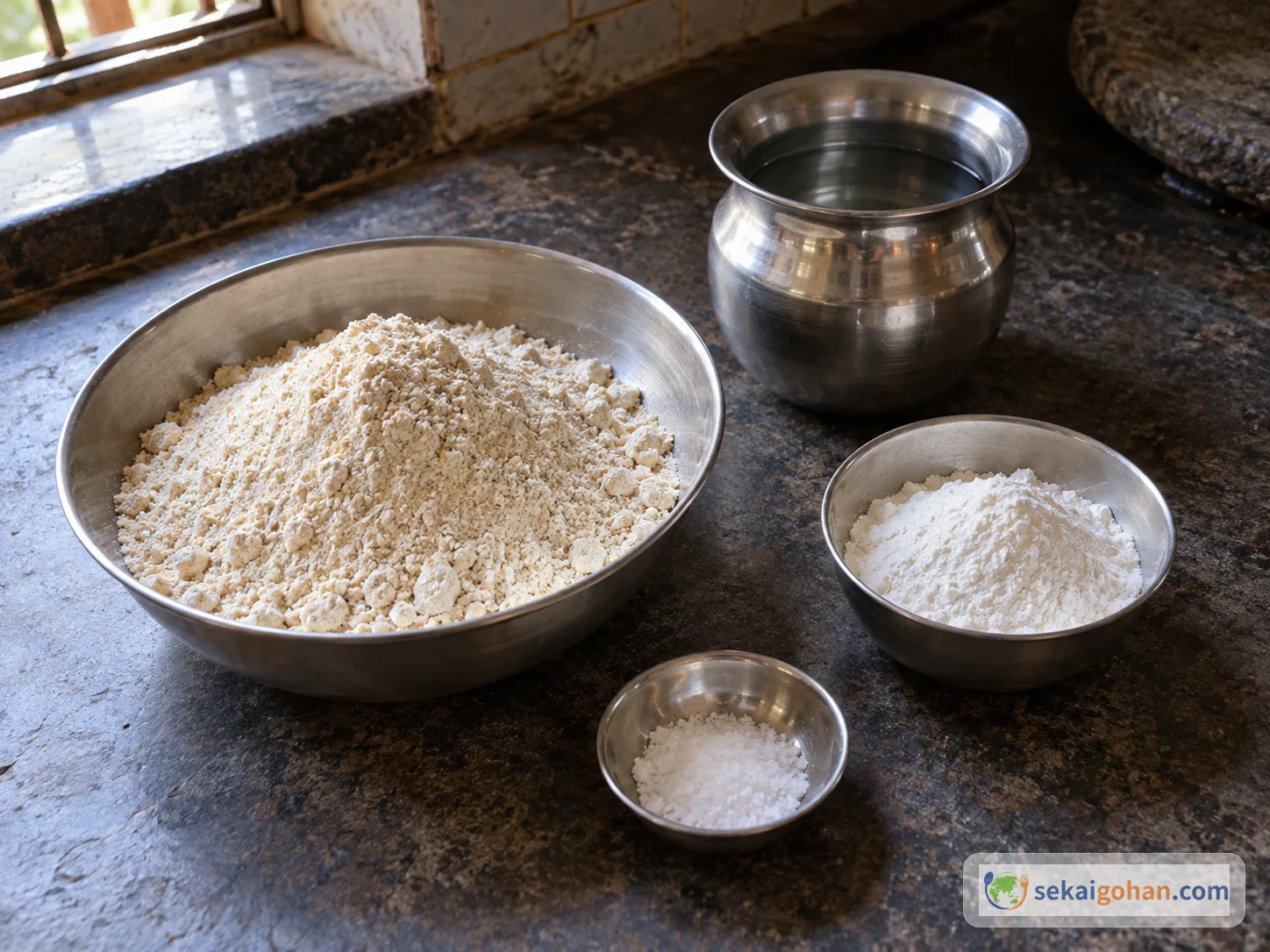
Keep the water for the dough separate from the water you brush on the bread.
Choosing Flour and Substitutes
Look for jowar flour, also sold as sorghum flour, at Indian or international grocers and online. The two names refer to the same grain, so it is worth searching for both.
- Rice flour is optional. Leaving it out still gives you jowar bhakri; this article does not claim a specific effect from adding or skipping it.
- Wheat flour is not a substitute. Bread made with wheat is a different bread with a different texture, not jowar bhakri.
- Other millets such as bajra are used for other forms of bhakri with different recipes. The amounts here are for jowar flour only.
- Dusting flour: use a little extra jowar flour so the dough stays the same grain throughout.
Jowar flour, rice flour, salt and water contain no wheat, dairy or egg as ingredients. Ghee is a dairy product; leave it out for anyone with a milk allergy. Flours may be processed on shared lines, so check the packaging for allergen and shared-facility statements. Freedom from cross-contact cannot be guaranteed.
Equipment
- A deep plate or wide, shallow bowl for mixing and kneading
- A spoon for stirring in the hot water
- A clean work surface or board for patting out the dough
- A tawa (flat griddle); a flat heavy skillet can stand in, though the result may not be identical
- A flat metal turner
- Metal tongs for the open-flame finish
- A gas burner with an open flame for the last step
Method
The tawa cooks the bread through first; the open flame finishes both sides. Keep the tawa "just hot enough," not extremely hot, and use tongs for every moment over the flame.
When Things Go Wrong
The recipe this article follows offers only one direct warning: keep the tawa from getting extremely hot. The rest of this table is practical guidance that has not been kitchen-tested; treat it as a starting point rather than a guarantee.
| Problem | Likely cause | What to try |
|---|---|---|
| The bread scorches as soon as it hits the pan | The tawa is too hot | Lower the heat and let the pan settle before the next bhakri. Don't cook on maximum heat throughout |
| The dough cracks as you pat it out | Flours differ in how they absorb water | Add a little more hot water, a small amount at a time, and note how much you used. This is an untested suggestion |
| The dough sticks to the surface | Not enough dusting flour | Sprinkle on a little more dry flour before pressing |
| Hands feel too hot while mixing | Kneading began too soon | Keep stirring with the spoon and wait until the dough is comfortable to touch |
| Fingers come close to the flame | Handling the bread directly | Always use tongs for the flame finish, and keep the tawa off the burner during this step |
Indian Cooking Manual's author also notes that over-kneading makes that recipe's dough soft. Because that dough is made by a different method, it isn't a rule for this one, but it is worth keeping in mind if your dough feels slack.
Serving: Eat It Warm
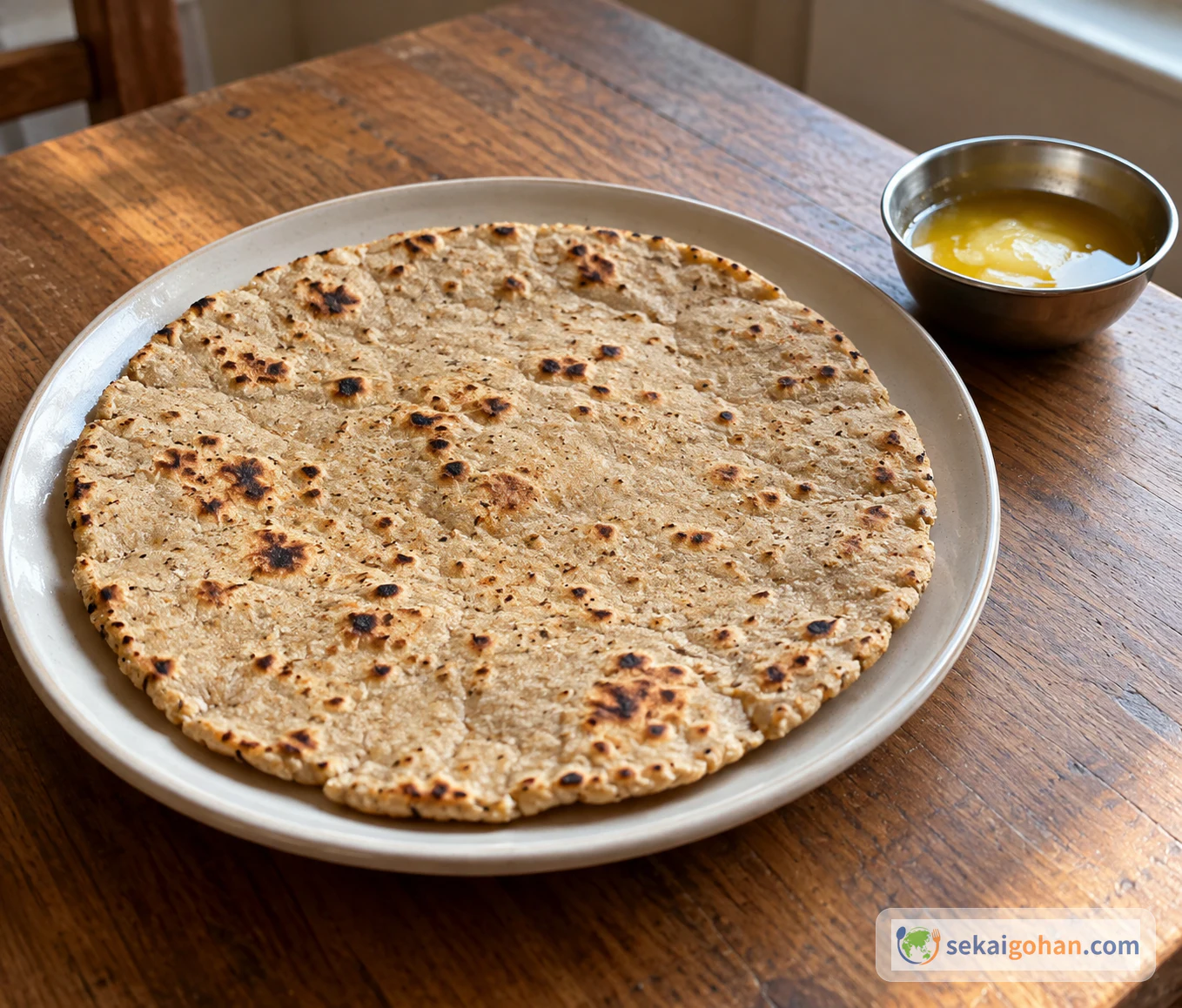
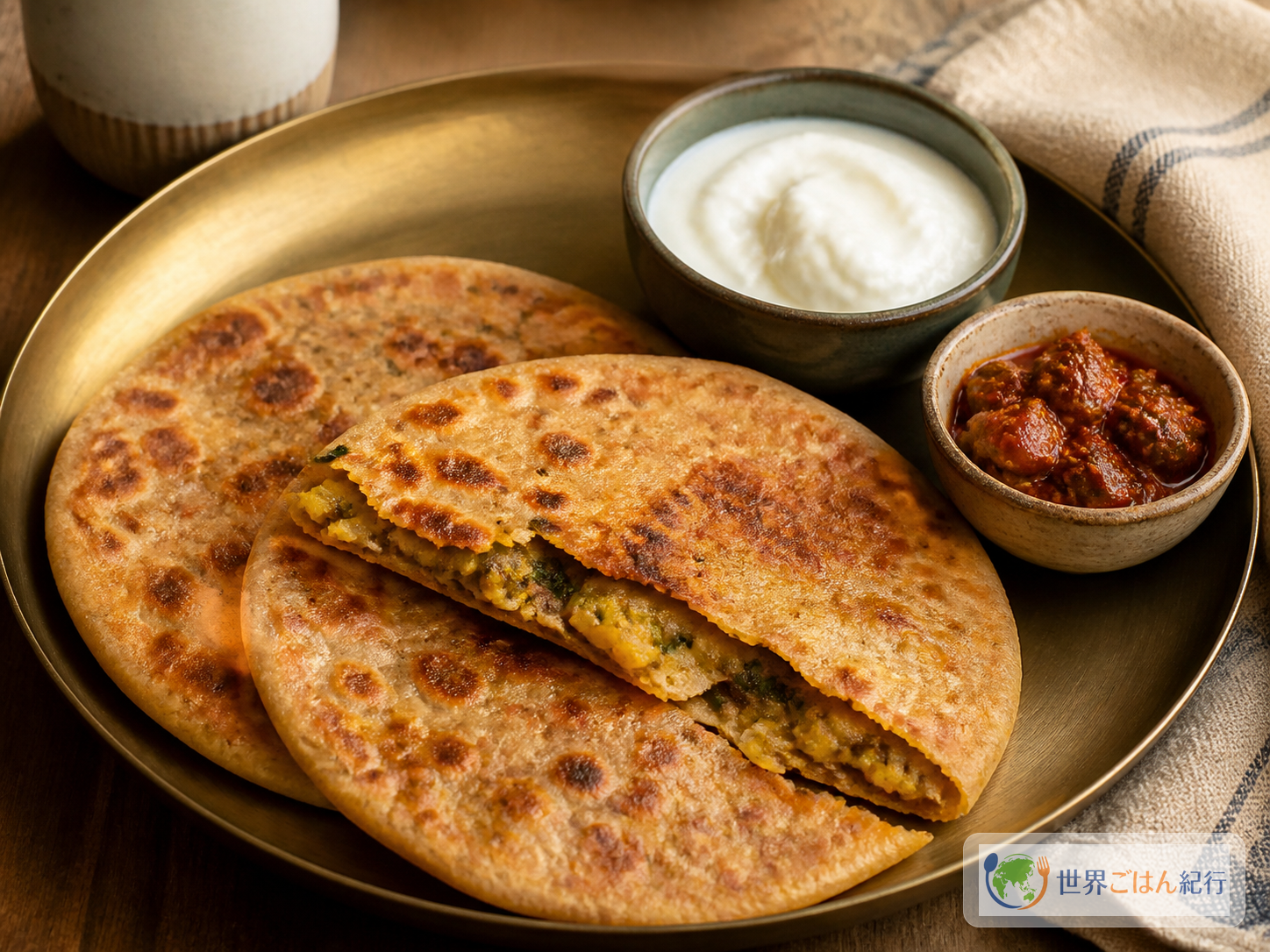
Serve jowar bhakri warm, straight from the flame. Ghee is an optional accompaniment in a small dish on the side; it isn't spread into the dough. The sources used here give no storage or reheating guidance, so this recipe is written to be eaten freshly cooked.
Madhura's Recipe names pithala, zunaka and thecha as partners for jwarichi bhakri. Indian Cooking Manual suggests yogurt, Lasuni Methi and Baingan Bharta, and Bharatha Yoga Shala mentions vegetable curry, salad and chutney, with the north Karnataka pairing of jowar bread and brinjal curry. On this site, you can set bhakri beside dal tadka, raita or bhindi fry; these are pairing ideas for a home table, not a claim about a fixed regional combination.
Frequently Asked Questions
Where can I buy jowar flour?
Search for both "jowar flour" and "sorghum flour" at Indian or international grocers and online shops. Availability varies by store, so check before you plan the meal.
Can I make it without rice flour?
Yes. Rice flour is listed as optional in Madhura's Recipe. Without it, the bread is made with jowar flour alone. This article does not claim a specific difference in texture.
Can I use wheat flour instead?
Not as a substitute. Wheat makes a different flatbread with a different texture. If you can't find jowar flour, it is better to make a wheat bread from its own recipe than to call it jowar bhakri.
Can I roll the dough with a rolling pin?
This recipe shapes the dough by hand, and Patole's account from Marathwada also describes hand shaping. Rolling is not part of this method, and this article can't say how it would change the result.
Is ghee required?
No. It is optional and served on the side. Leave it out for a dairy-free meal.
How many bhakri does this make, and how long does it take?
Madhura's Recipe labels the recipe as serving 2 but doesn't give a count, and its header times don't match the method. This recipe has not been kitchen-tested by Sekai Gohan, so no count or total time is given here.
Do I need a gas flame?
The method finishes the bhakri over an open flame, using tongs after the tawa is removed. The sources don't describe an alternative for stoves without a flame, so none is offered here.
Sources
- Madhura Bachal, "Jwarichi Bhakri," Madhura's Recipe. The main recipe: ingredients and amounts (jowar flour, optional rice flour, salt, hot water), the 2-serving label, the order of steps from mixing and kneading to the tawa, water on the surface, about 2 minutes on the second side and the open-flame finish, ghee served alongside, and the suggested partners pithala, zunaka and thecha. https://madhurasrecipe.com/breads/jwarichi-bhakri
- Nag Ratna Sahu, "Jowar/Jowarichi (Any Millet) Bhakri," Indian Cooking Manual. Used only for comparison: a different method and proportions, the author's note on over-kneading, and serving ideas (yogurt, Lasuni Methi, Baingan Bharta). https://www.indiancookingmanual.com/jowar-jowarichi-any-millet-bhakri/
- Shahu Patole, excerpt from Dalit Kitchens of Marathwada, translated by Bhushan Korgaonkar, "How caste-based discrimination and social conditions shaped the food habits of Marathwada Dalits," Scroll.in. Bhakri at the center of daily meals in Marathwada Dalit households, jowar and bajra, yellow jowar as a monsoon crop, the tagari/katvat plate, hand shaping, and caste-based differences in access to tools and dairy, as recorded by the author. https://scroll.in/article/1068625/how-caste-based-discrimination-and-social-conditions-shaped-the-food-habits-of-marathwada-dalits
- Bharatha Yoga Shala, Mysuru, "Healthy Jowar (Sorghum) Bhakri Recipe." Used only for comparison: a different water method with dry flour set aside, pressing with a damp cloth on the tawa, and serving with vegetable curry, salad and chutney in a north Karnataka context. https://bharatha.org/healthy-jowar-sorghum-bhakri-recipe/