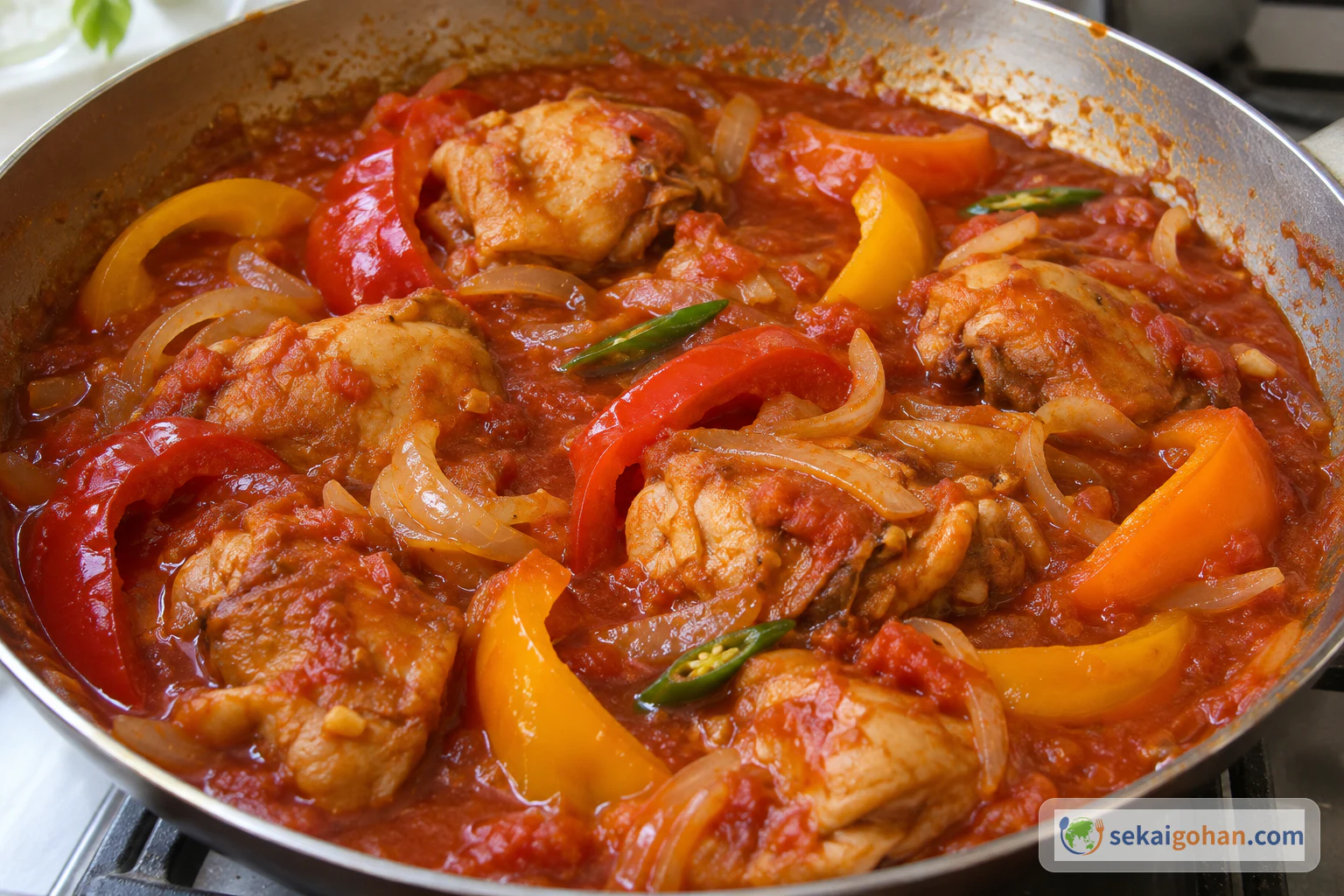
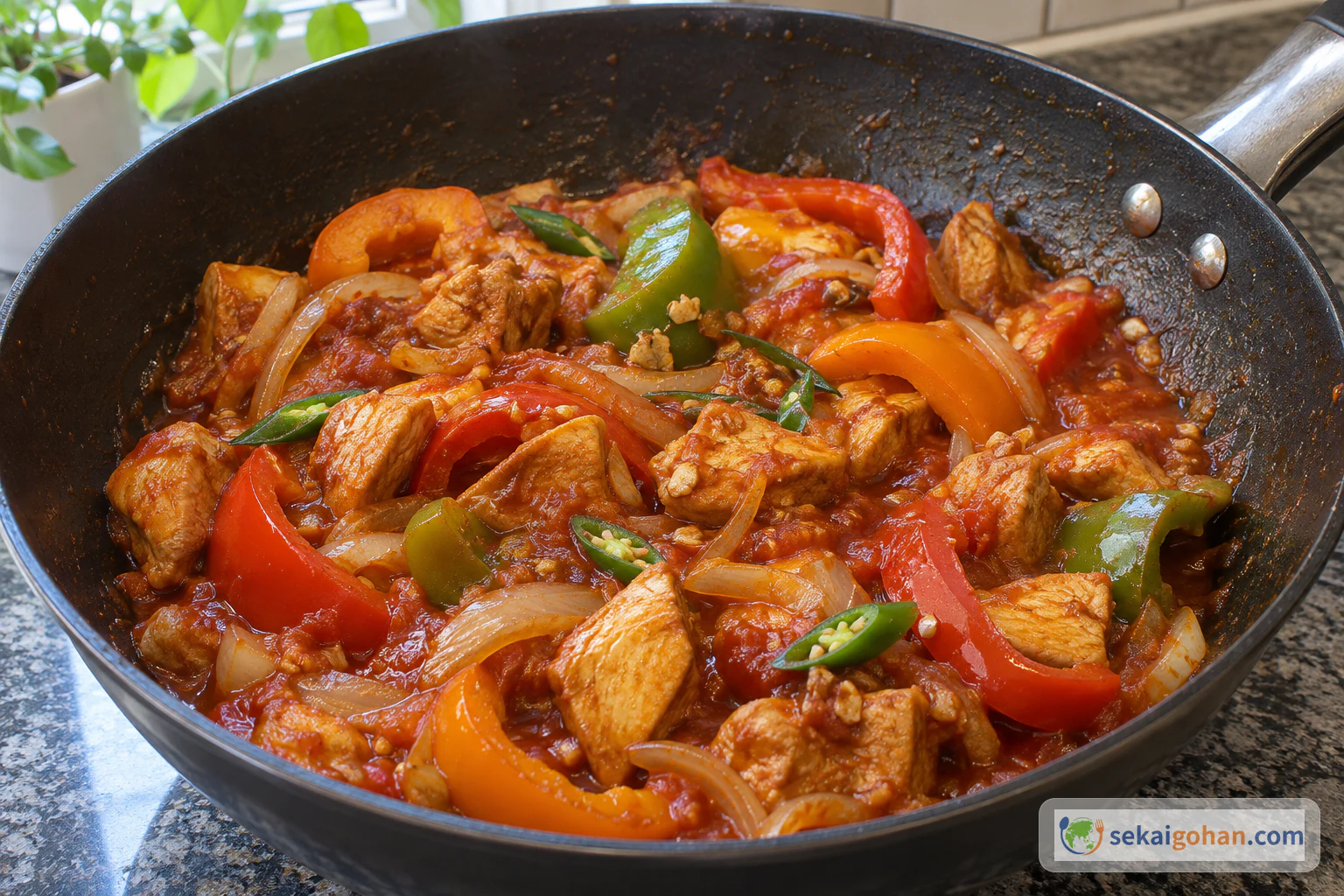
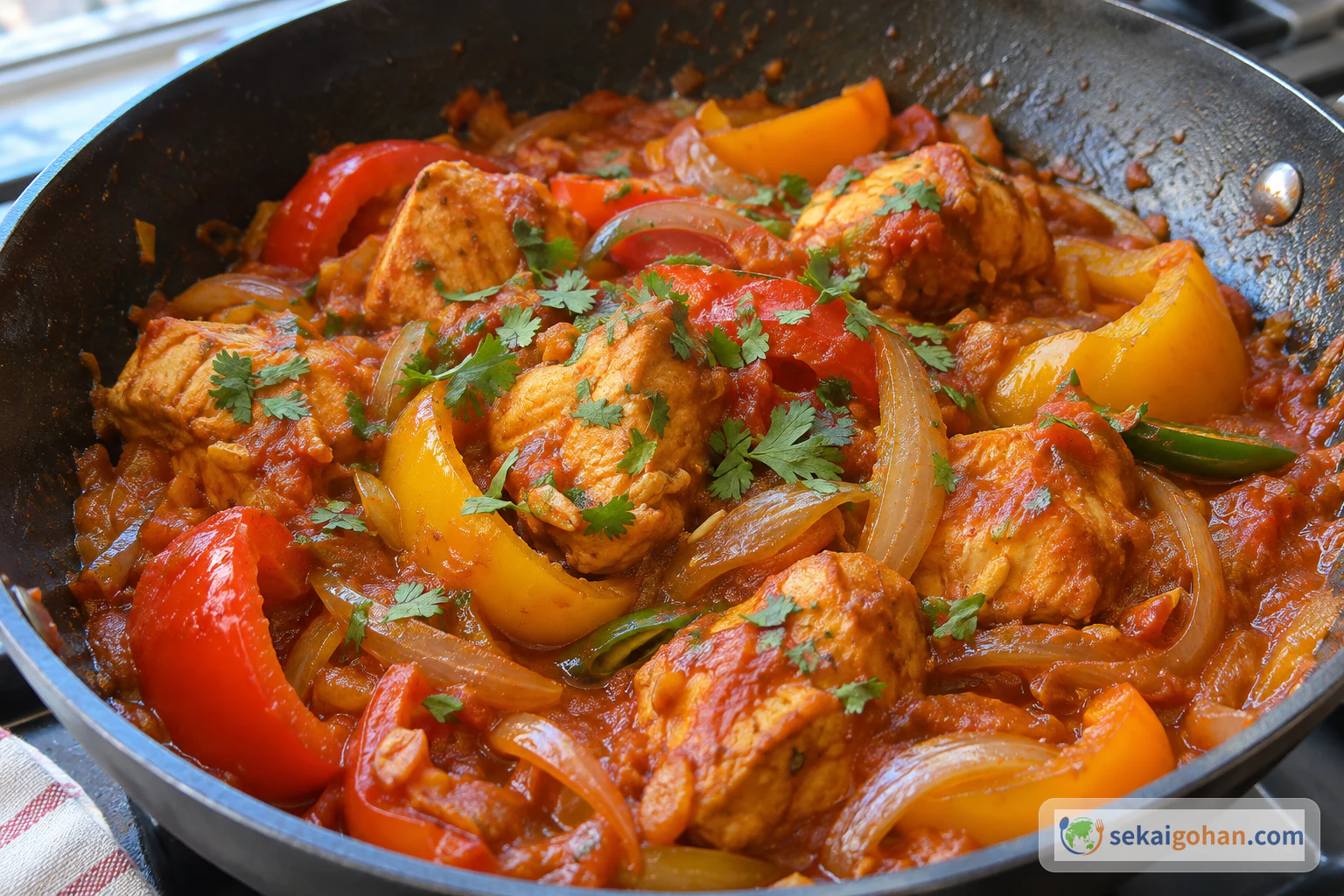
Jalfrezi: Chicken, Peppers and Tomato Brought Together in One Pan
Fry the chicken briefly with the first spices, then take it out. Build the sauce from onion, peppers, ginger, garlic and tomato, then return the chicken and simmer it covered until it is tender and cooked through to the center.
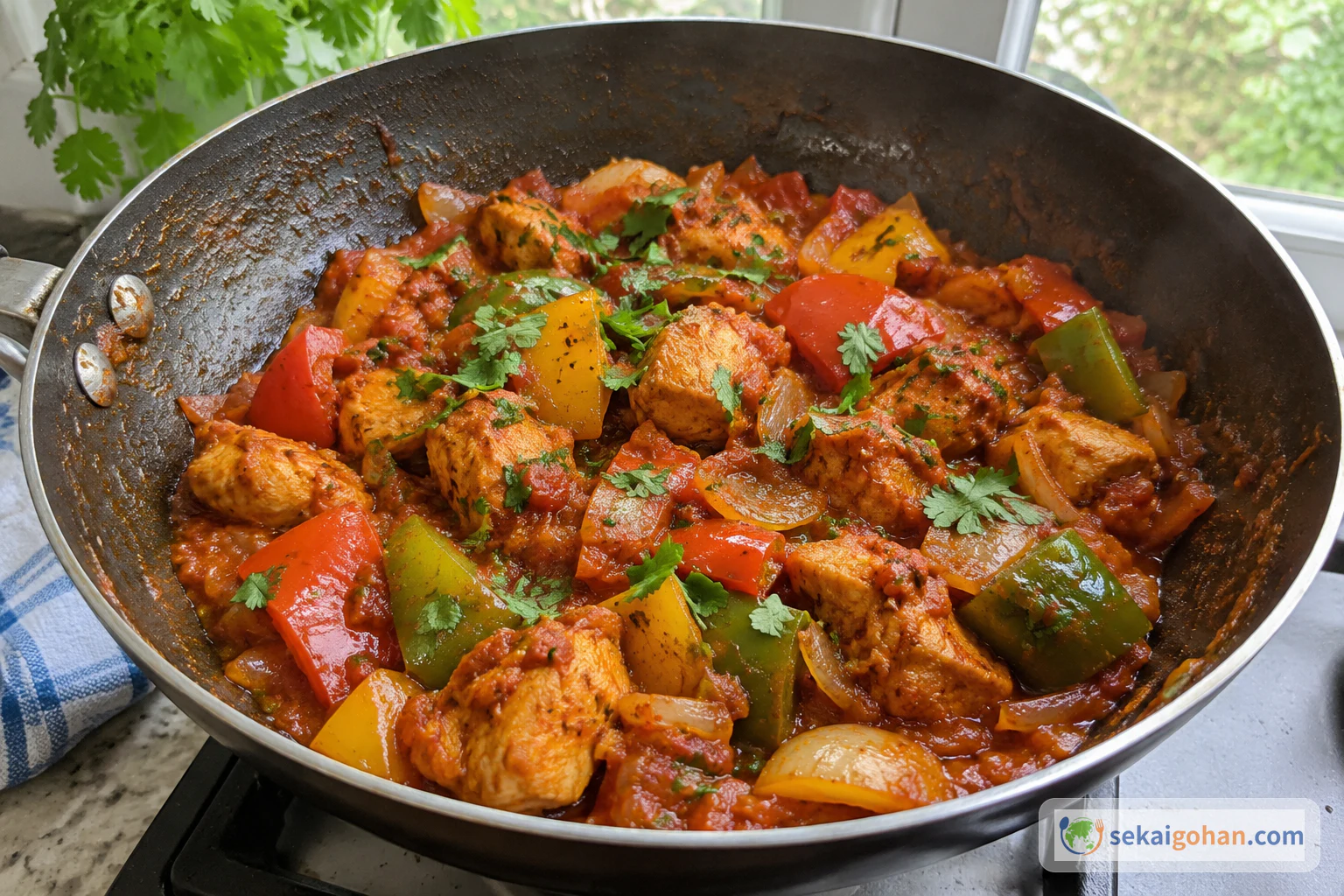
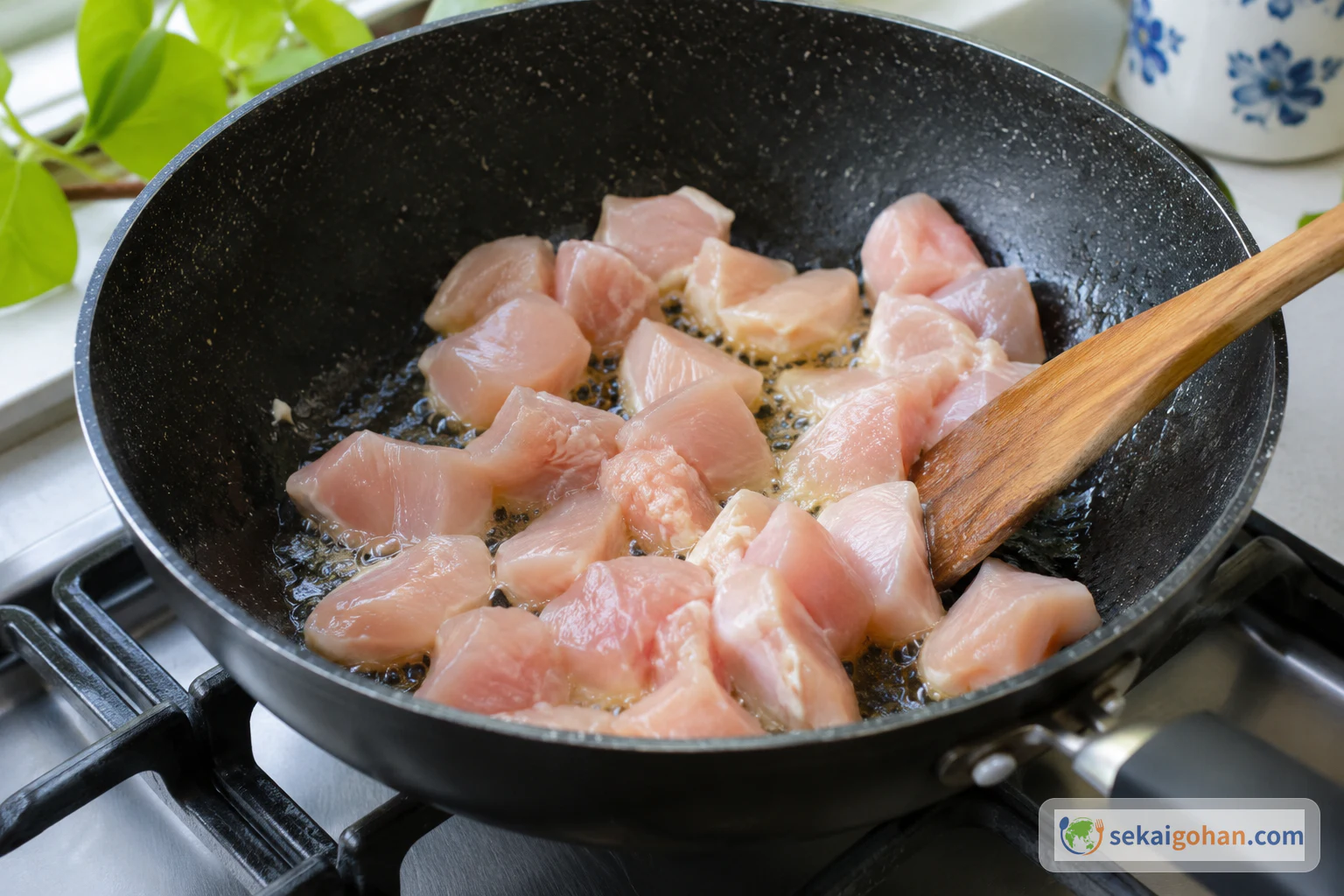
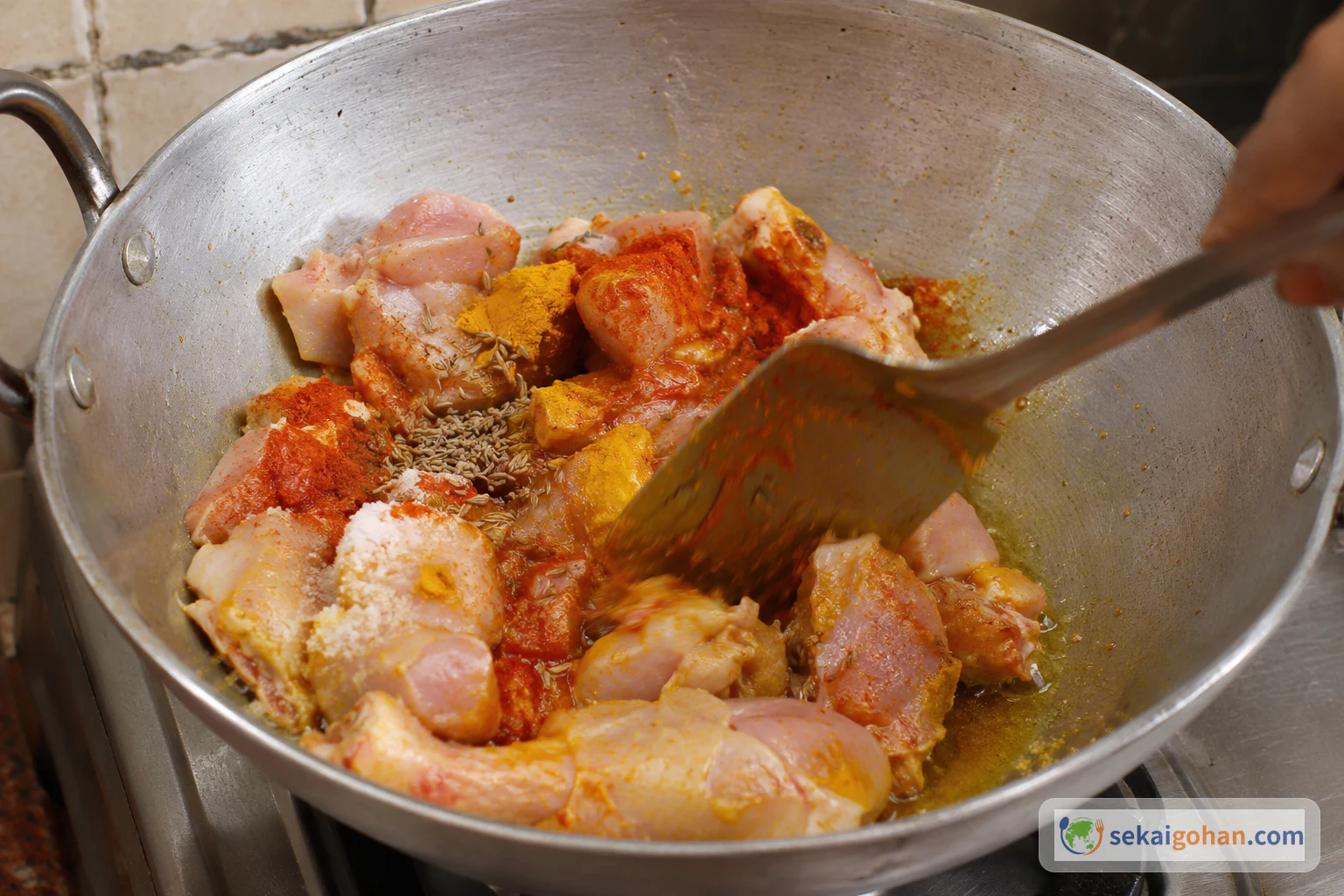
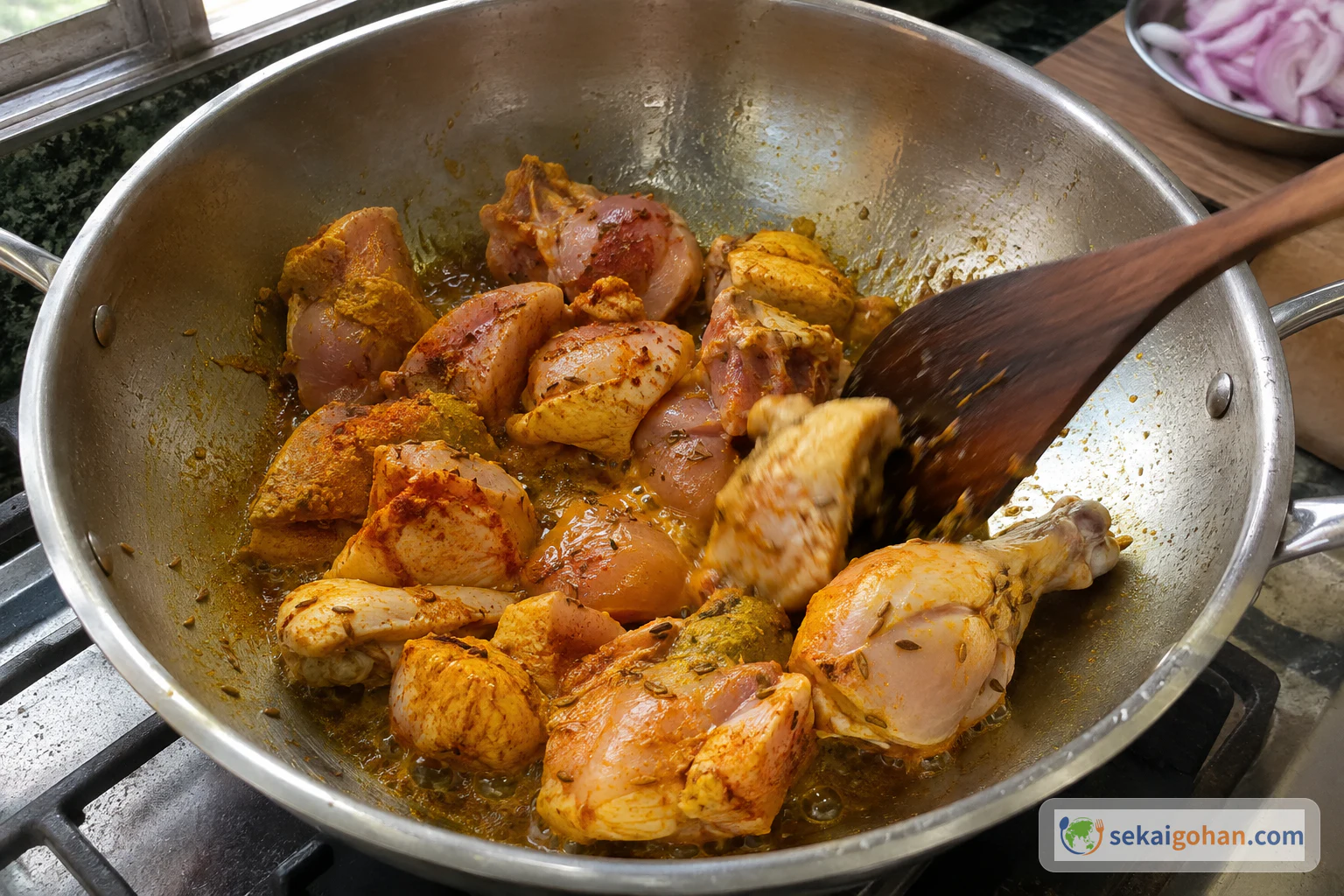
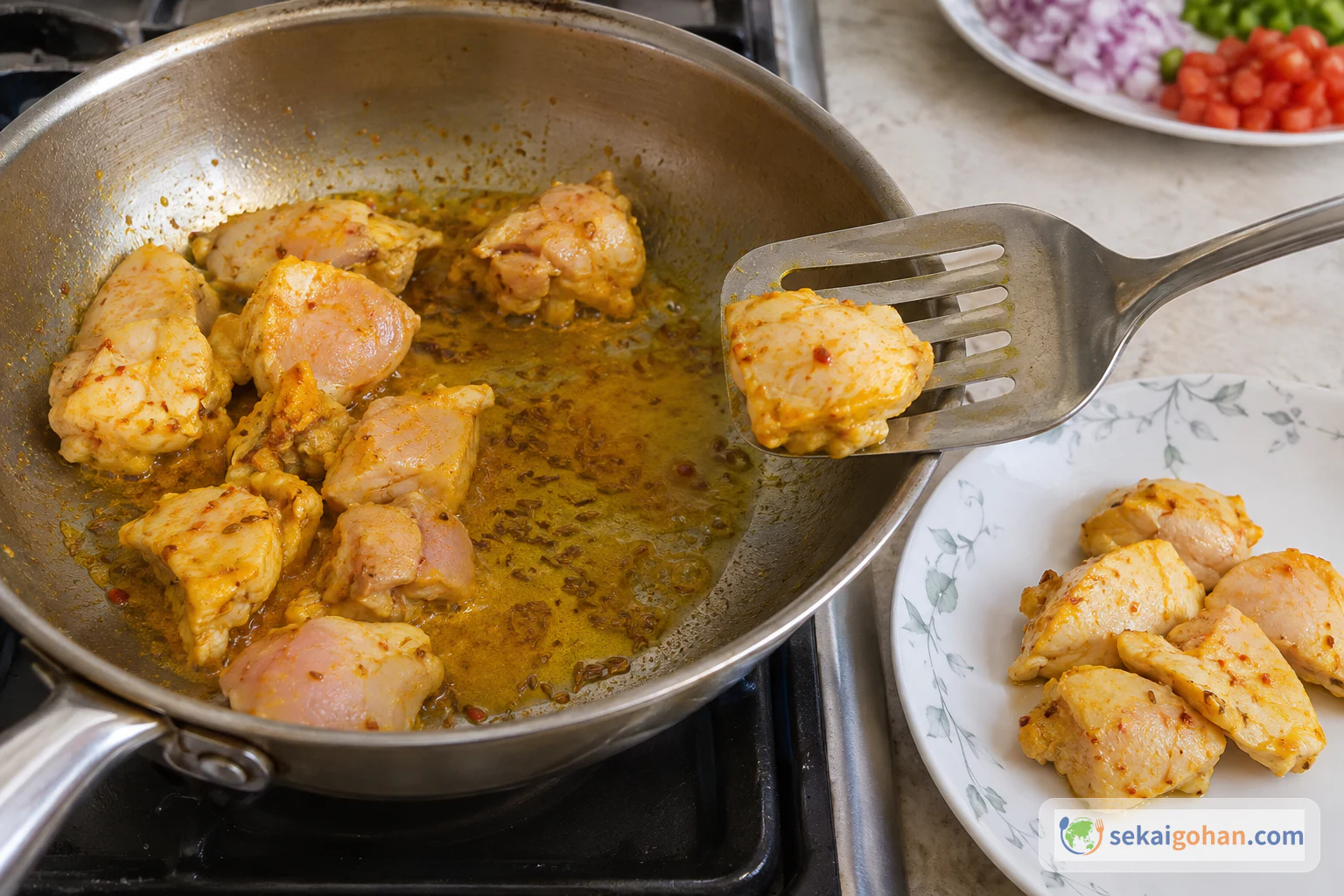
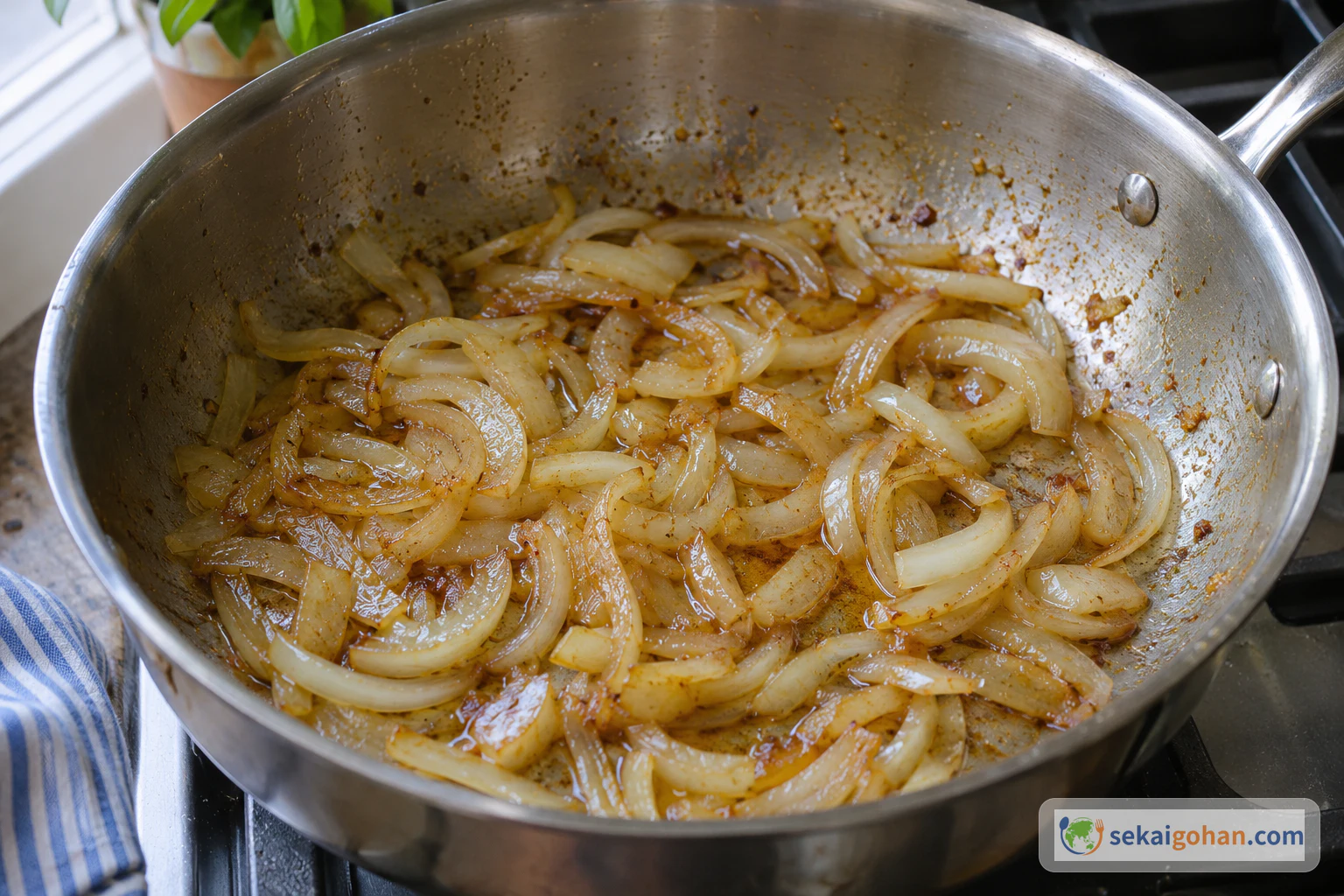
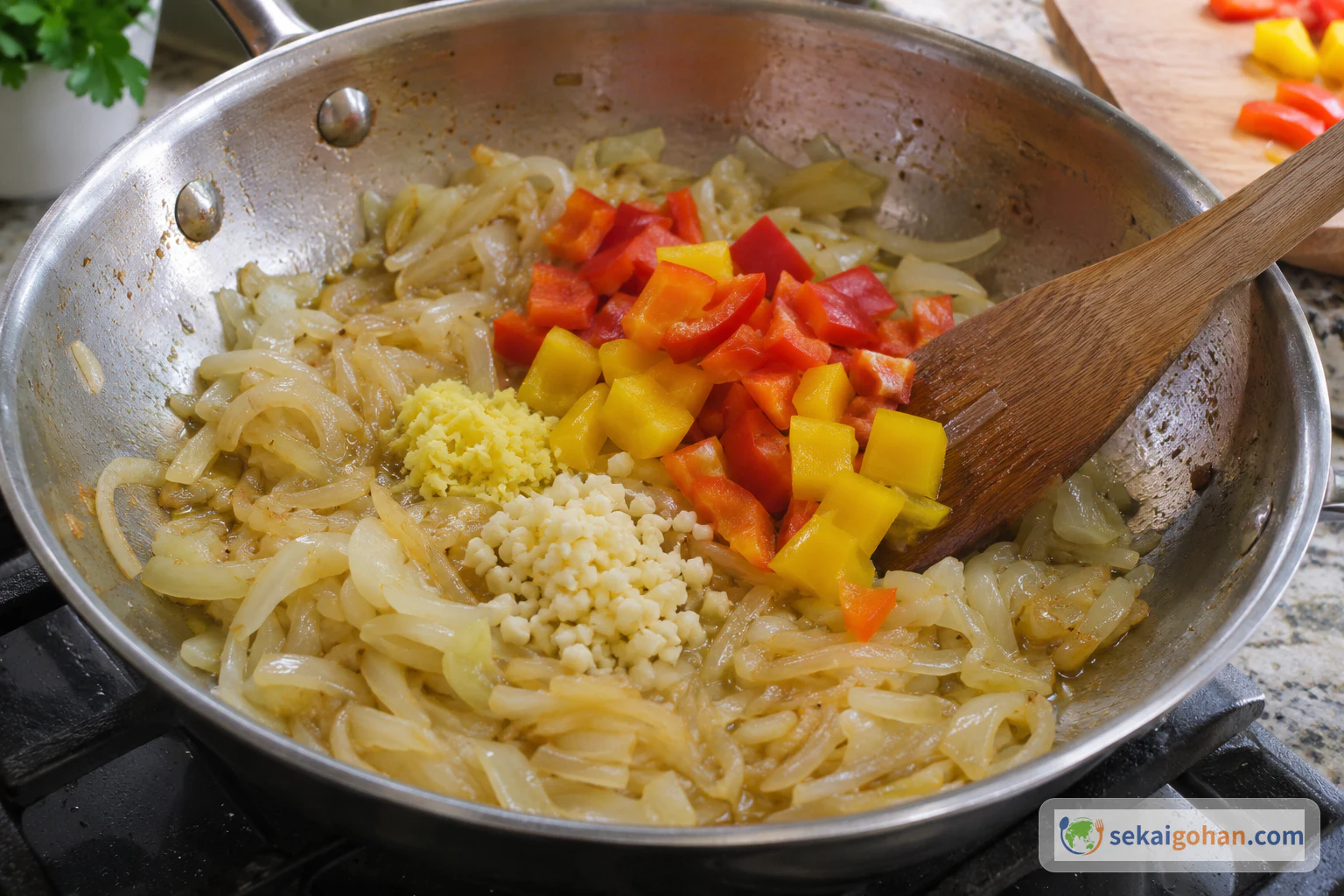
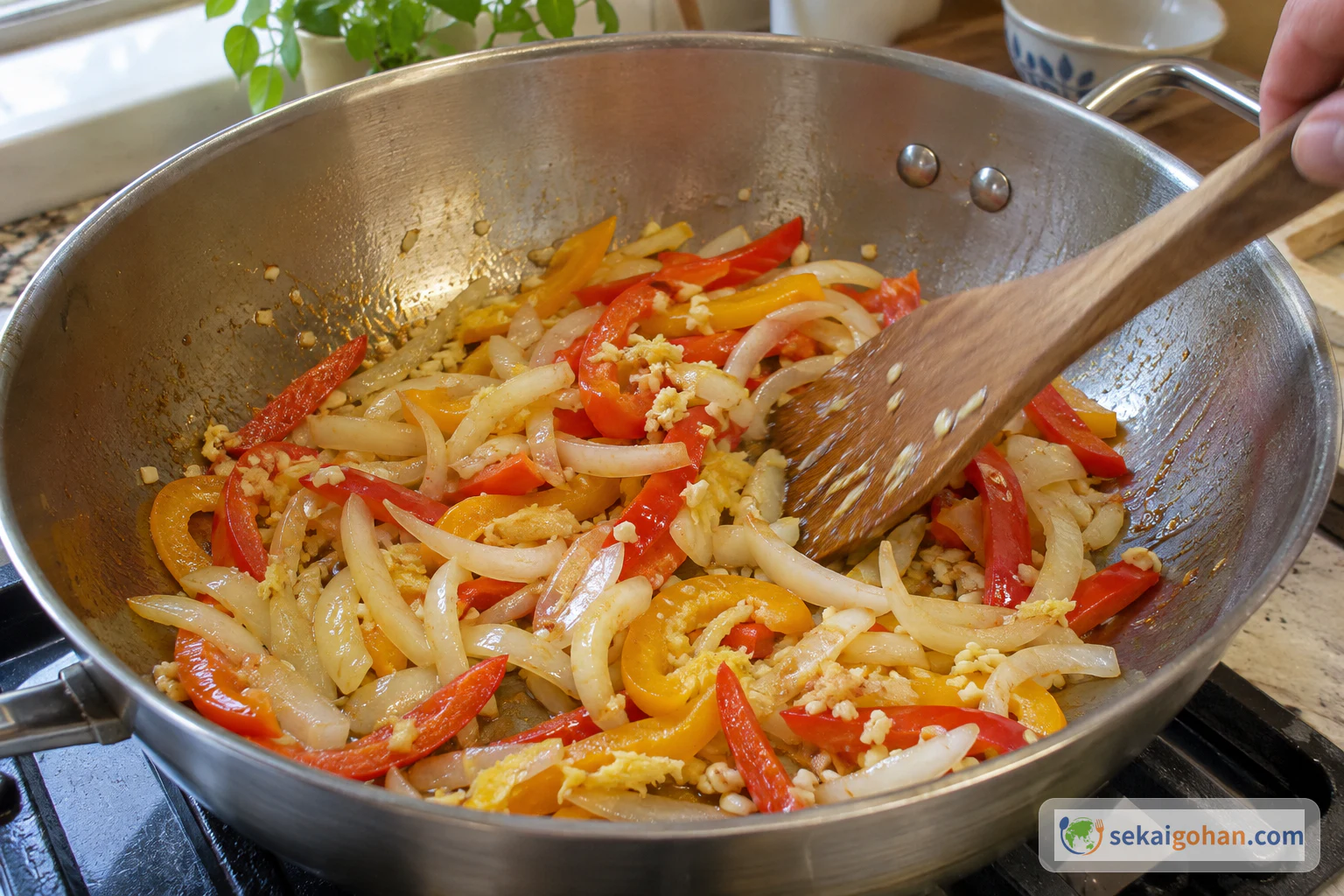
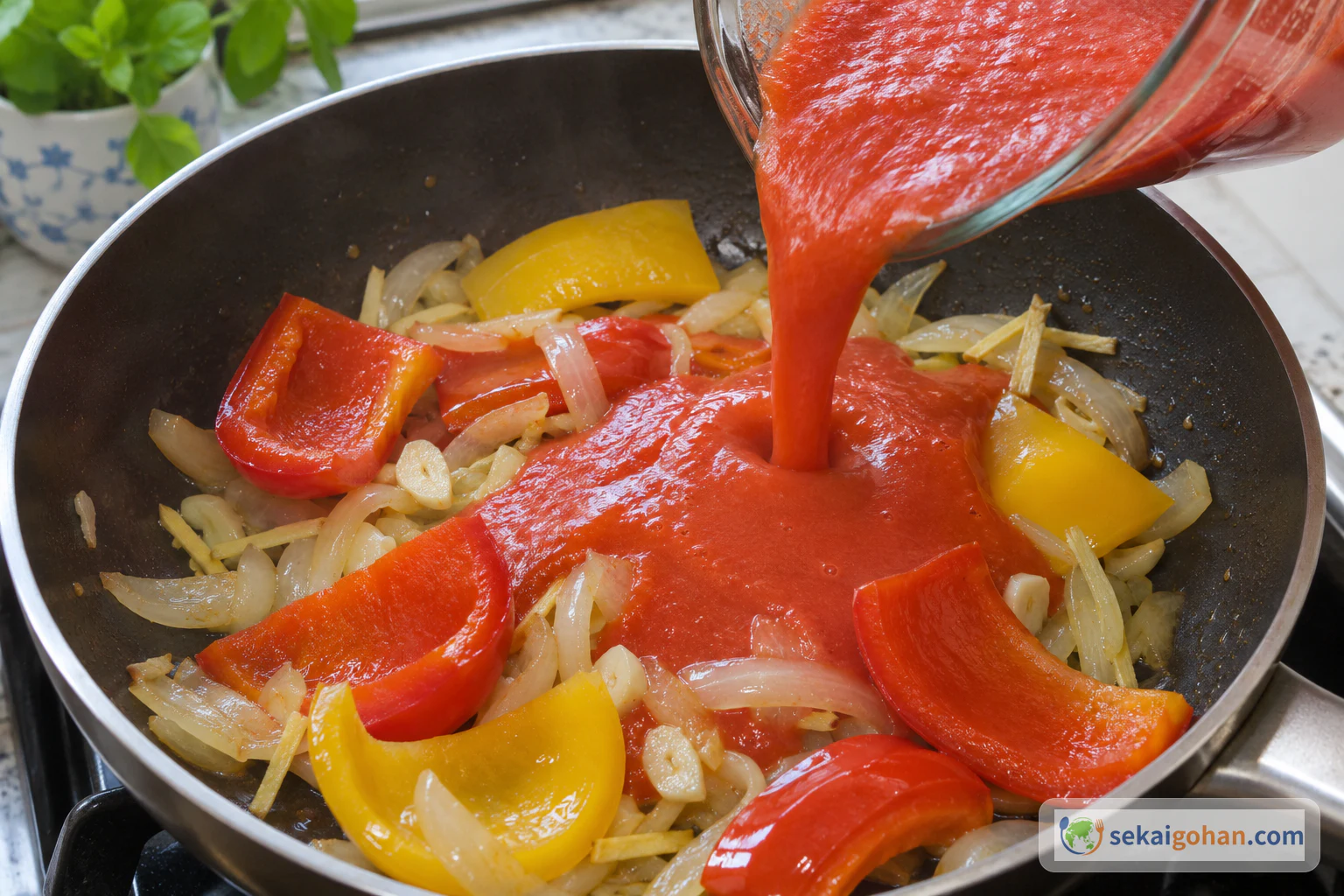
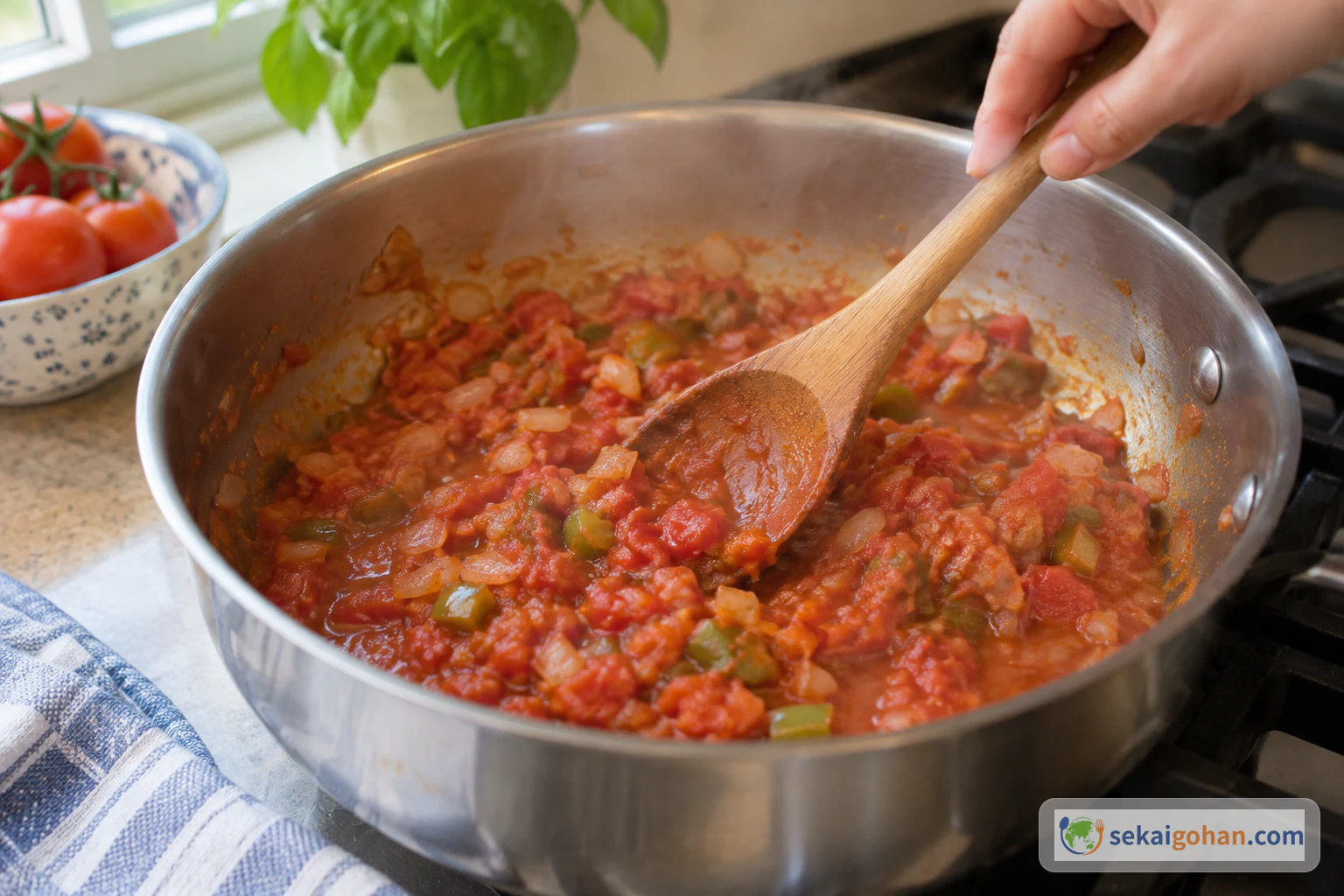
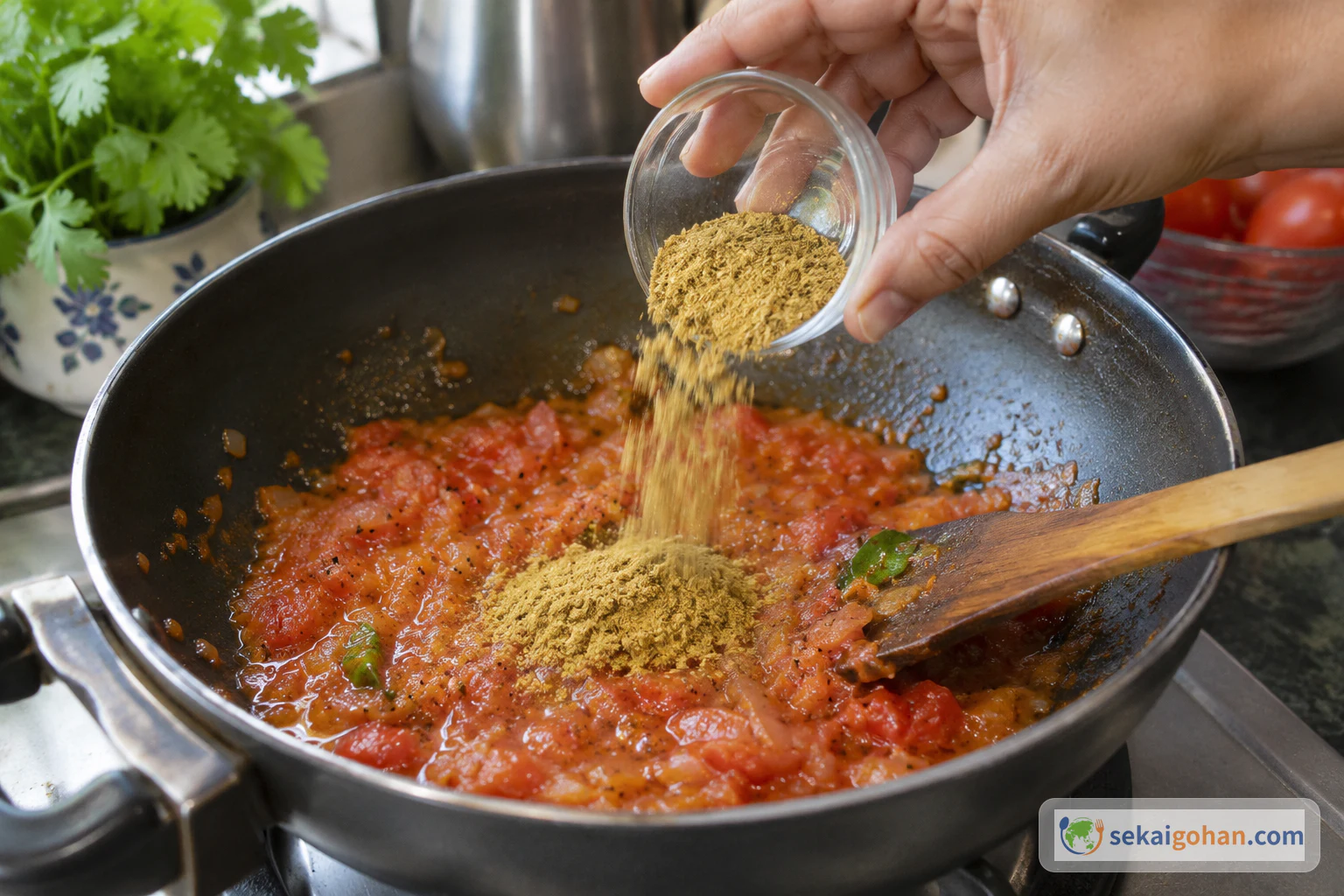
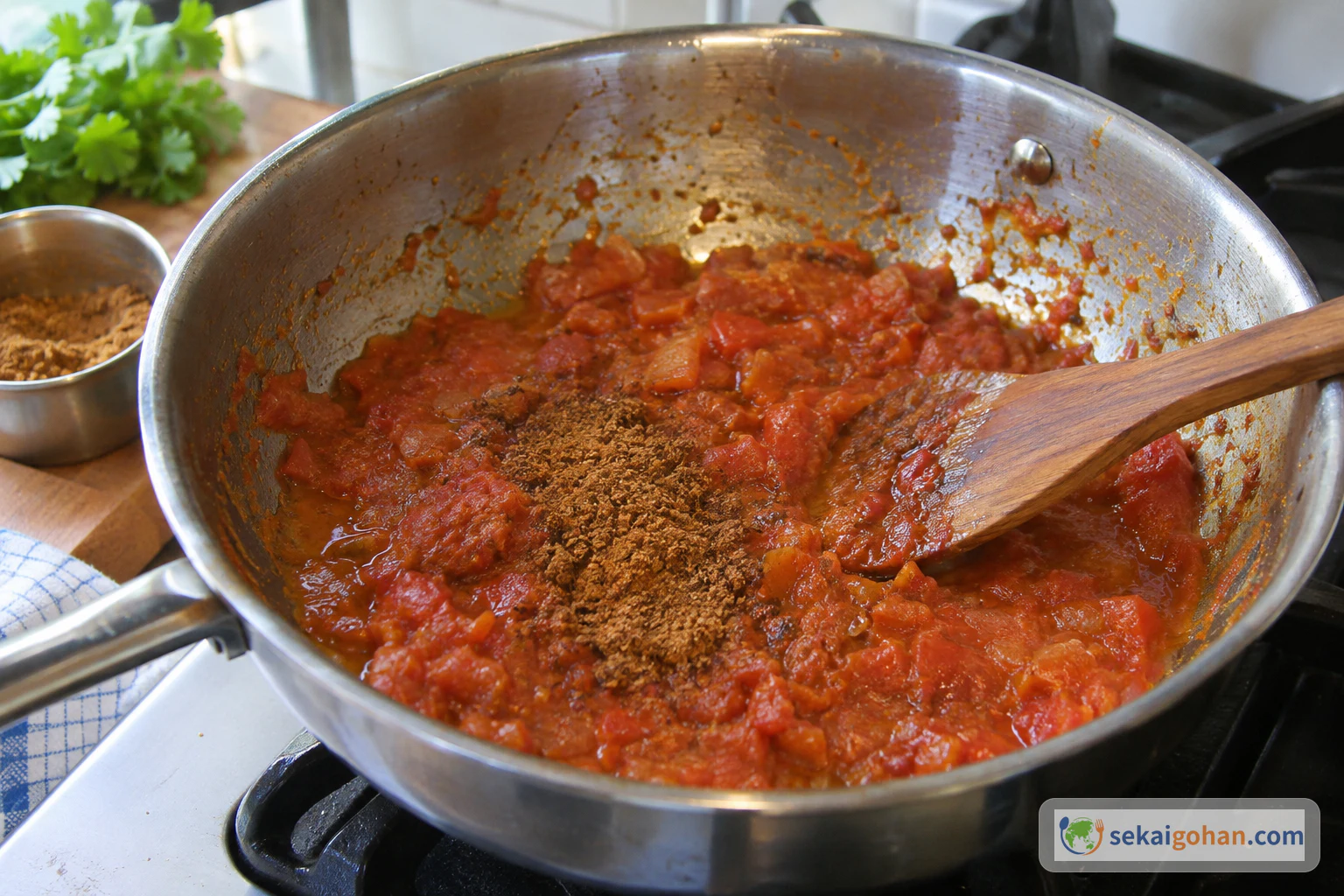
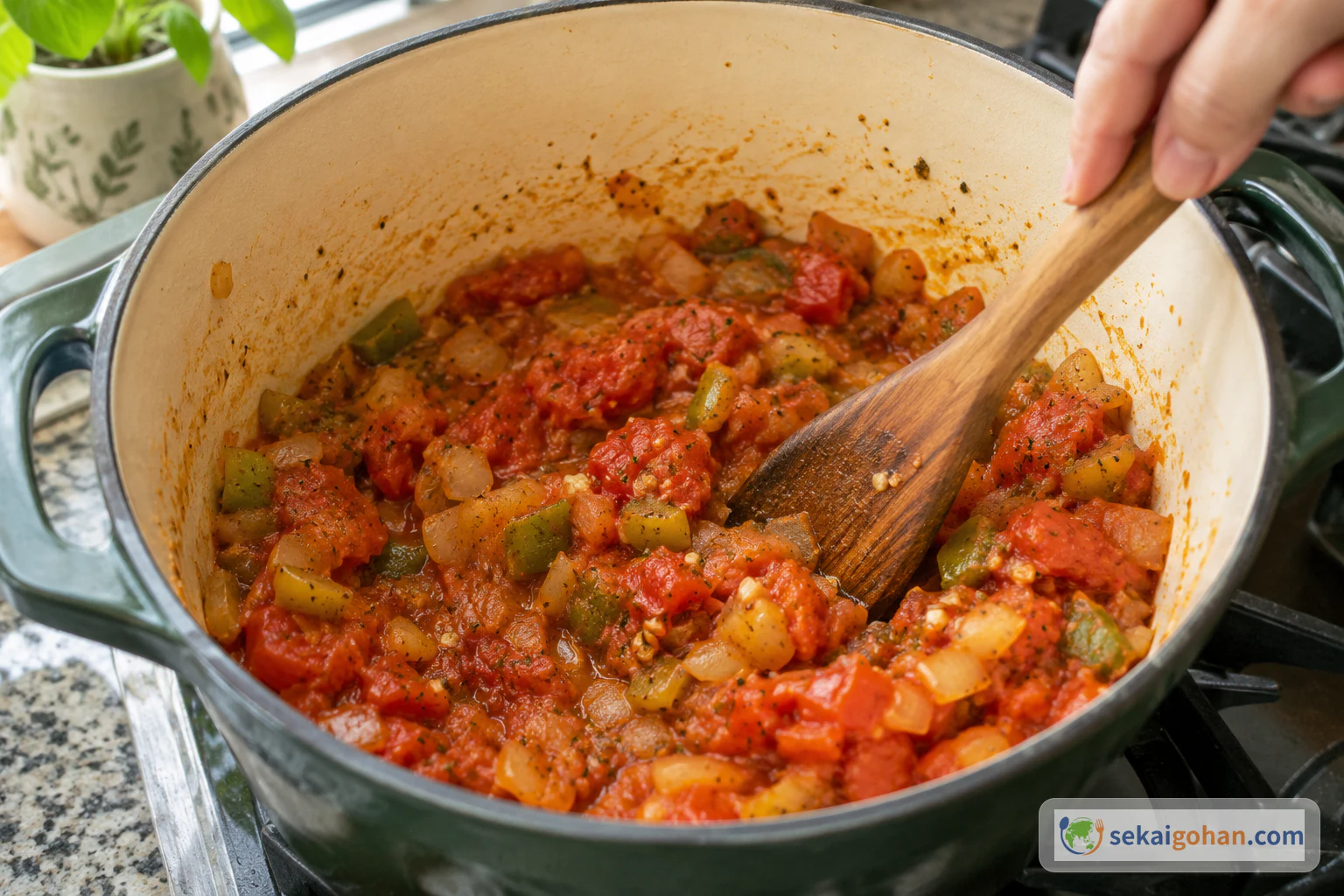
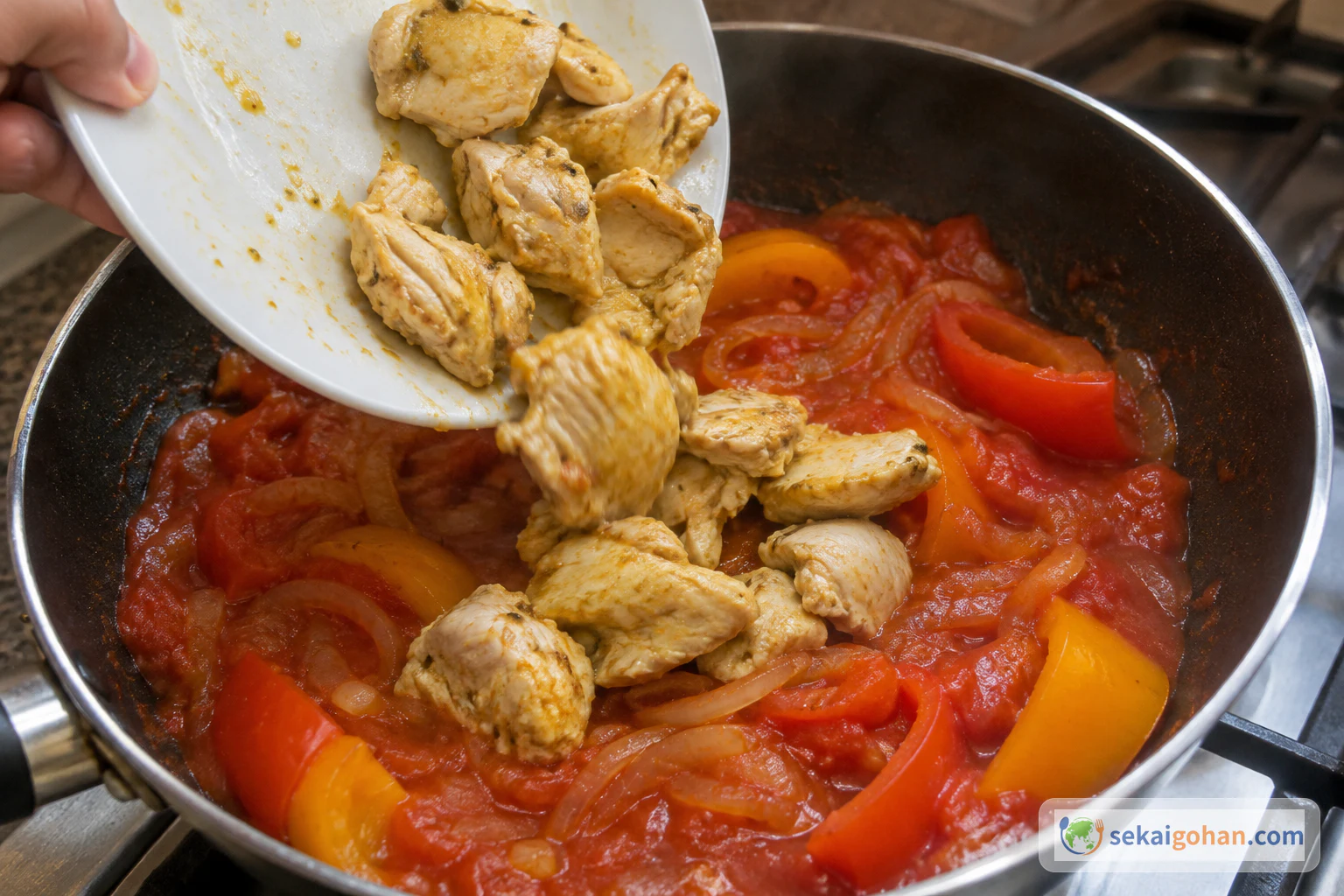
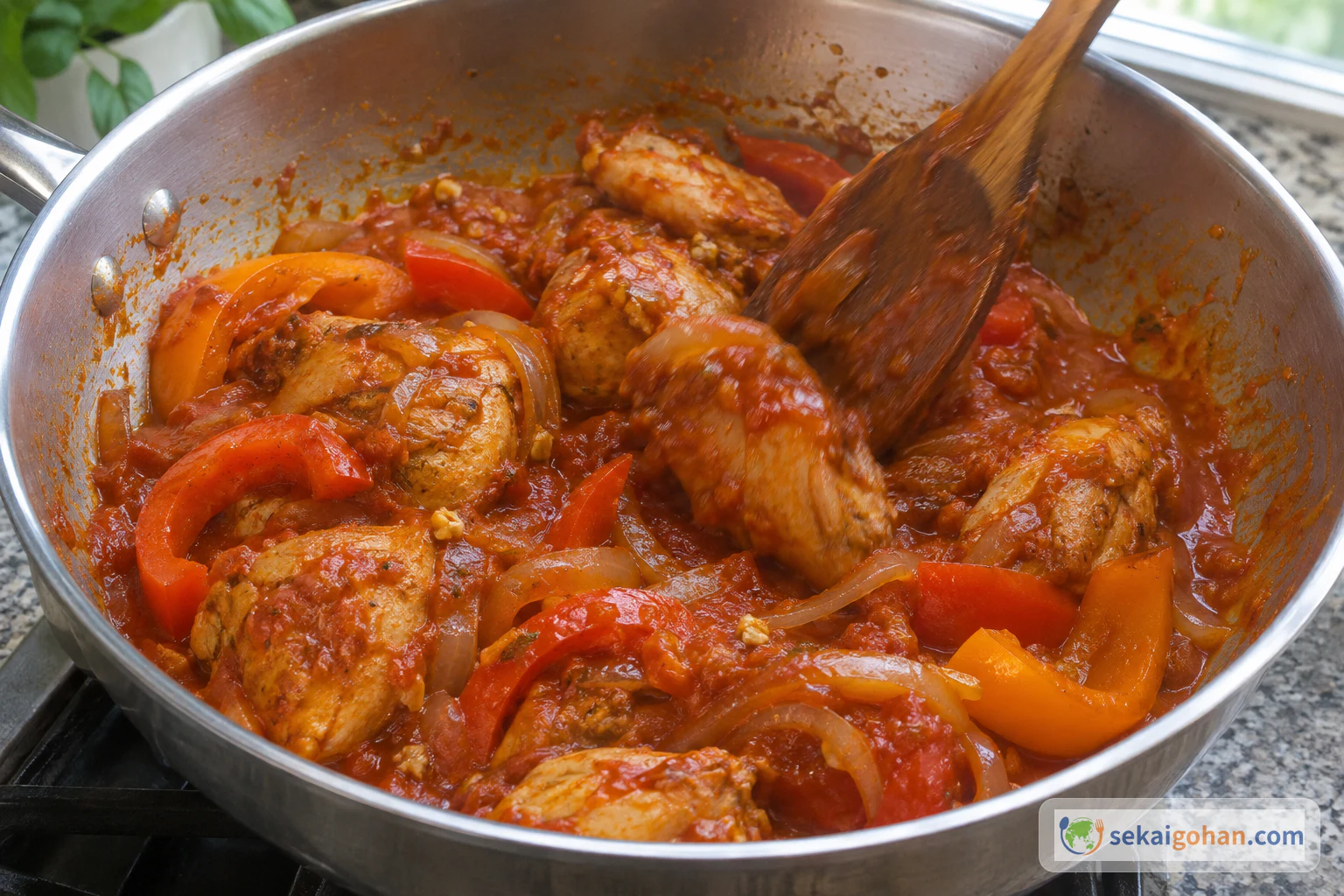
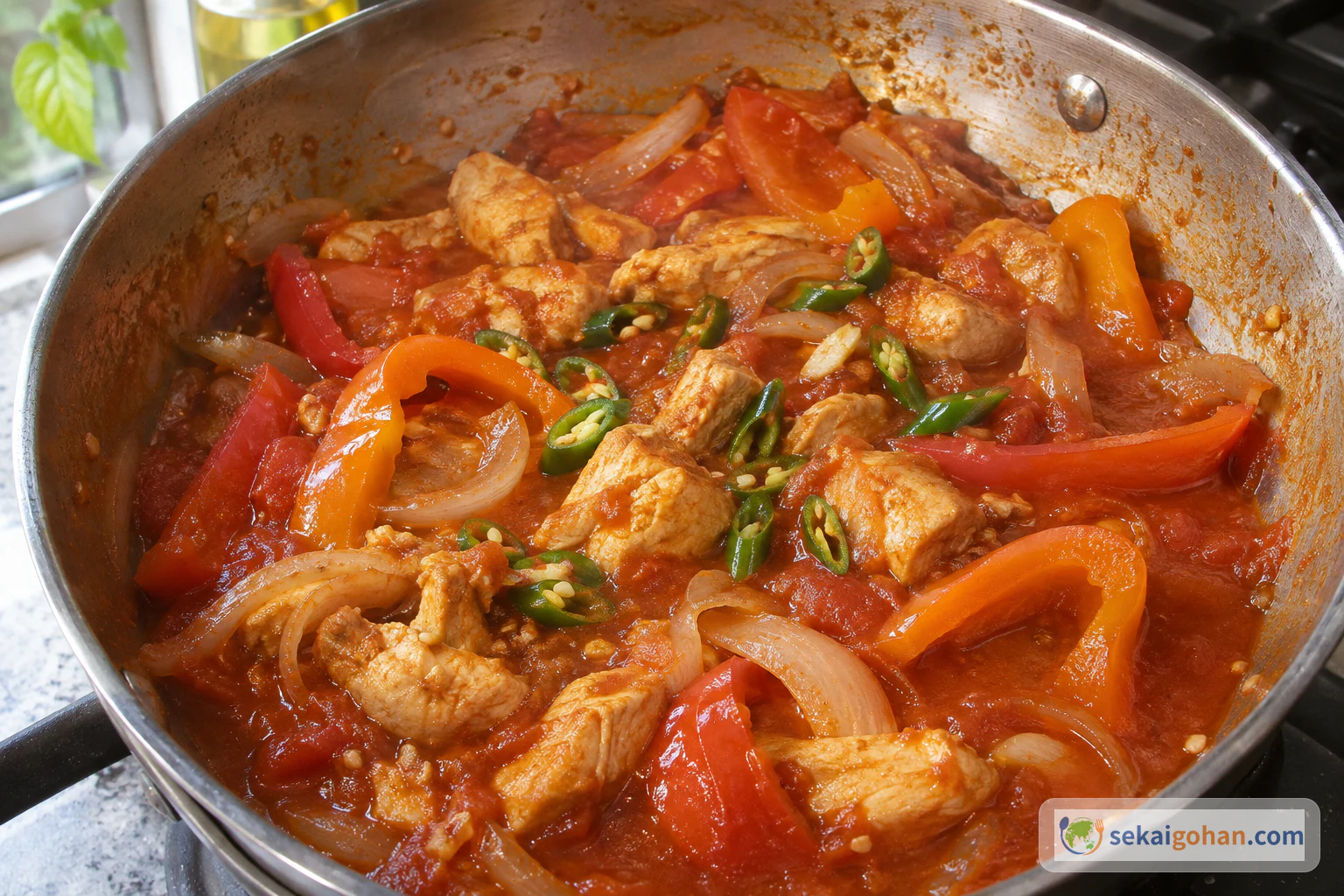
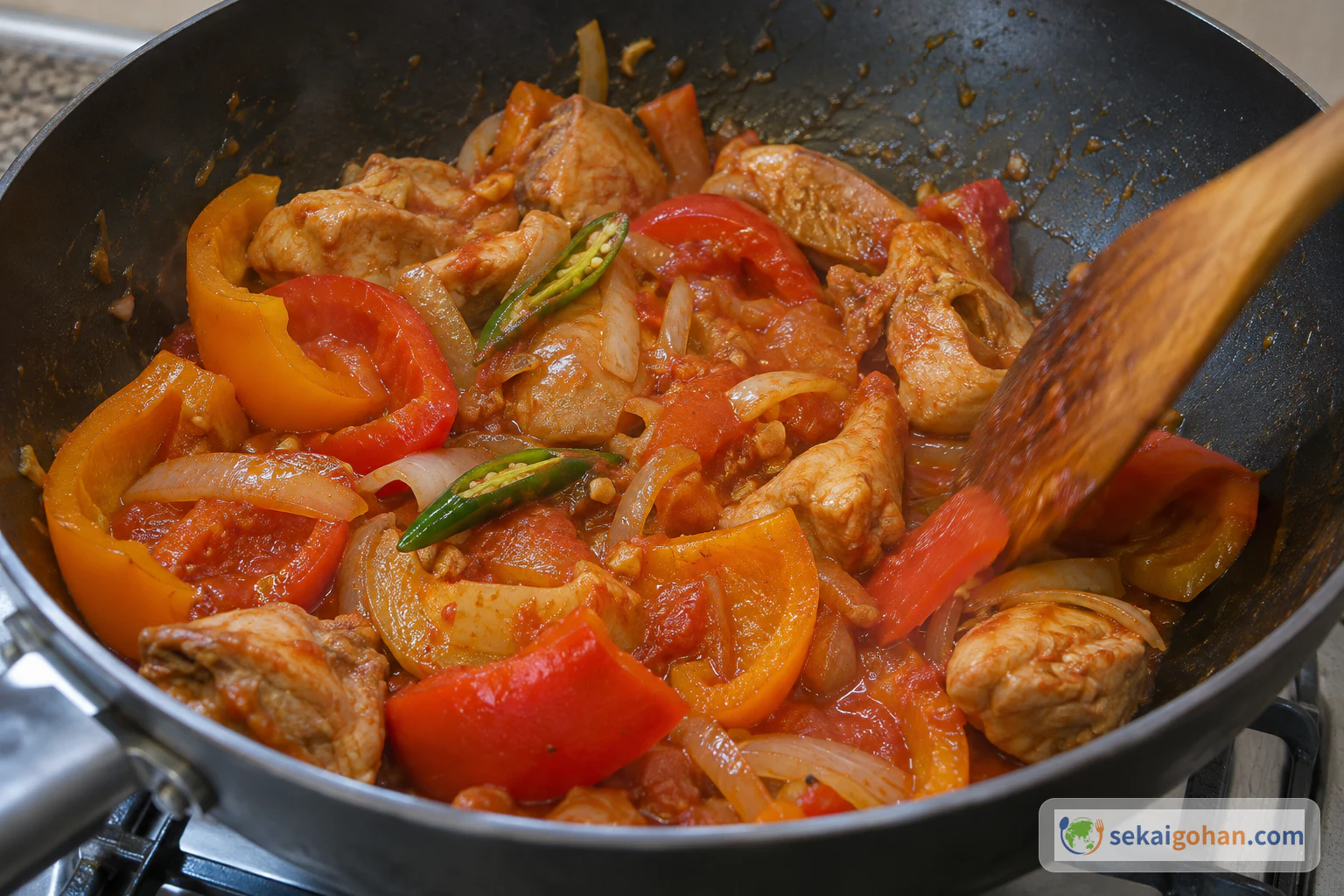
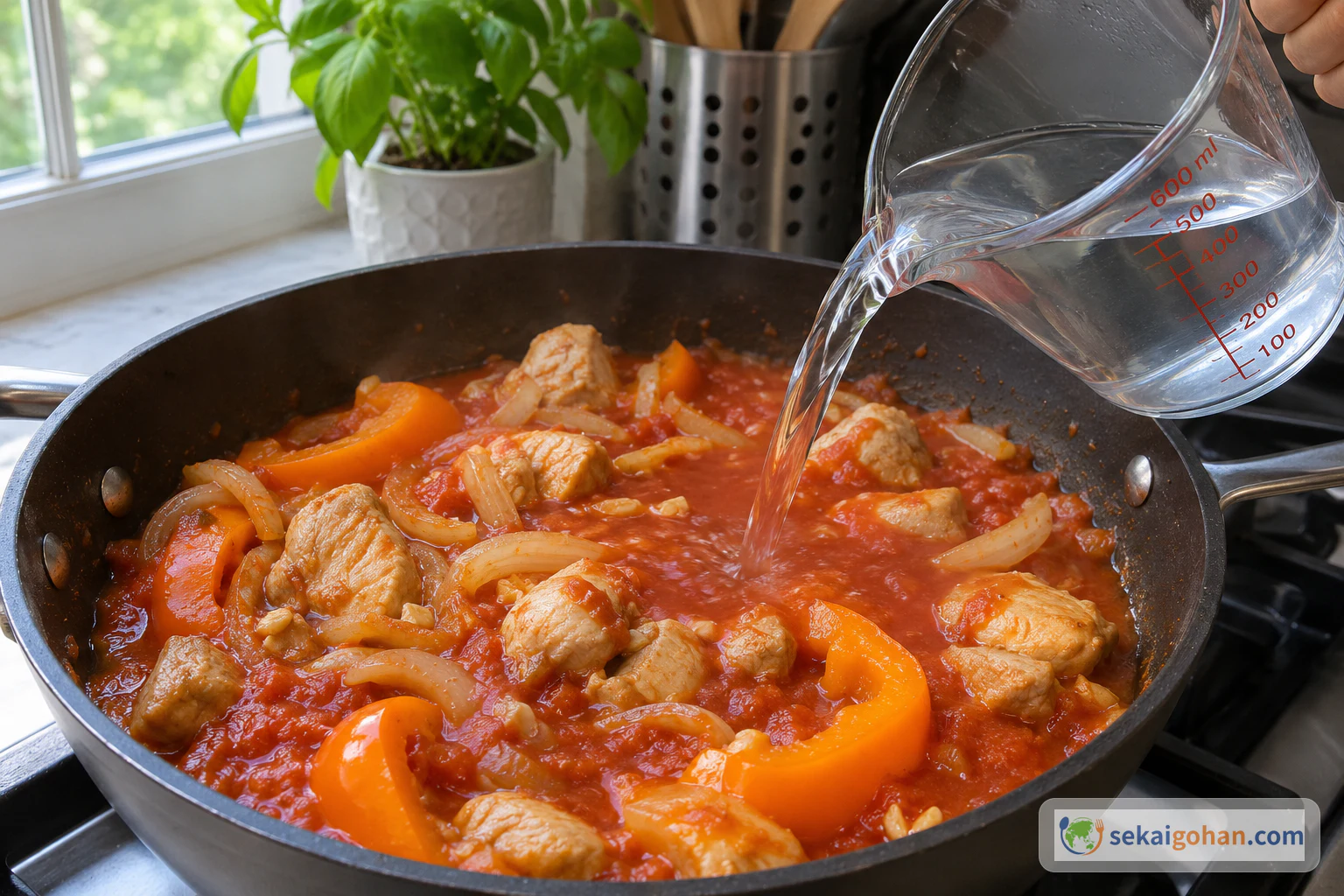
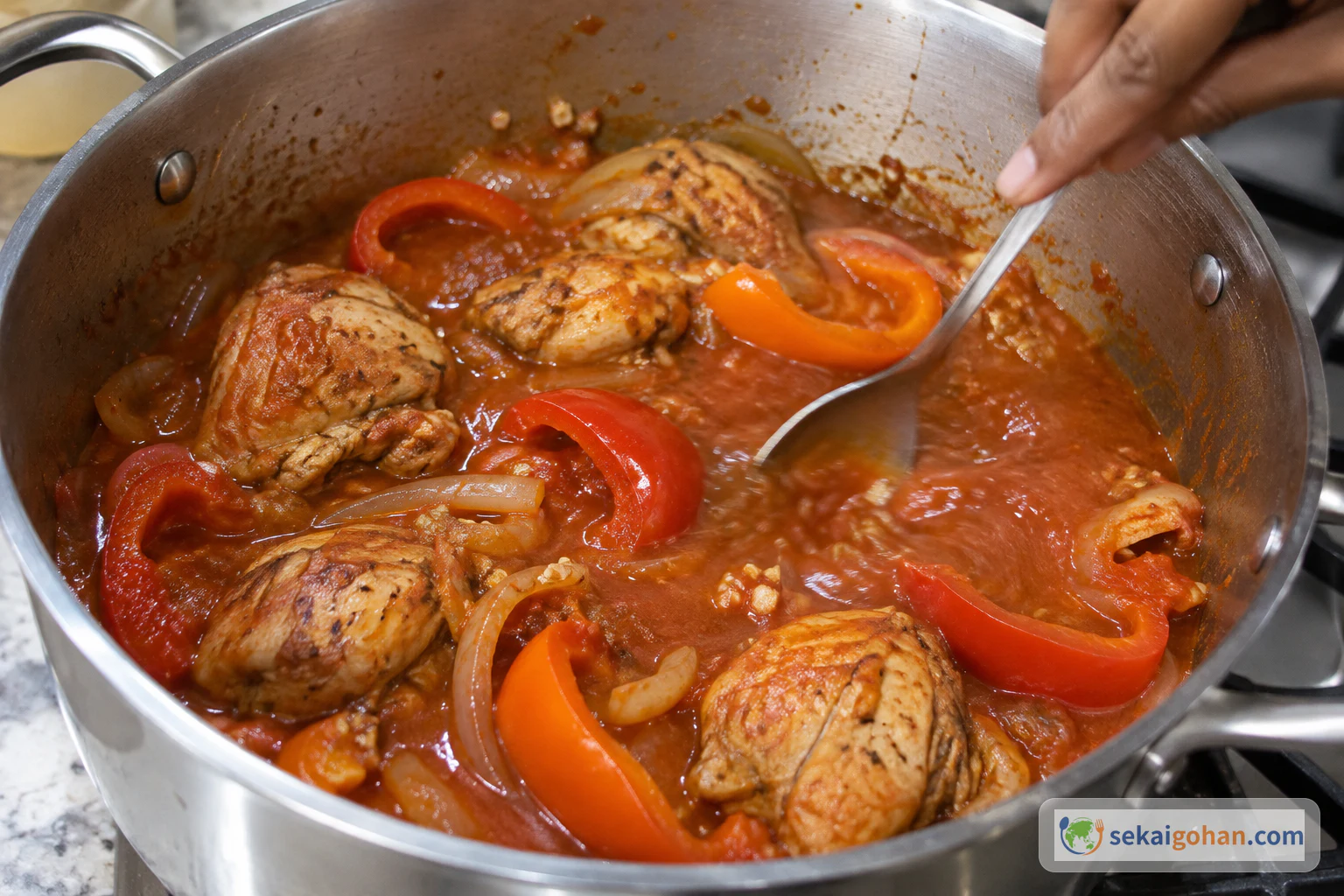
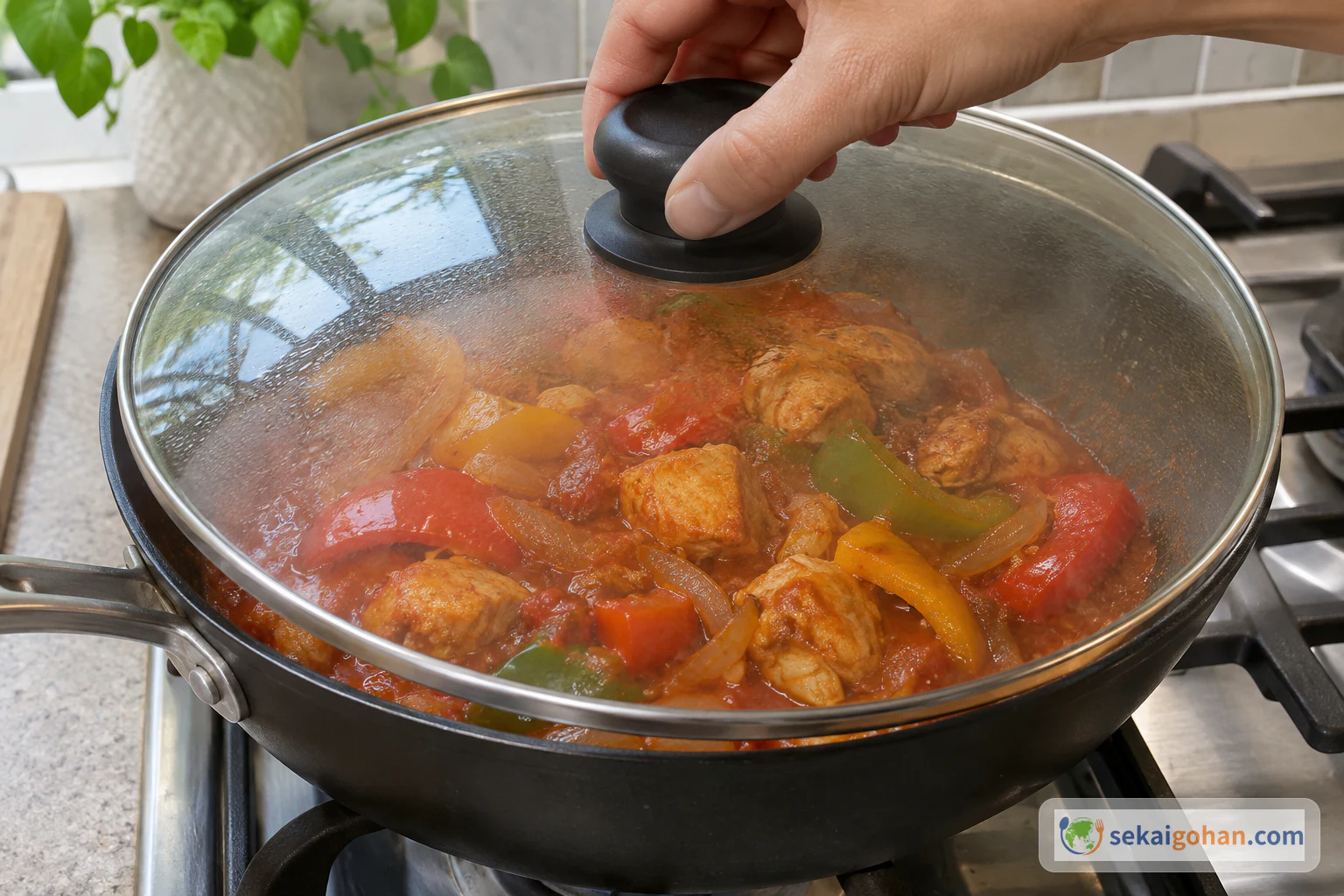
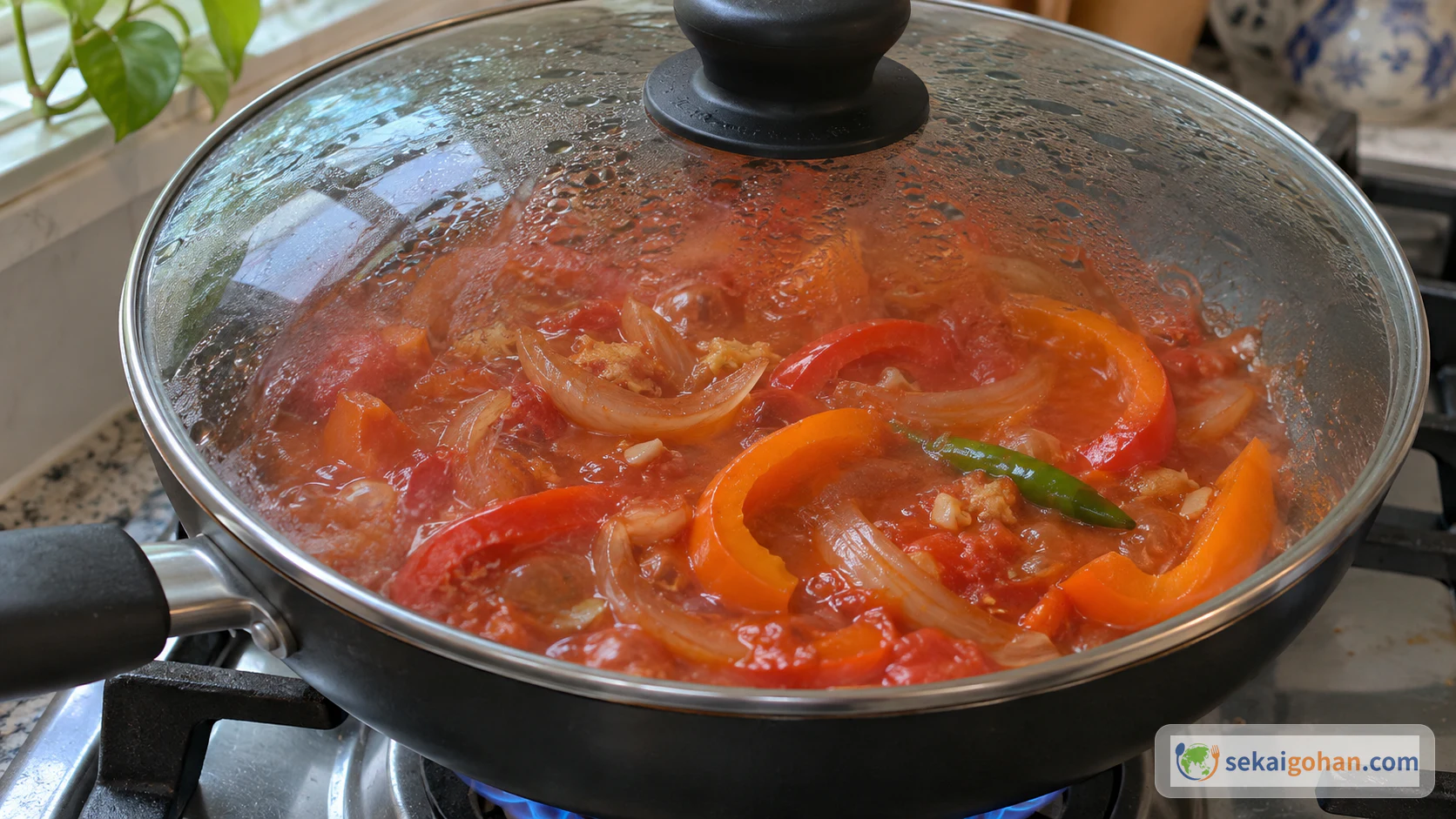
Cumin seeds, turmeric and red chili powder go into hot oil with cubes of boneless chicken. After a few minutes the chicken surfaces only begin to turn white, and it is lifted out of the pan while the spiced oil and juices stay behind. Sliced onions soften in that oil, followed by ginger, garlic and chunks of bell pepper, then smooth tomato. Only then does the chicken go back in, with sliced green chilies and a little water, under a lid.
This is the shape of the chicken jalfrezi published by NHS Healthier Families, the UK National Health Service's family-cooking site, as a four-serving home recipe. It is one well-documented household version of a dish name that covers many styles; it is not the single standard for India, nor for every restaurant version in the UK. For more dishes from the same country, see our India page.
The name is usually written jalfrezi in English. A 2022 foodways article by Navreet Kaur Rana explains it as jhal (spicy) plus frezi (stir-fry). That explanation is reported as part of the dish's food lore rather than as a settled etymology.
About This Version: The Choices Made Here
This article follows the NHS Healthier Families recipe for four people only. Its ingredients, amounts, units and order of cooking are kept as published, and nothing has been borrowed from other jalfrezi recipes. Sekai Gohan has not kitchen-tested this recipe, so you will not find tasting notes or measured results here.
A few points in the NHS recipe needed a decision, and they are made openly:
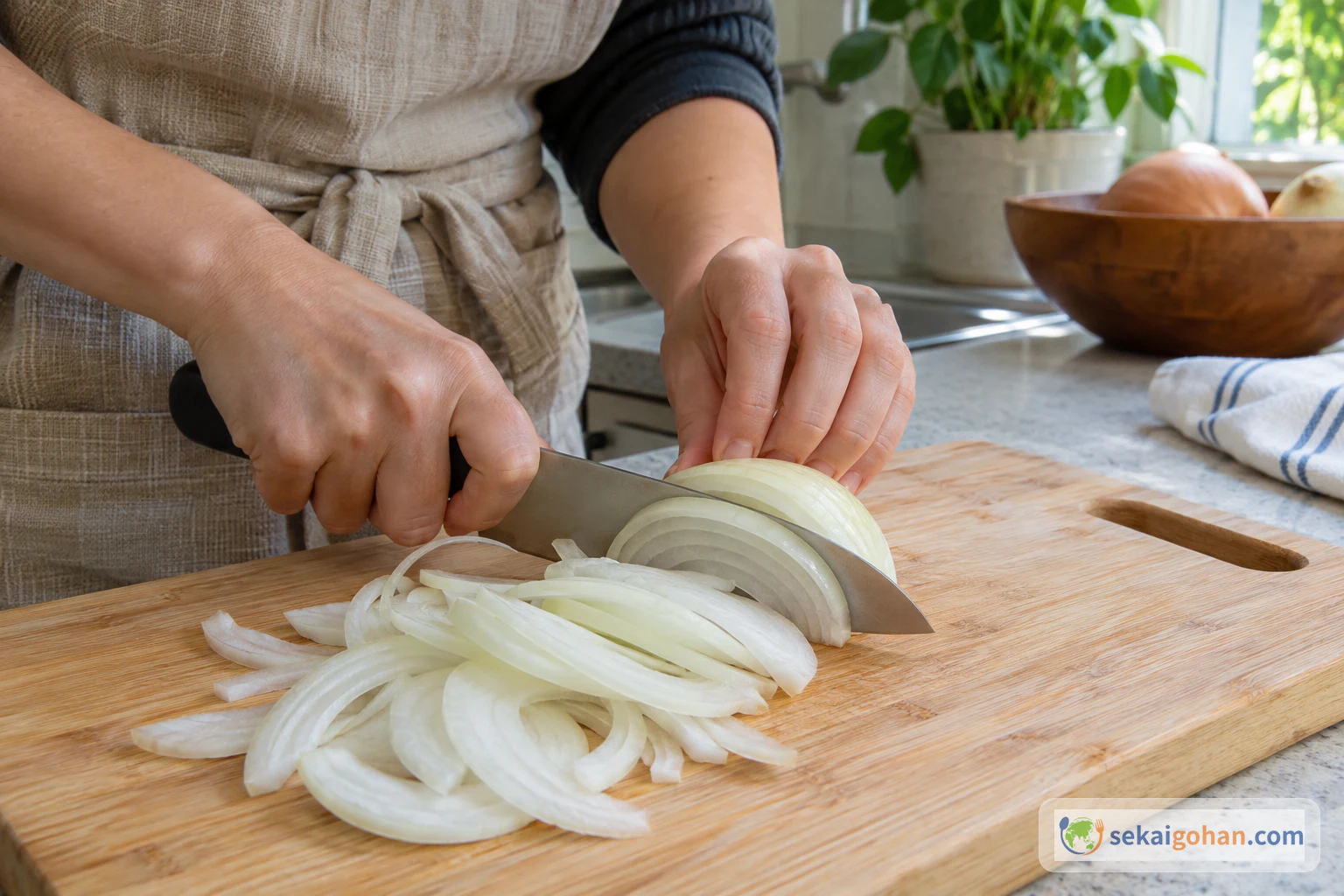
- Onions: the NHS ingredient list says the onions are chopped, but the method cooks "sliced onions." This article follows the method and slices them.
- Cumin seeds: the ingredient list gives one heaped teaspoon, yet cumin appears in two different method stages. To avoid doubling a single listed measure, this article adds the whole heaped teaspoon once, at the first stage, and none at the later stage. This is an editorial choice, not an instruction from the NHS author.
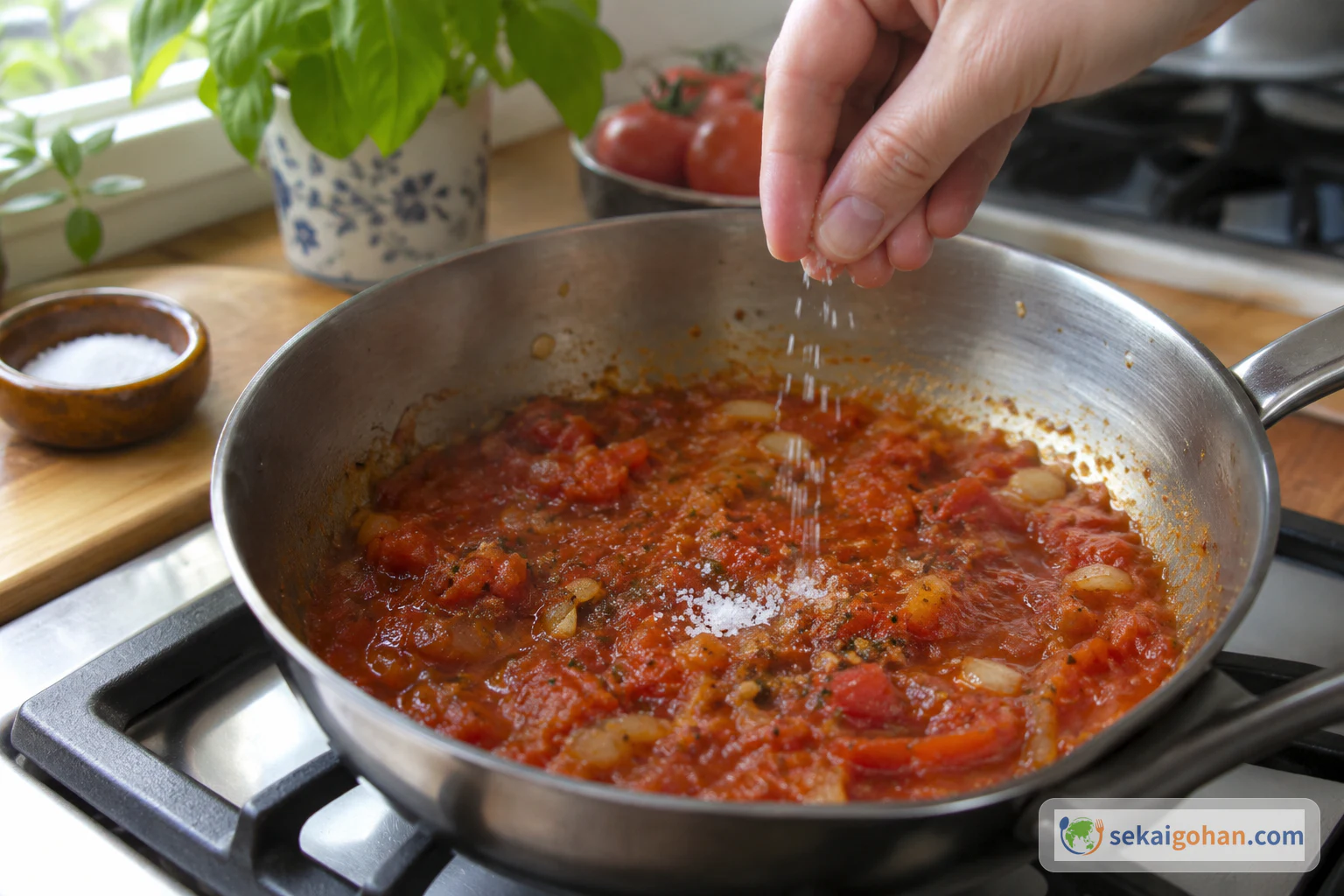
- Salt: salt is optional in the NHS recipe. This version uses it, as the NHS method splits it: half a teaspoon with the chicken and half a teaspoon with the later spices.
- Fresh coriander: also optional in the NHS recipe; this version uses it to finish.
- Chicken: the recipe calls for boneless chicken but does not name a cut or a thickness, so neither is specified here.
- Peppers: the two bell peppers are large sweet peppers. The four green chilies are a separate, hot ingredient.
The NHS page displays timings and nutrition information. The timings are discussed in the FAQ; the nutrition figures are not reproduced in this article.
Ingredients (Serves 4)
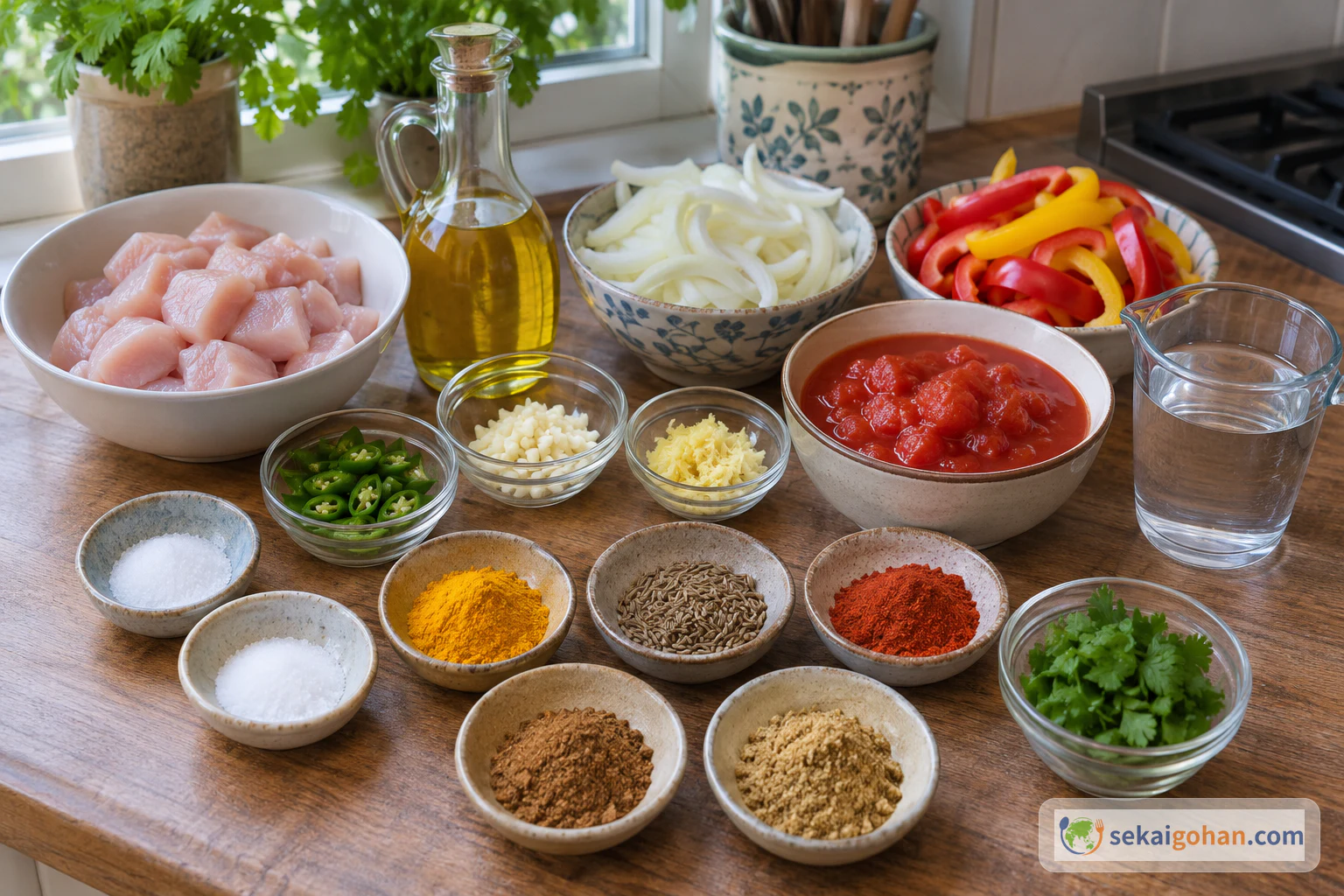
Rice or chapati, plain yogurt and lemon are served alongside if you like. They are not part of the pan; see the serving section below.
Equipment
- A large frying pan with a lid (heavy-based is easiest to manage during the simmer)
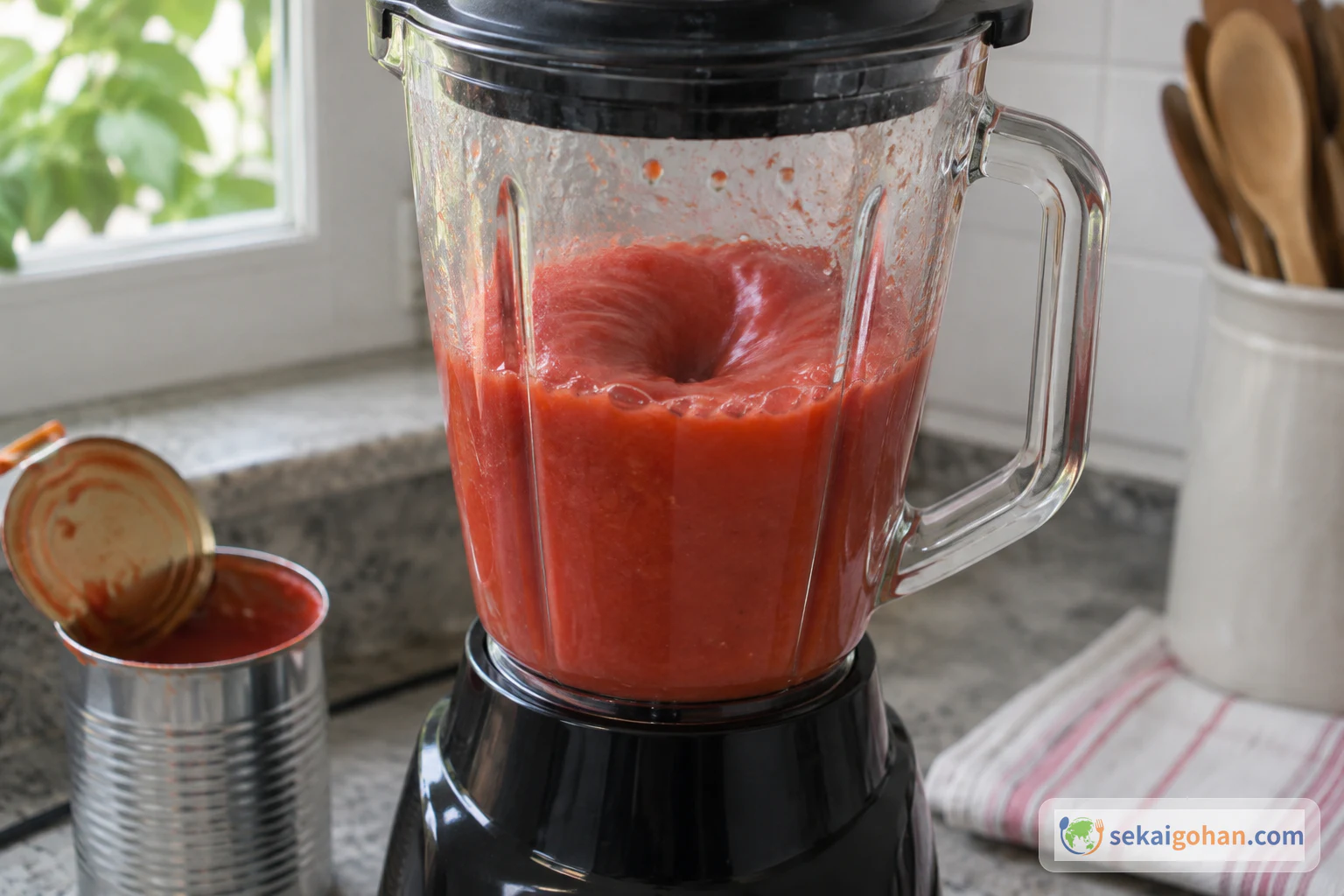
- A blender for the tomatoes, or a potato masher or fork
- A cutting board and knife kept for raw meat, plus a separate board for vegetables
- A heat-safe plate for the partly cooked chicken
- A clean food thermometer
Choosing and Swapping Ingredients
Rapeseed oil is used for frying the chicken and building the sauce.
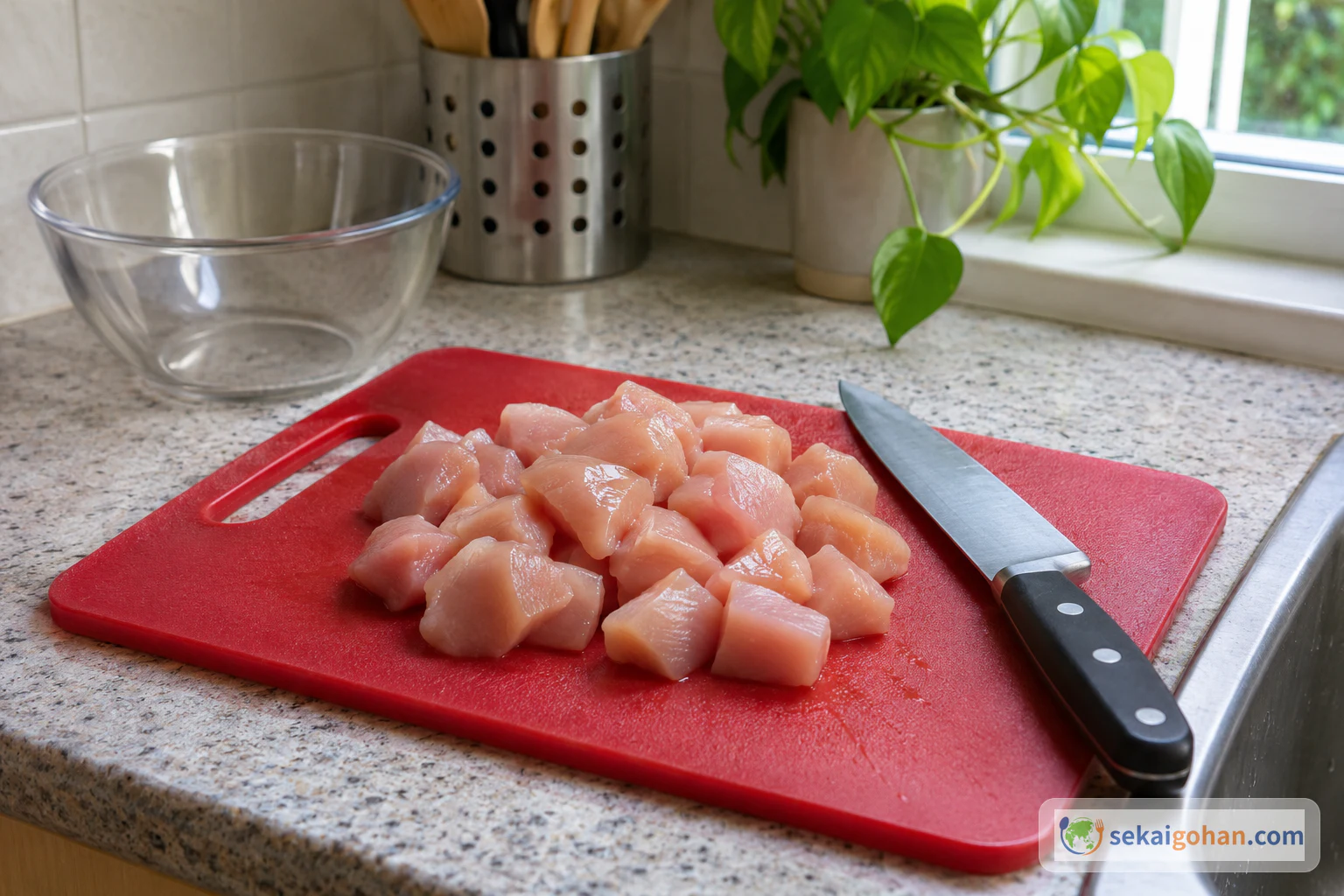
Boneless chicken can be thigh or breast. Choose what you can find and cut the pieces to an even size so they cook at a similar pace. Whichever you use, check the center of the thickest piece at the end.
Bell peppers can be any color; choosing red, yellow or green is within the recipe, not a substitution. Smaller, thinner peppers are not a one-for-one swap for two large bell peppers, and they will change the color, sweetness and amount of pepper in the pan.
Green chilies vary widely in heat between varieties and even between batches. Red chili powder is not a measure-for-measure replacement for them, and chili powders themselves differ in heat from brand to brand. If you are cautious about heat, the honest advice is to know your chilies and powder before you cook; no fixed conversion is given here.
Cumin seeds are whole seeds, not ground cumin. Coriander powder is ground coriander seed, a different ingredient from the fresh coriander leaves used to finish. Garam masala is a spice blend of its own and does not replace either.
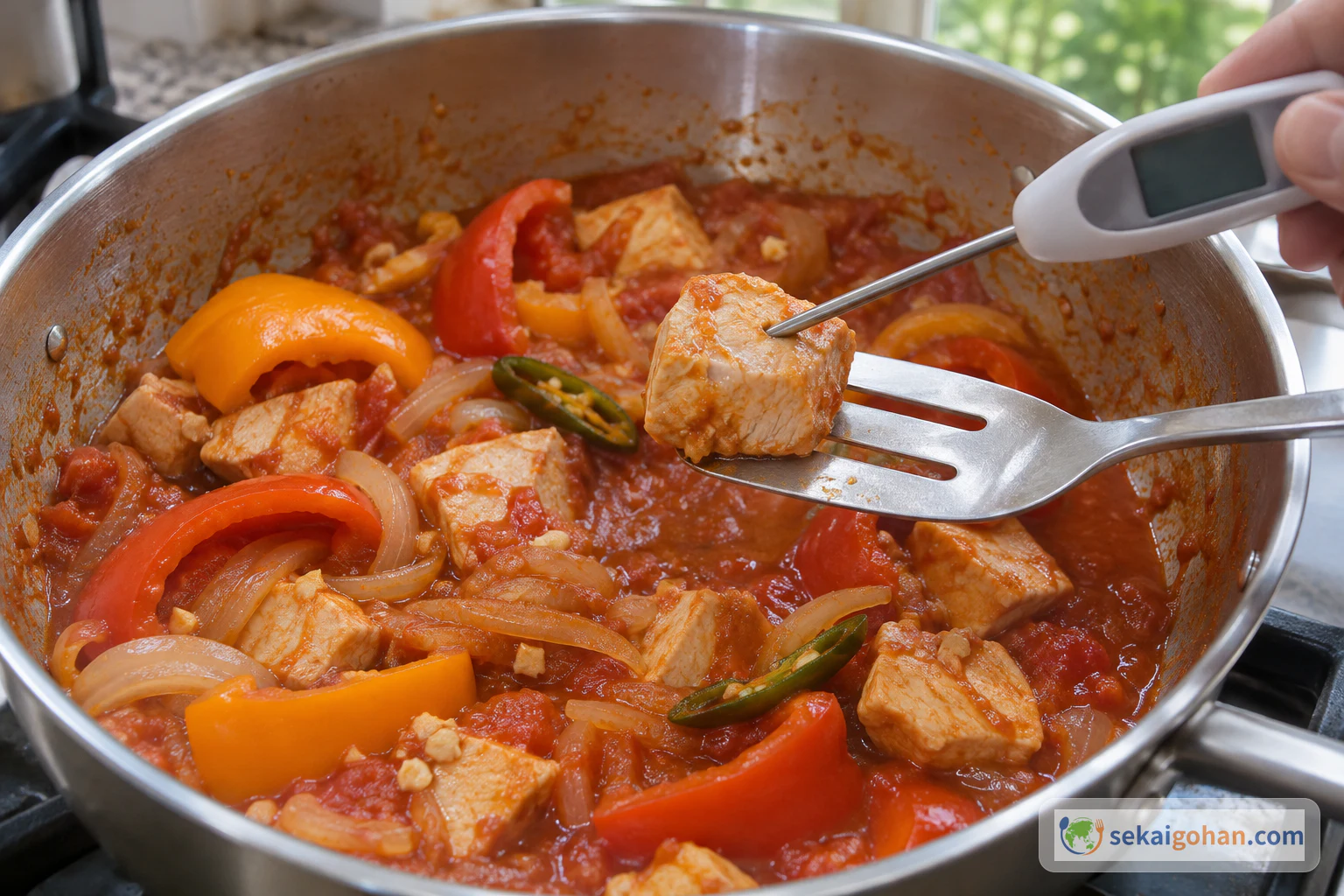
At the start, the chicken is only fried briefly until its surfaces begin to turn white. That is not cooked through. It finishes cooking later, after it goes back into the sauce. For a general household safety check, heat the chicken until the center reaches 75°C for at least 1 minute. Do not judge doneness by color, by the clock, by how the pan looks or by a photograph. Keep raw chicken, and the boards, knives, hands and plates it has touched, away from cooked food.
Method: Fry, Set Aside, Build the Sauce, Return and Simmer
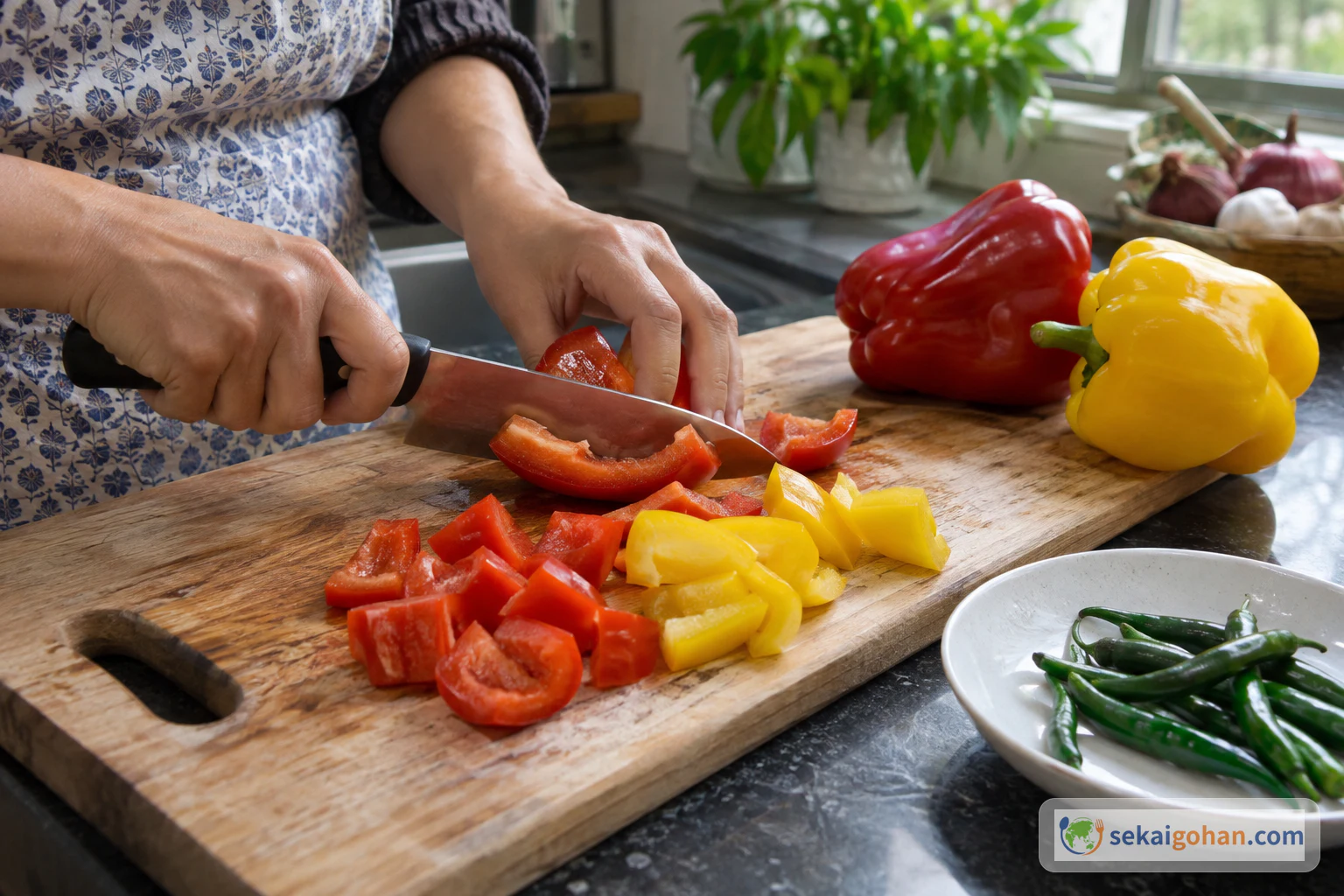
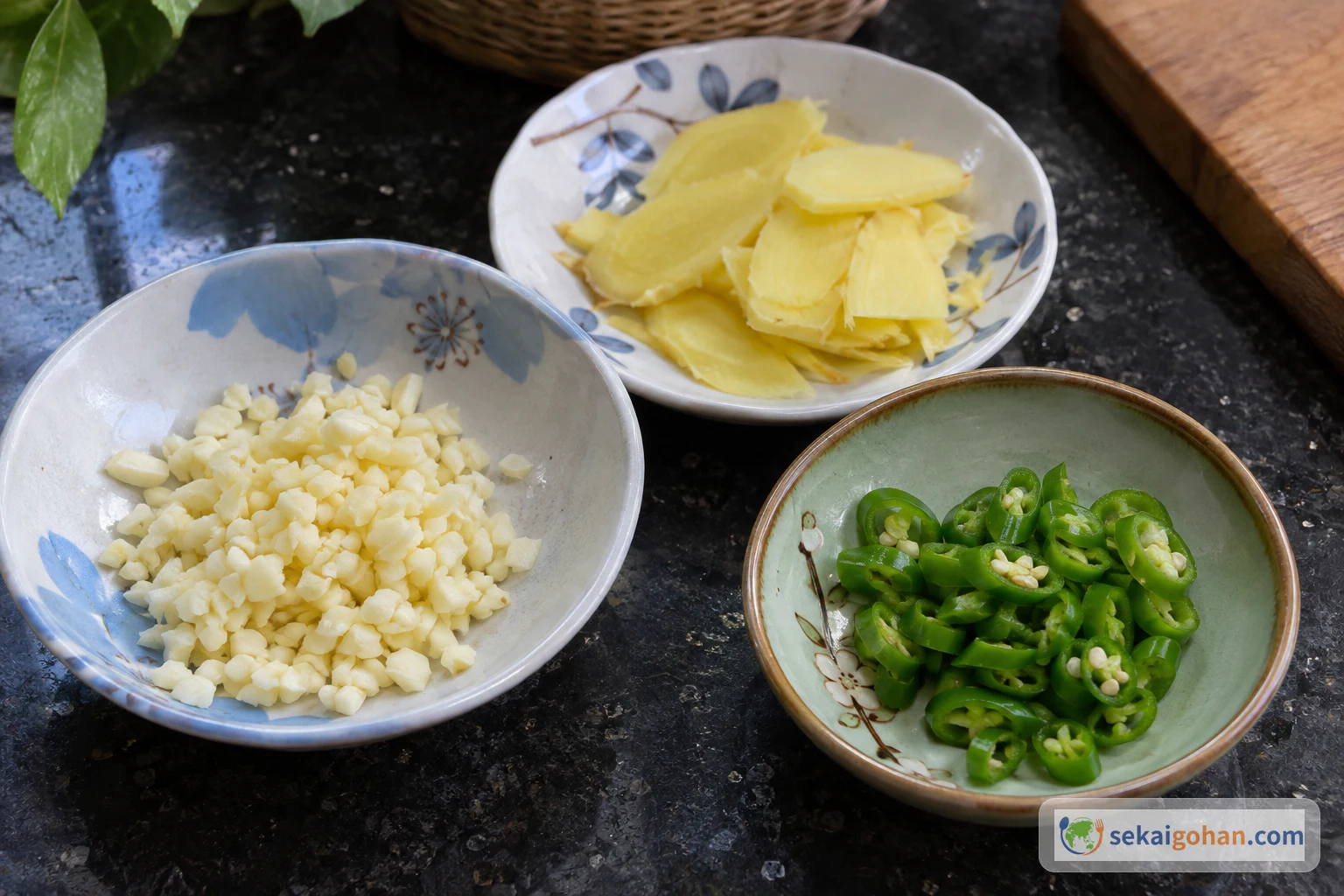
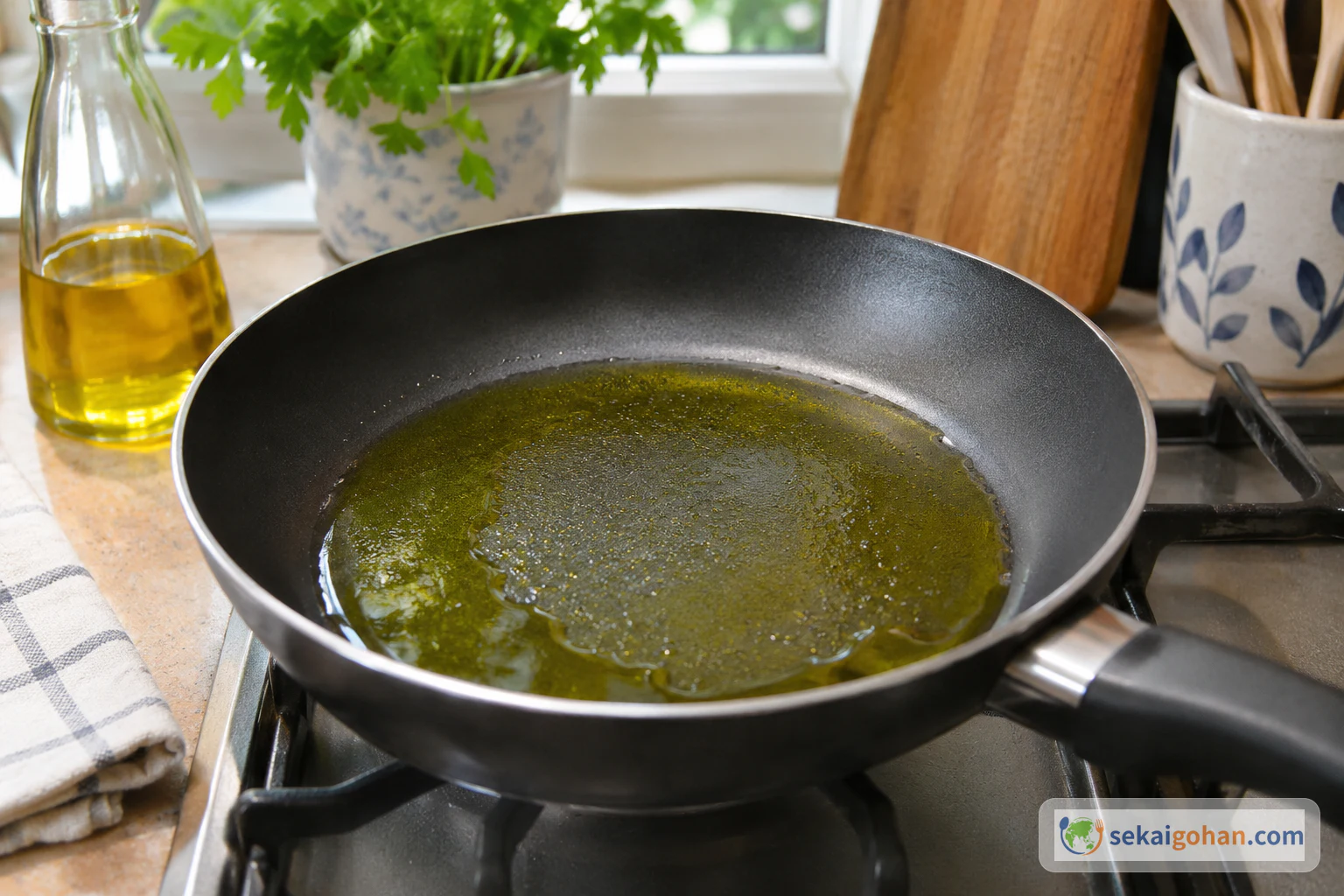
Prepare everything first (steps 1–4). The chicken is fried briefly and removed (steps 5–9), the sauce is built in the same pan (steps 10–19), and the chicken returns to finish cooking in the covered sauce (steps 20–31).
Serving: Keep the Accompaniments on the Side
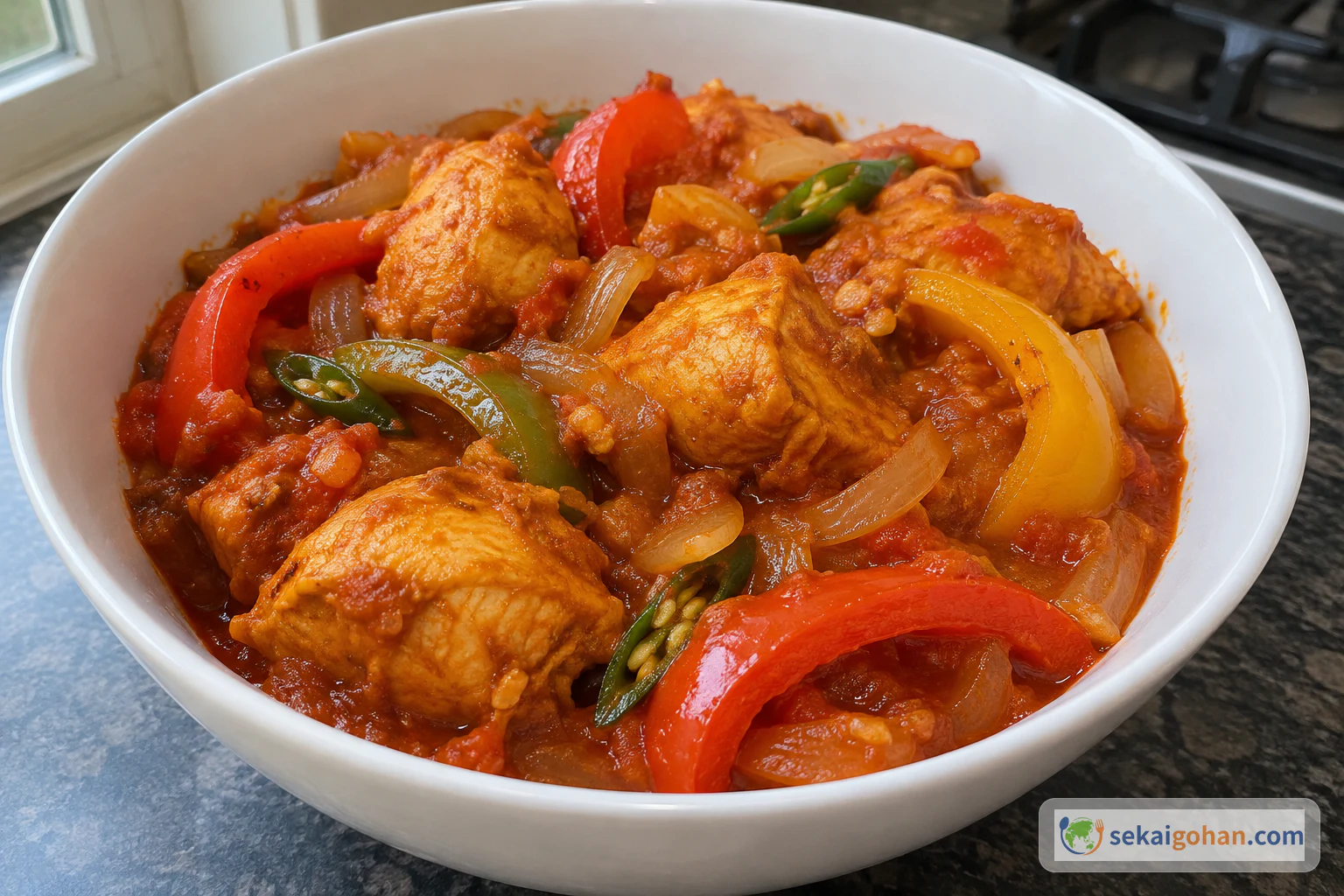
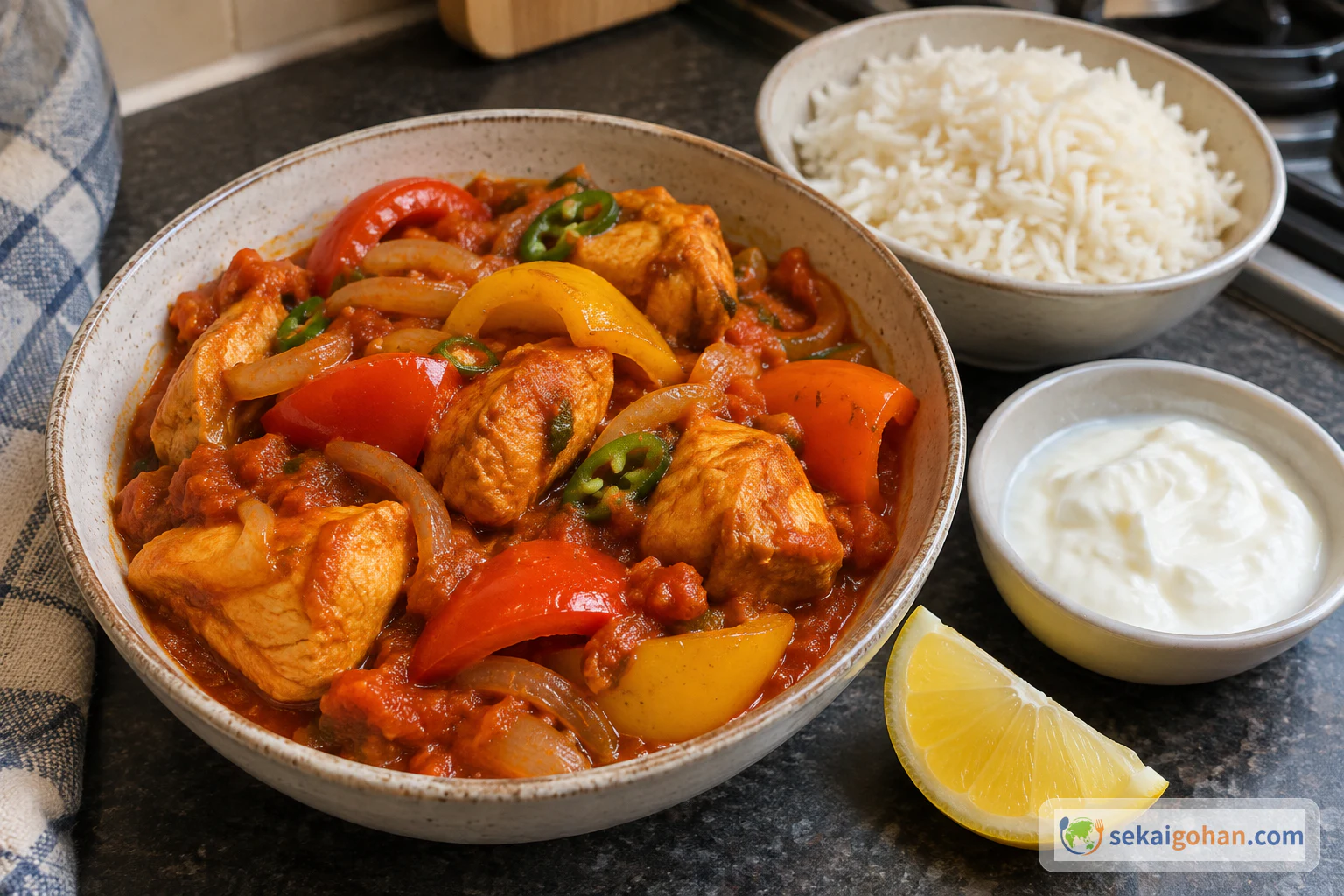
Serve the jalfrezi hot. The NHS recipe suggests eating it with rice or chapati, and with plain yogurt and lemon if you like. These are optional and stay on the side: spoon a little yogurt or squeeze lemon over your own portion at the table rather than stirring either into the pan.
When Things Go Off Course
| Problem | Likely cause | What to do |
|---|---|---|
| The spices or chicken catch on the base early on | Not stirred often enough over medium heat | Stir frequently through the 3–4 minutes on medium heat, as in step 8 |
| The chicken looks done before the simmer | The first fry only begins to whiten the surfaces | Take it out as planned; it finishes cooking only after it returns to the covered sauce |
| The center of the chicken has not reached 75°C for 1 minute | Thick pieces, uneven cubes | Keep the pan covered and simmering on low, then check the thickest piece again |
| No blender | — | Crush the canned tomatoes with a potato masher or the back of a fork |
| You doubled the cumin by habit | Adding cumin at both spice stages | In this version the heaped teaspoon goes in once, with the chicken; add nothing with the coriander powder and garam masala |
| The heat is stronger than expected | Green chilies and chili powder vary in heat | Serve plain yogurt on the side, and next time choose chilies and powder whose heat you know |
Variations: One Name, Many Pans
The jalfrezi name is not tied to one fixed set of ingredients. Rana's article notes vegetarian, prawn and cottage cheese (paneer) versions alongside meat ones. These are different dishes under the same name; the amounts and steps in this chicken recipe do not transfer directly to them.
The method can differ too. A member recipe on BBC Good Food builds its chicken jalfrezi with chicken, onion, red pepper, chili, tomato and spices, but cooks an onion sauce separately and brings everything together at the end. That is a different approach from the NHS one used here, so its marinade, sauce and spice amounts have not been mixed into this recipe.
Culture and Background: A Stir-Fried Dish with a Story Attached
Rana's 2022 article in Digest: A Journal of Foodways and Culture, drawing on earlier writing, describes jalfrezi as "spicy stir-fry" from jhal and frezi, and relays a tradition from the colonial period in which leftover meat was fried up with onion, garlic, ginger, vegetables and hot spices. The article presents this as part of the dish's lore and its discussion of "authenticity," not as an independently established origin. No single inventor or date is confirmed here, and the leftover-meat story does not describe this recipe, which starts from raw chicken.
The NHS version is one clear, home-sized way into that family.
Frequently Asked Questions
Is jalfrezi always made with chicken?
No. Chicken is common, but Rana's article mentions vegetarian, prawn and cottage cheese (paneer) versions as well. This article covers only the NHS chicken version.
Why slice the onions when the ingredient list says chopped?
The NHS ingredient list says chopped, while its method cooks sliced onions. This article follows the method, since that is how the dish is actually cooked in the steps.
Why does the cumin go in only once?
The NHS ingredient list gives one heaped teaspoon of cumin seeds, but cumin appears at two points in its method. To avoid using that single measure twice, this version adds all of it with the chicken and none later. This is an editorial reading of the recipe, made openly; the heaped teaspoon is kept as written, not converted to a level spoon or a weight.
Which cut of chicken should I use?
The NHS recipe says boneless chicken without naming a cut or a thickness. Thigh or breast both fit that description. Cut the pieces evenly and check the center of the thickest piece at the end (step 28).
Can I leave out the salt?
Yes. Salt is optional in the NHS recipe. This version uses it, split into two half-teaspoons.
How long does it take?
The NHS page displays 15 minutes of preparation and 25 minutes of cooking. Some steps are timed only as "a few minutes," and the step times are not guaranteed to add up to that figure, so follow the cues in the pan and the chicken check rather than a single total.
Is this a low-fat or healthy recipe?
It comes from NHS Healthier Families, but this article does not reproduce or recalculate the NHS nutrition figures, and makes no low-fat or health claims.
How should I store leftovers?
No storage guidance or storage period is given for this recipe, so none is stated here.
Sources
- NHS Healthier Families, "Chicken jalfrezi recipe." The four-serving recipe used in this article: ingredients, amounts, the five-stage method, cooking times within the method, and the suggested accompaniments. https://www.nhs.uk/healthier-families/recipes/chicken-jalfrezi/
- BBC Good Food, "Chicken jalfrezi" (member recipe by caaaath). Referenced only as a different version that cooks an onion sauce separately; none of its amounts or steps are used here. https://www.bbcgoodfood.com/recipes/chicken-jalfrezi
- Navreet Kaur Rana, "The Perpetual Quest for 'Authenticity,'" Digest: A Journal of Foodways and Culture 9:1 (2022), Indiana University ScholarWorks. The jhal / frezi explanation, the colonial-period leftover-meat tradition (reported as food lore), and the existence of vegetarian, prawn and cottage cheese versions. https://scholarworks.iu.edu/journals/index.php/digest/article/download/34627/37858/89309
- Ministry of Health, Labour and Welfare (Japan), "家庭での食中毒予防" (Preventing food poisoning at home). General household guidance on heating foods such as chicken to 75°C at the center for at least 1 minute, and on preventing cross-contamination. Not part of the NHS recipe. https://www.mhlw.go.jp/stf/seisakunitsuite/bunya/kenkou_iryou/shokuhin/syokuchu/01_00008.html