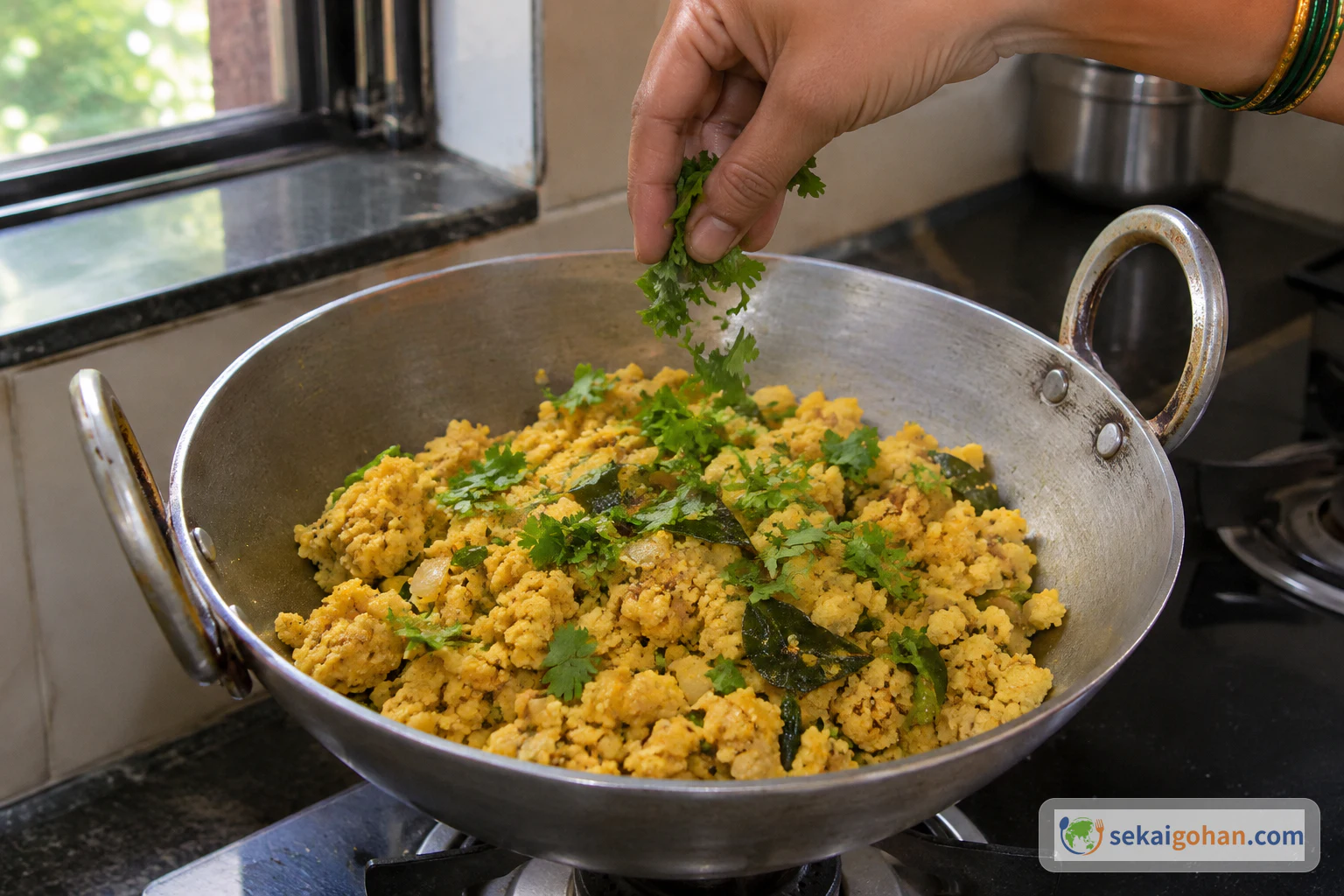
Dry Jhunka: Toast the Flour First, Then Let It Take On Water
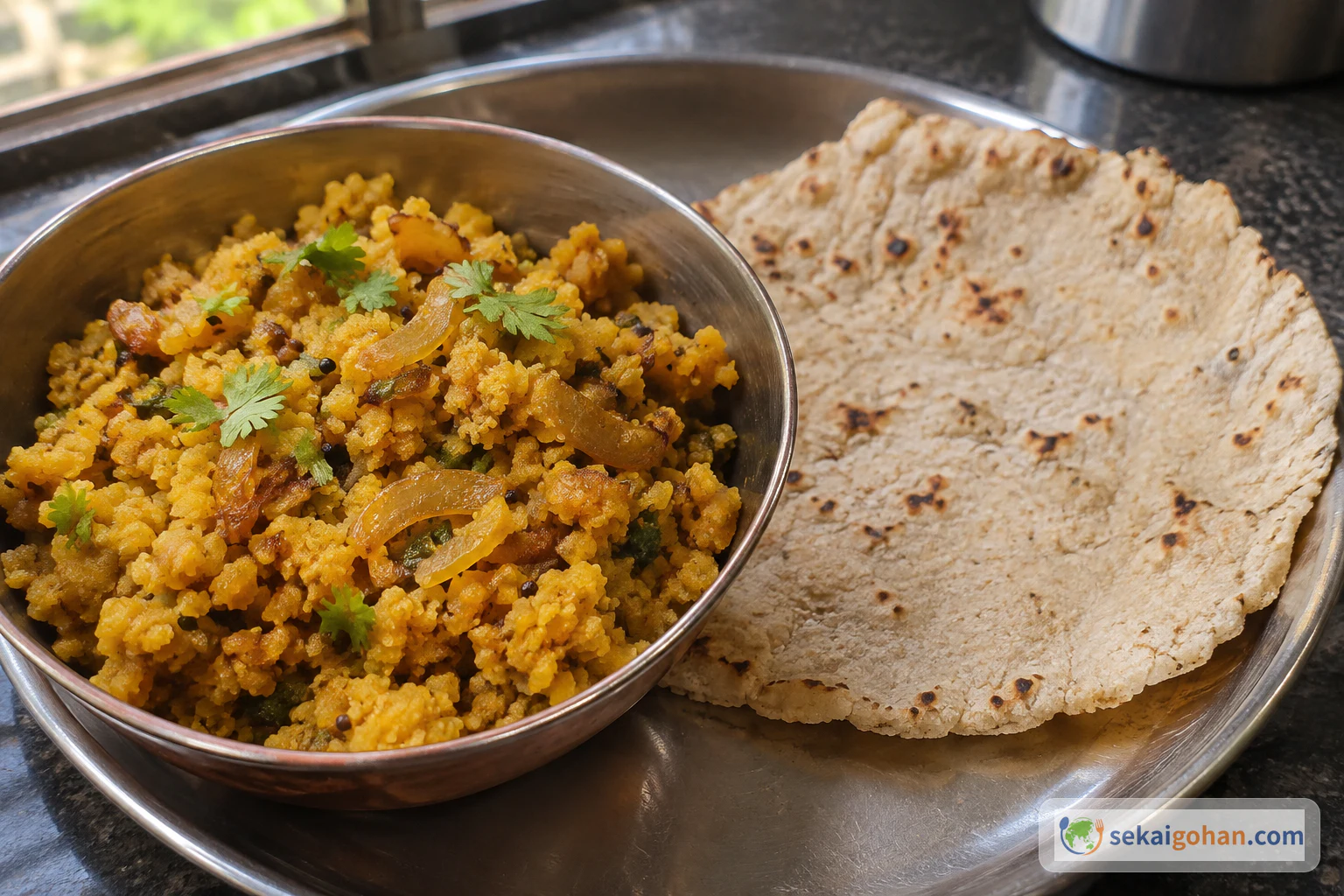
Toast the besan in the spiced onion base until it smells fragrant, add hot water only a little at a time, and stop when everything is evenly moist with no dry clumps. The finished jhunka is crumbly and moist, not a sauce or a batter.
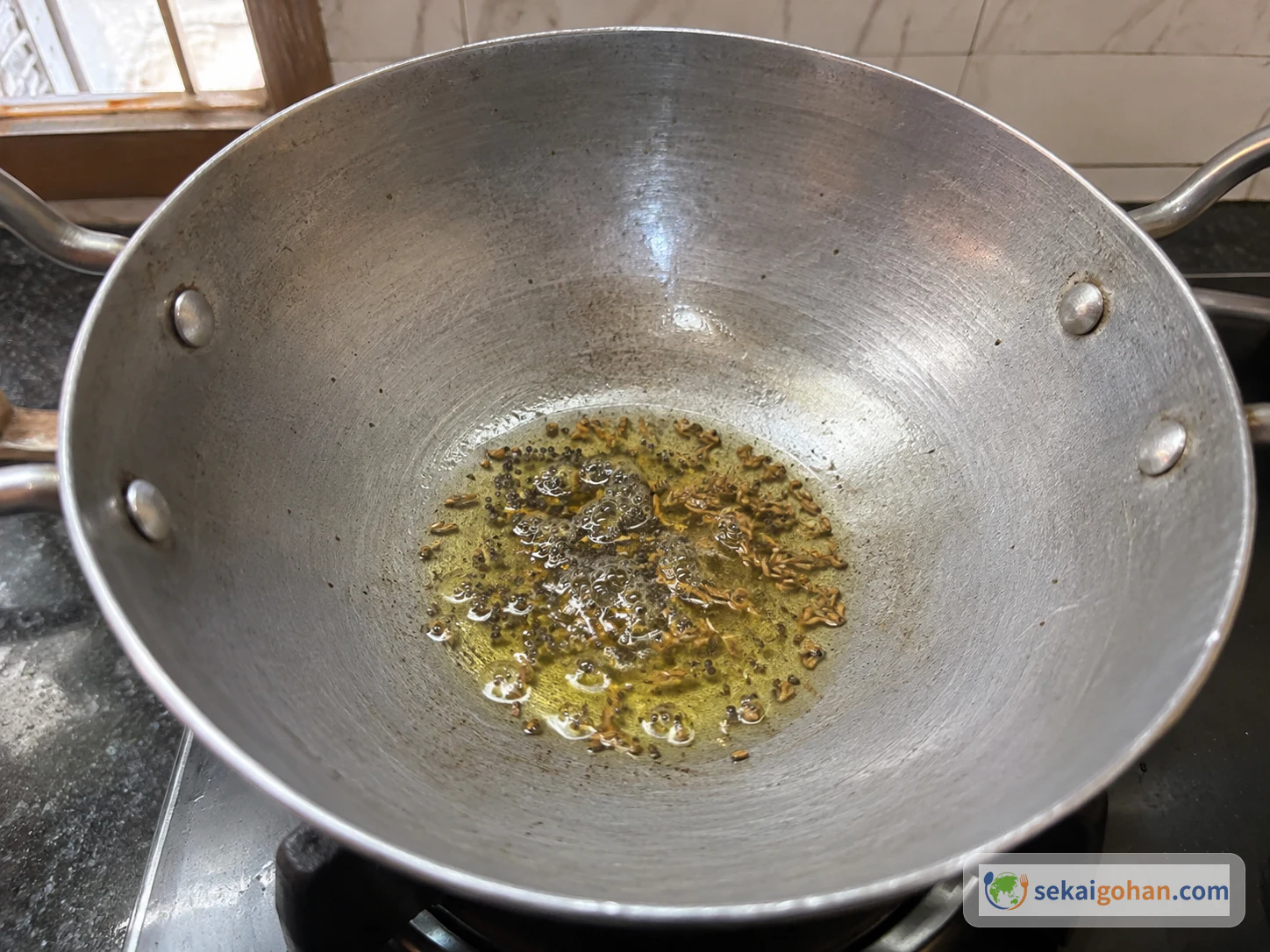
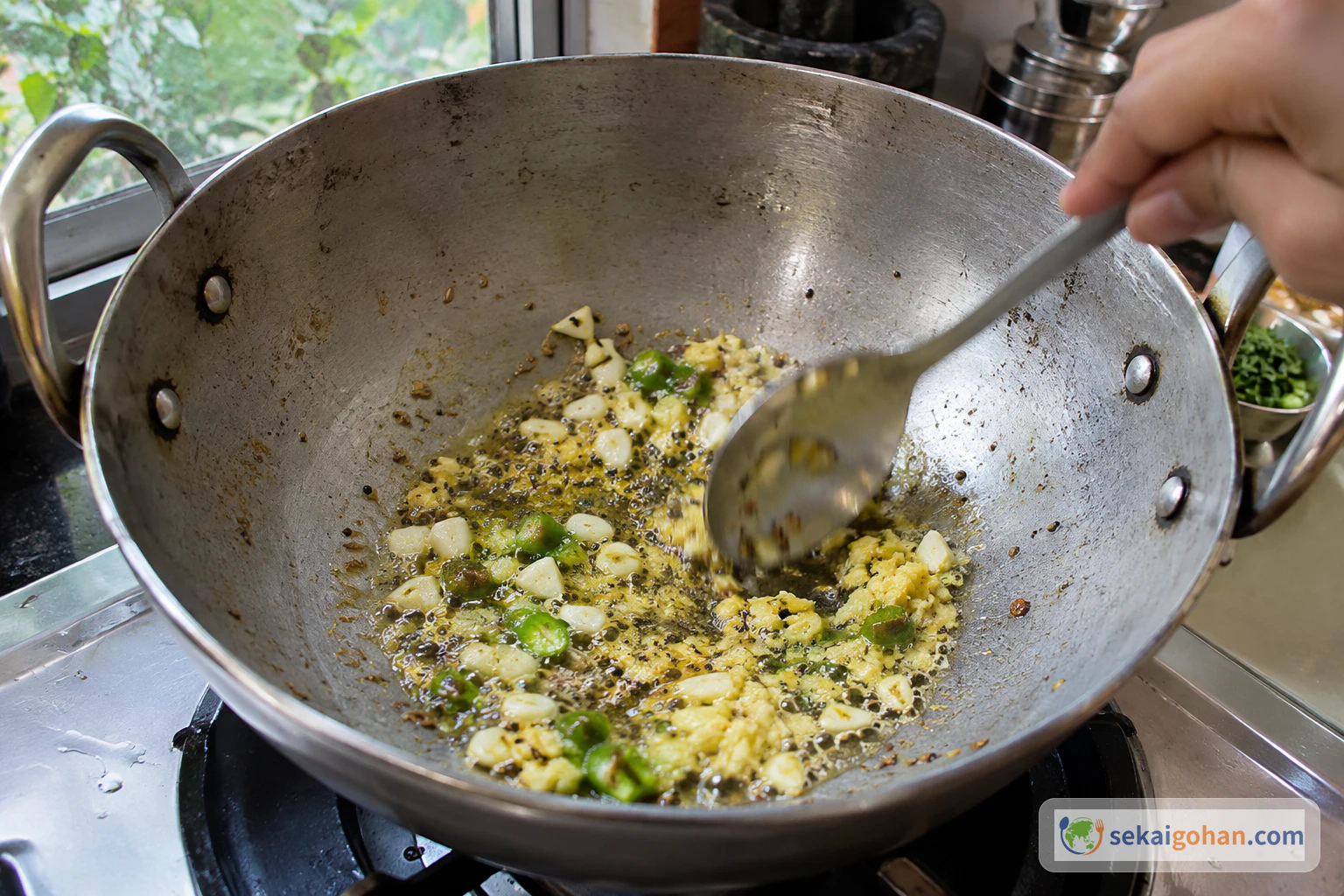
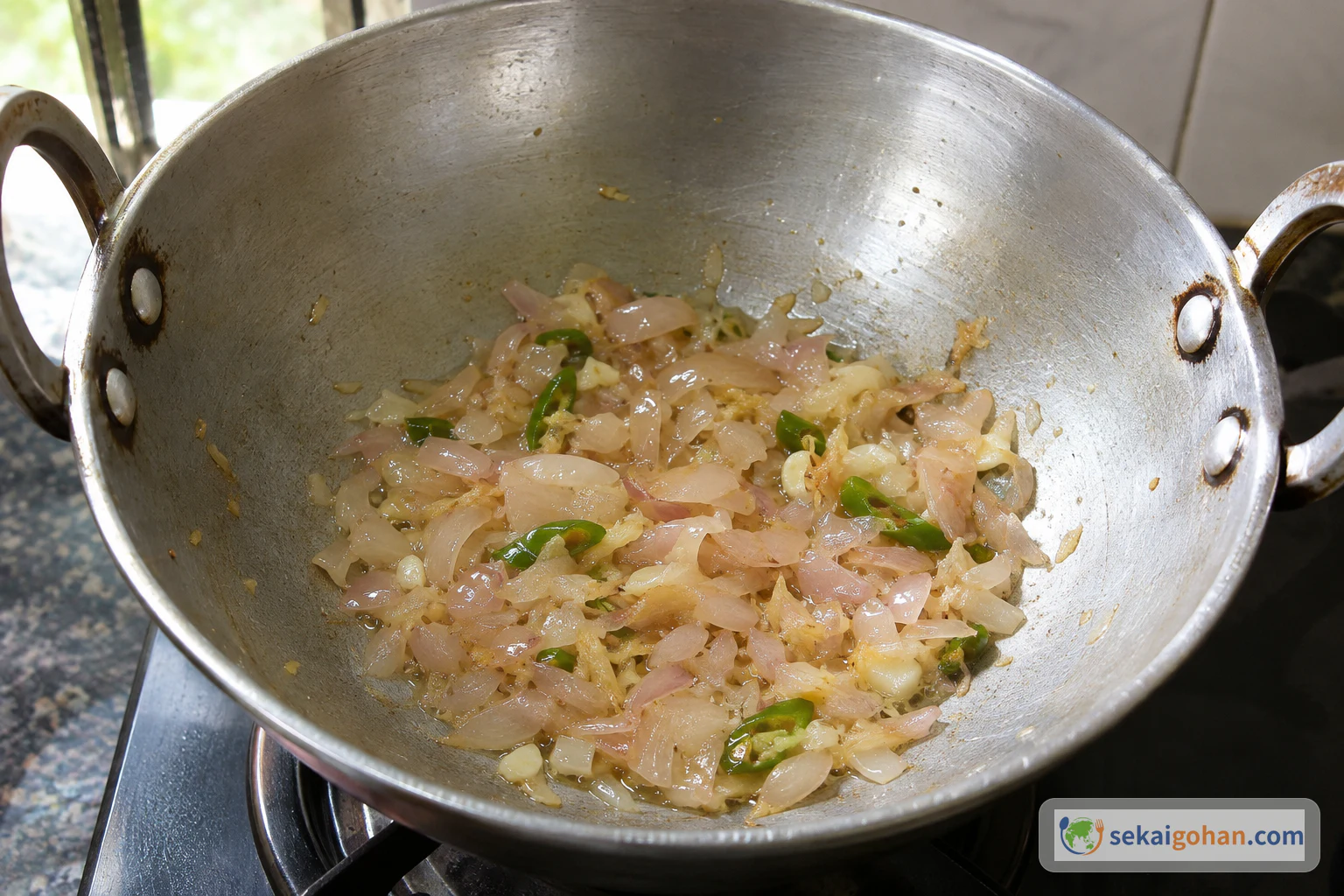
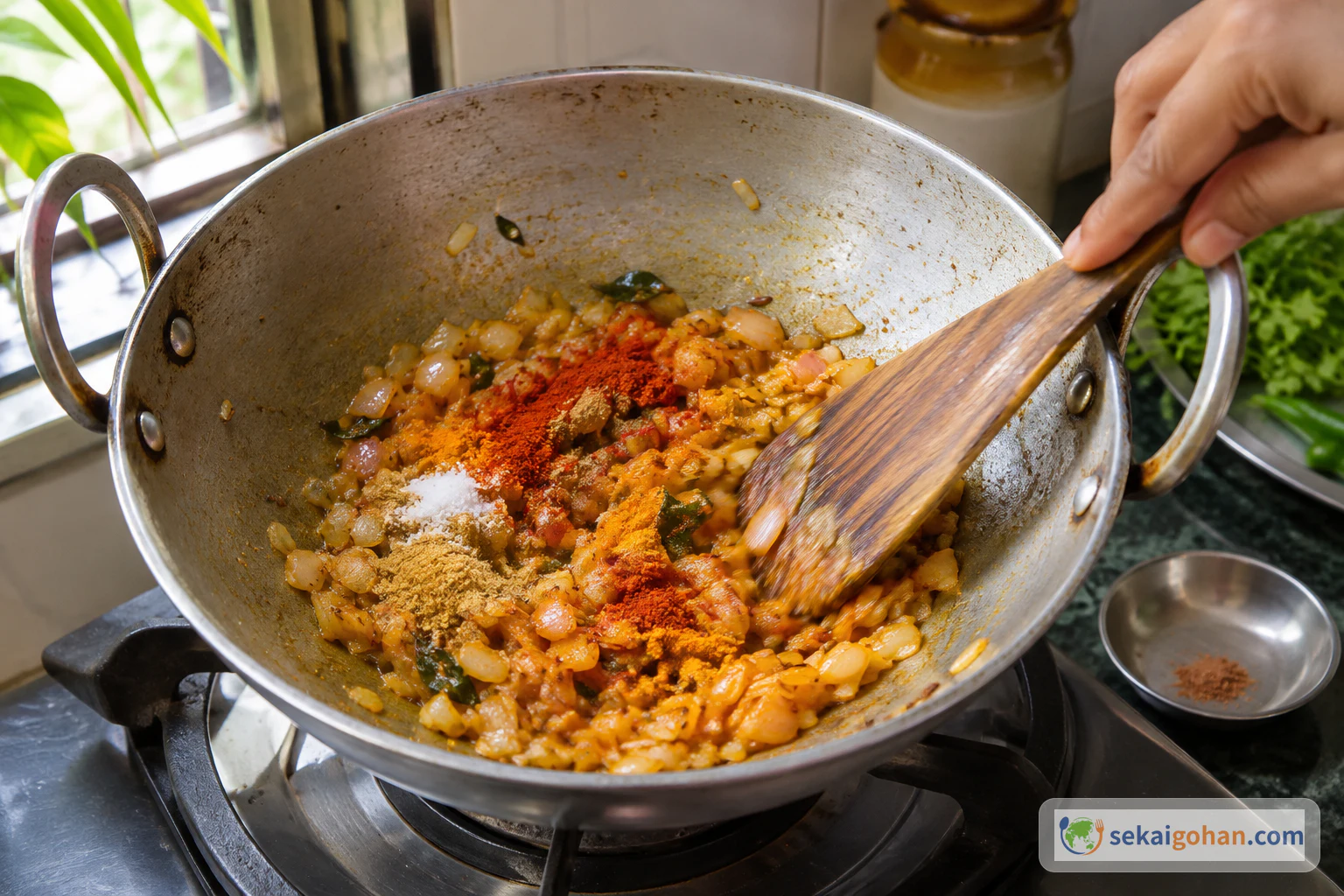
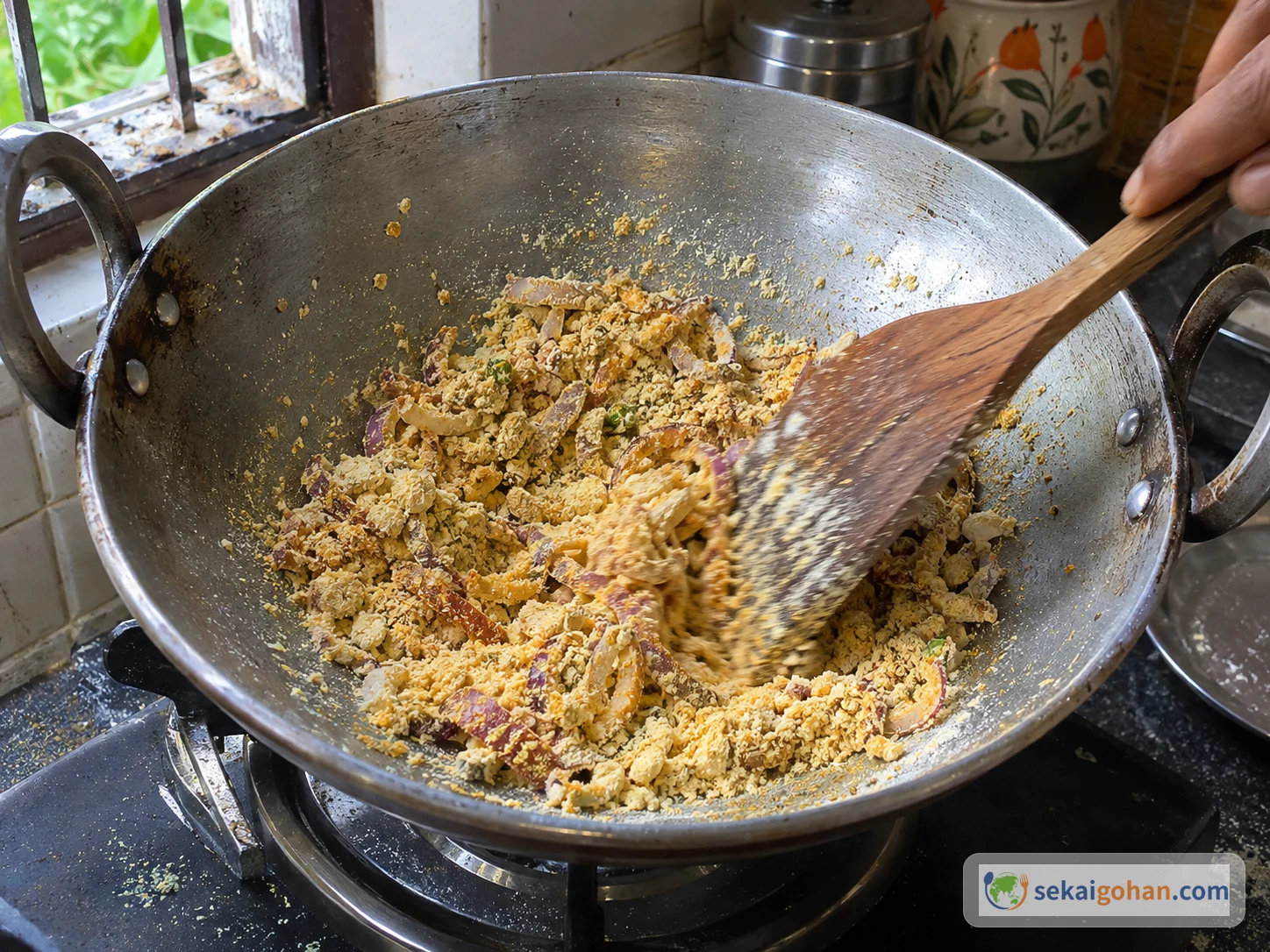
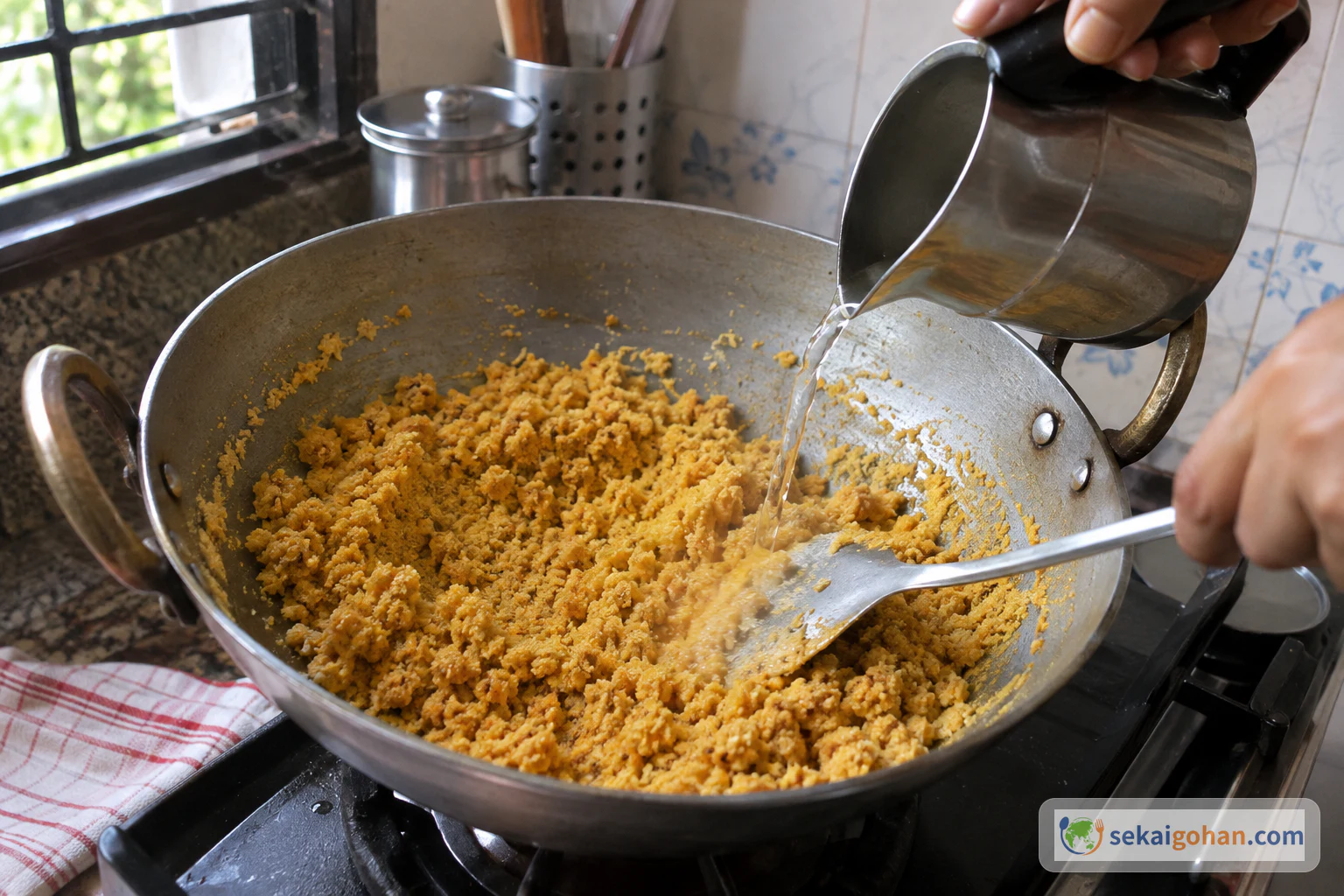
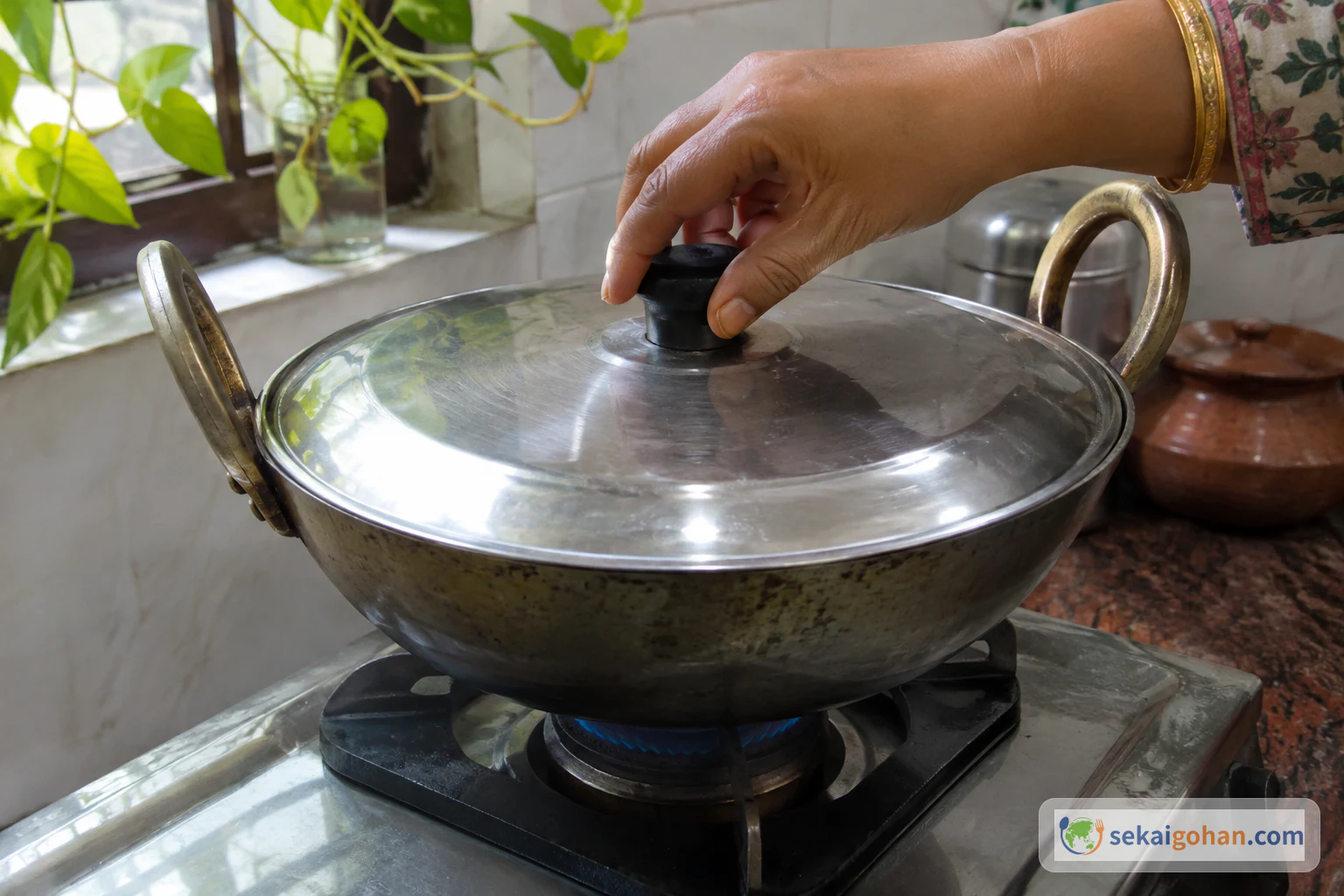
Mustard and cumin seeds crackle in hot oil with a pinch of hing. Garlic, ginger and green chilli follow, then onion that softens until it turns translucent. Ground spices go in over low heat, and only then does the chickpea flour (besan) enter the pan, dry, to be stirred and toasted with everything else. Hot water comes last, sprinkled in a little at a time, before a lid goes on and the pan steams until the besan is completely cooked.
That is the shape of jhunka (also written zunka) in this article: a dry, crumbly Maharashtrian dish built by toasting flour first and moistening it afterward. The recipe here follows "Mayur's Maharashtrian Zunka," published on Rediff.com Get Ahead under the name Mayur Sanap. It serves 3–4 and is traditionally eaten with jowar bhakri, according to that article.
Not every jhunka is made this way. Some versions boil water first and stir besan into it for a looser, soupier dish; others mix besan and water into a batter before it ever meets the pan. Those are described further down, but their amounts and steps are not mixed into this recipe. For more dishes from the same country, see India.
This recipe has not been kitchen-tested by Sekai Gohan. The amounts, times and cues below are those of the published recipe; nothing here is a measured result from our own kitchen.
Ingredients: Serves 3–4, With the Water Left Open
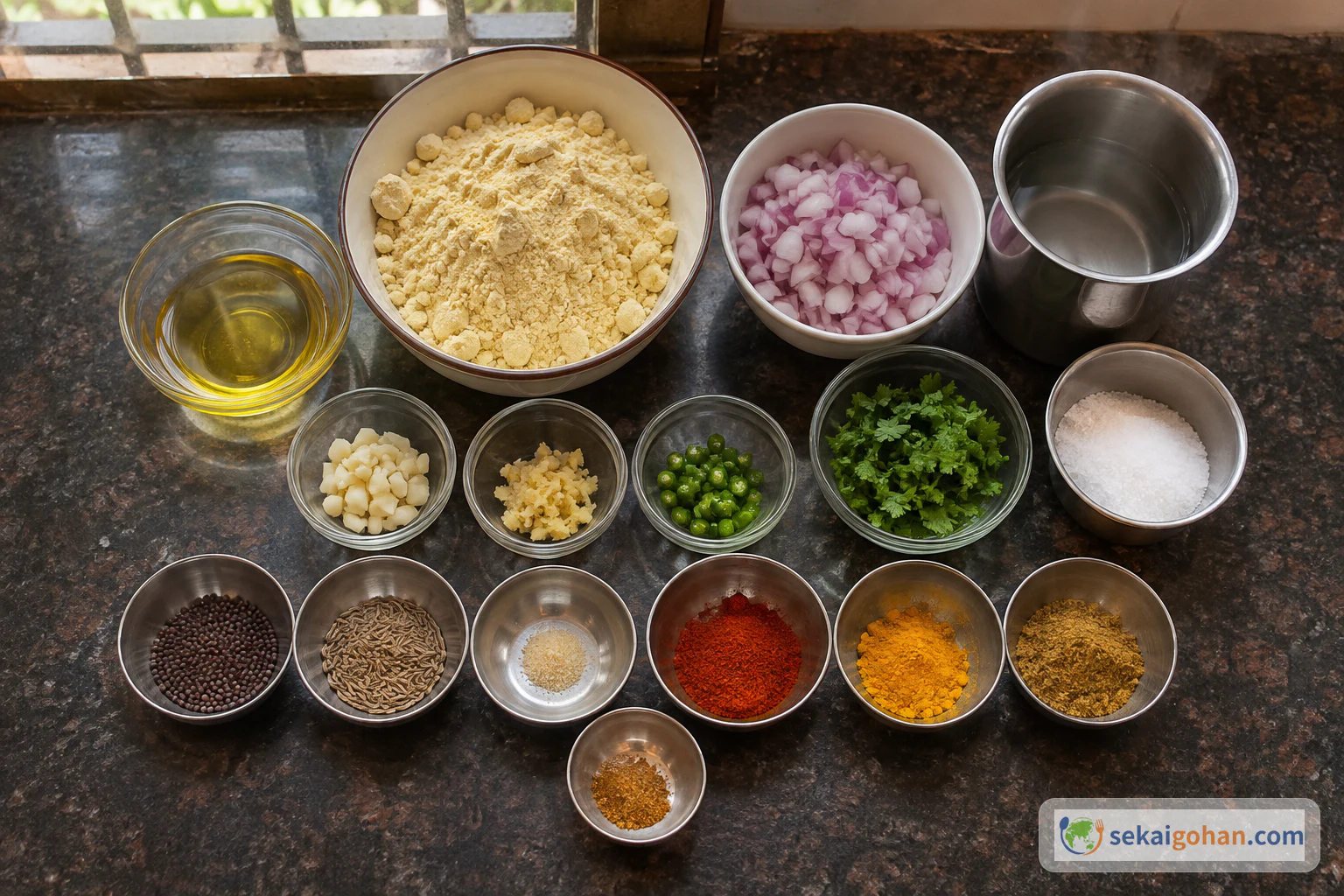
Equipment
- Kadhai or deep frying pan
- Lid that fits the pan
- Spoon or spatula for stirring
- Small vessel or kettle for hot water
Choosing and Substituting
Water. Sprinkle in hot water after the besan has been toasted, stir after each addition, and stop when the whole mixture is evenly moist with no dry clumps left. How much that takes can vary with the flour, the pan and the heat.
Salt. Use salt to taste (about 1 tsp).
Oil. Use vegetable oil, preferably peanut oil. Check ingredient labels for your own needs.
Garam masala. For the version shown here, use ¼ tsp; it remains optional and may be omitted.
Method: From Crackling Seeds to Moist, Crumbly Besan
Because the flour is toasted in the spiced onion base before any water is added, it picks up aroma and stays granular. Water added a little at a time then moistens the crumbs rather than turning them into batter.
When the Pan Doesn't Look Right
| What you see | What to do |
|---|---|
| Dry, floury clumps remain after adding water | Sprinkle in a little more hot water and stir, repeating until evenly moist with no dry clumps |
| The mixture is turning into a paste or batter | Stop adding water. The dry style depends on small additions; add the next splash only if dry clumps remain |
| The besan still isn't cooked when the 10 minutes are up | Keep it covered and continue until the besan is completely cooked; the time is a guide, the cooked state is the endpoint |
| Ground spices seem to be catching in step 4 | Keep the heat low and stir gently; this step is short |
"Completely cooked" is a cooked-through state you judge in the pan. This article does not give a target temperature or a guarantee tied to the 10 minutes.
Variations Within This Recipe
- With or without garam masala. The ¼ tsp is optional; both ways follow the recipe.
- Choice of oil. Peanut oil is preferred, but any vegetable oil is within the recipe.
- Peanut chutney on the side. Rediff pairs the dish with a dry peanut chutney made separately. It is a side, not an ingredient.
Adding curry leaves, spring onions or raw onion moves toward the other versions described below rather than this one.
Jhunka at the Table, and Other Ways It Is Made
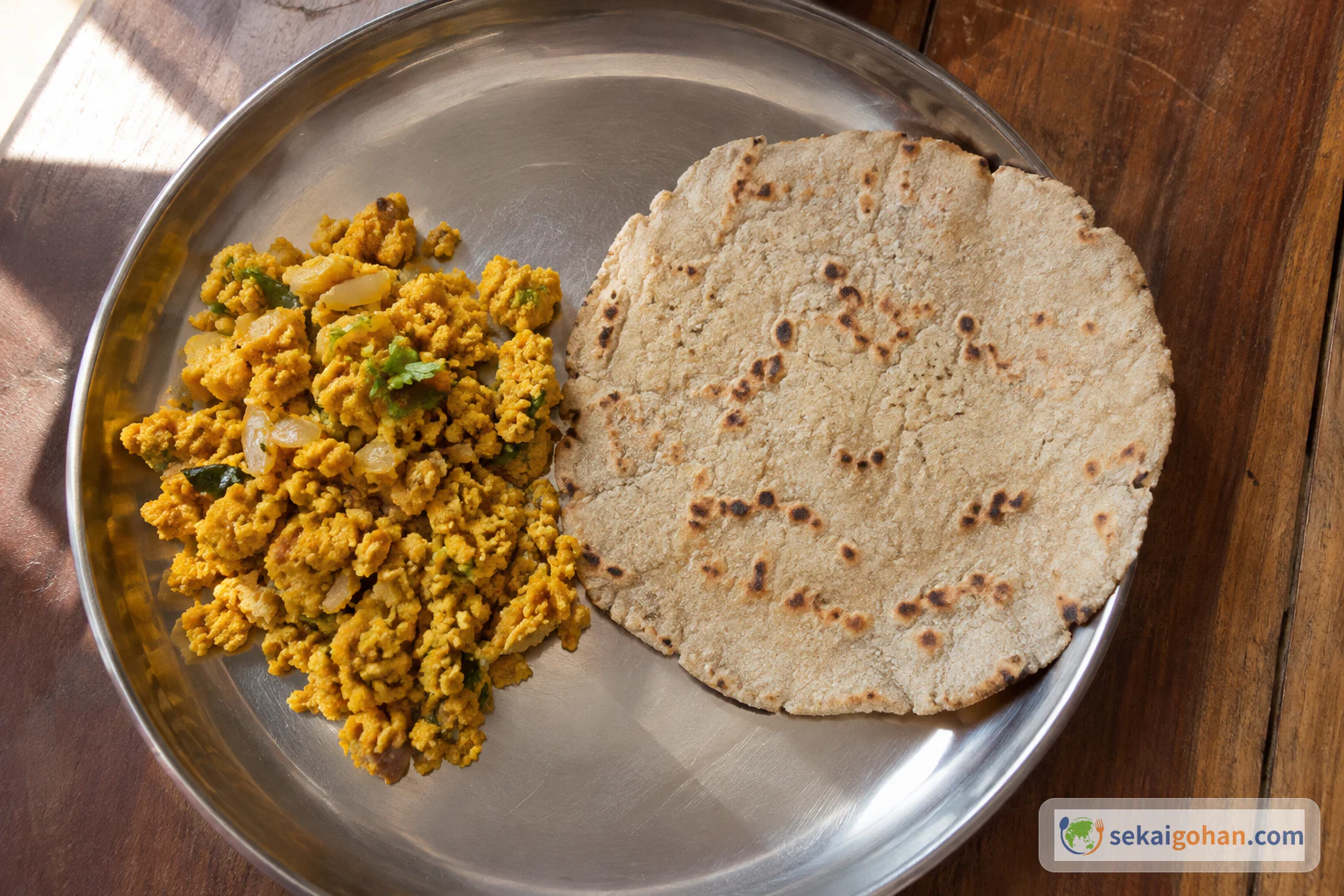
The Rediff article frames this zunka as traditionally served with jowar bhakri, and it recalls Jhunka Bhakar being sold at kendras in town. Those details come from that article's own telling; they are not presented here as the history of the dish as a whole.
Other sources show how wide the name stretches:
| Source | How its jhunka is made | How it differs from this recipe |
|---|---|---|
| Loksatta.com | 150 g besan, 4–5 tbsp oil, spring onion and other ingredients, with water sprinkled in an unspecified amount; garam masala appears in the method but not the ingredient list | A different set of ingredients and amounts. The article notes that the dish is made differently in different regions, and describes eating it in the fields with bhakri and raw onion |
| Madhwasakha.com | 1½ cups besan with 3 cups water: the water is boiled and the besan added gradually | A soupier version. The page also calls jhunka "pitla" and notes that a dry version exists; it suggests rice or chapati |
| NDTV Food | Besan and water are first mixed into a ghol (batter), then added to the kadhai, with curry leaves among the ingredients | The flour meets water before the pan, the reverse of toasting it dry first. The page also pairs it with bhakri |
None of these amounts or steps are carried into the recipe above. Seen side by side, the main dividing line is when the besan meets the water: toasted dry and moistened gradually here, stirred into boiling water in the Madhwasakha version, mixed into a batter first in the NDTV version.
Frequently Asked Questions
How much water should I use, in ml?
The recipe does not fix a total, so no ml figure is given. Add hot water a little at a time after toasting the besan, stirring after each addition, until it is evenly moist with no dry clumps.
How many grams of salt?
The recipe says salt to taste, with about 1 tsp as a guide. Taste and adjust; there is no gram figure.
Should I mix the besan with water first?
Not for this dry style: the besan is toasted in the pan first, and water follows in small additions. Mixing a ghol first is the method of a different version, such as the one on NDTV Food.
Are jhunka and pitla the same thing?
Madhwasakha's page calls jhunka "pitla" too, while also noting that a dry version exists, and the other sources use different methods. The names overlap in some sources, but they can't be treated as one fixed dish everywhere.
Can I serve it with something other than bhakri?
The Rediff recipe suggests hot jowar bhakri. Madhwasakha's page mentions rice or chapati for its own, soupier version, and Loksatta describes bhakri with raw onion. Each is that source's suggestion rather than a single required pairing.
How should I store leftovers?
None of the sources give storage or reheating guidance, so this article doesn't give storage times or temperatures.
Can I convert the cup of besan to grams?
The recipe doesn't say which cup it uses, so no conversion is given here.
Sources
- Mayur Sanap, "Recipe: Mayur's Maharashtrian Zunka," Rediff.com Get Ahead. The recipe adopted here: ingredients, serves 3–4, the order of steps and their cues, serving with jowar bhakri, the separate dry peanut chutney suggestion, and the article's mention of Jhunka Bhakar sold at kendras. https://m.rediff.com/getahead/report/recipe-mayurs-maharashtrian-zunka/20230525.htm
- Loksatta Online, "रोज तेच तेच खाऊन कंटाळा आलाय? तर झणझणीत झुणका एकदा बनवाच, जाणून घ्या सोपी रेसिपी," Loksatta.com. Comparison only: the article's note that jhunka is made differently in different regions, its description of eating it in the fields, and its own differing recipe. Not used in this recipe. https://www.loksatta.com/recipes/learn-the-easy-recipe-for-making-jhunka-in-marathi-cooking-tips-jap-93-3438079/
- "JHUNKA," Madhwasakha.com. Comparison only: the page's use of the name pitla, its note that a dry version exists, its soupier version with 1½ cups besan and 3 cups water, and its rice or chapati suggestion. Not used in this recipe. https://madhwasakha.com/recipe/jhunka/2
- "How To Make Maharashtrian Zunka Bhakri," NDTV Food. Comparison only: a version that makes a besan-and-water ghol before adding it to the kadhai, and its pairing with bhakri. Not used in this recipe. https://food.ndtv.com/webstories/food/maharashtrian-recipe-how-to-make-zunka-bhakri-at-home-27755