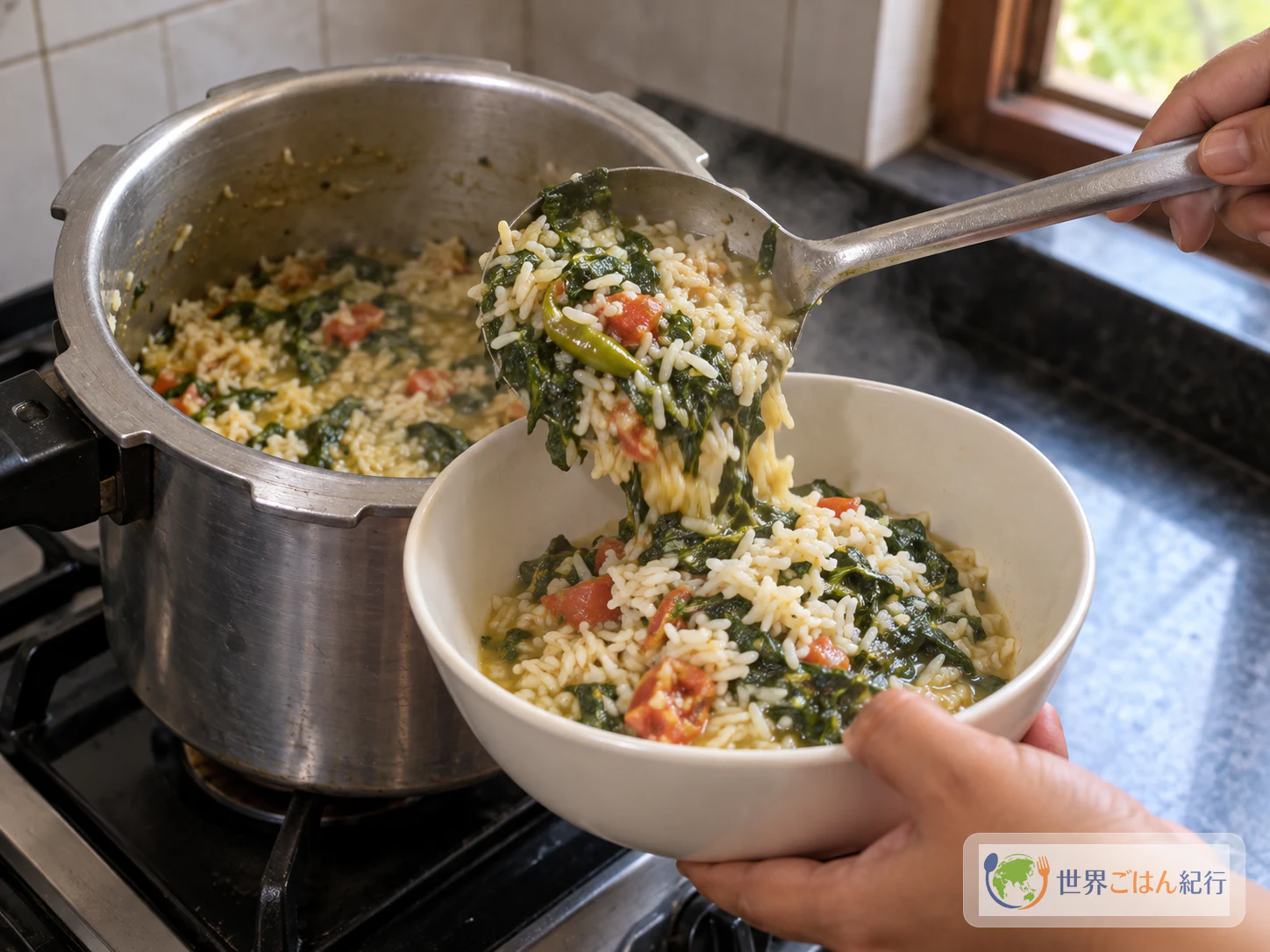
Galho: Rice, Spinach and Tomato Cooked Soft and Soupy
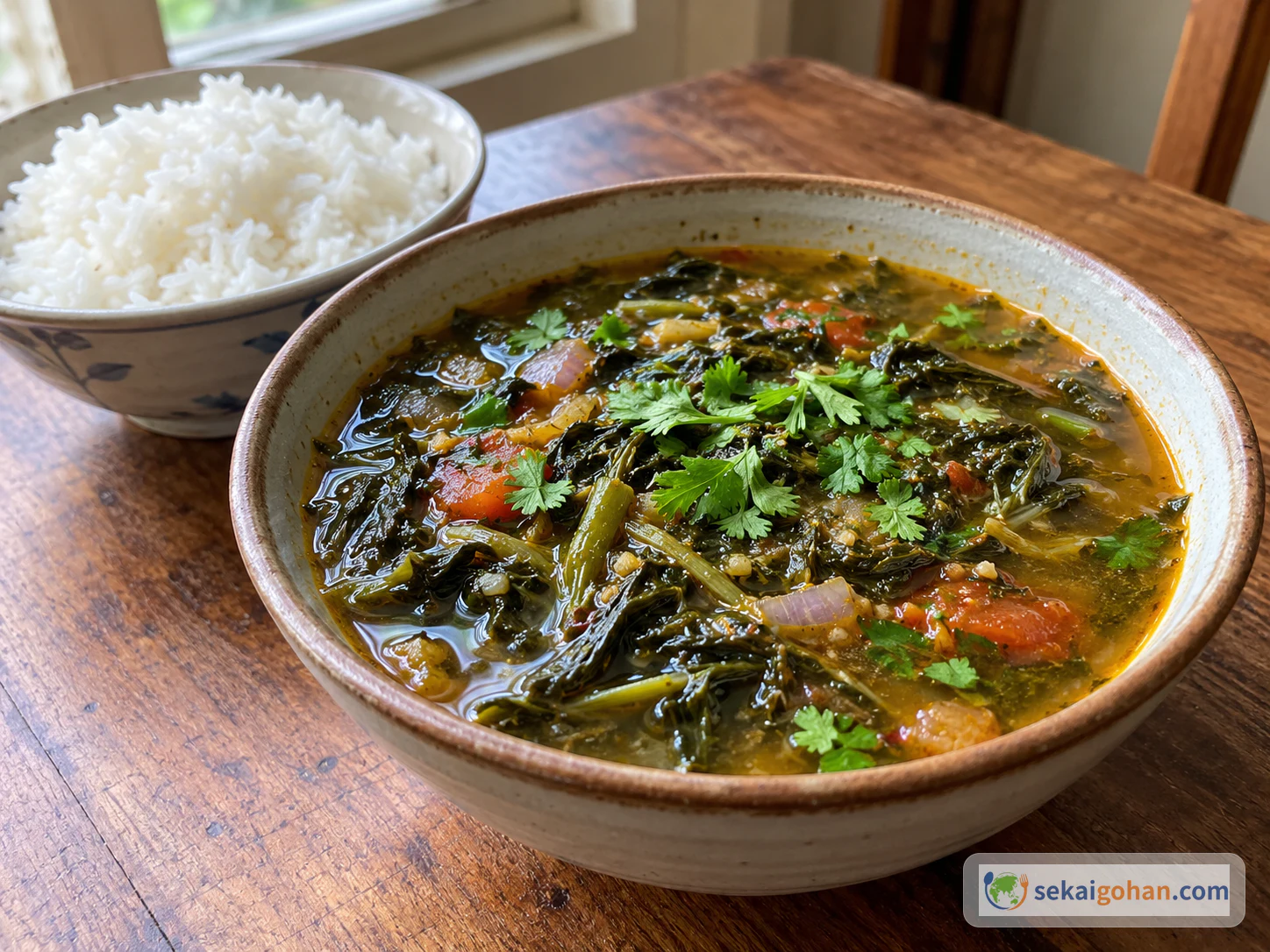
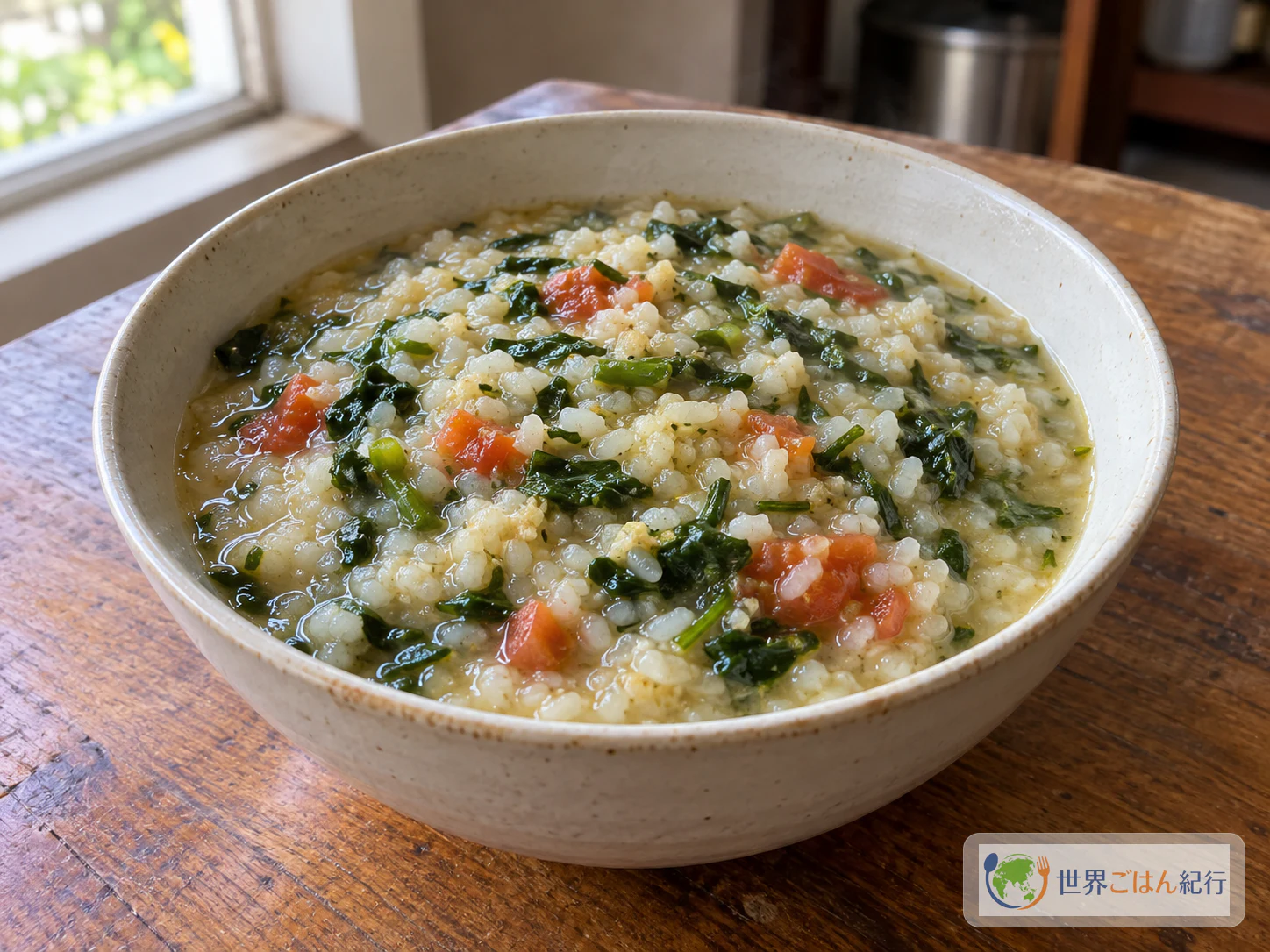
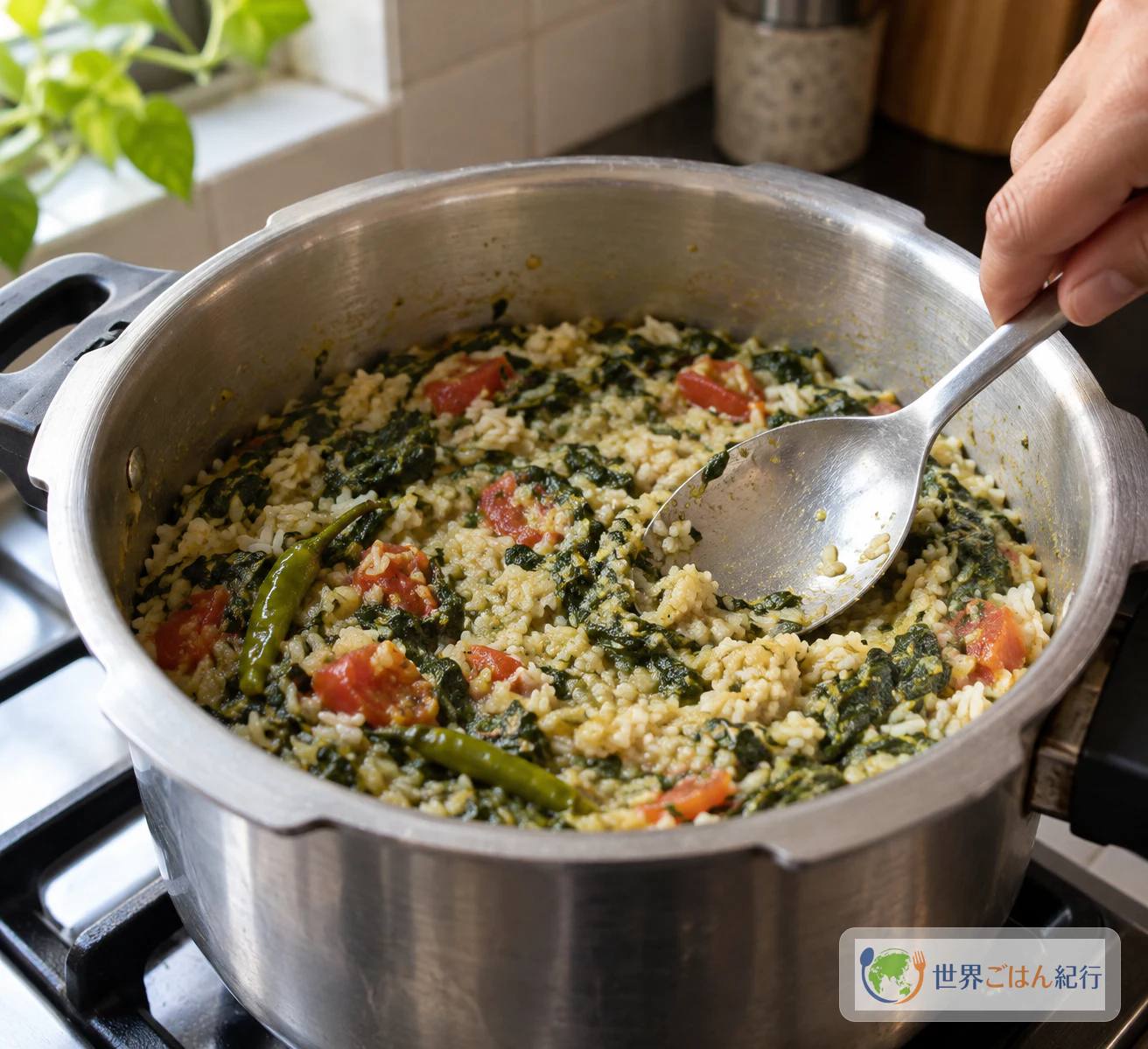
This is a soft, loose rice dish, not fluffy separate grains. Rice, spinach, tomato and green chili cook together under pressure, and the result is mashed gently with the back of a spoon before serving warm.
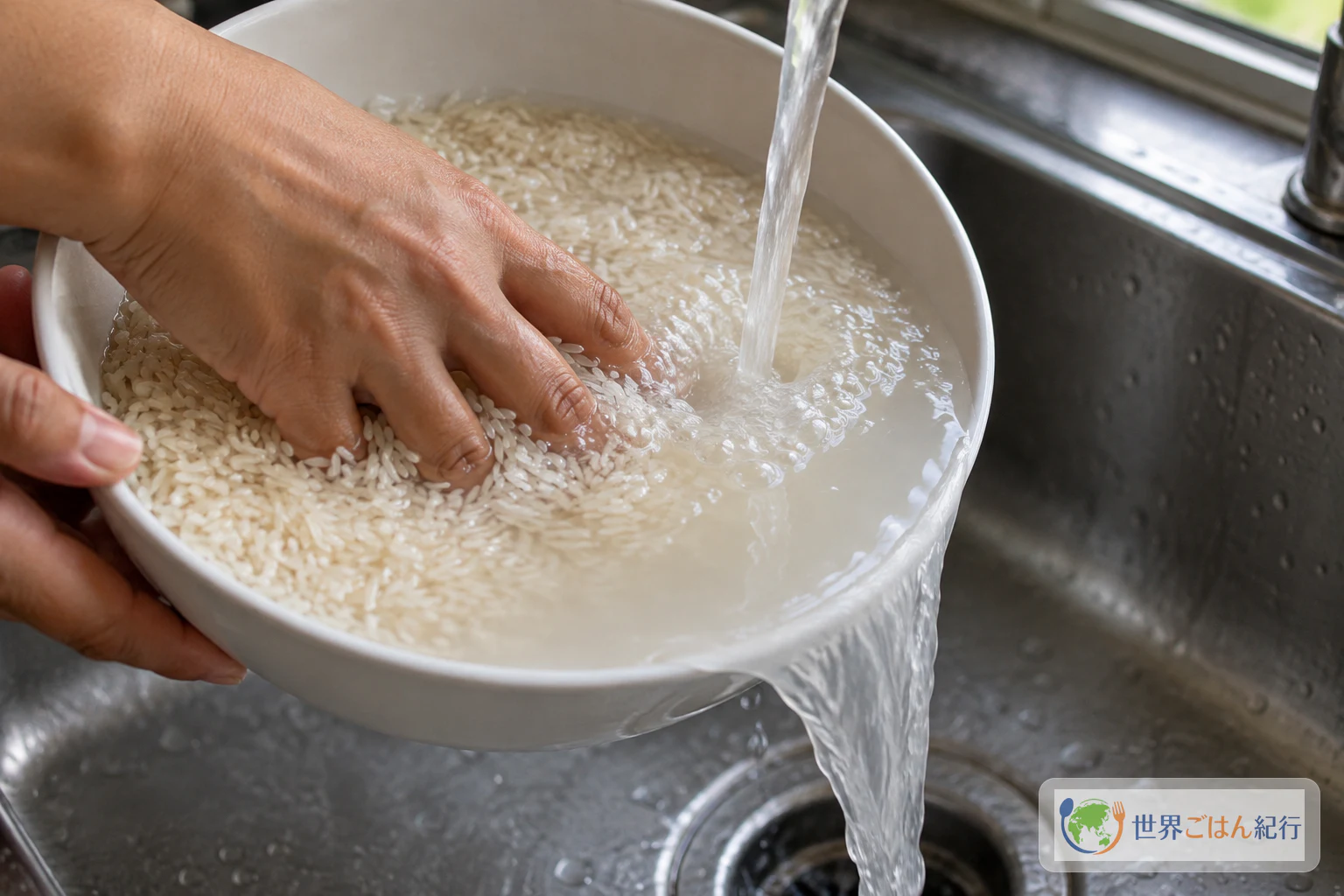
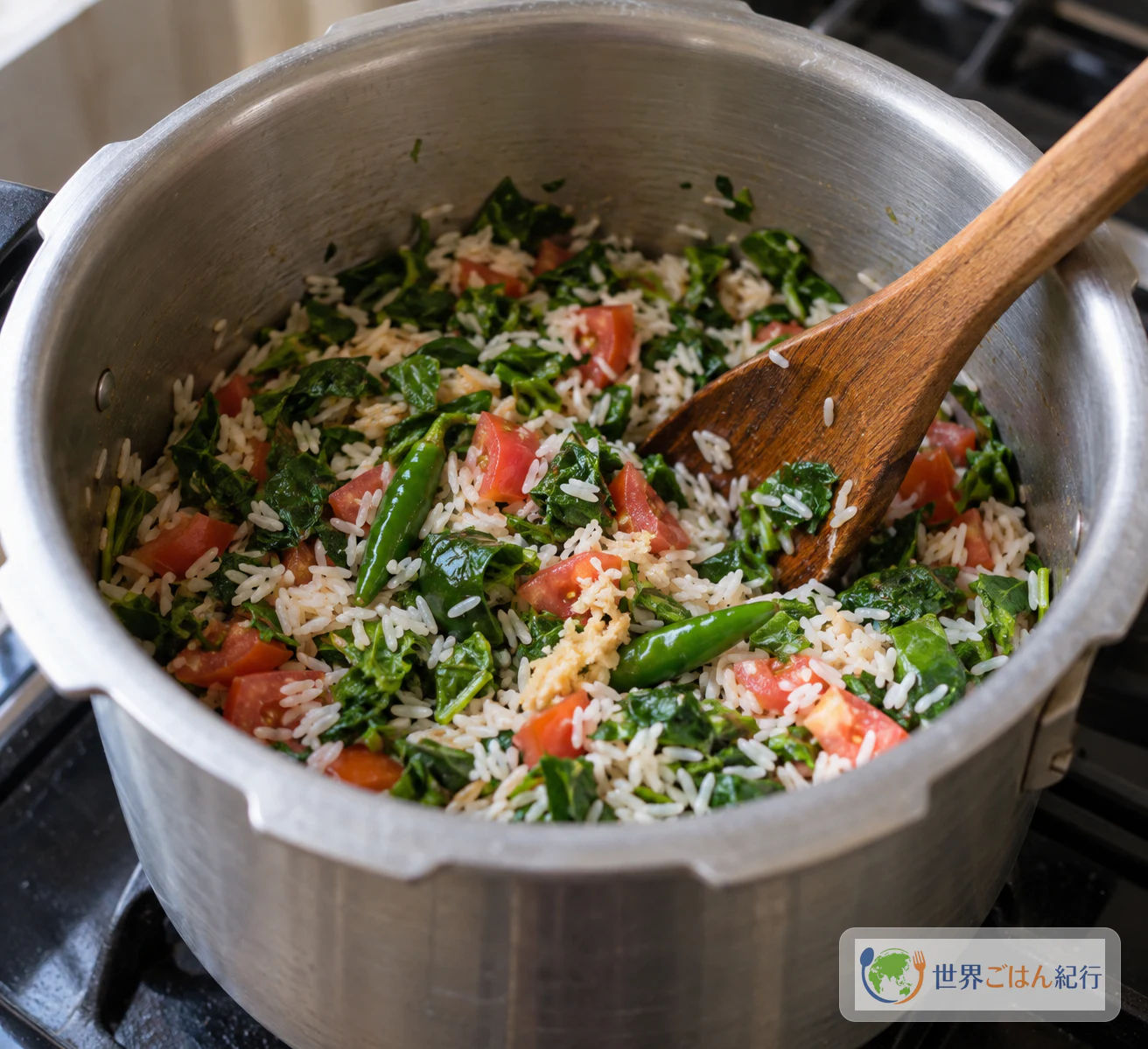
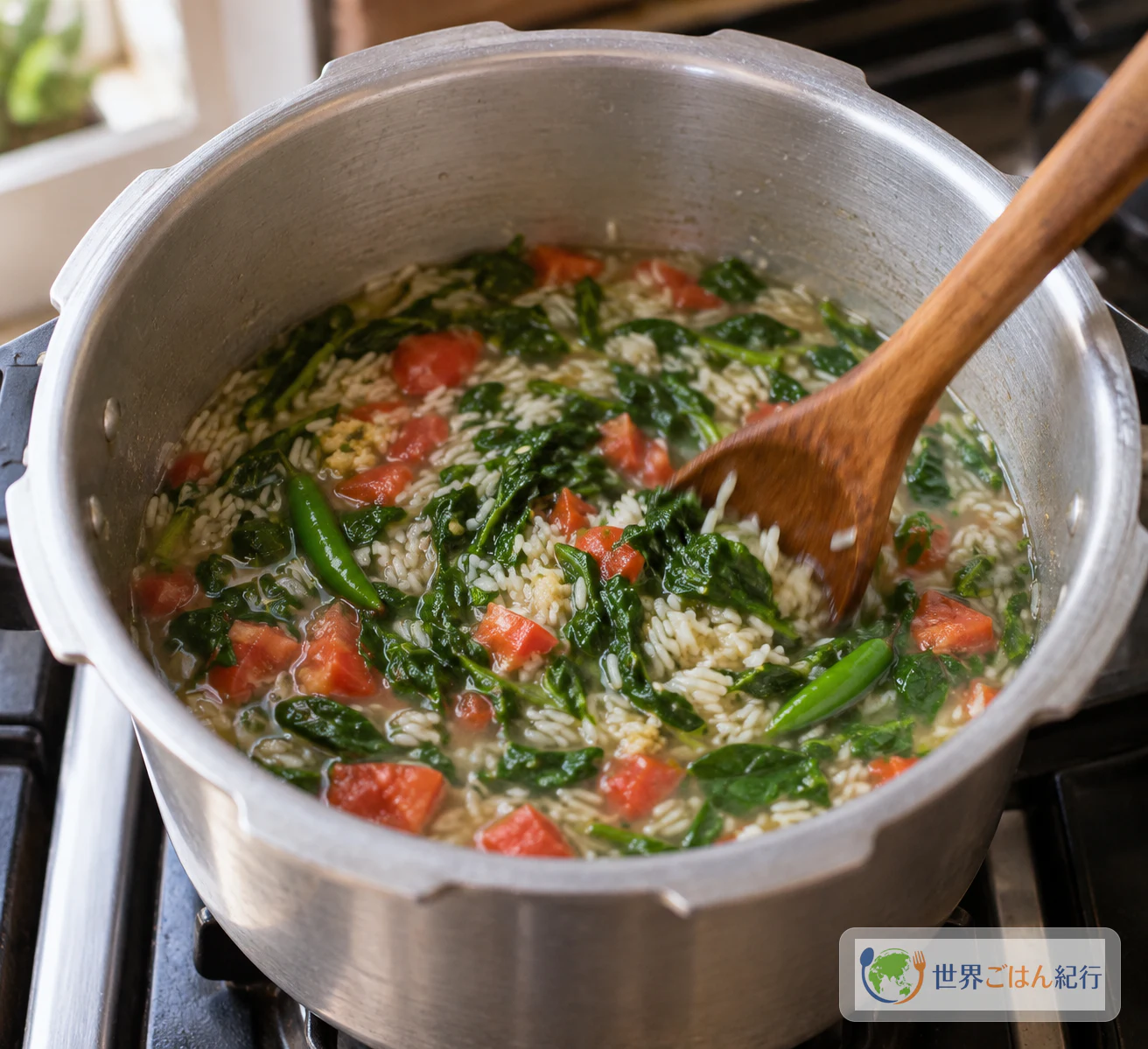
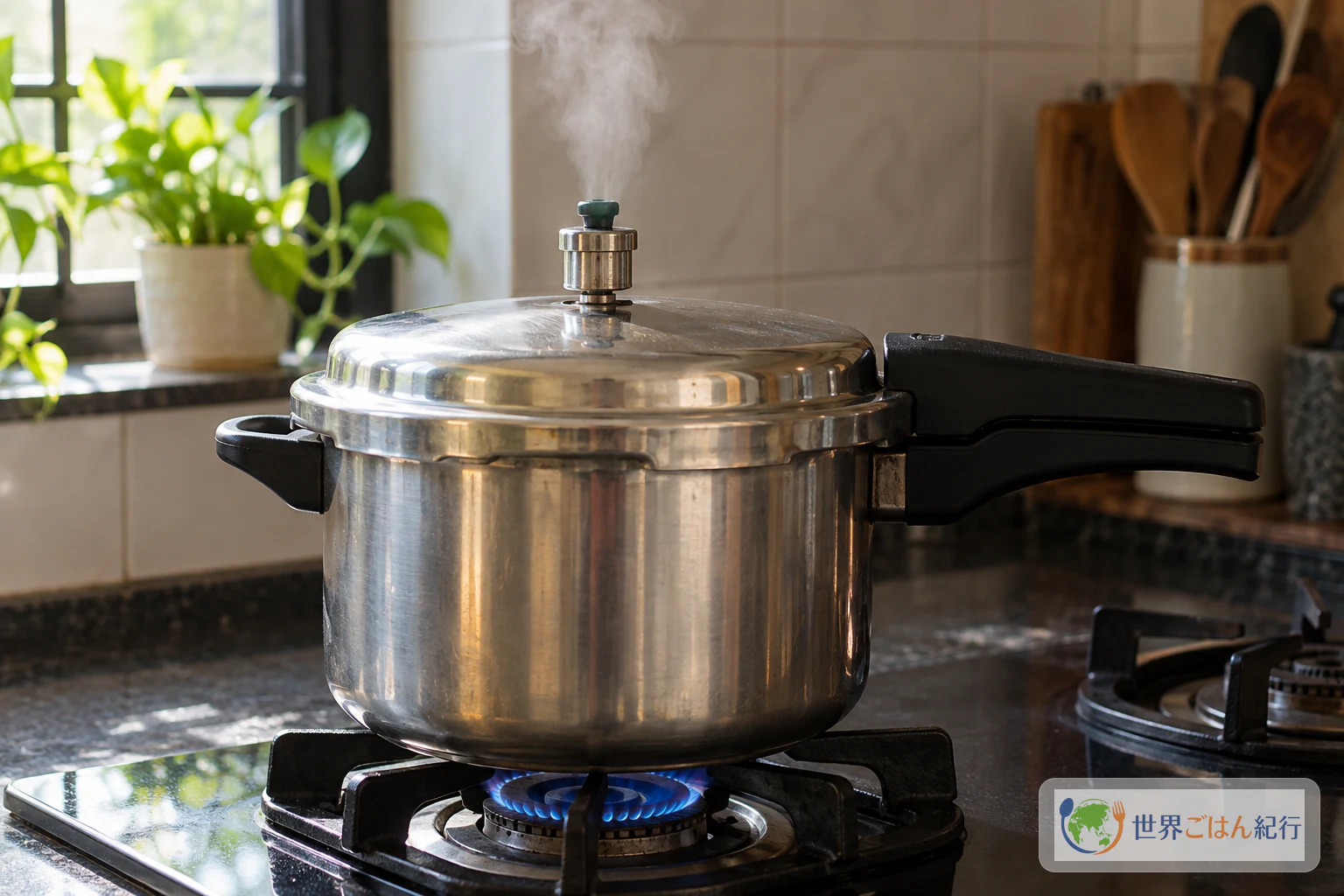
Washed rice goes into a pressure cooker with spinach, two green chilies, a chopped tomato and a little ginger-garlic paste. Water and salt follow, the lid closes, and after a few whistles and a patient wait for the pressure to fall, the soft contents are pressed down with the back of a spoon. That is the whole sequence of the Galho on this page.
Galho is described as a Naga soupy rice dish, made with vegetables or with meat. The version here is one specific home recipe: Pavani Gunikuntla's vegetarian Galho, published on Pavanis Kitchen on 1 May 2019 and modified on 2 June 2019. Pavani writes that this is her own version, made without meat and without fermented soy, and cooked in a pressure cooker. The recipe page files it under Nagaland cuisine and calls the result a soupy Galho similar to khichdi.
It matters to be clear about what this recipe is and is not. Pavani's own About page says she was born and raised in Tirupati, later lived in Chennai, and now lives in Aberdeen in the UK; it does not describe her as a Naga cook. So this is one author's published vegetarian adaptation, not the single traditional Galho of Nagaland. The About page also says that recipes on the site are tried in Pavani's kitchen and tasted by family and friends. That is the author's own account.
Sekai Gohan has not kitchen-tested this recipe. The amounts and steps below follow Pavani's published vegetarian version as written, without additions from other Galho recipes.
For the wider picture of the country's cooking, see our Indian food page.
Ingredients (Serves 2)
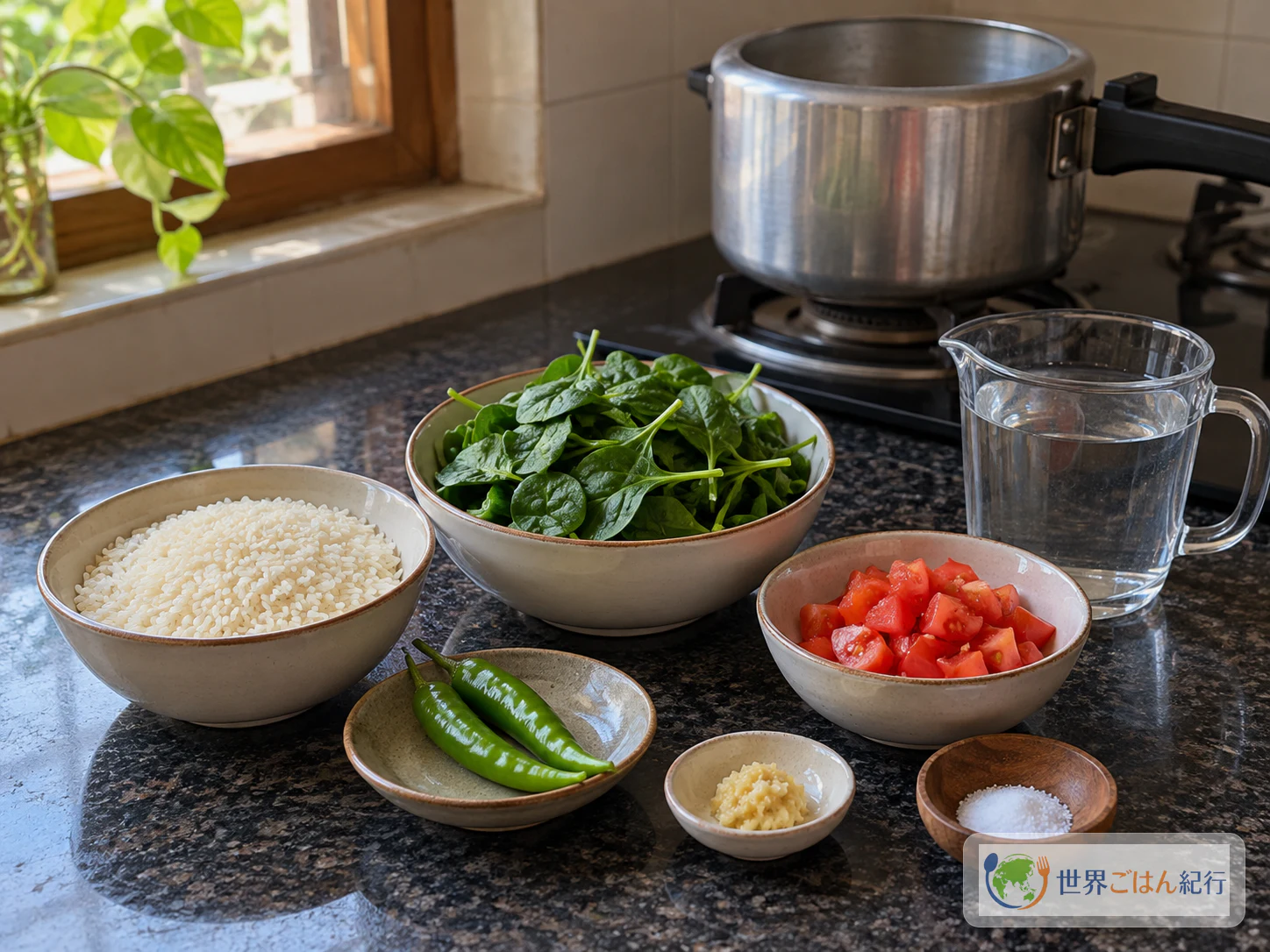
Choosing the Ingredients
Measure with one cup. Use the same cup for the rice, spinach and water so their proportions stay together.
Water. Use 2 1/2–3 cups, within your cooker's fill limit.
Rice. No particular variety is assumed, and there is no claim that any specific rice will cook the same way.
Spinach (palak). This page uses spinach.
Green chilies. Use 2; 3 is also possible. Fresh chilies vary in heat, so the spiciness of your pot cannot be promised.
Ginger-garlic paste. Keep it as a paste rather than replacing it with separately measured fresh ginger and garlic. Packaged pastes differ in what they contain, so read the label, including any allergen information, before using one.
Nothing else belongs in this version: no oil, meat, fermented soybean (axone), bamboo shoot, lentils or extra vegetables.
Equipment
- Stovetop pressure cooker, with its instruction manual
- Bowl for washing the rice
- Spoon for mixing and mashing
- Serving bowl
Pressure cookers differ by maker and model, so follow your own cooker's manual and warnings. Do not fill it past its stated fill limit. Close the lid fully before cooking, and open it only after confirming that the pressure has completely fallen. Release pressure only in the way your manual describes.
Method: Six Steps in the Pressure Cooker
There is no browning or frying stage in this version. Everything goes into the cooker, water and salt are added, and the pot is pressure-cooked, then mashed.
Water, Pressure and Texture: What Stays With Your Cooker
Because this is a short recipe from a single home kitchen, several points are simply not specified. They are listed plainly here rather than filled in with guesses.
| Question | What the recipe gives | How to handle it |
|---|---|---|
| How much water? | 2 1/2 cups on the ingredient card; 2 1/2–3 cups in the method | Stay within that range and within your cooker's fill limit |
| How long under pressure? | 2–3 whistles; the recipe card separately lists a 15-minute cook time | Use the whistle count and your manual. The two figures are not linked, and whistles do not convert to a fixed number of minutes across cookers |
| What heat level? | "Heat a pressure cooker," with no setting stated | Follow your cooker's manual. This wording does not call for oil, dry-roasting or sautéing |
| How to release pressure? | Open "after pressure releases" | Use the release method in your manual, and open only after confirming the pressure has completely fallen |
| How thick should it be? | Soupy, and mashed with the back of a spoon | Expect soft rice with spinach and tomato in a loose, spoonable texture. No exact thickness is given |
| The lid will not open | — | Do not force it. Pressure may still be inside; wait and follow your manual |
Serving and Storing Leftovers
Pavani suggests serving Galho warm with homemade tomato chutney. That chutney is a separate dish and no recipe for it is given with this Galho, so it is not part of the ingredient list; the Galho stands on its own without it.
Cool leftovers quickly, dividing them into shallow containers so they cool faster, and refrigerate or freeze them promptly. Eat refrigerated leftovers as soon as possible, and reheat them thoroughly before eating. No Galho-specific keeping time or freezing quality has been confirmed, so none is given here.
Variations the Recipe Itself Allows
These stay inside Pavani's version and do not turn it into a different Galho.
- Three chilies instead of two. The recipe allows 2 or 3 green chilies. This page uses two.
- More water within the range. The method gives 2 1/2 to 3 cups, so the water can sit anywhere in that span, as long as it stays within the cooker's fill limit.
- Tomato chutney at the table. Optional, served alongside, never mixed in.
Galho made with meat, fermented soybean or wild greens does exist in Nagaland, as the next section explains. Those are different preparations that need their own recipes, so they are not offered here as add-ins to this pot.
Galho in Nagaland: One Name, Many Pots
"Galho" names a family of Naga rice dishes. The recipe above is one author's vegetarian pressure-cooker version within that family.
The Government of India's official tourism portal, Incredible India, includes Galho in its guide to traditional Naga dishes in Kohima. It describes Galho as a soupy rice preparation made with vegetables or meat, and says a vegetarian Galho can use a medley of vegetables and ginger. The guide gives no quantities or method and does not tie the dish to a single tribe or origin story.
A closer look comes from a 2017 study by Singh and Teron, "Ethnic food habits of the Angami Nagas of Nagaland state, India," published in the International Food Research Journal. Based on group discussions, interviews and participant observation in Kohima district, it describes two patterns of Angami Galho: rice cooked with several wild leaves and optional additions, and rice cooked with meat. The authors note diversity in Angami preparations. This is evidence about Angami households in Kohima; it does not describe every Naga community, and it does not validate the proportions of Pavani's recipe.
Pavani's page title calls the dish "Khichdi from Nagaland," and the recipe compares the soupy result to khichdi. This Galho contains no lentils and no frying stage. Keeping the Naga name in front helps the dish keep its own identity rather than being folded into a better-known one.
What remains unknown is just as important. The sources consulted here do not establish who first made Galho, whether any one community owns it, how often it is cooked at home, or whether it belongs to a particular festival or season, so this page makes no claims about those.
Frequently Asked Questions
Is Galho always made with meat?
No. The Incredible India guide describes Galho made with vegetables or with meat and mentions a vegetarian option, and the Angami study records both leafy and meat versions. Pavani's recipe is vegetarian by choice. That does not mean every region or household makes this same vegetarian version.
Can I add axone (fermented soybean) to this recipe?
This version deliberately leaves out meat and fermented soy, so axone is not part of it. A Galho with axone is a different preparation and should be cooked from its own recipe rather than merged into this one.
How many cups of water should I use?
Pavani's ingredient card says 2 1/2 cups, while the method says 2 1/2 to 3 cups. The recipe does not say how many milliliters its cup holds, so there is no milliliter conversion here. Measure the rice and water with the same cup, keep to the 2 1/2–3 cup range, and stay within your cooker's fill limit.
How many minutes should it pressure-cook?
The method says 2–3 whistles. The recipe card also lists a 15-minute cook time (with 5 minutes prep and 20 minutes total), but it does not explain how those minutes relate to the whistles. Because cookers differ by model, the whistle count is not converted into minutes here. Follow your cooker's manual, close the lid fully, and open it only after the pressure has completely fallen.
Do I need to fry the rice or add oil first?
The method begins with "Heat a pressure cooker" and then adds the rice and other ingredients. It does not mention oil, frying, dry-roasting or sautéing, so none of those are added here.
How long do leftovers keep?
No keeping time specific to Galho was found. Follow general guidance for cooked food: cool it quickly in shallow containers, refrigerate or freeze promptly, eat refrigerated leftovers as soon as possible, and reheat thoroughly.
Has this recipe been tested?
Sekai Gohan has not kitchen-tested it. Pavani's About page states that recipes on the site are tried in her kitchen and tasted by family and friends; that is the author's own account, not an independent test.
Sources
- Pavani (Pavanis Kitchen), "Naga Galho Recipe – Khichdi from Nagaland," posted 2019-05-01, modified 2019-06-02. The selected recipe: the vegetarian version without meat and fermented soy, cooked in a pressure cooker; ingredient amounts, method order, 2–3 whistles, the 2 1/2-cup card versus 2 1/2–3-cup method water, the recipe card's 2 servings and time fields, and the tomato chutney serving suggestion. https://www.pavaniskitchen.com/naga-galho-recipe-khichdi-from-nagaland/
- Pavani Gunikuntla (Pavanis Kitchen), "About Me." The author's own description: the site began in 2008; born and raised in Tirupati, later in Chennai, now in Aberdeen; recipes tried in the author's kitchen and tasted by family and friends. https://www.pavaniskitchen.com/about-me/
- Incredible India (official Government of India tourism portal), "Food Guide - Traditional Naga Dishes You Must Try In Kohima." Galho as a Naga soupy rice dish with vegetables or meat, and a vegetarian option with vegetables and ginger. A tourism overview with no quantities or method. https://www.incredibleindia.gov.in/en/nagaland/kohima/food-guide-traditional-naga-dishes
- Singh and Teron, "Ethnic food habits of the Angami Nagas of Nagaland state, India," International Food Research Journal 24(3), 1061–1066, June 2017. Author-uploaded full text hosted on ResearchGate, not the publisher's page. Angami Galho patterns in Kohima district (wild-leaf and meat versions) and variation between cooks; not a validation of the selected recipe. https://www.researchgate.net/publication/318468455_Ethnic_food_habits_of_the_Angami_Nagas_of_Nagaland_state_India
- Ministry of Agriculture, Forestry and Fisheries of Japan, "冷蔵庫のかしこい使い方~知ってお得な食品の保存~" (Using the refrigerator wisely; in Japanese). General guidance for cooked food: cool quickly, divide into shallow containers, refrigerate or freeze promptly, eat refrigerated leftovers soon, and reheat thoroughly. No Galho-specific duration. https://www.maff.go.jp/j/syouan/seisaku/foodpoisoning/frige.html
- Consumer Affairs Agency of Japan, "圧力鍋を安全に正しく使用しましょう! ―入れ過ぎに注意、蓋の洗浄が重要です―" (Use pressure cookers safely and correctly; in Japanese). Follow the maker's manual, respect the fill limit, close the lid fully, and open only after confirming pressure has fallen. Not a cooking-time source. https://www.caa.go.jp/policies/policy/consumer_safety/caution/caution_049