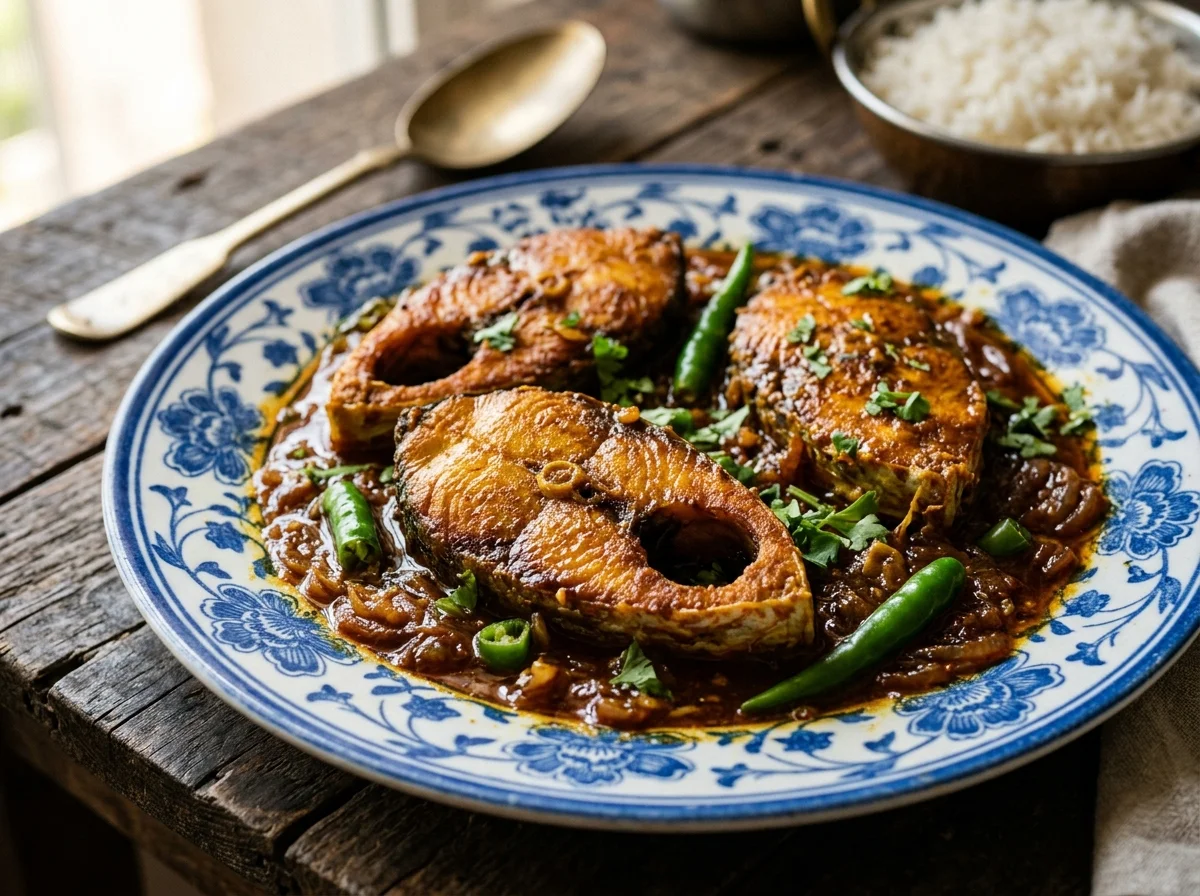

Kerala's dry beef stir-fry, with black pepper and curry leaves up front

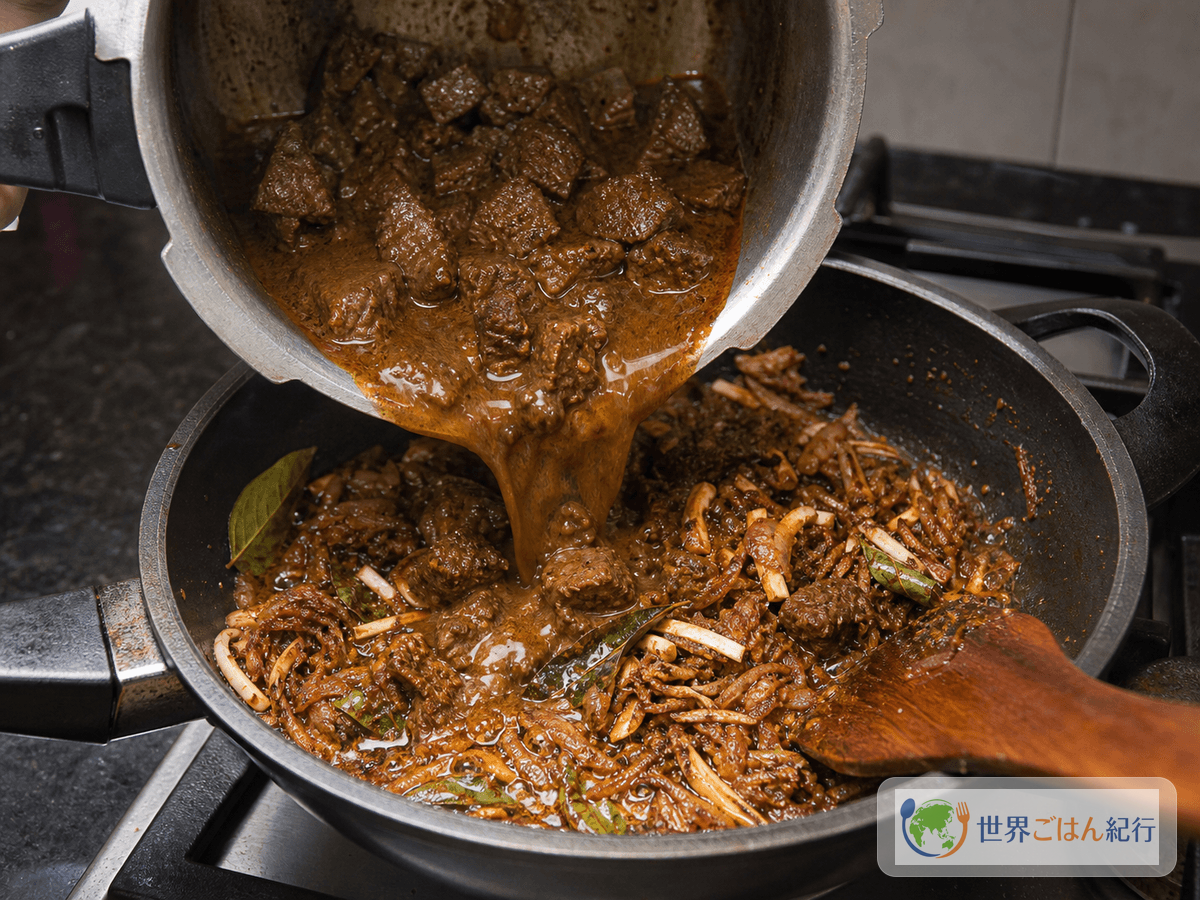
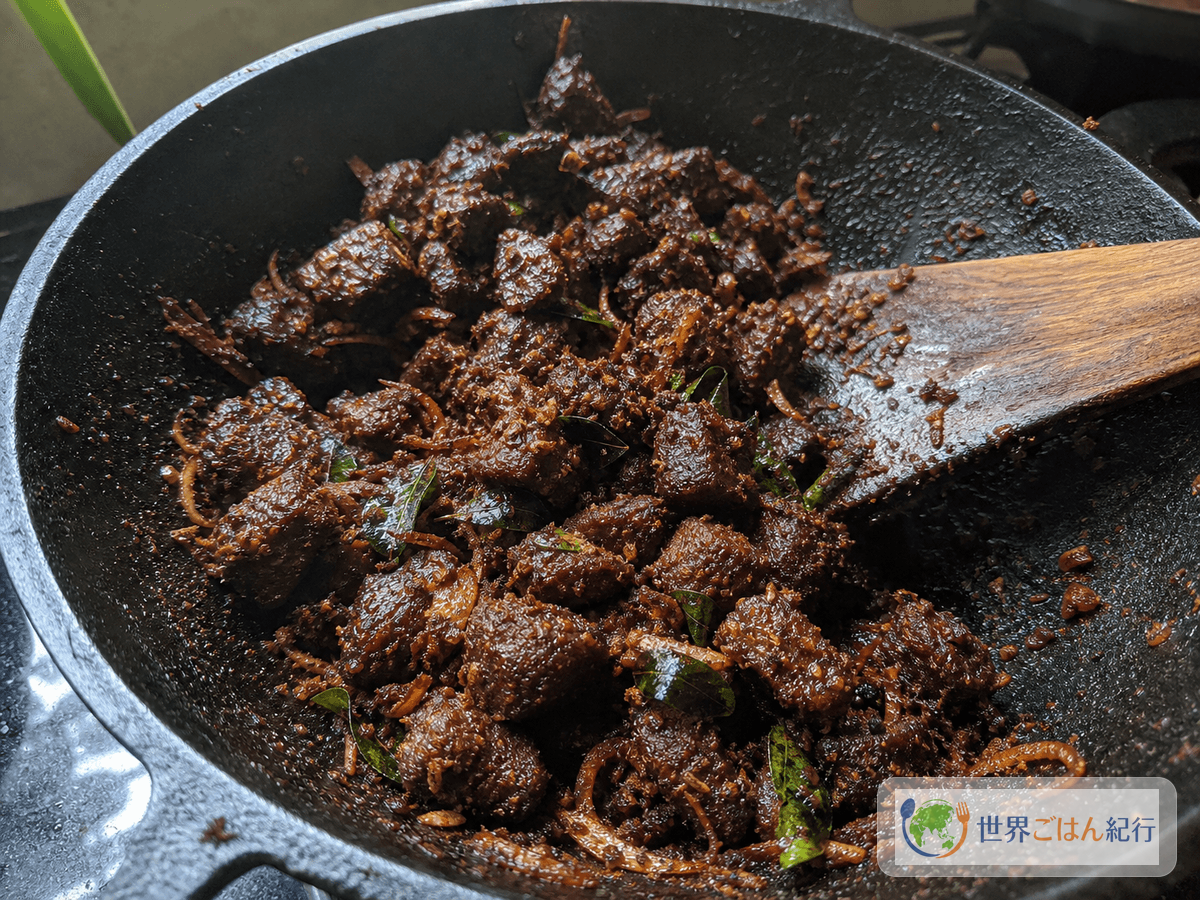
Scrape the bottom of the pan with a wooden spoon and a little of the dark brown masala lifts off, and the scent of curry leaves and black pepper rises. Unlike a curry with lots of liquid, Kerala beef fry is a dish you finish by "drying out." Beef tenderized by simmering is fried together with onion, curry leaves, coconut and black pepper, pressed against the pan so that everything clings to the meat.
Kerala beef fry is also called beef ularthiyathu in English. In Malayalam it is written "ബീഫ് ഉലർത്തിയത്," and ularthiyathu is close to a way of describing a dish stir-fried until the moisture is gone. In Kerala it is eaten at homes, bars and canteens with parotta, appam, rice, tapioca and more. If you lump it together as "beef curry," you lose the most important thing, the dry texture.
The hard parts of making it are tenderizing the beef and drying it without scorching. Stir-frying thin-sliced beef quickly makes it like grilled meat, and leaving cooking liquid makes it lean toward beef curry. This article cuts beef chuck or shank into 3 cm cubes, tenderizes it first in a pressure cooker, and then fries it dark in a pan. If you keep the three elements of black pepper, curry leaves and coconut, you get quite close to the Kerala table even outside India.
For ease of searching, this page uses "Kerala beef fry" as its main name. How beef is treated varies greatly in India by region, religion and household. It is presented here as part of the food culture of Kerala, arranged as a recipe to cook at home.
The local table and background (why dry-fried beef)
On Kerala Tourism's food page, Beef Ularthiyathu is presented as a meat dish loved in the Travancore region of central Kerala. The flow is beef with spices, ginger, garlic, shallots, curry leaves, coconut and vinegar, finished with coconut oil and mustard seeds to build aroma. What shouldn't be missed here is that it is not simply "beef fried spicy": after the meat is cooked, oil and spices are made to coat its surface. A dish eaten with its liquid would suit a curry plate, but this one comes into its own placed beside parotta torn by hand or beside rice, picked up bit by bit. No cooking liquid spreads on the plate, and black pepper and coconut catch on the corners of the meat, so the staple doesn't turn soggy.
At the Kerala table, how beef is treated changes greatly by religion, region and household. The staple eaten also changes between the coast, the central area and northern Malabar, and the vessel for it is wide: parotta, appam, rice, even tapioca called kappa. Dining guides to Kochi also feature places that pair beef fry with Malabar parotta, or serve it beside sweet banana fritters. In a home kitchen you needn't gather all those local staples. But of curry leaves, black pepper, coconut oil and coconut pieces, you want to keep at least two. Without curry leaves in particular, it becomes beef fried with strong garlic and onion, and the green aroma characteristic of Kerala disappears.
Another regional difference is how tender and how dry the meat is. At home, tenderizing in a pressure cooker first and then frying is realistic, but in canteens the meat is cooked in bulk in a large pot and brought back to a toasty finish on a griddle or in a pan for each order. To reproduce it elsewhere, cubed meat tenderized in a pressure cooker and moved to a wide frying pan gets closer than saving time with thin slices. For the cut, chuck, shank or pre-cubed stewing beef is enough. Rather than expensive steak, choose a cut that won't dry out when simmered and then fried, and in the last 12 minutes drive off moisture until just short of scorching. That is the dividing line between serving this as Kerala beef fry rather than beef curry.
The first time, gather a block of beef, frozen curry leaves, black pepper that can be crushed coarsely and unsweetened coconut. If you can't get parotta, white rice and raita will do. Protecting the aromatic ingredients before the staple keeps more of what makes this dish itself.
Ingredients (serves 4)

This makes a main for 4. With parotta or rice, this amount is enough. The heat is slightly milder than medium, so you can add black pepper and chili at the end.
This uses beef, coconut and mustard. At a table with religious dietary restrictions, clearly separate it as a beef dish. Wash your hands, cutting board and knife right after touching raw meat, and eat only after cooking to the center.
Ingredients that change the flavor when shopping

The beef itself is fine from a butcher or a supermarket block. What is worth hunting for are only the aromatic ingredients that are hard to find on your local shelves and that can go into other Indian dishes. Having curry leaves, whole black pepper, ground coriander and cumin seeds gives it a Kerala outline rather than just a strongly flavored beef stir-fry.
Curry leaves are the signal of this dish. The moment they go into the oil, a green aroma rises and lightens the beef fat. They also go into the potato masala for dosa and avial (in Japanese), so it is worth keeping frozen ones on hand.
Kerala black pepper builds not just heat but depth of aroma. You can make it with ground black pepper, but crushing whole peppercorns coarsely lets the aroma release when you bite.
Ground coriander rounds out the richness of the beef and keeps down bitterness from frying it dry. It is also used in bhindi fry (in Japanese) and chana masala (in Japanese), so it is an easy spice to use up if you continue with Indian cooking.
Cumin seeds are not the star, but build a base with their aroma when they hit the oil. Used with fennel, they round out the sharpness of black pepper alone.
Method
It is divided into a first half of tenderizing in the pressure cooker and a second half of drying in a wide frying pan. Simply cooking beef through is easy, but what makes it Kerala beef fry is decided in the second half, when you fry it down.
Put the beef and 350 ml water in a heavy pot and simmer on low heat at a gentle bubble for 60–75 minutes. Add 50 ml water at a time as it reduces, and move on to the fry once it is tender enough for a skewer to pass. If you start with only a frying pan, the meat stays tough while the surface scorches.
Where it goes wrong
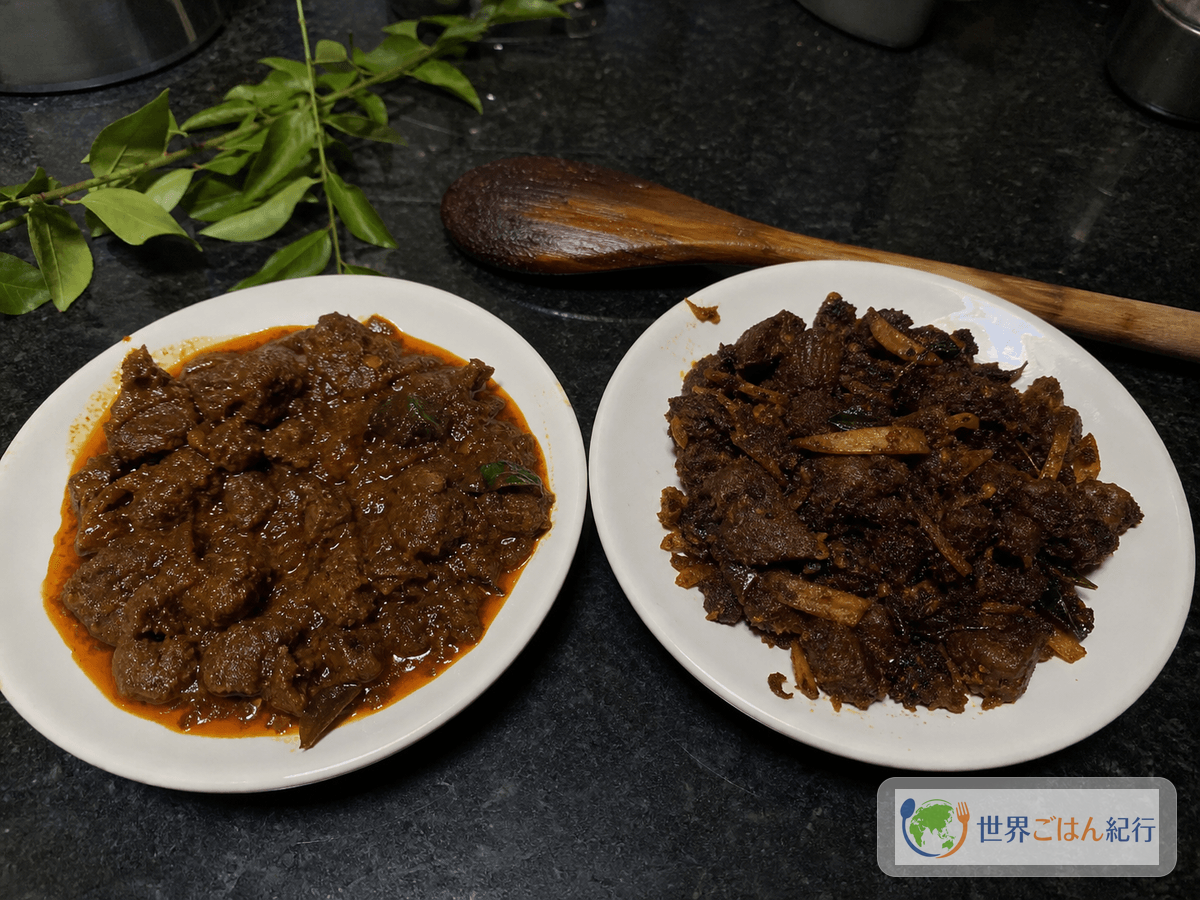
The most common failure with Kerala beef fry is not weak flavor but ending up as a "thick beef curry." You needn't discard the cooking liquid, but if enough remains to run across the plate, it strays from the dry texture of ularthiyathu.
| Symptom | Cause | Fix |
|---|---|---|
| Meat is tough | Pressure cooking too short, cut too lean | Simmer another 10 minutes on low heat before frying. Next time mix chuck, shank and short rib |
| Too liquid | Heat turned off before reducing the liquid | Add 5–8 minutes over medium heat and drive off until the bottom of the pan shows with the wooden spoon |
| Bitter | Onion or ground spices burnt | Stop the curry leaves and onion at a pale golden color, and use medium-low in the second half |
| Weak aroma | Too few curry leaves, black pepper too fine | Add 1/2 tsp coarsely ground black pepper at the end. Use more if dried curry leaves |
| Greasy | Too much oil, fatty meat | Skim about 2 tsp excess oil before finishing. Add a little lemon |
| Too salty | Flavor concentrated by reducing | Add 100 g unsalted boiled potato in cubes and toss for 3 minutes on low heat |
Adding water to fix it loosens the surface you worked to dry. If it threatens to scorch, return a little of the cooking liquid; if it is too liquid, move to a wider frying pan. A small pan diameter tends to steam it, so a pan of about 28 cm is easy to handle.
Here is what you may swap and what you want to keep.
| Ingredient in question | To keep it authentic | Realistic substitute | Effect on the result |
|---|---|---|---|
| Beef | Cubed block meat | Chuck, shank, pre-cubed stewing beef | Thin slices give the texture of a different dish |
| Oil | Coconut oil | Rice bran oil mixed with coconut oil | Aroma is lighter, but it works |
| Curry leaves | Frozen or fresh | Use more dried | The green aroma is weaker |
| Coconut | Slices | 3 tbsp unsweetened desiccated coconut | The texture is finer |
| Black pepper | Whole, coarsely crushed | Coarsely ground black pepper | The aroma doesn't last as long |
| Heat | Green chili plus chili powder | Reduce to 1 green chili | Even for children, the black pepper aroma remains |
Serving, storage and reheating

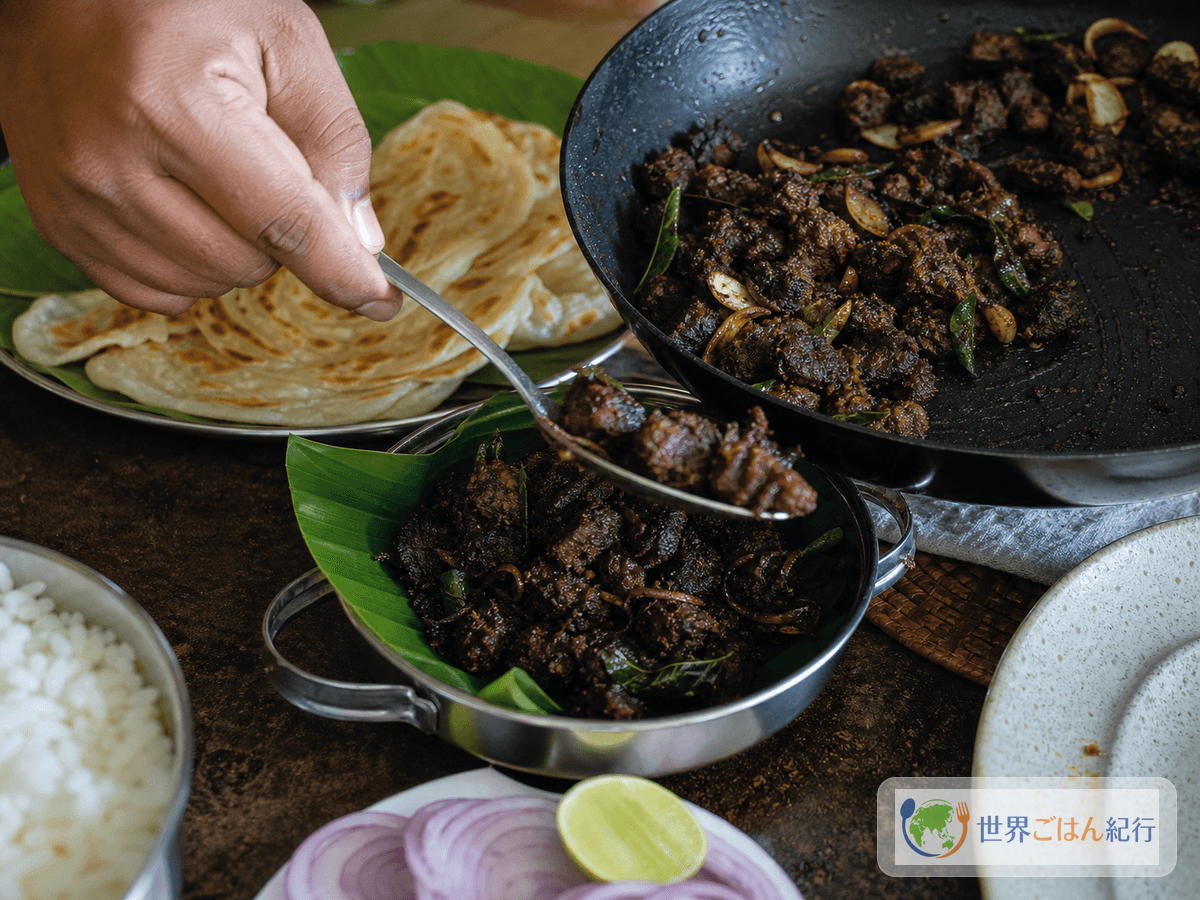
The best match is layered parotta. Picking up the meat's dry masala with parotta transfers the oil and black pepper to the dough. With rice, putting a dal with some liquid or raita (in Japanese) beside it keeps the rich beef from feeling heavy. Adding a white vegetable dish like avial (in Japanese) moves the table toward Kerala.
As a guide, it keeps 3 days in the refrigerator. Cool it completely before putting it in an airtight container, and keep water droplets from forming inside the lid. A microwave works for reheating, but a frying pan brings back the toasty finish. Add 1 tsp oil and warm over medium-low heat for 4–5 minutes, spreading out the meat. If it threatens to scorch, drip on the pan sides not water but a mixture of 1 tsp lemon juice and 2 tsp water.
To freeze, wrap flat in single portions and use within 2 weeks. Thaw overnight in the refrigerator. Heating suddenly in a microwave tends to toughen only the surface, so move it half-thawed to a frying pan and warm over low heat, loosening it, and the texture returns.
There are uses for the next day too. Chop and fry with eggs; toss with thinly sliced onion and lemon for a sandwich; or serve a small amount next to the potato masala of dosa. Because the flavor is strong, on the second day it holds up better used as a strongly aromatic ingredient rather than a main.
FAQ
Can I make it with thin-sliced beef?
You can, but the texture differs from Kerala beef fry. With thin-sliced beef, skip the pressure cooker, season it and fry with onion, adding black pepper and curry leaves at the end. If you are going to fry it down until dry as in this article, 3 cm cubes of block meat suit it.
Can I make it without curry leaves?
It will be an edible dish, but the core of the aroma changes. If omitting them, increase the black pepper by 1/2 tsp and make the finishing lemon a little stronger. There is no complete substitute with a similar aroma. If you will make it repeatedly, having frozen curry leaves is the shortcut.
I don't have coconut slices.
You can substitute 3 tbsp unsweetened desiccated coconut. Sprinkling it with 1 tbsp water and letting it sit 5 minutes before it goes in the pan makes it less likely to burn. Avoid sweetened coconut, which changes the flavor greatly.
Can I make it for family who don't like heat?
Use 1 green chili and reduce the chili powder to 1/4 tsp. Black pepper is the key to the aroma, so don't leave it out entirely; keep 1 tsp. Adults can add black pepper or chili at the table, which makes it easy to divide.
What internal temperature should I look for in the beef?
Cook the cubed beef completely through in the pressure cooker before frying. For food safety, a guideline for beef steaks and roasts is an internal temperature of at least 63°C followed by a rest, but in this dish the meat is pressure-cooked until tender and then fried further, so leave no red at the center. If using a thermometer, check that the center of the largest piece is above 63°C and that the juices run clear.
Which staple is most authentic?
In Kerala eateries it is paired with parotta, appam, chapati, rice and tapioca called kappa. At home, frozen parotta or chapati and ordinary white rice are enough. Because the flavor is strong, on rice days a yogurt-based side makes it easier to eat.
Sources consulted
- Kerala Tourism, "Beef Ularthiyathu", accessed 2026-06-06, https://www.keralatourism.org/kerala-food/beef-ularthiyathu/38/
- Wikipedia, "Kerala beef fry", accessed 2026-06-06, https://en.wikipedia.org/wiki/Kerala_beef_fry
- Condé Nast Traveller India, "Where to eat like a local in Kochi", accessed 2026-07-02, https://www.cntraveller.in/story/eat-like-local-kochi-best-places-to-eat-in-kochi-fish-fry/
- Paint the Kitchen Red, "Kerala Beef Fry", accessed 2026-06-06, https://www.paintthekitchenred.com/kerala-beef-fry/
- FoodSafety.gov, "Safe Minimum Internal Temperatures", accessed 2026-06-06, https://www.foodsafety.gov/food-safety-charts/safe-minimum-internal-temperatures