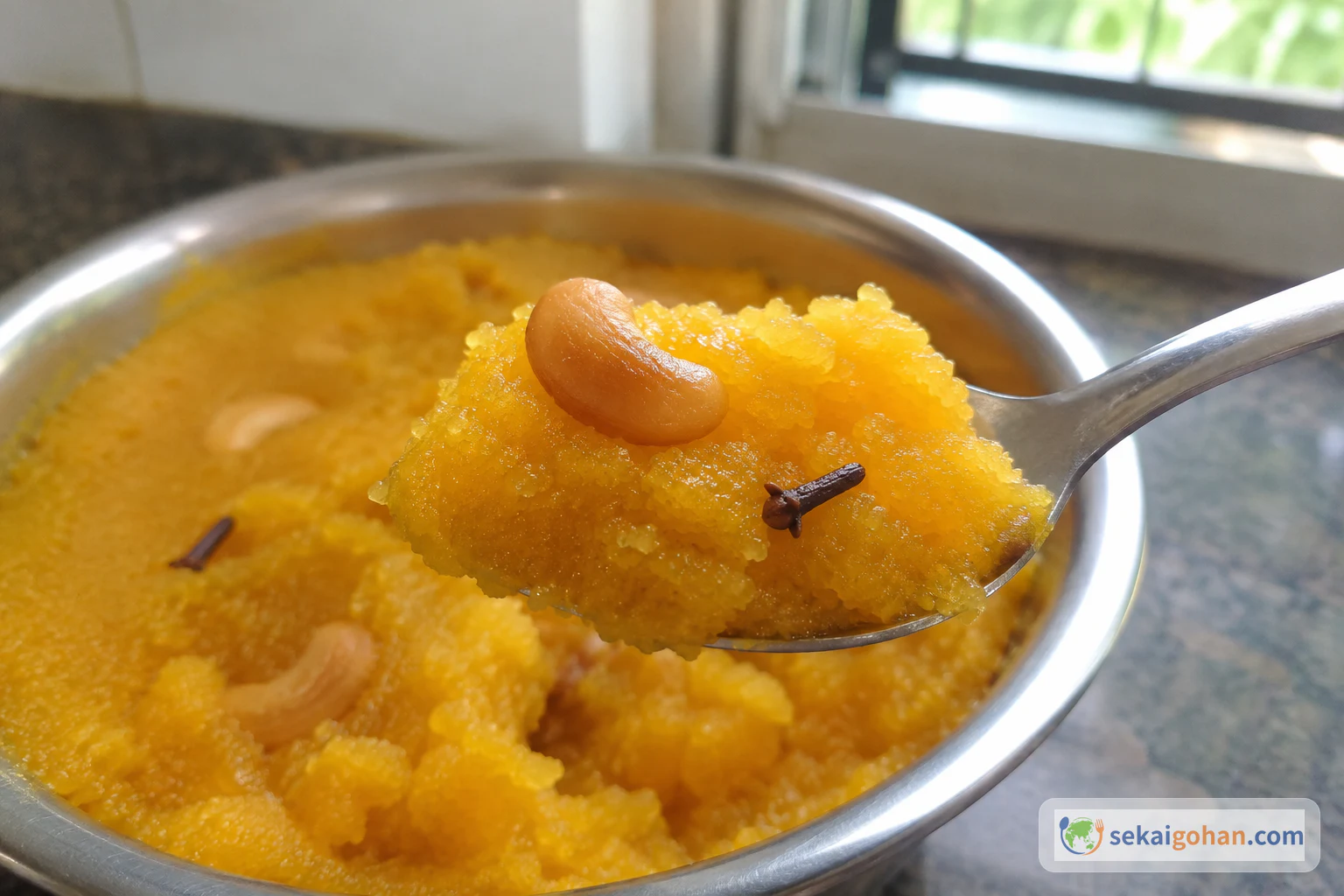
Kesari Bath: Karnataka-Style Semolina Sweet (Kesari Bat)

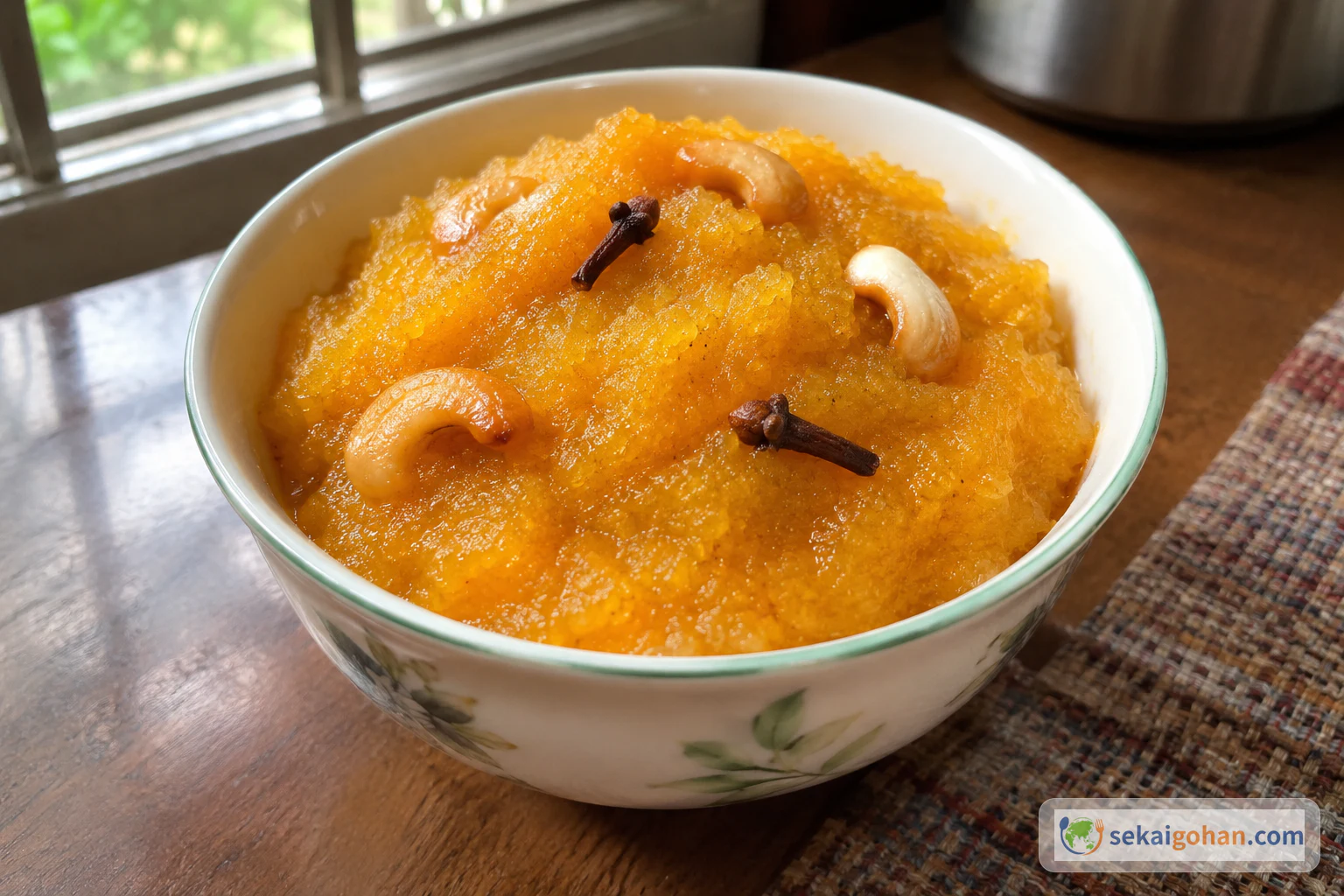
Karnataka-style Kesari Bath: a yellow semolina sweet served in a bowl
Serves
2 servings
Cuisine
Indian (Karnataka)

How to make Kesari Bath (Kesari Bat / Kesari Bhaat), Karnataka's bright yellow semolina sweet, following one Karnataka-style recipe for two: fine rava roasted in ghee, boiling colored water poured in, then sugar, cardamom, toasted cashews and cloves. Covers choosing semolina and ghee, the order of heat off and back on, why the mixture loosens after the sugar, allergens, variations and the Chow-Chow Bath pairing.

Cooking flow

Cooking steps

STEP 11 / 14

Heat the ghee and oil together

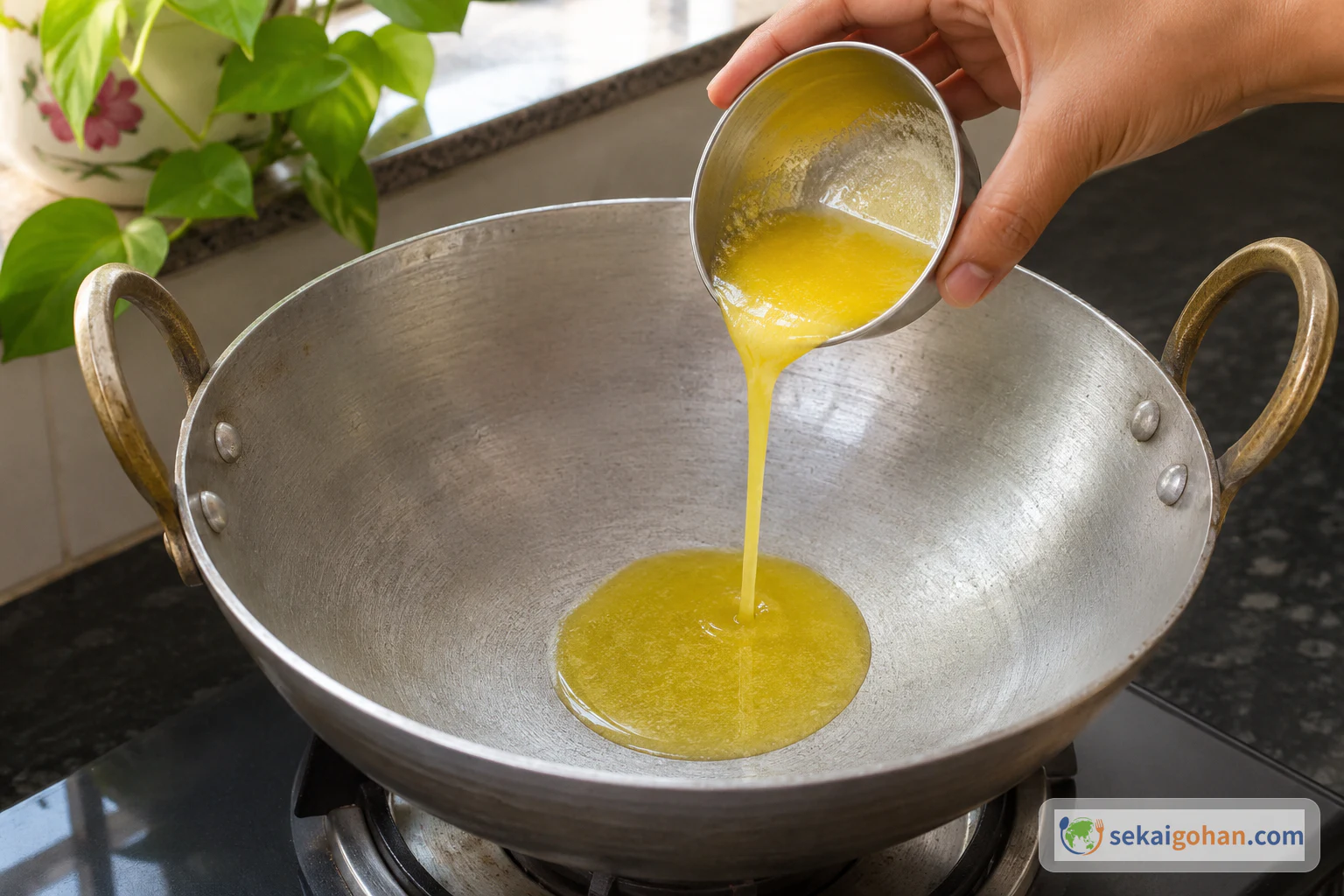
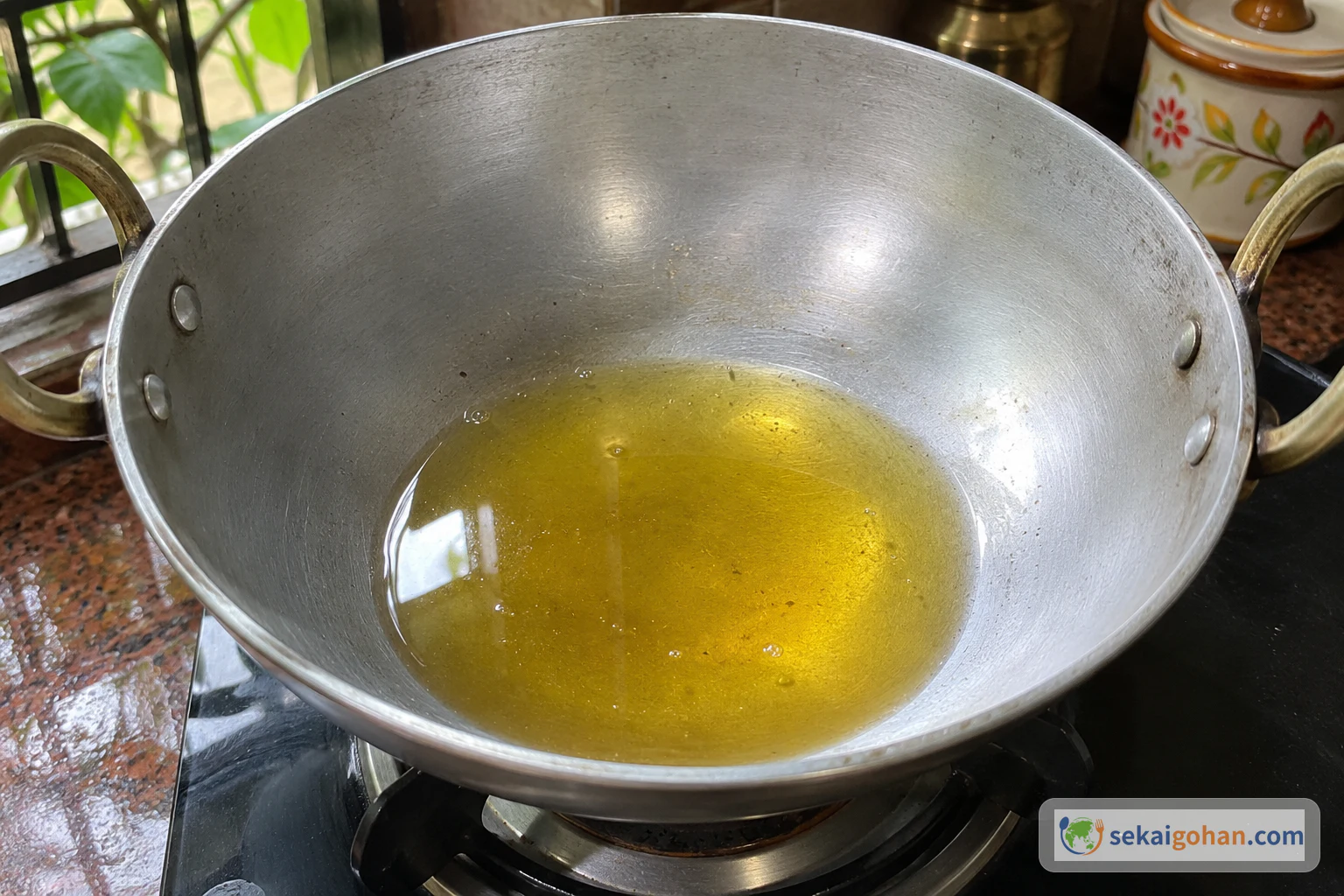
Pouring melted ghee into an empty kadai
The full measure of ghee goes in first

Pour ⅓ cup melted ghee into the kadai.

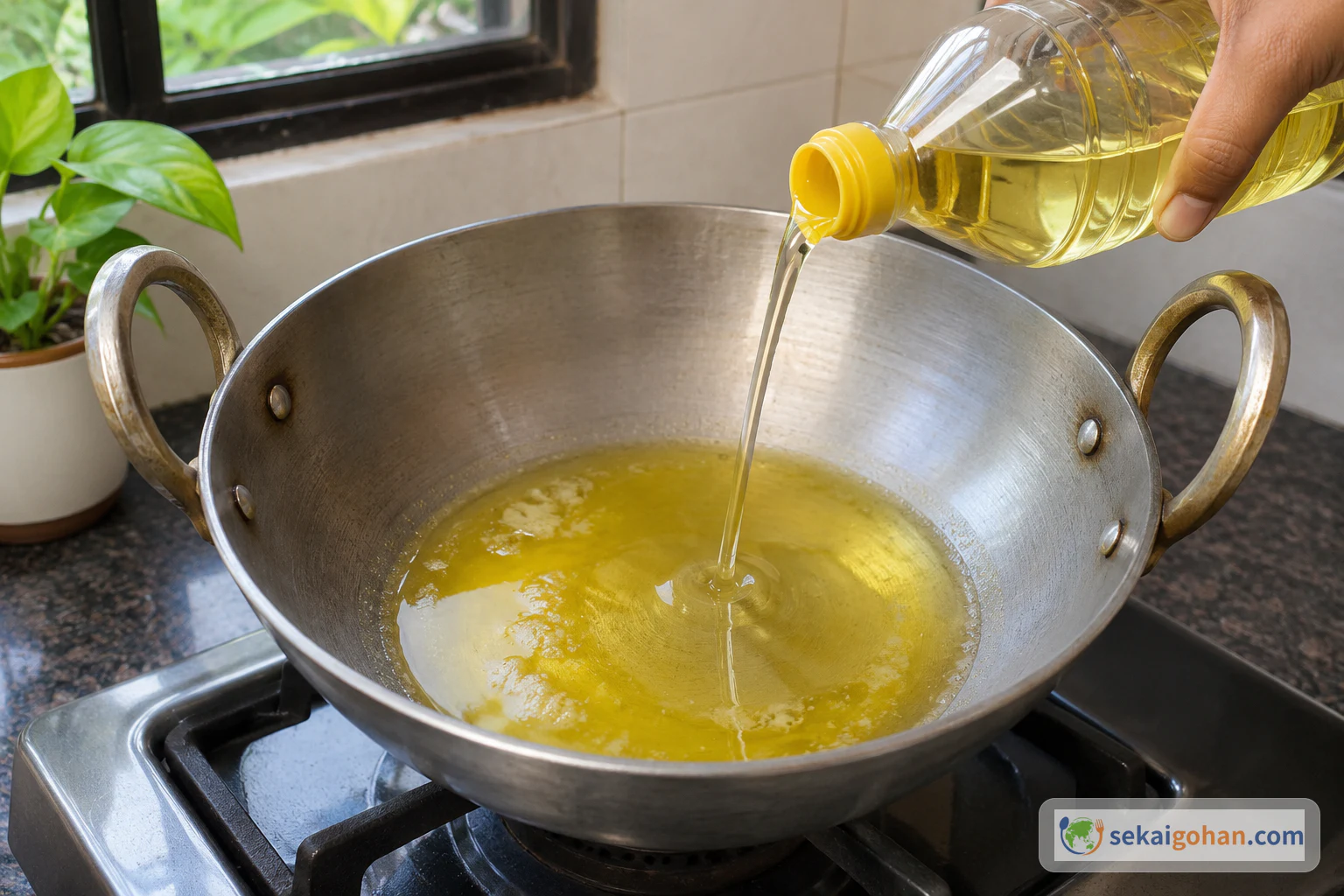
Add 1 tbsp neutral oil to the ghee.

Adding neutral oil to the kadai that already holds melted ghee
Oil joins the ghee before heating

Warm the ghee and oil together in the kadai.

Melted ghee and neutral oil warming in a kadai
Only fat in the pan at this stage
STEP 22 / 14

Fry the cloves and cashews

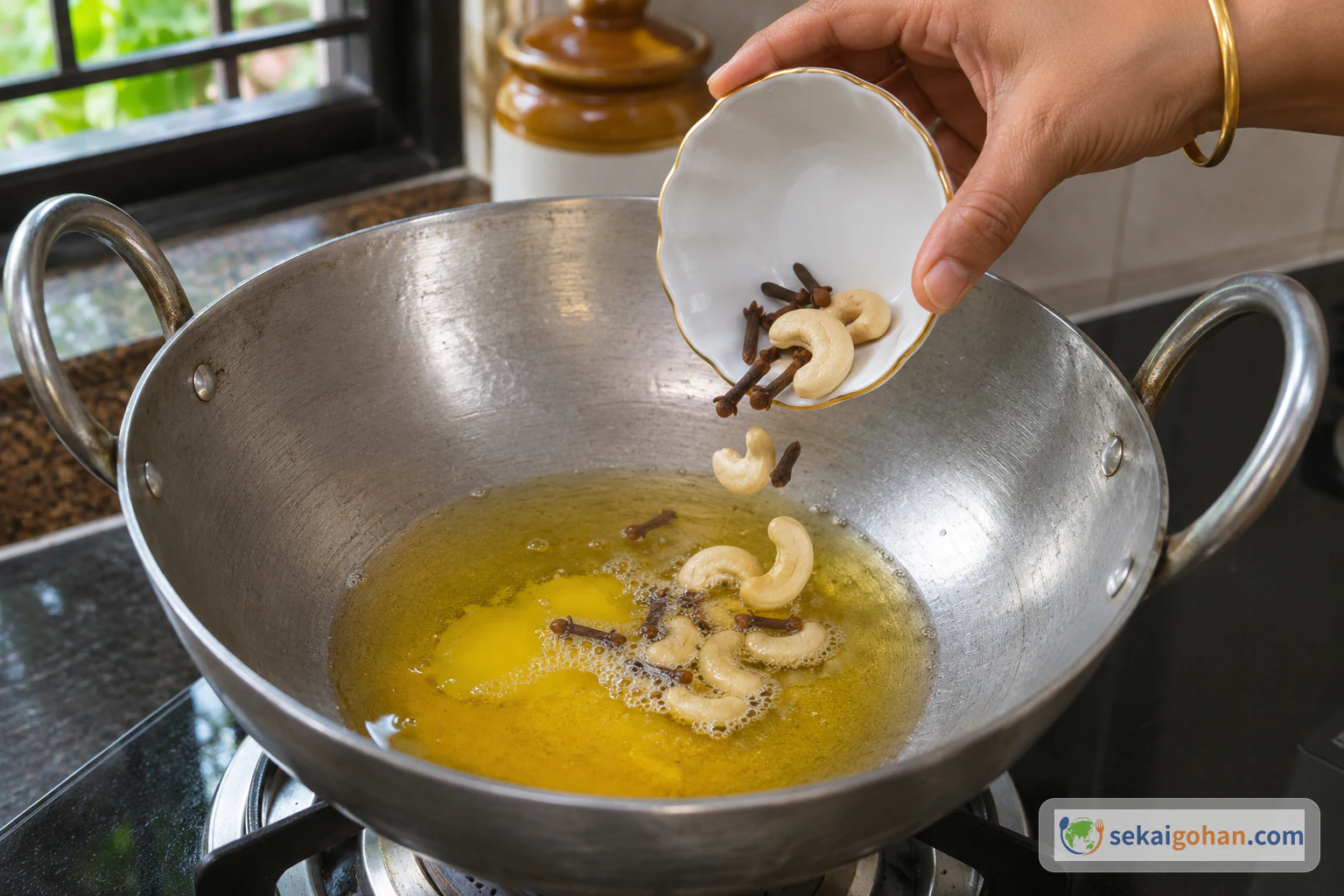
Adding cloves and cashews to the hot ghee and oil
Cloves and cashews go into the hot fat together

Add 1–2 cloves and a few cashews to the hot fat.

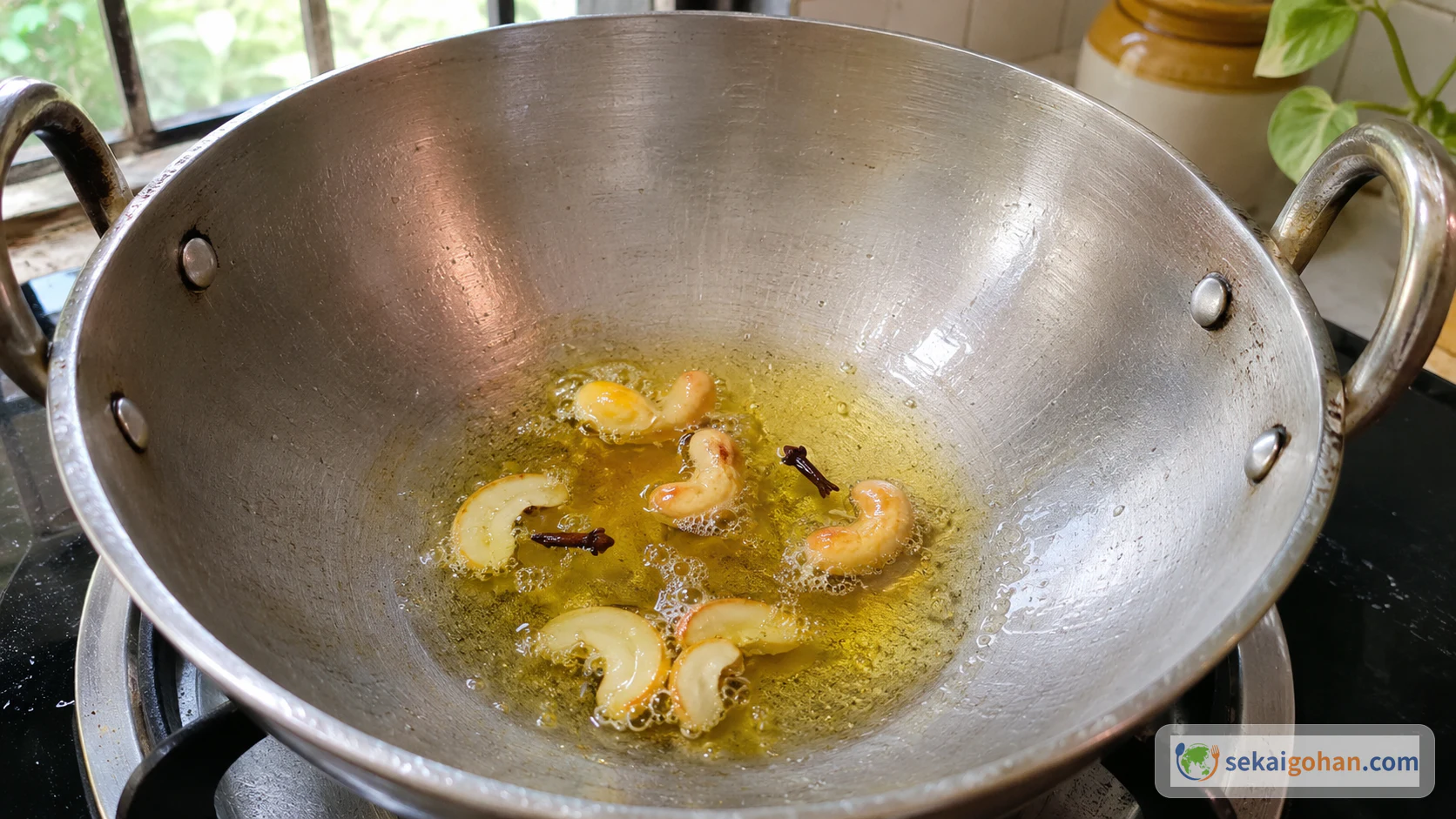
Fry them, stirring, until the cashews turn golden.

Cloves and a few cashews frying in ghee and oil
Stop when the cashews are golden
STEP 33 / 14

Take them out and set them aside

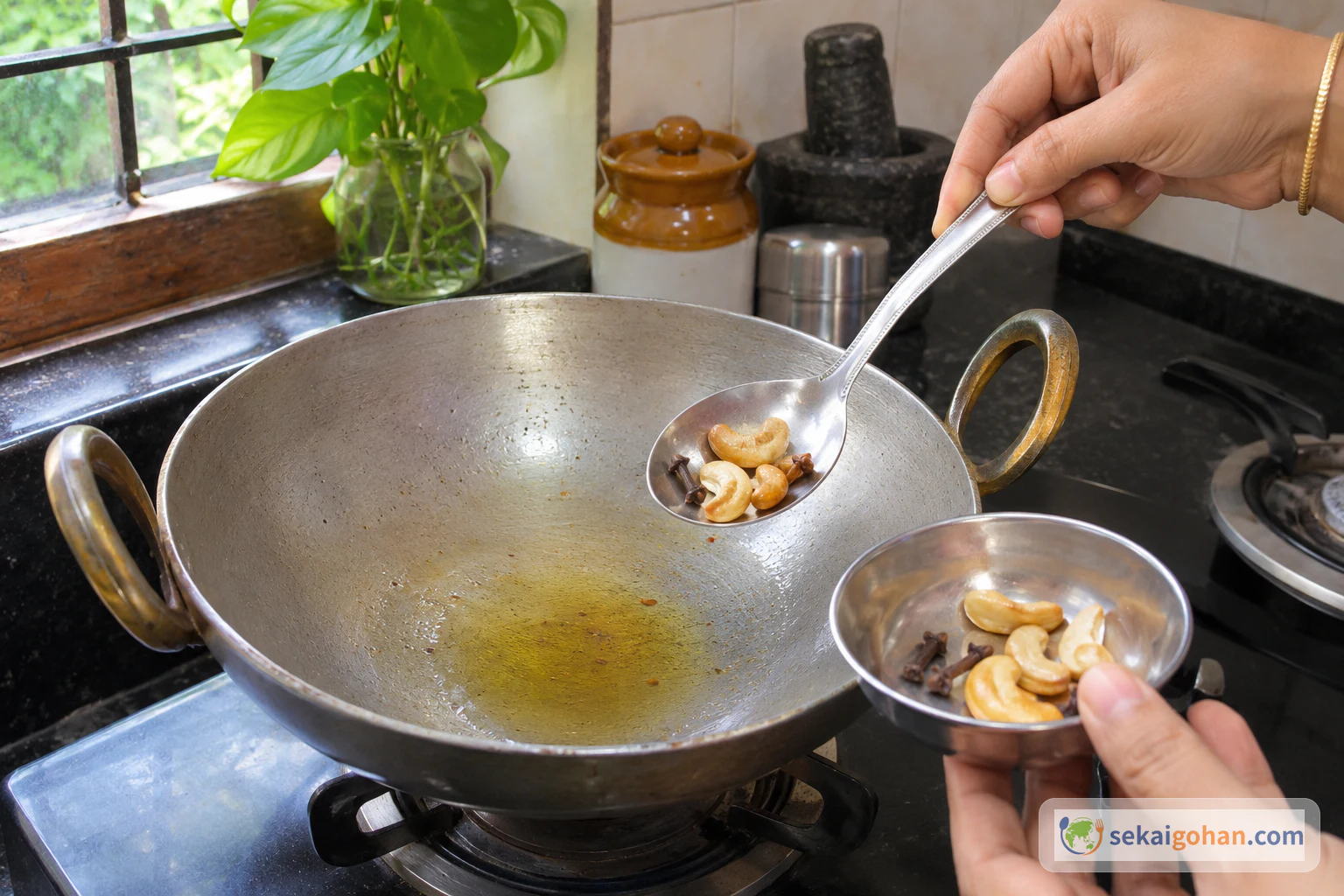
Lifting the fried cloves and cashews out into a small dish
The fat stays in the kadai for the rava

Lift the cloves and cashews out with a spoon into a small dish and keep them for the end. Leave the remaining ghee and oil in the kadai.

STEP 44 / 14

Roast the rava in the same fat, then turn off the heat

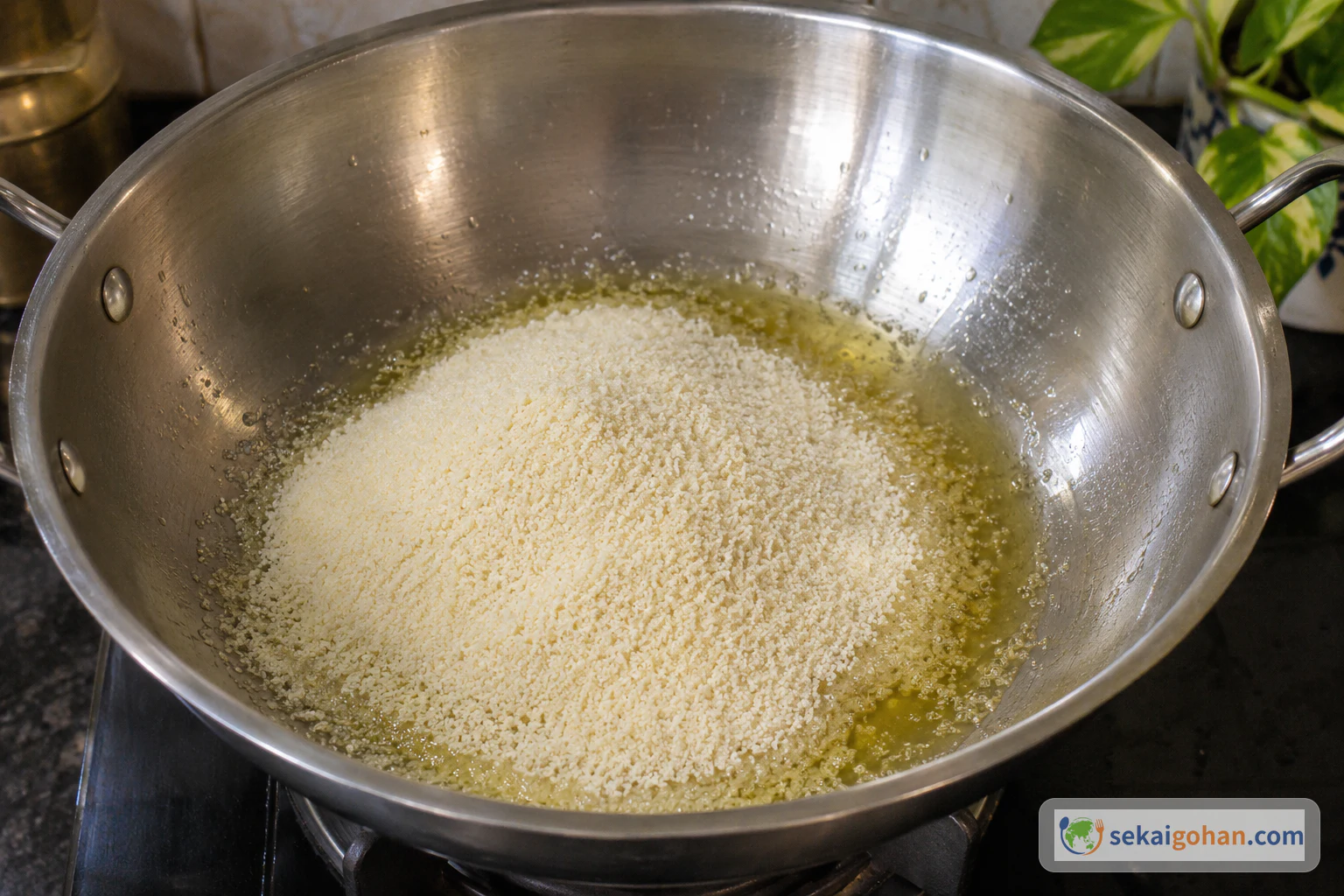
Adding rava to the remaining ghee and oil
The rava goes into the fat, not into a dry pan

Add ½ cup fine rava to the ghee and oil left in the kadai.

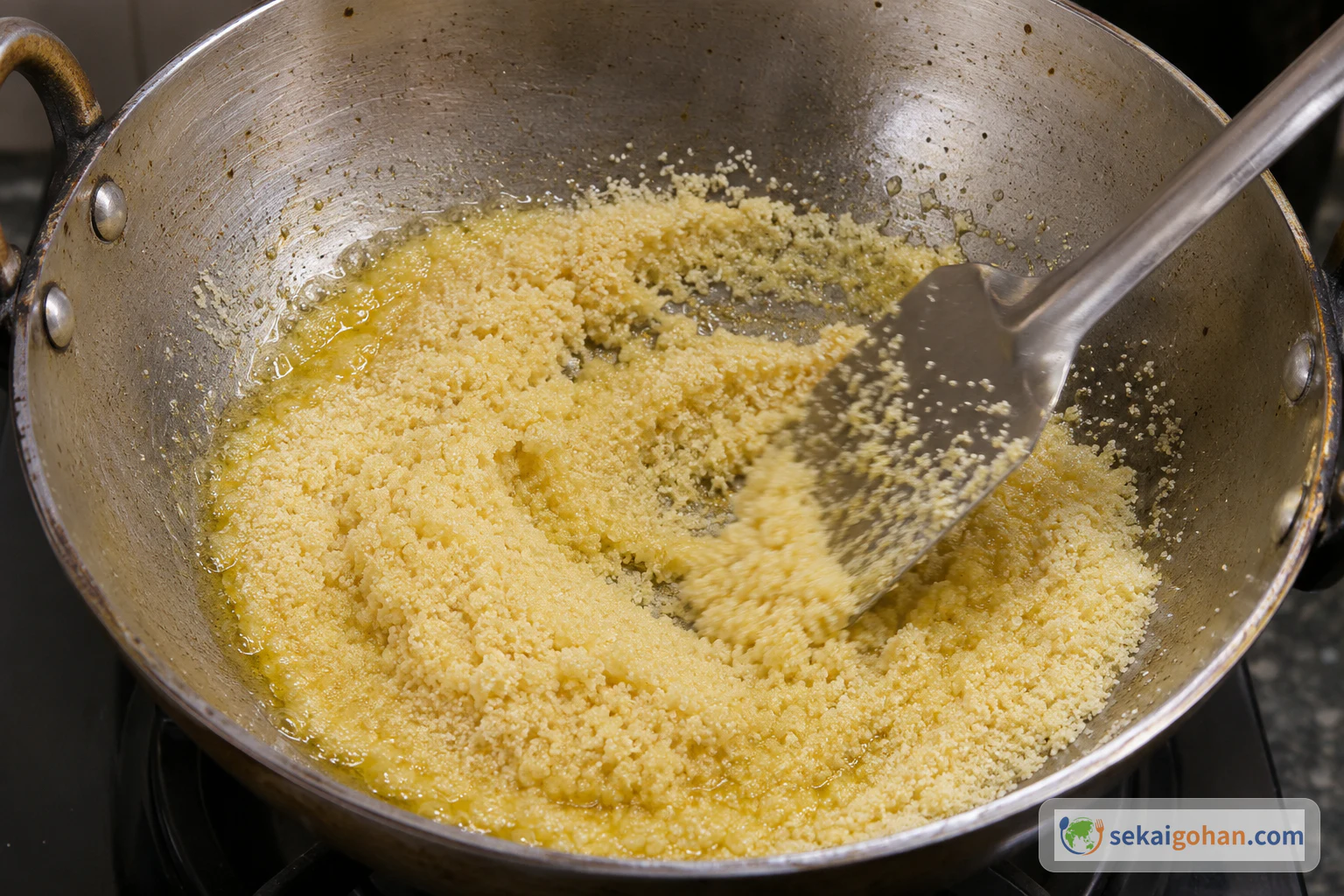
Stir and roast until it smells fragrant, without letting it change color. The grains should stay pale and coated in fat. Browned rava changes the flavor and color of the finished sweet.

Roasting fine rava in the kadai without letting it color
Fragrant but still pale

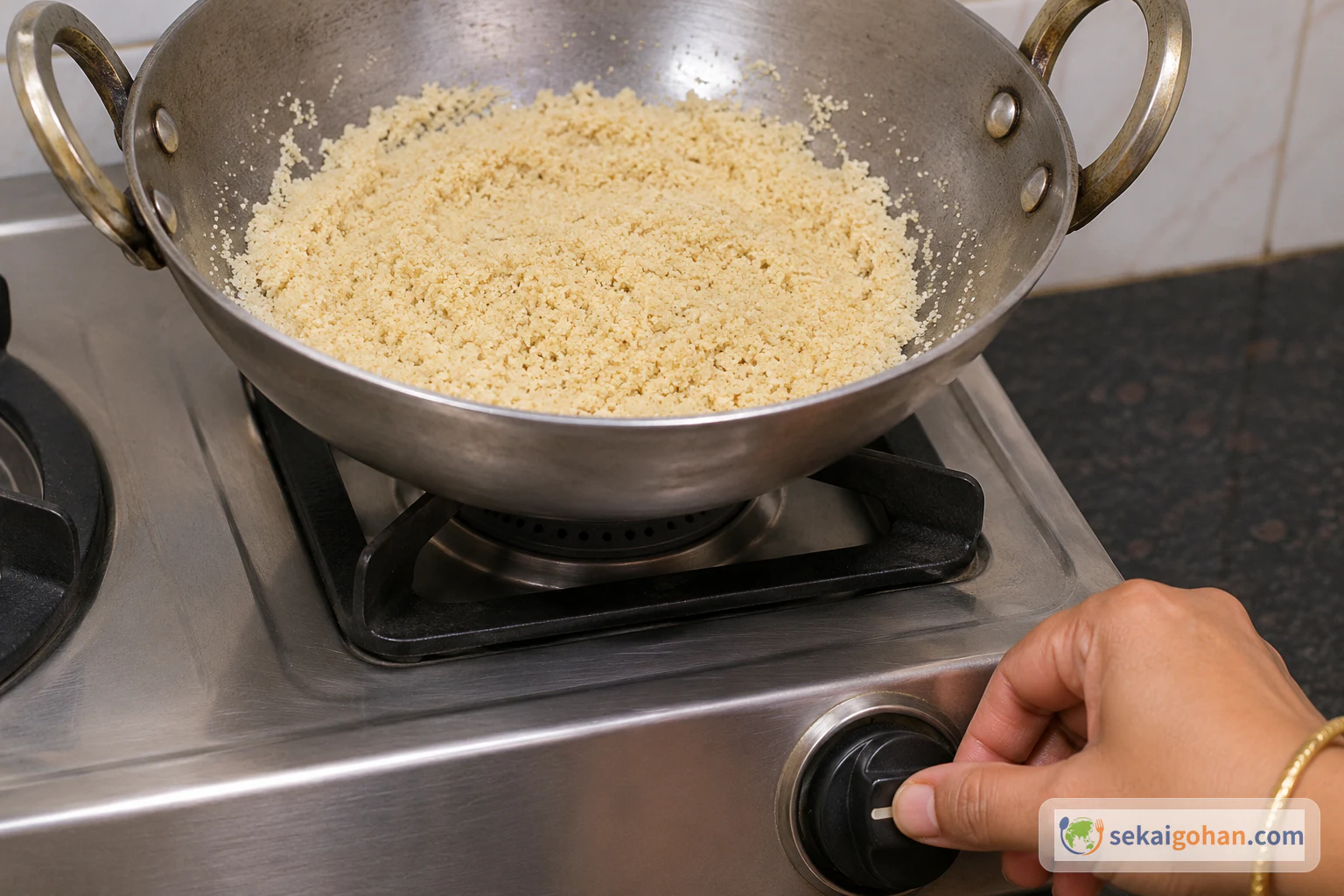
Turn off the heat. Leave the roasted rava in the kadai.

Turning the stove knob off after roasting the rava
Heat off before the water goes in
STEP 55 / 14

Color the water

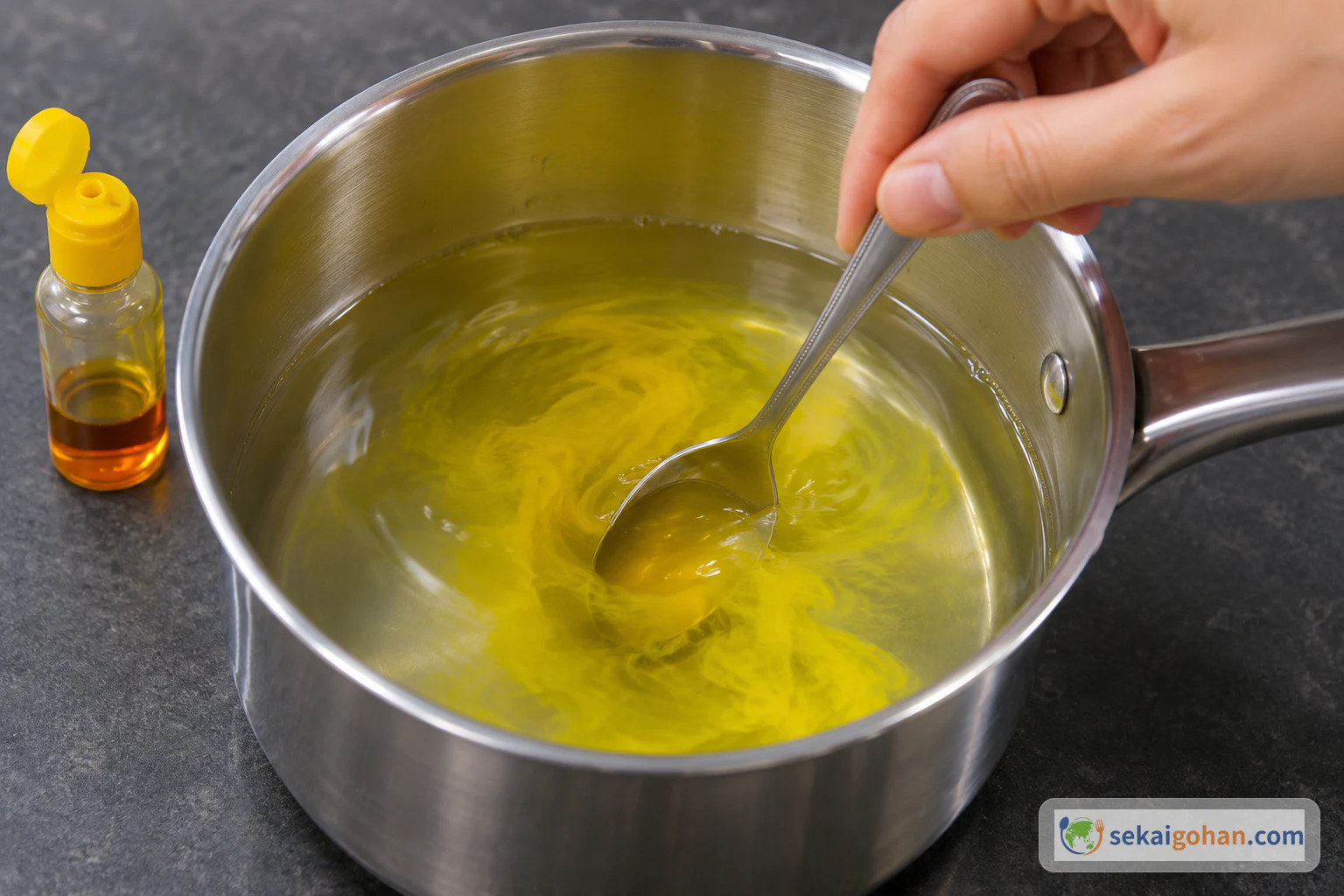
Stirring yellow food color into water in a separate saucepan
Color the water in the same saucepan you will boil it in

In a separate saucepan, stir 2 pinches yellow food color into 2 cups water.

STEP 66 / 14

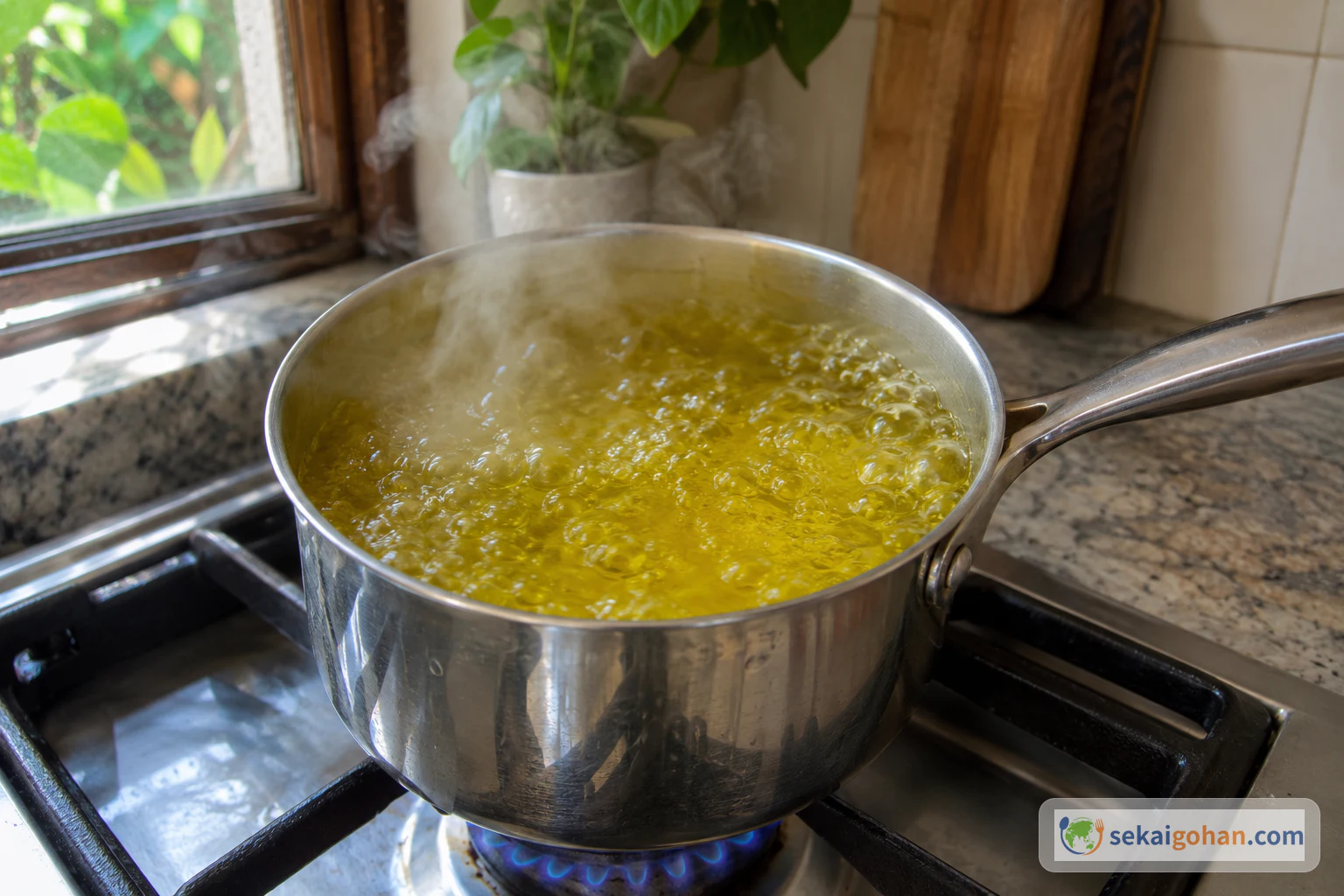
Bring the colored water to a boil

Yellow-colored water boiling in a separate saucepan
Only colored water in this pan

Bring the colored water to a boil in the same saucepan.

STEP 77 / 14

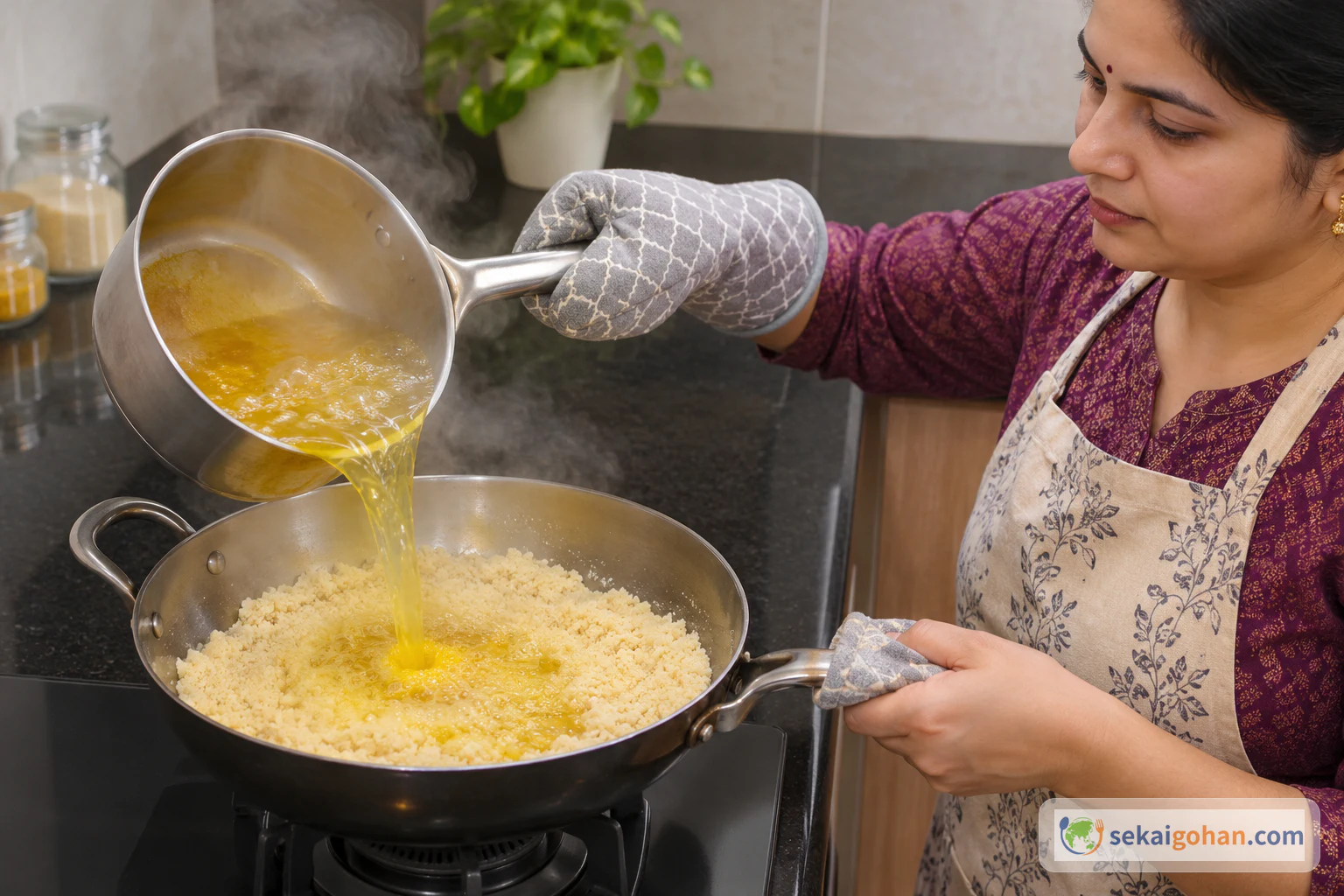
Pour the boiling water onto the rava

Carefully pouring the boiling colored water onto the roasted rava
Pour slowly, hands protected and away from the steam

With the heat under the kadai still off, carefully pour the boiling colored water onto the roasted rava. It will splash. Wear oven mitts, pour slowly and keep back from the steam.

STEP 88 / 14

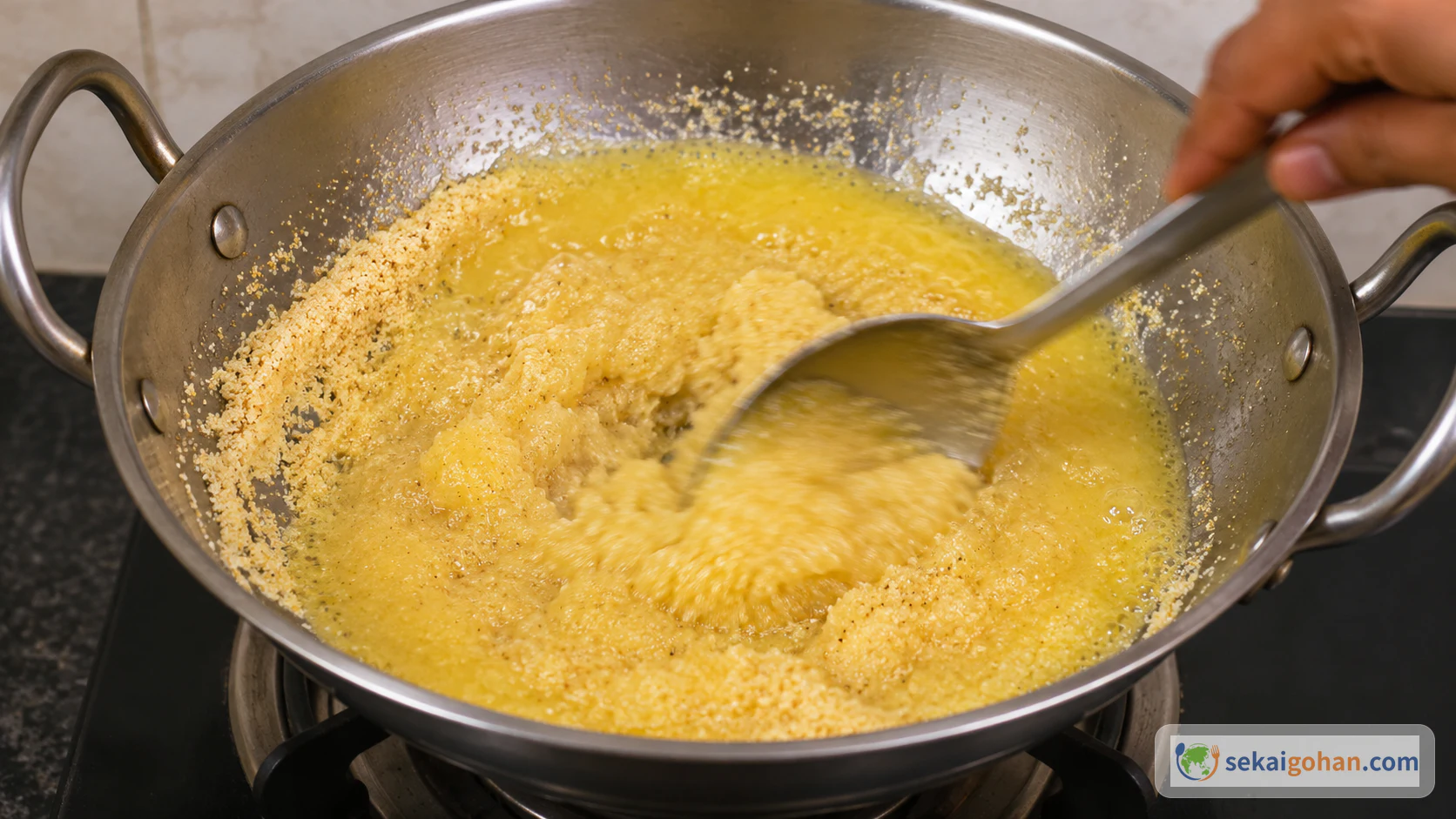
Mix, add salt, then absorb over medium heat

Mixing the rava with the colored water just added
Mix promptly to keep it smooth

Mix the rava and water right away so lumps don't form.

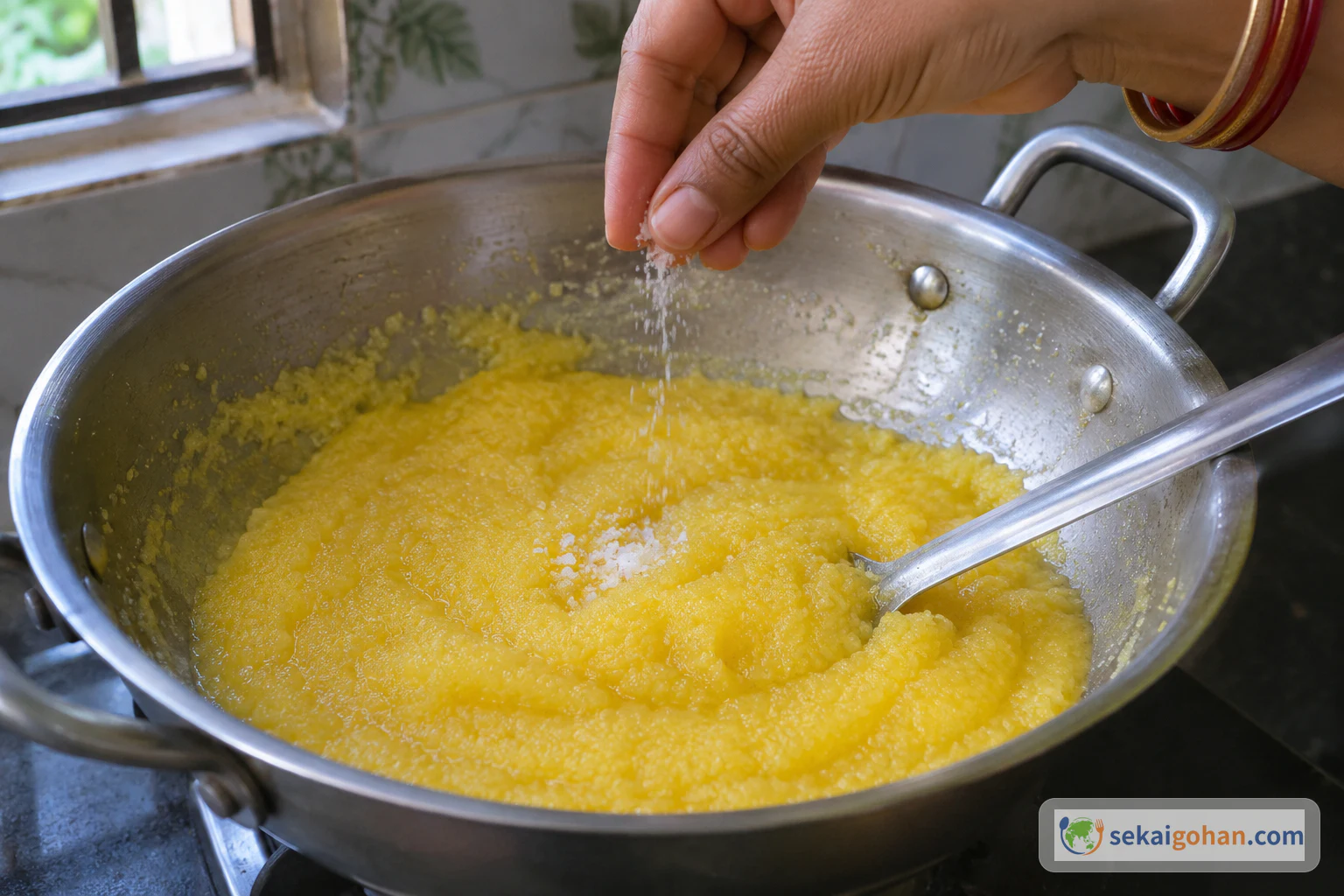
Add a pinch of salt.

Adding a pinch of salt to the rava and water mixture
Salt goes in after the water

Turn the heat back on to medium and keep stirring until the rava has absorbed the water.

Stirring the rava over medium heat until the water is absorbed
Back to medium heat until the water is taken up
STEP 99 / 14

Cover and cook for 3–4 minutes

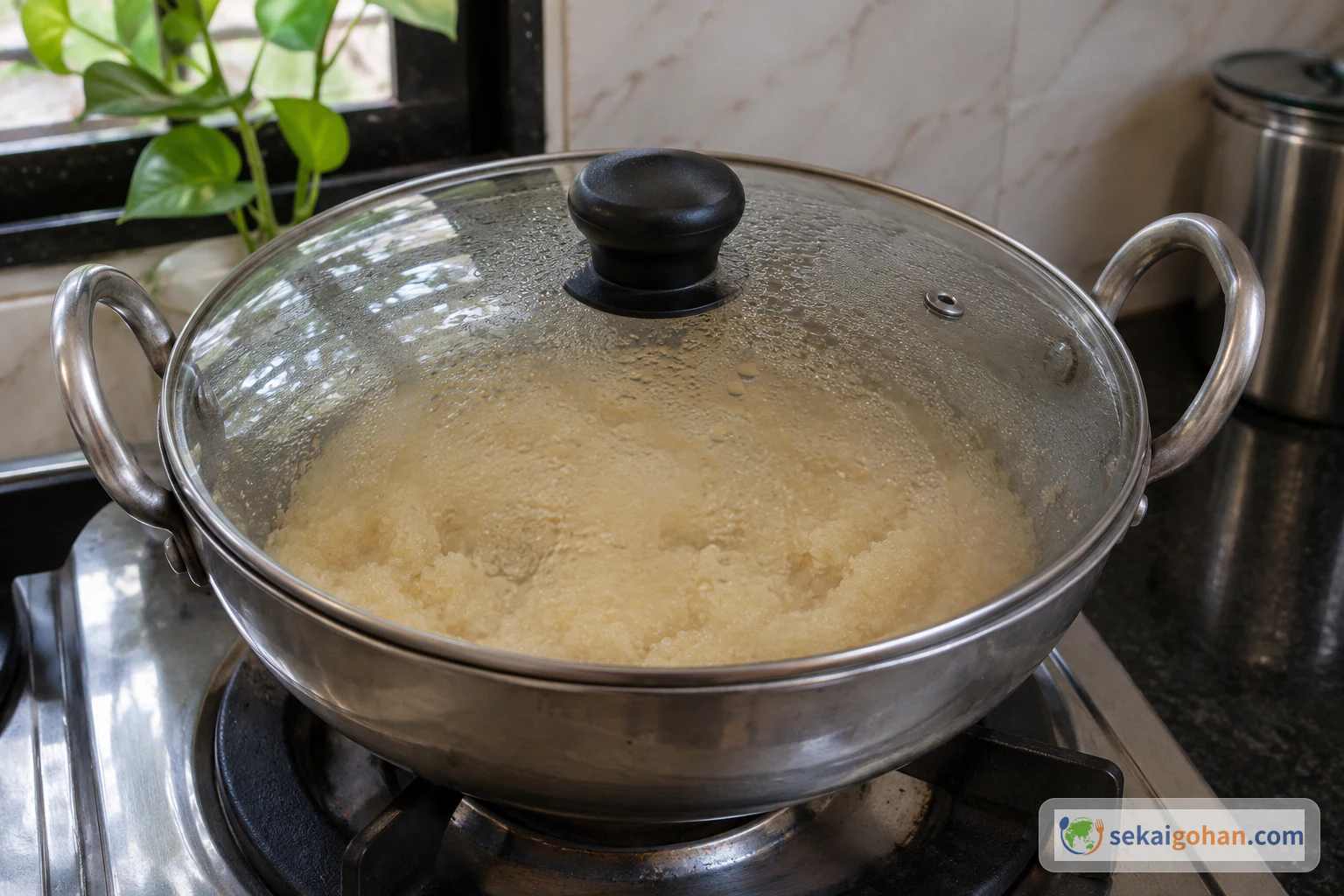
Placing a lid on the pan of absorbed rava
Lid on once the water is absorbed

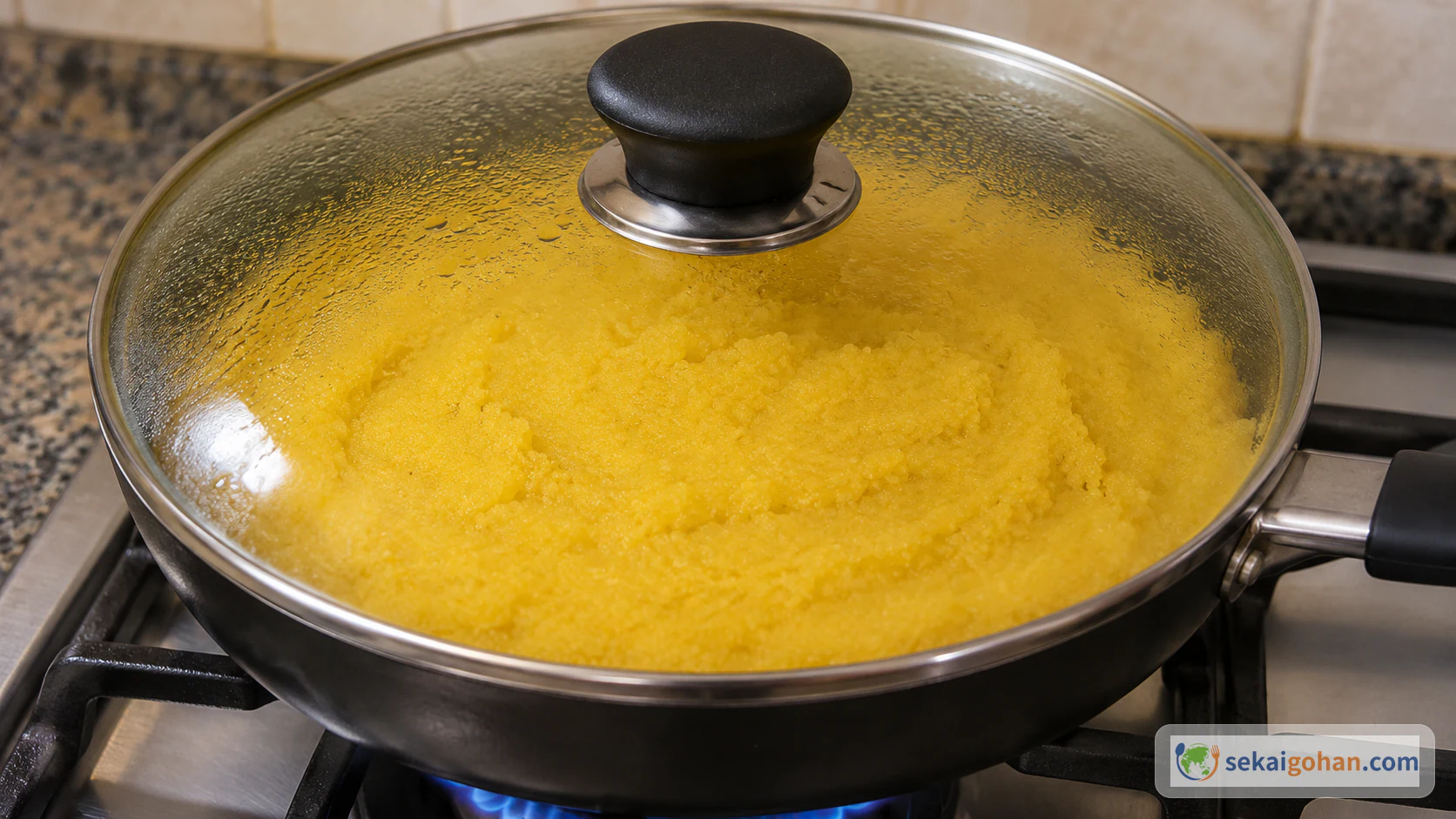
Put the lid on the kadai.

Cook covered for 3–4 minutes.

The covered pan cooking the rava
3–4 minutes under the lid
STEP 1010 / 14

Add the sugar and let it loosen

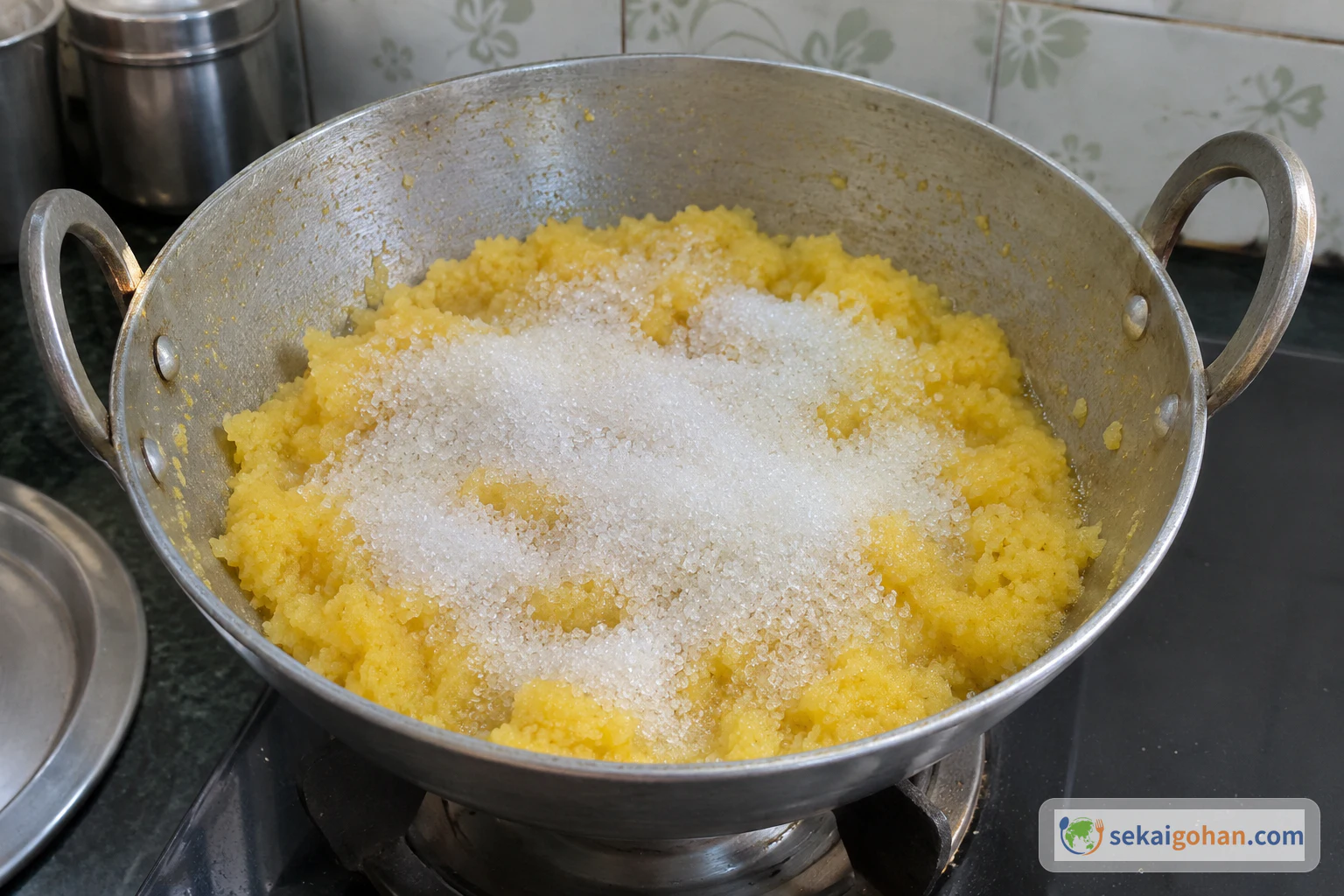
Adding sugar to the cooked rava
All the sugar goes in after the covered stage

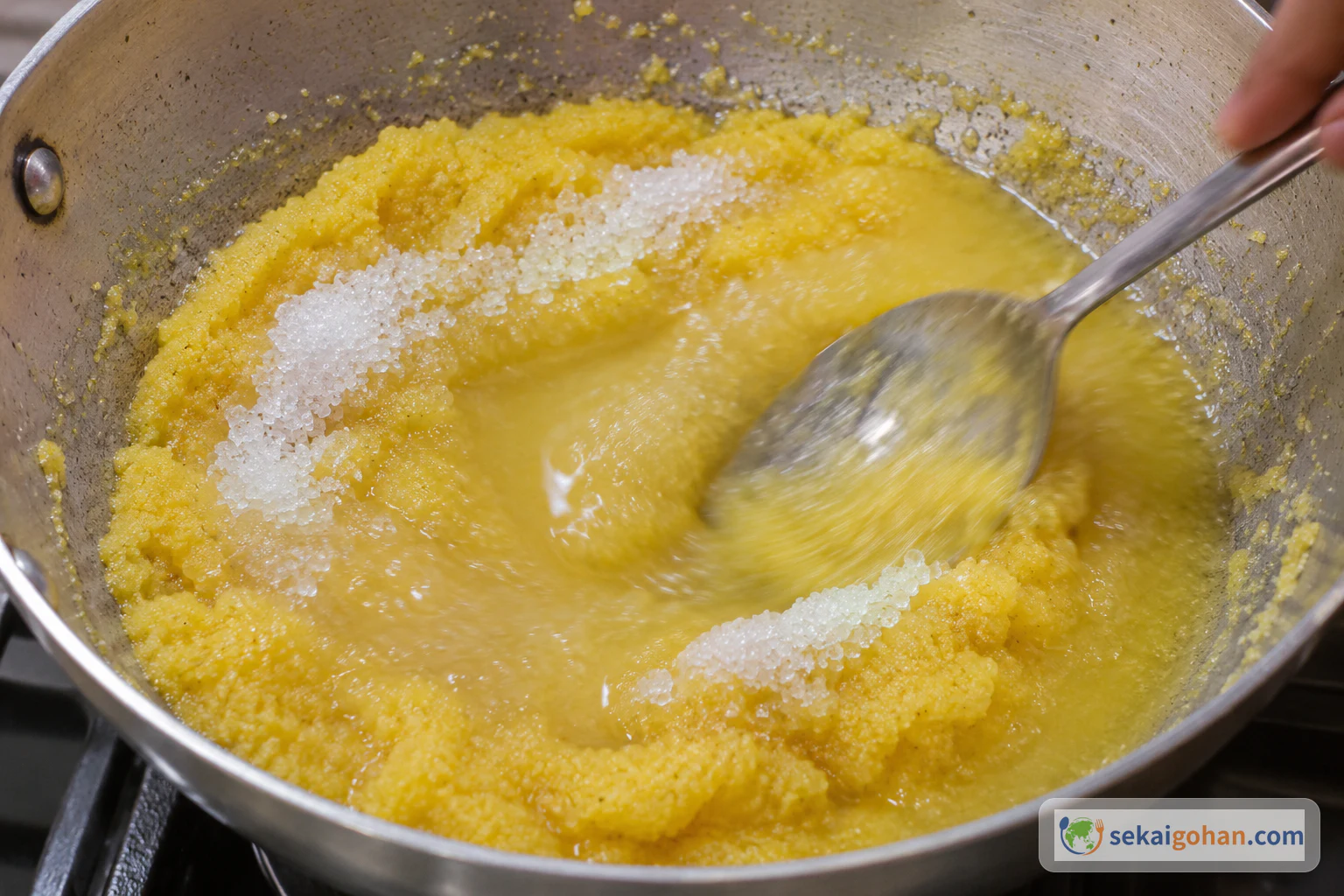
Add 1 cup sugar to the cooked rava.

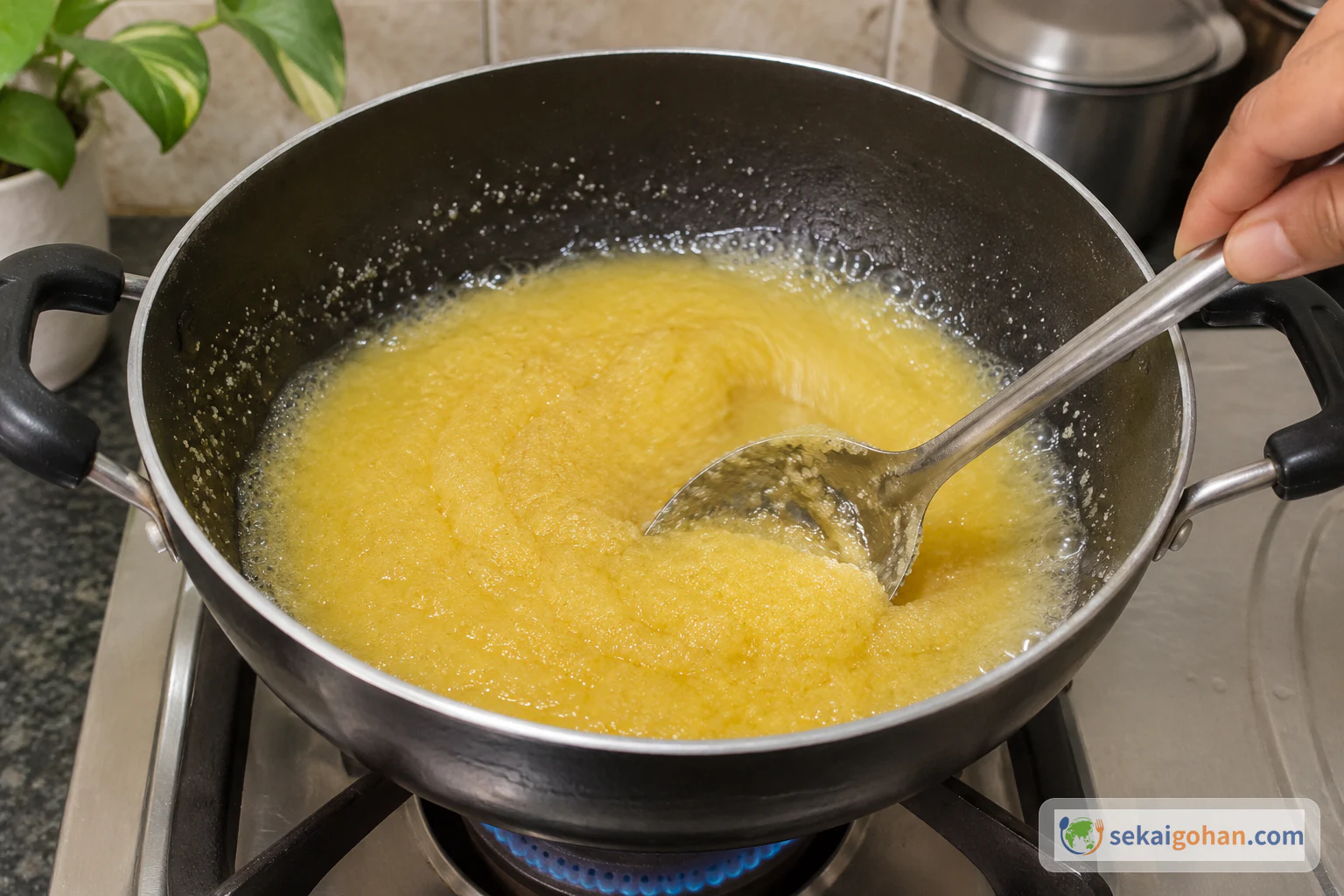
Mix it in. As the sugar melts, the mixture turns loose and watery. This is expected; keep going.

Stirring as the sugar melts and the mixture loosens
Loose and glossy for now
STEP 1111 / 14

Stir until it leaves the sides of the pan

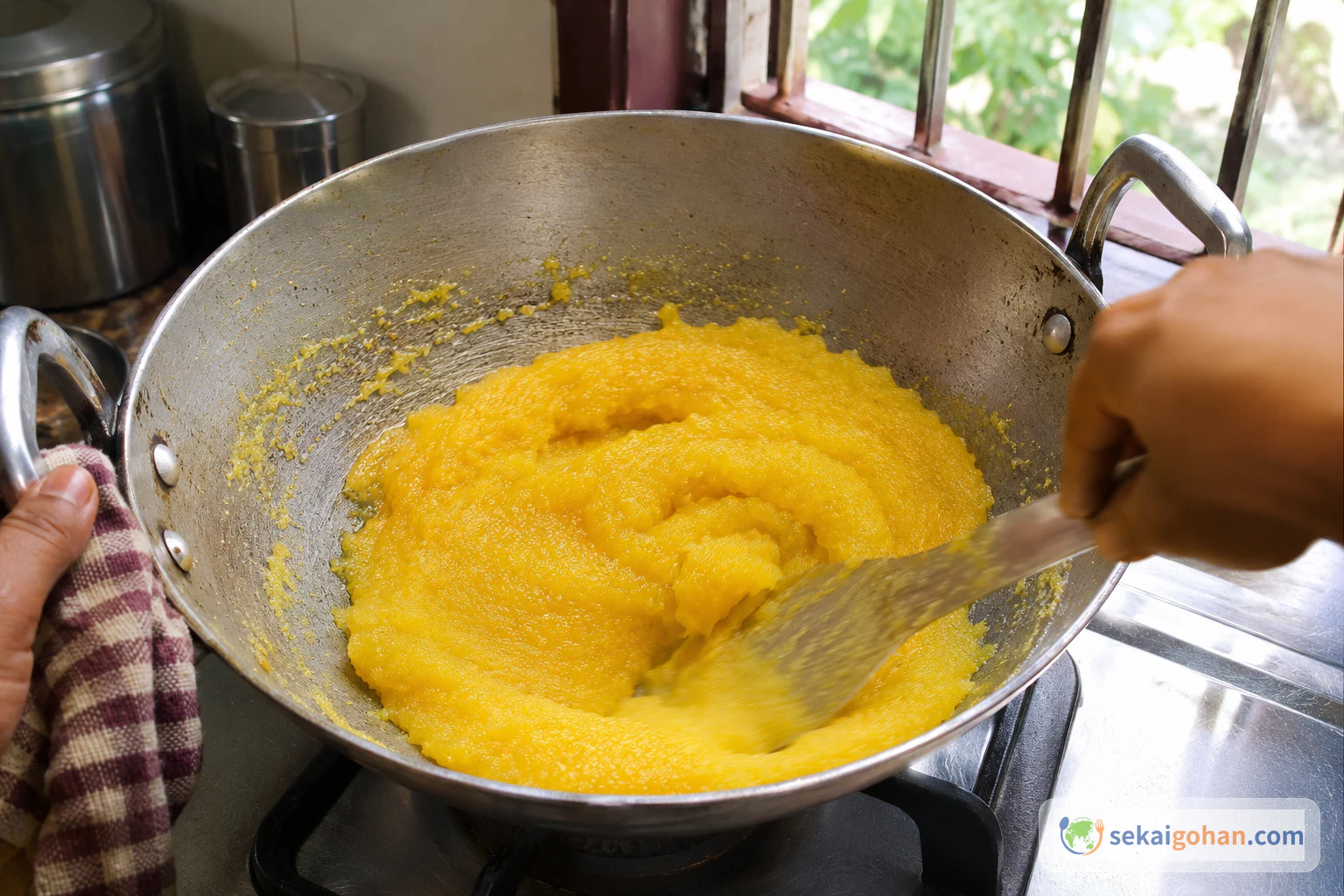
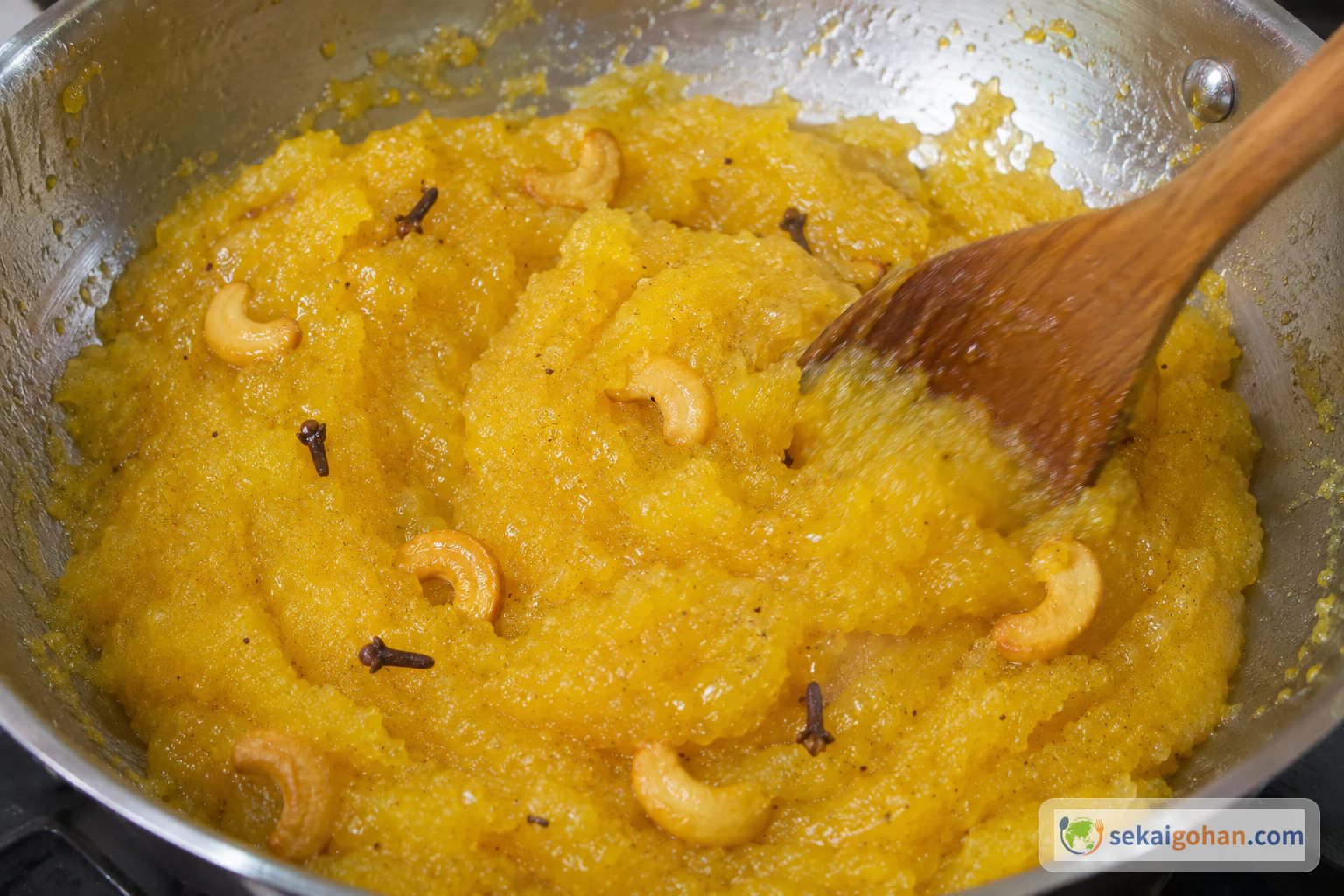
Stirring the thickened mixture as it starts to pull away from the pan sides
The finishing cue: it begins to leave the sides

Keep mixing and cooking until the mixture thickens again and starts to leave the sides of the pan.

STEP 1212 / 14

Add the cardamom and the fried cloves and cashews

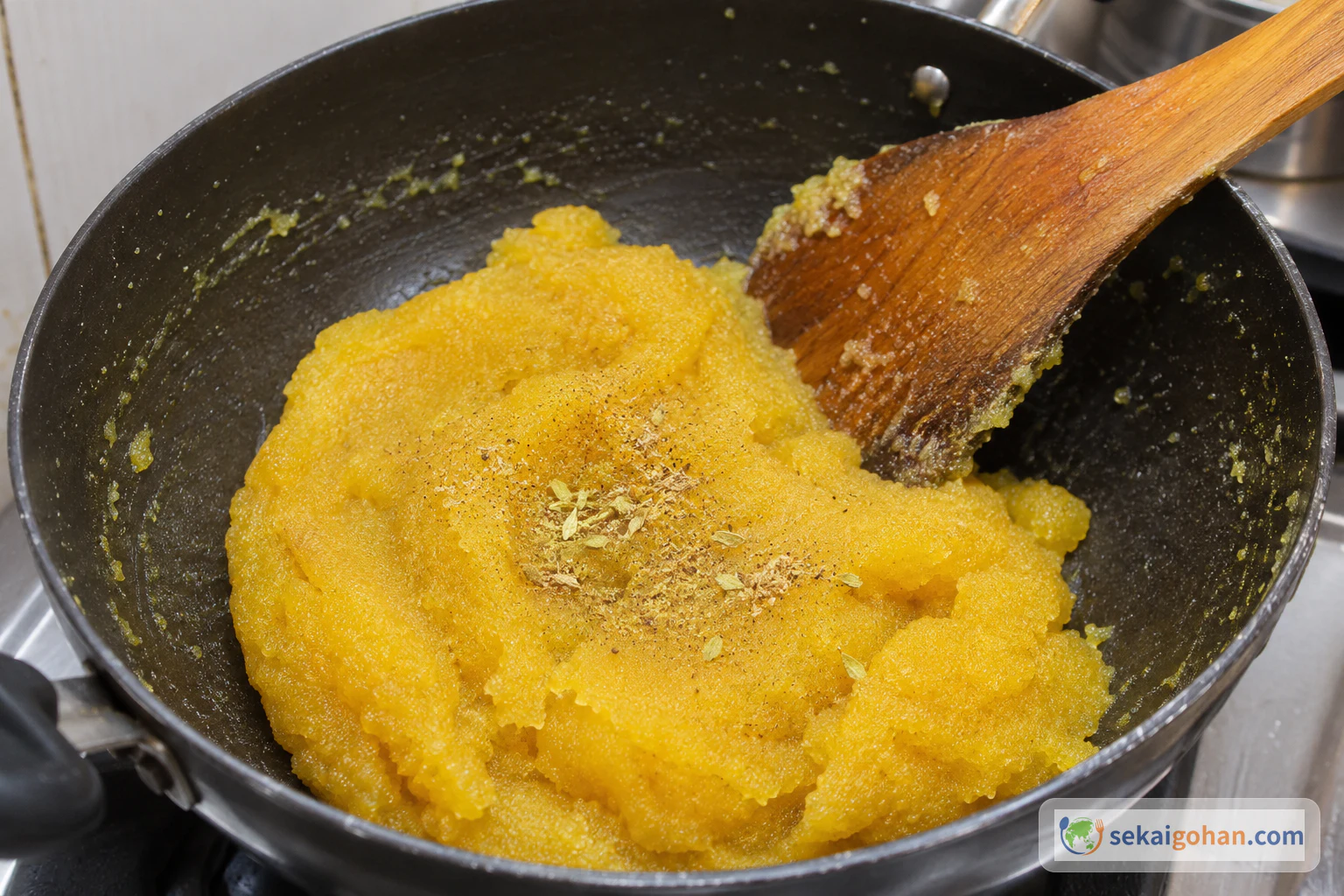
Adding cardamom powder to the thick semolina sweet
Ground cardamom goes in first

Add ½ tsp cardamom powder.

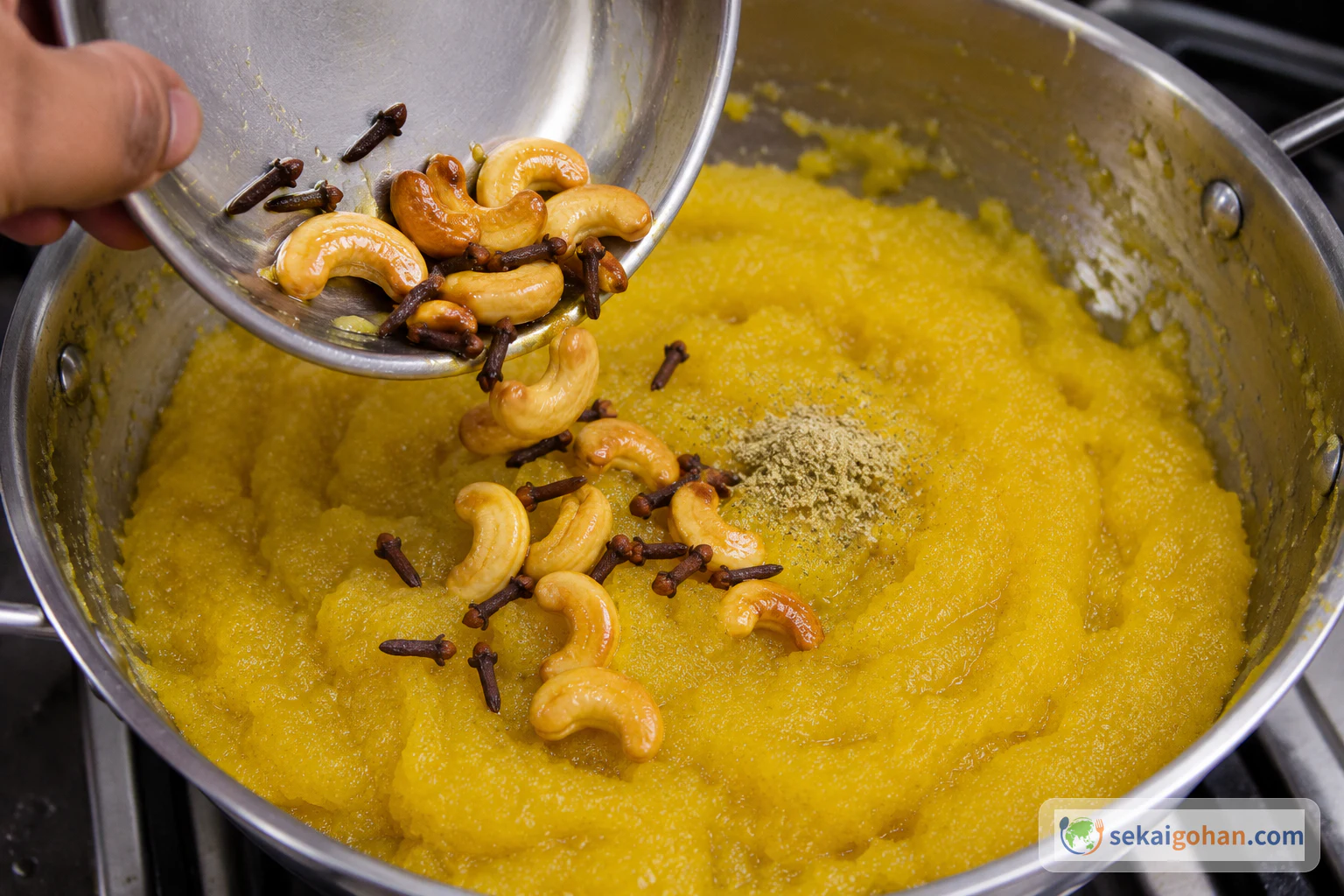
Return the fried cloves and cashews to the pan.

Returning the fried cloves and cashews to the pan
Back in go the cloves and cashews

Mix everything through.

Mixing the returned cloves and cashews into the sweet
One last fold to spread them evenly
STEP 1313 / 14

Transfer to a greased bowl and flatten

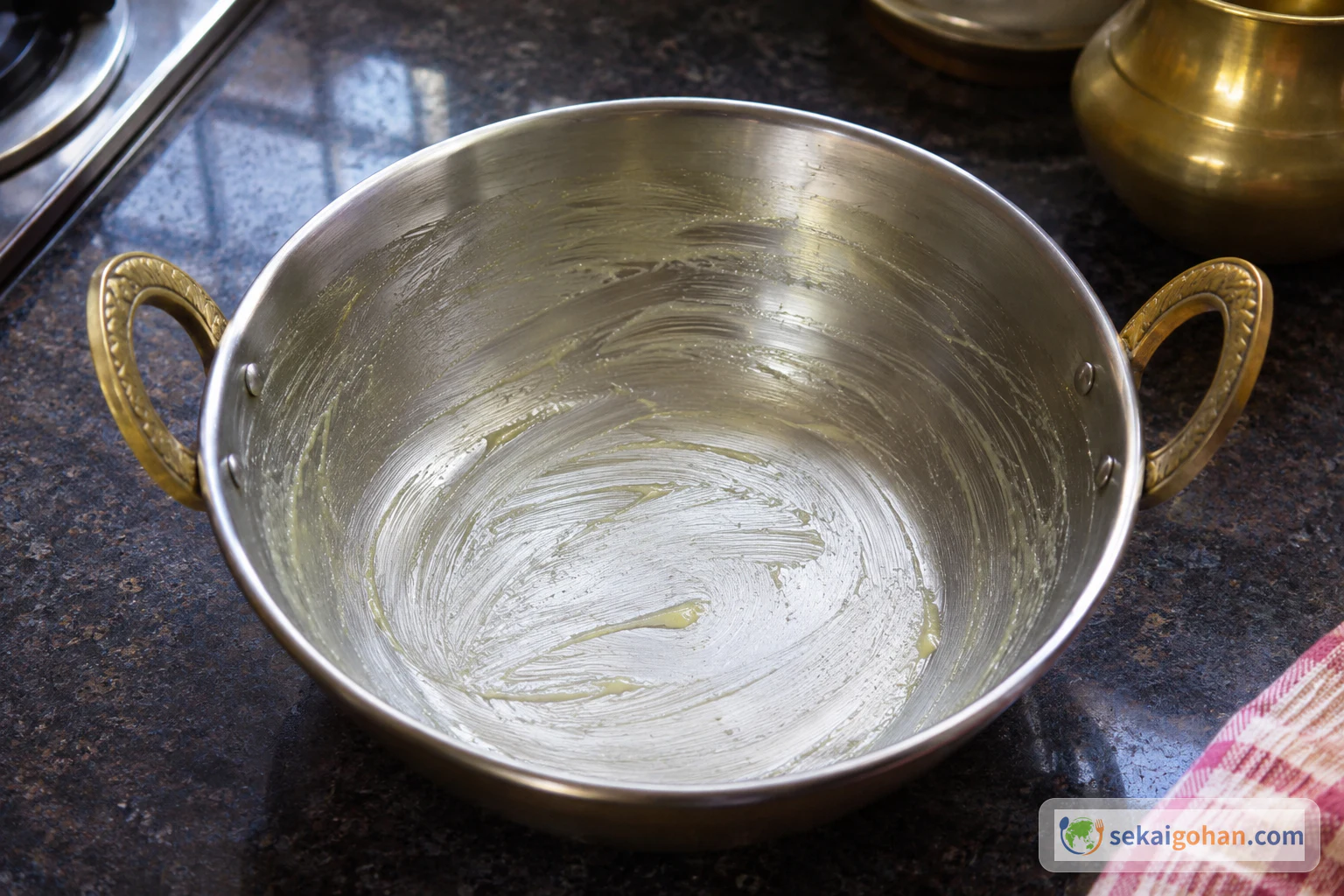
Spreading a thin coat of ghee inside an empty bowl
A thin coat of ghee in the empty bowl

Spread a little ghee thinly inside the serving bowl.

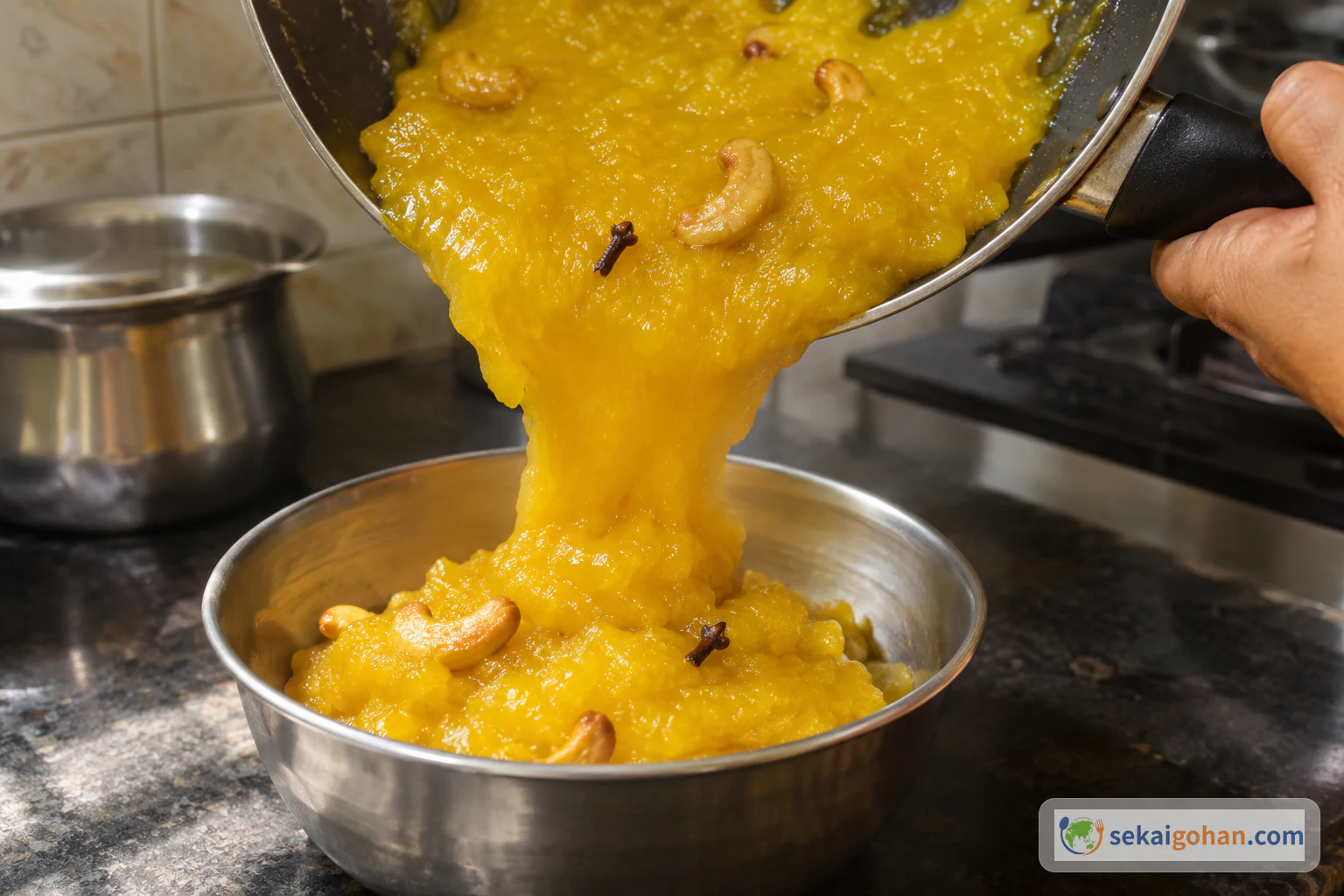
Transfer the sweet into the bowl. It should still be soft enough to flow in a loose ribbon.

Transferring the soft Kesari Bath into the greased bowl
Soft enough to flow from the pan

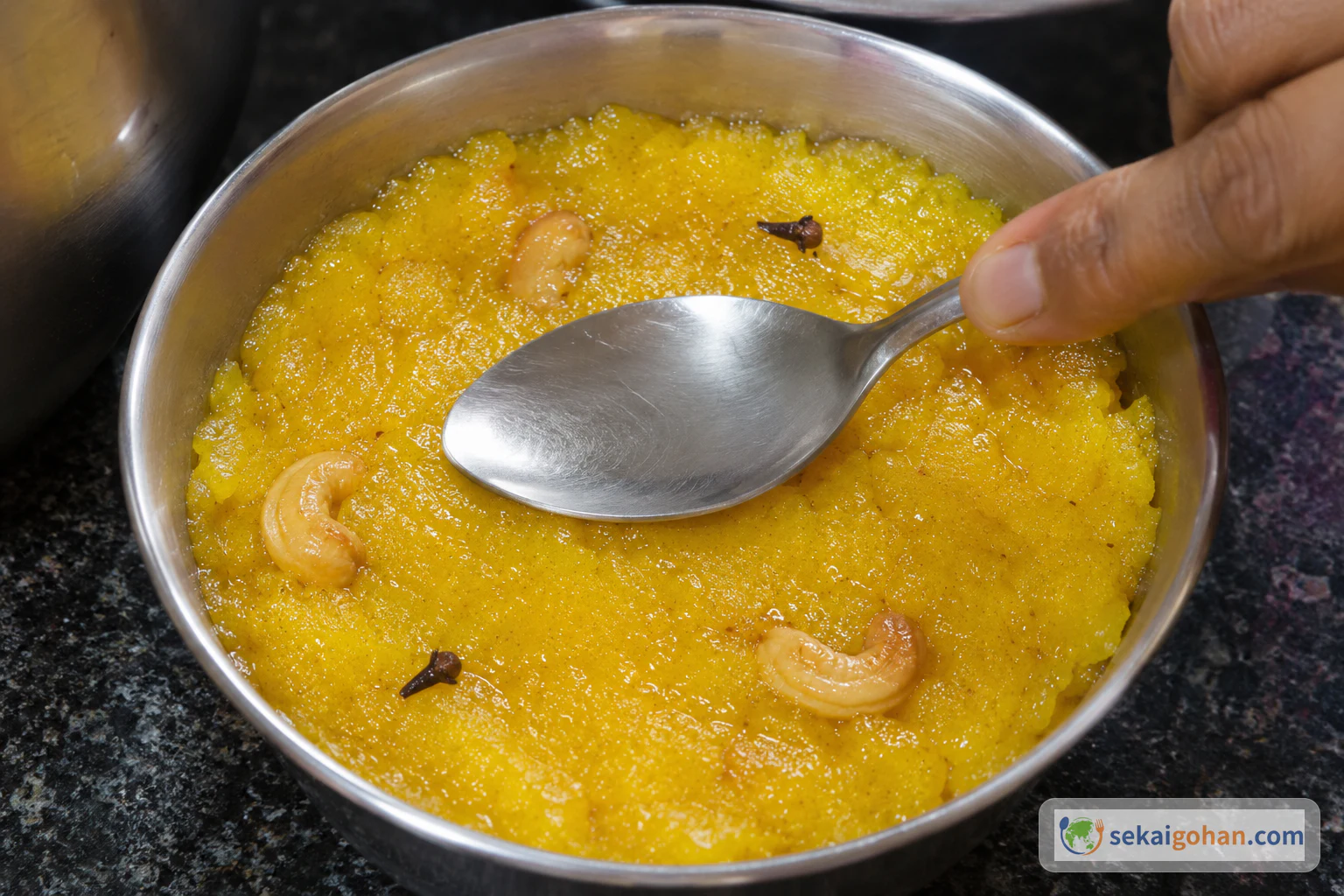
Flatten the top with a ladle.

Leveling the surface of the Kesari Bath in the bowl
Smooth the surface gently
STEP 1414 / 14

Serve warm

Spooning up warm Kesari Bath
Soft, fine-grained and warm

Serve the Kesari Bath warm.

0 / 0
Ingredients

Ingredients

1 / 1

Ingredients

Ingredient Amount Role
Fine semolina (rava / sooji) ½ cup The body of the sweet. Roasted in ghee and oil without browning
Sugar 1 cup Added only after the rava has absorbed the water and cooked covered
Water 2 cups Colored and boiled in a separate saucepan, then poured onto the rava
Melted ghee ⅓ cup Heated with the oil at the start to fry the cloves and cashews and roast the rava
Neutral cooking oil (odorless) 1 tbsp Goes in with the ghee at the start
Cardamom powder ½ tsp Ground cardamom, stirred in at the end
Yellow food color 2 pinches Colors the water
Cashew nuts a few Fried golden, set aside and returned at the end
Cloves 1–2 Fried with the cashews, set aside and returned at the end
Salt a pinch Added after the water and rava are mixed
Ghee, for greasing the bowl a little A thin coat inside the serving bowl
0 / 0

Fine semolina goes into the ghee at the bottom of a kadai and roasts slowly until it smells fragrant, but it shouldn't color. Then in goes boiling water already tinted yellow, and it can splash, so stand back a little. You stir over medium heat while the rava drinks it all up. A few toasted cashews and whole cloves are folded in at the end. What you get is Kesari Bath, a sweet from Karnataka in south India that's rich with ghee and scented with cardamom.

Kesari Bath in Karnataka

Kesari Bath is one of Karnataka's popular festive sweets: semolina roasted and cooked with sugar and ghee. It is also called Rava Kesari, and you'll see it spelled Kesari Bhaat, Kesari Baat or Kesari Bat. Karnataka-style Kesari Bath is also distinguished from the rava kesari variant.

Recipes for the sweet vary. Some use saffron, fried cashews and raisins. This one tints the water with yellow food color and uses cashews and cloves, with no saffron or raisins. Fruit-flavored kesari also exists, but those are separate types with their own recipes.

In Karnataka, Kesari Bath is often served with khara bath, a separate dish. Together the pair is called Chow-Chow Bath. For more dishes and background from across the country, see the India country page.

Ingredients: Serves 2, with a 1 cup (250 ml) Cup
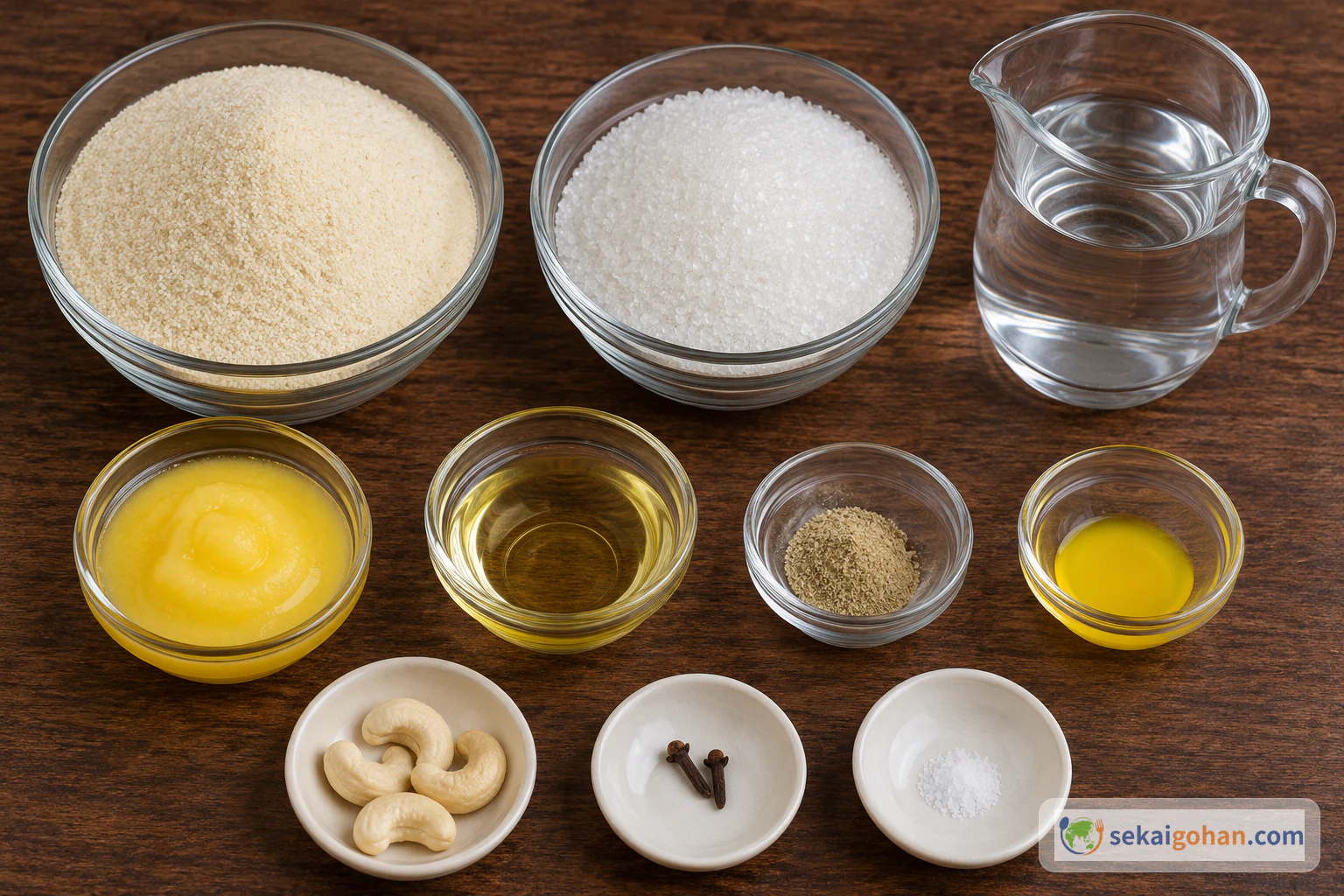
Rava, sugar, water, ghee, oil, cardamom, yellow food color, cashews, cloves and a pinch of salt laid out for Kesari Bath
Everything in the pan, set out before you start
Allergens and labels

This sweet contains wheat (semolina, which contains gluten), dairy (ghee) and cashew nuts. It is not gluten-free. Check the label on your food color and other packaged ingredients for allergens and shared-facility statements.

Equipment

  • Kadai or heavy-bottomed pan, with a lid
  • Separate saucepan for boiling the colored water
  • Spoon or spatula for stirring
  • Ladle
  • Small dish for the fried cloves and cashews
  • Serving bowl
  • Oven mitts or pot holders
  • 250 ml measuring cup and measuring spoons

Choosing Ingredients for Kesari Bath

Cups in this recipe are 250 ml: ½ cup = 125 ml, 2 cups = 500 ml and ⅓ cup ≈ 83 ml.

Semolina. Look for fine semolina, sold as rava or sooji in Indian groceries or as fine-ground durum wheat semolina. Coarse semolina meant for pasta gives a grainier texture. If it's all you can find, keep the amount of water the same rather than changing the ratio.

Ghee. Use ghee or clarified butter. Unsalted butter will work as a substitute, but it has more water and milk solids, which change the aroma and clarity of the fat. The full ⅓ cup of ghee goes into the pan at the start, and you use a little extra to grease the serving bowl.

Neutral oil. Pick an oil with little smell of its own, such as rice bran oil. Sesame oil changes the aroma.

Cardamom. Use ground cardamom. If you don't have any, leave it out instead of swapping in another spice. The sweet will smell different without it.

Yellow food color. Choose a food-grade yellow color whose label says it is suitable for cooked sweets, and follow that label. Brands vary in strength, so 2 pinches won't give the same shade with every one. Saffron and turmeric would make a different sweet.

Cashews and cloves. All you need is a few cashews, fried golden and stirred back in at the end, plus one or two whole cloves.

Method: Pale Roast, Heat Off, Colored Water, Then Sugar

Before you start

Measure everything first; the steps follow quickly once the rava is roasted. Judge heat, timing and doneness by the cues in each step.

Hot water and steam

Boiling water poured onto hot, fat-coated rava splashes. Wear oven mitts, keep your face and bare hands out of the steam, and pour slowly. Steam and color don't show how hot the fat, water or sugar is, so take care with all three throughout.

Fixing Common Kesari Bath Problems

Three cues to watch

Roast the rava until it smells toasty but stays pale. Let it absorb the colored water before any sugar goes in. Then stir until the sweet thickens and starts to leave the sides of the pan.

The only timed stage is the 3–4 minutes with the lid on. For everything else, go by how the pan looks and smells, because your pan and stove will change the timing.

What you see Likely cause What to do
Lumps of rava Water poured too fast, or mixing was slow Pour the water slowly and start mixing as soon as it goes in. Keep stirring over medium heat while it is absorbed
Rava turned brown Roasted too hard Roast only until fragrant while the grains stay pale, stirring constantly
Mixture went runny after the sugar Melting sugar loosens it This is normal. Keep stirring and cooking until it thickens again
It won't come away from the pan Not cooked long enough after the sugar Keep mixing until it begins to leave the sides; that is the cue to add the cardamom
Texture is gritty Coarse semolina was used Next time use fine rava, with the same amount of water
Too sweet 1 cup sugar is the full sweetness Use the ¾ cup option below

Serving Kesari Bath and Variations

Serve Kesari Bath warm. You can spoon it up soft straight away, or let it settle a little in the greased bowl before you scoop it out. Have it on its own, or next to khara bath as Chow-Chow Bath.

If you want to adjust it, change one thing at a time. With ¾ cup sugar instead of 1 cup, it comes out medium-sweet, and nothing else changes. You can also leave out the yellow color. The sweet will be paler, and the method stays the same.

Frequently Asked Questions

Is Kesari Bath a rice dish?

No. Despite "bath" in the name, Karnataka-style Kesari Bath is made with fine semolina (rava).

Can I use flour or pancake mix instead of rava?

Use fine semolina. Flour and pancake mix are not an established substitute here. If you only have coarse semolina, expect a grainier texture.

Is Kesari Bath gluten-free?

No. Semolina is wheat and contains gluten. The sweet also contains dairy (ghee) and cashews.
Sources

  • Chitra Sendhil, "Kesari Bath Recipe-Karnataka Recipes," Chitra's Food Book. The adopted Karnataka-style recipe: ingredient amounts, the 250 ml cup definition, serves 2, method and order of steps, the pinch of salt in the method only, the covered 3–4 minute stage, the splashing-water warning, the optional ¾ cup sugar, the author's prep and cooking estimates, and her account of developing the recipe in Bangalore. https://chitrasfoodbook.com/kesari-bath-recipe-karnataka-recipes/
  • Department of Tourism, Government of Karnataka, "Kesari Bath - Karnataka Tourism." Kesari Bath / Rava Kesari as a popular festive sweet in Karnataka, and a general description of roasted semolina cooked with sugar, ghee and saffron with fried cashews and raisins. Regional context only; its gluten-free statement is not adopted. https://karnatakatourism.org/en/experiences/rava-kesari/
  • Dassana Amit, "Kesari Bath Recipe," Dassana's Veg Recipes. The names Kesari Bath, Kesari Bhaat, Kesari Baat and Kesari Bat for the Karnataka-style semolina sweet, its distinction from the rava kesari variant, and serving with khara bath as Chow-Chow Bath. Its own recipe amounts and method are not used here. https://www.vegrecipesofindia.com/kesari-bhath-recipe/