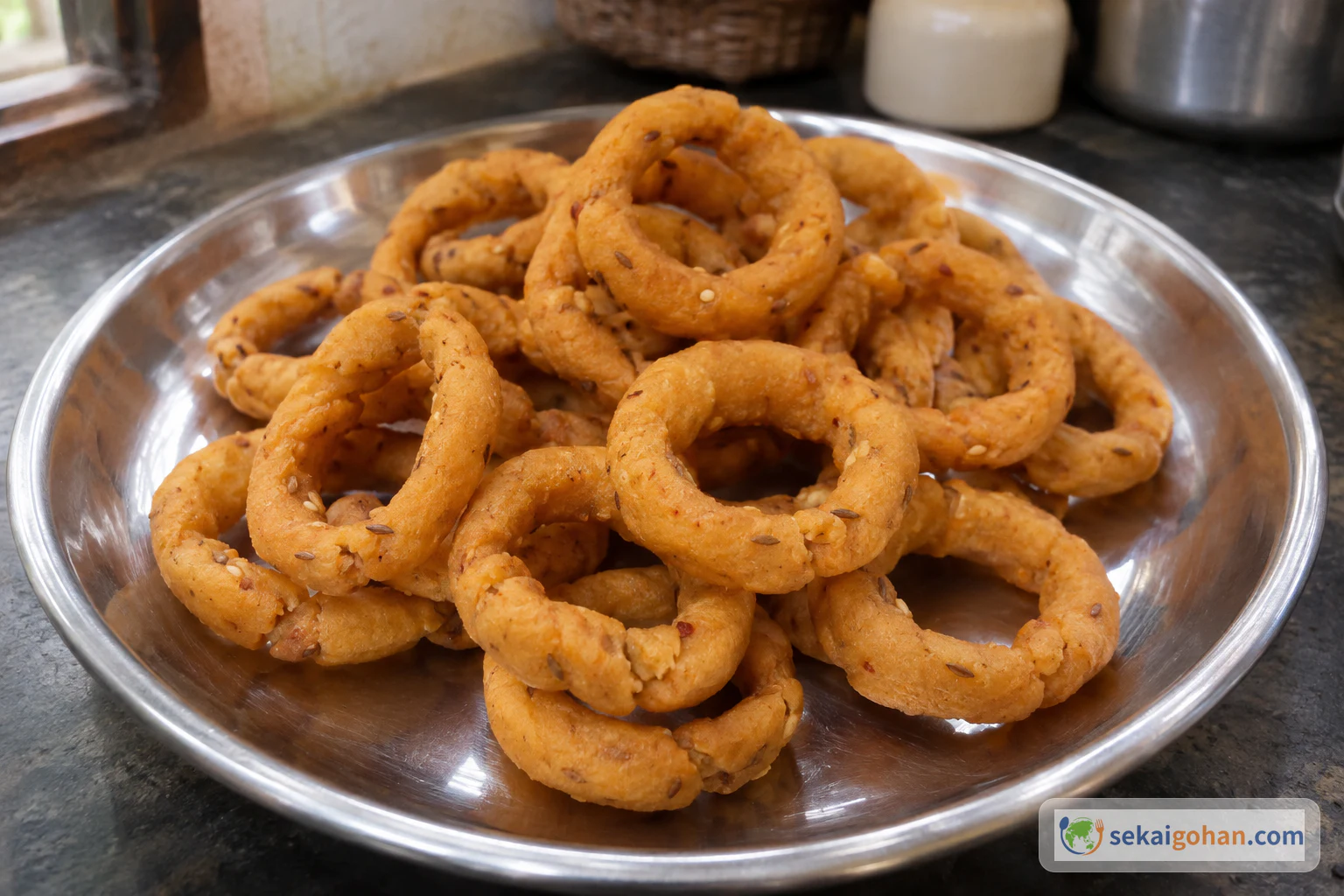
Kodubale: Small Rings Rolled by Hand, Fried Golden in Batches
This is one household recipe for kodubale, the fried ring snack of Karnataka, as N.S. Sridharan of Bengaluru shared it with the author and documentarian Pratibha Jain. It is one family's way of making it, not the single recipe for the whole state. This recipe has not been kitchen-tested by Sekai Gohan.
Pratibha Jain met Mr N.S. Sridharan in Bengaluru, and at the end of their interview he shared how he makes kodubale. Pratibha Jain's write-up presents it as a fried snack from Karnataka, and what follows is that recipe.
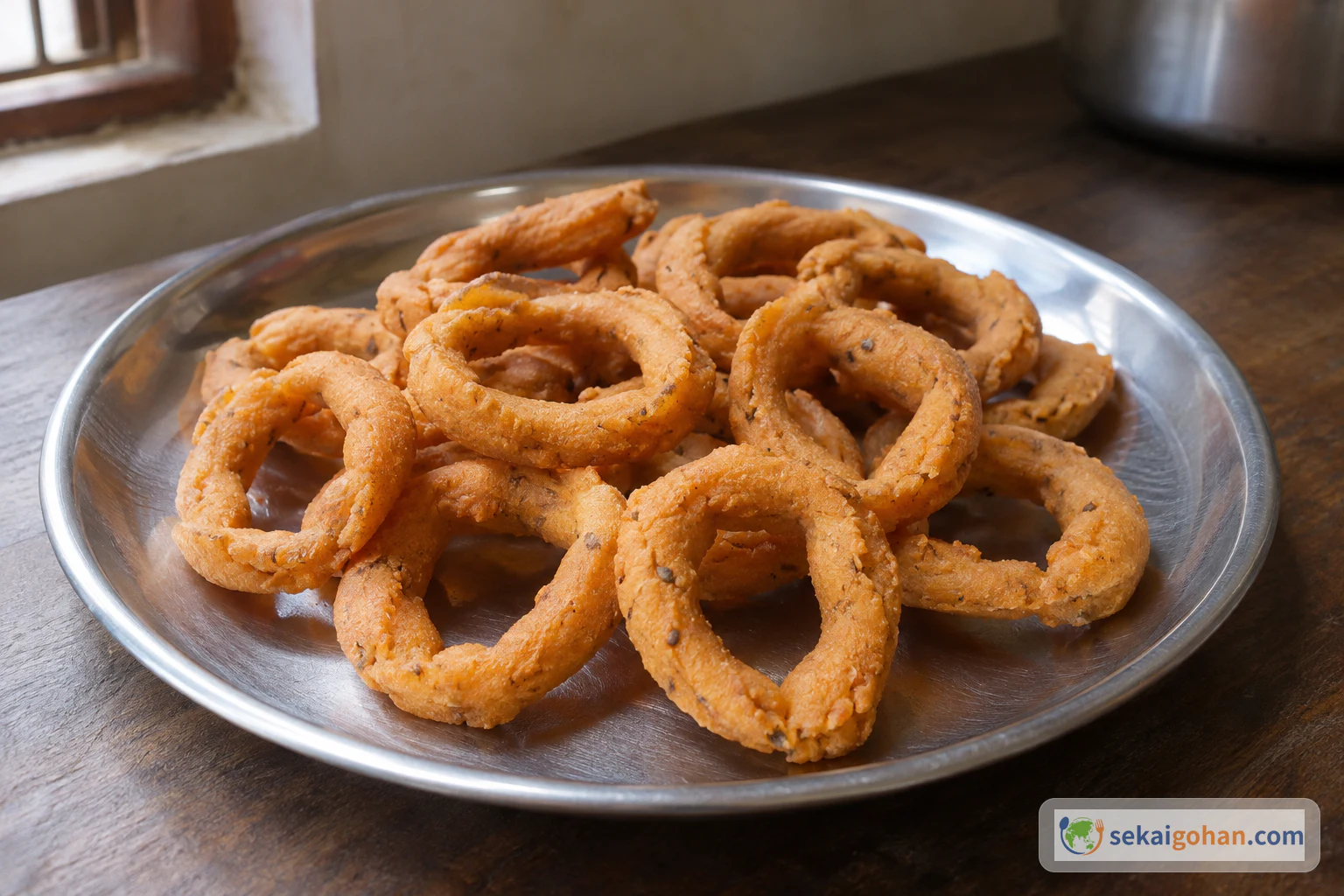
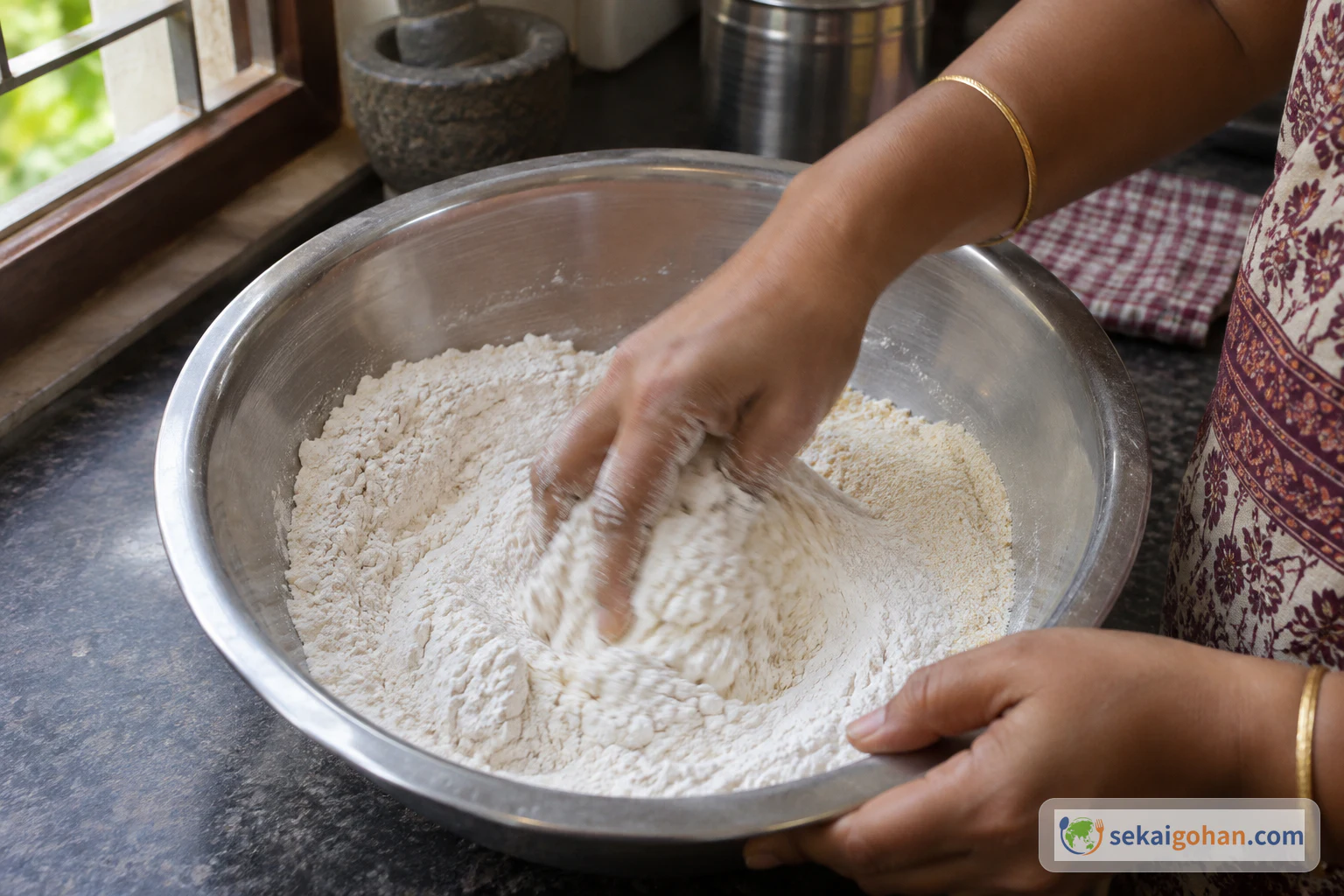
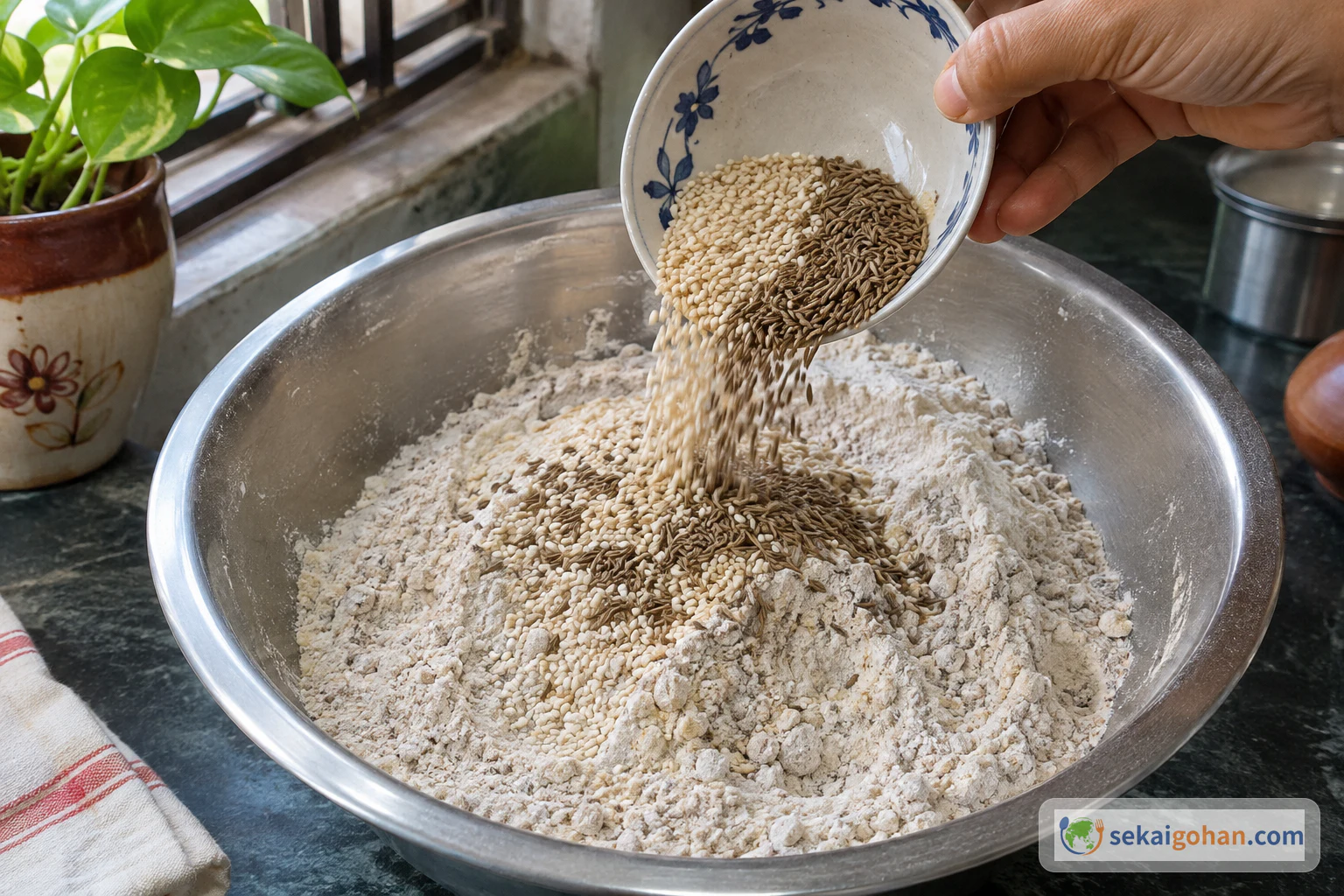
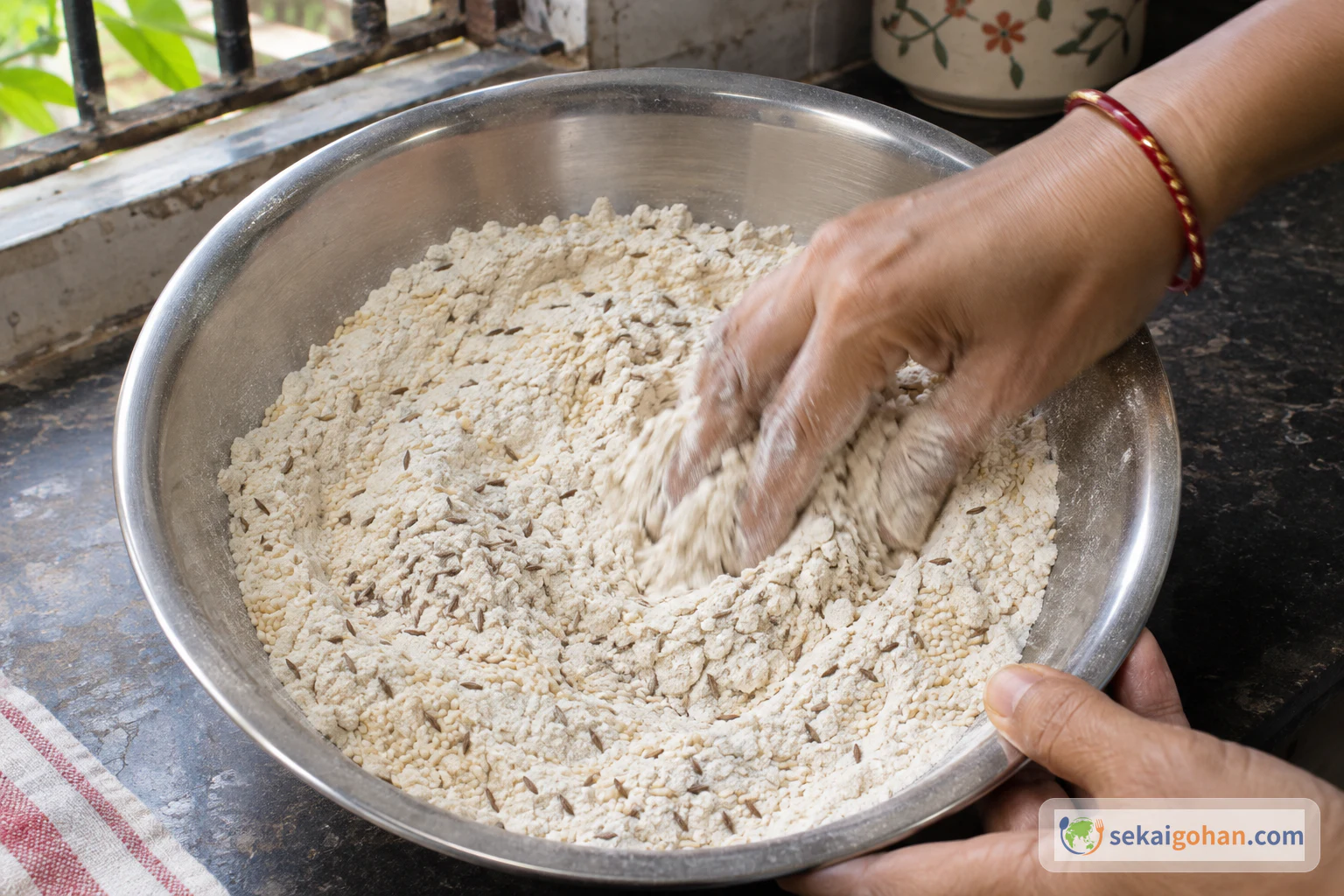
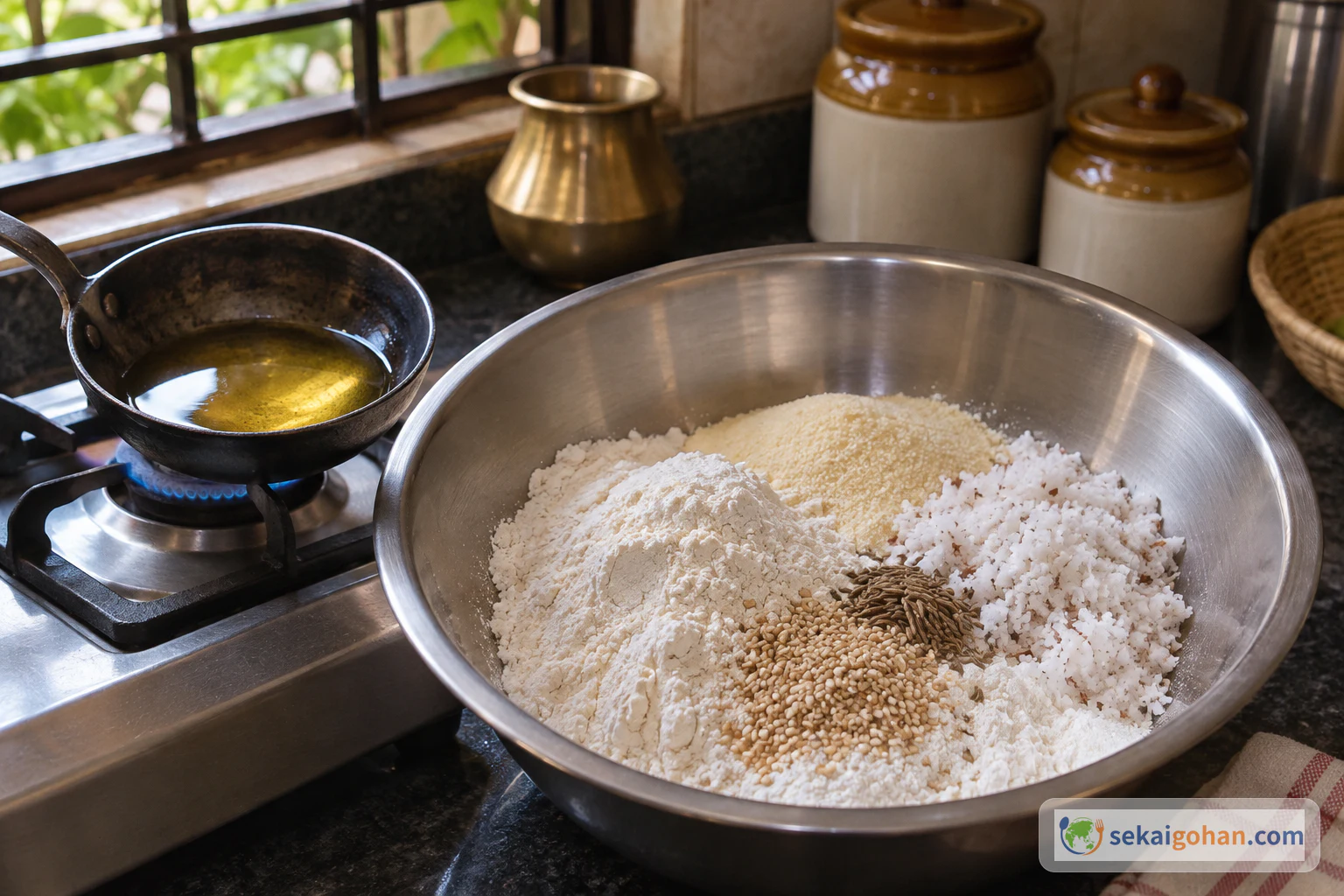
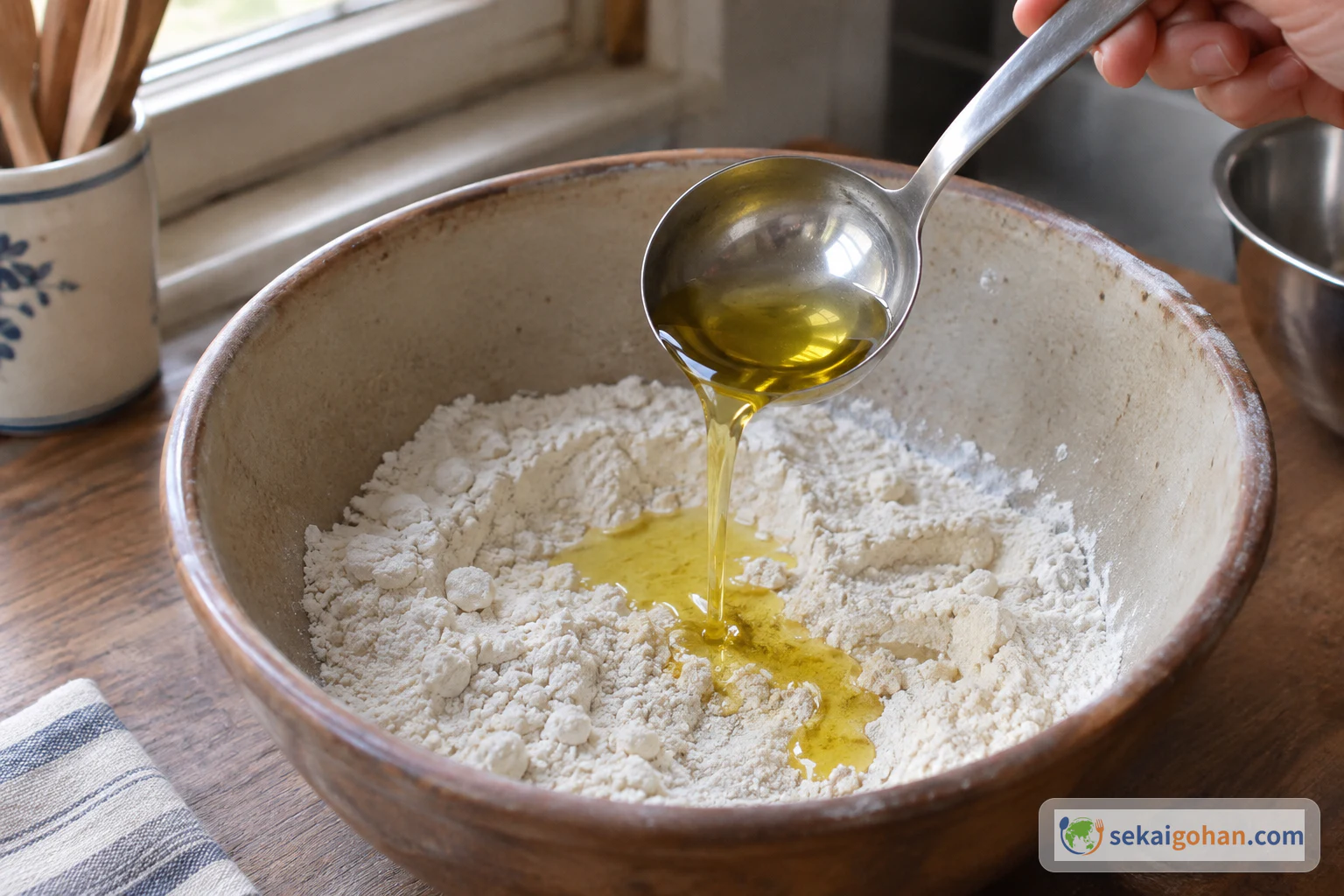
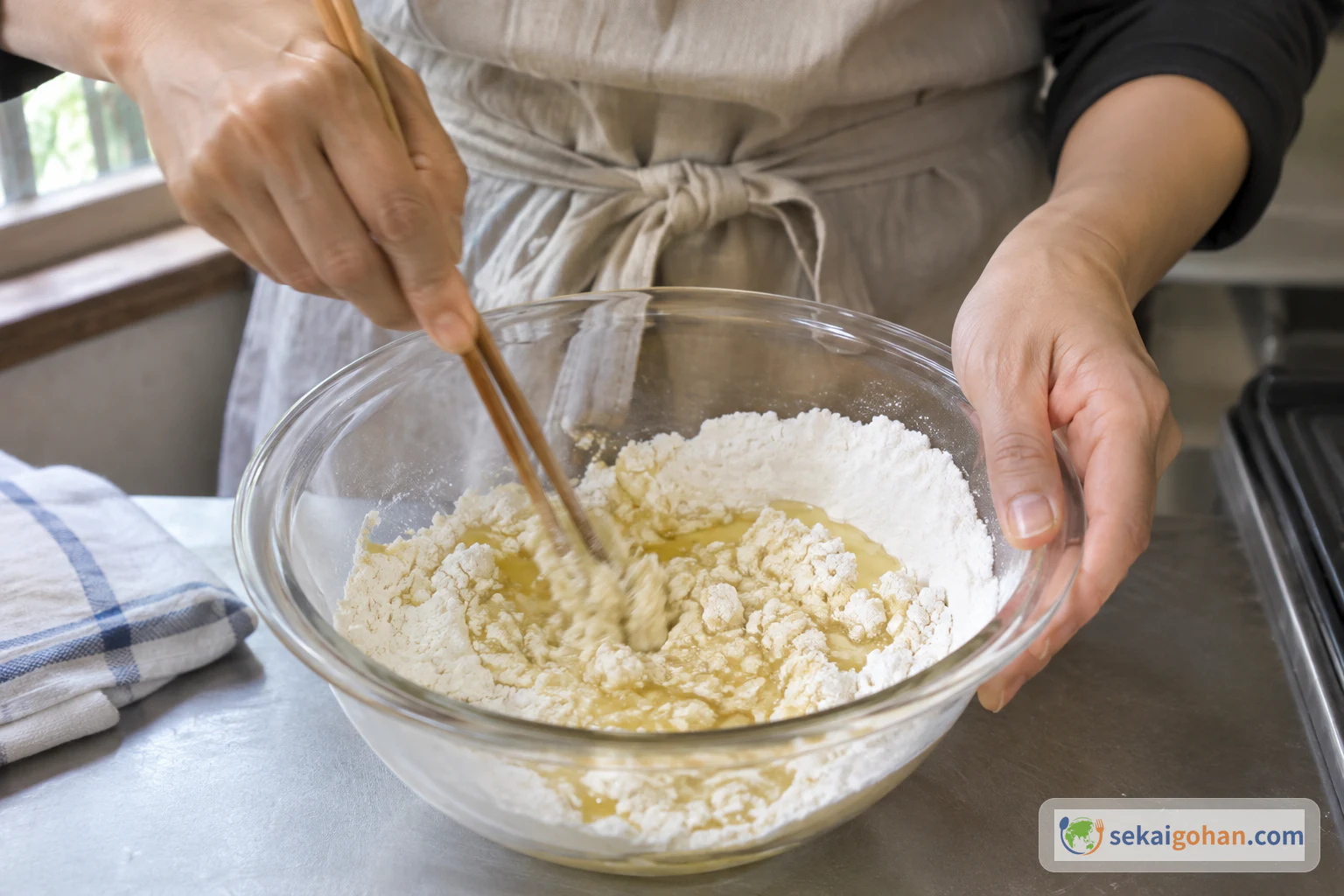
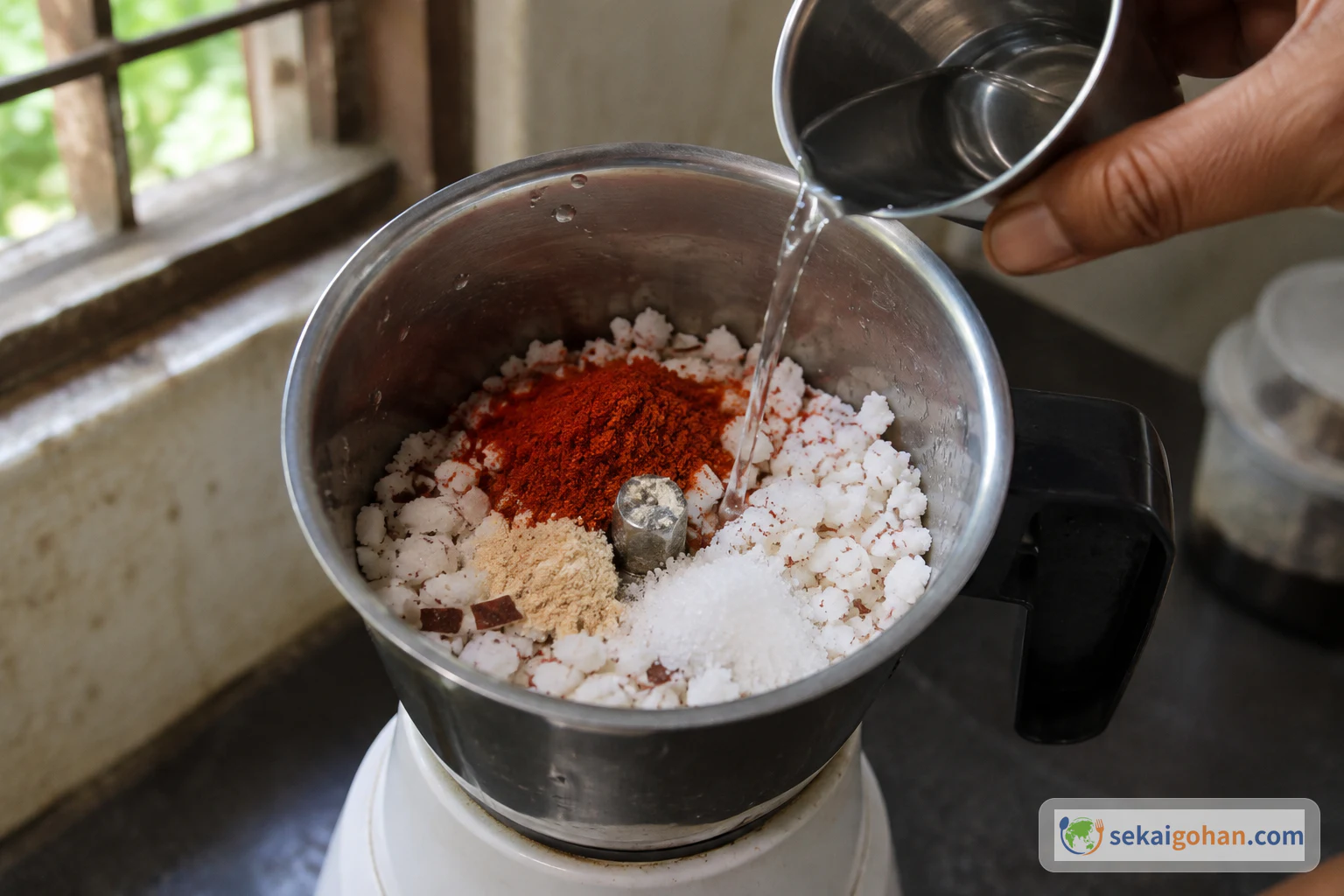
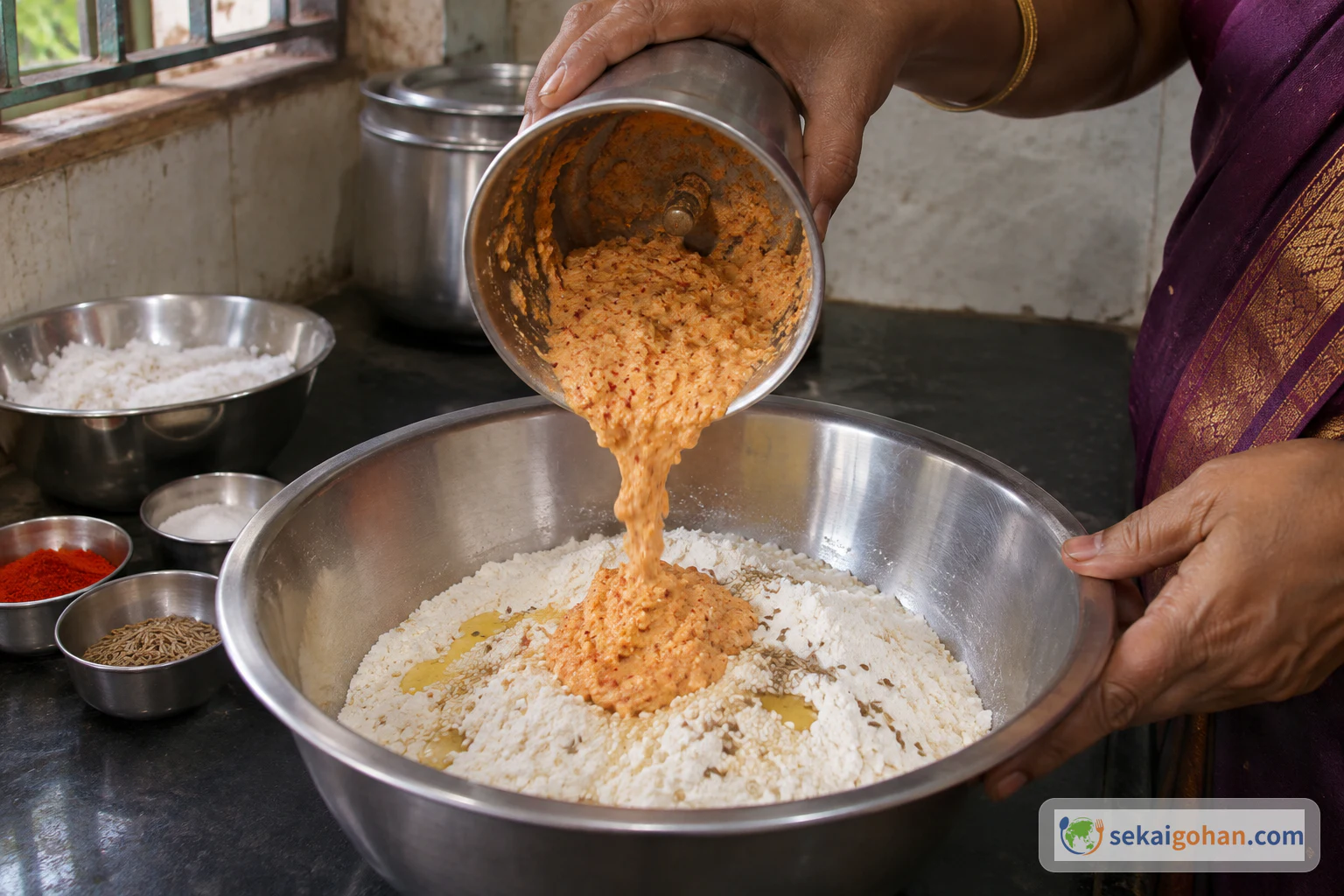
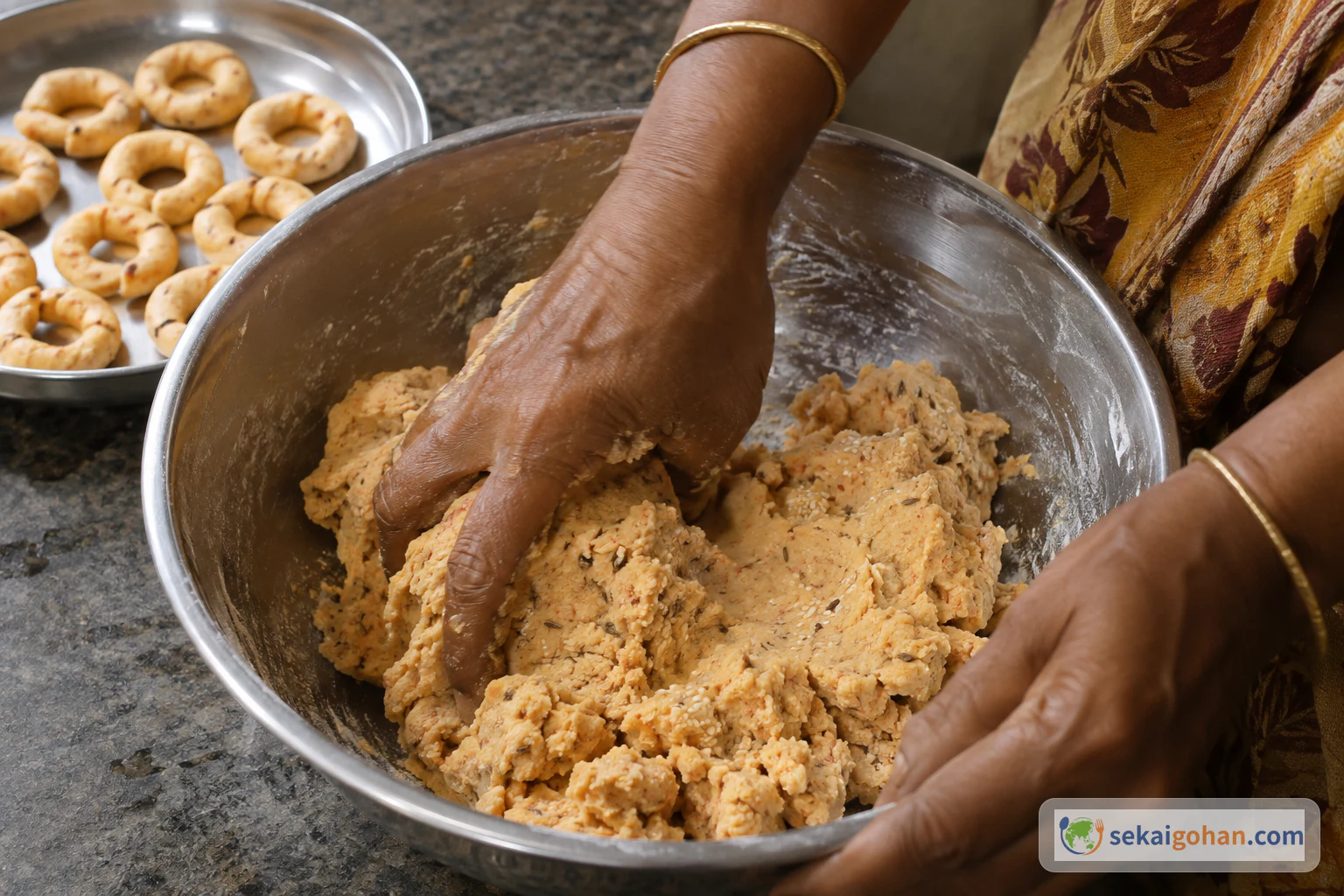
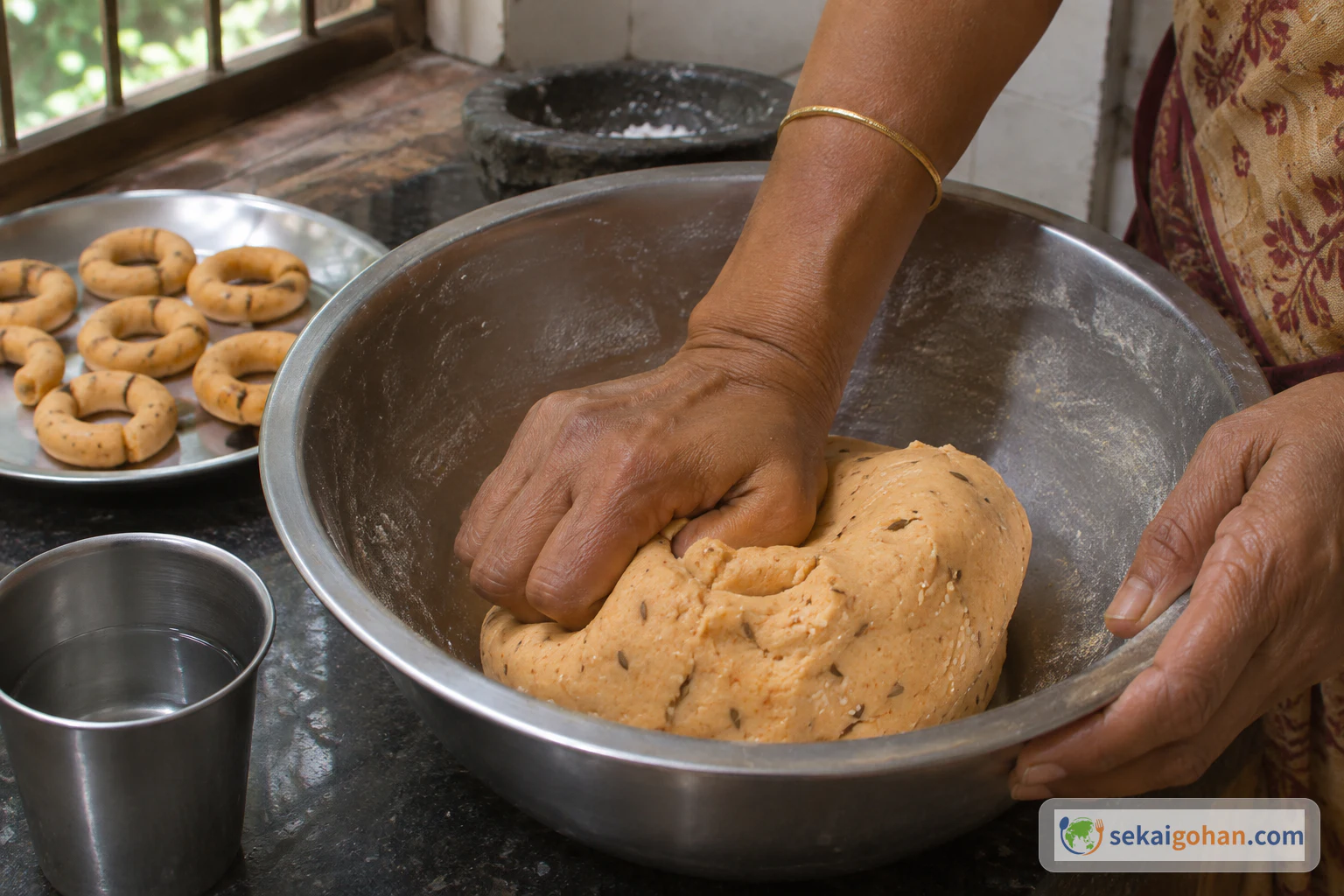
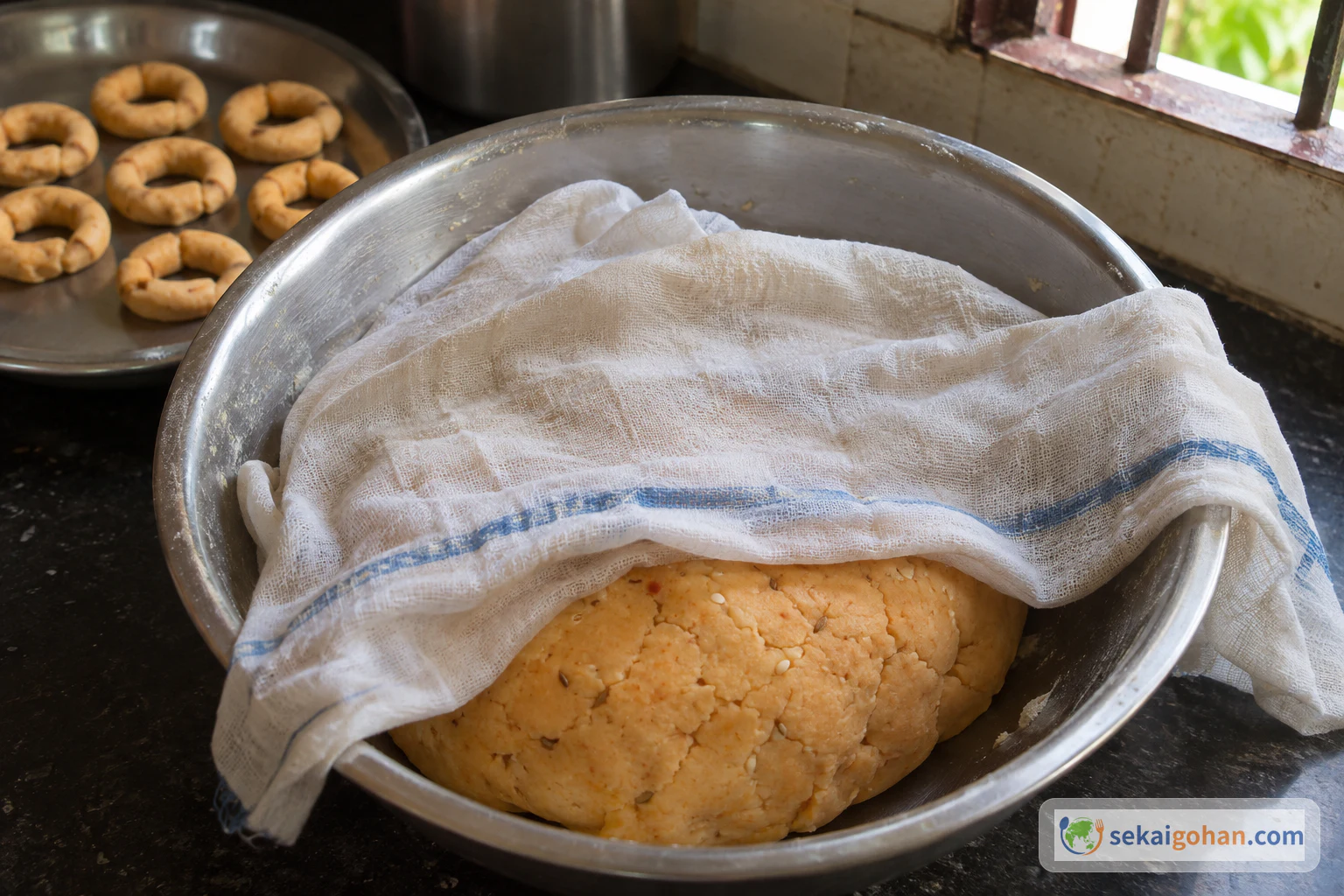
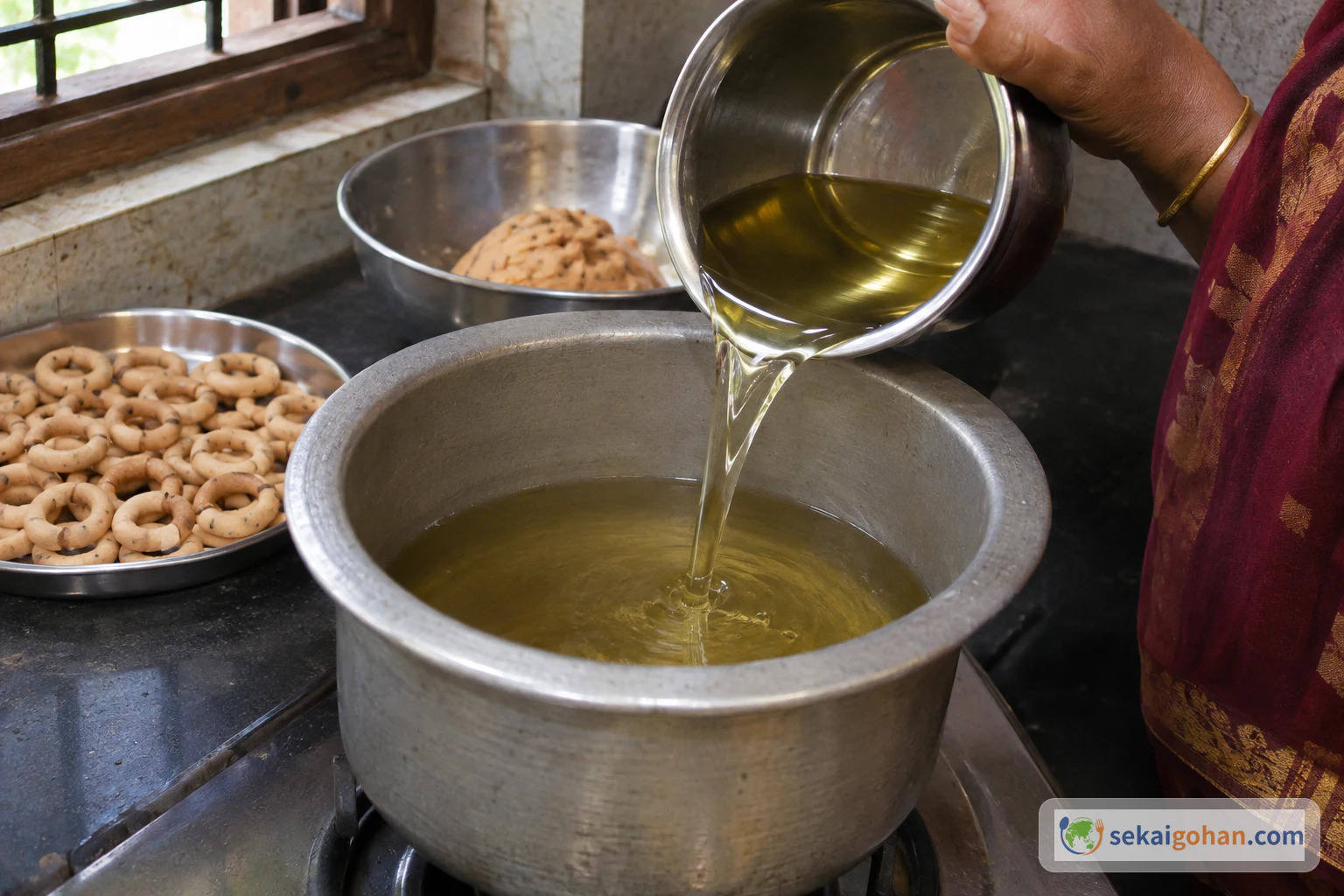
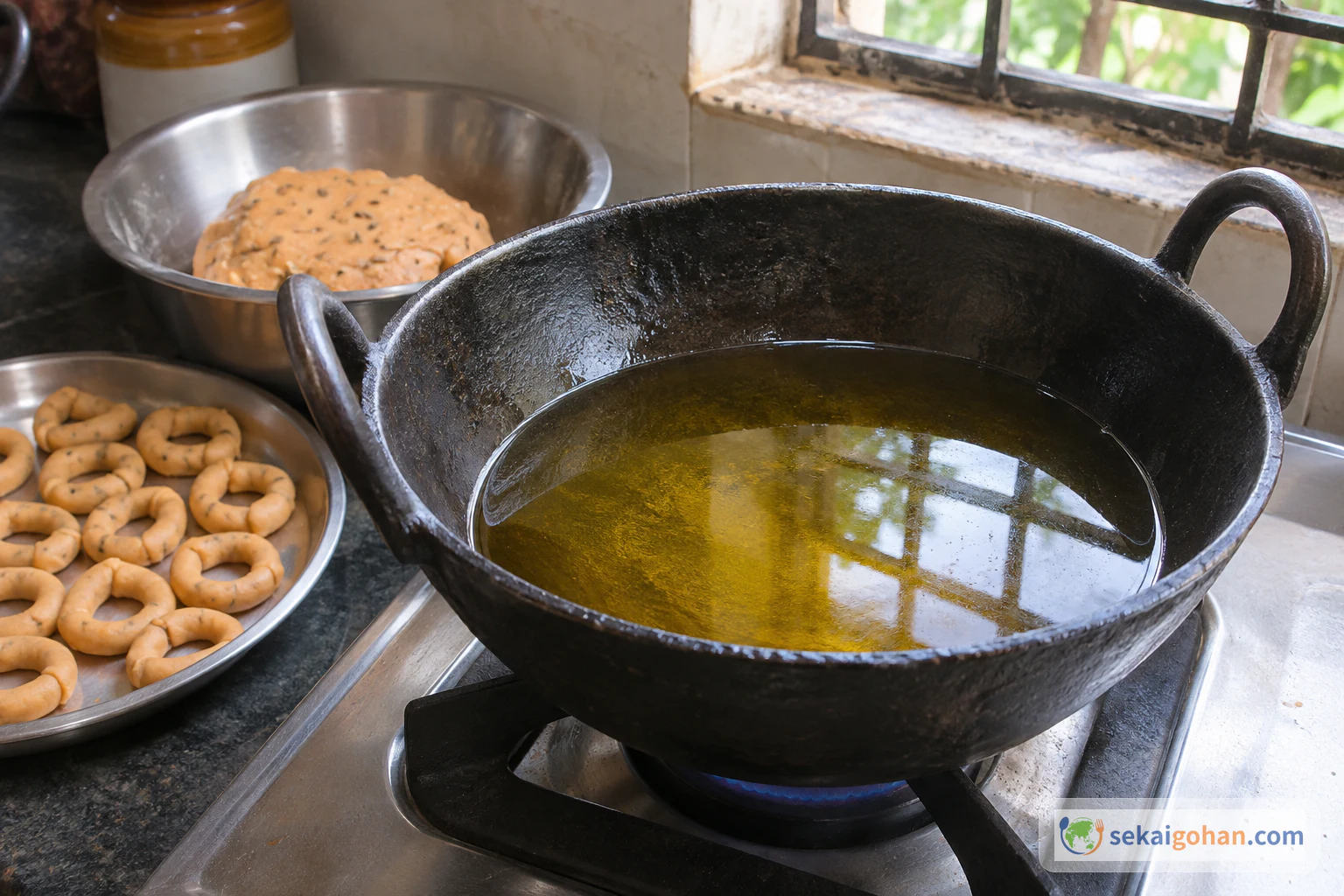
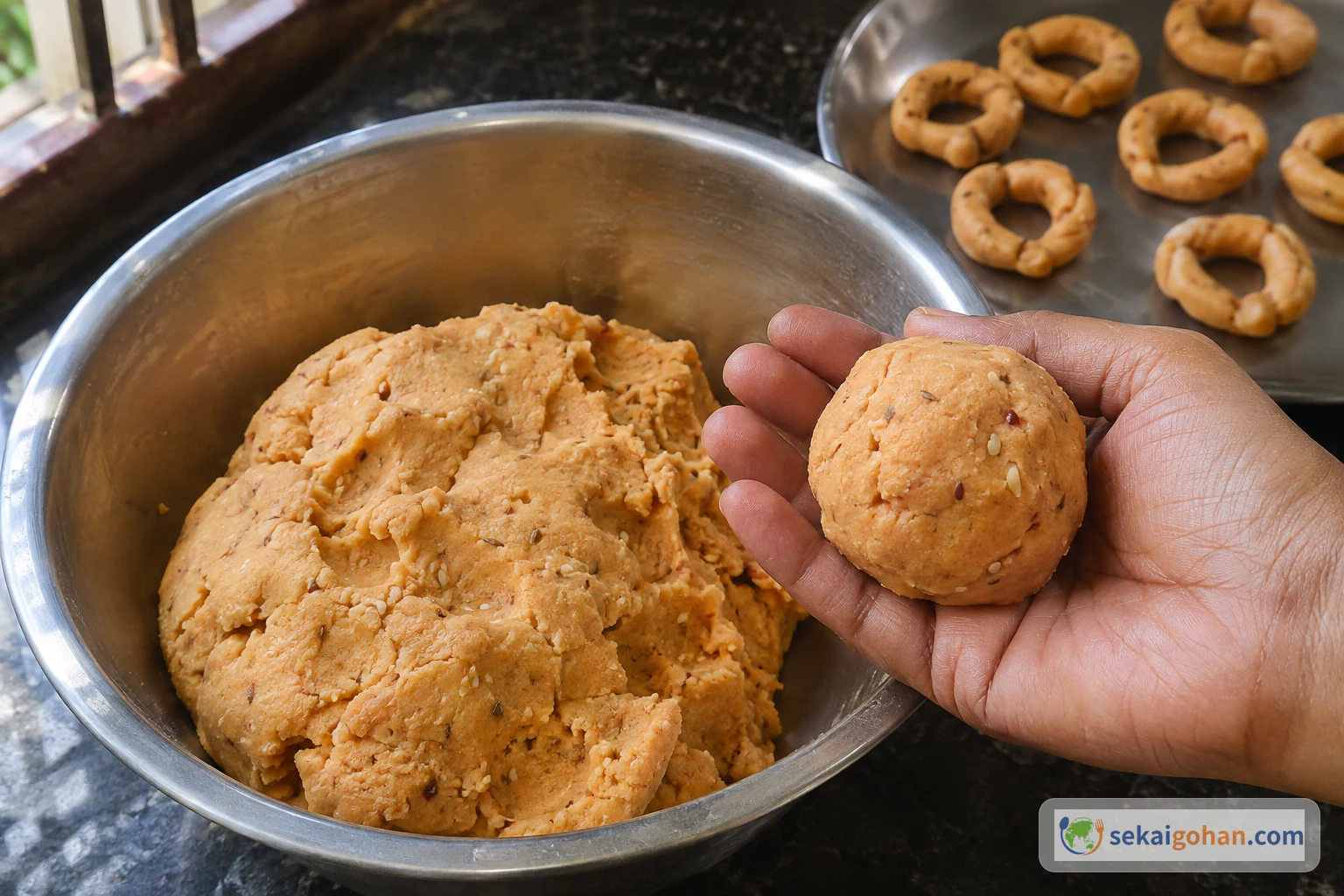
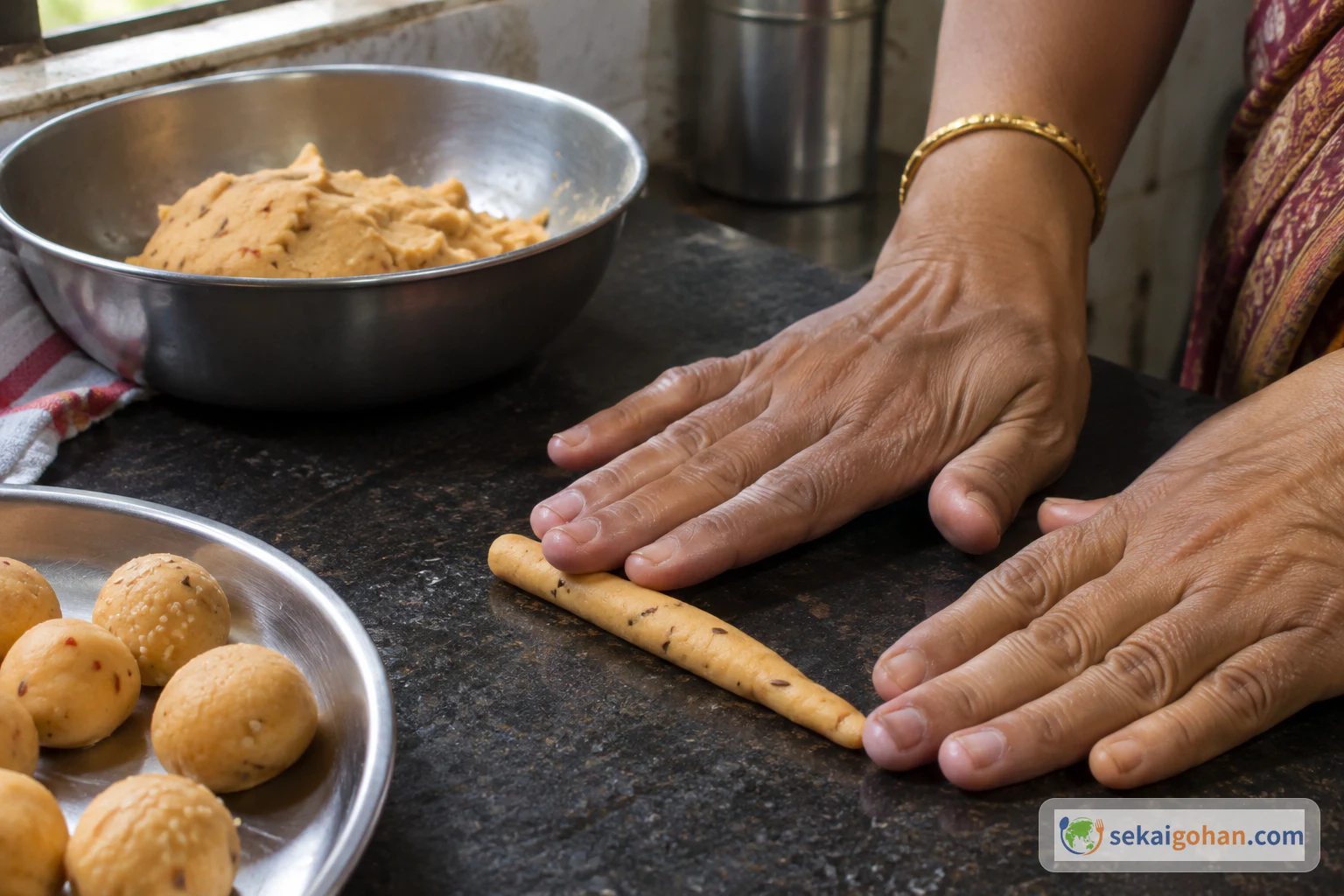
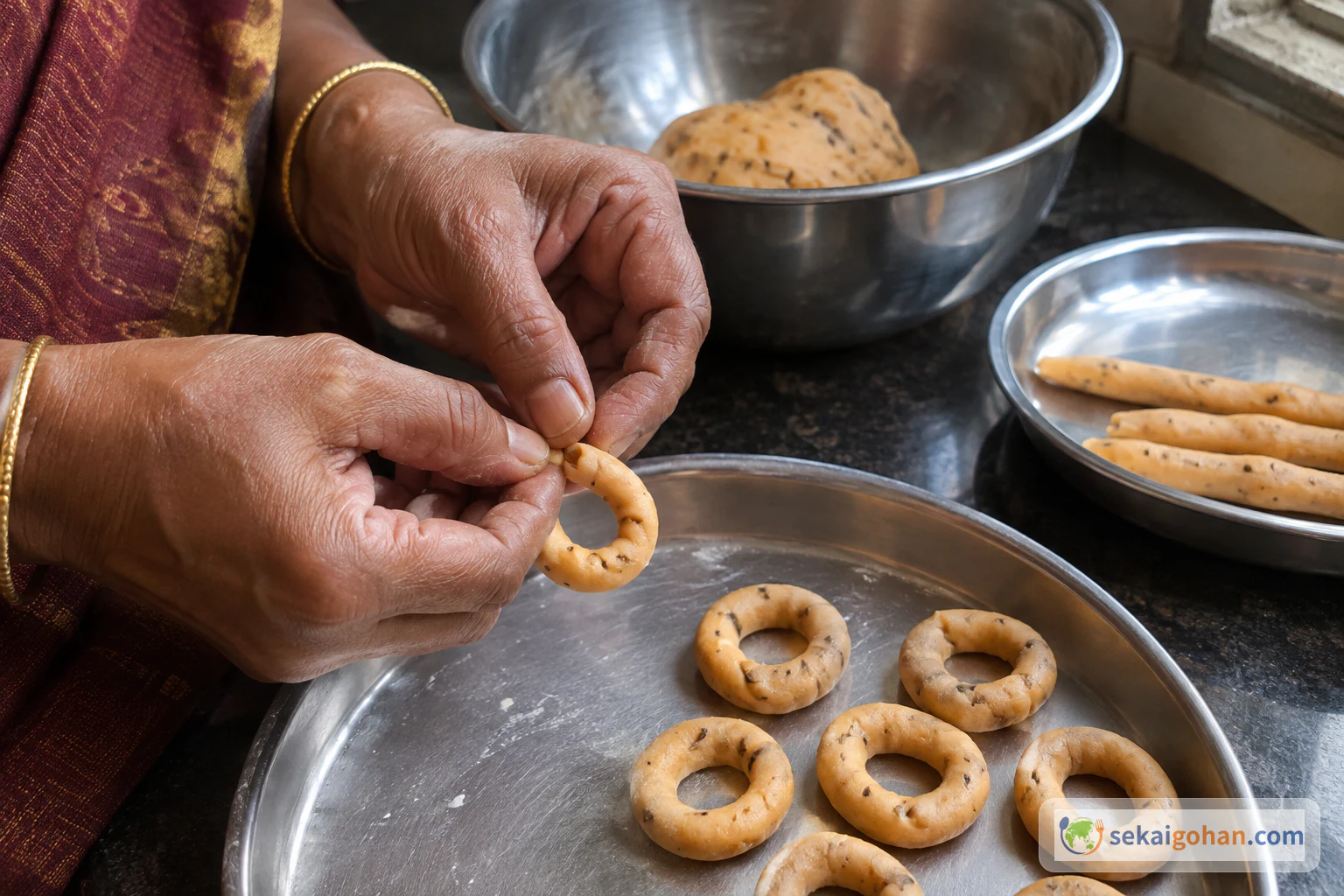
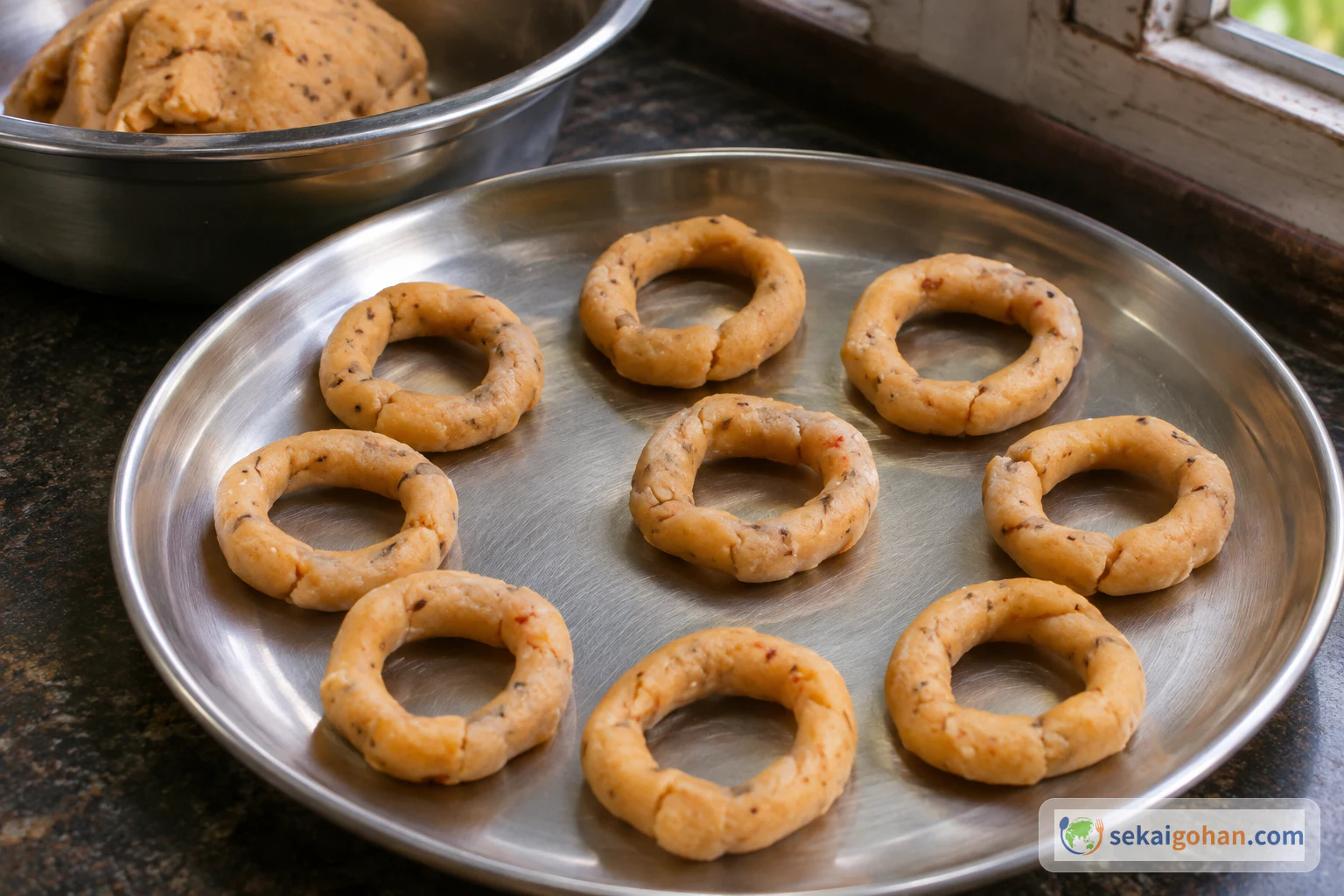
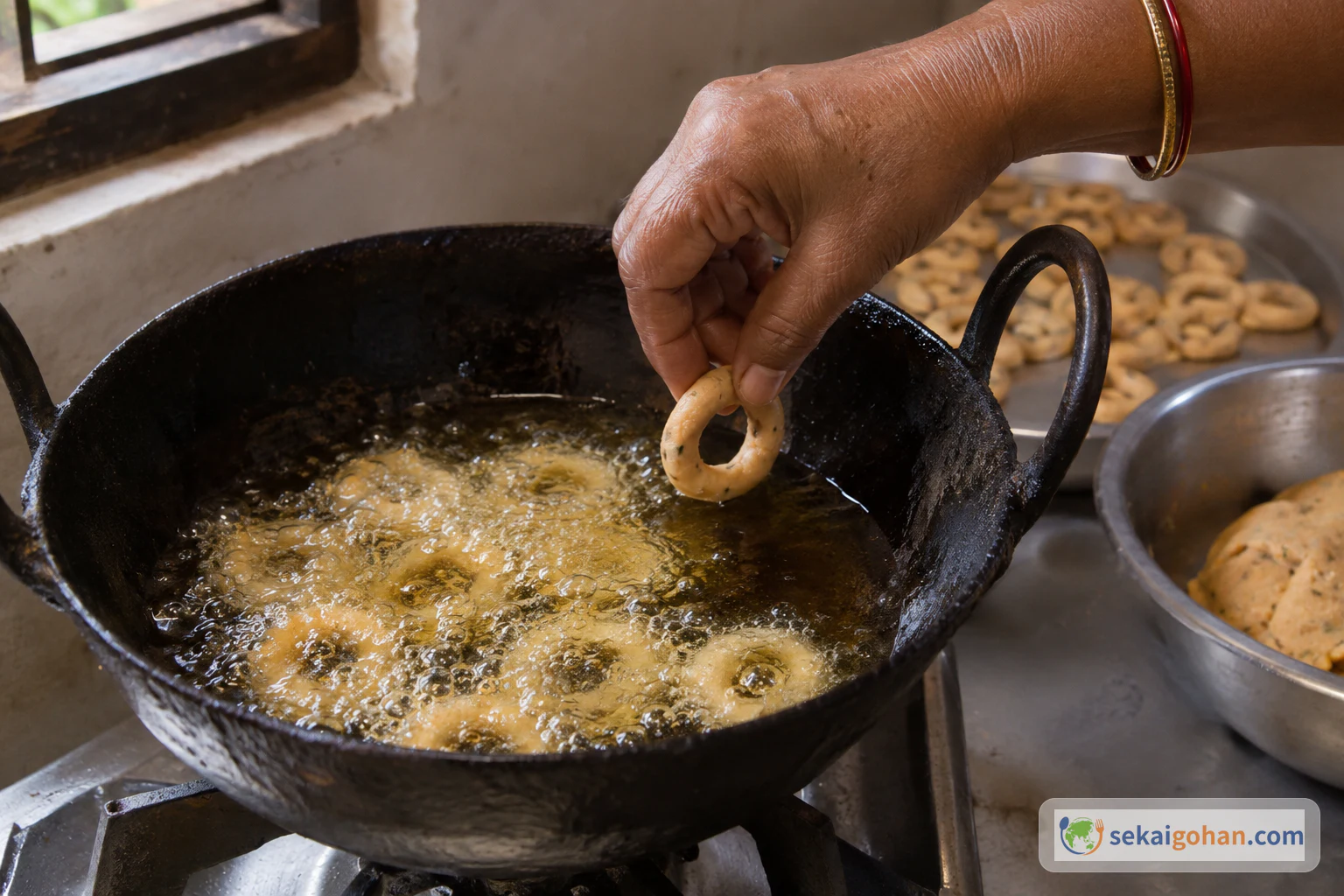
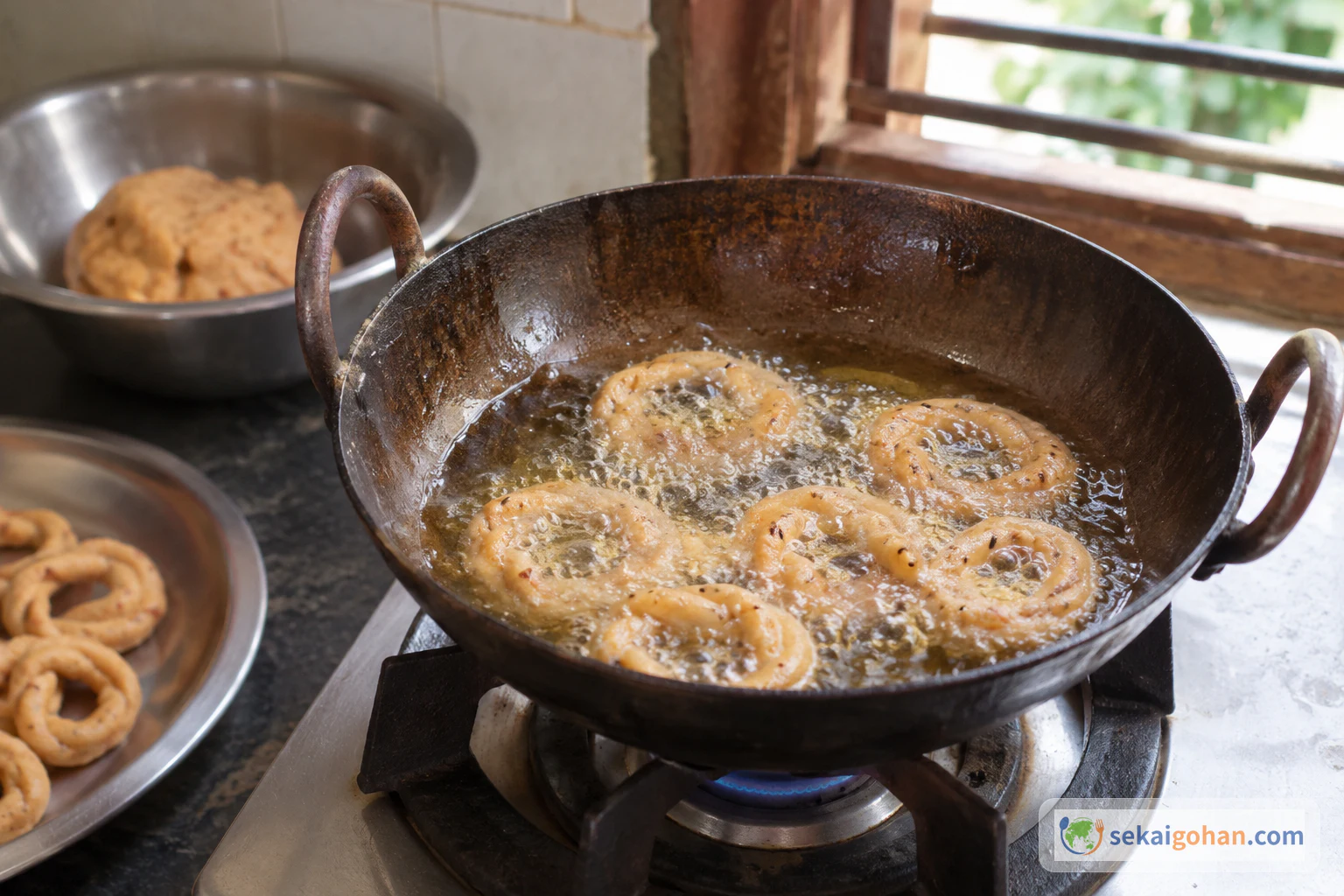
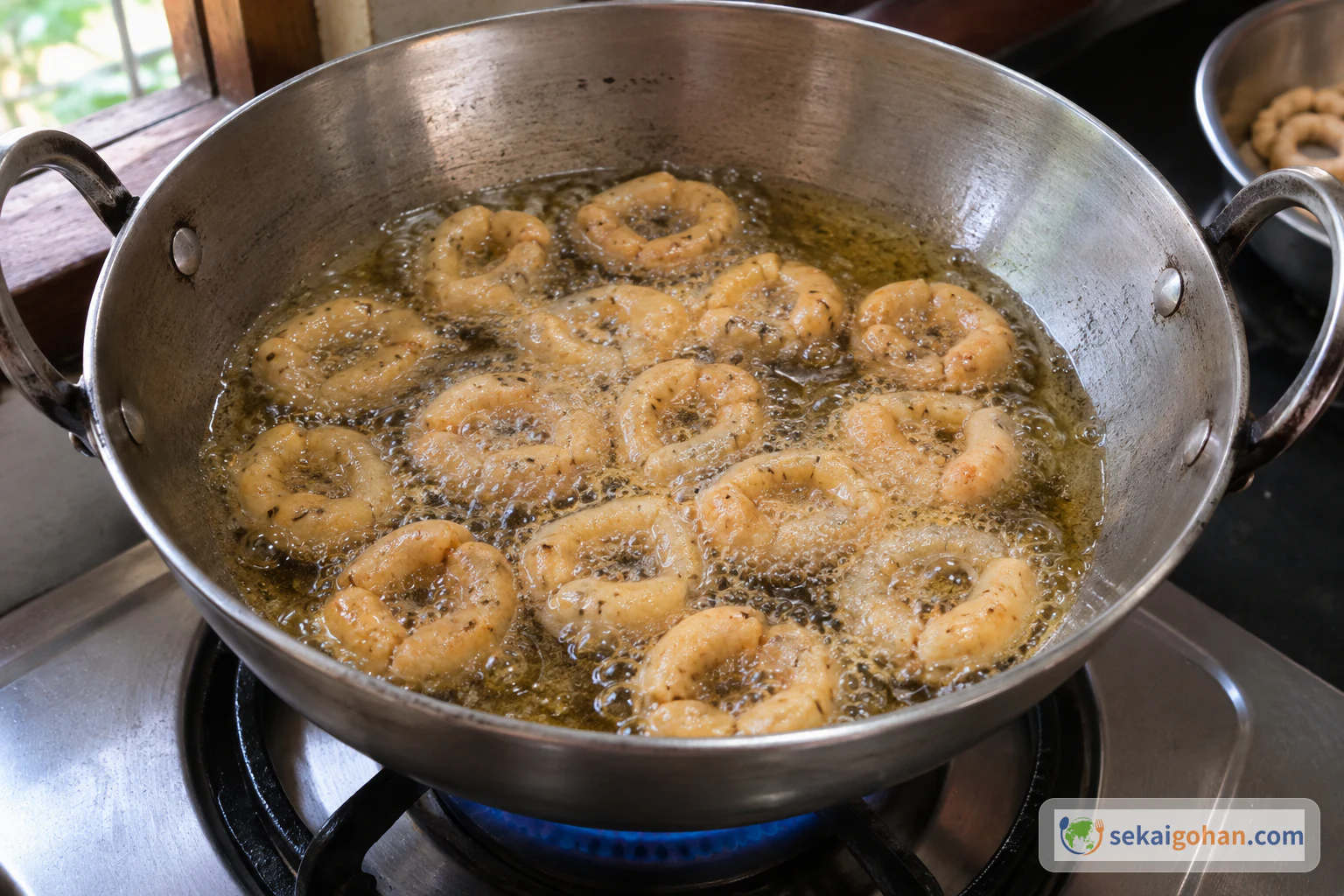
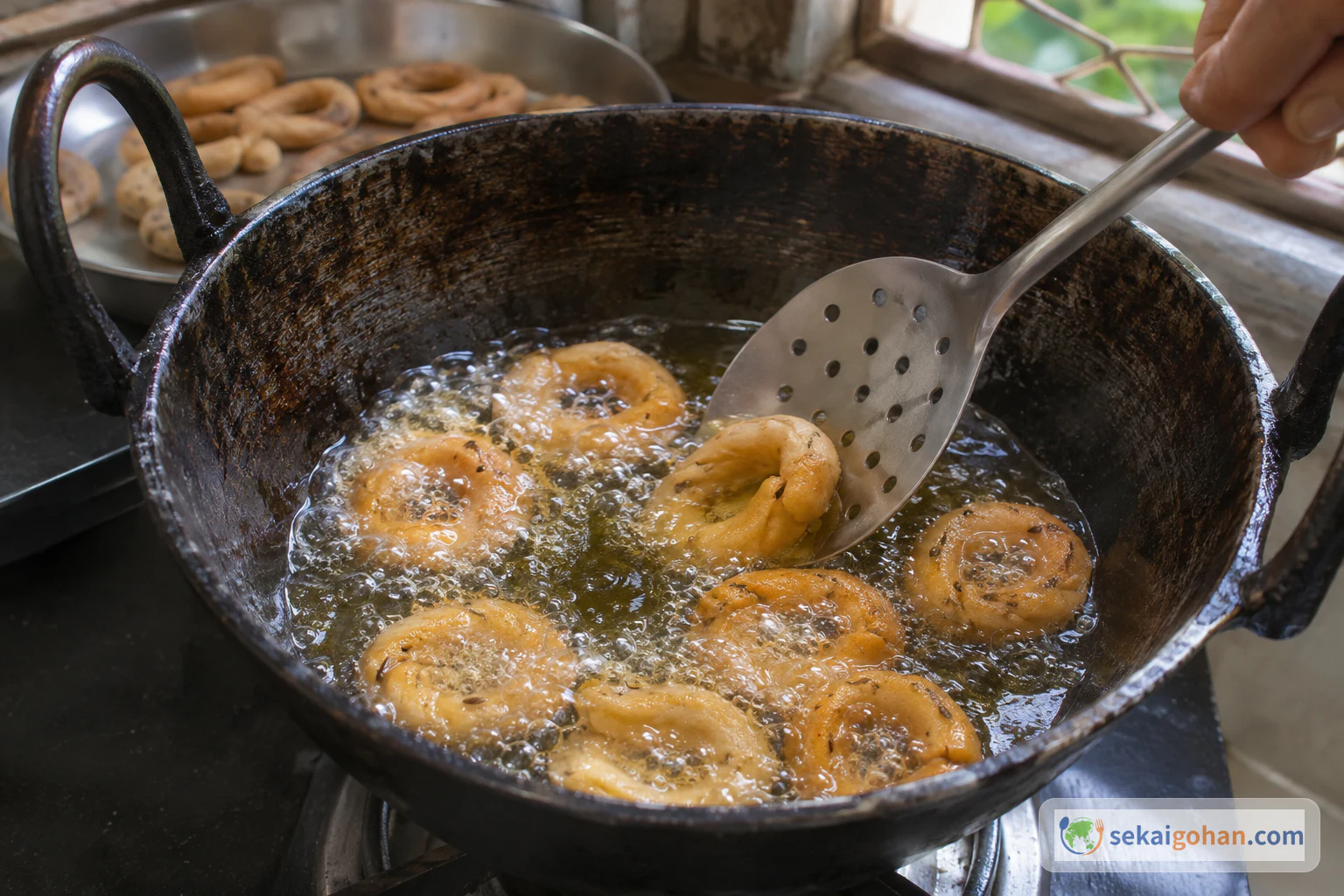
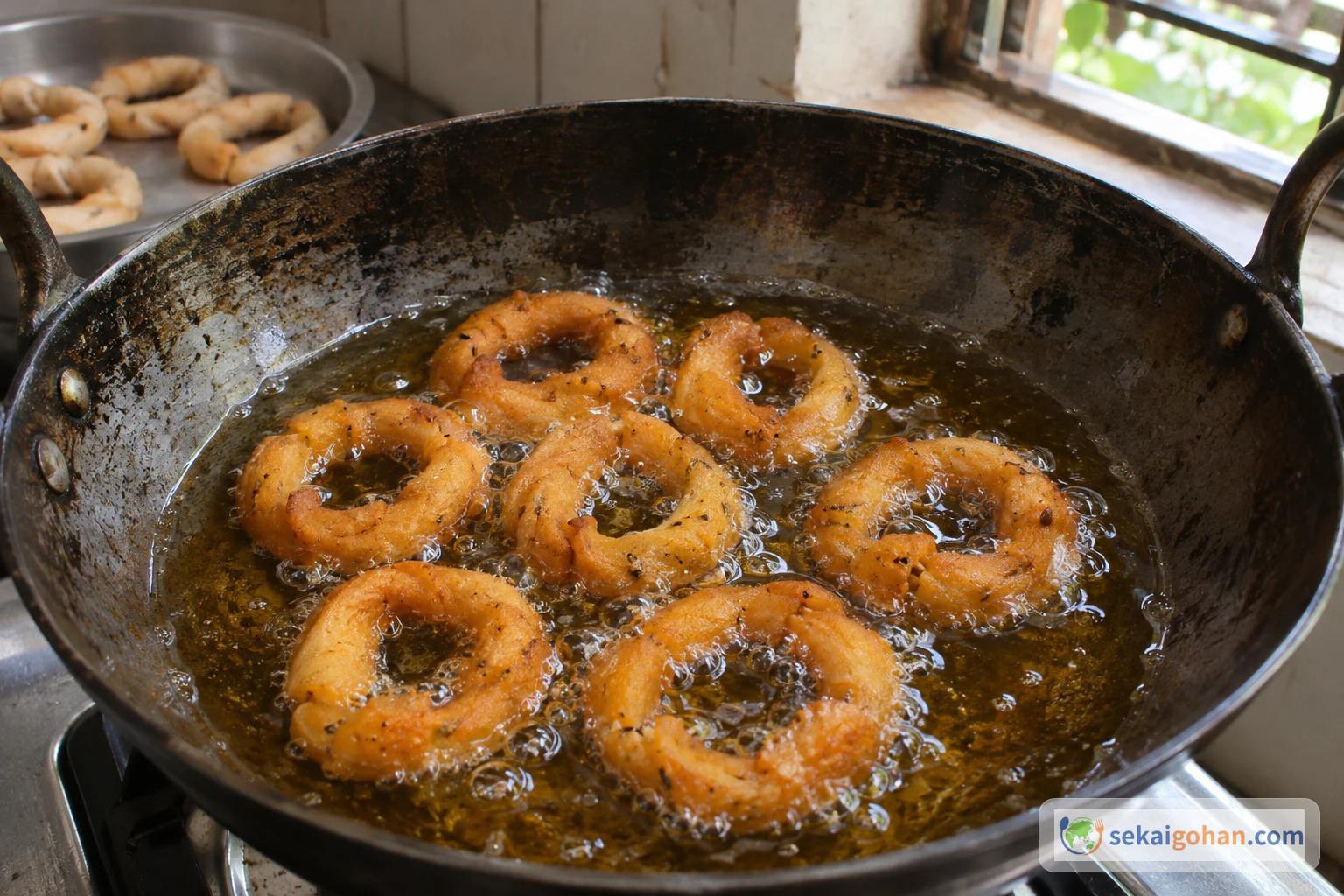
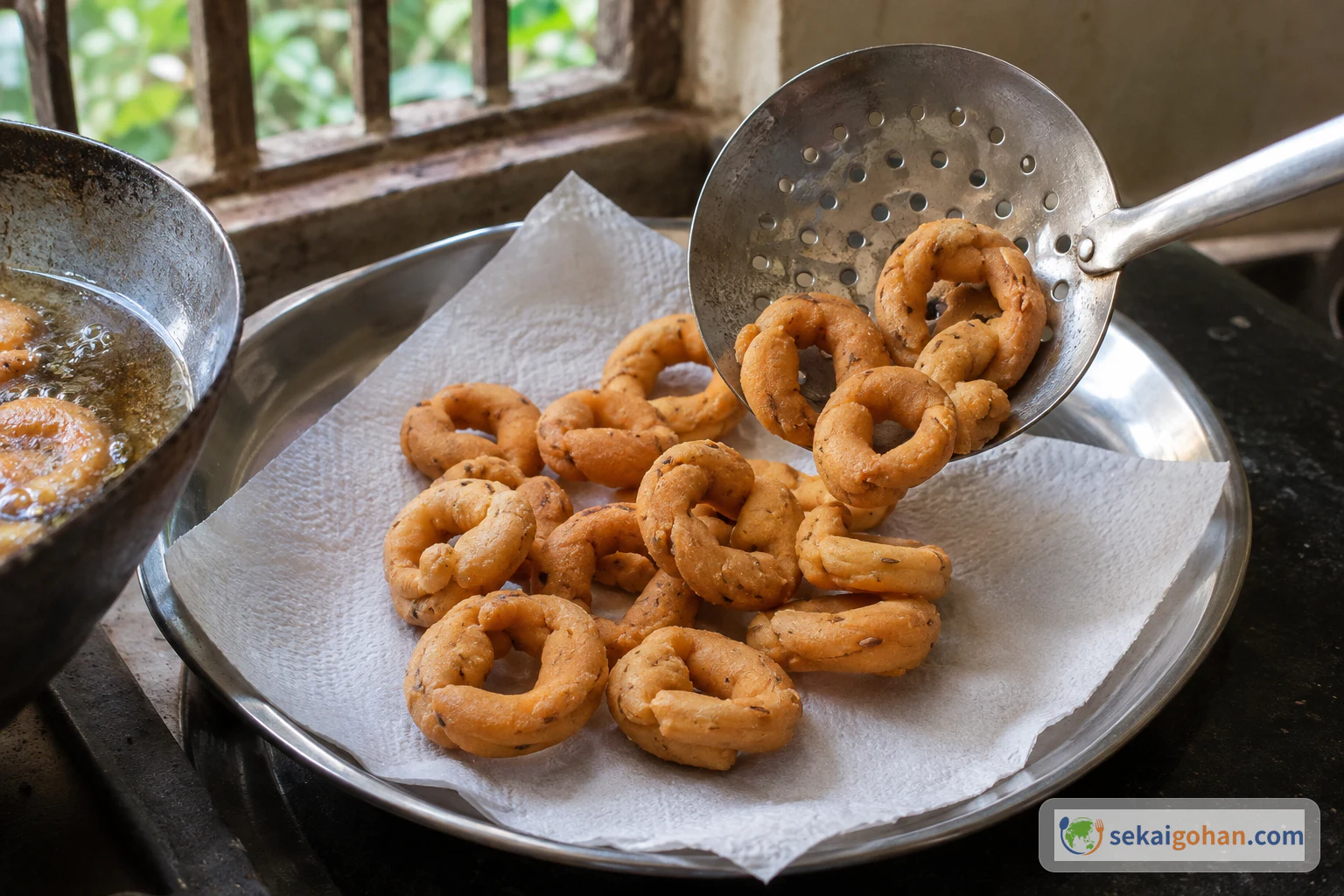
The work moves in clear stages. Three flours and two kinds of seeds are mixed dry, then hot oil goes in. Fresh coconut is ground with chilli powder, asafoetida and salt into a paste and kneaded into the flour until the dough is soft and smooth. Then comes the handwork: pinching off pieces the size of a large marble, rolling each into a thin cylinder, and joining the ends into a ring. The rings go into hot oil a dozen or so at a time and fry until they are golden brown on both sides.
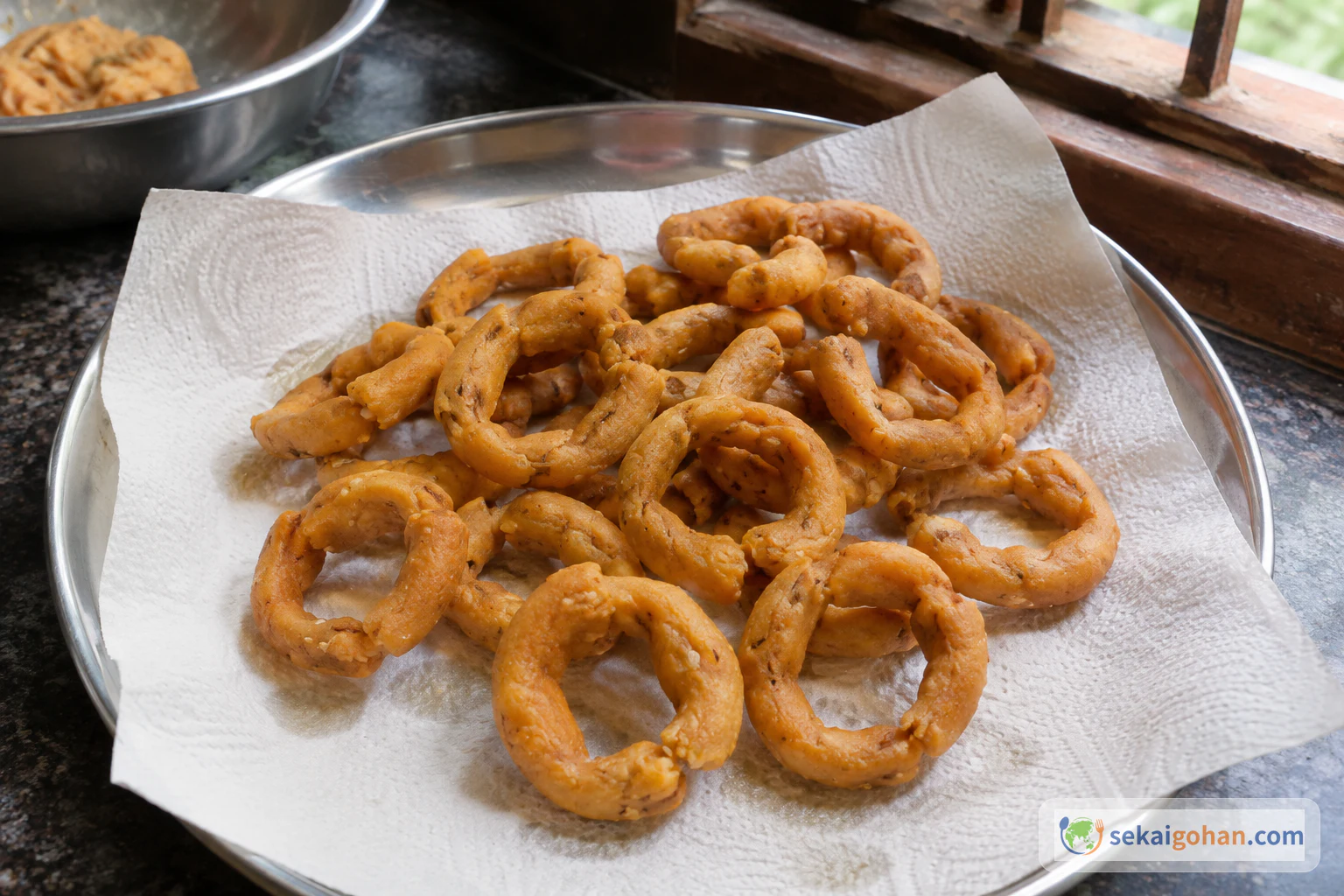
This article follows the recipe through frying, draining and cooling, and ends with the rings served plain, eaten fresh in the same meal.
What Kodubale Is: A Fried Ring Snack from Karnataka
Kodubale comes from Karnataka in southern India. Published recipes differ noticeably in their flours, spices and fats. The version here belongs to Mr Sridharan. Its base is mostly maida (refined wheat flour), with rice flour and fine chiroti rava. Sesame and cumin are mixed into the flours, and fresh coconut ground with chilli powder flavours the dough.
According to Pratibha Jain's account, the full batch uses a little less than 1 kg of mixed flour and makes approximately 125 pieces. That is the author's rough figure. It is not a measured yield, and the number and size of your rings will depend on how you shape them.
A few things in the recipe are approximate or left open, so it helps to know them before you start:
- The dough oil is "1 ladle, approximately 1/4 cup", used hot. The cup system is not stated, and this is an approximate amount, not an exact limit. If the dough fails the fistful test, you add a little more, and the recipe gives no fixed figure for that.
- The coconut is given as one small coconut or half a large one, with no weight.
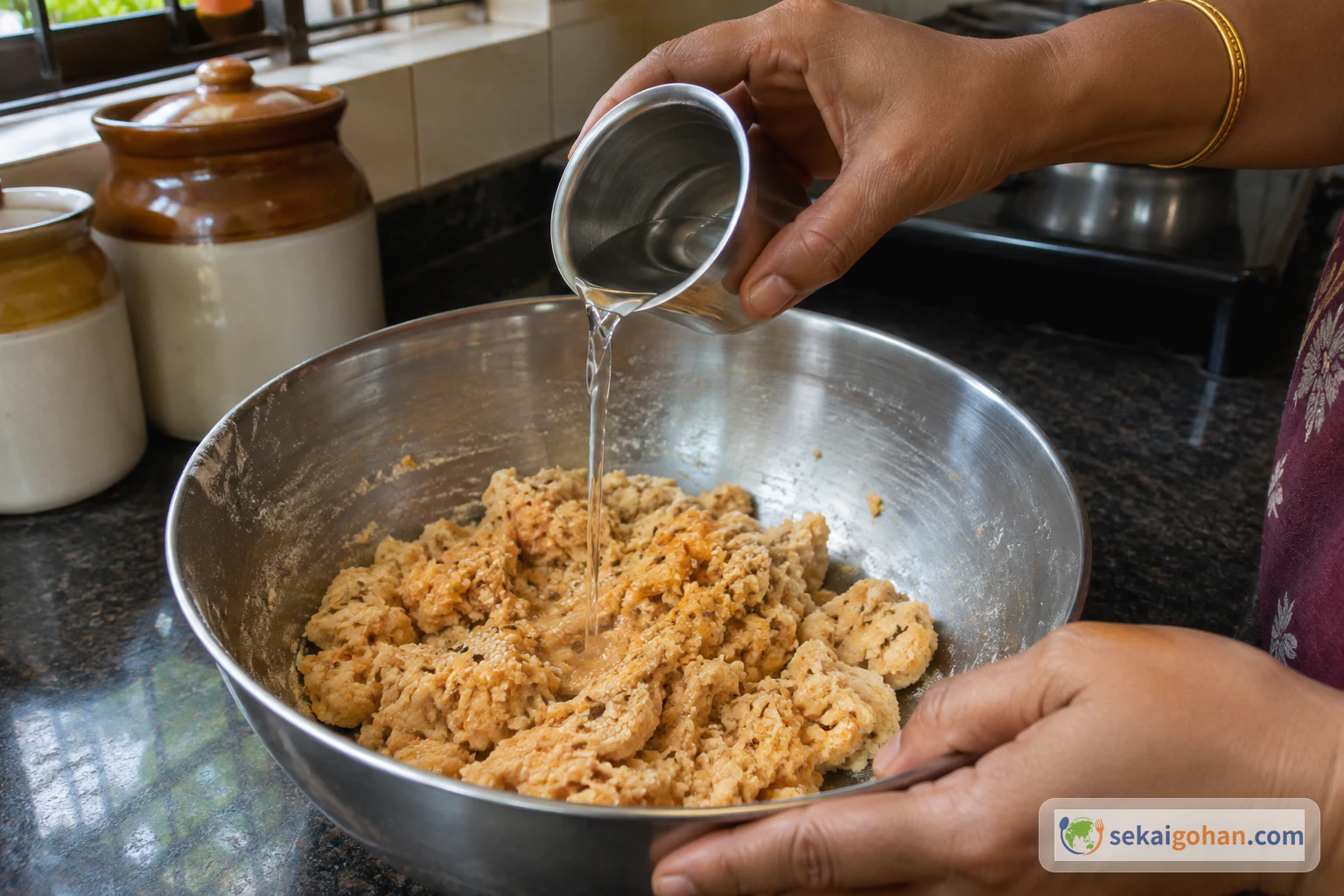
- Water goes into the paste only as needed for grinding, and into the dough only if it needs it. Neither amount is stated.
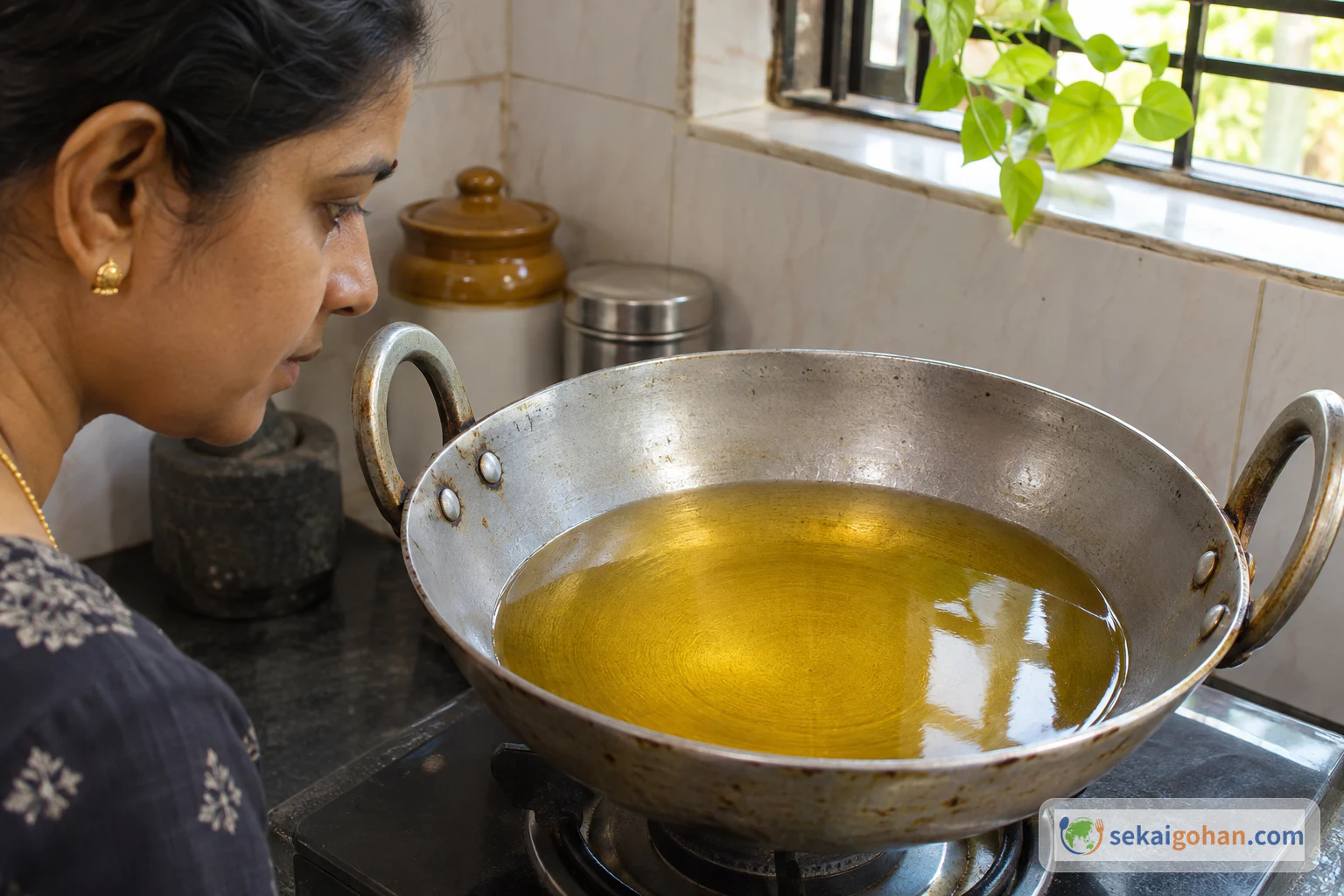
- Oil temperature is described only in words: hot, but not smoking.
- Salt appears twice in the ingredient list, once as 15–20 g and once as "salt to taste". The 15–20 g is the amount used here. The second line does not mean extra salt.
Two cautions in the method are Sekai Gohan's own, not part of Mr Sridharan's recipe. The first is to stir the hot oil into the flour with a spoon or spatula. The second is to wait until the mixture is comfortable to handle before you touch it with your hands. They are ordinary care around hot oil, not a safety guarantee, and they come with no fixed waiting time or temperature. Likewise, this method does not shape the next batch while hot oil is left unattended. Shaping and frying are kept as separate stages.
Ingredients
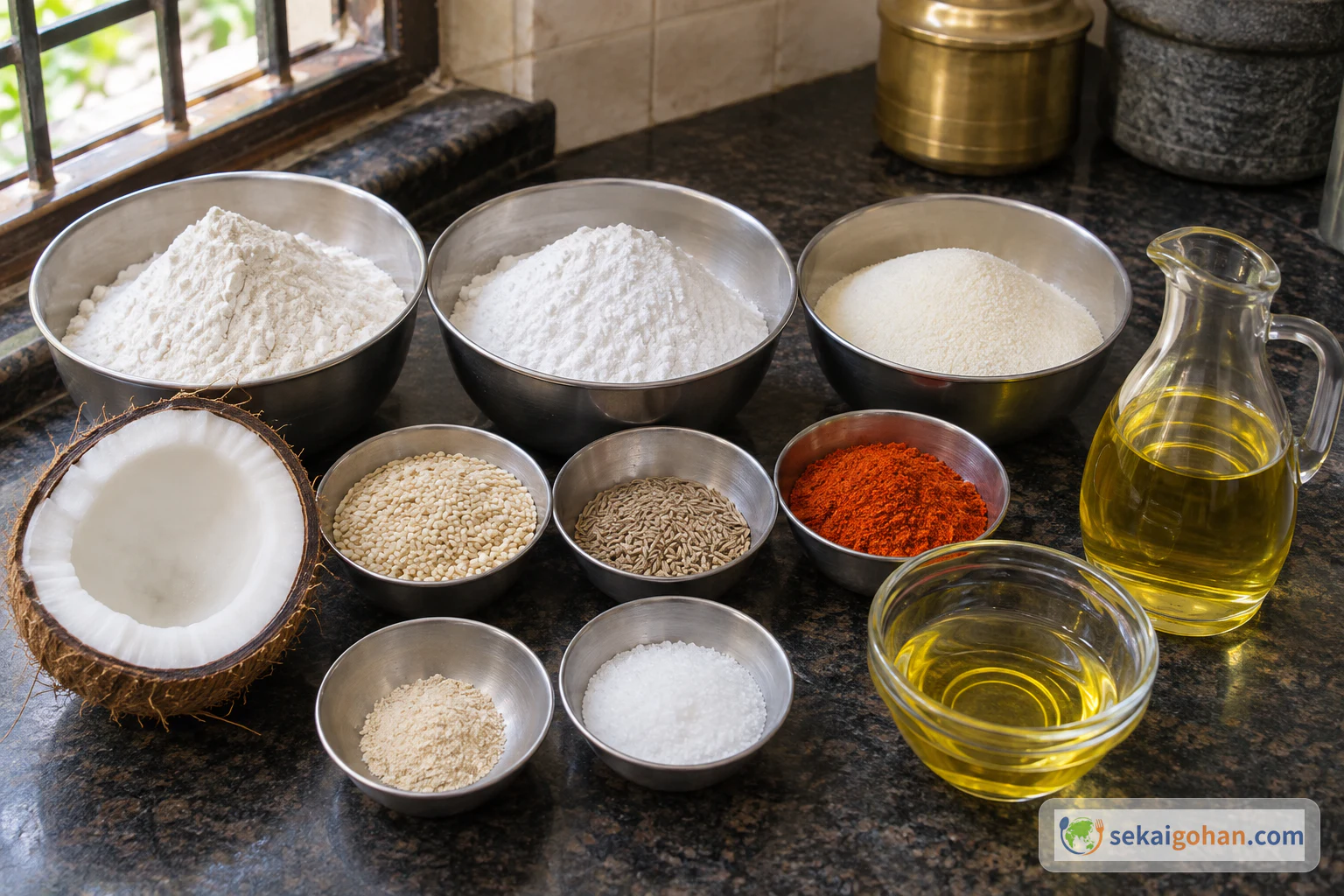
Equipment
- Large mixing bowl
- Small pan for heating the dough oil
- Ladle
- Sturdy spoon or spatula for mixing in the hot oil
- Grinder or blender jar for the coconut paste
- Damp cloth
- Plate for the shaped raw rings
- Large, heavy-bottomed wok (kadhai)
- Slotted spoon or similar utensil for adding, turning and lifting the rings
- Plate lined with absorbent paper
Choosing and Swapping: Flours, Seeds and Chilli
Maida is refined wheat flour. Plain (all-purpose) flour is the closest everyday equivalent, but it is not guaranteed to be identical.
Rice flour should be ordinary rice flour. Glutinous or sweet rice flour behaves differently, so don't use it as a substitute.
Chiroti rava is a very fine semolina, sold in Indian grocery shops. If you can't find it, the finest semolina you can buy is the nearest option, but it is not certain to behave the same.
Sesame: Use sesame seeds.
Cumin stays as whole seeds. Don't quietly switch to ground cumin.
Chilli powder should be finely ground. Coarse chilli flakes or whole dried chillies change both the texture of the paste and the look of the dough.
Coconut here is fresh coconut, ground into the paste.
Method
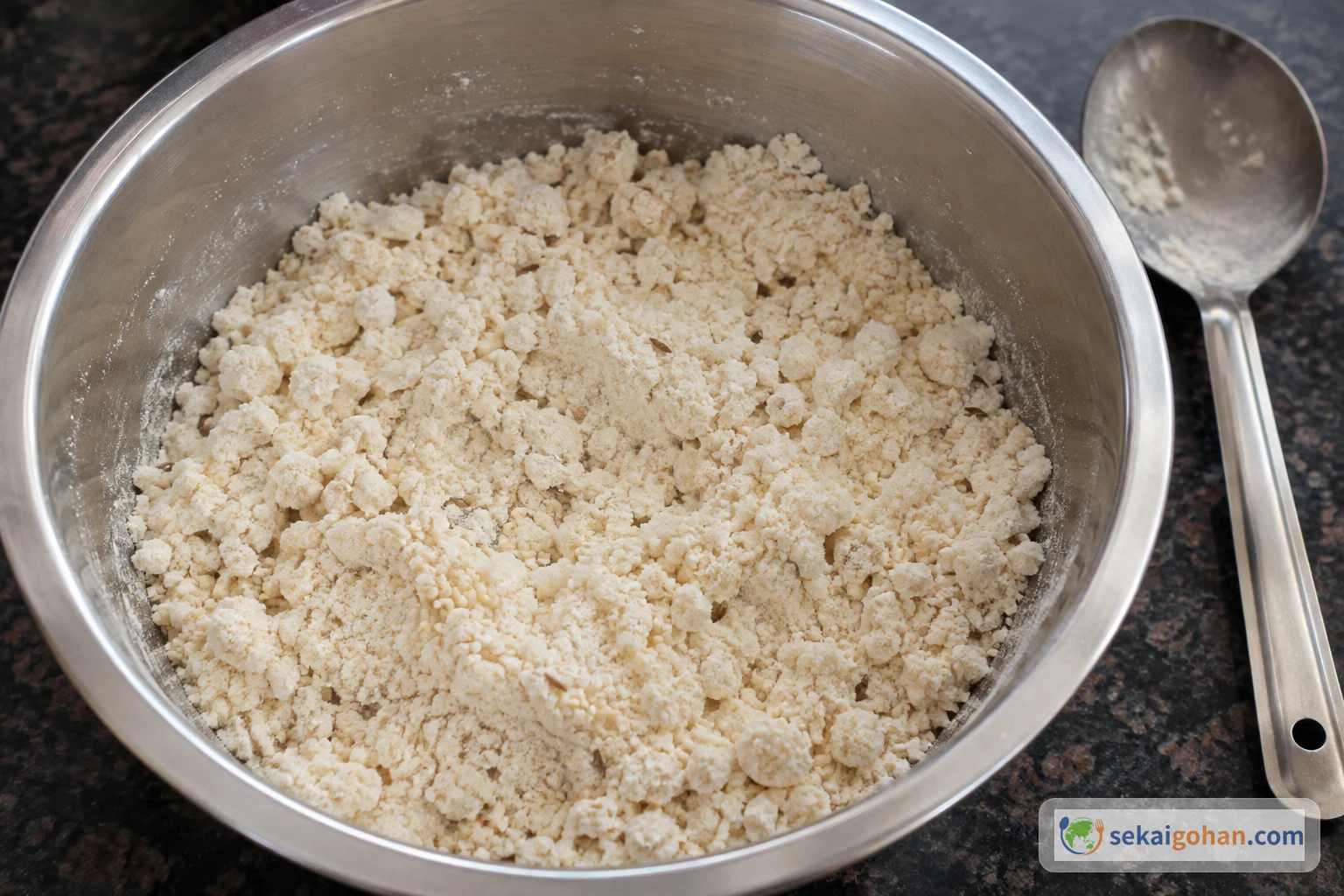
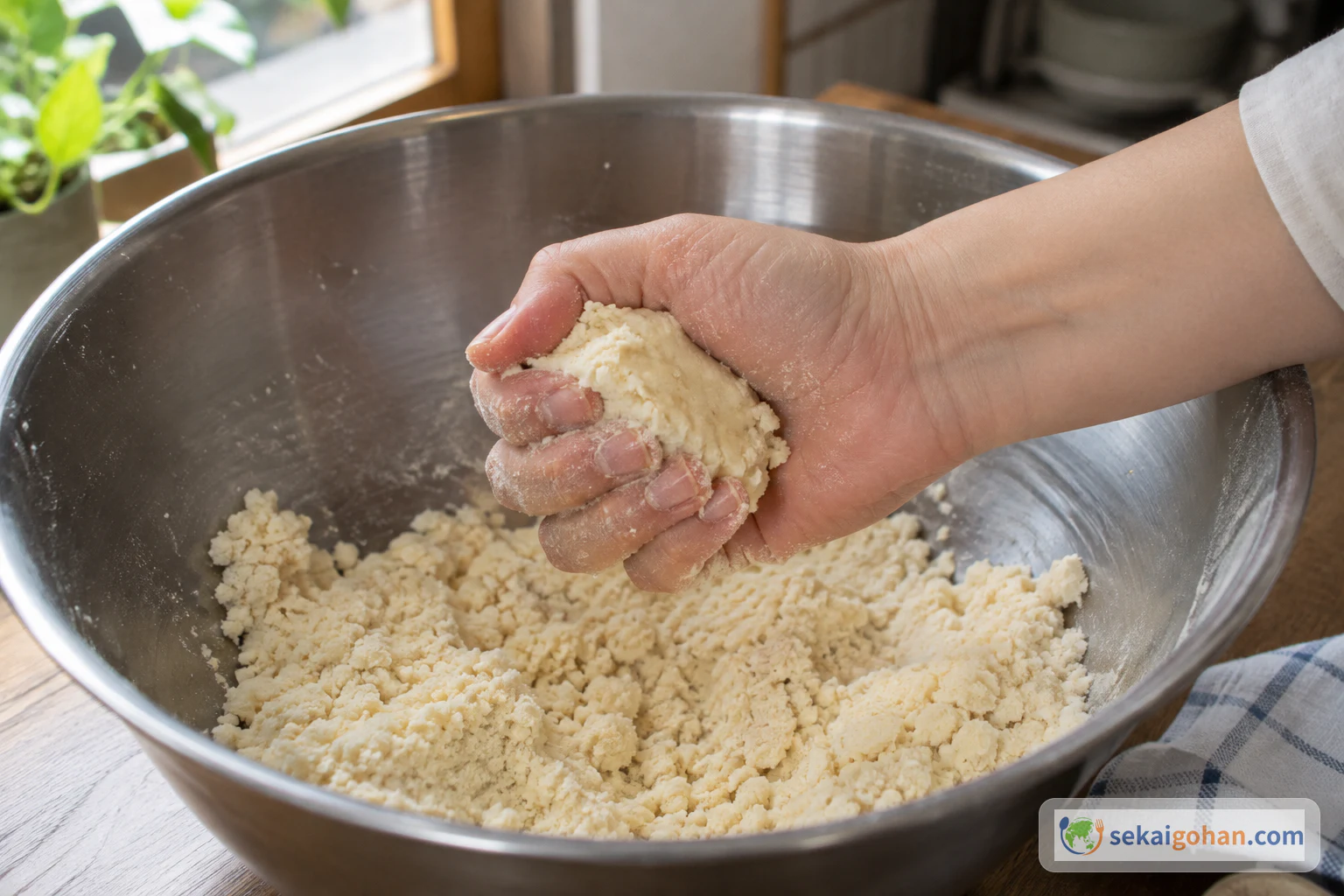
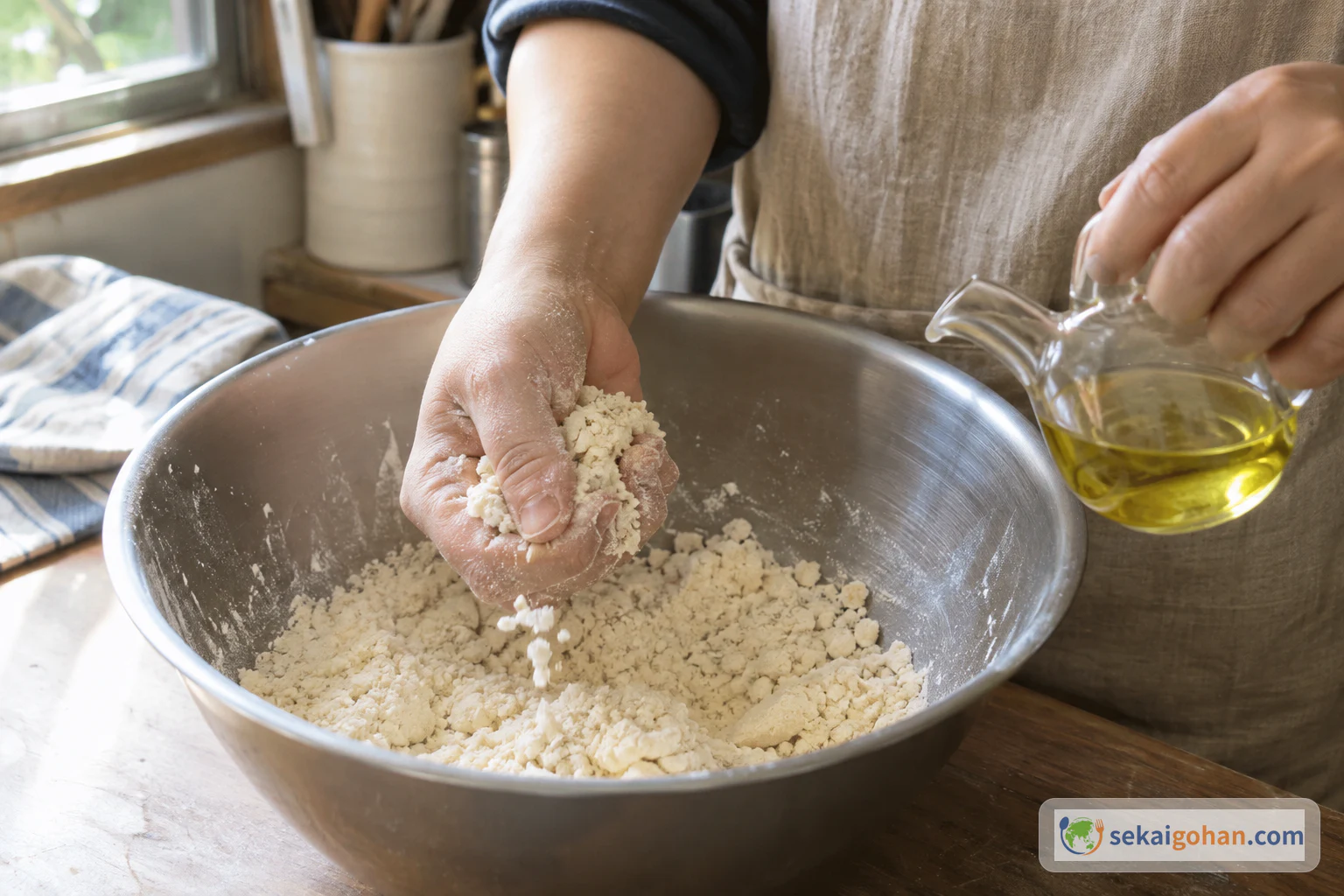
Hot oil goes into the dough early, and the frying oil stays on the heat for a long time. Mix the hot dough oil in with a utensil, not your fingers. Wait until the mixture is comfortable to handle before you squeeze or knead it. Don't leave the frying oil unattended while it is on the heat. The photographs show each step; they don't prove an amount, a temperature or that the food is safe.
Reading the Dough and the Oil: What to Look For
Most of the decisions in this recipe are made by hand and eye rather than by the clock. These are the checkpoints the method relies on.
| What you see | What it means | What to do |
|---|---|---|
| A pressed fistful holds its shape | There is enough oil in the flour | Go on to the coconut paste |
| A pressed fistful crumbles at once | The flour needs a little more oil | Add a little more oil, mix, and test again |
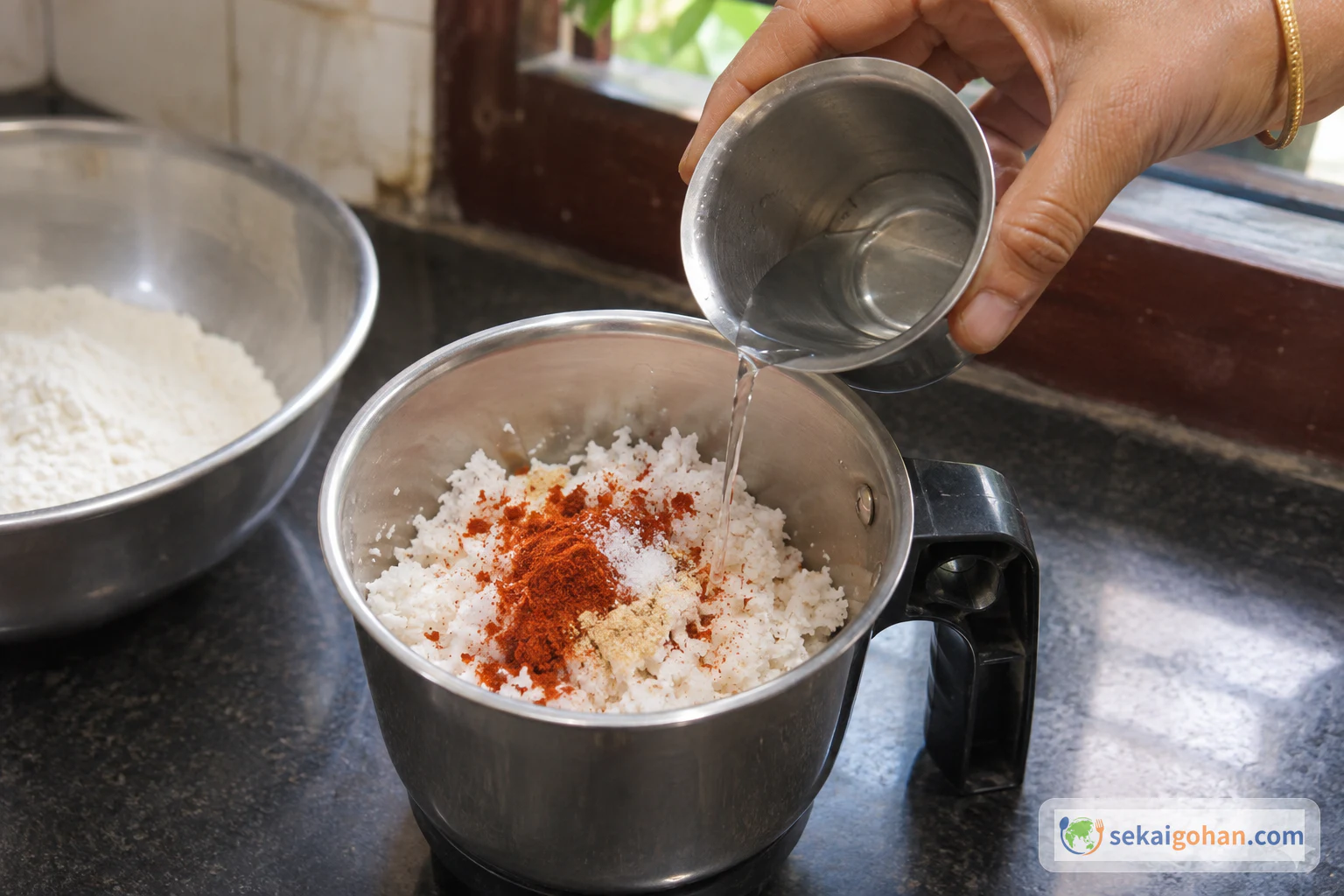
| The paste won't grind fine | The grinder needs a little liquid | Add water a little at a time, only as much as needed |
| The kneaded dough is dry and won't come together | It needs a little moisture | Add a little water and knead until soft and smooth |
| The surface of the dough is drying while you shape | It has been left uncovered | Keep it under the damp cloth between pieces |
| The oil is smoking | It is hotter than the recipe asks for | Turn the heat down and don't add rings until it has stopped smoking |
| The rings are coloured on one side only | They haven't been turned | Turn them a few times while they fry |
The 5–6 minutes per batch is a guide, not a timer setting. Judge each batch by the golden brown colour on both sides. If you are new to deep-frying, it helps to finish shaping a full batch of 12–15 rings before they go into the oil. Then you aren't reaching for more dough while the pan is working.
Other Published Kodubale: How They Differ
Kodubale has no single fixed formula. Two other published recipes show how far it can vary. Neither is mixed into the recipe above.
| Recipe | Main flours | Other notable ingredients | Points of difference |
|---|---|---|---|
| N.S. Sridharan, via Pratibha Jain (used here) | Maida 500 g, rice flour 250 g, chiroti rava 125 g | Sesame, cumin, fresh coconut, chilli powder, asafoetida, salt; hot dough oil | Oil checked only by eye: hot but not smoking |
| ICAR-CRRI, Traditional Rice Foods: The Rich Heritage of India (printed page 78) | Rice flour 1 cup, refined wheat flour 1/4 cup | Roasted Bengal gram dal, groundnut, fresh coconut, ajwain, red chillies, butter, curry leaf; 250 ml frying oil | Its method tests the oil with a tiny piece of dough |
| Archana's Kitchen (Archana Doshi) | Rice flour 2 cups, maida 3/4 cup, semolina 1/4 cup | Fresh coconut, cumin, dry red chillies, ajwain, hing, sesame, warm or hot oil | Fried at medium heat until browned, then low-medium to cook through |
The ICAR-CRRI book is a rice-foods volume whose front matter names Lipi Das (2015). Its kodubale leans on rice flour and adds roasted gram dal, groundnut and butter. None of these are in Mr Sridharan's recipe. The dough-piece test for the frying oil belongs to that recipe. It is not part of the method used here.
The Archana's Kitchen recipe lists both sesame and hing in its ingredients, but its seven method steps don't say when to add either of them. It also grinds cumin into the coconut paste with whole dry red chillies, where Mr Sridharan uses whole cumin seeds in the flour and chilli powder in the paste.
If you have made kodubale from one of these other recipes, expect this one to come out differently. The flour balance and the spicing are not the same.
Frequently Asked Questions
Can I use less chilli?
The general amount in Mr Sridharan's recipe is 2 tsp of chilli powder, and that is the amount used here. Pratibha Jain notes that Mr Sridharan himself uses 1 tsp when he cooks with a very hot chilli he prefers, called mankattiro. That 1 tsp belongs to that particular hot chilli. It is not a general reduction.
Why is the salt given as a range, and is there more salt to add?
The recipe gives salt as 15–20 g, ground into the coconut paste. Its ingredient list also has a separate "salt to taste" line. In this article that line is read as a repeat of the same salt, not as a second amount, so 15–20 g is all the salt used.
Do I have to use white sesame?
No. The recipe says only "sesame seeds". White sesame is the choice Sekai Gohan made for this article and its photographs.
How many rings does this make?
Pratibha Jain's account says the full batch, made from a little less than 1 kg of mixed flour, gives approximately 125 pieces. That is a rough figure, not a tested yield. Your count depends on the size of the pieces you pinch off.
Can I test the oil by dropping in a small piece of dough?
That test comes from a different kodubale recipe, the ICAR-CRRI one, not from this method. Here, the only check before frying is that the oil is hot but not smoking. The rings rising straight away describes the actual batch you have just added; it is not a separate test.
Can I keep leftovers?
Mr Sridharan's method ends by cooling the kodubale to room temperature and storing them in an airtight container. This article covers only frying, cooling and eating the rings fresh in the same meal, so it gives no storage method or keeping time.
Why wait before touching the oiled flour?
Hot oil goes into the flour, and the recipe then has you press a fistful and knead by hand. Stirring the oil in with a utensil and waiting until the mixture is comfortable to handle is Sekai Gohan's own caution for working near hot oil. It is not part of Mr Sridharan's recipe, and it is not a safety guarantee.
Sources
- Pratibha Jain, "Kodubale with Sridharan ~ Fried snack from Karnataka." Pratibha Jain's interview with N.S. Sridharan of Bengaluru and the kodubale recipe he shared. This is the source for every ingredient, amount and step used here, the description of kodubale as a fried snack from Karnataka, and the author's rough figure of approximately 125 pieces from a little under 1 kg of mixed flour. https://pratibhajain.wordpress.com/2014/09/15/kodubale-fried-snack-karnataka/
- ICAR-Central Rice Research Institute, Traditional Rice Foods: The Rich Heritage of India (front matter names Lipi Das, 2015), kodubale on printed page 78. Used only for comparison, as a separate recipe with its own ingredients and its dough-piece oil test. https://icar-crri.in/wp-content/uploads/2023/05/final_book_ldas.pdf
- Archana Doshi, Archana's Kitchen, "Kodubale Recipe - Tea Time Snack From Karnataka." Used only for comparison, as a separate published recipe whose ingredient list includes sesame and hing while its method steps don't mention adding either. https://www.archanaskitchen.com/recipe/kodubale-a-festive-snack-from-karnataka