
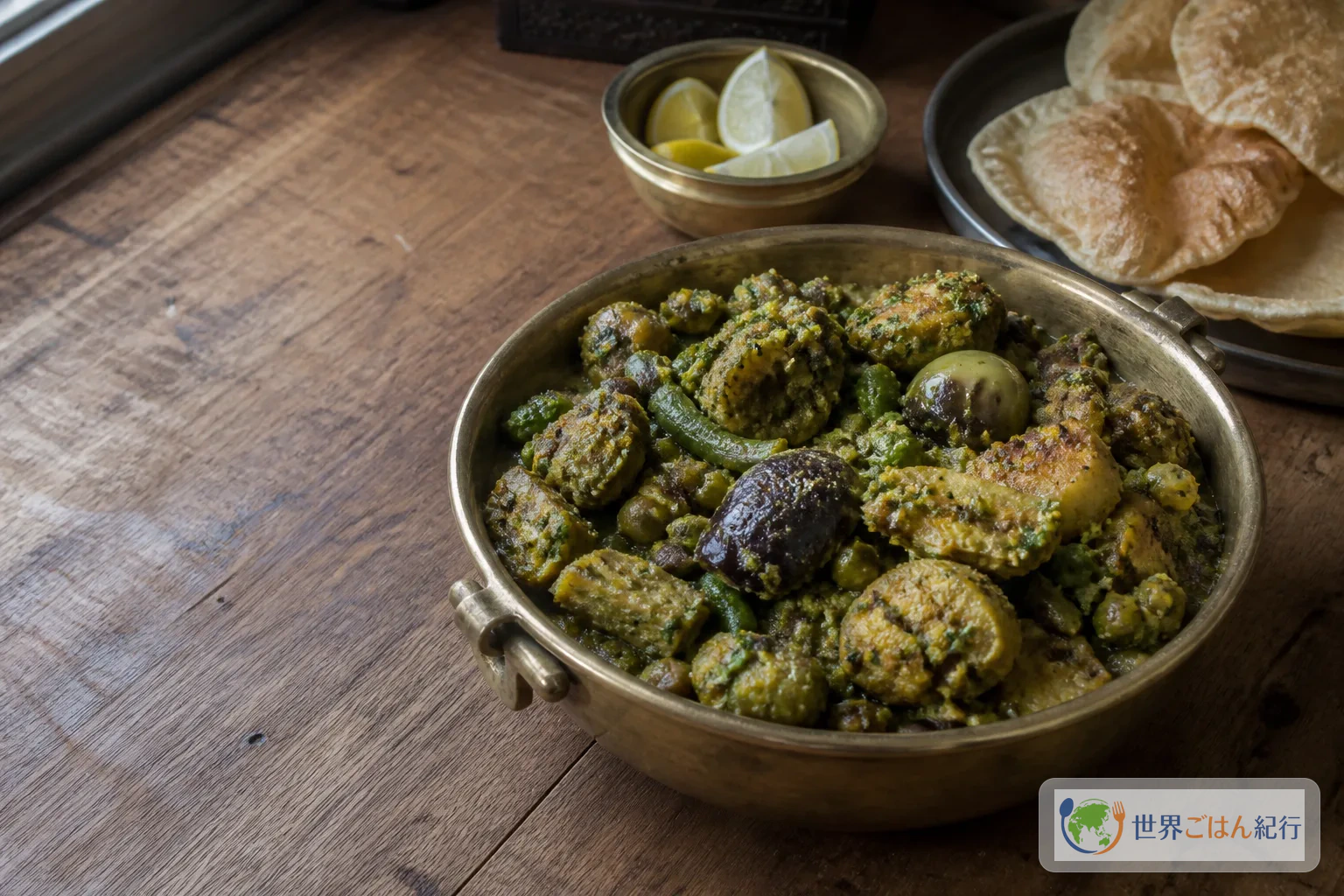
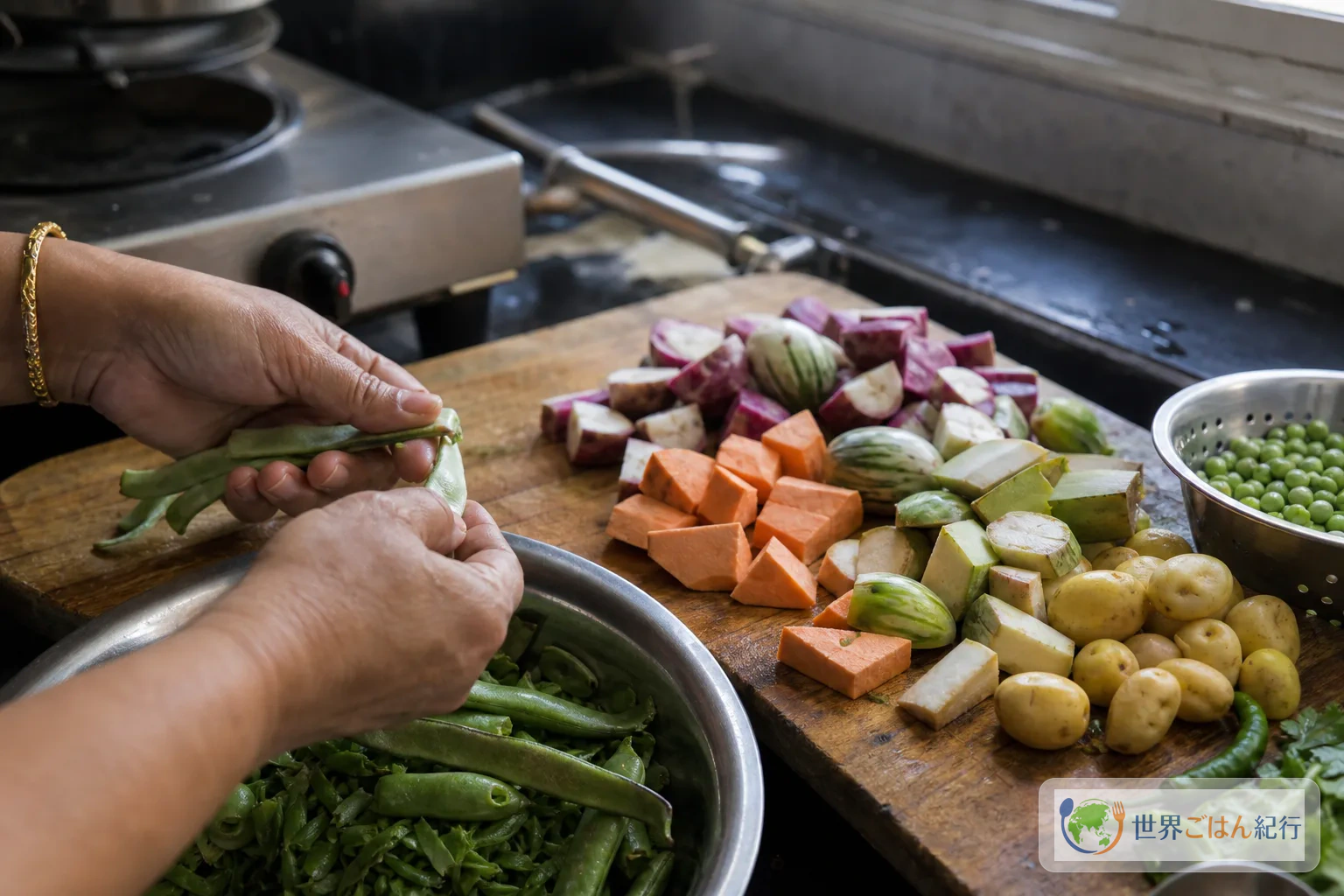
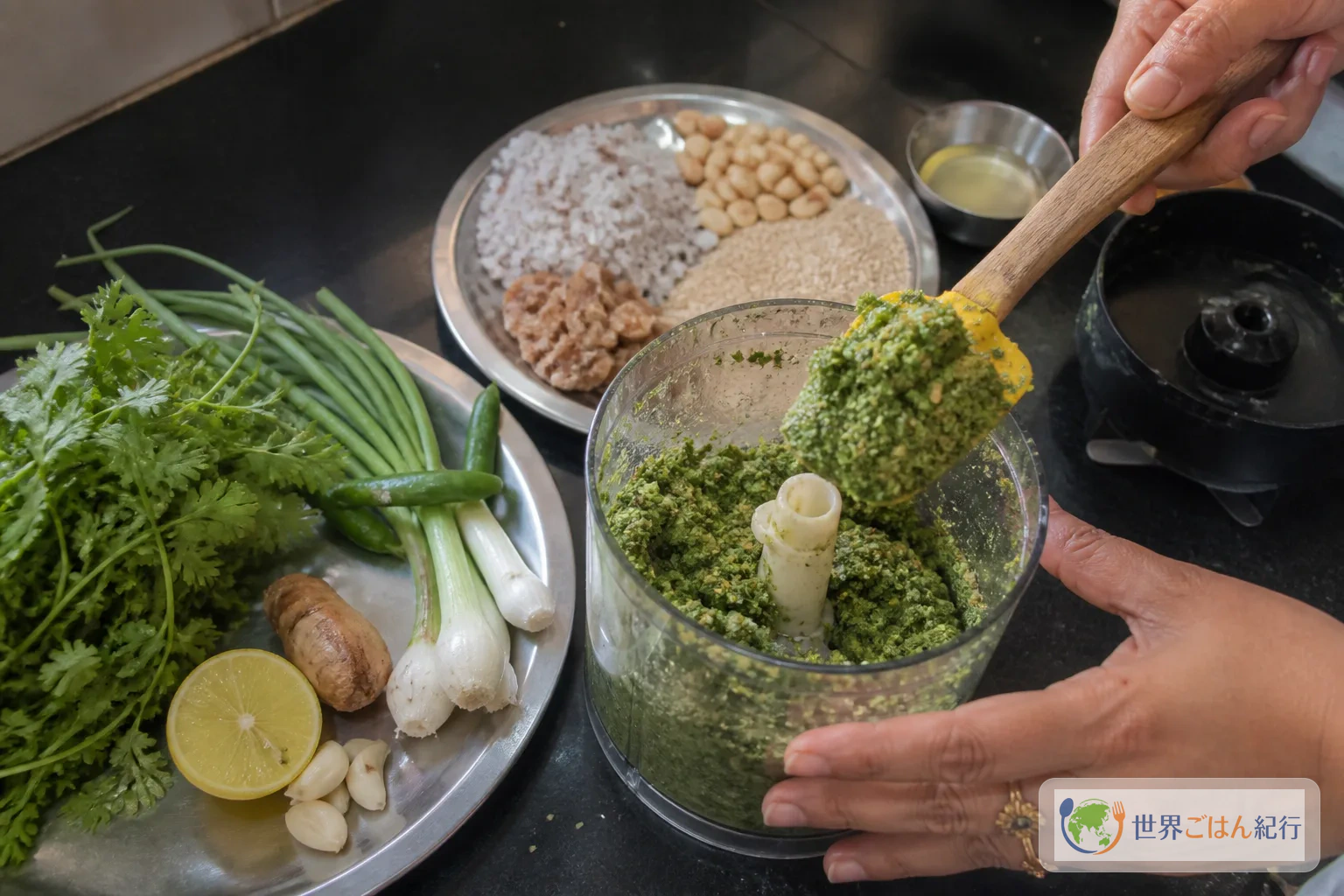
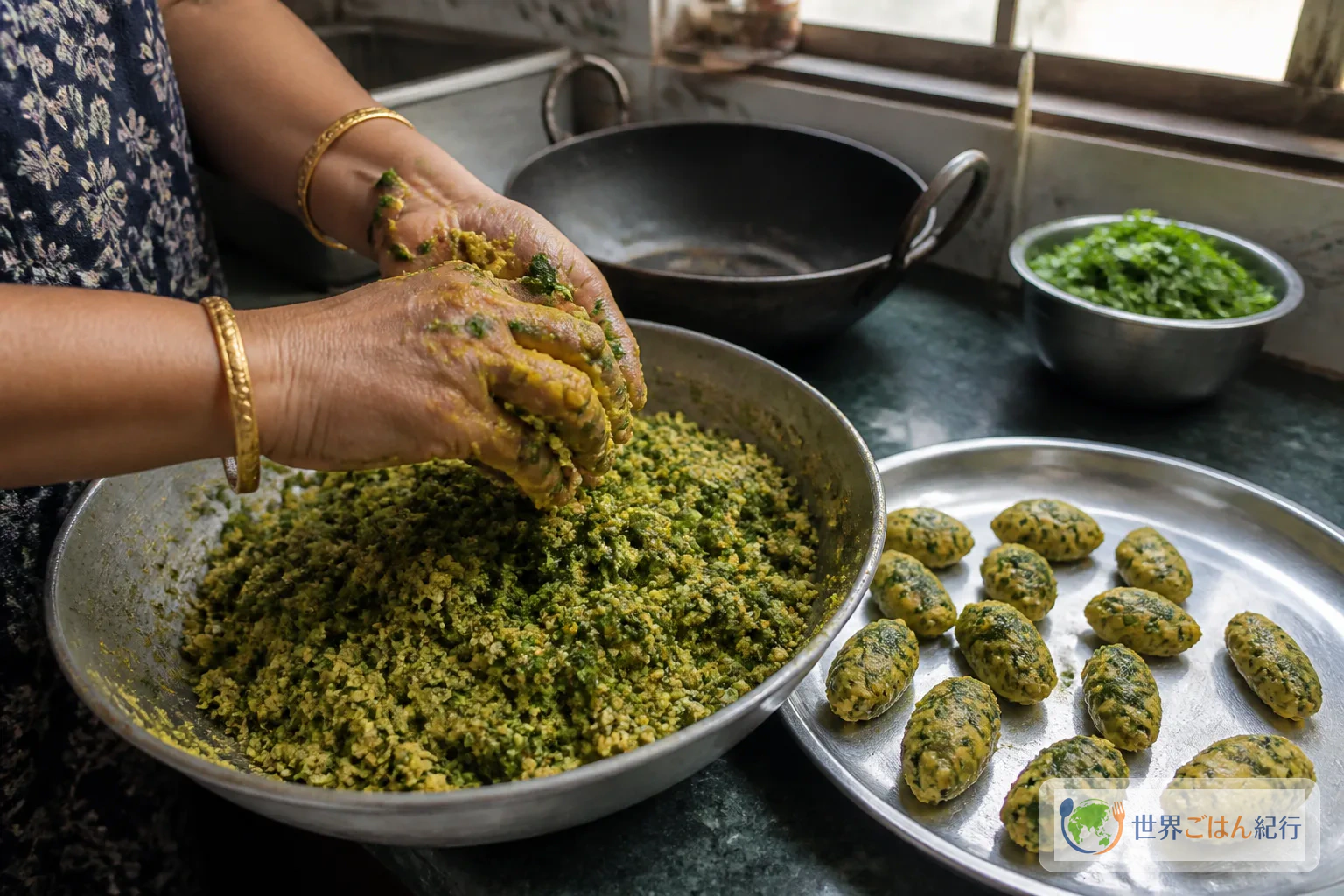
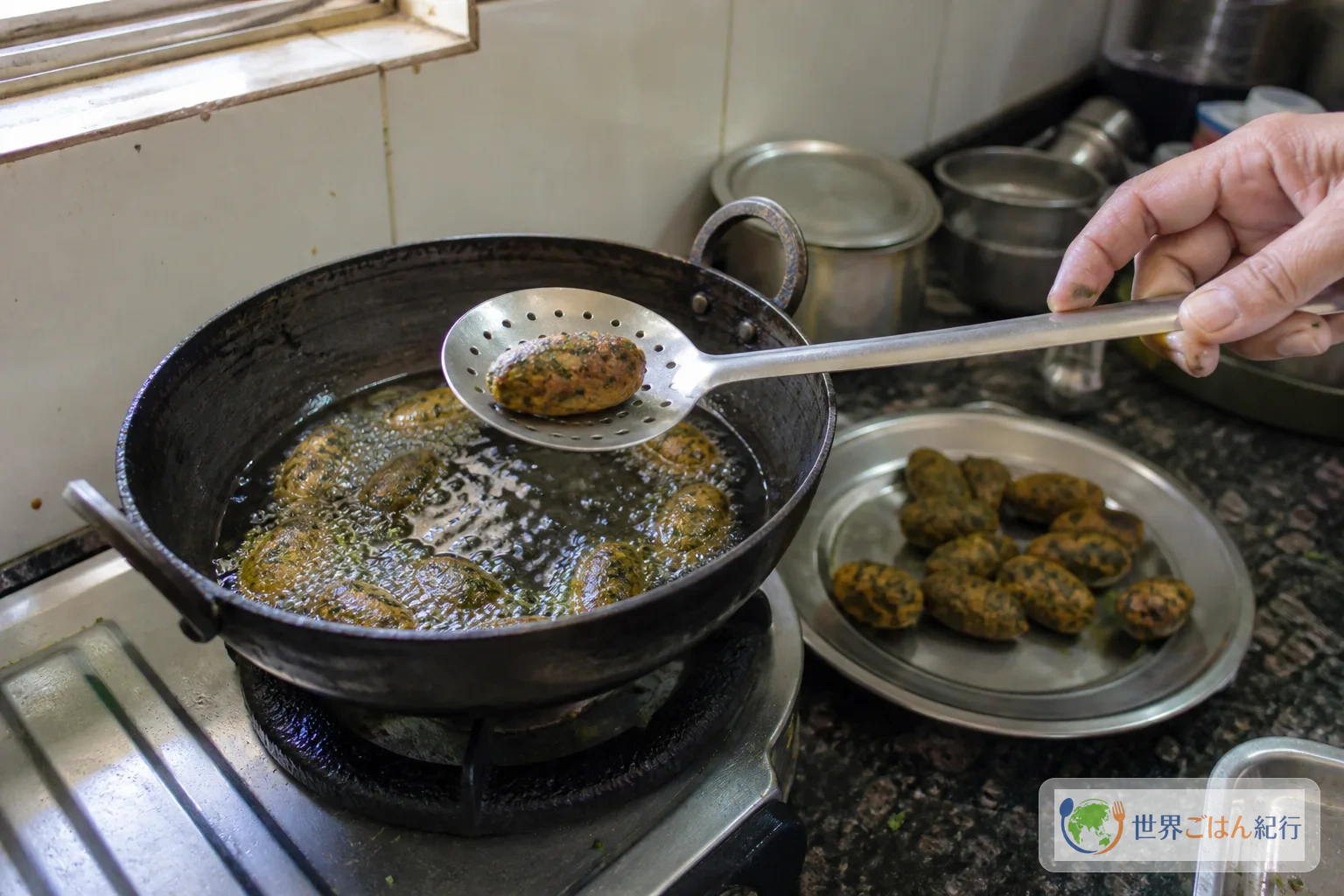
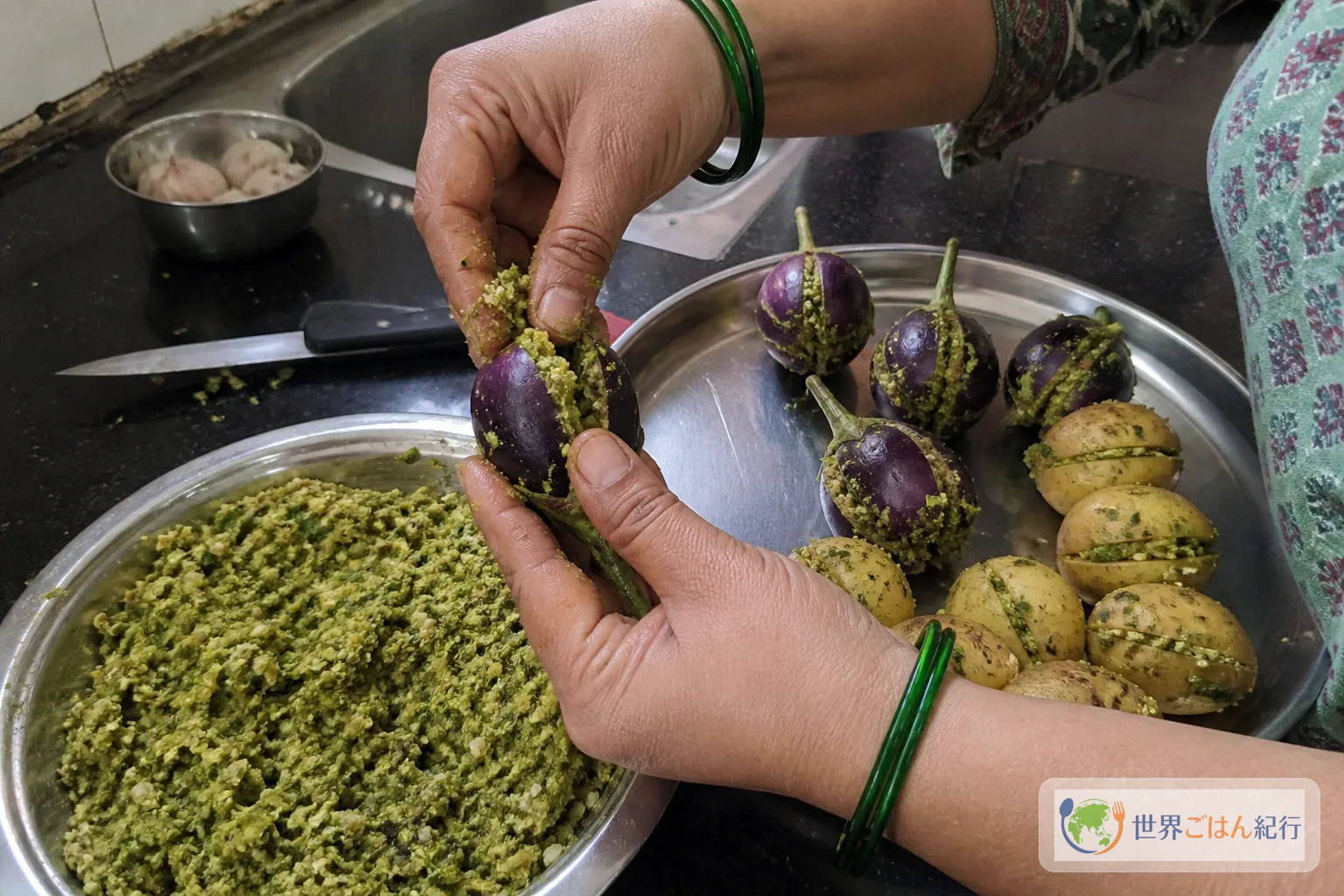
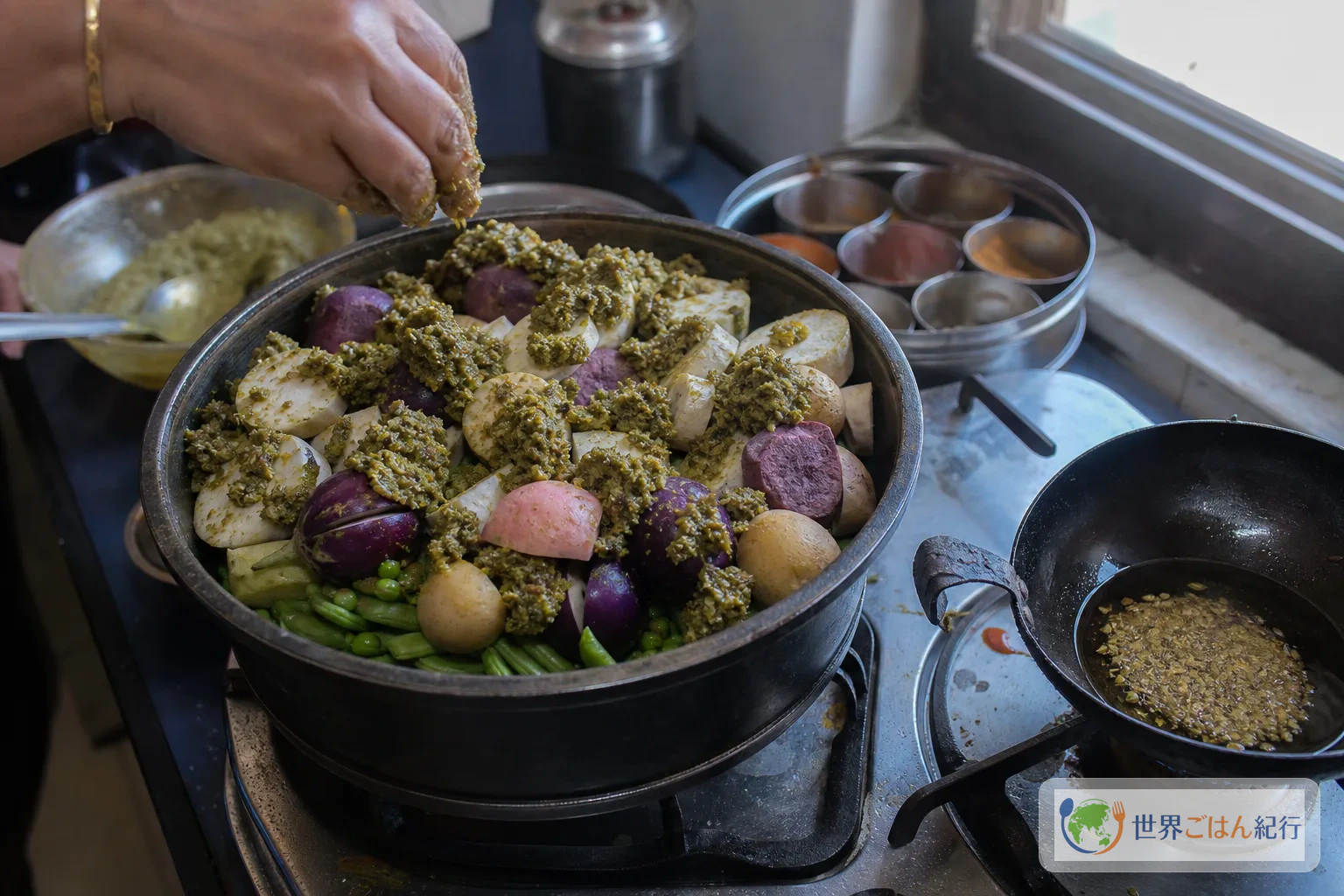
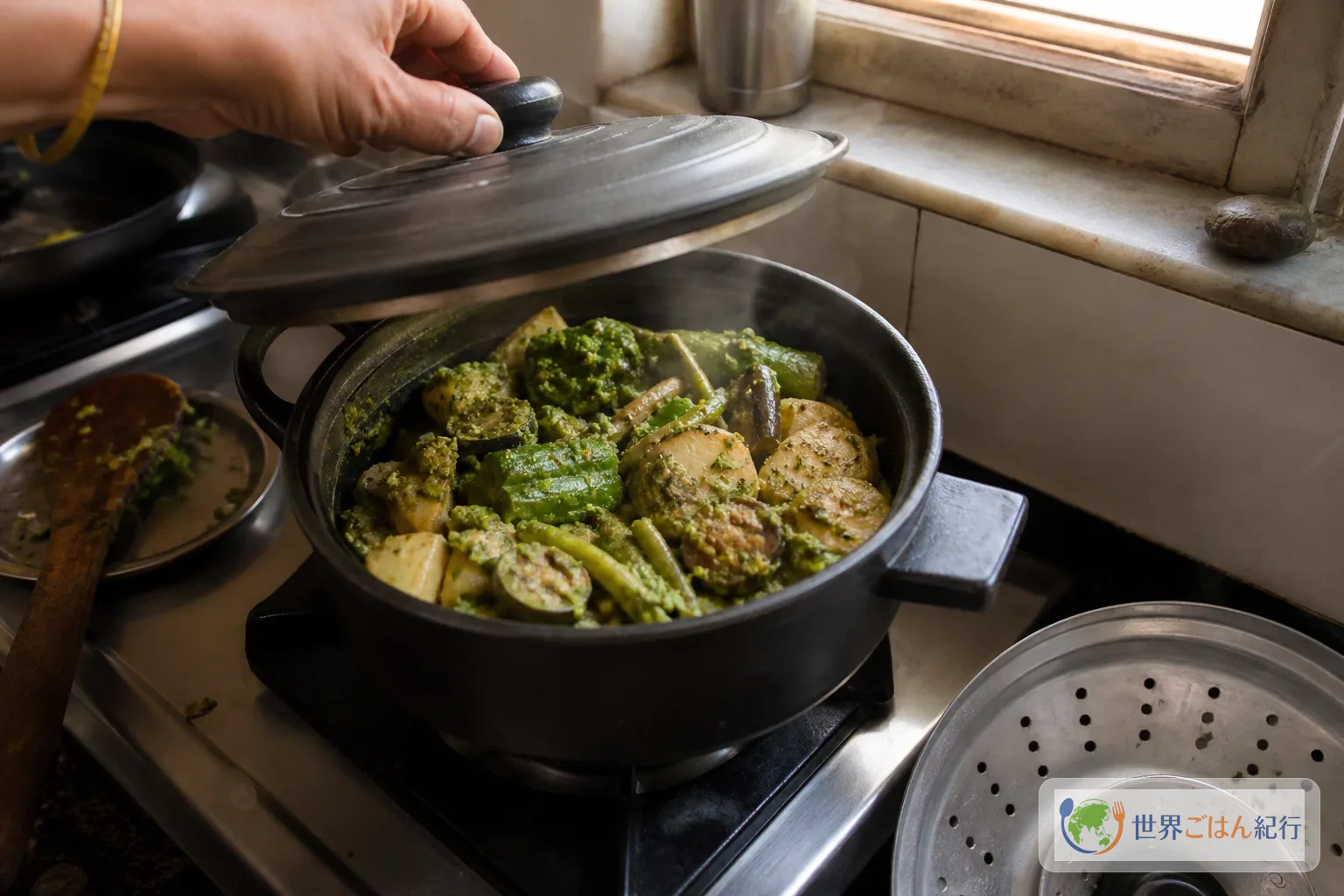
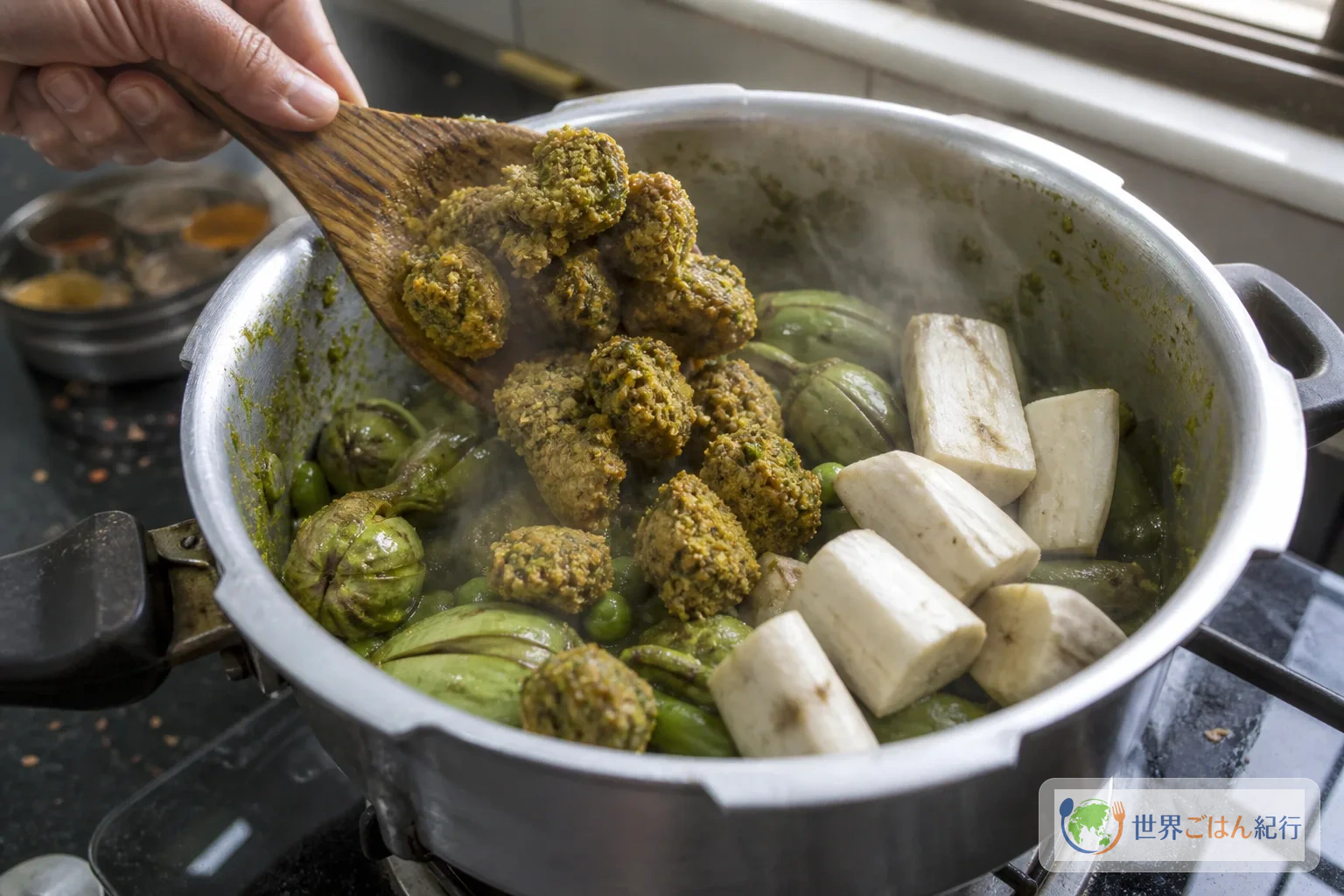
Before the lid is lifted, the smell of a green masala of coconut and green chili, fried methi dumplings and many winter vegetables rises from the pot, all layered together. Undhiyu is a vegetable dish made in winter in Gujarat, in western India. Its name comes from an old cooking method in which the pot is turned upside down. Beans, tubers, eggplant and green aromatics are layered in a clay pot, sealed, and cooked slowly over or near a fire, so it differs a little from dishes where you stir the ingredients from the bottom of the pot. In a home kitchen, you replace the clay pot with a heavy covered pot. What matters is cutting the vegetables to the same size, adding the fragile muthia and green banana later, and not stirring many times while it simmers. Keep to these three and you can bring the green aroma of Surti style, fluffy root vegetables, and fenugreek muthia that are fragrant outside and tender inside into one pot.
The Gujarati dish name is spelled Undhiyu, and other spellings exist in other languages. This article uses the spelling closest to the original pronunciation as its main form, Undhiyu, and notes the variants you may see in searches, such as Undhiyo.
Method: hard vegetables on the bottom, fragile ones later
If you put all the cut vegetables in at once, by the time the beans are soft the green banana and muthia will have fallen apart. Place the slow-to-cook ingredients at the bottom and those you want to keep their shape on top, and add the muthia last.
How to recover if something goes wrong
If the vegetables are hard but there is too much liquid, don't stir; set the lid slightly ajar and reduce the liquid over medium-low heat for 5–8 minutes. If a burnt smell appears, move only the top ingredients to another pot and don't scrape the burnt bottom. Add 50 ml boiling water and the leftover masala to a separate pot and reheat, which keeps the bitter burnt flavor from spreading through the whole dish. Hard muthia means they were over-fried or the dough lacked moisture. If they are not in the pot yet, spoon 2 tbsp of hot masala over them, cover and steam for 10 minutes on low heat. If they hardened in the pot, push them to the side without breaking up the vegetables, add 2 tbsp boiling water and cook 5 more minutes. Muthia that have broken are not a failure; they can be eaten as is, as pieces that add body and a toasty flavor to the masala.
Ingredients (serves 4): prepare the winter vegetables and the green masala separately
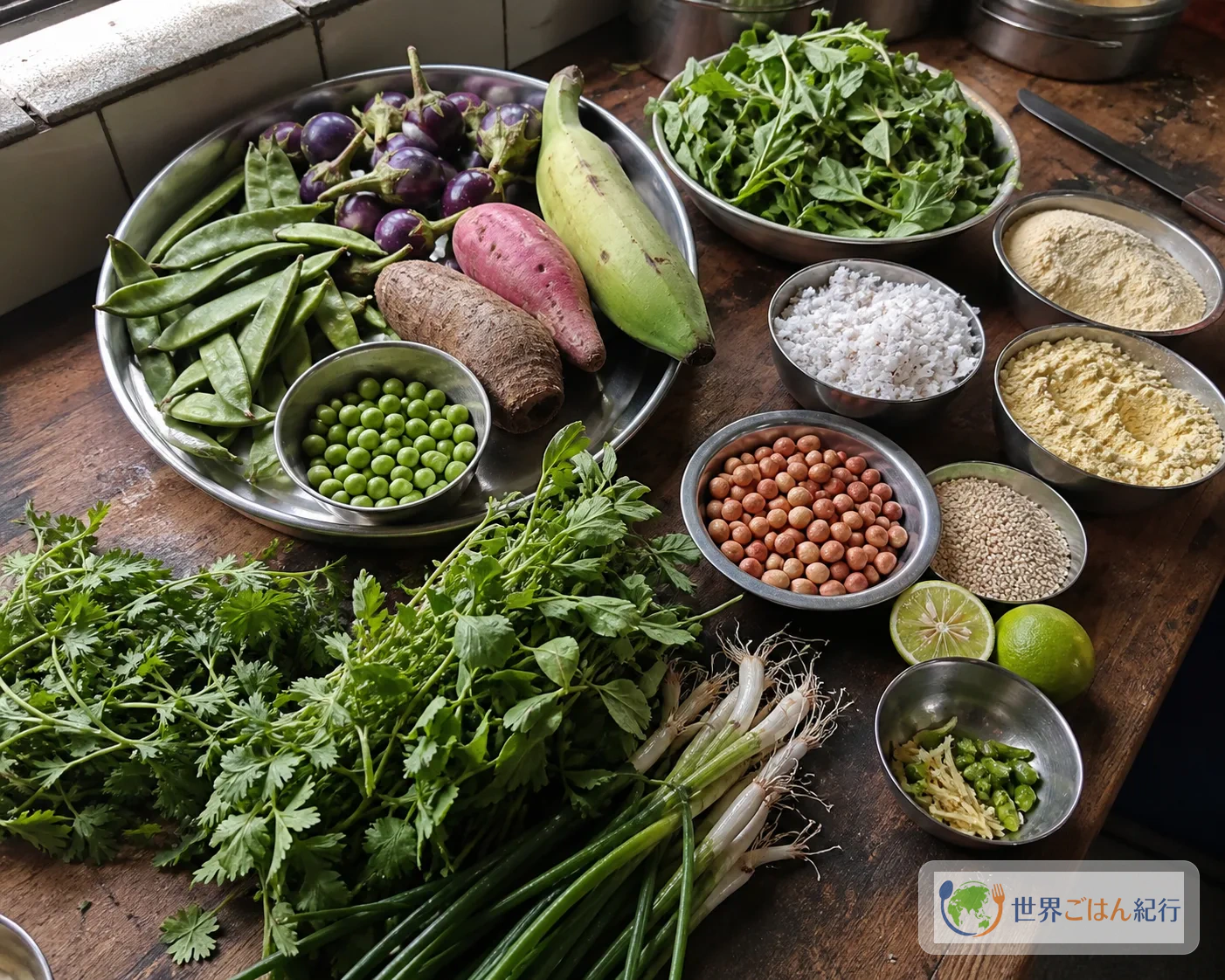
This serves 4 as a main. If you serve it with puri or roti, the undhiyu alone is enough to share among 3 people. The ingredients are based on the Surti-style combination commonly used locally, with substitutes that are easy to gather at an ordinary supermarket also noted.
What you can swap, and what to keep
You don't need to hunt down every hard-to-find ingredient. But if you think separately about three roles, green aroma, fluffy root vegetables and the texture of muthia, the outline of the dish holds even with substitutes.
| Role | Closer to local | Practical substitute | What changes |
|---|---|---|---|
| Bean sweetness and skins | Surti papdi, toor lilva | Flat green beans, green peas | The bean aroma is lighter, but the sweetness of the layers remains |
| Green aroma | Green garlic | Garlic scapes plus a little garlic | The pungency comes slightly forward |
| Sticky tubers | Purple yam (kand) | Taro, or sweet potato | Color and stickiness change. Watch for falling apart and add later |
| Springy green banana | Green banana | Lotus root | No acidity, with a stronger crunch |
| Bitterness of methi | Fresh methi | Spinach plus dried kasuri methi | Aroma is subtler, but the green color of the muthia holds |
| Smoky aroma of clay pot | Matla set over a fire | Heavy covered pot on low heat | No smoky aroma. Prioritize not scorching and keeping the layers |
Because it uses wheat and chickpea flour, the basic recipe is not gluten-free. If you have an allergy to peanuts, sesame, chickpeas, wheat or coconut, check the ingredient labels of the substitutes as well. In an environment where frying oil is shared, also consider coating residue and components of other foods left in the oil.
The Surti flavor is built not by adding more chili but by the lineup of coconut, green aromatics, lemon and jaggery. When reducing heat, halve the green chili, and do not increase the sugar to balance it out.
Shopping: don't confuse fenugreek seeds with leaves
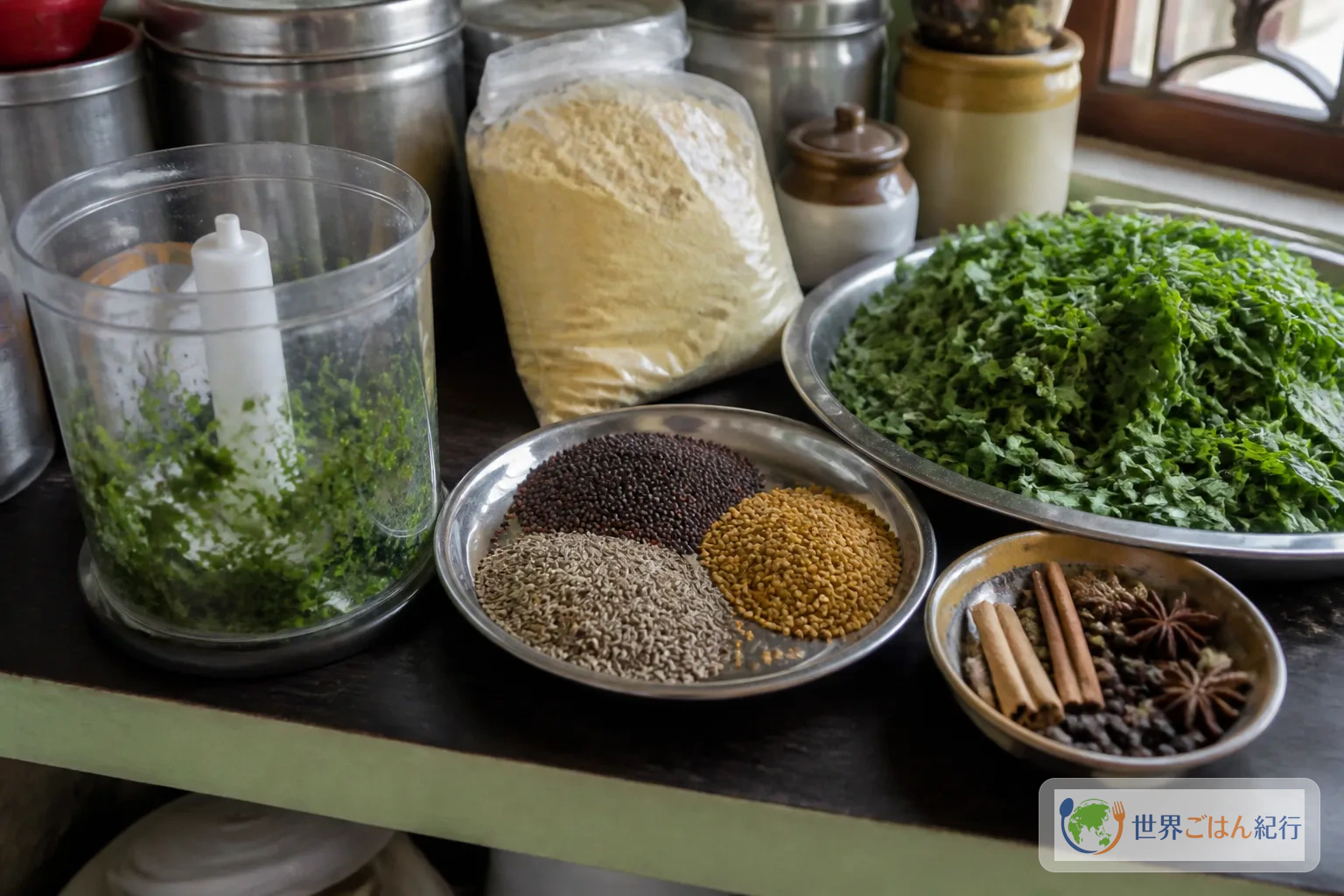
What is worth ordering online for this dish are the whole spices that are hard to find nearby, and a tool that makes the green masala coarse and even. Fresh methi leaves are the star of the muthia, but if you can buy them fresh in a shop, do that, and on days you can't, spinach plus dried methi is more realistic. Fenugreek seed is not the methi leaf itself. In this recipe only 1 g is used for tempering, adding toasty flavor and a light bitterness that pops in the oil. When buying, check that it is whole seed, not powder, and check the quantity in the package. If you already have it at home, there is no need to buy more. Leftover seeds can go into chana masala (in Japanese), where they build aroma in a bean stew. If you make a lot of green masala, a small food processor helps avoid the state where only the coconut and peanuts are left at the bottom. When buying one, check that it comes with a chopping blade, the capacity of the bowl and the number of parts to wash. If you will only make it once, you can chop finely with a knife and crush in a mortar. Decide whether to buy by whether the same tool will serve not only undhiyu but also avial (in Japanese) and chutneys.
You can also make it by finely chopping cilantro and garlic with a knife and crushing the peanuts in a mortar. The more grains remain in the masala, the closer it gets to the rustic local texture. A food processor is for people who meet these conditions: make undhiyu every year, also make chutneys and avial, and find it hard to keep up the chopping by hand.
Gujarat's winter table and regional differences: the upside-down pot
In a Gujarat Tourism introduction, undhiyu is described as a dish in which beans, green banana, purple yam, muthia and more are layered in an earthen pot, matlu, which is turned upside down and set over fire. The word undhu in the dish name also means "upside down," and the old method of applying heat to the pot from above and below remains in the name. Nowadays methods using an ordinary stove or a heavy pot have spread among homes and shops, but the idea of keeping the layers intact and sealing in moisture on low heat is shared. Surti style is the type known around Surat in southern Gujarat. It combines a green masala, green garlic, coconut, seasonal beans and fried methi muthia, bringing together sweetness and acidity without sharpness. Even when substituting ingredients elsewhere, using garlic scapes together with cilantro is effective for keeping the green aroma. Kathiyawadi style, on the other hand, has home recipes built on a red gravy with tomato and red chili and a stronger heat. There are also versions in which the vegetables are fried first and then combined, and even within the same undhiyu, the impression differs between a green braise and a deep red braise. The third, "matla," is used less as a regional name than in the context of the method of making it in an inverted clay pot. Rather than settle on a single right answer by name alone, you can see the differences by looking at which vegetables are used and which aroma is the lead.
| Type | Flavor and cooking axis | Judgment at home |
|---|---|---|
| Surti style | Green coconut masala, green aromatics, fried muthia | The recipe in this article. Don't increase the heat too much, to keep the vegetables' sweetness |
| Kathiyawadi style | Deep gravy of red chili and tomato, strong heat, fried vegetables | Make it as a separate dish. Don't just add tomato to the Surti masala |
| Matla undhiyu | Clay pot inverted, heat applied above and below | At home, keep the idea with a heavy pot and lid, low heat and little liquid |
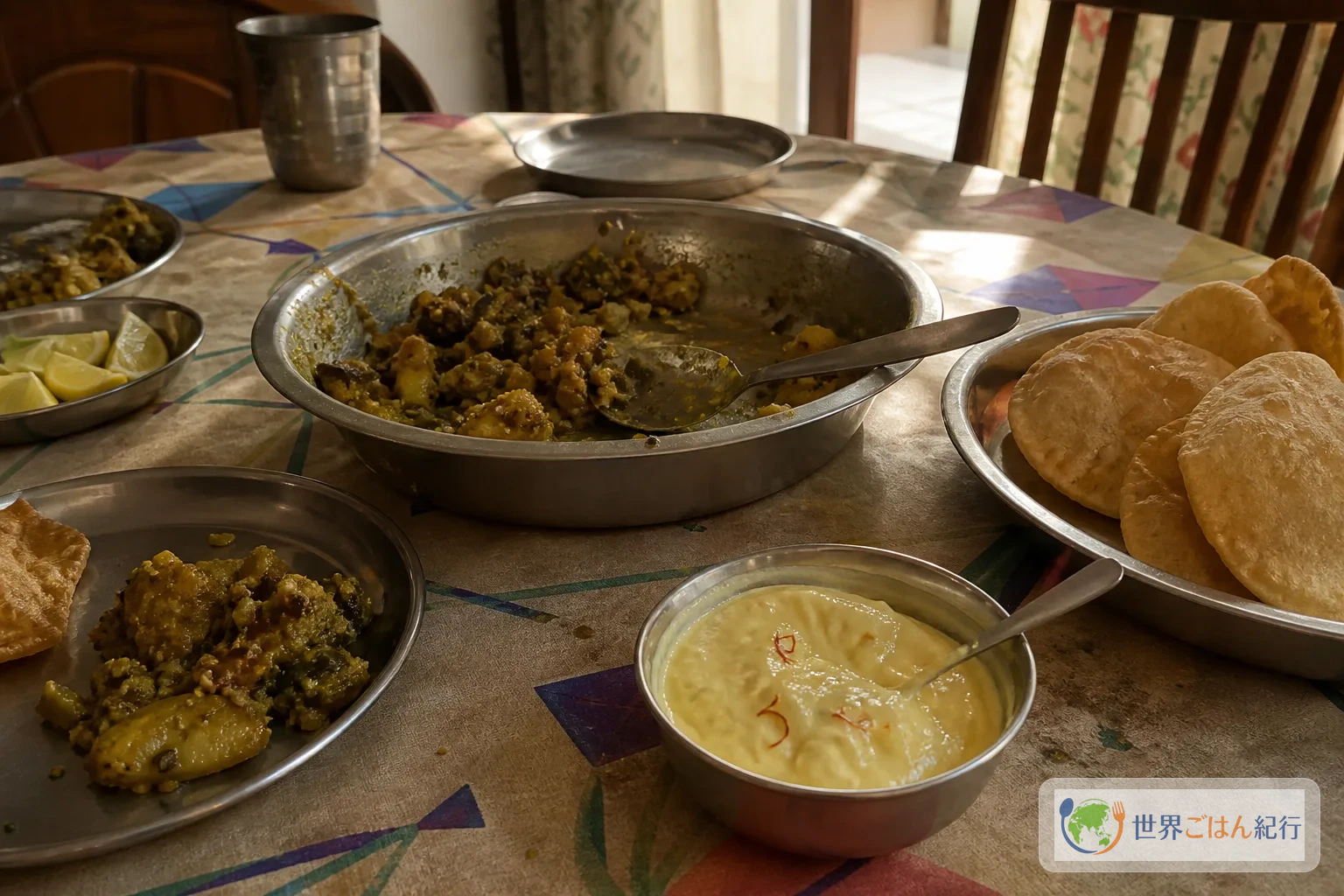
The reason undhiyu is a winter dish is that the season when the ingredients are available coincides with the occasions for eating it. Surti papdi, green pigeon peas, purple yam, green banana and green garlic are ingredients that shape the combination of the dish in winter markets. Around Gujarat's kite festival Uttarayan and Makar Sankranti, there are tables where it is heaped on a large platter with puri and accompanied by sweet shrikhand and jalebi. Making fried puri at the same time makes the work heavy. At first, it is better to serve it with store-bought naan or thin roti and look at the vegetables and the muthia texture, so as not to lose the center of the dish. On a day when you have time, prepare the masala and muthia the day before, and on the day cut the vegetables and finish the pot, and you can gather around a big pot as for a festival lunch. Set beside thepla (in Japanese), the flatbread from the same Gujarati table that works methi leaves into the dough, it lets you compare the roles of a winter vegetable braise and a flatbread.
Storage and FAQ
Eaten on the day it's made, undhiyu has the crispness of beans, the fluffiness of root vegetables and the toasty outside of the muthia all together. Cool leftovers a little, divide them into shallow airtight containers, and refrigerate without leaving them long at room temperature. USDA advises using cooked leftovers within 3–4 days in the refrigerator, but because the texture of green banana and muthia declines easily, 3 days is the home guideline for flavor. Freezing aside from safety, the eggplant, potato and muthia tend to turn watery after thawing, so if you care about texture, don't freeze it. To reheat, put it in a pot and warm to the center over medium-low heat, adding boiling water 1 tbsp at a time if dry. If there is a sour smell, sliminess, or anything off when you open the container, discard it without tasting.
FAQ
Is it not undhiyu without green garlic?
It changes the character, but you can make it with 40 g garlic scapes and 5 g garlic. Because the green aroma is weaker, rather than increasing the cilantro, avoid adding too much green chili, and add the lemon at the end to tighten the finish.
Can I substitute yellow bananas for green bananas?
Ripe yellow bananas fall apart when cooked and the sweetness comes forward, so they are not suitable. If you have no green banana, cut 150 g lotus root into 4 cm pieces and add it in the last 8–10 minutes. Lotus root won't taste like green banana, but it adds a crunch different from the other root vegetables.
Can I make the muthia without frying?
You can also steam them for 12–15 minutes and then add them to the pot. The surface is less toasty than fried, but it is an option when you want to reduce oil. Large pieces don't steam through at the center, so shape the same 4 cm ovals as for frying.
The dish came out too hot.
Rather than adding a lot of sugar, spread out the flavor by adding 100 g separately steamed potato or 100 g boiled chickpeas. Water alone would thin out the aroma of the masala, so add it little by little and, at the end, adjust with lemon juice 2–3 ml at a time.
Six ways to vary it
| Variation | Ingredients and steps | What changes |
|---|---|---|
| Make the beans more Japan-friendly | Use green beans and green peas | The green bean aroma is lighter, but the layers of winter vegetables are still possible |
| Change the methi | 60 g spinach and 3 g dried kasuri methi | The bitterness of the muthia becomes gentler |
| Change the green banana | Add 150 g lotus root at the end | Crunch stands out more than sweetness |
| Steam the muthia | Steam after shaping, then add to the pot | The surface is softer, and oil is reduced |
| Move toward Kathiyawadi style | Simmer tomato, red chili and tamarind in a separate pot to serve alongside | A red heat different from Surti style |
| Lighten the table | Replace puri with roti | Cut down the fried food and let the vegetable braise be the star |
Sources
- Gujarat Tourism "Undhiyu" (accessed and checked 12 August 2026)
- Down To Earth "Gujarat's Winter Delight: Discover the Magic of Undhiyu Recipe" (accessed and checked 12 August 2026)
- Tarla Dalal "Undhiyu Recipe | Authentic Surti Undhiyu" (accessed and checked 12 August 2026)
- J Cooking Odyssey "Undhiyu | Surti Undhiyu" (accessed and checked 12 August 2026)
- Gujratieats.com "Undhiyu: The Legendary Winter Vegetable Medley of Gujarat" (accessed and checked 12 August 2026)
- Nehas Cook Book "Kathiyawadi undhiyu recipe" (accessed and checked 12 August 2026)
- USDA Food Safety and Inspection Service "Leftovers and Food Safety" (accessed and checked 12 August 2026)


