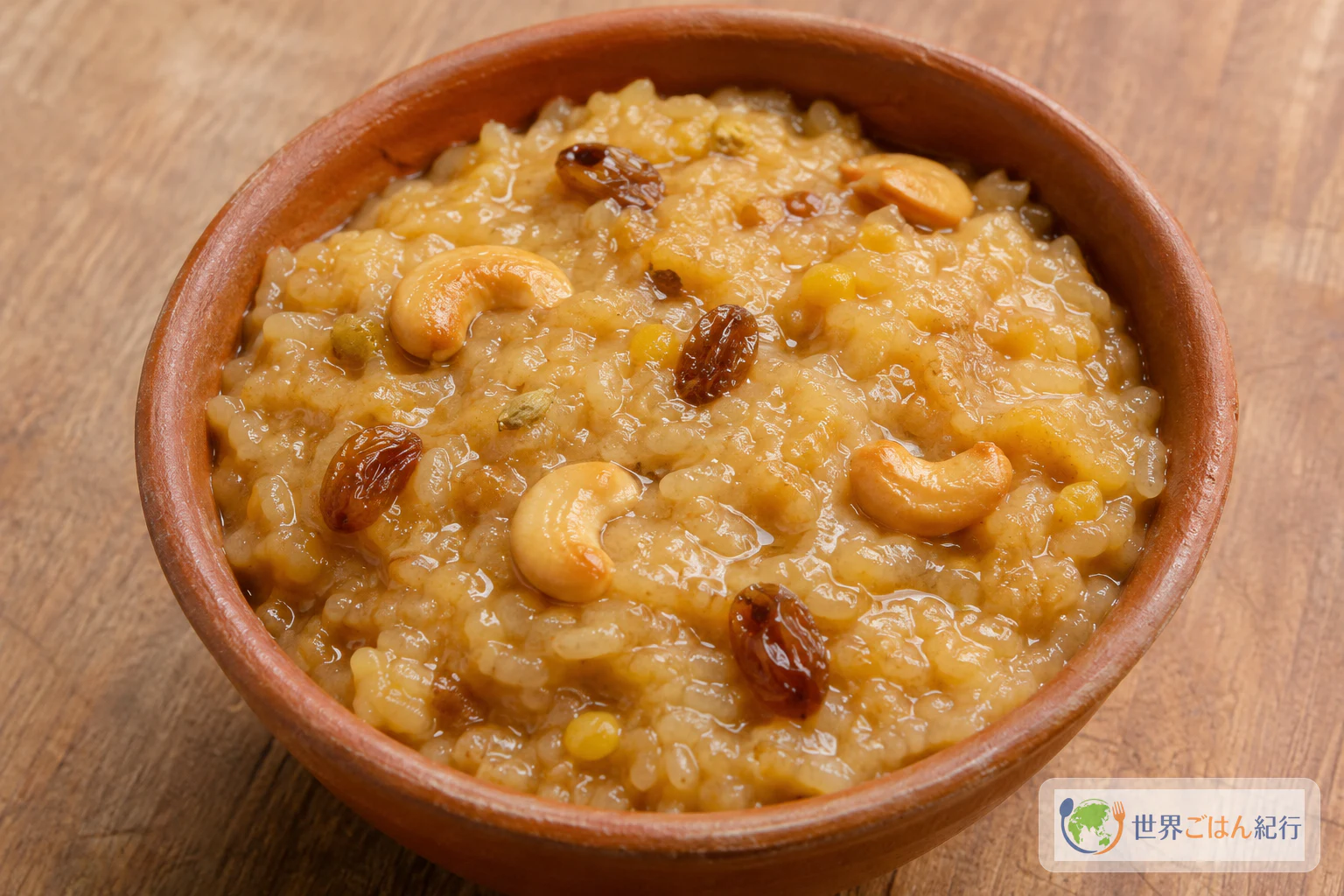
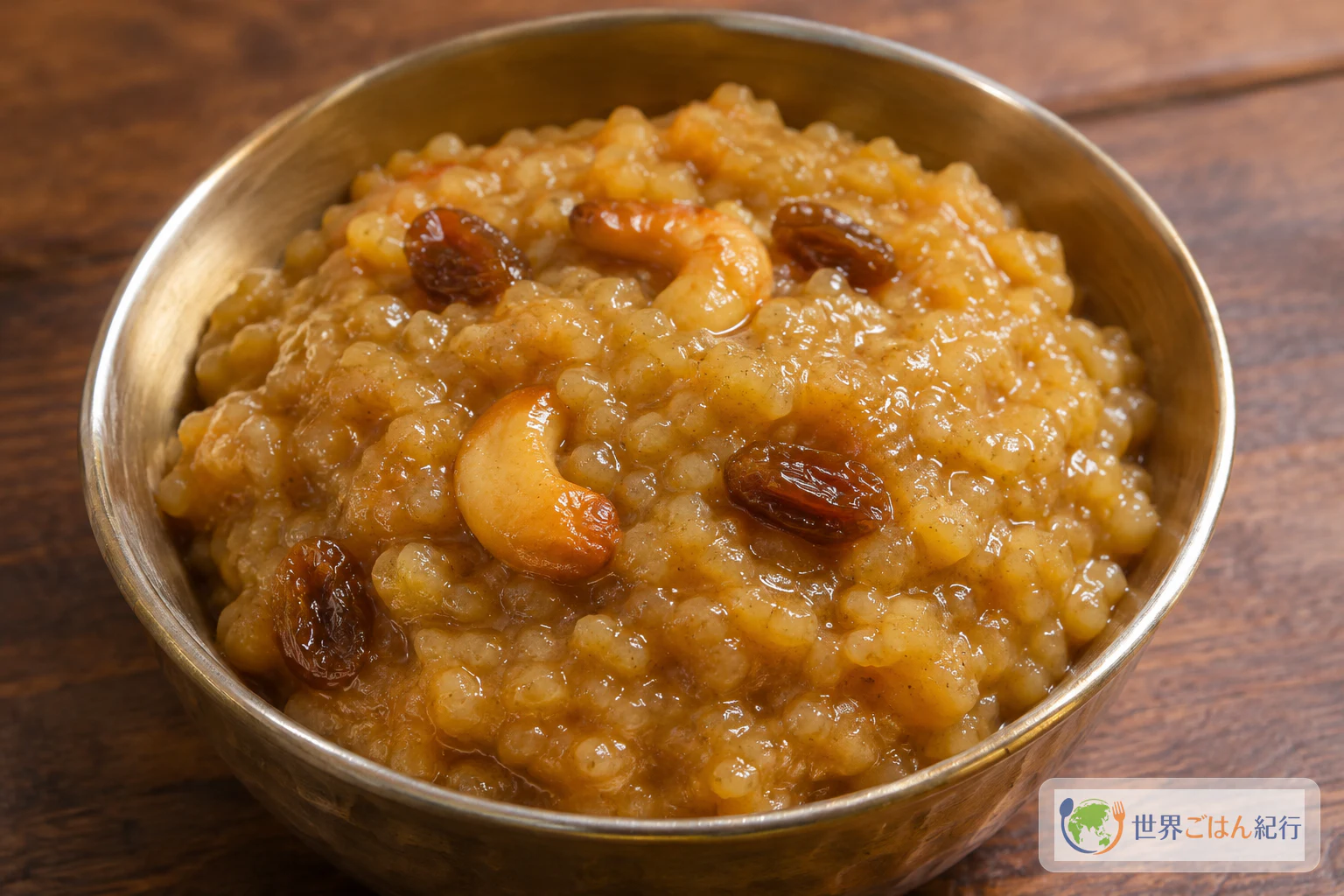
Sakkarai Pongal: Soft Rice and Moong Dal Sweetened with Jaggery
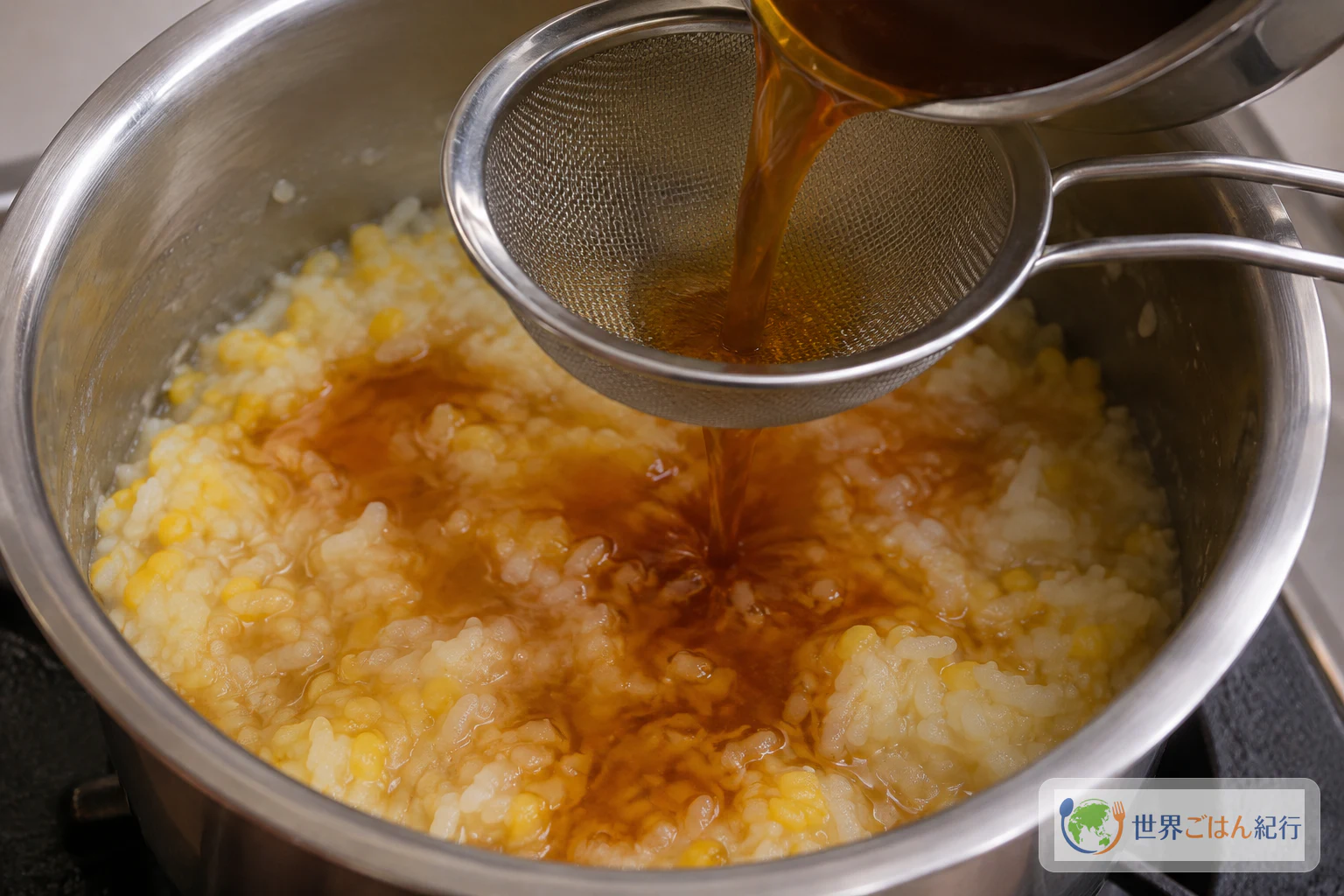
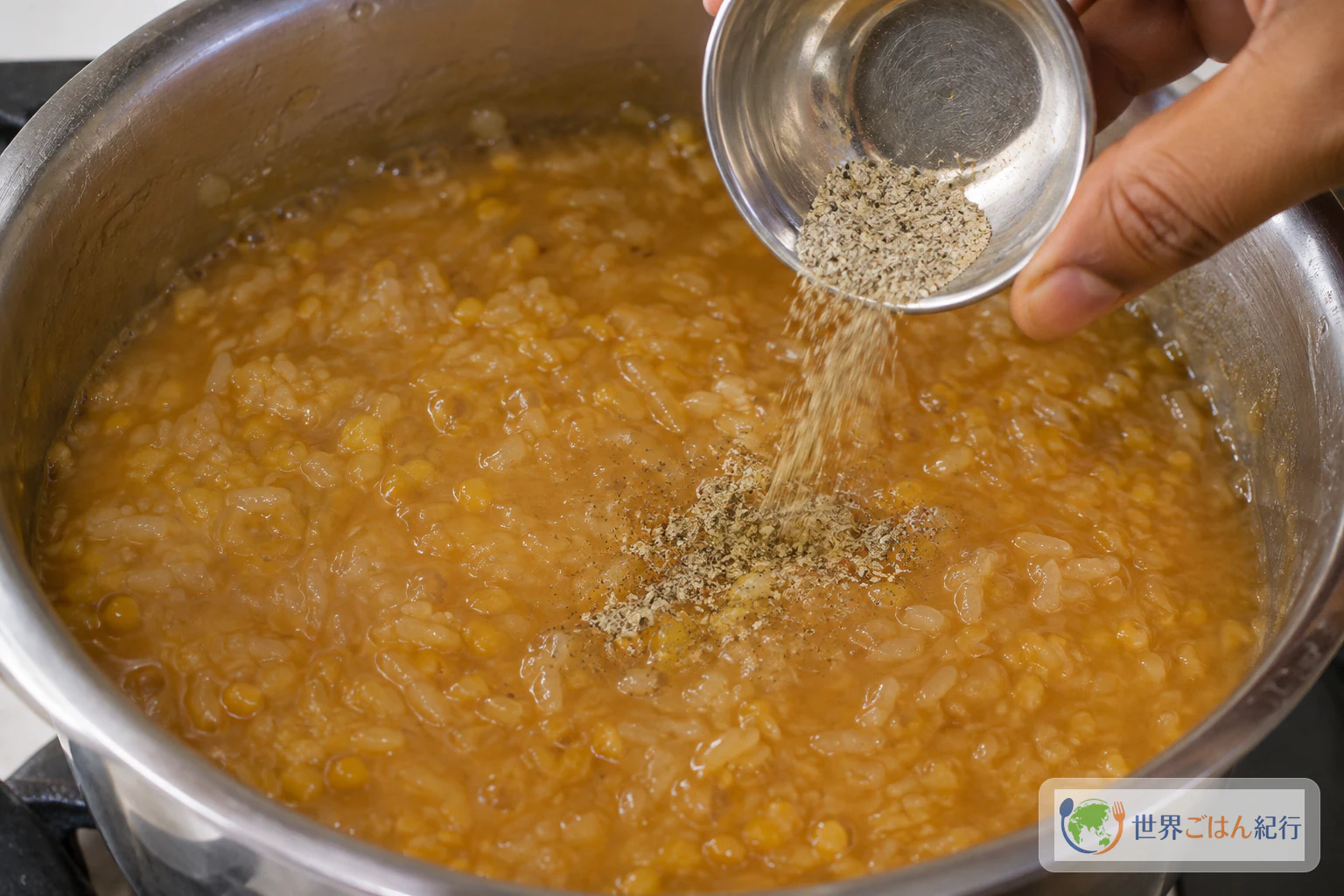
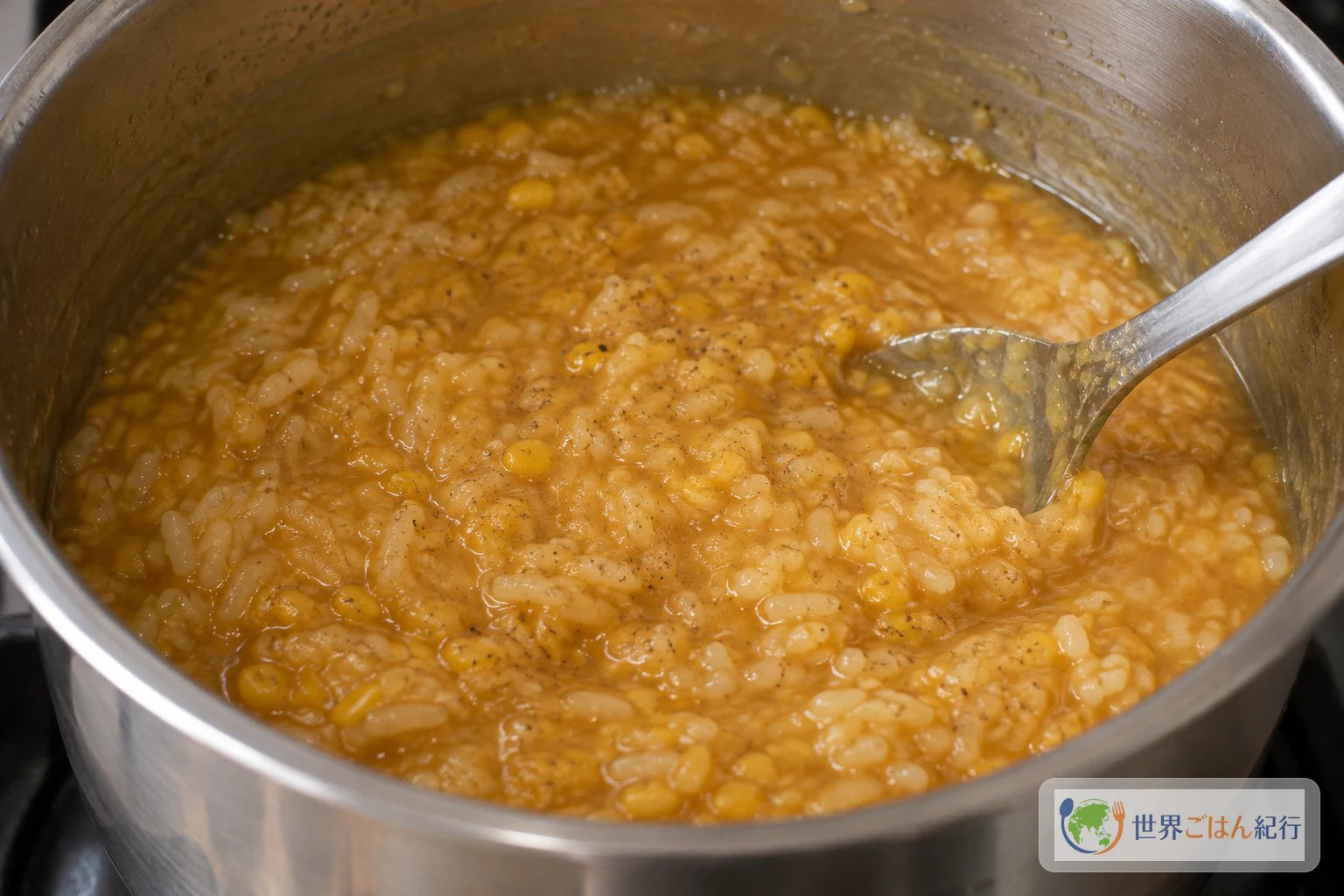
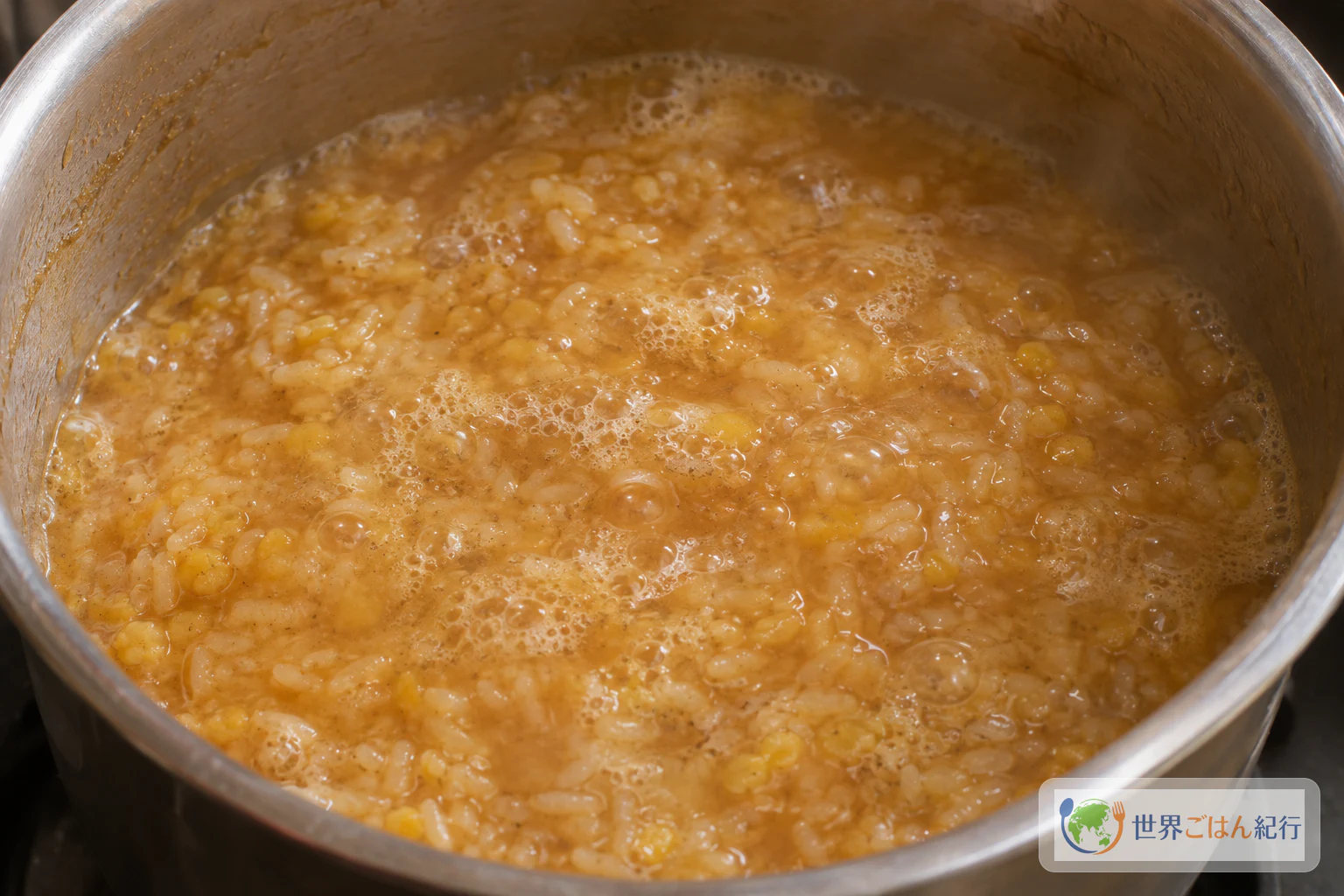
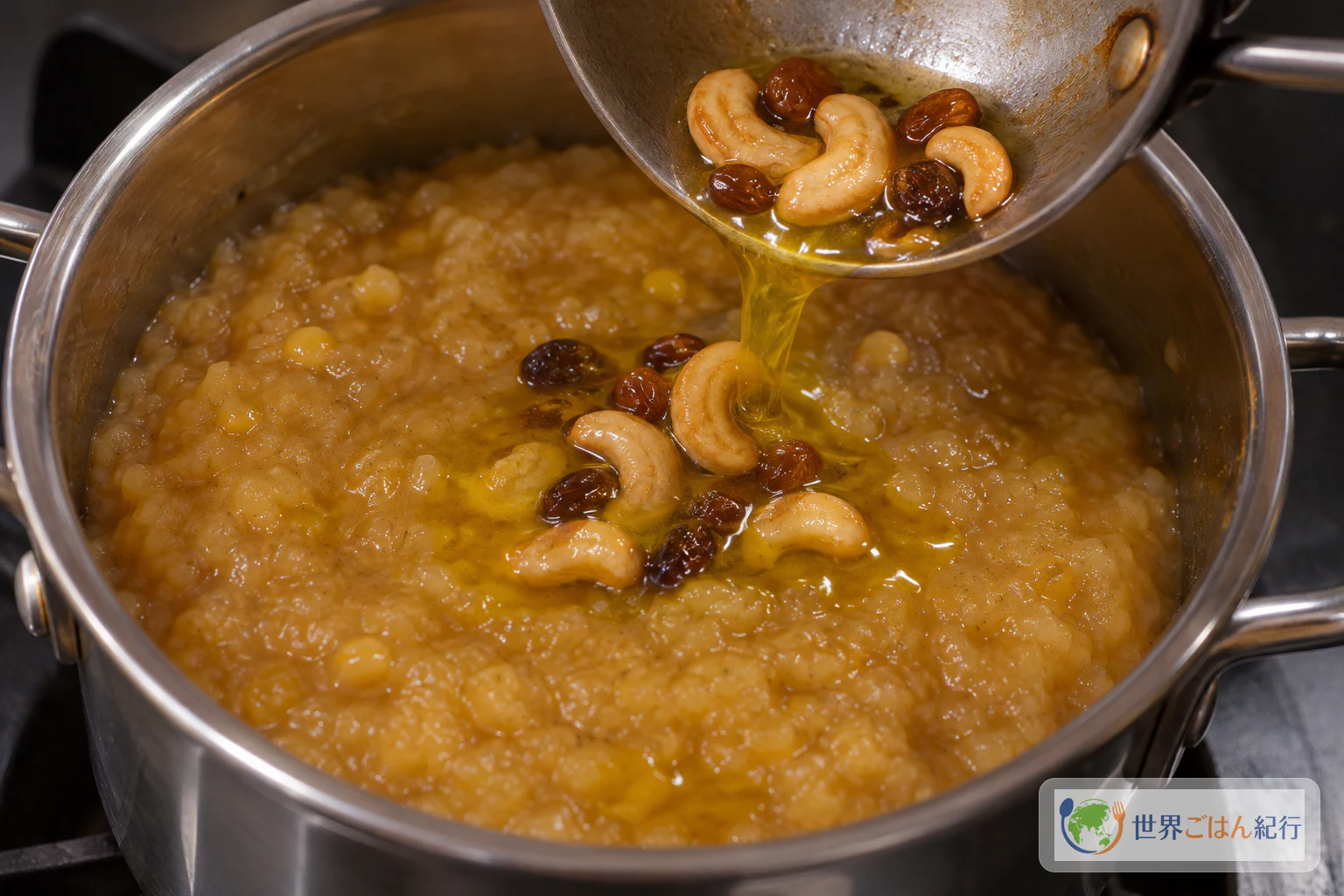
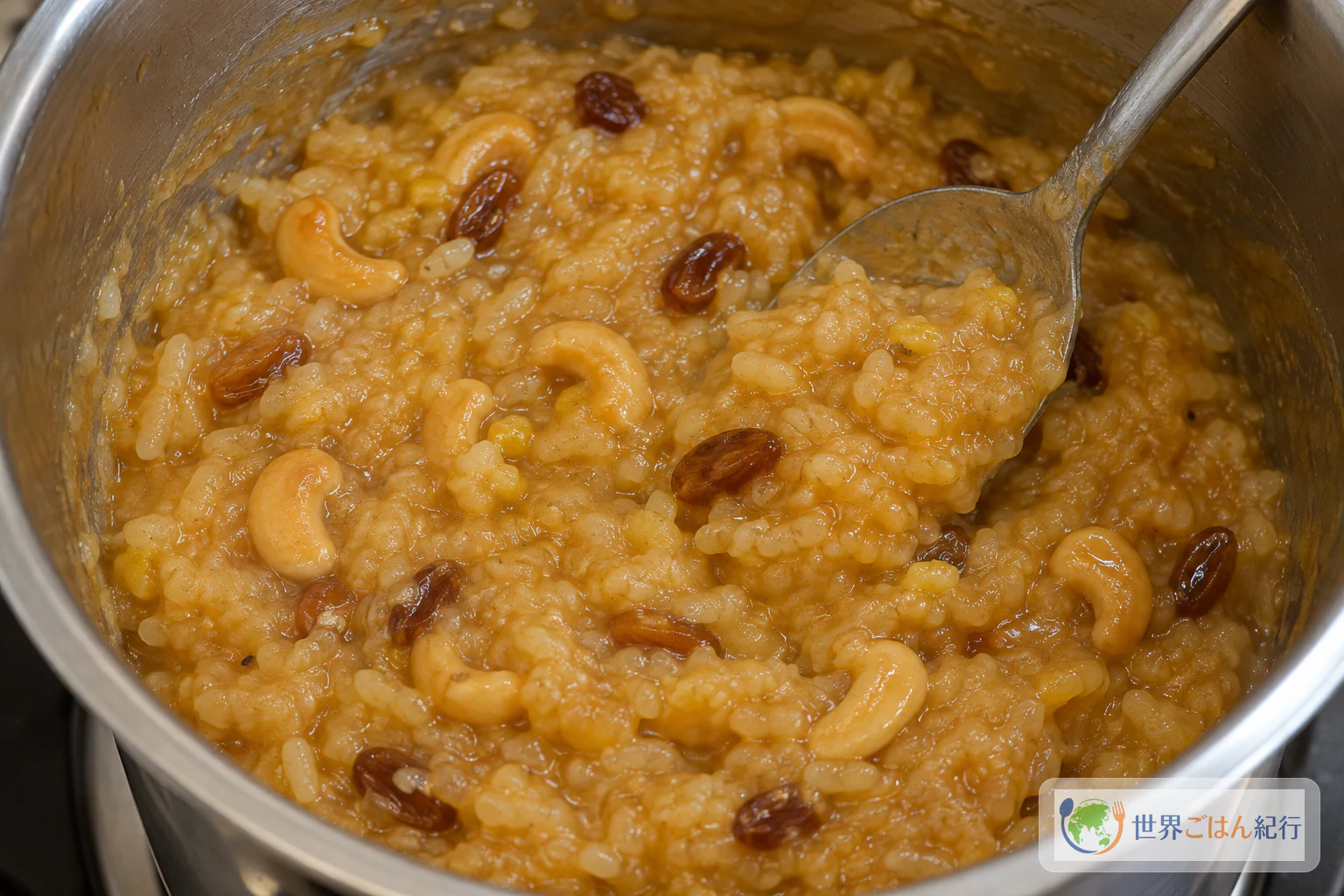
Cook the rice and dal until fully soft before any sweetness goes in. Then add the strained jaggery syrup and cardamom, and finish with cashews and raisins fried in ghee. Serve it hot.
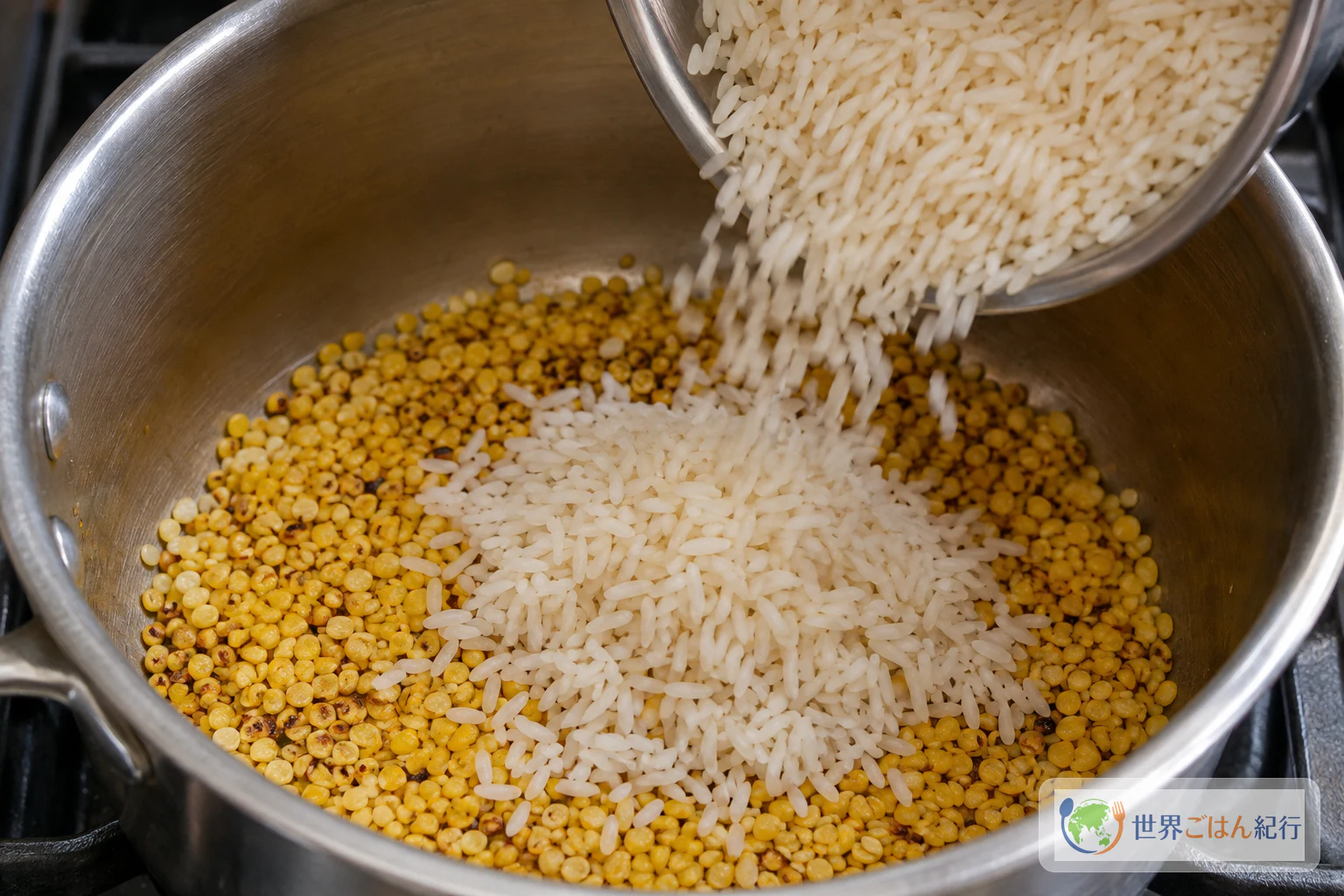
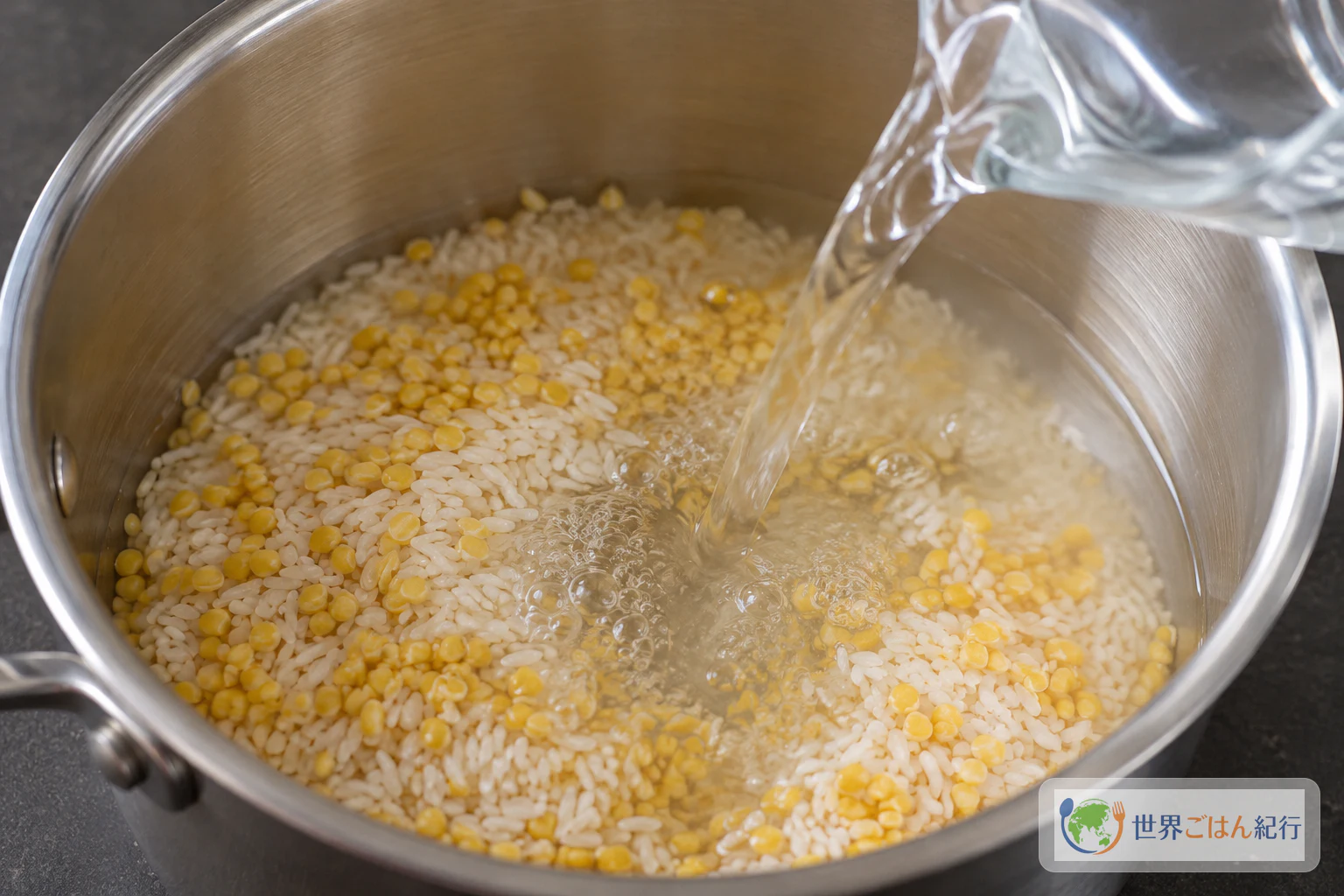
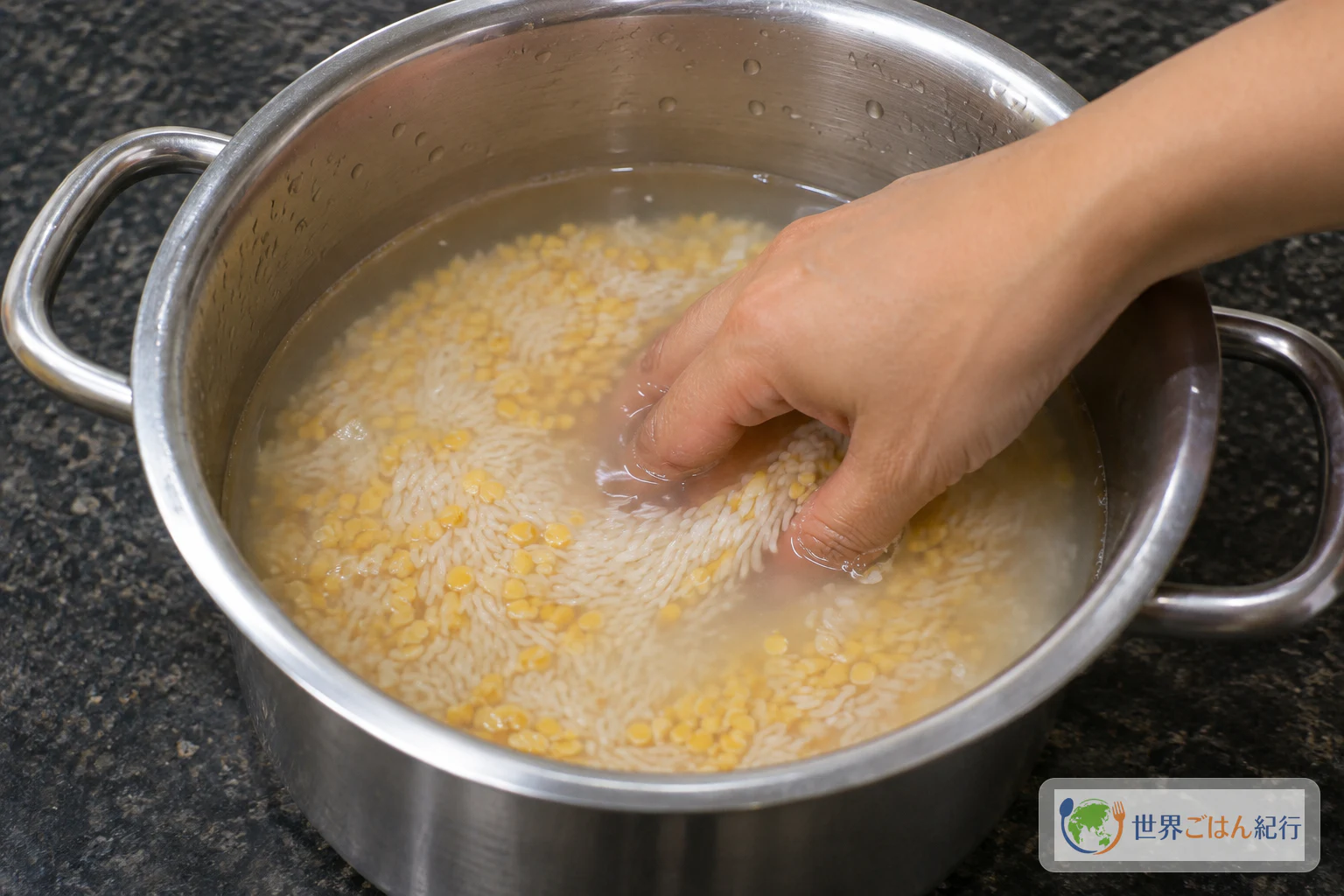
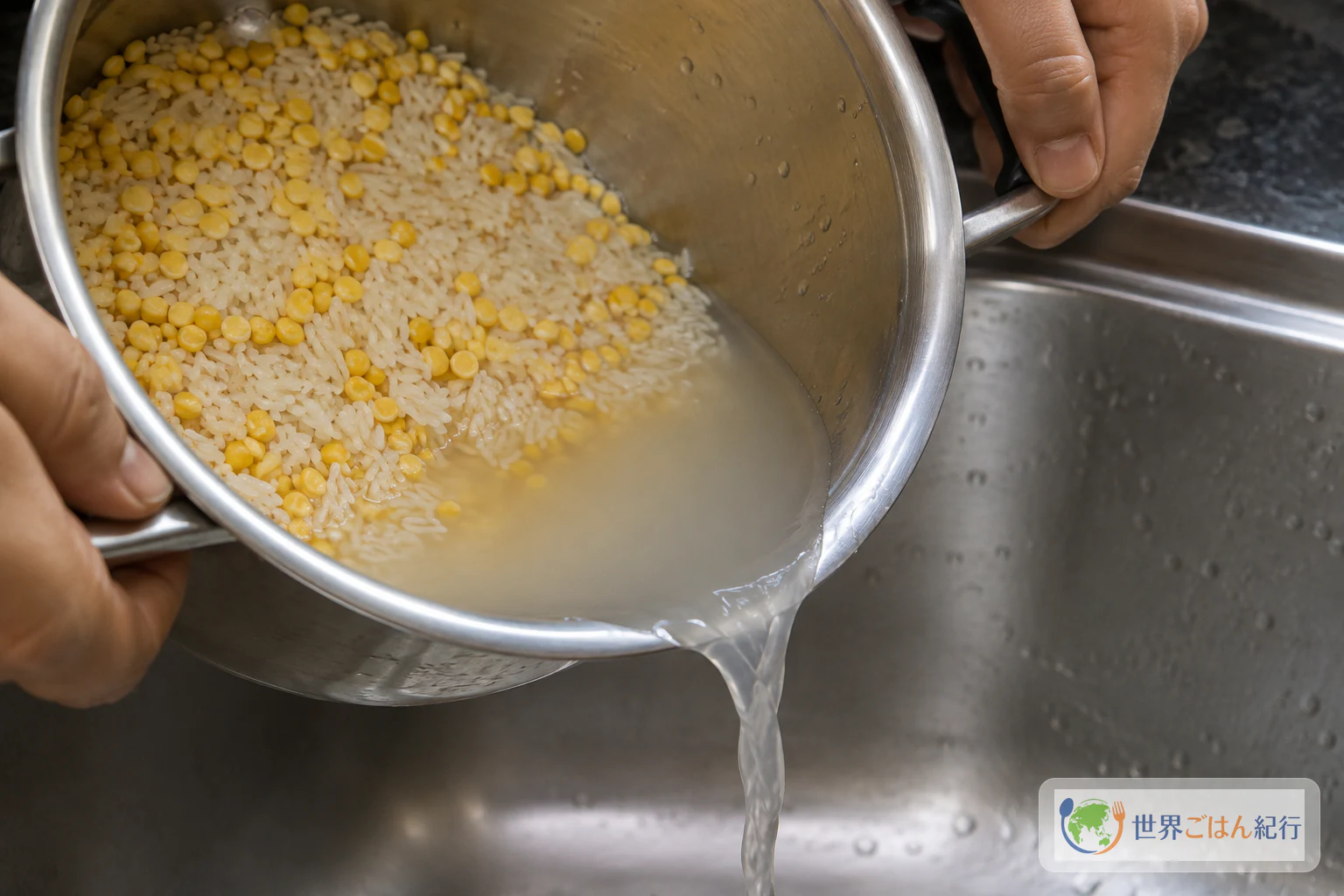
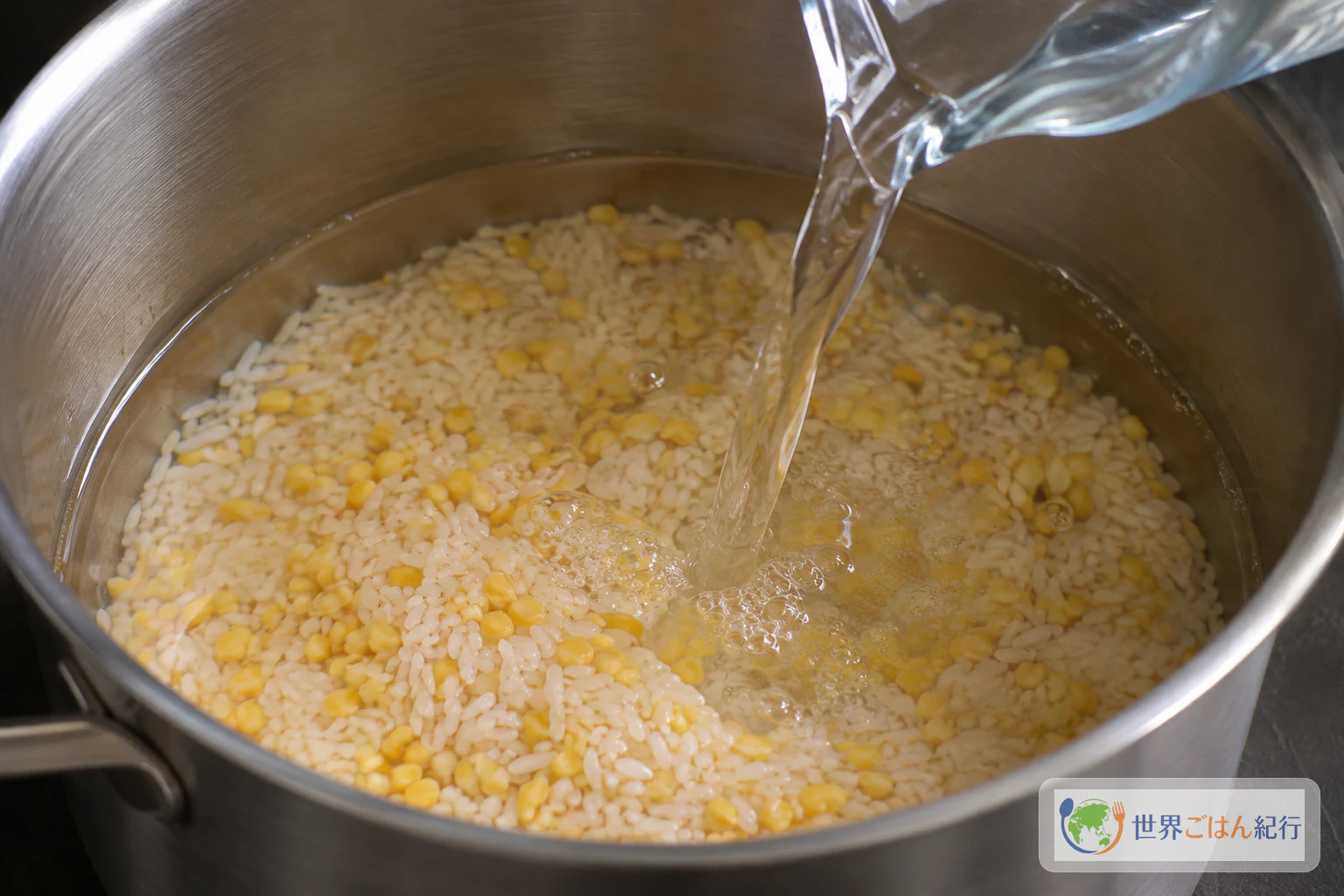
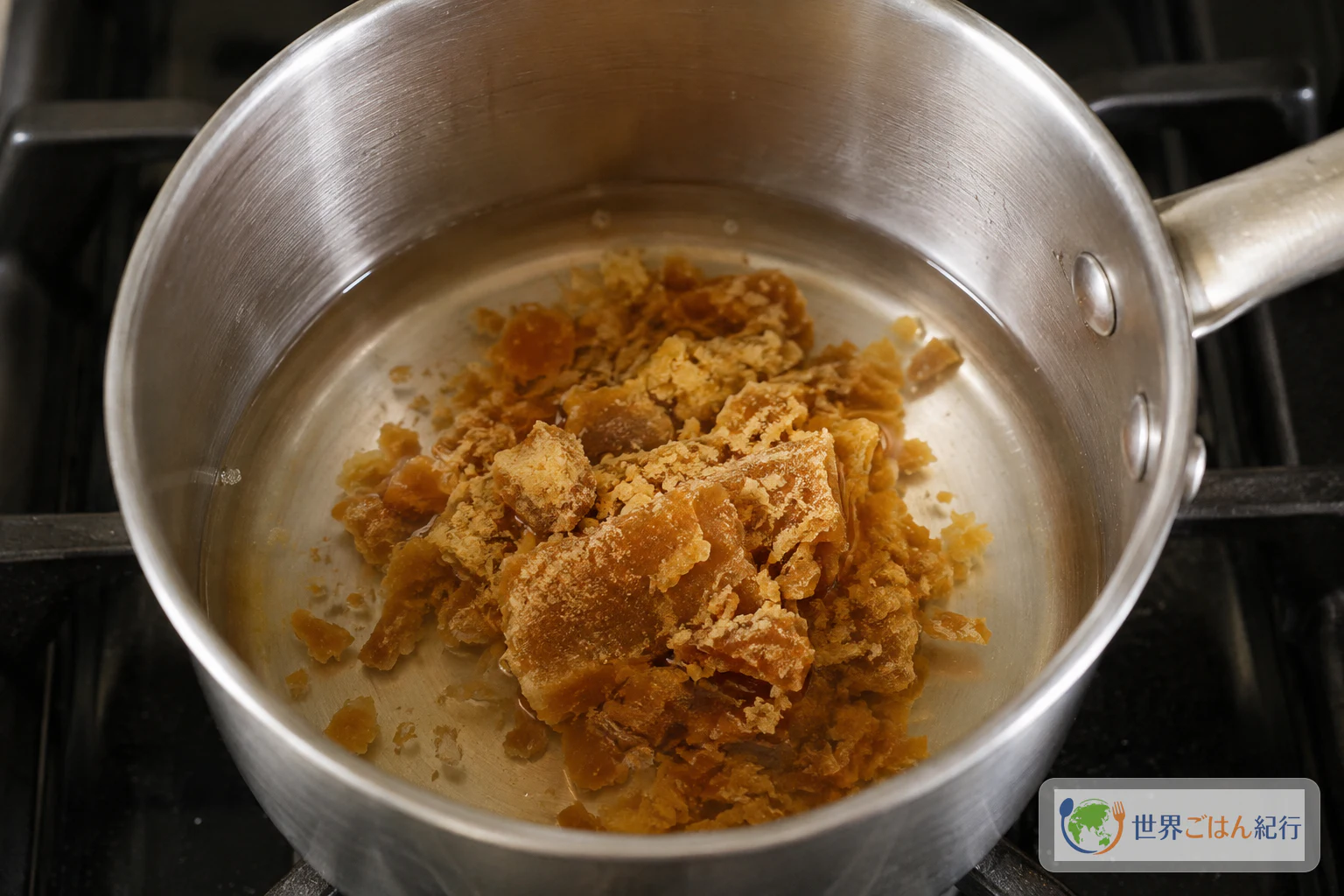
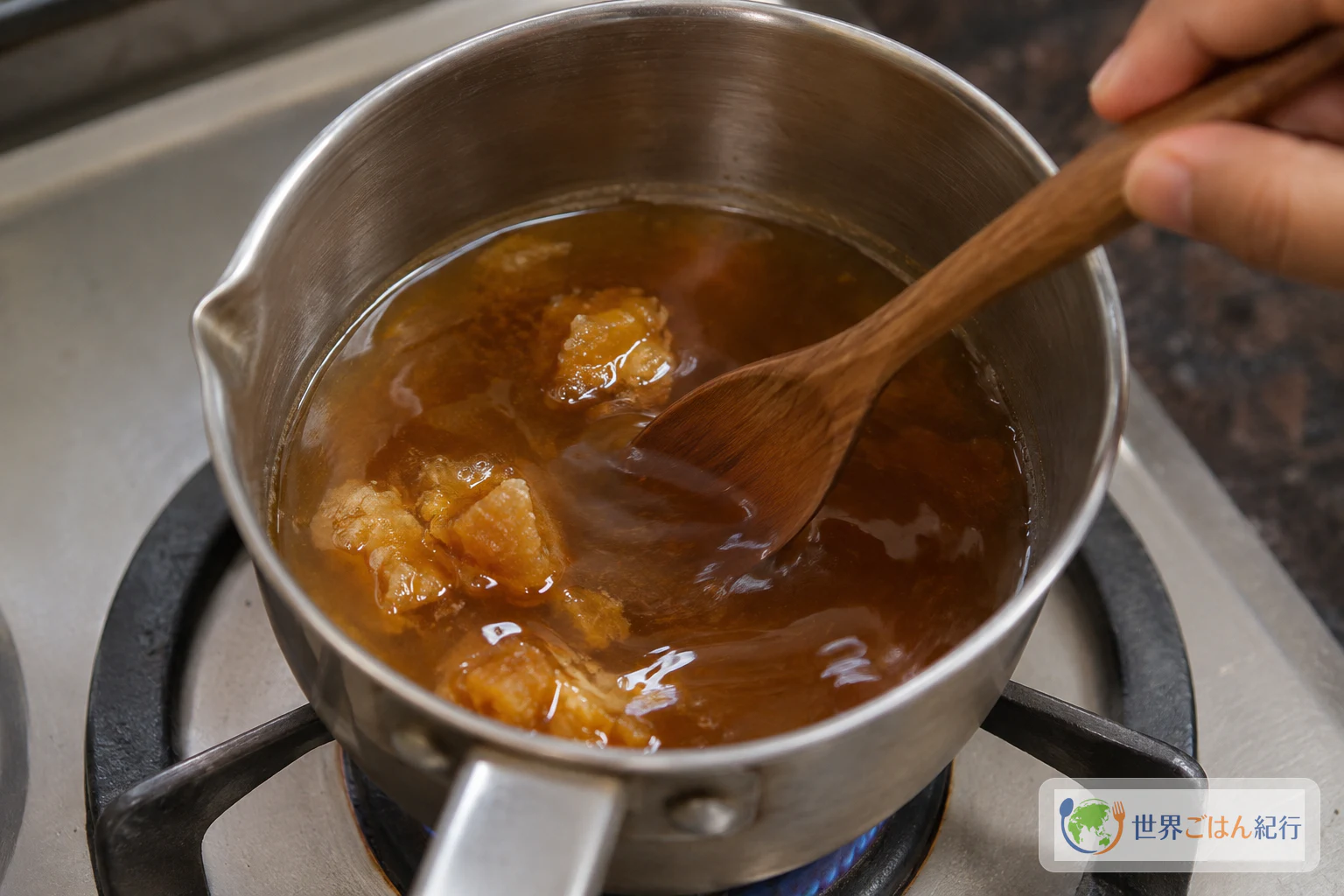
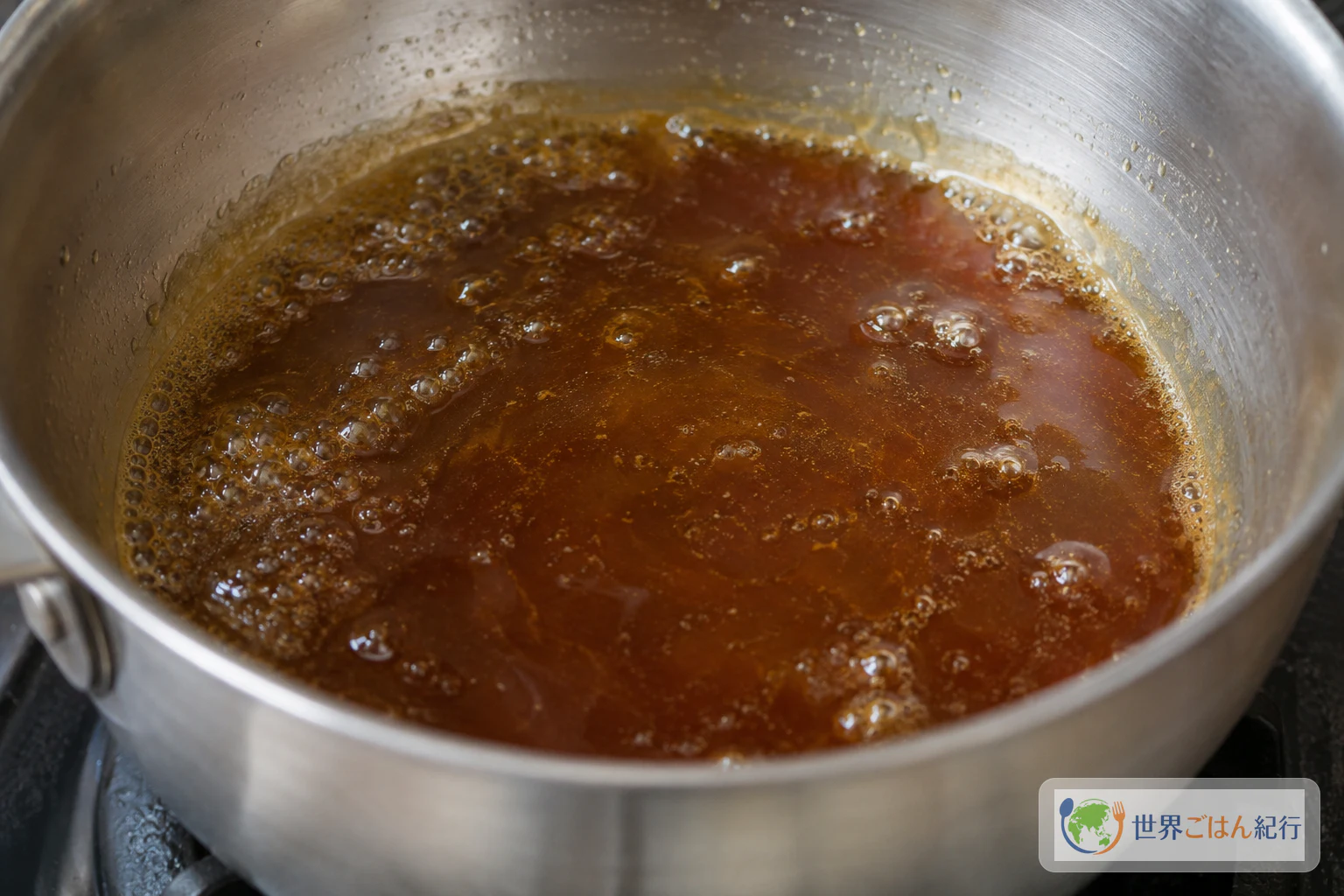
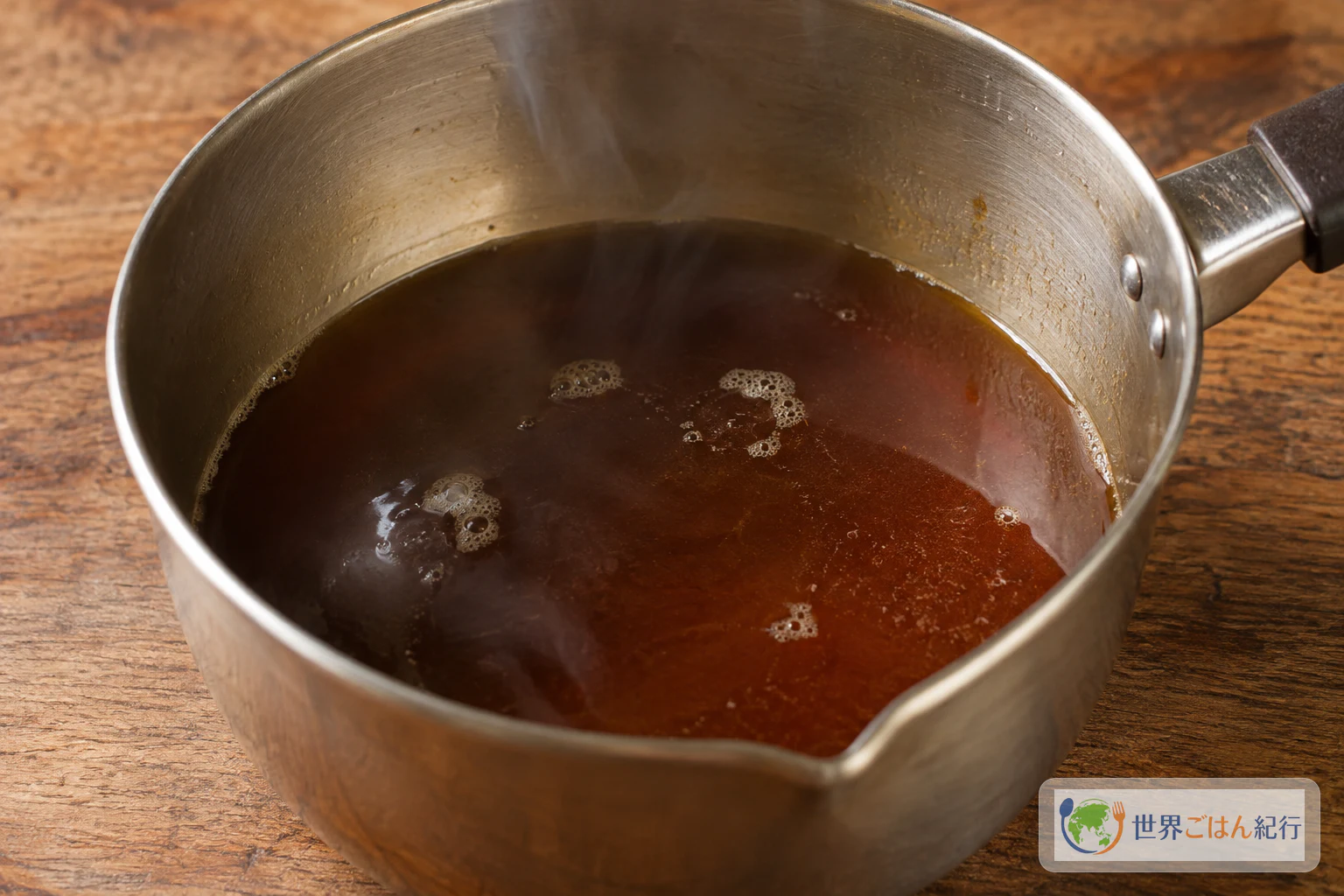
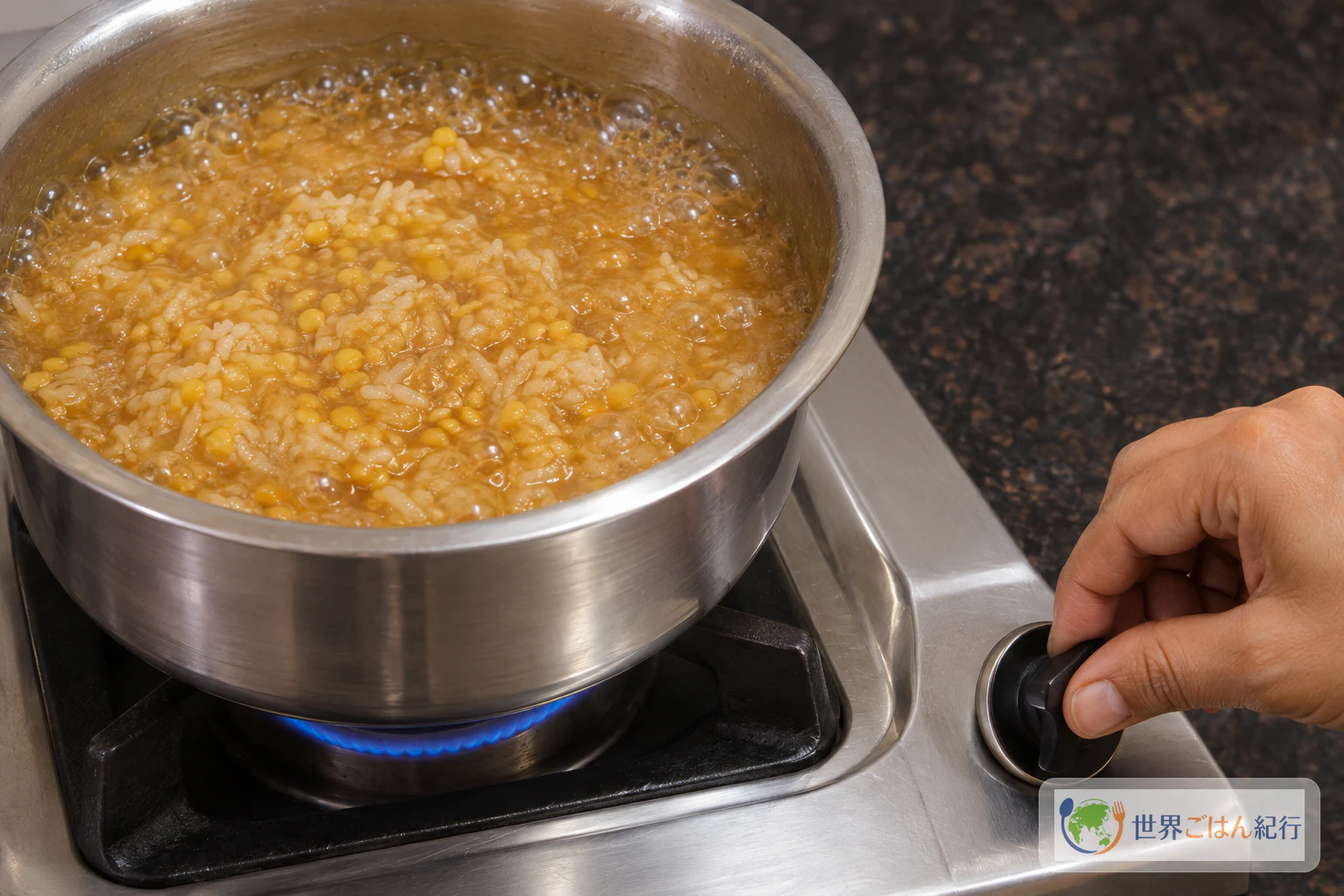
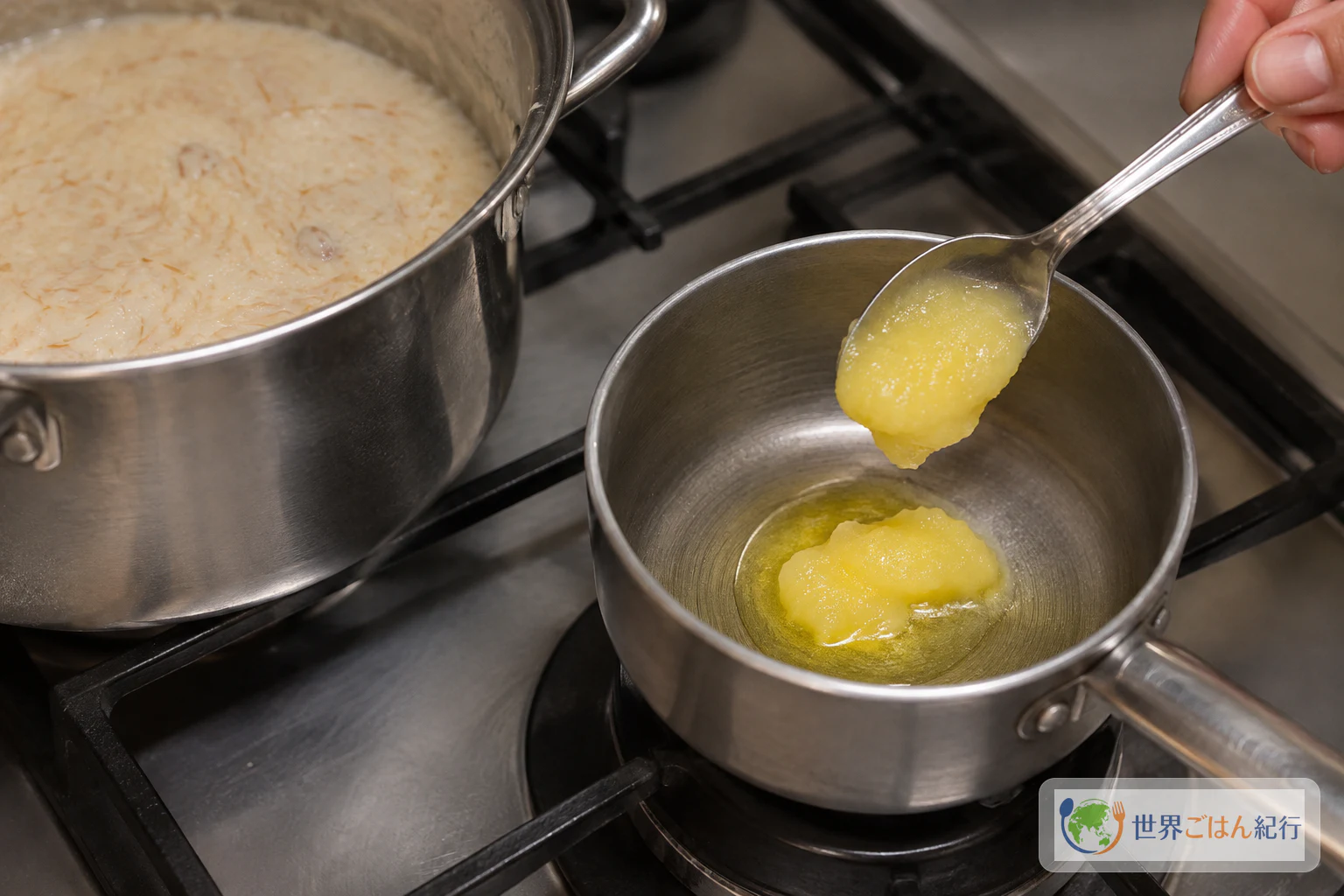
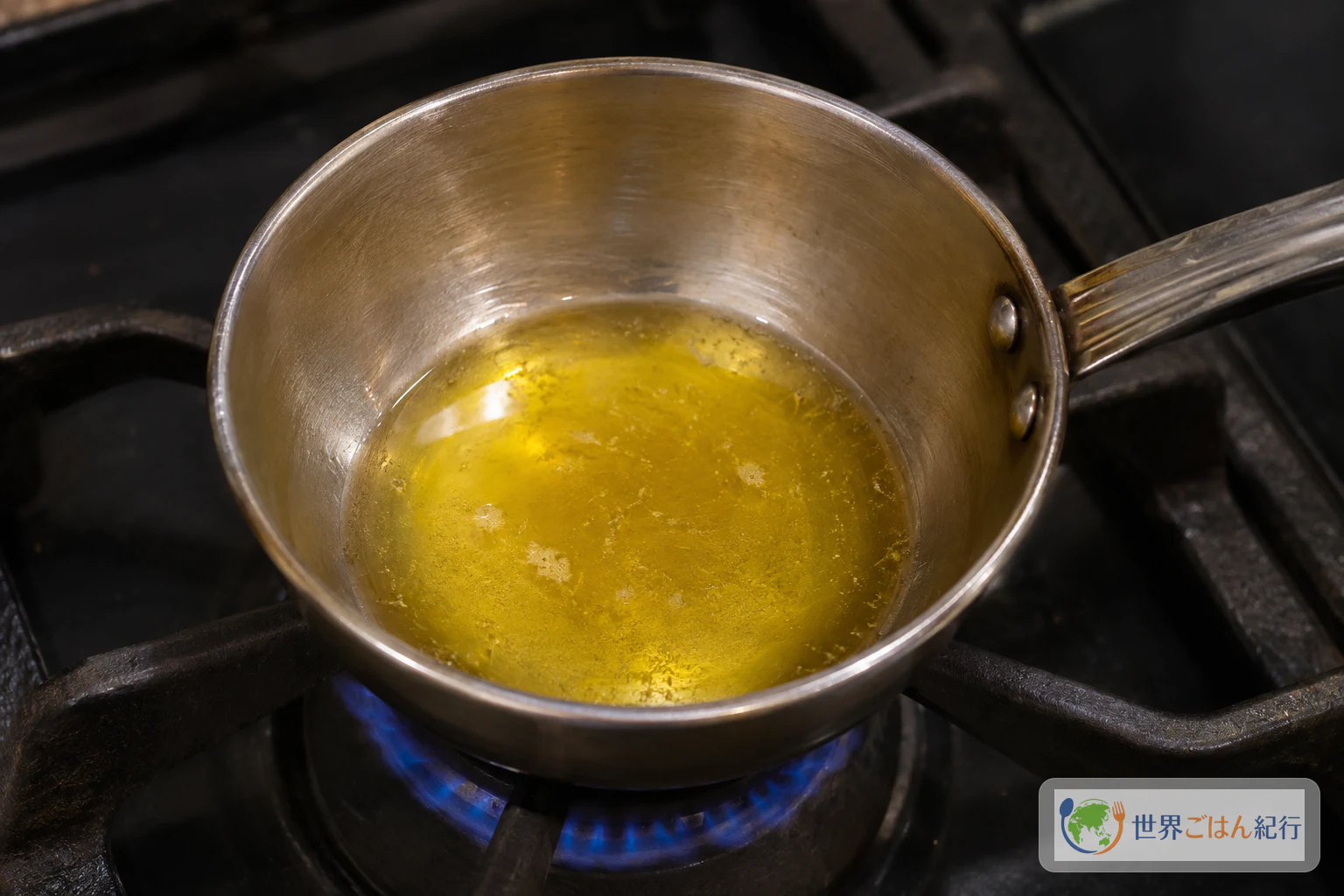
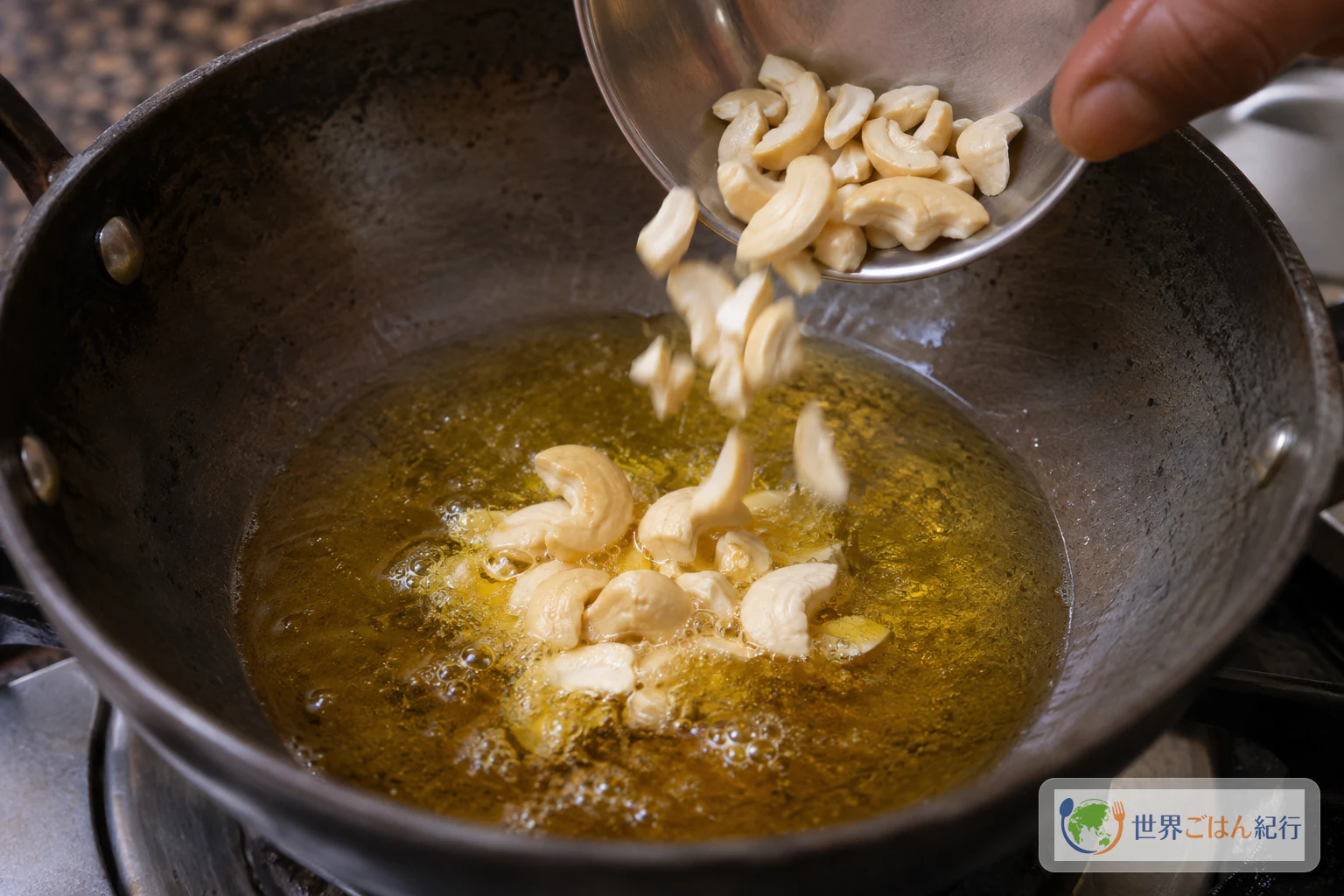
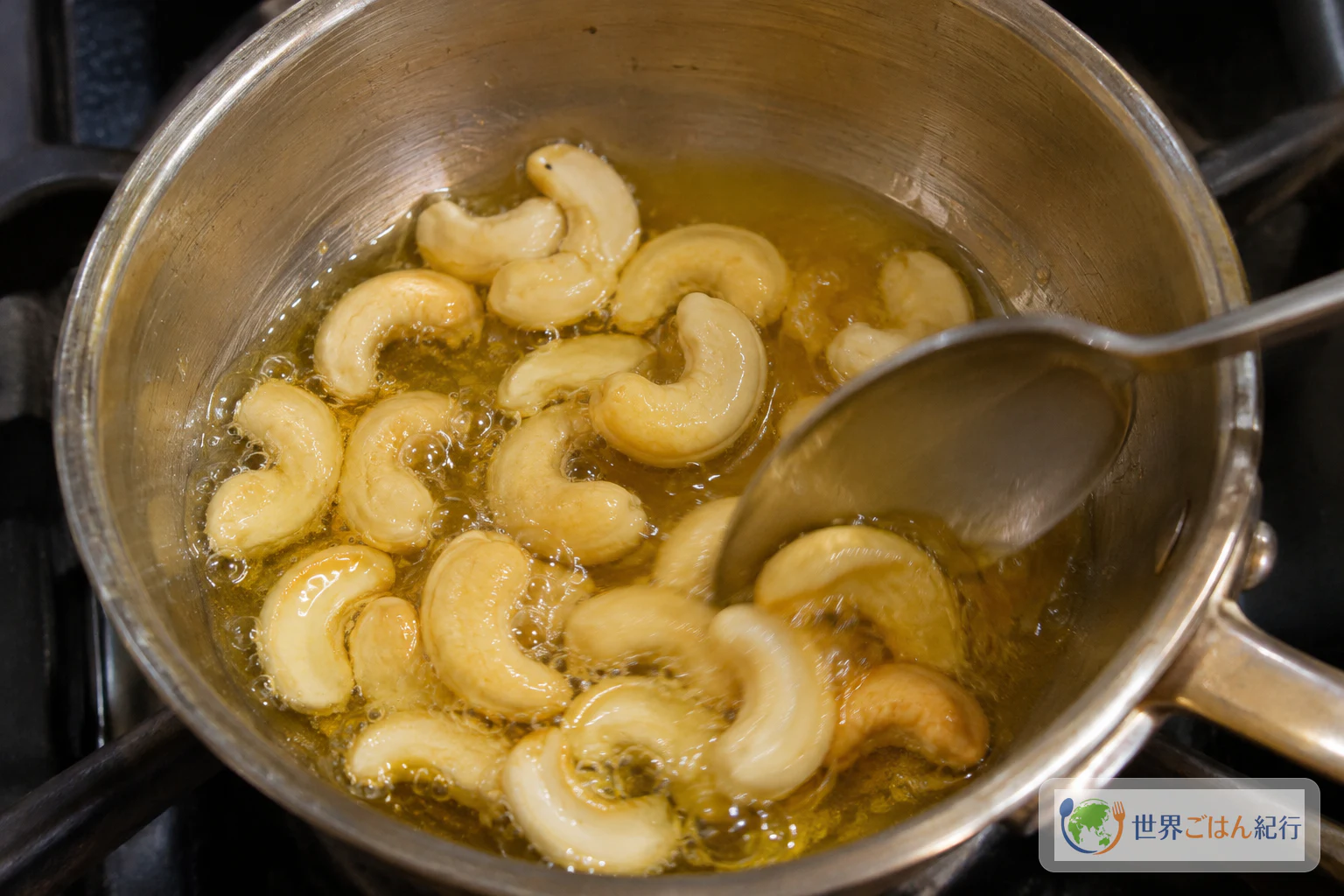
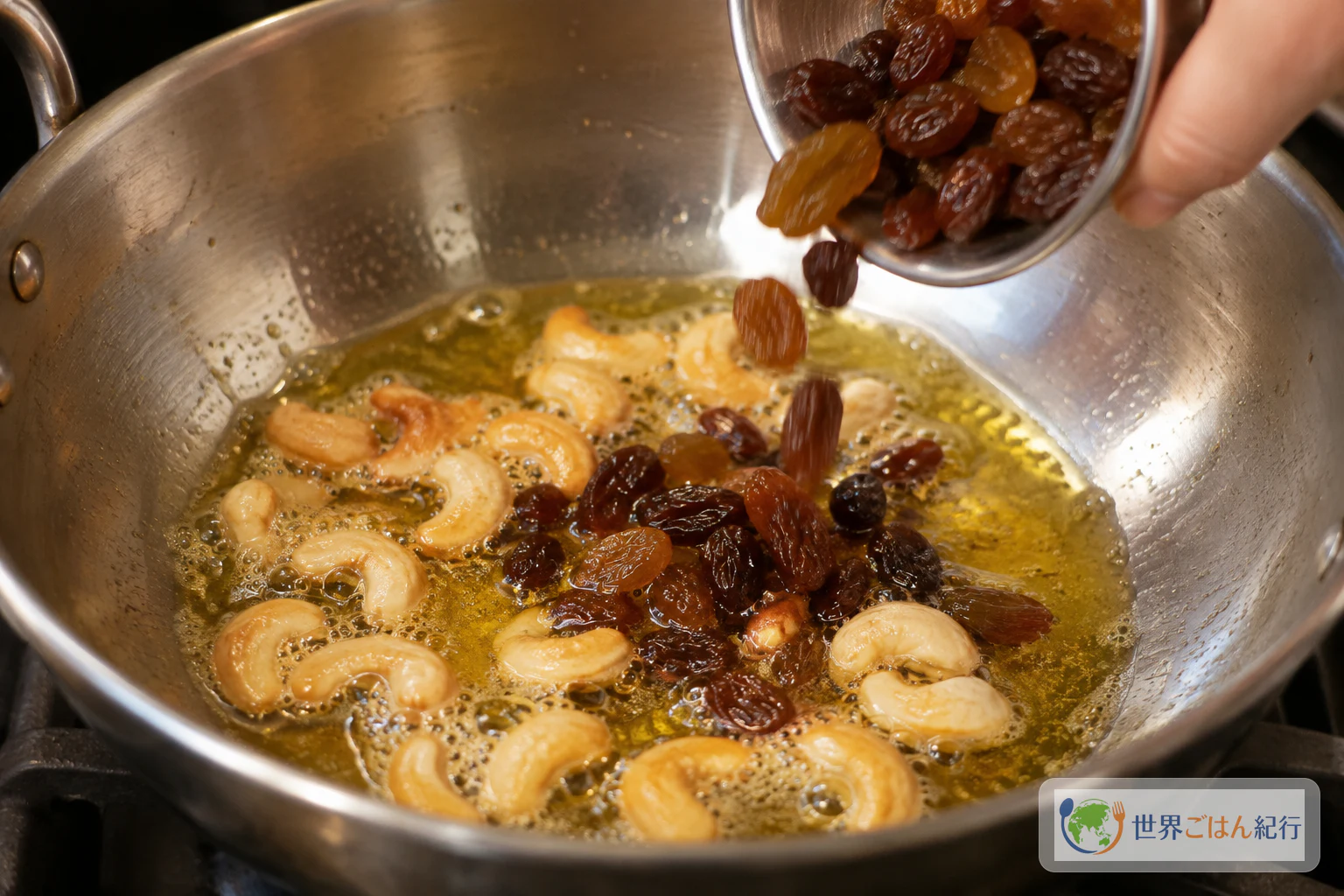
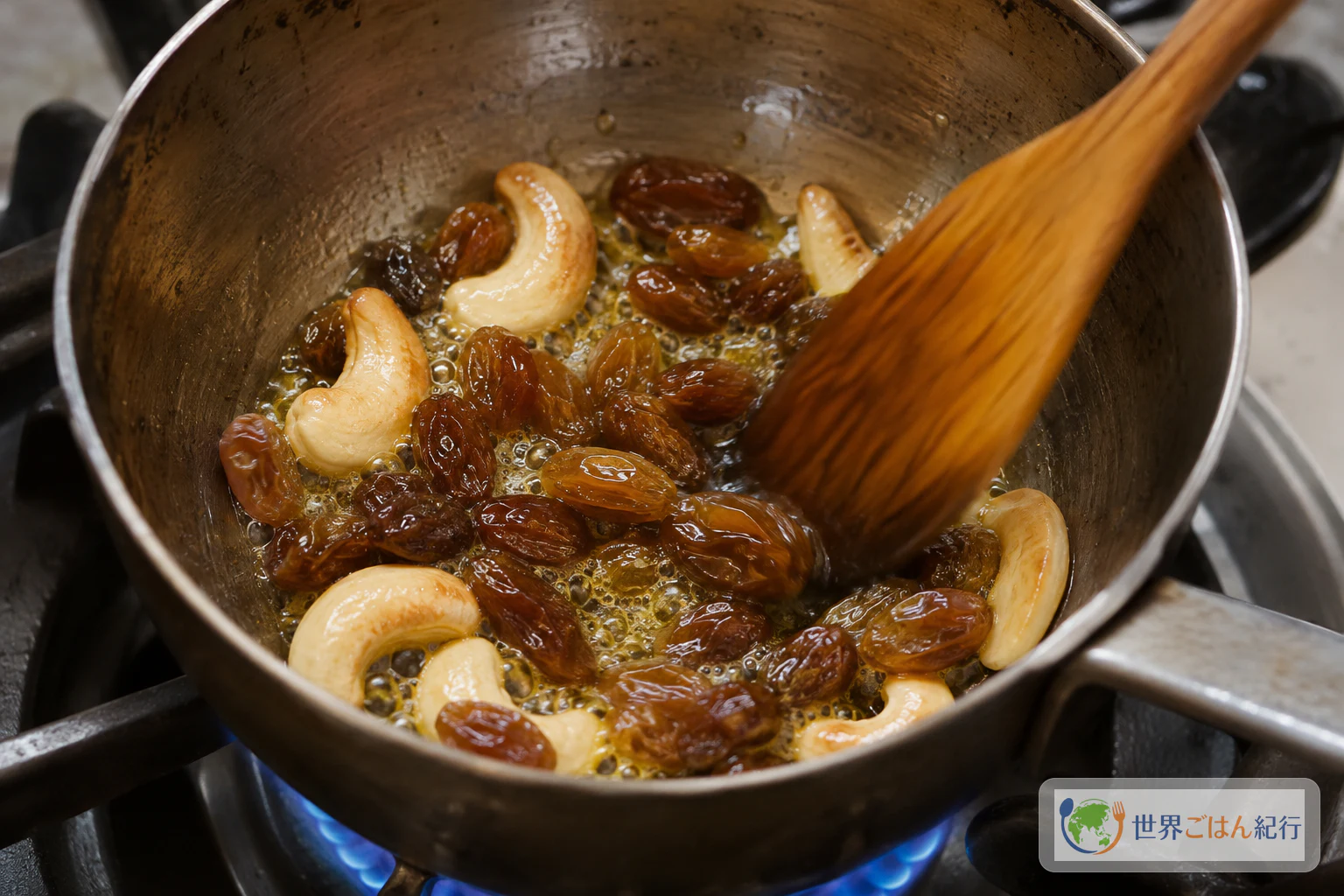
Pongal shares its name with a South Indian harvest festival, and SAVEUR describes this sweet dish in that setting, made with the season's new rice, jaggery, cashews and raisins. In a home kitchen, the same idea comes together in stages. Rice and yellow moong dal soften in a pressure cooker, dark jaggery syrup runs through a strainer into the pot, and golden ghee carrying cashews and raisins goes in last.
This article covers the sweet form, known as Sakkarai Pongal, Chakkara Pongali or simply sweet Pongal. It is a different dish from savory Ven Pongal, even though the names are close.
The recipe follows the traditional pressure-cooker method from Swasthi Shreekanth of Swasthi's Recipes, cooked directly in the cooker with water only. It is a household recipe and describes itself within a range of regional and household variation, so it should not be read as a definitive Tamil temple standard.
A few limits are worth knowing before you start:
- Time and yield: Swasthi's recipe card estimates 4 servings, 10 minutes of preparation, 45 minutes of cooking and 55 minutes in total. These are estimates, not measured or guaranteed values.
- Roasting time: Swasthi's written guide gives 5–6 minutes for roasting the dal and the card gives 5–7, so the steps below rely on aroma and color instead.
- Testing: Sekai Gohan has not kitchen-tested this version.
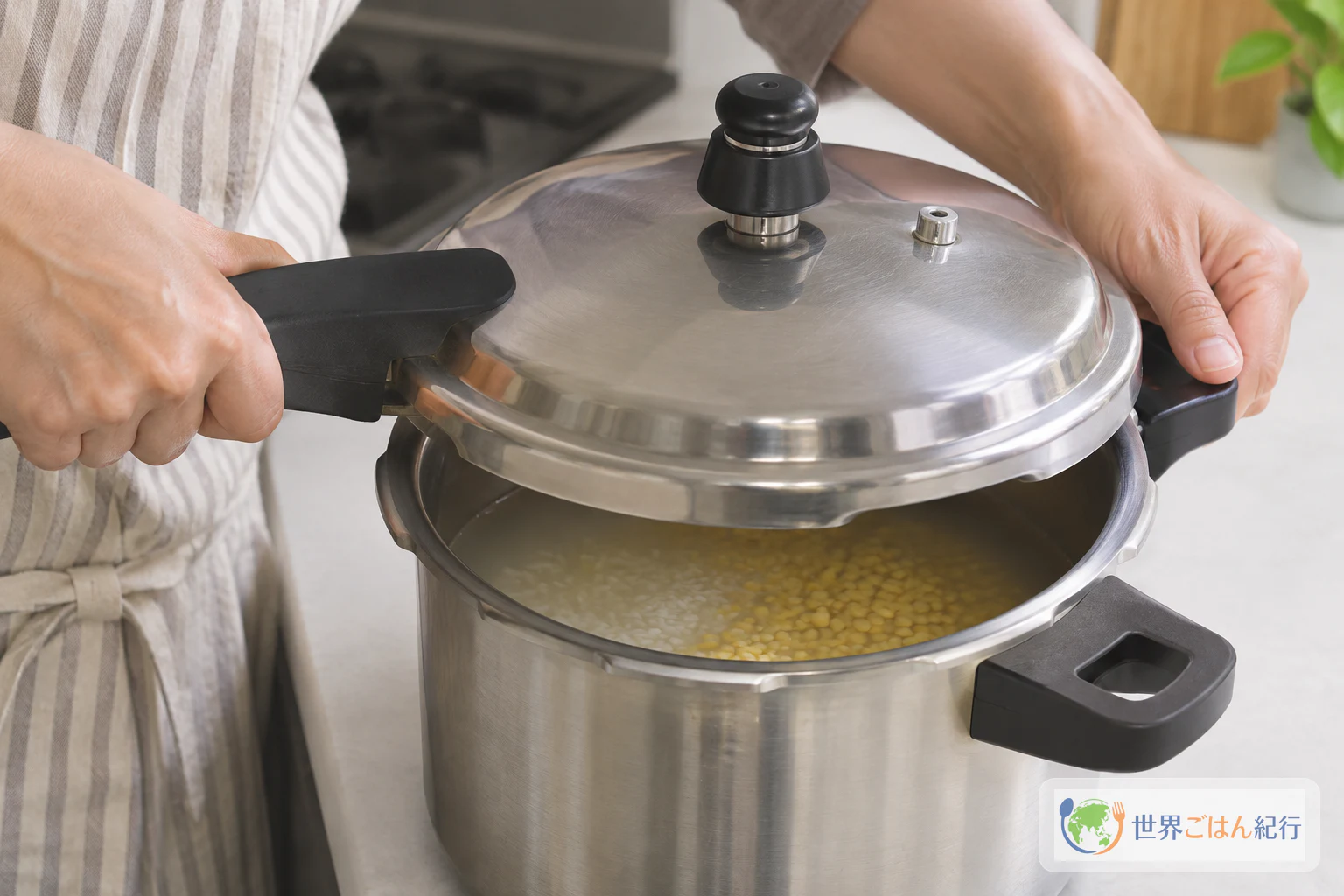
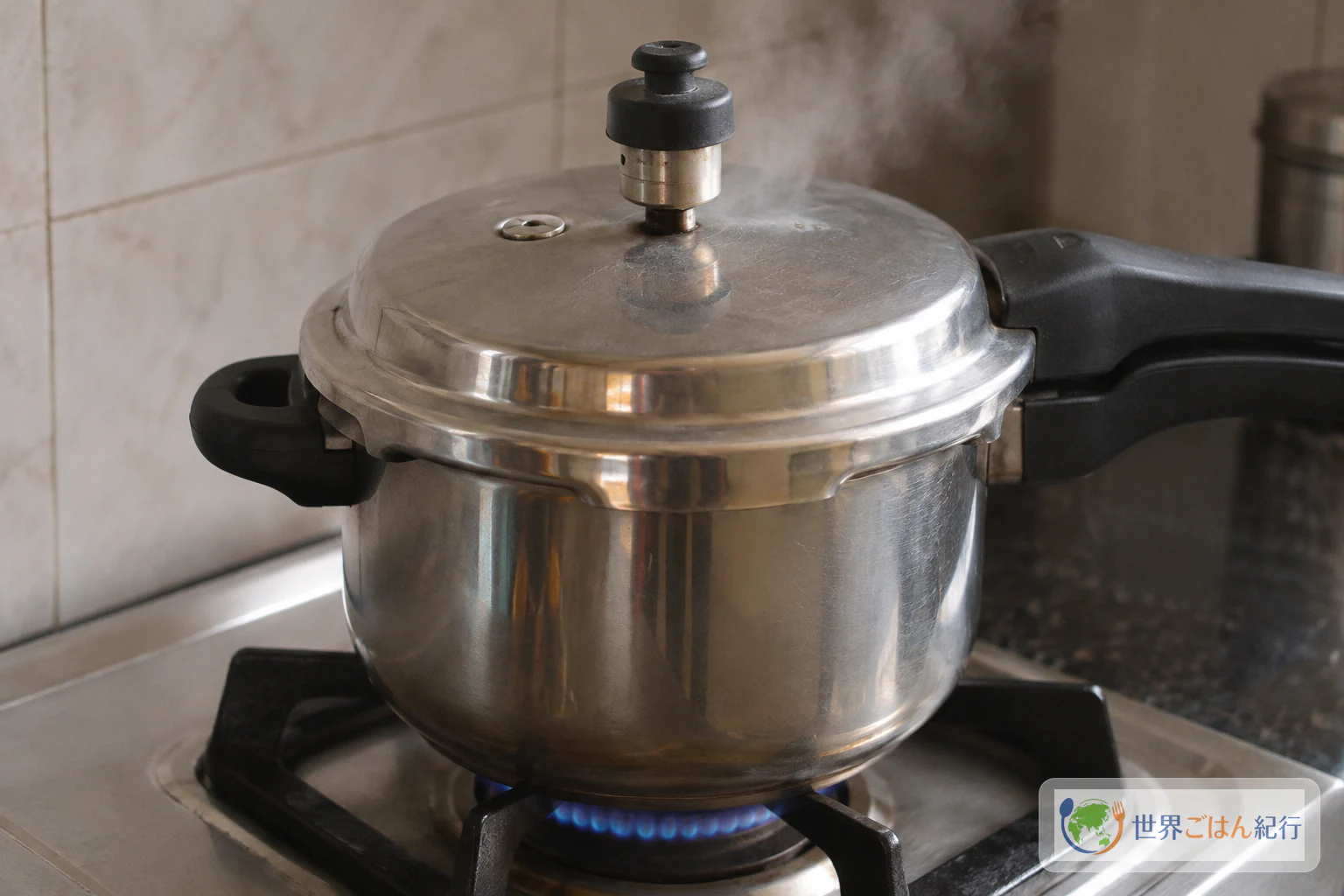
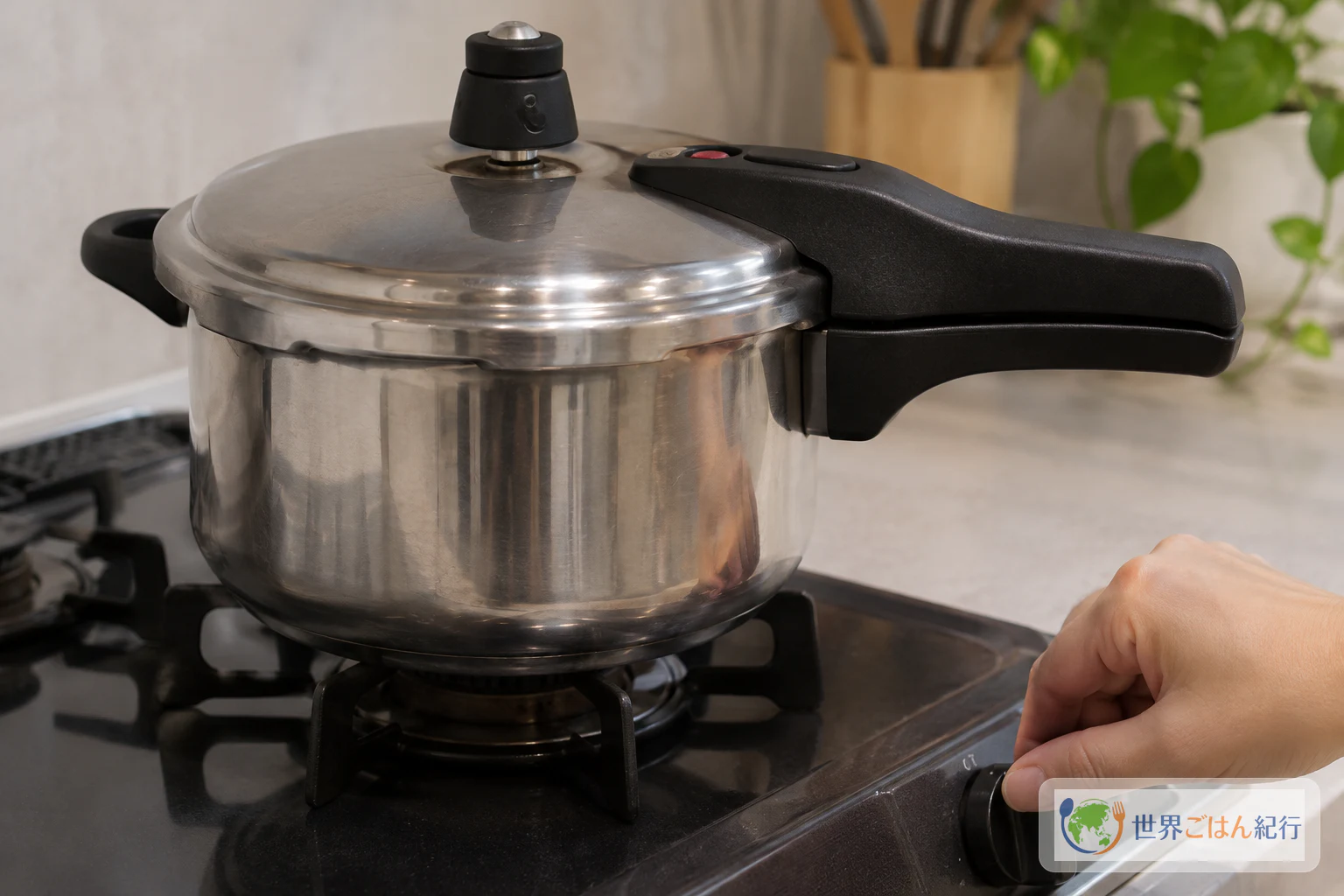
- Photos: They illustrate each stage. They do not prove amounts, timing, temperature or food safety.
For more dishes from the same country, browse Indian recipes.
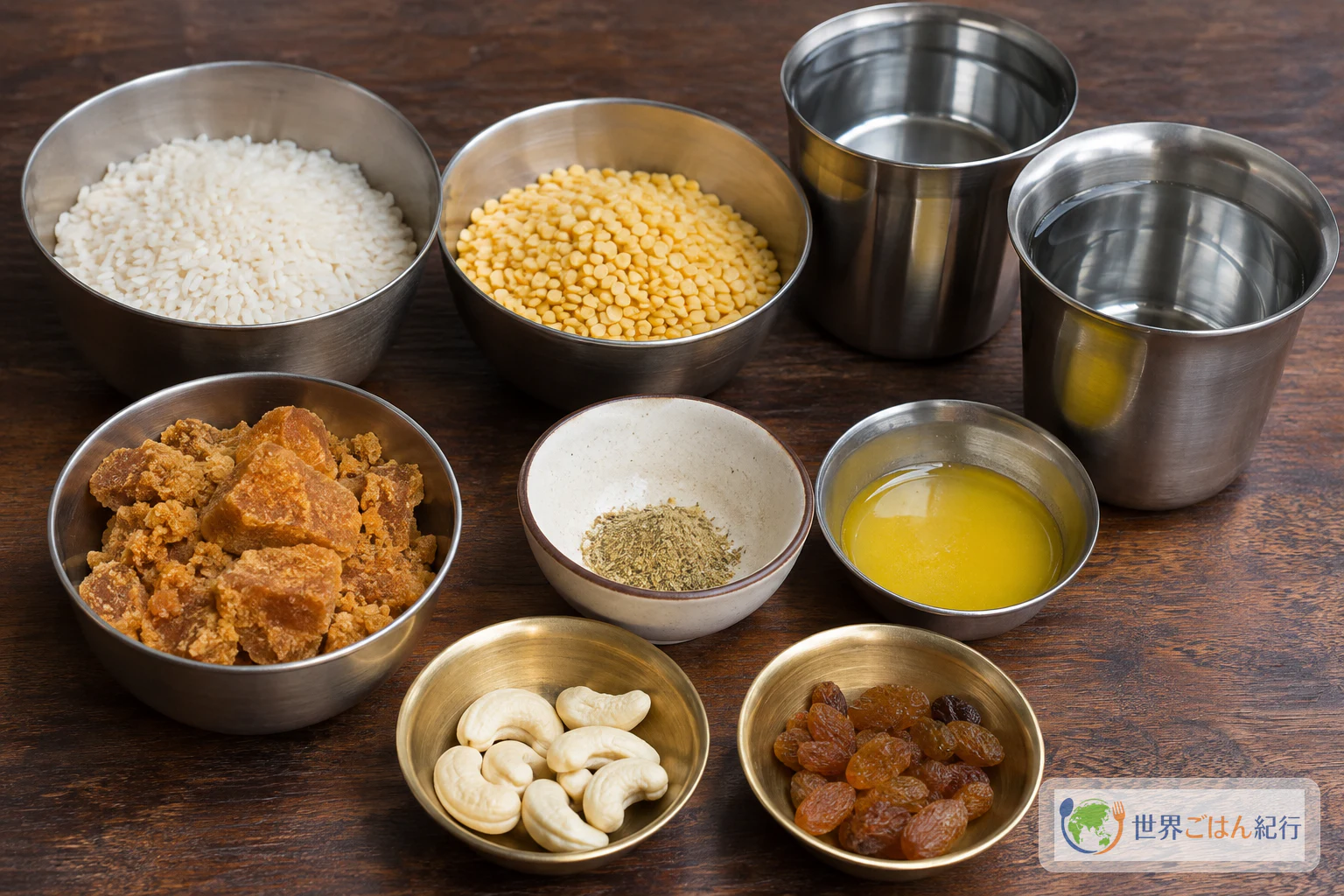
Ingredients for an Estimated 4 Servings
Equipment
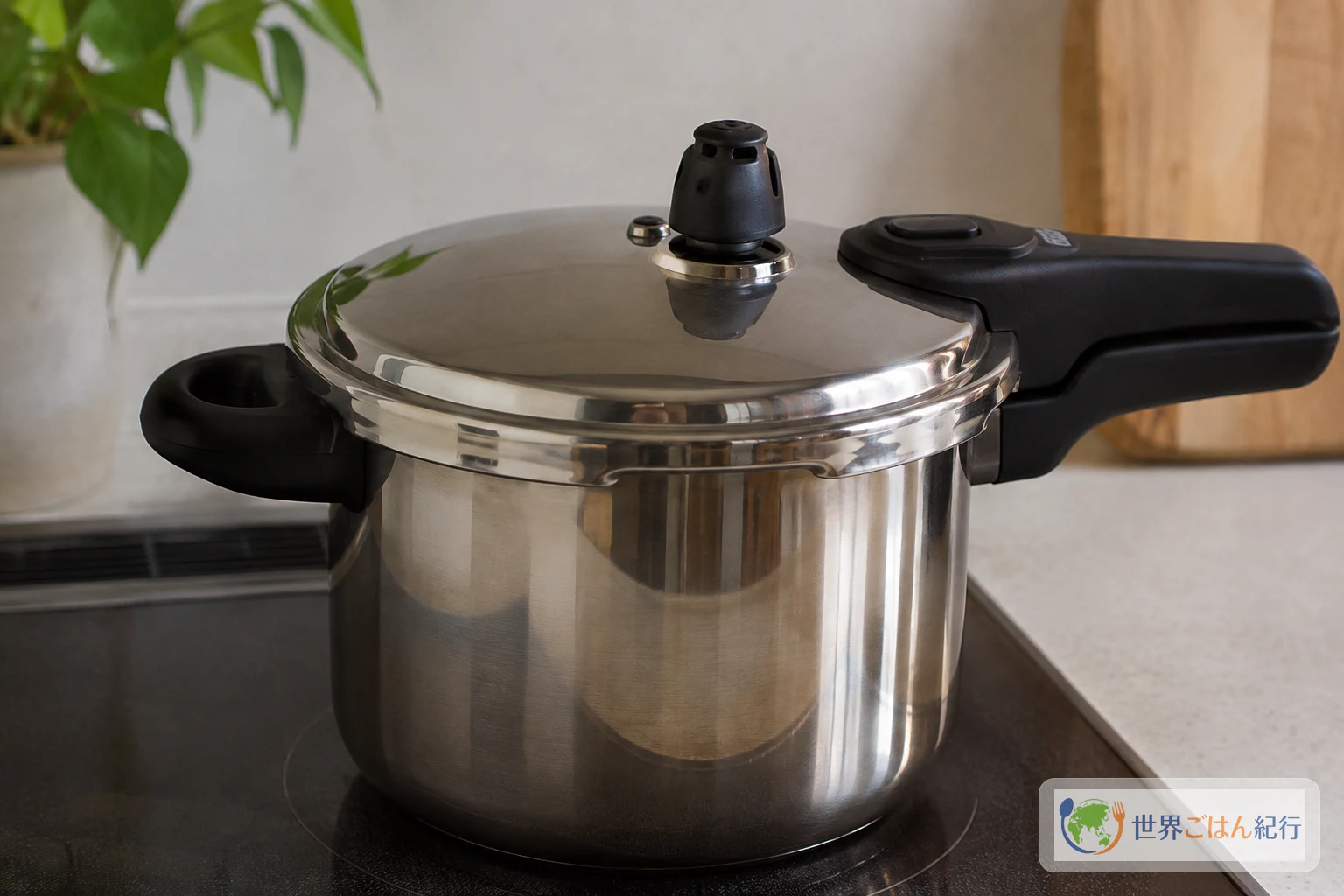
- Compatible commercial pressure cooker
- Heavy pot, if you prefer not to roast the dal in the cooker
- Grater
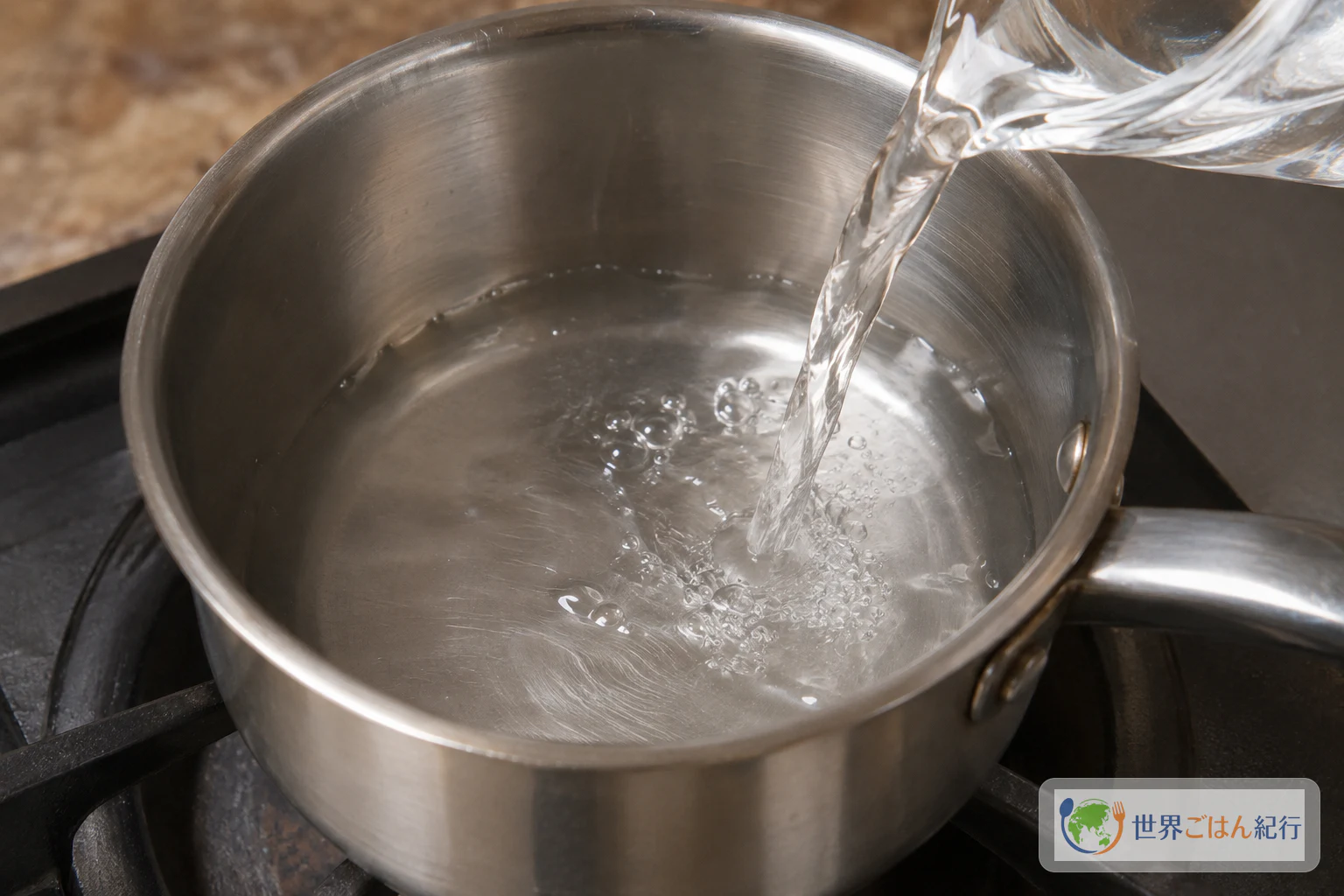
- Small saucepan for the syrup
- Strainer
- Small pan for the ghee
- Spoon or flat spatula
- Serving bowls
Choosing What to Buy
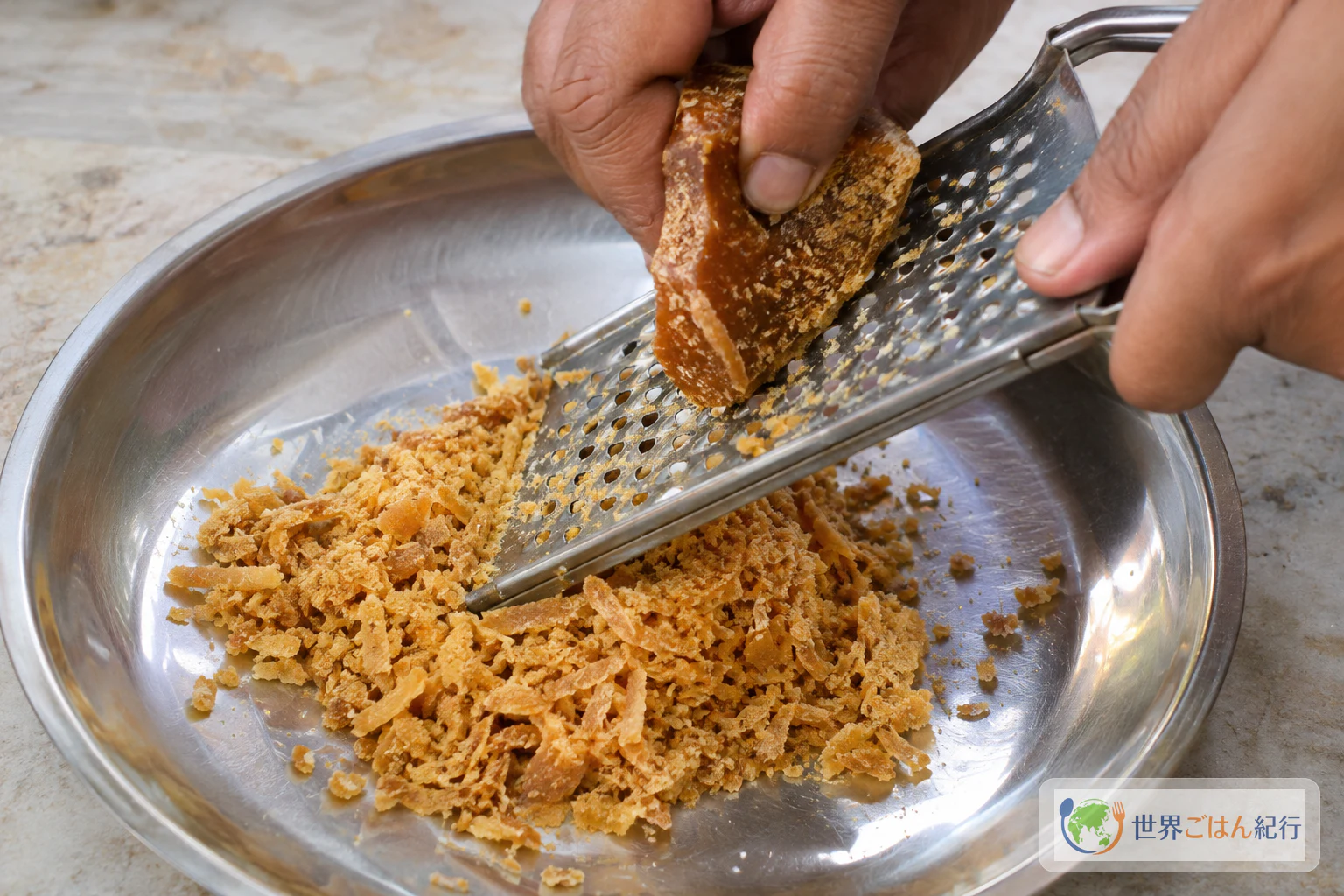
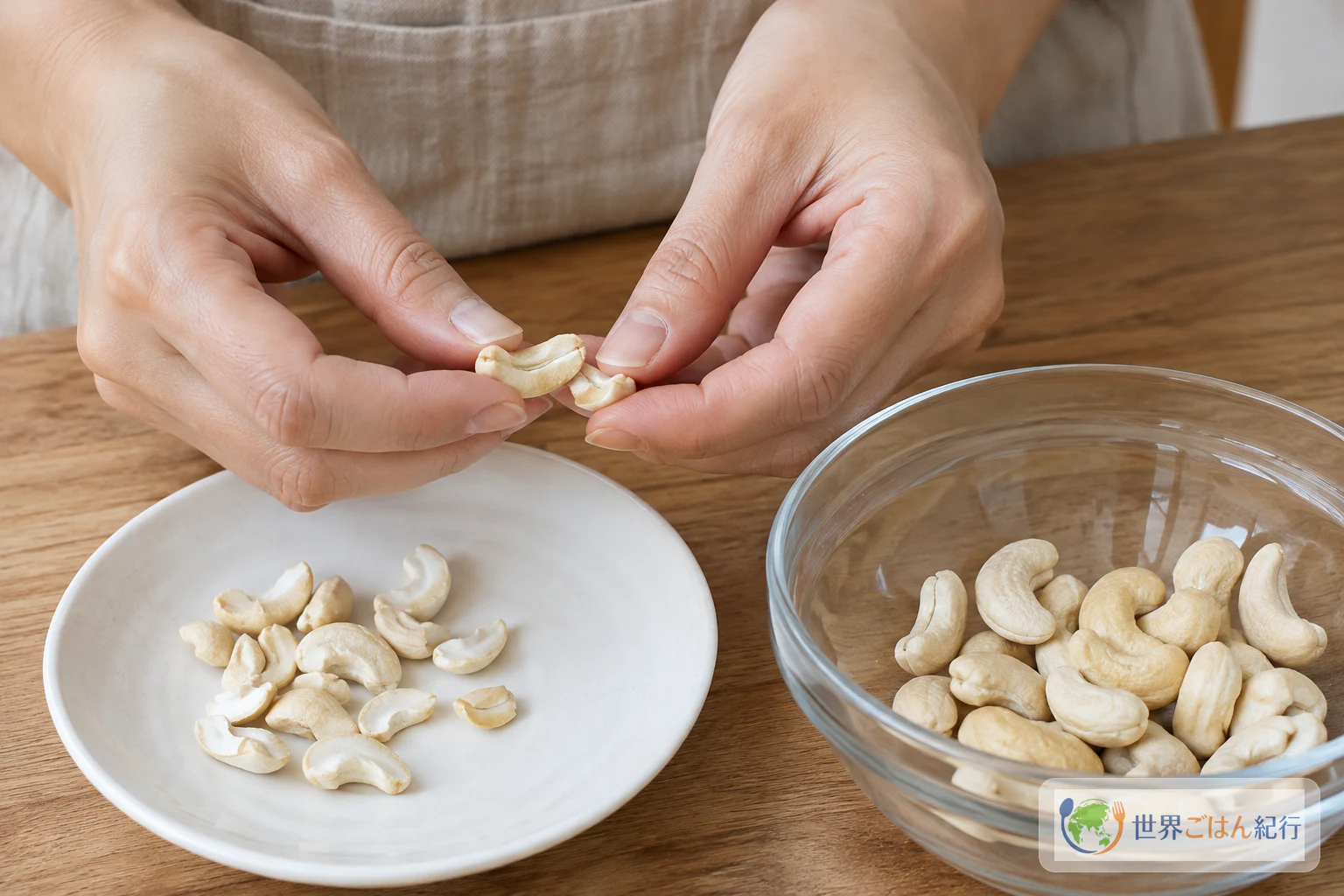
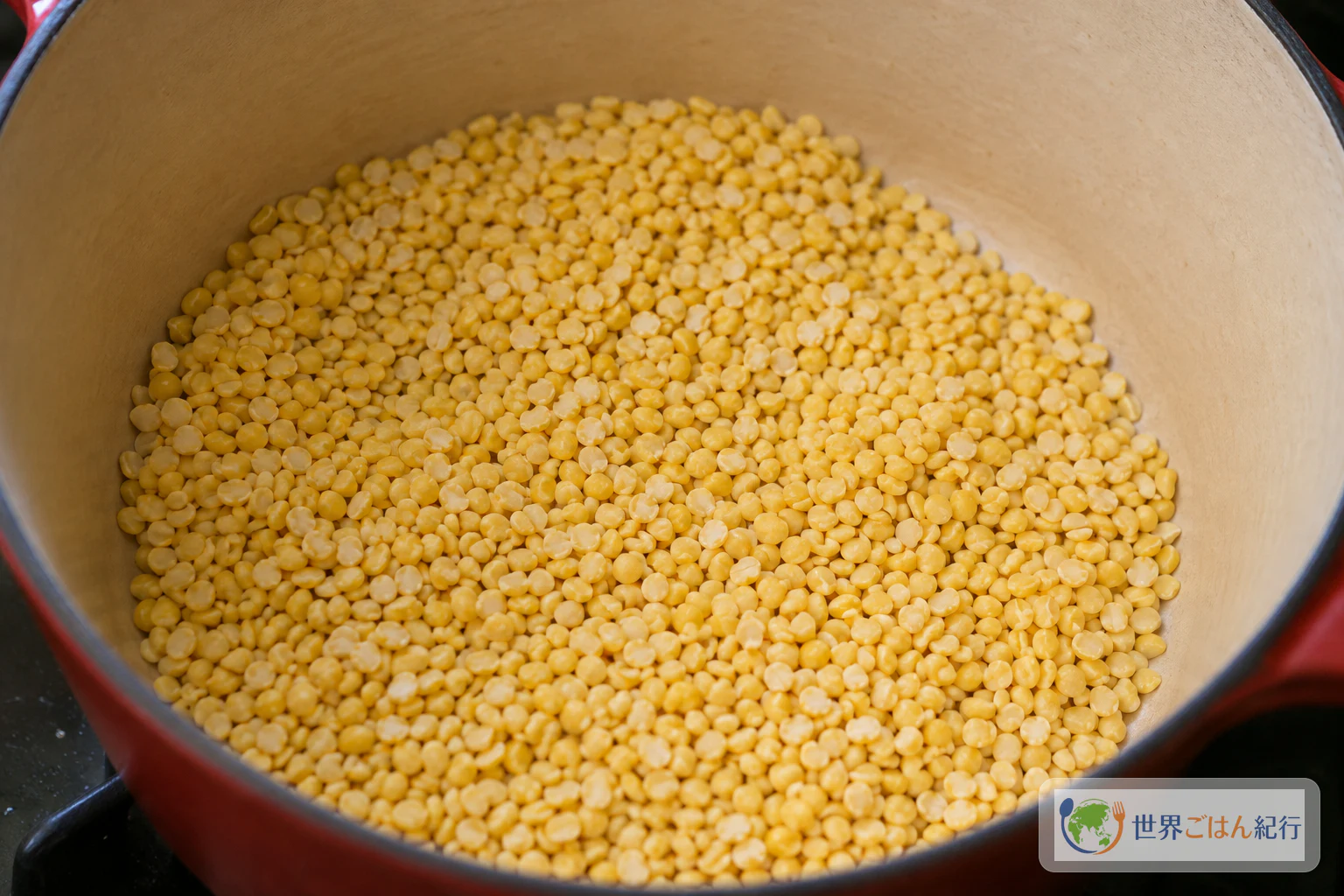
Buy food-grade commercial jaggery, split skinned yellow moong dal and ghee. For the cashews, choose shelled, unsalted kernels; this method does not include shelling raw cashews.
We have not confirmed Japanese short-grain rice as an equivalent for this version.
We offer no confirmed substitutions. Brown sugar, other beans and butter are not treated as equivalents of jaggery, moong dal and ghee.
Method: From Roasted Dal to a Hot Bowl
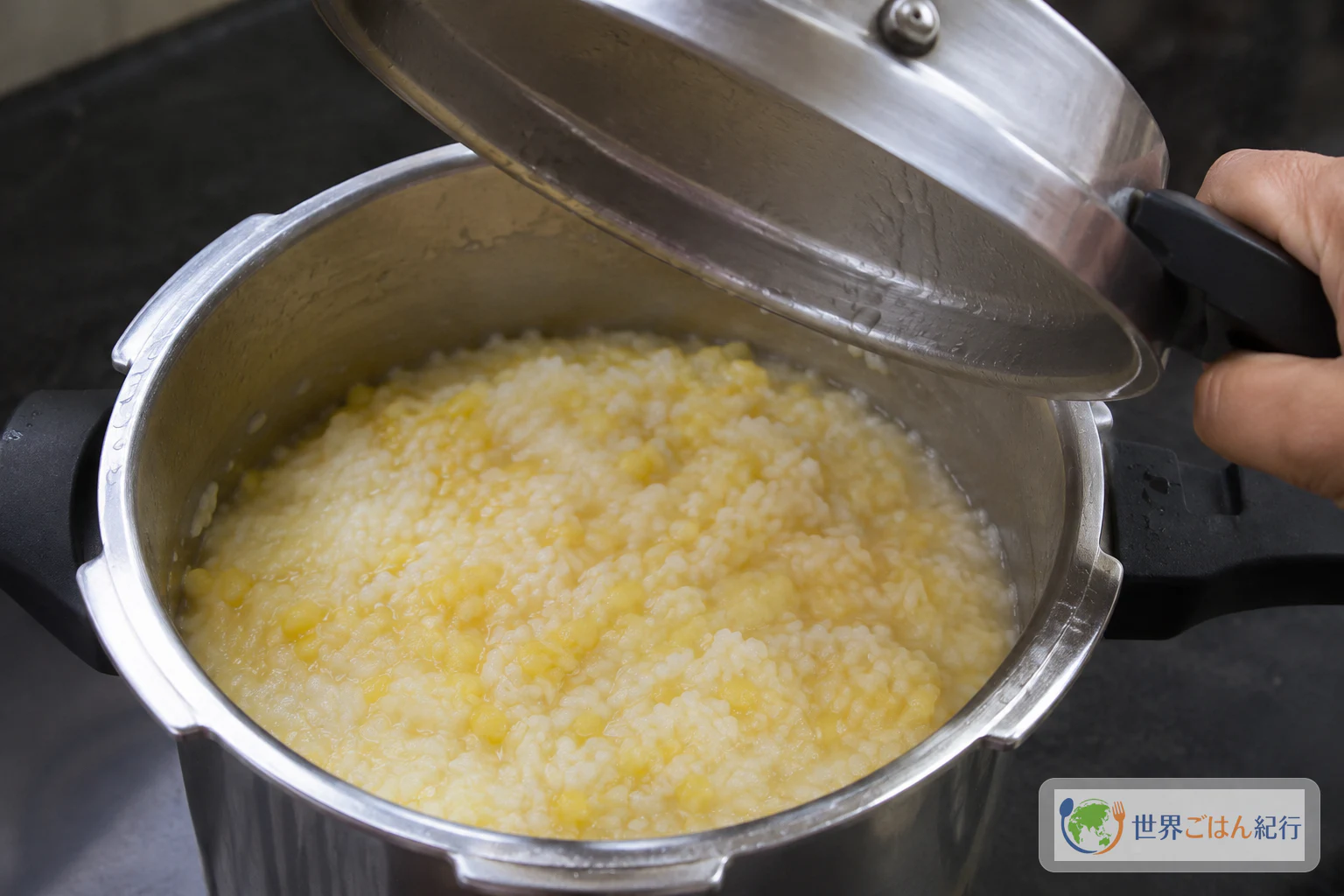
Use a compatible commercial pressure cooker and follow its manufacturer's instructions for pressure pulses, capacity limits and safe operation. Never open the cooker until all pressure has been released safely. Do not improvise a rapid release or operate the valve by hand.
Fixing Problems Along the Way
These checks use the signs in the method. They help you decide what to do next, but they do not guarantee a result.
| What you notice | What to look at | What to do |
|---|---|---|
| The dal is starting to brown | The target is aromatic and slightly golden, not brown | Stop roasting and move on before it darkens further |
| Your cooker doesn't behave as "3 whistles" suggests | Whistle counts don't convert to cycles or minutes | Follow your manufacturer's instructions. We don't have a time conversion to offer |
| The lid won't open easily | Pressure may not be fully released | Don't force the lid or operate the valve. Keep waiting and follow the manufacturer's safety procedure |
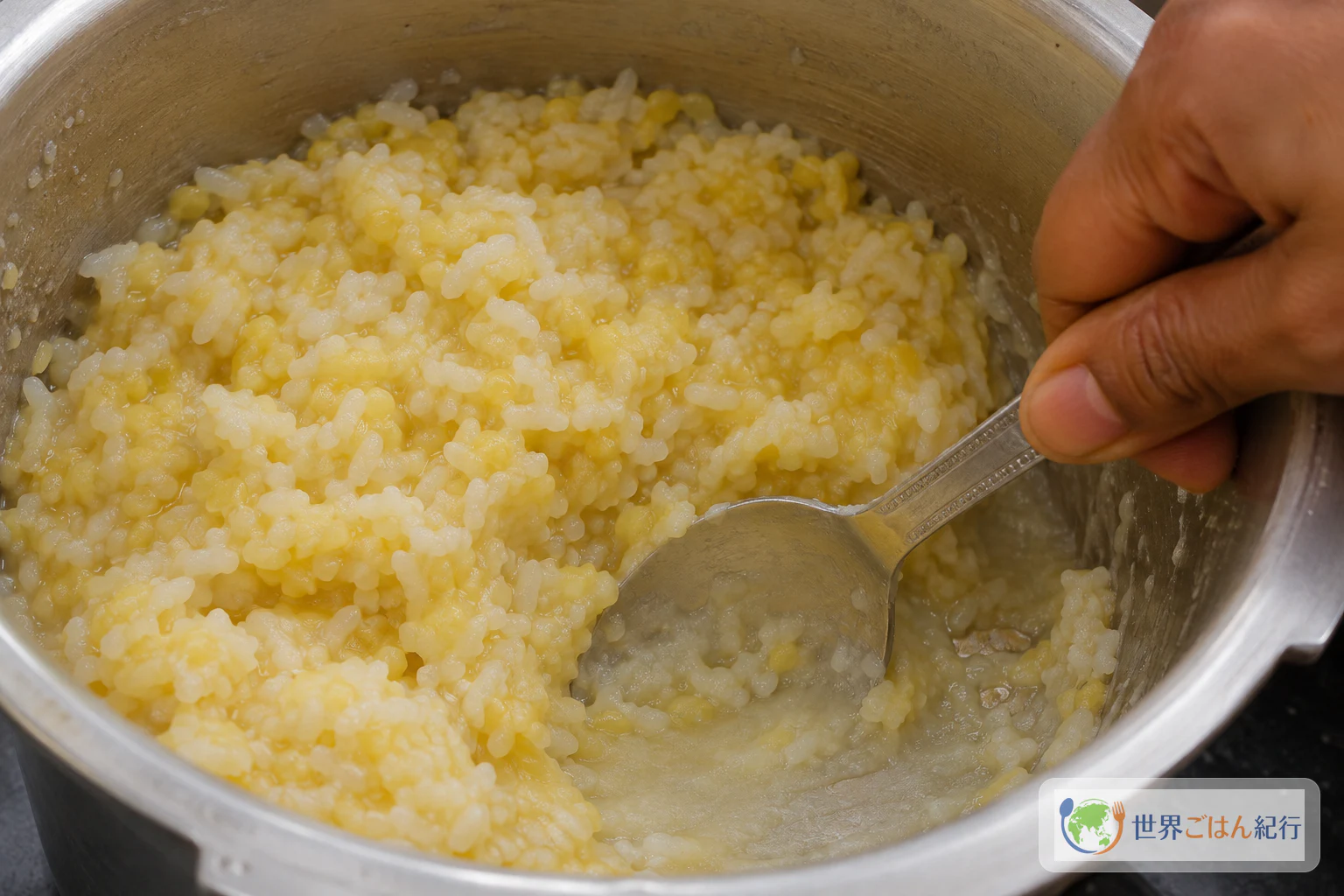
| The rice and dal aren't fully soft after opening | They need to be fully soft before mashing | Don't add the syrup yet. Check your manual before cooking under pressure again; we have no extra time to suggest |
| The syrup is close to forming strings | It should be slightly thick and sticky, not string consistency | Take it off the heat and set it aside |
| The cashews are darkening quickly | The target is light golden | Add the raisins as soon as the cashews reach light gold, and don't wait longer |
| The raisins haven't plumped | They plump while frying on the heat | Keep the pan on the heat until they do, then turn it off |
Variations: Ranges and a Different Formula
Swasthi's card gives ranges for three ingredients, and this version uses the lower end of each. The 220 g of jaggery falls within the 220–240 g that Swasthi gives for a tightly packed cup:
| Ingredient | Range on Swasthi's card | Used here |
|---|---|---|
| Jaggery | 1 tightly packed cup (220–240 g) | 220 g |
| Ground green cardamom | 1/2–3/4 tsp | 1/2 tsp |
| Ghee | 2–3 tbsp | 2 tbsp |
Swasthi's card also lists 3 cups of water plus 1 cup of milk as an alternative to 4 cups of water. This version stays water-only.
SAVEUR's recipe shows how widely the dish can vary. It is a separate formula, so treat it as a comparison and don't swap single amounts between the two.
| Element | This version | SAVEUR's Sakkarai Pongal |
|---|---|---|
| Rice | 3/4 cup, variety not named | 1 cup, long-grain |
| Moong dal | 1/2 cup | 1/4 cup |
| Liquid | 4 cups water, plus 1/2 cup water for syrup | 4 1/2 cups cooking water and 3 cups milk |
| Jaggery | 220 g | 1 1/4 cups |
| Ghee | 2 tbsp | 1/4 cup |
| Cardamom | 1/2 tsp | 2 tsp |
| Cinnamon | None | 1 stick |
| Cashews | 15 | 1/2 cup |
| Raisins | 2 tbsp | 3 tbsp |
Festival, Household and Temple: What We Can and Can't Say
SAVEUR connects Sakkarai Pongal to the South Indian harvest festival of Pongal and describes it as made with the season's new rice, jaggery, cashews and raisins. Swasthi's recipe presents a household version and describes regional and household differences. Together, they show a dish with a shared outline and no single fixed formula.
Temple practice is a separate question. The Tamil Nadu government's Hindu Religious & Charitable Endowments Department publishes a Prasadam Booking page with a list of temples, but that page does not establish Pongal as a listed food. For that reason, we make no claim here about temple recipes or customs, and we offer no explanation of the name's origin.
Frequently Asked Questions
Is this the same as Ven Pongal?
No. Ven Pongal is savory, while Sakkarai Pongal is the sweet form covered here, made with jaggery, cardamom, ghee, cashews and raisins.
Is this the authentic temple recipe?
This is Swasthi Shreekanth's household recipe, not a definitive Tamil temple standard. Recipes differ by region and household.
What does "3 whistles" mean in minutes?
No minute figure is available. Swasthi's recipe says 3 whistles and doesn't specify a cooker model or elapsed time, so we keep the phrase as it is. It does not mean three pressure cycles. Follow your cooker manufacturer's instructions.
Can I use an electric pressure cooker or the pot-in-pot method?
This article covers only the traditional method, cooked directly in a pressure cooker. It gives no amounts or steps for electric cookers or pot-in-pot cooking.
Which rice should I use?
Swasthi's recipe doesn't name a variety. Long-grain rice appears only in SAVEUR's different recipe, so we don't carry that detail over. We also don't claim that short-grain rice is equivalent.
Can I replace the jaggery, moong dal or ghee?
We have no confirmed substitutions for this recipe. Brown sugar, other beans and butter are not treated as the same ingredients.
Can I store or reheat leftovers?
This article gives no storage or reheating guidance. The recipe is written for serving hot.
Sources
- Swasthi Shreekanth, Swasthi's Recipes, "Sweet Pongal (Chakkara Pongali, Sakkarai Pongal)." The basis for this recipe's amounts and method, including the 3-whistle instruction, ingredient ranges, estimated servings and times, and the description of household and regional variation. It is a household recipe, not a definitive Tamil temple standard, and it does not name a rice variety. https://www.indianhealthyrecipes.com/chakkara-pongal-recipe-andhra-sweet-pongal/
- SAVEUR, "Sakkarai Pongal (Tamil-Style Sweet Rice Pudding)," recipe credited to the August/September 2014 India issue and Akash Kapur's story. Used for the harvest-festival context and as a comparison showing a different formula. None of its amounts or methods are used in this recipe. https://www.saveur.com/article/recipes/sakkarai-pongal-tamil-style-sweet-rice-pudding/
- Government of Tamil Nadu, Hindu Religious & Charitable Endowments Department, "Prasadam Booking." An official temple-list page only. It does not establish Pongal as a listed food and does not support any recipe or temple-food claim. https://hrce.tn.gov.in/hrcehome/service_prasadcolltemplelist.php