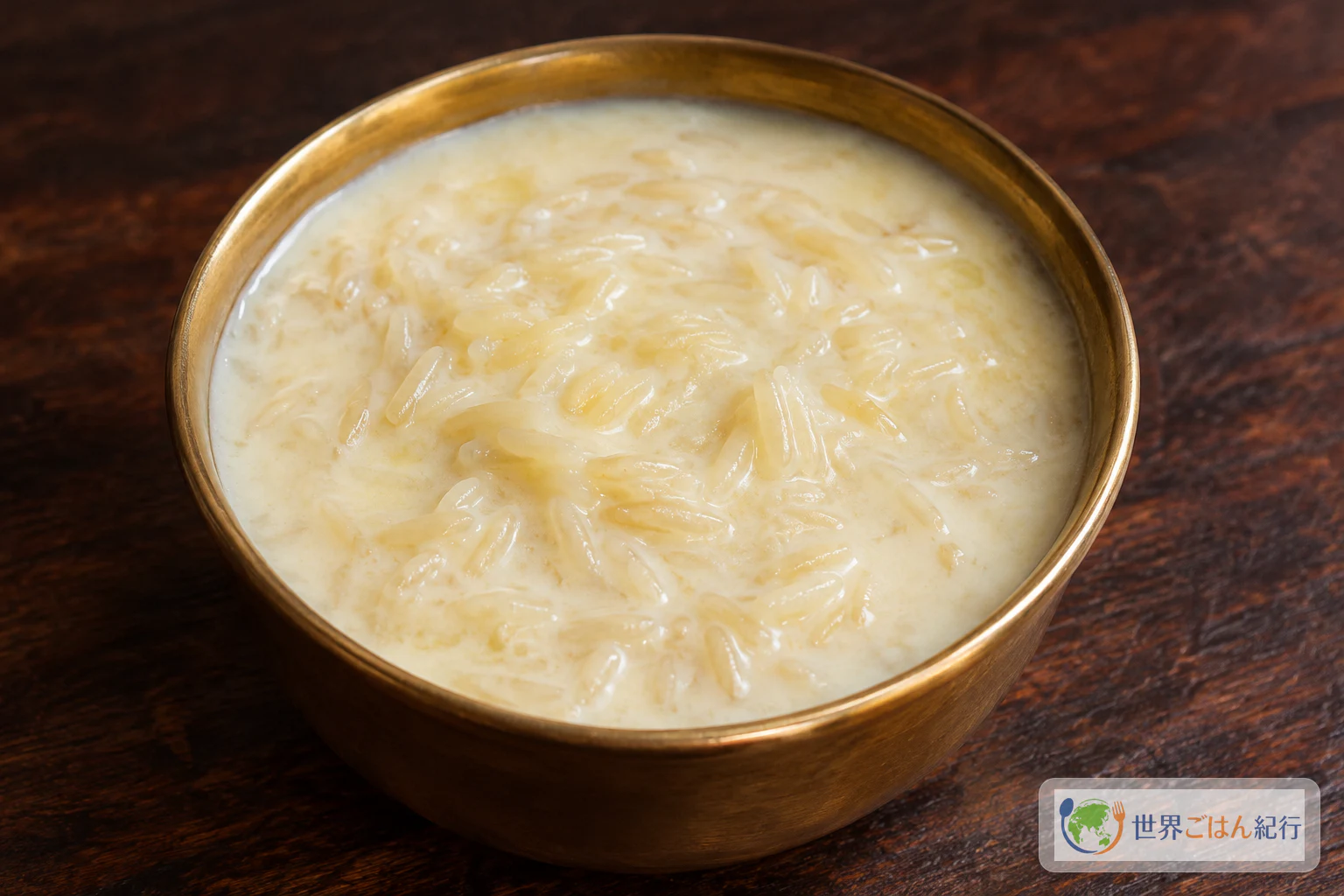
Paal Payasam: Rice, Milk and Patience in an Open Pan
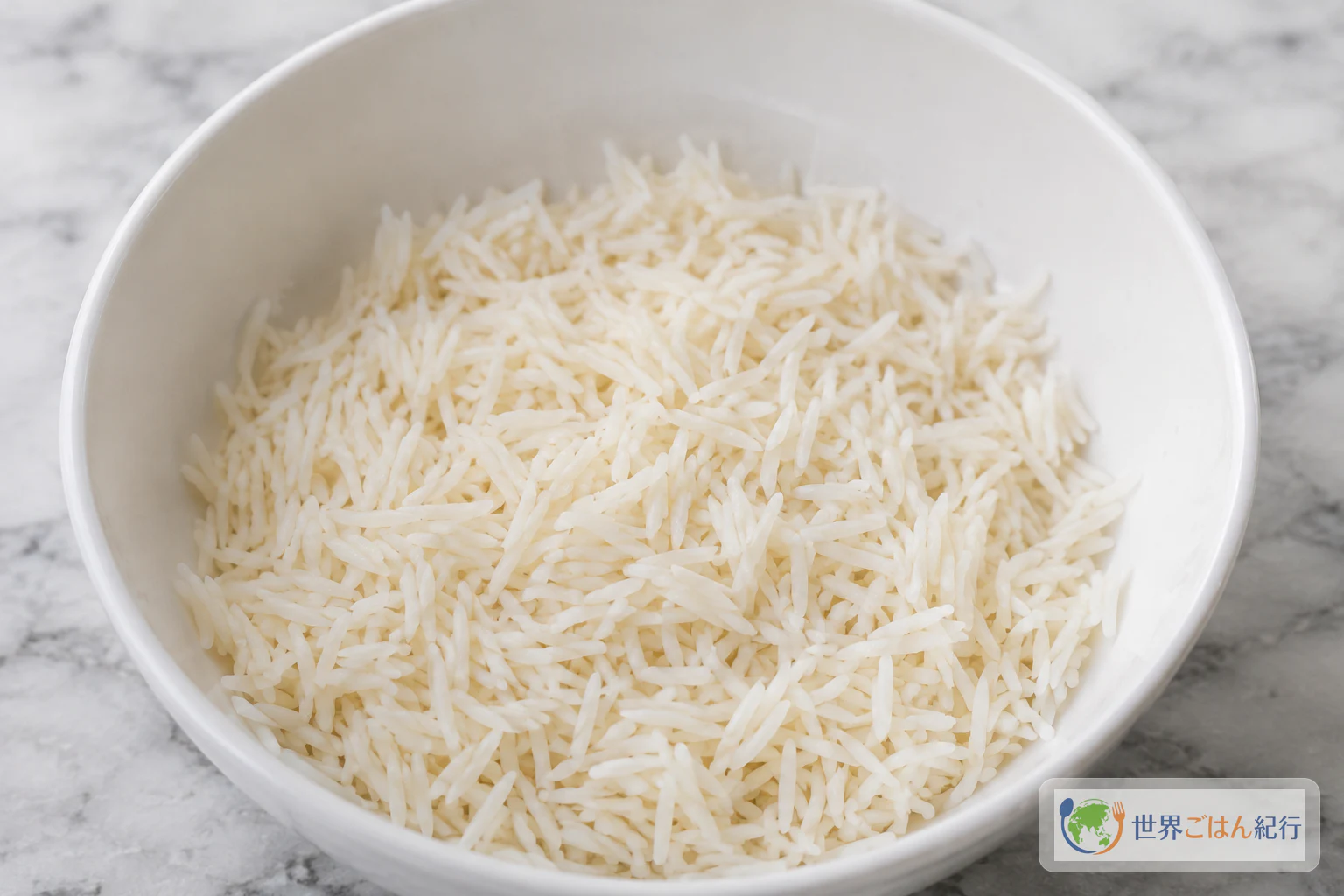
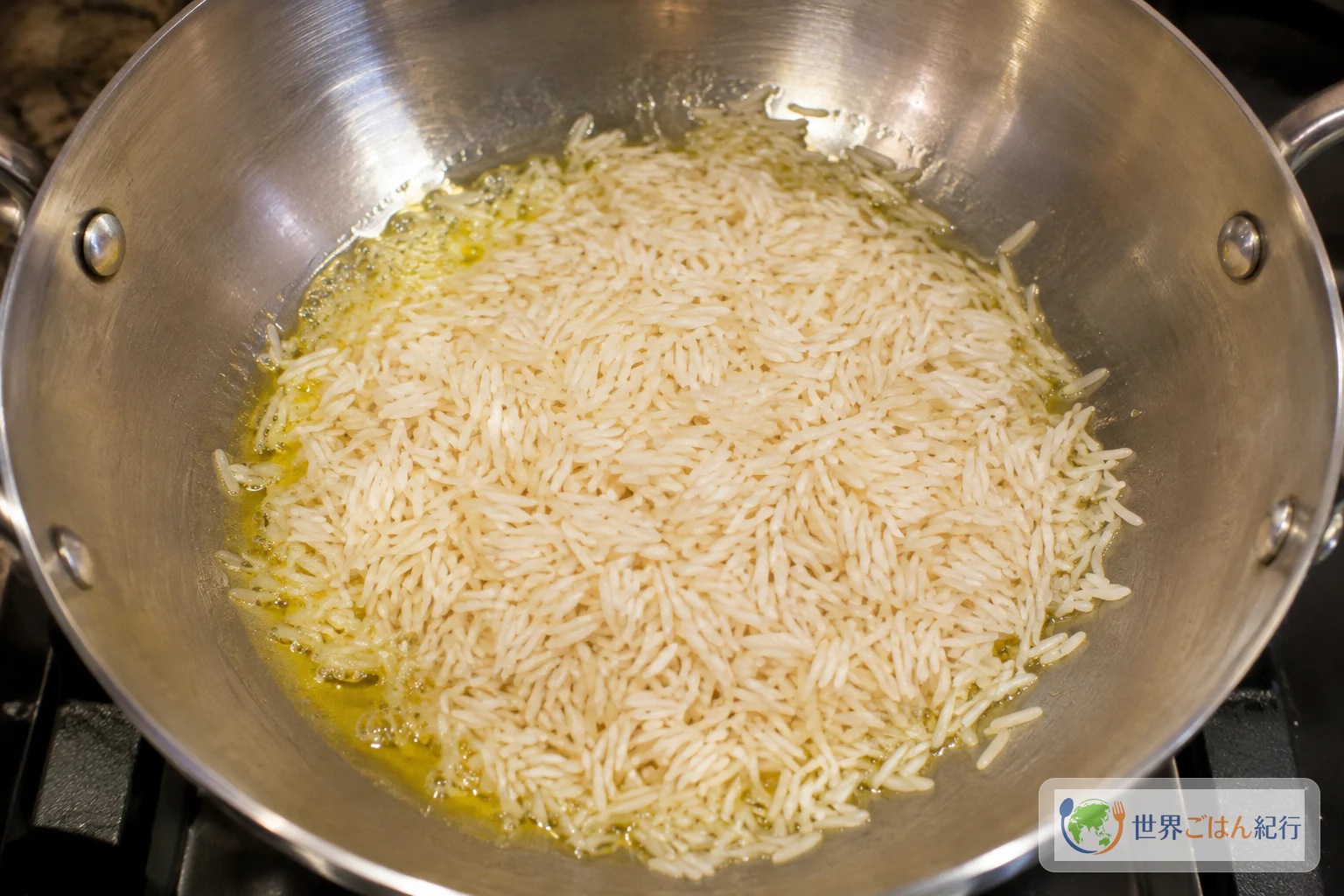
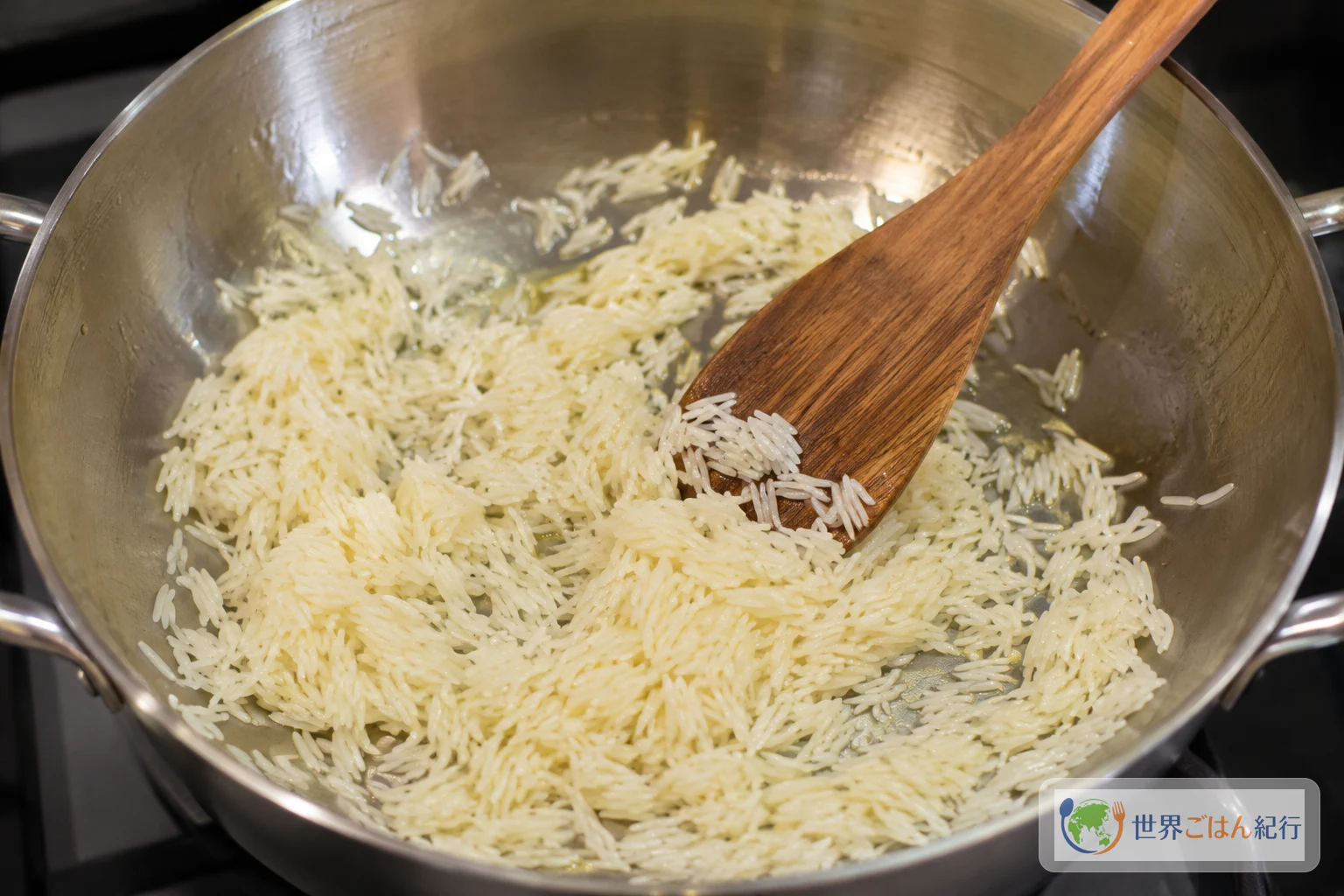
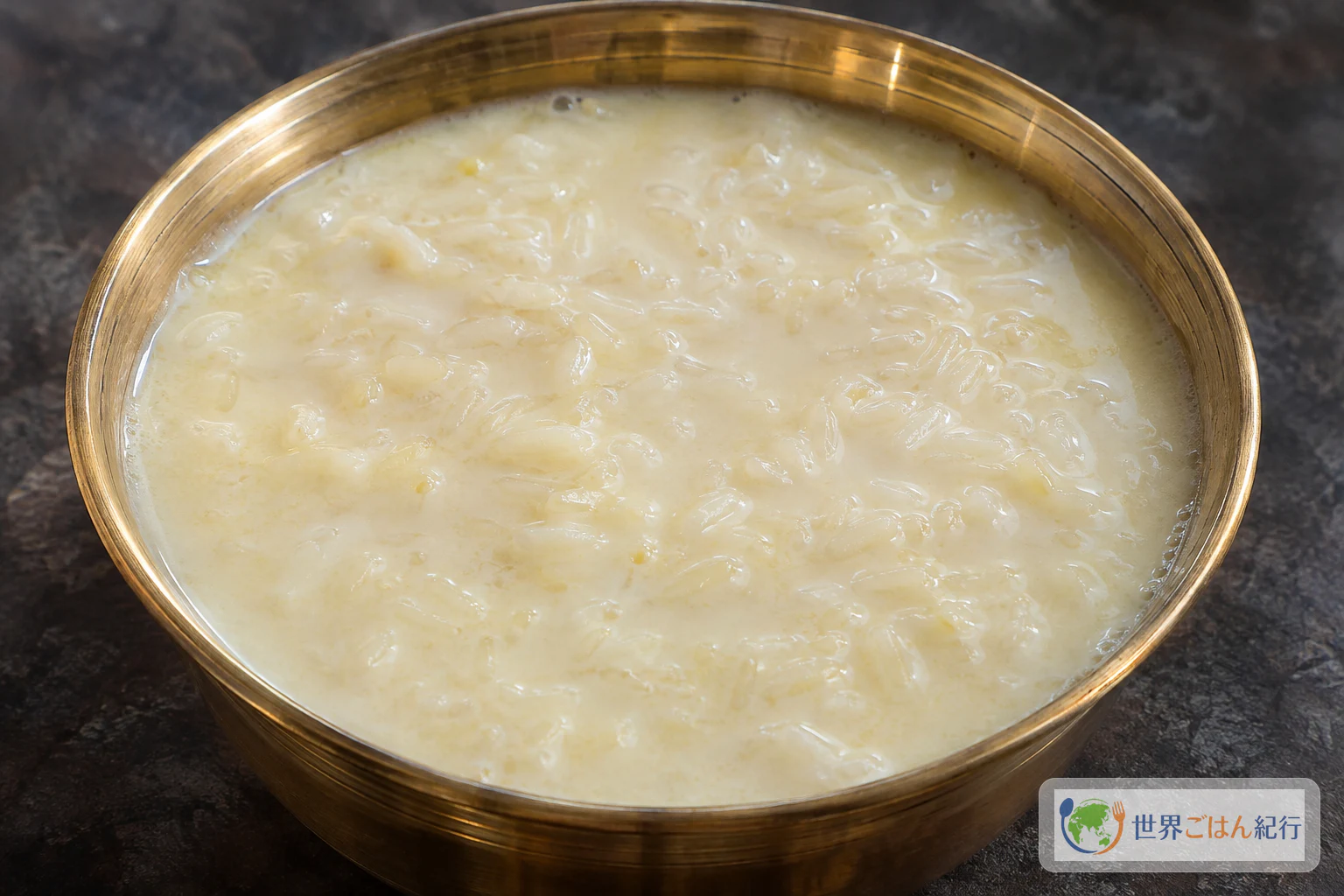
Keep the rice grains unbroken and pale in the ghee. Cook them in hot milk until fully soft, and only then add the sugar. Serve the payasam plain and hot, straight after cooking.
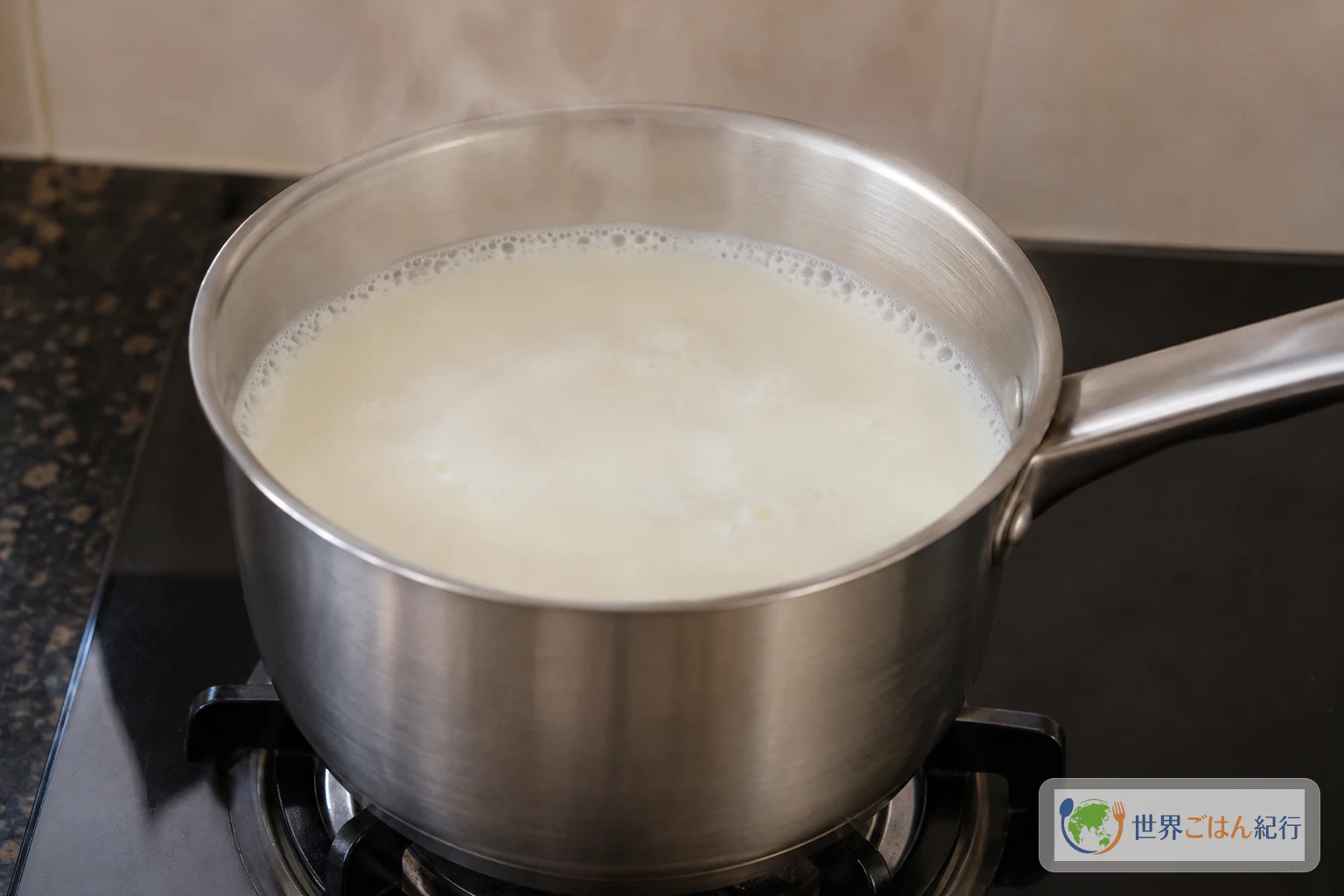
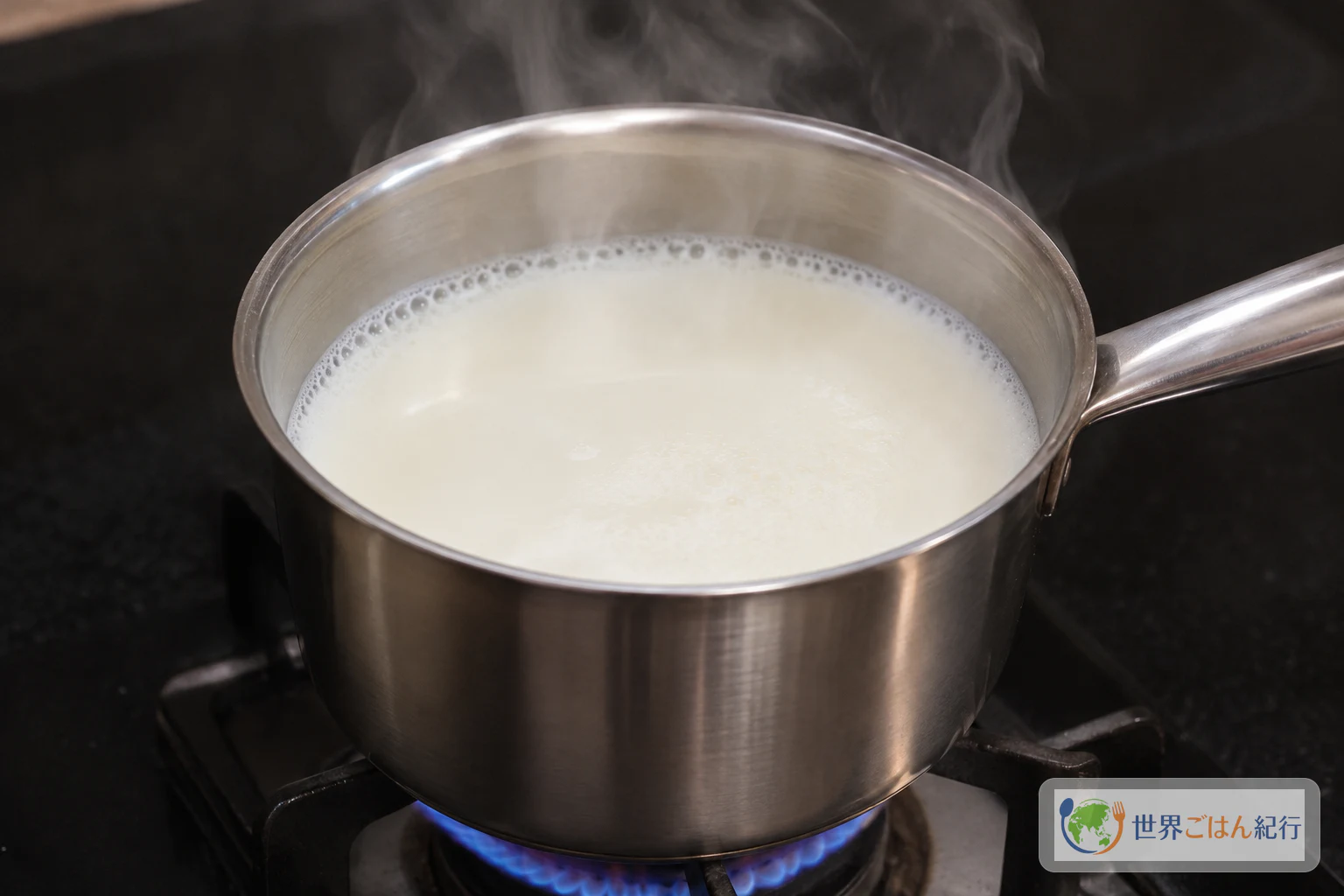
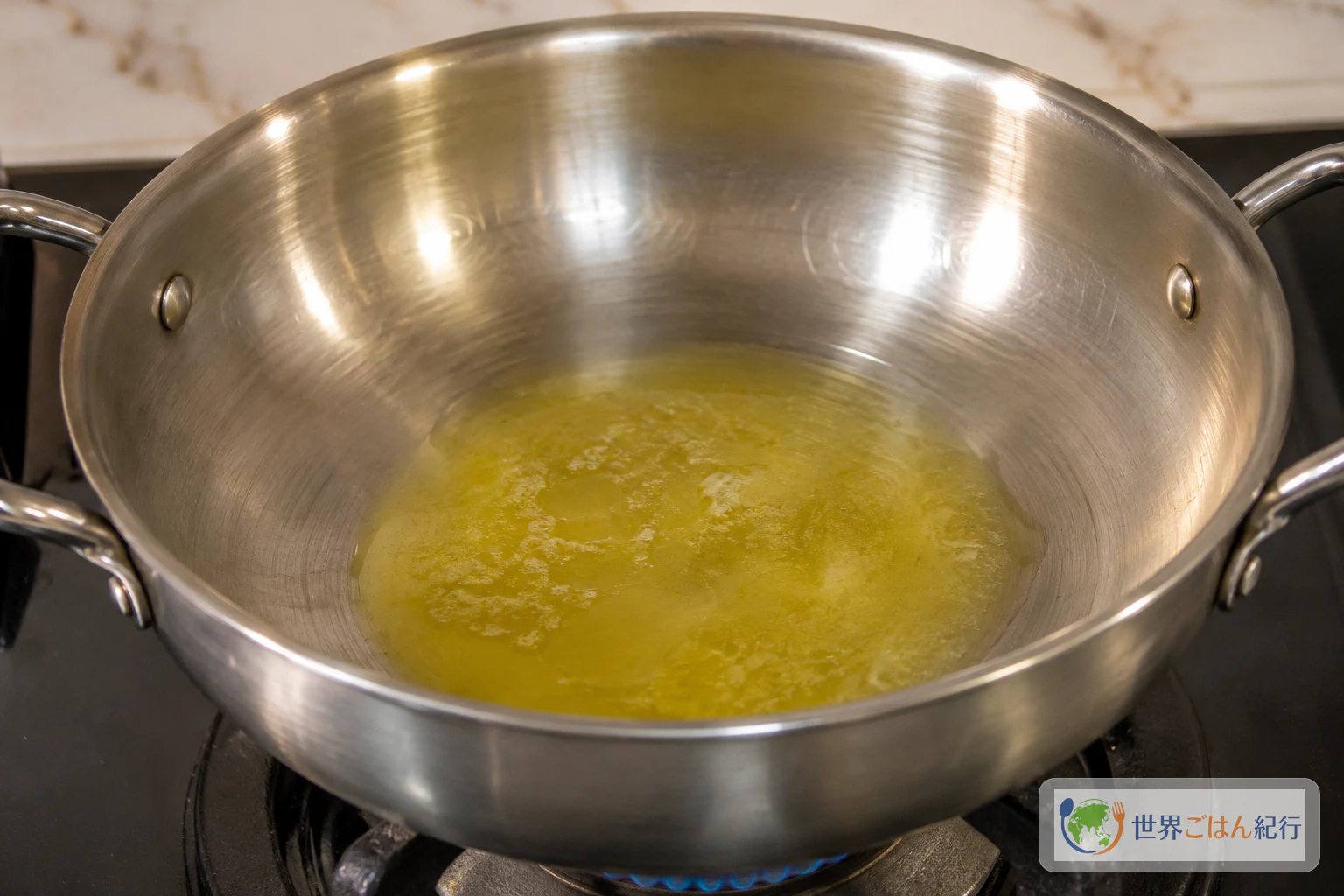
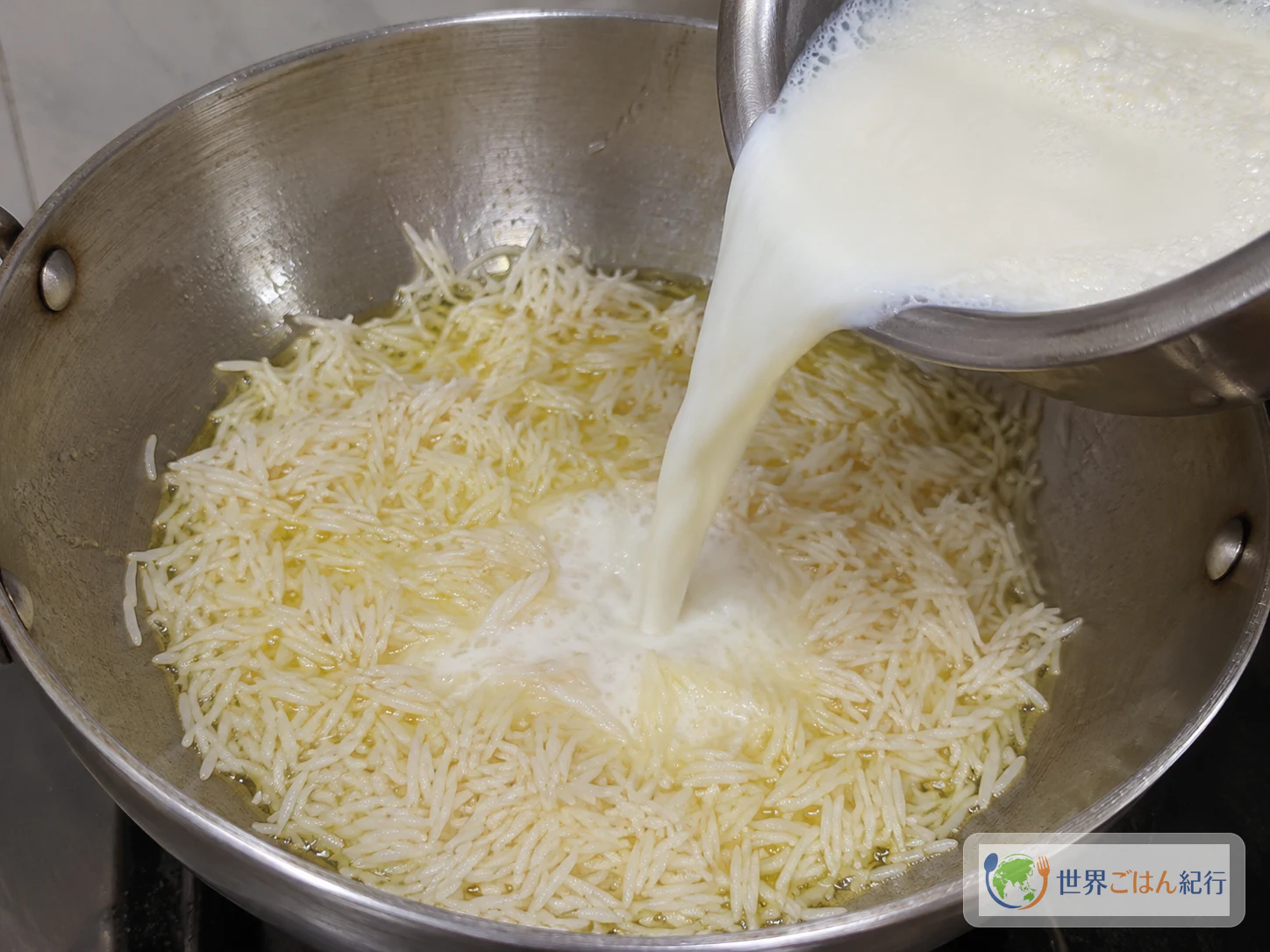
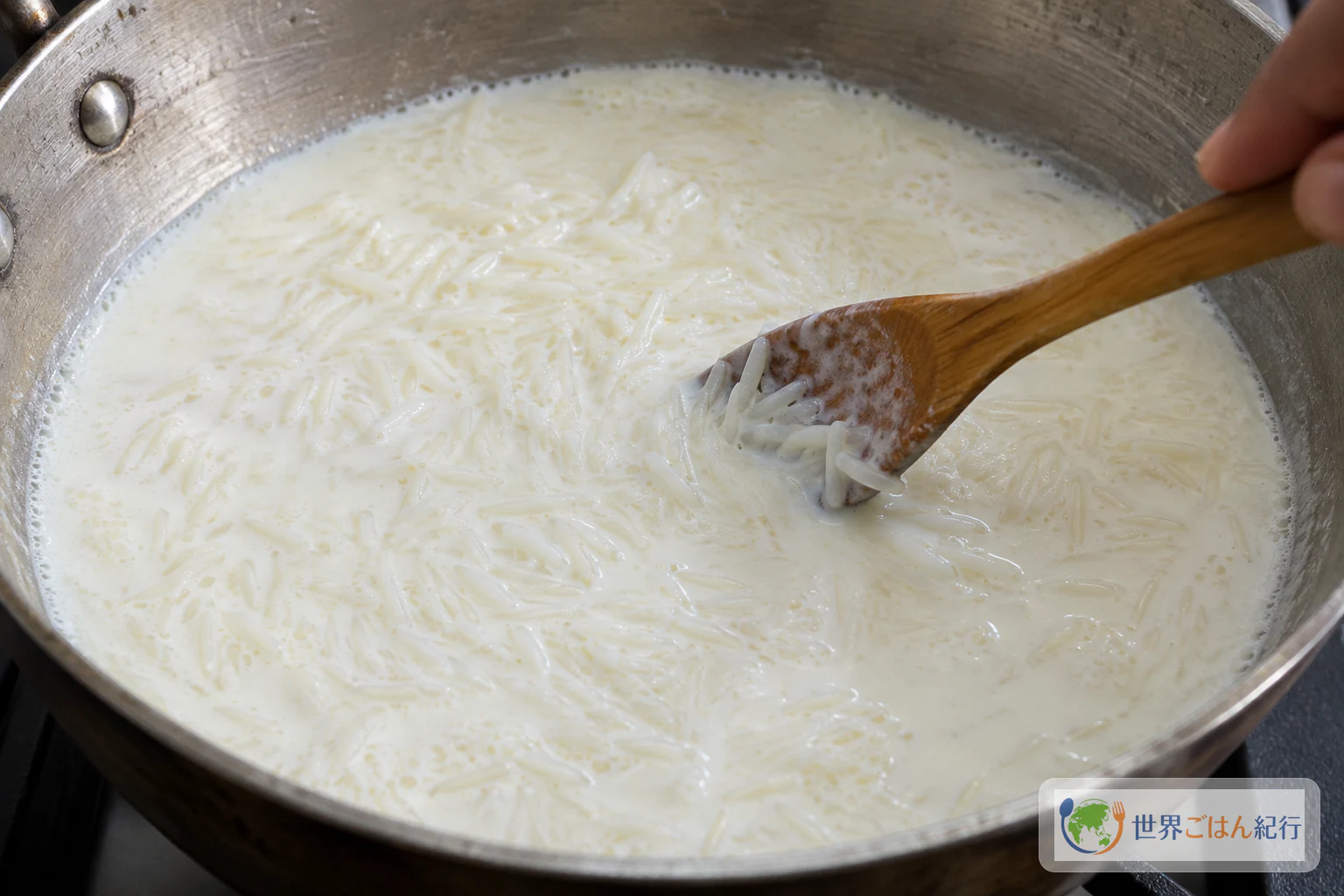
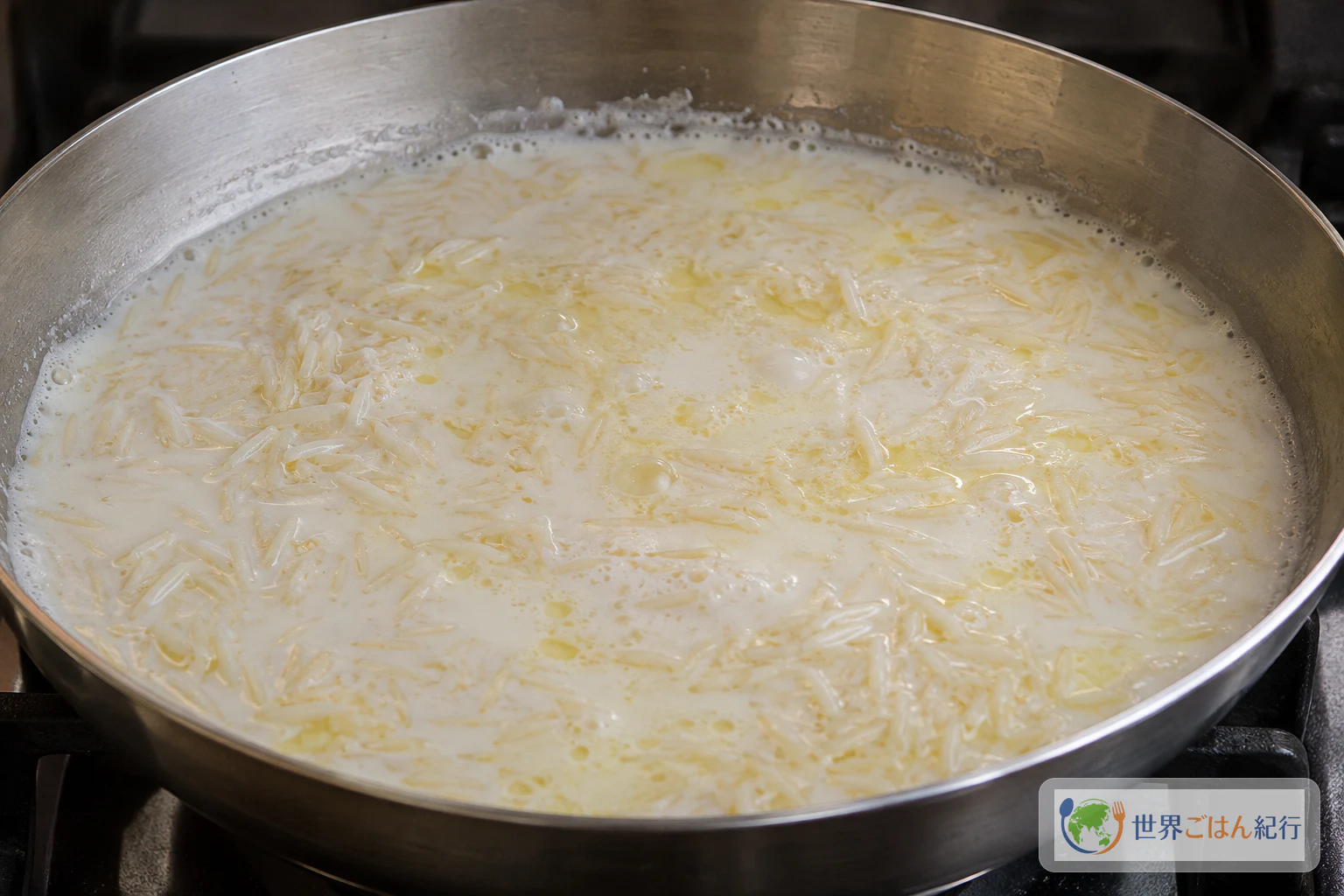
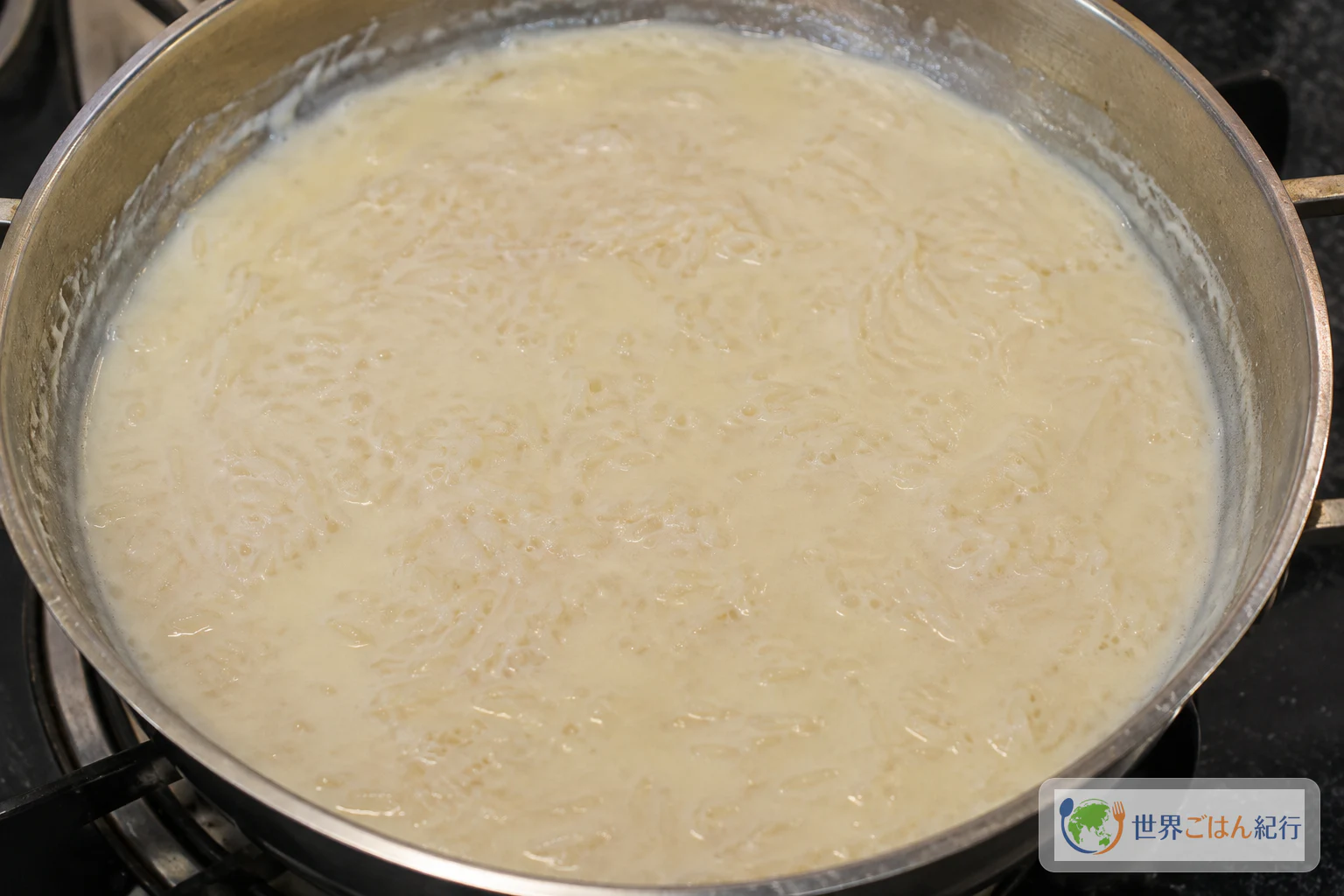
A spoonful of ghee melts in a wide pan. Slender white basmati grains go in and turn fragrant within about 30 seconds, without taking on color. Then hot milk follows, and the pan stays uncovered for the long, gentle simmer that follows.
Payasam is a broad name that covers more than one dish. This article follows one version: the open-pan paal payasam that Dassana's Veg Recipes, by Dassana Amit, identifies as Tamil style, with Tamil Nadu named as the cuisine on its recipe card. The page title also calls it rice payasam. All the amounts and the order of cooking here come from that recipe. It is presented as one household-style version, not as a national standard.
The recipe card lists 4 servings, 10 minutes of prep, 50 minutes of cooking and 60 minutes in total. Treat these as published estimates, because the softness of the rice decides when you can move on. The amounts stay in the recipe's own units, with no conversions added. Sekai Gohan has not kitchen-tested this recipe as a whole.
Where This Version Sits: One Name, Several Payasams
Payasam does not point to a single formula, and the differences show up quickly from one region's table to the next. Kerala Tourism's FAQ on the Kerala Sadya describes payasams served toward the end of that feast and names distinct types such as Palada and Ada Pradhaman. That is useful context for how wide the family is. It does not make this Tamil-style recipe a Kerala dish or a standard part of the Sadya.
For more dishes from the same country, see the India page.
Ingredients: Four and No More
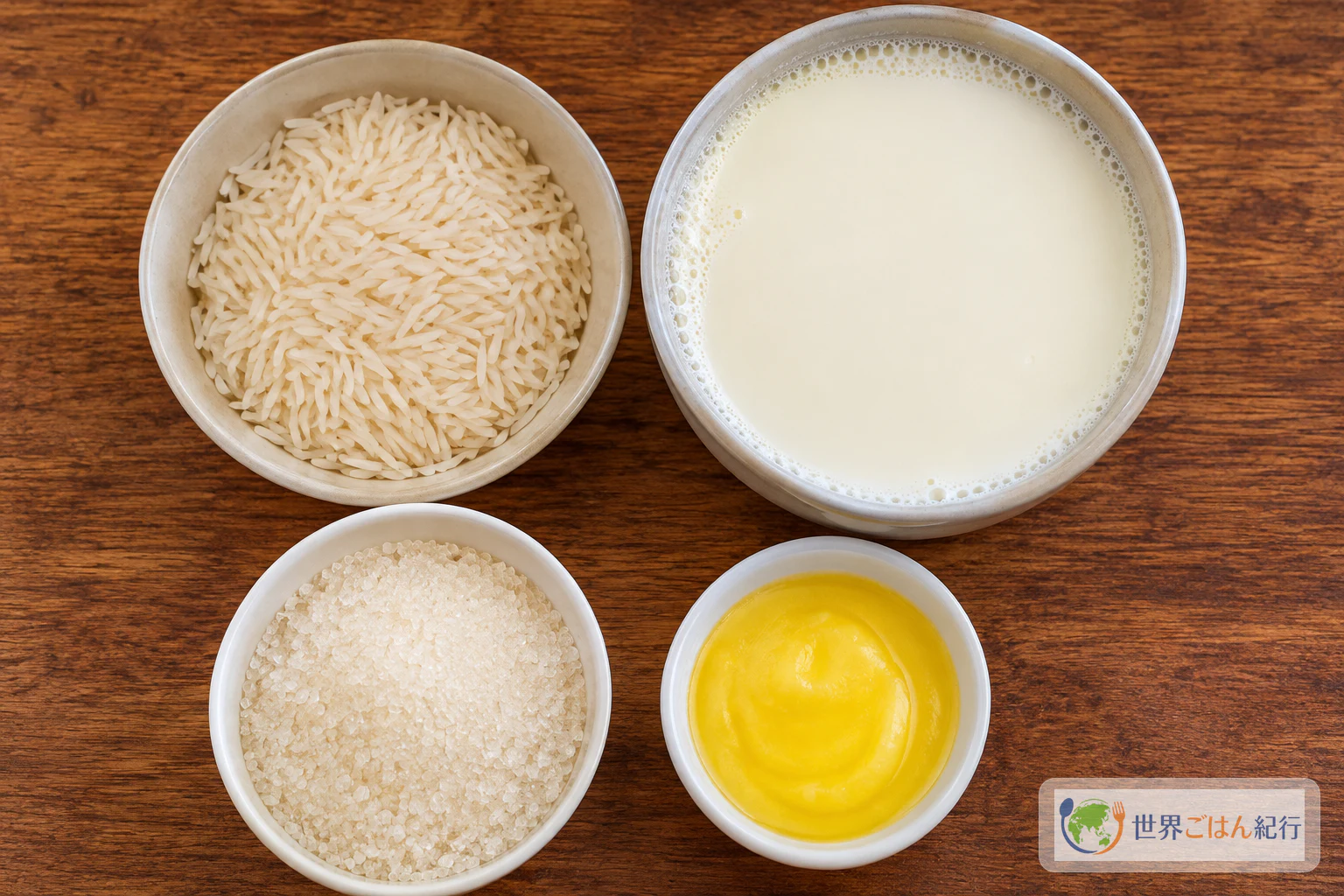
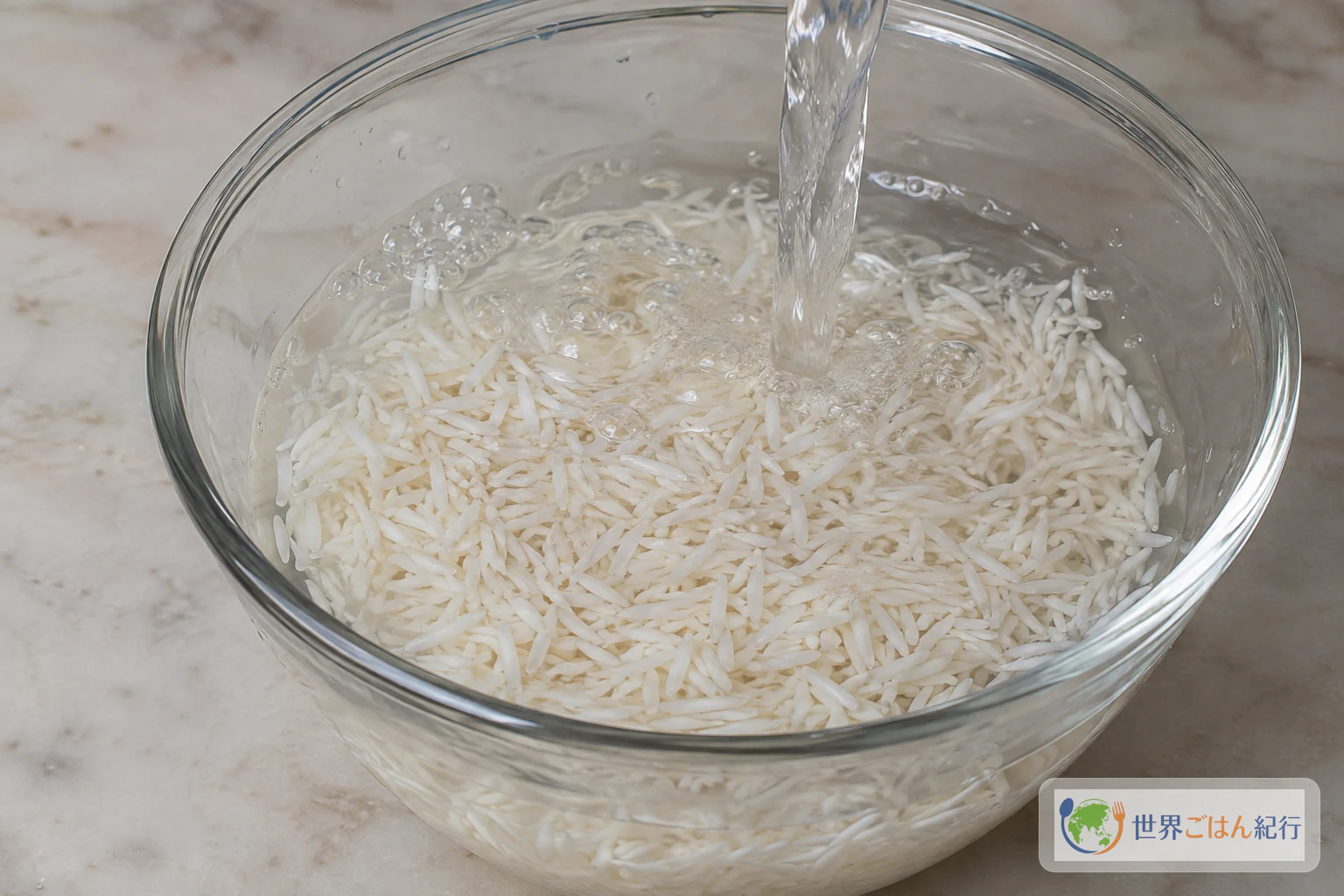
Use water only for rinsing the rice. No water goes into the pudding.
Equipment
- Saucepan for boiling the milk
- Wide, thick-bottomed pan
- Bowl for rinsing the rice
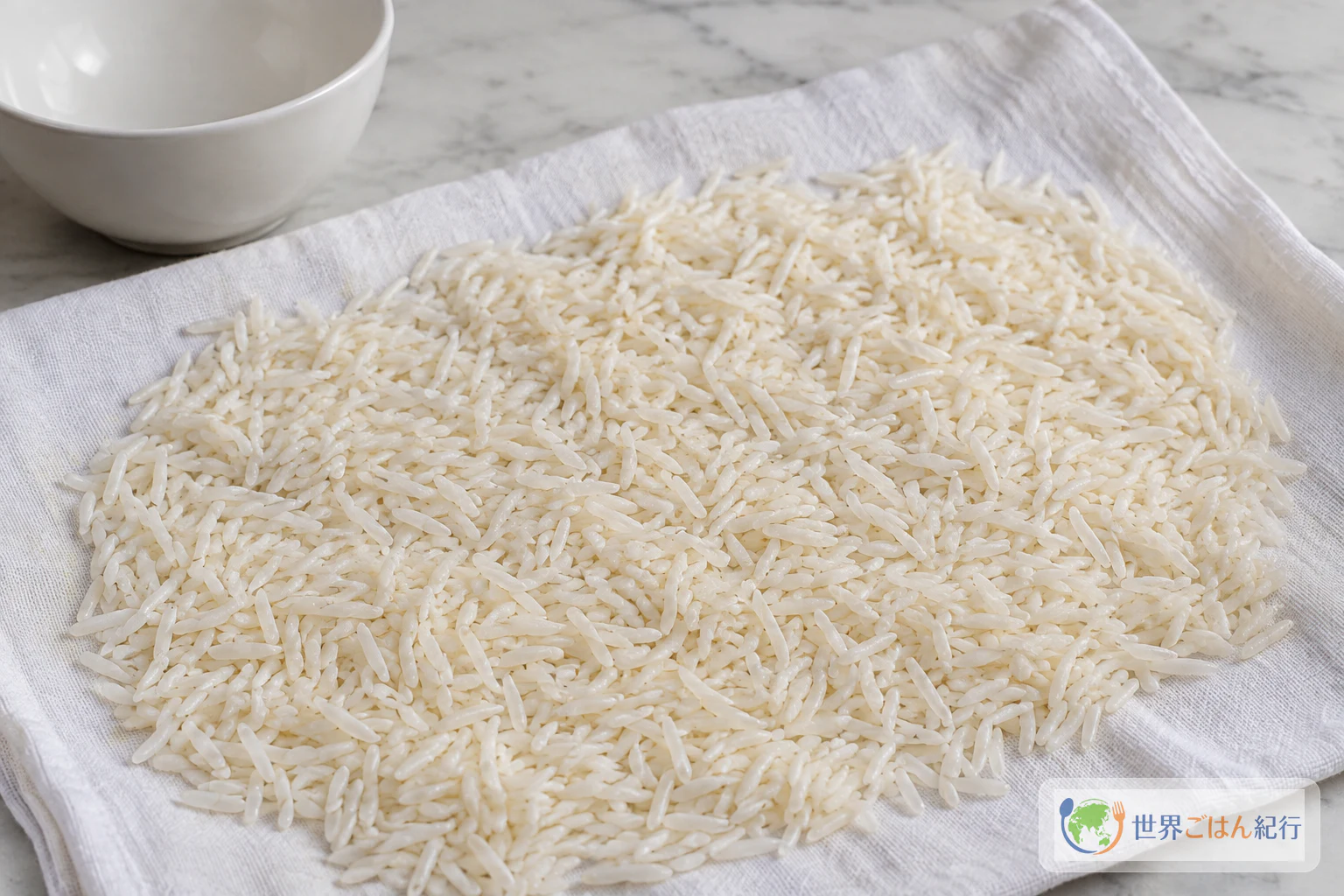
- Clean plate or cloth for drying the rice
- Spoon for stirring
- Ladle and serving bowls
Choosing the Rice, Milk and Sugar
Rice: Buy ordinary polished white basmati with the grains intact. "Whole" rice here means rice that is not ground, so don't read it as brown rice, and don't use rice flour or broken rice.
Milk: Choose pasteurized whole cow's milk from the store and boil it well before you start.
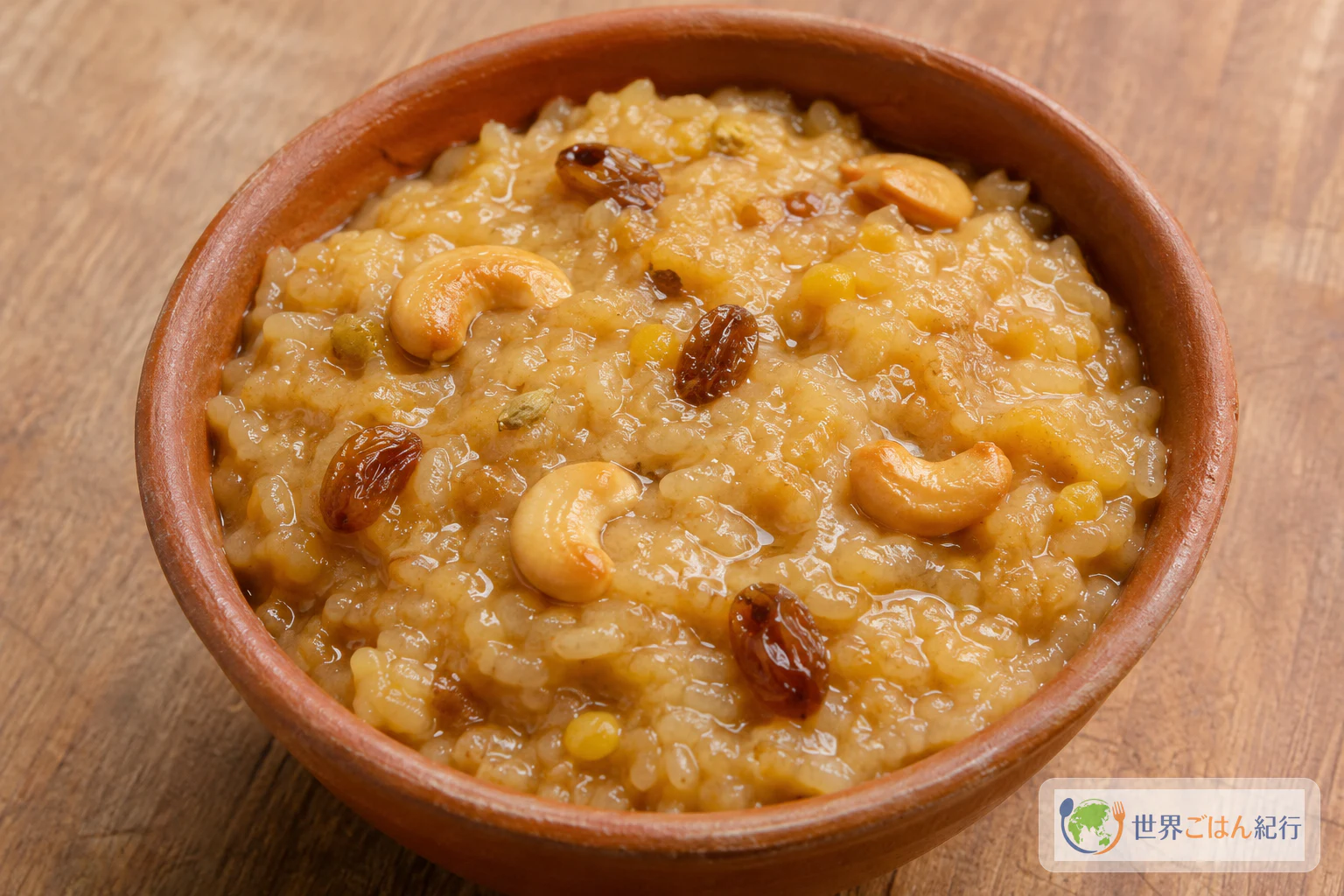
Sugar and flavorings: Raw sugar is the only sweetener here, so jaggery and condensed milk stay out. This version also has no cardamom, saffron, rose, nuts, raisins or other garnish.
Method: The Rice Softens First, the Sugar Comes Later
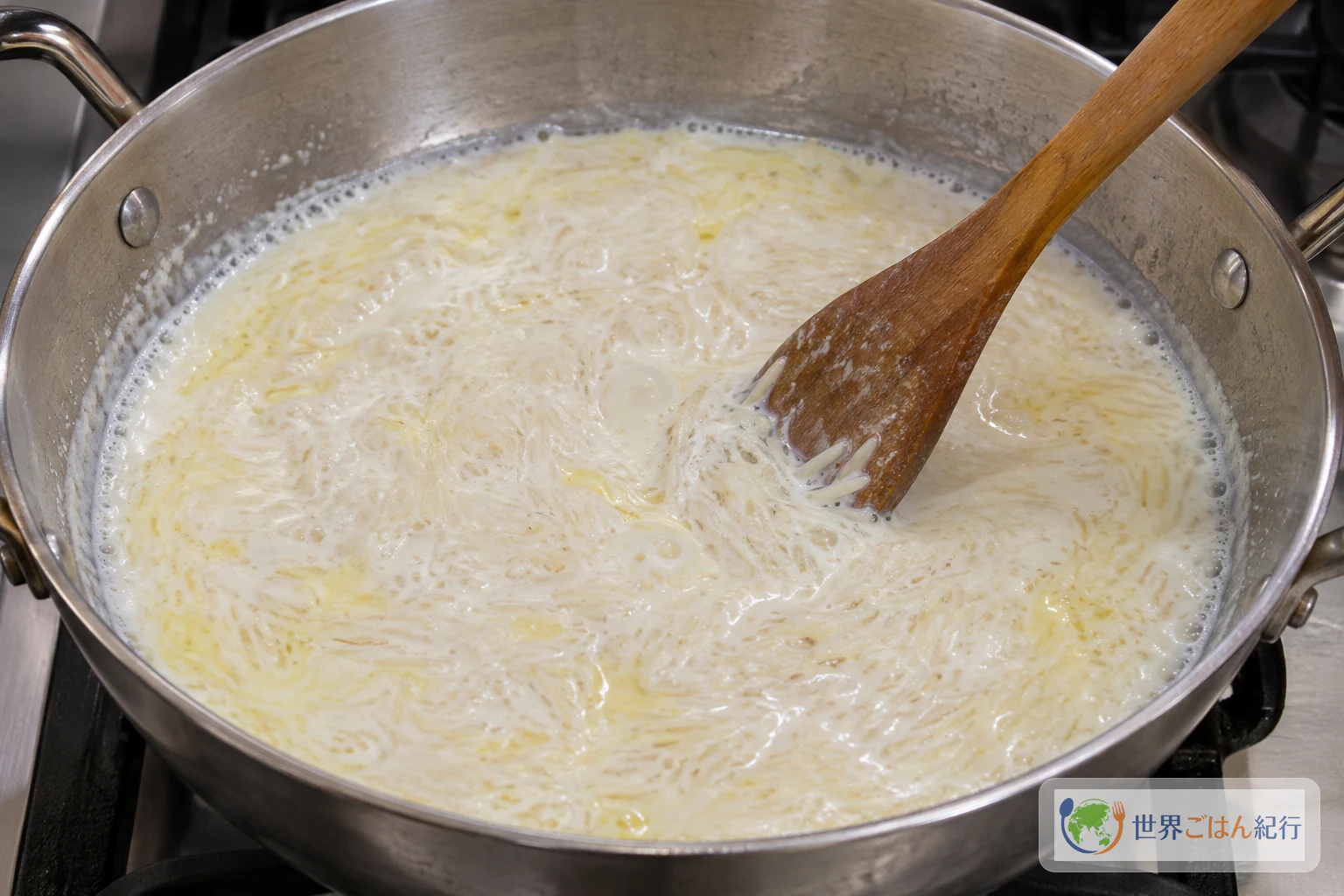
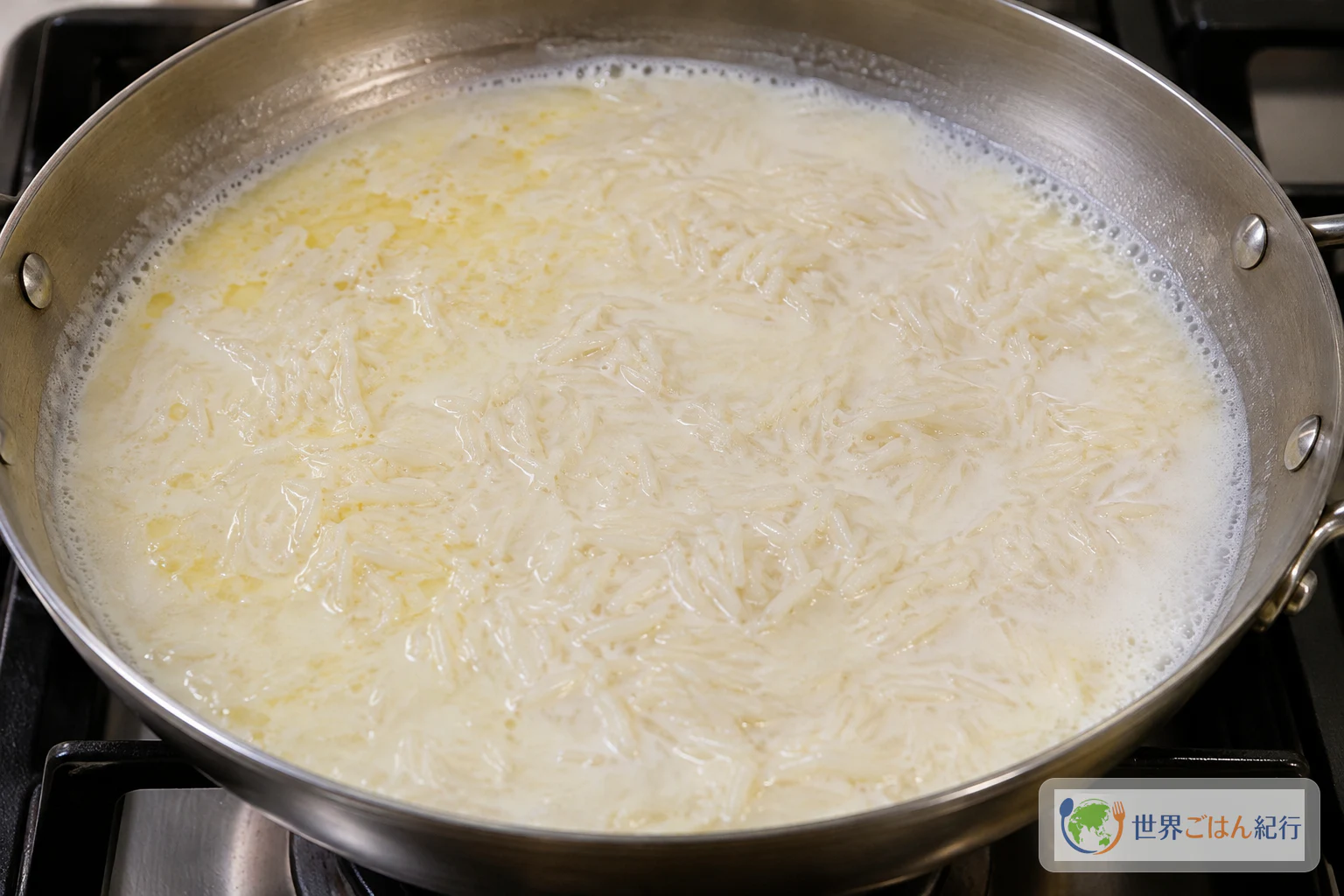
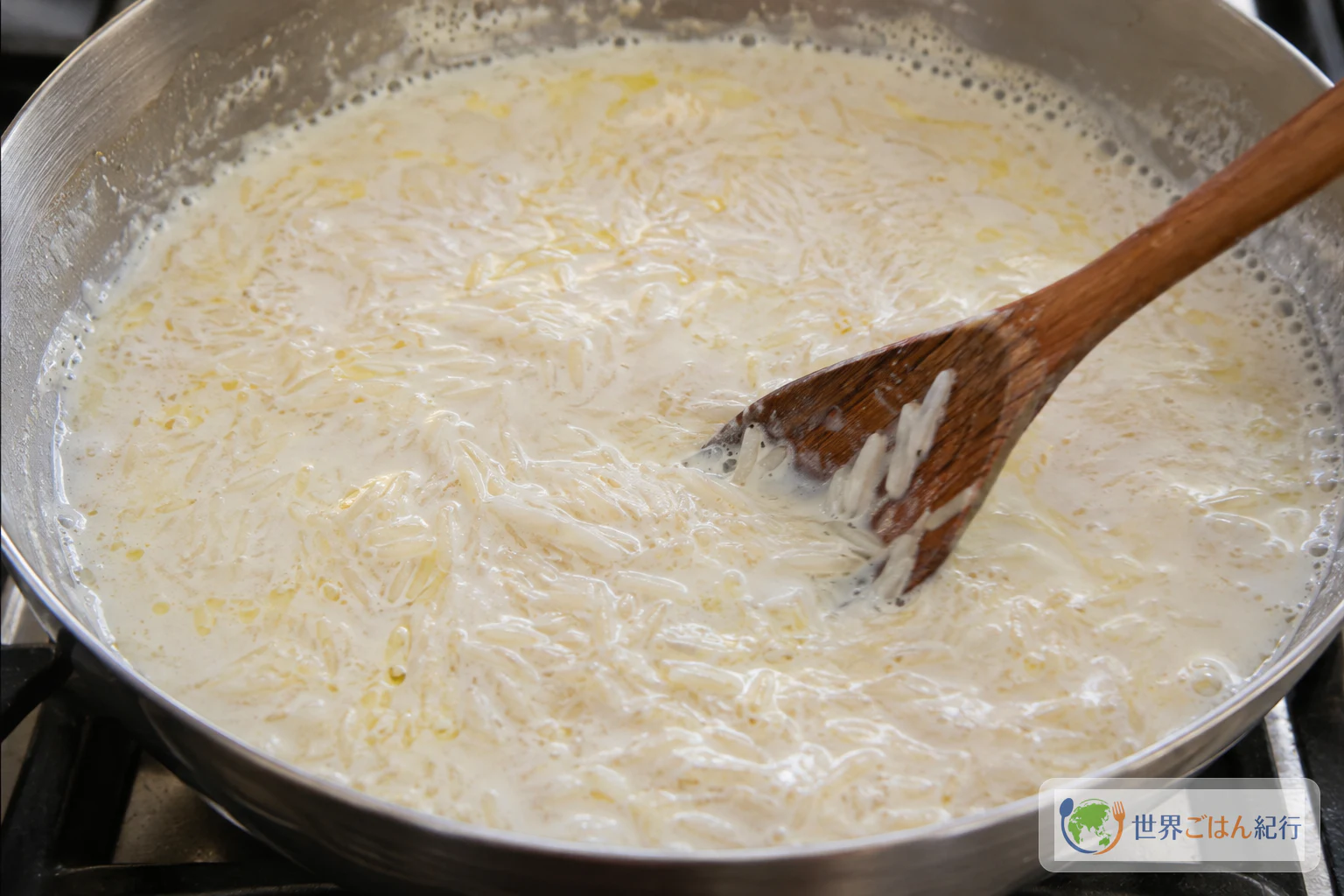
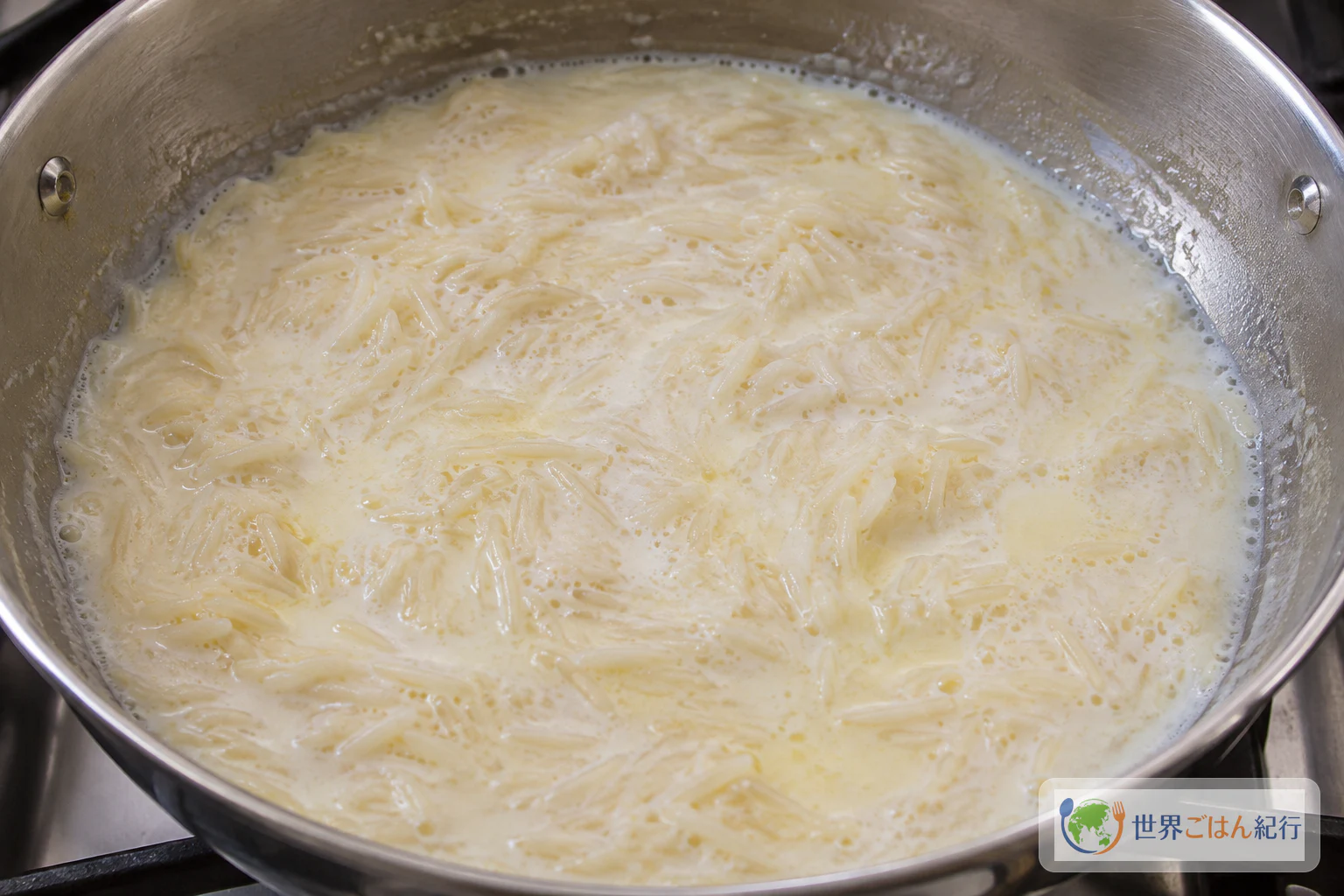
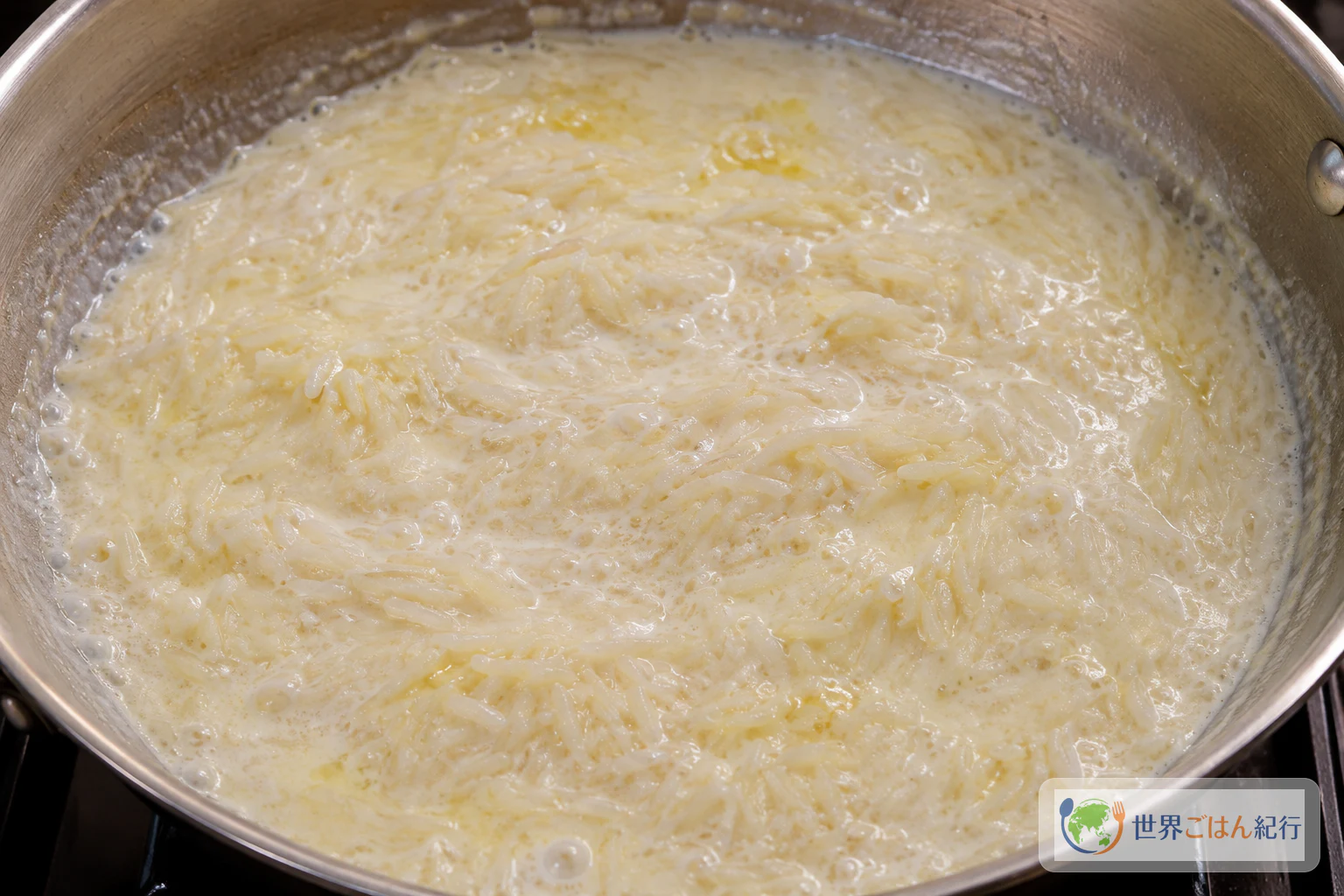
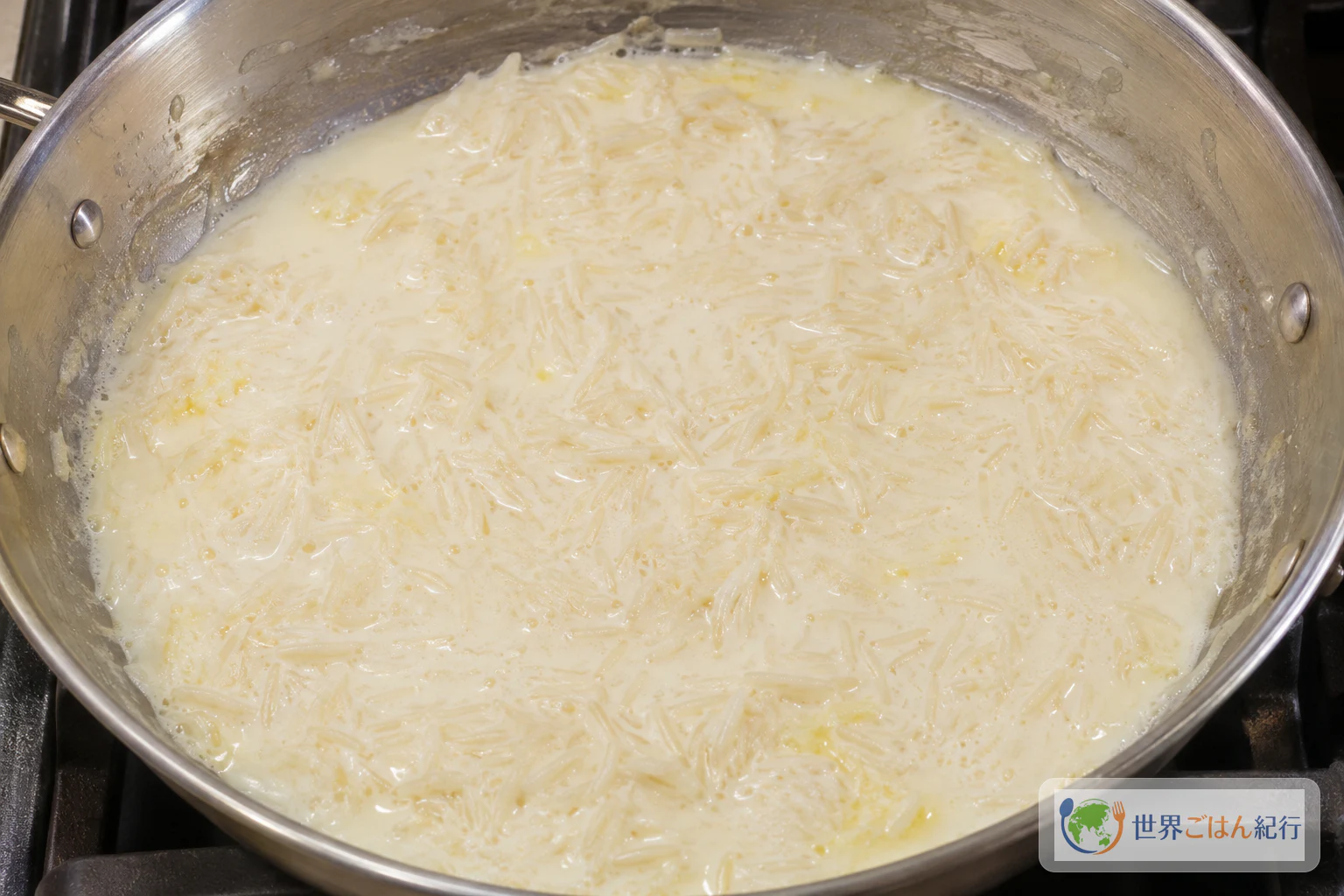
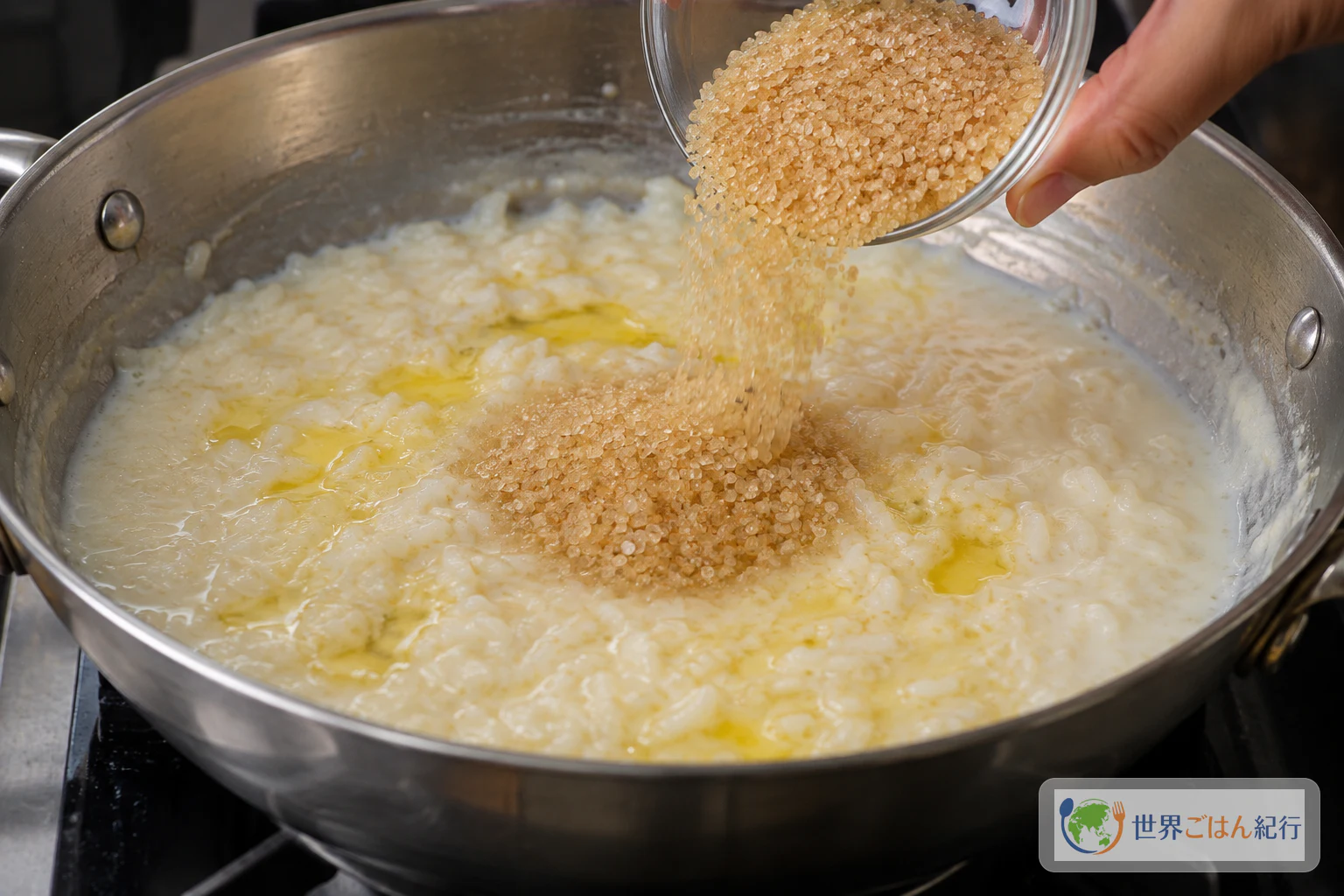
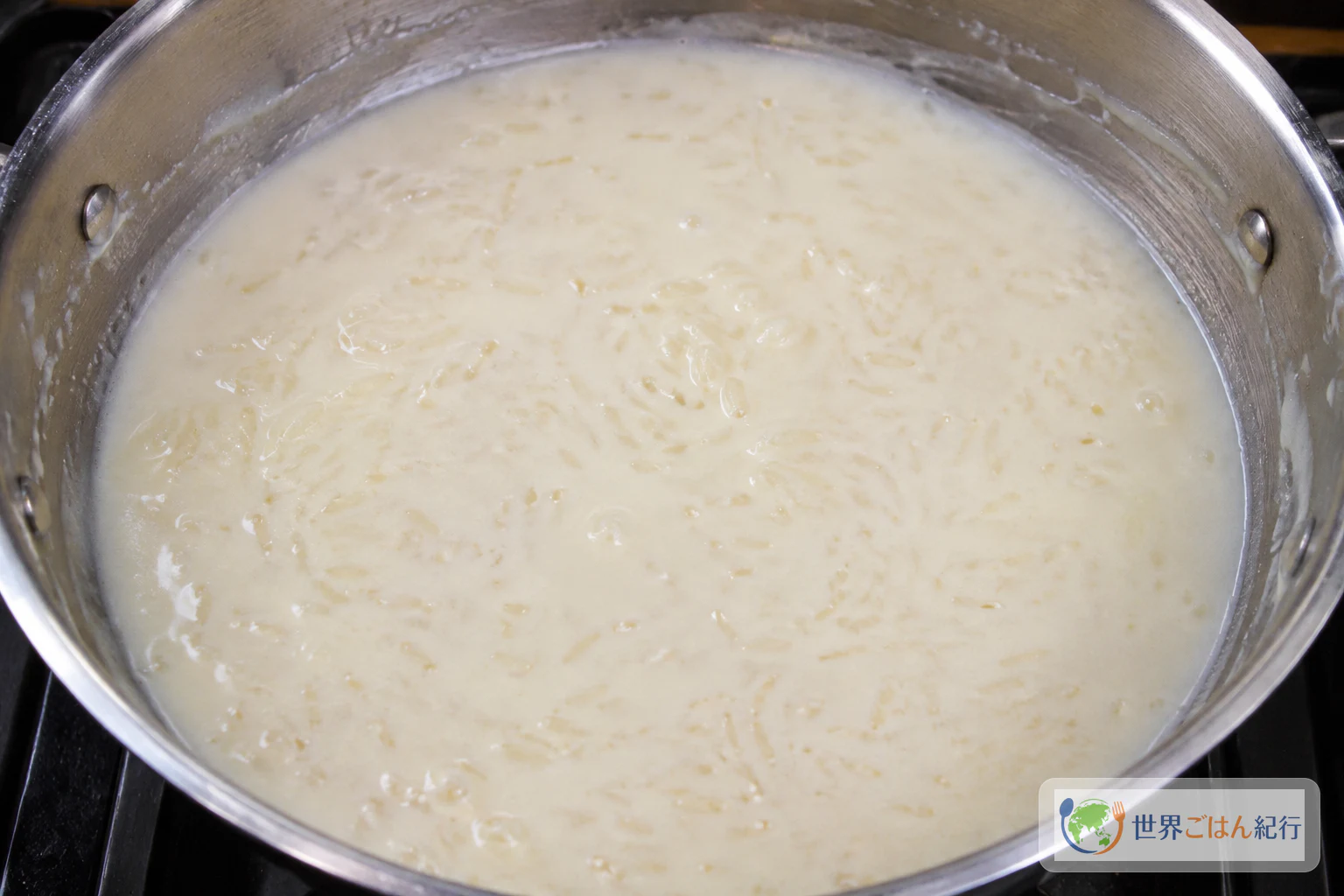
Add the sugar only when the rice is fully soft. About 30 minutes of simmering is a midway point, not the finish. Go by the rice in your own pan rather than the clock or the photos.
Troubleshooting: Reading the Pan
| What you notice | What to do |
|---|---|
| The rice is starting to color in the ghee | It should stay pale. Keep the heat at low to medium, stir for only about 30 seconds until fragrant, and add the hot milk |
| The milk is catching on the bottom | Check that the heat is no higher than low to medium, and stir more regularly |
| The rice is still firm after about 30 minutes | That is an expected midway stage. Keep simmering uncovered and hold back the sugar |
| You are unsure whether the rice is ready for sugar | Lift out a few grains and check them. If any are not fully soft, keep simmering |
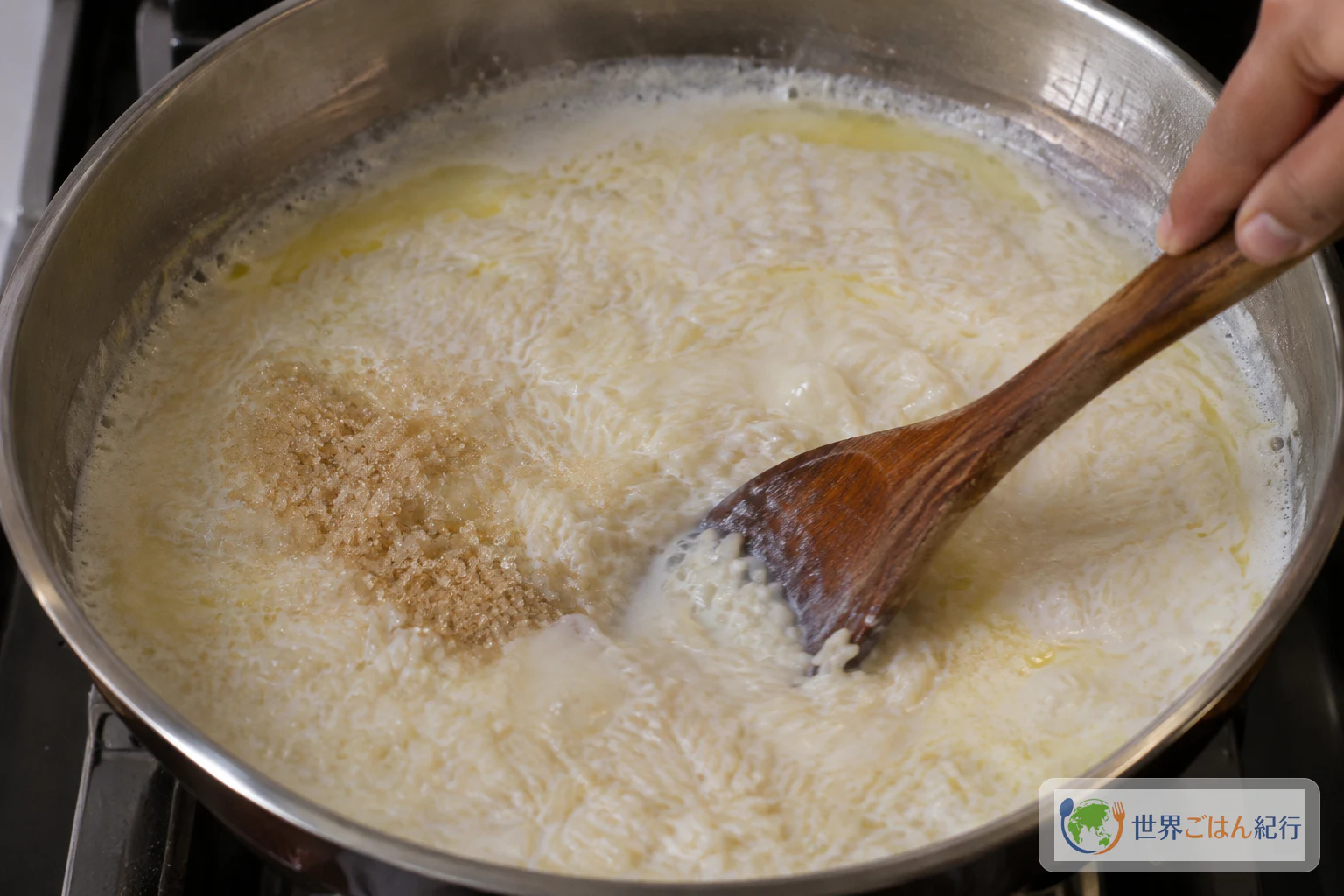
| You can still see sugar crystals | Keep stirring until they dissolve, then continue reducing |
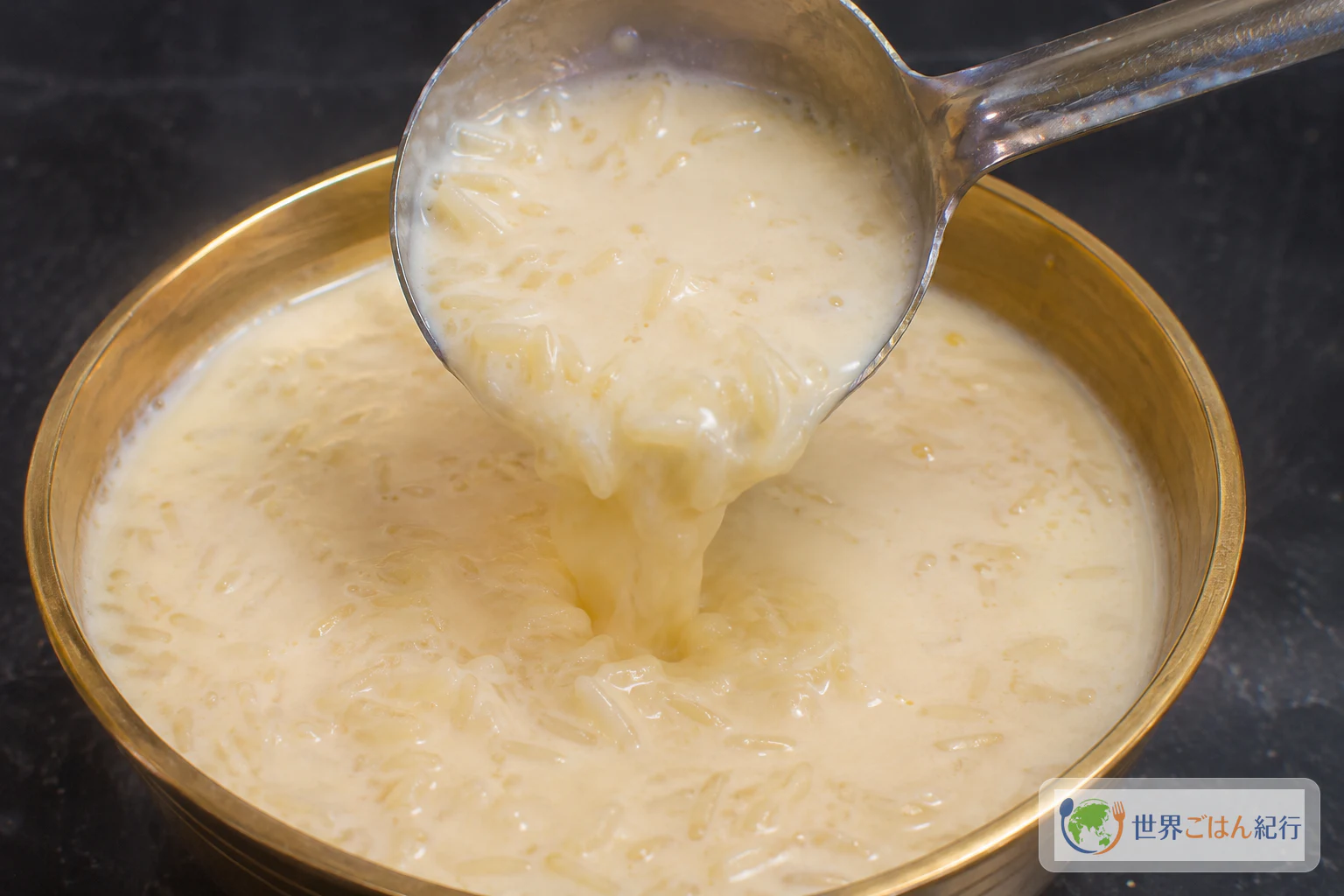
| The milk looks thin after 8–10 minutes | The time is only a guide. Keep simmering until the milk has reduced and thickened |
Variations: Related Dishes, Different Methods
This article sticks to one version rather than blending several. If you want something different, it is better to follow a recipe written for that style than to adapt this one, because the amounts and order of cooking here belong to this open-pan method.
| Style | How it differs |
|---|---|
| This Tamil-style paal payasam | Unbroken white basmati stirred in ghee with no soaking, cooked in hot milk in an open pan, sweetened with raw sugar once fully soft, and served with no flavorings or garnish |
| A Kerala-style pal payasam | One version uses Chamba rice cooked in a pressure cooker, with a different formula and method from this recipe |
| Kerala Sadya payasams | Types such as Palada and Ada Pradhaman are named as distinct payasams |
| A North Indian family-style kheer | One such recipe soaks rinsed basmati, adds it to boiling milk, skips the ghee, and uses cardamom, saffron, nuts and raisins |
These are comparisons between specific recipes. They don't show that the names payasam and kheer always separate dishes in the same way.
Frequently Asked Questions
Does "whole rice" mean brown rice?
No. Dassana's recipe uses "whole" to mean rice that has not been ground. We chose ordinary polished white basmati with unbroken grains, so brown rice, broken rice and rice flour are not part of this version.
Is it done after 30 minutes?
Not necessarily. The recipe describes the rice as about three-quarters cooked at around 30 minutes, which is a midway observation rather than a finish time. Wait until the rice is fully soft before adding the sugar.
Do I need to reduce the milk by half?
No. This recipe has no half-volume target. After the sugar dissolves, simmer for about 8–10 minutes as a guide, until the milk has reduced and thickened.
Can I add cardamom, nuts or saffron?
They are not part of this version, which uses only rice, milk, raw sugar and ghee and is served plain. We haven't given amounts for additions because they would make it a different recipe from the one described here.
Can I make it ahead or serve it cold?
This article covers only payasam that is freshly cooked and served hot right away. It offers no guidance on chilling, storing or reheating.
Why are there no gram or cup measurements?
The amounts are kept exactly as Dassana's recipe gives them, so no gram, milliliter or cup conversions have been added for the rice, sugar or ghee.
Sources
- Dassana Amit, Dassana's Veg Recipes, "Paal Payasam Recipe (Rice Payasam)." The only basis for this article's amounts and method, its identification as Tamil style and Tamil Nadu, and the recipe card's estimated servings and times. https://www.vegrecipesofindia.com/paal-payasam-recipe-rice-payasam-recipe/
- Kerala Tourism, "Kerala Sadya: Traditional Feast." Used only for regional context on payasams in the Kerala Sadya and on distinct types such as Palada and Ada Pradhaman. https://www.keralatourism.org/faq/what-is-kerala-sadya-and-what-is-special-about-it